Local Food
Search Japan's local dishes by genre and region.
Genre(multiple selection allowed)
Region(multiple selection allowed)
325 items

Catfish Tempura
Namazu Tempura
Catfish tempura is a dish passed down in the water-rich eastern Gunma region around Tatebayashi City and Itakura Town, where the Tone River and Watarase River flow. The area once had even more rivers, ponds, and marshes than today, and catfish, alongside eel and carp, became a familiar freshwater fish in daily life. The fish is finely minced down to the bone and deep-fried in a crisp batter, giving it a fluffy white-fish texture and mild flavor. Itakura Town was once lined with many freshwater fish wholesalers, and the dish became a local specialty served to visitors of Raiden Shrine (雷電神社) and Takatori Tenmangu (高鳥天満宮). Today, local freshwater fish restaurants still serve tempura and tataki-age (minced-and-fried catfish) made with wild-caught catfish, and Tatebayashi City promotes itself as “the town of catfish” for tourism, keeping this freshwater fish food culture centered on the Tatebayashi area alive.
Echizen Crab
Echizen Crab
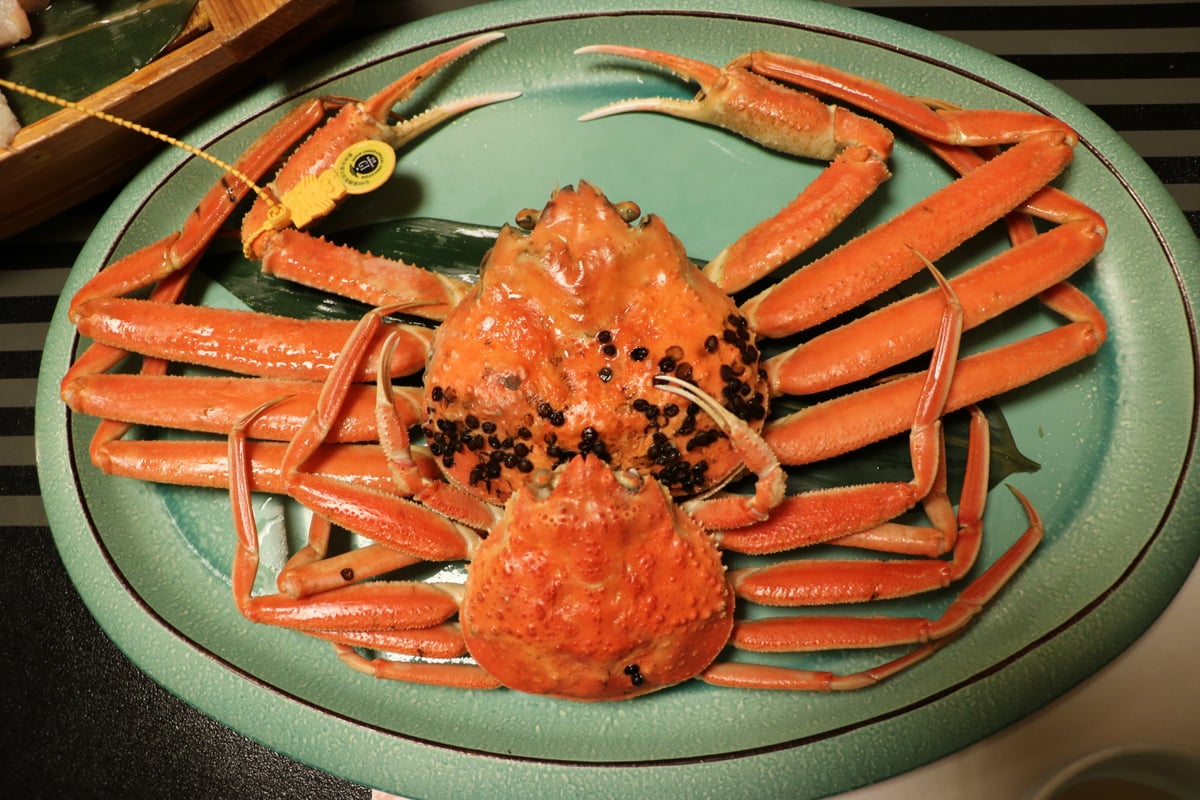
Echizen Crab is the brand name given to male snow crabs (zuwaigani) landed at ports in Fukui Prefecture. It covers crabs landed at Echizen Port (Echizen Fishing Port) in Echizen Town, as well as at Mikuni Port in Sakai City, Tsuruga Port, Obama Port, and others. A yellow tag attached to a leg is proof of the brand, bearing the GI (Geographical Indication) mark, the name of the fishing boat, and other information. Echizen Crab landed at Mikuni Port has been presented to the Imperial Household since 1922 (Taisho 11), and it is known as 'the only crab presented to the Imperial Household.' In 2018, it became the first crab in Japan to be registered under the national Geographical Indication (GI) protection system. The fishing season opens on November 6 each year, and males are landed until March 20 of the following year. Female snow crabs are called 'Seiko-gani,' and the uchiko (ovaries) inside the shell and the sotoko (eggs) carried on the belly are prized. Echizen Town is also home to the Echizen Crab Museum, where visitors can learn about Echizen Crab, and the crab is one of the signature winter delicacies of the Echizen Coast.
Funazushi (Fermented Crucian Carp Sushi)
Funazushi
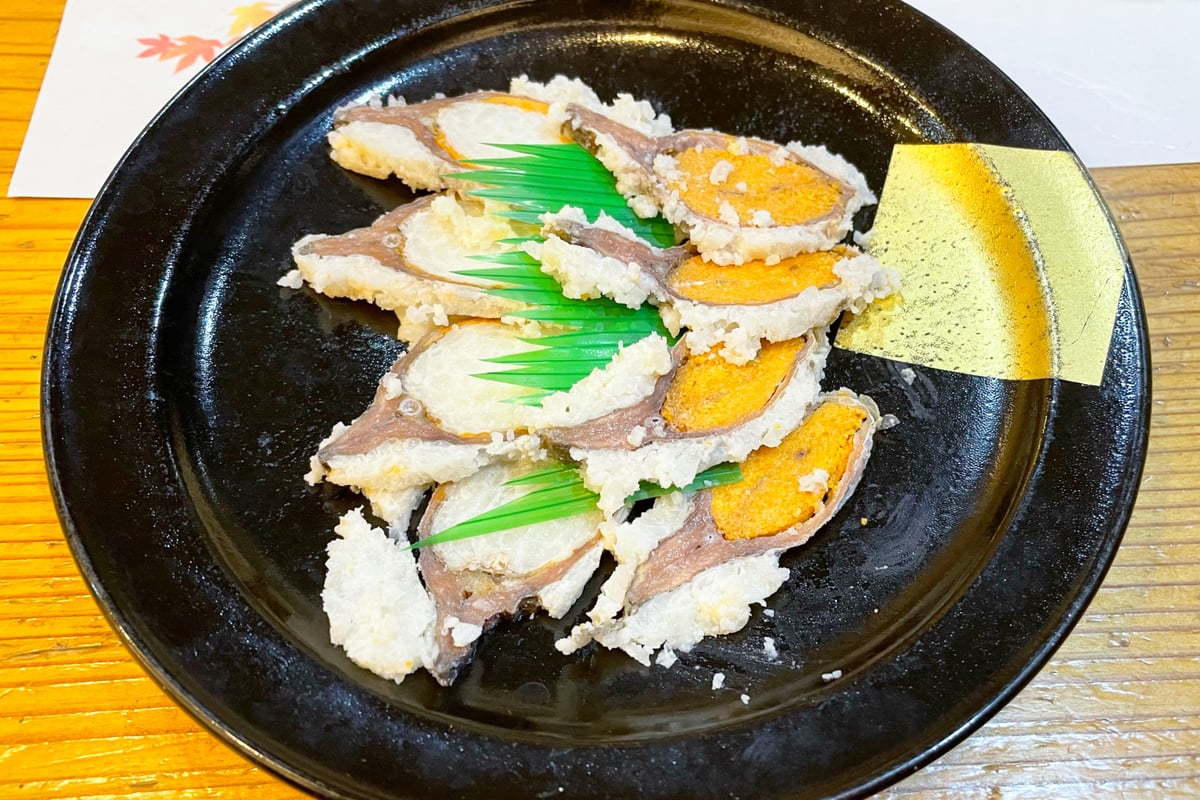
Funazushi is a signature narezushi (fermented sushi) of Shiga Prefecture, made by salting nigorobuna — a crucian carp species found only in Lake Biwa — and then packing it with cooked rice to undergo lactic acid fermentation. Unlike modern nigiri-zushi, which gets its tartness from vinegar, funazushi develops its sourness naturally through the prolonged fermentation of rice and fish, and it is often described as a living link to the origins of sushi itself. Its history is remarkably old: wooden tablets (mokkan) from the Nara period and the Heian-era legal code Engishiki record 'sushi funa' (鮨鮒) being sent as tribute from Omi Province. Funazushi is known for its strong sourness and a distinctive fermented aroma sometimes compared to cheese — a flavor that divides opinion, though well-made funazushi is prized for its rich umami without any fishy smell. It is typically sliced thin and eaten as is, enjoyed with tea over rice (ochazuke) or as an accompaniment to sake, and remains a treasured traditional dish served on special occasions such as New Year and when hosting guests.
Gyutan Yaki (Grilled Beef Tongue)
Gyutan Yaki (Grilled Beef Tongue)
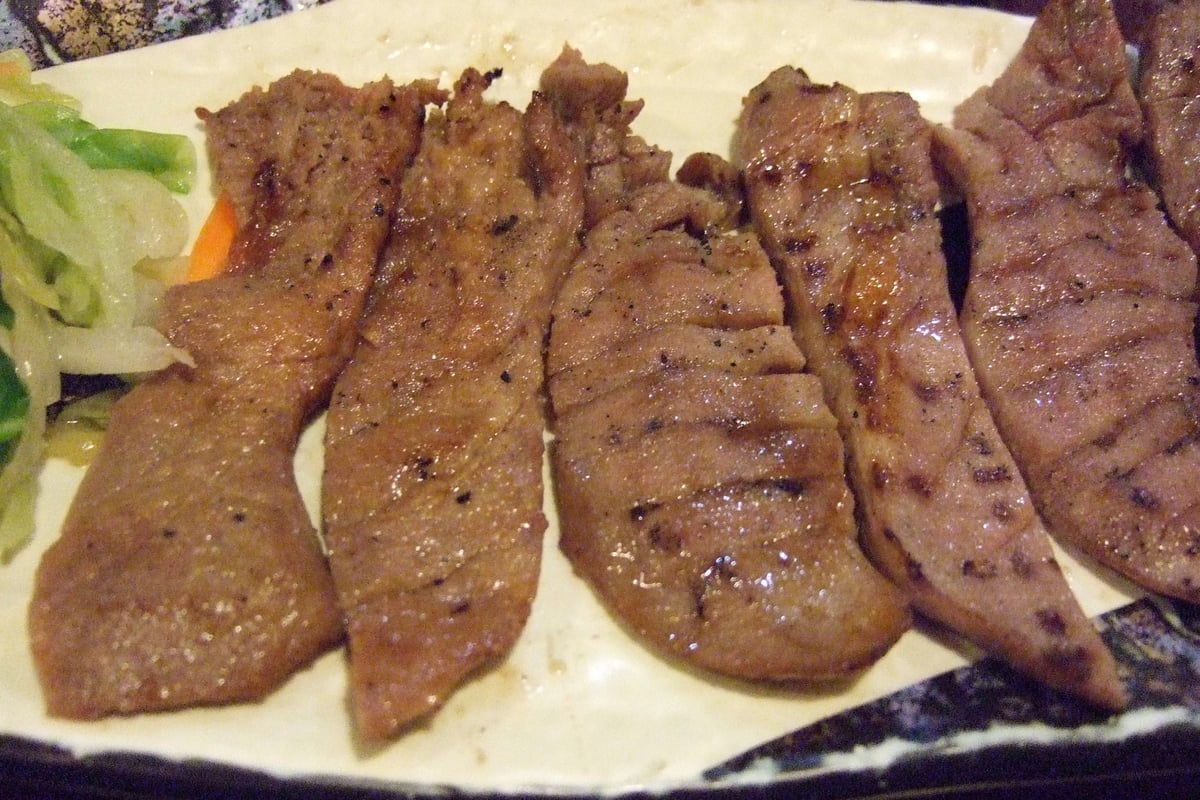
Gyutan yaki is a signature local dish of Miyagi Prefecture, centered on Sendai City, in which thickly sliced beef tongue is salted and grilled over charcoal. It is said to have originated in 1948 (Showa 23), when Sano Keishiro, a chef from Yamagata Prefecture who had trained in Tokyo, took note of beef tongue — then treated mainly as an ingredient for Western cuisine — and reworked it into a salt-grilled dish suited to Japanese tastes. Gyutan yaki was born when he opened the specialty restaurant 'Taisuke' in Sendai in 1950, and amid the post-war food shortages, a set-meal style took shape pairing the grilled tongue with barley rice in place of white rice and a tail soup made from beef tails, which were little used at the time. Today, dozens of specialty restaurants cluster around Sendai Station and the Kokubuncho district, and the 'gyutan set meal' — served with barley rice, tail soup, nanban miso, and light pickles — has become a standard Sendai specialty known nationwide.
Hakata Ramen
Hakata Ramen
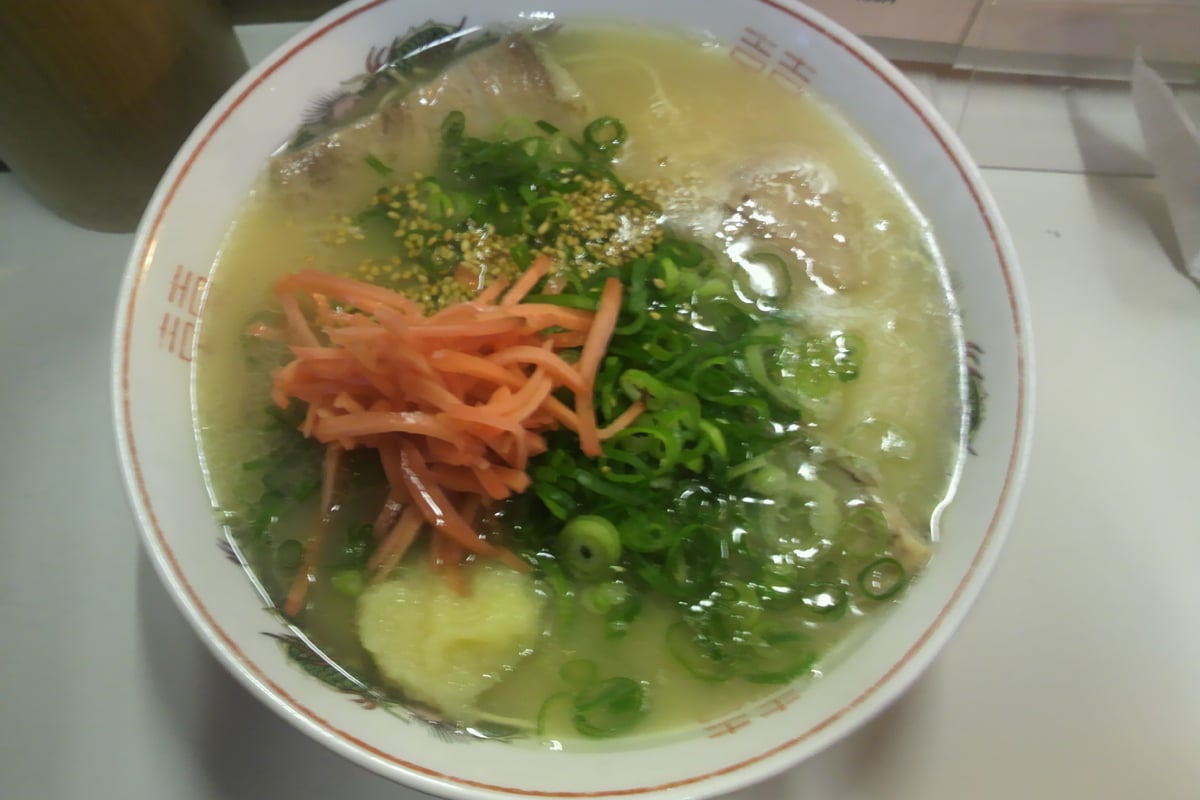
Hakata Ramen is a style of tonkotsu (pork bone broth) ramen eaten mainly in the Hakata area of Fukuoka City. Its defining feature is the combination of a cloudy white tonkotsu broth, made by boiling pork bones over high heat for a long time, and ultra-thin straight noodles said to be based on techniques from Shimabara somen. Because the noodles cook quickly, this became a way for food stalls to serve customers faster. The noodles also go limp quickly, which is said to have given rise to the 'kaedama' (extra noodle serving) custom, letting diners add just noodles, a little at a time, as many times as they like. Part of the fun is adjusting the flavor to your own taste with tabletop condiments such as red pickled ginger, spicy pickled mustard greens, white sesame seeds, and wood ear mushrooms. Born out of the postwar food-stall culture, it is now one of Fukuoka's signature local ramen styles, and many famous shops that started here have expanded chains nationwide and even overseas.
Hegi Soba
Hegi Soba
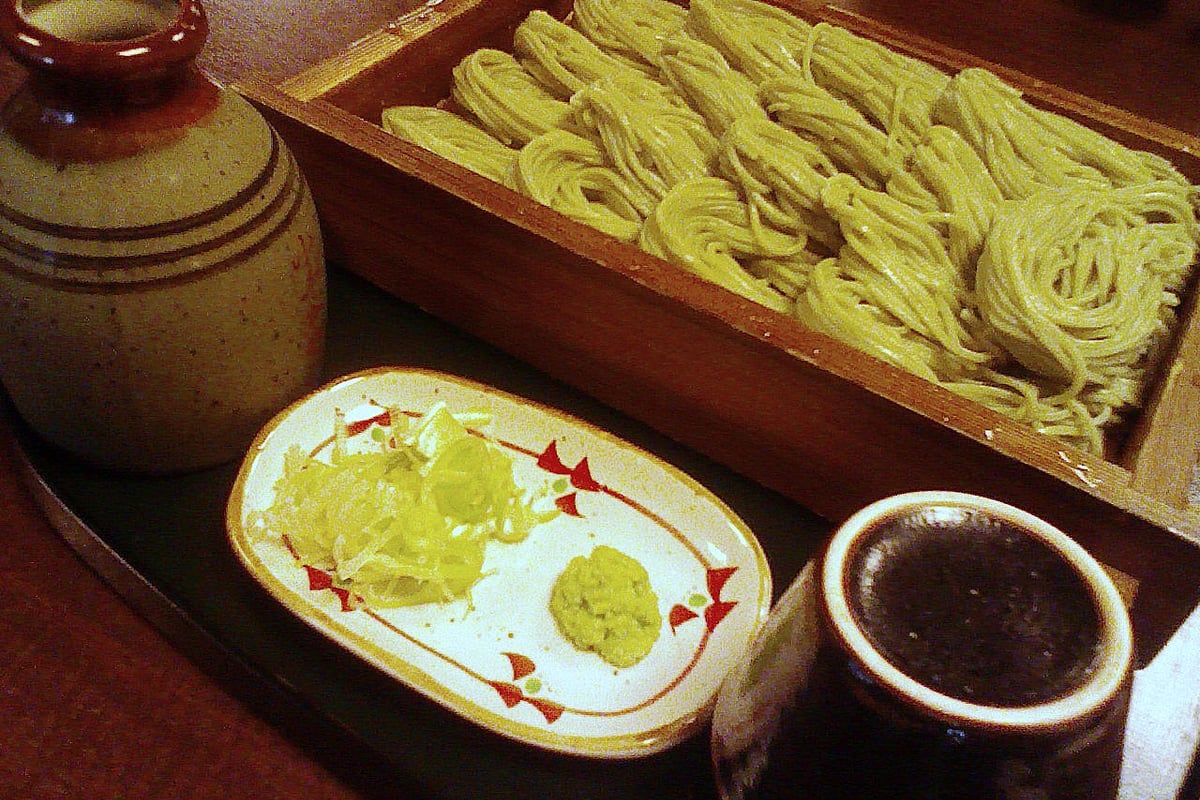
Hegi Soba is a local dish of Niigata Prefecture in which soba noodles made with funori seaweed as a binder are arranged in bite-sized portions on a hegi (square wooden tray). It is said to have originated in the Uonuma region, and Ojiya City and Tokamachi City in particular are known as soba towns. Funori was originally used to size (starch) the threads of textiles such as Ojiya Chijimi. Repurposing this seaweed, familiar in a textile-producing area, for soba making gave rise to this distinctive noodle. Soba bound with funori is prized for its smooth, slippery texture going down the throat and its firm, springy bite. The way the boiled noodles are gathered into bite-sized coils and lined up is called tefuri (bite-sized coiled portions), and its visual beauty is part of the appeal. Serving it with karashi mustard rather than wasabi as a condiment is another custom unique to this area. At specialty restaurants, it can be ordered by the number of people, from a single serving to portions for several, so a group can share soba served on a large hegi. Today it is eaten not only in the Uonuma region but throughout Niigata Prefecture.
Hitsumabushi (Nagoya-Style Chopped Eel Rice)
Hitsumabushi
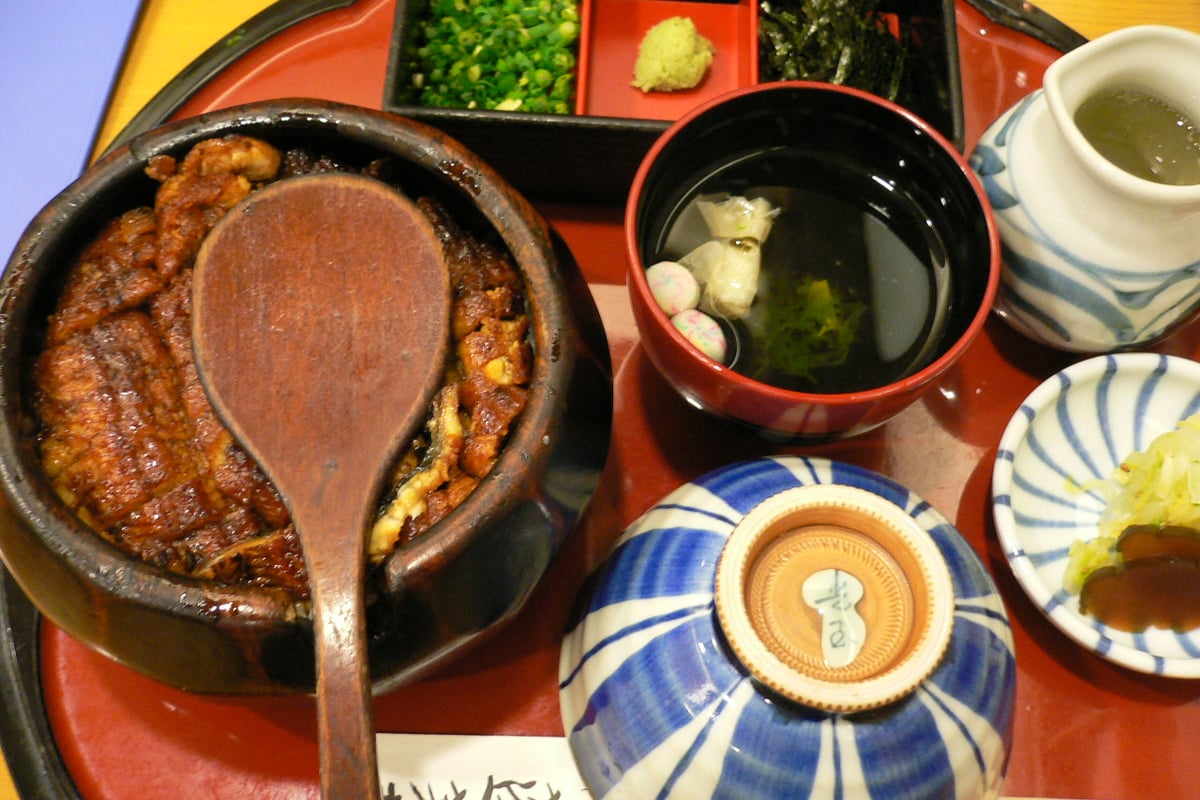
Hitsumabushi is a local dish that originated in Nagoya City, Aichi Prefecture, in which finely chopped grilled eel (unagi kabayaki) is mixed into white rice and served in an ohitsu (a wooden rice tub). Its greatest appeal is that a single serving can be enjoyed in several different ways: the first bowl is savored plain to taste the eel itself, the second is topped with condiments, the third is turned into a chazuke-style dish with dashi or tea poured over it, and the fourth is eaten however one likes. It is said to have been devised in the Meiji era by Atsuta Horaiken in Atsuta Ward, Nagoya City, which began using wooden ohitsu instead of ceramic bowls to prevent breakage during deliveries. Ibasho, in Nishiki 3-chome, also claims to be its birthplace, and the two shops differ on when the dish was actually established. The hiragana name 'hitsumabushi' itself is a registered trademark of Atsuta Horaiken, and today it is widely loved by tourists as one of Nagoya's signature local dishes.
Hoba Miso
Hoba Miso
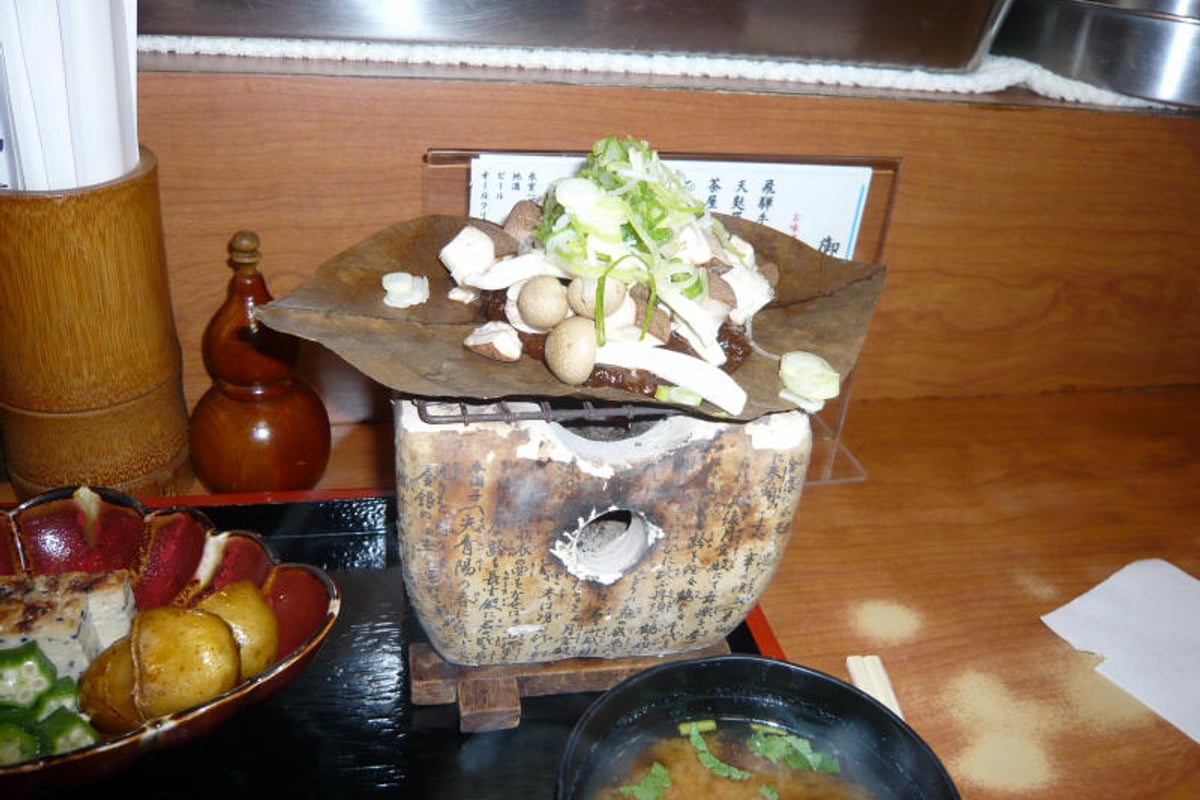
Hoba Miso is a local dish from the Hida-Takayama region in which koji miso is placed on a magnolia (hoba) leaf and grilled over charcoal or on a small hibachi grill. As it cooks, the fragrance of the hoba leaf infuses the miso, bringing out a savory aroma and gentle sweetness. It is said to have originated when woodcutters working in the mountains used hoba leaves as makeshift bowls for their meals, then grilled the leftover miso on the leaf to eat. The custom eventually spread to ordinary households, and grilling miso around the irori (sunken hearth) became a fixture of winter meals in the Hida region. Today it is common to grill the miso together with chopped green onion, mushrooms, or Hida beef, and the dish is a beloved specialty served at ryokan breakfasts and Takayama restaurants. In 2007 it was selected by the Ministry of Agriculture, Forestry and Fisheries as one of Japan's '100 Local Dishes of Farming, Mountain and Fishing Villages,' bringing national recognition to this signature taste of Hida.
Hoto (Flat Noodles Simmered in Miso)
Hoto
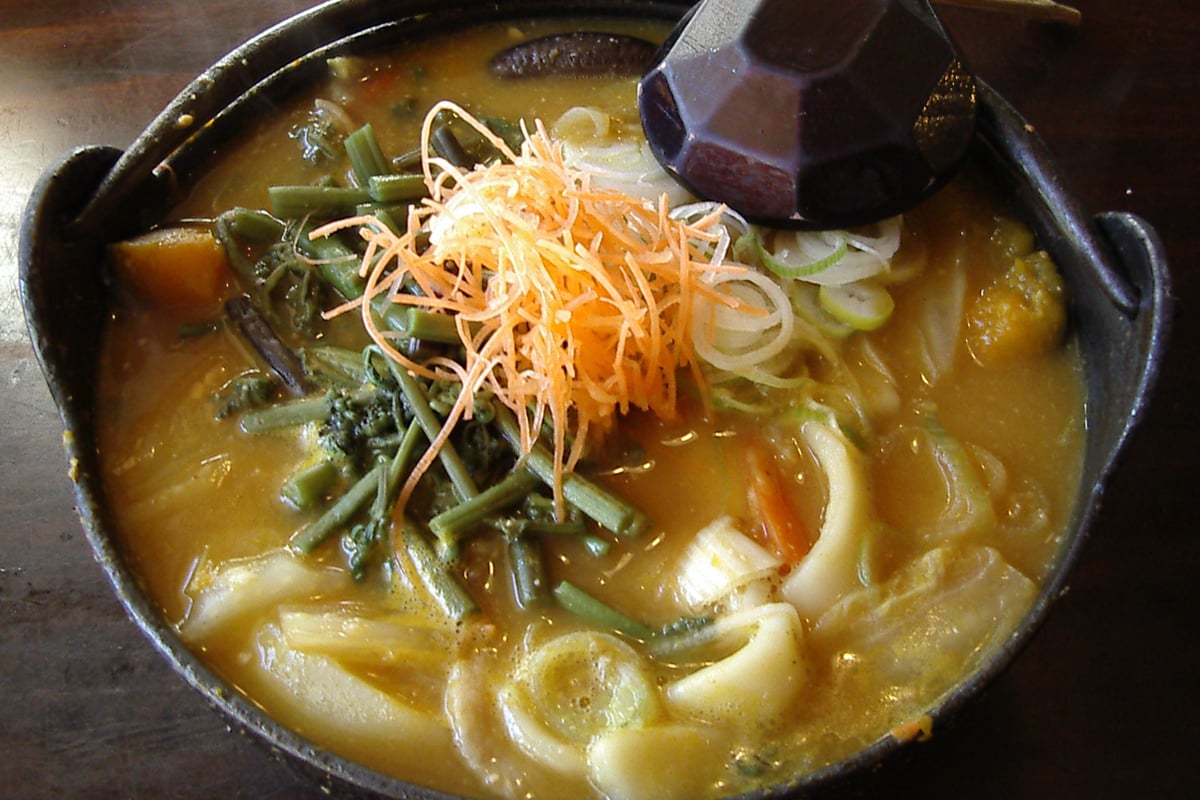
Hoto is a local dish of Yamanashi Prefecture in which fresh noodles, made by kneading wheat flour and cutting it into wide strips, are simmered in a miso-based broth together with kabocha squash and other vegetables. Because the noodles are made without salt, they can go straight into the pot without being boiled first. Since they are simmered with the dusting flour still on them, the broth thickens, stays hot for a long time, and warms the body. It is so well loved that there is even a saying, 'Umai mon da yo, kabocha no hoto' (Kabocha hoto is a tasty thing), and in 2007 it was selected for the Ministry of Agriculture, Forestry and Fisheries (MAFF)'s '100 Selected Local Dishes of Farming, Mountain and Fishing Villages.' About 80 percent of Yamanashi Prefecture is covered by mountain forests, and paddy fields for growing rice were limited. For this reason, a flour-based diet (funshoku), in which wheat and other grains are ground into flour and eaten, took root, and hoto became a staple food in place of rice. In the Kyonan region it is also called 'noshi-ire' or 'noshi-komi.' Today there are many specialty shops in the prefecture, and it is common for them to serve it in individual iron pots.
Imoni (Taro Hot Pot)
Imoni
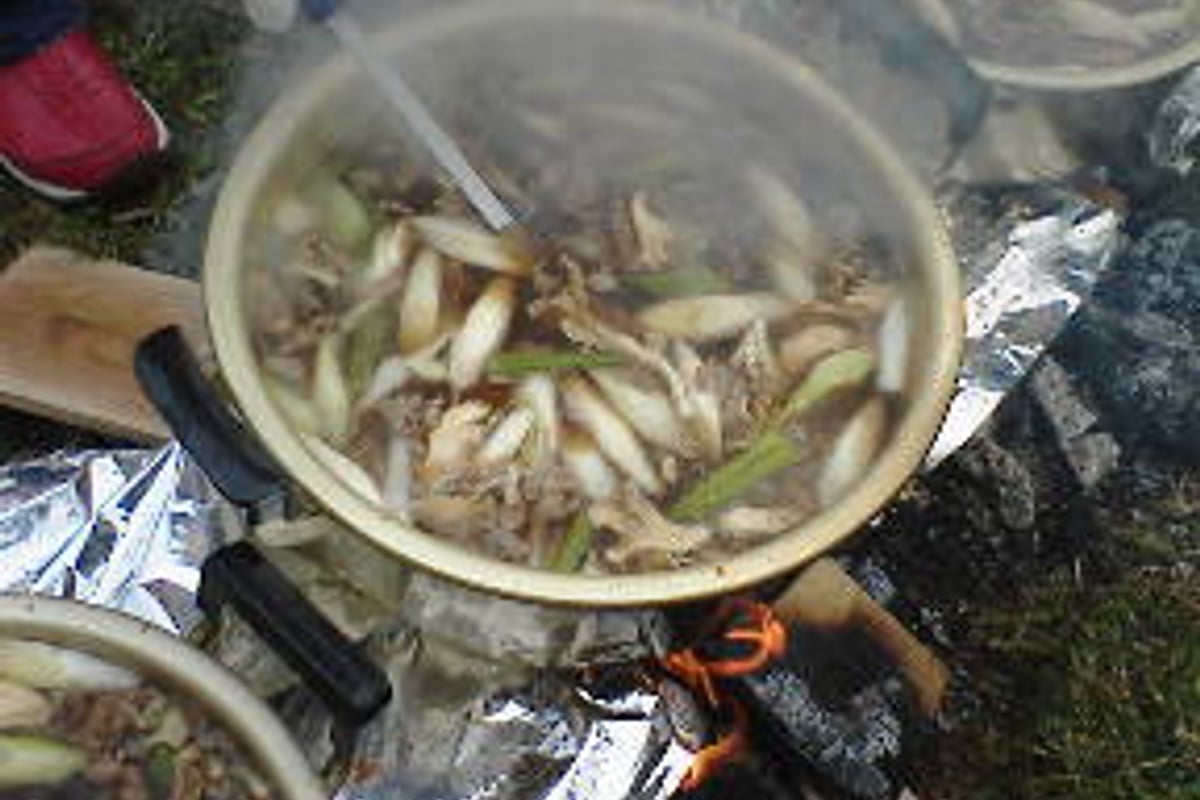
Imoni is a hot pot dish centered on taro grown in Yamagata Prefecture, and every autumn, groups of friends and family gather on riverbanks with pots and firewood for 'Imoni-kai' (communal Imoni-cooking gatherings), a beloved seasonal tradition across the prefecture. Its origins are said to trace back to the Edo-period river trade on the Mogami River, when boatmen around Nakayama Town — an area known for taro production — simmered dried cod from their cargo together with local taro. Seasonings and ingredients vary widely by region: in the inland Murayama region, a sweet-savory beef-and-soy-sauce style is standard, while the Shonai region uses pork and miso, adding mushrooms and deep-fried tofu for a hearty broth. The Mogami region adds wild mountain vegetables and mushrooms, and the Oitama region adds cotton tofu with a hidden touch of miso — each region offering its own distinctive take on the same dish. Every September, the 'Japan's Best Imoni-kai Festival' is held on the banks of the Mamigasaki River in Yamagata City, where about 30,000 servings are prepared in a giant pot 6 meters in diameter.
Ise Udon
Ise Udon
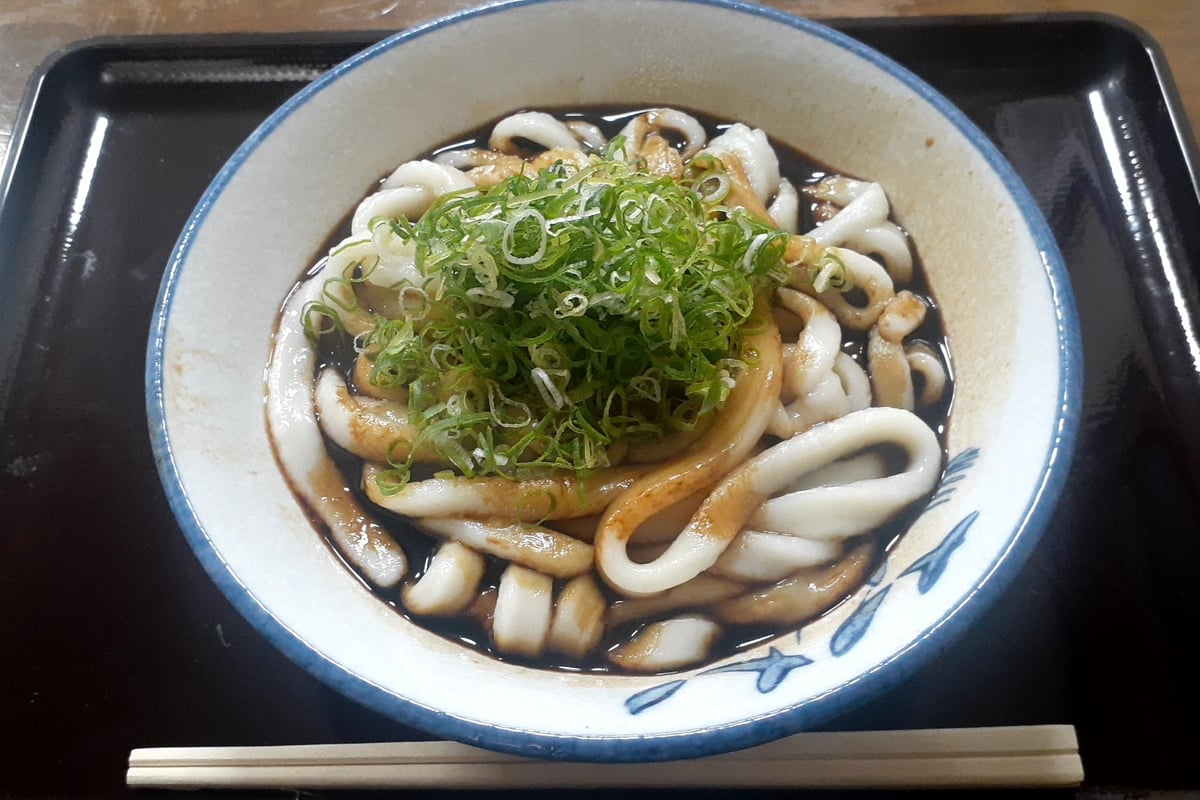
Ise udon is a local dish that has long been eaten in the Ise region, centered on Ise City. Extra-thick noodles, close to 1 cm in diameter, are boiled for about an hour until soft. They are eaten coated with just a small amount of a rich black sauce. The sauce combines tamari soy sauce (a rich soy sauce made mainly from soybeans) with dashi made from katsuobushi (dried bonito flakes), kombu, and other ingredients. Although it is jet black, it tastes surprisingly light. The noodles have almost no firmness (koshi), and their fluffy, soft and chewy texture is their greatest feature. When the Ise pilgrimage (Oise-mairi) flourished in the Edo period, it was served to pilgrims tired from long journeys as a food that is gentle on the stomach. Because it could be served quickly and eaten easily, it is said to have become known as a specialty of the shrine-front town. The name 'Ise udon' took hold relatively recently, from the Showa 40s onward. In fiscal 2024 (Reiwa 6), it was recognized as one of the Agency for Cultural Affairs' '100-Year Foods.'
Kaburazushi
Kaburazushi
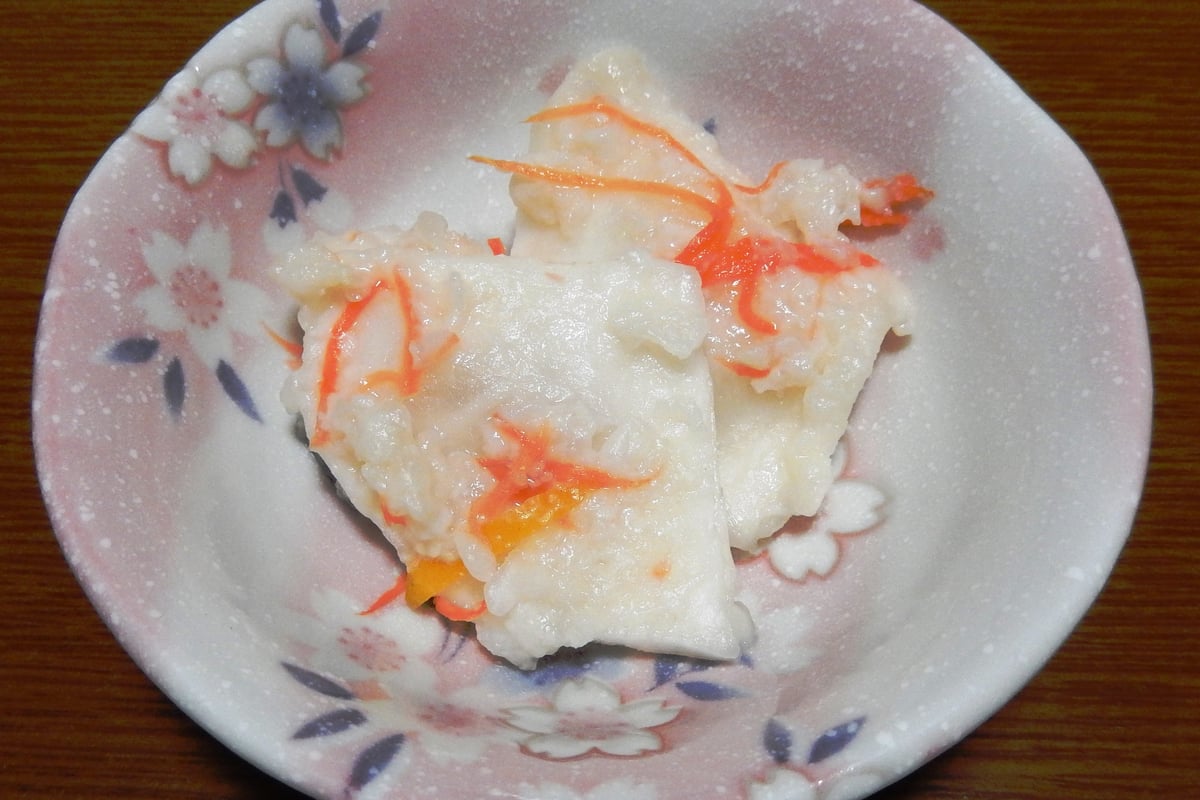
Kaburazushi is a fermented dish representative of Ishikawa Prefecture, made by sandwiching salted yellowtail between slices of salted 'kabura' (a Kaga heirloom vegetable, a type of turnip) and pickling them together with rice malt (koji) to ferment. Unlike Edo-style sushi, which uses vinegared rice, this is a type of 'narezushi,' drawing out sourness and umami through lactic fermentation, and it has long been cherished in the Kanazawa and Kaga regions as a festive dish and gift item from winter into the New Year. The richness of the yellowtail fat, the sweetness of the koji, and the crisp texture of the kabura layer together, deepening in flavor with every bite. Its origins remain uncertain, with several theories in circulation — that fishermen of Kanaishi-cho prayed for a bountiful catch and safe voyages by eating it as a New Year dish, or that it was served to a Maeda domain lord — but none has been confirmed. Today it is still sold as a winter-only item at Kanazawa's pickle shops and traditional restaurants, and remains one of Ishikawa's representative winter delicacies.
Kiritanpo Nabe
Kiritanpo Nabe
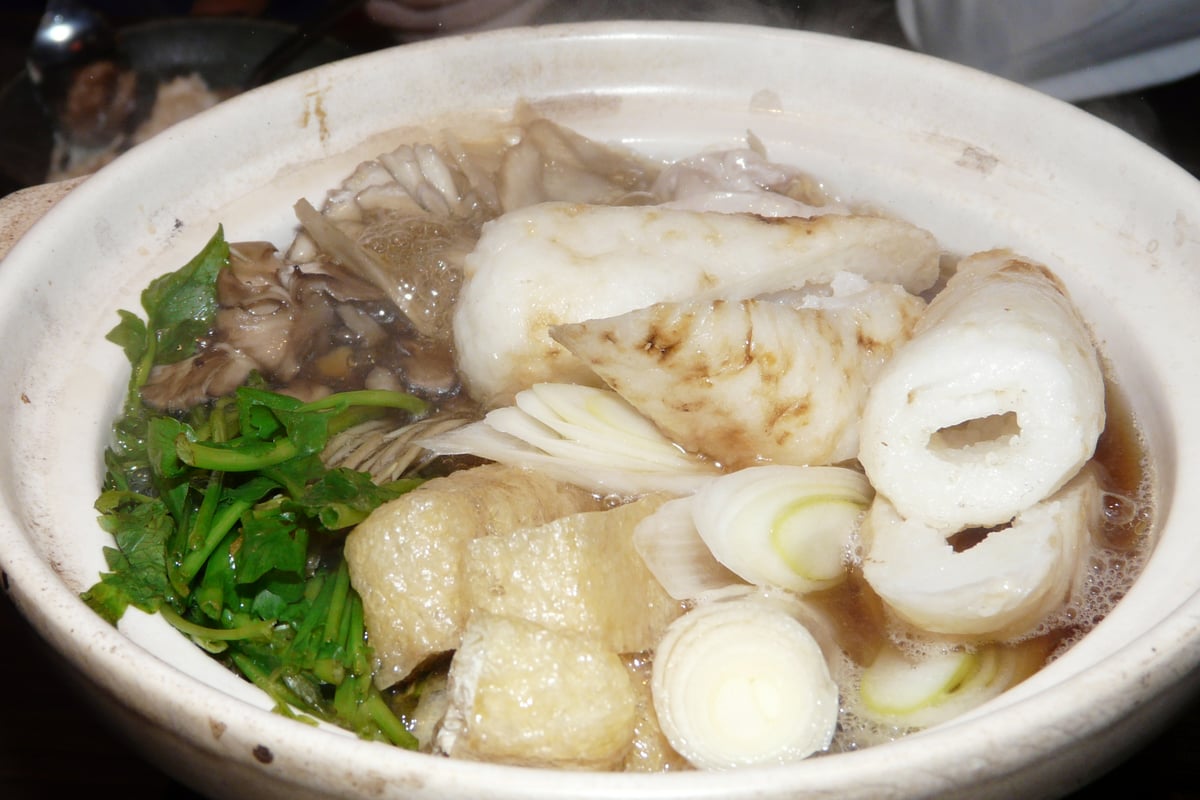
Kiritanpo Nabe is a signature local dish of Akita Prefecture in which kiritanpo — half-pounded rice wrapped around a cedar stick and grilled — is simmered in a broth made from Hinai-jidori (a breed of free-range chicken). It is said to have originated in the northern part of the prefecture, centered on Odate City and Kazuno City, where workers who stayed in the mountains for charcoal-making or cedar logging would mold leftover rice onto sticks and grill it over a fire. The soy-sauce-based broth, rich with the umami of Hinai-jidori, is combined with mountain ingredients of Akita such as burdock root, maitake mushroom, Japanese parsley (seri), and long green onion, and the kiritanpo is added at the end and simmered briefly so it soaks up just the right amount of broth. Made in homes from the season of new rice through winter, it is also cherished as an essential dish for celebrations, funerals, and entertaining guests.
Konnyaku Miso Oden
Konnyaku Miso Oden
Konnyaku Miso Oden is a local specialty of Gunma Prefecture made by skewering parboiled block konnyaku or freeze-dried konnyaku (shimi-konnyaku) and generously coating them with a rich, sweet-savory miso sauce. Gunma Prefecture is Japan's top producer of konnyaku potato, accounting for about 90% of the national output, and this dish developed as a way to fully enjoy the konnyaku that has long been a local staple. Gunma winters are known for a dry, cold seasonal wind called the 'Karakkaze,' and it is said that oden - which warms the body from within - has traditionally been made in many households for this reason. The blend of the miso sauce varies by household and shop: some use mirin for a sweet-savory flavor, while others add yuzu citrus or sesame for extra fragrance. In some areas, the dish is also known as 'Hippataki Oden.'
Kozuyu
Kozuyu
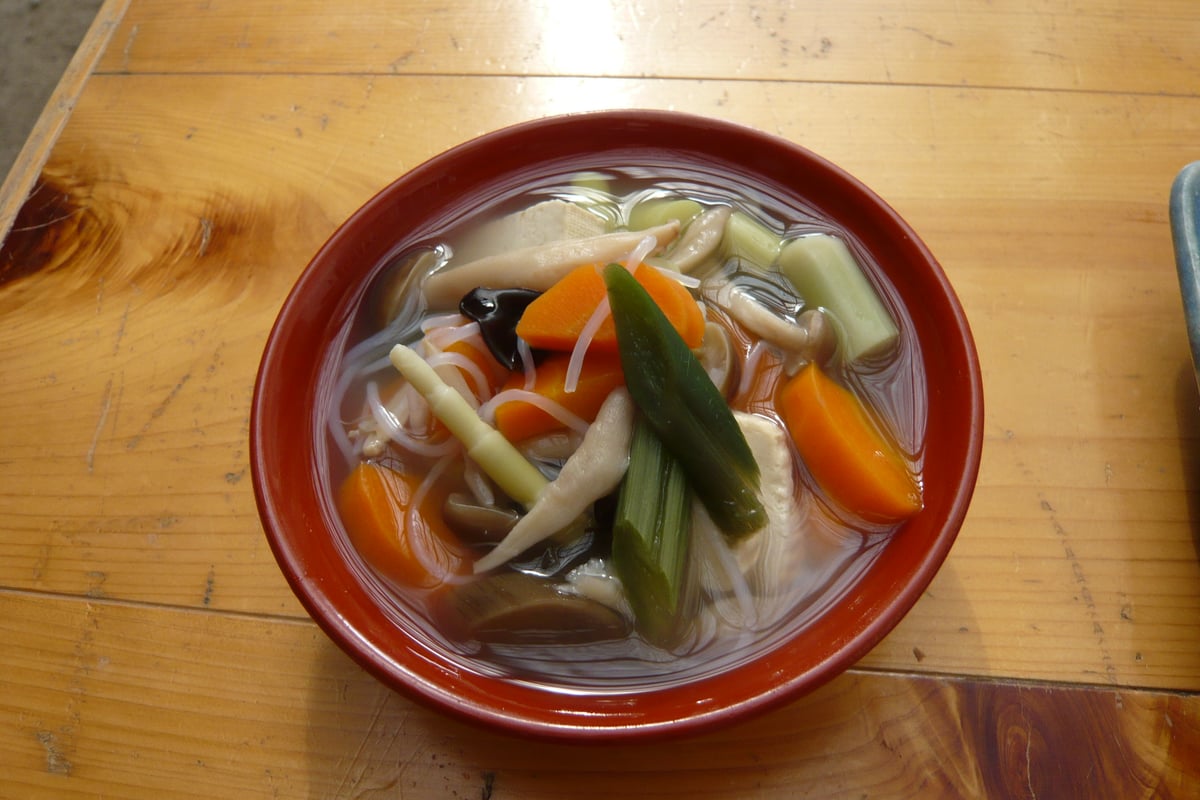
Kozuyu is a soup served at celebratory feasts in the Aizu region, made with an elegant broth from dried scallops (dried adductor muscle) and an odd number of ingredients — taro, carrot, shiitake mushroom, wood ear mushroom, shirataki noodles, and bean-flour fu (wheat gluten) — simmered together and lightly seasoned. It is typically served in shallow Aizu-nuri lacquerware bowls called 'teshiozara,' where the glossy vermilion of the lacquer complements the colors of the soup. As an essential dish for hospitality on celebratory occasions such as New Year, weddings, and memorial services, it has been passed down for generations in Aizu households. Using dried scallops — a precious seafood ingredient — for the broth was itself considered a luxury in landlocked Aizu, and the dish came to be regarded as the ultimate way to entertain guests. A distinctive custom allows guests to have as many refills as they like, making Kozuyu more than just a dish — it embodies the region's culture of hospitality and celebration. Each household has its own subtle variations in the mix and cut of ingredients, handed down as a family recipe.
Namerou
Namerou
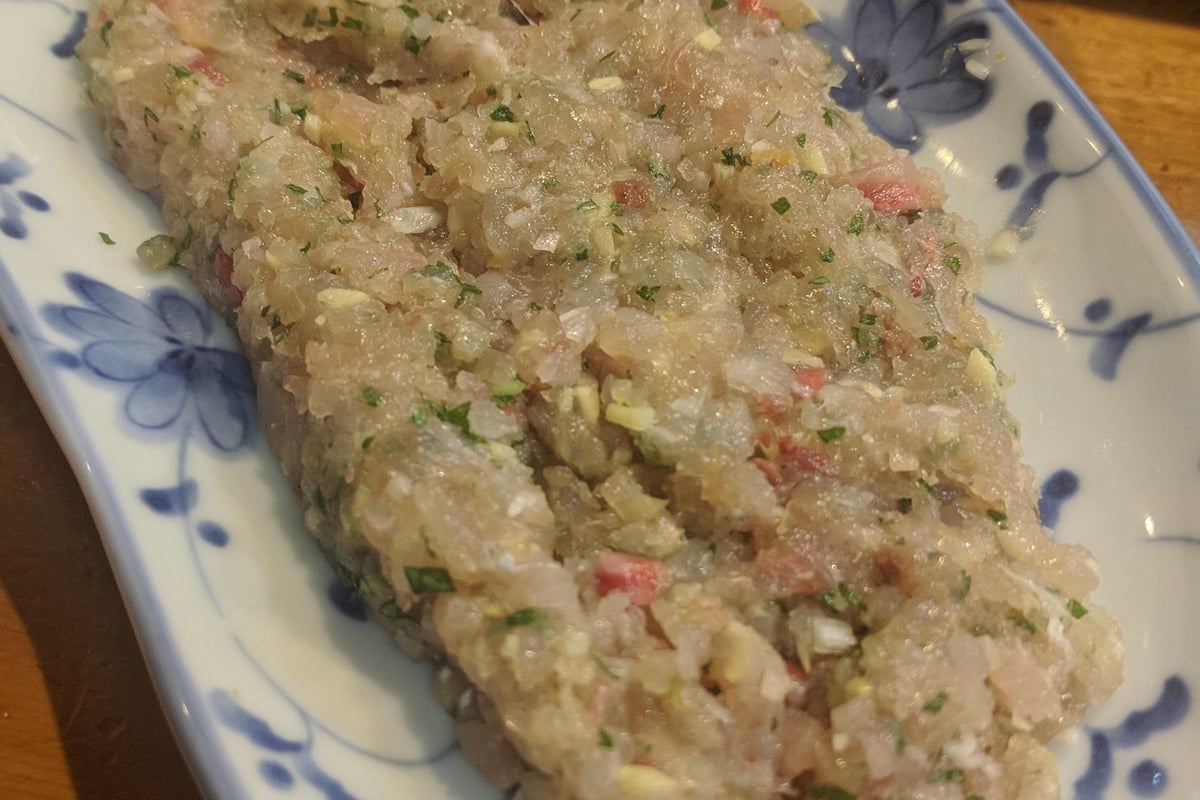
Namerou is a fisherman's dish handed down along the coast of the Boso Peninsula in Chiba Prefecture. Oily fish such as horse mackerel (aji) or sardines are combined with miso, green onion, ginger, and other aromatics, then minced with a knife until the mixture turns sticky. It is said to have originated as a dish fishermen could prepare quickly aboard a rocking boat—miso was used instead of soy sauce because soy sauce would spill, while miso keeps well. The name is said to come either from the dish being 'so delicious you want to lick (nameru) the plate clean,' or from the sticky minced fish clinging to the plate so that you 'have to lick it to finish it.' Today Namerou is enjoyed not only as a home-cooked dish but also as a standard item at diners and izakaya throughout the Boso region—a simple yet deeply flavorful dish where the richness of the oily fish and the fragrance of the aromatics shine.
Okinawa Soba
Okinawa Soba
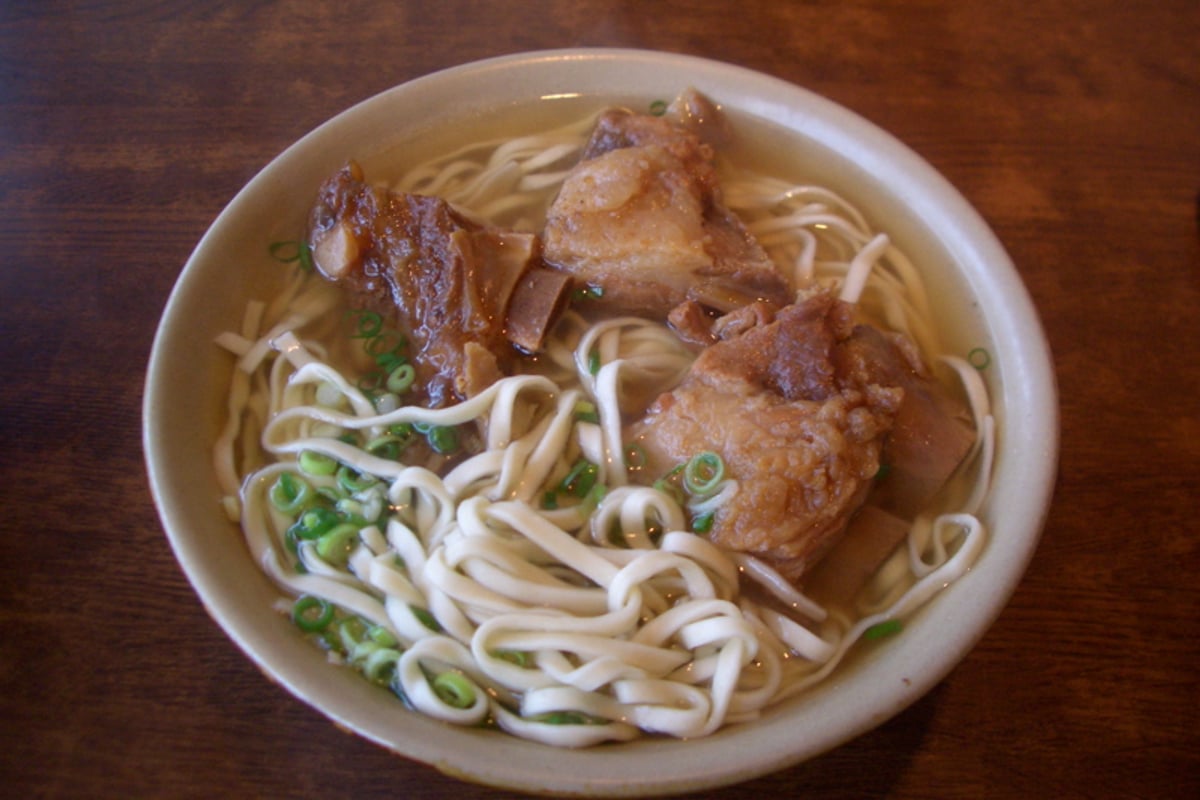
Okinawa soba is a beloved Okinawan noodle dish made with thick wheat noodles kneaded using kansui alkaline water — no buckwheat flour at all — served in a rich broth of pork bone and bonito, and topped with simmered pork belly, kamaboko fish cake, green onion, and red pickled ginger. It is said to have originated when a soba shop opened in Naha in the mid-Meiji era, when the dish was initially called 'suba' or 'Chinese soba' (shina soba). To distinguish it from Japanese soba, the name 'Okinawa soba' became established after Okinawa's reversion to mainland Japan in 1972, and in 1978 the Japan Fair Trade Commission approved the special designation 'Honba Okinawa Soba' (Authentic Okinawa Soba) for its use. The prefecture also has regional variants such as Miyako soba and Yaeyama soba, which differ in noodle thickness and broth preparation, and the dish has been selected as one of Japan's 100 Best Rural Dishes. Served not only at specialty shops but also at neighborhood eateries, it is eaten throughout the day from breakfast to late-night snacks, making it a noodle dish deeply woven into everyday life in Okinawa.
Okkirikomi
Okkirikomi
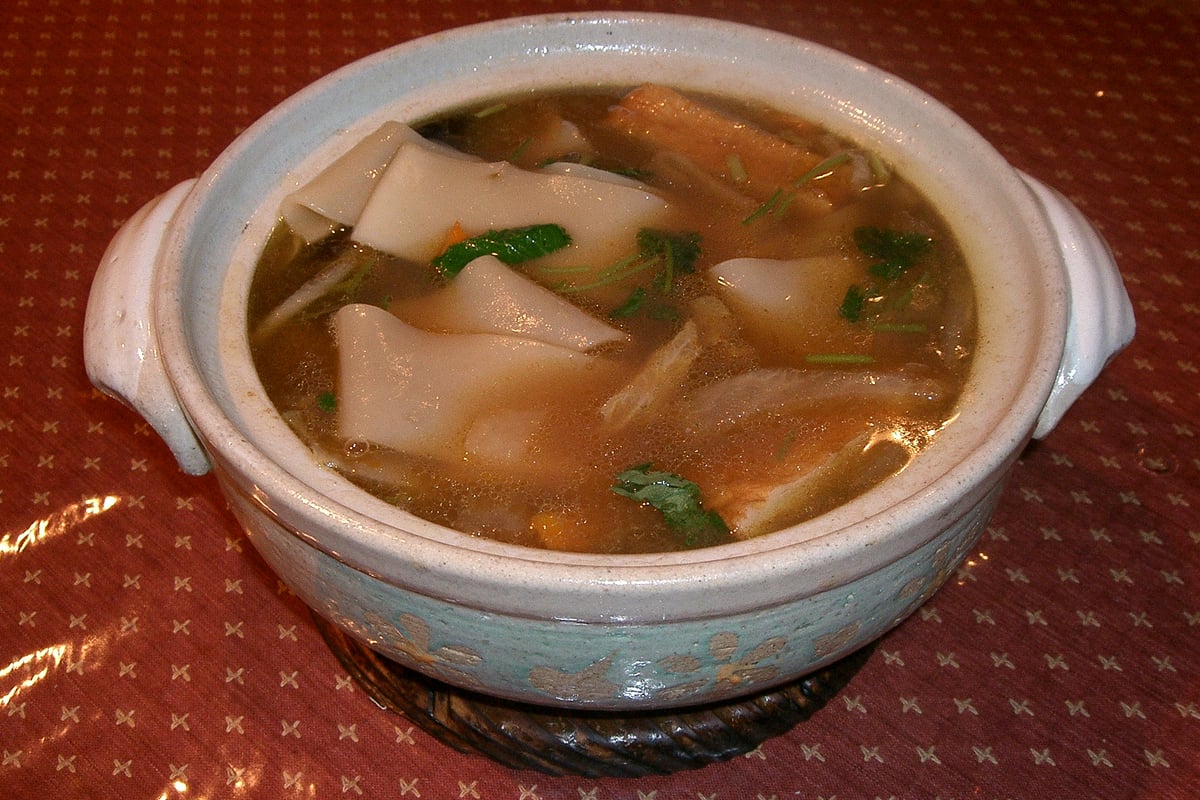
Okkirikomi is a signature local dish of Gunma Prefecture in which wide, flat wheat noodles are simmered slowly with seasonal vegetables such as taro, daikon radish, and mushrooms in a hearty miso- or soy sauce-based broth. The name is said to come from the process of rolling out the dough with a rolling pin, cutting it with a knife ('kirikomi'), and adding it straight to the pot; because the noodles go into the broth unboiled, still dusted with flour, the soup thickens naturally into a smooth, mellow broth. In Gunma, a major wheat-growing region, the dish is said to have spread as a meal that women in silk-farming households could prepare quickly and in large batches between farm chores, and it became an everyday staple from the mid-Edo period onward as stone hand mills came into common use. In 2014 it was designated an Intangible Folk Cultural Property of Gunma Prefecture as 'Gunma's Flour-Based Food Culture: Okkirikomi,' and it remains a beloved symbol of the region's food culture in both homes and eateries today.
Shinshu Soba
Shinshu Soba
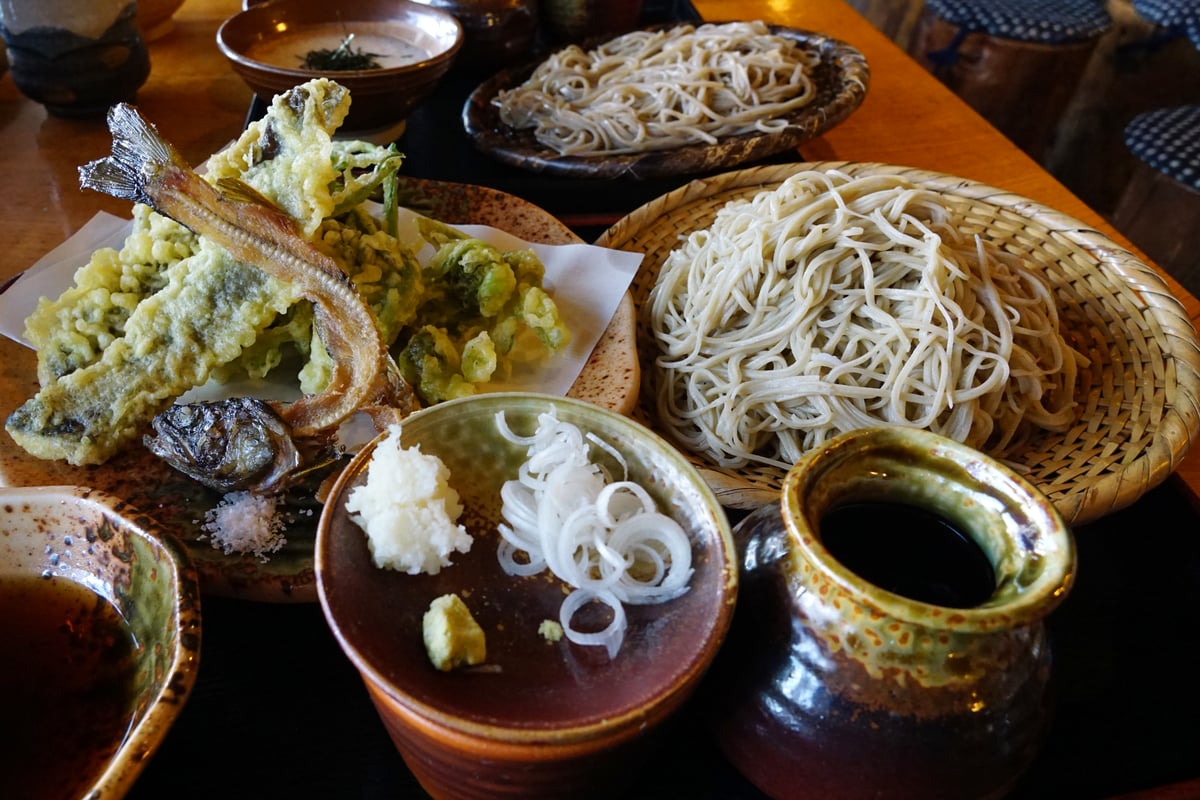
Shinshu Soba is Nagano Prefecture's signature noodle dish, made from buckwheat grown in various parts of the prefecture. The cool highland climate, where temperatures drop at night, is well suited to growing buckwheat, and Nagano Prefecture is one of Japan's leading buckwheat producers, ranking second in the nation with 3,960 tons in 2020 (Reiwa 2). Buckwheat, which bears fruit even in mountain areas where rice and wheat grow poorly, has long been a crop that supported people's livelihoods. Shinshu is also said to be the birthplace of 'soba-kiri' (buckwheat cut into noodles), and the oldest record of it, dated 1574 (Tensho 2), survives at Joshoji Temple in Okuwa Village, Kiso District. There is also a theory that it originated at Motoyama-juku (present-day Shiojiri City) on the Nakasendo highway, but there are other theories as well, such as one placing its origin in Koshu (Yamanashi Prefecture). Within the prefecture, soba with distinct local character has been handed down from place to place, such as Togakushi soba and the soba of the Kaida Kogen highlands. During the autumn harvest season, soba festivals are held throughout the prefecture, where visitors can enjoy freshly harvested shin-soba (new-crop soba).
Shizuoka Oden
Shizuoka Oden
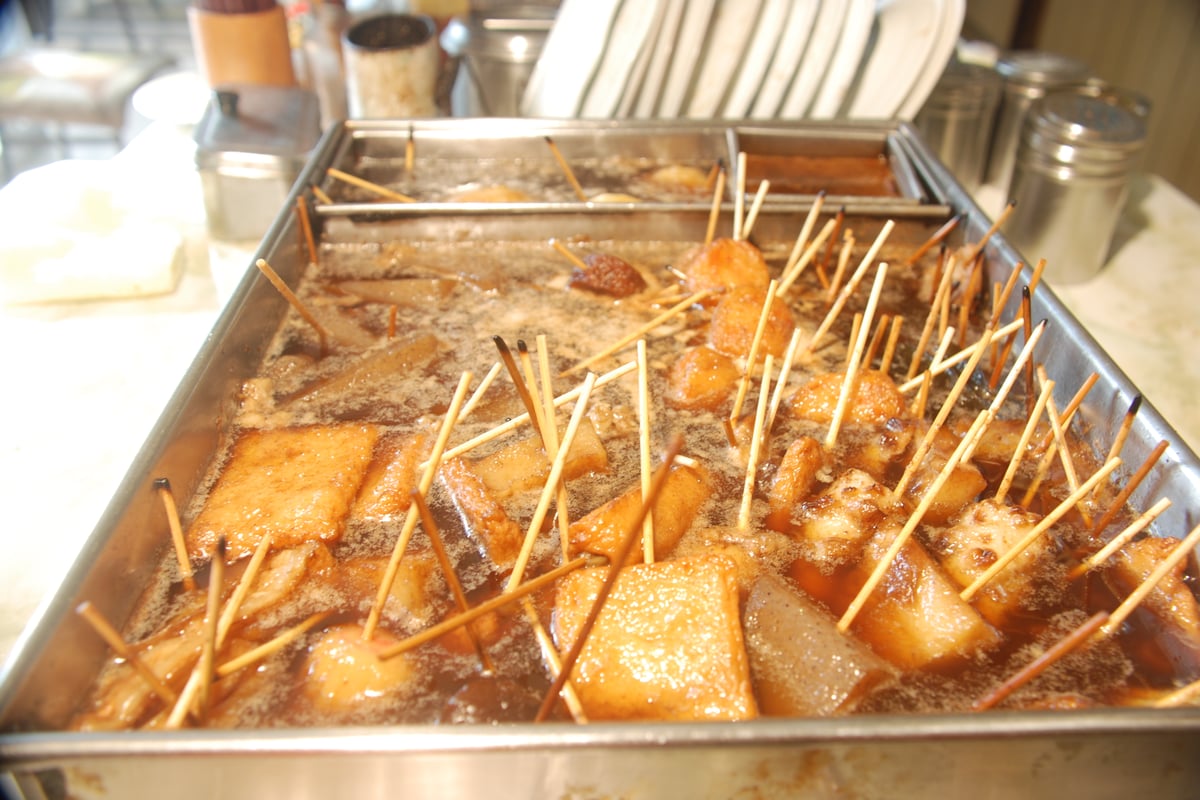
Shizuoka oden is a local dish of Shizuoka City in which skewered ingredients are simmered in a dark broth made from beef tendon and other ingredients. Ingredients include kuro hanpen, beef tendon, daikon radish, konnyaku, and eggs. A distinctive feature is the generous sprinkling of dashi-ko (powdered fish flakes), made by grinding dried fish shavings into powder, and aonori (green laver) just before eating. Because the broth uses dark soy sauce and is simmered while being topped up over and over, it takes on a blackish color. It is said to have begun in the Taisho period, and after the war it grew in popularity when beef tendon and pork offal, which had been discarded, began to be used as ingredients. A very Shizuoka touch is that oden can be bought one skewer at a time not only at specialty shops and izakaya but also at delis and at dagashiya (old-fashioned penny-candy shops). Children have grown up eating oden at dagashiya as an afternoon snack. After the war, a large number of oden stalls lined the streets near Shizuoka City Hall. Their successors, Aoba Oden-gai and Aoba Yokocho, are still lined with oden shops today.
Simmered Hana Ingen Beans (scarlet runner beans)
Hana Ingen no Nimame
Simmered Hana Ingen Beans is a local staple made by slowly simmering 'hana mame' (scarlet runner beans), a crop grown in the Agatsuma area in northern Gunma Prefecture, until tender. Hana mame are large beans that grow only in the cool highlands at elevations of 900 to 1,300 meters, and they are a specialty of the Agatsuma area, including Tsumagoi village as well as Nakanojo, Kusatsu, and Naganohara towns. To make the dried beans easier and more enjoyable to eat, a method of slow simmering took root in the region, bringing out a rich flavor reminiscent of chestnuts. The dish is also served on festive occasions such as festivals, ceremonial events, and New Year's osechi, and in some households the harvested beans are even offered at the family shrine, reflecting how deeply rooted the ingredient is in daily life. Beyond simmered beans, hana mame is also enjoyed in other preparations such as candied beans (amanatto), red rice (sekihan), and yokan.
Soka Senbei
Soka Senbei
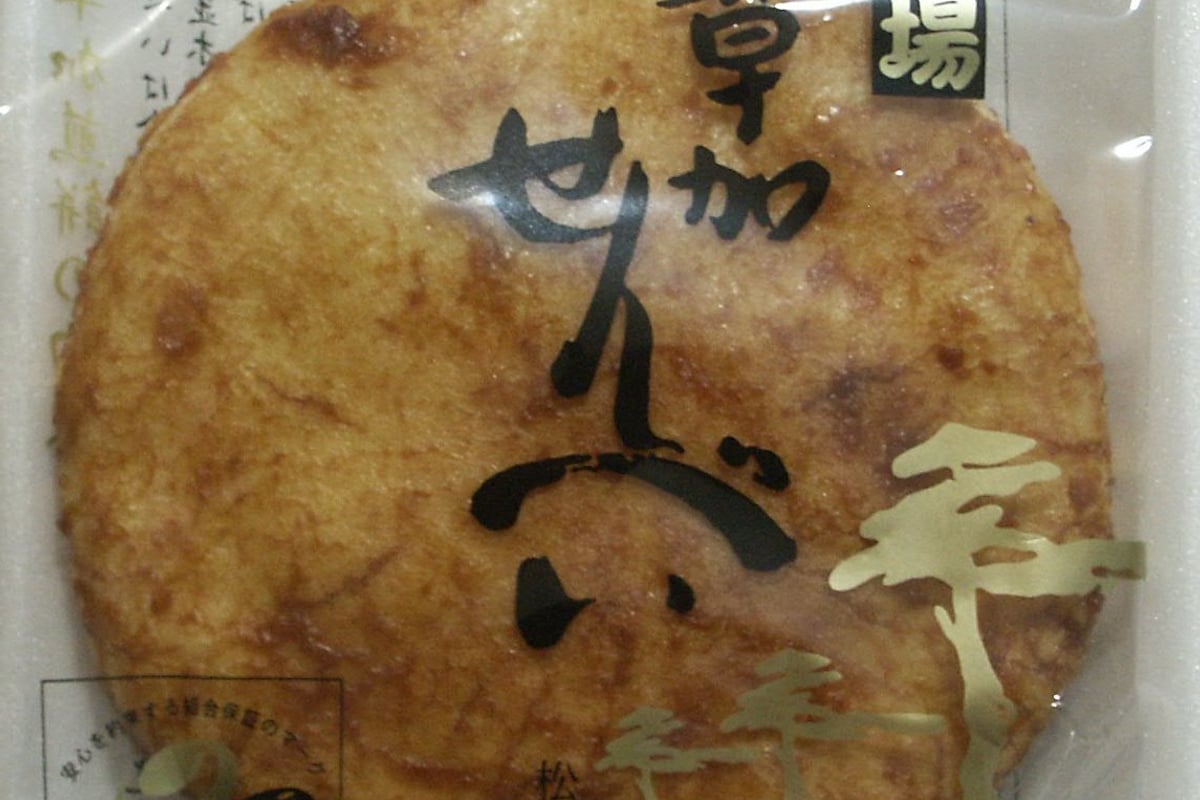
Soka senbei is a hard-baked soy sauce rice cracker that originated in Soka City, Saitama Prefecture. Rice steamed and pounded into dough is sun-dried, then slowly grilled over charcoal before being brushed with soy sauce. Soka has long been known as a rice-growing region, and as a post town on the Nikko Kaido highway lined with teahouses for travelers, a trade grew up selling grilled rice cakes made from dumpling-shaped dried rice, a preserved food. When soy sauce production flourished in the late Edo period, the current style of brushing soy sauce onto grilled dough took hold, and from the Meiji era onward specialist cracker shops multiplied, spreading Soka senbei's fame. It is known for its crisp bite and fragrant soy sauce aroma, and today many shops in the city still make and sell it, making it one of Saitama's best-loved souvenir sweets.
Sukiyaki
Joshu Sukiyaki
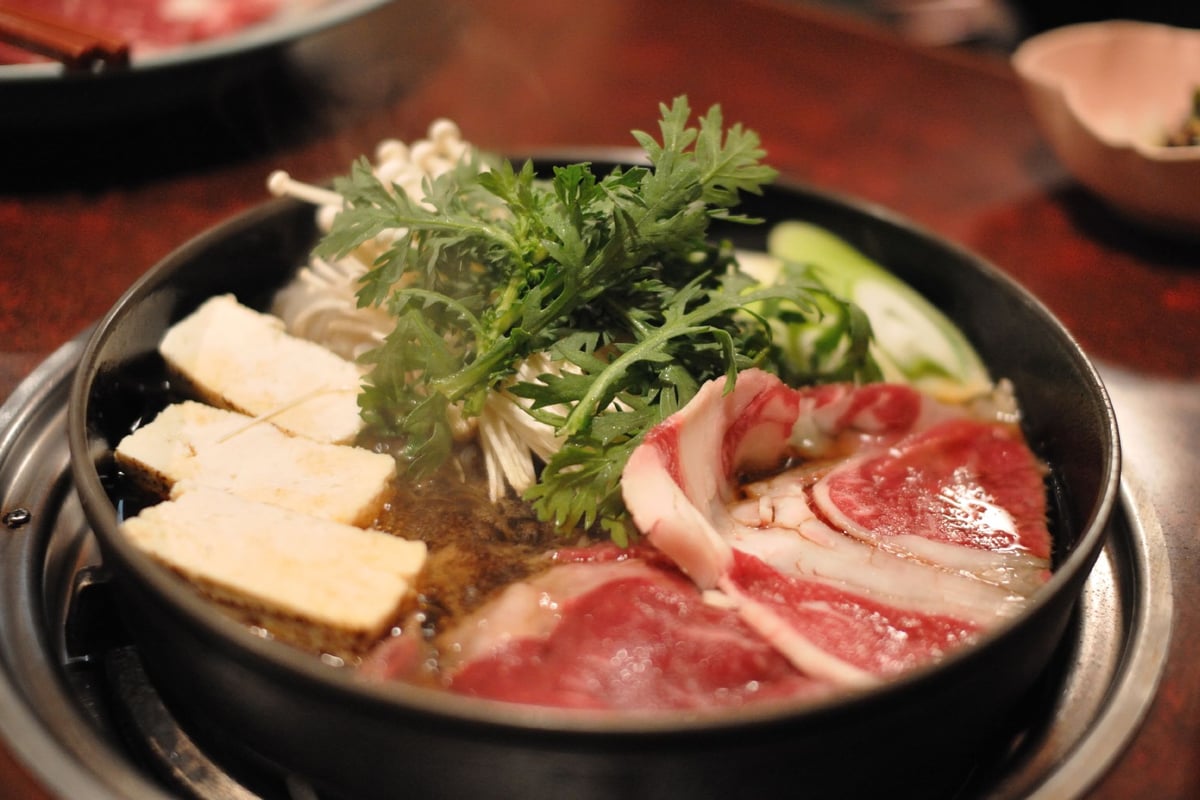
Gunma Prefecture's sukiyaki is a local dish nurtured in a rare place where all of its core ingredients — beef, negi (leek), konjac, and shiitake mushrooms — can be sourced entirely within the prefecture, earning it the nickname “100% self-sufficient sukiyaki.” The blessings of Gunma's fields and pastures come together in a single pot: the branded Joshu beef, sweet, melt-in-the-mouth Shimonita negi, konjac (Gunma is Japan's top producer), plus napa cabbage, shungiku (garland chrysanthemum), and fresh shiitake mushrooms. In 2014, Gunma Prefecture declared itself a “Sukiyaki Supporting Prefecture” and has promoted the appeal of its farm and livestock products through the “Gunma Sukiyaki Action” campaign. On November 29, “Gunma Sukiyaki Day,” sukiyaki even appears on school lunch menus across the prefecture, keeping the food culture alive community-wide. Beyond the classic Kanto-style method of simmering everything in warishita sauce, the dish's depth also shows in variations such as the Kansai-style approach of searing the meat first, or arrangements using Joshu shamo (a local chicken breed), with each restaurant offering its own distinct take.
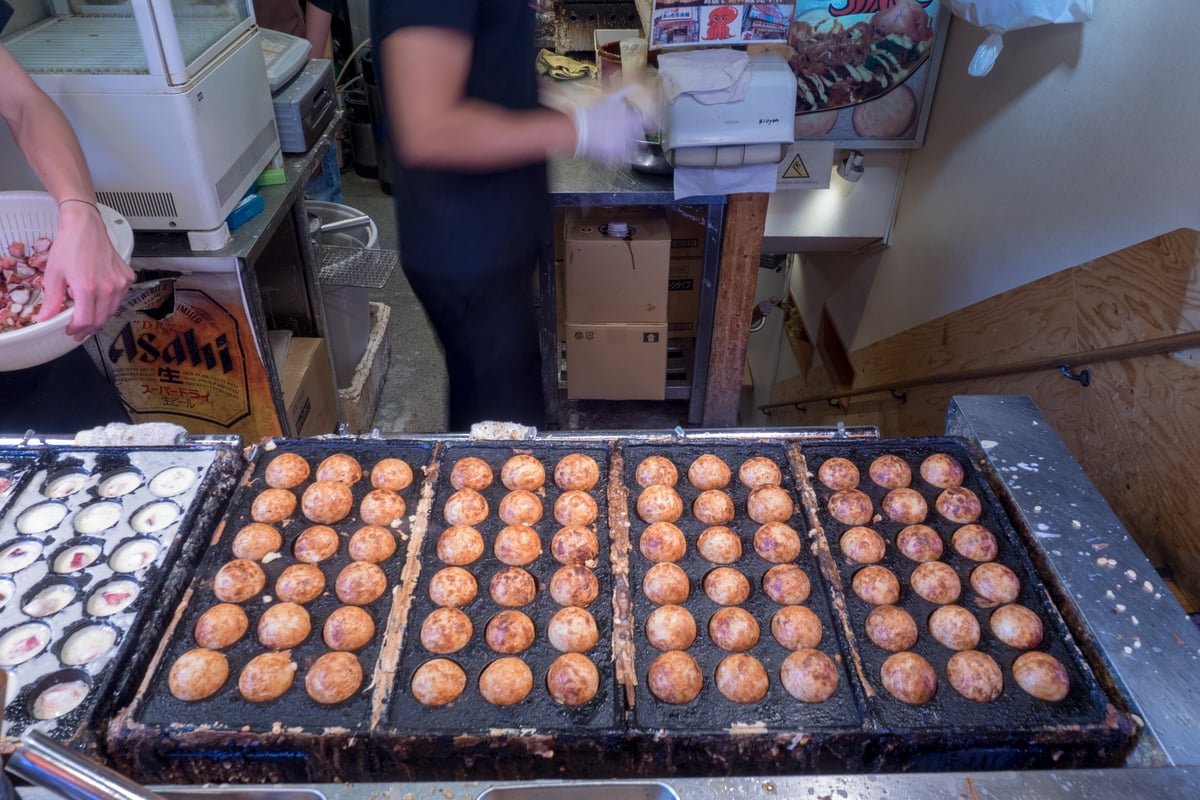
Takoyaki
Takoyaki
Takoyaki is an Osaka konamon (flour-based dish) made by adding chopped octopus and tenkasu (tempura bits) to a batter of wheat flour mixed with dashi and egg, then grilling it into balls. It is cooked on a special iron plate lined with round hollows and finished so that it is fragrant on the outside and soft and runny inside. The classic way to eat it is topped with sauce, aonori (green laver flakes), and dried fish flakes (kezuribushi). Its roots are said to lie in chobo-yaki, which was popular with children at dagashiya (cheap candy shops) and festival fairs (ennichi) from the late Meiji era through the Taisho era, and in the later rajio-yaki. In the early Showa era, rajio-yaki made with octopus as the filling began to be sold in Osaka City. Aizuya (会津屋) in Nishinari Ward, Osaka City, is known as the originator that created octopus-filled takoyaki in 1935 (Showa 10). At first it was eaten with nothing on it, but thick sauce appeared after the war, and the current style is said to have taken hold then. Many households in the prefecture own a takoyaki maker, and it is loved as the soul food of the people of Osaka Prefecture.
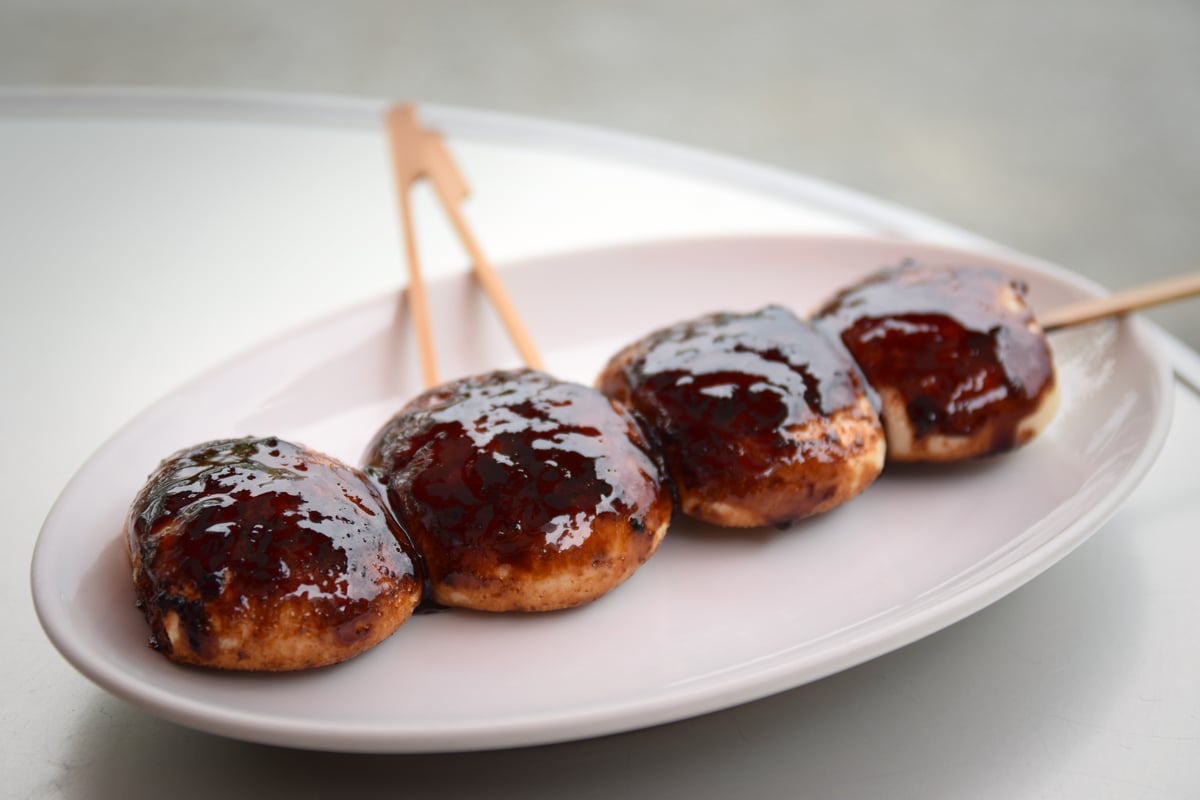
Yaki Manju (grilled miso-glazed buns)
Yaki Manju
Yaki Manju is a soul food representative of Gunma Prefecture: a dough of wheat flour fermented with rice koji is steamed into fist-sized round buns, skewered, generously coated with a sweet-savory miso glaze, and grilled over charcoal until fragrant. The distinctive style of skewering steamed buns with no bean-paste filling and grilling them is unusual even by national standards, and specialty shops and long-established stores are found throughout the prefecture, from Maebashi and Takasaki to Isesaki and Numata. The most widely accepted theory traces its origin to the late Edo period, when Ruizō Harashima of Maebashi is said to have devised a 'miso-pickled bun,' whose novel use of doburoku (unrefined sake) as a fermenting agent and the idea of skewering the buns caused a stir at the time. Long served at festival stalls and local fairs, it remains a fixture of community events such as cherry-blossom viewing and summer festivals today.
Yobuko Squid
Yobuko Ika
Yobuko Ika refers to ikizukuri (live sashimi) made from squid such as yariika (spear squid) caught in the Genkai Sea around Yobuko, Karatsu City, Saga Prefecture, and served while still alive and nearly transparent. Yobuko Port sits close to prime fishing grounds in the Genkai Sea and is known as a fishing town where fresh squid is landed daily; squid dishes have developed here alongside the local morning market culture. The squid, which barely moves on the plate and is so transparent that the pattern of the dish shows through, is prized by visitors as proof of its freshness. The yariika squid mainly used is also registered as a 'Pride Fish,' a designation recommended by fishing industry representatives nationwide to represent their region. After enjoying the sashimi, it is customary to eat the remaining ears and legs deep-fried as tempura or grilled with salt, leaving nothing to waste — making it the signature dish that supports Yobuko's reputation as the 'town of squid.'
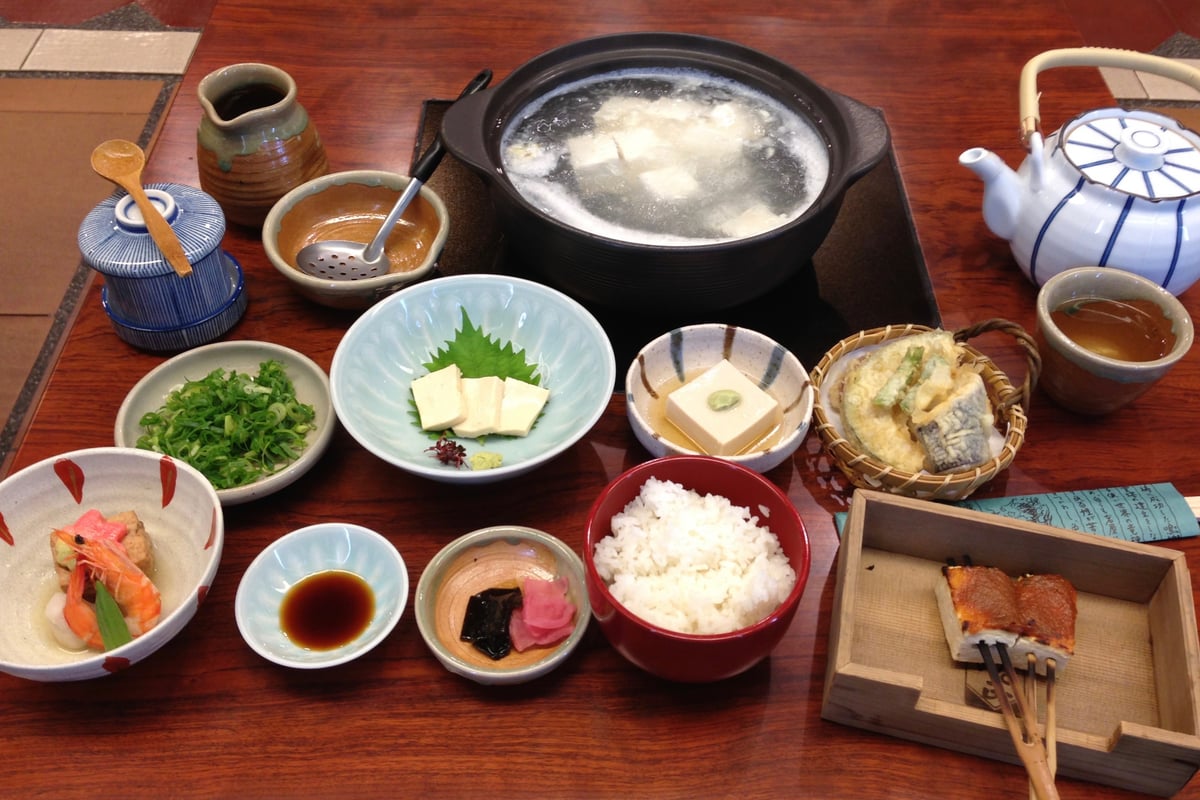
Yudofu (Simmered Tofu Hot Pot)
Yudofu
Yudofu is a simple local dish of Kyoto in which tofu is gently warmed in an earthenware pot filled with kelp dashi and served with ponzu sauce and condiments. Known to have originated at the approach to Nanzen-ji Temple in Sakyo Ward, Kyoto City, it developed as a shojin cuisine (Buddhist vegetarian cooking) dish for savoring the flavor of tofu itself. Kyoto, blessed with high-quality groundwater, has long had a thriving tofu-making tradition, and the quality of the water and soybeans is said to greatly affect the flavor. Although known as a symbol of winter, specialty shops around Nanzen-ji actually offer it year-round, and it is one of the Kyoto dishes popular with tourists as well. Though understated, its depth of appeal lies in the careful attention paid to the temperature and texture of the dashi and tofu.
Dongara-jiru (Winter Cod Miso Soup)
Dongara-jiru (Kandara-jiru)
Dongara-jiru is a winter specialty of the Shonai region in Yamagata Prefecture — a hearty miso-based hot pot made from Pacific cod that gather along the coast to spawn, known locally as 'kandara' (winter cod). Almost the entire fish is used, not just the flesh but also the organs, milt, skin, and bones. The word 'dongara' refers to fish bones and offal, and the name is said to derive from using the flesh and bones without waste. The dish is said to have originated as a fisherman's meal that Shonai fishermen ate on board their boats or on the beach to ward off the cold, and its defining feature is a rich, deep flavor created by dissolving the fatty cod liver into the broth. Winter cod weighing 4 kg or more, caught during the 'kan' (coldest) season from early January to early February, is considered the most delicious, and during this period Tsuruoka City and Sakata City hold 'Kandara Matsuri' (winter cod festivals) where dongara-jiru is served from large pots. Traditionally, green onion is not added, and the authentic way to finish the dish is by topping it with rock nori.
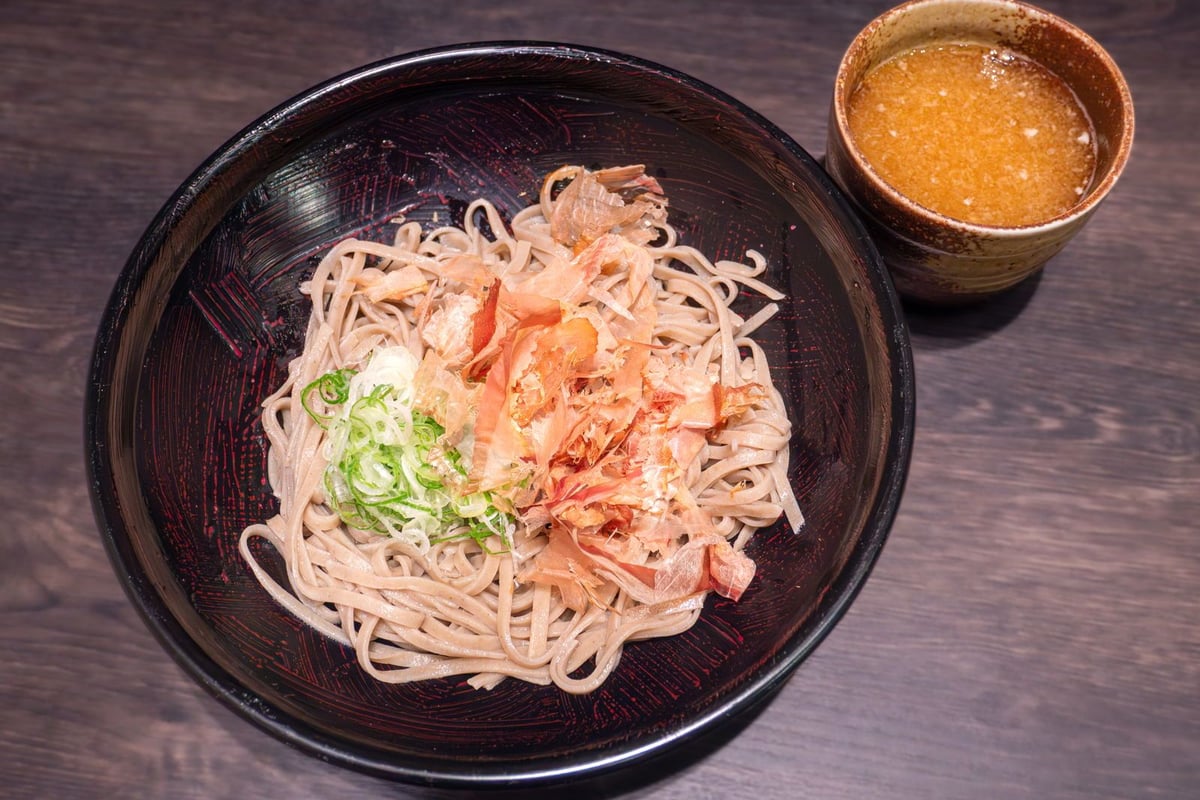
Echizen Oroshi Soba (Soba with Grated Daikon)
Echizen Oroshi Soba
Echizen Oroshi Soba is a local dish of Fukui Prefecture in which cold soba noodles are eaten with grated daikon radish and dashi broth. It is commonly topped with bonito flakes and chopped green onions, and depending on the season, spicy karami daikon is also used. The mainstream soba in Fukui is inaka soba (country-style soba), cut somewhat thick from dark buckwheat flour ground in a stone mill together with the inner husk. Many native buckwheat varieties remain in the prefecture, and although their grains are small, they are said to have a rich flavor and an excellent aroma. Buckwheat cultivation is said to have been started by the Asakura clan in the Sengoku period, and at the beginning of the Edo period, 'soba-kiri' (soba in noodle form) was introduced. Later, the practice of eating it with grated daikon spread and has been handed down to the present day. The name 'Echizen Soba' is said to derive from an anecdote about Emperor Showa, who visited Fukui in 1947 (Showa 22). The way the grated daikon and dashi are combined differs from shop to shop, so comparing them is part of the fun.
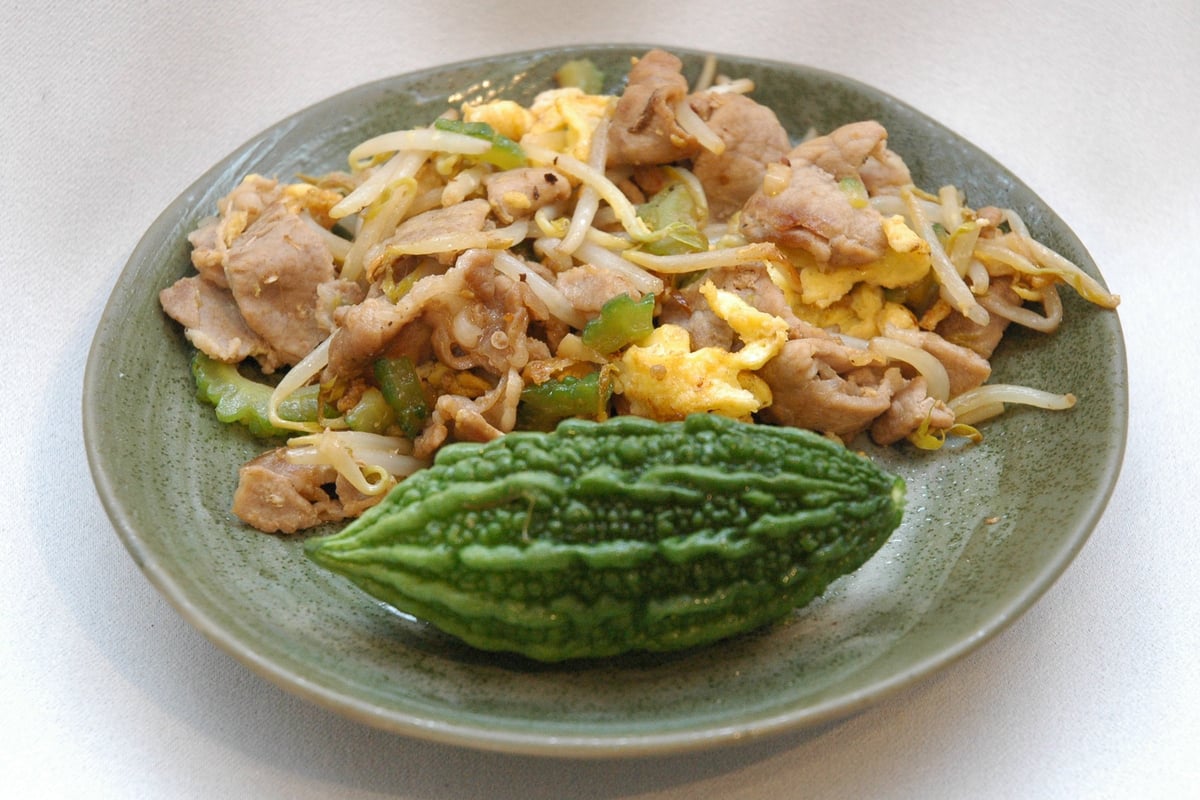
Goya Chanpuru (Bitter Melon Stir-Fry)
Goya Chanpuru
Goya chanpuru is a classic Okinawan home-cooked dish made by stir-frying goya (bitter melon), a summer vegetable, together with shima tofu (Okinawan firm tofu), egg, and pork or pork luncheon meat. 'Chanpuru' is an Okinawan word meaning 'something mixed together,' said to derive from the Malay/Indonesian word 'campur,' meaning 'to mix.' Following Okinawan custom, dishes are named 'OO chanpuru' after the tofu or main ingredient stir-fried together, and the version made with goya is especially well known. Goya's distinctive bitterness comes with an abundance of vitamin C that holds up well to heat, and the vegetable is also said to stimulate appetite, making the dish a beloved way to fend off summer fatigue. After being featured on television and in magazines, it also became established as a home-cooked dish across Japan.
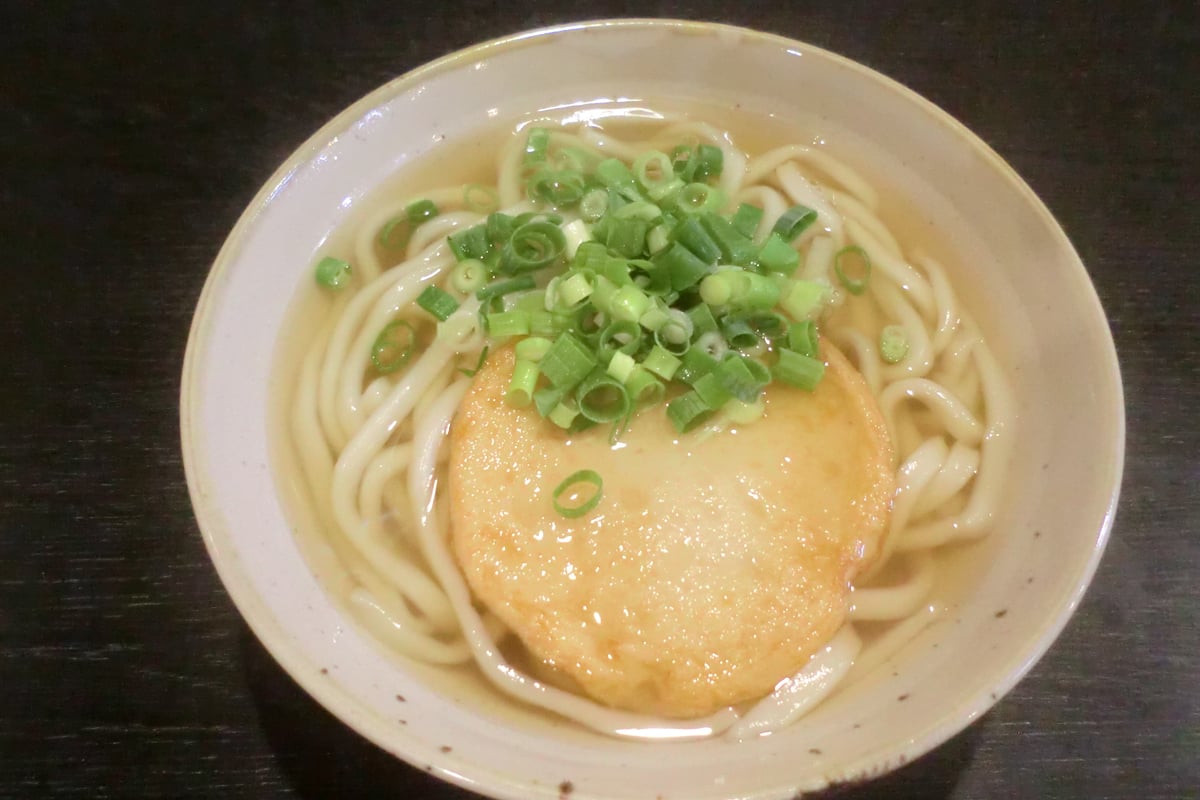
Hakata Udon
Hakata Udon
Hakata Udon is a style of udon eaten mainly in the Hakata Ward of Fukuoka City that emphasizes softness and the rich flavor of its broth over the noodle's firmness. It is said that Shoichi Kokushi (Enni), a Zen monk who returned from Song-dynasty China in the Kamakura period, brought both flour-milling techniques and udon to Japan, making Hakata known as one of the birthplaces of udon. Hakata Udon noodles are typically pre-boiled and soft, and pair well with a sweet broth made from flying fish (ago), kelp, and thick bonito shavings. A signature topping is crispy fried burdock root tempura (gobo ten) or fluffy round fish cake tempura (maru ten), and 'gobo ten udon,' topped with these, is beloved as a staple dish of Hakata Udon. From stand-and-eat udon shops at train stations to long-established specialty restaurants, it has taken root as an everyday food for local residents across a wide range of settings.
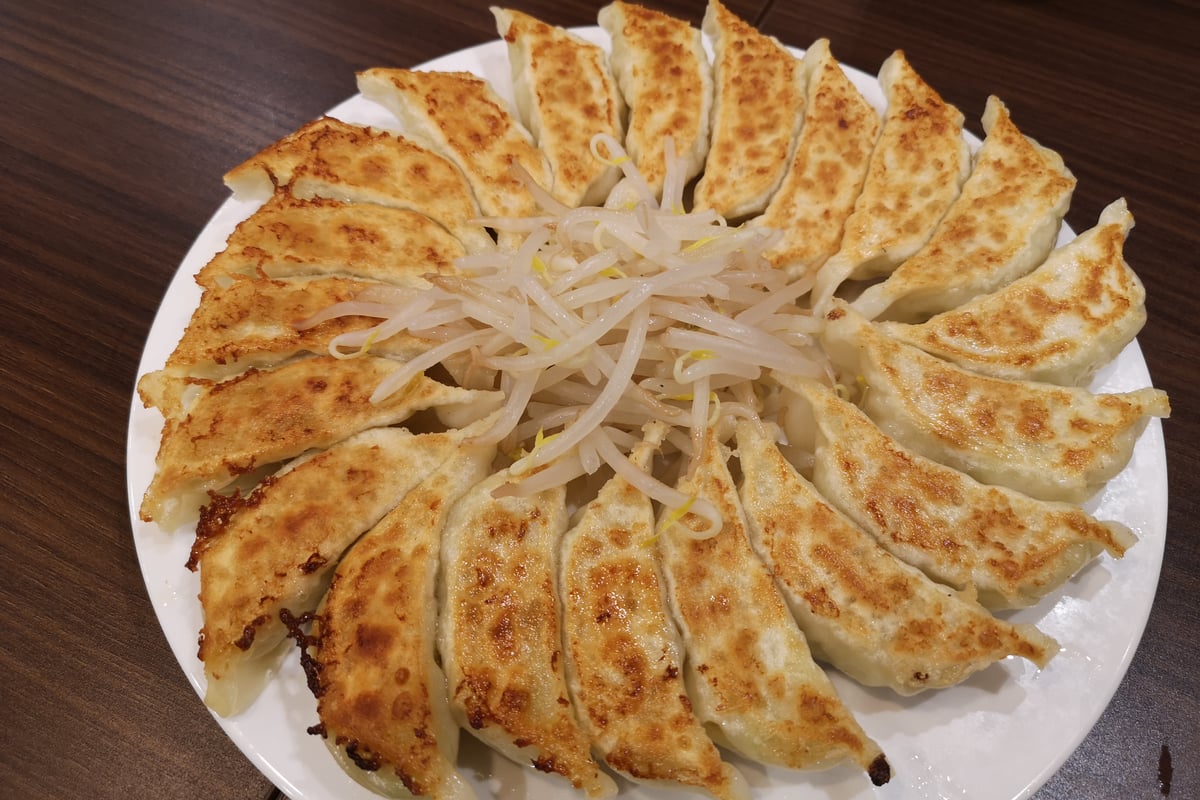
Hamamatsu Gyoza
Hamamatsu Gyoza
Hamamatsu Gyoza is a local style of gyoza enjoyed in Hamamatsu City, Shizuoka Prefecture. It is characterized by a light filling packed with plenty of cabbage, combined with the richness of pork. It is well known for its presentation: the pan-fried gyoza are arranged in a circle, keeping the shape of the frying pan, with boiled bean sprouts placed in the center. Food stalls that operated around Hamamatsu Station in the postwar period are considered one of its roots, and 石松餃子, founded in 1953 (Showa 28), is sometimes called the originator of Hamamatsu Gyoza. In the mid-2000s, a group of volunteer citizens launched the Hamamatsu Gyoza Association, which has worked to promote the city as a gyoza town. In the Ministry of Internal Affairs and Communications' Family Income and Expenditure Survey, Hamamatsu competes with Utsunomiya City and others for the top spot in annual household spending on gyoza. Hamamatsu City ranked first nationwide for the first time in 2011, and in the 2025 survey it ranked first for the third consecutive year. The city has many specialty restaurants and takeout shops, making gyoza a familiar dish both when eating out and at the family table.
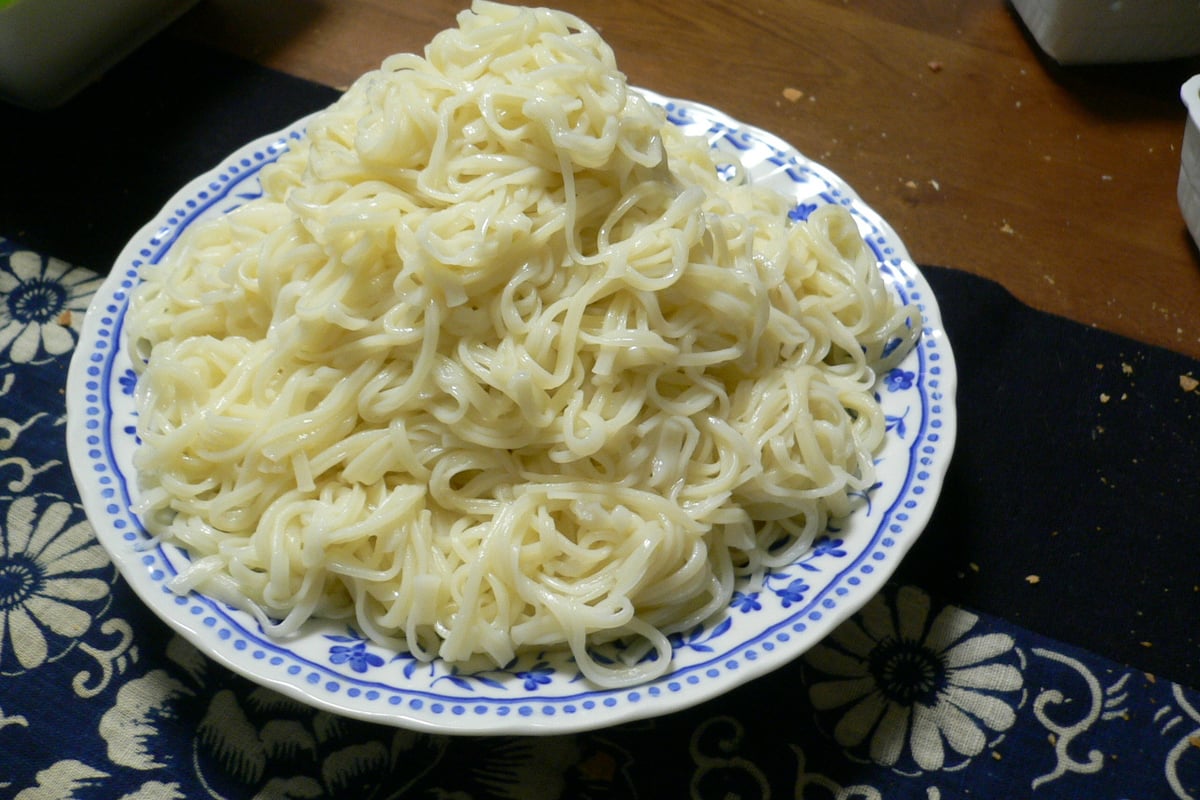
Inaniwa Udon
Inaniwa Udon
Inaniwa Udon is a hand-stretched dried udon noodle originating in the Inaniwa area of Yuzawa City, Akita Prefecture. It is made through a distinctive process in which the dough is kneaded, twisted into rope-like strands, aged, and then stretched thin by hand. The flat, ribbon-like noodles offer a smooth, slippery texture along with a firm bite. The technique is said to have been established in 1665 (Kanbun 5) in the early Edo period, and about 100 years later it was designated as an official product for the Satake family, lords of the Akita domain. It is sometimes counted, alongside Sanuki udon and Mizusawa udon, as one of Japan's 'three great udon.' Because the labor-intensive hand-stretching process limits production volume, it is also highly prized as a gift item, making it a signature noodle dish of Akita Prefecture.
Italian (Niigata-style yakisoba)
Niigata Italian
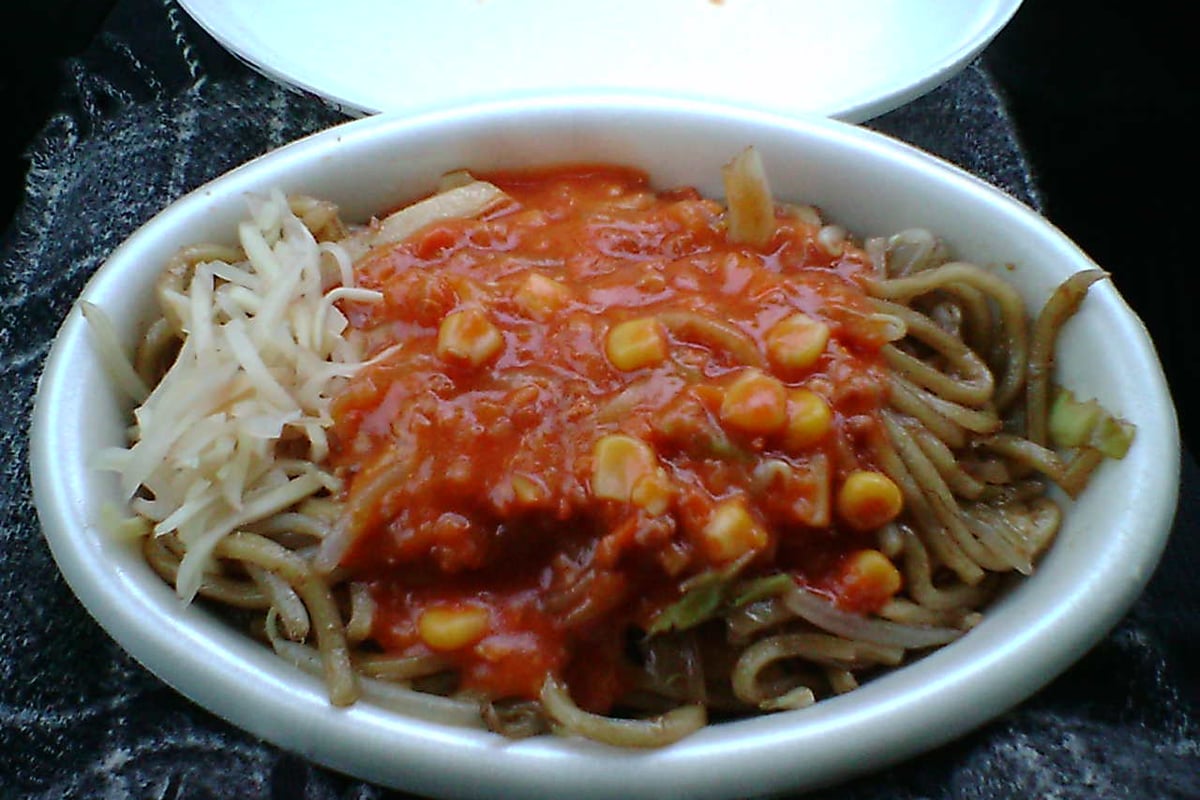
Italian is a fast food that originated in Niigata City, consisting of sauce-flavored yakisoba (stir-fried noodles) topped with tomato sauce or meat sauce. Although its name evokes Italian cuisine, it is actually a Niigata-original local specialty that gives Japanese yakisoba a Western-style twist. It is said to have been devised in 1959 by Mikazuki Haruzo (三日月晴三), the proprietor of the sweets cafe Mikazuki (三日月) in Niigata City, inspired by sauce yakisoba he had eaten in Tokyo. The name comes from borrowing the image of spaghetti and making it a dish eaten with a fork. Today, two chains are known as its leading representatives: Mikazuki, centered in Niigata City, and Friend, centered in Nagaoka City. Each has its own character in sauce, garnish, and way of eating — Mikazuki, for example, serves tomato sauce with white pickled ginger, while Friend serves meat sauce with red pickled ginger. Since it can be enjoyed casually for a few hundred yen, it has long been loved as a soul food of the people of Niigata Prefecture.
Jibuni
Jibuni
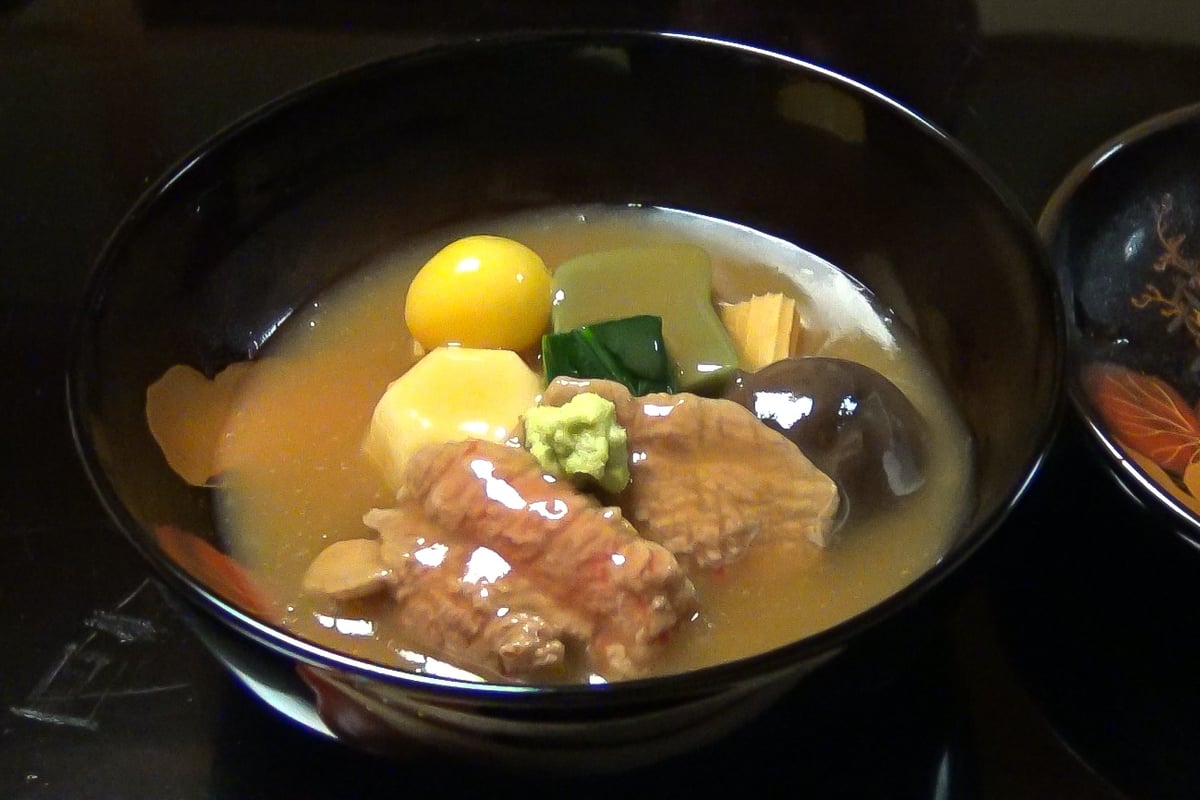
Jibuni is a simmered dish representative of Kaga cuisine, made by dredging thinly sliced duck or chicken in wheat flour and simmering it together with Kanazawa's local 'sudare-fu' wheat gluten cake, lily bulb, shiitake mushroom, and other seasonal vegetables. Its greatest characteristic is the mild, gentle texture created as the flour thickening clings to the ingredients, finished off with the sharp, fragrant accent of grated wasabi added at the end. It is a dish with a long history, eaten among samurai households since at least the Edo period, and it is still served today as a winter staple at restaurants and traditional Japanese eateries connected to the Kaga domain. Its origins remain uncertain, with several theories in circulation — that the Christian daimyo Takayama Ukon learned the recipe from a missionary and brought it to the Kaga domain, that Okabe Jibuemon, a retainer of Toyotomi Hideyoshi, brought it from Korea — but none has been confirmed. It is a signature local dish well worth trying on a visit to Kanazawa.
Jumangoku Manju
Jumangoku Manju
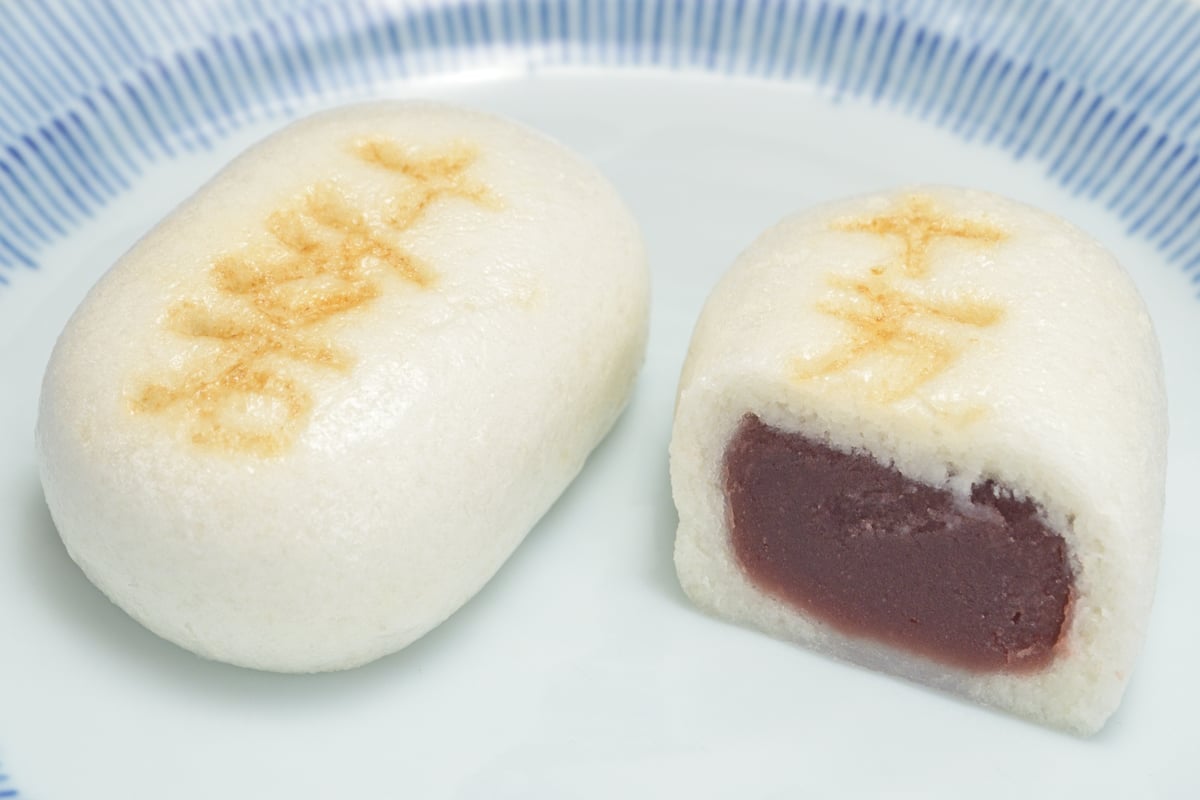
Jumangoku Manju is a jo-yo manju made by the confectionery shop 'Jumangoku Fukusaya' in Gyoda City, Saitama Prefecture — a refined, delicately sweet treat in which white bean paste is wrapped in a moist dough containing gyuhi (pounded mochi). The name comes from Gyoda's history as the castle town of the 100,000-koku Oshi Domain. In 1952, when sugar rationing was lifted, the Japanese confectionery shop 'Fukuchaya' was founded and began selling the treat, and in 1960 the company was renamed 'Jumangoku Fukusaya' to build the brand. It became widely known through TV Saitama's local commercials featuring the catchphrase 'Umai, umasugiru!' ('Delicious, too delicious!'), said to have been created by the woodblock print artist Shiko Munakata, and it is now a familiar Saitama souvenir found in gift shops both inside and outside the prefecture.
Kameyama Miso Yaki Udon
Kameyama Miso Yaki Udon
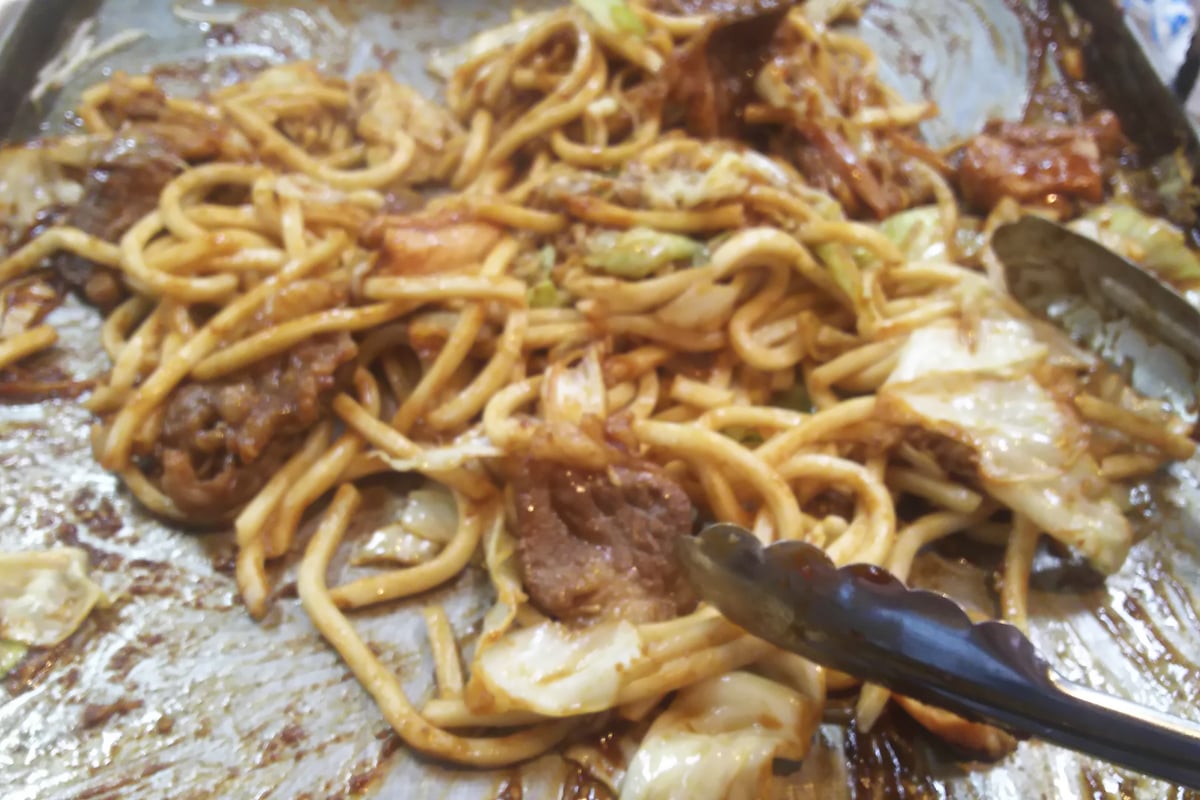
Kameyama miso yaki udon is a local specialty dish (gotochi gourmet) of Kameyama City, Mie Prefecture. Udon is cooked on an iron griddle with meat and vegetables and seasoned with a miso-based sauce. In the mid-Showa period, Kameyama had many eateries for truck drivers traveling National Route 1, and they served horumon-yaki (grilled offal) made with red miso. It is said to have begun when people fried udon in the miso sauce left on the griddle after cooking the meat. In 2008, the citizens' group Kameyama Miso Yaki Udon Honpo (亀山みそ焼きうどん本舗) was formed to revitalize the town, and the dish spread as a local specialty. At the 2011 'Central Japan & Tokai B-1 Grand Prix in Toyokawa,' it was chosen for the Gold Grand Prix, first place. It is said to be available at about 20 places in the city, including eateries and expressway parking areas (as of 2020). Its fragrant miso aroma and spicy, sweet-savory flavor are addictive, and the dish has many repeat customers. In fiscal 2024 (Reiwa 6), it was recognized as one of the Agency for Cultural Affairs' '100-Year Foods.'
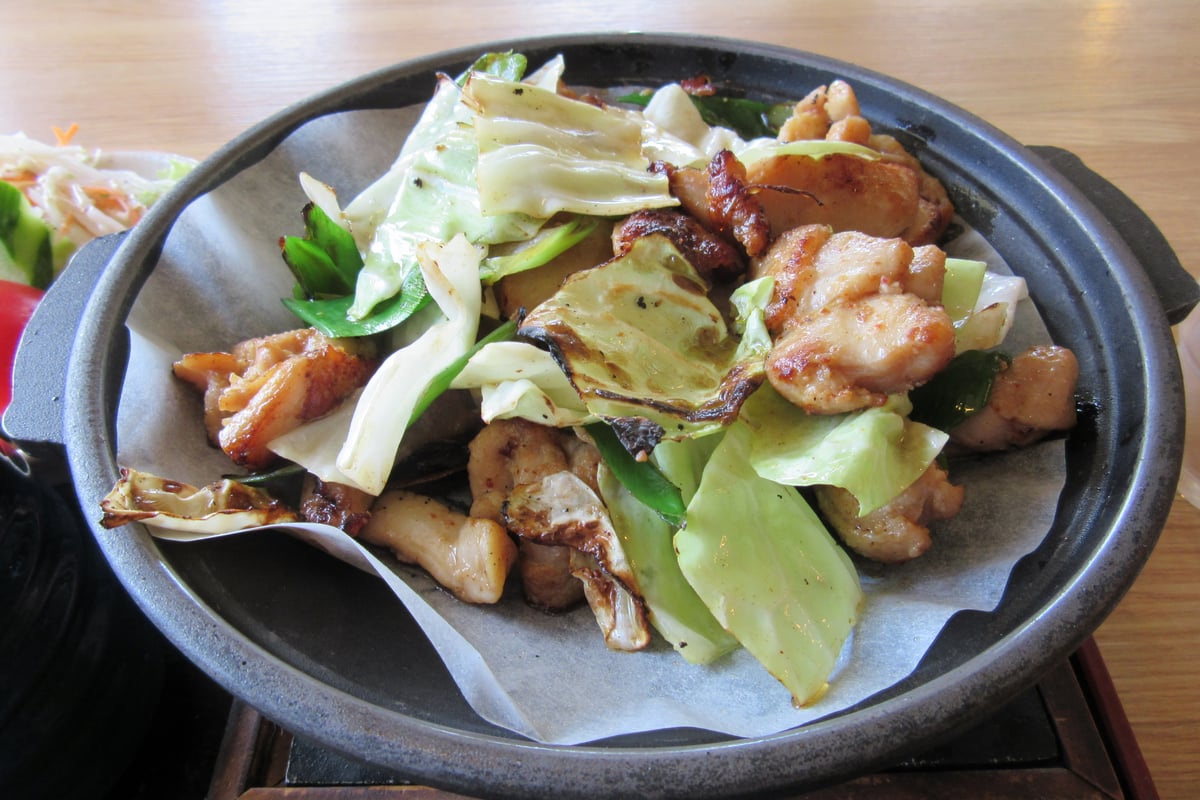
Keichan
Keichan
Keichan is a local dish from the Oku-Mino and southern Hida areas of Gifu Prefecture, in which chicken and seasonal vegetables are marinated in a special miso- or soy sauce-based sauce, then grilled on an iron plate or a Genghis Khan-style grill. It has long been enjoyed around Gujo City, Gero City, and the northern part of Nakatsugawa City, with each restaurant and household having its own way of seasoning and marinating. It is said to have originated when many households, which once kept chickens for eggs, prepared the hens that had stopped laying as a special dish for festive occasions such as Obon and New Year. From the 1955-1964 period onward, butcher shops and restaurants in Gero and Gujo began developing their own sauces, and as inexpensive chicken became more widely available, the dish spread from home cooking to restaurant menus. Today, more than 30 restaurants in Gero City alone serve their own versions of Keichan, and it remains a popular attraction for visitors to Gero Onsen and Gujo Hachiman.
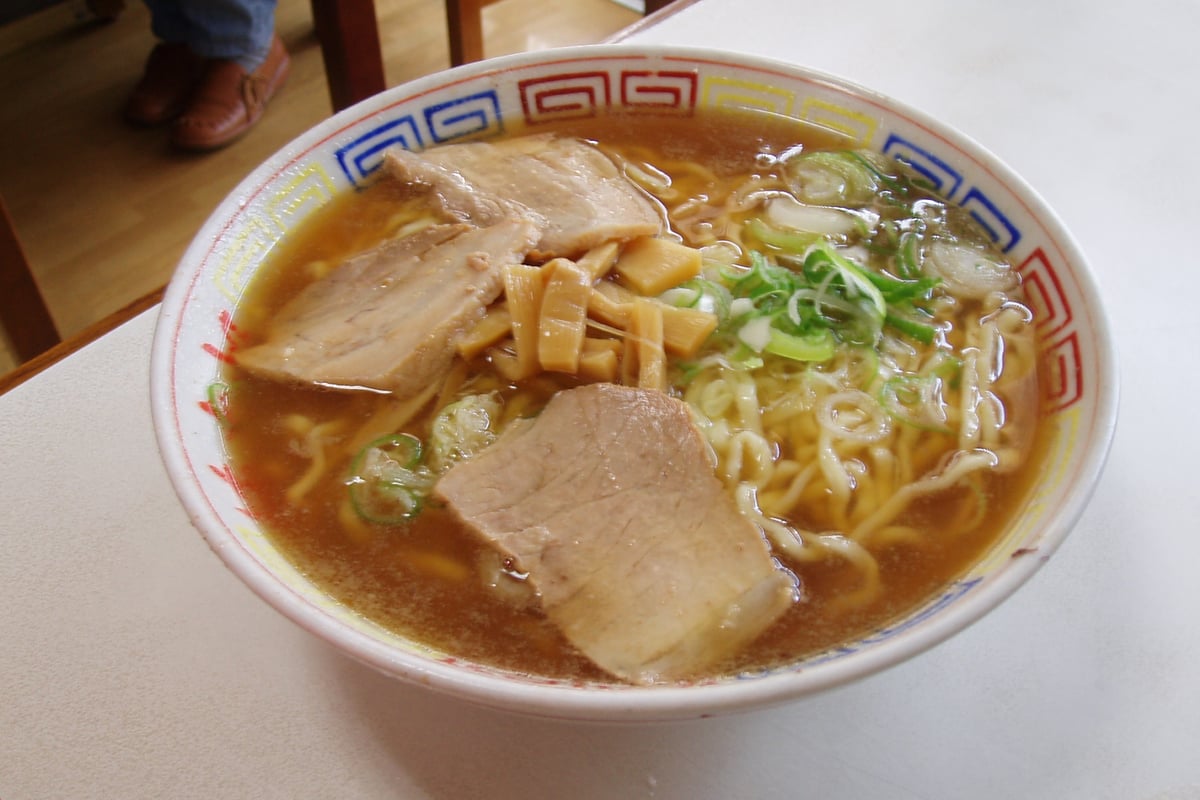
Kitakata Ramen
Kitakata Ramen
Kitakata Ramen is a local ramen that developed in Kitakata City, Fukushima Prefecture, and is sometimes counted, alongside Sapporo and Hakata, as one of Japan's Three Great Ramen. It is characterized by thick, flat, well-aged, high-hydration noodles with a strong, springy texture that pairs well with a clean pork bone and dried sardine-based soy sauce broth. Kitakata, known as a 'town of storehouses' lined with lacquerware workshops and sake breweries, has one of the highest densities of ramen shops per capita in Japan, and the custom of 'asa-ra' — eating ramen for breakfast — is deeply rooted among residents. It is said to have taken hold as a warming meal for factory workers coming off night shifts or returning from winter seasonal work, and tourists, too, can be seen visiting the city early in the morning just for asa-ra. Since gaining nationwide recognition through a television program in the late 1970s, it has continued to thrive as one of the city's leading tourism draws.
Koshine-jiru
Koshine-jiru
Koshine-jiru is a miso-based soup from the area around Tomioka (city) and Kanra (town) in Gunma Prefecture, generously packed with the local specialties konnyaku, shiitake mushrooms, and negi (green onion). Its name is formed by combining the first syllables of these three ingredients. It is said to have originated when the Tomioka Women's Association Federation devised the soup to make the most of locally grown produce - konnyaku, log-grown shiitake, and Shimonita negi. More than 20 years after it was first created, it has become an established home-cooked dish and is now also served in school lunch menus and at local festivals and events. The rule is that konnyaku, shiitake, and negi must always be included, while other vegetables and the type of miso vary by household - daikon, carrot, burdock root, taro, and pork are often added to make it a hearty, filling dish.
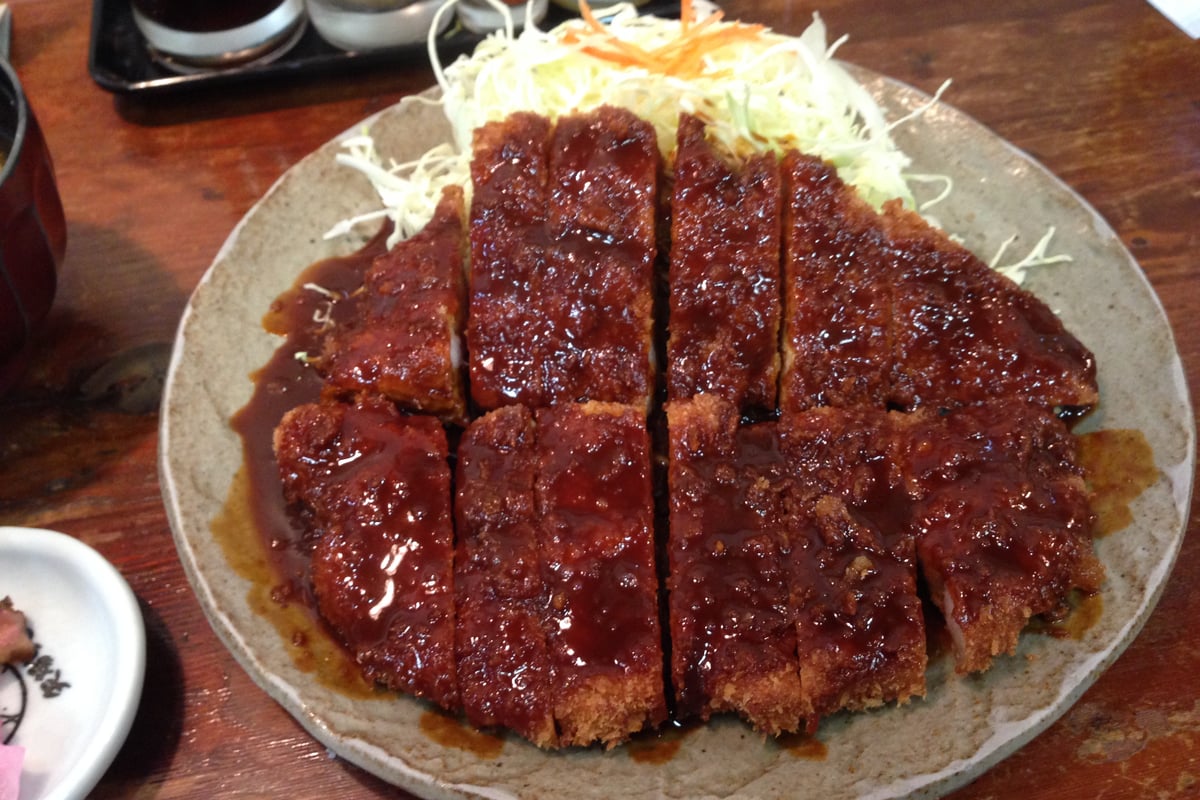
Misokatsu (Miso-Glazed Pork Cutlet)
Misokatsu
Misokatsu is a signature local dish of Nagoya in which a pork tonkatsu (breaded, deep-fried pork cutlet) is topped with a rich, slightly sweet miso sauce based on Hatcho miso. Aichi Prefecture has had a deeply rooted food culture centered on soybean miso (Hatcho miso) since the Edo period, and after World War II the practice of pairing tonkatsu with miso sauce spread through Nagoya. Several theories exist about its origin: one holds that it began when tonkatsu sold at food stalls was dipped in the sauce used for miso dengaku (grilled tofu with miso), while another says a soba restaurant owner who had returned to postwar Nagoya invented a miso-sauce katsu don inspired by the sauce used for tendon (tempura rice bowl). Long-established restaurants such as Yabaton and Misho Kanou helped turn misokatsu into a specialty known throughout Japan, and today it is served in many forms beyond the simple cutlet, including misokatsu don (rice bowl) and misokatsu sandwiches. The contrast between the rich, deep flavor of red miso and the crispy breading is its main appeal.
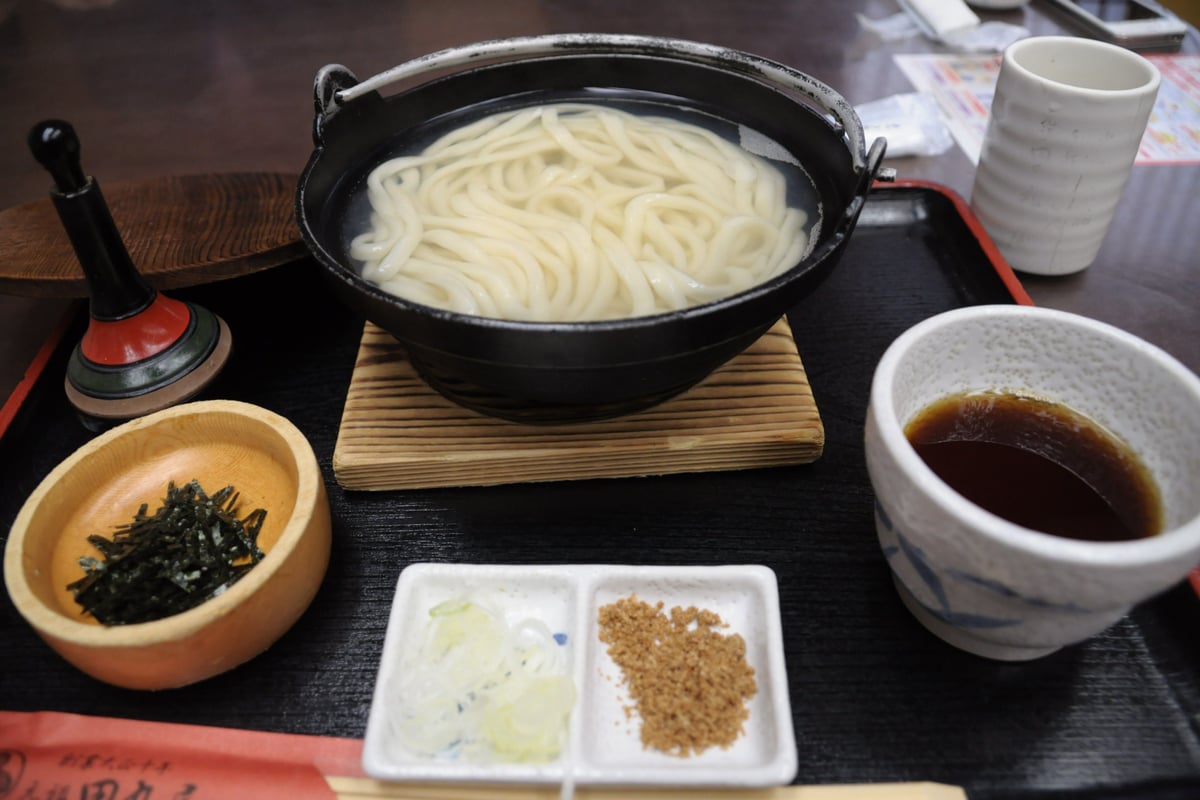
Mizusawa Udon
Mizusawa Udon
Mizusawa Udon is a firm, hand-pulled udon made around the 'Udon Kaido,' a street lined with noodle shops in front of Mizusawa-dera Temple (Mizusawa Kannon) in Ikaho, Shibukawa, Gunma Prefecture. Ranked alongside Sanuki udon and Inaniwa udon as one of Japan's three great udon, it boasts a history of more than 400 years. According to tradition, a monk named Ekan who is said to have helped found Mizusawa-dera Temple after coming to Japan in the Asuka period passed on the technique for making udon, and around 1576 the temple began serving udon made from local wheat and spring water from the Mt. Haruna range to pilgrims and visitors taking the local hot-spring cure — the beginning of what became known as a noodle named after the place. A distinctive method of repeatedly treading and resting the dough produces noodles with a strong chew and a translucent white sheen, traditionally served cold as zaru udon and enjoyed dipped in soy-based or sesame sauce.
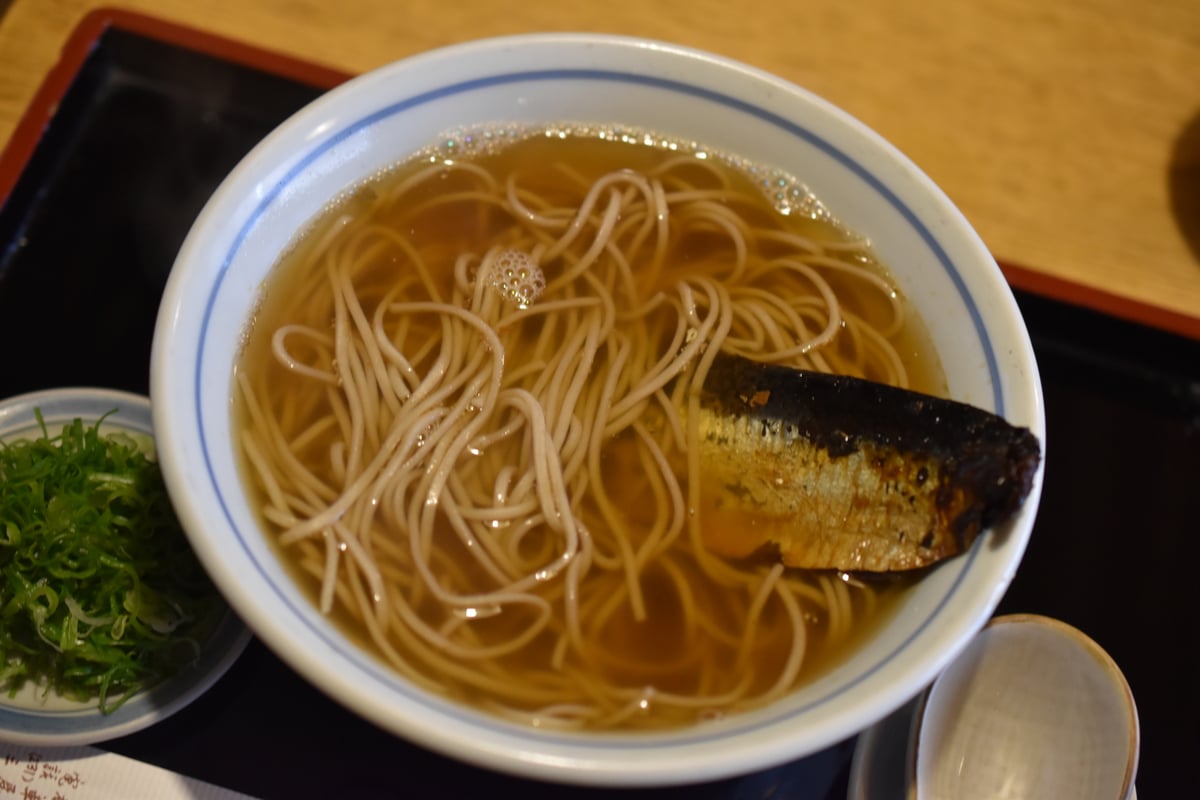
Nishin Soba (Herring Soba)
Nishin Soba
Nishin Soba is a noodle dish that originated in Kyoto, made by topping hot soba with sweet-and-savory simmered migaki-nishin (dried, filleted herring). In landlocked Kyoto, dried migaki-nishin brought from Hokkaido by kitamae-bune trading ships was prized as a valuable source of protein, and this dish was born from its combination with soba culture. It is said to have been created around 1882 (Meiji 15) by Matsuno Yosokichi, the second-generation owner of the soba shop Matsuba, founded in 1861 (Bunkyu 1), and it has been established as a Kyoto specialty ever since. Its distinctive feature is the combination of herring simmered until soft down to the bone in a kanroni-style glaze with a broth built on bonito and kelp dashi, and it is also widely known as a tourist specialty of Kyoto.
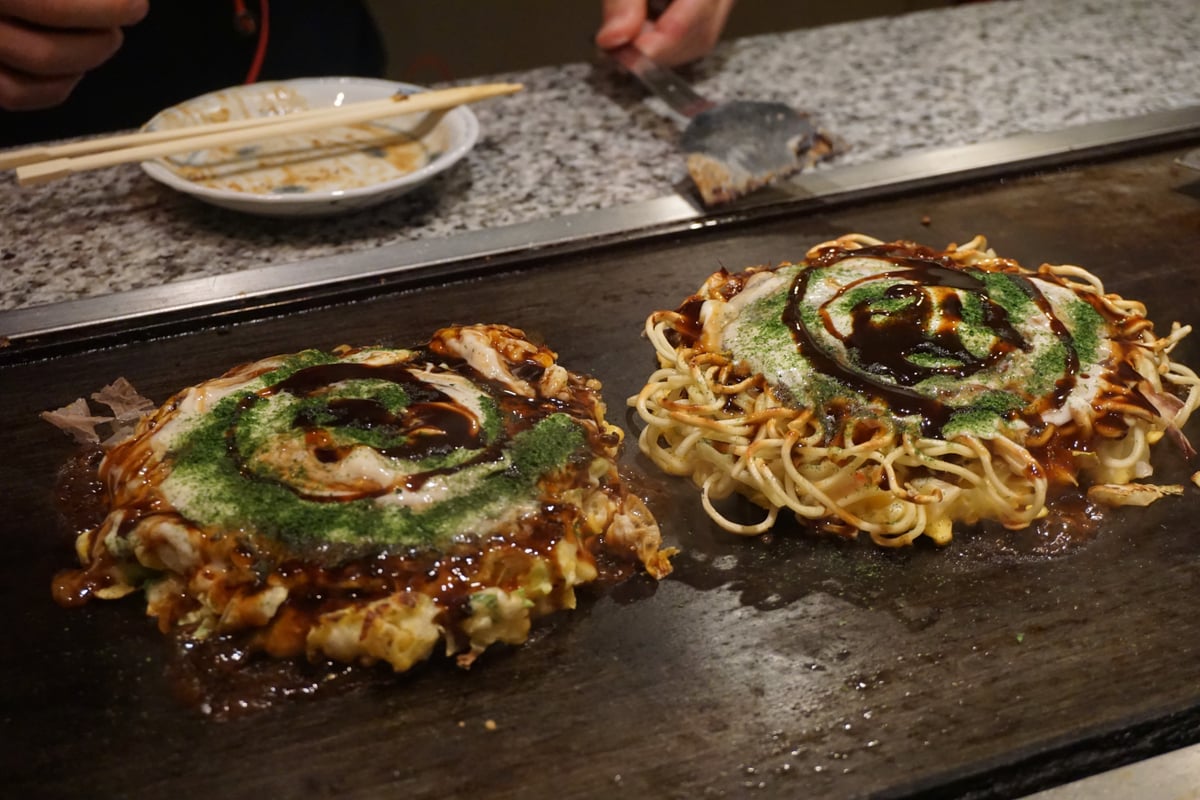
Okonomiyaki (Osaka Style)
Osaka-style Okonomiyaki
Osaka-style okonomiyaki is a dish in which ingredients such as chopped cabbage, tenkasu (tempura bits), pork, and squid are mixed into a batter of wheat flour mixed with dashi, then cooked flat on both sides on an iron griddle. When it is done, it is brushed with sauce and eaten topped with dried fish flakes (kezuribushi), aonori (green laver flakes), and mayonnaise if desired. Along with takoyaki, it represents Osaka's konamon (flour-based dishes) culture. In the late Meiji era, 'yoshoku-yaki' made with wheat flour, cabbage, and sauce appeared. The snack sold at dagashiya (cheap candy shops) and elsewhere as 'issen yoshoku' is said to have developed after the war into a meal using plenty of pork and vegetables. At first it was made in the kasaneyaki (layered) style, with the ingredients placed on top of the batter, but in Osaka the mazeyaki (mixed) style, in which the ingredients are mixed into the batter before cooking, became widespread. From the end of the Showa 30s into the Showa 40s, chain restaurants promoted it as an Osaka specialty, and it became known nationwide. Modan-yaki, which adds noodles to the batter, is also a way of eating it that was born in Osaka.
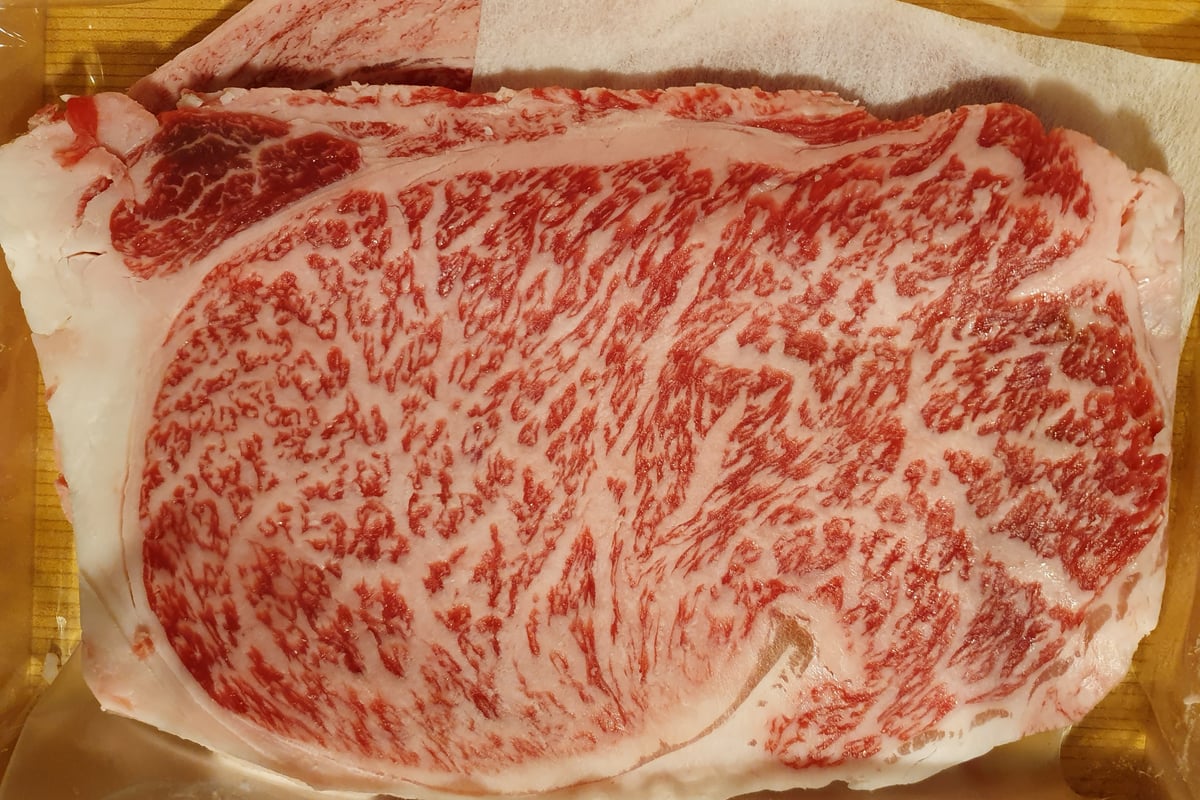
Omi Beef
Omi-gyu
Omi Beef is a branded wagyu raised within Shiga Prefecture, ranked alongside Matsusaka beef and Kobe beef as one of Japan's three great wagyu brands. Its history dates back to the early Edo period, and it is often cited as the oldest branded wagyu on record in Japan. During the Edo period, eating meat was officially forbidden under Buddhist influence, but the Hikone domain presented beef preserved in miso, called 'Hanpongan,' to the shogunate and the three branch families of the Tokugawa as a health tonic — an act that became the starting point for spreading the name of Omi Beef nationwide. It is renowned for its fine marbling and the balance between the rich flavor of the lean meat and the refined sweetness of its fat, making it popular in dishes ranging from sukiyaki and shabu-shabu to steak. It continues to be raised today under consistent farming practices within Shiga Prefecture and is known both domestically and internationally as one of the prefecture's leading culinary brands.
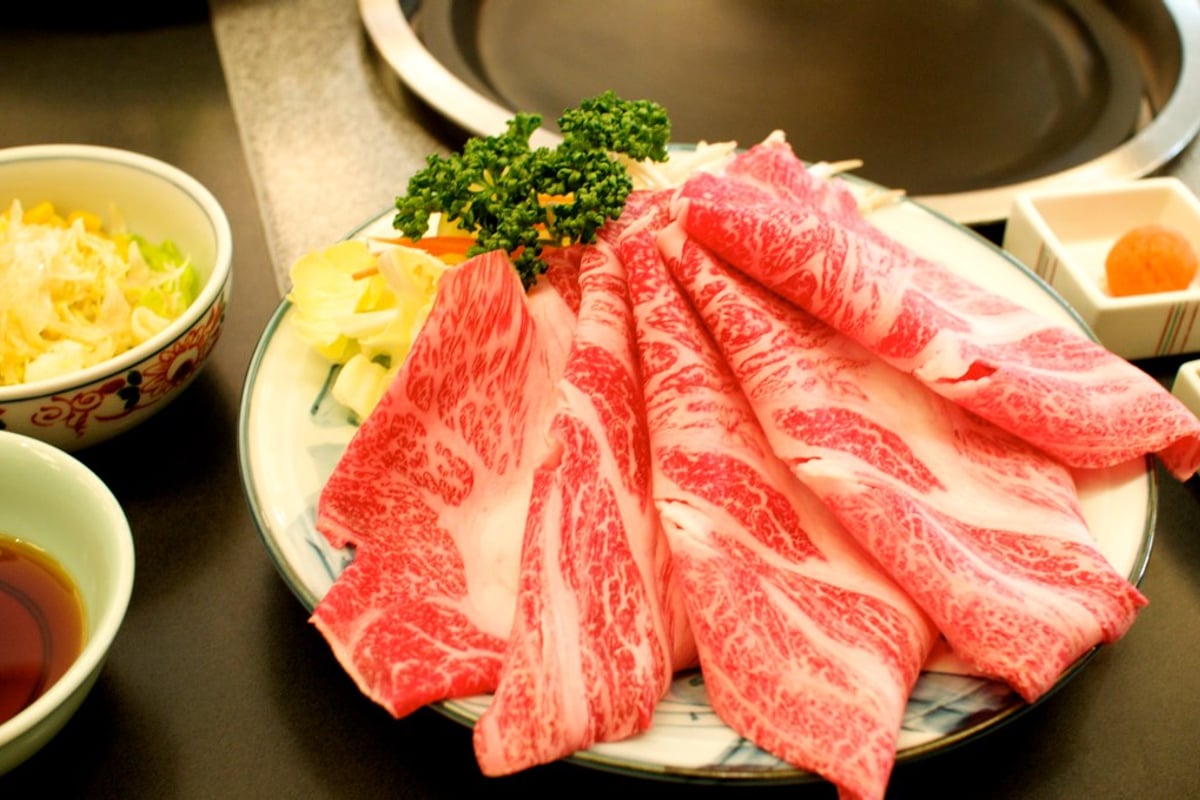
Saga Beef
Saga Gyu
Saga Beef is a branded beef designation reserved for Japanese Black cattle raised within the JA Group Saga area that meet strict standards set by the Japan Meat Grading Association: a meat quality grade of 4 or higher and a BMS (Beef Marbling Standard) number of 7 or higher. This rigorous system, under which only cattle meeting these standards may be called 'Saga Gyu,' consistently delivers finely marbled, tender meat. The brand traces its origins to 1984, when beef bearing a 'Saga Gyu' label was sold at a meat market in the Kansai region, and the trademark was registered in 2000. Nationally, Saga Beef is known for its stringent grading standards, sometimes described as second only to Sendai Beef in strictness, and it has grown into one of Saga Prefecture's leading culinary brands. Following the 2007 merger that formed JA Group Saga, the brand was expanded to cover all Japanese Black cattle raised within the JA Saga area, establishing a system in which quality is managed under unified standards regardless of production area or producer.
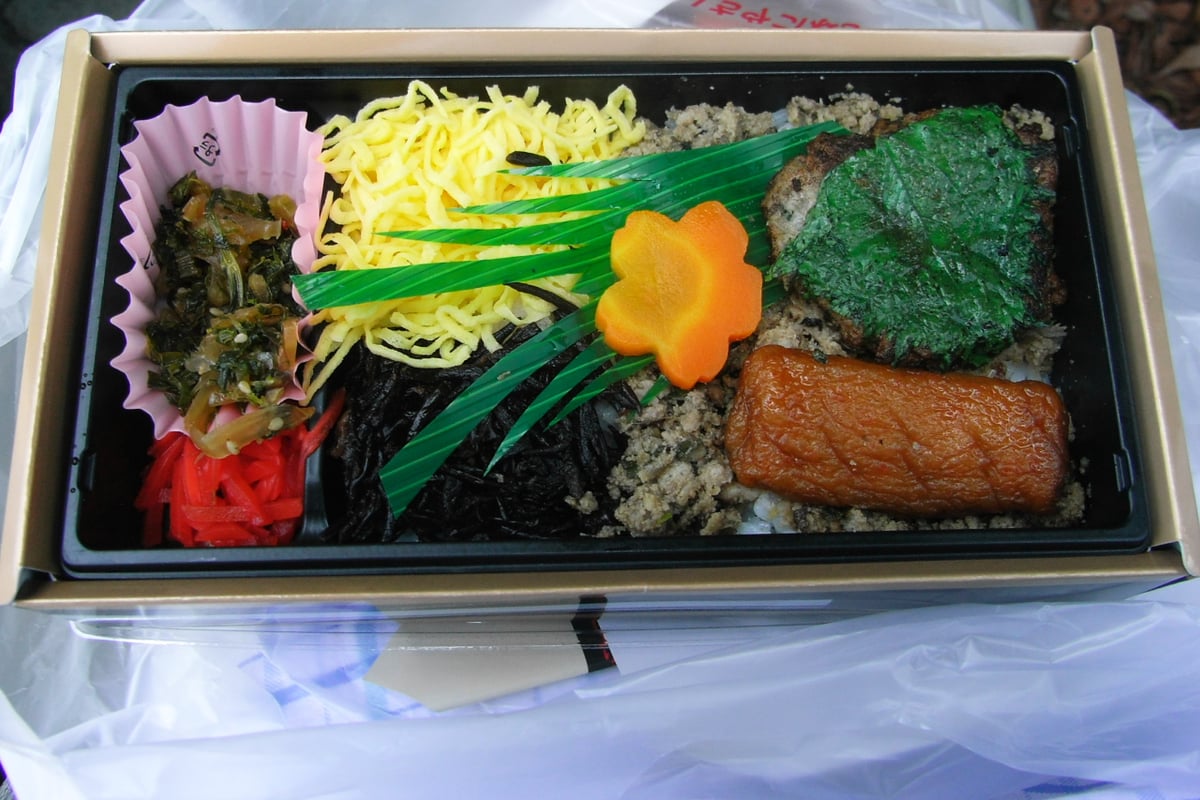
Sangayaki
Sangayaki
Sangayaki is a dish in which Namerou, a local specialty of the Boso Peninsula, is packed into abalone or scallop shells and grilled. It is said to get its name from the practice of fishermen taking the Namerou they had prepared offshore up into the mountains for work, where they cooked it over a fire in a mountain hut—hence 'sanga-yaki,' or 'mountain-house grill.' Unlike raw Namerou, cooking it adds a savory aroma and improves keeping quality, making it a valued meal for busy fishermen and mountain laborers alike. Today it is easily made at home in a frying pan or on a grill, and it is also served at restaurants throughout the Boso region using shells as serving dishes—a dish enjoyed for a savoriness quite different from that of raw Namerou.
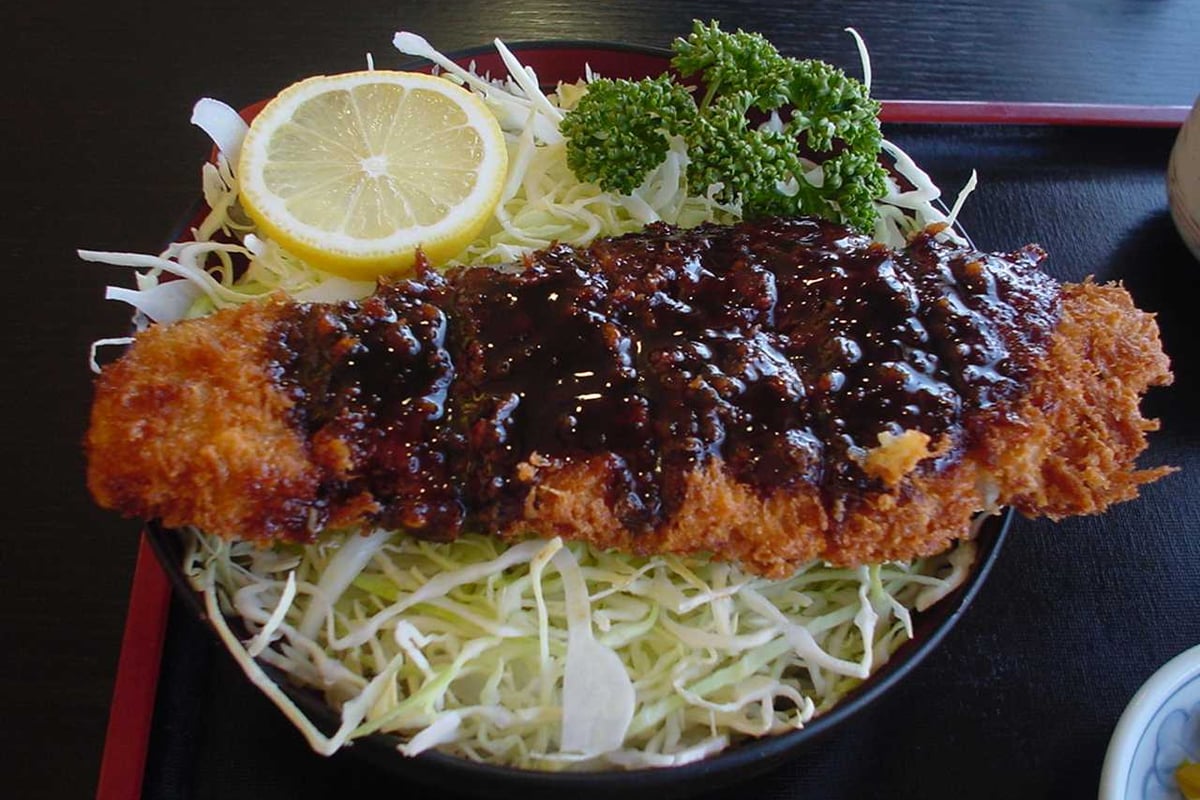
Sauce Katsudon
Sauce Katsudon
Sauce Katsudon, beloved mainly in Kiryu City, Gunma Prefecture, is a local specialty within Japan's “sauce katsudon” food culture: freshly fried pork cutlet is dipped in a special Worcestershire-sauce-based sauce and served over rice, without being finished with egg. It is said to have originated at Shidamiya, a Kiryu eatery founded in 1926, which created a distinctive sauce by combining an eel-basting technique with Worcestershire sauce. In Kiryu, a city that once flourished through the textile industry, sauce katsudon — which tastes good even after going cold — became a staple of food delivery. Even today, in Kiryu, simply saying “katsudon” usually means sauce katsudon rather than the egg-topped version, and it is so deeply woven into daily life that the “Kiryu Sauce Katsudon Association” was formed to promote it as a local specialty citywide. There is no fixed rule for the sauce blend or the cut of meat used, so comparing the differences between restaurants and households is part of the fun.
Toji Soba (Soba Dipped in Hot Pot Broth)
Toji Soba
Toji Soba is a local soba dish handed down in Nagawa, Matsumoto City, Nagano Prefecture (formerly Nagawa Village), and it is also written with the characters 投汁そば. A single mouthful of soba is placed in a small 'toji-kago,' a basket woven from bamboo, then dipped in broth simmering in a pot to warm it before eating. Seasonal vegetables, mountain vegetables, mushrooms, chicken, and other ingredients are added to the broth and served into bowls together with the soba. Nagawa is a mountain area at an elevation of about 1,200 m along the Nomugi Kaido road, which runs from Matsumoto toward Hida. The large difference between day and night temperatures suits the cultivation of buckwheat, and it is said that in the past soba, rather than rice, was the staple food. It was a dish that families ate gathered around an iron pot hung over the irori (sunken hearth), and it was also indispensable for entertaining on festive occasions, such as ceremonial occasions like weddings and funerals. It is eaten mainly in Nagawa and also in parts of the Kiso region.
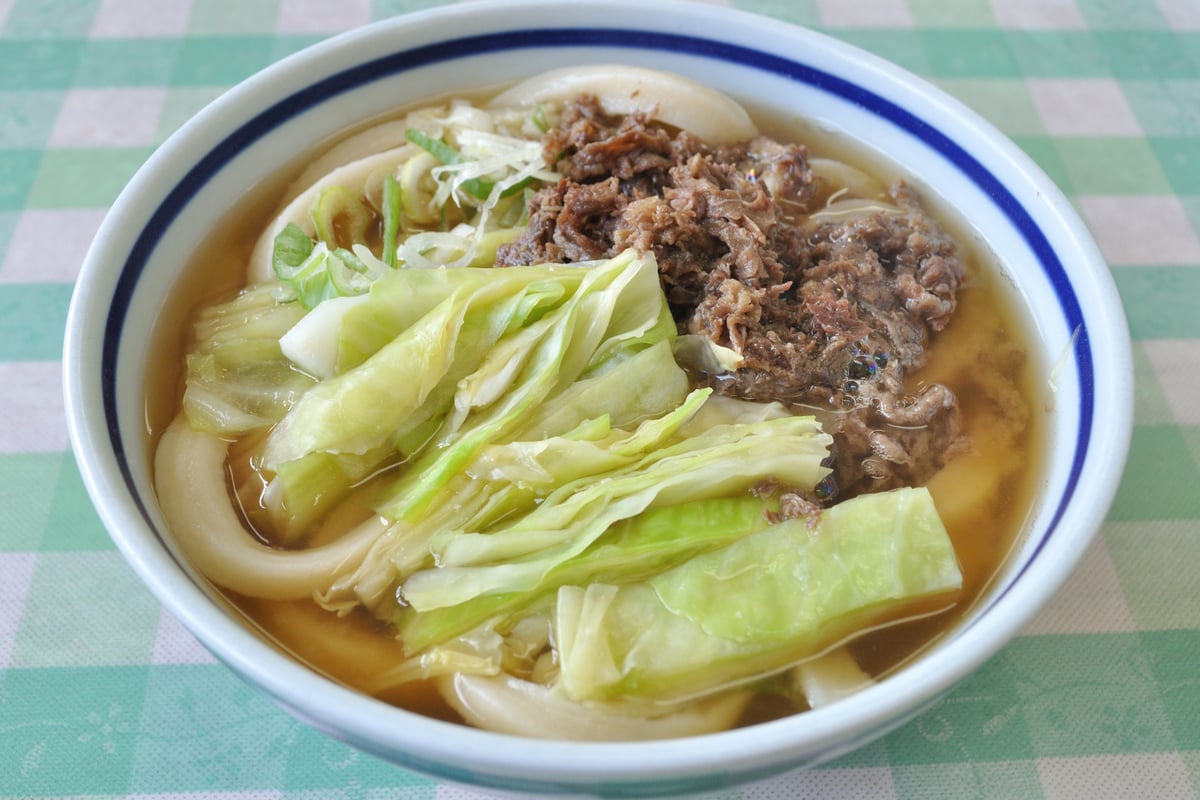
Yoshida Udon
Yoshida Udon
Yoshida Udon is a hard, very firm udon eaten in the Gunnai region centered on Fujiyoshida City. Thick, handmade noodles are eaten in a broth made by combining miso and soy sauce with dashi from niboshi (dried sardines) and other ingredients. The standard toppings are boiled cabbage and horse meat simmered in a sweet and savory sauce. As a condiment, 'suridane' is used, a mixture of red chili pepper with sesame, sansho pepper, and other ingredients. The northern foot of Mt. Fuji is high in elevation and cool, and its volcanic-ash soil made it unsuitable for rice cultivation. For this reason, a flour-based diet (funshoku) using wheat and other grains took root. In the early Showa period, the textile industry flourished, and it is said that men made the udon for lunch in place of the women who were weaving. Their powerful kneading is said to have led to its distinctive chewiness. In 2007 it was selected as one of the '100 Selected Local Dishes of Farming, Mountain and Fishing Villages.' There are about 50 specialty shops in the city, and they are also characterized by storefronts that look like private homes and by opening only at lunchtime.
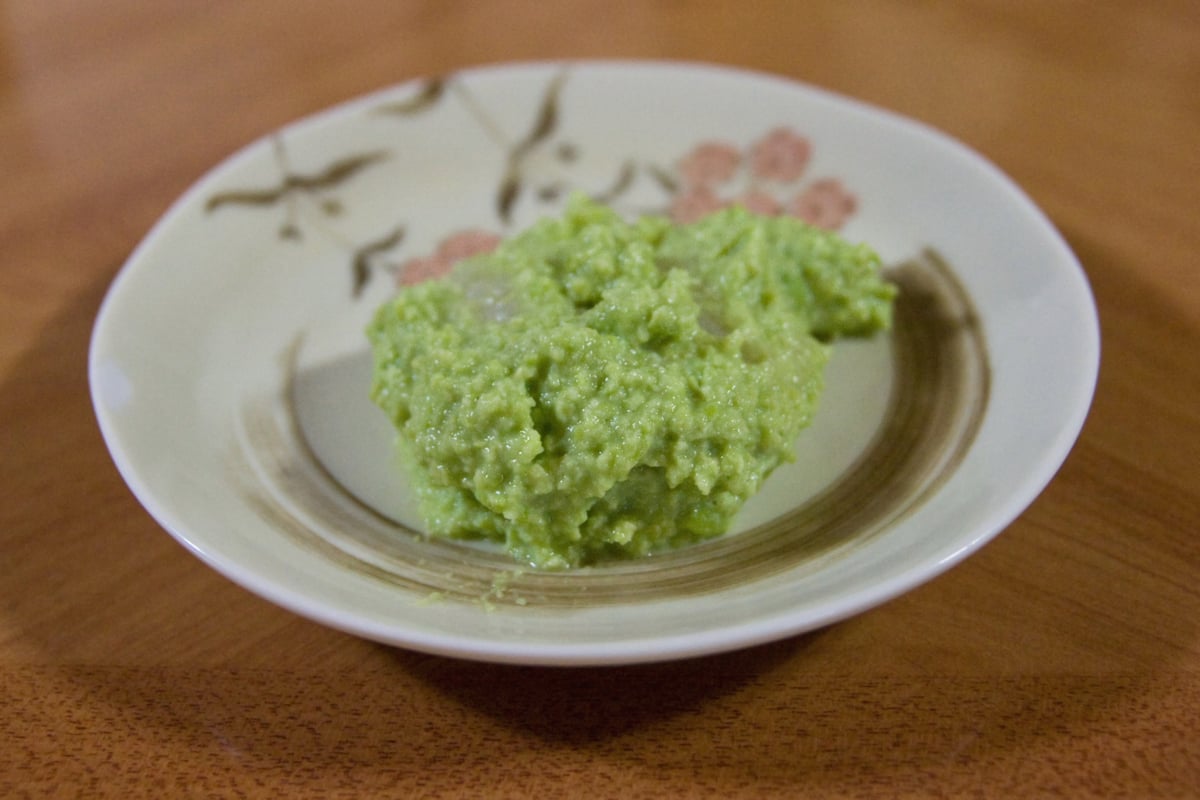
Zunda Mochi
Zunda Mochi
Zunda mochi is a signature local sweet of the Sendai region of Miyagi Prefecture, made by coating mochi with a vivid green paste called 'zunda,' produced by mashing boiled edamame (green soybeans). It is said that zunda had already become established as a coating for dishes by the late Edo period, and it was traditionally made as a whole-family effort during farm work or celebrations, with family members shelling the edamame and mashing them in a mortar. There are several theories about the origin of the name: one holds that it comes from a corruption of 'zuda,' a word describing the act of pounding beans, while another well-known but unverified story attributes it to an episode in which Date Masamune, founder of the Sendai Domain, is said to have had his soldiers crush edamame using the hilt of a sword (jin-tachi) in camp. However, there is no solid historical evidence directly linking Masamune to the dish, and this is generally regarded as a legend that spread in later eras. Today, zunda is used not only in mochi but also in a wide range of products such as shakes and Western-style confections, and it remains a beloved staple souvenir from Sendai.
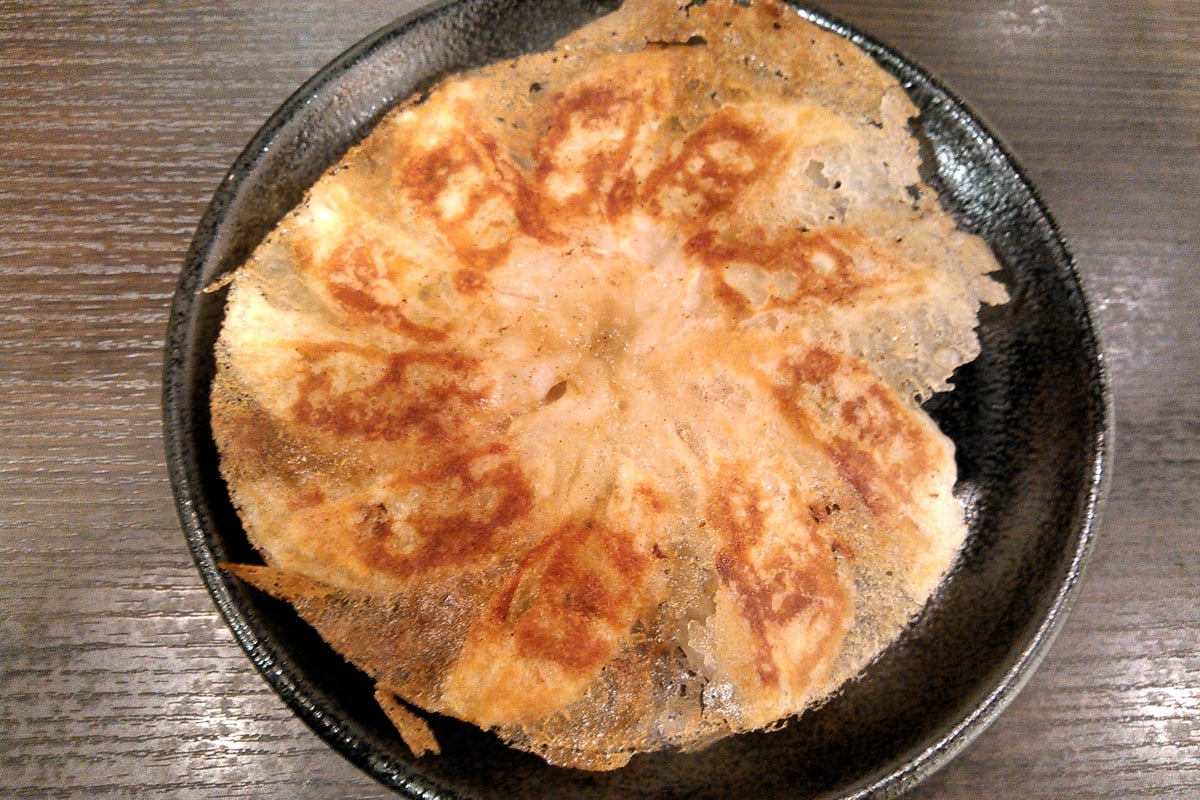
Enban Gyoza
Enban Gyoza
Enban Gyoza is a local specialty dish of Fukushima Prefecture in which 20 to 30 small dumplings are arranged edge to edge across an entire frying pan, then served on a plate in that same disc, or 'enban,' shape. It is said to have originated after the war, when repatriates returning from Manchuria began serving the style of gyoza they had learned there at food stalls and eateries, and it has been passed down ever since in restaurants and specialty shops around Fukushima City, where it originated, as well as in Koriyama City and elsewhere across the prefecture. Many shops take particular care with fillings generously packed with napa cabbage and with hand-stretched wrappers, and sharing a single plate among family or friends has become the established way to eat it. In 2024, it was certified as one of the Agency for Cultural Affairs' '100-Year Foods,' and it remains a beloved local soul food across generations. Alongside ramen and horse sashimi, it is counted as one of Fukushima Prefecture's leading B-grade gourmet dishes.
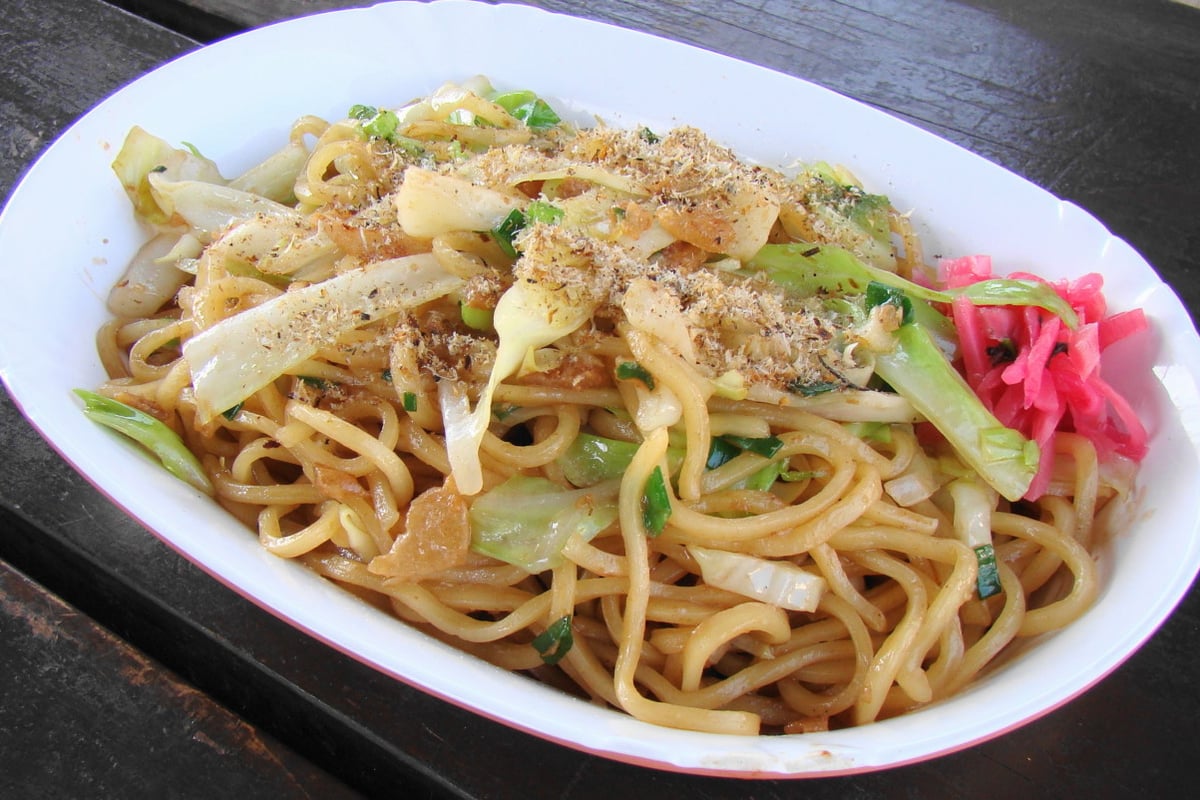
Fujinomiya Yakisoba
Fujinomiya Yakisoba
Fujinomiya Yakisoba is a local style of yakisoba enjoyed in Fujinomiya City, Shizuoka Prefecture. It uses firm, chewy steamed noodles made by designated noodle makers in the city, with 'nikukasu' (pork cracklings left after rendering lard) added as an ingredient. A distinctive finishing touch is a sprinkle of shaved sardine or mackerel flakes (dashi-ko). The unique steamed noodles are said to have been born during the postwar food shortage, in the course of efforts to recreate the rice noodles (bifun) eaten on the battlefield. In 2000 (Heisei 12), volunteer citizens launched the Fujinomiya Yakisoba Society and began revitalizing the town through yakisoba. Its unique, pun-filled promotional activities made it known nationwide, and it won the grand prize at the B-1 Grand Prix two years in a row, in 2006 and 2007. Fujinomiya is the shrine town of Fujisan Hongu Sengen Taisha, and the city is said to have around 150 establishments serving yakisoba. It is an everyday taste for local residents and, at the same time, a dish that tourists come specifically to try.
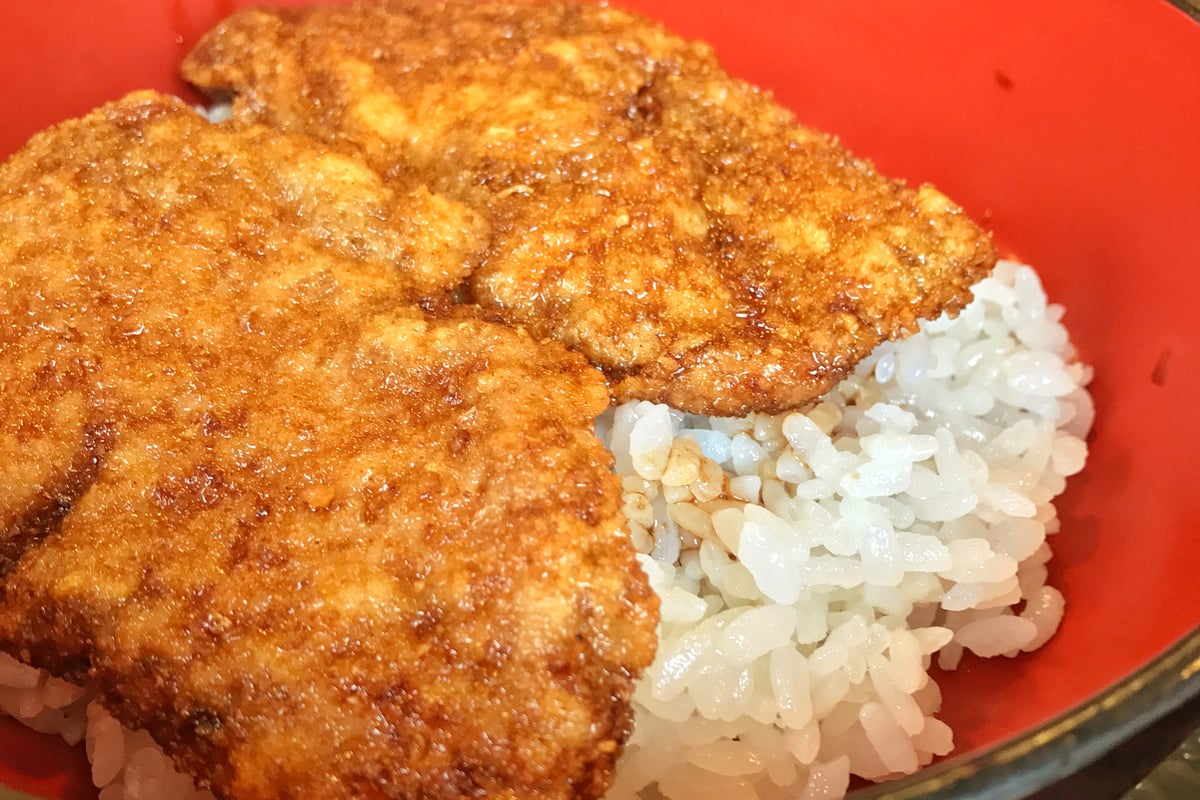
Fukui Sauce Katsudon
Fukui Sauce Katsudon
Fukui Sauce Katsudon is a rice bowl made by coating thinly sliced pork in fine breadcrumbs, deep-frying it, dipping it in a Worcestershire sauce-based sauce, and placing it on rice. In Fukui, it is taken for granted that ordering 'katsudon' will bring you sauce katsudon rather than the version simmered with egg. Its originator is said to be Yoroppaken, a Western-style restaurant in Fukui City. Its founder, Takabatake Masutaro, studied cooking in Germany and presented this dish in Tokyo in 1913 (Taisho 2). After being hit by the Great Kanto Earthquake, he returned to his hometown of Fukui and reopened the restaurant, and sauce katsudon took root as a taste of Fukui. Today, noren-wake shops (independent shops permitted to carry on the original name) have spread throughout the prefecture, and the dish is beloved as a soul food of the people of Fukui. The cutlet is tender enough to cut with chopsticks, and the sauce, with its balance of sweetness and acidity, whets the appetite. Another characteristic is its simplicity: there is no cabbage underneath, only rice and cutlet.
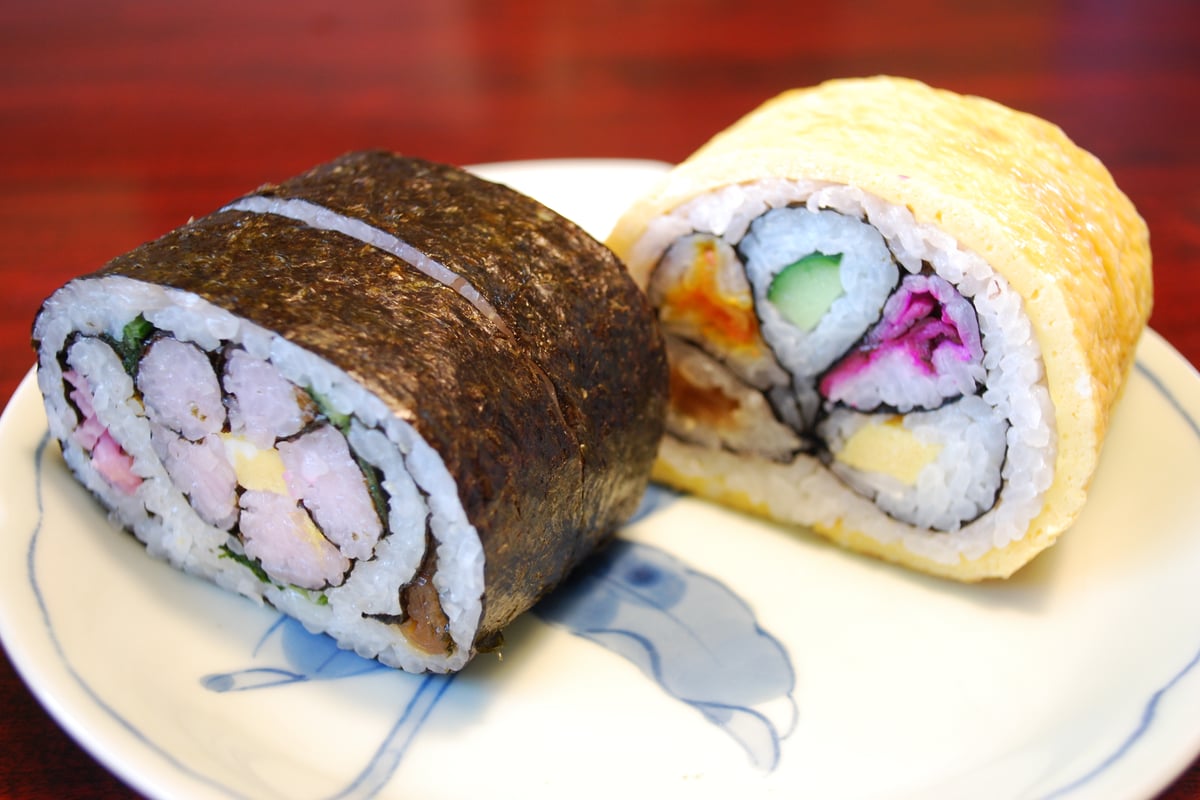
Futomaki Matsurizushi
Futomaki Matsurizushi
Futomaki Matsurizushi is a signature local dish of Chiba Prefecture, handed down in the Boso Peninsula (the Awa and Kazusa regions). Its defining feature is that when the rolled sushi is sliced, the cross-section reveals pictures of flowers, animals, characters, and more. It is said there are over 100 different designs, each passed down uniquely by region and household. Its history is said to trace back to the Kansei era (1789-1801) in the late Edo period, with one theory holding that its roots lie in 'mehari-zushi,' brought to Boso by fishermen who had relocated from Kishu. It was once made as a hospitality dish for celebratory gatherings such as village festivals, weddings, and children's birth celebrations that brought together large groups of people, and in 2007 it was selected as Chiba Prefecture's representative in the Ministry of Agriculture, Forestry and Fisheries' '100 Local Dishes of Rural and Fishing Villages' and '100 Furusato Onigiri.' Today it remains a beloved celebratory sushi, enjoyable to look at as well as to eat, indispensable for ceremonial occasions and annual events.
Gokabo
Gokabo
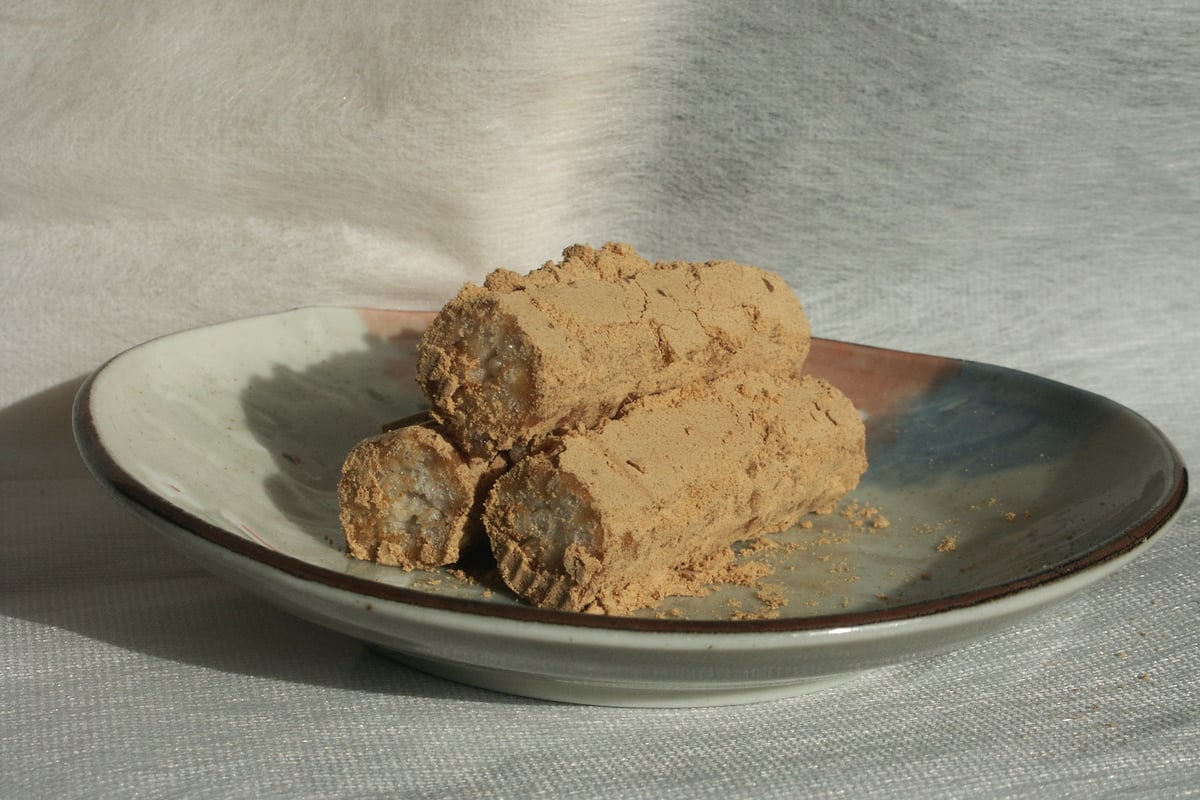
Gokabo is a local confection that originated in Kumagaya City, Saitama Prefecture, made by parching steamed glutinous rice into a malted 'okoshidane,' binding it into a stick shape with starch syrup, and coating the outside with roasted soybean flour (kinako). Kumagaya, which flourished as a post town on the Nakasendo highway, had an abundance of high-quality 'Ishihara rice,' soybeans, and the barley used to make starch syrup, and it is said the confection was first sold under the name 'Gokabo' during the Bunsei era (1818-1829). Later, the characters were changed to mean 'the five grains are the treasure of the household.' There are several theories about its origin, including one tracing it to a confectioner in Gunma and another to Gokamura Village in Shimosa Province, and amid these mixed accounts it spread across the northern Kanto region. Known for the fragrant aroma of kinako, the gentle sweetness of starch syrup, and a chewy texture, it continues to be made mainly by long-established confectioners in Kumagaya City today.
Harako Meshi (Salmon and Roe Rice)
Harako Meshi
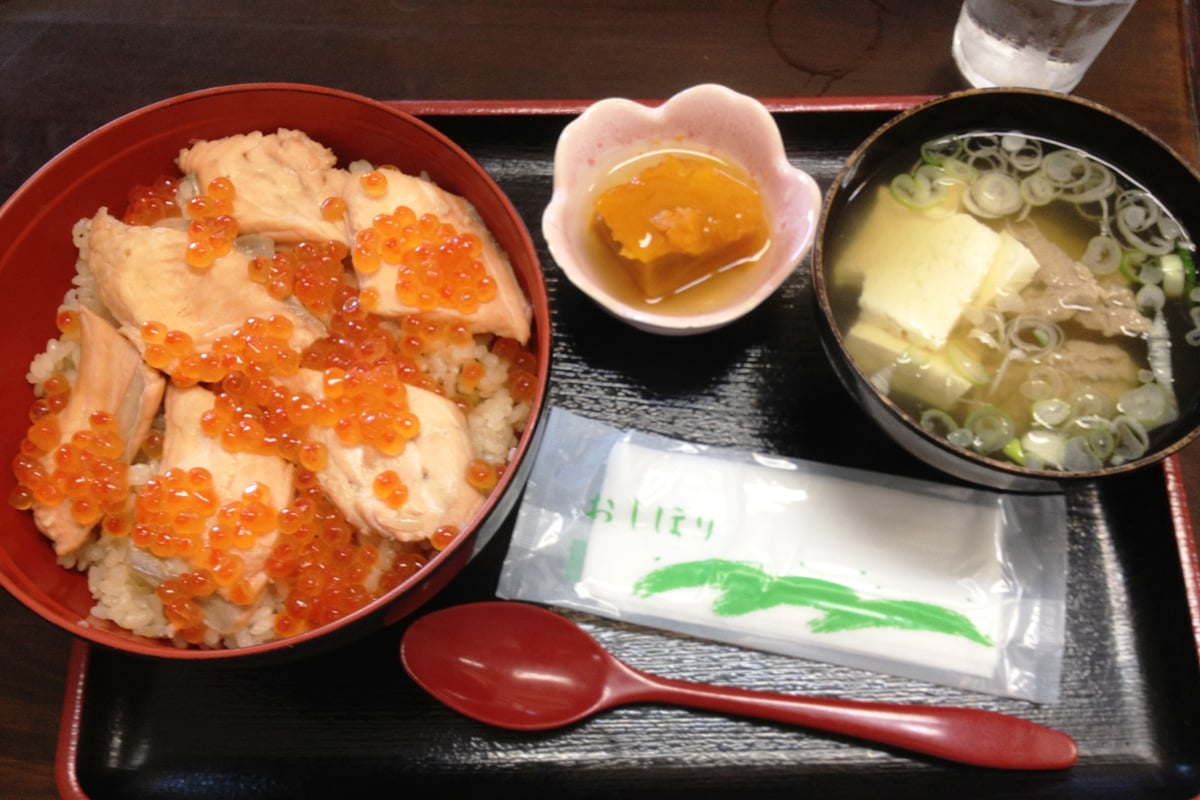
Harako meshi is an autumn local dish originating in the Arahama district of Watari Town, Miyagi Prefecture, in which rice is cooked in a broth made by simmering salmon meat, and then topped with flaked salmon and glossy salmon roe (harako) dipped in the same broth. It is said to have originated when, during an era when beach seine salmon fishing thrived near the mouth of the Abukuma River, fishermen would prepare it as a meal for themselves after a large catch. An episode is recorded that during the Edo period, when Date Masamune, who ruled Watari, visited to inspect flood-control works on the Abukuma River, local fishermen presented him with harako meshi, which he greatly enjoyed. It is also said that after returning to his castle, he spoke of its delicious taste to those around him, which became the catalyst for it to become known as a specialty of Watari. 'Harako' refers to the roe inside a salmon's belly, that is, its 'belly child' (hara-ko). As a seasonal delicacy available only from around September to November, when salmon migrate upstream, it is served at restaurants throughout the prefecture, centered on Watari Town.
Hida Beef Dishes
Hida Gyu Ryori
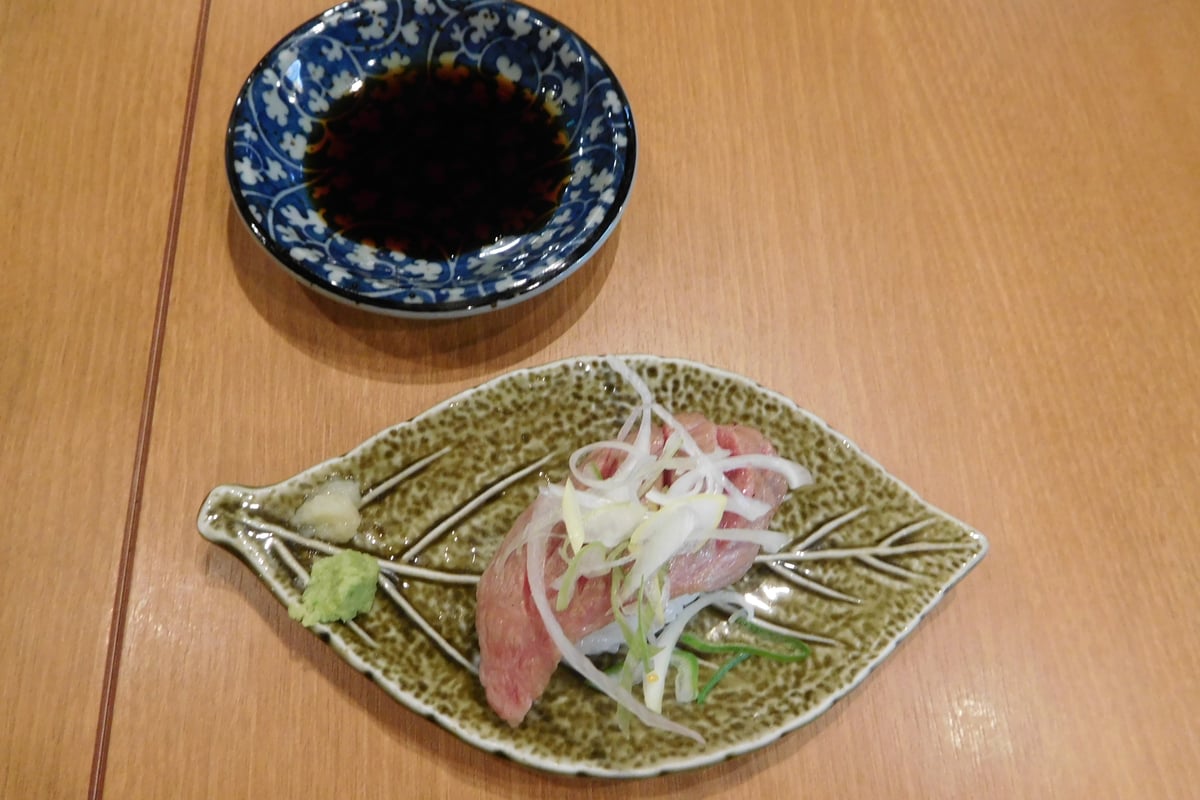
Hida Beef is one of Japan's most celebrated brands of Wagyu beef, a source of pride for Gifu Prefecture. Among Japanese Black cattle born and raised within Gifu Prefecture, only those that meet a yield grade of A or B and a meat quality grade of 3 or higher, as rated by the Japan Meat Grading Association, may carry the name 'Hida Beef.' It is known for its finely marbled texture, tender meat, and elegant sweetness, and is enjoyed in a wide range of dishes including yakiniku, sukiyaki, shabu-shabu, and steak. In tourist destinations such as Hida-Takayama and Gero Onsen, numerous restaurants serve local specialties made with Hida Beef, such as steak rice bowls, nigiri sushi, and hoba miso-grilled beef, making it a popular local delicacy among travelers. It has also won top honors at the National Wagyu Competition and continues to gain recognition overseas.
Iburigakko
Iburigakko
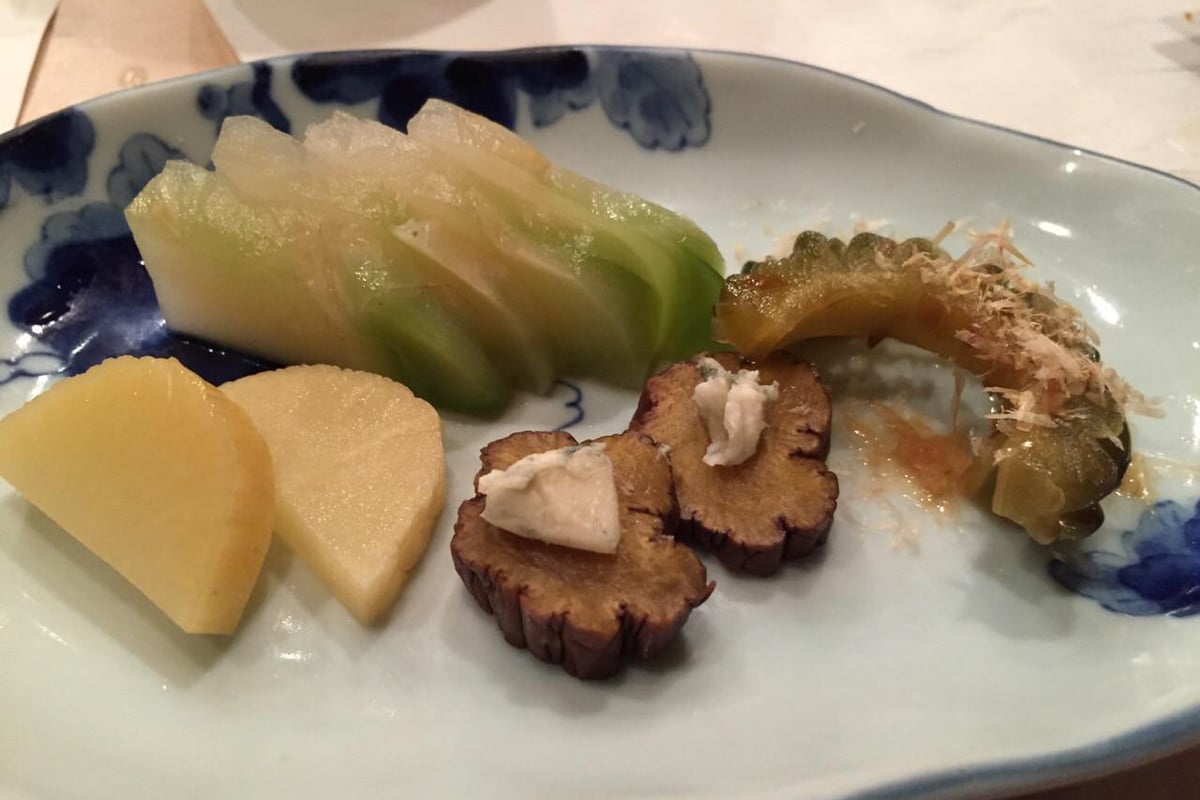
Iburigakko is a pickle originating in the inland southern part of Akita Prefecture, made by smoking daikon radish over an irori (sunken hearth) fire, drying it, and then pickling it in rice bran and salt. 'Iburi' means 'to smoke,' and 'gakko' is an Akita dialect word for pickles. It is said to have developed from the wisdom of farmers who, in a climate with heavy snowfall that made sun-drying difficult, hung daikon from the beams of their houses and dried it using the heat and smoke of the irori — a practice believed to date back to the Muromachi period. Known for its fragrant smoky aroma and crisp, crunchy texture, it developed mainly in the area around Yokote City. In 2019 it was registered under Japan's national Geographical Indication (GI) protection system, and it is now known nationwide as one of Akita's signature fermented foods.
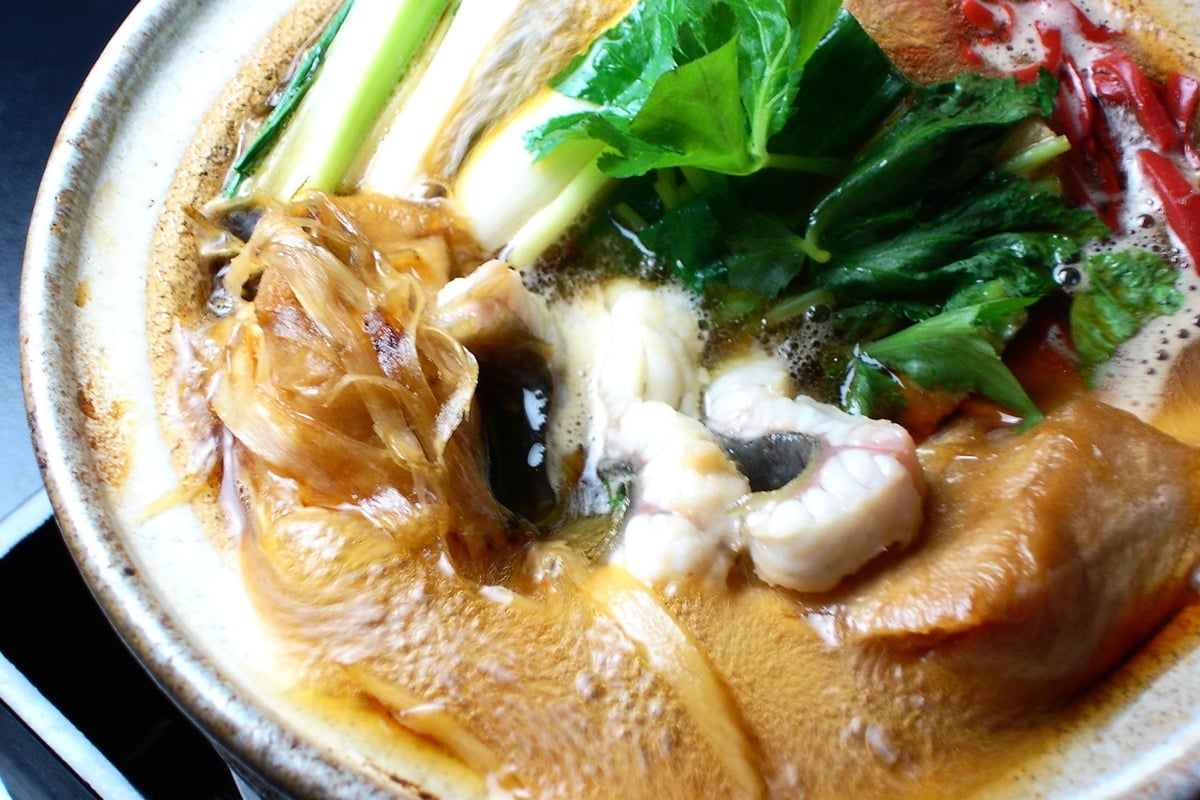
Junjun (Lake Biwa-style Sukiyaki Hot Pot)
Junjun
Junjun is a sukiyaki-style hot pot dish, seasoned sweet and savory with soy sauce, sugar, and mirin, that has been passed down along the shores of Lake Biwa and in the Kohoku region to the north. While sukiyaki nationwide typically centers on beef, Junjun is distinctive in that its ingredients vary by region and household — featuring lake fish such as eel, isaza goby, carp, honmoroko, and catfish, as well as chicken or Omi Beef. The name is said to come from the 'jun-jun' sound the ingredients make as they simmer in the pot. Once a home-cooked dish known mainly in fishing villages around Lake Biwa, Junjun has in recent years become recognized across Shiga Prefecture and is increasingly introduced to visitors as a local specialty. It is a hot pot that reflects lakeside life, traditionally prepared with special ingredients for occasions such as New Year and the Obon holidays when hosting guests.
Kanazawa Oden
Kanazawa oden
Kanazawa Oden is a local soul food eaten year-round by the people of Kanazawa, characterized by a refined, clear Kansai-style broth made from kombu and dried fish stock, sharpened with locally made Ono soy sauce. Part of its great appeal lies in the local ingredients not found in oden from other prefectures — locally landed 'bai' whelks, 'kuruma-fu' wheel-shaped wheat gluten that soaks up the broth, and in winter, 'kani-men,' crab shell stuffed with miso and crab meat and simmered. Oden is said to have become popular in Kanazawa around the end of the Meiji era, first served at celebratory events, and long-established oden shops founded in the early Showa era still keep their doors open today, bustling with both locals and tourists. Many shops serve it even in summer, making year-round enjoyment another distinctive feature of Kanazawa Oden.
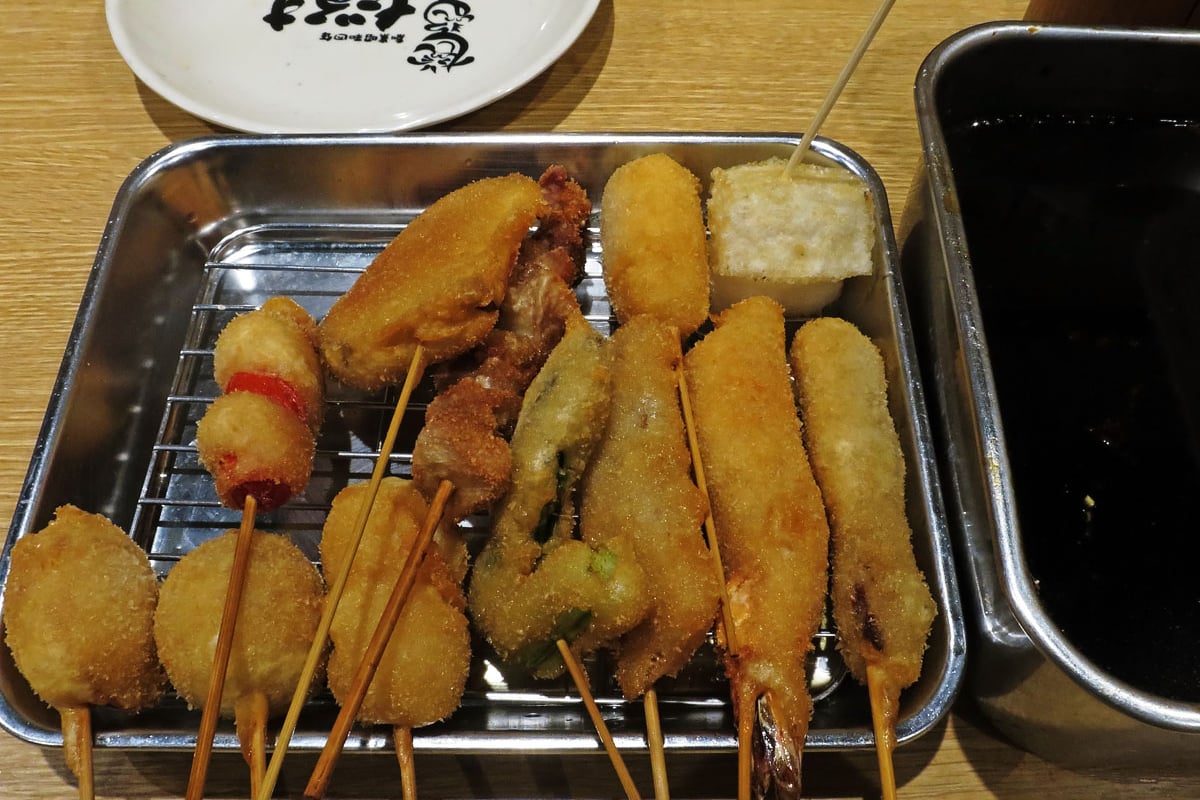
Kushikatsu
Kushikatsu (Deep-fried Skewers)
Kushikatsu is an Osaka specialty in which beef, vegetables, seafood, and other ingredients are cut into bite-size pieces, skewered, coated in batter and panko breadcrumbs, and deep-fried. The freshly fried skewers are eaten after dipping them in sauce from a container placed on the table. Because customers share the sauce, the iron rule of 'no double-dipping' in the sauce is widely known. There are various theories about its origin, but the leading one is that it was born in Shinsekai, home of Tsutenkaku Tower, between the late Taisho era and the early Showa era. Daruma (だるま), founded in 1929 (Showa 4), says it began when its first proprietress (okami) served it to laborers working nearby, and it is regarded as the originator of Osaka-style kushikatsu. The prototype was thin beef coated in a thick batter and fried, so that it would be cheap, filling, and quick to eat. In the 2000s, chain restaurants specializing in kushikatsu spread across Japan, and it became known as an Osaka specialty. Even today, many kushikatsu restaurants line the streets of Shinsekai and Jan Jan Yokocho.
Mimi (Winnow-Shaped Flour Dumplings)
Mimi
Mimi is a local dish handed down in the Jikkoku district of Fujikawa Town, Yamanashi Prefecture. Wheat flour is kneaded, rolled out thin, and cut into squares about 5 cm on each side. Two corners on one side are pressed together to make a triangle, and the piece is shaped like a 'mi,' a winnowing basket used as a farm tool. These are simmered in niboshi (dried sardine) dashi together with vegetables such as daikon radish, taro, and burdock, and seasoned with miso. The dough is similar to that of Hoto (Flat Noodles Simmered in Miso), but the shape is completely different, and no pre-boiling is needed. The name is said to come from its resemblance to the shape of a mi, and there is also a theory that it is because it resembles an ear (mimi). The mi carries the meaning of 'scooping up good fortune,' and it is also said that 'fukumi' (lucky winnow) changed into 'mimi.' As an auspicious dish, in Jikkoku it is still offered to Toshigami-sama (the deity of the New Year) on the morning of New Year's Day before the family eats it. Mimi-making experiences are also available at a local facility.
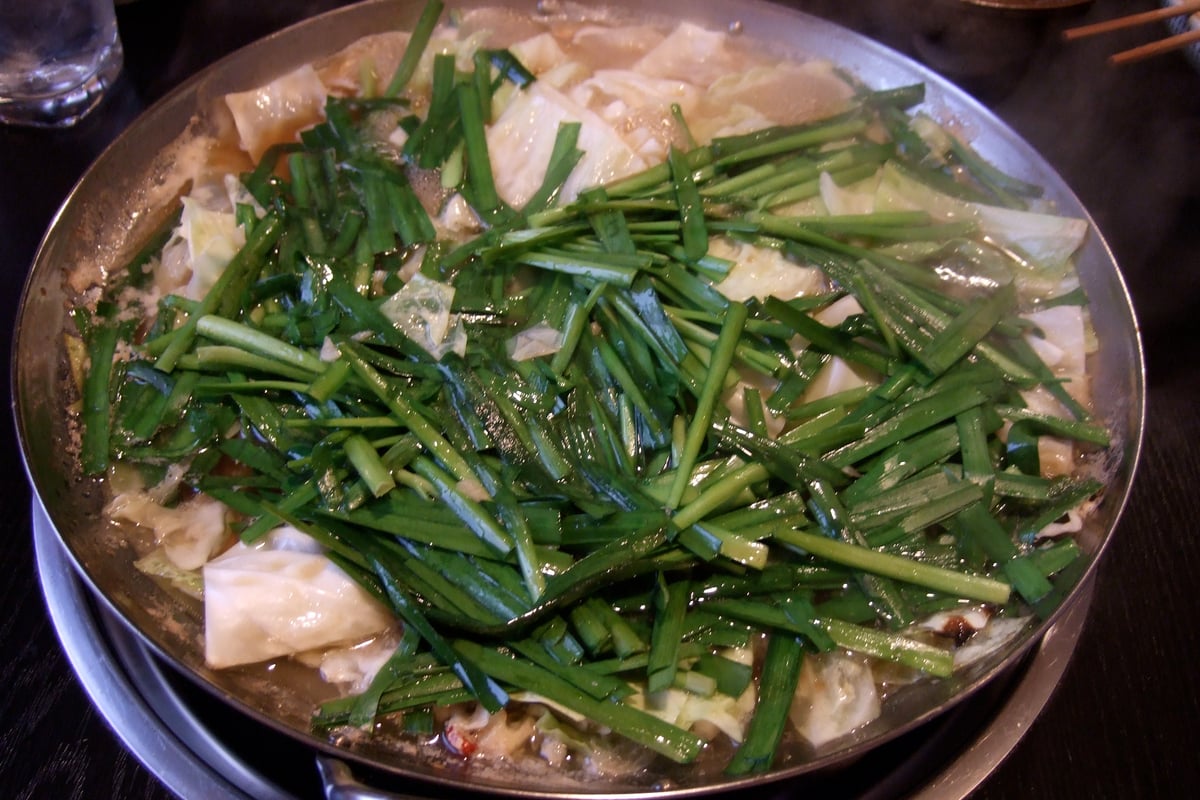
Motsunabe
Motsunabe
Motsunabe is a hot pot dish originating in Hakata, Fukuoka, in which beef or pork motsu (offal) is simmered with cabbage, garlic chives, garlic, and chili peppers in a soy sauce or miso-based broth. It is said to have started right after the war, during a time of food shortages, when people simmered inexpensive beef offal together with vegetables in an aluminum pot. As food supplies improved, cabbage was added, and the dish settled into its current form of offal, garlic chives, cabbage, soy sauce-based broth, and a final course of champon noodles. Specialty restaurants rapidly increased in Hakata from the late 1980s, and a nationwide 'motsunabe boom' in the early 1990s established it as one of Fukuoka's signature local dishes. Its popularity also owes to the springy texture of the offal and the well-balanced nutrition of eating plenty of vegetables in one dish.
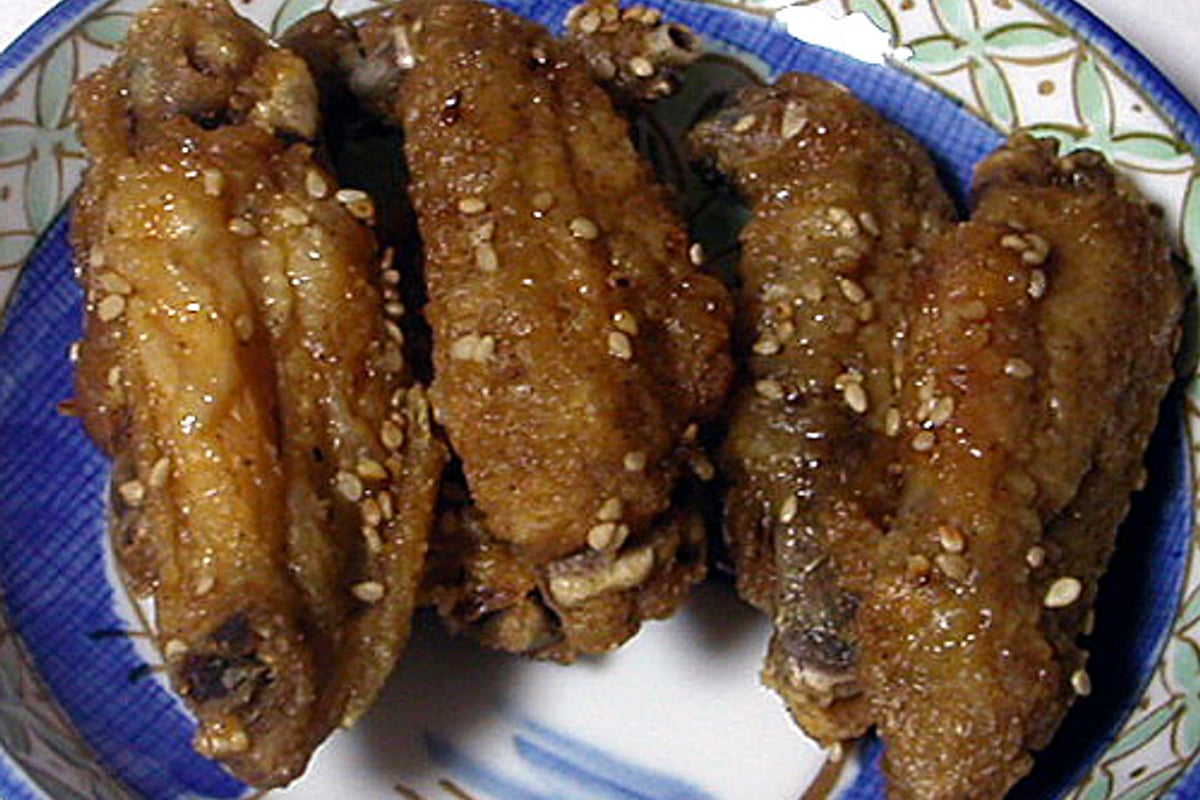
Nagoya Tebasaki (Twice-Fried Chicken Wings)
Nagoya Tebasaki
Nagoya tebasaki (fried chicken wing tips) is an izakaya dish in which chicken wing tips are fried twice until crisp, then finished with a sweet-savory sauce and condiments such as pepper and sesame. Furaibo, founded in 1963 in Atsuta Ward, Nagoya City, began serving fried wing tips coated in the sauce used for its signature whole roasted chicken, 'Tarzan-yaki,' and the dish proved so popular that it became the restaurant's own signature item. Later, Sekai no Yamachan gained popularity with its own distinctively spiced wing tips, and these two chains led the spread of Nagoya's tebasaki culture nationwide as a representative izakaya dish. Its appeal lies in eating the wings by hand, bone in, along with each restaurant's own character, whether a sweet-savory sauce or a spicy style, making it a classic accompaniment to beer.
Nattojiru (Natto Soup)
Nattojiru
Nattojiru is a winter dish passed down mainly in the inland areas of Yamagata Prefecture — a soup in which natto (fermented soybeans), ground in a mortar until the beans are no longer visible, is stirred into a hearty miso soup to give it a thick, silky texture. In snowy Yamagata, it was customary to make homemade natto as a preserved winter food, and the dish is said to have originated as a way to use natto whose stickiness had weakened. For inland residents who had few opportunities to eat animal protein, it was a dish that supplemented protein through soybean-based natto and tofu. It has long been cherished as a nutritionally excellent dish, since adding imogara (dried taro stem), a preserved food, along with mushrooms, wild mountain vegetables, and konnyaku also provides vitamins and dietary fiber. The timing of when it is eaten varies by region: it is customary to eat it around the Nanakusa festival on January 7 in the Murayama region, at New Year's in the Mogami region, and on Daikoku-sama's Otoshiya (a year-end-eve tradition, in December) in the Shonai region. Because it takes considerable effort to prepare, fewer households make it from scratch today, but it is still passed down at inns, restaurants, and school lunches.
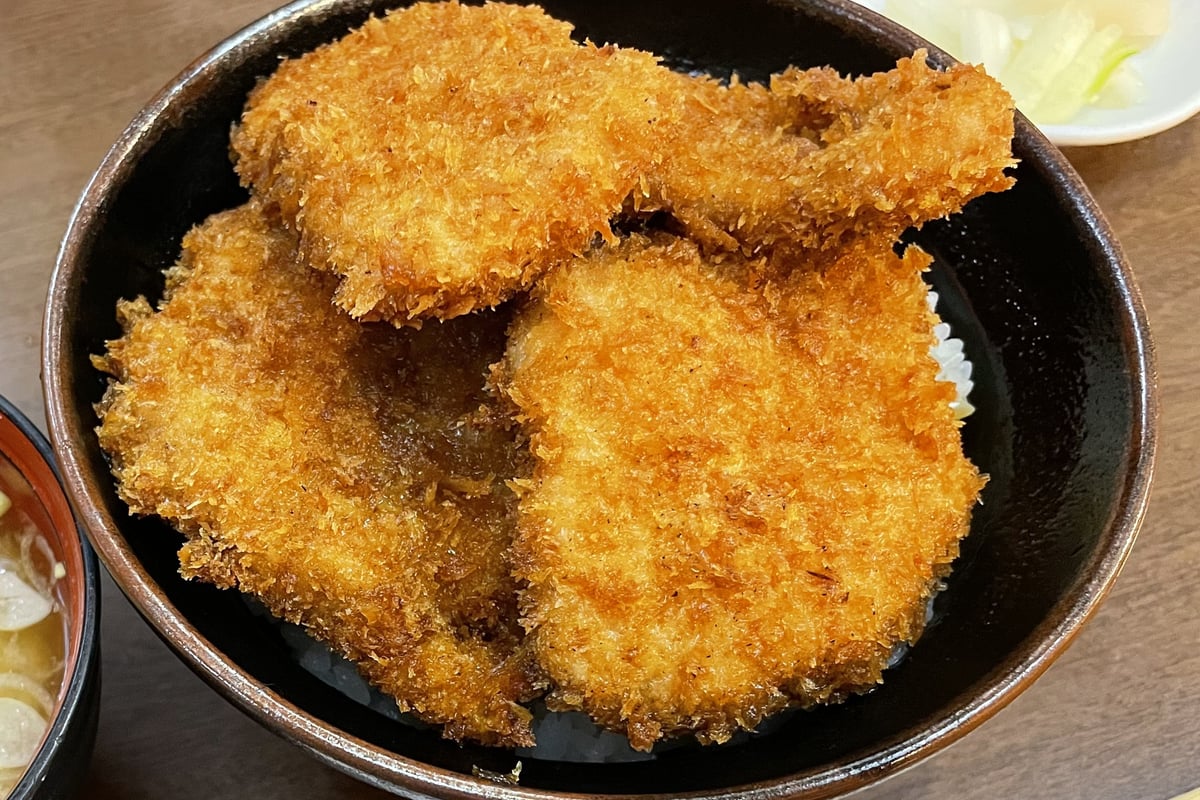
Niigata Tarekatsu-don
Niigata Tarekatsu-don
Niigata Tarekatsu-don is a rice bowl that originated in Niigata City, made by dipping thin, freshly fried pork cutlets in a sweet and savory soy-based sauce and placing them on rice. Unlike the katsudon common throughout Japan, which is simmered with egg, it has a simple preparation finished only with the flavor of the sauce, without egg. It is said to have been devised in the early Showa period by Komatsu Michitaro (小松道太郎), the first owner of Tonkatsu Taro (とんかつ太郎), one of the food stalls that lined the canals in central Niigata City. When he dipped cutlets — then a modern Western-style dish — in soy-based sauce and served them on rice, the dish became a great hit. It is common to place several thin cutlets on top, and the sweet and savory sauce soaks nicely into the rice. At Tonkatsu Taro, the originating restaurant, the dish is still listed simply as 'katsudon.' The name 'Tarekatsu-don' was coined and popularized around 1990 by the second-generation owner of Tonkatsu Masachan (とんかつ政ちゃん). Today, centered on Niigata City, it is a standard menu item at tonkatsu restaurants and eateries throughout the prefecture.
Ogi Yokan
Ogi Yokan
Ogi Yokan is a famous yokan (sweet bean jelly) product developed in Ogi City, Saga Prefecture, from the Meiji era onward. During the Edo period, the Nagasaki Kaidō, which connected Nagasaki and Kokura, was also known as the 'Sugar Road' because sugar brought by Nanban (European) trade was transported along it, and Ogi, one of the sugar collection points along the route, likewise developed a flourishing confectionery culture. In 1899, the founder of Muraoka Sohonpo learned yokan-making techniques from a yokan artisan in Nagasaki and began producing yokan there, and it is said that the second-generation head, Muraoka Yasukichi, was the first to use the name 'Ogi Yokan.' Ogi is a rare production area nationally, with more than twenty yokan shops clustered in a small town of about 50,000 people, and in 2020 it was certified as a component asset of the Japan Heritage designation 'The Nagasaki Kaidō That Spread Sugar Culture — the Sugar Road.' The fact that Ogi flourished as a castle town of the Nabeshima Domain is also said to have provided fertile ground for its confectionery culture to blossom.
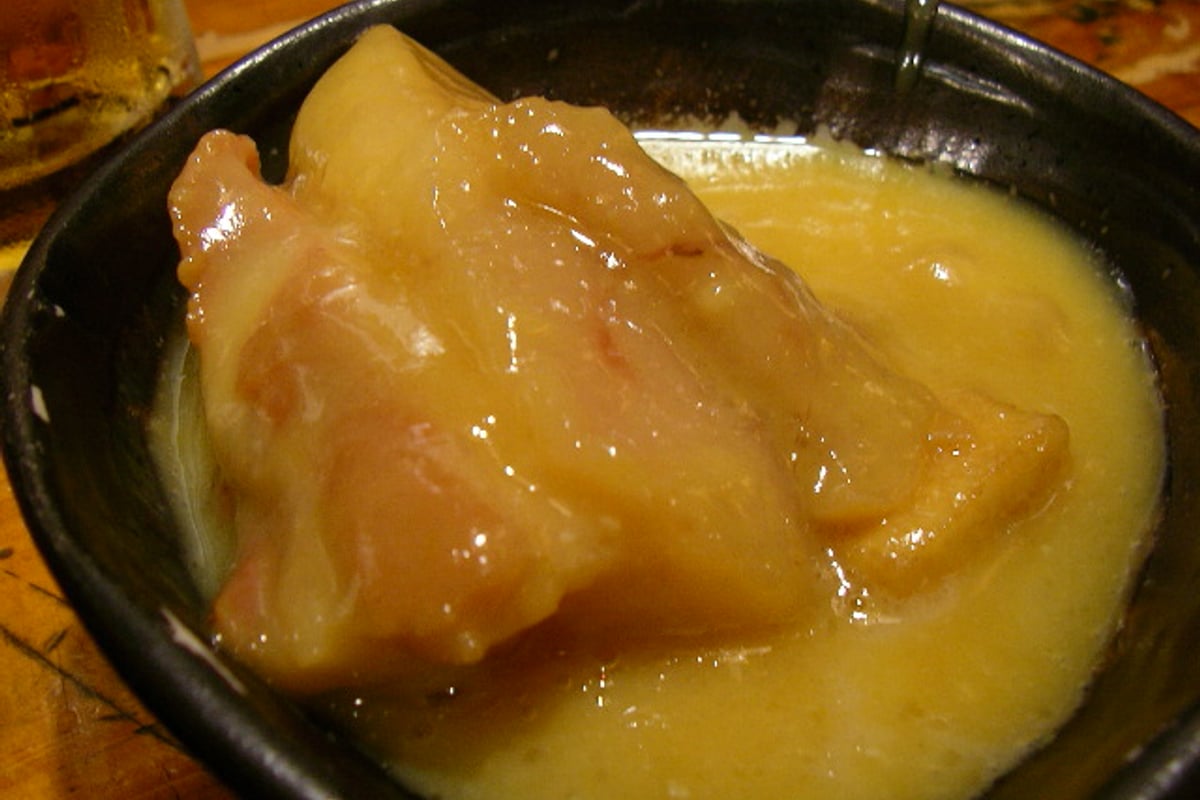
Rafute (Okinawan Braised Pork Belly)
Rafute
Rafute is a representative Okinawan pork dish made by slowly simmering skin-on pork belly in awamori, soy sauce, and sugar until sweetly savory. Born as a court dish during the Ryukyu Kingdom era, against the backdrop of a pork-eating culture that developed through the investiture relationship and trade with China, it is thought to share its origins with the Chinese dish dongpo pork (tonporou). Once prepared with a strong seasoning as a preserved food in an age without refrigeration, its seasoning has mellowed over time, and today it is positioned as a formal dish served at memorial services and celebratory banquets. Slow simmering renders even the skin meltingly tender, and it is said that 'Ryukyu cuisine begins and ends with pork,' making rafute a dish that symbolizes Okinawa's food culture.
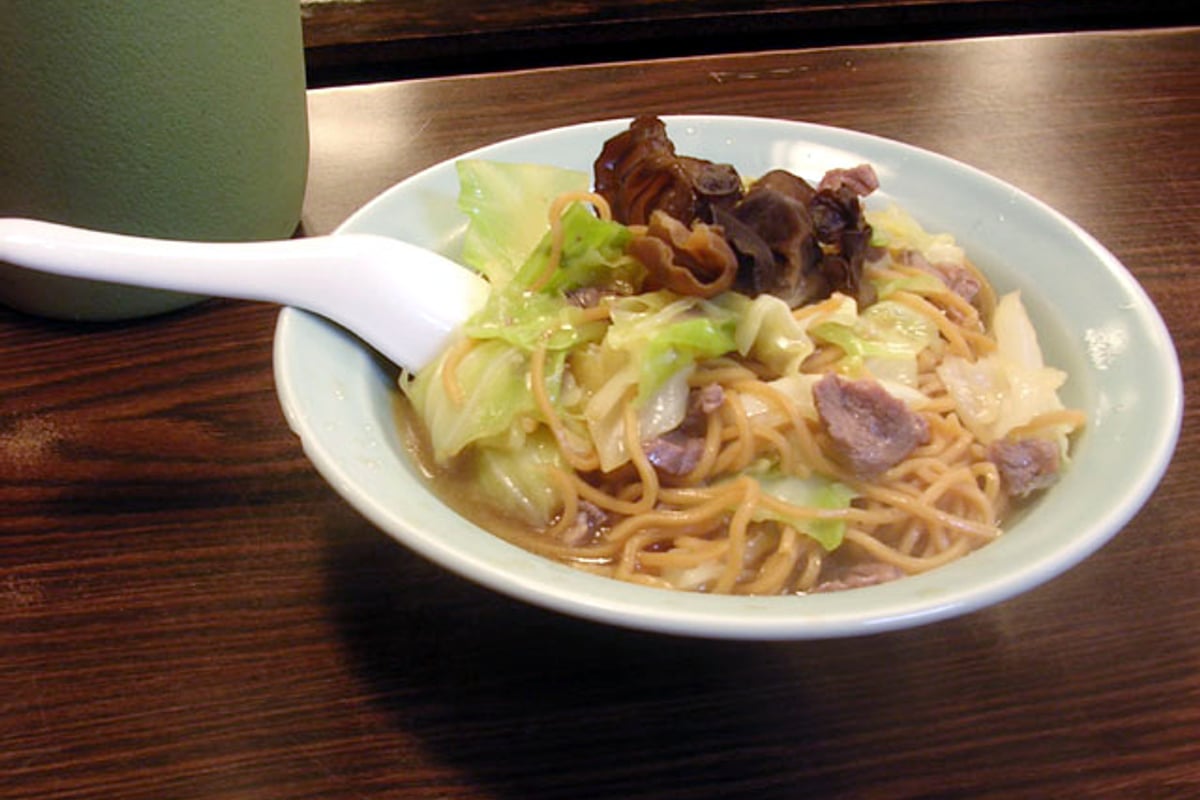
Romen (Ina Mutton Noodles)
Romen (Ina Romen)
Romen is a noodle dish born in Ina City, Nagano Prefecture, made with steamed Chinese-style noodles, mutton (sheep meat), and cabbage. It was devised in 1955 (Showa 30) by Ito Waichi, the owner of 'Banri' (萬里), a Chinese restaurant in Ina City. It is said to have begun with steaming the noodles to make them keep longer at a time when refrigerators were not yet widespread. It is described as 'neither ramen nor yakisoba,' and there are soup versions in which the noodles are immersed in broth as well as soupless versions in the style of yakisoba. Another characteristic is that diners pour sauce, vinegar, sesame oil, and other condiments from the table over it to finish it to their own taste. About 90 restaurants in and around Ina City serve it, and it also appears in school lunches. It is a soul food that has long been loved by local people.
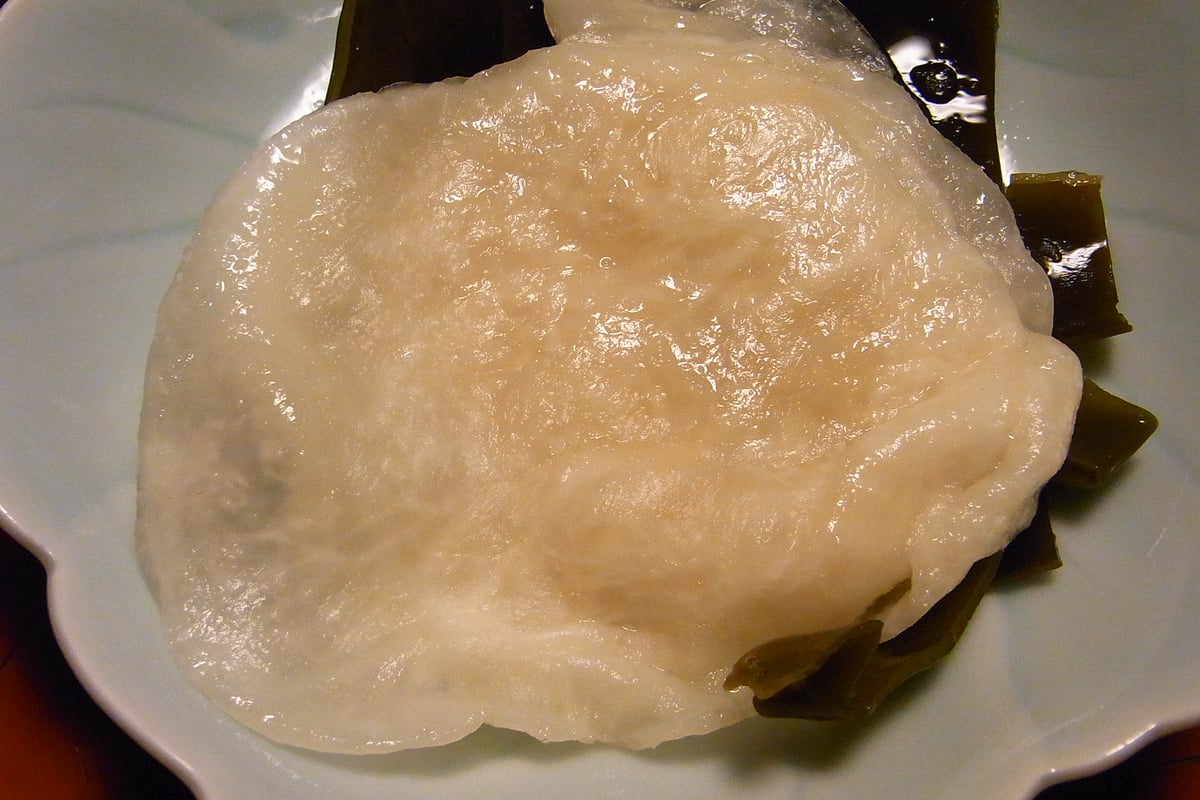
Senmaizuke (Thousand-Layer Pickled Turnip)
Senmaizuke
Senmaizuke is a pickle representative of Kyoto, made by salting thinly sliced Shogoin turnip (kabura) together with kelp and finishing it with a sweet-sour flavor using vinegar and mirin. Counted alongside sugukizuke and shibazuke as one of "Kyoto's three great pickles," it is especially cherished as a winter flavor of Kyoto. It is said to have originated in 1865 (Keio 1), created by the first-generation Daikokuya Tozaburo, who served as a cook at the Imperial court, and there is a sense of historical background in its design, in which the turnip represents the white gravel and the accompanying mibuna greens represent the green of the pines, evoking the scenery of the Imperial Palace. Its distinctive elegant sweetness, the umami of the kelp, and its crisp texture make it a staple Kyoto souvenir as well.
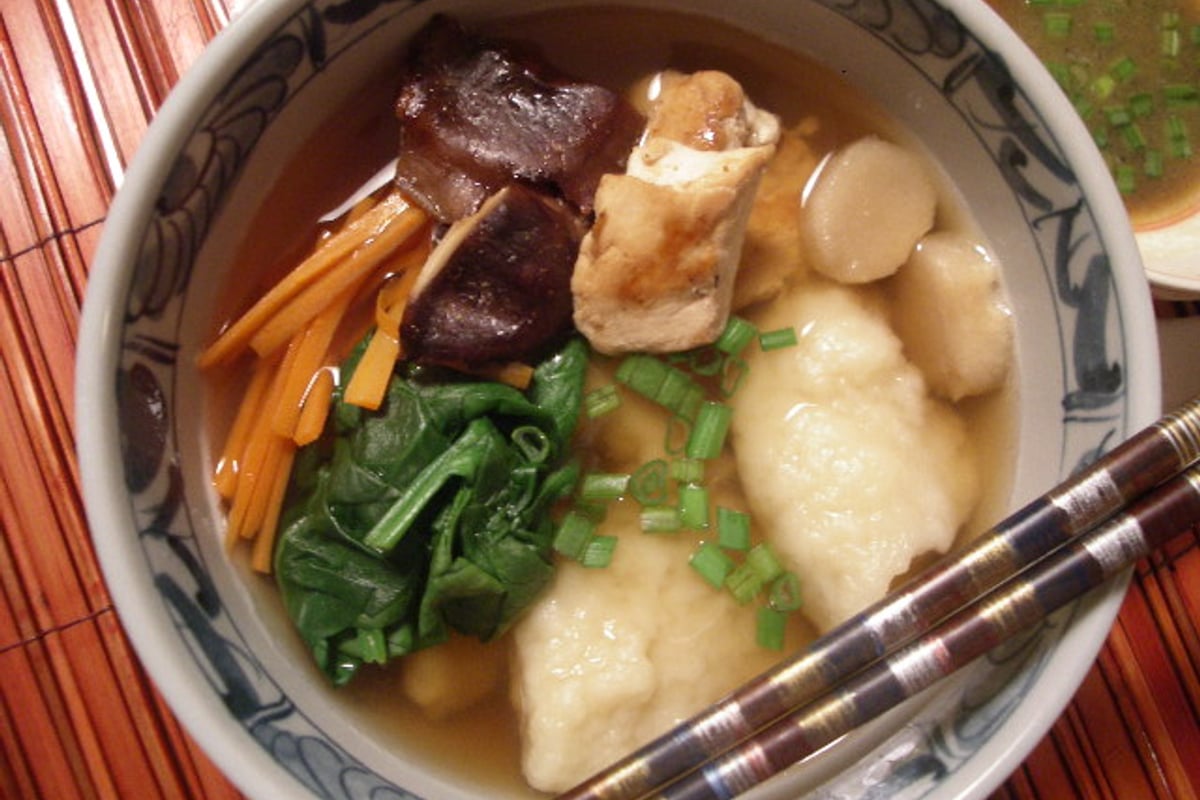
Suiton (wheat flour dumpling soup)
Suiton
Suiton is a local dish enjoyed throughout Gunma Prefecture, made by kneading wheat flour with water, tearing off pieces to form dumplings, and simmering them with vegetables in a miso- or soy sauce-based broth. Gunma boasts some of the longest hours of sunshine in Japan, and because double-cropping — growing wheat after the rice harvest — was widespread, a food culture built around wheat flour developed early on. Since the dough is simply torn into pieces and simmered without the extra step of rolling and cutting it, suiton became a simple home-cooked dish that was easy to make even during breaks in farm work. The dish goes by different names depending on the area, including 'tocchanage-jiru' in Fujioka, as well as 'tsumerikko' and 'nejikko.' It is said to have been eaten even earlier than another wheat-flour dish, okkirikomi, and today it remains a beloved 'Gunma local dish,' served in school lunches throughout the prefecture.
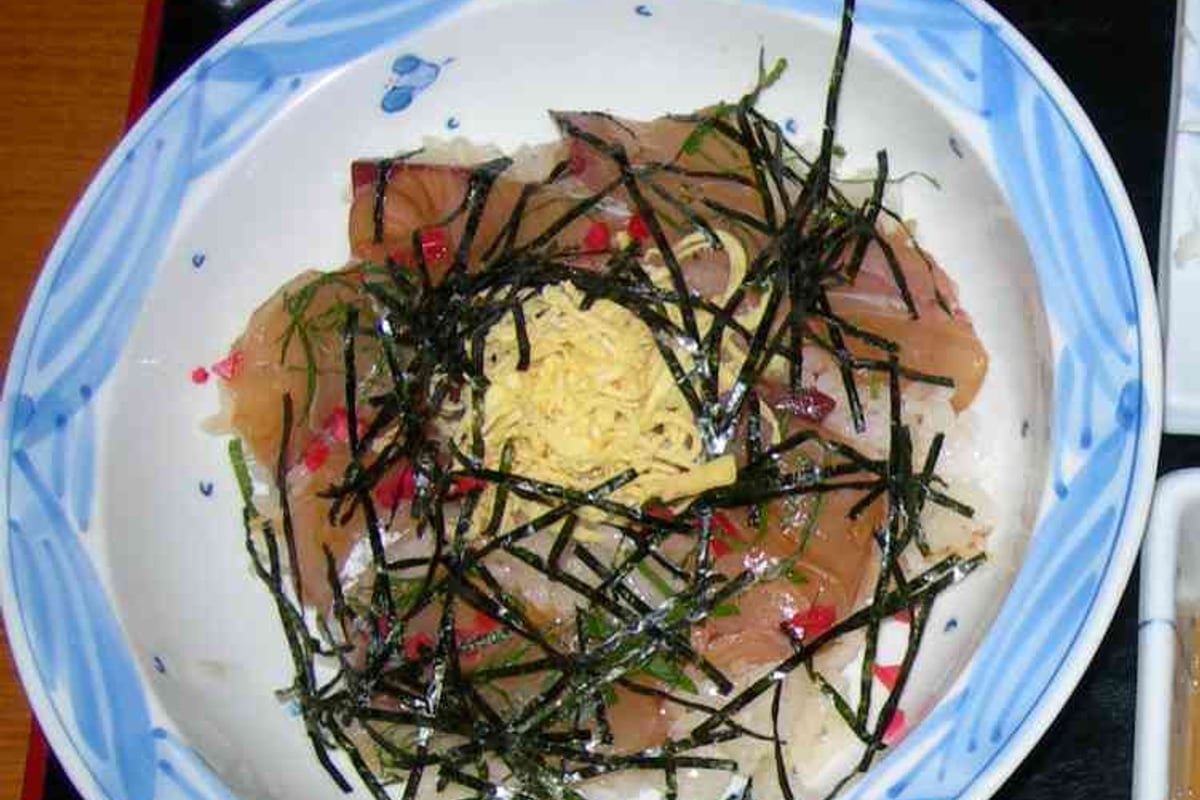
Tekone-zushi (Hand-Mixed Bonito Sushi)
Tekone Zushi
Tekone-zushi is a fishermen's dish that represents the Shima region of Mie Prefecture. Red-fleshed fish such as bonito (katsuo) is marinated in a soy sauce-based sauce and mixed with vinegared rice. It is often finished with a scattering of finely shredded ginger or shiso (perilla) leaves, which makes it refreshing to eat. It is said to have begun as a dish that fishermen in Wagu, Shima-cho, Shima City made so they could eat quickly aboard bonito fishing boats. It is said to have come to be called 'tekone-zushi' because it was made by mixing it by hand (te) as if kneading (koneru). In the Meiji era it spread to fishermen's households and the local community, and it has been handed down as a feast for festivals and guests. In the Showa era it became a representative local dish of the Shima region and also came to be served to tourists visiting Ise-Shima. Today it is offered as a specialty at restaurants in Ise, Toba, and Shima. In fiscal 2025 (Reiwa 7), it was recognized as one of the Agency for Cultural Affairs' '100-Year Foods.'
Azuki Hoto (Sweet Red Bean Hoto)
Azuki Hoto
Azuki Hoto is a local dish of Yamanashi Prefecture in which hoto noodles are simmered in a soup of azuki red beans sweetened with sugar. In both appearance and taste it is close to oshiruko (sweet red bean soup), and it is also called 'shiruko hoto.' It is sometimes written with a voiced sound as 'azuki boto.' Originally, mochi (rice cake) is considered the proper thing to put in azuki soup. However, in Yamanashi, where paddy fields were few, mochi was extremely precious, so according to tradition, thickly cut hoto noodles were used in place of mochi. Unlike everyday hoto simmered in miso, it has been eaten on days of events and celebrations, such as New Year, Obon, village festivals, and the rice-planting season. The summer festival of Miwa Shrine in Wakamiko, Sutama-cho, Hokuto City, is also called the 'Hoto Festival' because Azuki Hoto is served there. Today it is handed down in places such as Hokuto City, Kofu City, and Kai City, and it can also be enjoyed at hoto specialty restaurants.
Decchi Yokan (Apprentice's Yokan)
Decchi Yokan
Decchi yokan is a rustic yokan (sweet bean jelly) made by kneading smooth red bean paste (koshian) with wheat flour and other ingredients, then wrapping it in bamboo bark and steaming it. It is a local confection that originated in Omihachiman City, Shiga Prefecture. Compared to standard neri yokan, it has a milder sweetness and a distinctive chewy texture infused with a faint aroma from the bamboo bark. There are several theories about the origin of its name: one holds that it was named after the 'decchi' (apprentice boys) who worked as live-in servants for merchant houses in Osaka and the Kanto region, who could afford this modestly priced sweet as a gift when returning home for their rare holidays; another traces it to the dialect word 'decchiru,' meaning 'to knead together.' The long-established shop Watayo, founded in 1863, is known as the birthplace of the confection, which grew out of the region's ready access to bamboo bark as a wrapping material — a distinctly Omihachiman innovation. It remains a beloved local souvenir today. Beyond Omihachiman, similar sweets spread to other regions, such as Iga City in Mie Prefecture, through the trading networks of Omi merchants.
Fugunoko Nukazuke (Fermented Pufferfish Ovaries)
Fugunoko nukazuke
Fugunoko Nukazuke is a delicacy handed down in the Mikawa district of Hakusan City, Ishikawa Prefecture, and other areas, made by salting and then rice-bran pickling the ovaries of pufferfish, which contain the deadly poison tetrodotoxin, fermenting them slowly for two to three years to detoxify them before eating. It is a fermented food with a long history, prized since the Edo period as a gift presented to the Kaga domain. The disposal of the highly poisonous organs is normally required by the Food Sanitation Act, but in Ishikawa, because it is a traditional industry continuing since the Edo period and no accidents have been reported over many years, its production is permitted only to operators licensed by the prefecture. Exactly how the poison is removed is still not fully understood scientifically even today; it is an extraordinary fermented food transformed into a safe delicacy through methods and experience passed down across generations. Thinly sliced, it is enjoyed as an accompaniment to sake or as a topping for ochazuke.
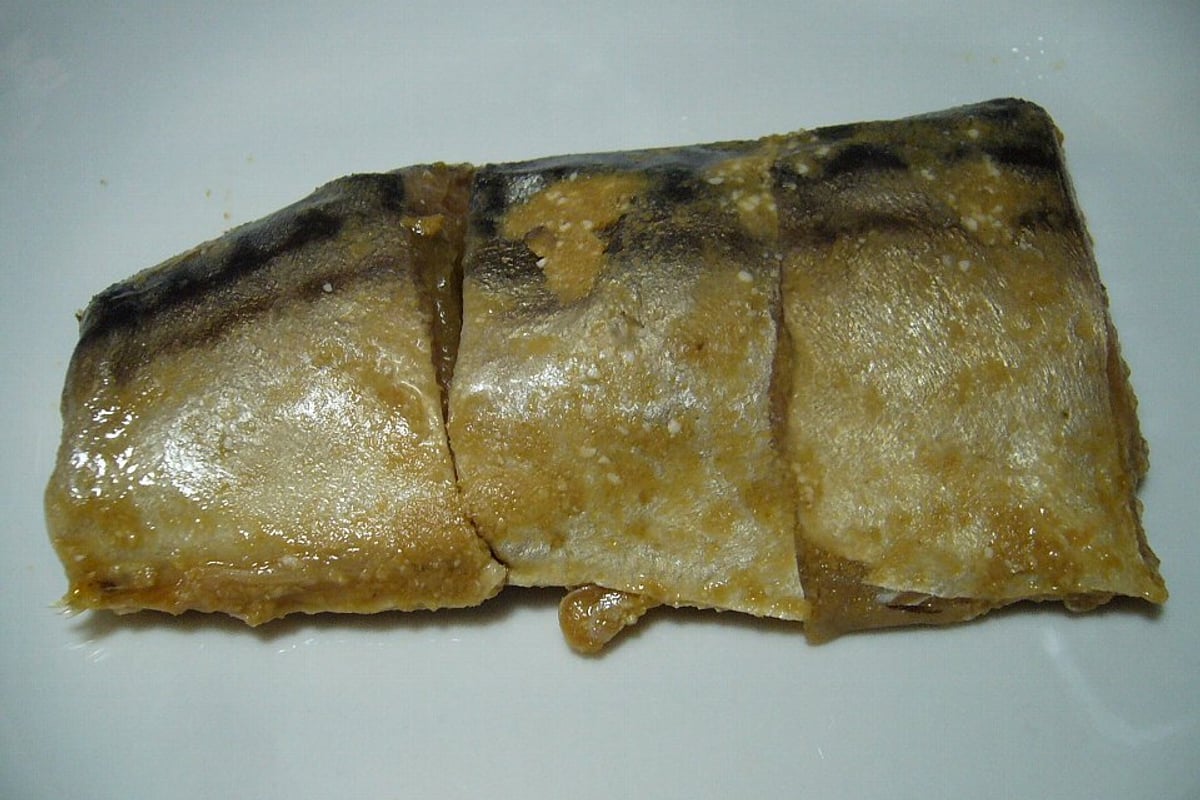
Heshiko (Rice-bran Fermented Mackerel)
Heshiko
Heshiko is a traditional preserved food of Fukui Prefecture, made by salting fish such as mackerel and then pickling it in rice bran to mature. It has long been made in the Wakasa region and along the Echizen Coast. Fish with the innards removed are salted for about a month, then packed in rice bran for more than half a year to ferment and mature. While it is salty, it is characterized by the concentrated umami and aroma of the fish. It is thought to have been made in Wakasa by the mid-Edo period, and it was a valuable source of protein for getting through harsh winters. The standard way to eat it is to remove the bran, grill it lightly, and serve it as a snack with sake or in ochazuke (rice with tea poured over it). In recent years, it has also come to be used like anchovies, in dishes such as pasta and pizza. In Obama City, 'Saba no Narezushi' (fermented mackerel sushi) is also made by desalting heshiko and pickling it again with rice koji and cooked rice.
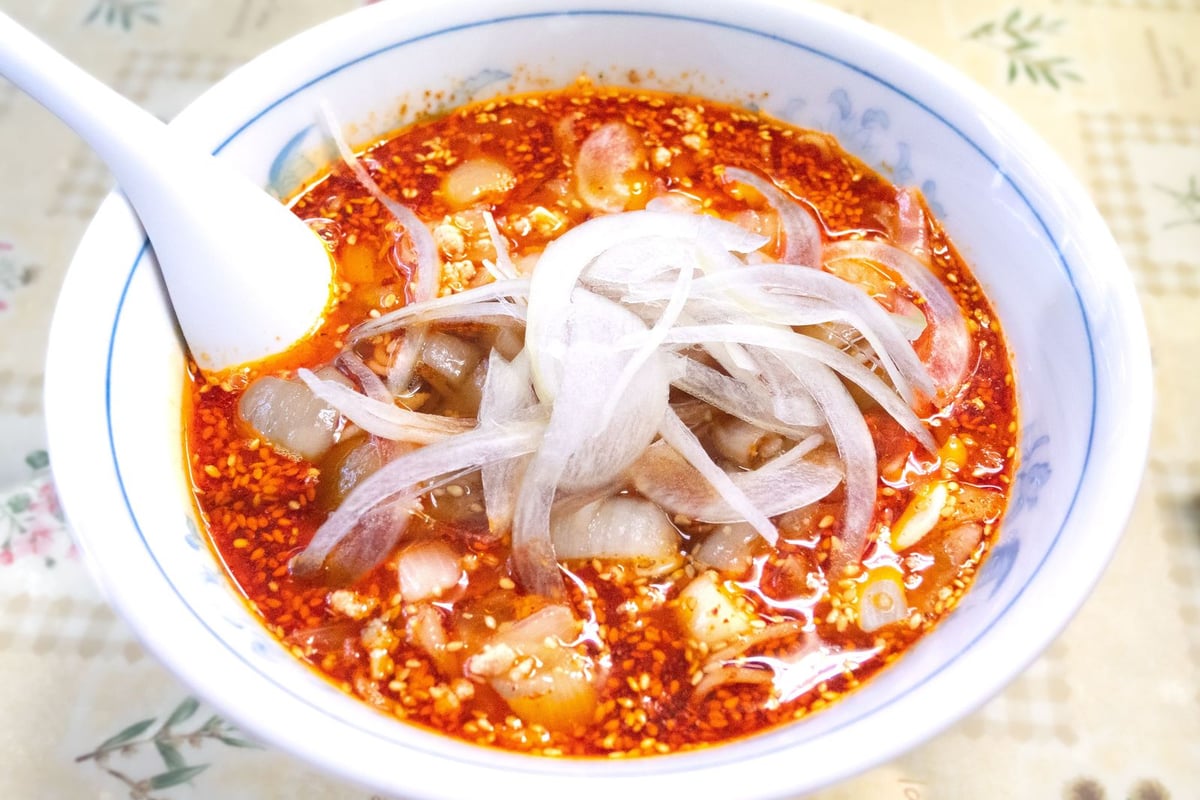
Katsuura Tantanmen
Katsuura Tantanmen
Katsuura Tantanmen is a local ramen dish originating in Katsuura City, Chiba Prefecture, featuring a soy sauce-based broth generously spiced with chili oil for a bold balance of heat and umami. Unlike typical tantanmen, which uses a sesame-based sauce or a milky white broth, Katsuura Tantanmen is distinguished by its soy sauce base. Minced onion and ground meat are stir-fried and blended into the broth, creating a flavor where richness and spiciness come together in harmony. It is said to have originated when local eateries began serving the dish to warm the bodies of fishermen and ama divers chilled from working offshore, with the diner Ezawa, founded in 1954, known as the original shop. In 2011, a citizens' group began promotional activities, and the dish's fame spread nationwide after winning the B-1 Grand Prix in 2015. As of November 2023, 40 shops both inside and outside the prefecture are certified as official participating shops.
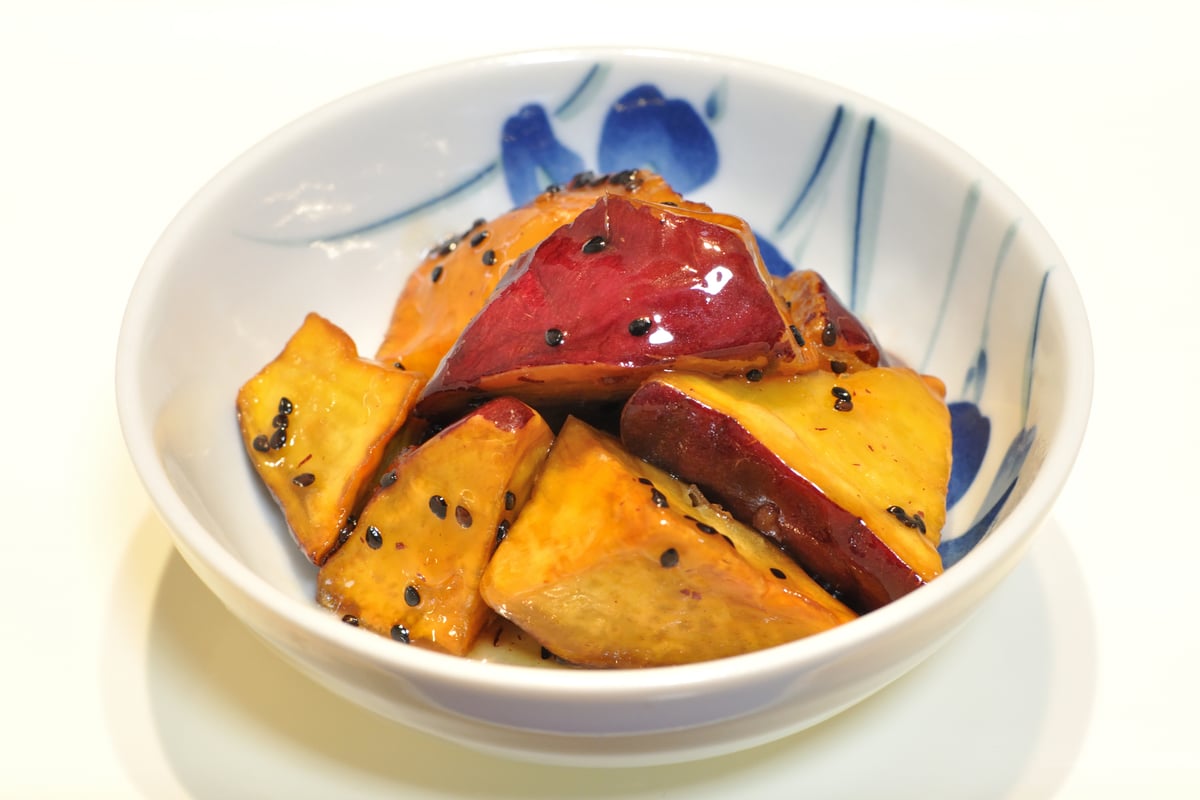
Kawagoe Imo Ryori (Daigaku-imo etc.)
Kawagoe Imo Ryori (Daigaku-imo etc.)
Kawagoe imo ryori is a general term for daigaku-imo (candied sweet potato), dried sweet potato, and other sweet potato confections made using 'Kawagoe imo,' a sweet potato long cultivated around Kawagoe City in Saitama Prefecture. The Musashino Plateau where the Kawagoe domain was located is covered in Kanto loam, and cultivation that makes use of its well-drained soil and fallen-leaf compost has long been known to produce sweet potatoes with a strong sweetness and rich flavor. In the Edo period, the distance from Kawagoe to Nihonbashi in Edo was thirteen ri (about 52 km), and this became linked to a pun on 'kuri (chestnut) yori (than) umai (delicious)' -- nine ri plus four ri makes thirteen ri -- giving rise to the popular saying 'tastier than chestnuts, thirteen ri away,' which spread the fame of Kawagoe sweet potatoes. Today, Kashiya Yokocho, Kawagoe's iconic sightseeing spot, is lined with shops selling sweet potato confections centered on daigaku-imo, and Kawagoe imo remains beloved as one of Saitama's representative food cultures.
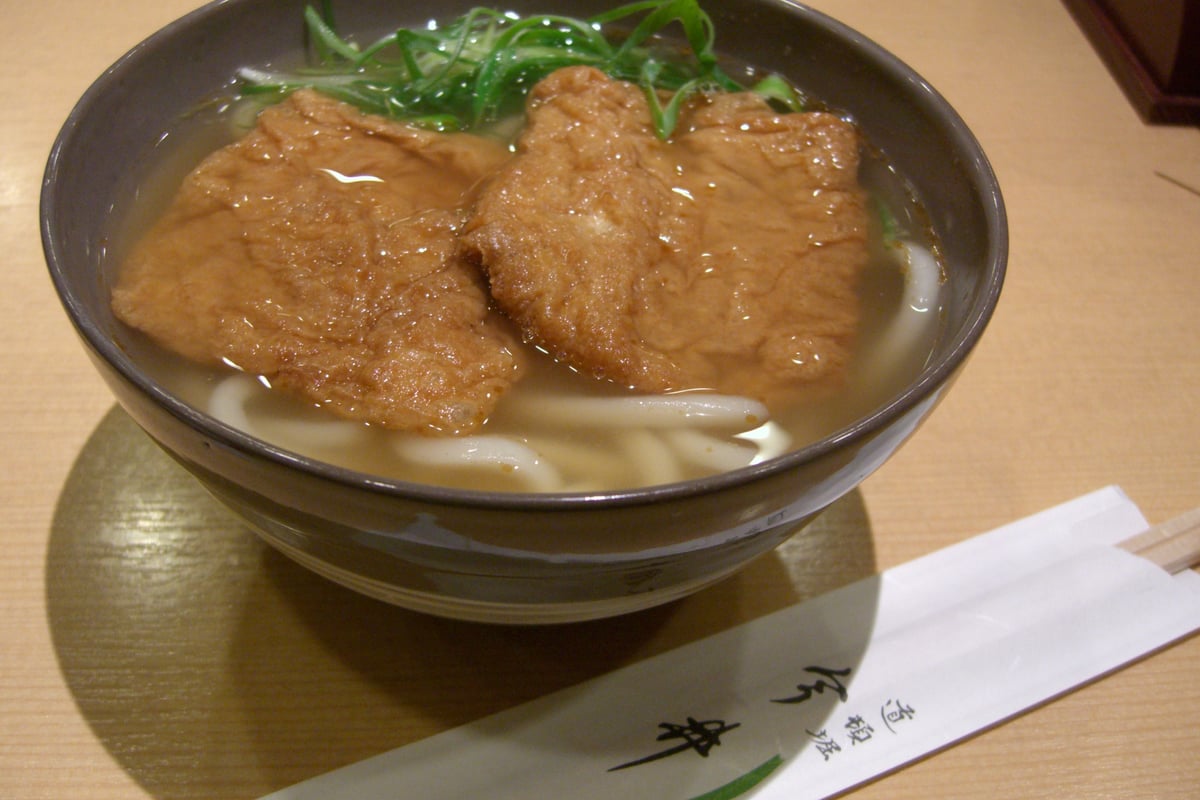
Kitsune Udon
Kitsune Udon
Kitsune udon is a dish of udon in a broth made from kombu and dried fish (fushi), topped with aburaage (deep-fried tofu) simmered in a sweet and savory seasoning. It is said to have been born in Osaka and is also said to be the udon most loved by the people of Osaka Prefecture. Osaka udon is said to be characterized by soft, chewy noodles that are not too thick and blend well with the dashi. In Osaka, once called 'the nation's kitchen' (Tenka no Daidokoro), kombu from Hokkaido was brought in by Kitamaebune trading ships, and a food culture that values dashi developed. Kitsune udon is said to have started at Matsubaya (松葉家, now Usami-tei Matsubaya), an udon shop that opened in Senba in 1893 (Meiji 26). It is said that when the founder, 宇佐美要太郎, served aburaage meant for inari sushi alongside plain udon (su-udon), customers put it on their udon and ate it, and this became the start. The name comes from the belief that aburaage is a favorite food of foxes (kitsune). In the Kansai region, there is also a distinctive naming culture, such as calling soba topped with aburaage 'tanuki.'
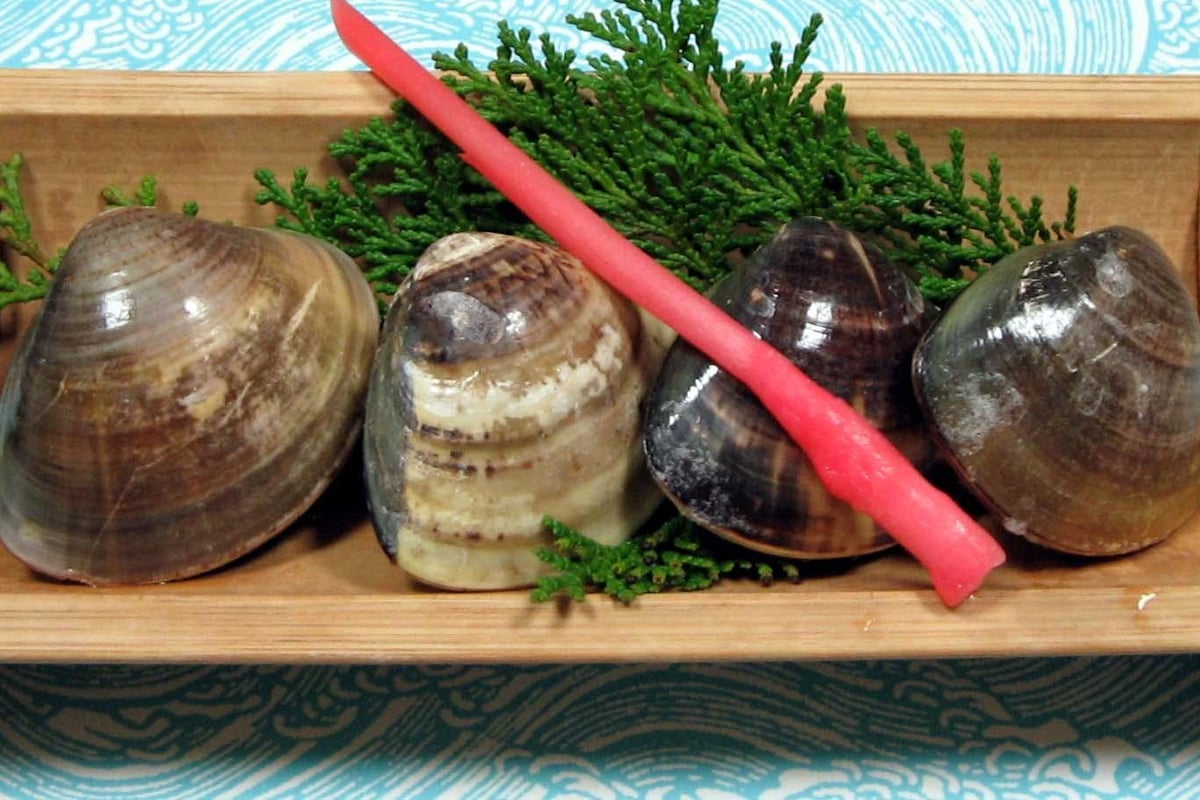
Kuwana Hamaguri (Kuwana Clams)
Kuwana Hamaguri Clams
Kuwana hamaguri refers to the clams harvested off Kuwana City, Mie Prefecture, and the dishes made with them. Kuwana lies at the river mouths where the three Kiso rivers, the Kiso, Nagara, and Ibi Rivers, flow into Ise Bay. Because the clams grow in nutrient-rich fishing grounds where fresh river water and seawater meet, they are large and plump, with a rich flavor. They are a species native to Japan, the Japanese hard clam (Meretrix lusoria), and are also called 'ji-hamaguri' (local clams) in the area. In the Edo period, Kuwana prospered as a post town on the Tokaido, and grilled clams (yaki-hamaguri) were a specialty popular with travelers. They were so widely known that the wordplay 'sono te wa Kuwana no yaki-hamaguri' was born. Shigure hamaguri (clams simmered in soy sauce), simmered down in tamari soy sauce and other seasonings, is also a representative specialty of Kuwana. The catch once fell drastically, but fishers have continued their efforts to restore the resource. In fiscal 2024 (Reiwa 6), 'Kuwana Yaki-hamaguri' was recognized as one of the Agency for Cultural Affairs' '100-Year Foods.'
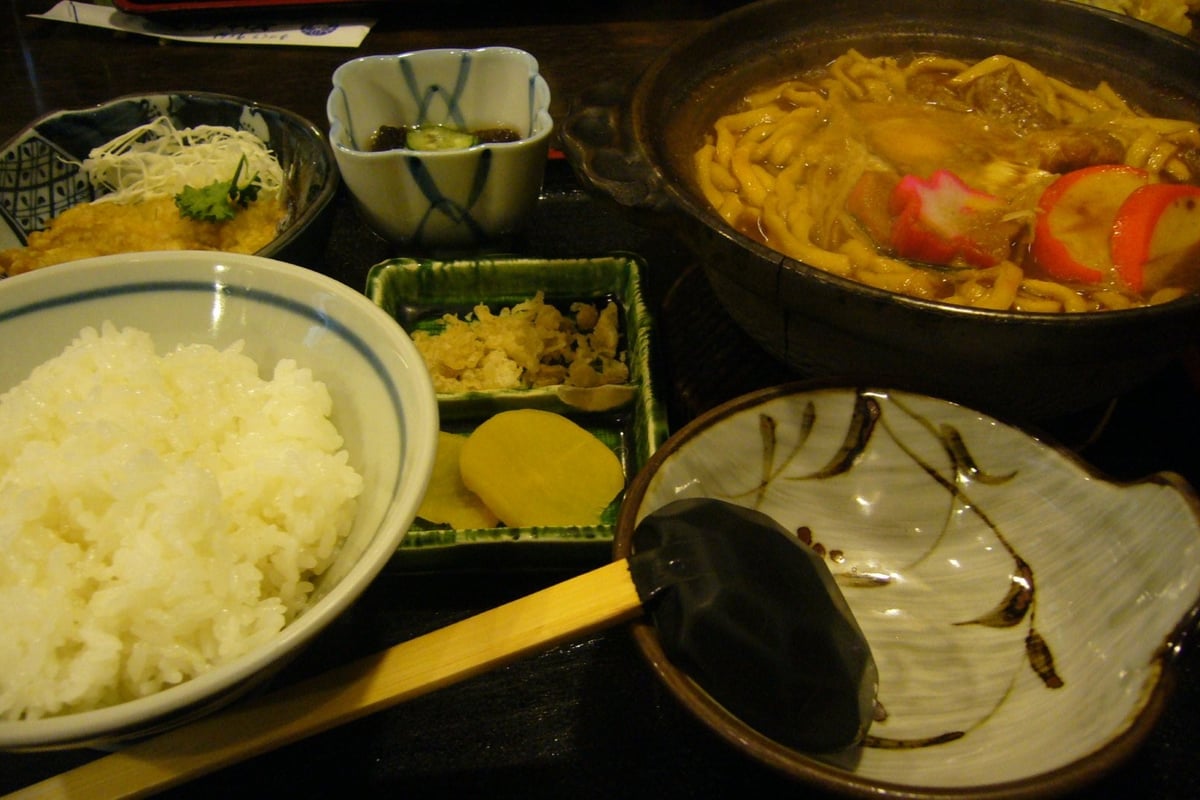
Miso Nikomi Udon (Miso-Simmered Udon Hot Pot)
Miso Nikomi Udon
Miso Nikomi Udon is a Nagoya specialty in which thick, firm udon noodles are simmered bubbling hot in a single-serving earthenware pot filled with a rich miso broth made from bonito dashi and Hatcho miso. Because the raw noodles are made only from flour and water, with no salt, and go into the pot without being pre-boiled, they keep a notably firm, chewy bite even after simmering; chicken, fried tofu, kamaboko fish cake, egg, and green onion are typically added as toppings. Building on the simple miso-based udon dishes found across Japan since the Edo period, Yamamotoya, founded in Osu, Nagoya, is said to have established the current style of simmering a single serving per earthenware pot during the Taisho era (1912-1926). Today the shop's lineage has split into two separate businesses, Yamamotoya Sohonke and Yamamotoya Honten, both cherished as leading specialists in Nagoya-style miso nikomi udon.
Mizutaki (Hakata-Style Chicken Hot Pot)
Mizutaki
Mizutaki is a hot pot dish that represents Hakata, made by simmering chicken bones and bone-in chicken for a long time to produce a cloudy broth, then cooking ingredients such as chicken, napa cabbage, and tofu in it and eating them with ponzu sauce. Despite its name, mizutaki, meaning 'water-simmered,' the broth is not clear — long, slow cooking causes collagen to dissolve out, giving Hakata-style mizutaki its signature rich, white broth. It is said to have originated in 1905 (Meiji 38), when Hayashida Heizaburo, a native of Nagasaki, combined the Western consomme technique and the pai tang (white broth) method of Chinese cuisine that he had learned in Hong Kong, and began serving the dish at his Hakata restaurant, Suigetsu. Fitting for Hakata, a port city with a long history of exchange with overseas cultures, mizutaki is a dish that absorbed an outside food culture and adapted it in its own distinctive way; it has also been selected by the Ministry of Agriculture, Forestry and Fisheries' 'Our Regional Cuisines' as a signature dish of Fukuoka.
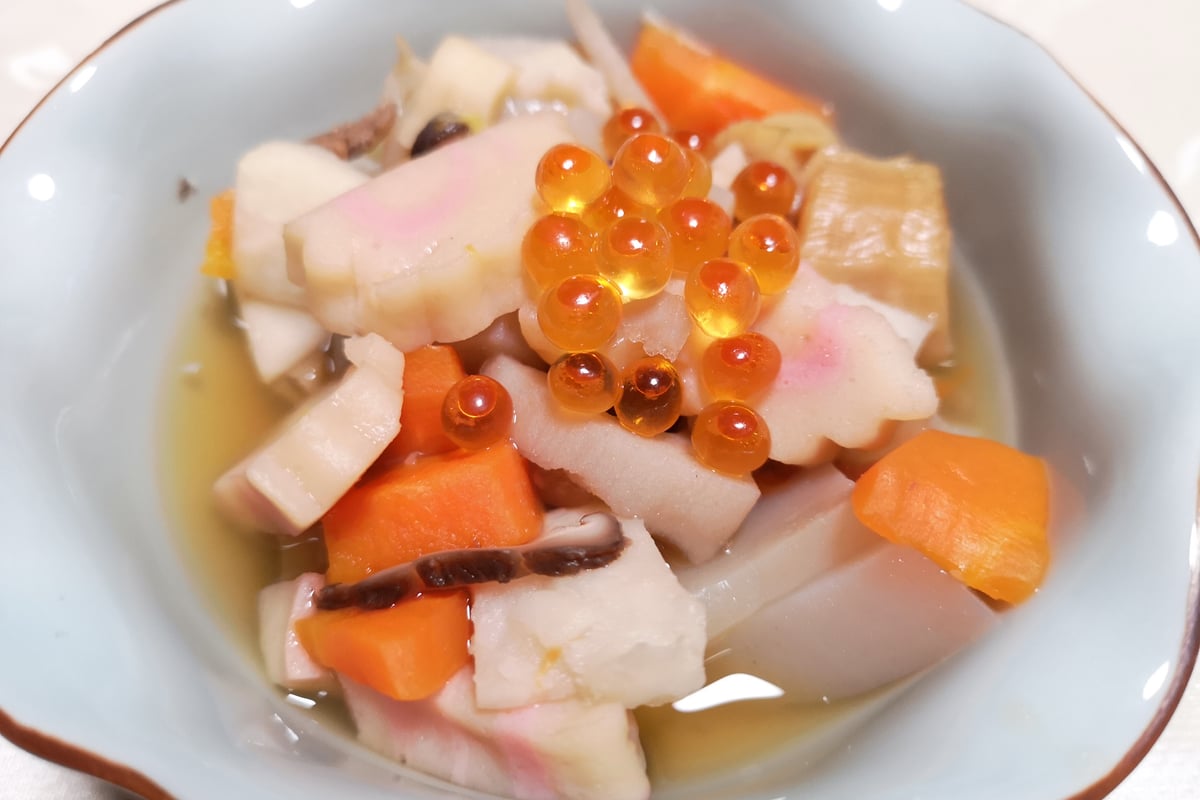
Noppe
Noppe
Noppe is a representative local dish of Niigata Prefecture in which taro takes center stage, simmered in a light broth with carrot, konnyaku, dried shiitake mushroom, bamboo shoots, and other ingredients. Thickened by the natural sliminess of taro or by potato starch, Niigata's Noppe is characterized by being closer to a simmered dish than a soup. The broth is made from dried ingredients such as dried scallops and dried shiitake, and it is finished colorfully with scallops, ginkgo nuts, salmon, salmon roe, and more. As well as being a staple on New Year's Eve and New Year's Day, it has long been considered indispensable at gatherings such as festivals, memorial services, and weddings. It is delicious both warm and chilled, and not a few households prefer cold Noppe. The ingredients, cutting style, and method of thickening vary by area and household, and its name also changes from place to place, such as 'konimo' or 'kokusho.' Each household's recipe has been handed down from mother to child, and it is also enjoyed in school lunches, restaurants, and ekiben (station bento).
Omizuke (Chopped Vegetable Pickle)
Omizuke
Omizuke is a pickle made mainly in Yonezawa City, Yamagata Prefecture. It is an everyday side dish made by finely chopping Yamagata seiritsu greens (Yamagata mustard greens) — the prefecture's signature leafy green — together with vegetables such as daikon radish and carrot, and salt-pickling them. Yamagata seiritsu greens are a variety brought from Chongqing, China in 1904; full-scale cultivation in Yamagata Prefecture began in 1908 and spread across the entire prefecture from the Taisho into the Showa era. Several theories exist about the origin of the name, but the most widely accepted one involves a merchant from Omi. While the thick stalks of pickled Yamagata greens were prized, the leaf tips tended to be left over, and this merchant is said to have chopped up the leftover tips to make a pickle called 'Omi-zuke,' which is said to have become 'Omizuke.' Another theory holds that the name comes from 'momi-zuke' (kneaded pickle), referring to the way the chopped vegetables are kneaded before pickling. Eaten even in the season before pickled greens come into store, Omizuke is a local flavor born from the wisdom of using up precious winter vegetables without waste, and it continues to be made in homes and pickle shops today.
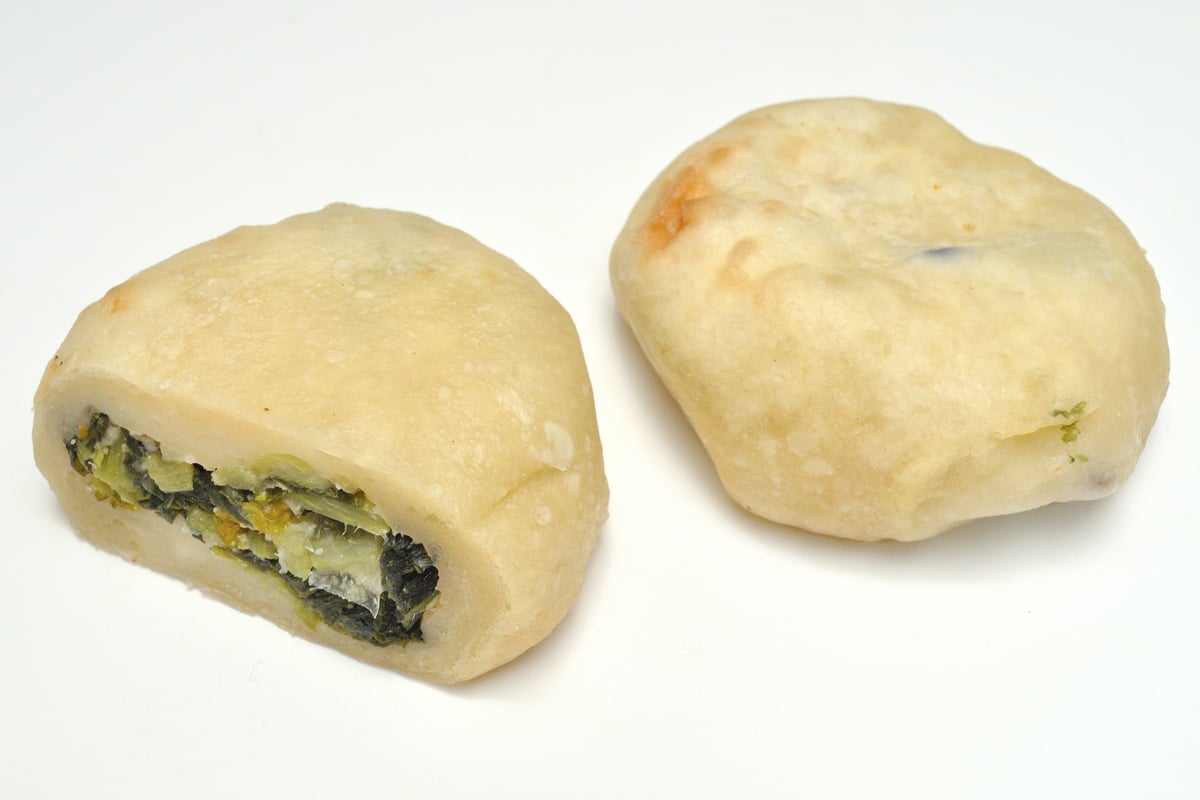
Oyaki (Stuffed Dumplings)
Oyaki
Oyaki is a local dish of Nagano Prefecture in which vegetables, mountain vegetables, mushrooms, anko (sweet bean paste), and other fillings are wrapped in a dough made from wheat flour or buckwheat flour and then grilled or steamed. It is said to have originated in the Nishiyama area spreading west of Nagano City (Ogawa Village, the former Nakajo Village, the former Shinshushinmachi, and elsewhere). In the cool mountain areas unsuited to rice farming, wheat and buckwheat took the place of rice, and oyaki has supported people's diets. Fillings such as Nozawana-zuke (Pickled Nozawana Greens), eggplant, kiriboshi daikon (dried shredded radish), and kabocha squash are used, seasoned with miso or soy sauce. In the past, 'haiyaki oyaki,' steam-baked by burying them in the ashes of the irori (sunken hearth), was the mainstream. Today the methods vary by area and shop, including grilling, steaming, grilling and then steaming, and frying and then grilling. It is a representative flour-based dish of Shinshu that serves both as a staple food and as a snack.
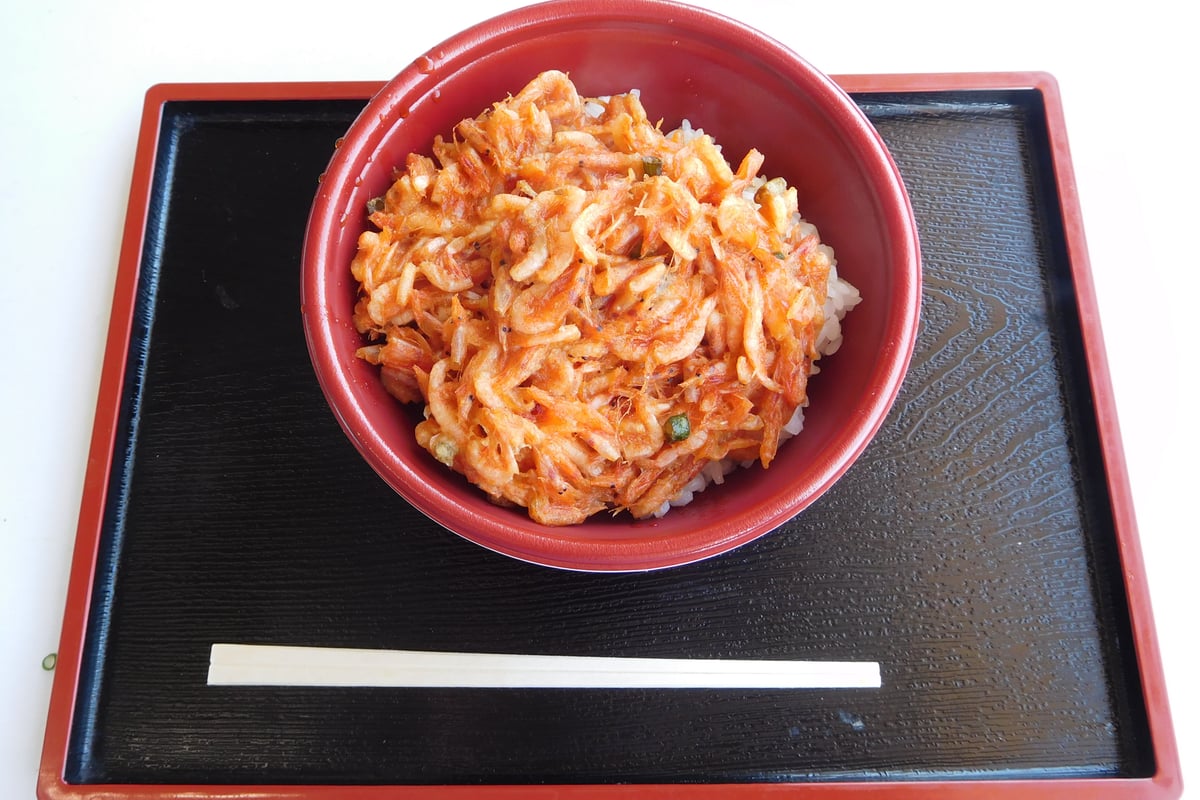
Sakura Shrimp Kakiage
Sakura Ebi Kakiage (Sakura Shrimp Tempura Fritters)
Sakura shrimp kakiage is a specialty of Shizuoka Prefecture made with plenty of sakura shrimp caught in Suruga Bay, fried until crisp with only a light amount of batter. Sakura shrimp are small, translucent, cherry-blossom-pink shrimp, and Suruga Bay is the only place in Japan where they are landed as a fishery. The ports where they are landed are limited to Yui Port in Shimizu Ward, Shizuoka City, and Oigawa Port in Yaizu City. Fishing takes place twice a year, in spring and autumn, and is said to be carried out on only about 40 days in total per year. The fishery began in the Meiji period, reportedly when fishermen from Yui happened to catch a large haul of sakura shrimp in their nets. In the producing areas of Yui and Kanbara, besides kakiage (mixed tempura fritter), people have also eaten 'okiagari,' raw sakura shrimp simmered with tofu and green onions. Inside the crunchy batter, the shrimp are tightly packed, offering both a fragrant aroma and sweetness. It is also standard to enjoy it as kakiage-don (a rice bowl) or on top of soba or udon noodles.
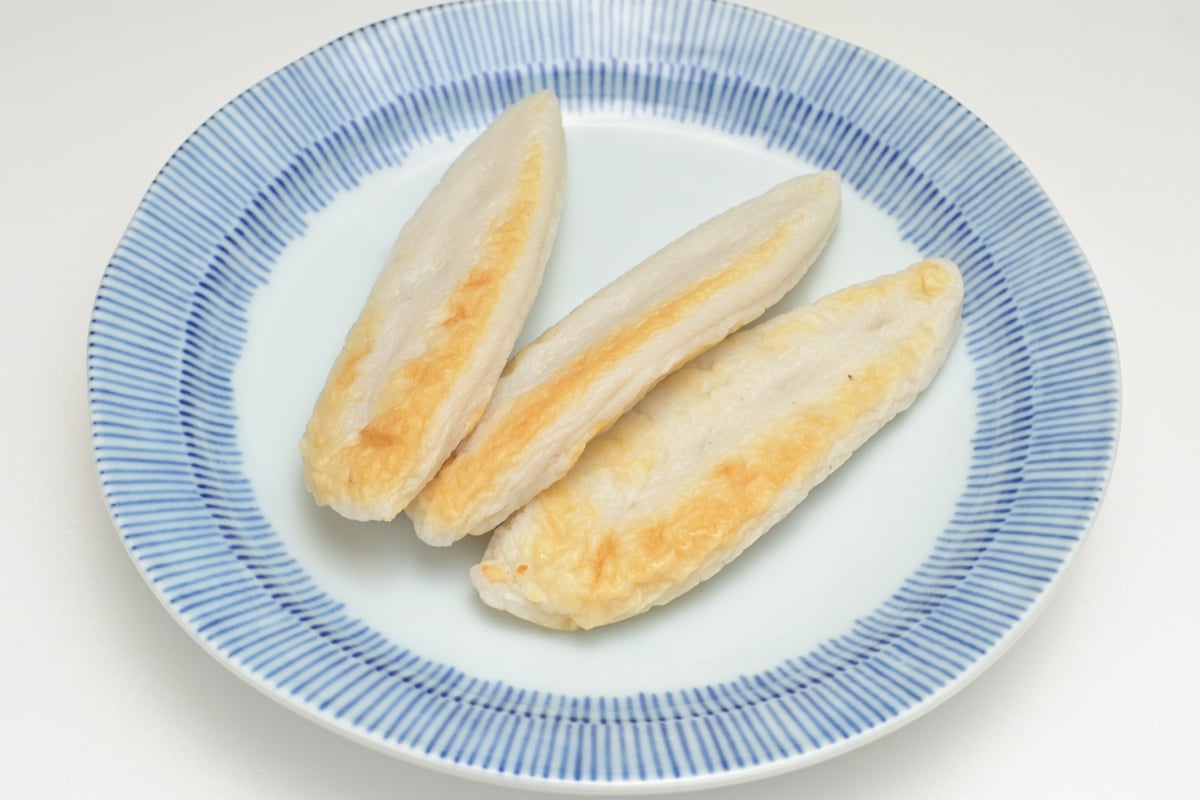
Sasa Kamaboko (Bamboo-Leaf Fish Cake)
Sasa Kamaboko
Sasa kamaboko is a fish cake shaped like a bamboo-grass leaf and grilled, made from pureed white fish — a local specialty representing Sendai. It is said to have originated in the mid-Meiji 30s (around 1900), when a series of large flatfish catches occurred along the coast from Yuriage to Mount Kinka; because transportation and storage capacity were insufficient at the time, grilled fish cakes were made to keep the surplus flatfish from going to waste. Because of its shape, it was originally called 'palm-shaped kamaboko' or 'tongue-shaped kamaboko' (berokamaboko), but it came to be called 'sasa kamaboko' because its shape resembled the bamboo-grass leaves depicted in the 'bamboo and sparrow' family crest of Date Masamune, the founder of the Sendai Domain. This name is said to have become standardized in the Showa era. While flatfish, a high-grade fish, was originally the main ingredient, as catches declined, white fish such as walleye pollock has become the main ingredient today. Low in fat and calories while rich in high-quality protein, it is a classic Sendai souvenir, with more than 40 producers said to exist within Miyagi Prefecture.
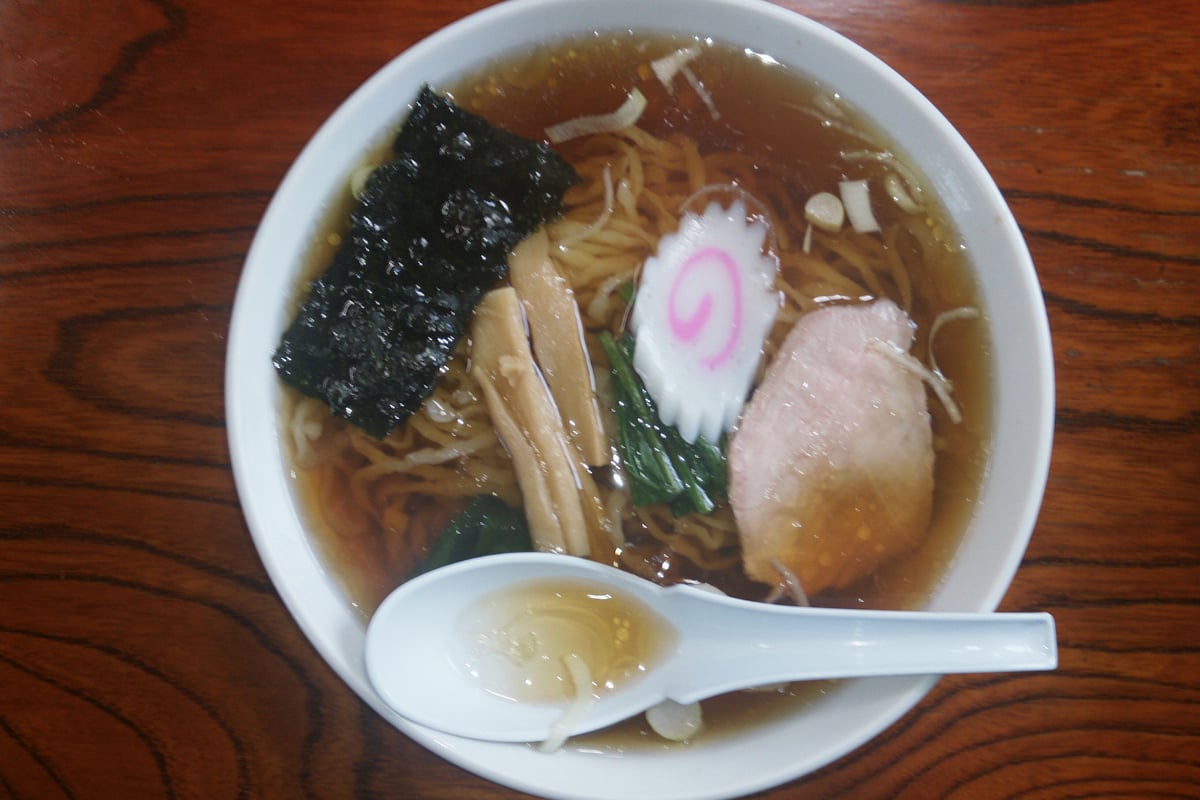
Shirakawa Ramen
Shirakawa Ramen
Shirakawa Ramen is a local ramen that developed mainly in Shirakawa City, Fukushima Prefecture. It is characterized by irregular, hand-pulled curly noodles and a clean soy sauce broth based mainly on chicken and pork bone. Many shops carry on the 'aodake-uchi' technique, in which craftsmen stretch the dough using a green bamboo pole, producing noodles with a strong, springy texture and a distinctive bite that pairs well with the carefully simmered, clear broth. Shirakawa, which prospered as a post town on the Oshu Kaido highway, is still home to many family-run food stalls carrying on a lineage of hand-pulled noodles dating back to the Taisho era, each preserving its own method and blend, drawing tourists who enjoy visiting several shops to compare. In recent years, young local craftsmen have carried on the tradition, with some opening apprentice shops in the greater Tokyo area.
Shottsuru Nabe
Shottsuru Nabe
Shottsuru Nabe is a hot pot dish from the coastal area of Akita Prefecture, centered on the Oga Peninsula, that uses shottsuru — a fish sauce made by fermenting fish such as hatahata (sailfin sandfish) with salt over a long period — as its broth. Shottsuru is counted as one of Japan's three great fish sauces, alongside Noto's ishiru and Kagawa's ikanago shoyu. Since around the early Edo period, fishing villages in Akita, including Oga, have passed down the technique of salting the large hatahata catches in barrels and slowly fermenting them into fish sauce. The hot pot, in which hatahata, tofu, napa cabbage, mushrooms, and other ingredients are simmered in a shottsuru-based broth in an earthenware pot, is prized for the rich umami and distinctive flavor unique to fish sauce, and it is cherished as a signature winter taste of Oga.
Sicilian Rice
Sicilian Rice
Sicilian Rice is a local specialty said to have originated in Saga City. Thin-sliced meat is stir-fried with onion in a sweet-savory sauce and served over warm rice, arranged colorfully with raw vegetables such as lettuce, tomato, and cucumber, then finished with a drizzle of mayonnaise. It is said to have first appeared around 1975 as a staff meal at a coffee shop in central Saga City. Several theories surround the origin of its name, including one that the red of the tomato, the white of the egg, and the green of the vegetables evoke the Italian flag, and another linking it to Sicily, the island setting of the film 'The Godfather.' The ingredients and seasoning vary widely from shop to shop, and the dish is loved as a highly flexible local specialty, with some upscale restaurants even offering versions made with Saga beef steak. Because there is no fixed recipe or trademark, the Saga City Tourism Association's website and other sources note that 'the very fact that its origin remains unclear is part of its charm.'
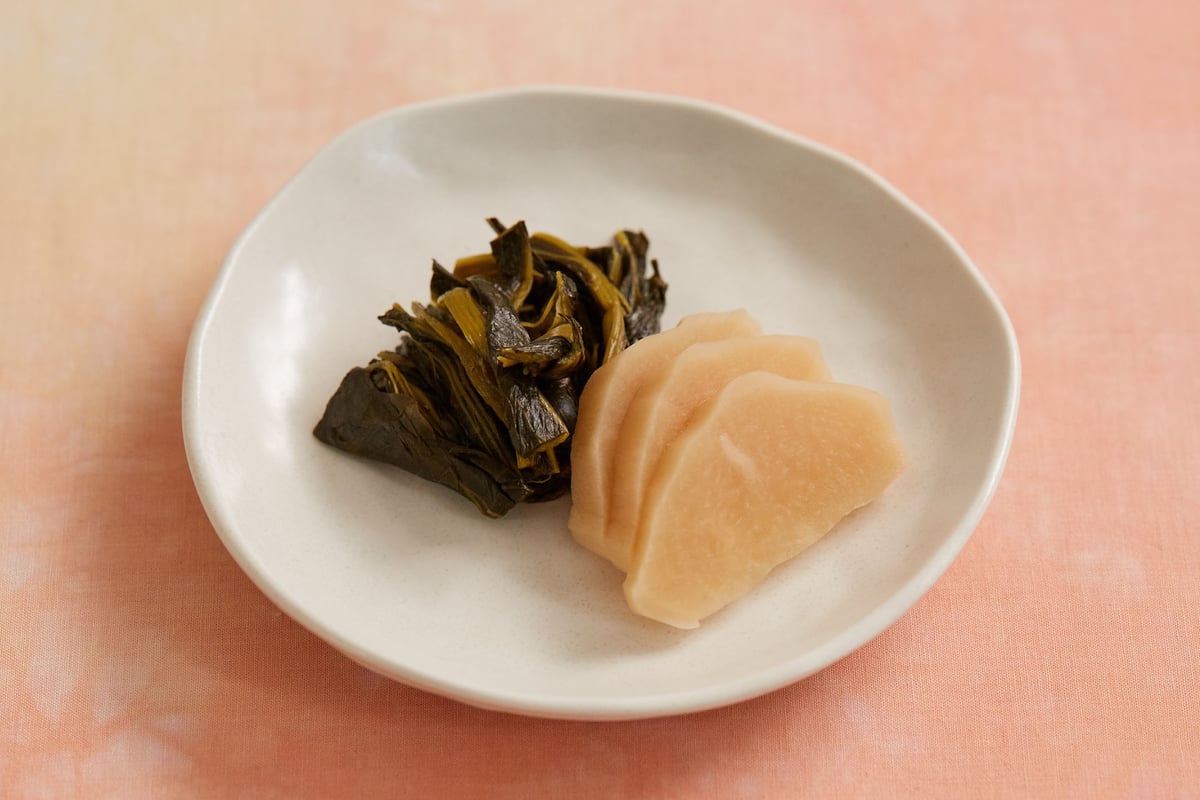
Sugukizuke (Fermented Suguki Pickles)
Sugukizuke
Sugukizuke is a pickle with a distinctive sourness, made by pickling "sugukina," a Kyoto vegetable specific to the Kamigamo area of Kyoto, using only salt and allowing it to lactic-ferment. Alongside senmaizuke and shibazuke, it is one of "Kyoto's three great pickles," and it is said that the shake (hereditary priestly families) of Kamigamo Shrine began making it in the early Edo period. It was once a valuable item whose method was passed down only among the shake families, and in the Edo period it was guarded so strictly that an official notice was issued declaring that "not a single suguki may be taken outside the village." Labor-intensive traditional methods are still carried on today, including a unique weighting method called "tenbin-zuke" and a process of placing it in a muro (heated chamber) to promote fermentation.
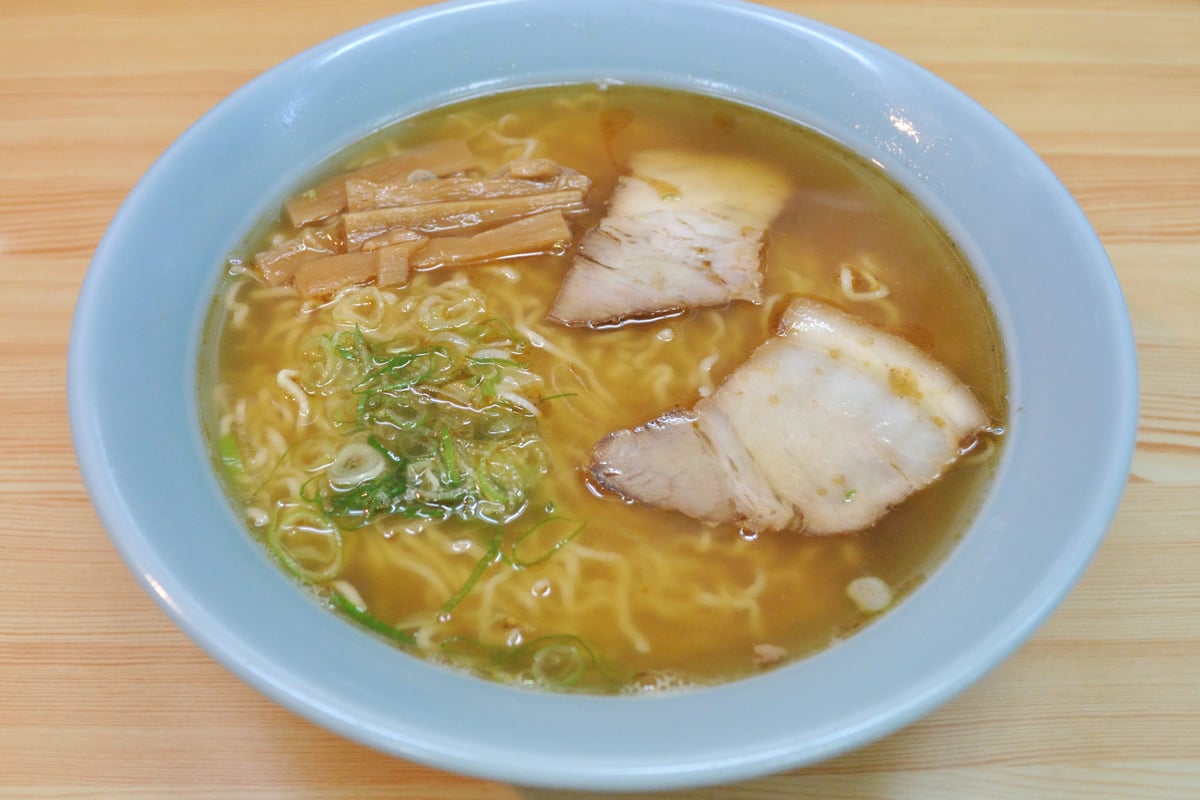
Takayama Ramen
Takayama Ramen
Takayama Ramen is a local ramen dish long cherished by residents of Takayama City, Gifu Prefecture, as 'Chuka Soba.' It combines a light soy sauce-based broth with medium-thin curly noodles, and its toppings follow a simple formula: sliced roast pork (chashu), bamboo shoots (menma), and chopped green onion. It is said to have begun in 1938, when the food stall 'Masago Soba' started selling Chinese-style noodles, and after the war, numerous similar stalls sprang up, creating a lively scene. In the 1955-1964 period, these stalls gradually transitioned into permanent shops, and today Takayama City is said to be home to more than 100 Chuka Soba restaurants. The dish is so deeply woven into local life that saying simply 'soba' is understood to mean Chuka Soba, and some households even eat it on New Year's Eve. The name 'Takayama Ramen' is mainly used by tourists, while local shop curtains display the words 'Chuka Soba.'
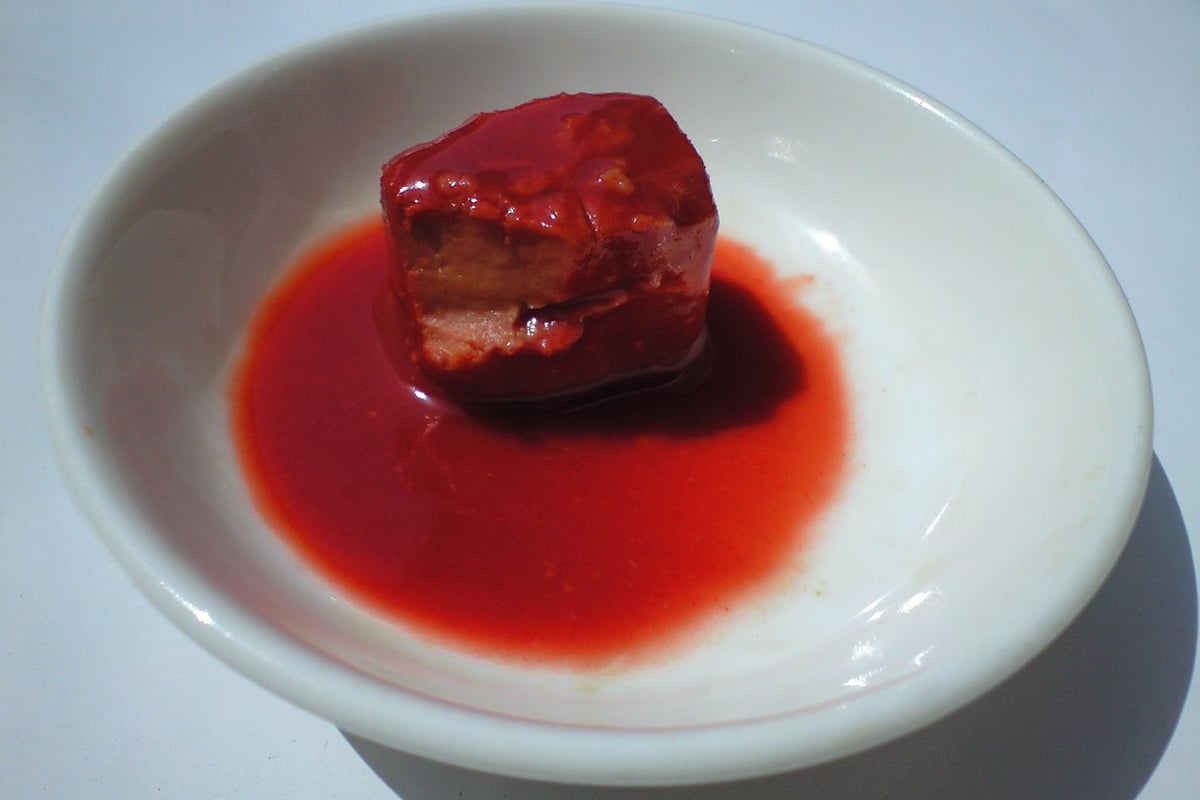
Tofuyo (Fermented Tofu)
Tofuyo
Tofuyo is a fermented food made by aging shima tofu (Okinawan firm tofu) for several months in red koji, rice koji, and awamori, producing a rich flavor and creamy texture sometimes likened to cheese — a delicacy handed down from the Ryukyu Kingdom. It is said to have been created around the 18th century, when the Ryukyu royal government's culinary bureau refined a method for fermented tofu ('furu,' known in China as fu-ru) introduced from China, and at the time it was treasured as a noble delicacy reserved for the upper classes. Unlike the salt-cured fu-ru of China and Taiwan, tofuyo differs significantly in that it is aged in awamori, a spirit familiar to Okinawa. Fermentation is believed to involve Monascus mold and koji fungi, giving the food its distinctive flavor. Today it is typically enjoyed in small amounts, taken with chopsticks as an accompaniment to awamori, and remains a popular Okinawan fermented food and souvenir item.
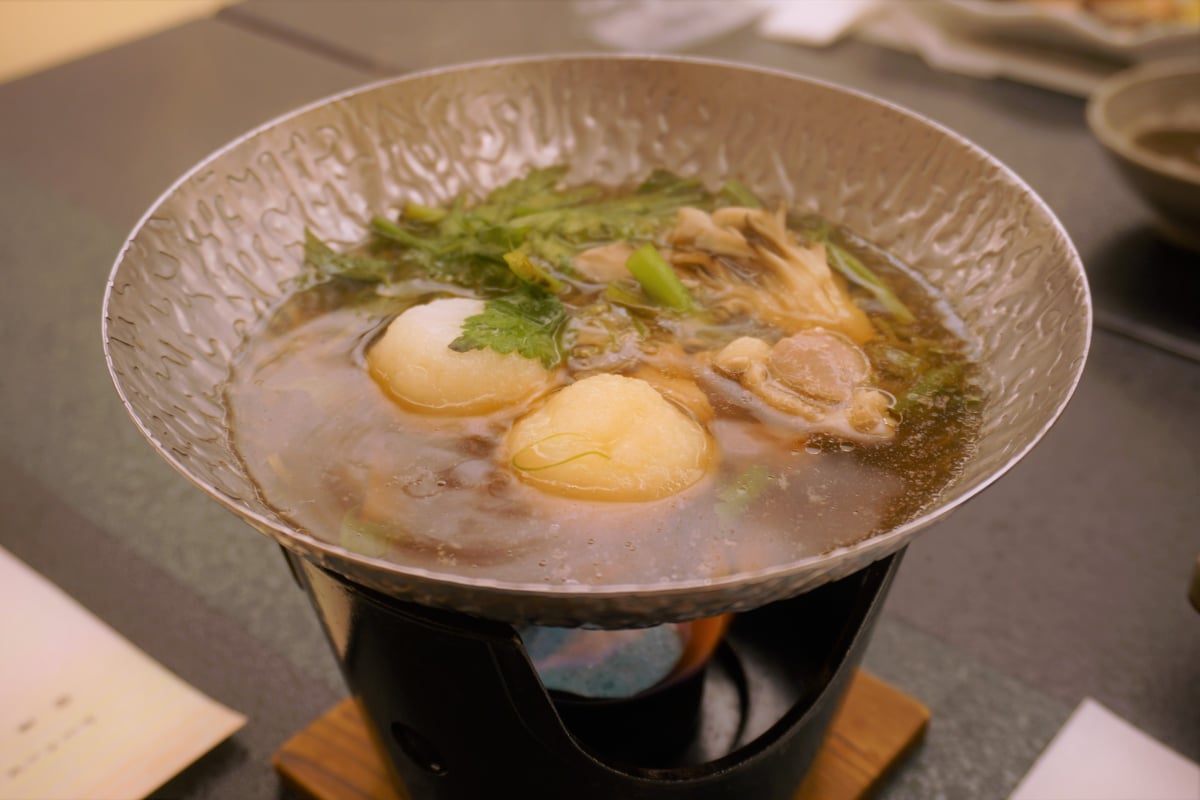
Damako Nabe
Damako Nabe
Damako Nabe is a local dish of Akita Prefecture in which damako-mochi — half-pounded rice rolled into bite-sized balls — is simmered in a Hinai-jidori broth together with burdock root, Japanese parsley (seri), mushrooms, and other ingredients. It is said to have originated in the Nanshu area around Lake Hachirogata, and its prototype is said to be a dish called 'tsukego,' in which grilled wakasagi (pond smelt) or crucian carp were seasoned with miso. As land reclamation of Lake Hachirogata reduced fish catches, chicken bones and meat came to be used in place of fish. Unlike kiritanpo, which is molded onto cedar skewers and grilled, Damako Nabe requires no skewers or grilling, making it easy to prepare, and it is cherished as a chewy home-style dish, alongside kiritanpo, as one of the signature winter hot pots of Akita.
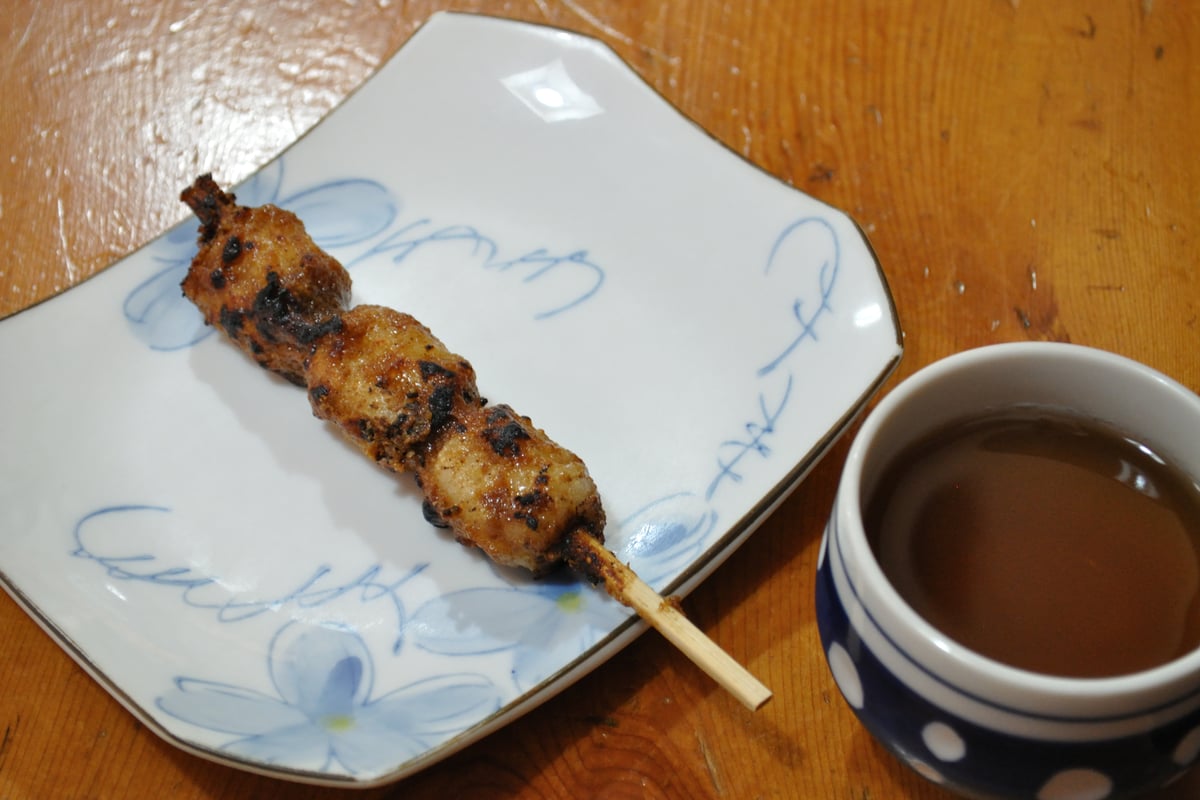
Gohei Mochi
Gohei Mochi
Gohei Mochi is a local dish made by mashing cooked non-glutinous rice, skewering it, coating it with a sweet-savory sauce made from walnuts, white sesame, or peanuts, and grilling it over charcoal until fragrant. It is widely eaten from the Tono region of Gifu Prefecture (Nakatsugawa City, Ena City, and others) through the Kiso and Ina areas of Nagano Prefecture to the Mikawa region of Aichi Prefecture, with the shape varying by region and household — dumpling-shaped, sandal (waraji)-shaped, or round. Its origin is said to lie in the mid-Edo period in the Kiso area, where woodcutters are said to have pressed rice onto the ends of tree branches, grilled it over a bonfire during breaks in mountain work, and eaten it with miso. It later became established as a special food offered to the mountain deity and prepared for celebrations such as the new rice harvest and local festivals. There are differing accounts of the name's origin, some saying it resembles the shape of a gohei, a ritual paper offering used in Shinto rites, and others saying it was created by a man named Gohei — the story varies by region.
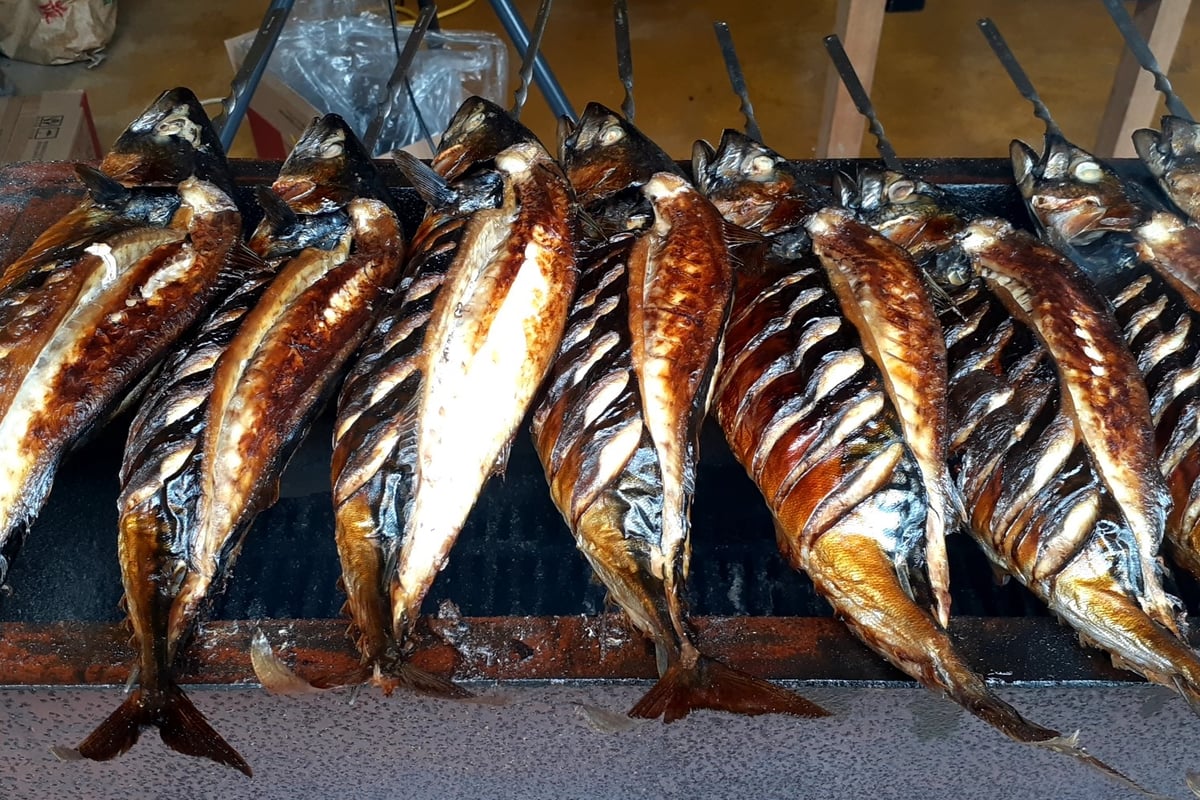
Hamayaki Saba (Whole Grilled Mackerel)
Hamayaki Saba
Hamayaki Saba is a specialty of the Wakasa region of Fukui Prefecture, made by skewering a whole mackerel and grilling it. Mackerel spoils easily, but grilling makes it keep longer, so it has long been enjoyed in Obama City, which faces Wakasa Bay, where mackerel was caught in abundance. In the past, to preserve freshness, mackerel is said to have been grilled on the beach right after being landed. The grilled mackerel is usually eaten with ginger soy sauce. Since ancient times, Wakasa was a Miketsukuni (a province that supplied food to the imperial court), delivering seafood to the capital, and Obama is known as the starting point of the Saba Kaido (Mackerel Road), along which mackerel was carried to Kyoto. In Obama City's shopping streets, there are long-established shops that display Hamayaki Saba grilled right at the storefront. Hamayaki Saba, which is delicious even when cold, also gave rise to the pressed sushi 'Yaki Saba Sushi,' which has become one of Fukui's representative souvenirs.
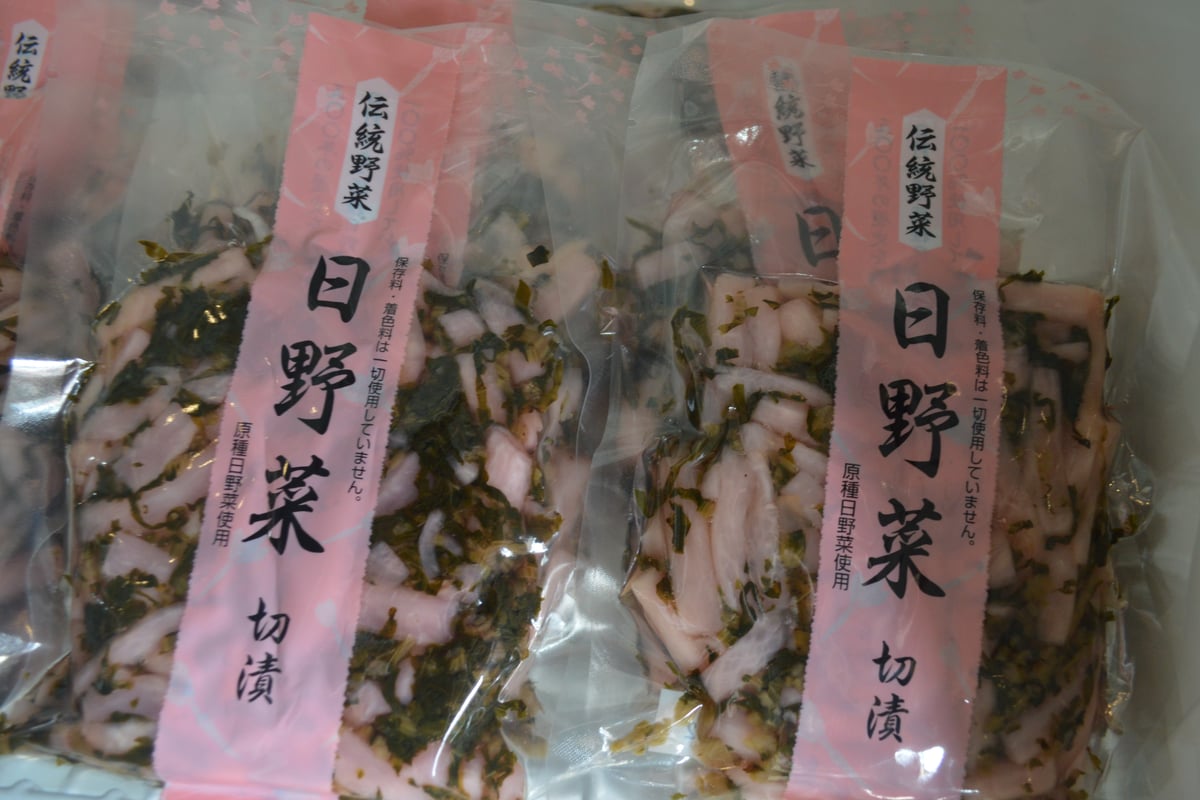
Hinona-zuke (Pickled Hino Turnip)
Hinona-zuke
Hinona-zuke is a pickle made from hinona, a traditional vegetable native to Hino, Gamo District, Shiga Prefecture — a slender turnip variety whose root gradates from white to purple. It is prized for its distinctive pungency and faint bitterness, and is prepared in several ways, including 'sakura-zuke,' in which chopped leaves and root are pickled together in vinegar; 'ebi-zuke,' finished with sweet vinegar; and 'hine-zuke,' a rice-bran pickle. According to tradition, it was discovered about 500 years ago by the Gamo clan, the lords of Hino, on a visit to a Kannon hall, and cultivation of hinona and its pickling traditions later spread to places such as Ise and Aizu, carried by the Gamo clan's later relocation and the nationwide trading networks of the Omi merchants. In 1998, it was designated one of Shiga Prefecture's Selected Intangible Folk Cultural Properties as part of 'Shiga's Food Culture Properties,' making it a representative pickle of the Lake Biwa region.
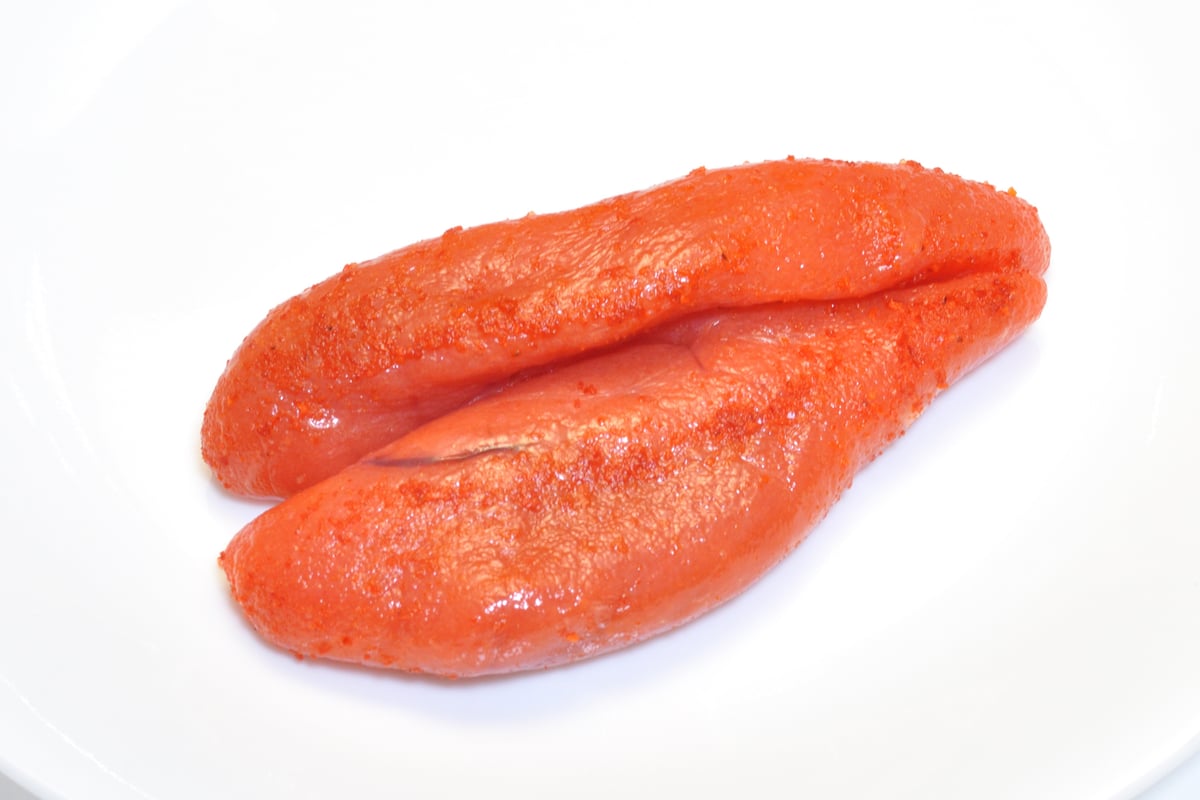
Karashi Mentaiko (Spicy Marinated Pollock Roe)
Karashi Mentaiko
Karashi mentaiko is a processed marine product representative of Fukuoka and Hakata, made by marinating the roe of Alaska pollock in a chili-based seasoning liquid. The custom of eating pollock roe with chili has its roots on the Korean Peninsula, and Kawahara Toshio, who spent his childhood in Busan, could not forget the taste of the 'mentai' (chili-marinated pollock roe) he had eaten there. After returning to Japan, he spent years researching how to adapt it to Japanese tastes and eventually perfected his own version. Fukuya, a shop founded in Hakata's Nakasu district in 1948, became the first in Japan to sell karashi mentaiko as a commercial product in 1949, and it has since become known nationwide as a food that symbolizes Fukuoka. Beyond being eaten simply with rice, it is widely used as a filling for pasta and rice balls and as a seasoning, and it remains a hugely popular souvenir from Fukuoka among visitors from Japan and abroad.
Kazo Udon
Kazo Udon
Kazo udon is hand-made udon produced in and around Kazo City, Saitama Prefecture, also known as 'Kazo's hand-made udon.' Its history is said to date back to the mid-Edo period, when it was first served to welcome worshippers in front of Sogan-ji Temple, home to the Fudogaoka Fudoson, one of the three great Fudo temples of the Kanto region. Specialty udon shops are believed to have appeared in Kazo about 200 years ago, and records remain of Okamuraya running a hand-made udon shop in front of the temple. The noodles are known for their strong chewiness and smooth texture, and sesame-based dipping sauce is often used; the custom of serving udon to close out celebrations and funerals remains alive today. Kazo City promotes itself as the 'hometown of udon,' and many hand-made udon shops line its streets.
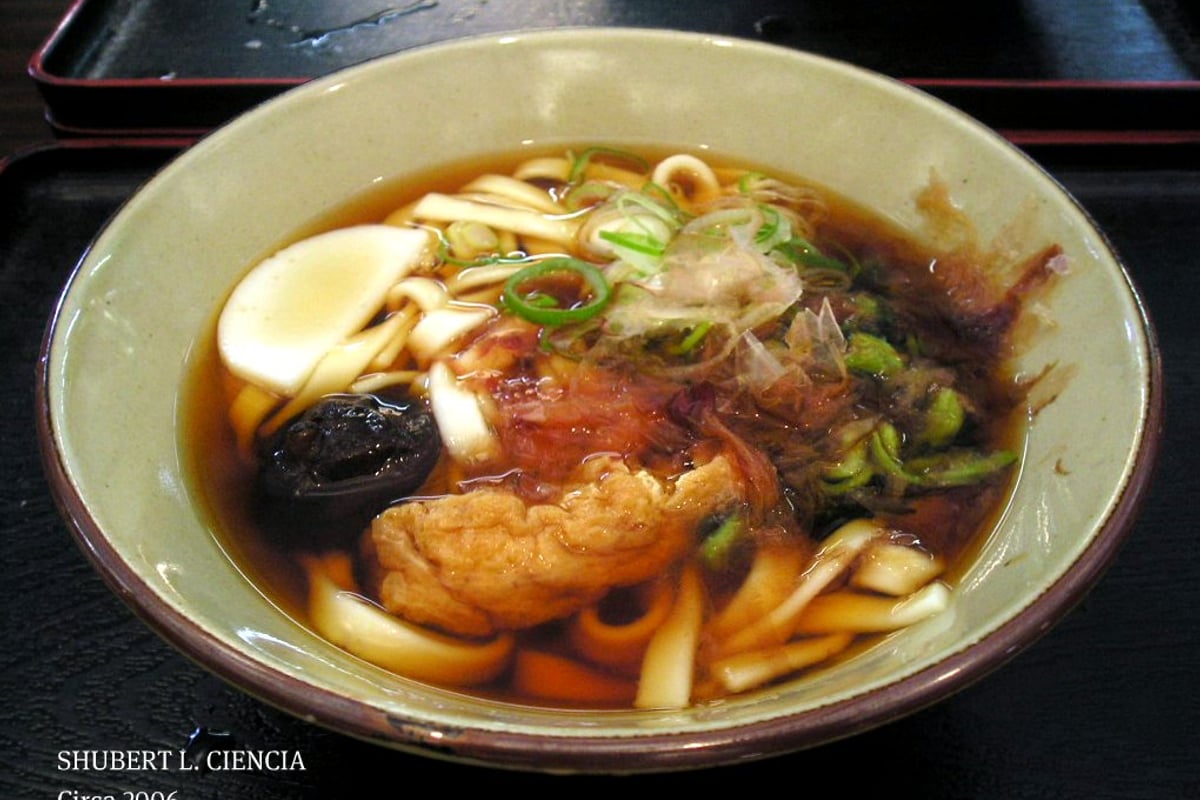
Kishimen (Flat Udon Noodles)
Kishimen
Kishimen is a Nagoya specialty of flat udon noodles, about 7-8mm wide and roughly 1mm thick, served in a soy-sauce-based broth flavored with bonito, topped with fried tofu, kamaboko fish cake, greens, and bonito flakes. A poem referencing kishimen already appears in the 1728 haiku collection Futae-bukuro, showing that it was enjoyed by ordinary people by at least the early 18th century. Several theories explain the origin of the name, including that it comes from kijimen, noodles shaped like go stones and eaten with roasted soybean flour, or from kijimen, a udon dish with pheasant meat once favored by the lords of Owari. Making the noodles flat is also said to have shortened boiling time and saved fuel, and kishimen is still widely served today at specialty shops around Nagoya Station and Atsuta Shrine.
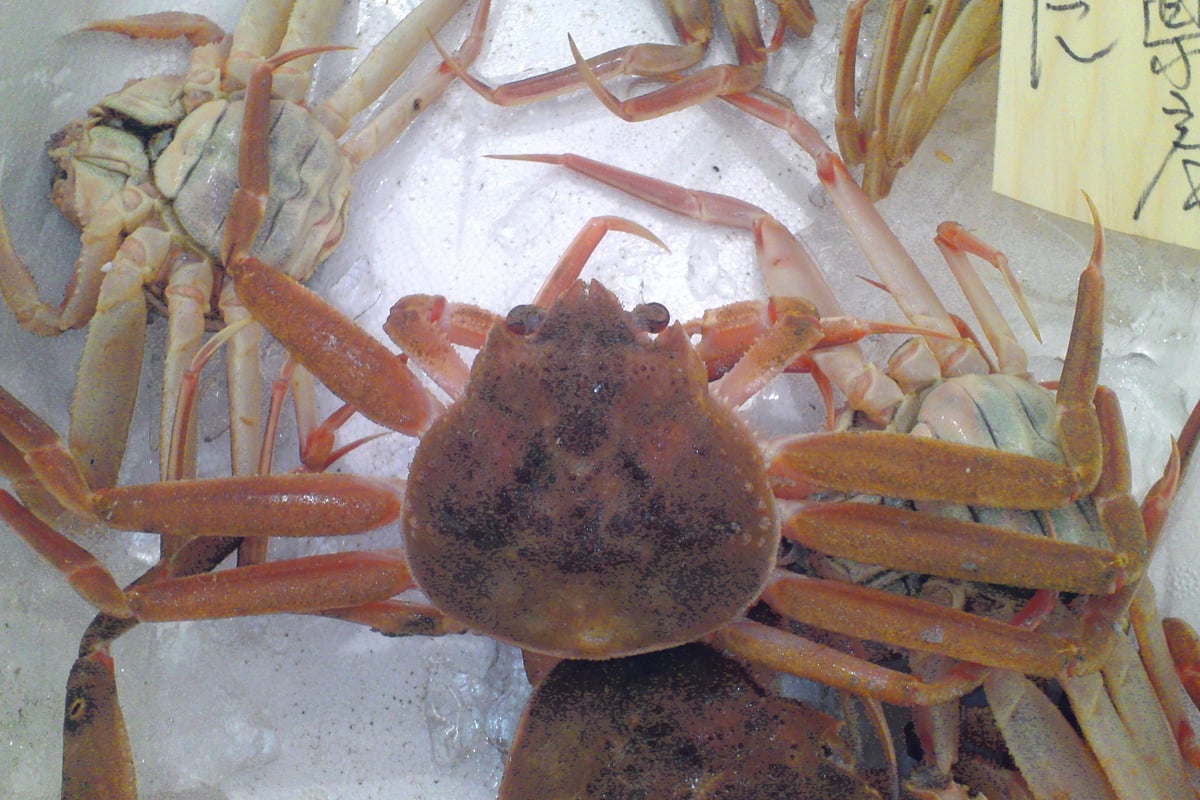
Kobako-gani
Kobako-gani
Kobako-gani is the local Ishikawa name for female snow crab, and while its shell is only about half the size of the male 'Kano-gani,' its appeal lies in the abundant immature roe called 'uchiko' along with crab miso packed inside the shell, and the mature roe called 'sotoko' carried under its belly. There are several theories about the origin of the name: that the rounded shape of its shell resembles a 'kobako,' a tea-ceremony incense box; that it comes from the local dialect word 'kobaku,' meaning 'cute'; and that the novelist Muro Saisei was involved in naming it. To protect the resource, the fishing season is short, running only from the opening on November 6 to around December 29, and during this period alone, crowds flock to Omicho Market and restaurants throughout the city to enjoy this winter tradition of Kanazawa. With its rich uchiko and sotoko and the delicate sweetness of its meat, it offers a charm distinct from that of Kano-gani.
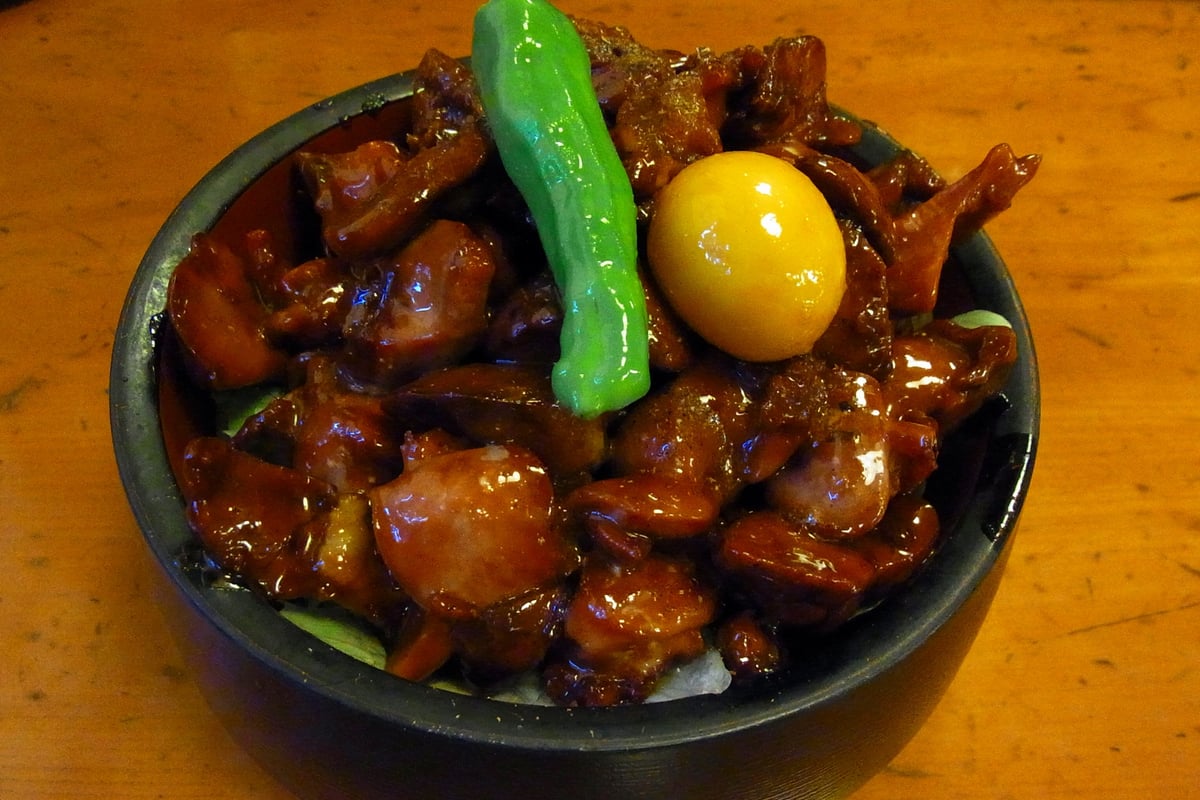
Kofu Torimotsu-ni (Glazed Chicken Giblets)
Kofu Torimotsu-ni
Kofu Torimotsu-ni is a dish of Kofu City in which chicken gizzards, hearts (hatsu), liver, and kinkan (unlaid eggs) are glazed and simmered in a sweet and savory sauce of sugar and soy sauce. Although it is called 'motsu-ni' (simmered giblets), it is not a soupy stew. A small amount of sauce is reduced over high heat for a short time, and the giblets are finished so that they are coated in the syrupy sauce. It is said to have been devised around 1950 (Showa 25), shortly after the war, at Okuto, a soba restaurant in Kofu City. It began as an attempt to make use of chicken giblets that were being thrown away. It then spread from the soba restaurant to other eateries and became part of Kofu's food culture alongside Hoto (Flat Noodles Simmered in Miso) and Awabi no Nigai (Soy-Simmered Abalone). In 2008, a volunteer group of Kofu City employees formed 'Minasama no En wo Torimotsu-tai' (literally, the squad that brings everyone together, a pun on torimotsu) and began promoting it nationwide. At the '5th B-1 Grand Prix in Atsugi' in 2010, it won the top prize, the Gold Grand Prix, in its first appearance.
Kujira no Tare (Dried Whale Meat)
Kujira no Tare
Kujira no Tare is a preserved food handed down since the Edo period in Wada, Minamiboso City, Chiba Prefecture. Palm-sized, thinly sliced pieces of Baird's beaked whale meat are marinated in a special sauce made from soy sauce, sugar, and other seasonings, then dried in the sun. Wada Port, home to the Wada-ura area, is known as the only coastal small-type whaling base in the Kanto region, and Baird's beaked whales are landed there every year during the fishing season from late June to late August. Drying concentrates the meat's umami, and when lightly grilled, the fragrant soy-based sauce and the whale meat's distinctive rich red-meat flavor come through. Enjoyed locally as a snack and an accompaniment to sake, it is also a dish that developed from local wisdom for using whale meat without waste. In recent years it has also become available by mail order from roadside stations and specialty shops, and it remains a beloved souvenir representing Wada-ura.
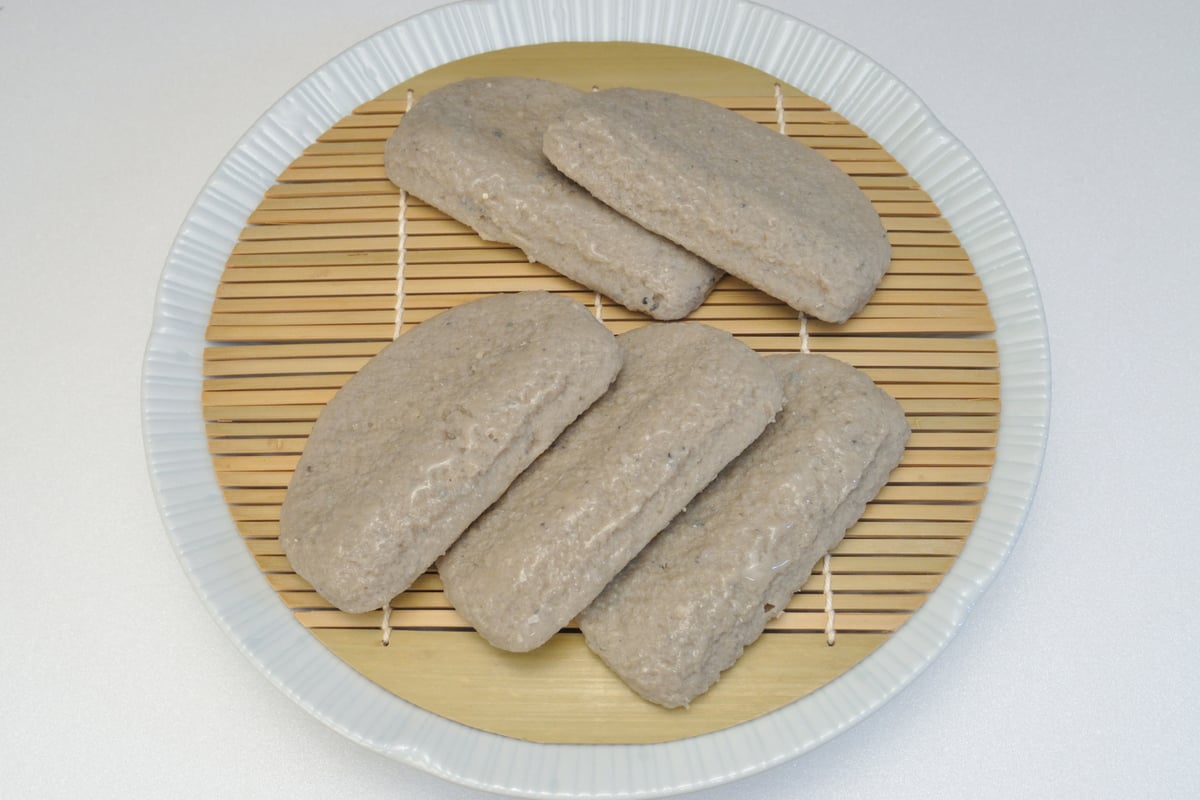
Kuro Hanpen (Black Fish Cake)
Kuro Hanpen (Black Fish Cake)
Kuro hanpen is a fish-paste product (nerimono) of Shizuoka Prefecture made by grinding blue-backed fish such as mackerel, horse mackerel, and sardine into paste, bones and skin included, and then boiling it. Because the whole fish is kneaded in, it has a grayish, blackish color. It is shaped like a half-moon, and each piece has traditionally been shaped one at a time using a mold. It is said to have originated in Yaizu and is now eaten throughout Shizuoka Prefecture. Within the prefecture, 'hanpen' means kuro hanpen, which is different from the white, fluffy hanpen. It can be eaten in many ways: as is, grilled, or simmered. 'Kuro hanpen fry,' coated in breadcrumbs and deep-fried, is a standard side dish at home and in supermarkets. It is also an essential ingredient of Shizuoka oden, enjoyed sprinkled with dashi-ko (powdered fish flakes) and aonori (green laver). It also appears in school lunches and is loved across generations, from children to adults.
Mutsugoro no Kabayaki (Grilled Mudskipper)
Mutsugoro no Kabayaki
Mutsugoro no Kabayaki is a local dish eaten along the Ariake Sea coast in Saga Prefecture. The mutsugoro (mudskipper) is a rare fish found in Japan only in the Ariake Sea and part of the Yatsushiro Sea; because it can breathe through both its gills and its skin, it is able to crawl across the tidal flats. The fish is skewered live and first grilled plain over charcoal, then repeatedly dipped into and slowly grilled in a sweet-savory sauce made of sugar, soy sauce, and sake, and can be eaten whole, head to tail. The fishing season runs from April to August, with the best time to eat it limited to the summer months of May through August, and this seasonal delicacy has been passed down in homes and restaurants along the Ariake Sea coast. During the spawning season of May to July, males can be seen repeatedly jumping to court females, making the mudskipper a local tourism draw not only as a dish but also as a creature of the tidal flats.
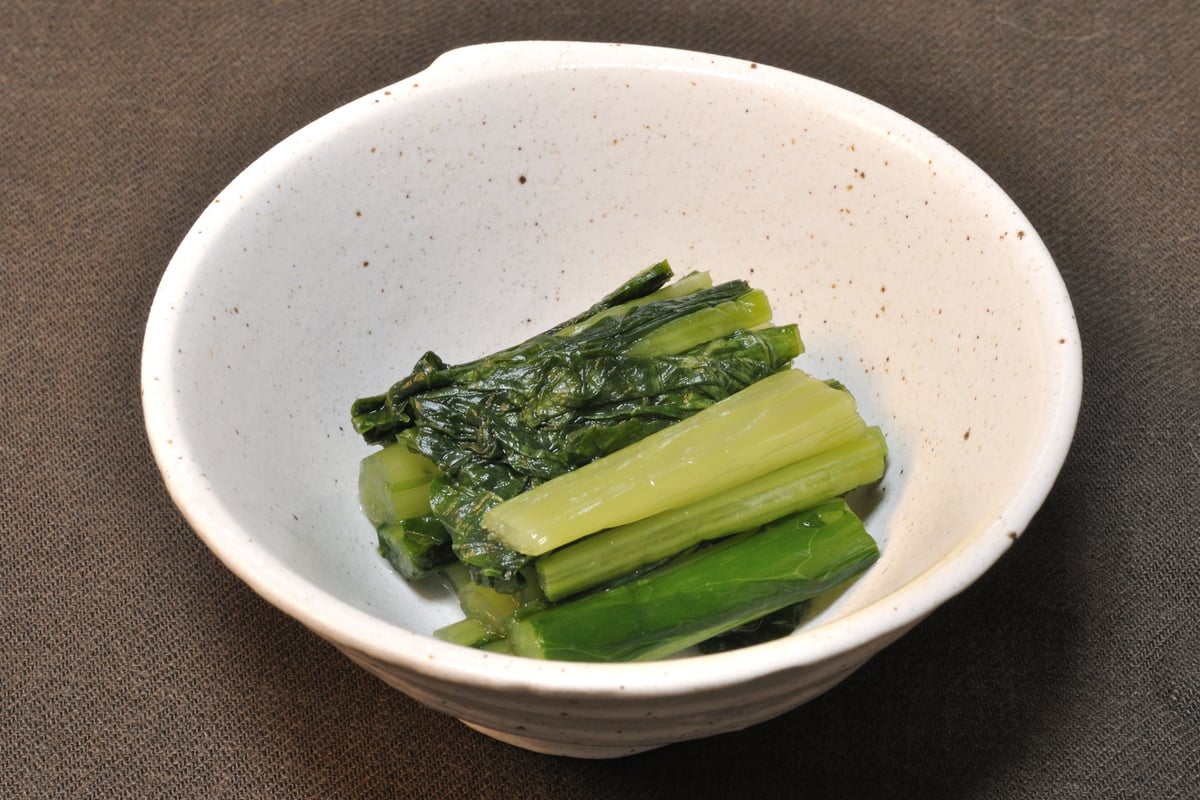
Nozawana-zuke (Pickled Nozawana Greens)
Nozawana-zuke (Pickled Nozawana Greens)
Nozawana-zuke is Nagano Prefecture's signature pickle, made by pickling 'nozawana,' a leafy vegetable of the Brassicaceae family, with salt and other ingredients. The name nozawana comes from the fact that it has been grown in Nozawa Onsen Village in the Hokushin region. It is said to have begun in 1756 (Horeki 6), when the head priest of Kenmeiji Temple in the village brought back seeds of Tennoji-kabu (Tennoji turnip) from Kyoto and sowed them. In the snowy, cold highland climate, the turnip roots did not develop, and it is said to have become a unique vegetable in which only the leaves and stems grow large. In Nagano Prefecture, pickled leafy greens are collectively called 'ohazuke,' and Nozawana-zuke is the representative example. It has been pickled in each household as a preserved food for the winter and enjoyed as an accompaniment to rice and as a snack with tea. Its appeal lies in its crisp texture and moderate saltiness.
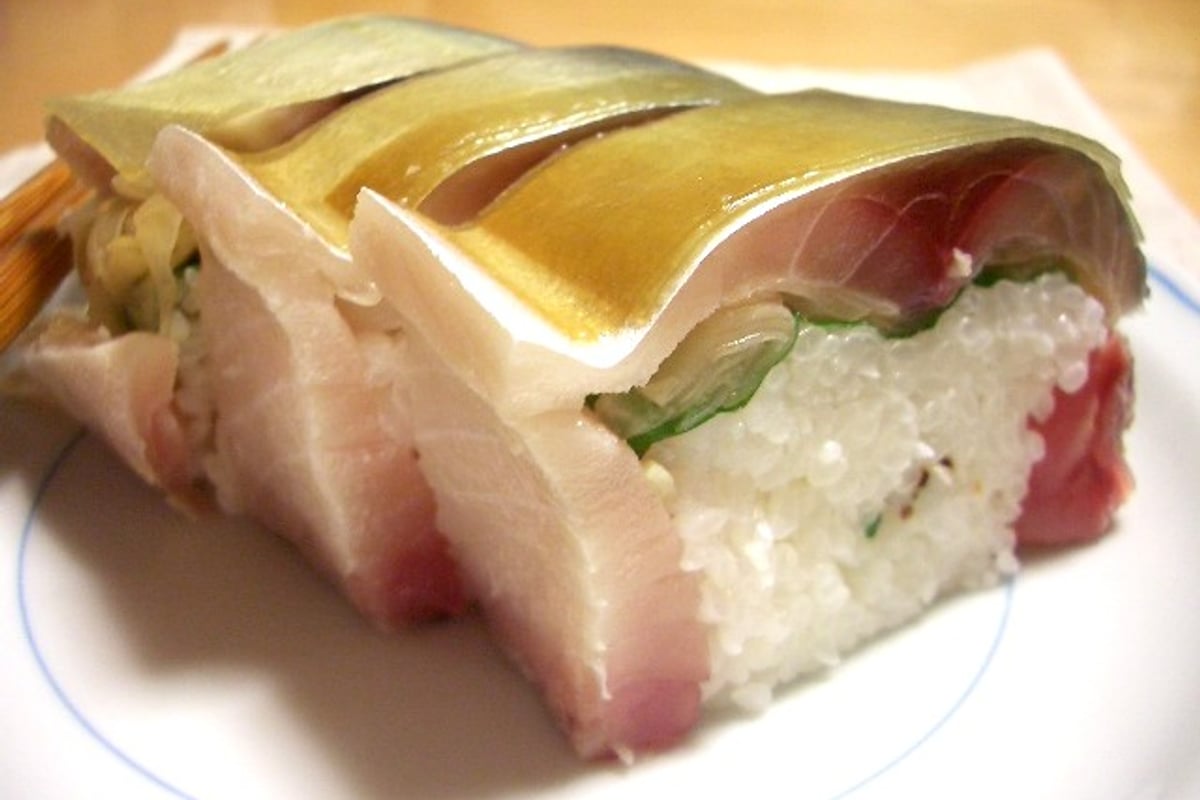
Osaka-zushi (Hako-zushi and Battera)
Osaka-zushi (Hako-zushi and Battera)
Osaka-zushi is a general term for the sushi that has been made in Osaka, including pressed sushi, rolled sushi (makizushi), and steamed sushi (mushi-zushi). In contrast to the nigiri sushi of Edo, the mainstream in Osaka was oshizushi (pressed sushi), in which sushi rice and toppings are packed into a wooden frame or box and pressed firm. The leading example is hako-zushi (box-pressed sushi), which is pressed in a wooden box and cut into bite-size pieces. Yoshino Sushi (吉野寿司) in Senba, founded in 1841 (Tenpo 12), is said to have devised a colorful hako-zushi using sea bream, shrimp, conger eel (anago), and other toppings in the Meiji era. Also called '2-sun-6-bu kaiseki,' this hako-zushi was favored by the masters of Senba's merchant houses (danna-shu). Another specialty is battera, made by layering vinegar-cured mackerel and shiraita kombu (thin white kelp sheets) and pressing them together. It is said to have been devised in 1891 (Meiji 24) by 寿司常 in Minami-Senba, and its name derives from a Portuguese word meaning small boat. Because it is pressed firm to remove the air, it keeps well, and it has long been valued as a boxed lunch for theatergoers and as a gift to bring when visiting.
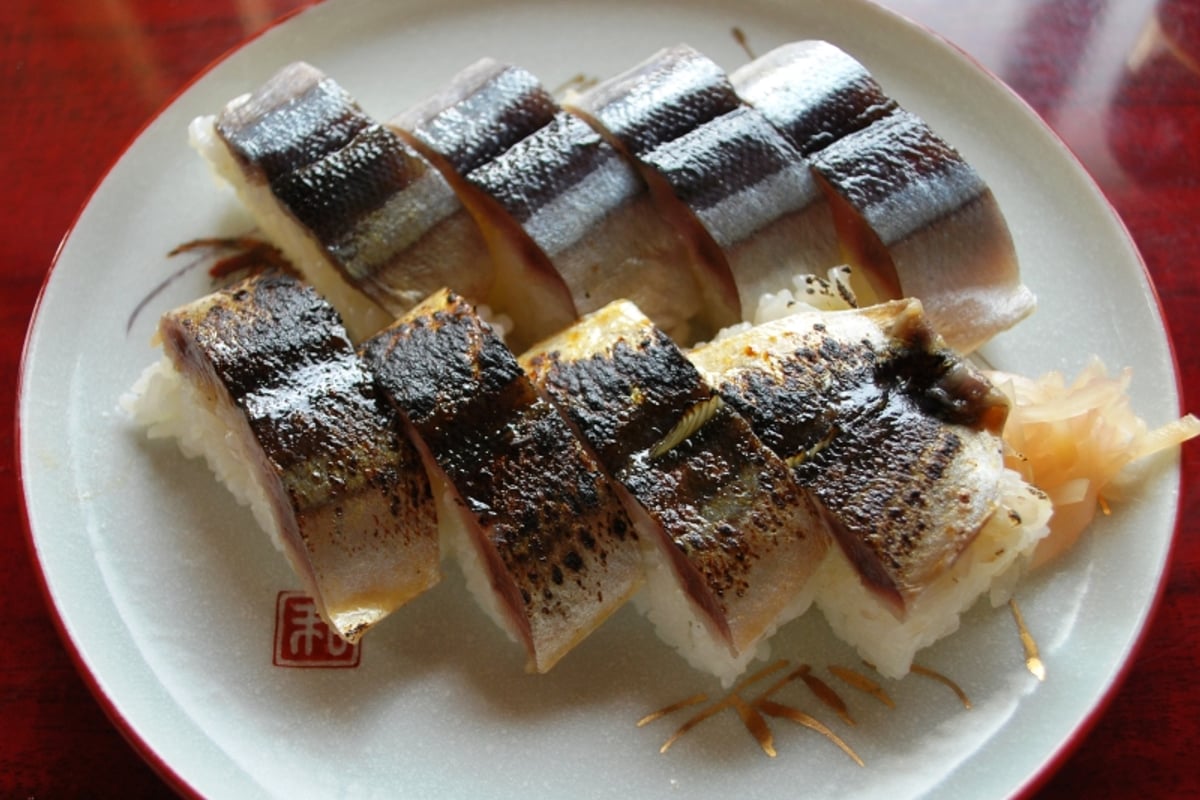
Sanma-zushi (Pacific Saury Sushi)
Sanma Zushi (Pacific Saury Sushi)
Sanma-zushi is a local dish handed down in the Higashi-Kishu area, including Kumano City and Owase City, along the Kumano-nada coast in southern Mie Prefecture. Lean Pacific saury (sanma) caught in the Kumano-nada Sea is cut open, salted, and cured in citrus vinegar such as mikan citrus juice. It is then laid on vinegared rice and made into pressed sushi. It has been made as an indispensable feast for days when people gather, such as New Year, celebrations, and festivals. At Ubuta Shrine (産田神社) in Kumano City, a ritual called Hohan (奉飯), in which children are fed sanma-zushi with the bones left in to pray for their healthy growth, is well known. Locally, it is customary to serve it with karashi mustard paste rather than wasabi or ginger. Sanma-zushi has been handed down all along the Kumano-nada coast from the Shima Peninsula to Wakayama Prefecture, and it is also popular in southern Wakayama Prefecture.
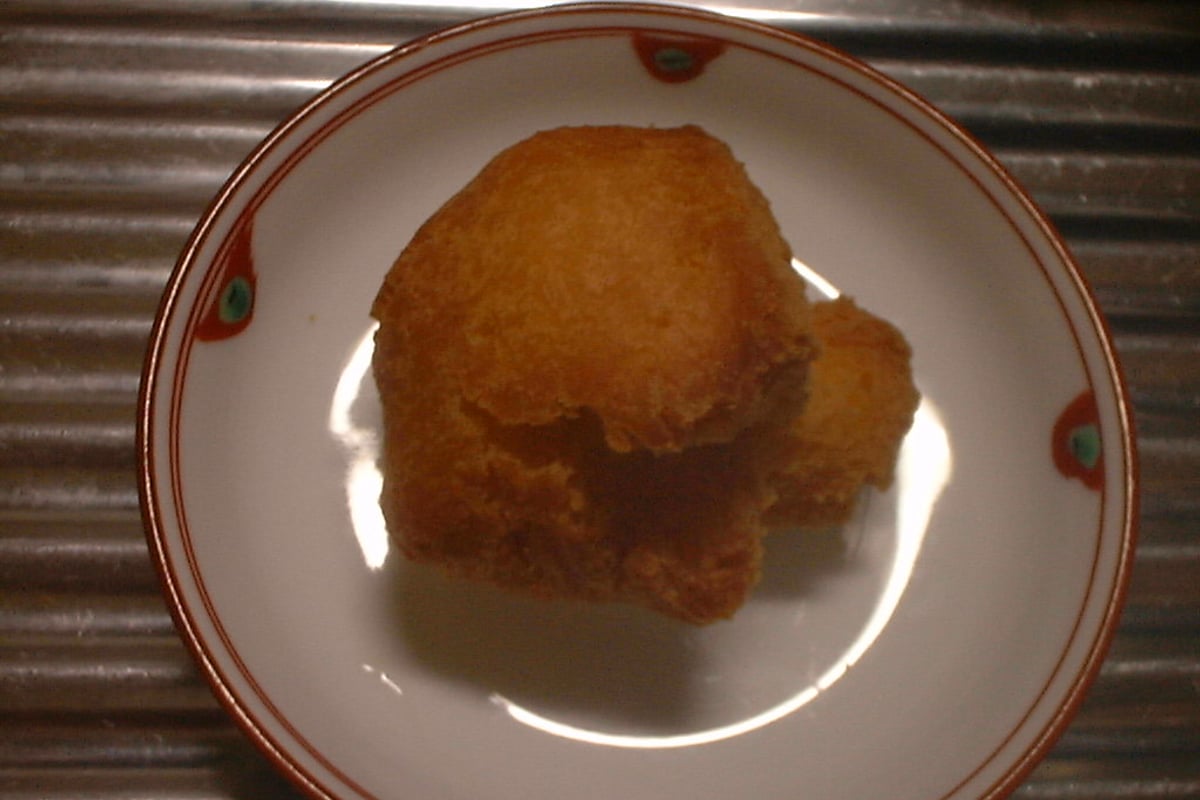
Sata Andagi (Okinawan Fried Doughnut)
Sata Andagi
Sata andagi is a traditional Okinawan fried confection made from a dough of wheat flour, egg, and sugar, deep-fried in oil. The name combines the Okinawan words 'sata' (sugar), 'anda' (oil), and 'agii' (fried), and translates literally as 'sugar tempura.' Tradition holds that it originated when a chef traveled to China during the Ryukyu Kingdom era and brought back the recipe for the Chinese confection 'kaikousho' (also called kaikoukyuu). In an age when sugar was precious, it was a luxury confection made only for special occasions, and because the dough cracks open into a round shape resembling a blooming tulip when fried, it was considered an auspicious sweet, also used as a betrothal gift. Thanks to its good keeping quality, it has long been valued for celebrations and as a gift, and today it is widely loved both within and beyond the prefecture as a representative Okinawan souvenir and snack.
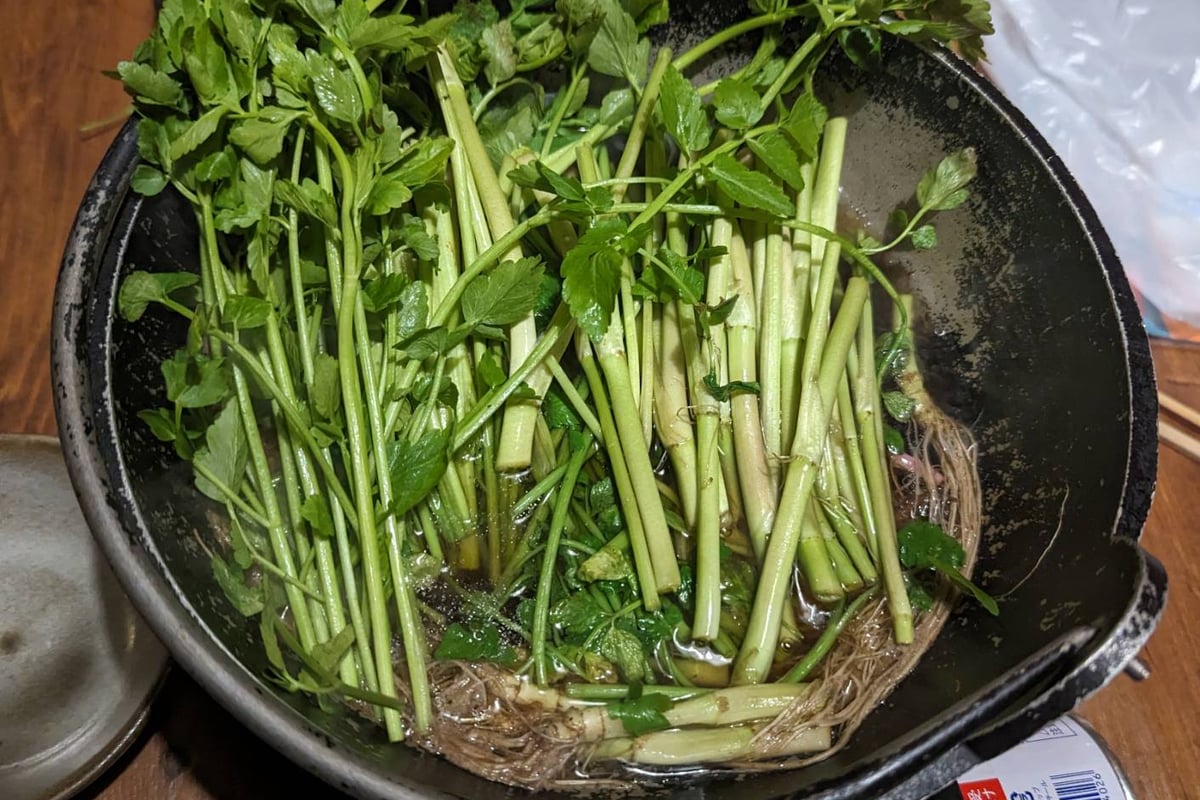
Seri Nabe (Japanese Parsley Hot Pot)
Seri Nabe
Seri nabe is a hot pot dish that uses Miyagi-grown seri (Japanese parsley) whole — root, stem, and leaf alike. The roots of seri are packed with intense umami, and their crisp, fragrant texture is the dish's defining charm. Miyagi Prefecture is one of Japan's leading seri-producing regions, with Natori City — which accounts for about 80% of the prefecture's production — known as the main growing area. In Natori City, seri has long been cultivated in the Kamiyoden and Shimoyoden districts, where groundwater from the Natori River wells up; records from the Genna era (1620s) mention the cultivation of wild seri, and it is said that seri cultivation became widespread during the Anei era (1770s). Date Masamune is also said to have composed a linked-verse poem referencing seri roots as 'nezeri' (root parsley) at a gathering in Tensho 18 (1590), suggesting that the custom of eating even the roots dates back a long way. In recent years, it has gained recognition alongside gyutan (grilled beef tongue) and zunda mochi as a signature dish of Sendai and Miyagi, and it is now served at many restaurants, particularly during the winter months.
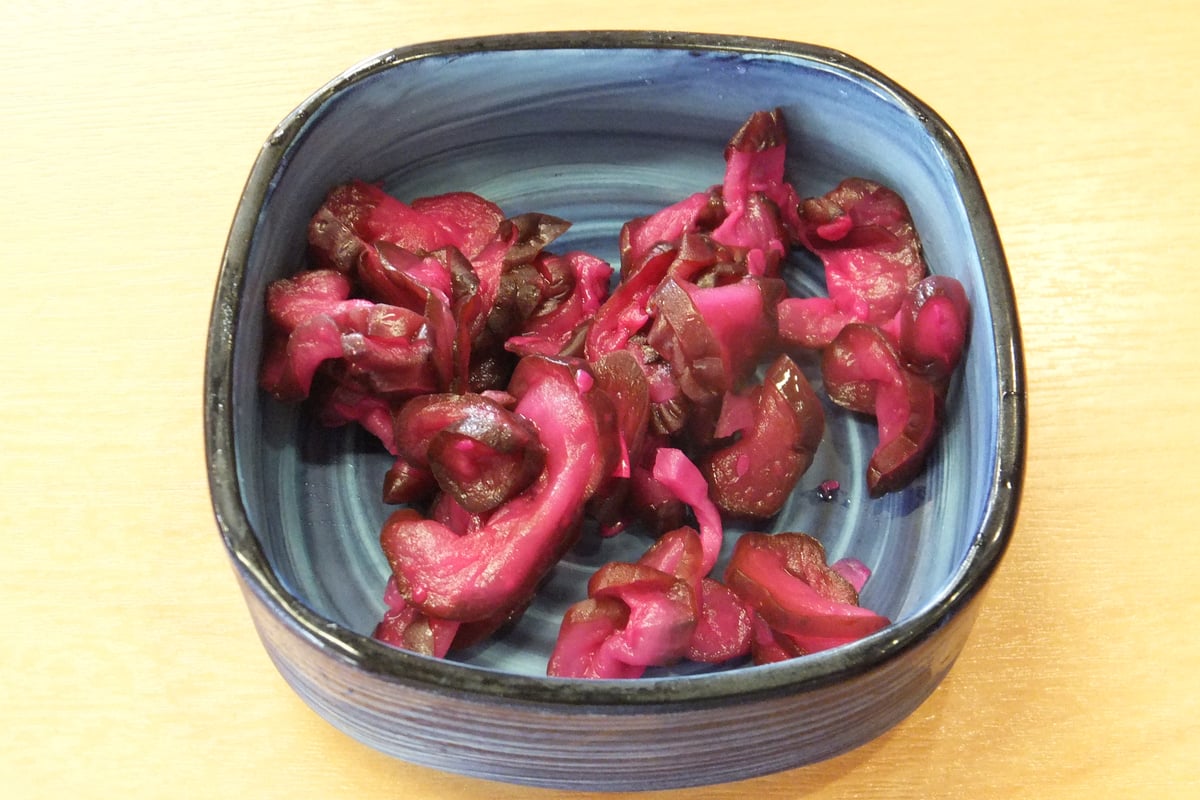
Shibazuke (Purple Shiso Pickles)
Shibazuke
Shibazuke is a vividly purple Kyoto pickle made by salting summer vegetables such as eggplant and cucumber together with red shiso leaves and allowing them to lactic-ferment. Alongside sugukizuke and senmaizuke, it is one of "Kyoto's three great pickles," and the high-quality red shiso grown in the Ohara district of Sakyo Ward, Kyoto City, is an indispensable ingredient. The name is said to originate from an anecdote in which Kenreimon-in Tokuko, the empress consort of Emperor Takakura, spent her remaining years at Jakko-in Temple in Ohara; delighted by the beautiful purple color of the shiso pickles presented to her by local villagers, she named it "murasaki-ha-zuke" ("purple leaf pickle"). While many commercial products are pickled with seasoned vinegar, Ohara still upholds the traditional method of "nama-shibazuke," fermented with only salt and red shiso.
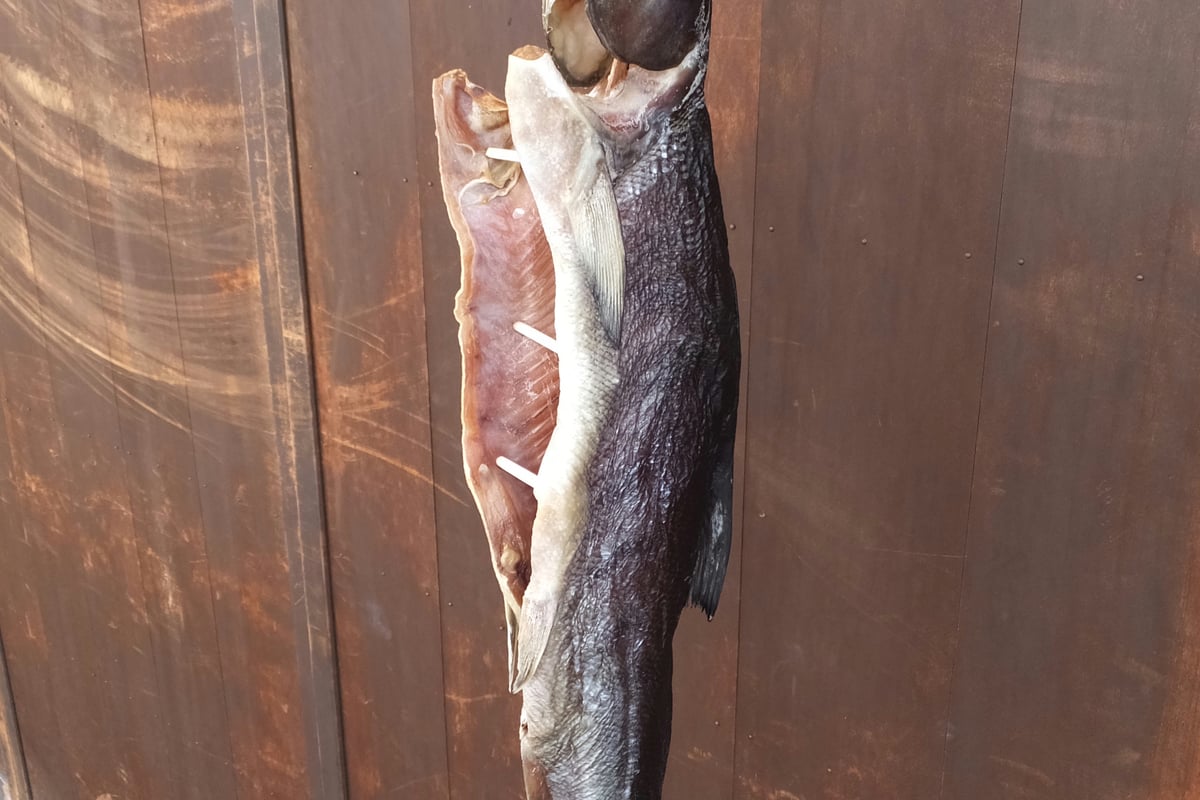
Shiobiki-zake (salt-cured salmon)
Murakami Shiobiki-zake
Shiobiki-zake is a processed salmon product handed down in Murakami City, Niigata Prefecture, made by rubbing salt into salmon caught in autumn and drying it in the cold wind. In Murakami, salmon is called 'iyoboya' in the local dialect, and the city has been closely tied to salmon since ancient times — salmon from the Miomote River is said to have been presented to the imperial court in the capital as early as the Heian period. In the Edo period, Aoto Buheiji, a samurai of the Murakami domain, focused on salmon's homing instinct and succeeded in what is regarded as the world's first natural hatching and propagation of salmon. In the castle town of Murakami, where seppuku (ritual disembowelment) was abhorred, a unique method of cutting called tomebara, in which the belly is split while leaving part of it connected, is still practiced today. From late autumn to early winter, the moist wind blowing in from the Sea of Japan slowly dries the flesh, producing a tender, mellow umami. In Murakami, it is an indispensable year-end fish (toshitori-zakana) for New Year's Eve. Some long-established shops in the city hang large numbers of salmon from their ceilings, conveying the culture of this salmon town to the present day.
Wappa-meshi (Rice Steamed in a Bentwood Container)
Wappa-meshi (Rice steamed in a bentwood container)
Wappa-meshi is a local dish made by packing dashi-cooked rice into a round 'wappa' container of bent cedar or cypress wood, topping it with ingredients such as seafood or mountain vegetables, and steaming it in a wooden steamer. In Fukushima Prefecture, Aizuwakamatsu City is widely known as its birthplace, while in Iwaki City, on the Pacific coast, a version of Wappa-meshi generously topped with fresh local seafood known as Joban-mono is served to tourists and loved as a local dish for enjoying the bounty of the sea. The wooden container absorbs excess steam, keeping the rice fluffy rather than sticky, and combined with its colorful appearance, it is popular both as a meal for special occasions and as a souvenir. Even within the same name 'Wappa-meshi,' the mountain vegetables and mushrooms that take center stage in Aizu and the sea urchin, surf clams, and local fish that take center stage in Iwaki show a different character in each region — a depth that is part of the richness of Fukushima's Wappa-meshi culture.
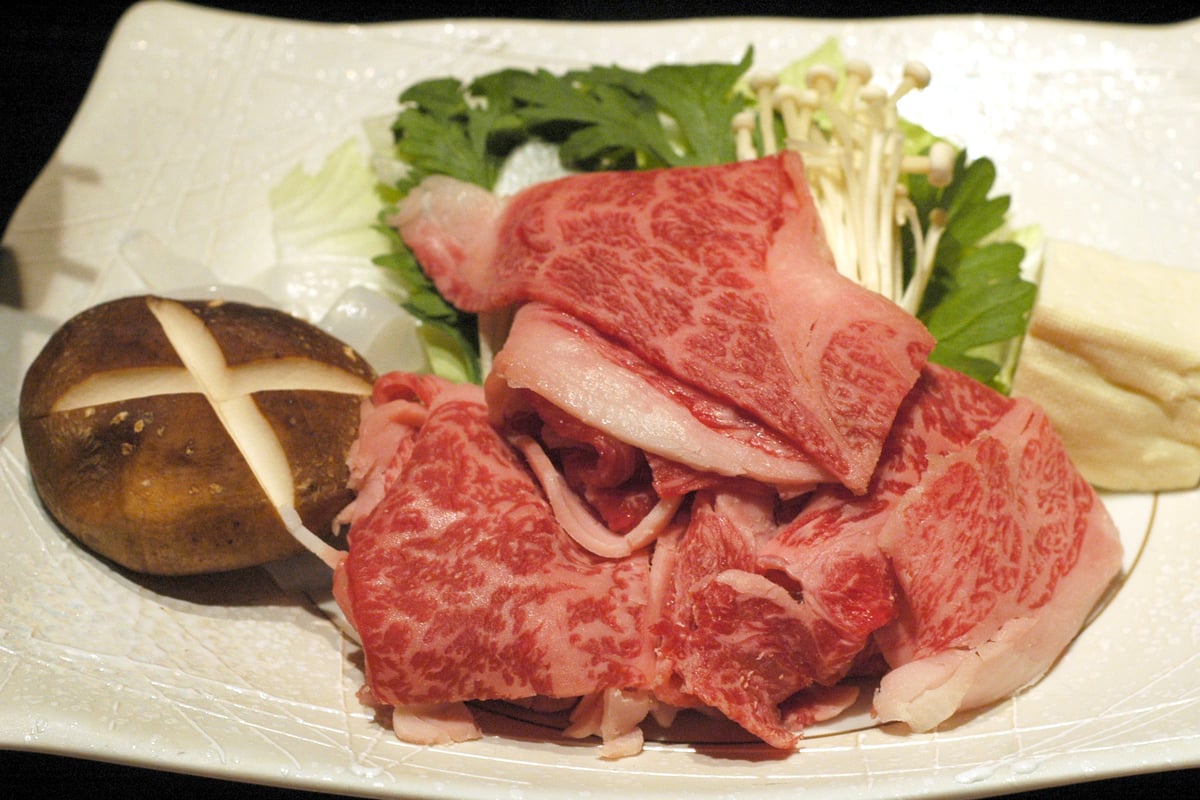
Yonezawa Beef
Yonezawa Beef
Yonezawa Beef is a branded beef of Japanese Black cattle (Kuroge Washu) raised in the Oitama region of Yamagata Prefecture. It is ranked alongside Matsusaka beef and Kobe beef as one of Japan's Three Great Wagyu Brands, and is known as the only one of the three found in eastern Japan. Its history is said to begin in 1871 (Meiji 4), when Charles Henry Dallas, an Englishman invited to Yonezawa as a teacher at the domain school Kojokan, ate local beef out of nostalgia for his homeland. When Dallas completed his term in 1875, he brought one head of Yonezawa cattle back with him to the foreign settlement in Yokohama and served it to his acquaintances, whose favorable reaction made the beef's flavor a topic of conversation. Winning acclaim in Yokohama, a major beef-consuming city at the time, led Dallas to broker a connection between Yonezawa livestock dealers and Yokohama wholesalers, and the beef began to be sold under the name 'Yonezawa Beef.' This marked the start of its reputation spreading nationwide by a route different from that of Matsusaka beef and Kobe beef. Today, the Yonezawa Beef Brand Promotion Council certifies as 'Yonezawa Beef' only meat from nulliparous female Japanese Black cattle that are raised in the Oitama region, shipped at 33 months of age or older, and graded 3 or higher for meat quality, among other standards.
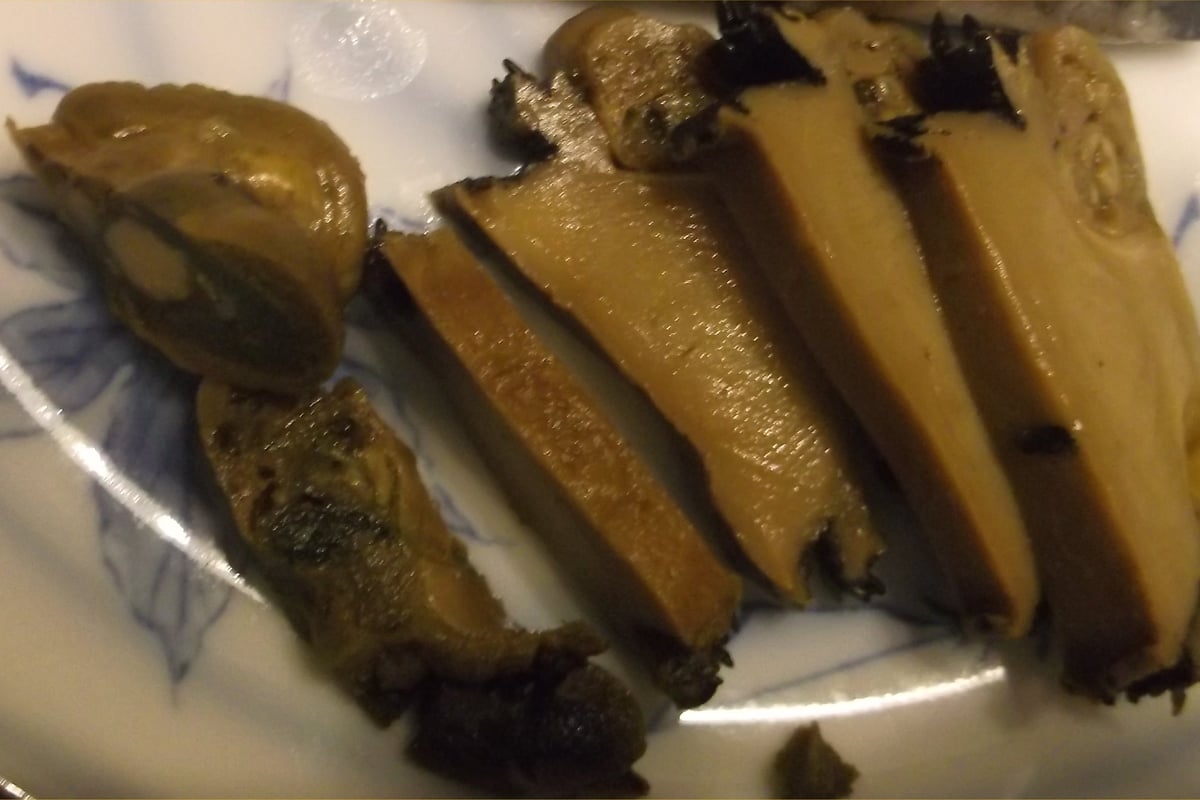
Awabi no Nigai (Soy-Simmered Abalone)
Awabi no Nigai (Simmered Abalone)
Awabi no Nigai is a specialty of Yamanashi Prefecture in which abalone is simmered in soy sauce and then steeped in the simmering liquid to absorb its flavor. It is known as a processed seafood product born in landlocked Koshu (Kai Province). According to tradition, it began in the Edo period when abalone landed at Numazu on Suruga Bay was packed into barrels with soy sauce, loaded onto horseback, and carried over mountain passes. During the long journey the soy sauce soaked in just right, and by the time it reached Kai it had reached the perfect flavor. It was praised by the samurai serving at Kofu Castle and eventually became known in Edo as well. There is also a story that Takeda Shingen used it as field rations, but this is only one of several theories. Today, some long-established makers use domestic black abalone and finish it with the liver still attached. The classic way to enjoy it is sliced thin like sashimi, and it is prized for celebrations such as New Year and weddings and as a gift.
Chinsuko (Okinawan Shortbread Cookies)
Chinsuko
Chinsuko is a classic Okinawan confection made mainly from wheat flour, sugar, and lard. Known for its distinctively crumbly texture and the rich, savory flavor that lard imparts, it is one of the best-known Okinawan souvenirs nationwide in Japan. Its roots lie in a court confection of the Ryukyu Kingdom era, said to have been a special treat served only to royalty, nobility, and investiture envoys from China. Several theories exist for the origin of its name — one holds that it comes from 'chin-so-ko,' meaning 'rare confection,' another from 'kin-so-ko,' meaning 'expensive confection' — but the true origin remains unclear. Originally shaped as round pieces resembling a chrysanthemum flower, it was later remade into bite-sized sticks, giving it the familiar shape known today. Beyond the plain version, many variations have emerged using ingredients such as purple sweet potato, brown sugar, and Yukishio salt, and it continues to be beloved by visitors to Okinawa.
Funankogui (Kelp-Wrapped Carp Stew)
Funankogui
Funankogui is a local dish from Kashima City, Saga Prefecture, in which live crucian carp (funa) are wrapped whole in kelp and simmered for a long time together with vegetables such as daikon radish and lotus root, in a broth of red miso and starch syrup (mizuame). The long simmering softens the fish all the way to the bones, so it can be eaten whole, and it has a distinctive flavor with none of the fishy smell one might expect. It is said to have originated because sea bream, traditionally served at celebratory occasions, was once rare and expensive along the Ariake Sea, so the readily available crucian carp was used in its place. In Kashima's Hamamachi district, a market called the 'Funa-ichi,' where the carp and vegetables used in the dish are sold, has been held every January 19th for more than 300 years, and the following day, January 20th — known as Hatsuka Shogatsu ('Twentieth-Day New Year') — people still carry on the custom of offering this dish to the god Ebisu to pray for a good catch, business prosperity, and safety at home.
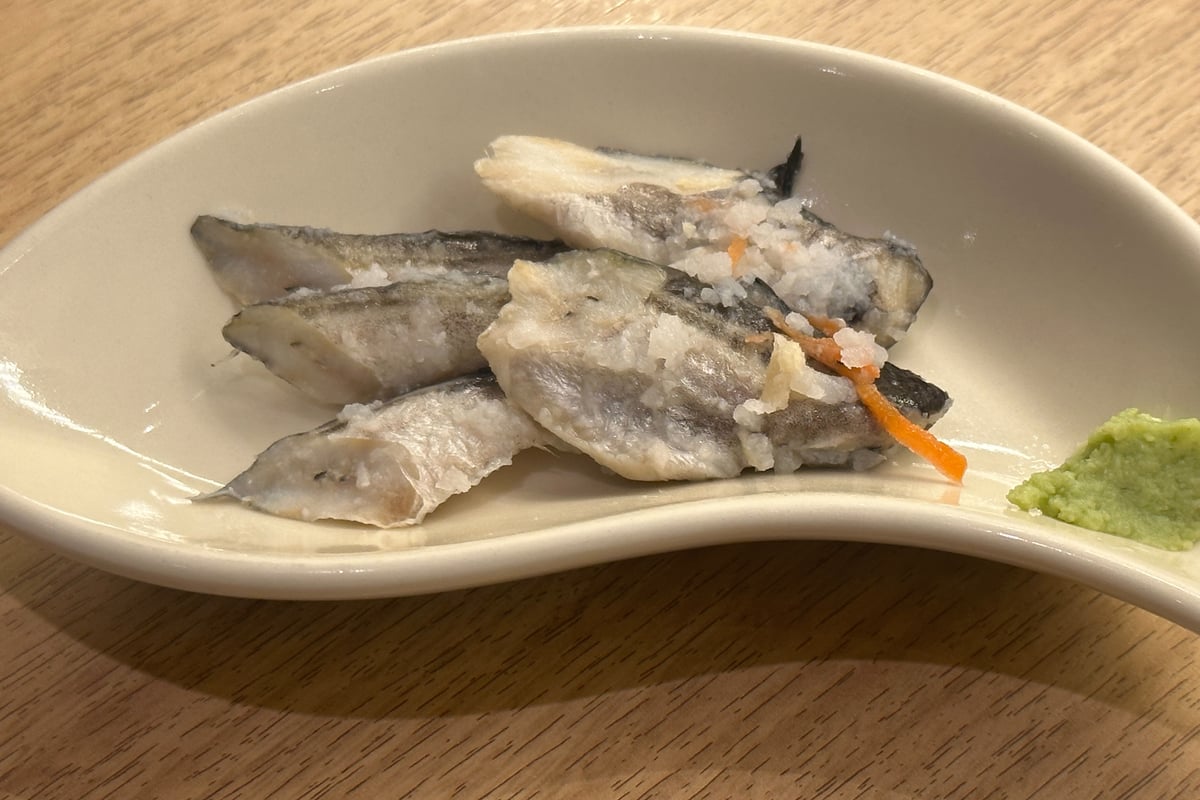
Hatahata-zushi
Hatahata-zushi
Hatahata-zushi is a signature narezushi (fermented sushi) of Akita Prefecture, made by layering hatahata (Japanese sandfish) — Akita's official prefectural fish — with rice, rice malt (koji), and vegetables in a wooden barrel and allowing the mixture to undergo lactic fermentation. Salted hatahata are desalted, then layered in a barrel in alternating layers with koji-mixed rice, vegetables such as carrot, and kelp, weighted down with a heavy stone, and left to ferment slowly for about three to four weeks. Hatahata is said to have earned the name 'hatahata-gami,' after an old word evoking thunder, because it appears in great schools along the coast during its spawning season, when thunder often rumbles over the sea. In Akita, the fish is so deeply woven into daily life that people traditionally say 'the New Year cannot be welcomed without hatahata.' The dish's flavor — the sweetness of koji blended with the tang of fermentation and the umami of the fish — remains an indispensable part of the New Year's Eve and New Year's holiday feast to this day.
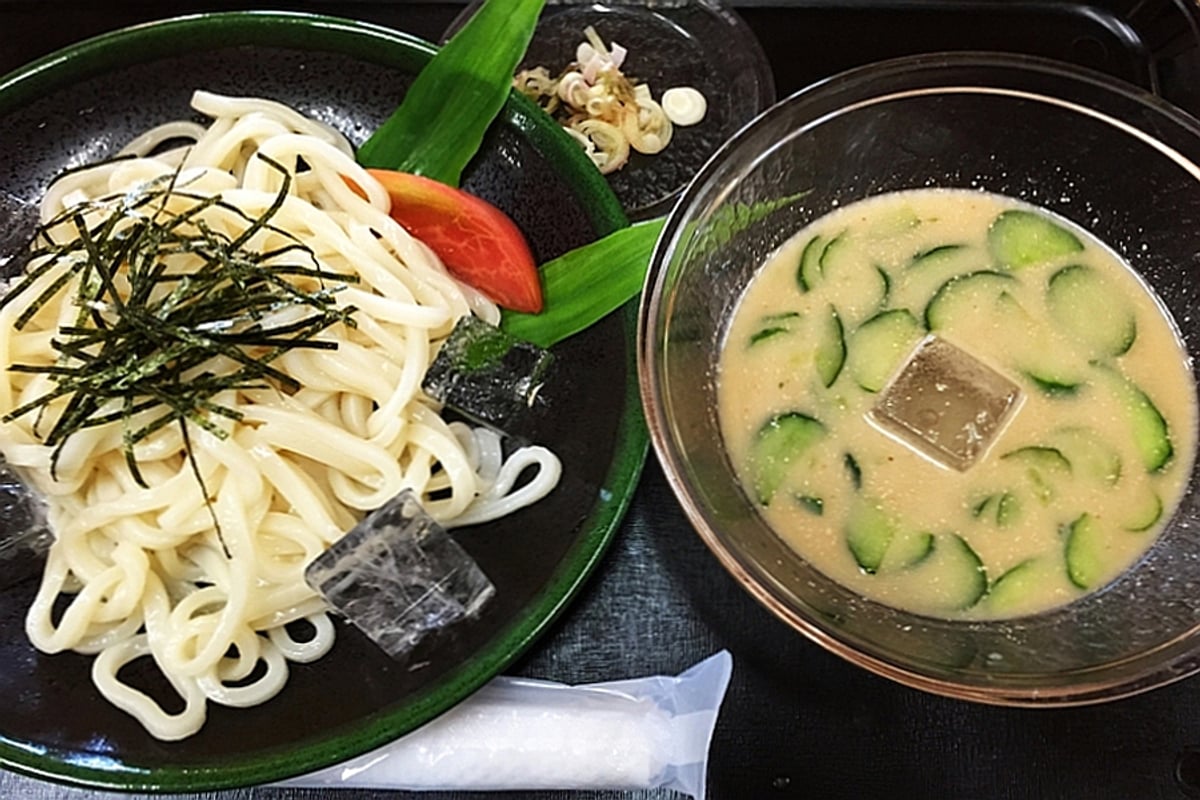
Hiyajiru Udon (Suttate)
Hiyajiru Udon (Suttate)
Hiyajiru udon is a local specialty of Saitama Prefecture in which udon noodles are dipped into a cold sauce made by grinding sesame and miso together in a mortar, then thinning it with cold water and adding summer vegetables such as cucumber, shiso, and myoga ginger. It is also called 'suttate,' a name derived from eating the sauce freshly ground ('suritate'), and has long been enjoyed in the rice-farming areas of the prefecture, centered on Kawajima in Hiki District, as well as Omiya, Kawagoe, and Kazo. Saitama developed its own distinctive 'udon culture' from growing wheat as a secondary crop after rice, and suttate evolved within that tradition as a wise dish that let farmers quickly restore their energy during the hot, busy farming season. The cold dipping sauce, combining the fragrance of sesame, the richness of miso, and the freshness of the garnish vegetables, goes down easily even when summer heat dulls the appetite, and each household has its own blend of ingredients and garnishes. In recent years it has drawn attention as a local 'B-kyu gourmet' dish, and a growing number of restaurants in Kawajima serve it as 'Kawajima Suttate.'
Hokki-meshi (Surf clam rice)
Hokki-meshi (Surf clam rice)
Hokki-meshi is a rice dish cooked with large, richly sweet surf clams (hokkigai) landed at Matsukawa-ura (lagoon) in Soma City, Fukushima Prefecture. The waters off Soma and Futaba are mineral-rich fishing grounds where surf clam fishing has flourished since the Meiji era. The dish combines Soma's high-quality rice—the area is also known as a rice-growing region—with locally caught surf clams, and is said to have originally been enjoyed as a quick 'fisherman's meal' eaten aboard boats between hauls by busy fishermen. The rice, fragrant from soaking up the clams' umami, offers the sweetness and crunchy texture of the clams, and is served at eateries and direct-sale market cafeterias around Matsukawa-ura. As a dish that makes the most of the bounty of Matsukawa-ura, Fukushima's only lagoon, it has become a staple menu item for welcoming visitors locally, and quite a few restaurants serve it as a seasonal offering.
Kodai no Sasazuke (Vinegar-cured Small Sea Bream)
Kodai no Sasazuke
Kodai no Sasazuke is a specialty of Obama City, Fukui Prefecture, in which small sea bream caught in Wakasa Bay are filleted in the three-piece style (sanmai oroshi), lightly cured with salt and vinegar, and packed into small cedar kegs. The main raw material is a small form of yellowback sea bream (kidai) known as 'renkodai'. Scales and fine bones are carefully removed from sea bream about 10 cm long, and the fillets are lightly salted and then marinated in vinegar or seasoned vinegar. After being packed into the keg, the fish is finished with bamboo grass leaves (sasa). The skin glows a vivid pink and the flesh is a translucent white or pale amber, so its beauty is part of the appeal. The method is said to have been established in Obama during the Meiji era, and it developed through the town's ties with Kyoto, a major center of consumption. In 2017 (Heisei 29), it was registered under the national Geographical Indication (GI) protection system as 'Wakasa Obama Kodai Sasazuke'. Today, the Obama Sasazuke Association, a cooperative of manufacturers in Obama City, preserves and passes on the traditional flavor.
Koi no Umani (Simmered Carp)
Koi no Umani
Koi no Umani is a local dish from the Oitama region of inland Yamagata Prefecture, centered on Yonezawa City, in which carp is sliced into rounds and simmered until sweet and savory in soy sauce, sugar, and sake. In the inland Oitama region, far from the sea and short on seafood, freshwater carp has long served as a valuable source of protein. It is said that the foundation of this food culture, which continues today, was laid in the late Edo period when Uesugi Yozan, the 9th lord of the Yonezawa Domain, encouraged carp farming. After the Russo-Japanese War, sugar became easier to obtain, and the sweet-savory seasoning used today is said to have taken hold from that time. The carp is simmered until even the bones turn soft, and aside from the gallbladder, virtually the whole fish, from head to tail, can be eaten. It is an essential dish for celebratory occasions such as New Year, Obon, and weddings, prized as a lucky food because the Japanese word for carp, 'koi,' echoes the word 'koi,' meaning 'come.' Even today, 'Yonezawa Koi' carp raised around Yonezawa City is protected as a regional brand alongside Yonezawa beef and Tateyama apples.
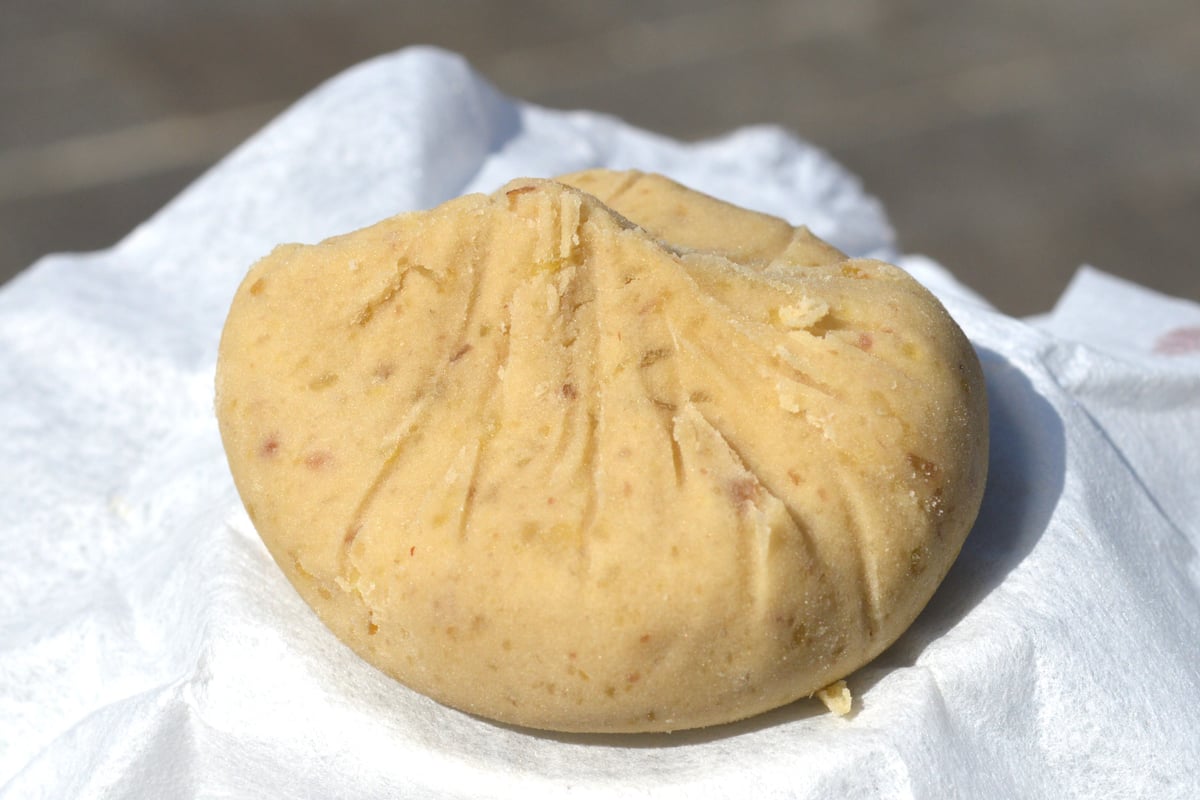
Kuri Kinton
Kuri Kinton
Kuri Kinton is a Japanese confection from Nakatsugawa City, Gifu Prefecture, made by steaming chestnuts, straining them, and combining them with sugar before shaping the mixture into a ball with a cloth twist (chakin-shibori). It differs from the kuri kinton served in osechi New Year dishes (candied chestnuts and sweet potato simmered in syrup), since the Tono-region version is made with only chestnuts and sugar, letting the chestnut's natural flavor and simple taste shine through. In the Edo period, Nakatsugawa flourished as a post town on the Nakasendo highway, and travelers were served a simple confection made by steaming and straining wild mountain chestnuts that grew on the slopes of Mount Ena — said to be the origin of Kuri Kinton. Confectioners began selling it commercially in the Meiji era, and production expanded once chestnut cultivation began in the Taisho era. Today it is enjoyed as an autumn delicacy from around September to December, with more than a dozen Japanese confectionery shops lining the streets of Nakatsugawa, drawing visitors from within and outside the prefecture.
Lake Hamana Eel
Hamanako Unagi (Lake Hamana Eel)
Lake Hamana Eel is a specialty farmed around Lake Hamana in western Shizuoka Prefecture and enjoyed throughout the Hamamatsu City area as kabayaki and other dishes. Lake Hamana is considered the birthplace of eel farming in Japan. It is said to have begun in 1900 (Meiji 33), when 服部倉治郎, a river-fish merchant who had been researching eel farming in Tokyo, judged Lake Hamana to be a suitable site and built eel-farming ponds there. Glass eels (shirasu-unagi), the young eels, were caught in the area, and the region was also blessed with a mild climate and abundant groundwater, so it developed into a major production area. Eels from Lake Hamana are prized for their rich fat and soft, plump flesh. In July 2026 (Reiwa 8), 'Hamanako Unagi' was registered under the Geographical Indication (GI) protection system. In downtown Hamamatsu and around Kanzanji Onsen, there are many eel restaurants, including long-established shops founded in the Meiji era. Besides unaju and unadon, you can also enjoy shirayaki, eel grilled without sauce.
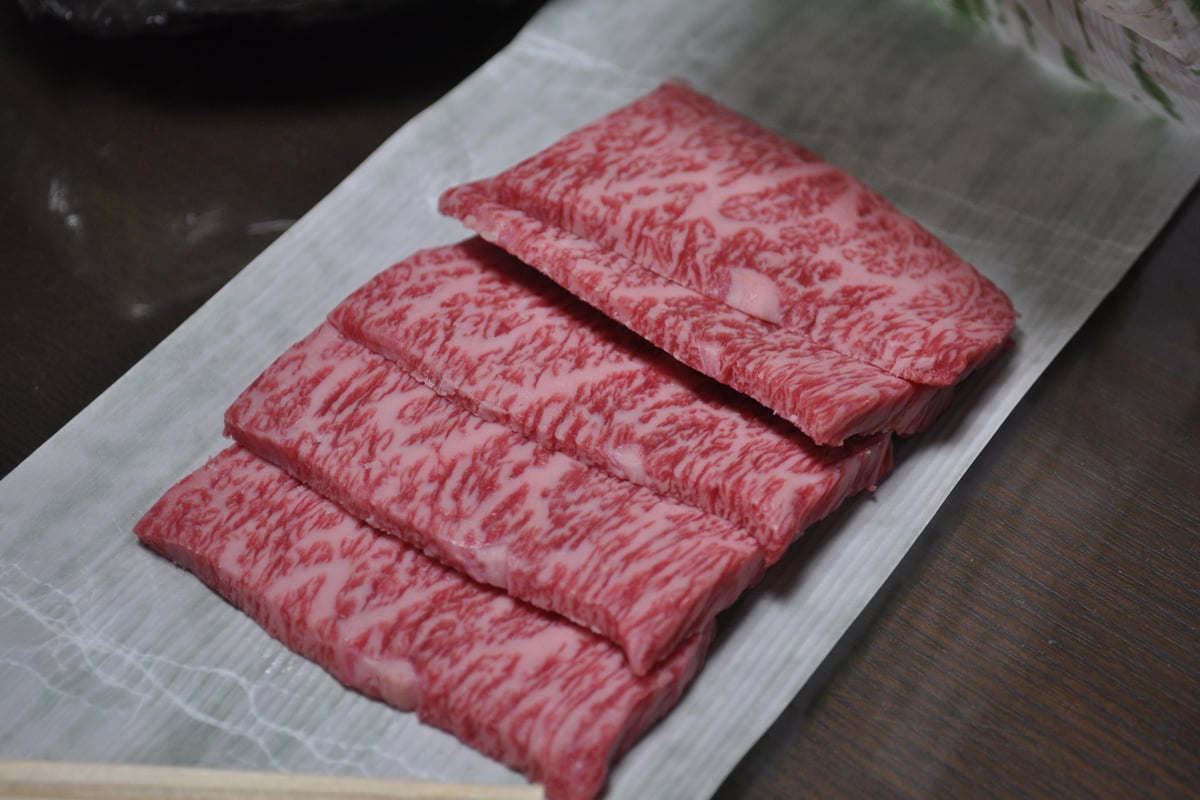
Matsusaka Beef
Matsusaka Beef
Matsusaka beef is a brand of Japanese Black cattle fattened in the area centered on Matsusaka City, Mie Prefecture. It is read either 'Matsusaka-ushi' or 'Matsusaka-gyu.' Only heifers that have never calved qualify, and each animal is registered in the 'Matsusaka Beef Individual Identification Management System.' Since long ago, the Matsusaka area has brought in young female cattle born in Tajima (present-day northern Hyogo Prefecture) as draft cattle for farm work. From the Meiji era onward, these cattle came to be fattened over a long period and shipped as beef cattle to Tokyo and other places. It is said that Matsusaka beef received the top honor award at the National Beef Cattle Livestock Exhibition in 1935 (Showa 10), and that its fame then spread nationwide. Its hallmarks are fine marbling (shimofuri) and fat that melts at a low temperature. When cooked, it is said to give off a sweet aroma called 'wagyu-ko' (wagyu aroma). Locally, the standard dish is sukiyaki, in which the meat is seared in an iron pot and seasoned with sugar and tamari soy sauce. Some restaurants also serve it grilled over a wire grill or as steak.
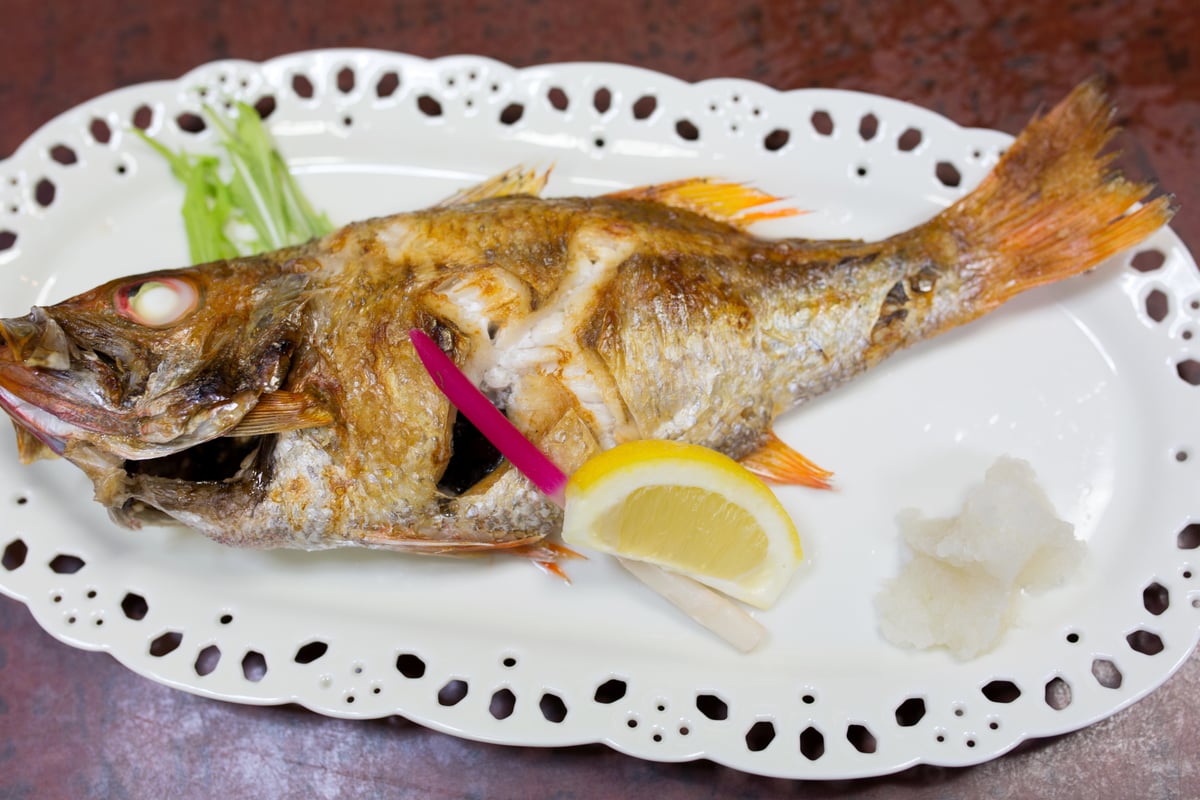
Nodoguro Dishes
Nodoguro ryori
Nodoguro dishes showcase 'nodoguro,' a prized fish landed in the waters off Kanazawa, Ishikawa Prefecture, prepared in a variety of ways including salt-grilling, sashimi, shabu-shabu, and rice cooked in a small pot. Its official Japanese name is akamutsu, but it is popularly known as 'nodoguro' (literally 'black throat') because the back of its mouth appears black when opened. Despite being a white-fleshed fish, it carries rich fat, earning it the nickname 'the toro of white fish,' and in Kanazawa it has long been regarded as an auspicious fish served on occasions such as New Year's and memorial services. Once a familiar fish that appeared on ordinary dinner tables along the Sea of Japan coast, it gained nationwide popularity after being featured on television, and in recent years its price has risen, making it a premium fish today. Restaurants around Omicho Market offer a variety of specialty preparations, including rice cooked in a small pot with a whole nodoguro and elaborate kaiseki courses.
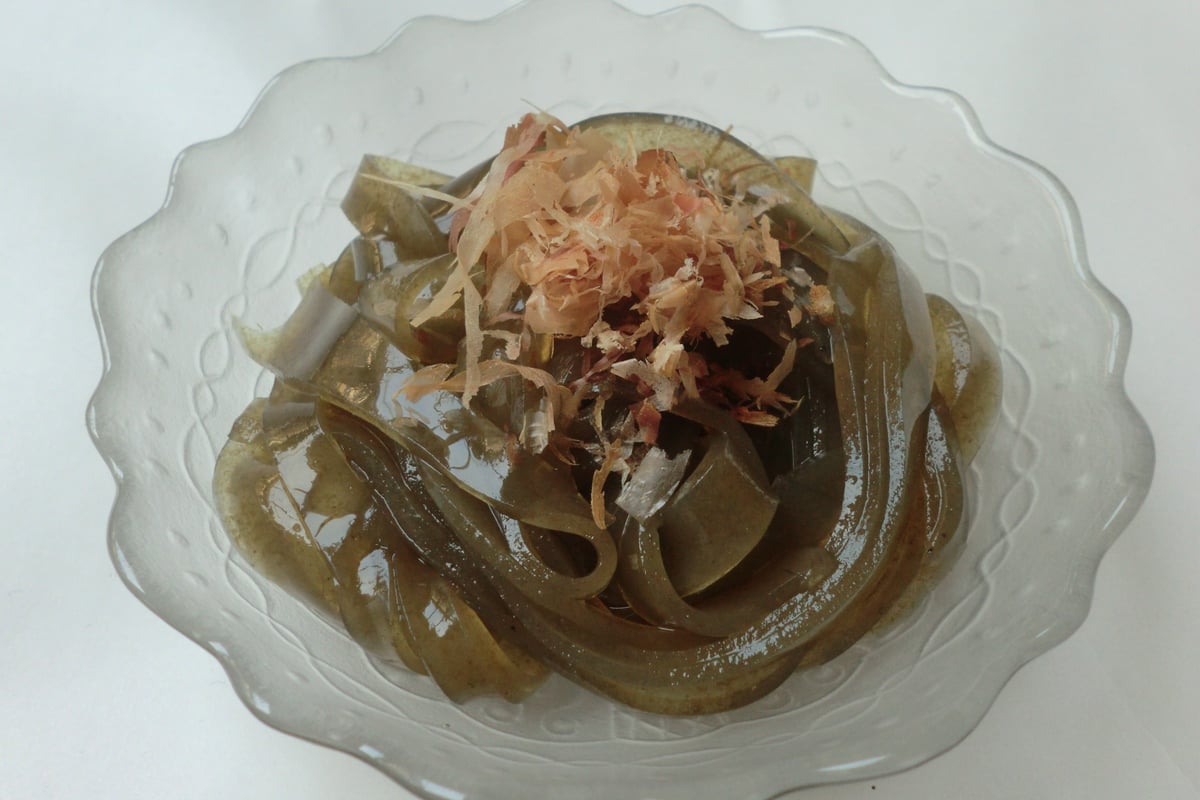
Okyuto
Okyuto
Okyuto is a local dish, made mainly in Fukuoka City, in which egonori seaweed is boiled down and set into a jelly-like block. Cherished since the Edo period as an essential part of Hakata's breakfast table, it was once sold every morning before the war by peddlers carrying baskets on shoulder poles, known as 'okyuto sellers.' It has a distinctive springy texture and a subtle seaweed aroma, and is typically topped with ginger, bonito flakes, or chopped scallions, then eaten with soy sauce or vinegared soy sauce. Because it is low in calories and rich in dietary fiber, it has recently drawn attention as a diet food, and can be found easily at convenience stores and supermarkets. It is also served in school lunches, making it a dish that symbolizes Fukuoka's food culture as it is passed down to younger generations.
Rakkasei Miso (Peanut Miso)
Rakkasei Miso
Rakkasei Miso (Peanut Miso) is a local specialty enjoyed around Yachimata City, Chiba Prefecture, Japan's leading producer of peanuts. Raw peanuts with their skins still on are slowly roasted over low heat, then kneaded together with miso, sugar, and sake to create a sweet-and-savory miso paste eaten daily as a side with rice, a tea snack, or an accompaniment to sake. Peanut cultivation began in Yachimata City in the Meiji era, and the area developed into a leading production center from the Taisho to Showa periods. Along the way, many peanuts that did not meet market standards went unsold. Rakkasei Miso is said to have been devised by local farmers as a way to make good use of these peanuts rather than let them go to waste. Today it is made not only at home but also served in school lunches and sold as a packaged product at local peanut specialty shops and roadside stations, firmly established as one of Chiba's representative preserved foods and local specialties.
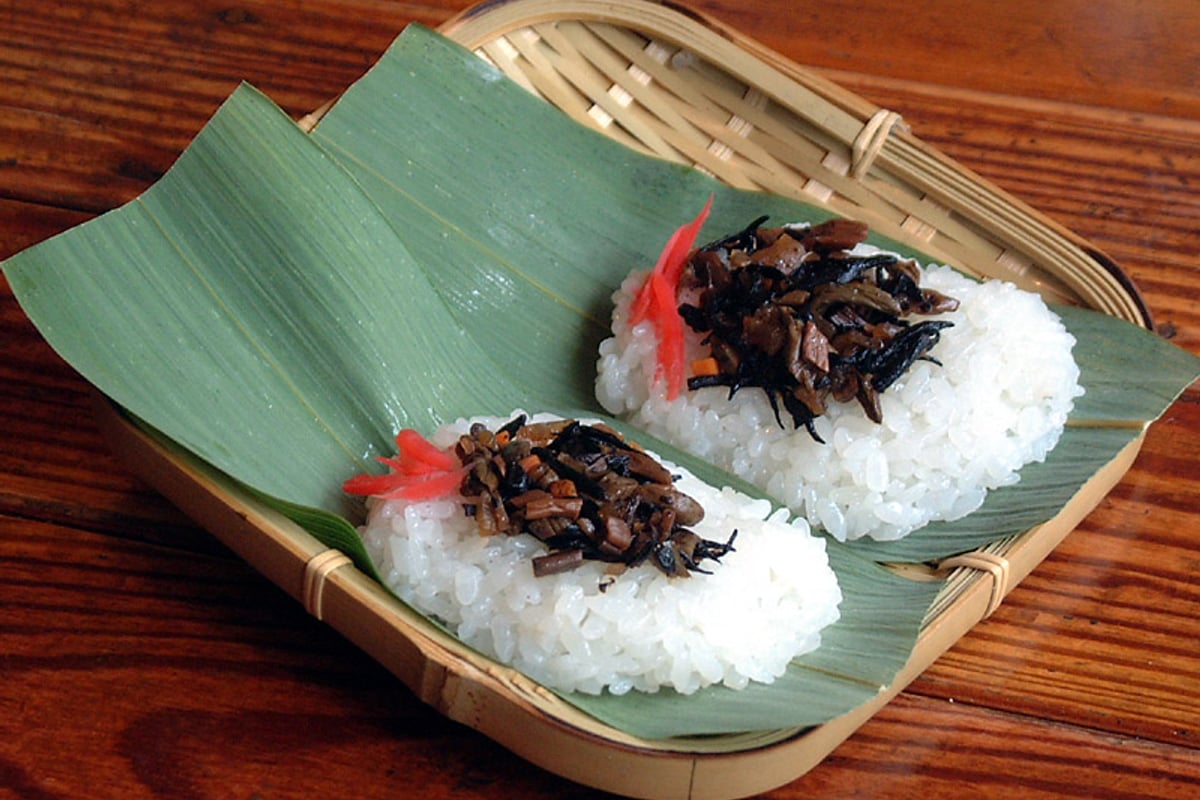
Sasa-zushi (Bamboo-Leaf Sushi)
Sasa-zushi
Sasa-zushi is a local dish of the Joetsu region of Niigata Prefecture in which bite-sized portions of vinegared rice are placed on kumazasa (Sasa veitchii) bamboo-grass leaves and colorfully topped with ingredients such as mountain vegetables, shredded thin omelet (kinshi tamago), and flaked salmon (soboro). It is made mainly in Myoko City, Joetsu City, and Itoigawa City, and Sasa-zushi of the same lineage is also handed down in the Hokushin area of northern Nagano Prefecture. Because the leaves are folded into the shape of a mi (winnowing basket), a farming tool, to hold the rice, some areas of the Joetsu region call it 'mizushi.' As for its birth, there is a story that Uesugi Kenshin's troops in the Sengoku (Warring States) period used sasa leaves in place of dishes to serve rice in the mountains, and another that it was presented to Kenshin on his way to the Battles of Kawanakajima. However, both are handed down as legends. Sasa leaves are said to have antiseptic properties, and because it can be easily picked up and eaten by hand, it has been passed down as a feast for special occasions such as Obon and festivals. Today it is also sold at sushi restaurants, farm produce stands, and tourist facilities.
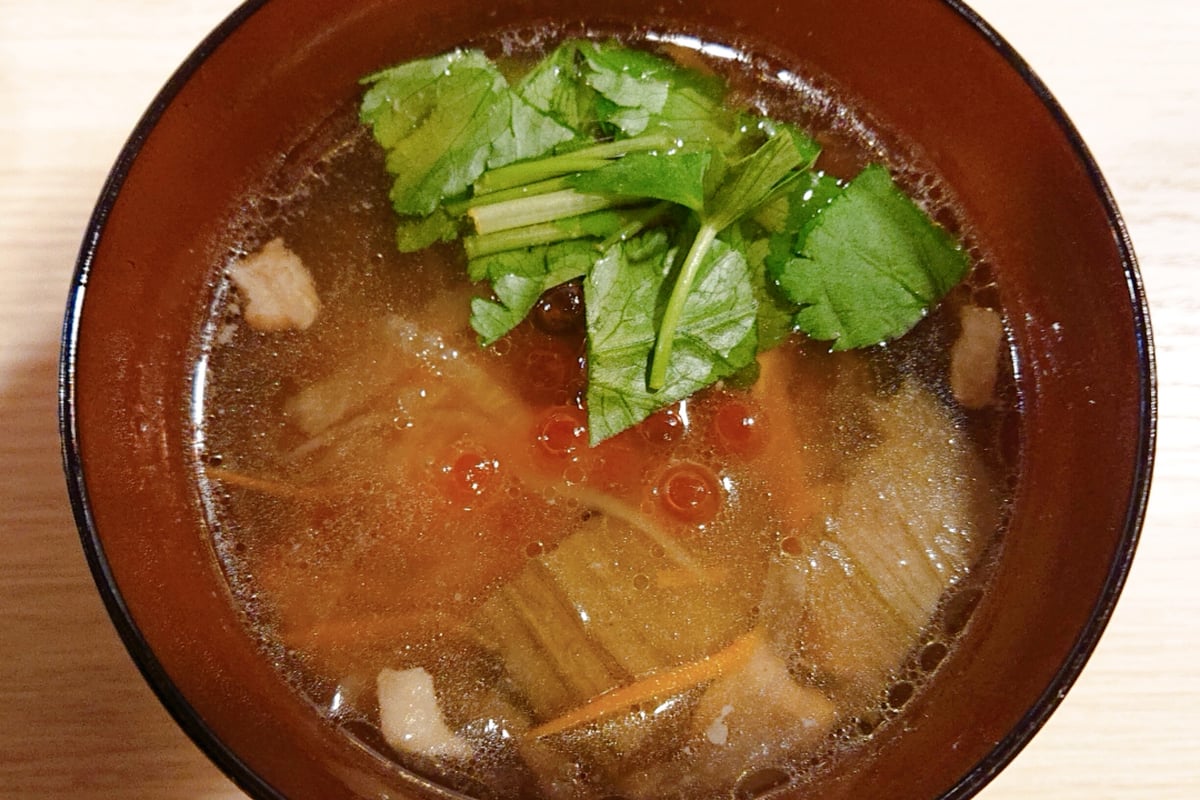
Sendai Zoni (New Year's Soup)
Sendai Zoni
Sendai zoni is a New Year's soup from Sendai City, Miyagi Prefecture, topped with a whole grilled and dried goby fish (yaki-haze) so large it overhangs the bowl, and simmered in the fragrant broth this fish provides. It is said that in the late Edo period, when goby were caught in abundance in Matsushima Bay, the custom arose of grilling them over charcoal, sun-drying them, and stringing them together on straw to sell for the New Year — and using this dried fish as the base for a soup that became a fixture of Sendai households. Besides the grilled goby, the ingredients include harako (salmon roe) taken from salmon that migrate up the Abukuma River, Sendai-seri (Japanese parsley grown around Sendai), 'ohikina' — julienned daikon, carrot, and burdock root that is boiled and then frozen outdoors — as well as zuiki (taro stem) and frozen tofu. The result is a colorful, lavish bowl fit for a festive occasion. Around central Sendai, eating this zoni during the first three days of the New Year remains a common custom to this day. It is worth noting that records show the zoni Date Masamune himself ate was a different style altogether, made with a broth of dried abalone, dried sea cucumber, and herring — meaning the grilled-goby zoni is best understood as a local dish that took root and spread among ordinary people rather than a dish of Date Masamune's own table. In recent years, poor catches of goby and salmon roe have made the ingredients harder to obtain and pushed up prices, leading some to call it a 'luxury zoni.'
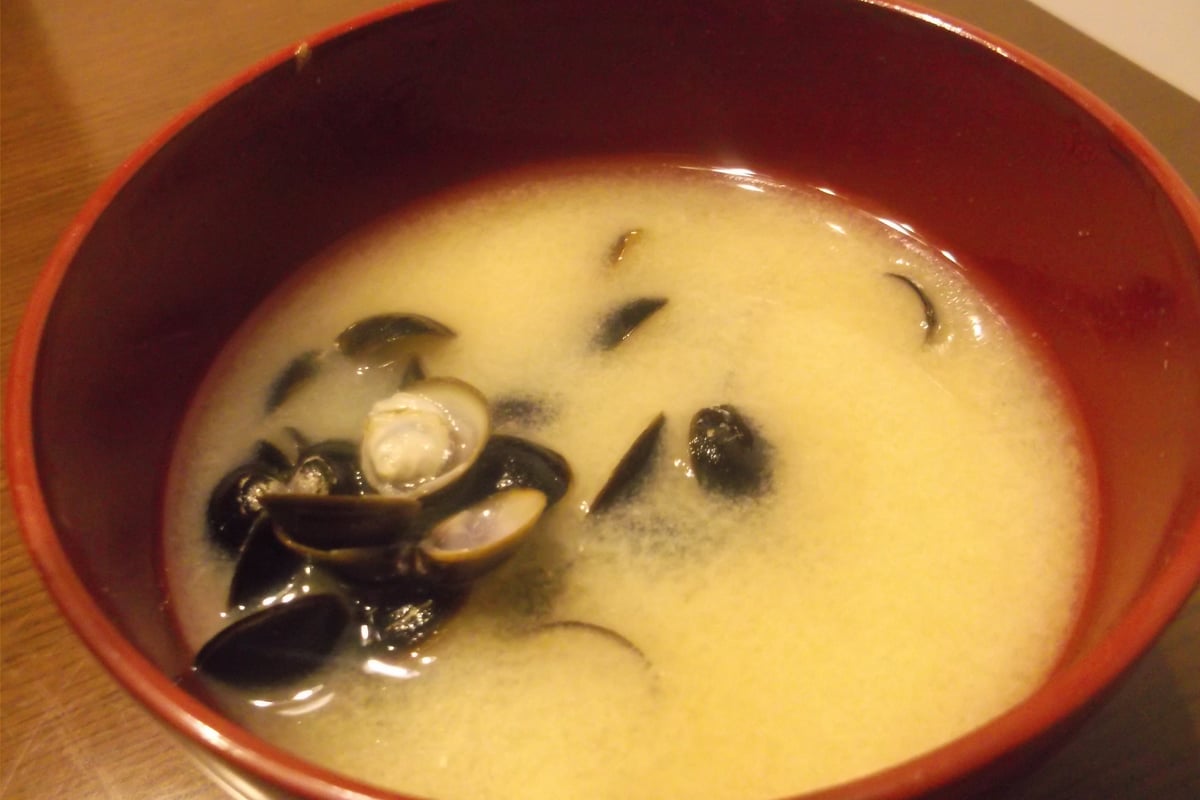
Shijimi-jiru (Freshwater Clam Miso Soup)
Shijimi-jiru
Shijimi-jiru is a miso soup made with seta shijimi, a species of freshwater clam found only in Lake Biwa, and it has long been cherished as a local dish throughout Shiga Prefecture. Compared to other clam varieties such as the yamato shijimi, seta shijimi have plumper, larger, thicker shells and richly flavored meat. Until around the 1960s and 70s, families across the prefecture ate it regularly as miso soup, simmered in a sweet soy sauce (shigure-ni), or as shijimi rice, and it symbolized the bounty of Lake Biwa. In recent years, catches have declined sharply due to environmental changes such as the loss of sandy lakeshore habitat, and efforts are underway to protect this resource. The season runs from around December to April, when the clams firm up and become especially delicious, earning them the nickname 'kan-shijimi' (winter shijimi), and during this period they appear in supermarkets and shops throughout the prefecture.
Sunki-zuke (Salt-Free Fermented Turnip Greens)
Sunki-zuke (Salt-Free Fermented Turnip Greens)
Sunki-zuke is a pickle handed down in the Kiso area of Nagano Prefecture, made by lactic-acid fermenting the stems and leaves of red turnips without using any salt at all. Locally it is also simply called 'sunki.' It is said to have originated in Otaki Village and the Kaida Kogen highlands of Kiso Town at the foot of Mt. Ontake, and it has been made for at least 300 years. Because salt was precious in these mountain valleys far from the sea, it is thought to have developed as a way of preserving winter vegetables with the power of the acid produced by fermentation. A distinctive feature is that the previous year's sunki is used as a 'starter' (tane) for pickling, and several kinds of plant-derived lactic acid bacteria are at work. The finished pickle is amber in color and has a refreshing sourness. Salt-free lactic-acid fermented foods are rare both in Japan and abroad, and in 2017 (Heisei 29) it was registered under the national Geographical Indication (GI) protection system. 'Sunki soba,' in which sunki is placed on hot soba, is loved as a taste of winter in Kiso.
Tecchiri (Fugu Hot Pot)
Tecchiri (Fugu Hot Pot)
Tecchiri is a hot pot dish in which the flesh and bony trimmings (ara) of fugu (pufferfish), mainly tiger puffer (torafugu), are simmered in kombu dashi with vegetables and tofu and then eaten with ponzu. It is known as the name for fugu hot pot in Kansai, and especially in Osaka. Poisonous fugu was likened to a gun, since 'if it hits you, you die,' and was called 'teppo' (gun); the name 'tecchiri' is said to be a shortened form of teppo no chirinabe (fugu chiri hot pot). In the same way, fugu sashimi is called tessa (teppo sashimi). Osaka is said to account for about 60 percent of Japan's fugu consumption and is known as the country's largest consumer of fugu. Fugu grew in popularity in Osaka in the early Showa era, and after the war the number of specialty restaurants increased, establishing it as a winter delicacy. The standard way to finish the meal is zosui (rice porridge) made with the dashi into which the umami of the fugu has dissolved. Preparing fugu requires specialized knowledge and skill. In Osaka Prefecture, under a prefectural ordinance, only people who have received registration as registered fugu processors may process fugu as a business.
Uiro (Steamed Rice Cake)
Uiro
Uiro is a Japanese confection with a chewy, mochi-like texture, made by steaming a dough of rice flour mixed with sugar and hot water. It is famous as a signature confection of Nagoya, but its origins do not actually lie in Nagoya — uiro as a confection is also found in places such as Hakata, Odawara, and Yamaguchi. In Nagoya, the long-established shop Mochibun Sohonten, said to have been founded in 1659 (Manji 2) in the early Edo period, is regarded as the starting point of the city's uiro culture, and Aoyagi Sohonke, founded later in the Meiji era, greatly expanded the business afterward. It became known nationwide especially after in-train sales began with the opening of the Tokaido Shinkansen in 1964 (Showa 39), cementing its status as a classic Nagoya souvenir. It comes in a wide range of flavors, including red bean, matcha, and chestnut, and its bar shape, easy to slice, is also well loved.
Yatsuhashi
Yatsuhashi
Yatsuhashi is a famous Kyoto confection made by steaming rice flour with sugar and cinnamon (nikki), then rolling it thin and baking it. Its distinctive feature is a shape curved like a crescent moon, said by one theory to be named after the Edo-period koto musician Yatsuhashi Kengyo, and by another to derive from the shape of the wooden bridge at Yatsuhashi in Mikawa Province that appears in The Tales of Ise. It was once only a hard-baked cracker, but from the Showa era onward, an unbaked, soft version called "nama-yatsuhashi" was created, and the triangular nama-yatsuhashi wrapped around bean paste became the mainstream souvenir version. Today there is a wide range of flavors, including matcha, chocolate, and seasonal strawberry, and more than a dozen companies belonging to the Kyoto Yatsuhashi Industry Cooperative Association each manufacture and sell it using their own methods.
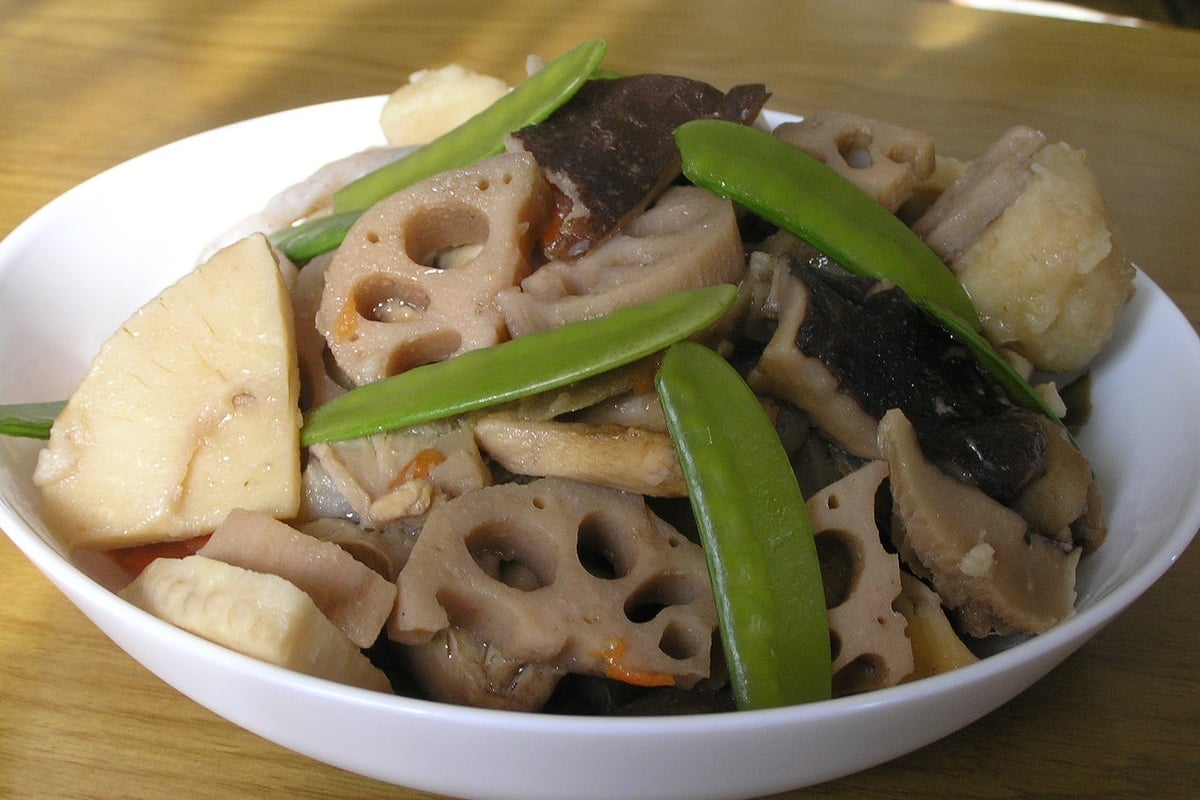
Chikuzen-ni (Gameni)
Chikuzen-ni (Gameni)
Chikuzen-ni (Gameni) is a signature local dish of Fukuoka Prefecture in which chicken, burdock root, lotus root, taro, carrots, and konnyaku are stir-fried in oil and then simmered slowly in dashi broth. In Hakata, the local name 'gameni' is more common, and the name is said to derive from the Hakata dialect word 'gamekurikomu,' meaning 'to gather together.' One theory holds that the dish originated with soft-shelled turtles (dobugame) caught in Hakata Bay, with chicken becoming the standard ingredient only later. It remains an essential dish for celebrations such as New Year's osechi, festivals, and weddings, and continues to color Fukuoka's dinner tables today, with each family passing down its own version.
Fukui Mizu Yokan (Winter Soft Red Bean Jelly)
Fukui Mizu Yokan
Fukui Mizu Yokan is a Japanese confection made by dissolving smooth red bean paste (koshian), sugar, and agar (kanten) over heat and then chilling the mixture until set, and in Fukui Prefecture it is a seasonal tradition enjoyed in winter. Nationwide, mizu yokan is known as a summer sweet, but in Fukui many shops make it only in winter, from around November to around March. Eating well-chilled mizu yokan while sitting at a kotatsu (heated table) is considered one of the pleasures of winter. Many shops use brown sugar (kokuto), and its hallmarks are a clean sweetness and a smooth texture that melts in the mouth. The main style is 'ichimai-nagashi', in which the yokan is poured as a single slab into a flat paper box. It is cut or scooped out with the spatula that comes with it. Because of its low sugar content, it does not keep long, and most products must be refrigerated. The Fukui City tourism website introduces more than 20 shops selling it within the city alone. Sweetness, thickness, and the flavor of the brown sugar differ from shop to shop, so comparing them is part of the fun. In Ono City and elsewhere it is also called 'decchi yokan', and thicker versions are popular there.
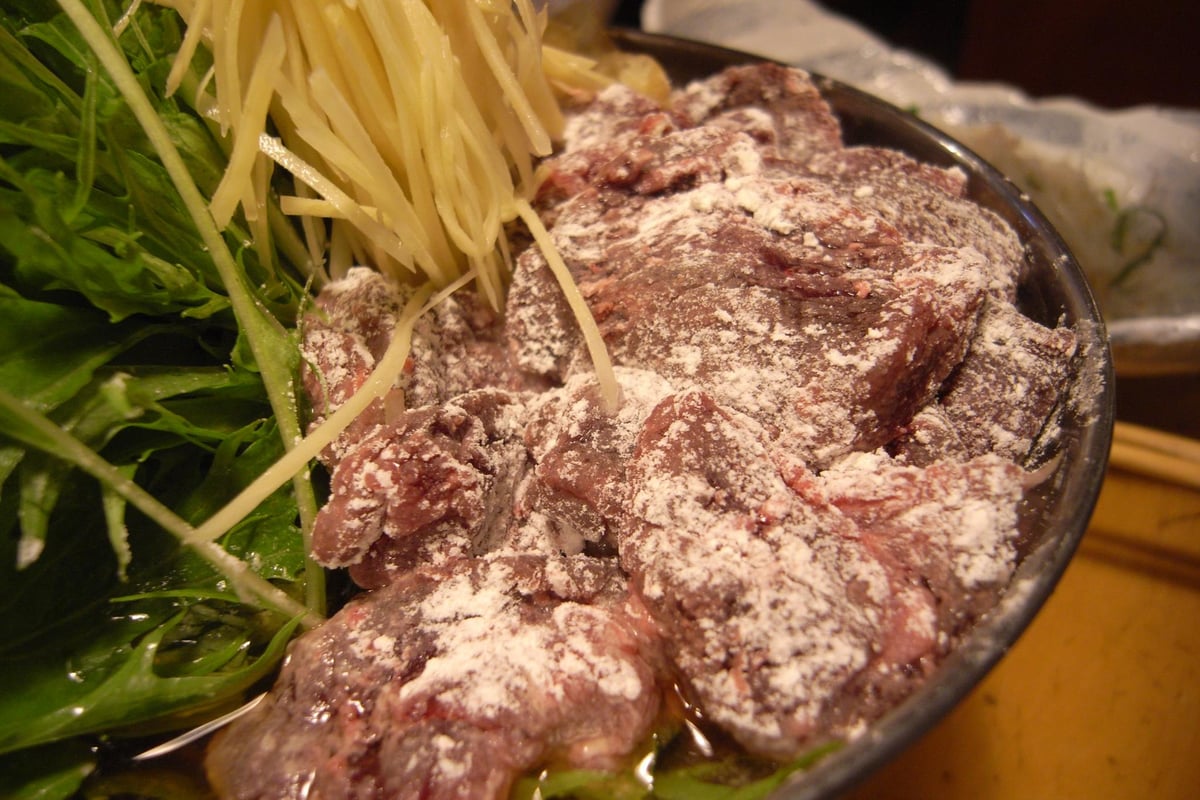
Harihari Nabe (Whale and Mizuna Hot Pot)
Harihari Nabe (Whale and Mizuna Hot Pot)
Harihari nabe is an Osaka hot pot dish in which whale meat and mizuna are briefly simmered in dashi made from kombu and dried fish flakes (fushi). 'Harihari' is said to be a word expressing the crisp texture and sound of eating mizuna. Osaka, called 'the nation's kitchen' (Tenka no Daidokoro), was a hub where foodstuffs were collected and distributed; whale was also brought in from various regions, and a culture of eating whale flourished. Hot pots of whale and mizuna are said to have been commonly eaten in Osaka homes and restaurants. The name is said to have been given by 徳家, a whale restaurant that opened in Sennichimae in Minami in 1967 (Showa 42). In recent years, opportunities to eat whale have decreased due to whaling restrictions and other factors, and pork or other meats are sometimes used instead. In fiscal 2024 (Reiwa 6), 'Osaka whale harihari nabe' was recognized under the Agency for Cultural Affairs' '100-Year Food' program (Future 100-Year Food category). It is also introduced as a regional dish of Osaka Prefecture in the Ministry of Agriculture, Forestry and Fisheries' 'Our Regional Cuisines' (Uchi no Kyodo Ryori).
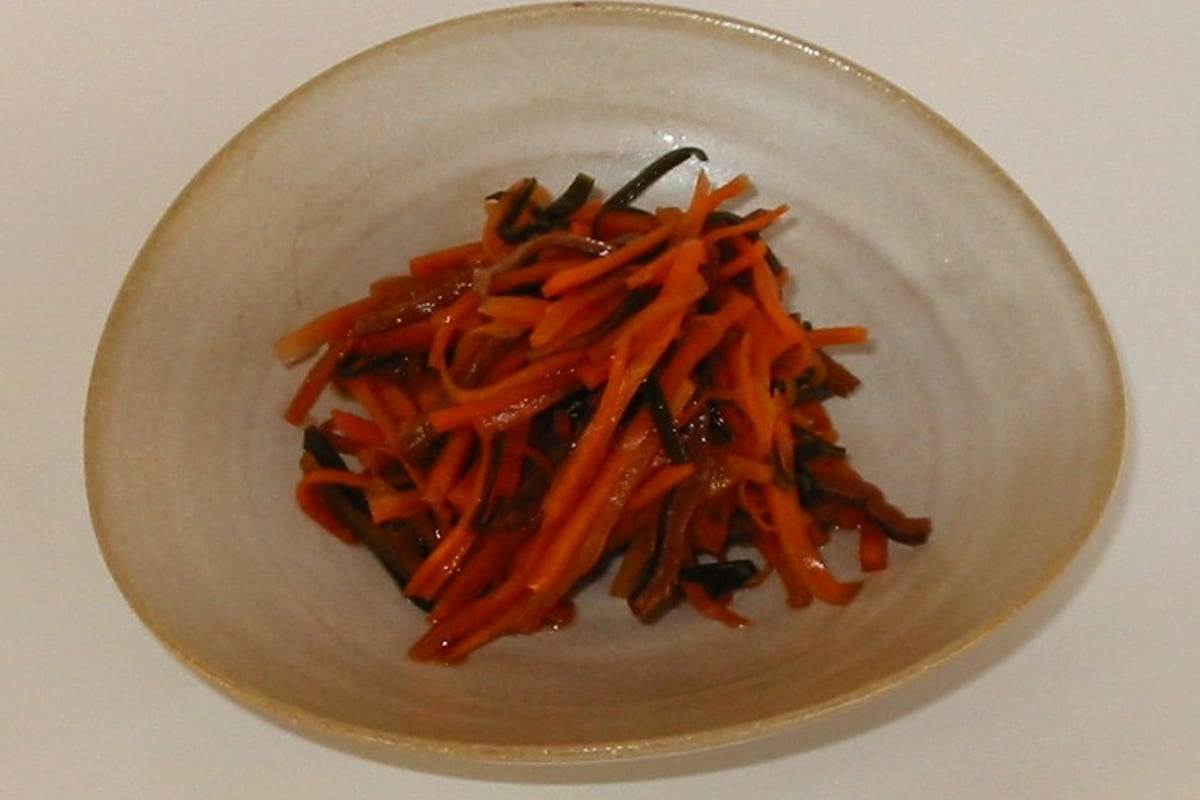
Ika Ninjin (Squid and Carrot Pickle)
Ika Ninjin
Ika Ninjin is a local dish from Fukushima Prefecture made by marinating thin strips of dried squid (surume-ika) and carrot in a sweet-savory sauce of soy sauce, sake, and mirin (or coarse sugar). In Fukushima, where heavy snow makes it hard to harvest vegetables in winter, this long-keeping preserved food has been made since long ago. Because surume can be written with characters meaning 'a long-lived woman,' making it an auspicious food, it has also become an essential New Year's dish, and households throughout the prefecture — not only in the Fukushima City area of the Kenpoku region but also in Aizu — still keep the custom of preparing a large batch at year's end to serve at the New Year's table. It is also being reappraised as a low-carbohydrate, low-fat preserved food, and today it is enjoyed year-round as a side dish and an accompaniment to sake, as well as being a popular souvenir. It is often compared to Hokkaido's matsumae-zuke, but its Fukushima character is said to lie in its simplicity — made with just squid and carrot, without kombu kelp.
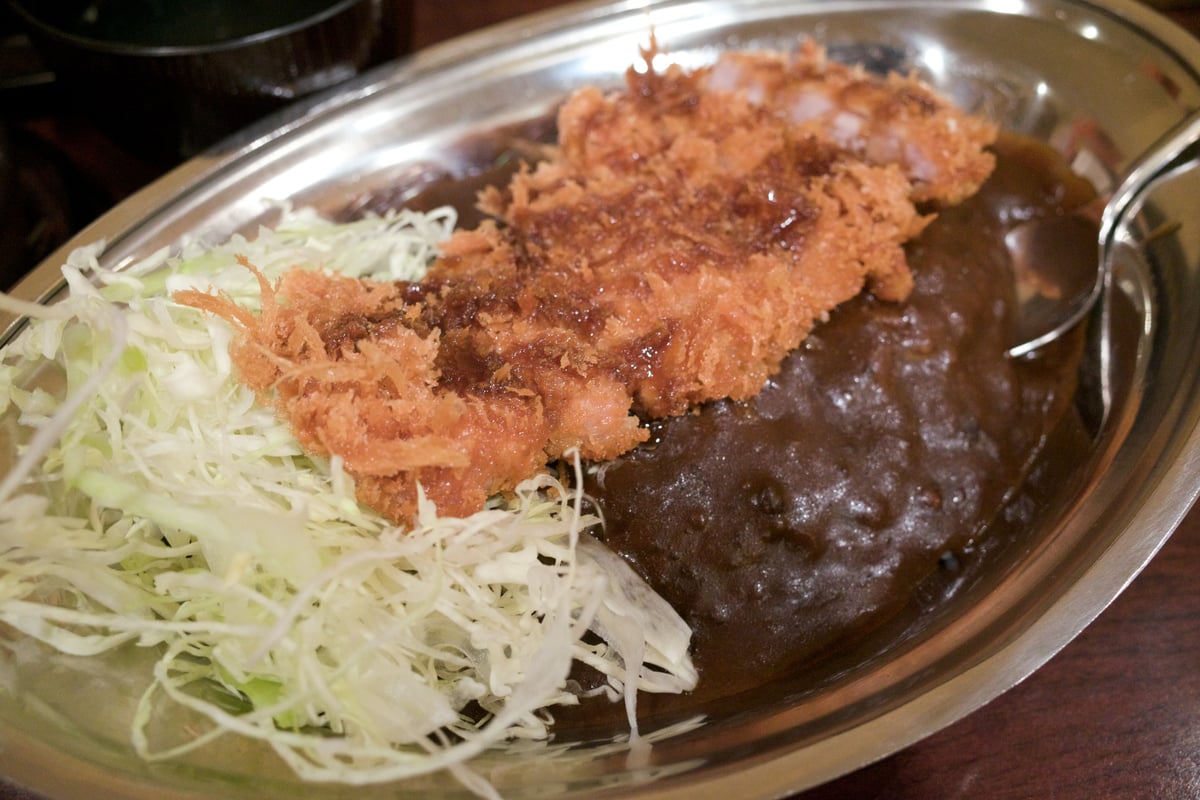
Kanazawa Curry
Kanazawa curry
Kanazawa Curry is a local-style curry that developed in Kanazawa, Ishikawa Prefecture, characterized by its distinctive presentation: a thick, dark roux topped with a layer of shredded cabbage, a pork cutlet, and sauce. The Kanazawa Curry Association defines Kanazawa Curry by five elements: the roux is thick and rich; shredded cabbage is served as a side; it is plated on a stainless steel dish; it is eaten with a fork or a spork; and the cutlet is topped with sauce. Its roots trace back to the Western-style restaurant 'Yoshoku Tanaka,' which opened in 1961; several shops that spun off or descended from it spread across Kanazawa, each developing its own take and refining the style now recognized today. The name 'Kanazawa Curry' itself is relatively recent, first coming into use when Gogo Curry expanded outside the prefecture; locally, shops had long been known simply by their own names, such as 'Turban' or 'Chan-Curry.'
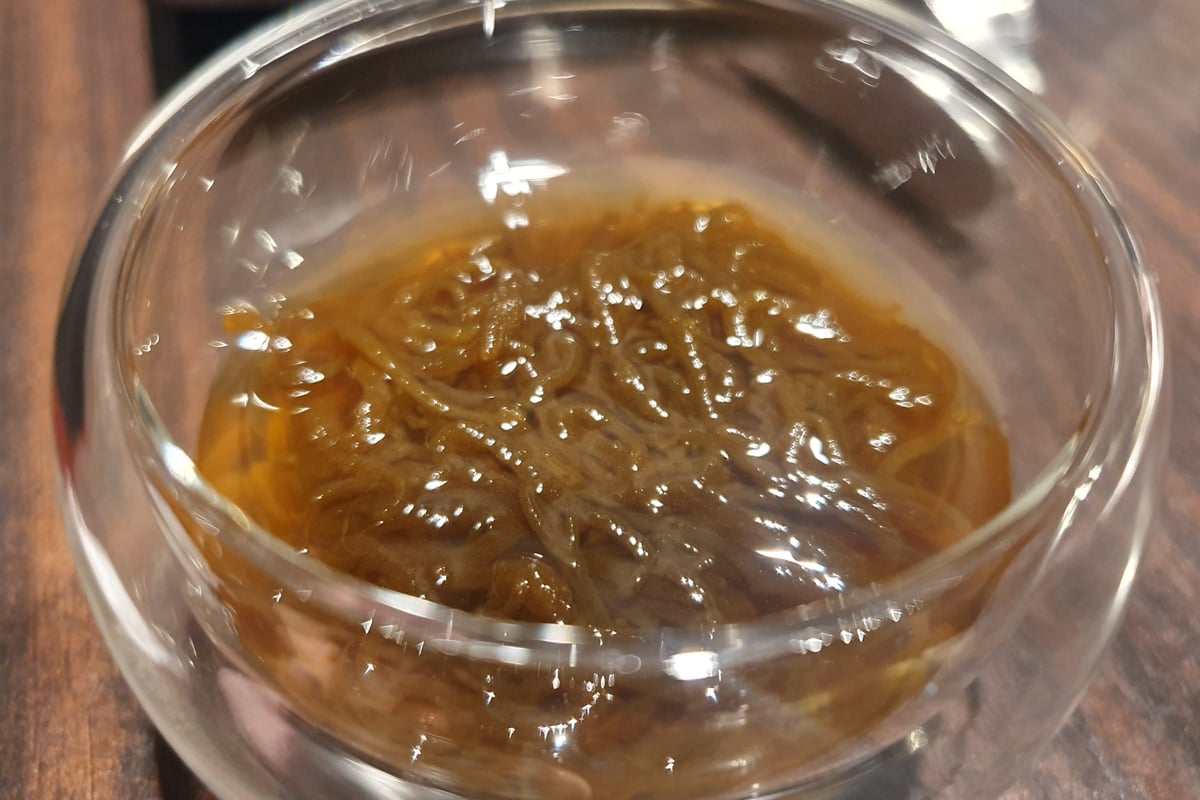
Mozuku (Okinawan Seaweed)
Mozuku
Mozuku is a thin, thread-like brown seaweed that grows in the waters around Okinawa, used in a wide range of dishes such as vinegared salads, tempura, and soups — one of Okinawa's signature seaweed ingredients. In particular, 'Okinawa mozuku,' the variety cultivated in Okinawa, is said to take its name from its habit of growing attached to other seaweed (the Japanese word mozuku literally meaning 'to attach to seaweed'), and it is known for its firm, springy bite and smooth texture. Full-scale technology for farming mozuku in Okinawa Prefecture began development in the 1970s, and after the first successful harvest of farmed mozuku in 1977, production spread to fishing cooperatives across the prefecture. Today, Okinawa Prefecture accounts for more than 99% of Japan's total mozuku production, making it the country's leading production area by far. Beyond vinegared salads, dishes such as mozuku don (mozuku simmered with egg or stir-fried and served over rice) have been served in school lunches and are cherished by locals, and it is now firmly established as a household dish as well.
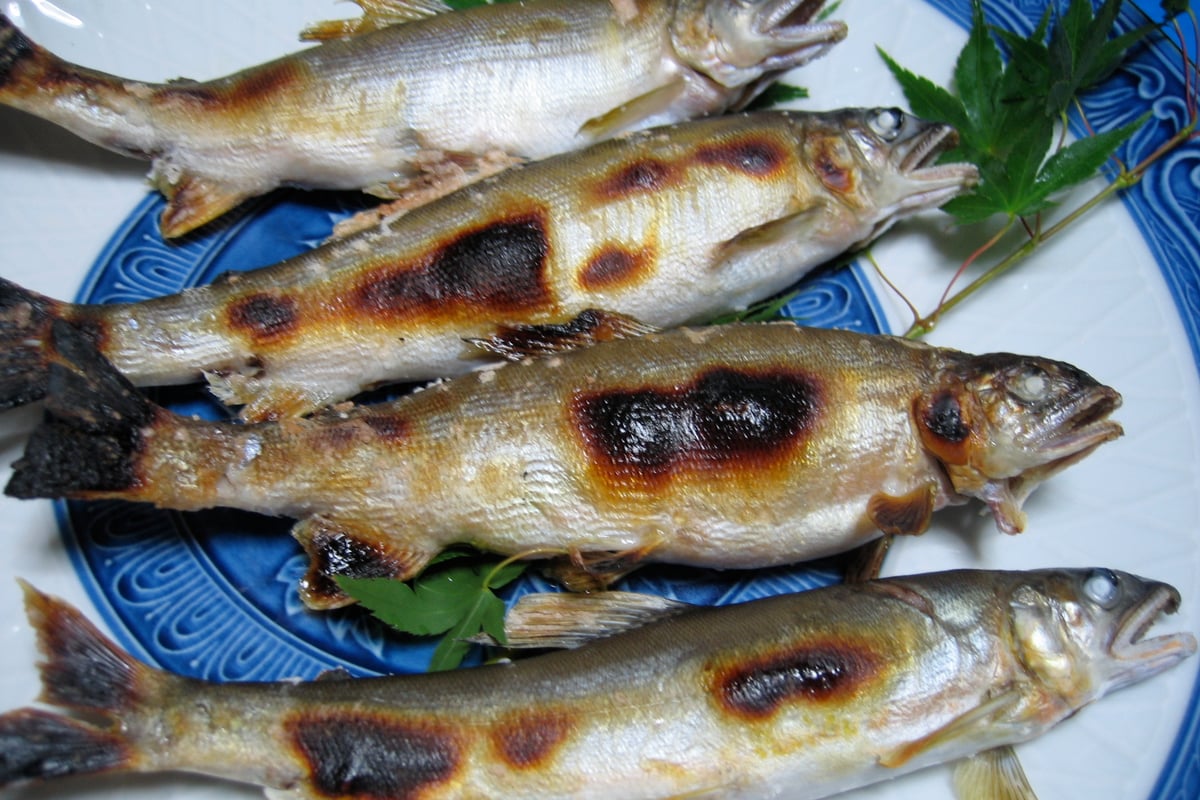
Nagara River Ayu Dishes
Nagaragawa Ayu Ryori
Nagara River Ayu Dishes are a local specialty of Gifu City featuring wild ayu (sweetfish) caught in the clear Nagara River, served grilled with salt, as sashimi, or as narezushi (fermented sushi). Cormorant fishing (ukai), with roughly 1,300 years of history, is still practiced on the Nagara River today; because the ayu caught in the cormorants' beaks are killed instantly, their flesh stays firm with remarkable freshness, and they have long been prized as a top-quality delicacy. Historical records show people engaged in cormorant fishing as early as 702 (Taiho 2) in the Nara period, and the Heian-period dictionary Wamyō Ruijushō notes that Mino Province (present-day Gifu City) had a village called Ukai-no-sato (cormorant fishers' village). Oda Nobunaga protected the cormorant fishers, and Tokugawa Ieyasu is said to have had ayu-zushi made in Gifu carried all the way to Edo. Today, restaurants and inns specializing in ayu cuisine still line the banks of the Nagara River, drawing many visitors during the cormorant fishing season from May to October.
Namazu Ryori (Catfish Cuisine)
Namazu Ryori (Catfish Cuisine)
Namazu ryori is a local specialty of the water-rich lowlands of eastern Saitama Prefecture, between the Arakawa and Edogawa rivers, made with the freshwater fish namazu (catfish). Yoshikawa City in particular is known as the 'hometown of namazu,' and a variety of preparations have been passed down there, including tempura, kabayaki (grilled and glazed), and 'tataki,' in which the flesh is minced, mixed with miso, and deep-fried. Yoshikawa prospered through river transport on the Nakagawa and Edogawa rivers connecting it to Edo, and river-fish merchants gathered there, making namazu, alongside eel, a local specialty so celebrated that people used to say, 'Don't leave Yoshikawa without eating catfish and eel.' In the Kitakawabe district of Kazo City as well, catfish tempura and other dishes rooted in the river-fish food culture of the Tone River basin remain popular, and can now be enjoyed at the dining hall of a roadside station. Known for its white, delicate flesh and distinctive texture, namazu ryori requires skillful preparation and is a Saitama delicacy typically finished by the hands of specialist river-fish restaurants.
Ogura Toast (Toast with Sweet Red Bean Paste)
Ogura Toast
Ogura Toast is a light snack that symbolizes Nagoya's kissaten (coffee shop) culture: thick-cut toast spread with butter or margarine and topped with ogura an, a chunky sweet red bean paste. Though its origins are debated, the most widely accepted account traces it to around 1921, when the owner of a coffee shop called Mitsuba in Nagoya's Sakae district noticed student customers dipping their toast into zenzai (sweet red bean soup) and was inspired to create the dish. Since then it has become a staple on the menus of Nagoya's coffee shops, served in distinctive styles at long-established shops such as Compal and Kissa Mountain, as well as at Komeda's Coffee, the chain that grew from Nagoya into a nationwide brand. Its close association with the morning-service culture, where it is eaten alongside coffee from the early hours, is another distinctly Nagoya trait.
Okuzukake (Thickened Vegetable Soup with Noodles)
Okuzukake
Okuzukake is a Buddhist vegetarian dish traditionally made around the spring and autumn equinoxes, Obon, and memorial services in Sendai City and the southern Miyagi (Sennan) region. Burdock root, carrot, taro, dried shiitake mushrooms, fried tofu, tofu, and mamefu (bean-flour gluten dumplings) are simmered together with other vegetables and dried ingredients in a broth, Shiroishi umen noodles — a specialty of the Shiroishi area — are added, and the whole dish is finished with a thickened consistency. The name comes from the fact that the broth was once thickened with kuzuko, starch extracted from the roots of wild kudzu vines growing in the mountains and fields; today potato starch is commonly used instead. It is also said to have been modeled on the Zen Buddhist fucha-ryori dish 'unpen,' and traditionally contains no meat or fish, though many households add katsuo dashi or chicken as their own variation. When relatives gather for the equinoxes or Obon, it has developed as a dish offered before the family Buddhist altar alongside zunda mochi and ohagi, and served to entertain guests. Handed down across generations as a taste of 'mother's cooking,' it remains part of everyday life on tables across southern Miyagi today.
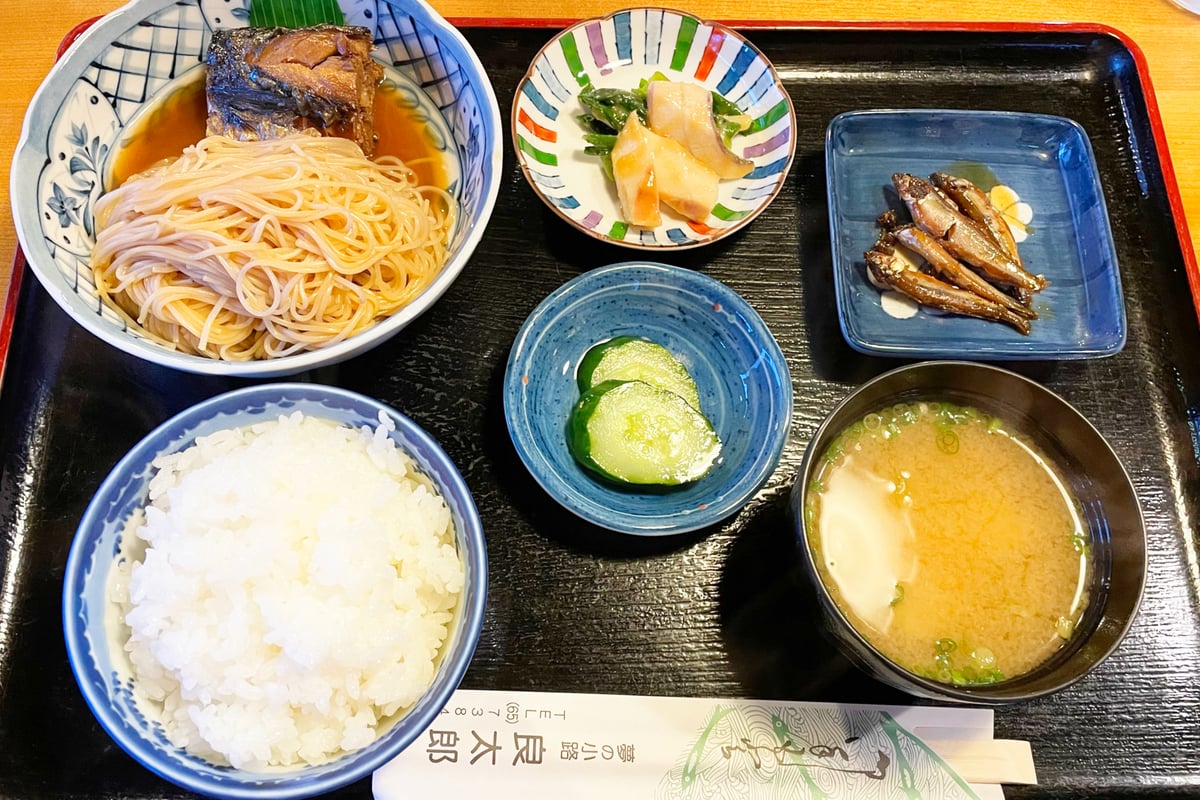
Saba-somen (Mackerel Somen Noodles)
Saba-somen
Saba-somen is a local dish from the Kohoku region of Shiga Prefecture (around Nagahama City) made by simmering sweet-and-savory grilled mackerel together with somen noodles; it is also called 'yaki-saba somen' (grilled mackerel somen). Although Kohoku is an inland region, it lies relatively close to Wakasa Bay, a mackerel-producing area, and grilled mackerel and narezushi carried in from Wakasa have long been familiar ingredients there. The dish is said to originate from the custom of 'satsuki-mimai,' in which families would send grilled mackerel to daughters who had married into farming households to look after them during the busy May farming season, and it became cherished as a dish that could be prepared quickly even during hectic times. It has also been served as a feast dish for celebrations and ceremonial occasions, such as the Nagahama Hikiyama Festival at Nagahama Hachimangu Shrine, and remains beloved today as a soul food representing the Kohoku region.
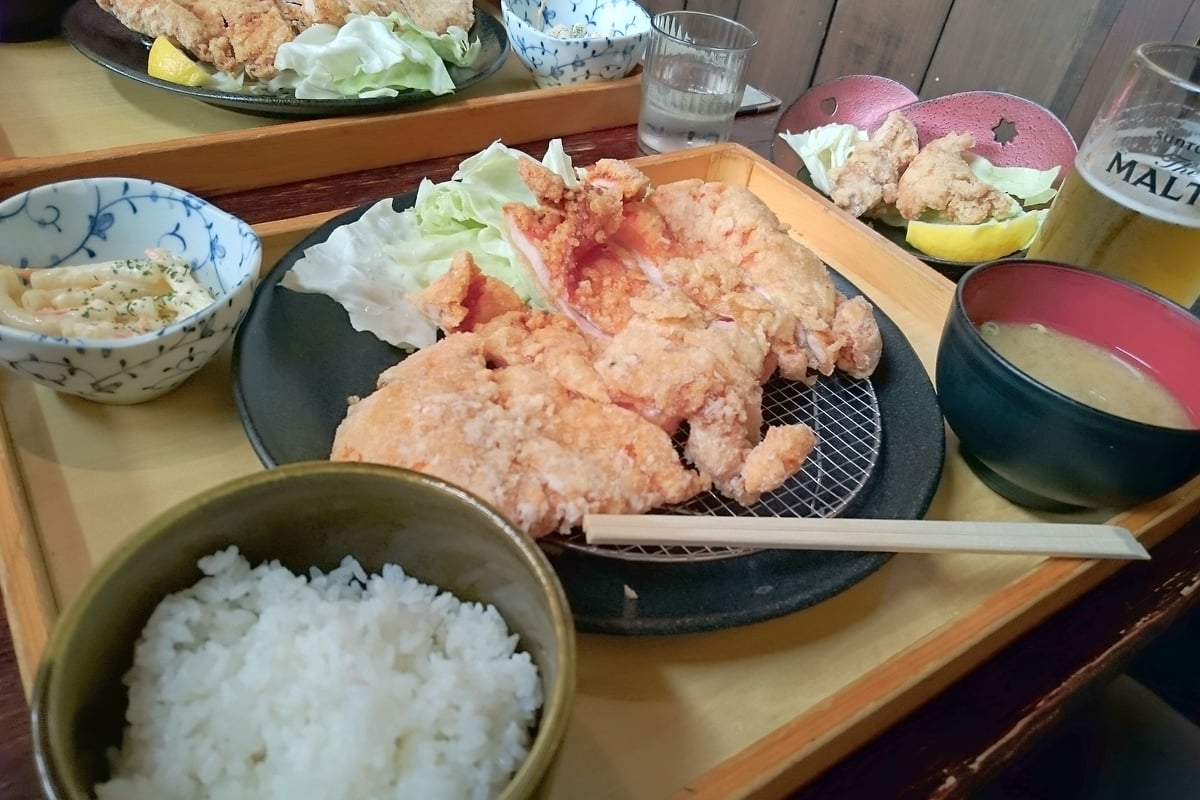
Sanzoku-yaki (Garlic Soy Fried Chicken)
Sanzoku-yaki
Sanzoku-yaki is a chicken dish enjoyed mainly in Matsumoto City and Shiojiri City in the Chushin region of Nagano Prefecture. Chicken thigh or other cuts are marinated whole in a soy sauce marinade seasoned with garlic and onion, coated with katakuriko (potato starch), and deep-fried. The boldness of frying the meat without cutting it up is the major difference from ordinary karaage (Japanese fried chicken). Although the name includes 'yaki' (grilled), it is actually a fried dish. It is said to have originated at the izakaya 'Sanzoku' (山賊) in Shiojiri City, and there are several theories about the name, such as that the owner looked like a sanzoku (mountain bandit), or that it is a pun on 'toriageru' (to rob), read as 'tori ageru' (to fry chicken). From around 2009, a local restaurant cooperative and citizens' groups worked to promote it as a local specialty, and it has now become one of the representative local dishes of Nagano Prefecture. As a set meal at restaurants or a dish at izakaya, it is a familiar taste for local people from childhood.
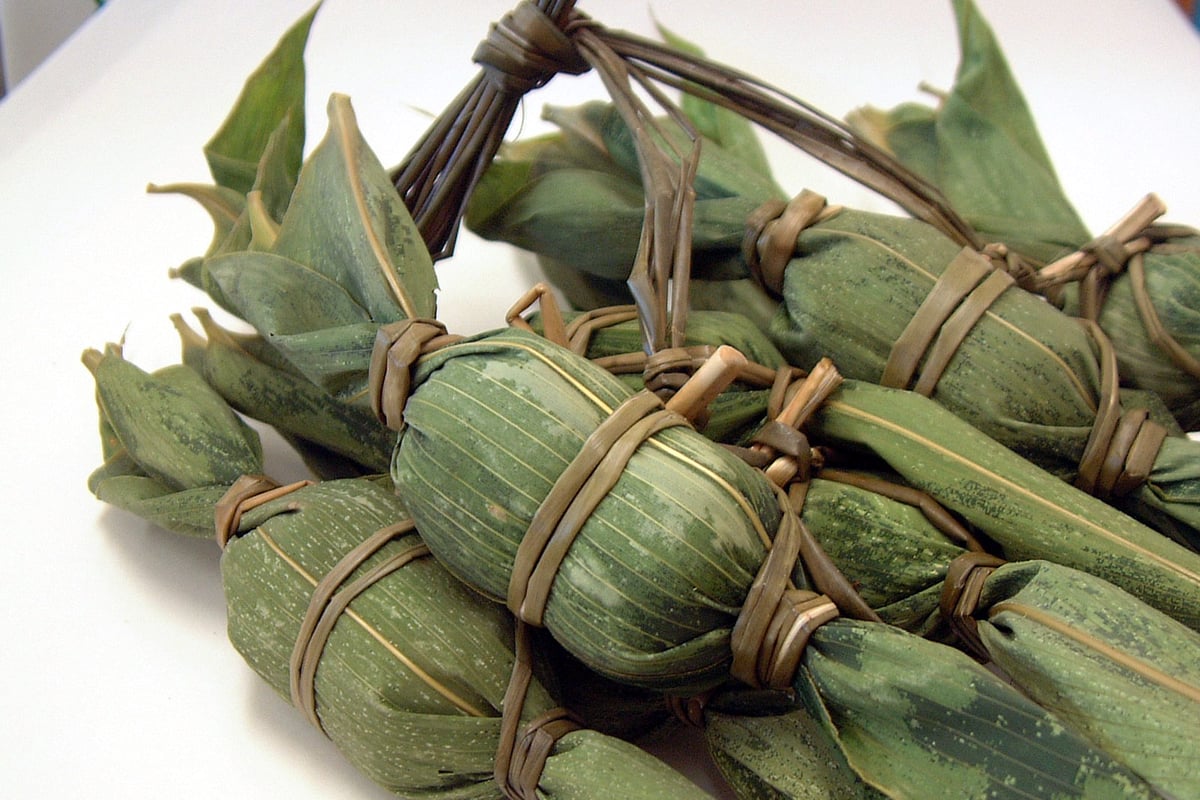
Sasa Dango (Bamboo-Leaf Wrapped Mugwort Dumplings)
Sasa Dango
Sasa Dango is a local confection representative of Niigata Prefecture, made by wrapping sweet red bean paste in dumpling dough kneaded with mugwort (yomogi), enclosing it in several sasa (bamboo-grass) leaves, tying it with cords of sedge or rush, and steaming it. It is distinguished by its bale-like shape, with cords tied at both ends. It is said to have been eaten for about 500 years in the Chuetsu and Kaetsu regions of Niigata and in parts of the Aizu region of Fukushima Prefecture. One theory holds that it was a portable preserved food of the Sengoku (Warring States) period that made use of the antibacterial properties of sasa leaves, and that Uesugi Kenshin carried it as field rations; another holds that it arose from the wisdom of making tasty use of broken rice that could not be paid as annual tax. It was once a confection for seasonal events, offered to Yakushi (the Buddha of healing) on the eighth day of the fourth month of the old lunar calendar and made in large quantities for the Boys' Festival (Tango no Sekku) on May 5. It became known nationwide after being chosen as a recommended souvenir by the prefecture and city for the Niigata National Sports Festival (1964, Showa 39), and it is now a classic Niigata souvenir.
Seguro Iwashi no Gomazuke
Seguro Iwashi no Gomazuke
Seguro Iwashi no Gomazuke is a preserved food made from anchovies (called 'seguro' locally) caught along Chiba Prefecture's Pacific coast, including Kujukuri Beach. The anchovies are cleaned of their heads and innards, salted, and then pickled for two to three days with vinegar, sesame seeds, ginger, yuzu, and red chili pepper. Kujukuri Beach, which boasts one of Japan's largest catches, has a long tradition of beach seine fishing for anchovies dating back to the Edo period. While anchovies were caught in huge quantities, they also spoiled easily, so the technique of pickling them in vinegar and sesame to extend their shelf life was passed down as a piece of local wisdom. Because the pickling process softens even the bones, the fish can be eaten whole, and the dish is enjoyed as an everyday side or an accompaniment to sake, especially in winter. It was selected as one of the '100 Local Dishes of Japan's Farming, Mountain, and Fishing Villages' by the Ministry of Agriculture, Forestry and Fisheries, and stands as a symbol of Chiba's fishing culture.
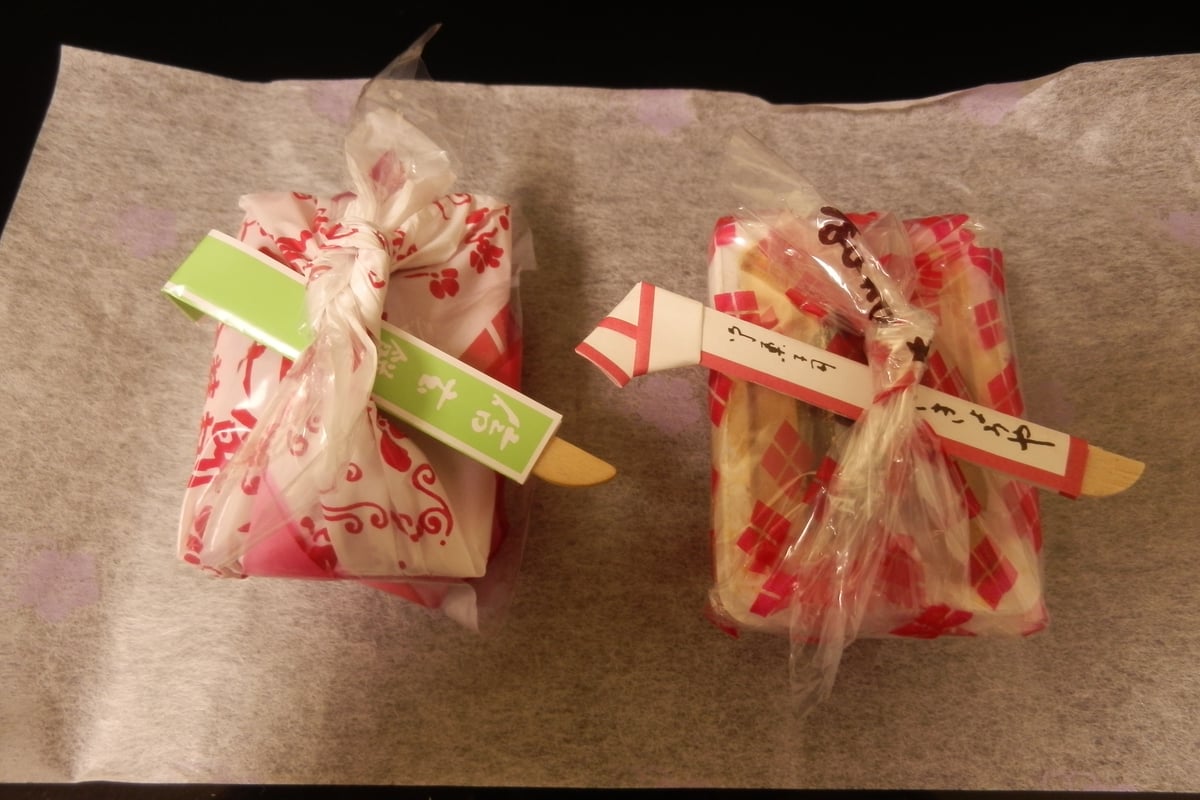
Shingen Mochi
Shingen Mochi
Shingen Mochi is a signature confection of Yamanashi Prefecture: soft mochi coated in kinako (roasted soybean flour) and eaten with kuromitsu (brown sugar syrup) poured over it. Bite-sized pieces of mochi come in a small container with a generous amount of fragrant kinako. In 1968 (Showa 43), Kikyouya of Fuefuki City launched 'Kikyou Shingen Mochi,' and it became known nationwide as a classic Yamanashi souvenir. Kinseiken, a long-established shop in Hokuto City, also makes 'Shingen Mochi,' and both companies' products are loved in their own right. The name comes from Takeda Shingen, the Sengoku-period feudal lord of Kai. It is said to derive either from the mochi Shingen used as emergency rations when going into battle, or to have been inspired by abekawa mochi, which is eaten in Yamanashi during Obon. Each Kikyou Shingen Mochi is wrapped in a vinyl furoshiki (wrapping cloth), and the knots are tied by hand by craftspeople. At the factory in Fuefuki City, visitors can tour the production process and enjoy all-you-can-pack sweets.
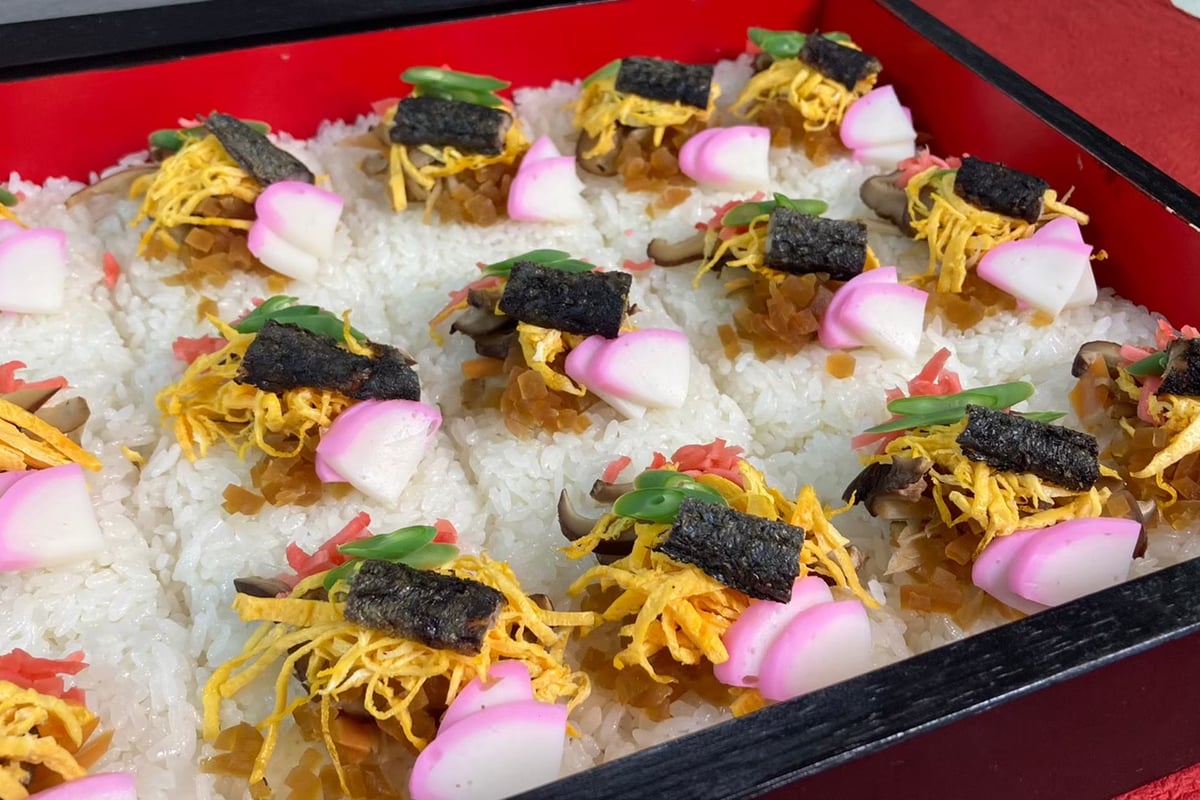
Sukozushi (Suko-Style Box Sushi)
Sukozushi
Sukozushi is a box-style sushi that has been passed down for about 500 years in the Suko area of Shiroishi Town, Saga Prefecture. Vinegared rice is packed into a shallow wooden box called a 'morofuta,' and topped colorfully with ingredients such as kabayaki-style grilled mudskipper (mutsugoro), shiitake mushrooms, burdock root, narazuke pickles, red pickled ginger, and thin shredded egg crepe (kinshi tamago). It is said to have originated when the local lord of Suko worked hard to improve the quality of rice for the farmers, and in gratitude the villagers made sushi using the bounty of the sea and mountains and presented it to him. Since then, the recipe has been handed down from mother to child and from child to grandchild, and it has been cherished as a dish for festivals, celebrations, temple visits, and for welcoming daughters home for a visit. In recent years mudskipper has become harder to obtain, so shrimp or gizzard shad (konoshiro) are sometimes used instead, but the dish is treasured as a local heritage, and efforts to pass it on continue, including through school cooking classes.
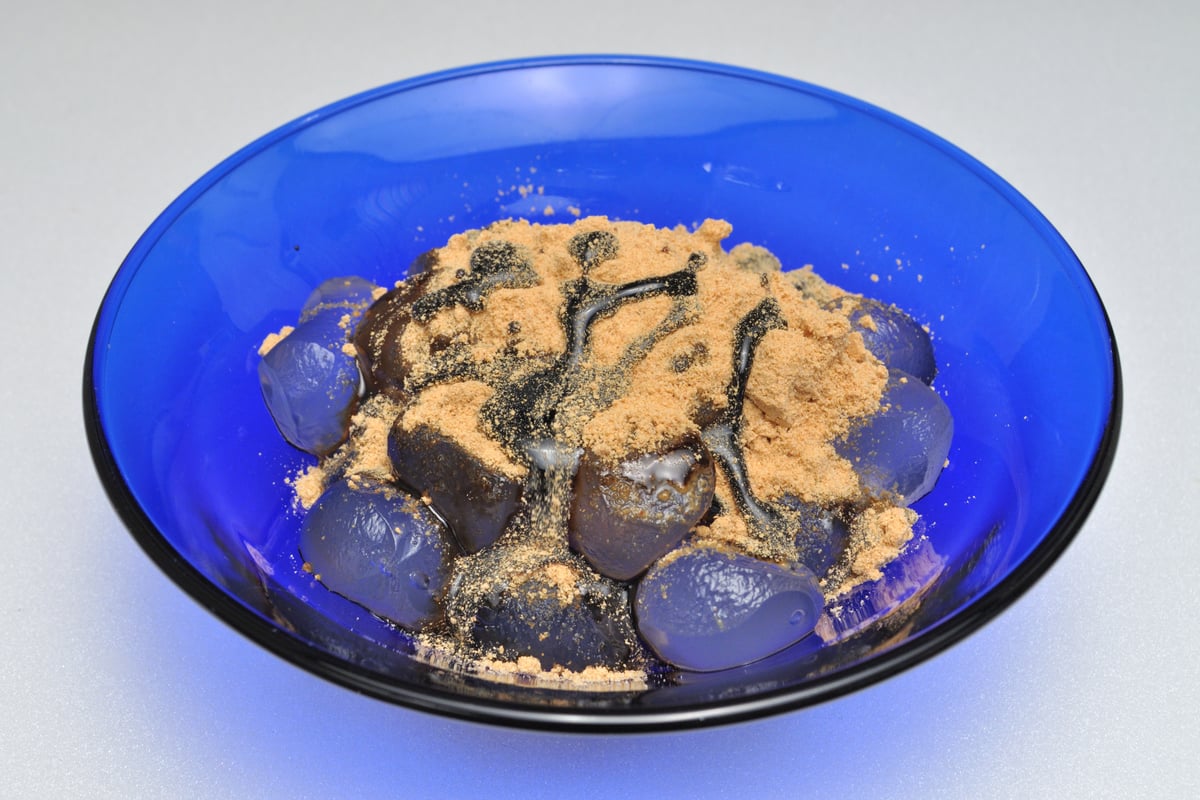
Warabimochi (Bracken-Starch Rice Cake)
Warabimochi
Warabimochi is a cooling sweet made by dissolving "warabiko" (bracken starch), extracted from the root of the bracken fern, in water and kneading it, then eating it topped with kuromitsu (black sugar syrup) and kinako (roasted soybean flour). Its distinctive features are a melt-in-the-mouth soft texture and a faint bitterness, and it is said to have been a luxury confection beloved by aristocrats in the Heian period. "Hon-warabiko," true bracken starch that can only be extracted from bracken roots, is extremely scarce — only a few hundred grams can be extracted from 10 kilograms of root — so inexpensive products using other starches, such as sweet potato starch, are also widely sold. Many sweets shops in Kyoto insist on kneading it fresh to order, and shops centered around Gion and Shimogamo that serve warabimochi made with true hon-warabiko are also popular with tourists.
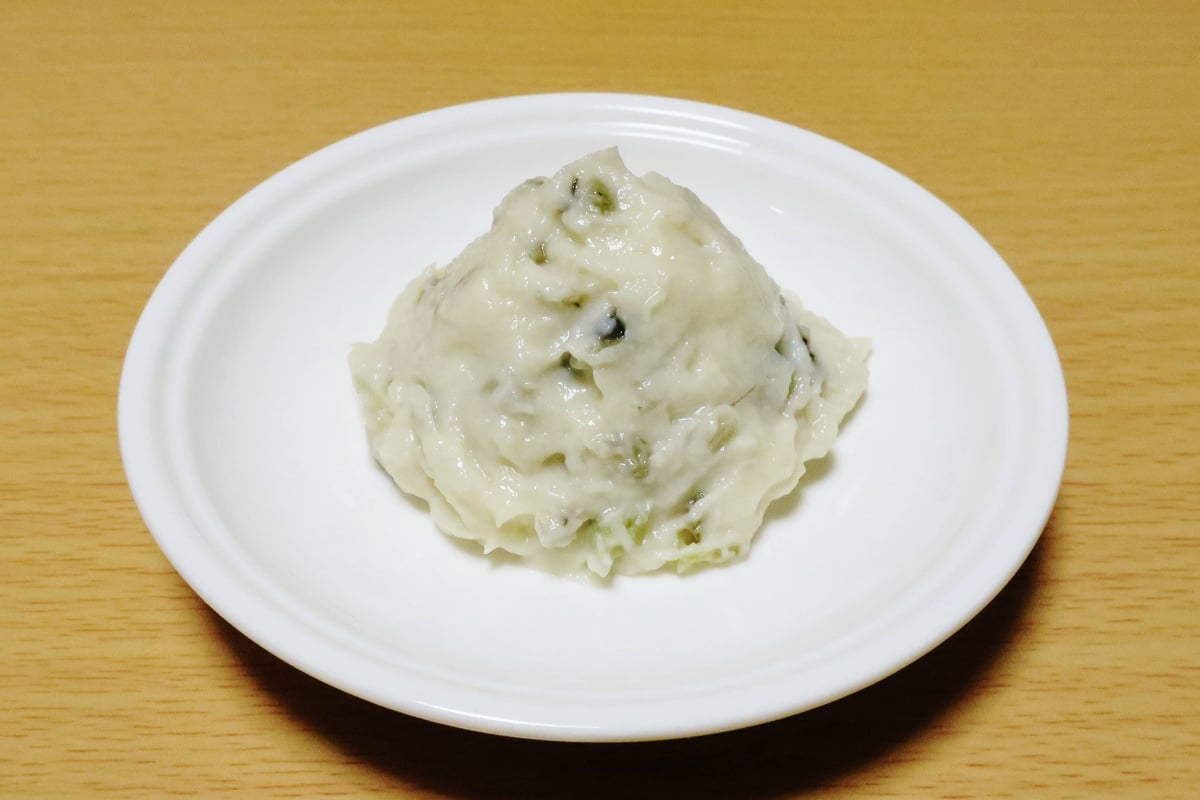
Wasabi-zuke (Wasabi Pickled in Sake Lees)
Wasabi-zuke (Wasabi Pickled in Sake Lees)
Wasabi-zuke is a famous product of Shizuoka Prefecture made by salting finely chopped wasabi rhizomes, stems, and leaves and then pickling them together with sake lees. Within the mellow flavor of the sake lees, you can taste the sharp, nose-tingling heat and aroma of wasabi. It is said to have been devised in the mid-Edo period by 田尻屋利助, a wasabi merchant of Sunpu (present-day Shizuoka City). 田尻屋利助 improved on something that had been made in Utogi Village and pickled it in sake lees, and it gained a reputation and became a specialty of Sunpu. Wasabi cultivation is said to have originated in Utogi, in the mountains of Aoi Ward, Shizuoka City. Shizuoka Prefecture is still the nation's top producer of wasabi in both output value and cultivated area. When Shizuoka Station on the Tokaido Line opened in 1889 (Meiji 22), wasabi-zuke became known throughout the country as a station souvenir. It is eaten every day, all year round, for example on top of warm rice or as a snack with sake. It is still one of the souvenirs that represent Shizuoka.
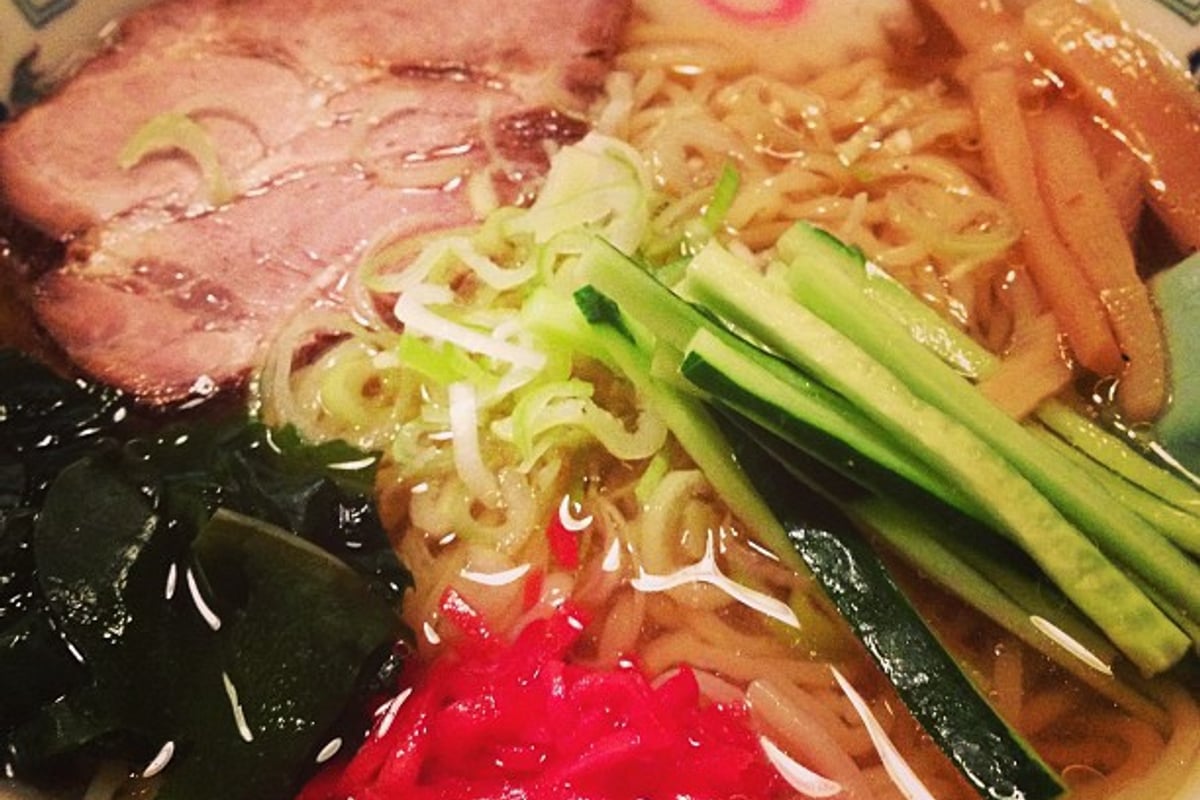
Yamagata Hiyashi Ramen (Cold Ramen)
Yamagata Hiyashi Ramen (Cold Ramen)
Yamagata Hiyashi Ramen, said to have originated in Yamagata City, is Chinese-style noodles served in a chilled soup with cooled Chinese-style noodles. Around 1952, a regular customer at 'Sakaeya Honten,' a Chinese noodle shop in Yamagata City, reportedly asked, 'If cold soba exists, why can't there be cold Chinese noodles?' The dish is said to have originated when the shop's first-generation owner, Abe Senshiro, devised it through trial and error in response. The dish pairs a soup chilled with floating ice and other methods with springy, medium-thick noodles and toppings, and has become a beloved summer staple both within and beyond the prefecture. Today, in addition to Sakaeya Honten, many ramen shops in and around Yamagata City serve their own versions of cold ramen, and it is known as one of Yamagata's representative local dishes.
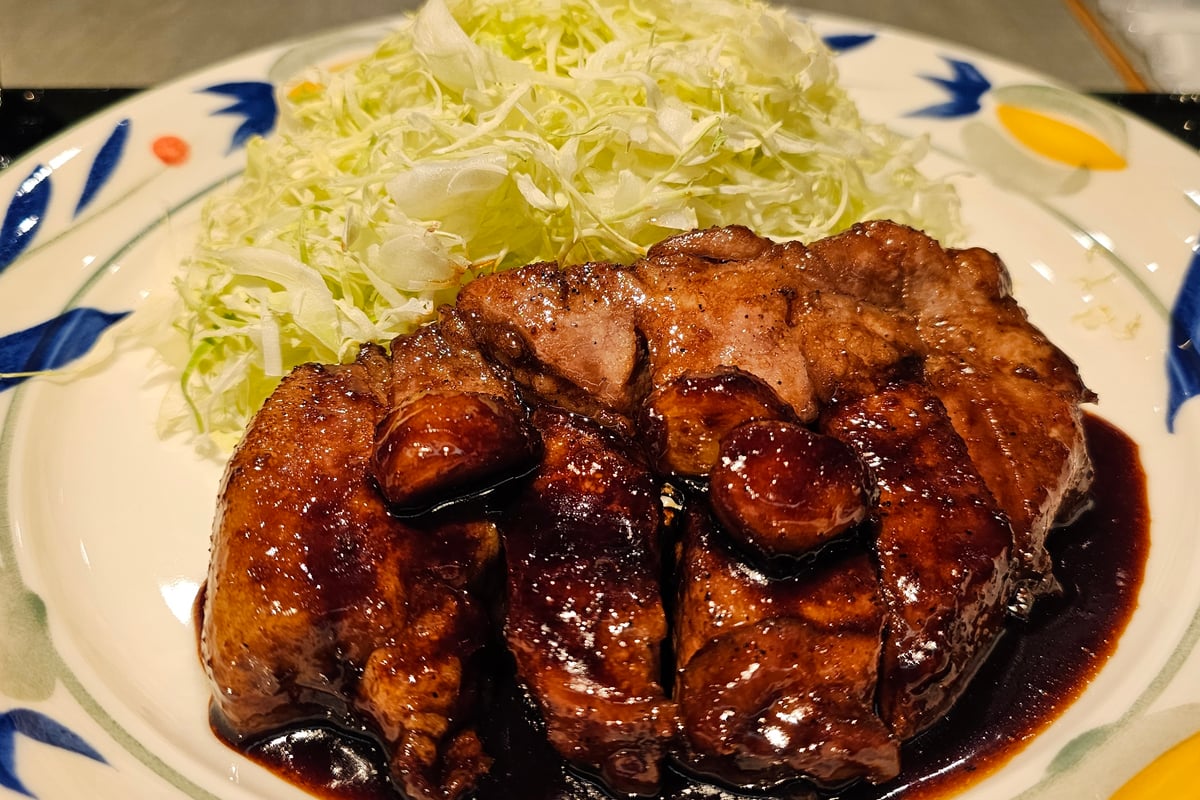
Yokkaichi Tonteki (Pork Steak)
Yokkaichi Tonteki
Yokkaichi tonteki is a local specialty dish (gotochi gourmet) of Yokkaichi City, Mie Prefecture, in which thick-cut pork is cooked with garlic and coated in a dark, blackish, rich sauce. The name combines 'ton' (pork) and 'teki' (steak). It is served with a generous helping of shredded cabbage on the side. The meat is cut with deep slits to keep it from shrinking as it cooks, and because this shape resembles a baseball glove, it is also called 'glove' (gurobu). It is said to have begun shortly after the war and to have been the signature dish of a Chinese restaurant in the city center. In Yokkaichi, where many people worked in the industrial zone, hearty, filling dishes that gave people energy were popular. Cheaper than beef steak, it is a down-to-earth dish loved by those who wanted to eat their fill. Since 2008, the Yokkaichi Tonteki Association has been promoting it, and it has also been entered in events such as the B-1 Grand Prix. Today it can be enjoyed at many kinds of eateries, including Chinese restaurants, set-meal diners (teishoku-ya), and coffee shops (kissaten).
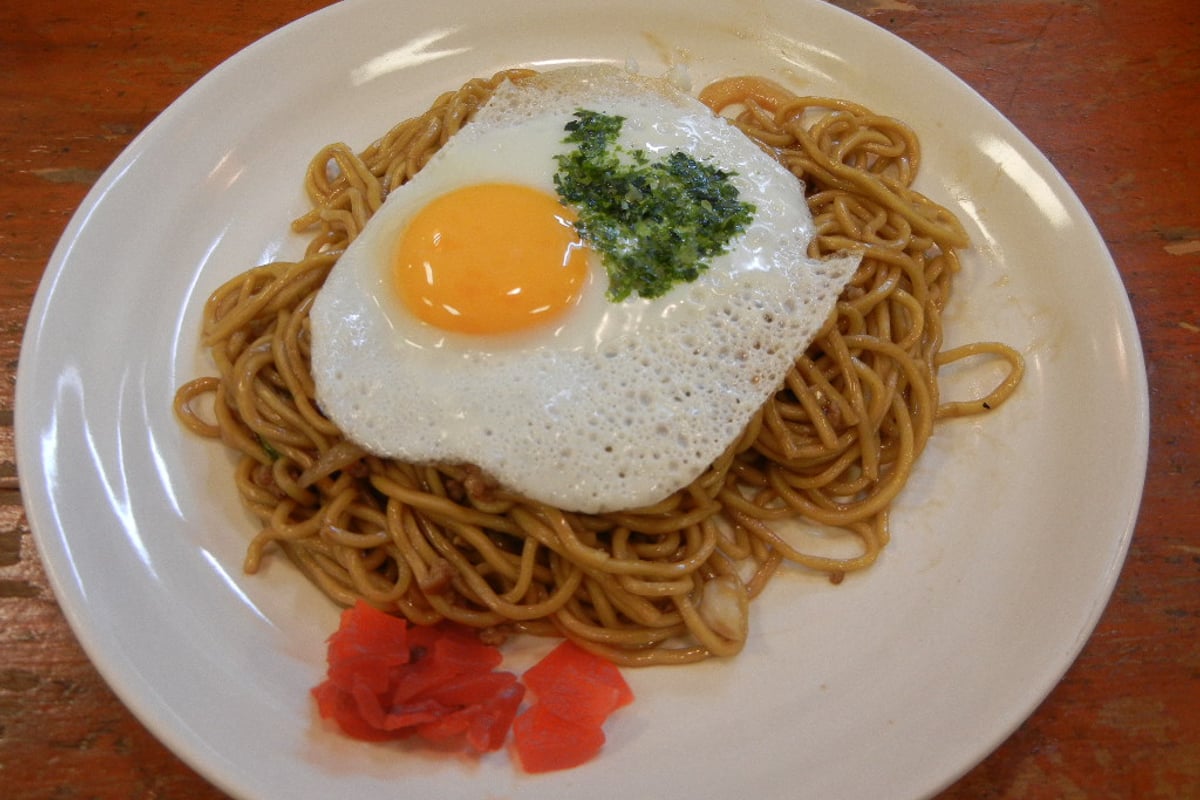
Yokote Yakisoba
Yokote Yakisoba
Yokote Yakisoba is a local-style yakisoba (fried noodles) dish that originated in Yokote City, Akita Prefecture. Its defining features are thick, boiled square noodles stir-fried with ground meat and chopped red pickled ginger in a slightly sweet Worcestershire-style sauce, finished with a soft-yolk fried egg and fukujinzuke (sweet pickled relish) on top. It is said to have been born just after the end of World War II, when a stall owner running an okonomiyaki cart in Yokote City sought to create a new menu item, and through trial and error with a local noodle maker, the noodles took their present form around 1953 (Showa 28). Its ease of preparation and delicious taste made it spread quickly, and at its peak, the city is said to have had around 100 yakisoba shops. In 2001 (Heisei 13), the 'Yokote Yakisoba Noren-kai' association was formed, and efforts to promote the dish nationwide and revitalize the local community continue to this day.
Ajari Mochi
Ajari Mochi
Ajari Mochi is a semi-moist confection made by wrapping a chunky sweet red bean paste (tsubuan) of Tanba Dainagon azuki beans in a dough of glutinous rice flour, egg, and sugar, and baking it on a griddle. The chewy dough, its fragrant golden-brown surface, and the mild sweetness of the tsubuan combine in a balance that has made it a beloved staple of Kyoto souvenirs. Both the name and the distinctive shape, with its raised center, are said to derive from the ajiro-gasa (woven bamboo hat) worn by "ajari" — Buddhist monks who complete the thousand-day circumambulation practice (sennichi kaiho-gyo) on Mt. Hiei. Since the long-established Kyoto confectionery Mangetsu created it in the Taisho era, it has remained the shop's signature product for over a hundred years, and in recent times other confectioners have begun making similar sweets, making it one of Kyoto's representative wagashi.
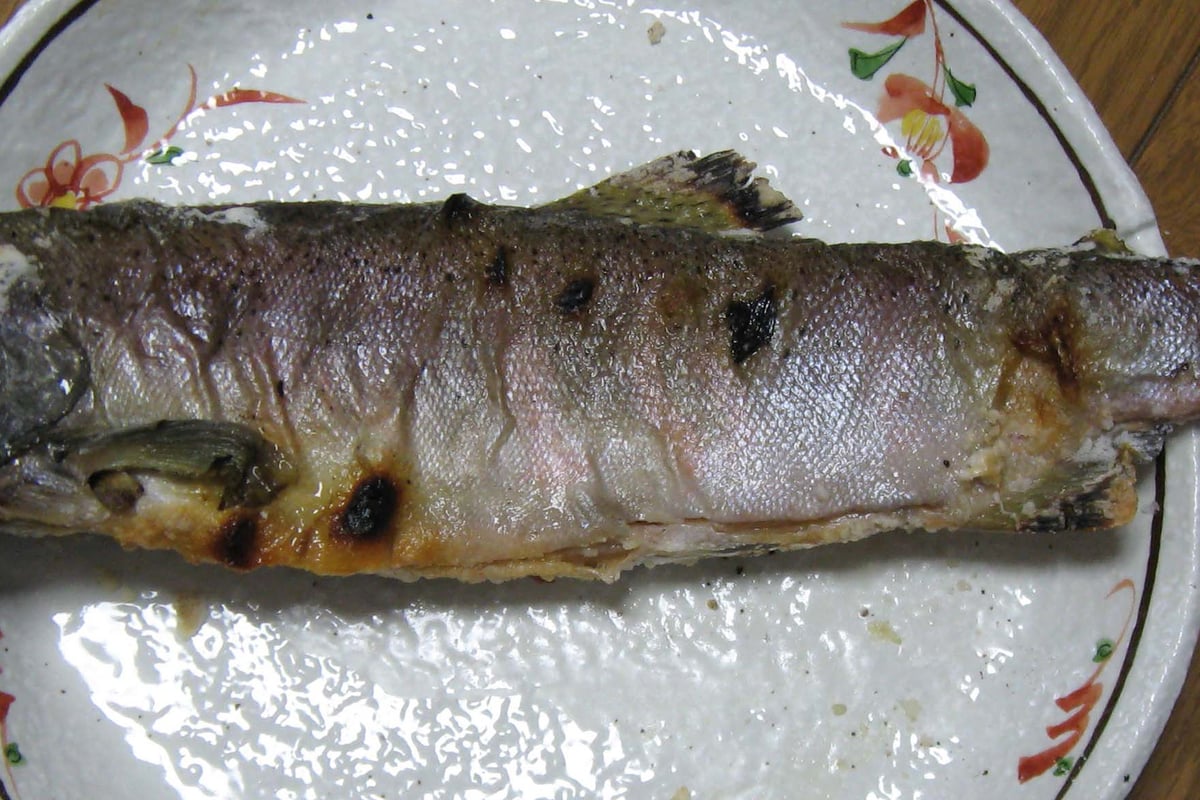
Biwamasu Ryori (Lake Biwa Trout Cuisine)
Biwamasu Ryori
Biwamasu (Lake Biwa trout) is a species of salmon endemic to Lake Biwa, a rare fish that spends its entire life in fresh water without ever descending to the sea. It is enjoyed prepared in many ways — as sashimi, salt-grilled, in nanban-zuke (vinegar-marinated fried fish), or as vinegared dishes — and its defining trait is the high-quality richness of its fat, which has earned it the nickname 'jewel of Lake Biwa.' Its season runs from around June to early September, with the fat content peaking from early summer to summer as it prepares to spawn, and locally it is most often eaten as sashimi. From October to November, its spawning season, fishing is banned to protect the resource, making it a rare lake fish available only during a limited period and drawing strong popularity both within and outside the prefecture. Local ways of preparing it are also passed down, including 'kokera-zushi,' traditional to the former Minamihama district of Biwa Town, and 'ameno-io gohan,' a rice dish cooked with the fish.
Dabu (Karatsu-Style Simmered Vegetable Soup)
Dabu
Dabu is a local dish from around Karatsu City, Saga Prefecture, made by simmering chicken with vegetables such as daikon radish, carrot, taro, burdock root, lotus root, and konjac in a dashi broth, seasoning it with salt or soy sauce, and lightly thickening it with potato starch. It has a distinctive custom of varying the preparation for celebratory and mourning occasions: for celebrations, colorful tama-fu (wheat gluten dumplings) and ginkgo nuts are added and the ingredients are cut into squares, while for funerals no tama-fu is used and ingredients such as konjac are cut into triangles instead. As for the origin of the name, one theory holds that 'dabu' is a corrupted form of 'zabu-zabu,' describing how the dish is finished with plenty of water. It is also said to have originated as a way to make full use of vegetable scraps left over from preparing dishes such as nishime (simmered vegetables), and there was a custom of neighbors gathering for weddings, funerals, and other ceremonial occasions to prepare a large potful together. Today it is still cherished as a 'taste of home' that people crave when returning to visit their hometown.
Haba Zoni
Haba Zoni
Haba Zoni is a New Year's zoni (mochi soup) eaten mainly in the Kazusa region of Chiba Prefecture, distinguished by a strongly fragrant seaweed called 'habanori' placed on top as a finishing touch. Habanori is a spatula-shaped seaweed that takes root in autumn and grows through winter into spring, harvested in areas such as Kamogawa City and Minamiboso City in the southern Boso Peninsula. Because of its uneven appearance, it rarely appears on the market and has mainly been consumed locally. To prepare the dish, grilled square mochi is placed in a clear soup made with bonito-flake dashi, then topped with toasted and crumbled habanori, aonori (green laver), and bonito flakes. The dish is also known for a play on words: 'haba,' meaning the seaweed, is associated with the word for 'presence' or 'influence,' making it an auspicious dish eaten with the wish to 'hold sway (haba wo kikaseru) all year round.' Even in areas far from the production region, such as the Kujukuri area and Ichihara City, it has been passed down as an essential New Year's dish.
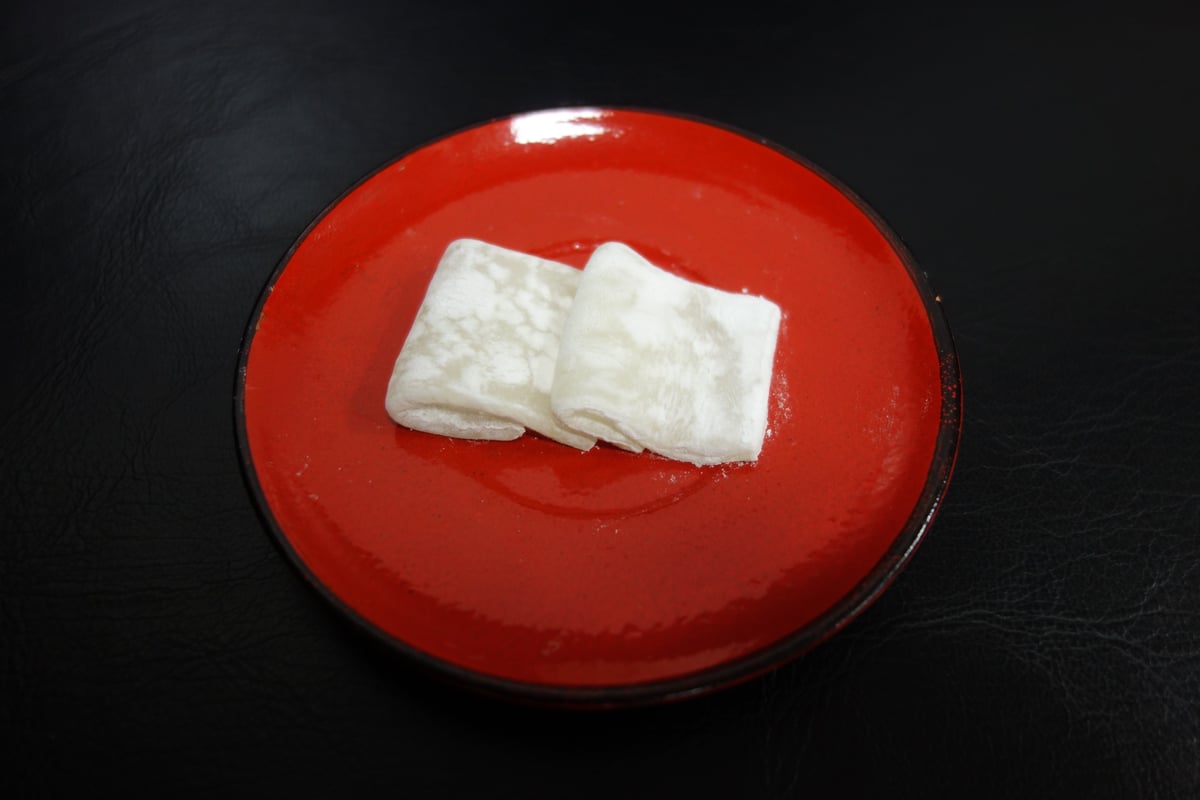
Habutae Mochi
Habutae Mochi
Habutae Mochi is a local confection of Fukui Prefecture made by steaming glutinous rice flour (mochiko), kneading it with sugar and starch syrup (mizuame), spreading it thin, and cutting it into squares. It is a simple mochi sweet whose basic ingredients are just three: mochiko, sugar, and mizuame. Its name comes from habutae, a silk fabric that has represented Fukui since the Meiji era. Habutae is a high-grade plain-weave silk with a smooth, lustrous finish. Habutae Mochi expresses the whiteness and fine, delicate feel of that fabric in the form of a mochi sweet. Its hallmark is a soft, airy texture that seems to melt in the mouth. It is said to have been created in the Meiji era, and the Ministry of Agriculture, Forestry and Fisheries dates the appearance of a sweet named 'Habutae Mochi' to 1905 (Meiji 38). However, several shops are known as its originator, and there are various theories about its origin. Today it is a classic Fukui souvenir, made by many confectioners, each with its own recipe. There are also many derivative sweets, such as versions dusted with kinako (roasted soybean flour), versions wrapped around sweet bean paste, and versions sandwiched in monaka wafers.
Hama Natto (Fermented Salted Soybeans)
Hama Natto (Fermented Salted Soybeans)
Hama Natto is a traditional fermented food of Hamamatsu City, Shizuoka Prefecture, made by fermenting soybeans with koji mold, aging them in salt water, and then drying them. The blackish-brown beans are not stringy and have a saltiness and umami resembling rich miso. This type of natto is called salted fermented soybeans (shiokara natto) or temple natto (tera-natto); it was introduced from China long ago and has been made at temples. The production method is said to have been transmitted during the Muromachi period to Daifukuji Temple in Mikkabi-cho, Hamana Ward, Hamamatsu City, where it is still handmade at the temple today as 'Daifukuji Natto.' It is said to have been a favorite of Tokugawa Ieyasu, and the name is said to come from the words Ieyasu spoke while eagerly awaiting an offering of it: 'Has the Hamana natto not come yet?' In the Edo period it also became an offering to successive shoguns. Today it is also produced by breweries in the city, among others. Besides being eaten as is as a snack with drinks, it is used as a seasoning and as a secret ingredient in curry and mapo tofu. In elementary and junior high school lunches in Hamamatsu, curry with Hama Natto as a secret ingredient is also served.
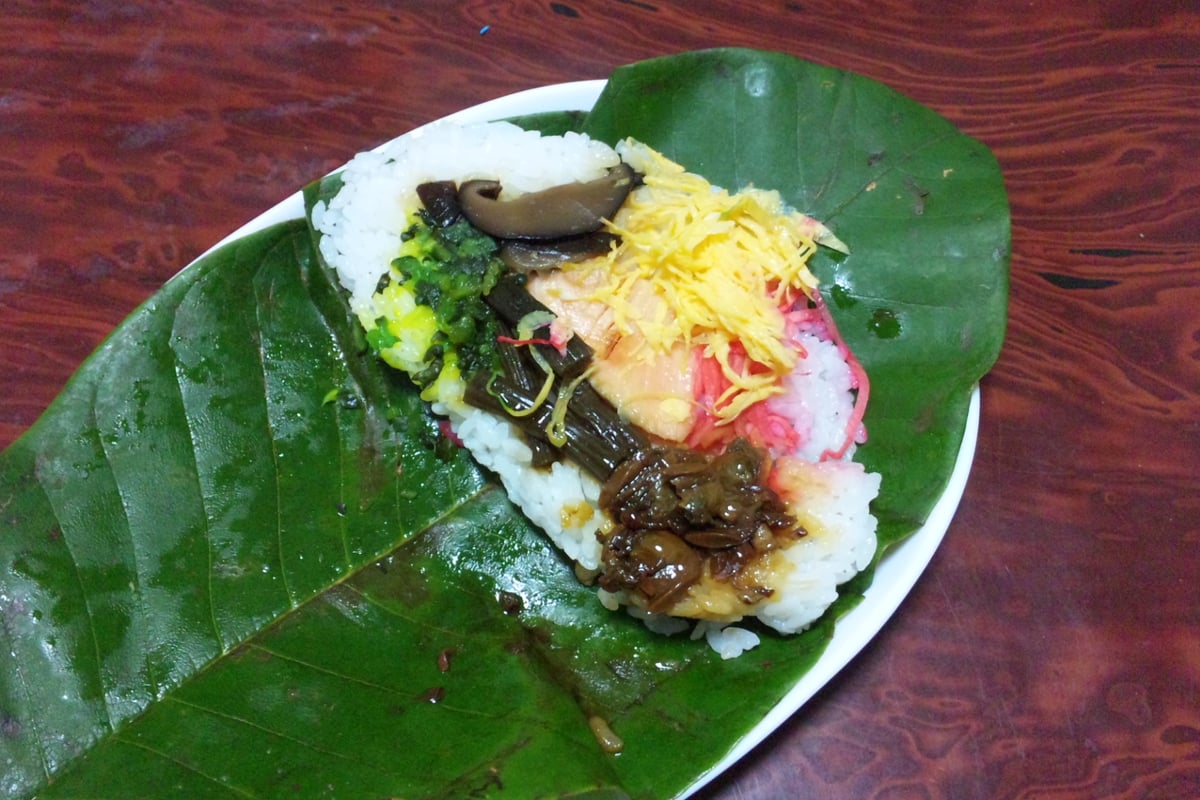
Hoba Zushi
Hoba Zushi
Hoba Zushi is an early-summer local dish from the southern Hida region through the Tono and Chuno regions, in which vinegared rice and toppings are wrapped in the large leaves of the hoba (magnolia) tree. Because hoba leaves have antibacterial and antifungal properties, the food inside resists spoiling, and the leaf can also double as a plate — making it a practical meal to carry along during rice-planting and other farm or forestry work. Preparation varies by area: in the Tono region, many households pile on seven or eight colorful toppings, such as river fish simmered in sweet soy sauce, vinegared mackerel, thin egg strips, and red pickled ginger, while in the Hida region a simpler style using just myoga (Japanese ginger) and vinegared rice is also common. It is typically made from mid-May to late June, when hoba leaves are in season, and is also enjoyed as a festive dish for local matsuri and celebrations.
Junsai Nabe
Junsai Nabe
Junsai Nabe is a summer hot pot dish centered on junsai (water shield, an aquatic plant), a specialty of Mitane Town in Akita Prefecture. Junsai is a water lily-family aquatic plant, and the tender young shoots that grow beneath its floating young leaves are eaten together with their jelly-like coating. The area around Kakusuke Pond in Mitane Town is known as a natural growing site, and thanks to community-wide efforts to maintain the pond, the area has developed into one of Japan's leading production regions. During the harvest season from May to August, the sight of harvesters in small flat-bottomed boats picking each shoot by hand has become a seasonal symbol of early summer. The dish is made by simmering chicken and burdock root in a broth made from chicken bones or Hinai-jidori chicken, then adding the junsai at the very end and eating it as soon as its color turns a vivid green — a summer hospitality dish of Akita enjoyed for its smooth, slippery texture and plump bite.
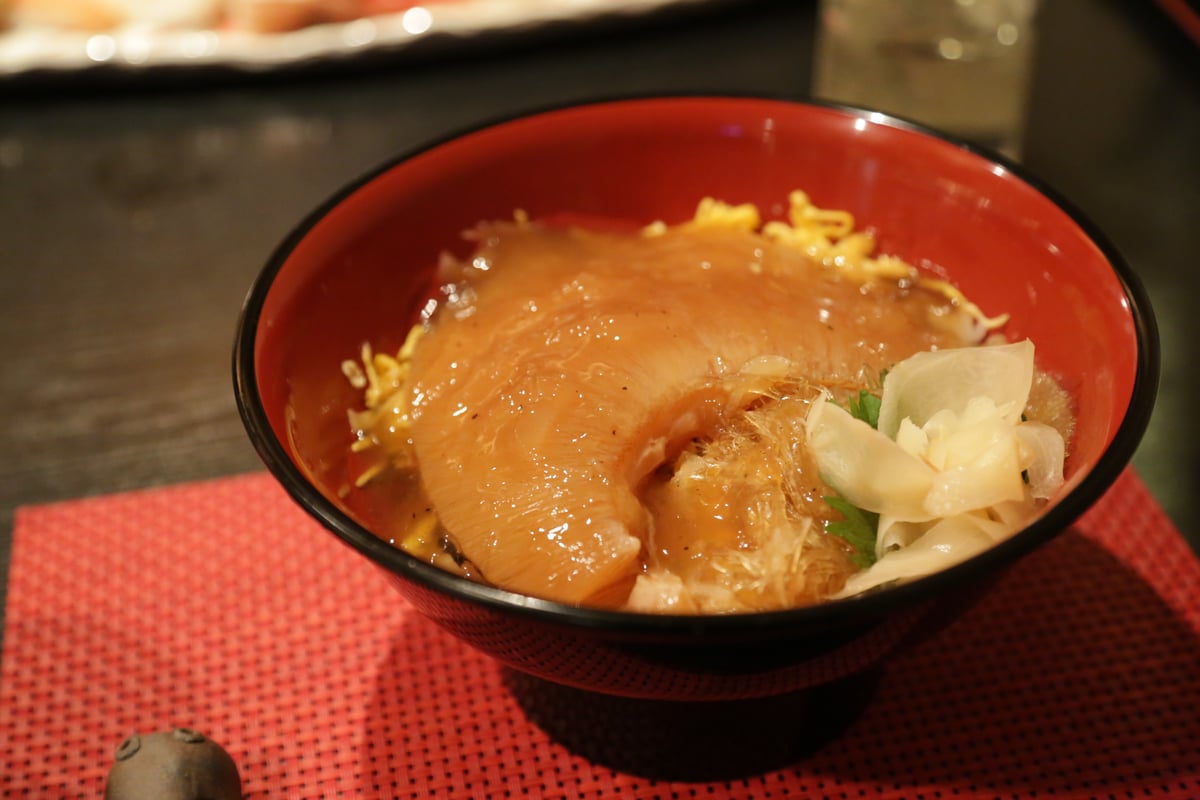
Kesennuma Shark Fin Cuisine
Kesennuma Shark Fin Cuisine
Kesennuma boasts Japan's largest shark landings, thanks to the rich fishing grounds off the Sanriku coast, with roughly 90% of the sharks landed nationwide gathering at Kesennuma Port — earning it recognition as 'Japan's top shark fin producing town.' The origins of shark fin processing trace back to the late Edo period, when a fur merchant in the city is said to have noticed that shark fins could be sold profitably in Yokohama and begun manufacturing and selling them. During the Meiji era, a processing industry developed that used shark meat as a raw material for fish-paste products such as chikuwa and kamaboko, and the fins themselves were initially treated as a byproduct known simply as 'samehire.' It was not until the latter half of the Showa 50s (late 1970s to early 1980s) that Kesennuma's shark fin gained recognition as a nationally known brand, spurred by the spread of mail-order sales. The blue shark is the main species used, with the dorsal, pectoral, tail, and pelvic fins all processed without waste, and the sight of fins being sun-dried has become a familiar winter scene in Kesennuma. Beyond braised whole fins, the dish is also enjoyed in local specialties such as shark fin rice bowls and shark fin sushi.
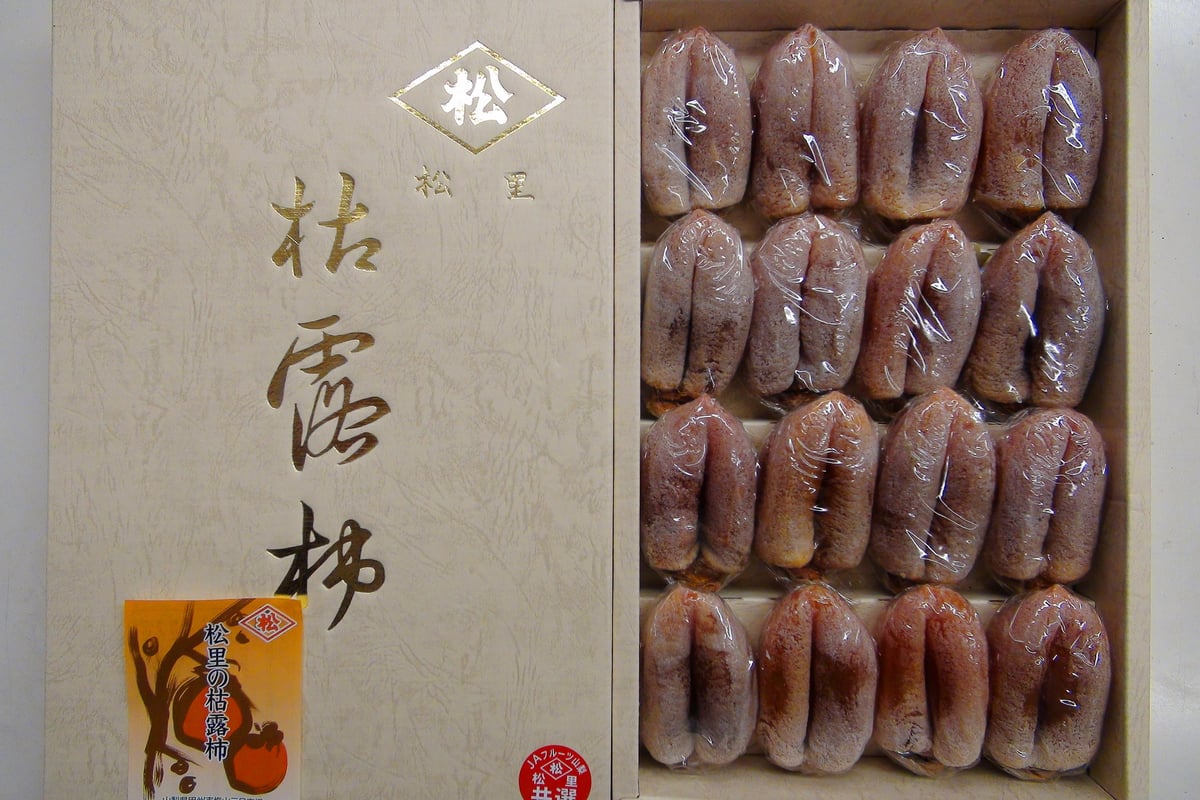
Korogaki (Koshu Dried Persimmons)
Koshu Korogaki
Korogaki are dried persimmons handed down in Koshu City and other parts of Yamanashi Prefecture, made by peeling large astringent persimmons and drying them in the sun. They mainly use 'Koshu Hyakume-gaki' persimmons grown in Koshu City, which are dried slowly until a white powder blooms on the surface. The name is said to come from rolling (korokoro) the fruit to change its orientation so that it receives sunlight evenly while drying. It is also said to have begun when Takeda Shingen encouraged their production as field rations, and in the Edo period they were used as a Koshu specialty presented to the shogunate. The Matsusato district of Enzan in Koshu City is known as a renowned production area, and from early November to early December, the eaves of houses are decorated with orange kaki-sudare (curtains of hanging persimmons). With their deep sweetness and thick, meaty texture, they are a winter delicacy of Yamanashi.
Kujira Mochi
Kujira Mochi
Kujira Mochi is a local confection from Shinjo City and the Mogami region, made by mixing non-glutinous or glutinous rice flour with sugar, walnuts, and other ingredients, pouring the mixture into a mold, and steaming it into a flat, elongated rice cake. Despite its name, which literally means 'whale mochi,' it contains no whale meat at all. Several theories exist about the origin of the name, including that it comes from 'hisashiku mochi ga yoi' ('keeps well for a long time'), rendered as 'kujira' (久持良); that the large size once made from a sho (about 1.8 liters) of rice was likened to a whale; and that its appearance resembles salted whale meat. It is said to have originated in the Edo period during the time of Tozawa Masatsune, the 3rd lord of the Shinjo Domain, when it was used as military provisions, and it has been passed down in households alongside the custom of offering it as a Hina confection for the old-calendar Peach Festival (April 3). Today it is a signature Shinjo souvenir made and sold by confectionery shops in Shinjo City.
Nishin no Sansho-zuke (Herring Pickled with Sansho Leaves)
Nishin no Sansho-zuke (Herring pickled with sansho leaves)
Nishin no Sansho-zuke is a preserved food handed down in the Aizu region, made by pickling dried, filleted herring (mikaki-nishin) together with sansho leaves in a marinade of soy sauce, vinegar, and sake. In landlocked Aizu, where fresh fish was hard to come by, dried mikaki-nishin brought from Hokkaido by ships such as the kitamae-bune became a valued source of protein. The dish reflects the wisdom of using the fragrance of sansho to soften herring's distinctive odor, and it is also a seasonal fixture of Aizu, made in households when the young sansho leaves bud from spring into early summer. The custom of pickling it in a dedicated 'nishin-bachi' bowl made of Aizu-Hongo ware also survives today, carrying on a local food culture in which the vessel and the dish are inseparable. Herring pickled for anywhere from a few days to a few weeks is eaten on its own as an accompaniment to sake, or served over hot soba noodles — a taste passed down across generations in Aizu households and traditional restaurants alike.
Nukadaki
Nukadaki
Nukadaki is a local dish from the Kokura area of Kitakyushu City in which oily fish such as sardines or mackerel are simmered for a long time together with a fermented rice-bran bed seasoned with chili pepper and sansho pepper. It is also known as 'nukamiso-daki' or 'jinda-ni.' It is said to have originated roughly 400 years ago when Ogasawara Tadazane, the first lord of Kokura Domain, brought rice-bran miso with him when he was transferred to Kokura from Shinshu, where it met the abundant oily fish caught in the Genkai Sea and Suo Sea. The fish is simmered until even the bones become tender, and the savory aroma of the rice-bran bed together with a sweet-and-salty broth mellows the distinctive smell of the oily fish, resulting in a rich flavor that pairs well with rice or sake. The rice-bran bed, continually replenished at each household or shop, has been the key to its flavor and passed down through generations.
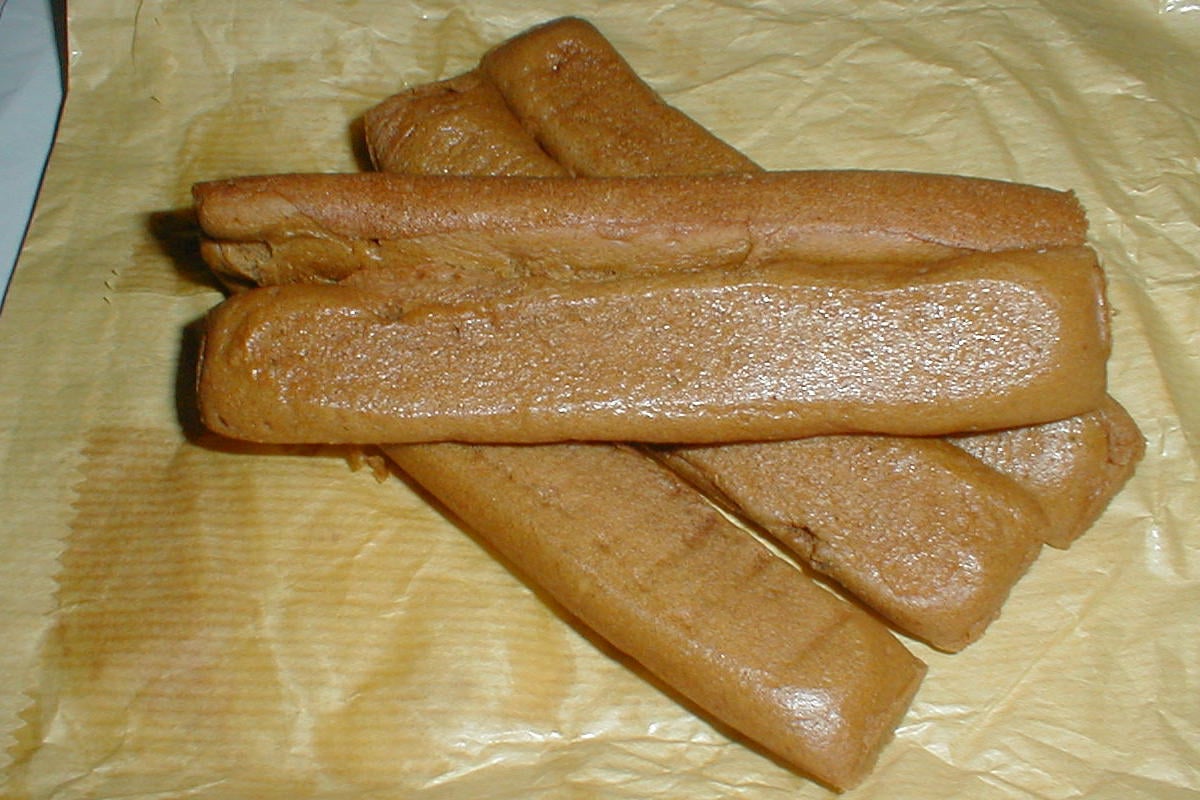
Poppo-yaki (Brown Sugar Baked Sticks)
Poppo-yaki
Poppo-yaki is a local confection of the Kaetsu region of Niigata Prefecture, made by baking a batter of wheat flour mixed with brown sugar (kokuto), water, and baking soda into long, thin sticks in a special baking device. It is brown and shaped like a slightly flattened stick, and its appeal lies in its chewy texture and the rustic sweetness of brown sugar. It is said to have originated around the end of the Meiji era as a baked dough confection devised by townspeople in the castle town of Shibata City, and north of the Agano River, centered on Shibata City, it is also called 'joki-pan.' It is sold mainly at stalls at festivals, temple and shrine fairs, and cherry blossom viewing sites, and the steam rising from the baking device and its sweet aroma are a seasonal hallmark of Niigata festivals. Sales are centered in the Kaetsu region, including Shibata City, Niigata City, and Murakami City, and have spread to Sanjo City in Chuetsu, with more stalls appearing in the Joetsu region in recent years. There are also shops that sell it year-round as well as vacuum-packed products, so it can now be enjoyed outside festival season too.
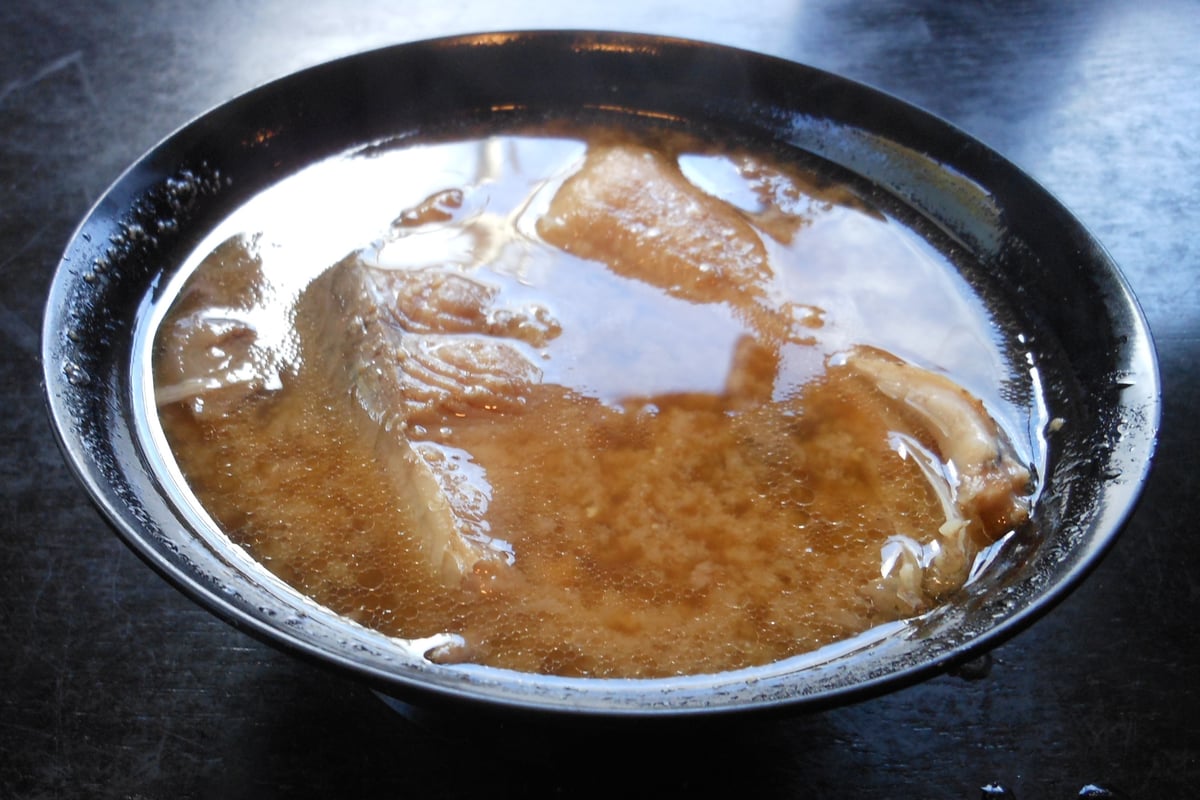
Saku Carp
Saku Koi (Saku Carp)
Saku Carp (Saku-goi) refers both to the edible carp raised in the Saku area of eastern Nagano Prefecture and to the local carp dishes made with them. It is said to have begun when a merchant from the Sakurai district of Saku City brought back 'Yodo-goi' (Yodo carp) from the Yodo River in Osaka during the Tenmei era of the Edo period. Because they are raised in the cold, clear water of the Chikuma River, the carp grow slowly and are shipped after about three years, longer than in other production areas. The flesh is firm with little odor and a moderate amount of fat. From the Meiji period onward, production increased through methods such as raising carp in rice paddies, and in the early Showa period the name was unified as 'Saku Carp.' Traditional ways of eating it include 'koikoku,' carp cut into round slices and simmered in miso; 'umani,' simmered in a sweet-savory sauce; and 'arai,' thin slices firmed up in cold water. It is still treasured by the people of Saku as a feast for New Year and celebrations.
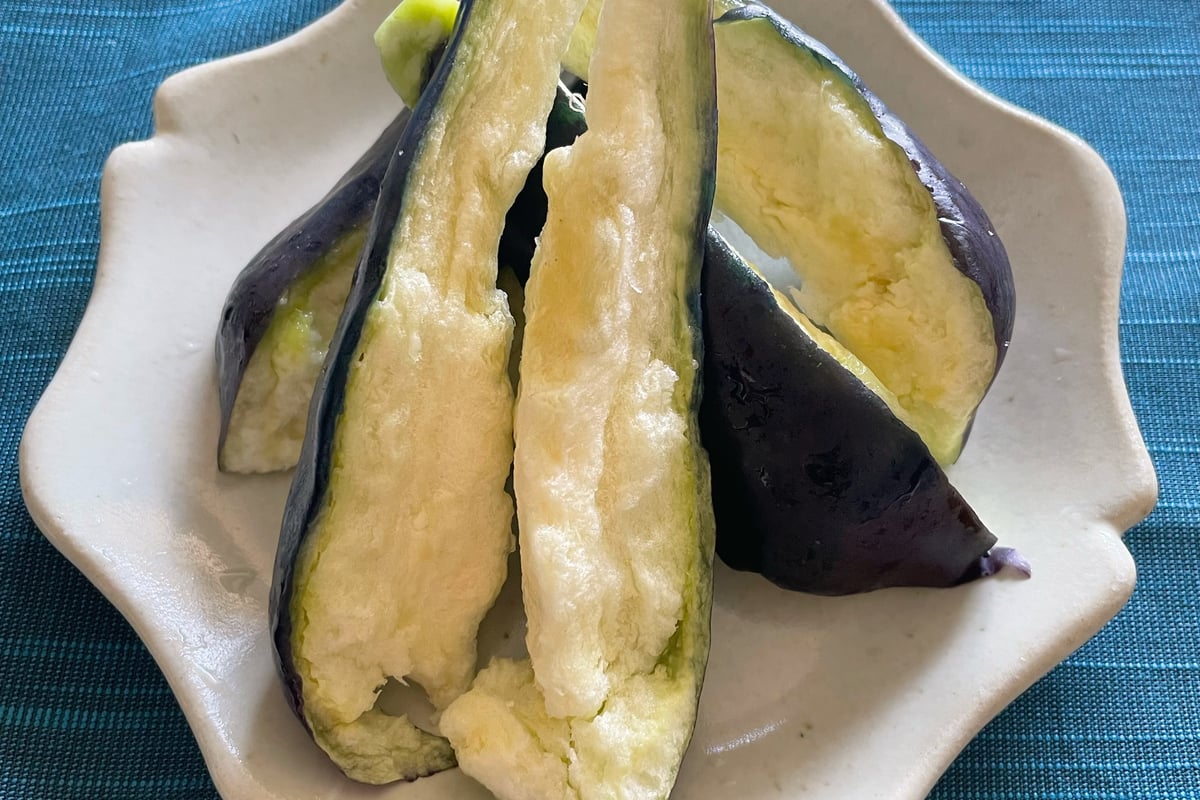
Senshu Mizunasu-zuke (Pickled Water Eggplant)
Senshu Mizunasu-zuke (Pickled Water Eggplant)
Senshu mizunasu-zuke are pickles made by steeping mizunasu (water eggplant), grown in the Senshu area of southern Osaka Prefecture, in a rice-bran bed or a seasoning liquid. Mizunasu is so juicy that water drips from it when squeezed tightly, and its skin and flesh are soft with a subtle sweetness. Because its skin is thin and it has little bitterness (aku), it can even be eaten raw, and asazuke (lightly pickled) that brings out these qualities has taken root as part of the local food culture. Cultivation is said to have continued since the early Edo period, and the area around 澤 in Kaizuka City and 上之郷 in Izumisano City is said to be its birthplace. In 2007, the local JA (agricultural cooperative) registered 'Senshu Mizunasu' as a regional collective trademark. In January 2025 (Reiwa 7), it was also registered as a national Geographical Indication (GI). 'Senshu mizunasu no asazuke' is listed in the Ministry of Agriculture, Forestry and Fisheries' 'Our Regional Cuisines' (Uchi no Kyodo Ryori). Besides being eaten daily at home, it is also popular as a souvenir and gift representing Osaka.
Shakushina-zuke
Shakushina-zuke
Shakushina-zuke is a preserved dish representing winter in the Chichibu region, made by pickling 'shakushina' (a leafy Brassica vegetable also known as yukishiro taina) long cultivated there. Its name is said to come from the resemblance of its leaf shape to a rice-serving ladle ('shakushi'), and because Chichibu, surrounded by mountains with little flat farmland, could not rely on rice farming, a pickling culture using field-grown vegetables developed there instead. It is pickled not only with salt but also through lactic acid fermentation, giving it a crisp texture and a pleasant sourness without the heaviness sometimes found in napa cabbage. Households once had their own distinct methods and flavors, and the sight of entire families pickling shakushina together before the onset of winter was once a familiar seasonal scene in Chichibu. Today it can be bought year-round at farm-product direct-sales shops and specialty pickle stores, and is enjoyed not only on its own but also stir-fried in oil or used as a filling for steamed buns.
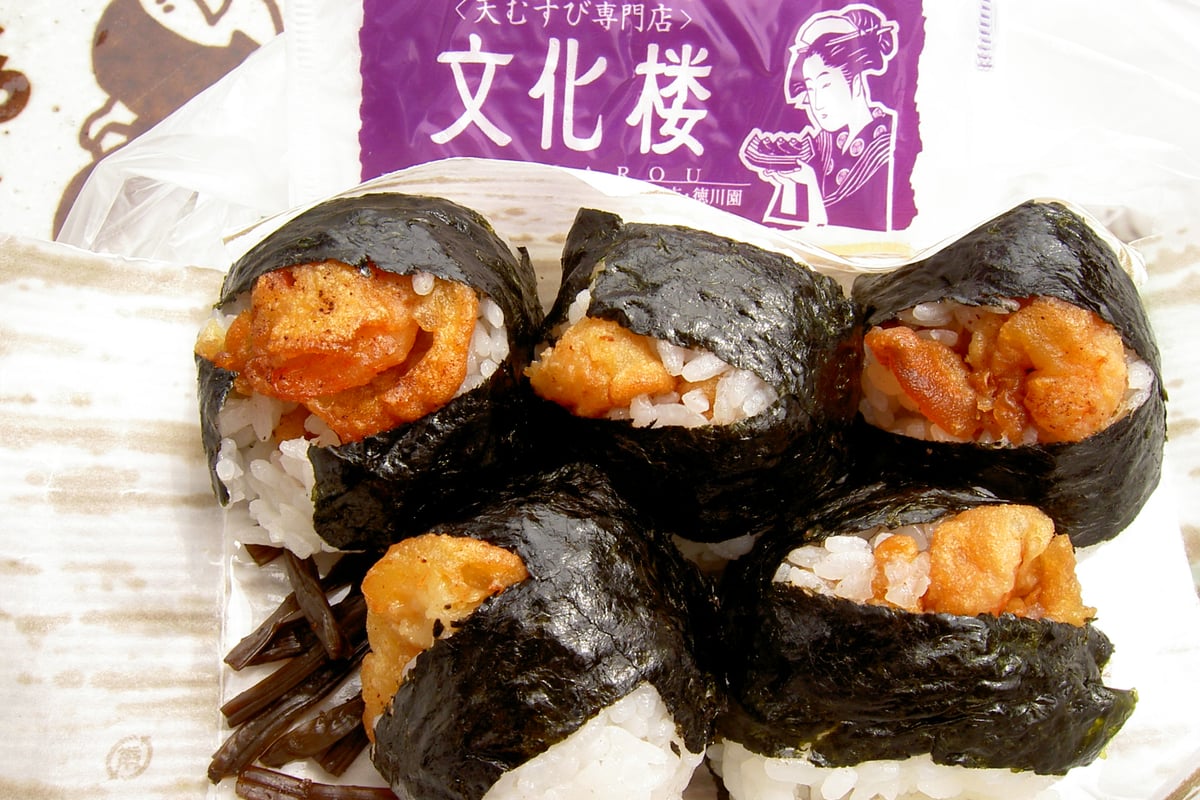
Tenmusu (Shrimp Tempura Rice Ball)
Tenmusu
Tenmusu is a bite-sized rice ball built around a piece of small shrimp tempura, prized for the combination of tempura lightly seasoned with tentsuyu (tempura dipping sauce) or salt and fluffy steamed rice. It is said to have originated in Tsu City, Mie Prefecture, where Yone Mizutani, the founding proprietress of a tempura restaurant, began tucking kuruma prawn tempura into rice balls for her husband's busy workday lunches. Around 1980, a branch of the Tsu restaurant Senju opened in Osu, Nagoya, and word of mouth among celebrities and tourists spread, and before long the dish came to be known nationwide as a 'Nagoya specialty.' Easy to eat and just the right size for one or two bites, it is also popular as a souvenir and a light snack.
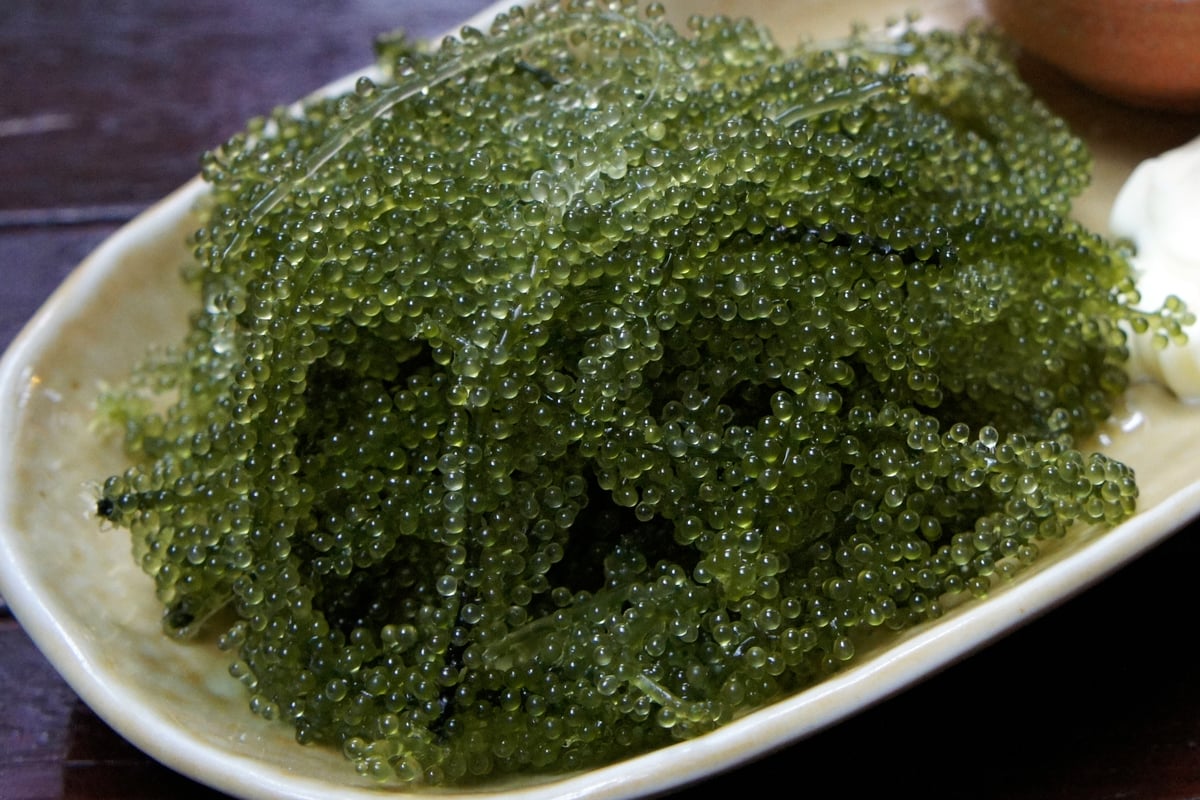
Umibudo (Sea Grapes)
Umibudo (Sea Grapes)
Umibudo (scientific name Caulerpa lentillifera) is a seaweed in which tiny green beads, about 1 to 2 millimeters across, cluster along a stem like a bunch of grapes — a signature Okinawan seafood prized for its popping texture and briny, ocean flavor. Around 1994, the Onna Village Fisheries Cooperative introduced land-based aquaculture techniques that had been under research at the Okinawa Prefectural Fisheries Experiment Station, achieving the prefecture's first full-scale success in farming umibudo. This breakthrough spurred the spread of farming across Okinawa's main island, and umibudo has since grown into one of Okinawa's leading farmed marine products, ranking after mozuku and kuruma prawns. It is enjoyed on its own with sanbaizu (a mixed vinegar sauce) or soy sauce, and also served over rice bowls or alongside sashimi, and it has won popularity among tourists under the nickname 'green caviar.' Because the beads shrivel once freshness is lost, careful temperature control after harvest is essential to preserving its quality and flavor.
Yokanzuke (Stuffed Pickled Melon)
Yokanzuke (Iga Stuffed White Melon Pickles)
Yokanzuke is a pickle of shirouri (Oriental pickling melon) handed down in the Iga region of Mie Prefecture. Shirouri is a type of melon and a summer specialty of the Iga Basin. The core of the shirouri is hollowed out and stuffed with finely chopped shiso, ginger, daikon radish, and other ingredients, and the melon is then pickled and matured in tamari soy sauce. Tamari soy sauce is a dark, thick soy sauce made mainly from soybeans. The name means 'to nourish the kimo' (the liver; figuratively, courage). According to tradition, it comes from the story that Todo Takatora, who governed Iga Ueno Castle, kept these pickles on hand as field rations for soldiers to nourish the warriors' morale (kimottama, or 'guts'). There is also a legend that Iga ninja carried them as portable food. In the Iga region, shirouri harvested in summer were originally preserved in homemade miso and were also served to entertain guests. Today, a long-established pickle shop in Ueno, Iga City, carries on the traditional method.
Yubeshi
Yubeshi
Yubeshi is a traditional confection of Wajima, Ishikawa Prefecture, made by hollowing out a yuzu citrus like a vessel, filling it with miso and glutinous rice flour, smoking it, and then slowly drying it over about half a year. In particular, the Wajima version made using a whole yuzu is known as 'maru yubeshi' (whole yubeshi) and is celebrated as a signature confection representative of the Noto region. Its origins are said to trace back to a preserved, portable food of the Genpei period, with descriptions believed to be its prototype found in Muromachi-era documents. Because of its long shelf life, it was valued as a portable food and a gift for business contacts by Wajima-nuri lacquerware peddlers who traveled the country selling their wares, and its reputation spread far and wide. The recipe has traditionally been handed down within families as a closely guarded secret, and it continues to be made using time-honored handwork today.
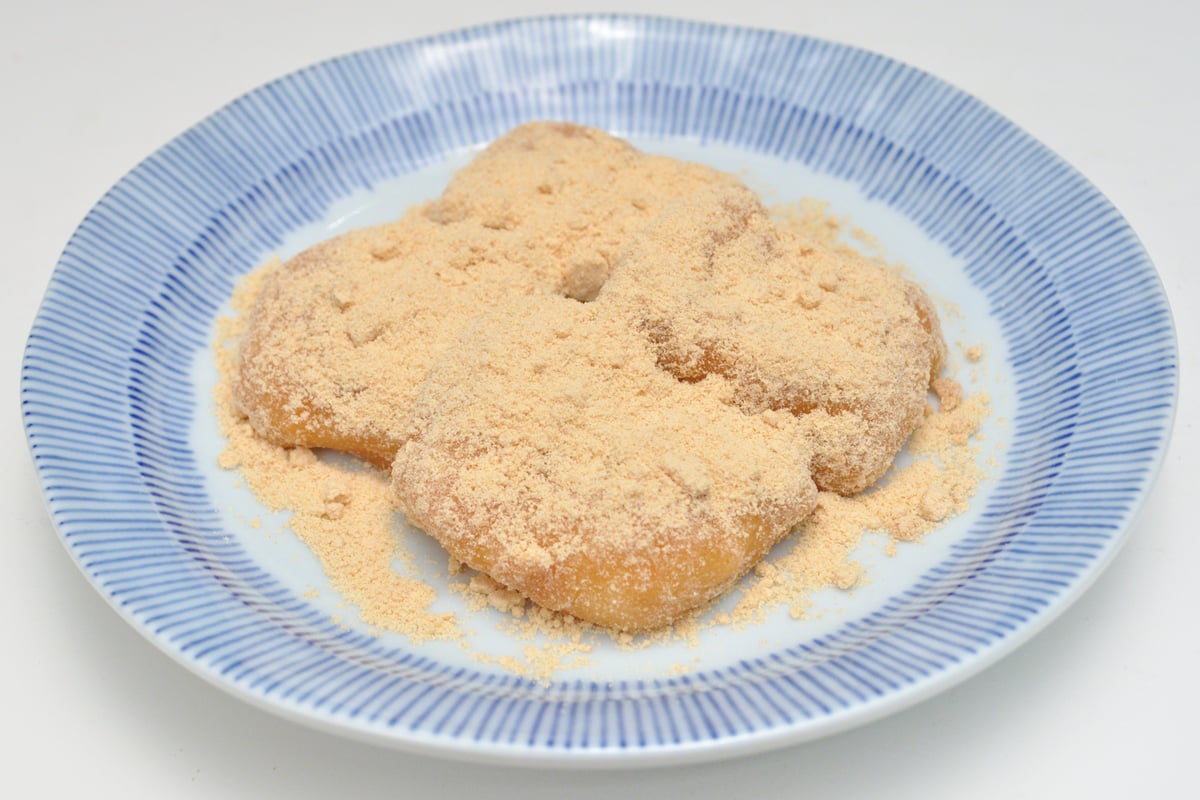
Abekawa Mochi
Abekawa Mochi (Rice Cakes with Sweet Soybean Flour)
Abekawa mochi is a famous sweet of Shizuoka City made by coating freshly pounded mochi in kinako (roasted soybean flour) and sprinkling it with white sugar. It is often served together with mochi wrapped in smooth red bean paste (koshian), and since the Edo period it has been loved by travelers as a specialty of the Tokaido. The name is said to come from the fact that it became famous when sold at teahouses on the banks of the Abe River, which flows through Shizuoka City. There is also a legend that Tokugawa Ieyasu named it, and an anecdote remains that Ieyasu likened the kinako to the gold dust of the Abe River and called it 'kinako mochi' written with the character for gold (金な粉餅). In the Edo period, white sugar was very rare, so mochi topped with sugar delighted travelers. It also appears as a specialty of the Abe River in Jippensha Ikku's 'Tokaidochu Hizakurige.' During the war it disappeared because sugar became hard to obtain, but it was revived after the war. Today it can be enjoyed at long-established shops at the foot of Abekawa Bridge, and it is also loved as a classic Shizuoka souvenir.
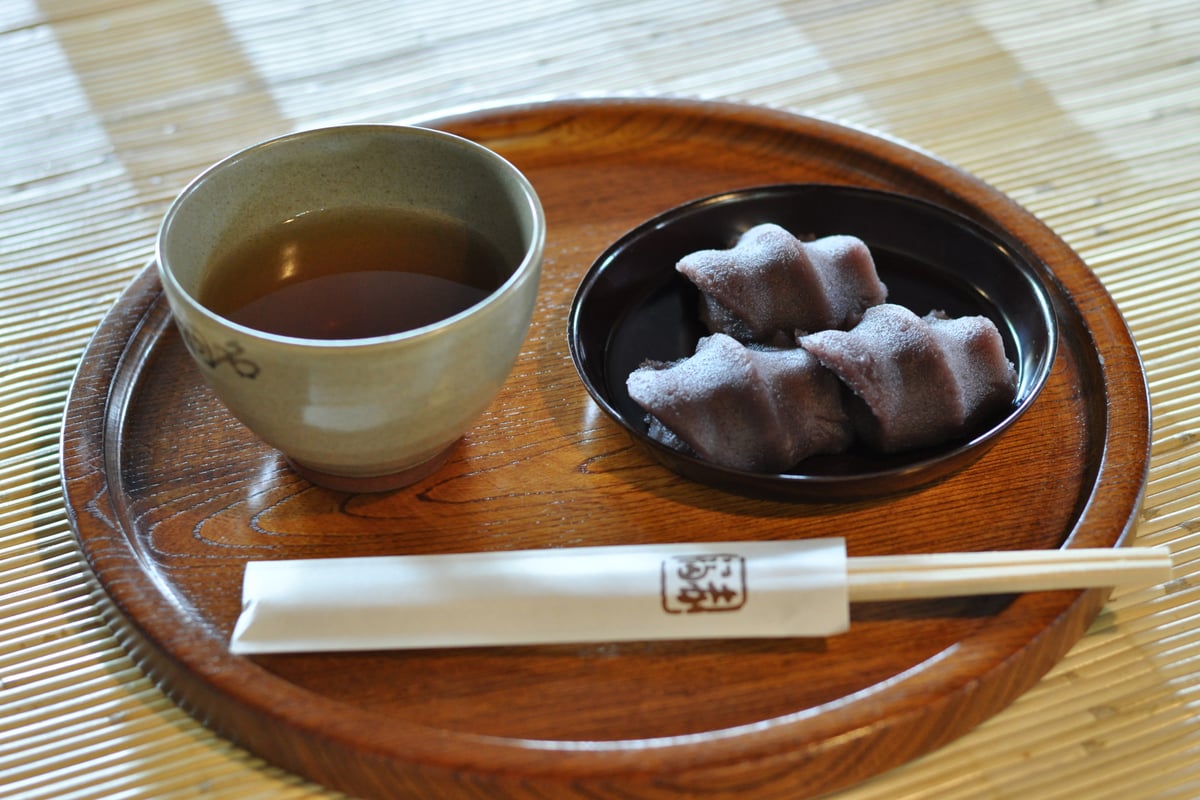
Akafuku Mochi
Akafuku Mochi
Akafuku mochi is a famous confection of Ise City, Mie Prefecture, made of soft mochi topped with smooth red bean paste (koshi-an). It is made by Akafuku, whose main store stands in Oharai-machi in front of the Naiku (Inner Shrine) of Ise Grand Shrine, and the company is said to have been founded in 1707 (Hoei 4). The three ridges pressed into the bean paste represent the clear stream of the Isuzu River, which flows through the shrine grounds. The white mochi is said to represent the pebbles lying on the riverbed. The shop name comes from the phrase 'sekishin keifuku' (赤心慶福), meaning to rejoice in the happiness of oneself and others with a sincere heart, free of falsehood like that of a newborn baby. In the Edo period, the Ise Kaido (pilgrimage road to Ise) running from Kuwana to Ise was also called the 'Mochi Road' (Mochi Kaido), and many famous mochi treats for welcoming pilgrims were born along the road. Akafuku mochi is the leading example. At the main store, you can enjoy freshly made Akafuku mochi with hojicha (roasted green tea) made with water boiled on a vermilion-lacquered kamado (hearth). 'Tsuitachi-mochi' (朔日餅), sold only on the first day of each month, is also popular.
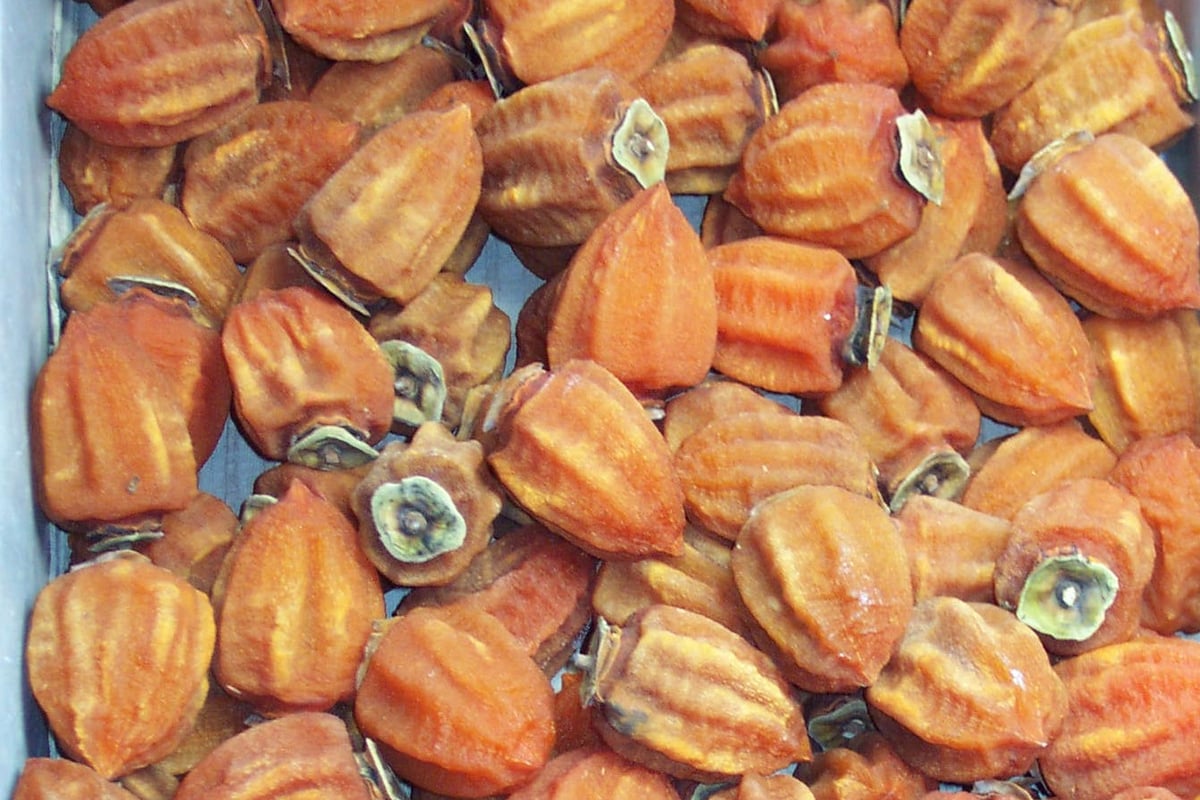
Anpogaki (Semi-dried persimmon)
Anpogaki (Semi-dried persimmon)
Anpogaki is a semi-dried persimmon that originated in the Isazawa district of Yanagawa-machi, Date City, Fukushima Prefecture. Astringent persimmons are fumigated with sulfur before being dried, producing vivid orange flesh with a soft, jelly-like texture. While ordinary dried persimmons are dried until firm, anpogaki is characterized by retaining more moisture, offering a refined sweetness that can be enjoyed either eaten as is or scooped out with a spoon. In the Isazawa district, regarded as the birthplace of anpogaki nationwide, techniques passed down through persimmon-growing families for more than a hundred years since the early Taisho era continue to be used, and the fruit is shipped nationwide as a taste representative of winter in Fukushima. In an area once known for sericulture, producers historically poured their efforts into persimmon cultivation as a new specialty product unaffected by fluctuations in the raw silk market, and today the whole of Date City is known as one of Japan's leading anpogaki-producing areas.
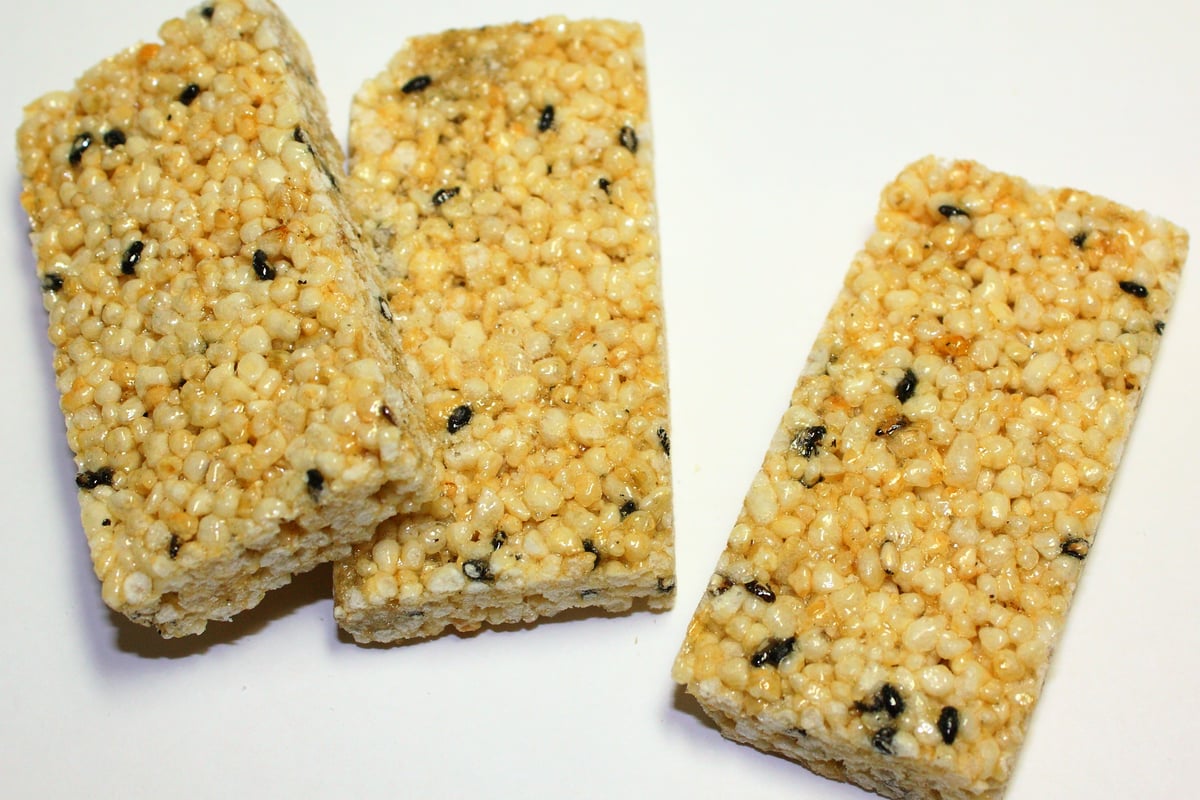
Awa Okoshi and Iwa Okoshi
Awa Okoshi and Iwa Okoshi (Osaka Puffed Rice Crackers)
Awa okoshi and iwa okoshi are regional sweets that represent Osaka. Okoshi is a dry confection made by binding steamed and dried rice, millet, or other grains with mizuame (starch syrup) and sugar. It was originally a sweet for ordinary people made from millet (awa), barnyard millet (hie), and other grains, but in Osaka in the mid-Edo period, 'awa okoshi,' made from rice crushed finely into millet-sized grains, was born. In the background was the fact that high-quality rice, mizuame, and sugar gathered from all over Japan in Osaka, which was called 'the nation's kitchen' (Tenka no Daidokoro). 'Iwa okoshi' is made by crushing the rice even more finely and pressing it firmly, flavored with ginger and kokuto (brown sugar). It took hold as an Osaka specialty as a lucky sweet said to 'raise oneself up, raise the household, raise the nation, and raise good fortune' (okosu meaning 'to raise'). Long-established makers such as Amidaike Daikoku (あみだ池大黒), founded in 1805 (Bunka 2), still continue to produce it today. In fiscal 2024 (Reiwa 6), awa okoshi was recognized under the Agency for Cultural Affairs' '100-Year Food' program (Traditional 100-Year Food category).
Choseiden
Chouseiden
Choseiden is a red-and-white rakugan confection made by the long-established Kanazawa confectioner Morihachi, counted alongside Niigata Prefecture's 'Koshi-no-yuki' and Shimane Prefecture's 'Sanka' as one of Japan's 'Three Great Confections.' It began in the early Edo period when Maeda Toshitsune, third lord of the Kaga domain, ordered the making of a confection for the Tanabata festival; the design was decided with advice from Kobori Enshu, founder of the Enshu school of tea, who is also said to have named the confection himself. Made with wasanbon sugar from Shikoku and glutinous rice flour from the Hokuriku region, it is still pressed one piece at a time in wooden molds engraved with the characters 'Choseiden' in Kobori Enshu's own hand, a traditional method preserved to this day. Once revered as a confection reserved exclusively for the Kaga domain's lord, it has a distinguished history of being presented to Emperor Gomizunoo and the Tokugawa shogunate, and today it remains beloved as a souvenir confection representative of Kanazawa.
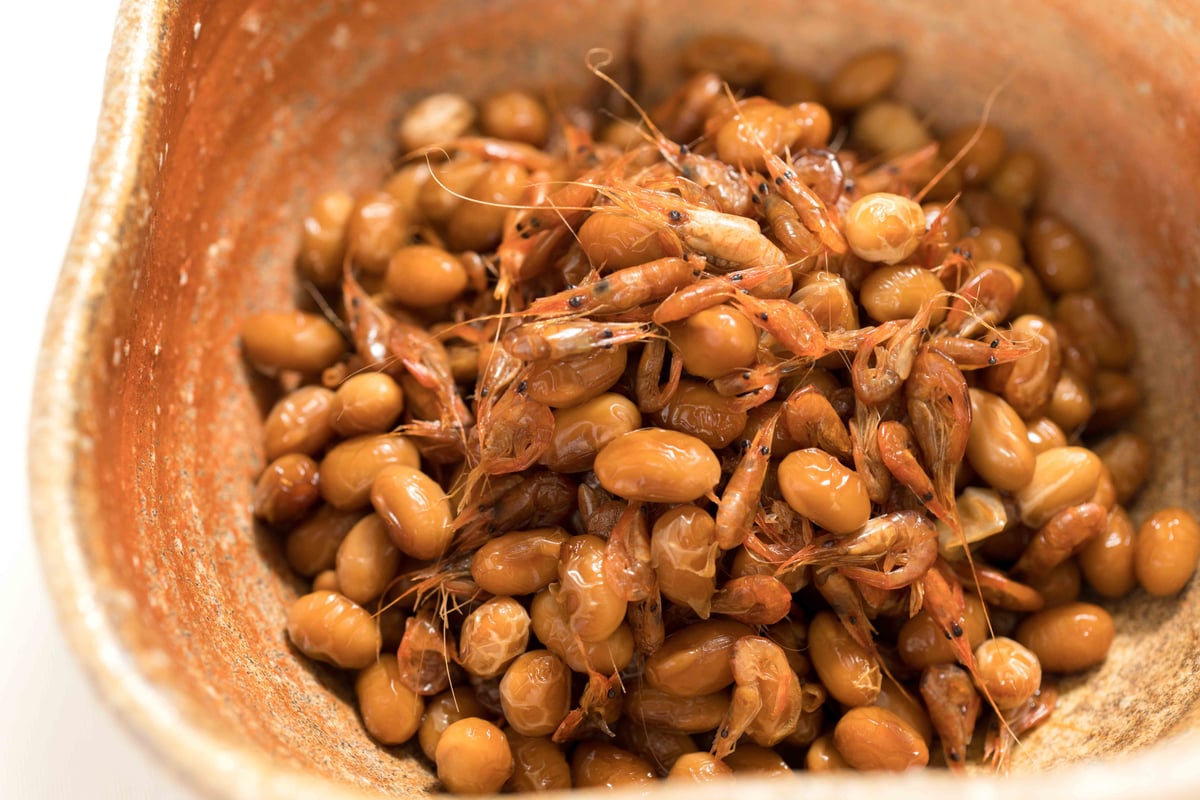
Ebi-mame (Shrimp and Soybeans)
Ebi-mame
Ebi-mame is a local dish of Shiga Prefecture made by simmering small freshwater shrimp called suji-ebi, caught in Lake Biwa, together with soybeans in a sweet-savory broth. It has long been made in households throughout the prefecture, including in Omihachiman and Hikone, and is cherished as an easy way to take in calcium and protein. Soybeans and azuki beans have been cultivated on the ridges between rice paddies in Shiga Prefecture since ancient times, and dishes using soybeans have traditionally been served at celebratory gatherings such as weddings, memorial services, and festivals. The dish carries a wish for longevity — 'may we live diligently (mame) until our backs bend like a shrimp's' — and it is an essential dish for New Year and other festive occasions. It remains a beloved home-cooked dish today, sometimes even appearing in school lunches, with the flavor passed down from parent to child.
Echizen Uni (Salted Sea Urchin)
Echizen Uni (Salted Sea Urchin)
Echizen Uni is 'shio-uni' (salted sea urchin), made by salting and maturing the gonads of bafun sea urchins caught along the Echizen Coast of Fukui Prefecture. It is also written as 汐うに or 塩雲丹. In the Edo-period book Nihon Sankai Meisan Zue (Illustrated Famous Products of Japan's Mountains and Seas), it was praised as 'the finest of all shiokara (salted delicacies)'. Together with Mikawa's konowata and Hizen's karasumi, it is counted among Japan's three great delicacies (chinmi). The bafun sea urchin used as the raw material is a small urchin with a shell only a few centimeters across, and around 100 urchins are said to be needed to make 100 g of the product. The roe is firmed with salt to draw out moisture, kneaded into a paste, and then matured. Its hallmarks are rich umami, the aroma of the sea, and a smooth texture, and even a tiny amount delivers deep flavor. The current method is said to have been devised in the late Edo period by Tennoya (now Tentatsu), an official purveyor to the Fukui Domain. The catch of bafun sea urchins in the prefecture is very small, and it remains a precious delicacy that still relies on handwork.
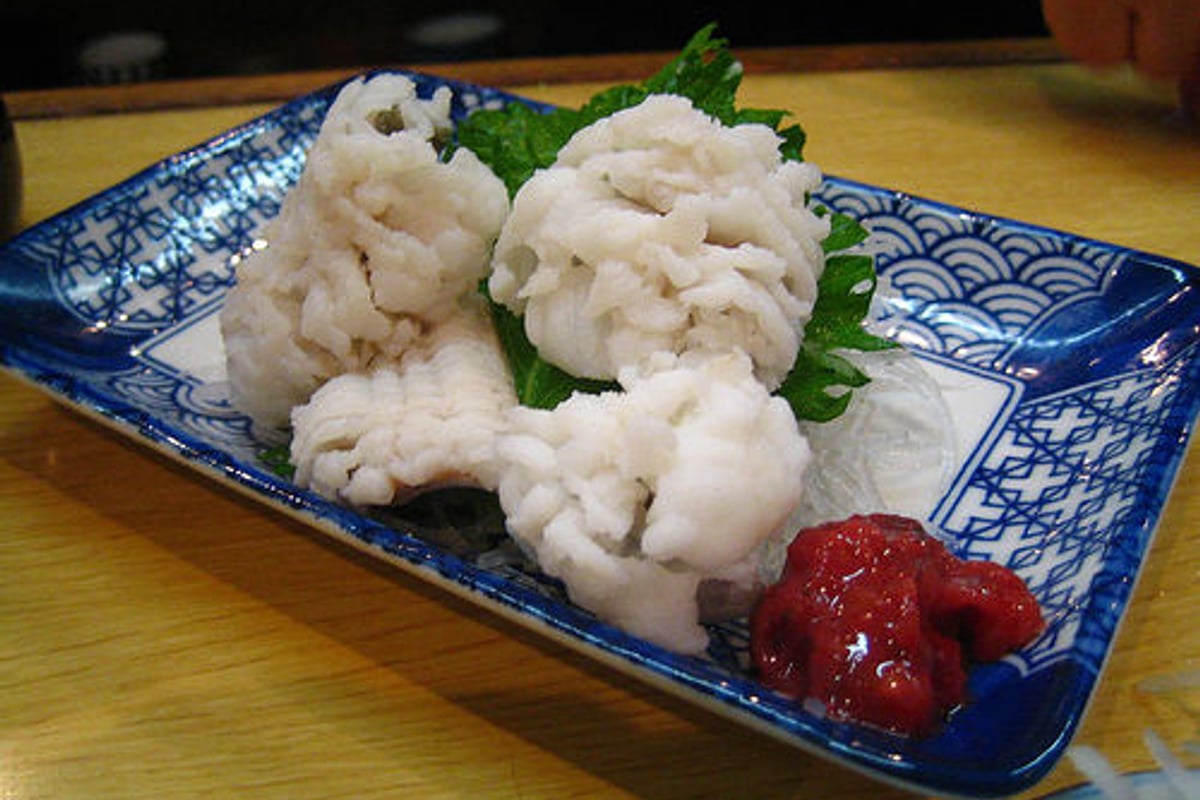
Hamo Ryori (Conger Pike Eel Cuisine)
Hamo Ryori
Hamo Ryori is a summer local dish of Kyoto in which conger pike eel (hamo), in season from the rainy season through midsummer, is prepared using the distinctive technique known as honekiri (bone-cutting). Even in landlocked Kyoto, hamo could be transported alive thanks to its strong vitality, making it a valued source of protein since the era before refrigeration existed. Because hamo has so many small bones that it cannot be eaten without honekiri, this technique developed into a symbol of a chef's skill, and in Kyoto it is said that "mastering honekiri makes a chef full-fledged," making it one of the most important stages of a chef's training. Preparations range widely, from hamo no otoshi — blanched hamo served with plum paste — to teriyaki, hamo shabu-shabu, and simmered dishes, and because hamo comes into season around the time of the Gion Festival, the festival is also nicknamed the "Hamo Festival," reflecting how indispensable this flavor is to a Kyoto summer.
Hatcho Miso
Hatcho Miso
Hatcho miso is a soybean miso from Okazaki City, Aichi Prefecture, made from only soybeans and salt, packed into wooden barrels, weighted with a conical pile of heavy stones, and aged for two years or more. The name comes from Hatcho village (present-day Hatchodori, Okazaki City), located hatcho — about 870 meters — west of Okazaki Castle. Blessed with groundwater from the Yahagi River and situated at a key point on the Tokaido road and waterway network, Hatcho village has been home to two miso breweries, Kakukyu and Maruya Hatcho Miso, which have brewed miso facing each other since the early Edo period; the miso's long shelf life is also said to have made it valuable as military provisions. It is defined by a distinctive flavor combining rich umami with a characteristic astringency and bitterness, and it forms the flavor foundation of Aichi's signature local dishes such as miso nikomi udon and Misokatsu.
Kanzuri (Fermented Chili Paste)
Kanzuri
Kanzuri is a fermented spicy seasoning handed down in Myoko City (formerly Arai City), Niigata Prefecture. Salt-pickled chili peppers are laid out on the snow around Daikan (around January 20, the coldest time of year), then combined with rice koji, yuzu, and salt and aged and fermented for about three years. Exposing the chilies to the snow is said to draw out their strong harshness, giving a mellower heat, and it is characterized by a deep flavor in which the aroma of yuzu overlaps with the umami of koji. It is a local flavor that has long been eaten to warm chilled bodies in Myoko, so snowy that it is designated a Special Heavy Snowfall Area, and it is also written with the characters '寒造里.' This regional traditional food was commercialized in 1966 (Showa 41) by Kanzuri Co., Ltd., and the name 'Kanzuri' is the company's registered trademark. 'Snow bleaching' (yuki-zarashi), in which bright red chilies are scattered over white snowfields at Daikan, is known as a signature winter scene of Myoko. Its uses are wide-ranging, from a condiment for hot pots and ramen to an accompaniment for sashimi, and it has become established as a Niigata souvenir.
Minobu Yuba (Tofu Skin)
Minobu Yuba
Minobu Yuba is yuba (tofu skin) handed down in Minobu Town, Yamanashi Prefecture, which flourished as the temple town of Minobusan Kuonji Temple, the head temple of the Nichiren sect. It is the thin film that forms on the surface of heated soy milk, lifted off; there is nama yuba (fresh yuba), eaten just as it is lifted, and kanso yuba (dried yuba). Minobu Town is known as a yuba-producing area alongside Kyoto and Nikko. It is said to have begun in the Kamakura period, around the time the priest Nichiren entered Mt. Minobu, and according to tradition, his disciples made it as a source of nourishment out of concern for their master's health. Yuba, which contains high-quality plant protein and fat, has been handed down together with Kuonji Temple as an important ingredient of shojin ryori (Buddhist vegetarian cuisine), which uses no meat or fish. A popular dish is yuba sashimi, in which nama yuba is cut into bite-sized pieces and eaten with wasabi and soy sauce. Restaurants serving yuba dishes, shukubo (temple lodging), and yuba makers with direct sales shops are scattered around the town.
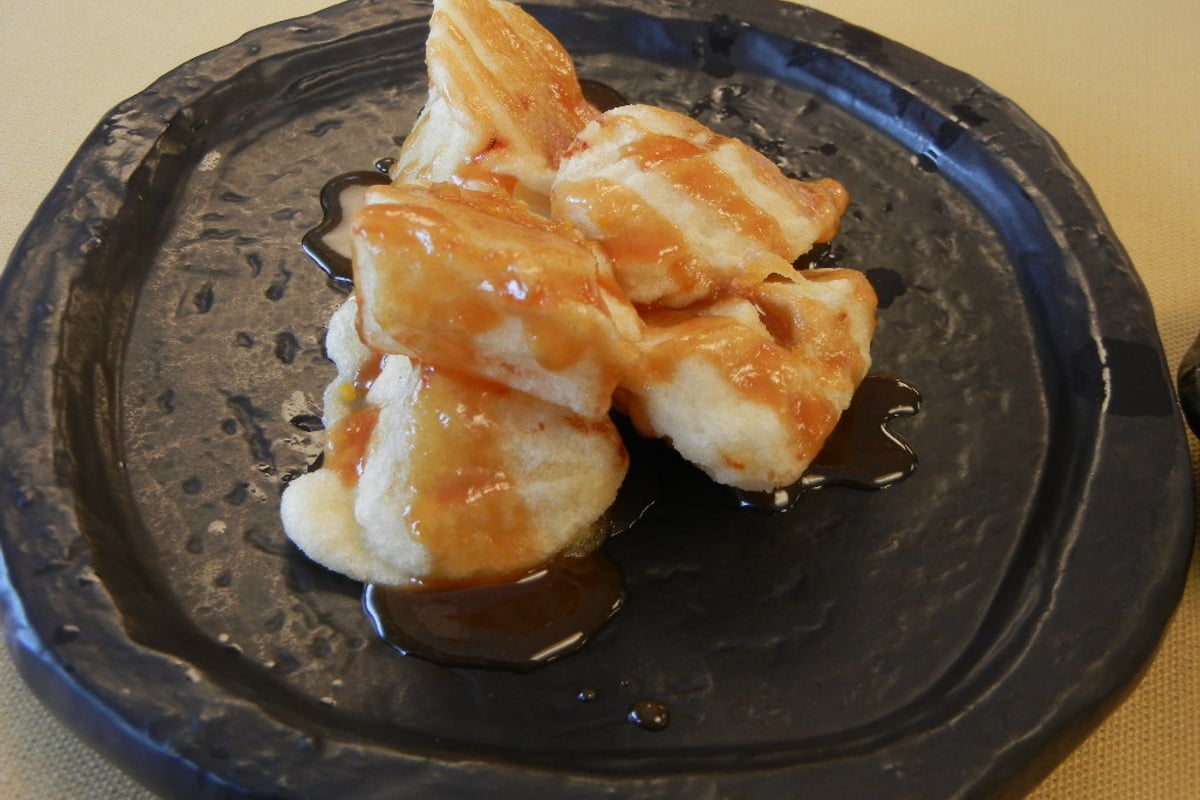
Miso Potato
Miso Potato
Miso potato is a local specialty of the Chichibu region in which boiled potatoes are coated in batter, deep-fried, and topped generously with a sweet-and-savory miso sauce. With little flat land and farming centered on dry fields, Chichibu is said to have originated the dish when small potatoes from the harvest were roasted over an irori hearth and spread with miso sauce, and it was long enjoyed as 'kojuhan,' a light meal eaten between farm chores. For a long time it was known only as a local home-style dish, but after winning the '5th Saitama B-Kyu Local Gourmet Championship in Chichibu' in 2009, its fame spread nationwide. The simple flavor of fluffy potatoes coated in sweet-and-savory miso is enjoyed as a snack, a side dish for drinks, or a regular side dish, and it can now be found at various places around Chichibu City, including eateries, souvenir shops, and shops at tourist spots.
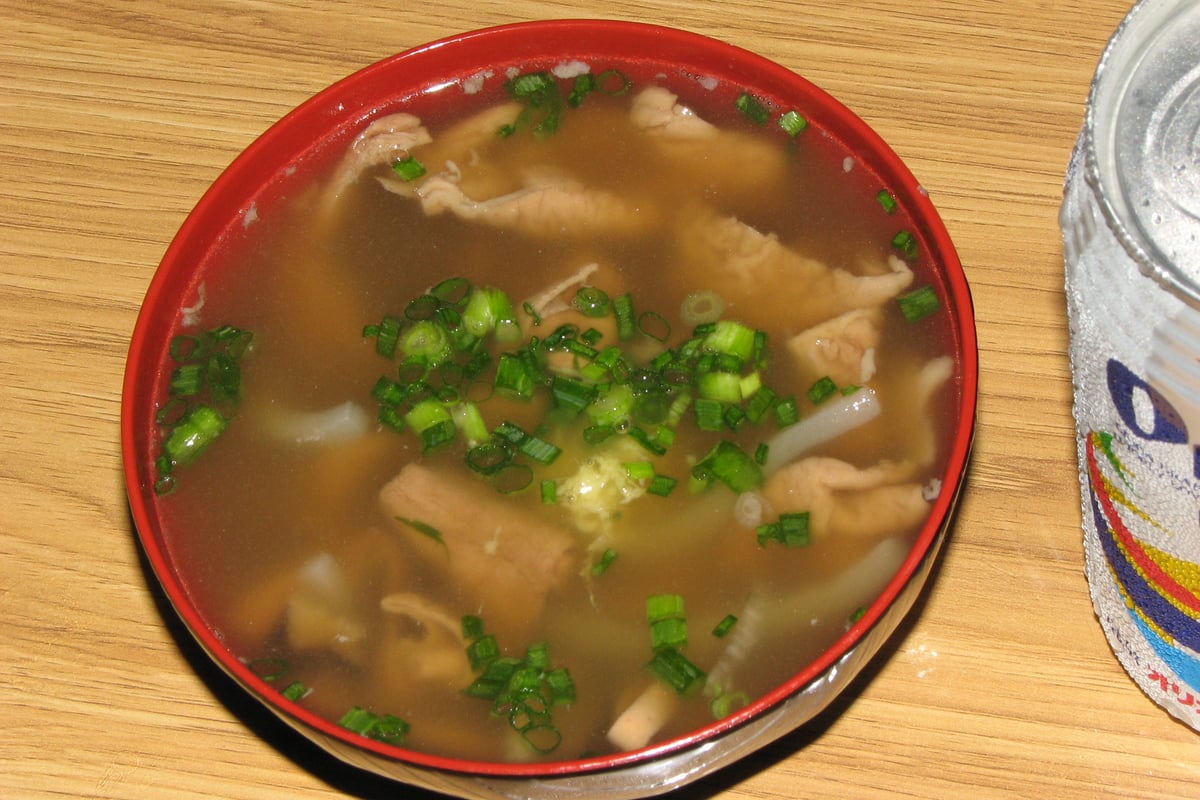
Nakami-jiru (Pork Offal Soup)
Nakami-jiru (Pork Offal Soup)
Nakami-jiru is a clear-broth local dish of Okinawa made with 'nakami' — pork offal such as the stomach, small intestine, and large intestine. Despite being an offal dish, it is notable for its refined flavor with no unpleasant odor: careful preparation removes excess fat and odor before the ingredients are simmered in a clear broth made from bonito and pork stock. Its roots lie in the court cuisine of the Ryukyu Kingdom, where it is said to have been served to entertain investiture envoys from China and officials from Satsuma. In old Okinawa, it was customary to slaughter a whole pig at the end of the year in preparation for the New Year, and nakami-jiru, made with fresh offal, became an indispensable feast dish for New Year celebrations, festive occasions, and memorial services — comparable to the mainland's zoni. It is still passed down today as a home-cooked dish, and is also enjoyed as 'nakami-soba,' in which nakami is used as a topping for Okinawa soba.
Nata-zuke
Nata-zuke
Nata-zuke is a quick Akita pickle made by roughly chopping raw daikon radish with a thick-bladed hatchet (nata) and pickling it for a short time in rice malt (koji), amazake, sugar, and other seasonings. Deliberately splitting the daikon so the cut surfaces turn rough and jagged lets the koji flavor soak in all the way through, producing a light pickle known for its crisp texture and natural sweetness. Akita Prefecture is rich in forest resources, including high-quality Akita cedar, and its long tradition of forestry meant that most households kept a hatchet on hand — using it to cut the daikon is said to be the origin of the dish's name. Unlike Iburigakko, which is made by smoking and drying the daikon before pickling, Nata-zuke uses raw daikon and is ready in just a few days, making it one of the winter 'gakko' (pickles) essential to the Akita table.
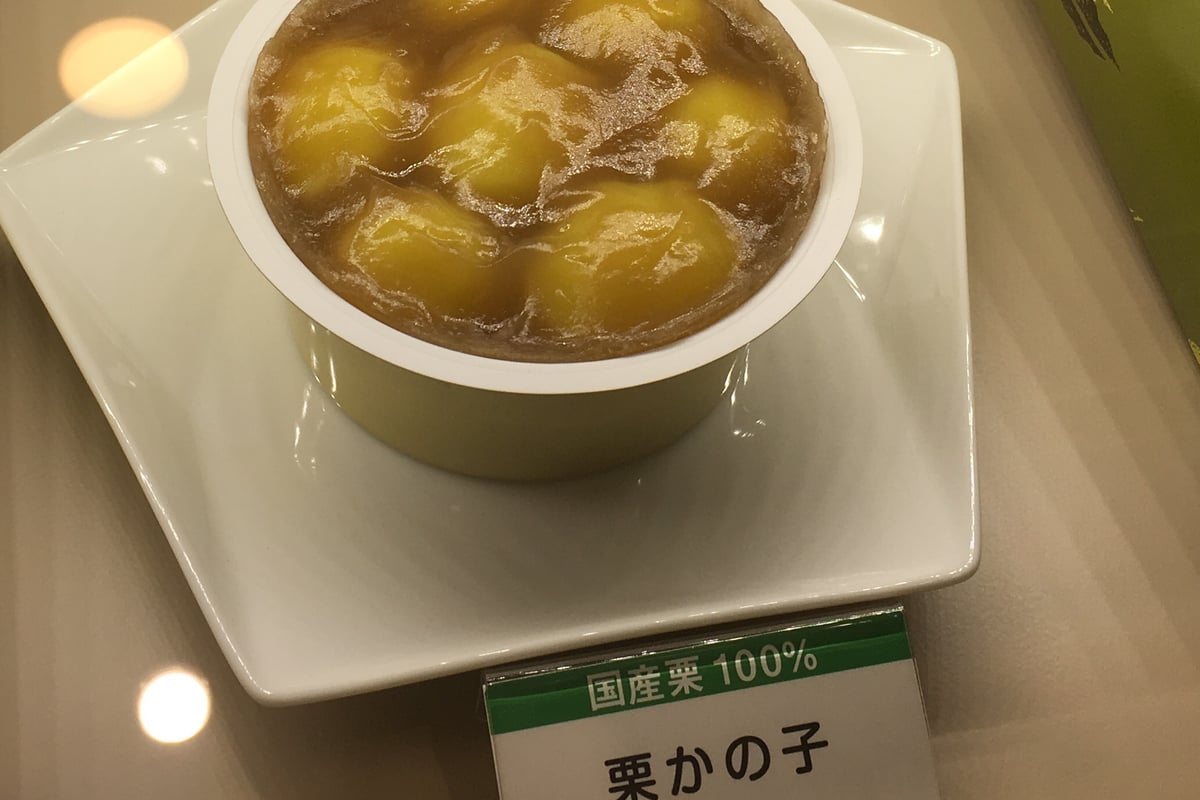
Obuse Chestnut Confections
Obuse Chestnut Confections
Obuse Chestnut Confections is the collective term for wagashi (Japanese confections) made with local chestnuts in Obuse Town, Kamitakai District, in northern Nagano Prefecture. Chestnut cultivation in Obuse is said to date back to the Muromachi period, and the acidic soil of the well-drained alluvial fan suited the growth of chestnuts. In the Edo period, high-quality chestnuts were made 'kenjo-guri' (chestnuts presented as tribute) to the shogun's family, and the name 'Obuse-guri' (Obuse chestnuts) spread. Chestnut confections began in 1808 (Bunka 5), when 桜井幾右衛門, the founder of Sakurai Kanseido, is said to have been the first to make 'kuri rakugan' (pressed chestnut sweets). Later, kuri yokan (chestnut yokan) and kuri kanoko (chestnut paste studded with candied chestnuts) were created, and in the Meiji period canning technology made them available all year round. Even today, long-established chestnut confectioners line the center of town, and you can also enjoy new chestnut flavors such as kuri okowa (chestnut sticky rice) and Mont Blanc. In the season of new chestnuts in autumn, the town bustles with many tourists.
Sasamaki (bamboo-leaf wrapped mochi rice)
Sasamaki
Sasamaki is a local dish of Yamagata Prefecture in which glutinous rice soaked in water is wrapped in sasa (bamboo-grass) leaves into a triangular or bale shape, tied with a cord such as rush grass, and boiled in hot water — it corresponds to what other prefectures call 'chimaki.' It has traditionally been made in each household for the Boys' Festival (Tango no Sekku, the fifth day of the fifth lunar month) to pray for children's healthy growth. Sasa leaves are said to have antiseptic and antibacterial properties and have long been valued as a wrapping material for preserved and portable food. The way it is wrapped varies by region: it is shaped into a cone in the Mogami region and into a fist shape in the Oitama region, while the southern part of Tsuruoka City has its own distinctive method of boiling it in lye water (aku-mizu). To eat it, the sasa leaves are untied and the rice cake is topped with roasted soybean flour (kinako) and black sugar syrup (or sugar).
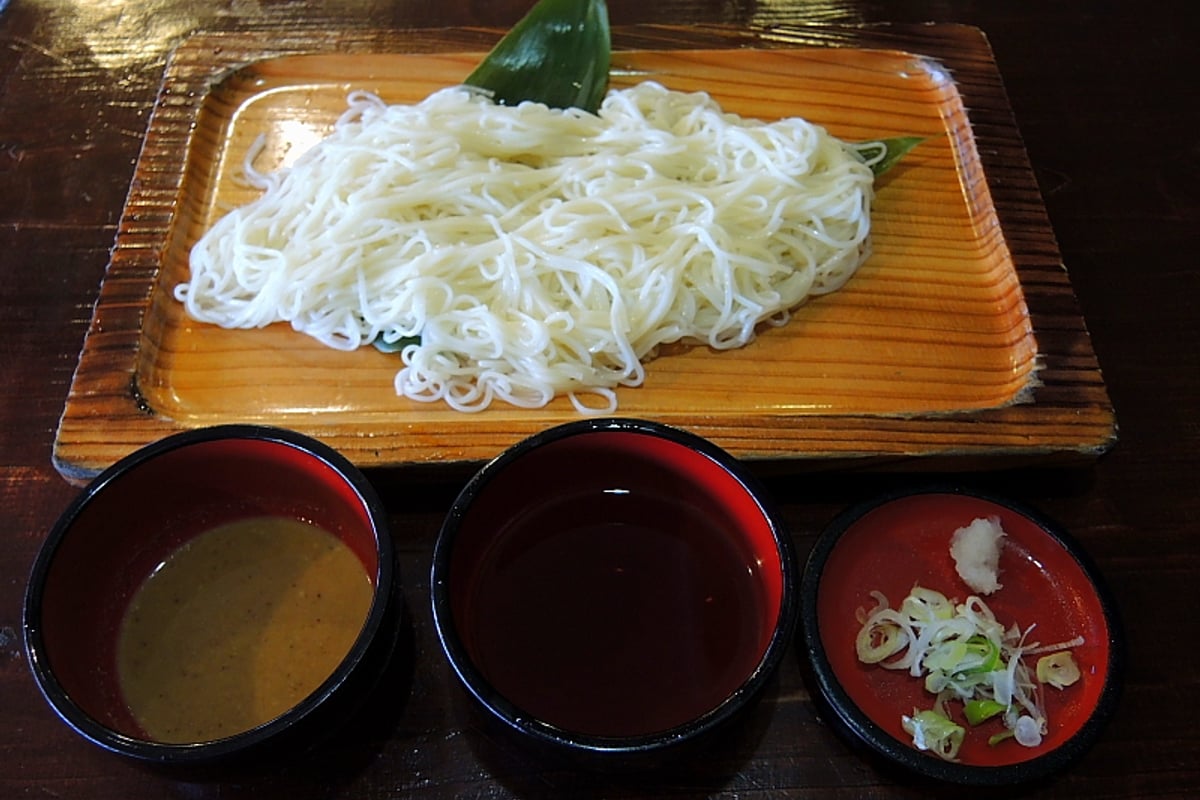
Shiroishi Umen (Oil-Free Noodles)
Shiroishi Umen
Shiroishi umen (oil-free noodles) is a type of thin wheat noodle that has been made around Shiroishi City, Miyagi Prefecture, since the early Edo period, roughly 400 years ago, distinguished by a manufacturing method that uses no oil at all. The most widely told origin story is one of filial devotion: Suzuki Asaemon, who lived in the castle town of Shiroishi, worried about his father, who was suffering from a stomach ailment and could barely eat. Having learned from a traveling monk of a way to make noodles without oil, he prepared them, warmed them, and fed them to his father, and it is said that his father's condition improved. When Katakura Kojuro, the lord of Shiroishi Castle, heard this story, he is said to have named the noodles 'unmen' (umen), meaning 'warm noodles,' in honor of Asaemon's devotion to his father, and to have allowed Asaemon to take the name 'Miemon.' Because no oil is used, the noodles are considered gentle on the stomach and easy to digest, and they are also cut somewhat shorter than ordinary somen, to about 9 cm. Passed down for more than 400 years as a local industry of Shiroishi, and designated as a production area by the National Federation of Dried Noodle Cooperative Associations, it is a dried noodle representative of Miyagi Prefecture.
Takatsu no Torimeshi
Takatsu no Torimeshi
Takatsu no Torimeshi is a simple mixed rice dish handed down in the Takatsu district of Yachiyo City, Chiba Prefecture, made by simmering chicken in soy sauce and mixing it into freshly cooked rice. Small pieces of chicken thigh are simmered in soy sauce and then stirred through the hot rice. A ratio of one bowl of soy sauce to one sho (about 1.8 liters) of rice has been passed down by word of mouth for generations, giving the dish its plain, unadorned flavor without any special seasonings. The dish also has a role as festival food, traditionally served at Koyasu-ko gatherings, where women pray for safe childbirth by worshipping the deity Koyasu-gami, and at Hassaku, a harvest-prayer event held on the first day of the eighth month of the old lunar calendar. It is said that cutting the chicken into small pieces was also a way to make a precious ingredient go around evenly among everyone present, back when meat was scarce. Today it continues to be passed on to the next generation through home cooking, school lunches, and parent-child cooking classes in the Takatsu district of Yachiyo City.
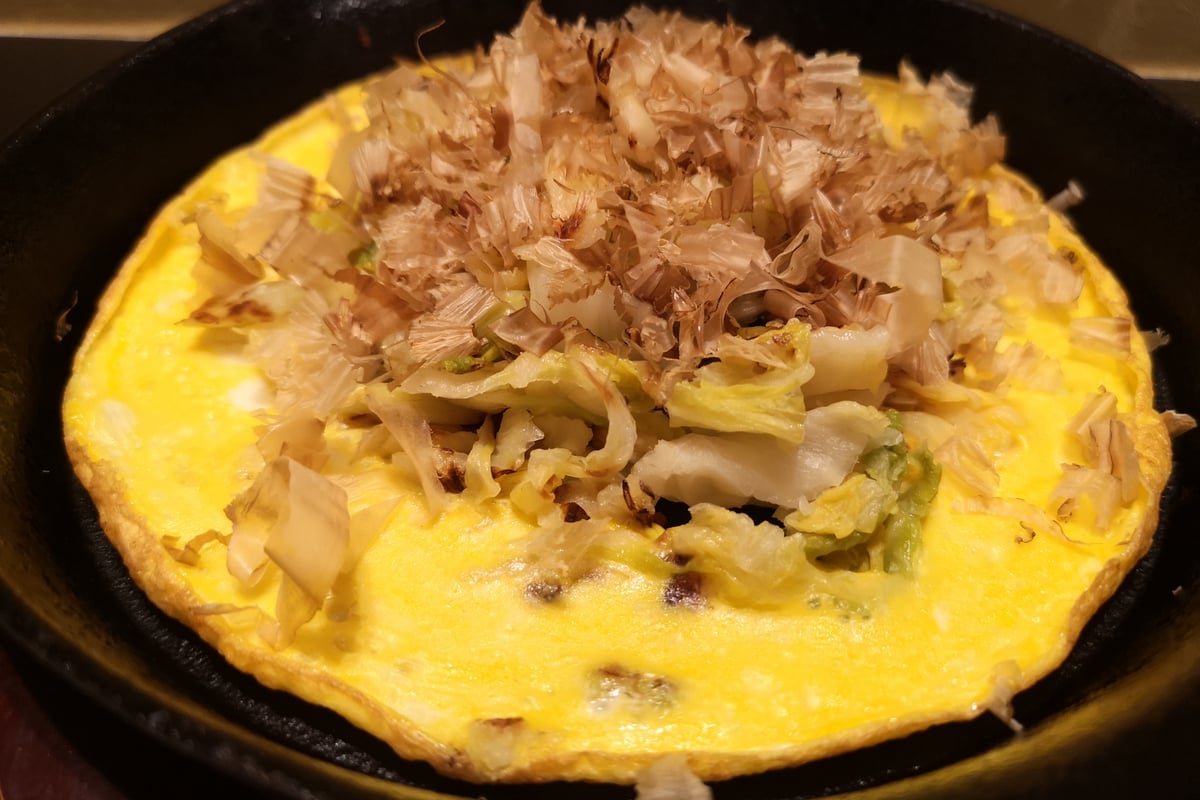
Tsukemono Steak
Tsukemono Steak
Tsukemono Steak is a local dish from the Hida region of Gifu Prefecture in which napa cabbage pickles are bound with egg and cooked on a griddle or in a pan; locals also call it tsuke-sute. In the depths of winter in Hida, pickles — once a vital source of vegetables — would freeze solid, so people are said to have started placing them on hoba leaves and warming them over the irori hearth to thaw before eating, which is considered the dish's origin. It also served as a resourceful way to make good use of pickles that had turned overly sour from fermenting too long. Despite its name, the dish contains no meat whatsoever, but it is thought to be called a steak because the sizzling sound as it cooks on a griddle, along with its appearance and the way it's eaten, evokes an actual steak. Today it is a standard menu item at nearly every izakaya in Hida-Takayama, enjoyed by tourists both as a side dish with drinks and as an accompaniment to rice.
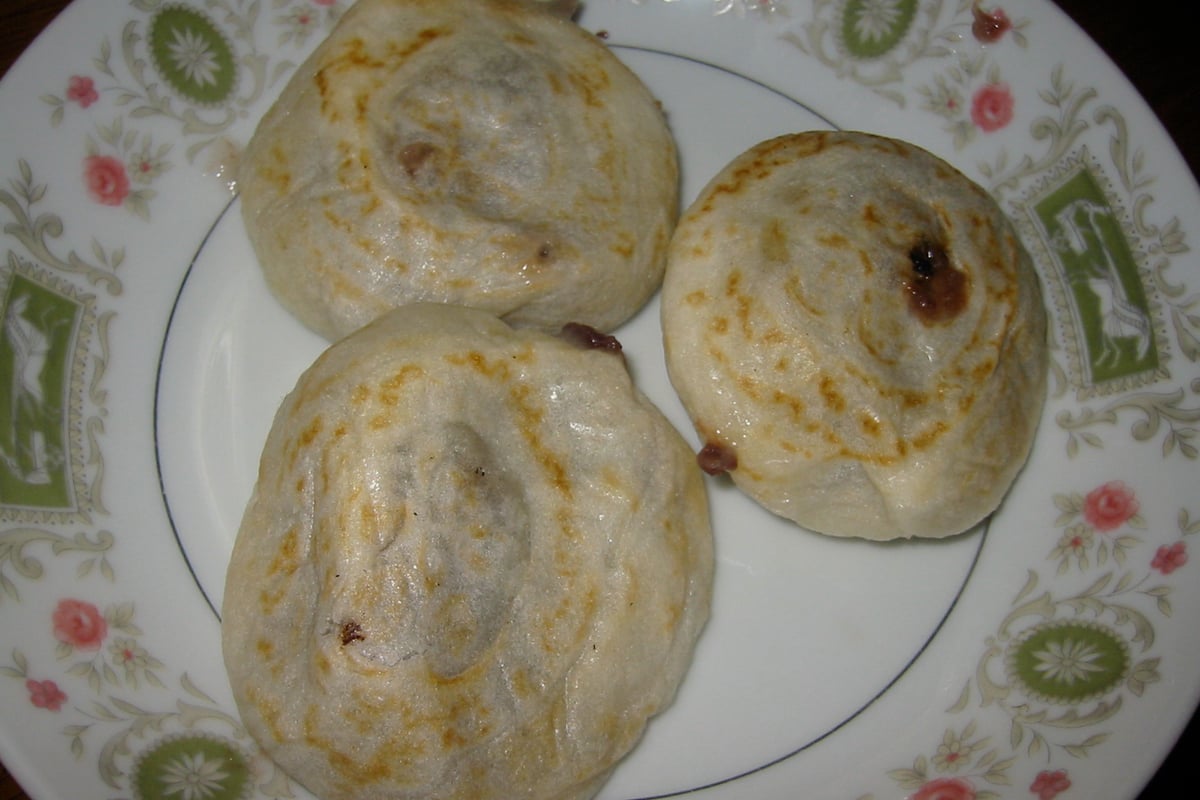
Umegae-mochi
Umegae-mochi
Umegae-mochi is a specialty of the approach to Dazaifu Tenmangu Shrine: sweet red bean paste wrapped in mochi dough and grilled to a fragrant finish using a special mold stamped with a plum blossom design. Known as a mochi confection closely associated with Sugawara no Michizane, the god of learning, the shrine's approach is lined with teahouses and mochi shops serving the cakes freshly grilled, filling the whole street with their fragrant aroma. The name is said to derive from a legend in which an old woman delivered mochi to Michizane skewered on a plum branch. The dish was already known as a specialty of the approach by the Edo period, and long-established shops, including Kasanoya, founded in 1922, continue to insist on serving the mochi freshly grilled today. Crisp and fragrant on the outside with a chewy interior, it pairs beautifully with the refined sweetness of its chunky red bean paste. Eating one fresh off the grill while strolling along the approach is the classic way to enjoy it.
Warasubo Dishes
Warasubo
Warasubo dishes are a Saga Prefecture specialty made from the warasubo, a rare fish found in Japan only in the Ariake Sea. A member of the goby family, the warasubo has degenerated eyes and an eel-like, elongated body with an upward-opening mouth lined with fang-like teeth, which has earned it the nickname 'Alien of the Ariake Sea' after a monster from the movies. It burrows into the soft mud of the tidal flats, and during its peak season from May to October it is served in miso soup, as sashimi, or simmered; at other times of year it is gutted, dried, and eaten deep-fried or lightly grilled. Despite its unusual looks, its white flesh carries a strong umami flavor and has long been a familiar local ingredient. In recent years, changes to the tidal flat environment such as the reclamation of Isahaya Bay have reduced catches, and the fish is now listed as Vulnerable on the Ministry of the Environment's Red List of Threatened Species.
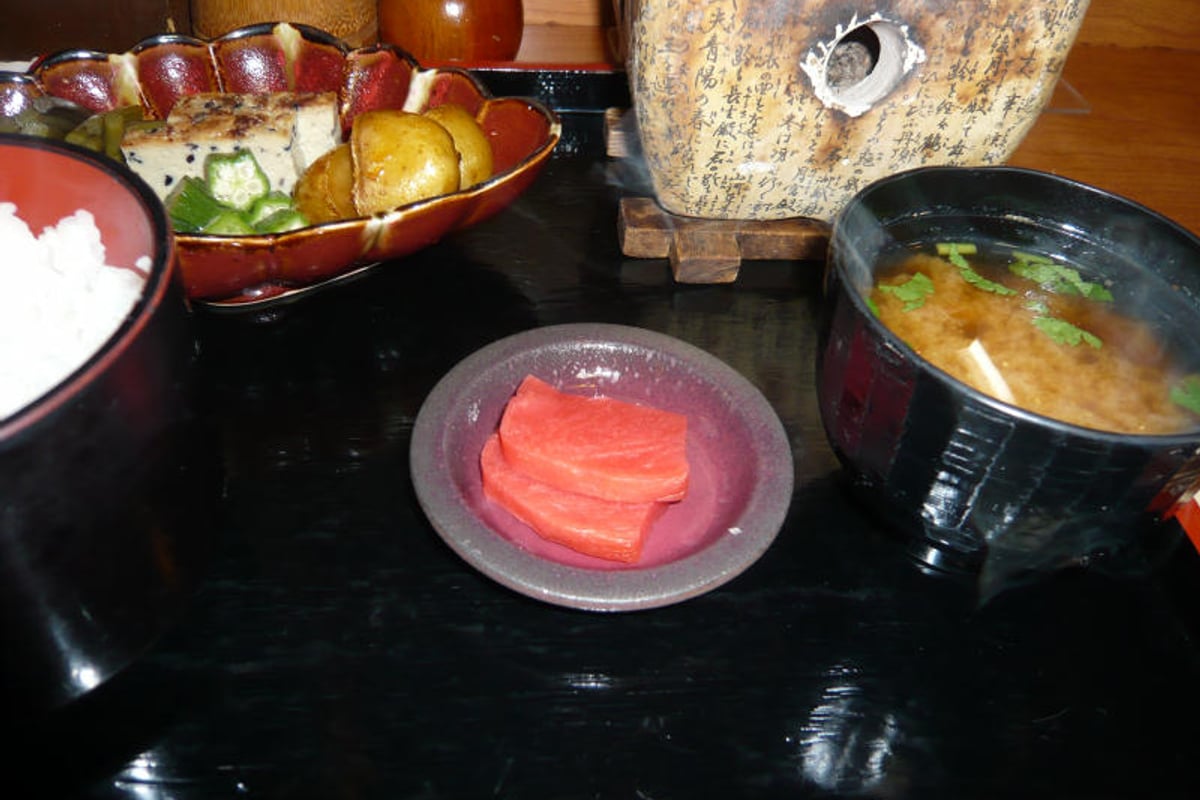
Aka Kabu Zuke
Aka Kabu Zuke
Aka Kabu Zuke is a local dish of the Hida region of Gifu Prefecture made by salting the region's specialty red turnips and allowing them to undergo lactic fermentation. In the Hida region, which sits at high elevation and is blanketed in snow through the winter, pickling has been practiced in individual households since the Edo period as a vital way to preserve food for the season when vegetables cannot be harvested. It is also said to have developed as a way to boost preservability using only a small amount of salt, since salt was once precious in this mountainous area. The Hida beni-kabu red turnip used in today's Aka Kabu Zuke originated from a naturally occurring red-colored mutant discovered in 1918 (Taisho 7) among the traditional Yoshika turnip variety. Natural pigments in the turnip's skin combine with lactic fermentation to produce its vivid red color along with a subtle tartness and sweetness, and it is also popular as a signature souvenir of Hida-Takayama.
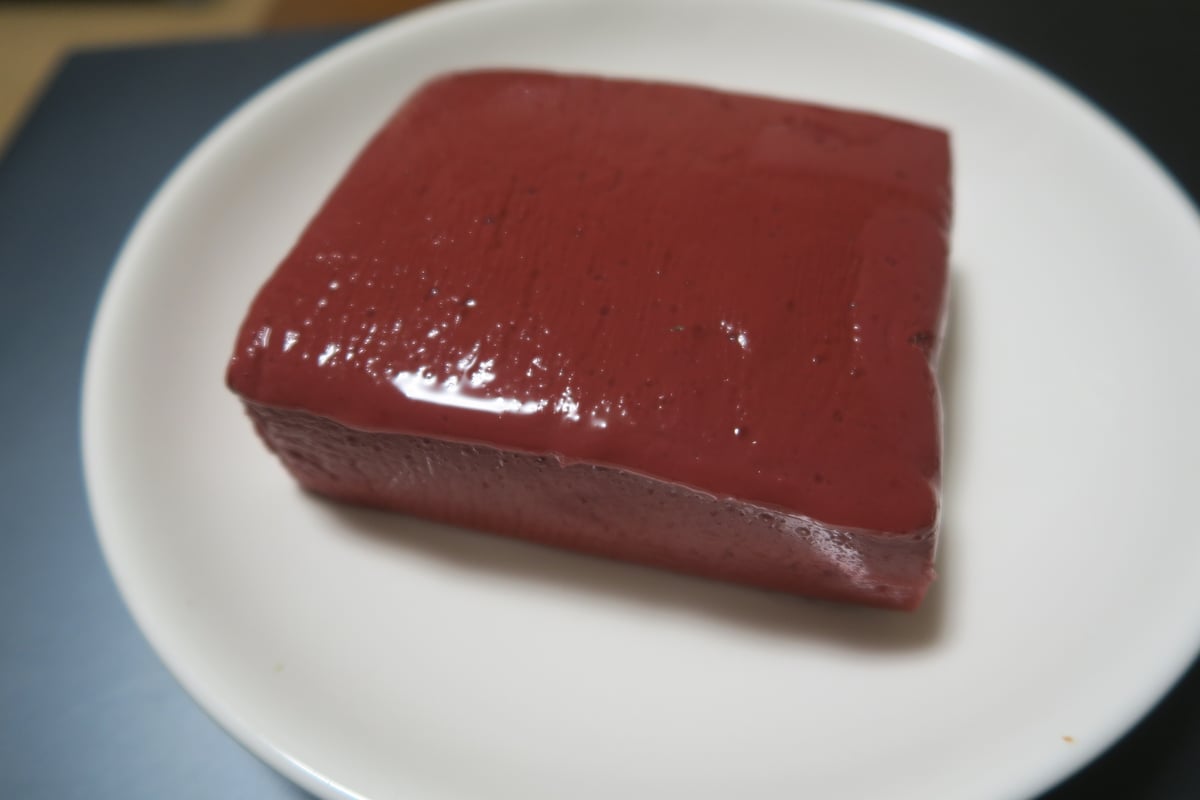
Aka-konnyaku (Red Konjac)
Aka-konnyaku
Aka-konnyaku is a vividly red-colored konjac known as a specialty of Omihachiman City in Shiga Prefecture. It is colored with iron sesquioxide, a food additive that resists fading even when cooked, and it has a distinctively firm, chewy texture. Several stories are told about its origin, including that Oda Nobunaga, said to have loved flamboyant things, had even the konjac dyed red, or that the color was inspired by Nobunaga's red battle surcoat, but no story has been reliably confirmed. The 1940 'History of Hachiman Town, Shiga Prefecture' includes an account from an elderly resident that the color was once produced by boiling down corn husks; from the Meiji era onward, food dye was used, and once the use of iron sesquioxide was approved in 1971, the production method used today became established. It is used in a wide range of dishes, from simmered dishes and dengaku (skewered and grilled with miso) to sashimi-style preparations, and it remains a classic souvenir for visitors to Omihachiman.
Akita Morokoshi
Akita Morokoshi
Akita Morokoshi is a local confection classified as a type of rakugan (a pressed, dry sugar confection), made by mixing red-bean (azuki) flour with sugar, pressing it in wooden molds, and slowly baking it. Its origin is said to trace back to 1705 (Hoei 2) in the Edo period, when Satake Yoshitada, the 4th lord of the Kubota domain, had a parched-rice confection made to reward his retainers for their service. Later, Sugiyama Ryosaku, the founding master of the confectionery shop Sugiyama Jusando, presented a confection made with red-bean flour to Lord Yoshitada, who praised it highly, saying it 'surpassed every other confection in flavor' — and this remark is said to be the origin of the name 'Morokoshi.' (There is also another theory that the name instead derives from 'morokoshi,' a word of Chinese origin, so its precise etymology remains debated.) With a history spanning more than 300 years, it is known for its refined sweetness that melts gently in the mouth and the fragrant flavor of red beans, and it remains beloved today as a signature souvenir confection of Akita.
Ganzuke (Fermented Crab Paste)
Ganzuke
Ganzuke is a Saga Prefecture specialty made by grinding whole small crabs, such as fiddler crabs found on the tidal flats of the Ariake Sea, shell and all, then mixing them with salt, soy sauce, and chili pepper and letting them ferment and mature. Depending on the area it is also called 'ganizuke' or 'ganezuke.' It is said to be a preserved food with a long history, made along the Ariake Sea coast since the Edo period, born from the wisdom of using the tidal flats' wide difference between high and low tide to make full use of the small crabs found there in abundance. It is characterized by its rich salty flavor, strong crab taste, and the gritty texture of the crushed shells, and in Saga it is more commonly eaten spooned over hot rice than as a snack with alcohol. It is also sometimes used as a seasoning in fried rice, miso soup, or pasta.
Ganzuki (Steamed Cake)
Ganzuki
Ganzuki is a local confection of Miyagi Prefecture made by mixing wheat flour with baking soda (or baking powder), brown sugar, and water, pouring the batter into a mold, and steaming it — a fluffy yet substantial steamed cake. There are several theories about the origin of its name: one holds that the color and appearance of the steamed batter resembles the meat of a wild goose (gan), while another holds that the round shape and the sesame seeds scattered on the surface evoke the image of the moon and a goose. In the Sendai Domain, rice cultivation was encouraged, and because farmers had to hand over much of their harvested rice as tax, wheat cultivation and a flour-based food culture spread among them — this is thought to be the background behind the development of local confections made with wheat flour, such as ganzuki. 'Kuro ganzuki,' made with brown sugar, is the representative version, but there are many regional and household variations, including 'shiro ganzuki,' made with white sugar, and versions with added miso, soy sauce, walnuts, or sesame. While enjoyed as an everyday snack, it also has a side as a ceremonial food made for memorial services and celebrations.
Himuro Manju
Himuro manju
Himuro Manju is a lucky steamed bun eaten in Kanazawa on 'Himuro no Hi' (Ice House Day), which falls on the first day of the sixth month by the old lunar calendar — now observed on July 1 — to pray for good health. During the Edo period, the Maeda family of the Kaga domain stored snow that fell over the winter on the Hakusan mountain range in ice houses, and on the first day of the sixth month of the old calendar, it was customary to present this snow to the shogunate in Edo as 'Hakusan-gori' (Hakusan ice). It is said that runners known as Kaga hikyaku covered the roughly 480-kilometer journey in just four days, and it is believed that the practice of ordinary townspeople offering steamed buns to the gods and Buddhas to pray for the safe passage of this delivery gave rise to Himuro Manju. The buns come in three colors — white, red (pink), and green — said to symbolize purity, protection from evil, and health respectively. They are plump sake-yeast steamed buns filled with smooth sweet bean paste, and remain a summer tradition in Kanazawa, with confectionery shops throughout the city putting them on display all at once as July 1 approaches.
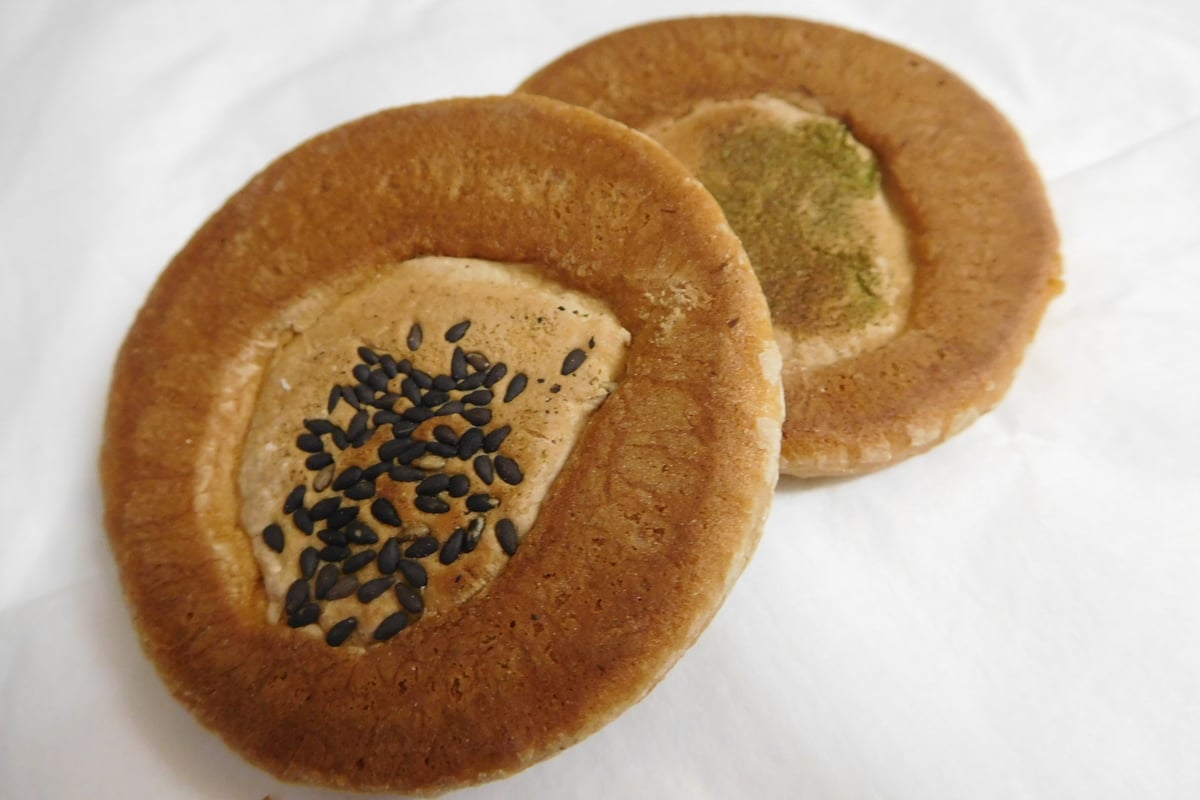
Iga Katayaki (Hard Baked Biscuits)
Iga Katayaki (Hard-Baked Ninja Crackers)
Katayaki is a very hard baked confection handed down in Iga City and Nabari City, Mie Prefecture. A dough made mainly from wheat flour and sugar is baked on an iron griddle and flavored with black sesame or aonori (green laver). As its name ('hard-baked') suggests, it is hard, and it is even called 'the hardest senbei in Japan.' Because it is compact, nutritious, and keeps for a long time, Iga ninja are said to have carried it as portable food, and it is also called 'ninka' (忍菓). It is also said to have been valued as preserved food on the battlefield. Records even remain of people once breaking it with the scabbard (saya) or hand guard (tsuba) of a sword to eat it. Today, it is usually broken by striking it with the included wooden mallet or by knocking pieces of katayaki against each other. It can also be softened by soaking it in tea or milk. Today's sweet katayaki is thought to have taken its current form more than 200 years ago. Producers are scattered around the castle town of Iga Ueno and elsewhere, and some shops let you watch the baking.
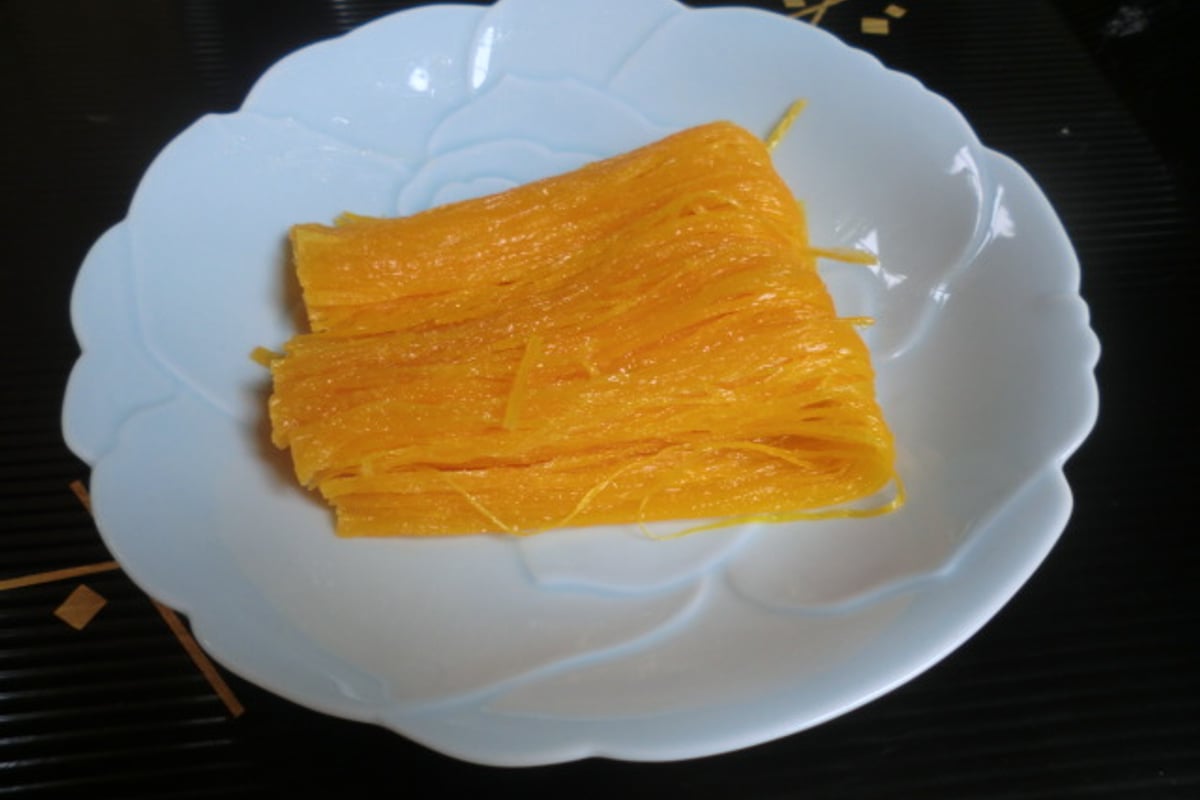
Keiran Somen
Keiran Somen
Keiran somen is a nanban confection resembling somen noodles, made by pouring egg yolk into thin, thread-like strands and simmering it in syrup. It is said to have been introduced to Hakata via Nagasaki along with nanban culture in the 16th century, and is sometimes counted among Japan's 'three great confections,' alongside konpeito and castella. In the early Edo period, Matsuya Riemon, the official confectioner to the Fukuoka domain, established the recipe, and after the domain lord granted him the right to use his shop name in 1673, it has continued to be made for more than 350 years. It is characterized by its rich sweetness, made only from egg yolk and sugar, and its delicate, thread-like texture, and remains cherished in Fukuoka today as a gift for celebratory occasions.
Kurumi Mochi
Kurumi Mochi (Sakai Wrapped Rice Cake)
Kurumi mochi is a specialty sweet of Sakai City, Osaka Prefecture, consisting of small pieces of mochi wrapped in a green bean paste (an). The 'kurumi' in the name does not refer to walnuts (kurumi) but comes from 'kurumu,' meaning to wrap the mochi in bean paste. The originator is said to be Kanbukuro (かん袋), a long-established shop in Sakai Ward, Sakai City. According to the shop's history, it began when 和泉屋徳兵衛 opened a mochi shop in 1329 (Gentoku 1). In the middle of the Muromachi period, in Sakai, which prospered through trade with Ming China, the fifth-generation owner is said to have created it as a salty tea sweet using agricultural produce brought in from Ming. Later, when sugar arrived from Luzon (today's Philippines), sweetness was added, giving it its present flavor. In the Meiji era, 'kori kurumi mochi,' topped with shaved ice, was also created, and in summer people line up at the shop. With its combination of lightly sweetened bean paste and soft mochi, it is also introduced as a dish of Osaka Prefecture in the Ministry of Agriculture, Forestry and Fisheries' 'Our Regional Cuisines' (Uchi no Kyodo Ryori).
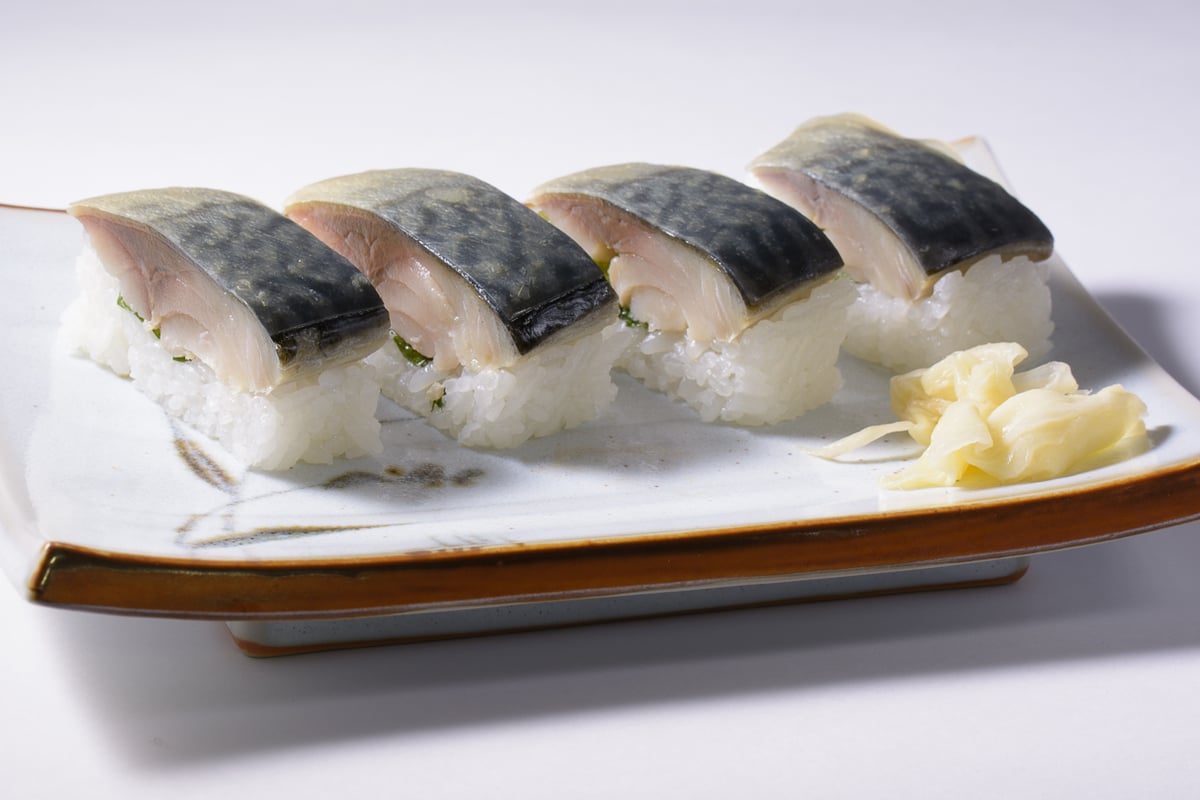
Kyo Sabazushi (Kyoto Mackerel Sushi)
Kyo Sabazushi
Kyo Sabazushi is a local sushi of Kyoto in which salt-cured mackerel is placed atop vinegared rice shaped into a bar and wrapped in kelp. It developed as a valuable opportunity to eat fresh seafood in landlocked Kyoto, and is said to have originated from mackerel caught in Wakasa Bay that was salted and carried on foot along the route known as the "Saba Kaido" (Mackerel Road) to Kyoto, becoming perfectly seasoned by the time it arrived. Even today, with refrigeration technology fully developed, the custom of eating it as a feast for "hare" (celebratory) occasions — including Kyoto's three great festivals, the Aoi Matsuri, Gion Matsuri, and Jidai Matsuri, as well as autumn festivals across the region — continues to be passed down, and it is cherished as a special dish served at home and at festival gatherings. There are two styles: "bo-zushi," pressed and shaped into a bar, and "sugata-zushi," which uses a whole mackerel as is, and each shop's individuality shows in how it is prepared.
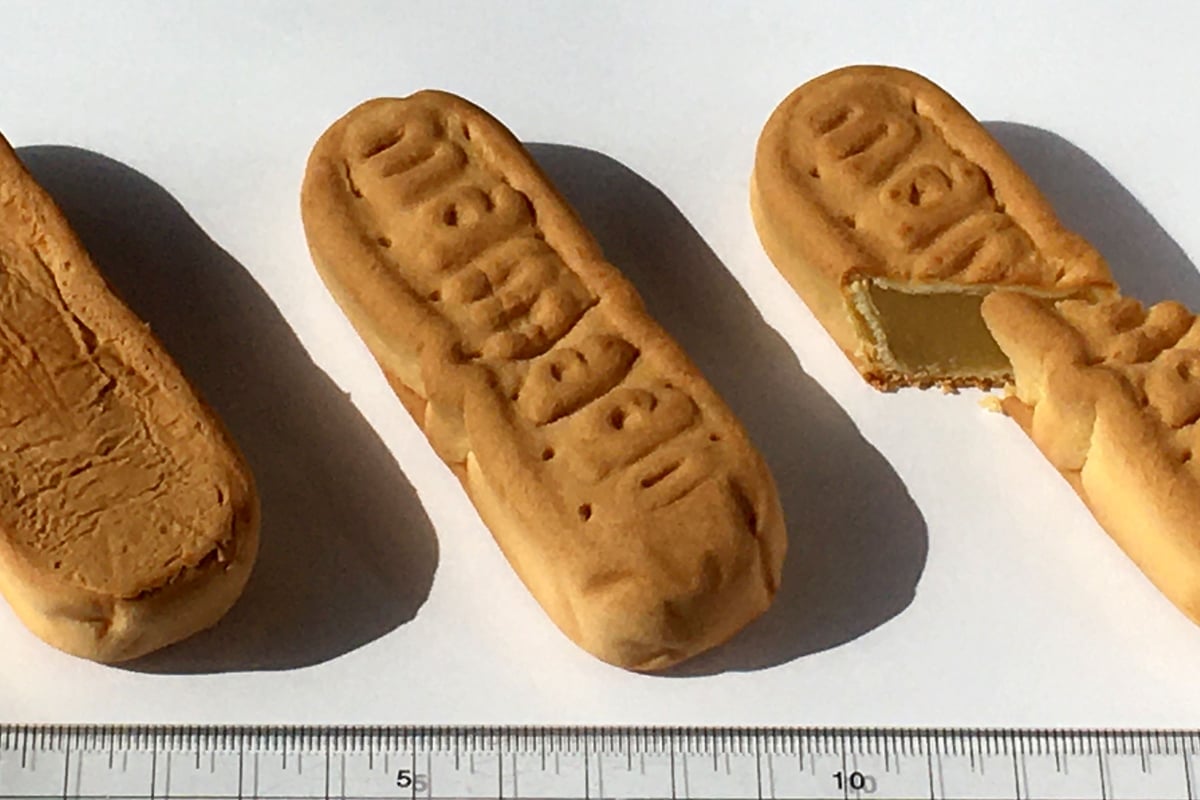
Mamadoru (Milk-filled butter cake)
Mamadoru (Milk-filled butter cake)
Mamadoru is a traditional local confection representative of Fukushima Prefecture, made by wrapping a milk-flavored filling in butter-enriched dough and baking it. It has been a long-selling favorite since Sanmangoku, a long-established confectionery in Koriyama City, Fukushima Prefecture, first released it in 1967, and it is widely known as a classic Fukushima souvenir enjoyed for more than half a century. The name is said to derive from a Spanish phrase meaning 'a child nursing at the breast,' and the confection is characterized by the combination of a gentle milk aroma and moist dough. At the time of its release, it drew attention as a Western-style baked confection that was still uncommon, and today it is counted among the representative confections not only of Fukushima but of the wider Tohoku region. The yellow-based packaging has remained largely unchanged since its debut, and its simple flavor, beloved across generations, is one reason for its long-standing popularity.
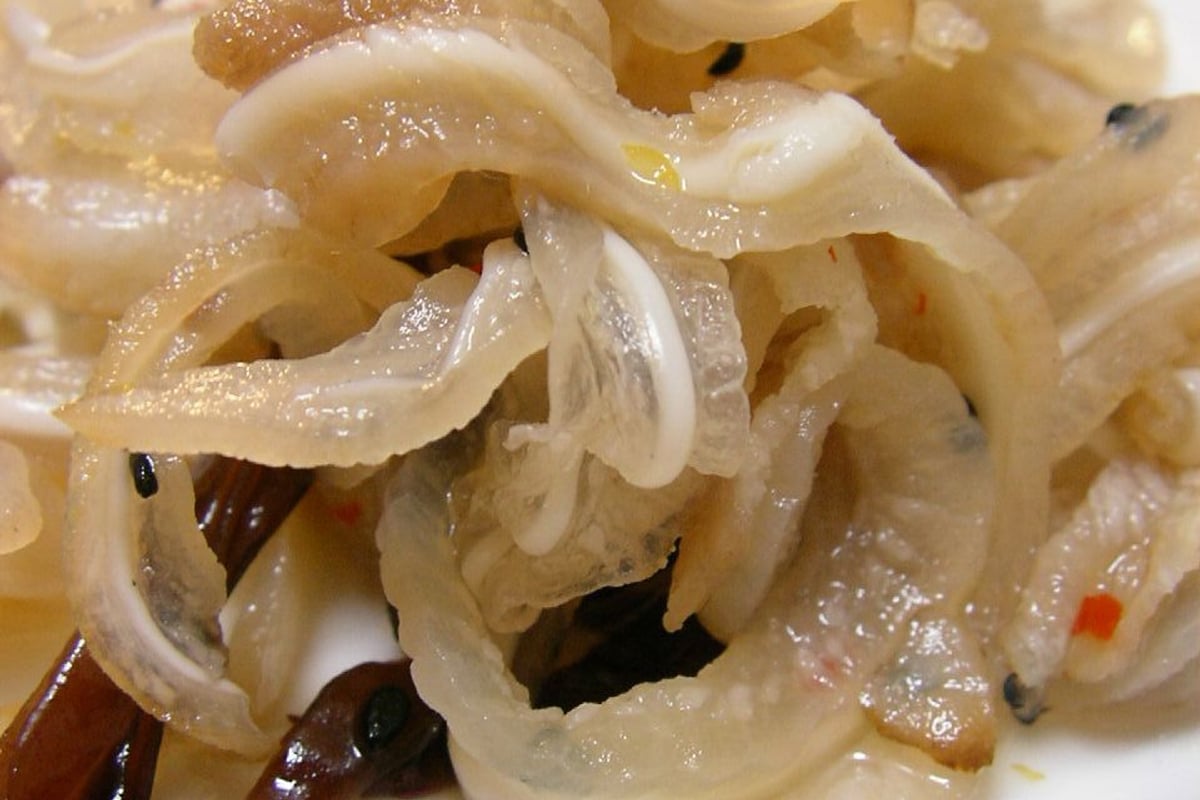
Mimigaa (Pig Ear)
Mimigaa (Pig Ear)
Mimigaa is an Okinawan regional dish made from pig ears, a delicacy prized for its distinctively crunchy, cartilage-like texture. The name is thought to combine "mimi," meaning ear, with "gaa," the Okinawan dialect word for skin. Since the ear consists almost entirely of cartilage and skin with very little muscle, it is low in fat and known as a source of high-quality collagen. The standard preparation is to singe off the hair over an open flame, boil or steam the ear, then slice it thinly and dress it with peanut sauce, ponzu, or vinegared miso. In Okinawa, there is a long-standing food culture of using every part of the pig, said to leave nothing to waste "except the squeal," and mimigaa is emblematic of that tradition, widely enjoyed as an izakaya menu item, a home side dish, and a drinking snack. Using a cut rarely found outside the prefecture, it is a uniquely Okinawan dish.
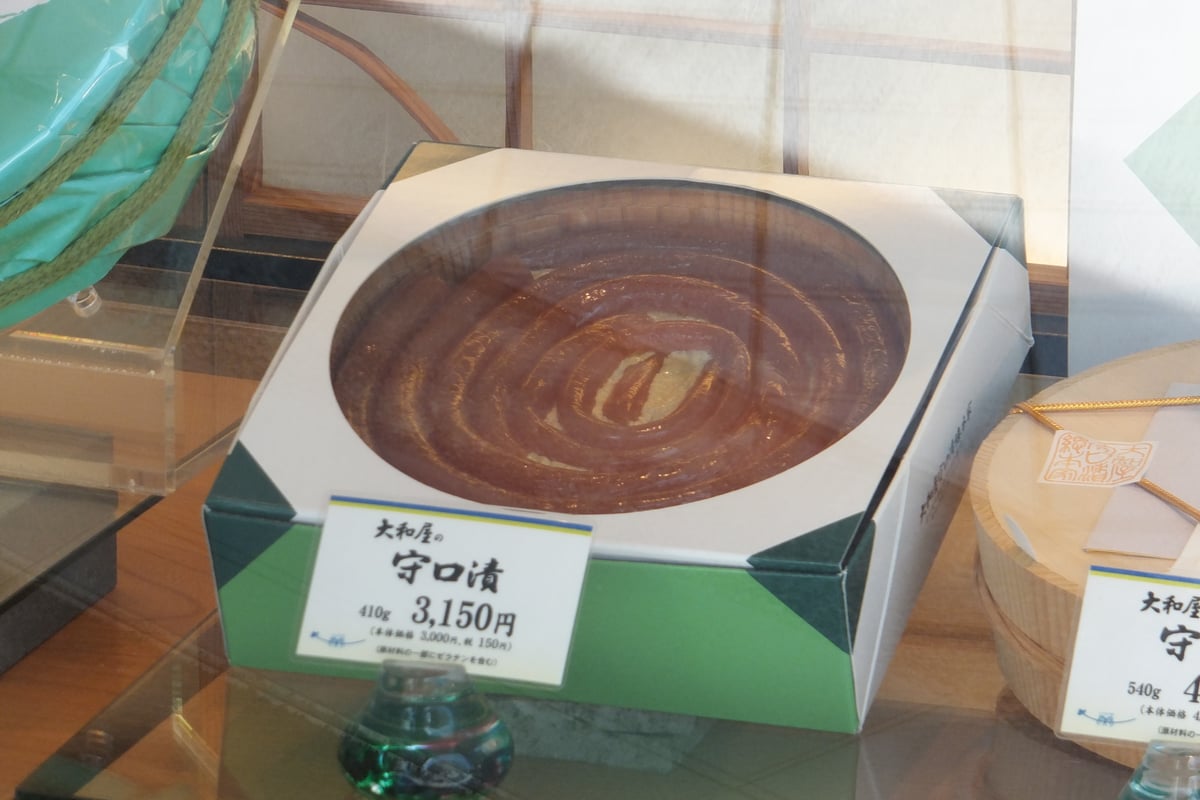
Moriguchi-zuke (Pickled Moriguchi Daikon Radish)
Moriguchi-zuke
Moriguchi-zuke is a Nara-zuke-style pickle unique to Aichi Prefecture, made by curing Moriguchi daikon — said to be the world's longest daikon radish — in sake lees and mirin lees. Moriguchi daikon is a slender radish about 2 centimeters in diameter and over a meter long, and it is one of Aichi's traditional vegetables, with much of the nationwide crop grown around the town of Fuso along the Kiso River. Both the cultivation and the pickling process are labor-intensive, and the whole process from sowing to a finished pickle is said to take roughly three years. Repeated re-pickling in sake lees and mirin lees produces an amber color, refined sweetness, rich aroma, and pleasant crunch, making it a beloved souvenir and gift item representative of Nagoya.
Narita no Kuri Yokan
Narita Kuriyokan
Narita no Kuri Yokan is a Japanese confection created by Nagomi no Yoneya, a long-established confectionery founded in 1899 (Meiji 32) on the approach to Naritasan Shinshoji Temple. Its founder, Morooka Chozo, is said to have taken inspiration from 'kurikan,' a chestnut sweet served as part of the temple's shojin ryori (Buddhist vegetarian cuisine), and created Japan's first kuri yokan (chestnut yokan) using locally grown small chestnuts called shiba-guri, selling it as a souvenir for visitors to Naritasan Shinshoji Temple. Since then it has been cherished as a signature souvenir of the temple's approach, and the main shop houses the 'Narita Yokan Museum,' which displays the shop's history since its founding along with tools used in making yokan. Known for its refined sweetness that highlights the flavor of shiba-guri chestnuts, it remains a popular choice today both as a snack to enjoy while strolling the approach and as a souvenir for visitors and returning travelers.
Oiwake Yokan
Oiwake Yokan (Bamboo-Wrapped Steamed Yokan)
Oiwake Yokan is a steamed yokan wrapped in bamboo sheath, made by 追分羊かん本店 in Oiwake, Shimizu Ward, Shizuoka City, Shizuoka Prefecture. The shop is said to have been founded in 1695 (Genroku 8). It stands on the outskirts of Ejiri-juku post town on the old Tokaido, at the fork (oiwake) where the Kuno road branches off toward Kunozan. Beloved by travelers coming and going on the Tokaido, it has been handed down as a specialty of the highway for more than 300 years. Because azuki bean paste mixed with glutinous rice is wrapped in bamboo sheath and steamed, the fragrance of the bamboo transfers to it. It has a distinctive sticky, smooth texture and a simple taste with restrained sweetness. Another distinctive feature is that it is cut with a knife through the bamboo sheath, and the sheath is peeled off before eating. It is also said to have been a favorite of Tokugawa Yoshinobu, the last shogun of the Edo shogunate. It is also one of the component cultural properties of the Japan Heritage story themed on travel along the Tokaido, 'Yaji-san and Kita-san, Who Started Japan's First Travel Boom: A Journey through Sunshu.'
Shoyu no Mi (Fermented Soybean Relish)
Shoyu no Mi
Shoyu no Mi is a traditional preserved food of Yamanashi Prefecture made by fermenting soybeans with barley koji. According to tradition, households in Yamanashi once made their own soy sauce from soybeans, and the soybeans left over in the process were fermented and called 'shoyu no mi.' It was once a traditional food of the Kyochu area of the Kofu Basin, but today it is handed down only in the Ashiyasu area of Minami-Alps City. Ashiyasu is a cold, high-altitude area at the foot of the Southern Alps with much sloping land. Because the land is unsuited to growing vegetables and rice, soybeans, which are hardy against the cold, have long been widely cultivated. Boiled soybeans are mixed with barley koji, left to grow mold in wooden boxes, and dried; they are then rehydrated with water and sake and seasoned with salt to finish. The traditional way to enjoy it is with green onions or shirasu-boshi (dried baby sardines) added, served on barley rice. As a valuable source of protein, it has supported winter meals in the mountains.
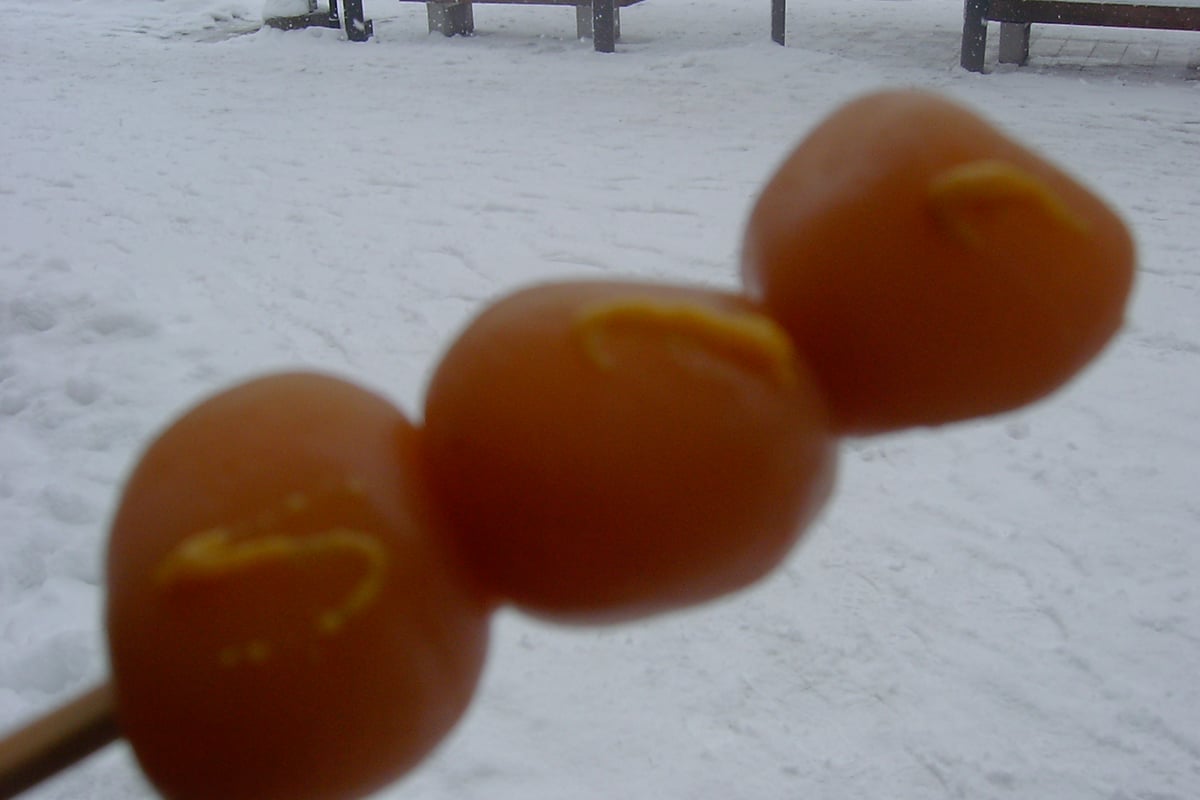
Tama Konnyaku (skewered konjac balls)
Tama Konnyaku
Tama konnyaku is a local specialty said to be a soul food for the people of Yamagata Prefecture: konjac rolled into balls about 3 cm in diameter, skewered, and simmered slowly in a soy-sauce-based broth. It is said to have originated when Jikaku Daishi, who founded Yamadera (Risshaku-ji Temple) in the Heian period, used konjac he had brought back from China in the temple's shojin (Buddhist vegetarian) cuisine; the practice later spread to nearby residents and took root throughout the prefecture. Flat konjac and shirataki (thread-like) konjac are found all over Japan, but the style of skewering it into balls and eating it while walking — 'tama konnyaku' — is a food culture unique to Yamagata. It is a beloved street-food staple at festivals, tourist spots, and cherry-blossom-viewing stalls, and it is typically eaten with a dab of hot mustard (neri-garashi).
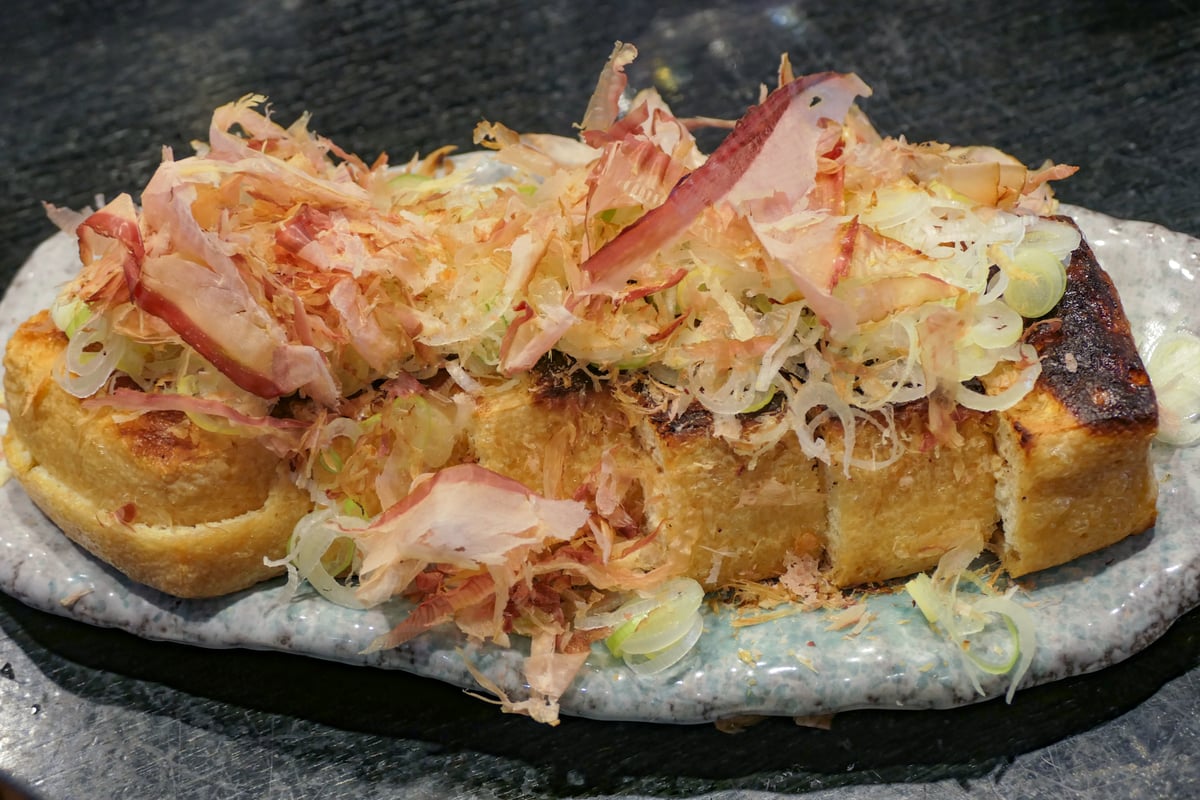
Tochio Aburaage (Giant Deep-Fried Tofu)
Tochio Aburaage
Tochio Aburaage is a large deep-fried tofu made in the Tochio area of Nagaoka City, Niigata Prefecture, and called 'aburage' in the local dialect. Measuring about 20 to 22 cm long, 6 to 8 cm wide, and 3 cm thick, it is more than three times the size of ordinary aburaage, and it is characterized by a crisp exterior and a fluffy interior. It is fried twice, in two pots at low and high temperatures, and after frying it is pierced with metal skewers to drain the oil, leaving a skewer hole in the center. Its origins are said to date back to the mid-Edo period. One theory holds that it was devised as a souvenir for pilgrims to Akiha Sanjakubo Daigongen, worshiped as a deity that protects against fire, and another holds that bakuro (livestock dealers) at Tochio's horse market ate it as a snack with sake. Today there are more than 15 aburage shops in the Tochio area, and besides being grilled and eaten with ginger and soy sauce, it is also used in simmered dishes and in dishes where it is stuffed with fillings and grilled.
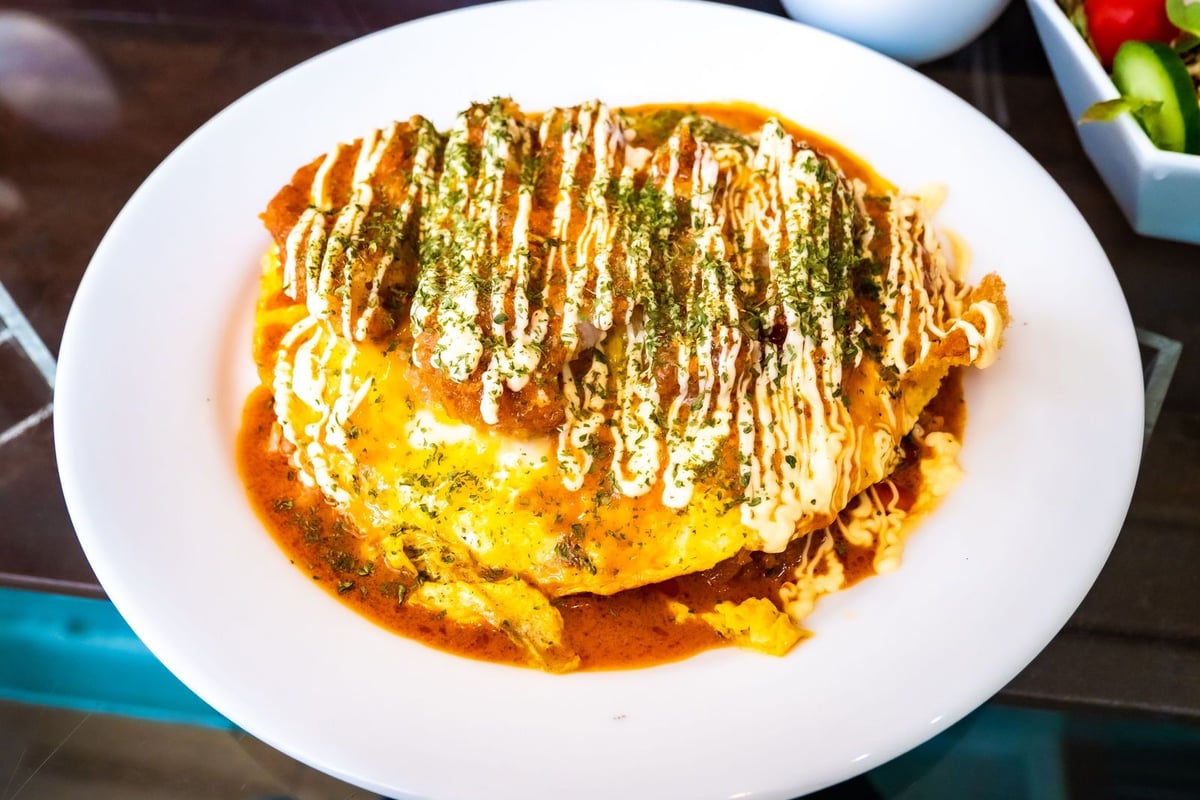
Volga Rice
Volga Rice
Volga Rice is a local specialty of Echizen City, Fukui Prefecture, consisting of omurice (omelet rice) topped with a tonkatsu (pork cutlet) and covered in sauce. It is said to have been enjoyed for more than 30 years in the Takefu district of Echizen City, which corresponds to the former Takefu City. Locally, it has been eaten not as a special dish but as an entirely ordinary Western-style meal (yoshoku). There is no set recipe, and a major characteristic is that the preparation and flavor differ from restaurant to restaurant. Besides ketchup rice, some restaurants use pilaf or fried rice for the rice inside. The cutlet also varies, from pork loin or fillet to minced meat cutlet (menchi katsu), and the sauces are just as distinctive, including demi-glace and tomato sauce. The origin of the name 'Volga' is unclear, and various theories are told. In 2010, Echizen City employees and others formed the 'Japan Volgaler Association' and have worked to promote the town. The number of restaurants serving it has grown from about five at first to more than 20, and it has also appeared in school lunches.
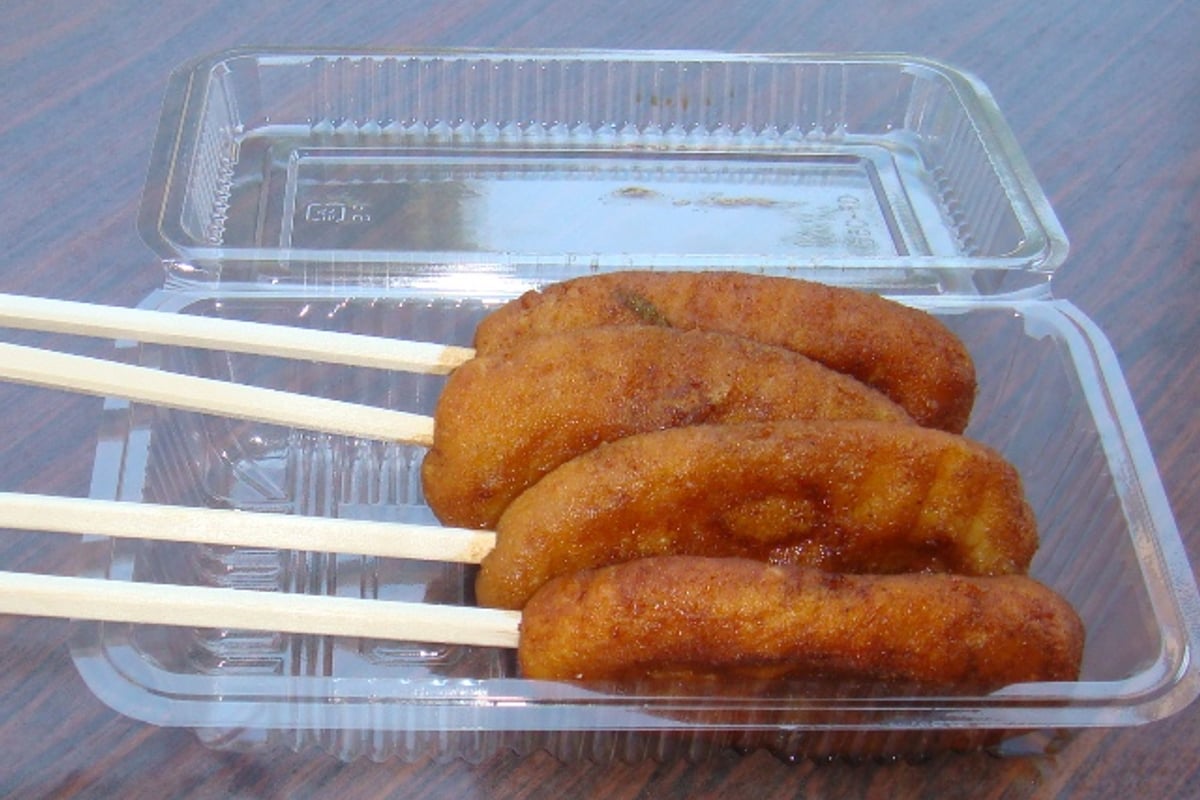
Zeri Furai
Zeri Furai
Zeri furai is a local specialty of Gyoda City made by boiling and mashing potatoes, mixing them with okara (soy pulp), chopped green onion, carrot, and other ingredients, shaping the mixture into small oval discs resembling coins, deep-frying it without any batter, and dipping it in Worcestershire sauce before eating. Despite the name, it has nothing to do with dessert 'jelly'; the widely known theory is that it was originally called 'zenifurai' ('coin-fried,' written with characters meaning 'money' and 'coming'), for its coin-like shape, and the name gradually shifted to 'zeri furai.' Its roots are said to trace back to the owner of 'Ippuku Chaya' in Mochida, Gyoda, who served in the Russo-Japanese War and adapted a vegetable-bun dish he ate in northeastern China; it is said to have already existed by the late Meiji era. Because it uses plenty of okara, it is rich in dietary fiber and considered a healthy dish, and its chewy texture combined with the flavor of the sauce that soaks into it has made it a favorite. It is served and sold at several places around Gyoda City, including specialty shops, tofu shops, and candy stores, and is beloved as a representative everyday snack and light meal of the city.
Jako Sansho (Dried Baby Sardines with Sansho Pepper)
Jako Sansho
Jako Sansho is a tsukudani (food simmered in soy sauce) made by simmering chirimen-jako (boiled and dried baby anchovies) together with fresh sansho peppercorns in a sweet-savory mixture of soy sauce, mirin, and sake. It is one of the obanzai (everyday Kyoto home dishes) indispensable to a Kyoto table. Also known as "chirimen sansho," it has long been enjoyed as an accompaniment to rice, in ochazuke, and as a snack with sake. Originally made in individual households as something like a small gift to share with neighbors and visitors, it became widely known as a staple Kyoto souvenir after being commercialized in the mid-Showa era. Its distinctive appeal lies in the deep, layered flavor created by the sharp bite and refreshing aroma of the fresh sansho peppercorns balanced against the savory richness of the chirimen-jako, and part of the enjoyment is comparing the different blends offered by each shop.
Kamo Nanba (Duck and Green Onion Noodles)
Kamo Nanba
Kamo Nanba is a winter noodle dish cherished in Kyoto, combining duck meat and Kujo green onions with soba or udon. "Nanba" is a Kamigata (Kyoto-Osaka region) word for green onion, said to derive from the "Namba negi" once cultivated around the Namba area of Osaka. In Kyoto, locally grown Kujo negi, descended from the Namba negi lineage, is used, and the dish is characterized by a broth in which the flavor of green onion — whose sweetness increases with cooking — melds with the rich savoriness of fatty duck meat. It is also known as a dish whose name and written form differ between eastern and western Japan: in the Kanto region it is written "鴨南蛮" (kamo nanban), while in the Kamigata region it is called "鴨なんば" (kamo nanba). At long-established soba shops in Kyoto, it is often offered as a winter-only menu item, cherished as a bowl to enjoy during the cold season.
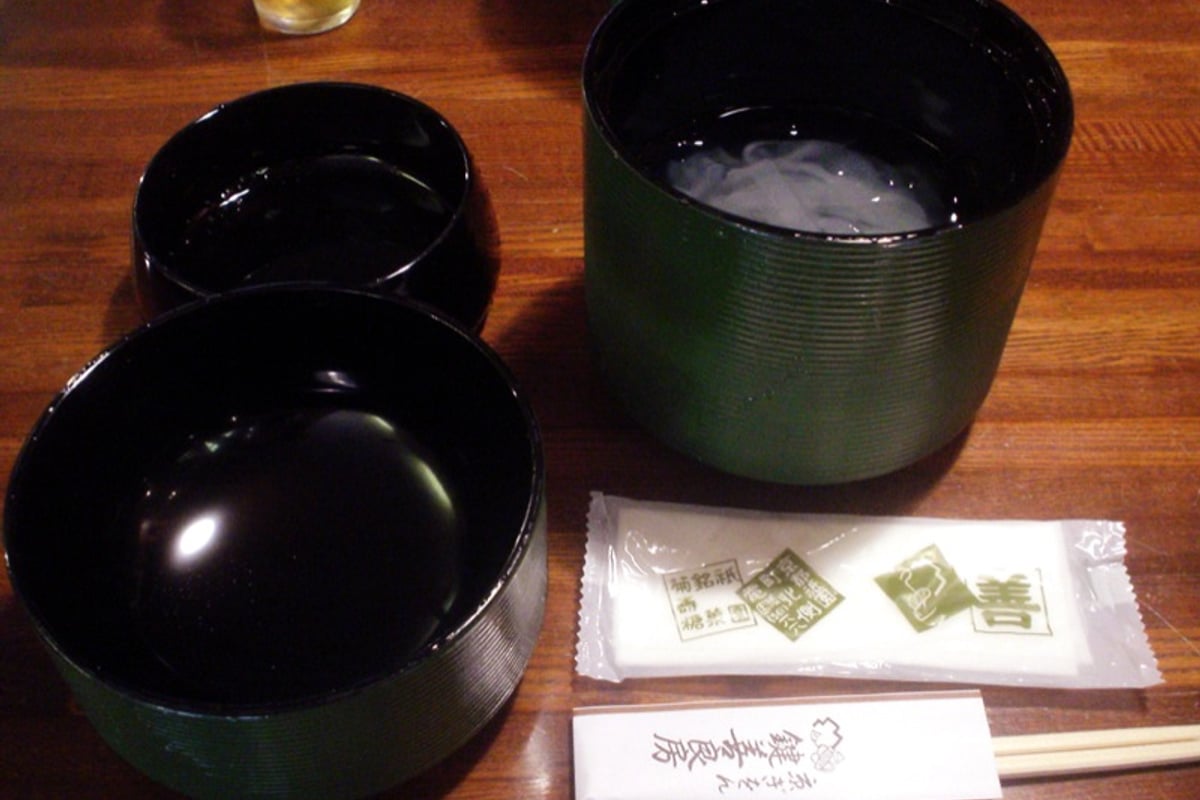
Kuzukiri (Kudzu Starch Noodles)
Kuzukiri
Kuzukiri is a summer sweet from Kyoto made by dissolving kudzu starch in water, steaming it firm, and cutting it into thin, noodle-like strips. It is chilled in ice water and enjoyed for its smooth, slippery texture, dipped in kuromitsu (black sugar syrup), shiromitsu (white syrup), or kinako (roasted soybean flour). Widely known as a specialty of sweets shops such as the long-established Gion shop Kagizen Yoshifusa, it is often handmade to order, piece by piece, and its freshly made springiness and translucent texture are part of its charm. The ingredient most often used is hon-kuzu, high-quality kudzu starch from Yoshino, Nara, and as a delicate confection whose flavor and texture are shaped directly by the quality of the kudzu, it has become a symbol of a Kyoto summer. The long-established Gion shop Kagizen Yoshifusa is said to have been founded during the Kyoho era (1716-1736), and it continues to uphold the style of handmaking each piece only after an order is received.
Hikichigiri (Hinamatsuri Wagashi)
Hikichigiri
Hikichigiri is a traditional premium wagashi (jonamagashi) made in Kyoto around the time of the Hinamatsuri (Doll's Festival). Dough such as mugwort mochi is stretched into a ladle-like shape, finished with an edge that looks as though it has been torn off, and topped with sweet bean paste or kinton (sweetened mashed bean paste) in the central hollow. Said to derive from a court ritual confection, it has long been cherished in Kyoto as a special sweet displayed alongside the Hinamatsuri dolls. The name is said to come from an anecdote in which, being too busy to properly round the mochi, someone simply tore it apart; and because its distinctive shape resembles an akoya pearl oyster, it is also said to carry a wish to protect and nurture a child's growth like a pearl. Its roots are traced to "itadaki-mochi," a rice cake used in court rituals for childbirth and the ceremony of the maternity sash, and many versions are colored green by mixing mugwort into the dough.
Kamonasu Dengaku (Grilled Kamo Eggplant with Miso)
Kamonasu Dengaku
Kamonasu Dengaku is a local dish representative of a Kyoto summer, made using "kamonasu," a traditional Kyoto vegetable. Whole, round kamonasu eggplants are cut into rounds or halves and slowly deep-pan-fried in oil, then generously topped with dengaku miso — a paste made by blending white or red miso with mirin, sugar, and sake. Kamonasu has firm flesh that holds its shape well when cooked and pairs well with oil, making it a vegetable well suited to dengaku preparation. Around July, the time of the Gion Festival, it is served as a seasonal delicacy not only at home but also in Kyoto's traditional restaurants (ryotei) and eateries, and it is cherished as a dish that adds color to a Kyoto summer. Kamonasu has a long history of cultivation, appearing in the 1684 (Joukyou 1) text Yoshu Fushi, and it is said to have once been grown in the Yoshida and Tanaka districts of Sakyo Ward.
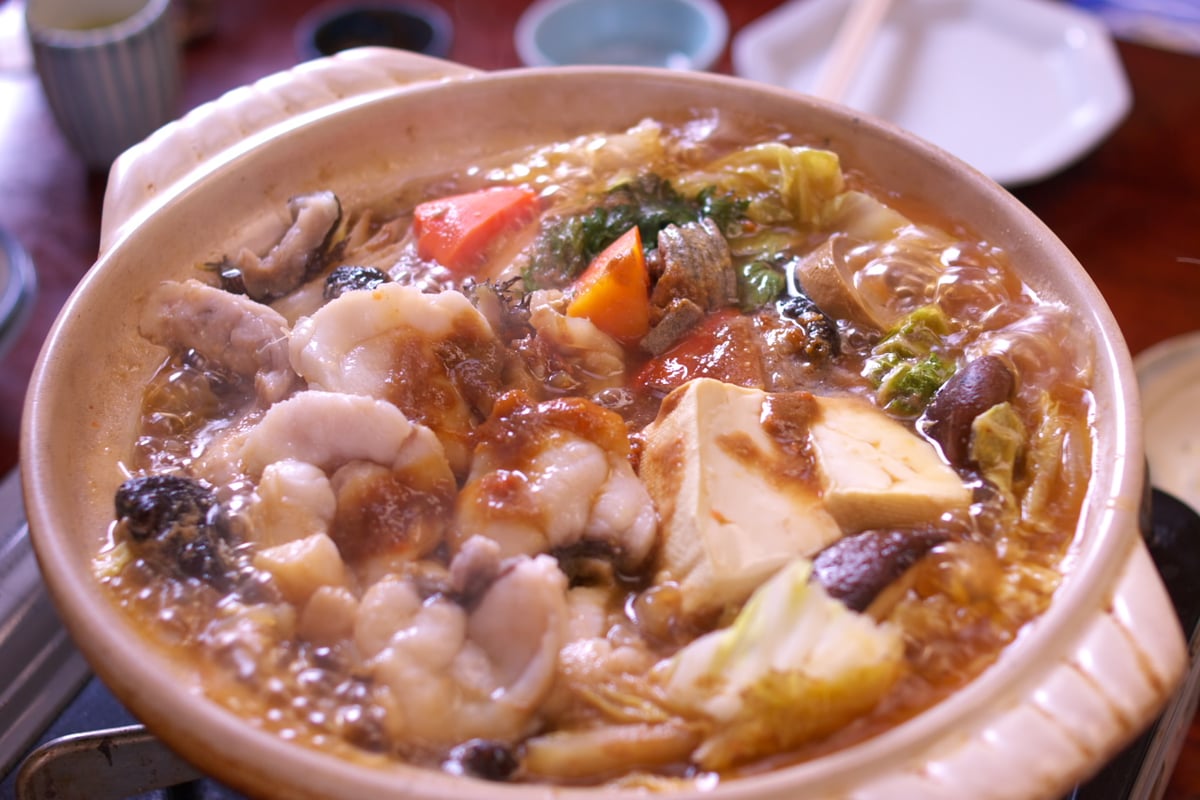
Anko Nabe (Monkfish Hot Pot)
Anko Nabe
Anko Nabe is a hot pot dish centered on monkfish landed at fishing ports such as Oarai Town, Hirakata and Otsu in Kitaibaraki City, and Nakaminato in Hitachinaka City, and it is a representative winter hot pot of Ibaraki Prefecture. In the Edo period, monkfish was a prized delicacy, ranked among the five great delicacies known as 'san-cho ni-gyo' (three birds, two fish) alongside crane, skylark, moorhen, and sea bream, and records remain showing that it was presented as tribute from the Mito Tokugawa family to the shogunate. Almost nothing of the monkfish goes to waste except the bones, and the dish makes full use of what are known as the 'seven tools of the monkfish' — nuno (ovaries), gills, tomo (fins), suibukuro (stomach), liver, yanagi-niku (flesh), and skin. Said to have originated from dobu-jiru, a stew fishermen made on board their boats without using fresh water, the dish today features flesh and organs simmered in a rich miso-based broth enriched with dissolved monkfish liver, and it is cherished as a signature winter hospitality dish of Ibaraki.
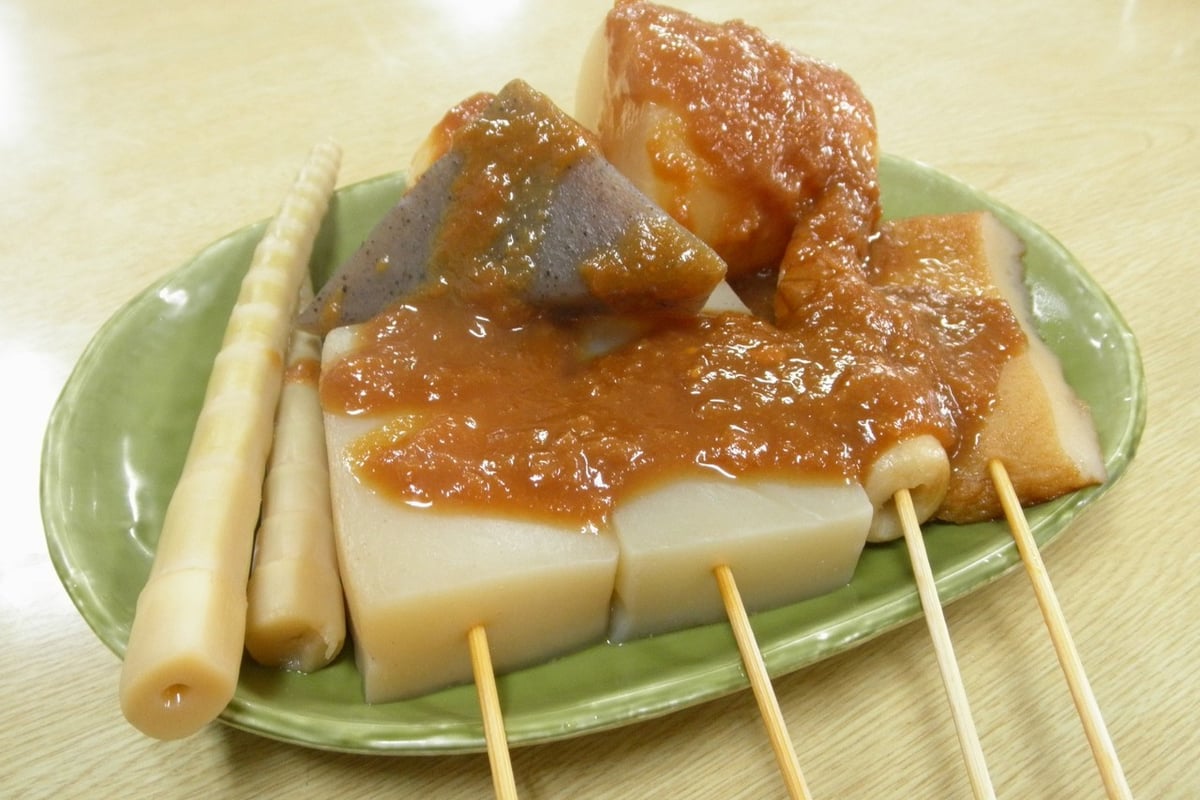
Aomori Ginger Miso Oden
Aomori Ginger Miso Oden
Aomori Ginger Miso Oden is a local variation of oden cherished throughout Aomori City and the greater Tsugaru region of Aomori Prefecture. It is said to have originated in the late 1940s at food stalls that lined the area from Aomori Station to Furukawa, when a stall owner began adding grated ginger to the miso sauce to warm passengers boarding the Seikan ferry. The dish is characterized by simmering Tsugaru miso (red miso) with sake, mirin, and dashi, then finishing it with plenty of grated ginger. Ingredients unique to Aomori are used, including daikon radish and eggs as well as the thin, large "Okakuten" fried fish cake, "Botan-yaki Chikuwa" (fish cake tube with a peony-petal-like grilled pattern), and whelks (tsubugai) that are a specialty of Mutsu Bay. Today, "oden" in Aomori City and the Tsugaru region is so closely associated with this ginger miso sauce that the two are virtually synonymous, and the Aomori Oden Association continues efforts to spread this local food culture nationwide, including publishing an "Oden Map" introducing member shops, establishing a standard recipe, and developing canned oden products. While cherished as a winter staple, many shops serve it year-round, making it one of the local dishes visitors to Aomori should try.
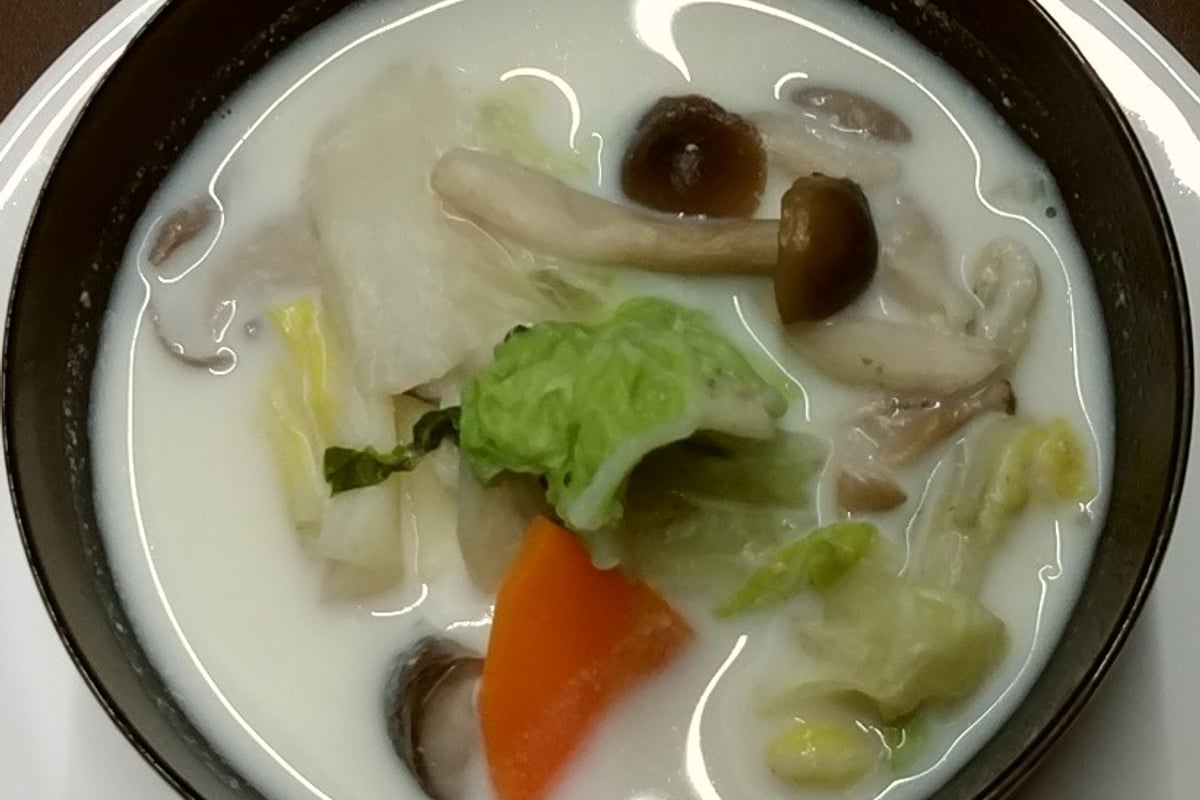
Asuka Nabe (Asuka-Style Milk Hot Pot)
Asuka Nabe
Asuka Nabe is a hot pot dish from Asuka Village in Nara Prefecture, in which chicken and vegetables such as napa cabbage and shungiku (garland chrysanthemum) are simmered in a chicken-bone broth enriched with milk. According to tradition, during the Asuka period an envoy from Tang China introduced dairy products to Japan and presented them to Emperor Kotoku, who was delighted, marking the beginning of milk drinking in Japan. One account holds that monks of the time simmered the meat of chickens they kept in milk and ate it, said to be one origin of Asuka Nabe. Because milk was costly, another account holds that goat's milk was used instead, and several versions of the story survive. The dish is known for its mellow flavor, seasoned with white miso and soy sauce, and it took on its present form as a specialty of Asuka in the early Showa era. Today it is a signature hot pot of Asuka Village, served mainly in winter at local restaurants.
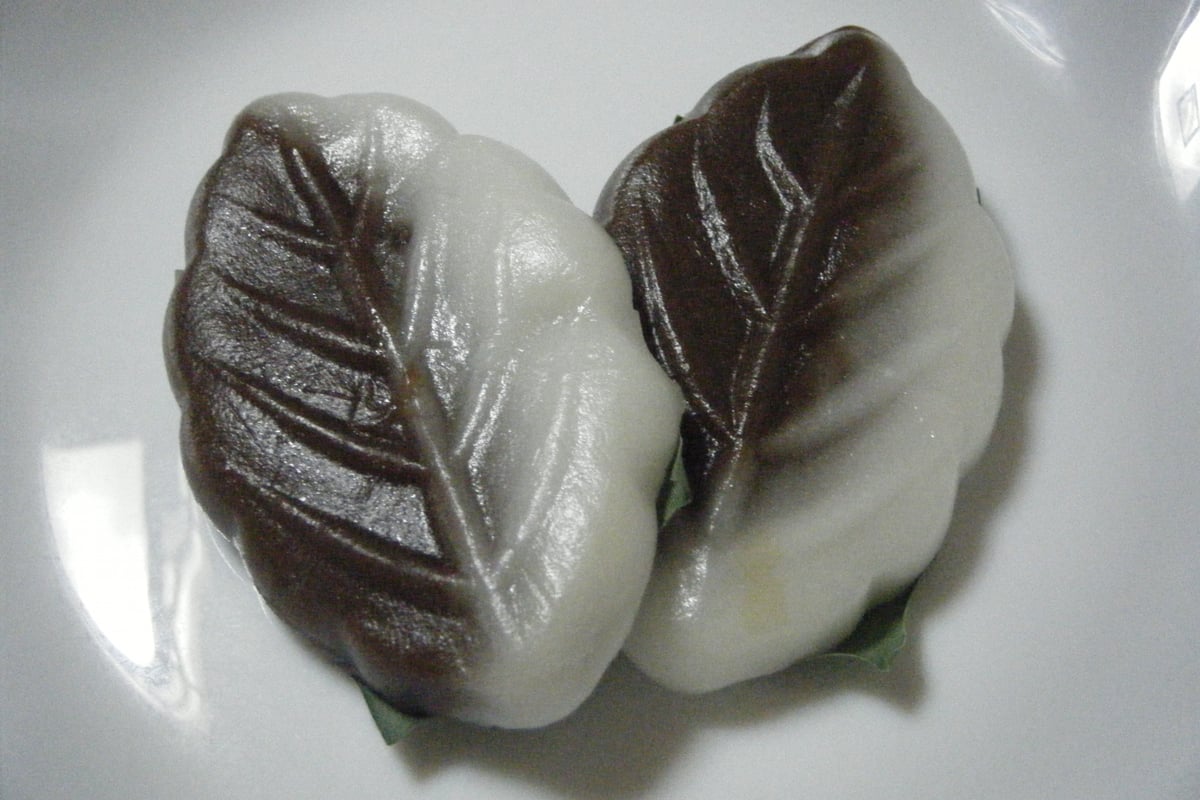
Bekomochi (marbled mochi sweet)
Bekomochi
Bekomochi is a regional confectionery of Hokkaido made by combining white and black (or brown) dough, typically shaped to resemble a leaf. A dough of joshinko (non-glutinous rice flour) or shiratamako (glutinous rice flour) mixed with sugar is combined with a dough colored with brown sugar, shaped, and then steamed. Its appeal lies in its soft, chewy texture and the gentle sweetness of the brown sugar. In Hokkaido, it is customarily eaten mainly around Tango no Sekku (Boys' Festival, May 5), and it has been especially popular in the Dounan (southern Hokkaido) region. Several theories exist about the origin of the name: one holds that the black-and-white coloring resembles a Holstein dairy cow, leading to the name 'beko' (a dialect word for cow); another traces it to the resemblance of the brown-sugar portion's color to tortoiseshell (bekkou); and yet another suggests it derives from rice flour (beiko) being the main ingredient—though no theory is firmly established. Centered on the Dounan region, shops produce a wide variety of distinctive bekomochi beyond the classic leaf shape, including green dough mixed with mugwort and versions filled with sweet red bean paste.
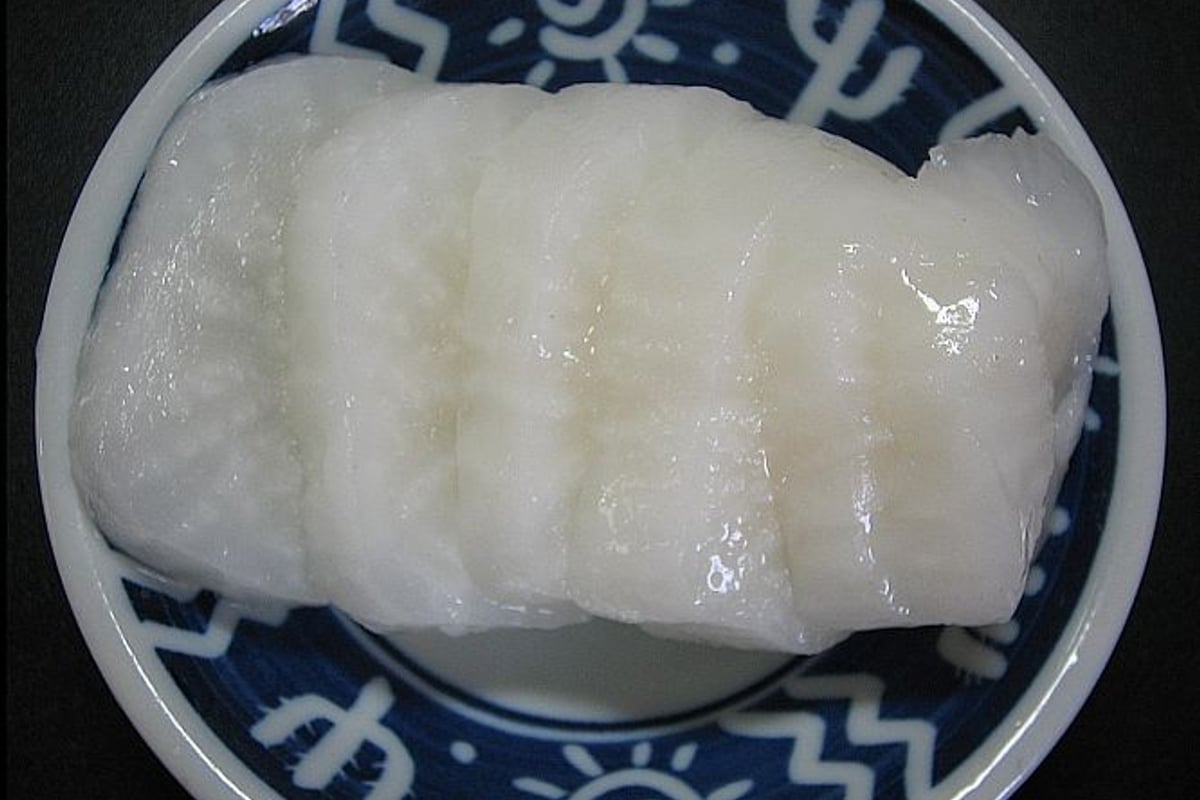
Bettarazuke
Bettarazuke
Bettarazuke is a traditional Tokyo pickle known for its sweetness and gentle tartness, made by first salting fresh daikon radish and then curing it further in rice malt (koji) and sugar to ferment. It became known nationwide under this name from the mid-Edo period, when it was sold every October 19 and 20 at the Bettara Ichi (Bettara Market) held at Takarada Ebisu Shrine in Odenmacho, Nihonbashi. There are two theories about the origin of the name: one holds that it came from the way rice malt from the curing bed stuck ('betta-betta') to the surface of the daikon, and another that street vendors would call out 'bettara, bettara' while playfully trying to press the malt onto customers' kimono sleeves. In an era when salty pickles were the norm, this lightly cured style with the natural sweetness of rice malt won popularity among the people of Edo, and the Bettara Ichi remains a beloved autumn tradition in Nihonbashi to this day, carried on since the Edo period. It is now sold year-round at specialty shops and pickle stores around Nihonbashi and has become a classic Tokyo souvenir.
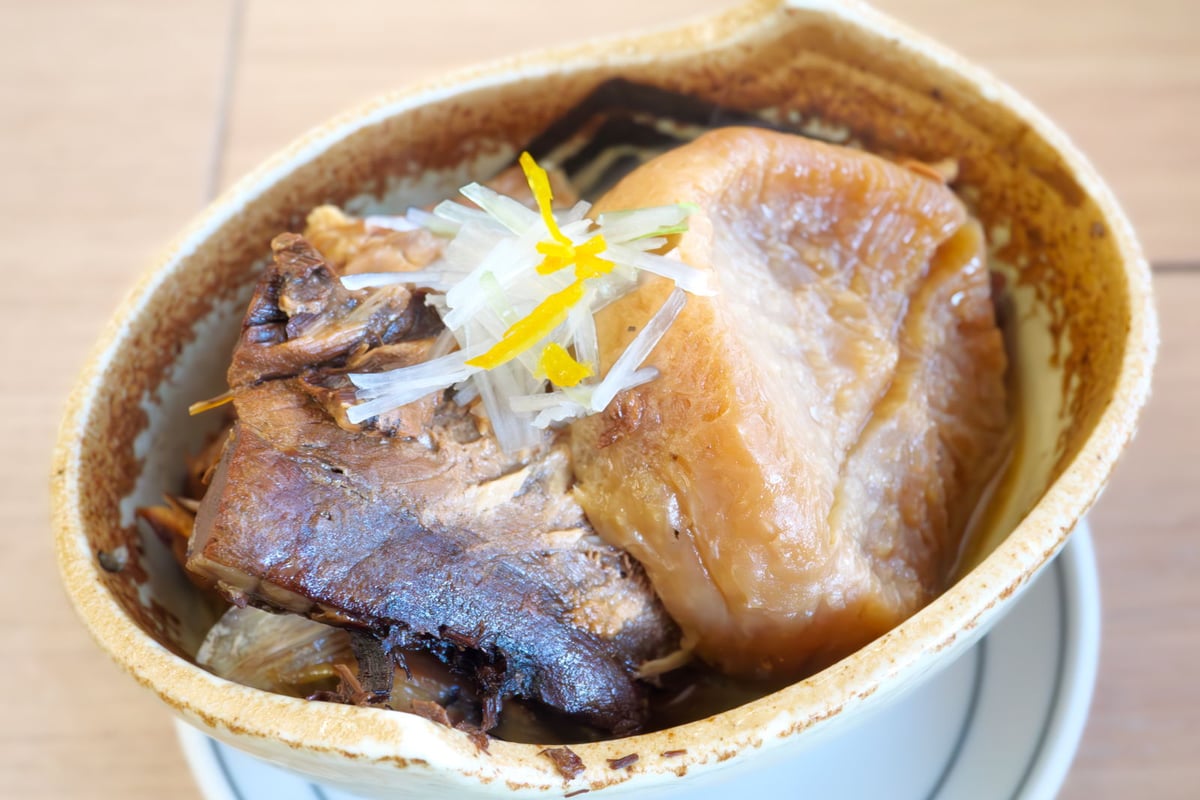
Buri Daikon (Simmered Yellowtail and Daikon)
Buri Daikon
Buri Daikon is a representative winter dish of Toyama Prefecture, made by slowly simmering the trimmings (ara) of fatty winter yellowtail (buri) landed in Toyama Bay together with daikon radish in a sweet-savory broth of soy sauce and sake. Yellowtail is said to be a fish with virtually no part wasted, and this dish grew out of the wisdom of simmering the ara — the head, collar, and other cuts left over after the flesh was used for sashimi or teriyaki — together with daikon to make full use of every bit of flavor. From late autumn into early winter, Toyama Bay is hit by stormy weather with thunder known as 'buri-okoshi,' and the winter yellowtail that reach peak season around this time are considered especially rich and delicious. Yellowtail landed in Himi City in particular is branded as 'Himi Kan-buri' and is highly regarded nationwide. Because yellowtail is a shusse-uo (a fish whose name changes as it grows, seen as auspicious), it is indispensable at celebrations and New Year meals, and buri daikon has long appeared on the table at such occasions. With the daikon soaking up the yellowtail's rich flavor, the dish lets diners enjoy both the well-seasoned, tender daikon and the flaky yellowtail meat, and it remains a beloved, warming winter home-cooked dish in Toyama households today.
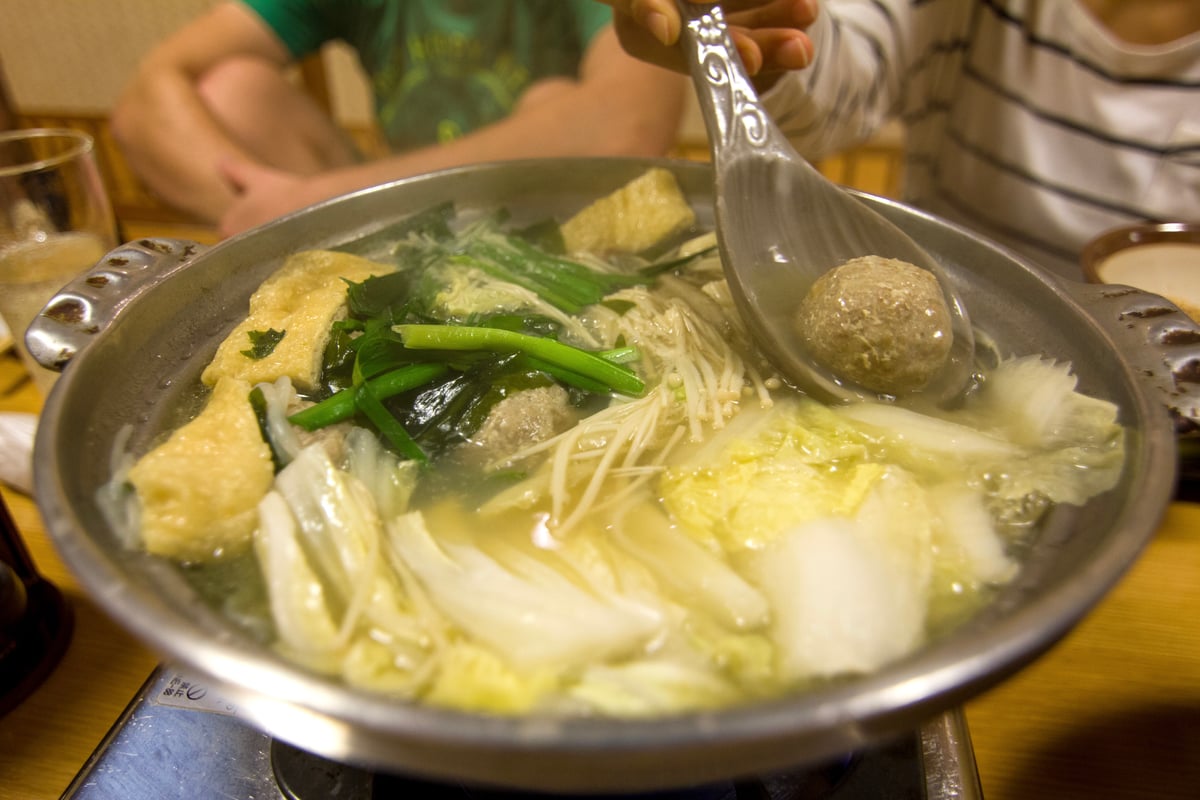
Chanko Nabe (Sumo Wrestler's Hot Pot)
Chanko Nabe
Chanko nabe is a hot pot dish that developed in the sumo stables of Ryogoku, Tokyo, as a meal for sumo wrestlers. The term 'chanko' originally refers to any food prepared in a sumo stable, and hot pot dishes among them are specifically called 'chanko nabe.' Around the time the Ryogoku Kokugikan sumo arena was completed in 1909 (Meiji 42), the popularity of the yokozuna champion Hitachiyama Taniemon drew a surge of new recruits to the Dewanoumi stable, and it is said that the custom of a large group of wrestlers gathering around a single pot to efficiently get their nutrition took hold at that time. The seasoning and ingredients vary from stable to stable, ranging from soppu-daki, made with a chicken-bone broth, to miso- and salt-based versions, and the dish has traditionally combined vegetables received from farmers along sumo tour destinations with whatever meat or fish was available that day. Four-legged animals such as beef and pork were considered unlucky, since eating them was associated with 'putting a hand down' on the ring (a losing move), so chicken and fish were favored instead. Today, chanko nabe can also be enjoyed by the general public at chanko restaurants run by former sumo wrestlers, mainly around Ryogoku.
Chitake Soba
Chitake Soba
Chitake Soba is a local dish from the flatlands of Tochigi Prefecture, in which cold soba noodles are dipped in a broth made from chitake (milk-cap) mushrooms. Chitake mushrooms are known for releasing a milky white liquid when torn open, and they appear in markets ahead of the autumn mushroom season, from early August around the Obon holiday. When stir-fried with eggplant and then simmered in water, they produce a broth with a richness and aroma rivaling matsutake, and dipping cold soba into this broth is the classic way to eat it. The dish is said to have already been enjoyed in the Edo period, centered on Kanuma City, known as a soba-producing area, and it remains a summer tradition served today at both specialty shops and home tables. In recent years, changes to the satoyama environment have reduced the harvest and distribution of chitake mushrooms themselves, making this dish an increasingly treasured, rare flavor that can only be enjoyed during its short season.
Chiyagyu Beef
Chiyagyu Beef
Chiyagyu (Chiya beef) is a branded wagyu beef raised primarily in the Chiya district of Niimi City, Okayama Prefecture. It traces its lineage to the 'Takenotani-zuru,' a foundation bloodline of cattle developed in the 1830s by Ota Tatsugoro, a wealthy farmer in Niimi, based on cattle from the Takenotani hamlet. Because these cattle had excellent build, hardiness, and high fertility, breeding bulls from this line spread nationwide, making Chiyagyu one of the origins of Japan's wagyu cattle. Raised carefully amid the cool climate and rich natural surroundings of the Chugoku Mountains, Chiyagyu is known for fine marbling balanced well with the flavor of its lean meat, and for the refined sweetness of its fat. Chiyagyu can be enjoyed at JA-operated yakiniku restaurants and other establishments in Niimi City, and a food-touring map of the production area has also been created, making it a beloved local brand of beef passed down as a point of local pride.
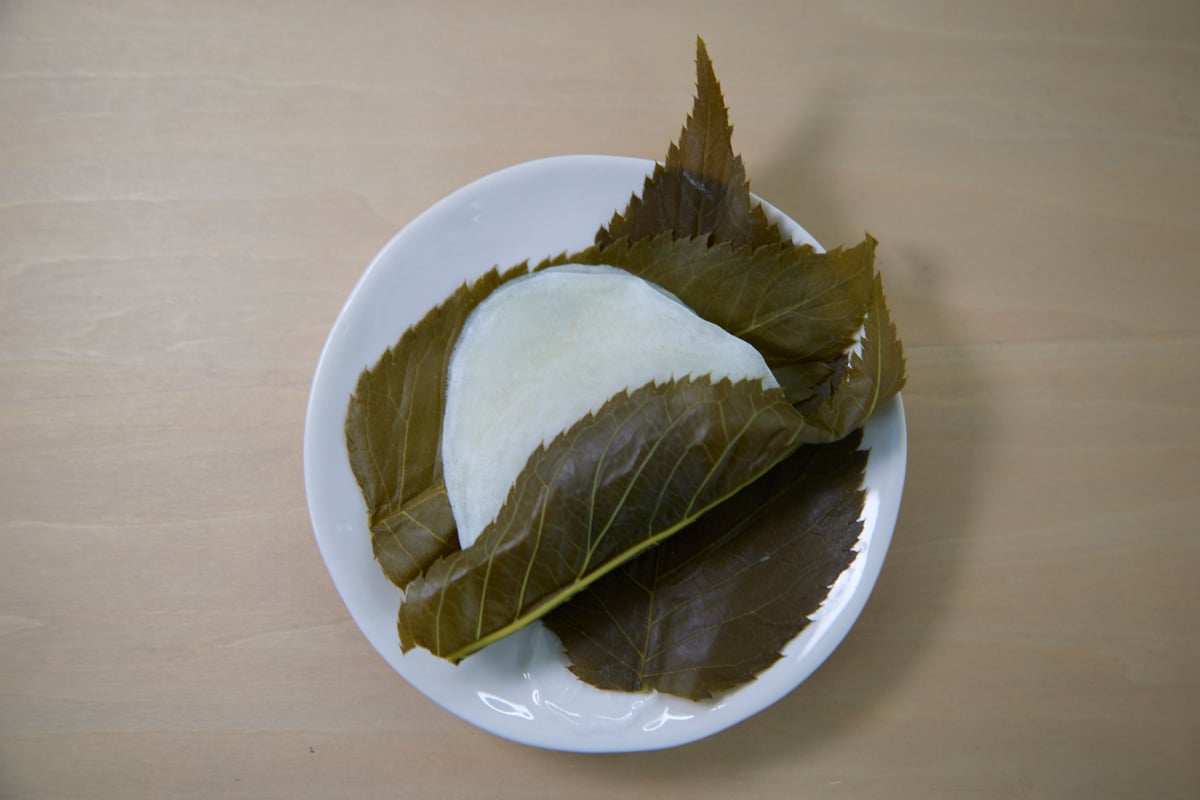
Chomeiji Sakuramochi (Edo-Style Sakura Mochi)
Chomeiji Sakuramochi
Chomeiji sakuramochi is a Japanese confection regarded as the original Edo-style (Kanto-style) sakura mochi: a thin, crepe-like wheat-flour skin wrapped around sweet bean paste, then wrapped again in a salt-pickled cherry leaf. According to tradition, it originated in 1717, when Yamamoto Shinroku, a gatekeeper at Chomeiji Temple in Mukojima along the Sumida River, came up with the idea of salt-pickling the fallen cherry leaves he swept from the temple grounds and using them with mochi, and began selling the confection at the temple gate. Unlike Domyoji-style (Kansai-style) sakura mochi, which makes the most of the coarse, grainy texture of domyoji-ko (glutinous rice flour), Chomeiji sakuramochi is characterized by a thin, crepe-like wheat-flour skin wrapped around smooth koshian (strained red bean paste), and the shop still preserves its own distinctive style of wrapping each piece in two or three cherry leaves. During cherry blossom season, it draws crowds of visitors to the Sumida embankment, and Yamamoto-ya, which has operated continuously as a sakura mochi specialty shop in Mukojima for roughly 300 years since its founding, is cherished as a celebrated shop that keeps Edo's hanami culture alive today.
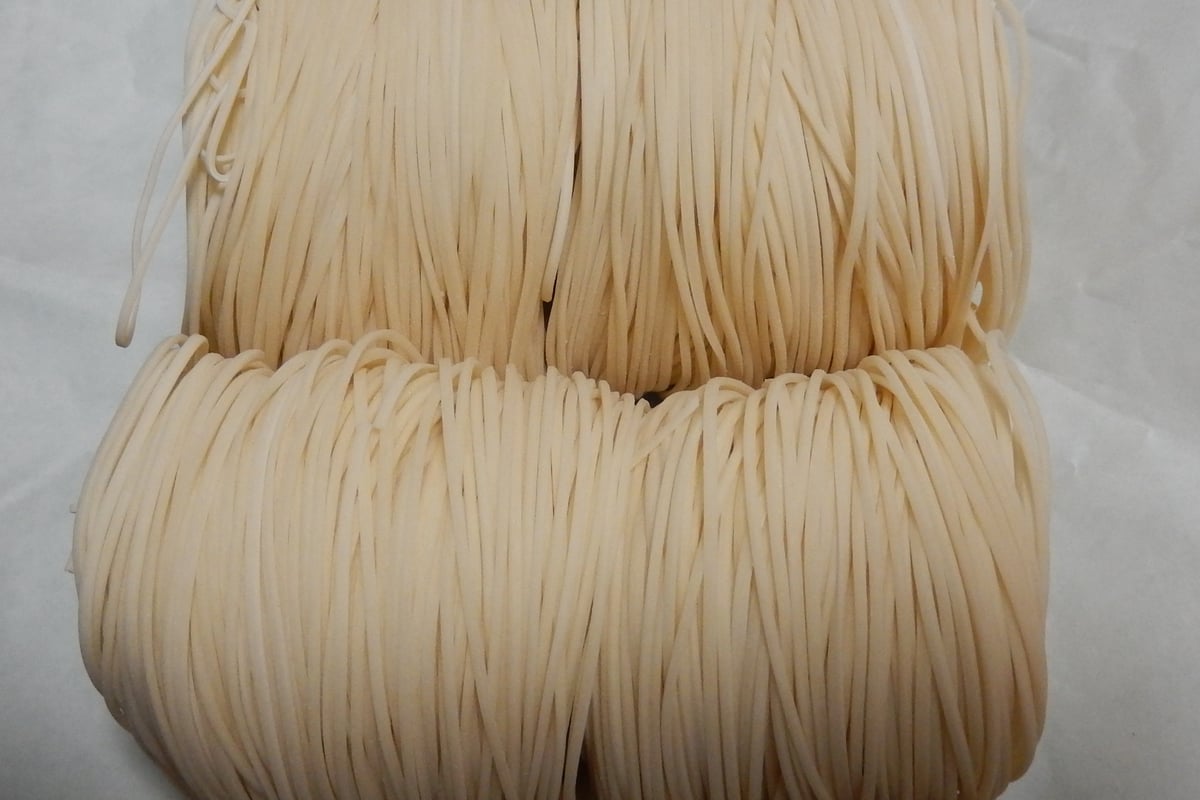
Daimon Somen
Daimon Somen
Daimon somen is a hand-pulled somen noodle that has been made in the Daimon district of Tonami City, Toyama Prefecture, since the late Edo period. It is said to have begun in 1848, when a medicine peddler from what was then Daimon Village learned the technique for producing somen for the Kaga domain and brought it back home, after which it spread through the village as a winter side occupation for farming families. At its peak in the early Showa era, more than 60 households produced it, and although the number of producers has now dwindled to just a handful, the traditional method is still carefully preserved. Its most distinctive feature is a unique finishing technique called ‘Shimada-maki,’ in which the thinly stretched noodle strands are wound up into a round bun shape, giving it an appearance unlike somen from any other production area — which is why it is also known as ‘marumage somen’ (topknot-bun somen). Because the noodles are stretched by hand while being twisted, their fibers take on a twisted structure, giving the noodles a firm bite and smooth texture, and they resist becoming soggy even after boiling and soaking in water. It is a seasonal handcrafted delicacy made only during the farming off-season, from around October to March, when temperatures drop and the air becomes dry.
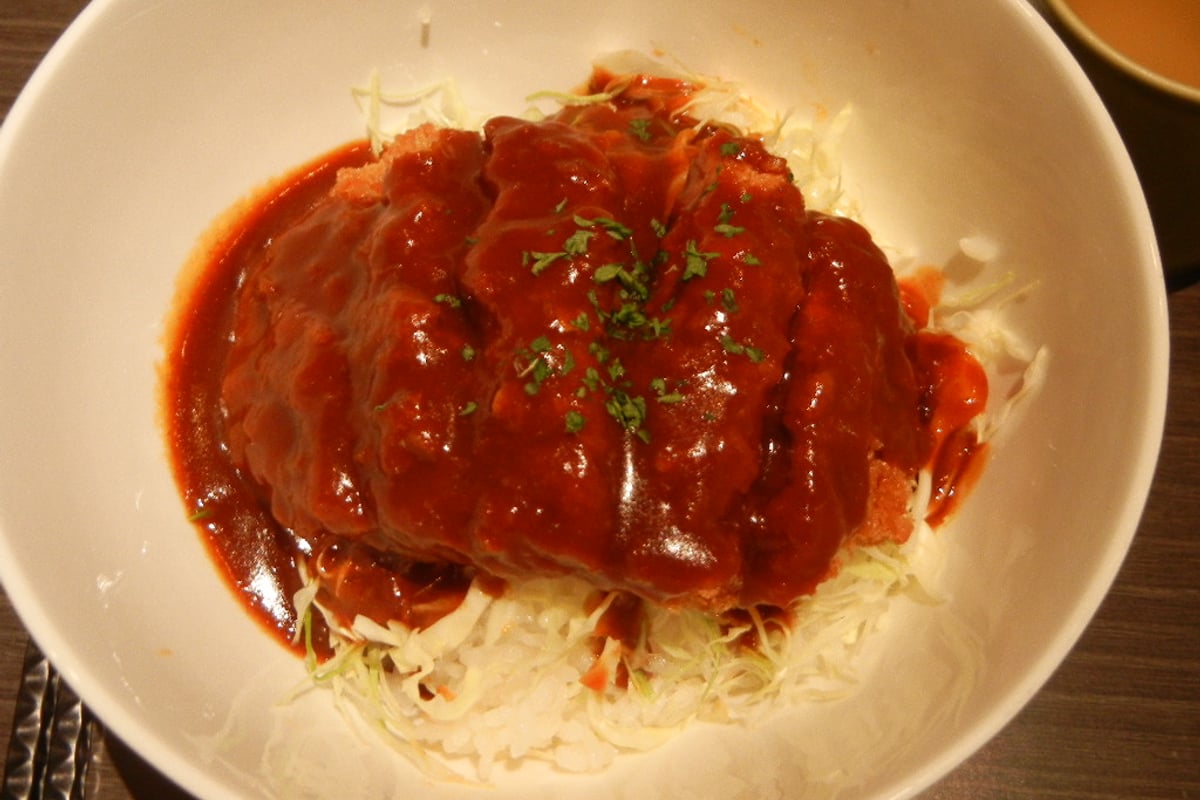
Demi Katsudon (Demi-Glace Pork Cutlet Bowl)
Demi Katsudon
Demi Katsudon is a local specialty from Okayama City featuring freshly fried pork cutlet topped with piping-hot demi-glace sauce. It is said to have originated when the founder of the long-established restaurant 'Ajishi Nomura,' founded in 1931 (Showa 6), was so impressed by the demi-glace sauce he tasted at a Tokyo hotel that he adapted it for the pork cutlets served at his own shop. The basic style is to place a pork cutlet over white rice and pour on plenty of demi-glace sauce, with each restaurant adding its own touches such as a raw egg or green peas (called 'Alaska' at some Okayama shops). Today it is served at around 30 restaurants throughout Okayama City and the wider prefecture, and goes by various names such as 'Demi-katsu,' 'Domi-katsu,' or 'Western-style katsu.' It is a beloved year-round Western-style rice bowl dish that is popular with tourists as well as locals.
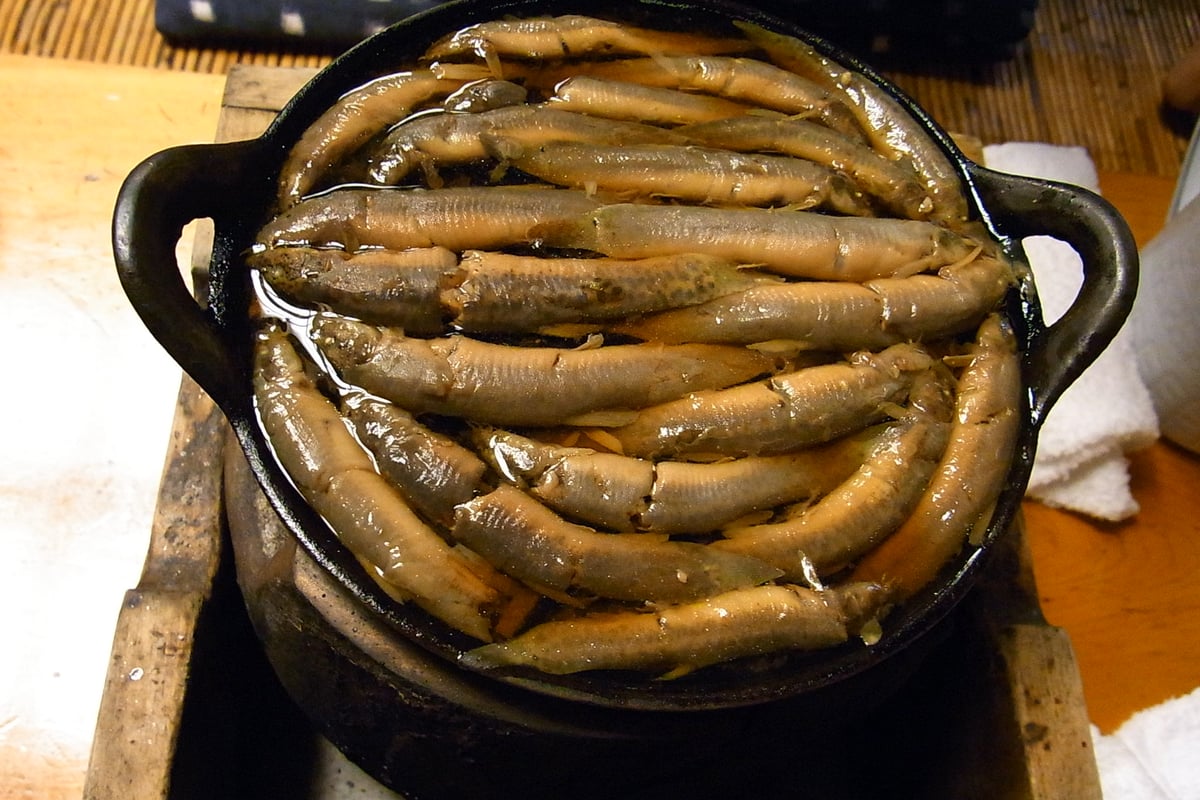
Dojo Nabe
Dojo Nabe
Dojo nabe is a hotpot dish made with dojo (loach, a small eel-like freshwater fish) that has been cherished in Tokyo's shitamachi (downtown) districts since the Edo period. Cheap and highly nutritious, dojo became a popular source of stamina for ordinary Edo people who worked up a sweat doing physical labor, and this gave rise to numerous specialty restaurants, including Komagata Dozeu in Asakusa. The two representative styles are 'marunabe,' in which the whole dojo is simmered without being cut open, and 'yanagawa nabe,' in which it is cut open and simmered with burdock root, then finished with beaten egg; both are typically topped generously with green onion and Japanese pepper (sansho) before eating. The spelling 'dozeu' is said to have been devised by an Edo-period shop owner, who used three characters — an auspicious odd number — in place of the correct but four-character spelling 'dodjiyau,' for good luck. Although the number of specialty restaurants has declined today, long-established shops founded in the Edo period still keep their doors open in Asakusa, and the dish remains cherished as a taste of Edo's common people.
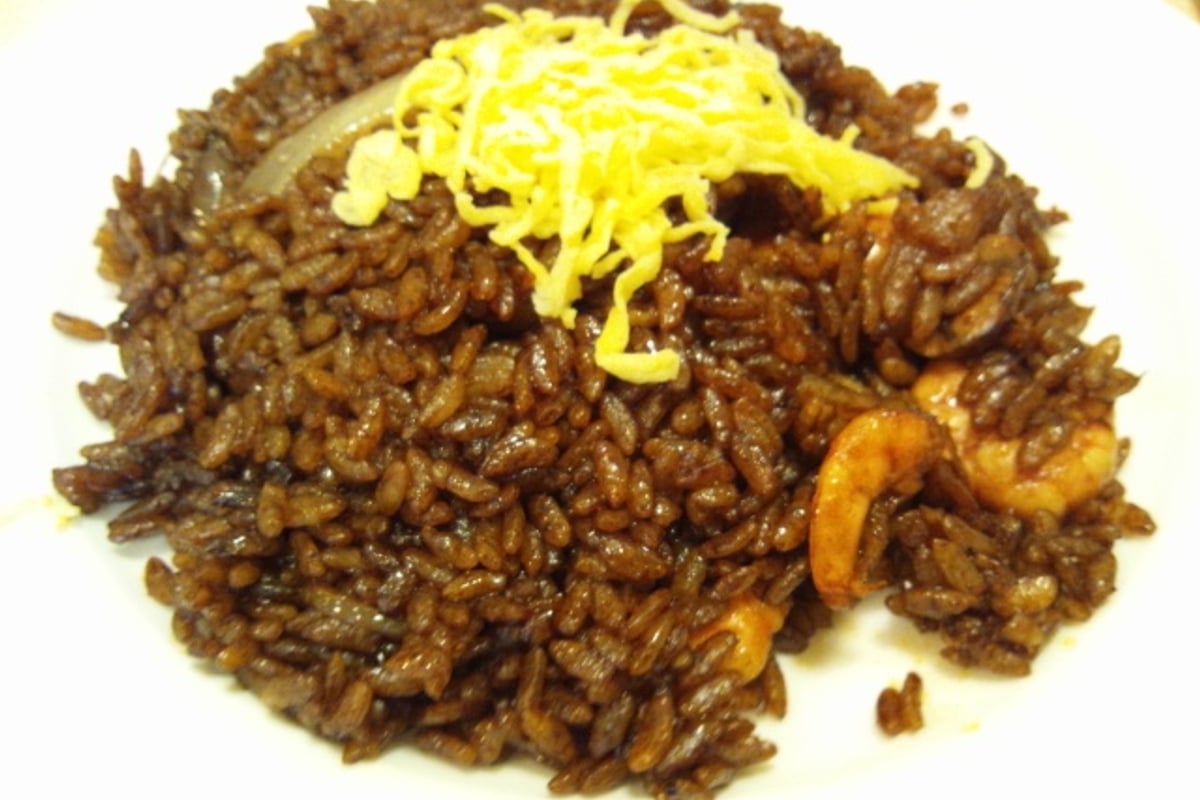
Ebi Meshi (Shrimp Pilaf)
Ebi Meshi
Ebi Meshi is a local specialty that originated in Okayama City: a shrimp pilaf stir-fried in a secret, dark brown sauce combining demi-glace sauce, ketchup, and caramel. The classic style tops it with shredded omelet and finely shredded cabbage, giving it a striking appearance and a distinctive sweet-and-savory flavor. Its roots trace back to a curry shop called 'Indeira' in Shibuya, Tokyo, where an employee from Okayama, Idei Tatsumi, learned the technique through a form of shop-branch permission and brought it home, serving it at the Western-style restaurant he opened in Hokanmachi, Okayama City—said to be the origin of Ebi Meshi. Its reputation subsequently spread mainly through central Okayama City, and today it is served at many Western-style restaurants and cafes both in and outside the city, making it one of Okayama's representative local B-grade specialties.
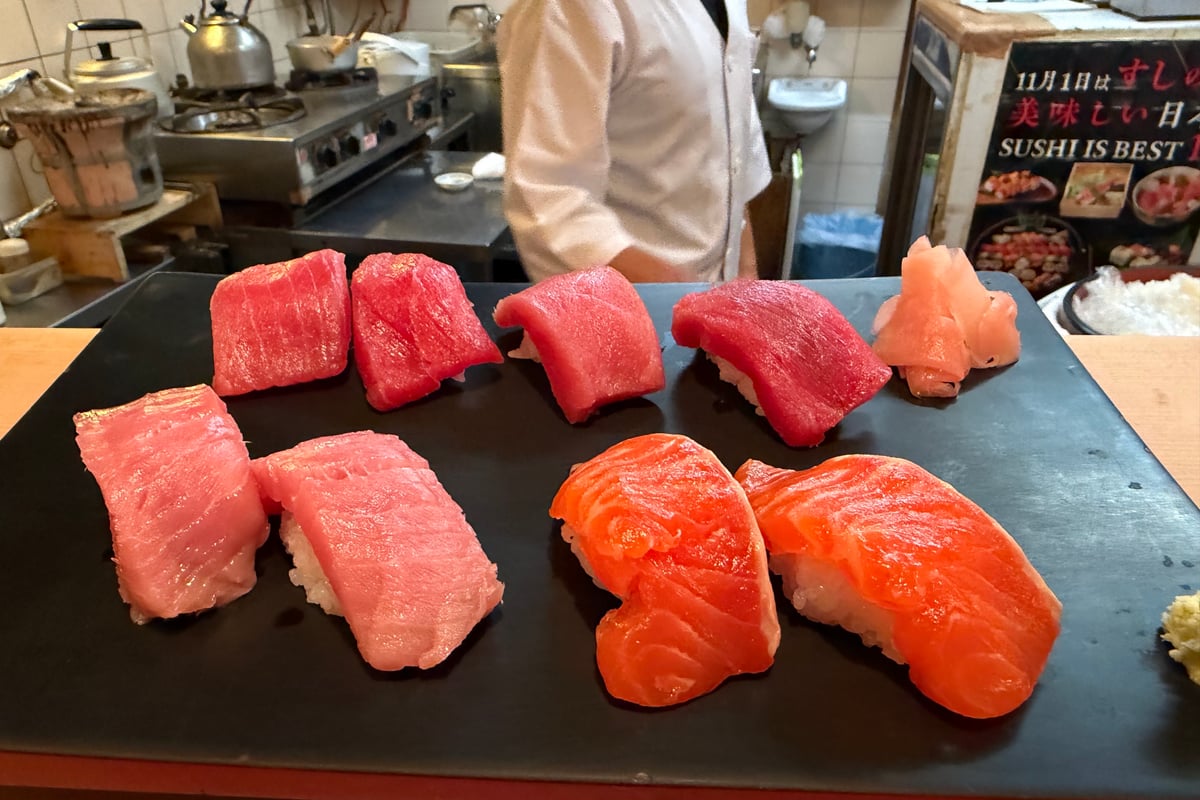
Edomae Zushi (Edo-Style Sushi)
Edomae Zushi
Edomae Zushi is a style of nigiri sushi that originated in Edo (present-day Tokyo) during the Bunsei era (1818-1830) of the late Edo period. In an age without refrigeration, it developed as a food-stall dish in which seafood caught in the Edomae sea (present-day Tokyo Bay) was given careful preparation known as 'shigoto'—vinegar-curing, soy-sauce marinating, and simmering in a sweetened soy glaze—then hand-pressed to order together with vinegared rice. Hanaya Yohei, who opened the shop Yoheizushi in Ryogoku, is said to have helped perfect nigiri sushi, and unlike fermented narezushi or the pressed sushi of the Kansai region, it won popularity among ordinary people as a sushi that could be eaten quickly and matched the brisk spirit of Edo townspeople. The 'shigoto' preparation gives the toppings more umami and better keeping quality than raw sashimi, while the vinegared rice is firmly seasoned with vinegar and salt. Today it is served in forms ranging from high-end restaurants to conveyor-belt sushi shops, and is known worldwide as a food culture representative of Tokyo.
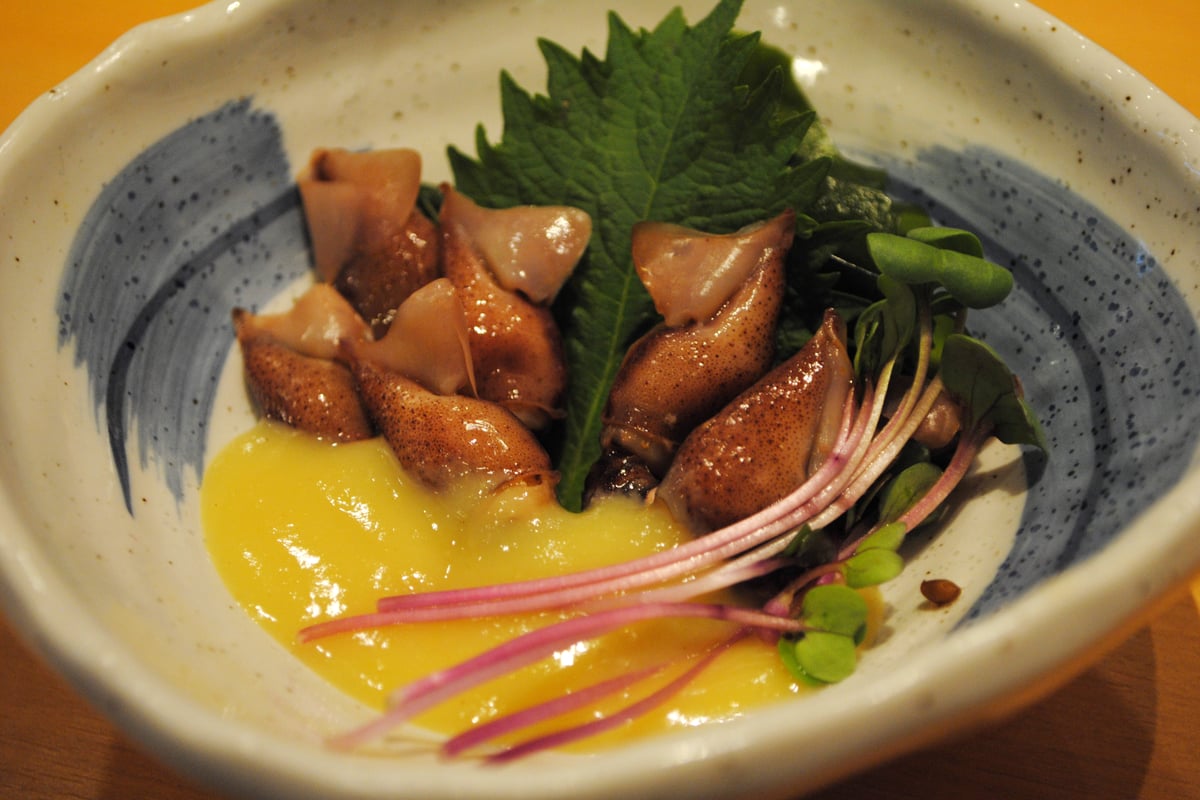
Firefly Squid with Vinegared Miso
Hotaruika no Sumiso-ae
Hotaruika no sumiso-ae is a simple dish made by boiling firefly squid, a signature ingredient of Toyama Bay in spring, and dressing it in vinegared miso or spicy vinegared miso. Firefly squid normally live at depths of over 200 meters, but from around March to May they gather in huge numbers along the shore of Toyama Bay to spawn, creating a mysterious sight as their entire bodies glow pale blue while drifting in schools. The area of Toyama Bay where this phenomenon occurs has been designated a Special Natural Monument of Japan as the ‘Hotaruika Group Migratory Waters,’ and firefly squid have become a symbol of spring in Toyama. Because they are caught with fixed-net fishing, the squid suffer little damage, and the short distance between the fishing grounds and the ports allows them to be shipped while still very fresh — a particular strength of Toyama Bay's firefly squid. The sticky texture and faint bitterness of the boiled squid combine with the mellow tang of the vinegared miso to create a flavor beloved as a springtime staple both at home and in restaurants.
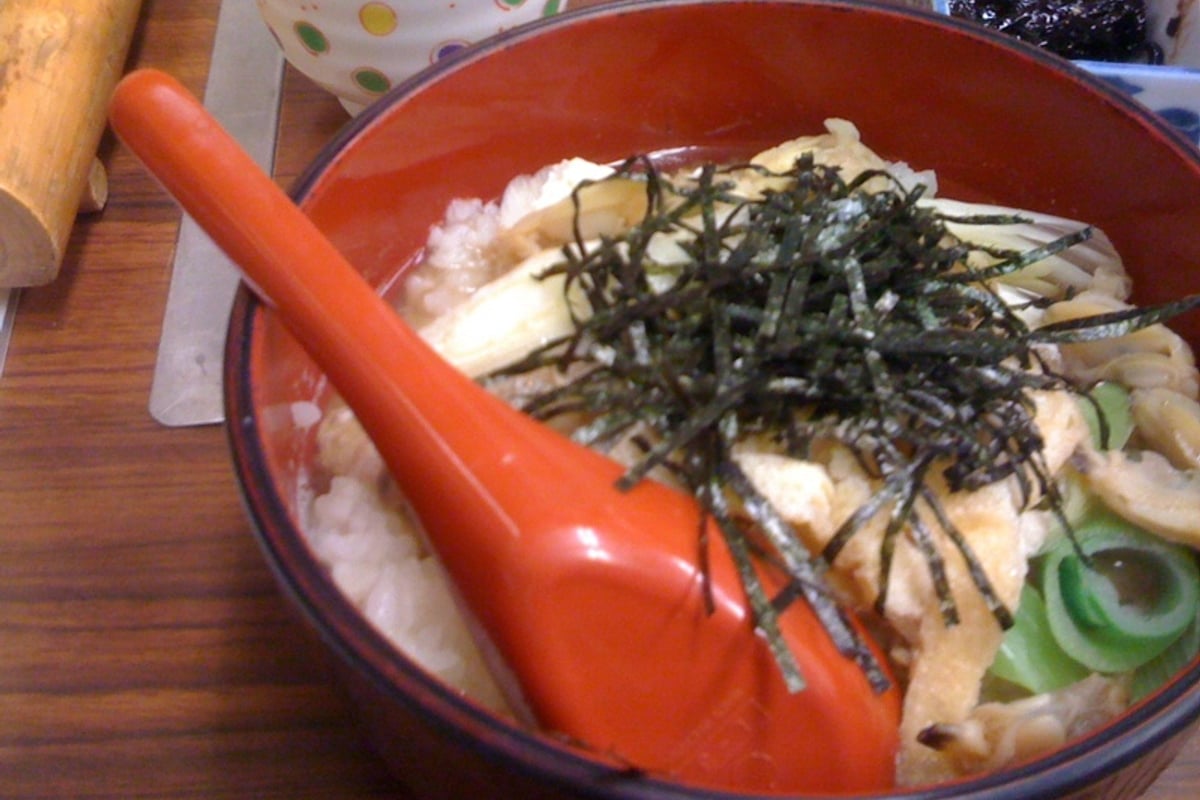
Fukagawa Meshi
Fukagawa Meshi
Fukagawa meshi is a local dish that originated in the fishing town of Fukagawa (present-day Koto Ward) during the Edo period, and it comes in two main styles built around clams: 'bukkake' and 'takikomi.' The area now known as Koto Ward once had broad, shallow tidal flats and thrived as a fishing town rich in clams, hard clams (hamaguri), and Japanese trough shells (aoyagi). The dish is said to have originated as 'bukkake meshi' — clams simmered in miso or soy sauce ladled over hot rice so fishermen could eat quickly between jobs — and later a version in which rice is cooked together with clams and vegetables, known as 'Fukagawa-don' or 'Fukagawa-meshi,' also spread. During the Edo period it was common to use bakagai (aoyagi), which were caught in great quantities at the time, but from the Meiji and Taisho eras onward, clams became the mainstream ingredient. Counted among Japan's five great rice dishes, it is a fisherman's dish representative of Tokyo that can still be enjoyed today at specialty restaurants throughout Koto Ward.
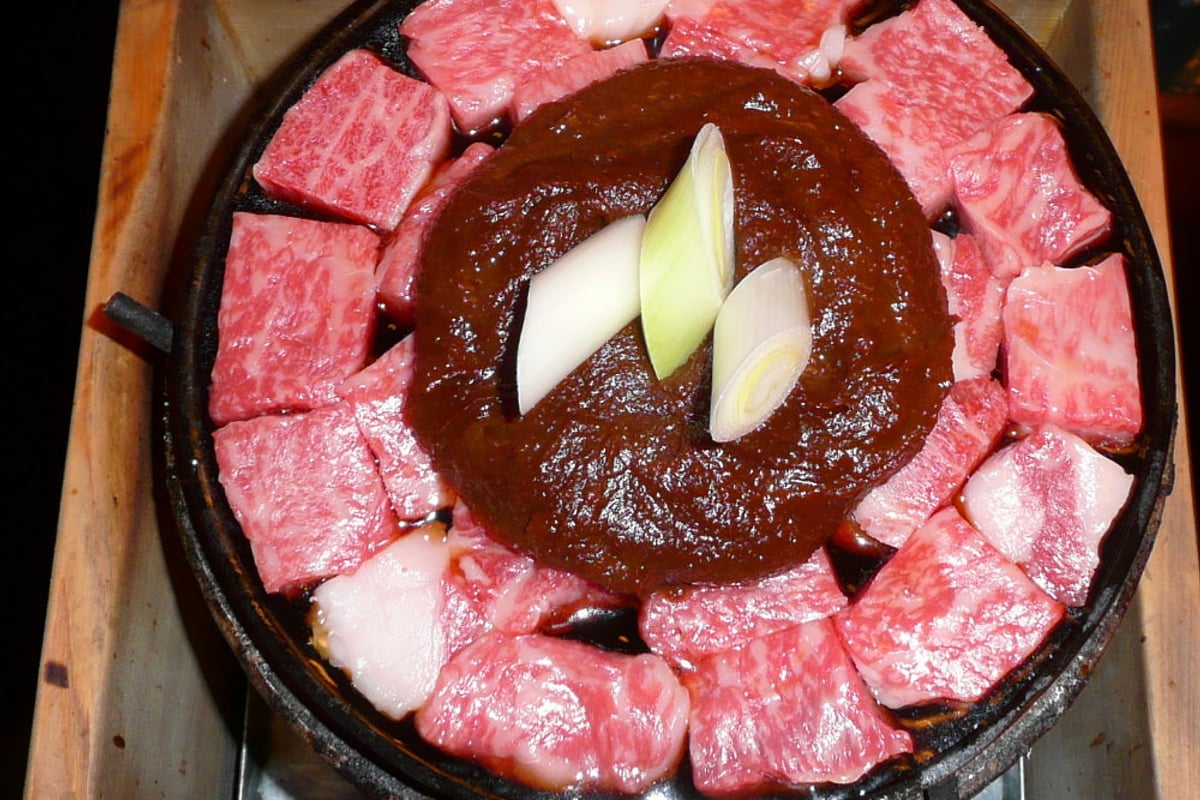
Gyu-nabe (Beef Hot Pot)
Gyu-nabe
Gyu-nabe is a hot pot dish that originated in the treaty port city of Yokohama between the late Edo and Meiji eras, in which beef is simmered in a miso- or soy sauce-based broth. In Japan up through the Edo period, eating meat was generally avoided; it is said that beef eating spread after people in Yokohama, home to the foreign settlement, came into contact with the meat-eating food culture of Westerners living there, and the dish became known nationwide as a symbol of 'bunmei-kaika' (civilization and enlightenment). It is characterized by chunks of beef, green onion, and tofu simmered in a shallow iron pot with a miso- or soy sauce-based broth, and it is regarded as the prototype from which sukiyaki later developed. Long-established Gyu-nabe restaurants that have operated in Yokohama for over a century still serve Gyu-nabe made according to the methods and flavors handed down from that era.
Herahera Dango
Herahera Dango
Herahera Dango is a local confection handed down since the Edo period in Sajima, a fishing district in the city of Yokosuka on the western side of the Miura Peninsula. Wheat flour, jōshinko (non-glutinous rice flour), or shiratamako (glutinous rice flour) dough is shaped into flattened dumplings and coated with smooth strained red bean paste (koshi-an) — a simple type of ankoromochi. It has traditionally been made in each household as a ceremonial dish for the Sajima boat festival held every July, to pray for a bountiful catch and freedom from illness. Several stories are told about the origin of the name: one holds that the flattened shape of the pressed dumplings resembles a hera, a flat tool used in fishing; another that the dumplings sway 'herahera' as they bob to the surface while boiling. After being selected in 2007 as one of the Ministry of Agriculture, Forestry and Fisheries' 100 Local Dishes of Farming, Mountain, and Fishing Villages, the confection also began to be commercialized by local sweets shops.
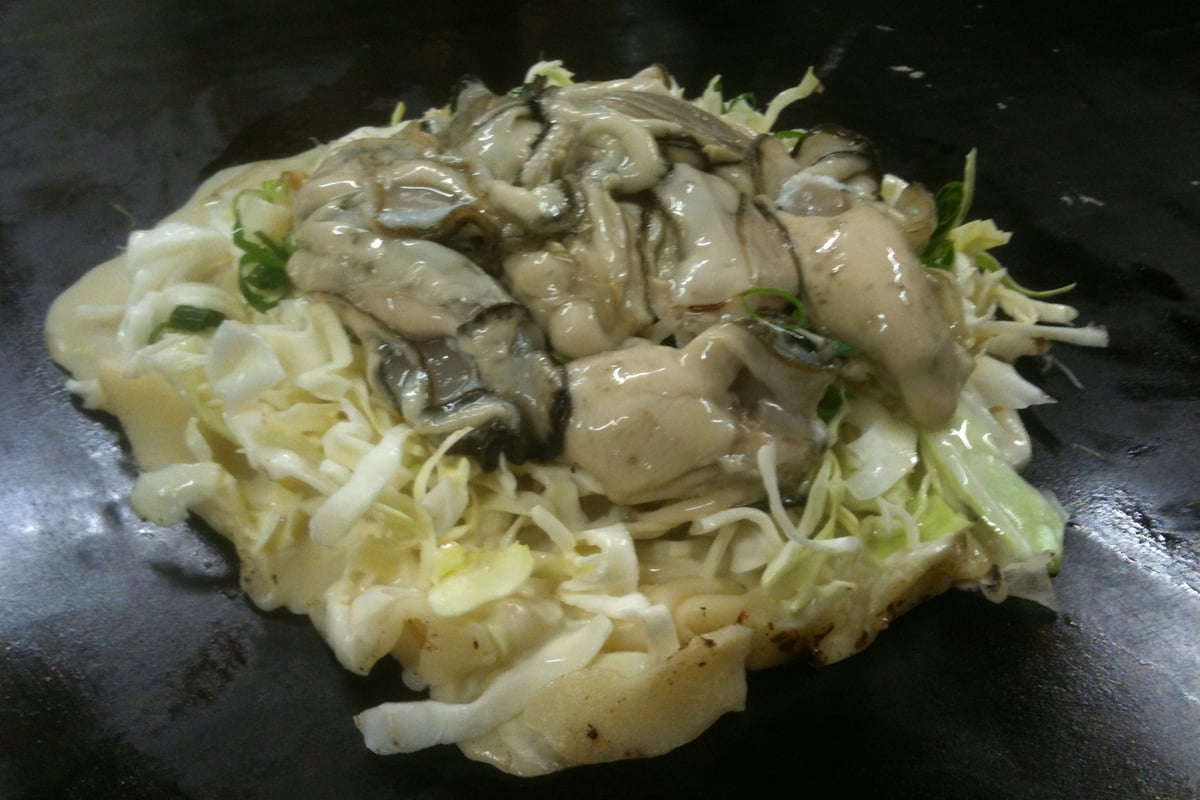
Hinase Kaki Okonomiyaki (Oyster Okonomiyaki)
Hinase Kaki Okonomiyaki
Hinase Kaki Okonomiyaki is a local specialty born in Hinase, Bizen City, Okayama Prefecture: an okonomiyaki savory pancake made generously with raw oysters. Hinase is a fishing town facing the Seto Inland Sea, known as a major production area accounting for more than half of Okayama Prefecture's oyster harvest. Its defining feature is a runny batter combined with a mountain of finely shredded cabbage and fresh raw oysters, grilled together on a griddle; because freshly landed oysters are used, they release little excess moisture and retain a plump, springy texture even after cooking without shrinking. It is said to have originated with fishermen bringing in small or damaged oysters unfit for sale to eat at local okonomiyaki shops, and it became known nationwide after the local 'Hinase Kaki Okonomiyaki Study Group' coined the name 'Kaki-oko' in 2002 and began promotional activities.
Hirosaki Apple Pie
Hirosaki Apple Pie
Hirosaki Apple Pie is a local sweet enjoyed in Hirosaki City, Aomori Prefecture, which boasts the highest apple production in Japan. Around 2009, as inquiries about apple sweets to the city's tourist information center increased, staff conducted their own survey of confectionery shops in the city and found more than 40 shops offering apple pie. This led to the 2010 publication of the "Hirosaki Apple Pie Guide Map," marking the beginning of "Hirosaki, the City of Apple Pie." A wide variety of businesses — Japanese and Western confectioners, bakeries, Nanbu senbei shops, cafes, and hotels — each compete with their own original recipes, and the apple varieties used as well as preparation methods, such as baking whole apples, coarsely chopping, slicing, or making a paste, vary distinctively from shop to shop. With each new edition, the guide map has featured more shops, now growing to over 50. Many tourists enjoy sampling pies from shop to shop, making it one of the local foods not to be missed when visiting Hirosaki.
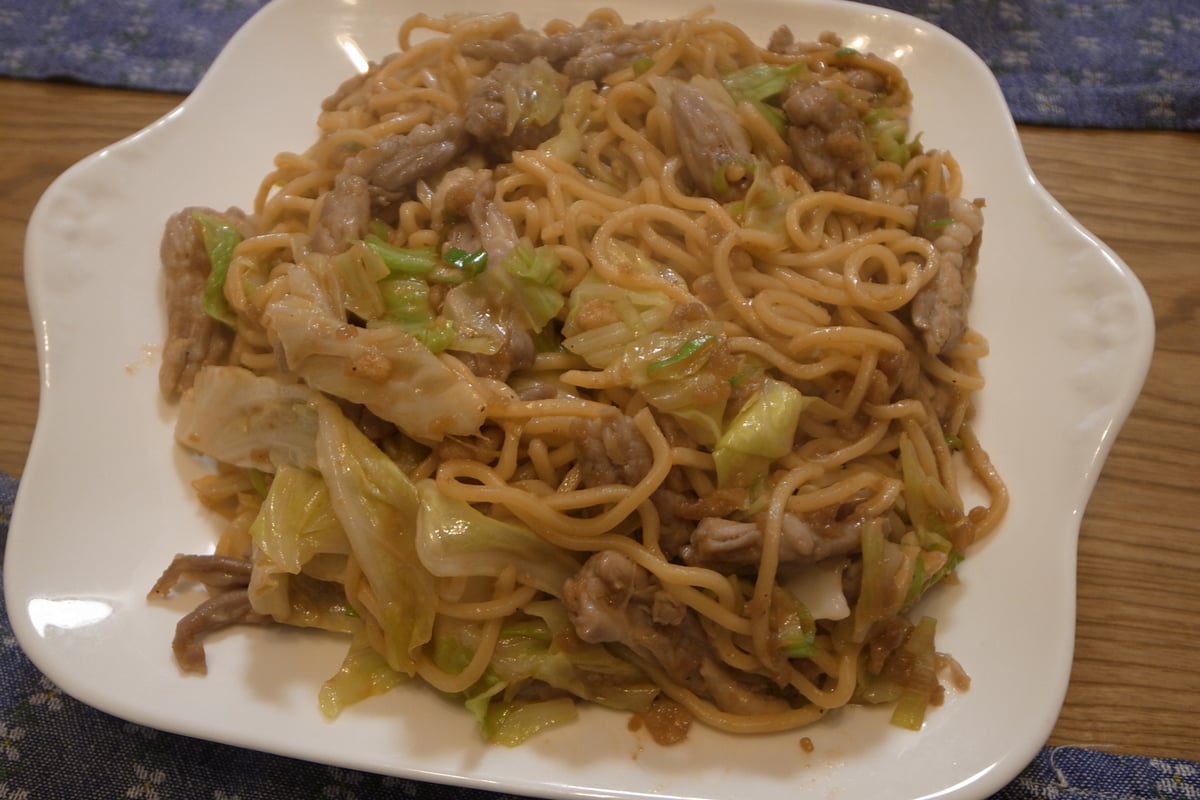
Hiruzen Yakisoba
Hiruzen Yakisoba
Hiruzen Yakisoba is a local-style yakisoba enjoyed throughout the Hiruzen Highlands area of Maniwa City (Hiruzen), Okayama Prefecture. It is characterized by stir-frying chicken (parent hen meat) and cabbage together with a special miso-based sauce made from ingredients such as garlic, onion, and apple, resulting in a popular sweet-and-savory, rich flavor. Its origins trace back to the 1960s (Showa 30s), when a local diner is said to have made use of the homemade miso sauce that was popular at the time for Genghis Khan-style grilled lamb, stir-frying chicken and cabbage together with yakisoba noodles. This dish became a local specialty. In 2011, the 'Hiruzen Yakisoba Suitonkai' association won the Gold Grand Prix (first place) at the 6th B-1 Grand Prix held in Himeji City, Hyogo Prefecture, bringing the dish nationwide recognition. Today it is still served at many diners and restaurants throughout the Hiruzen Highlands and remains a popular local specialty among tourists.
Hitachi Akisoba
Hitachi Akisoba
Hitachi Akisoba is a branded soba variety that originated in the Kanasago district (formerly Kanasago Village) of Hitachiota City, Ibaraki Prefecture, and is often called 'the finest of unshelled buckwheat.' Its story began in 1978 (Showa 53), when the Ibaraki Prefectural Agricultural Experiment Station set out to cultivate a soba brand unique to Ibaraki, launching a selective breeding program based on a local strain from Akatsuchi-cho in Hitachiota City. After seven years of selection, the variety was established and, in 1985 (Showa 60), was adopted as a recommended variety by Ibaraki Prefecture. In 1993, the Hitachi Akisoba Promotion Council was established, and through a certified-shop system, the group has worked to maintain quality and spread the brand's reputation. Known for its strong aroma, sweetness, and rich flavor, Hitachi Akisoba now accounts for nearly all the soba grown in Ibaraki Prefecture and is cultivated in multiple cities across the prefecture, including Hitachiota, firmly established as Ibaraki's representative soba variety.
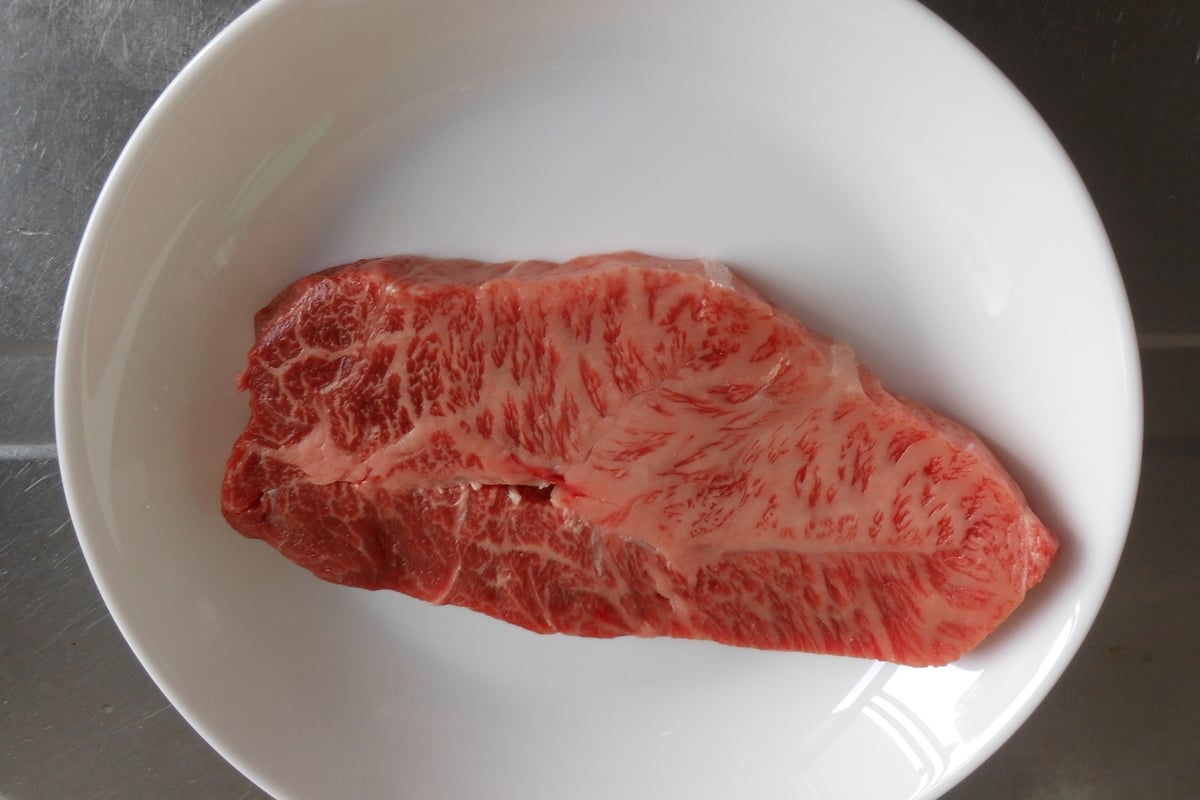
Hitachi Gyu (Hitachi Beef)
Hitachi Gyu
Hitachi Gyu is a branded Wagyu beef from Ibaraki Prefecture, awarded only to Japanese Black cattle raised in the prefecture for at least 27 months that earn a grade of A or B4 or higher from the Japan Meat Grading Association, with especially fine meat quality. Its roots trace back to 1832, when Tokugawa Nariaki, the 9th lord of the Mito Domain, opened the 'Sakurano' ranch in what is now Mito City's Mikawa-cho and began raising black cattle there. In 1976, the Ibaraki Prefecture Beef Brand Establishment Promotion Council named superior Japanese Black cattle raised in the prefecture 'Hitachi Gyu,' and the following year the Ibaraki Hitachi Gyu Promotion Association was established, unifying it as a single brand. Cuts such as rib loin, sirloin, and fillet are prized for their well-marbled, tender texture with a good balance of lean meat and fat, while shoulder loin and thigh are enjoyed grilled or in sukiyaki, and outer thigh and shank are suited to simmered dishes, each cut enjoyed in ways that highlight its own character.
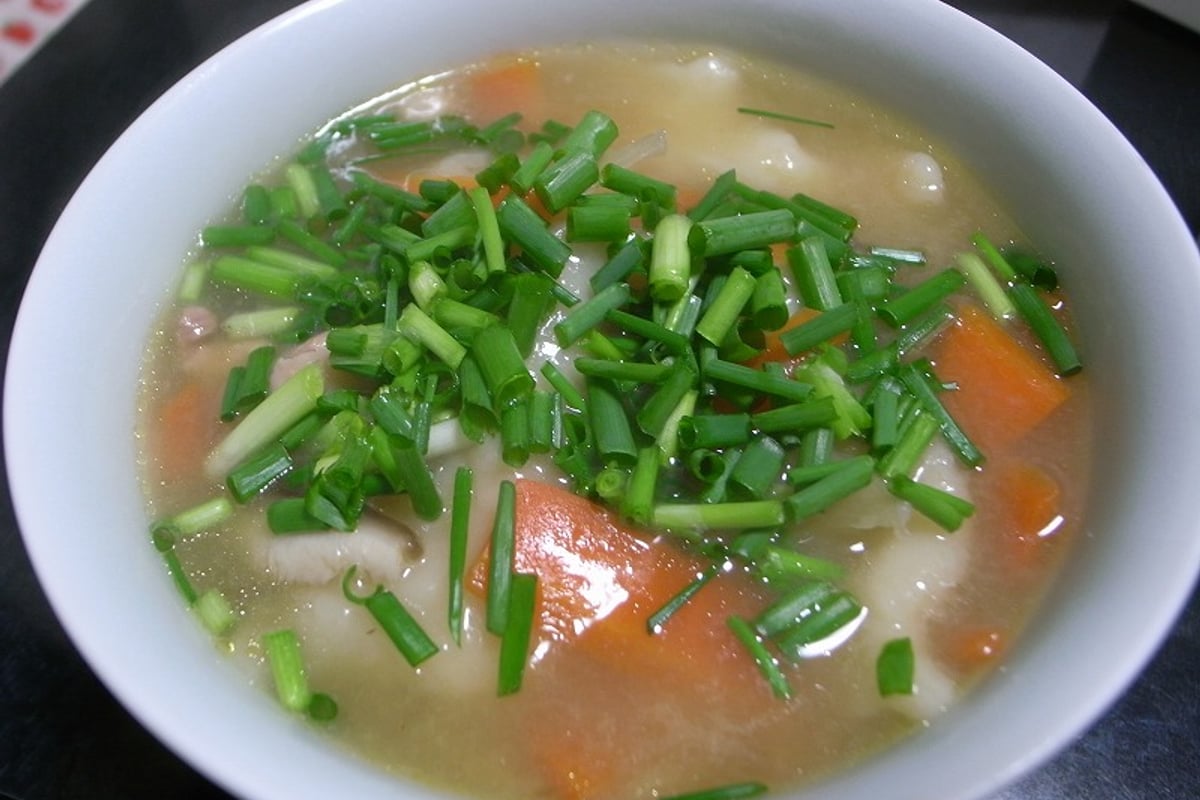
Hittsumi (Iwate Wheat Dumpling Hot Pot)
Hittsumi
Hittsumi is a local dish of Iwate Prefecture in which wheat flour dough, kneaded with water to an earlobe-like softness, is stretched thin, torn by hand into pieces, and simmered in a pot. The name is said to come from the local dialect word 'hittsumamu,' meaning 'to tear with the hands.' In the central Iwate region, paddy fields spread along the Kitakami River basin and rice farming flourished, but the harsh cold sometimes brought poor rice harvests, so wheat and barley were also grown, giving rise to a flour-based food culture known as 'shitonemono,' in which flour is kneaded with water. Hittsumi is the most representative dish of this tradition, simmered in a broth seasoned with soy sauce or miso together with seasonal ingredients such as chicken, burdock root, carrot, and mushrooms. Seasoning and ingredients vary from household to household, and the dish has long been cherished by Iwate residents as a 'taste of home.' In some areas it is also known as 'tottenage' or 'hatto.'
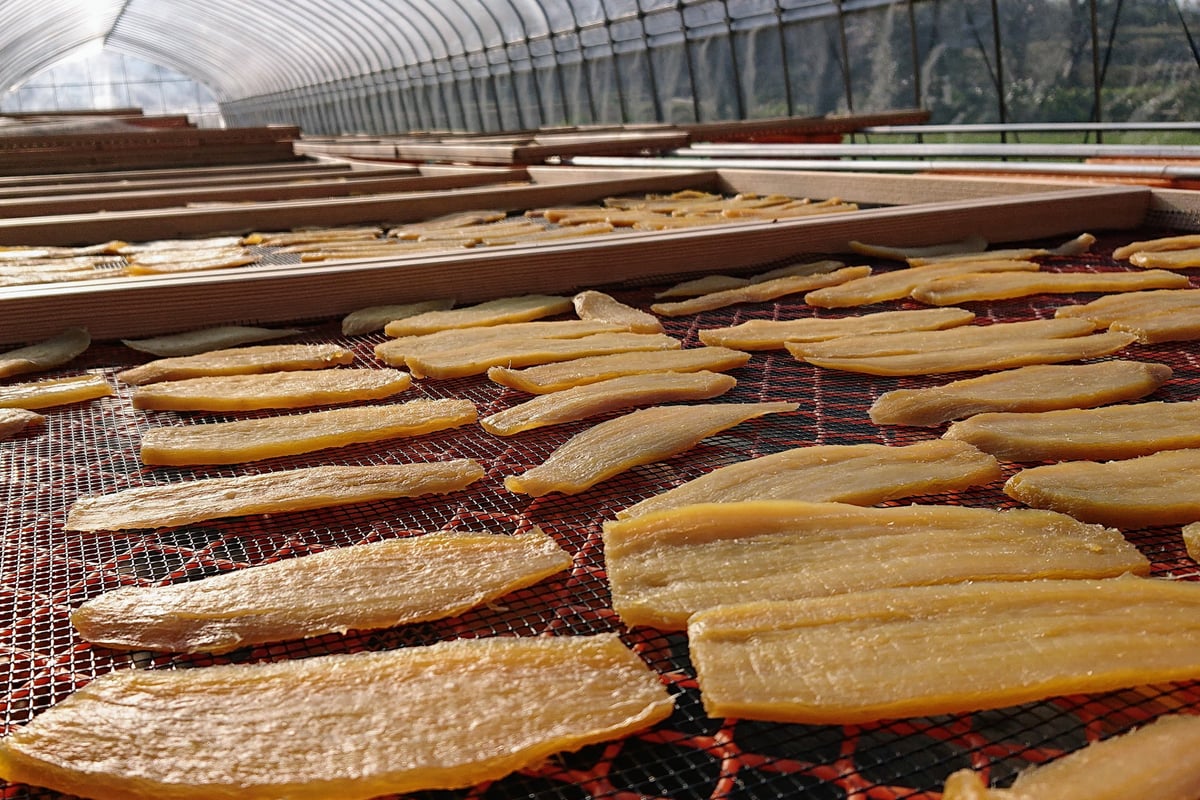
Hoshi Imo (Dried Sweet Potato)
Hoshi Imo (Dried Sweet Potato)
Hoshi imo is a preserved food made by steaming sweet potatoes, slicing them thin, and drying them in the sun; the coastal area of Ibaraki Prefecture centered on Hitachinaka City and Tokai Village accounts for the great majority of Japan's national production. Ibaraki's production is said to originate around 1908, when Terunuma Kantaro brought back a method he had seen in Shizuoka, prompting Yuasa Toshichi, a cracker maker in Minato (present-day Hitachinaka City), and others to begin making hoshi imo. The number of producers grew steadily from the Taisho era into the early Showa era, and after the war, production expanded rapidly with prefectural encouragement; by around 1955, Ibaraki had overtaken Shizuoka Prefecture, the birthplace of the product, to become Japan's top producing region. Taking advantage of the coastal area's winter sea breezes and ample sunshine, the region offers a range of flavors and textures across varieties, from the long-established Tamayutaka to the popular newer Beniharuka, and hoshi imo remains a beloved souvenir representative of Ibaraki today.
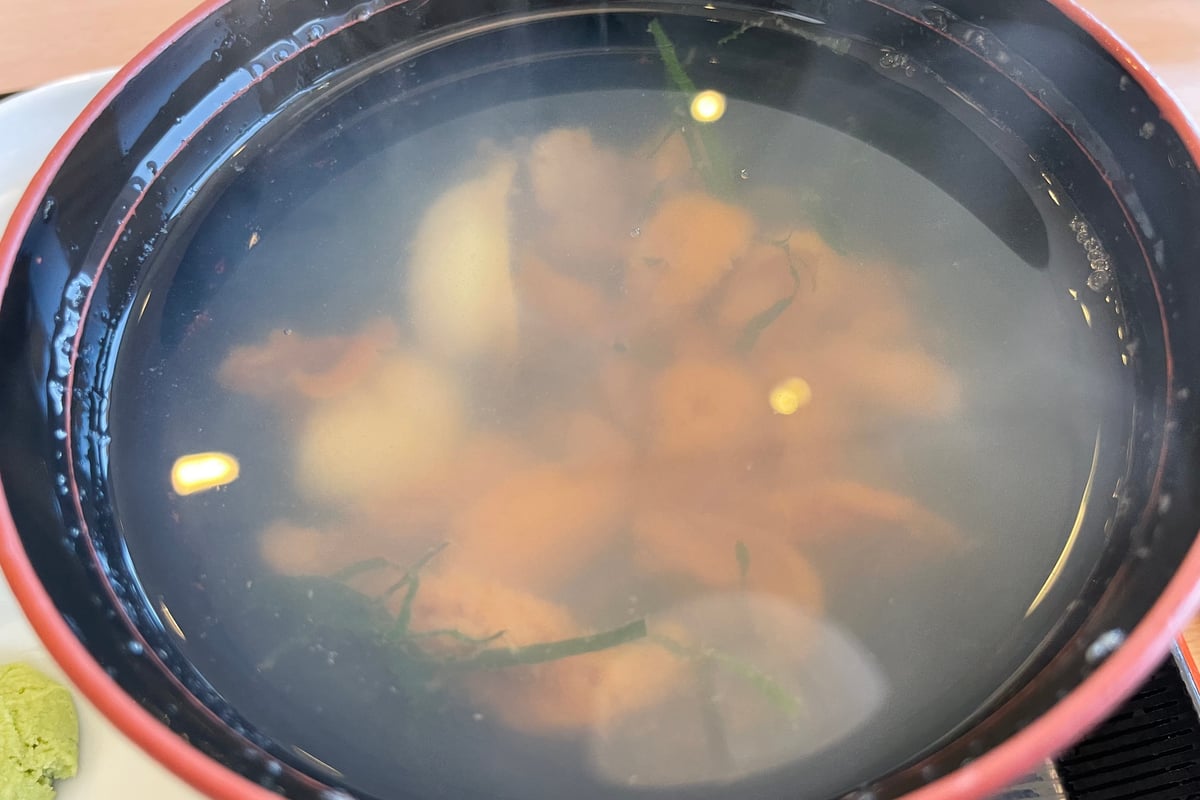
Ichigo-ni (Sea Urchin and Abalone Soup)
Ichigo-ni
Ichigo-ni is a local dish handed down along the Pacific coast of Aomori Prefecture, including Hachinohe City and Hashikami Town in Sannohe District, made by briefly simmering sea urchin and abalone in a lightly salted broth. It is said to have its roots in a "fishermen's meal," in which fishermen boldly simmered freshly caught sea urchin and abalone on the beach. The dish is said to be named "ichigo-ni" ("wild strawberry simmer") because the sight of golden sea urchin sinking into the milky, cloudy abalone broth resembled wild strawberries hazy in the morning mist. In the Taisho era, the proprietor of a long-established local ryokan and restaurant began arranging it beautifully in bowls to serve to guests, and it spread as a feast dish served to entertain visitors. In 1980, the local food company Ajino Kakunoya became the first in Japan to successfully can ichigo-ni, and it has since become established as an Aomori souvenir known nationwide.
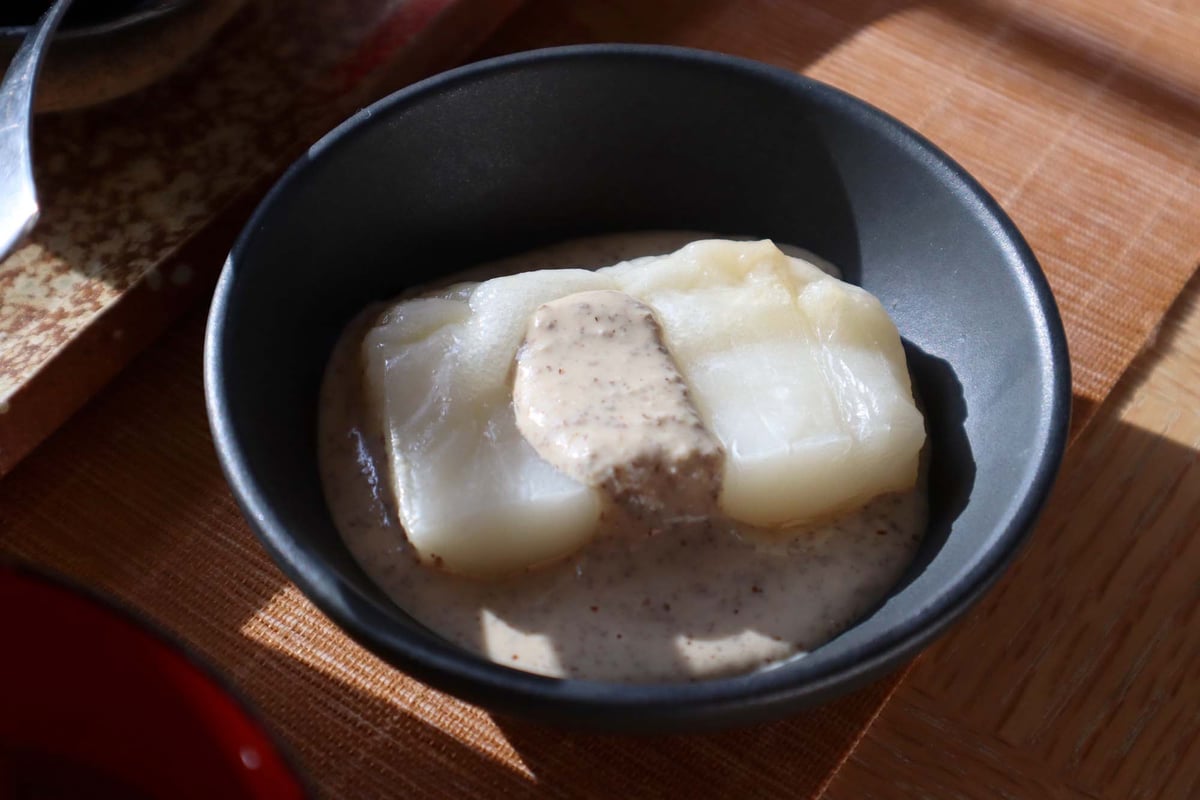
Ichinoseki and Hiraizumi Mochi Cuisine
Ichinoseki Mochi Cuisine
Mochi cuisine from Ichinoseki and Hiraizumi is a food culture handed down in Ichinoseki City and Hiraizumi Town, Iwate Prefecture, encompassing a reported 300-plus varieties of mochi dishes. The custom of pounding mochi persists not only at New Year but also for weddings, funerals, and other ceremonial occasions, at seasonal farming milestones such as rice planting and harvest, and at life's rites of passage — a practice so deeply woven into daily life that the area is known as 'the village of mochi.' Alongside sweet red-bean mochi ('anko-mochi'), the region is known for a rich variety of distinctive mochi that draw on the bounty of mountain and river, including 'jyune-mochi' made with ground perilla seeds, 'fusube-mochi' dressed with grated daikon and soy sauce, and 'numa-ebi-mochi' made with freshwater shrimp. On formal occasions, a unique dining style called the 'mochi honzen' is followed, in which guests taste a sequence of flavors in an order set by a facilitator; this custom is said to derive from the practices of the Date domain, which governed the Ichinoseki region during the Edo period.
Ika no Kurozukuri (Squid Ink-Cured Delicacy)
Ika no Kurozukuri
Ika no Kurozukuri is a representative fermented food of Toyama Prefecture, made by cutting squid (surume-ika) flesh into thin strips, adding the liver and squid ink, salting it, and letting it slowly mature. It is known for its distinctive flavor, combining the rich aroma and deep umami unique to squid ink with the aged character of a shiokara-style dish, and it has long been prized as an accompaniment to sake for its excellent compatibility with Japanese rice wine. Records from the Edo period note that the lord of the Kaga domain presented it to the shogunate during his sankin kotai processions, suggesting it was already known as a leading specialty of Toyama at the time. Squid ink has long been believed to have preservative properties, and it was also put to use as a way to keep shiokara-style delicacies from spoiling in an age before refrigeration. Its black appearance can surprise first-time tasters, but on the palate it delivers a rich umami and a subtle saltiness, and it is now applied not only as a rice accompaniment or in ochazuke but also as a pasta ingredient, remaining one of Toyama's representative delicacies sold nationwide.
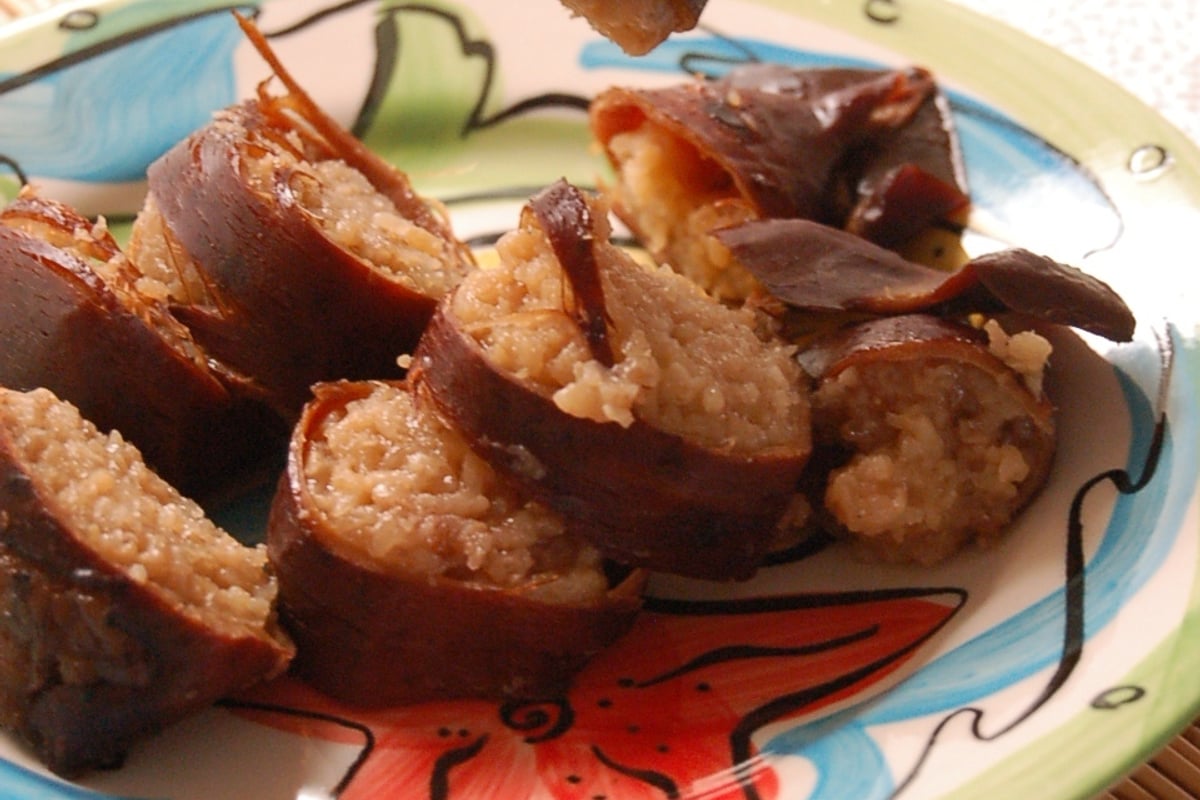
Ikameshi (rice-stuffed squid)
Ikameshi
Ikameshi is a local dish of Mori, Hokkaido, in which small squid bodies are stuffed with glutinous and non-glutinous rice and simmered slowly in a soy-based sauce. It is said to have been created in 1941 by Abe Shoten, a shop running an ekiben (train station box lunch) business in front of Mori Station, as a substitute food to make up for the rice shortage during the Pacific War. Originally the squid was used as a clever way to “bulk out” precious rice and stretch it further, but the combination of chewy rice and the squid's umami became popular, and it took hold as the signature ekiben of JR Mori Station. From around 1955 it also began to be sold through live demonstrations at department stores in Tokyo, and it built a nationwide reputation, ranking among the top sellers for many years at Keio Department Store's “Original Famous Ekiben and National Delicacies Fair.” The combination of squid and rice soaked in a sweet-savory soy sauce is a testament to the finished quality unique to an ekiben — delicious even when cold.
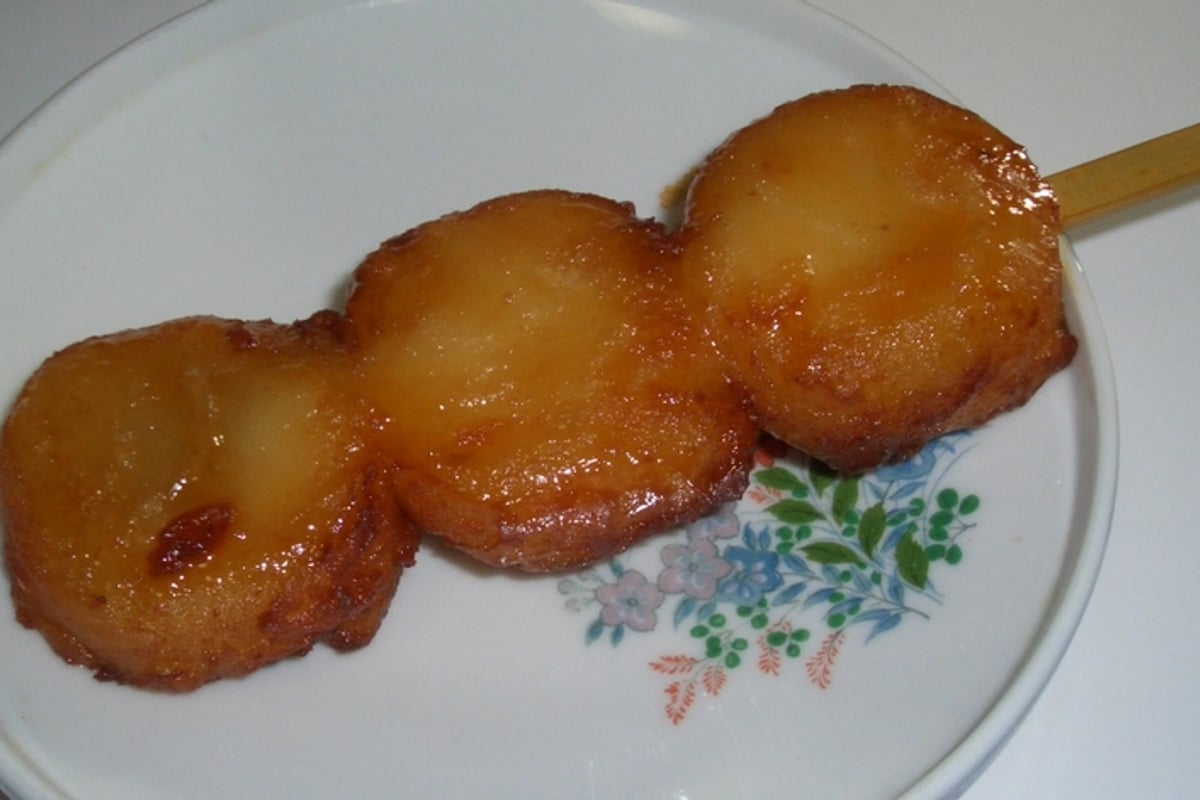
Imo-mochi (grilled potato mochi)
Imo-mochi
Imo-mochi is a Hokkaido snack made by boiling and mashing potatoes, kneading in potato starch, shaping the mixture into flat rounds, and pan-frying them. The outside is crisp and golden while the inside has a distinctively chewy, mochi-like texture, and it is typically enjoyed with a simple sweet-savory soy glaze, kinako (roasted soybean flour), or butter. It is said to have originated during the Meiji-era pioneer days, when rice-farming techniques had not yet been established in Hokkaido; settlers used potatoes, which grew well even in the cold climate, in place of glutinous rice to create a mochi-like food, and it spread as a vital energy source for the pioneers. Hokkaido, Japan's leading potato producer, and especially the Tokachi region, is known as a representative production area, and imo-mochi is a staple treat both at home and at roadside stations and souvenir shops. Because it was easy to prepare, it was also valued during the food shortages of the wartime and postwar years, and remains a beloved Hokkaido flavor across generations today.
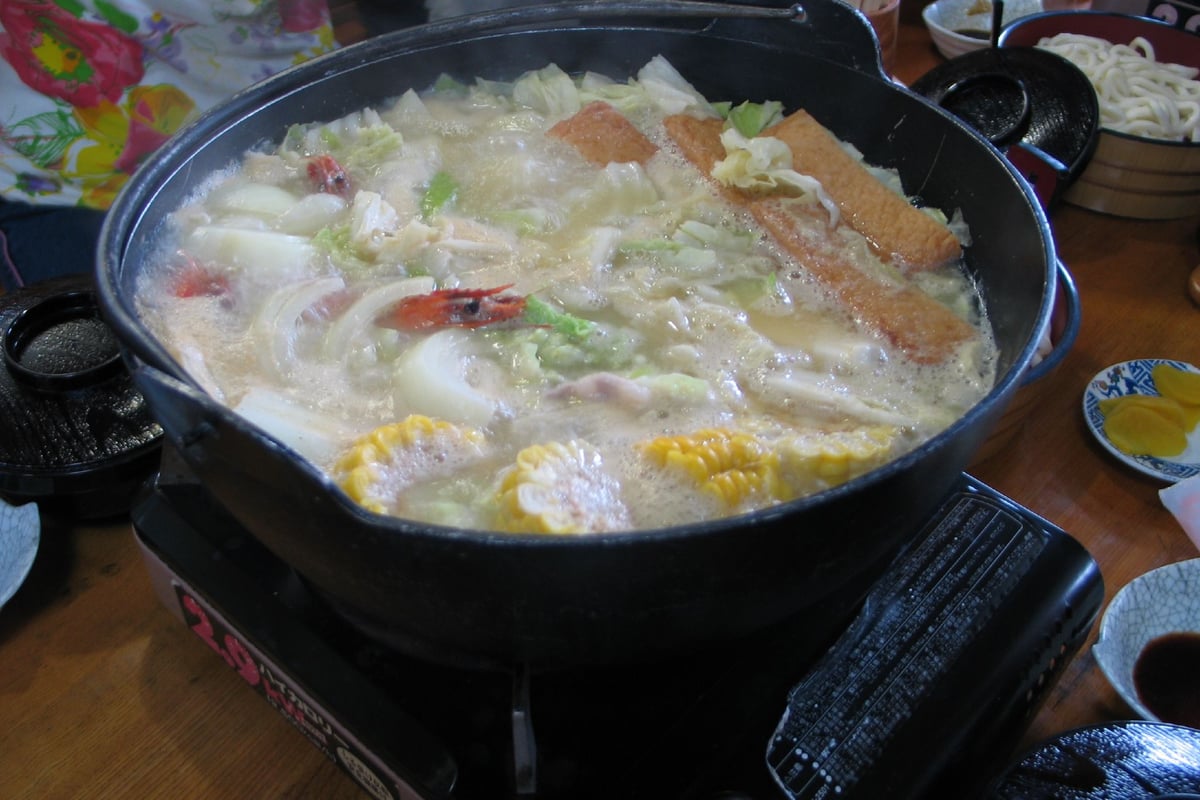
Ishikari nabe (salmon hot pot)
Ishikari Nabe
Ishikari nabe is a hot pot dish representing Hokkaido, made by simmering chunks of salmon together with offcuts (backbone, collar, etc.) and vegetables such as cabbage, onion, tofu, and potato in a miso-based broth. It is said to have originated in Ishikari, a city that grew up at the mouth of the Ishikari River, and is known as a local dish deeply shaped by the salmon fishery that has continued there since the Edo period. According to tradition, it began when fishermen celebrating a good catch threw freshly caught salmon offcuts into miso soup to warm themselves as they ate. In the late 1940s it became known nationwide after being served to tourists who came to watch Ishikari's beach seine salmon fishing. A final sprinkle of sansho pepper tames the fish's smell and brings out its umami. In 2007 it was selected for MAFF's “100 Best Local Dishes of Japan,” and it is counted among the three great local dishes of Hokkaido alongside Jingisukan and chanchan-yaki. Long-established restaurants in Ishikari still serve bowls that carry on the fishermen's wisdom of using every part of the salmon without waste.
Isshozuke (fermented chili and rice koji condiment)
Isshozuke
Isshozuke is a fermented all-purpose condiment that has long been made in the Tsugaru region. It is distinguished by its use of "Shimizumori Nanba," a heirloom chili pepper variety said to have been brought back from Kyoto by Tamenobu Tsugaru, the first lord of the Tsugaru domain. The name comes from the practice of pickling green chili peppers, rice koji, and soy sauce together in equal measures of one sho (about 1.8 liters) each. Shimizumori Nanba is low in capsaicin, giving it a mild heat and pronounced sweetness; the condiment is prepared during the coldest part of winter and, when aged for two to three years, mellows and deepens in flavor. As an all-purpose seasoning that pairs with meat, fish, vegetables, tofu, and rice alike, it has been used in a wide range of dishes, from a garnish for grilled and stir-fried dishes to a base for hot pot sauces. In 2020, Shimizumori Nanba was registered under the Geographical Indication (GI) protection system, and in 2022, isshozuke made with Shimizumori Nanba became the first food from Aomori Prefecture to be certified as one of the Agency for Cultural Affairs' "100-Year Foods," drawing renewed attention as part of the region's food culture.
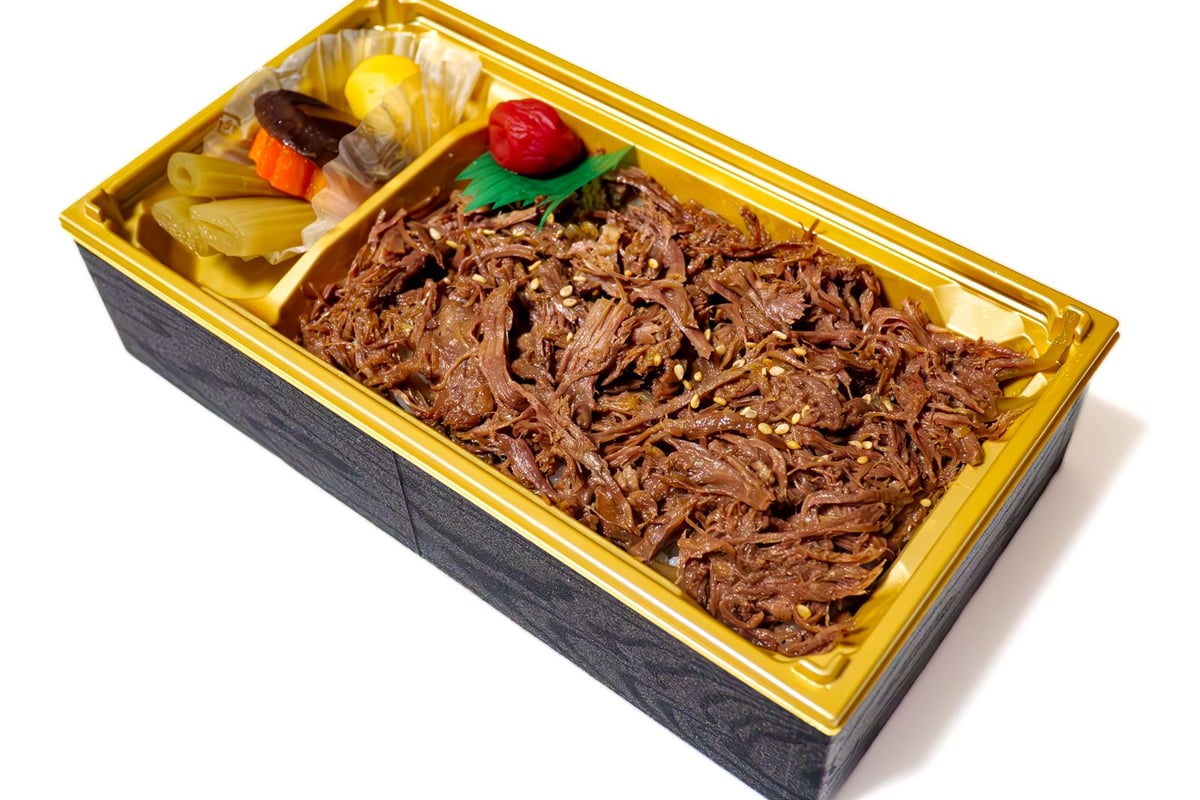
Iwate Tankaku Beef
Iwate Tankaku Beef
Iwate Tankaku Beef is an Iwate-branded beef from 'Nihon Tankaku' (Japanese Shorthorn), a reddish-brown breed of beef cattle raised across northern Iwate Prefecture, from the plains to the mountainous areas. Its defining feature is a unique rearing method called 'natsuyama-fuyuzato' (summer mountain, winter village), which makes the most of the breed's cold hardiness and suitability for open-range grazing: from spring through autumn, mother cows and calves live together on vast highland pastures, then move to barns for the winter. Raised mainly on grass rather than grain feed, the cattle produce lean beef with less fat and a concentrated, savory flavor that deepens the more it is chewed. Nihon Tankaku accounts for only a small fraction of Japan's total wagyu supply, making it a notably rare type of beef. As interest in the appeal of lean meat has grown alongside rising health consciousness, Iwate Tankaku Beef has gained increasing recognition nationwide as one of Iwate Prefecture's representative branded beefs.
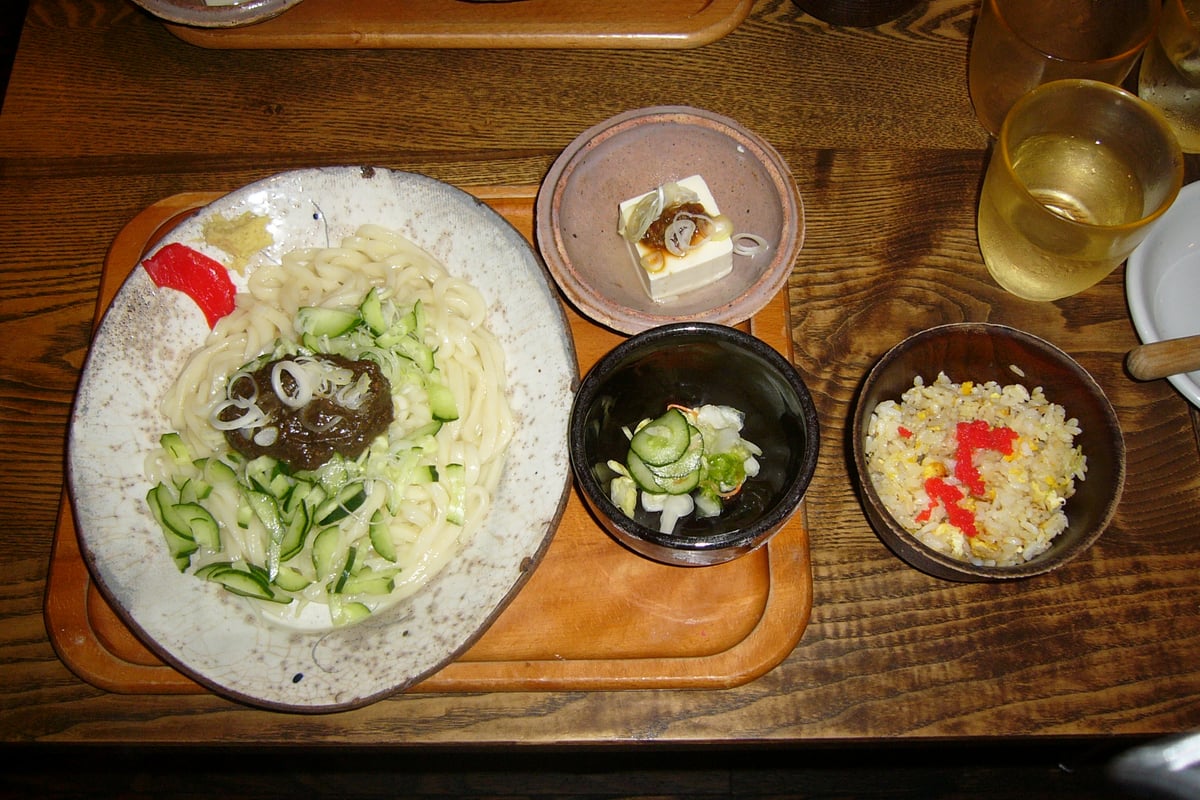
Jajamen (Morioka-Style Meat Miso Noodles)
Jajamen
Jajamen is a local dish of Morioka City, Iwate Prefecture, made from flat noodles that are steamed and then boiled, topped with a savory meat miso, grated cucumber, and green onion, and eaten after being thoroughly mixed together. It is said to have originated after the war, in 1953, when Takashina Kansho, who had repatriated from former Manchuria, set out to recreate the taste of the 'zhajiangmian' (fried sauce noodles) he had grown fond of there, and opened a shop in Morioka offering his own meat miso based on Japanese-style miso. He adapted the authentic flavor, which traditionally used fermented black beans, into a distinctive meat miso made by stir-frying miso, ground meat, and a dozen or so other ingredients, creating a dish suited to the tastes of Morioka locals. Another distinctive feature is that after finishing the noodles, diners can crack a raw egg into the bowl and order 'chii-tan-tan' from the staff to enjoy an egg soup made with the leftover meat miso. Jajamen is counted, alongside wanko soba and Morioka reimen, as one of the 'Three Great Noodles of Morioka.'
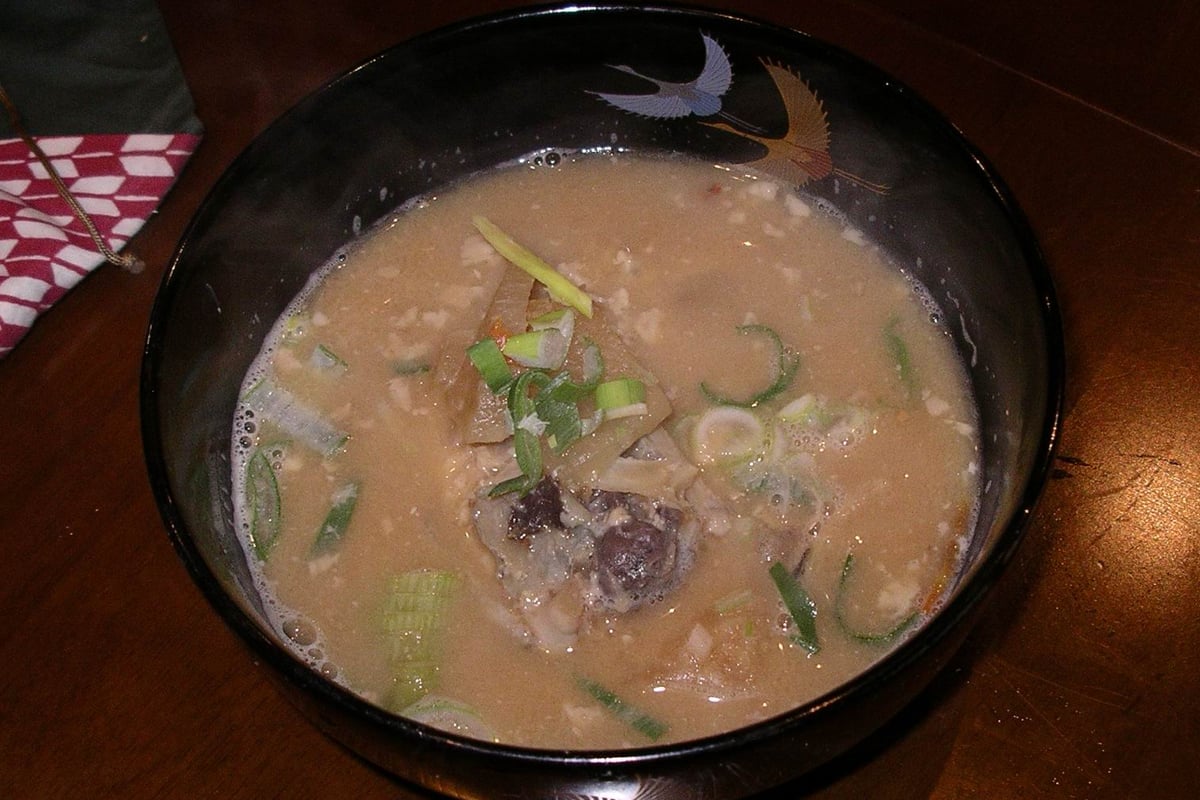
Jappa-jiru (Cod Offcuts Miso Soup)
Jappa-jiru
Jappa-jiru is a winter local dish handed down in the Tsugaru region of Aomori Prefecture. "Jappa" is a Tsugaru dialect word meaning fish scraps, and the dish slowly simmers the head, bones, skin, and innards of cod together with vegetables such as daikon radish, carrot, and green onion in a miso-based broth. In the Tsugaru region, there is a custom of buying a whole cod, head and tail intact, as the "year-taking fish" to greet the New Year; the flesh is used for sashimi or hot pot, while the scraps that would normally be discarded are used to the last bit in jappa-jiru — a dish embodying the wisdom of a snow country that wastes nothing. As a home-cooked dish that warms the body from the core through the harsh cold of winter, it has long been rooted in the dining tables of the Tsugaru region.
Jindaiji Soba (Temple-Front Buckwheat Noodles)
Jindaiji Soba
Jindaiji soba is a type of buckwheat noodle that has long been made around Jindaiji Temple in Chofu City, Tokyo, and has developed since the Edo period as monzen soba — soba served to temple visitors at the gate. The plateau along the Kokubunji Cliff Line, which stretches north of Jindaiji, drained well and was poorly suited to rice cultivation, but well suited to growing buckwheat. According to tradition, farmers in the area paid buckwheat flour to the temple in place of annual rice tribute, and the temple made it into soba to serve visitors — this is said to be the origin of the dish. During the Genroku era, when Jindaiji's soba was presented to Prince-Abbot Koben of Kaneiji Temple in Ueno, it was highly praised and became widely known to the shogunate and various feudal lords, earning it the name kenjo soba (tribute soba). The area around Jindaiji is also rich in spring water, which is used both to mill the buckwheat flour and to boil and rinse the noodles, and this pure water is said to enhance the soba's flavor. Today, around 20 soba shops still line the approach in front of Jindaiji's main gate, and every autumn the Jindaiji Soba Festival is held.
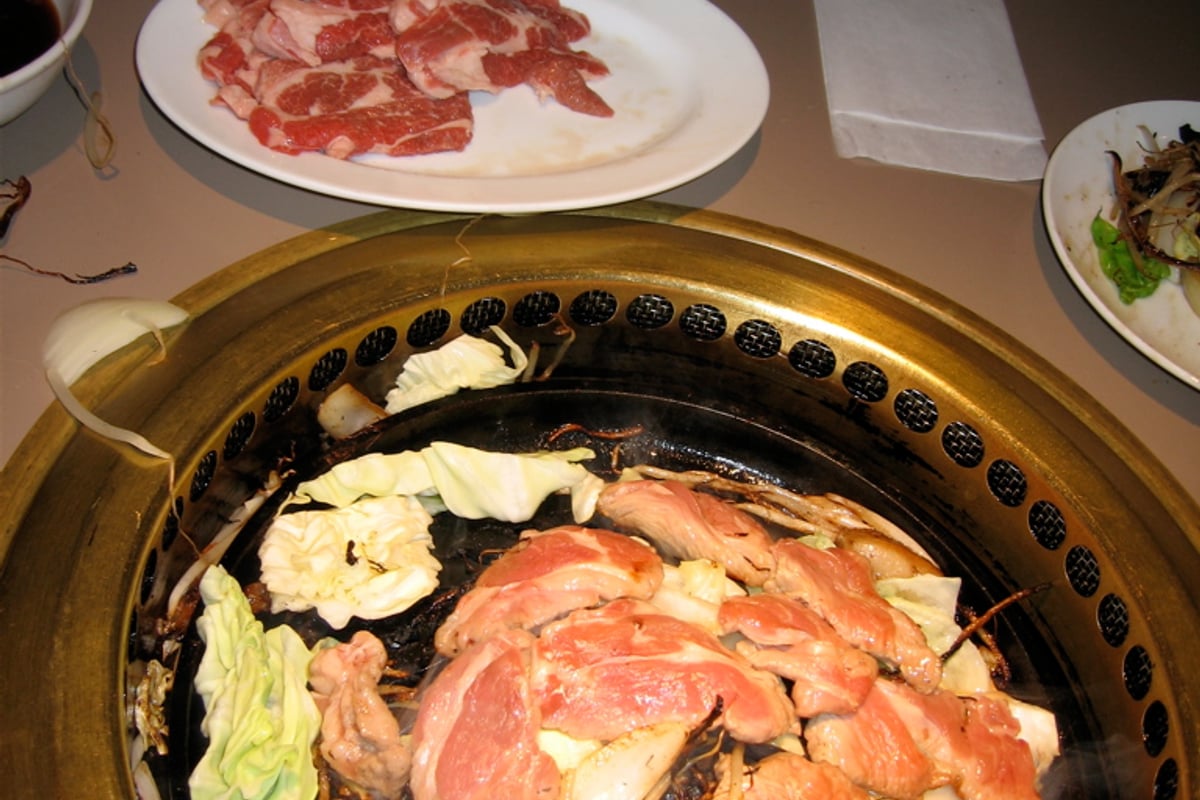
Jingisukan (grilled mutton)
Jingisukan
Jingisukan is a meat dish representing Hokkaido in which mutton is grilled on a special dome-shaped pan. The cast-iron pan, raised at the center, is built so that mutton grilled at its peak lets juices drip down to steam-cook vegetables around its rim; one theory holds that the pan's shape resembles a Mongol soldier's helmet. Various theories exist about who coined the name, but Tokuzo Komai, who served as head of the South Manchuria Railway's research department, is considered the most likely candidate. In the Taisho era, the “One Million Sheep Plan,” aimed at achieving domestic self-sufficiency in wool, established sheep-breeding stations in Takikawa and Tsukisamu in Sapporo, laying the groundwork for the dish's spread. After the war, in 1956, Masaji Matsuo in Takikawa devised “seasoned Jingisukan,” in which mutton is marinated in sauce before grilling, and it spread across Hokkaido. There are two main styles: the Takikawa/Matsuo style, in which meat is marinated in sauce before grilling, and the Sapporo/Tsukisamu style, in which sauce is applied after grilling, and the difference in flavor from shop to shop is part of the enjoyment.
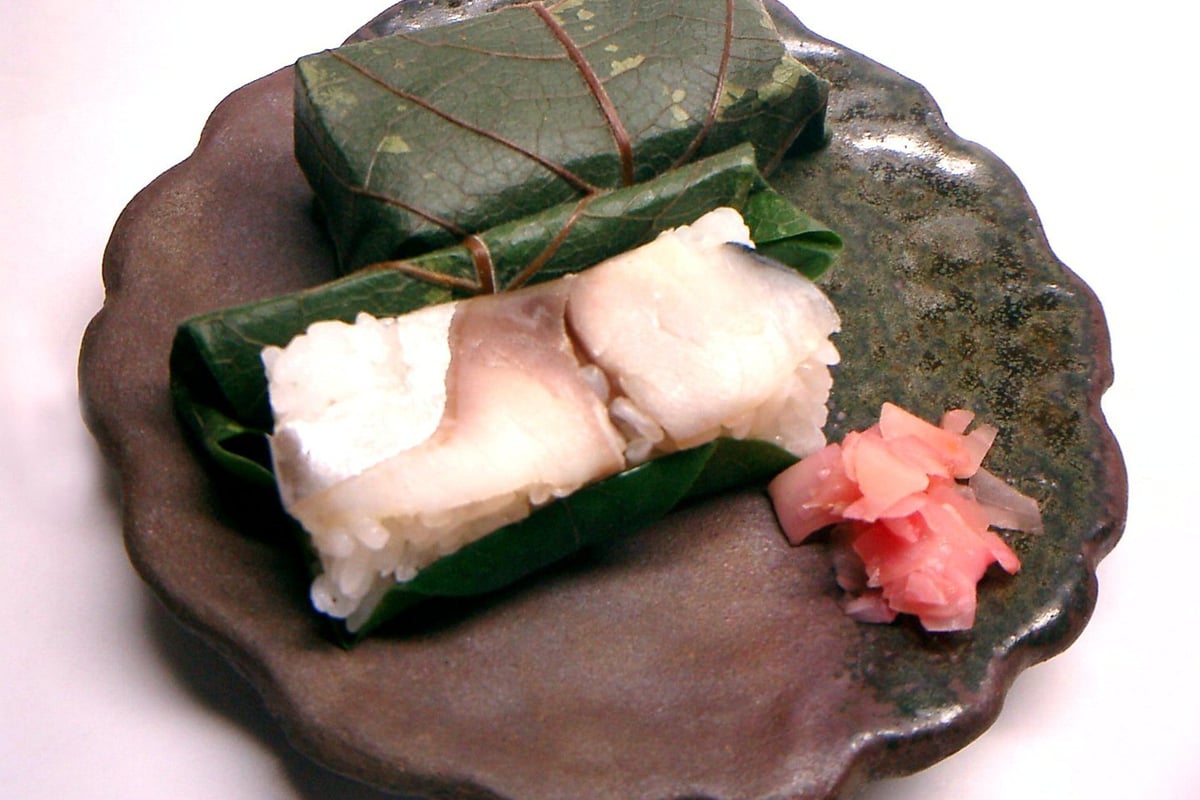
Kakinoha-zushi (Persimmon Leaf Sushi)
Kakinoha-zushi
Kakinoha-zushi is a signature local dish of Nara Prefecture in which bite-sized portions of vinegared rice topped with salt-cured slices of mackerel or salmon are individually wrapped in the leaves of the astringent persimmon (shibugaki). It is said to trace back to the mid-Edo period, when summer mackerel from the Kumano-nada sea was salt-cured in Kishu and carried over the mountains to villages along the Yoshino River, where it came to be made in each household as a festive dish for summer festivals. Because fresh seafood was precious in the sea-less Nara Basin, salt-curing was combined with the antibacterial properties of persimmon leaves as a way to improve preservation. Letting the wrapped sushi rest for about a night allows the aroma of the persimmon leaves and the flavor of the fish to blend into the vinegared rice, producing its distinctive taste. Today, makers are found throughout Nara Prefecture, especially in the Yoshino and Gojo areas, and it is known nationwide as one of Nara's representative souvenirs.
Kakke (Triangular Buckwheat or Wheat Dumplings)
Kakke
Kakke is a local dish handed down in the area around Ninohe City and Kunohe Village in northern Iwate Prefecture and into southern Aomori Prefecture, representing the grain-based food culture unique to the region once ruled by the Nanbu domain. The basic method is to knead buckwheat flour or wheat flour with water into a dough, roll it thin, cut it into triangles, and boil it in hot water; rather than simmering it in broth, the boiled dough is served with dipping sauces such as garlic miso or green onion miso. There are two types: 'soba kakke,' made with buckwheat flour, and 'mugi kakke,' made with wheat flour — soba kakke has a darker color and a fragrant aroma, while mugi kakke has a white color and a smooth, chewy texture. In the cold northern part of the prefecture, where rice cultivation was difficult, this simple, deeply flavorful dish has been passed down as a way to make full use of buckwheat and wheat.
Kanko-yaki
Kanko-yaki
Kanko-yaki is a local dish handed down since the Edo period in the Tsukui area of Midori Ward, Sagamihara City — a simple grilled-and-steamed dumpling made by wrapping seasonal ingredients such as wild greens and mushrooms, azuki beans, kabocha squash, and pickles in kneaded wheat-flour dough, then grilling it before steaming it through. Because the mountainous Tsukui area was unsuited to rice cultivation, wheat and bean farming flourished there from early times, and a wheat-based flour-food culture took root. In the Edo period, the dough was filled with uruka (salted ayu-fish innards) or miso and steam-baked in the hot ash of a hearth, and the dish was enjoyed as a meal or snack between farm work. The name is said to derive from its resemblance in shape to the kakko, a drum used in gagaku (Japanese court music). In 2007, it was selected as a local dish of Kanagawa Prefecture in the Ministry of Agriculture, Forestry and Fisheries' 100 Local Dishes of Farming, Mountain, and Fishing Villages.
Kashiwa Sukiyaki (Nara-Style Chicken Sukiyaki)
Kashiwa no Sukiyaki
Kashiwa Sukiyaki is a local dish of Nara Prefecture, listed among the Ministry of Agriculture, Forestry and Fisheries' 'Our Local Cuisine' collection, made using chicken instead of beef. In the Kansai region, chicken meat for eating is called 'kashiwa,' a name said to derive from the way the bird's brownish feathers resemble the color of oak (kashiwa) leaves. Because the guardian deity of Tenmangu shrines is said to be a bull, chicken sukiyaki rather than beef sukiyaki has traditionally been served at the celebratory autumn festival for Tenjin-san, and the dish has since been made at home to celebrate special occasions and to entertain guests. Today it is often made with 'Yamato Nikudori,' a breed of chicken developed by Nara Prefecture to recreate the flavor of the pre-war 'Yamato Kashiwa,' prized for its rich, savory taste and well-balanced marbling. It is typically eaten dipped in raw or onsen (soft-poached) egg, and finishing the pot with Miwa somen noodles is also a popular way to enjoy it.
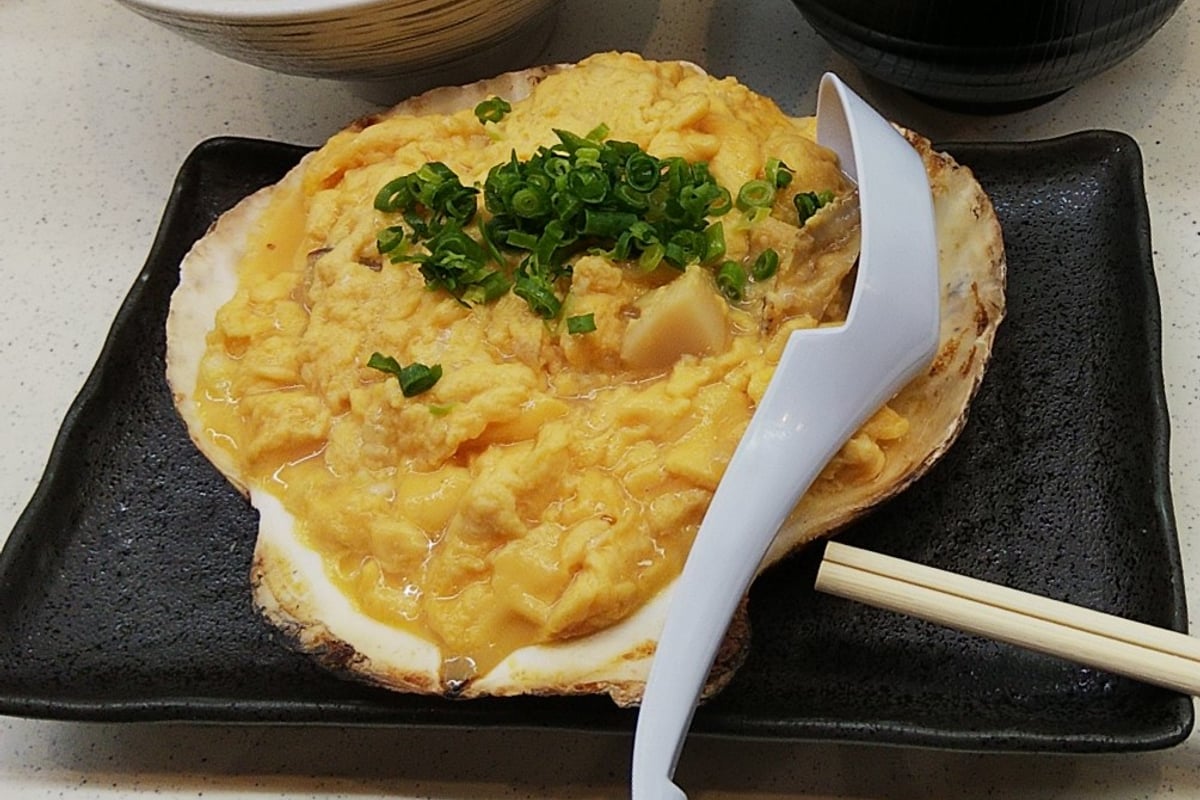
Kayaki-miso (Scallop Shell Miso Hot Pot)
Kayaki-miso
Kayaki-miso is a local dish handed down in the Tsugaru and Shimokita regions of Aomori Prefecture, in which a large scallop shell is used in place of a pot to simmer scallops, fish fillets, and vegetables in dashi and miso, finished by pouring in beaten egg. Around Tsugaru Bay, long known as a scallop-producing area, it is said that as early as the Edo period people were already using shells as pots to grill sardines or mackerel with homemade miso, in a simple fisherman's dish. Later, once eggs became available, it evolved closer to its present form, finished with beaten egg; however, because eggs were a precious commodity at the time, kayaki-miso was also a special nourishing food that only the ill or pregnant women were allowed to eat. Osamu Dazai, a novelist born in Tsugaru, wrote in his novel "Tsugaru" of his longing for the egg-topped kayaki-miso he ate as a child when he caught a cold, and the dish is also known for being deeply tied to the memories of the people of Tsugaru.
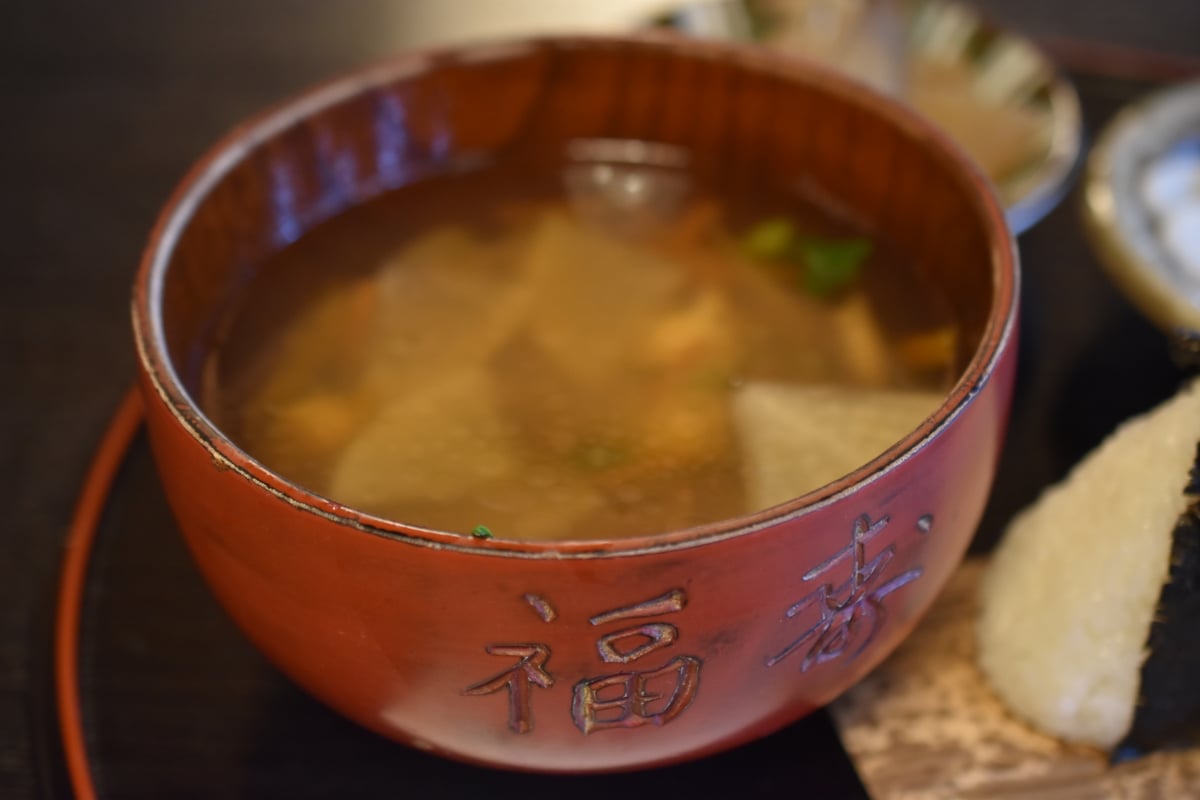
Kenchin-jiru (Kamakura Vegetable Soup)
Kenchin-jiru
Kenchin-jiru is a soup dish rooted in shojin ryori (Buddhist vegetarian cuisine), made by sautéing root vegetables and tofu in sesame oil and then simmering them in a kombu- and shiitake-based broth. According to a widely known account, the name derives from 'Kenchojiru,' a dish long prepared at Kenchoji Temple, a Zen temple in Kamakura, Kanagawa Prefecture, with the pronunciation gradually shifting to 'kenchin-jiru'; Kamakura is regarded as the dish's birthplace. The traditional method uses no animal-derived ingredients or stock, and the tofu is crumbled by hand rather than cut, giving the soup its characteristic mellow, savory flavor drawn from shojin ryori. From the Edo period onward, it spread beyond the bounds of temple cuisine to become a home-cooked dish among ordinary people, and today it is a standard winter soup made throughout Japan. In Kamakura, restaurants near the gate of Kenchoji Temple still serve Kenchin-jiru made to recreate the temple's traditional recipe.
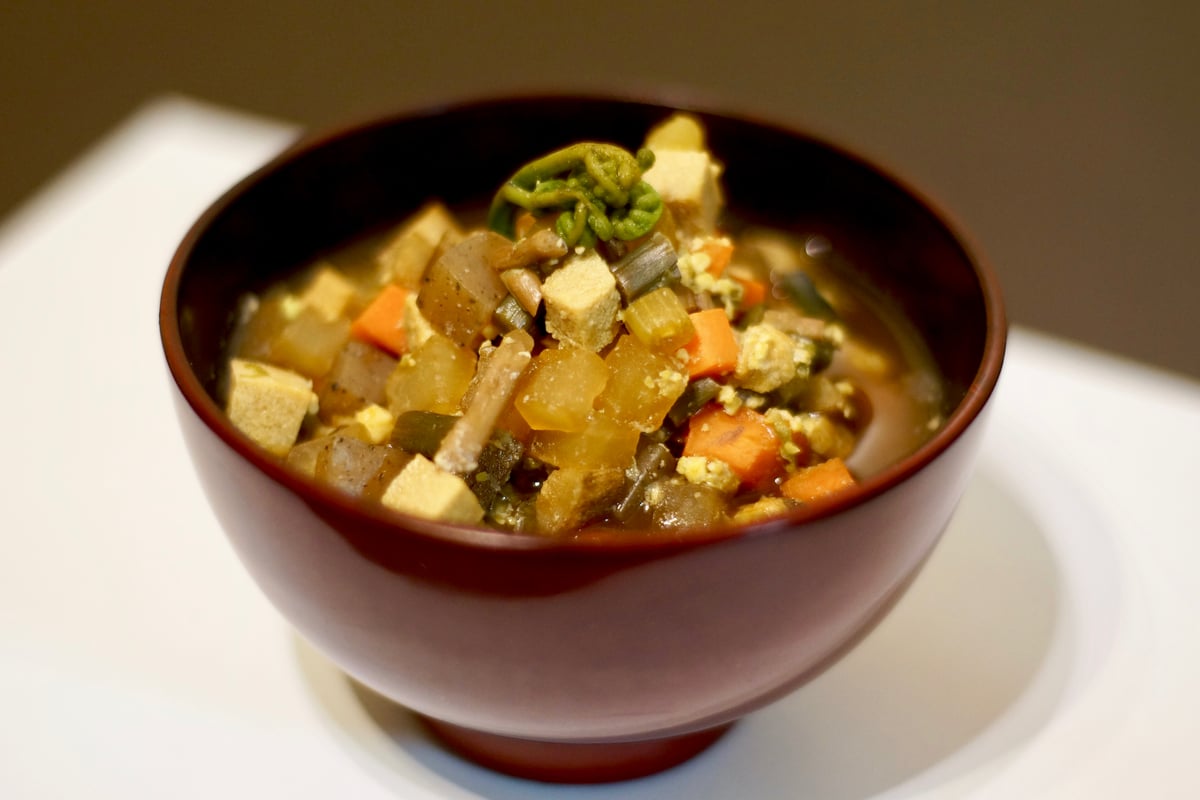
Keno-jiru (Tsugaru Root Vegetable Soup)
Keno-jiru
Keno-jiru is a hearty vegetable soup eaten mainly in the Tsugaru region, known as a traditional dish for Koshogatsu (the 'Little New Year,' January 15). Root vegetables such as daikon radish, carrot, and burdock, wild mountain vegetables like bracken and flowering fern, and dried ingredients such as fried tofu and frozen tofu are all chopped even finer than a small dice and simmered slowly in kelp dashi, then seasoned with miso or soy sauce. One theory holds that the name comes from 'ke,' a Tsugaru dialect word for rice porridge, though several other origin theories have also been passed down. It is also said to have originated as a dish women prepared in bulk before returning to their parents' homes at Koshogatsu, leaving behind a large potful for the men who remained—cooked in a big pot to last several days, with the flavor deepening day by day, a food culture that continues to be enjoyed today.
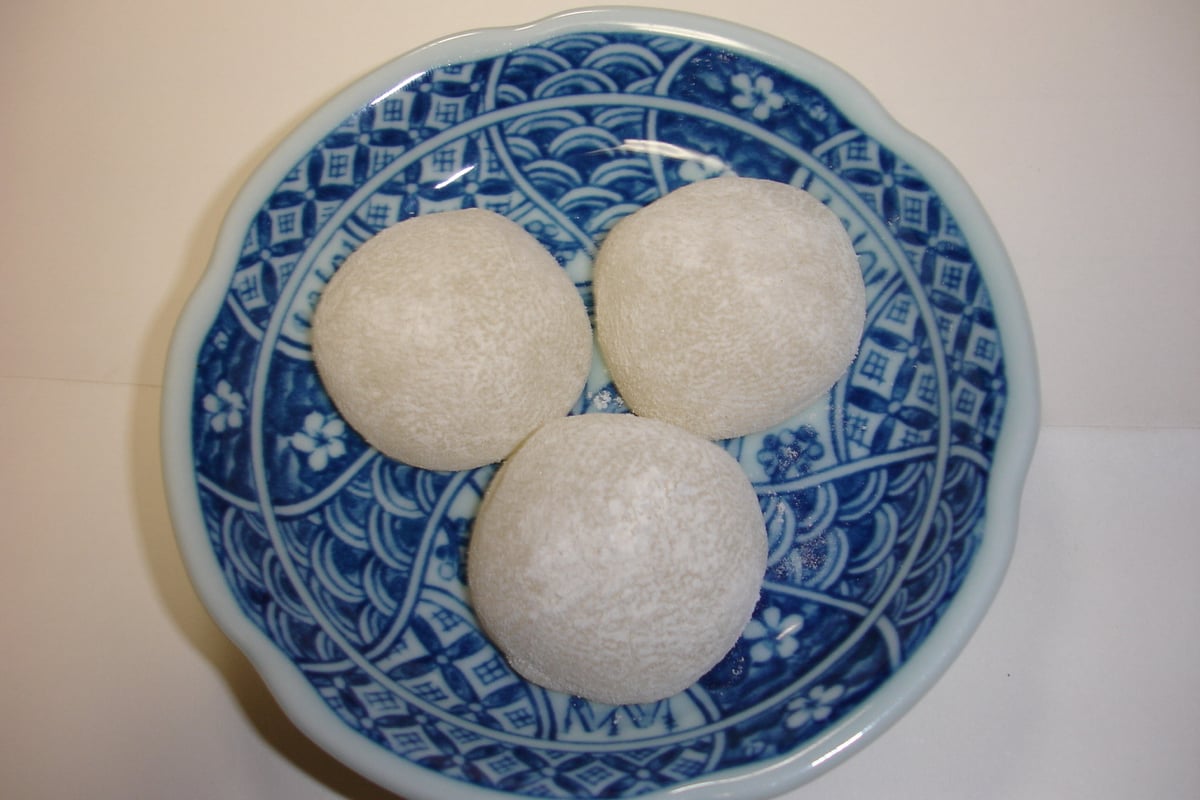
Kibi Dango (millet dumplings)
Kibi Dango
Kibi Dango (written 吉備団子) is a signature confection of Okayama and one of the most famous Okayama souvenirs, closely associated with the legend of Momotaro (the Peach Boy). The name is written with characters referring to 'Kibi,' the old provincial name for the Okayama area, and does not actually mean a dumpling made from millet (also pronounced kibi in Japanese), despite the similar-sounding name. It began as a simple steamed dumpling made from millet flour eaten as everyday food, but the confectionery shop Koeido, founded in 1856 (Ansei 3), transformed it into an elegant gyuhi-style confection suitable for tea gatherings under the guidance of Sanenzai Igi, a senior retainer of the Okayama domain at the time, establishing its status as a signature confection. Because Okayama is home to many sites associated with the legend of Kibitsuhiko-no-Mikoto and Ura, said to be the origin of the folktale Momotaro, the confection became linked in people's minds with the 'kibi dango' Momotaro carried in the story, and it grew into Okayama's most iconic souvenir.
Komugi Manju
Komugi Manju
Komugi Manju is a traditional confectionery of Tochigi Prefecture consisting of a wheat-flour dough wrapped around sweet red bean paste and steamed. Because baking soda is added to the dough to make it rise light and fluffy, it is also called 'Tanzan Manju' (soda buns), and it is known for its simple, gentle sweetness. Tochigi Prefecture has long practiced double-cropping of wheat alongside rice, so wheat-based foods such as udon and manju have long been part of everyday life. It is considered an essential treat during the Obon season, when the wheat harvest is finished and freshly milled flour becomes available, and it has traditionally been offered at the family Buddhist altar and shared with relatives and neighbors. In the Nasu region of northern Tochigi, there is also a custom of offering this manju on August 1, known as 'Kamanofuta Tsuitachi' (the day the lid of the hell cauldron opens), and it remains a home-cooked flavor deeply tied to the region's annual observances.
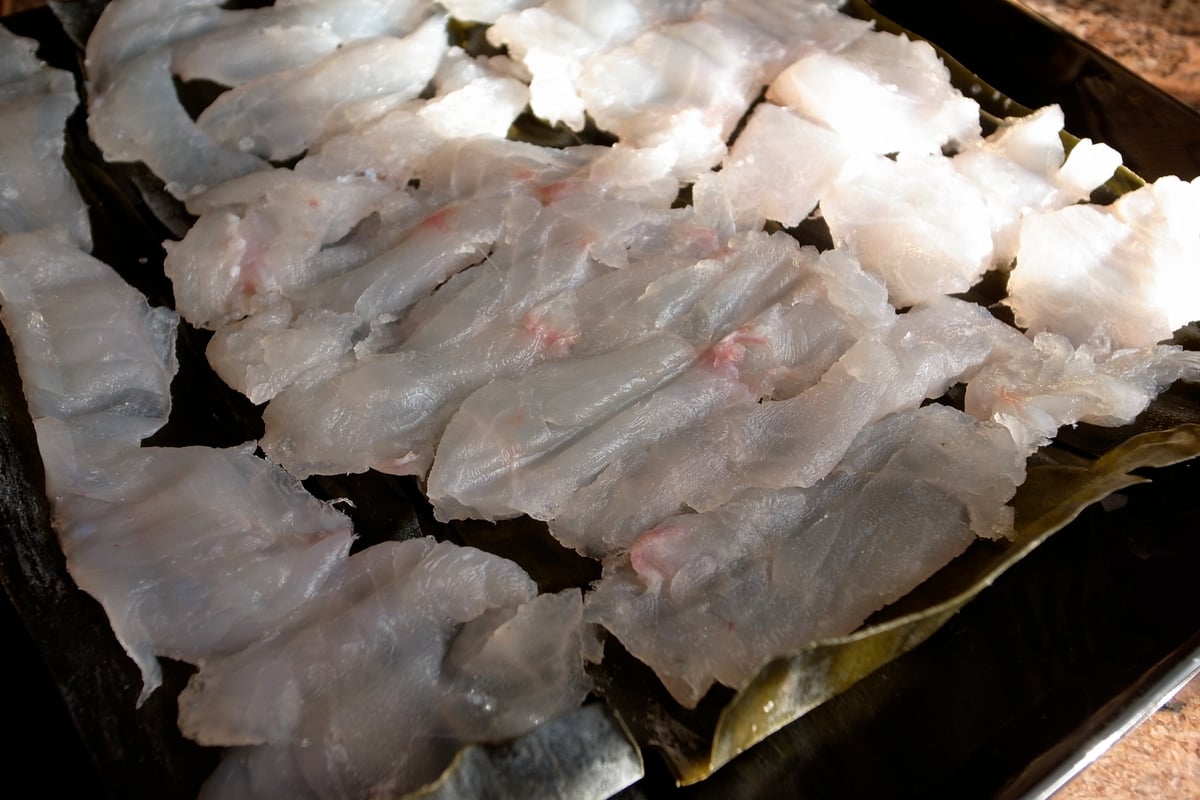
Konbujime (Kelp-Cured Sashimi)
Konbujime
Konbujime is a representative fish preparation and preservation technique from Toyama Prefecture in which sashimi-grade white fish is sandwiched between sheets of kelp (konbu) and left to rest for a set period, allowing the fish to absorb the kelp's umami and undergo a moisture-drawing maturation. It is said to have originated in the Edo period from the combination of kelp brought from Hokkaido via the Kitamae-bune trading ships and fresh fish caught in Toyama Bay, and it spread as a wisdom for preserving raw fish deliciously in an age before refrigeration. As the fish rests between the kelp, excess moisture is drawn out and the flesh firms up, while the glutamic acid in the kelp adds umami, producing a deep flavor quite different from ordinary sashimi. Toyama Prefecture, centered on Takaoka and Fushiki, former Kitamae-bune port towns, is said to rank among the highest in Japan for kelp consumption, and its kelp culture runs so deep that it is sometimes called the 'Kingdom of Kelp.' Konbujime stands as a symbolic dish of this culture, enjoyed widely from home cooking to dishes served at specialty restaurants.
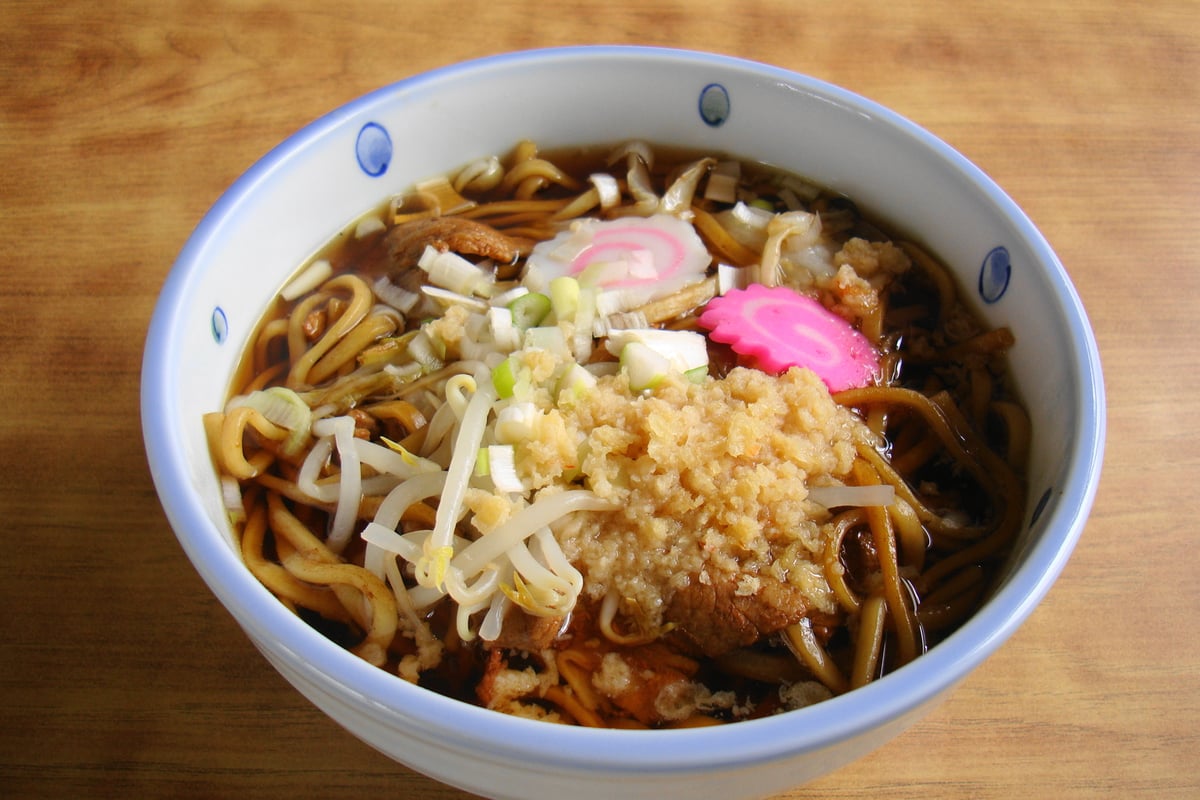
Kuroishi Tsuyu Yakisoba (Yakisoba in Soba Broth)
Kuroishi Tsuyu Yakisoba
Kuroishi tsuyu yakisoba is a local dish born in Kuroishi City, Aomori Prefecture, characterized by pouring soba broth over Kuroishi yakisoba, which uses thick, flat 'taihei' noodles. It is said to have originated in the late 1950s to early 1960s, when a diner in Kuroishi City called 'Mimasu' invented 'tsuyu soba'—yakisoba topped with broth—so that it could be eaten warm even on cold days. Mimasu later closed, but local restaurant owners who missed its flavor turned it into a menu item called 'Kuroishi tsuyu yakisoba,' which drew attention. Today it is served at multiple shops in Kuroishi City, each with its own noodle thickness and broth flavor, and it is cherished as a local dish representative of Kuroishi.

Lake Kasumigaura Wakasagi Cuisine (Hobikibune Fishing)
Kasumigaura Wakasagi Cuisine (Hobikibune Fishing)
Lake Kasumigaura wakasagi (pond smelt) cuisine is a fish-eating culture around Kasumigaura City and Tsuchiura City that developed alongside hobikibune (sail-net fishing boat) fishing, said to have been devised around 1880 by local fisherman Orimoto Ryohei. The hobikibune is a distinctive fishing boat that catches fish in a bag-shaped net towed behind it while the whole boat is pushed sideways by wind caught in its large sail; originally devised for icefish fishing, it later became the main method for catching wakasagi, and remained the mainstay of Lake Kasumigaura fishing for about a century until it was replaced by motorized boats around 1967. The wakasagi that are caught are prepared into dishes that make the most of freshwater fish's mild flavor and bones soft enough to eat whole, such as sweet-and-savory simmered tsukudani and kanroni, as well as deep-fried and tempura preparations, and are enjoyed at local eateries and souvenir shops. Today, sightseeing hobikibune boats operate seasonally to recreate the scenes of the past, letting visitors enjoy both the lake's food culture and its fishing history together.
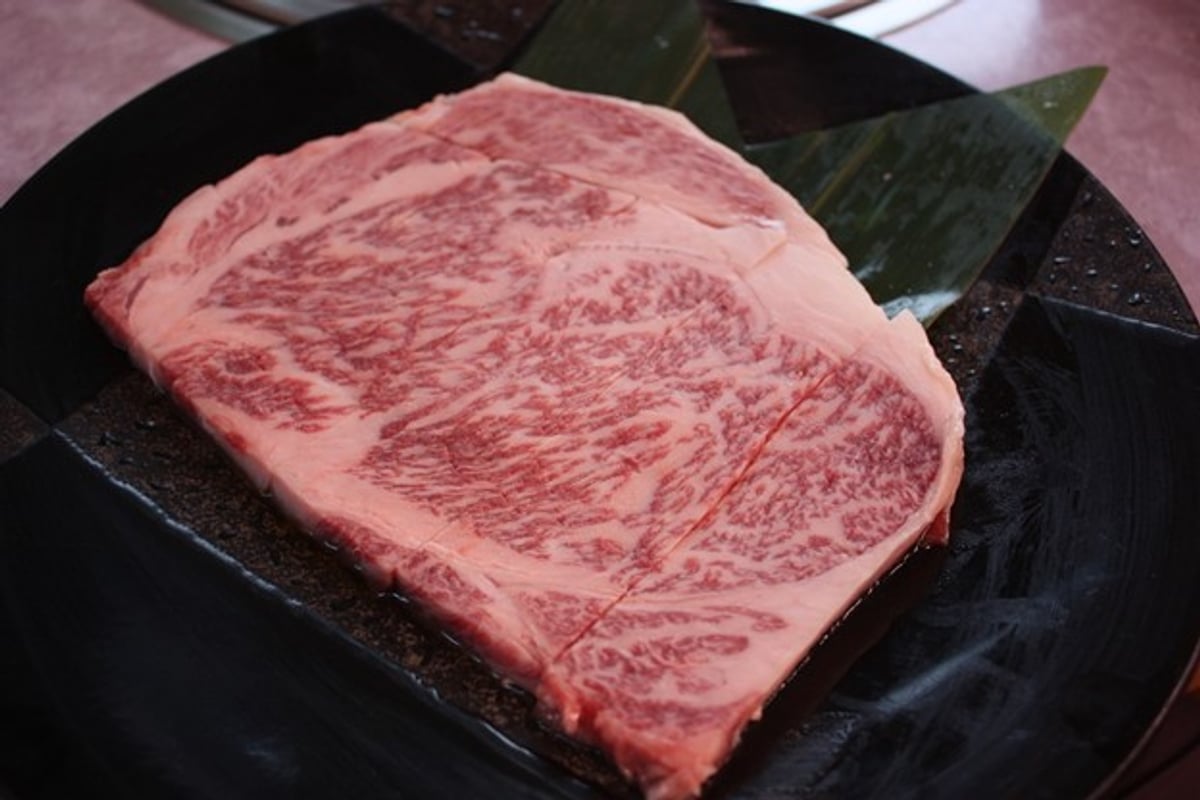
Maesawa Beef
Maesawa Beef
Maesawa Beef is a branded beef name reserved for Japanese Black cattle raised in Maesawa, Oshu City, Iwate Prefecture, that meet a meat quality grade of 4 or higher. Production of Japanese Black cattle began in the 1950s, when breeding cows were introduced from Okayama and Shimane prefectures, and full-scale fattening started in earnest after the Maesawa Town Agricultural Cooperative's fattening division was established in 1965. The name 'Maesawa Beef' was first used at the Maesawa Beef Carcass Competition held in 1971, and it has been established as a brand ever since. Blessed with snowmelt water flowing down from the Ou Mountains and the Kitakami Highlands, the Maesawa area is also a fine rice-growing region, and a nature-cycle style of fattening that uses locally grown rice straw as roughage and bedding produces the fine marbling and moist texture the beef is known for. Maesawa Beef has won the Grand Prize a record six times at the National Wagyu Carcass Competition, earning it recognition as one of the finest wagyu brands in Japan.
Maguro no Kabuto-yaki (Grilled Tuna Head)
Maguro no Kabuto-yaki
Maguro no Kabuto-yaki (grilled tuna head) is a hearty local dish born in the port town of Misaki in Miura City, one of Japan's leading tuna fishing harbors. The tuna's head (kabuto) holds rare, richly flavored parts distinct from the body meat—such as the hachi-mi (crown meat), cheek meat, the flesh behind the eye, and throat meat—which are slow-grilled, often simply salted, to bring out their deep umami. The fishermen of Misaki have long practiced 'oki-ryori' (offshore cooking), a tradition of ingeniously preparing the tuna's innards and other underused parts, and kabuto-yaki is said to have emerged from this culinary lineage. Because only a small amount of this rare cut can be taken from a single fish, it is mostly served at specialty tuna restaurants around Misaki Port, and it has become a beloved dish among visitors as a symbol of Misaki's distinctive tuna food culture.
Mamakari-zushi (Sappa Herring Sushi)
Mamakari-zushi
Mamakari-zushi is a signature local sushi of Okayama Prefecture, made from mamakari — a small fish caught along the Seto Inland Sea coast — filleted into three pieces, marinated in sweet vinegar, and placed atop vinegared rice. The standard Japanese name for mamakari is sappa, a small fish of the herring family that is at its fattiest and most flavorful from autumn into early winter. The name is said to come from a saying that the fish is so delicious people would go 'borrow rice (mama) from the house next door' for more of it, making it a food deeply familiar to the people of Okayama. It was selected as one of the Ministry of Agriculture, Forestry and Fisheries' '100 Local Dishes of Farming and Fishing Villages,' and is sold not only at home but also in boxed sets at sushi restaurants and souvenir shops. The distinctive tartness and umami of the vinegar-cured small fish pairs beautifully with the vinegared rice, making it a beloved dish that symbolizes Okayama's food culture.
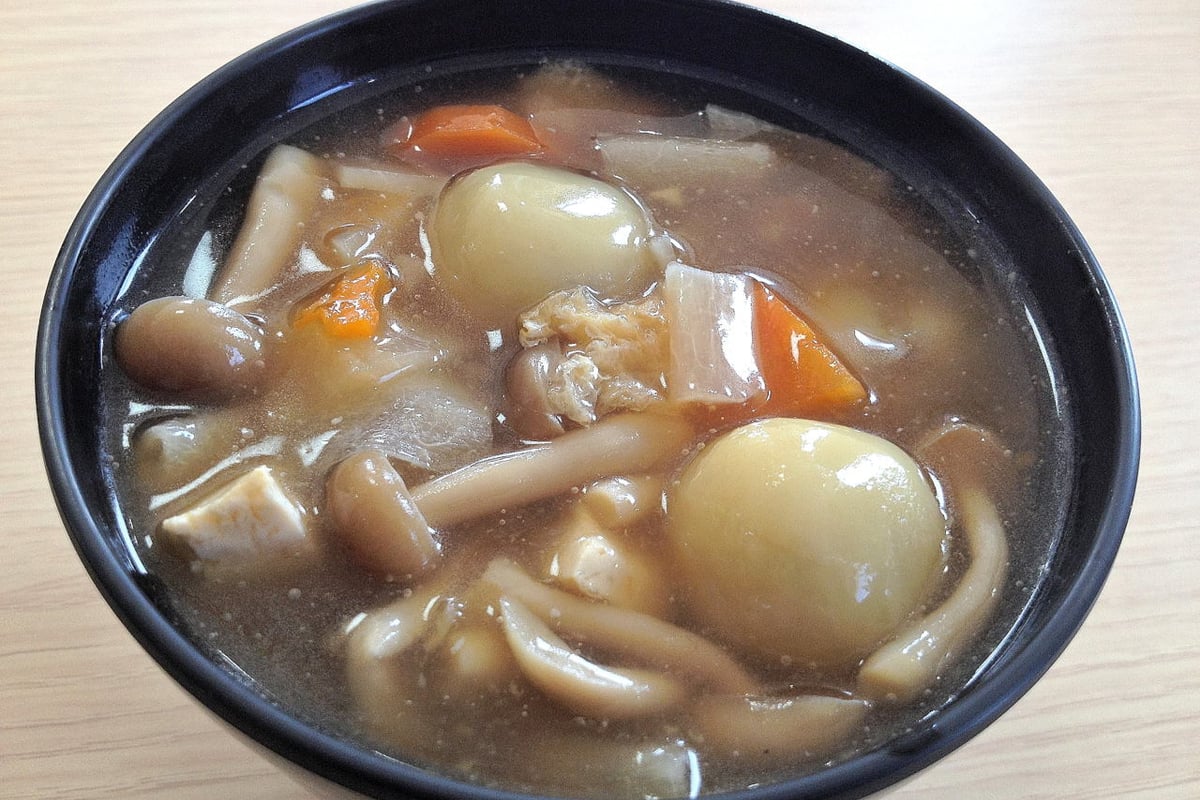
Mamebu (Walnut and Brown Sugar Dumpling Soup)
Mamebu
Mamebu (mamebu soup) is a local dish handed down in Yamagata, Kuji City, and the surrounding Kunohe District area of Iwate Prefecture. Dumplings called 'mamebu,' made by wrapping walnuts and brown sugar in wheat flour dough and rolling them into balls, are simmered in a soy sauce-seasoned broth made from kelp and dried sardines, together with burdock root, carrot, fried tofu, and dried gourd shavings. Biting into a dumpling releases the fragrant walnut and gentle sweetness of the brown sugar, which mingles with the saltiness of the soy sauce broth for a distinctive flavor. It is said to have originated in this area, where rice was once difficult to grow, as a substitute for noodle dishes served on celebratory occasions, and it is still passed down today as an essential dish for New Year's and other ceremonial occasions.
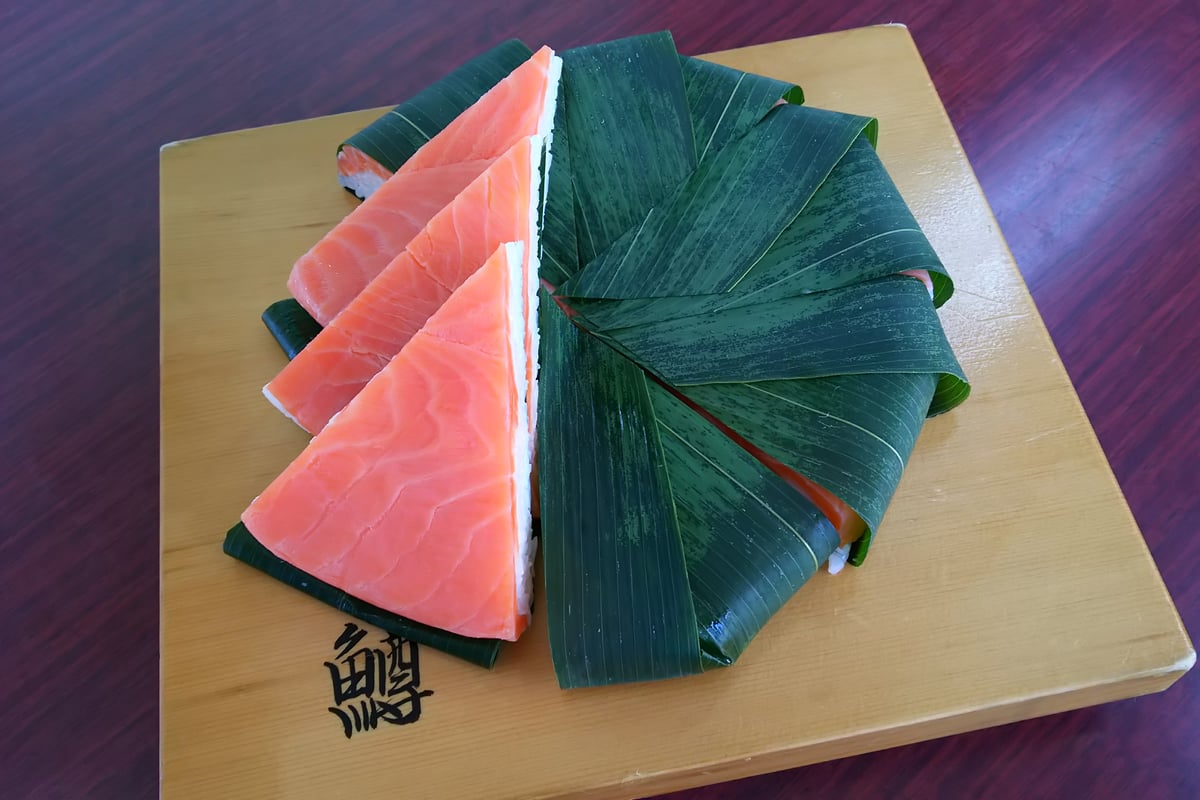
Masu-no-sushi
Masu-no-sushi
Masu-no-sushi is Toyama Prefecture's signature pressed sushi, made by layering vinegared rice and thin slices of sakura masu (cherry salmon) with bamboo-grass leaves, packed into a round bentwood container and pressed firm. It is said to have originated when a retainer of the Toyama domain presented ayu (sweetfish) sushi from the Jinzu River to the lord, and the dish later evolved into its present form using sakura masu caught in the same river. After it began being sold as an ekiben (station bento) at Toyama Station in 1912, its fame spread nationwide with the opening of the Hokuriku Main Line, and today it stands as the quintessential Toyama souvenir. Its flavor balances the refreshing aroma of bamboo grass, the mild richness of the sakura masu, and the tang of vinegared rice, and its long shelf life at room temperature has made it a favorite for station bento, gifts, and outing lunches alike. Many shops, mainly in Toyama City, still compete with their own recipes today, and comparing the differences in vinegar seasoning and fish thickness between shops is a popular pastime.
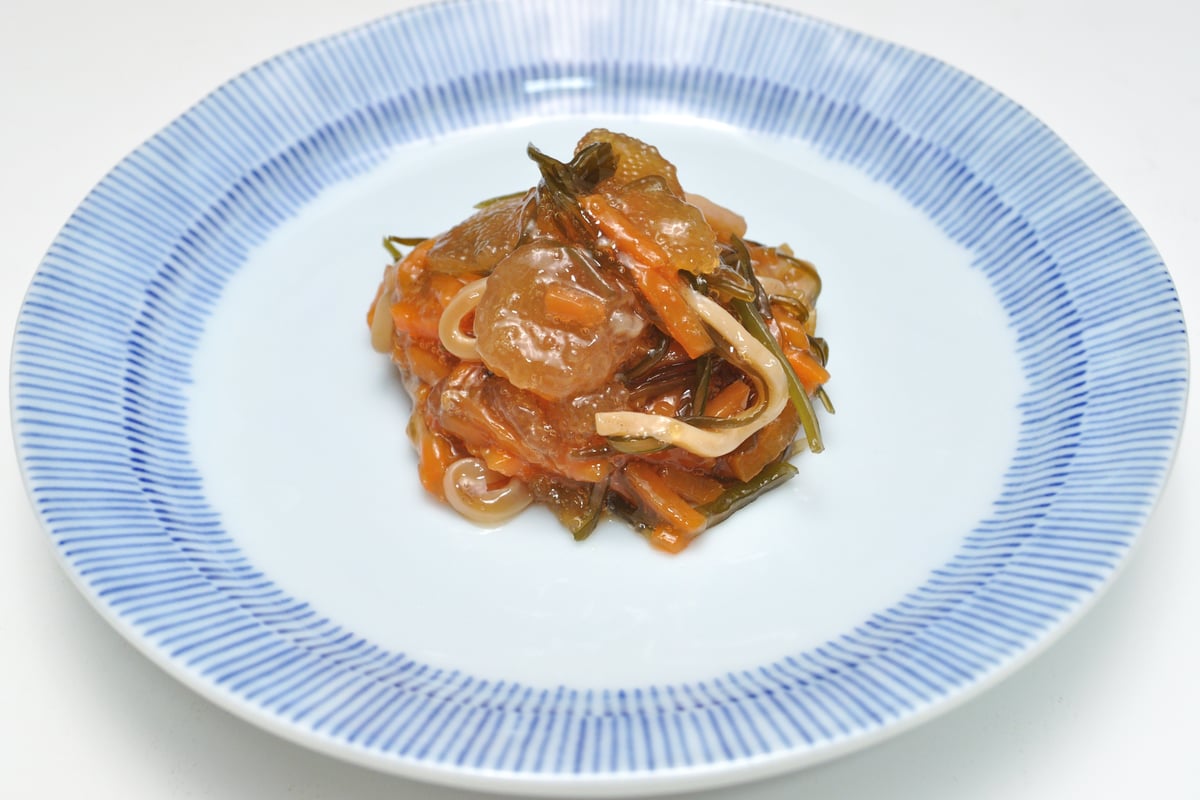
Matsumae-zuke (squid and kelp pickle)
Matsumae-zuke
Matsumae-zuke is a preserved dish from the Matsumae region of Hokkaido, made by thinly slicing dried squid (surume) and kelp and pickling them in a soy sauce-based marinade. Herring roe (kazunoko) is traditionally added as a finishing touch, giving the dish its characteristic sticky, stringy texture from the kelp, a satisfying crunch from the roe, and layers of umami flavor. The name is said to derive from Matsumae, the former castle town of the Matsumae domain (now Matsumae Town, Matsumae District), where the local kelp was known as 'Matsumae kelp.' During the Edo period, the Matsumae and Fukushima areas thrived on herring fishing, and locals combined the abundant kazunoko, dried squid, and kelp into a pickle that later became a staple of New Year's cuisine and a classic Hokkaido souvenir known throughout Japan. Today, several producers in Matsumae Town still make this pickle, and its simple, home-style flavor—varying slightly from household to household—continues to be passed down.
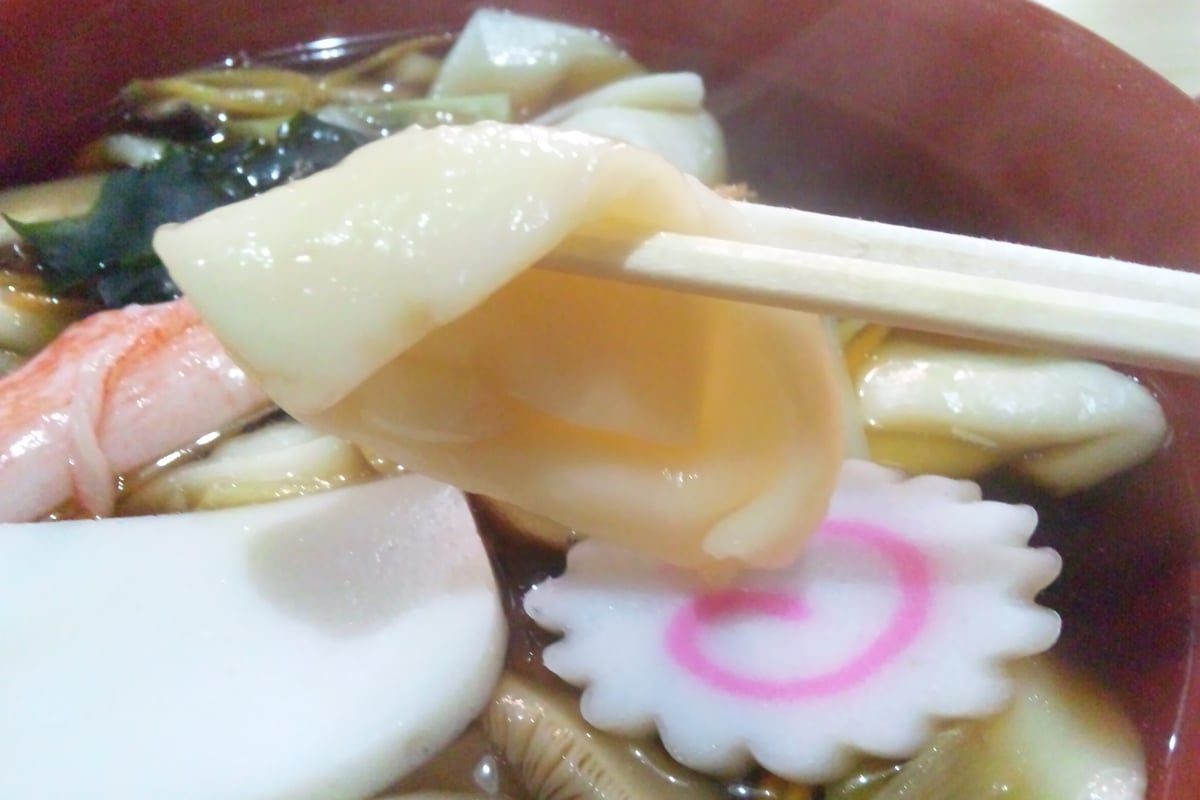
Mimi Udon
Mimi Udon
Mimi Udon is a local dish from the Kuzuu district of Sano City and the Shiroyama district of Utsunomiya City in Tochigi Prefecture, made by shaping kneaded wheat-flour dough into an ear shape and boiling it. It is said to have originated in the late Edo period, and by the Taisho era had spread as a dish believed to ward off evil. Modeled after the ears of a demon, the custom of eating it at New Year is rooted in the belief that eating the demon's ears wards off misfortune and prevents unwanted rumors or bad luck, praying for good health and harmonious neighborhood relations. In the Kuzuu district of Sano City, the custom continues today of making a large batch of Mimi Udon at year's end, keeping it soaked in cold water for preservation, and serving it to guests who visit over the New Year. Its distinctive shape comes from kneading wheat flour with lukewarm water and salt, rolling it flat, cutting it into matchbox-sized rectangles, then folding each piece in half and pinching the open edges closed; it is typically served in a soy-sauce-based broth.
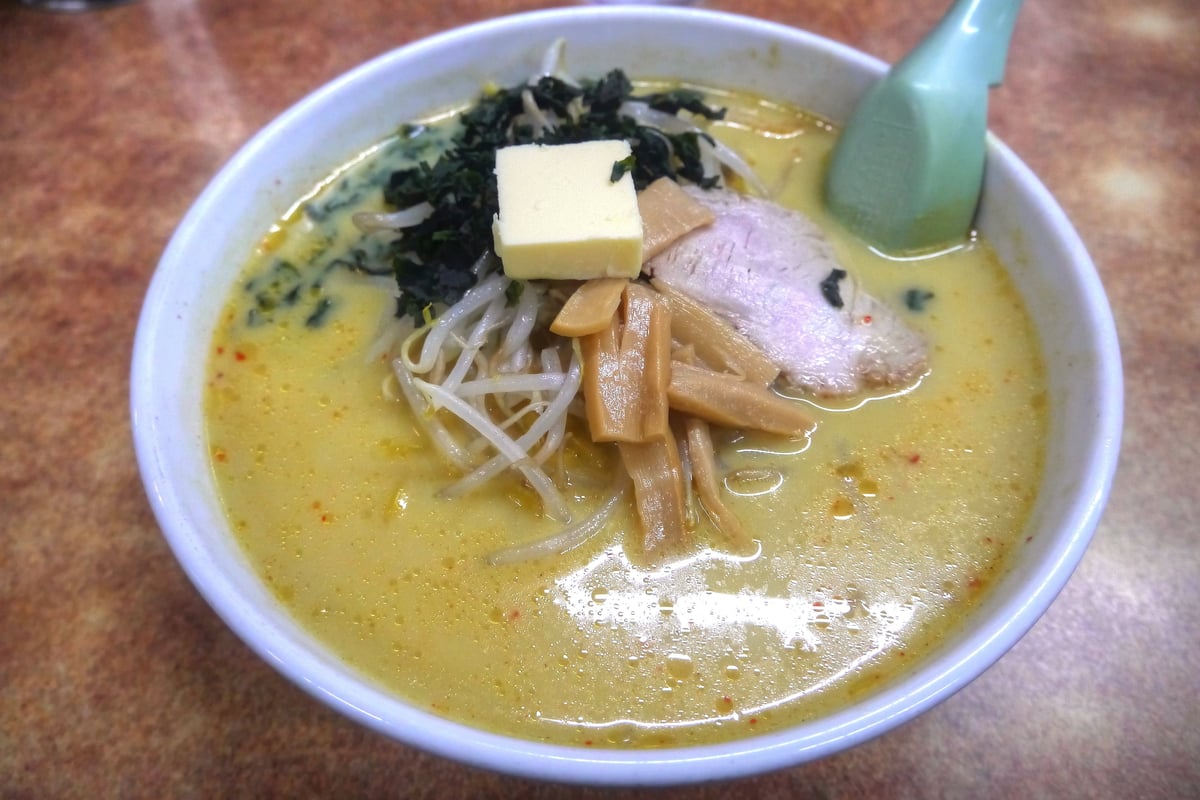
Miso Curry Milk Ramen
Miso Curry Milk Ramen
Miso curry milk ramen is a local ramen born in Aomori City, a rich bowl made by adding curry and milk to a miso ramen base. It is sometimes mistakenly believed to have originated in Hachinohe City, but its true birthplace is Aomori City. It is said to have started in 1968, when Kiyoshi Sato, who had trained at the Sapporo Ramen Yokocho alley, opened a shop in Aomori City; the shop initially served miso-, salt-, and soy-sauce-based ramen. In the late 1970s, a trend spread among junior high and high school students of adding various seasonings to their ramen, and out of that came the discovery that 'miso ramen tastes great with curry and milk added,' which became so popular it was made an official menu item. In 2008, the 'Aomori Miso Curry Milk Ramen Promotion Association' was established, and the dish became known nationwide as a soul food beloved by local residents.
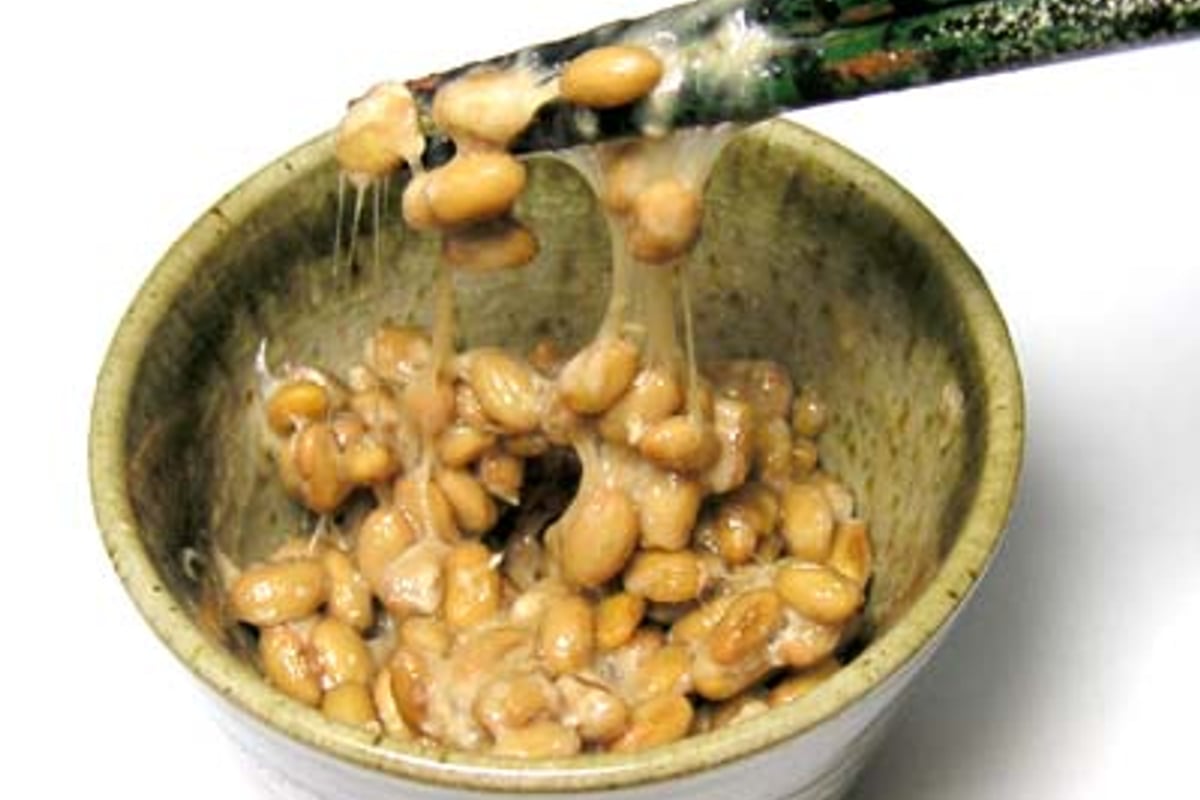
Mito Natto
Mito Natto
Mito Natto is a brand name for natto made around Mito City in Ibaraki Prefecture, known for its small, uniform soybeans that stick together well with fine strands, a signature natto texture. Around Mito, along the Naka River basin, farmers have long grown flood-resistant small soybeans, and this locally suited soybean variety helped natto-making take root here. In 1889 (Meiji 22), Seizaemon Sasanuma I founded 'Tengu Natto' and began selling it in front of Mito Station to coincide with the railway's opening that same year, which is said to be how Mito natto became known nationwide. Traditional methods such as 'waratsuto natto,' wrapped in rice straw, have also been passed down, and today Mito City continues to promote its identity as the 'town of natto,' even enacting an ordinance designating July 10 as 'Natto Day.'
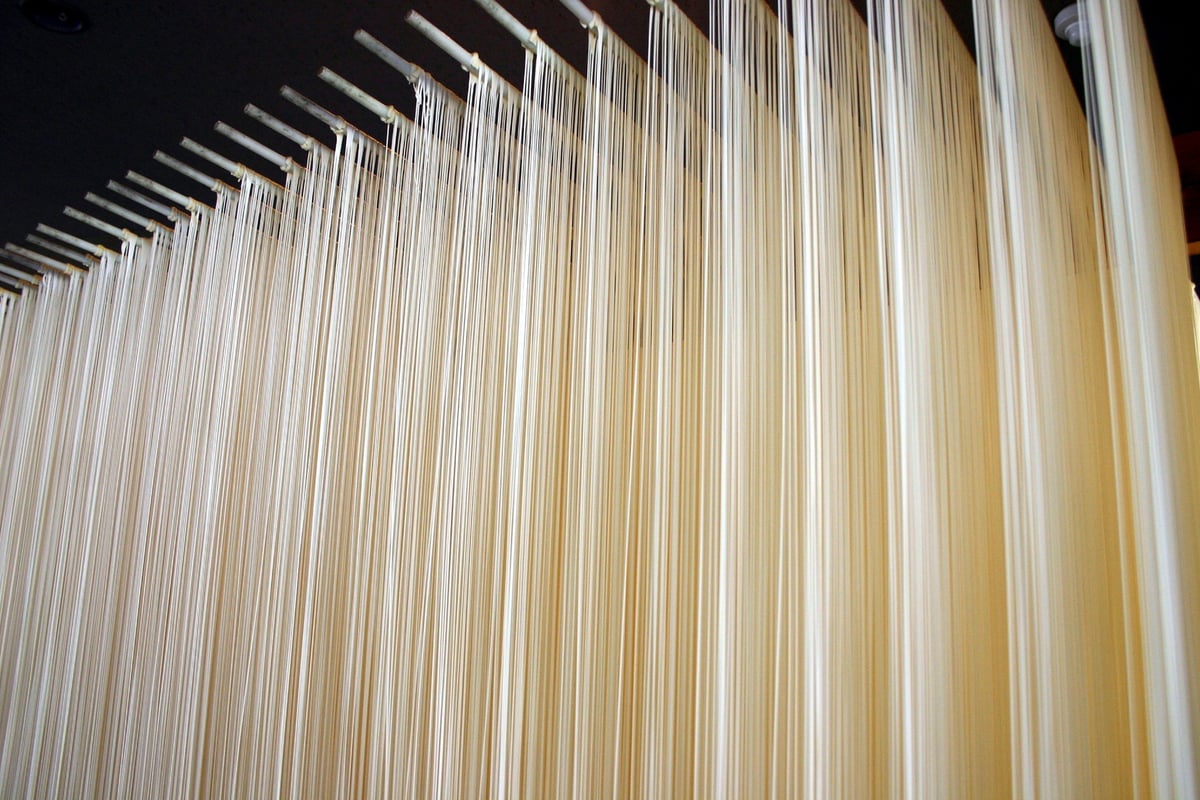
Miwa Somen
Miwa Somen
Miwa somen is hand-pulled somen noodles that have been made since ancient times in the Miwa area of Sakurai City, Nara Prefecture, and the region is known as the birthplace of Japan's hand-pulled somen tradition. According to legend, more than 1,200 years ago the second son of the chief priest of Omiwa Shrine discovered that the clear water flowing from Mt. Miwa and the local soil were ideally suited to growing wheat, and began making somen from the flour. At Omiwa Shrine, a ritual called Bokujosai is still held every February to divine that year's somen market, showing how deeply faith in the deity of Mt. Miwa has been tied to somen-making. The noodles, stretched into extremely fine strands, are known for their firm bite and smooth texture, and are enjoyed year-round: chilled in summer and as hot nyumen in winter.
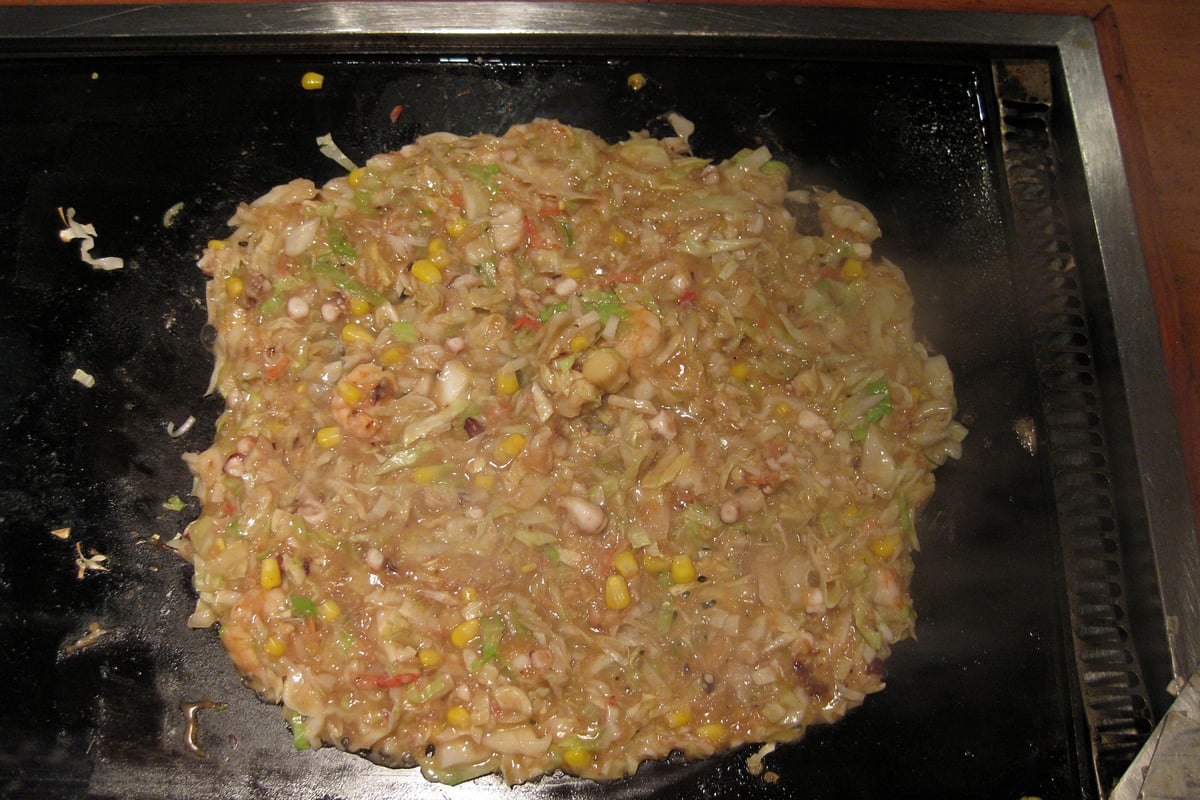
Monjayaki
Monjayaki
Monjayaki is a flour-based dish born in Tokyo's shitamachi (downtown) districts, made by mixing chopped cabbage and other ingredients into flour batter thinned with water and cooking it on a griddle as you eat. It is said to have originated as a children's snack sold at candy shops from the late Edo period through the Meiji era, in which flour batter thinned with water was cooked thin on a griddle and seasoned with soy sauce or starch syrup. Because children would draw letters and pictures in the still-loose batter with a spatula as it cooked, it came to be called 'moji-yaki' (letter-grilling), a name that is said to have shifted over time into 'monja.' From the late Showa era onward, Tsukishima in Chuo Ward saw a rapid increase in monjayaki specialty restaurants, and today it is known as the dish's signature neighborhood, with many shops lining what is now called 'Monja Street.' The defining feature of monjayaki is its batter, which is much runnier than okonomiyaki, and part of its charm lies in the distinctive way it is eaten — scooped directly off the griddle with a small spatula called a 'hagashi.'
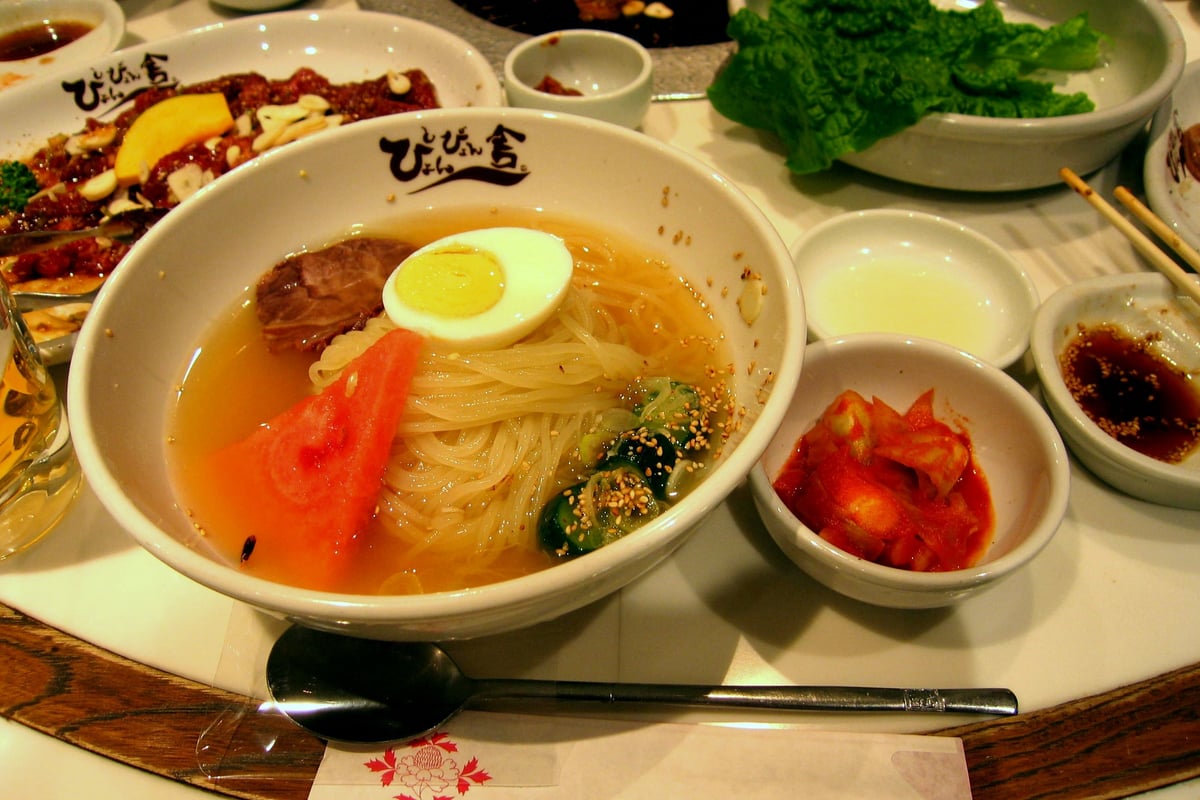
Morioka Reimen (Morioka Cold Noodles)
Morioka Reimen
Morioka reimen is a local dish of Morioka City, Iwate Prefecture, combining firm, springy noodles with a rich broth made from beef and chicken bones and the tang and spice of kimchi. It is said to have originated in 1954, when Aoki Teruhito, who came from Hamhung on the Korean Peninsula, began serving a version of his hometown's cold noodles adapted to suit local tastes at his yakiniku restaurant 'Shokudoen' in Morioka's Odori district. At first, the noodles' unusually firm texture was met with confusion, with some diners describing it as 'like rubber,' but it gradually won over more and more fans and grew into a signature noodle dish of Morioka. It was officially named 'Morioka reimen' at the 'Japan Noodle Summit' held in Morioka in 1986, and October 17 is now designated 'Morioka Reimen Day' in commemoration. It is mainly served at yakiniku restaurants, and diners can enjoy variations in flavor with toppings such as kimchi and watermelon.
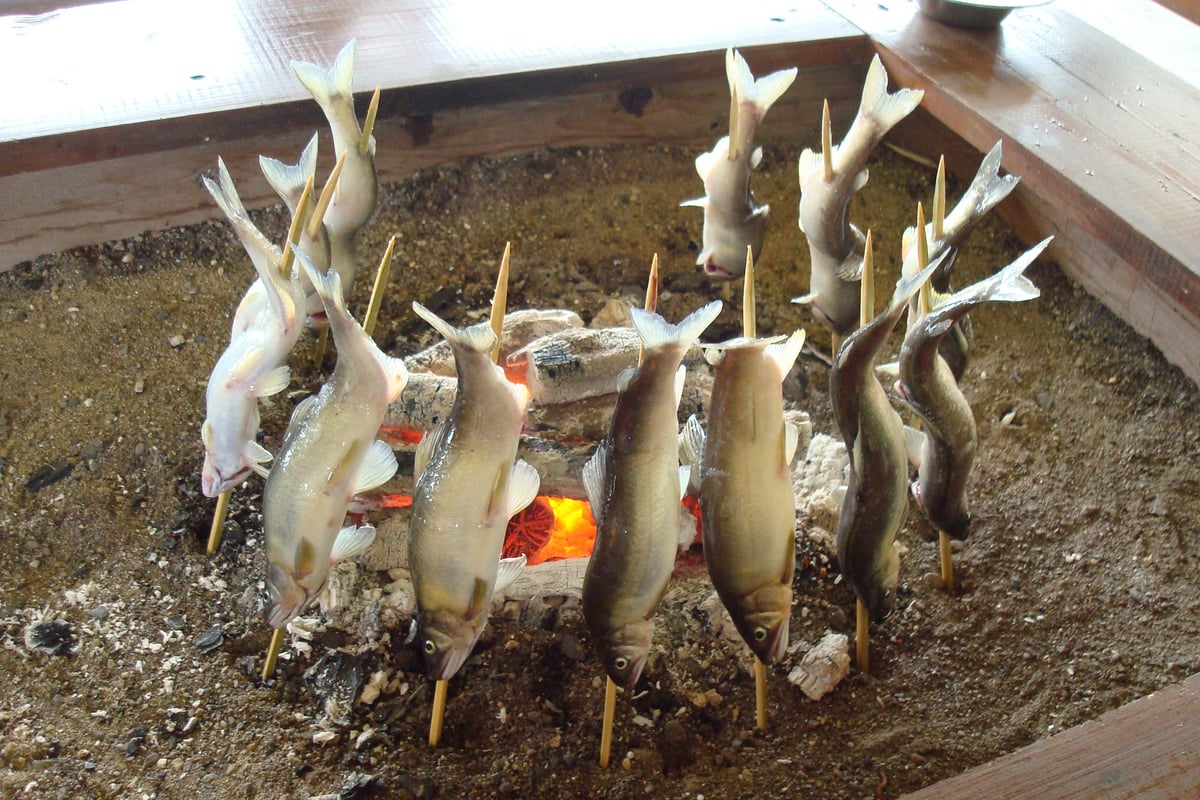
Nakagawa River Ayu Cuisine
Nakagawa River Ayu Cuisine
The Naka River, a Class A river flowing through eastern Tochigi Prefecture from its source in the Nasu Highlands, is a clear stream known as one of Japan's finest for ayu (sweetfish) catches. Along this river, a traditional fishing method called 'yana' has long been practiced, damming the current into a V-shape and letting ayu leap up onto bamboo lattices set in the flow. Every year from mid-July to around the end of October, tourist yana facilities are set up along the river for a limited season, offering visitors the chance to catch leaping ayu by hand as well as enjoy a variety of ayu dishes, including salt-grilled ayu slowly cooked over charcoal, kamameshi rice, and sashimi. Facilities such as Kurobane Kanko Yana in Otawara City and Ose Kanko Yana in Motegi Town dot the banks of the Naka River, and the area bustles with families and visitors from summer into autumn, offering a seasonal specialty that captures the blessings of Tochigi's clear waters.
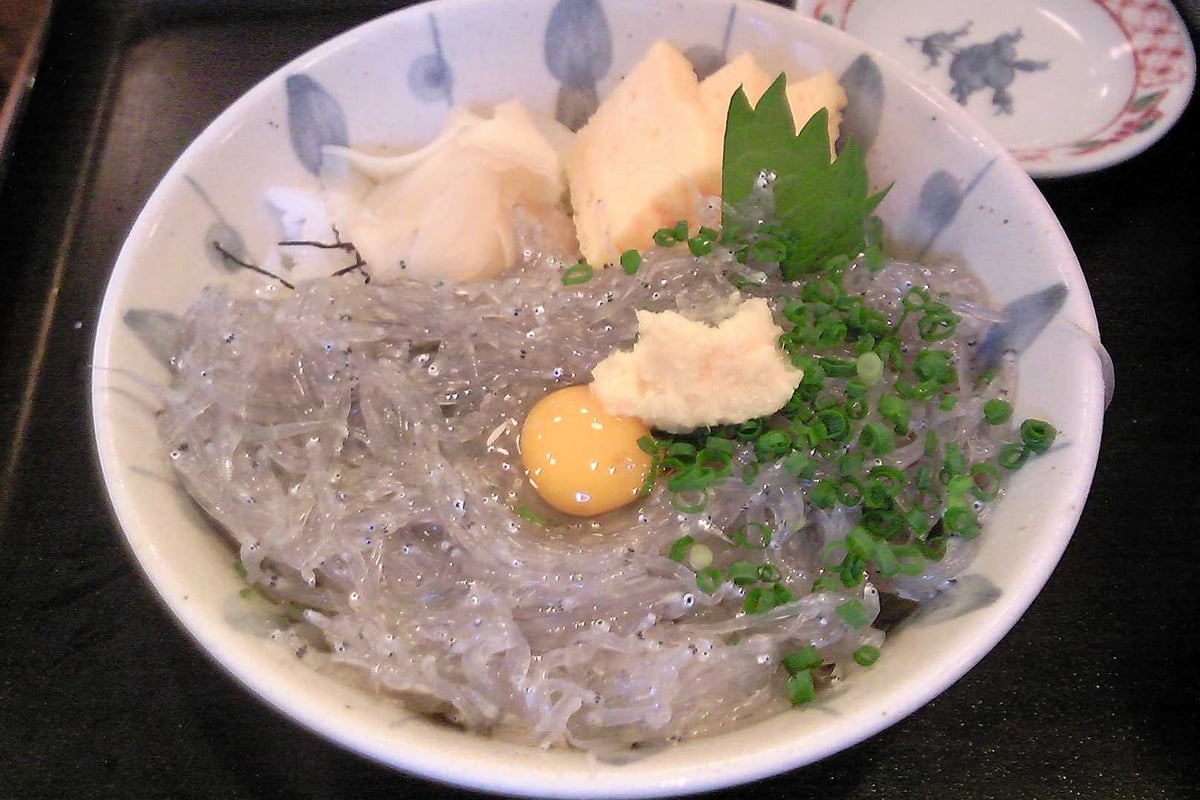
Nama-Shirasu-Don (Raw Whitebait Rice Bowl)
Nama-shirasu-don
Nama-shirasu-don is a seafood rice bowl representative of the Shonan area, piled high with freshly caught raw shirasu (young sardines) from Sagami Bay. Shirasu caught near the fishing ports around Enoshima, Koshigoe, and Kamakura spoil very quickly, so it can only be enjoyed raw on the day it is landed and near where it was caught—a rarity that is part of its appeal. It is known for its plump texture and a melt-in-the-mouth quality, typically eaten with soy sauce or ponzu and condiments such as ginger and chopped scallion. Shirasu fishing is closed from January through mid-March each year, so raw shirasu can only be enjoyed during the limited season after the ban is lifted. At eateries in Enoshima and Koshigoe, many restaurants offer their own take on the dish, such as bowls combining boiled (kama-age) and raw shirasu.
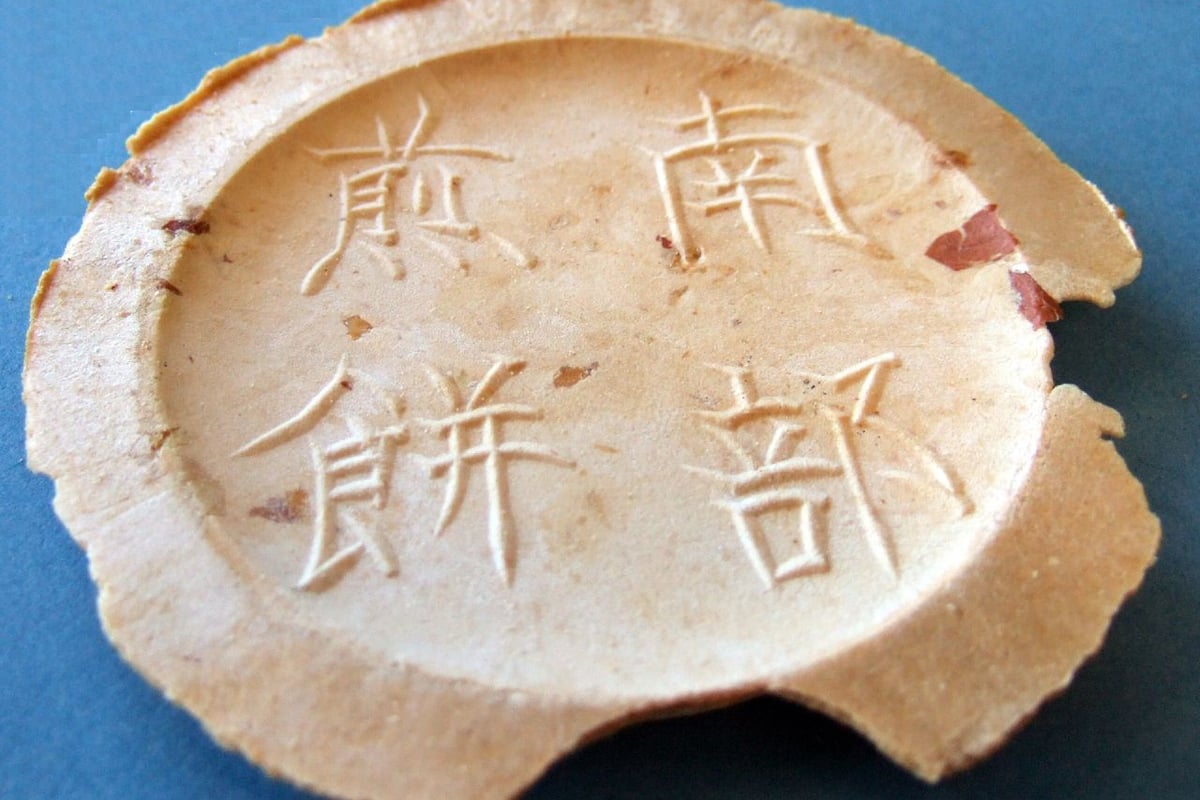
Nanbu Senbei (wheat flour cracker)
Nanbu Senbei
Nanbu senbei is a wheat-flour cracker that has long been made in the former Nanbu domain, spanning the southeastern part of Aomori Prefecture and the northern part of Iwate Prefecture. Dough made from wheat flour, salt, and water is sandwiched between round iron molds engraved with patterns such as cranes and turtles or pine, bamboo, and plum, then baked crisp on both sides. There are various theories about its origin, but the best-known legend holds that during the Nanboku-cho period, when Emperor Chokei of the Southern Court visited the Nanbu region, his retainer Akamatsu Sukezaemon used his iron helmet in place of a pot to bake buckwheat flour and sesame and presented it to the emperor. In the Nanbu region, where cold-weather crop damage was frequent and rice harvests were unstable, senbei made from long-lasting wheat and buckwheat flour became a valued preserved food and staple, and by the Meiji era it is said there were as many as 140 manufacturers just around Hachinohe, showing how deeply it took root in daily life. There is a wide variety, including "mame senbei" bean crackers kneaded with sesame or peanuts, and it is also an indispensable main ingredient in the local dish "senbei-jiru" (senbei hot pot), in which it is simmered in soup.
Nara Noppe
Nara Noppe
Nara noppe is a shojin (Buddhist vegetarian) dish handed down in Nara, made by slowly simmering taro, daikon radish, carrot, and other vegetables in a broth made from kelp and dried shiitake mushrooms. Similar dishes called noppe or noppei-jiru exist throughout Japan, but Nara noppe is distinctive in that it is prepared without meat or fish, and in the way the taro naturally breaks down during cooking to create a thickened texture, without relying on added starch. While many regions use potato starch or similar thickeners, the fact that Nara noppe achieves its thickness purely from the ingredients themselves reflects the careful craftsmanship unique to Nara. Every December, ahead of the Kasuga Wakamiya On-Matsuri festival held at Kasuga Taisha, the Yamato-zamurai attendants who serve in the ritual purify themselves at the Oshukusho-sai ceremony, where this Nara noppe is traditionally served to visitors. It is thus more than an everyday home dish — it has been passed down as a local food closely tied to a religious festival, and has long been made in Nara households as a warming winter dish.
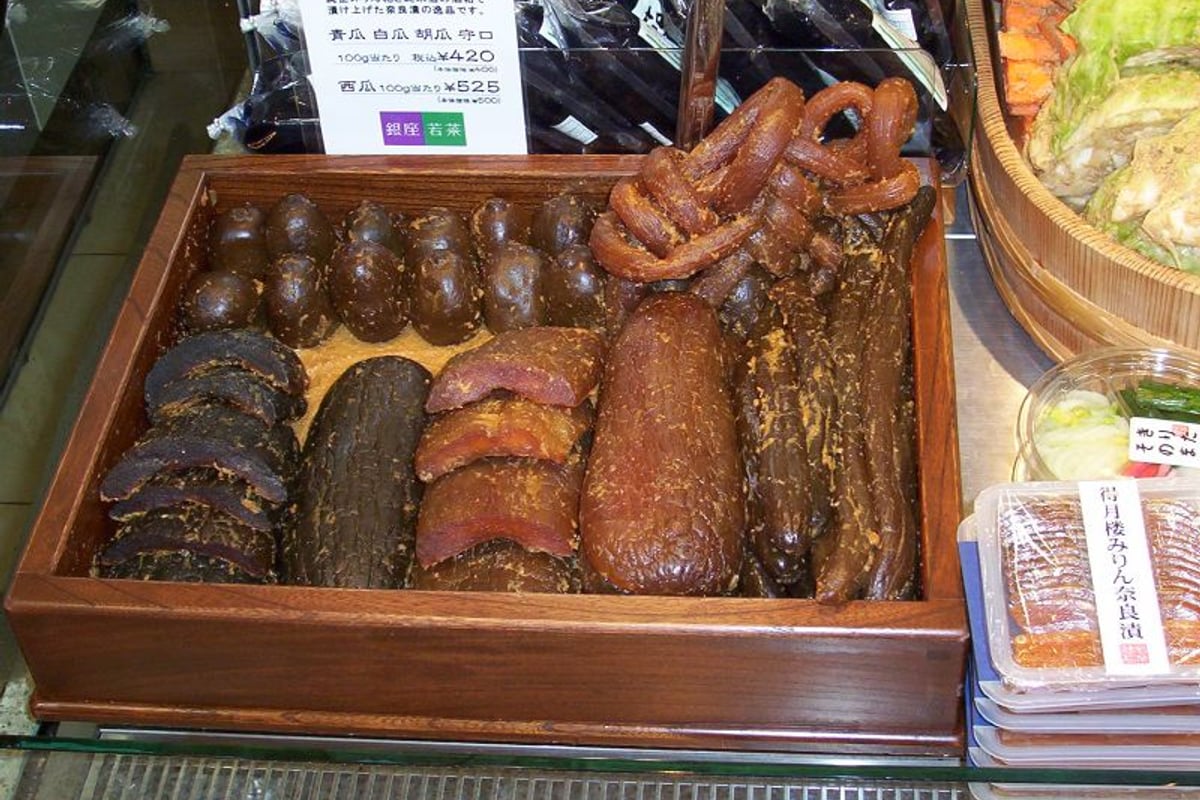
Narazuke
Narazuke
Narazuke is a sake-lees pickle that originated in Nara, made by repeatedly pickling vegetables such as shirouri (a type of white melon) in sake lees. A wooden tablet excavated from the ruins of Prince Nagaya's residence at the Heijo-kyo capital site is said to bear the phrase 'kasuzuke uri, offered as a gift' (進物加須津毛瓜), suggesting the dish may have been eaten as far back as more than 1,300 years ago, giving it a long history. It is said to have originated when vegetables were pickled in the leftover lees from drinking the clear portion of doburoku (unrefined sake) as an alcoholic drink; after refined sake brewing began in the Muromachi period, the current method using sake lees was established. Narazuke became widely sold as a commercial product between the Azuchi-Momoyama and Edo periods, when Itoya Sosen, a physician in Nara, is said to have started pickling shirouri in sake lees and selling it. Being repeatedly re-pickled in fresh sake lees allows the rich aroma of sake and the savory taste of rice to soak into the vegetables, turning them a deep amber color, and it remains a beloved souvenir representative of Nara today.
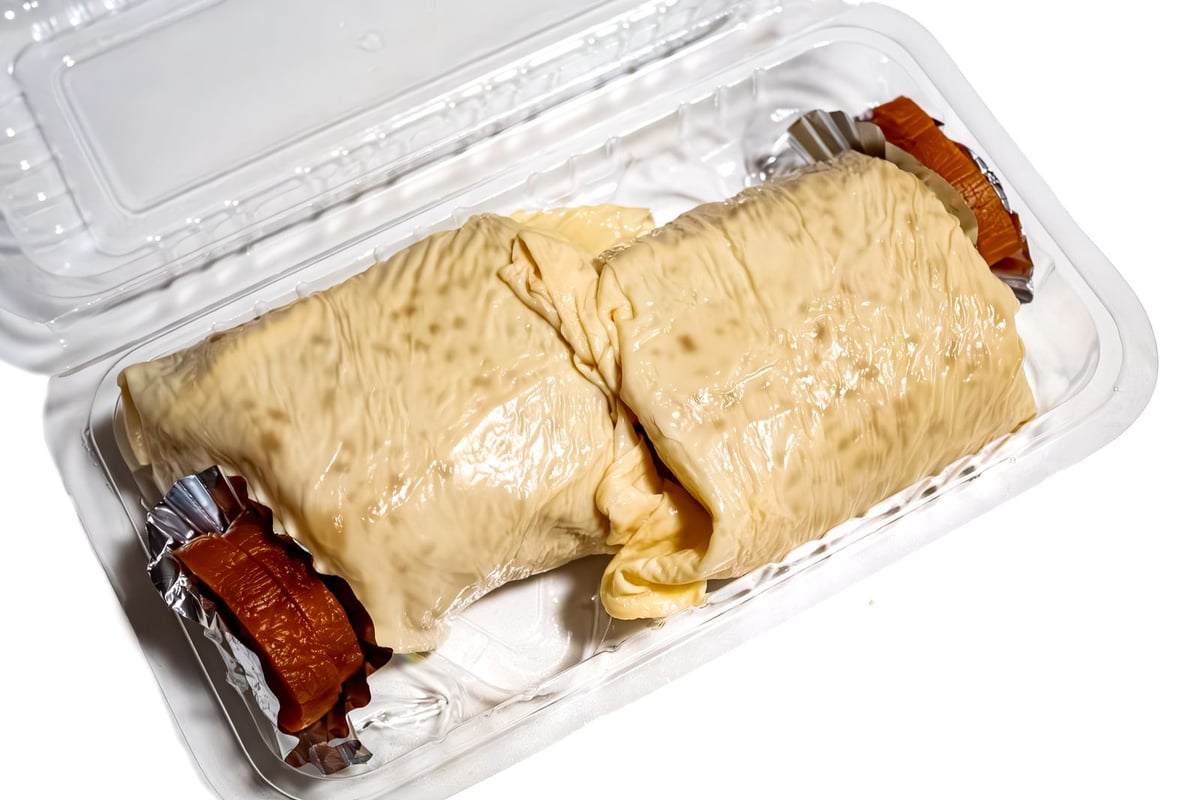
Nikko Yuba
Nikko Yuba
Nikko Yuba is a processed soy milk food that has been made in Nikko City, Tochigi Prefecture, since ancient times. It is characterized by its thick, hearty texture, created by layering the skin that forms when soy milk is simmered. It is said to have originated when yuba, brought back from Tang-dynasty China by a traveling monk, was introduced as shojin cuisine (Buddhist vegetarian cooking) to Nikko-san Rinno-ji Temple, founded by the priest Shodo Shonin in 766. When Tokugawa Ieyasu was enshrined at Nikko Toshogu in the early Edo period, the inns and shojin cuisine restaurants that served worshippers developed their own refinements, and the dish earned a reputation as 'Nikko Yuba.' The biggest difference from Kyoto's yuba (湯葉) — made by inserting a skewer at the edge of the skin and lifting it up flat — is that Nikko's yuba (湯波) is rolled up by inserting a skewer at the center and folding it in two, giving it a rounded shape with many layered folds. It has long been enjoyed raw, like sashimi, as well as cooked in deep-fried and simmered dishes.
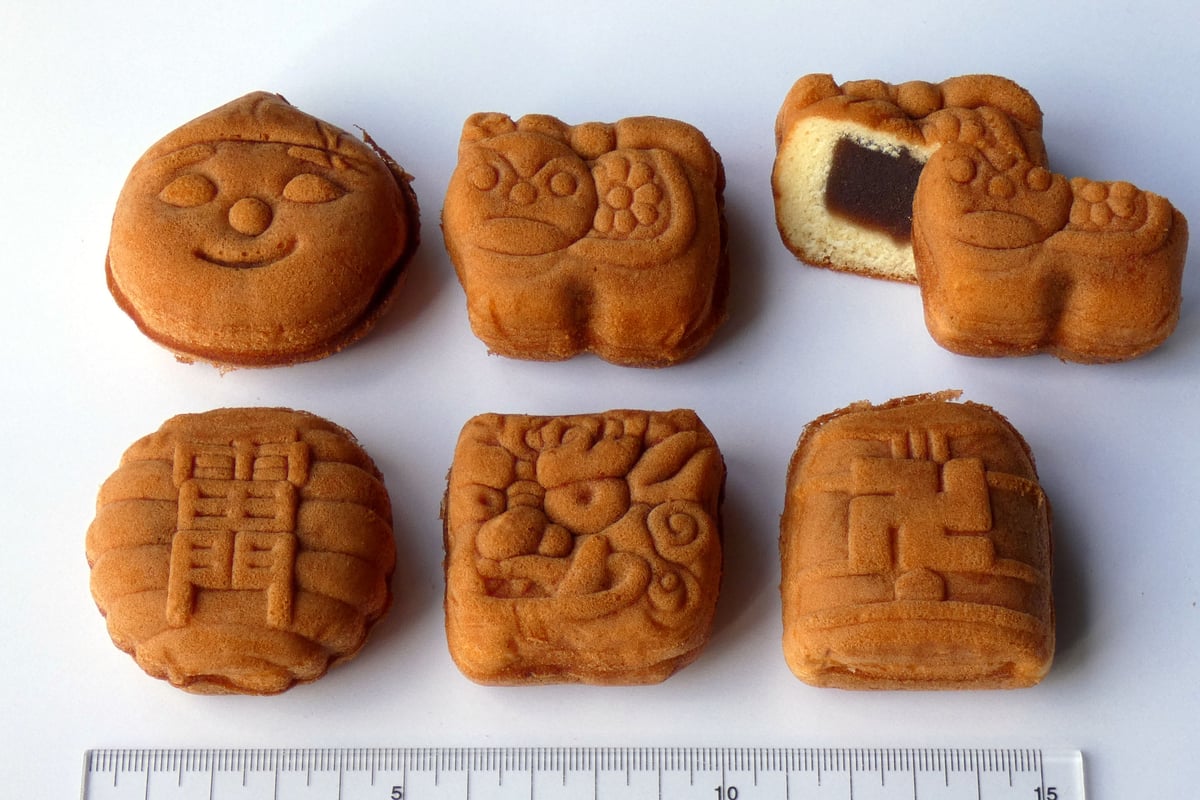
Ningyoyaki
Ningyoyaki
Ningyoyaki is a signature Tokyo baked confection made from a castella-like, egg-flavored batter wrapped around sweet red bean paste (usually smooth koshian) and baked in wooden molds shaped like figures or famous local landmarks. Although several theories exist about its origin, it is generally said to have been created around 1907 (Meiji 40) in Nihonbashi Ningyocho, a district that flourished as a theater town, where it was baked using wooden molds shaped like the Seven Lucky Gods and kabuki actors. In the Taisho era, an artisan who had trained in Ningyocho moved his shop to Asakusa and devised new wooden molds shaped after Asakusa landmarks such as the Kaminarimon Gate, the five-story pagoda, lanterns, and doves; at first it was also called 'meisho-yaki' (landmark-shaped confection) and became a staple Asakusa souvenir. Its simple, comforting taste, in which the fragrant, fluffy batter harmonizes with the moist sweetness of the bean paste, remains highly popular today, helped by the appeal of being able to buy it freshly baked right at the storefront. Long-established shops still stand in both Ningyocho and Asakusa, and it is known nationwide as a Tokyo souvenir.
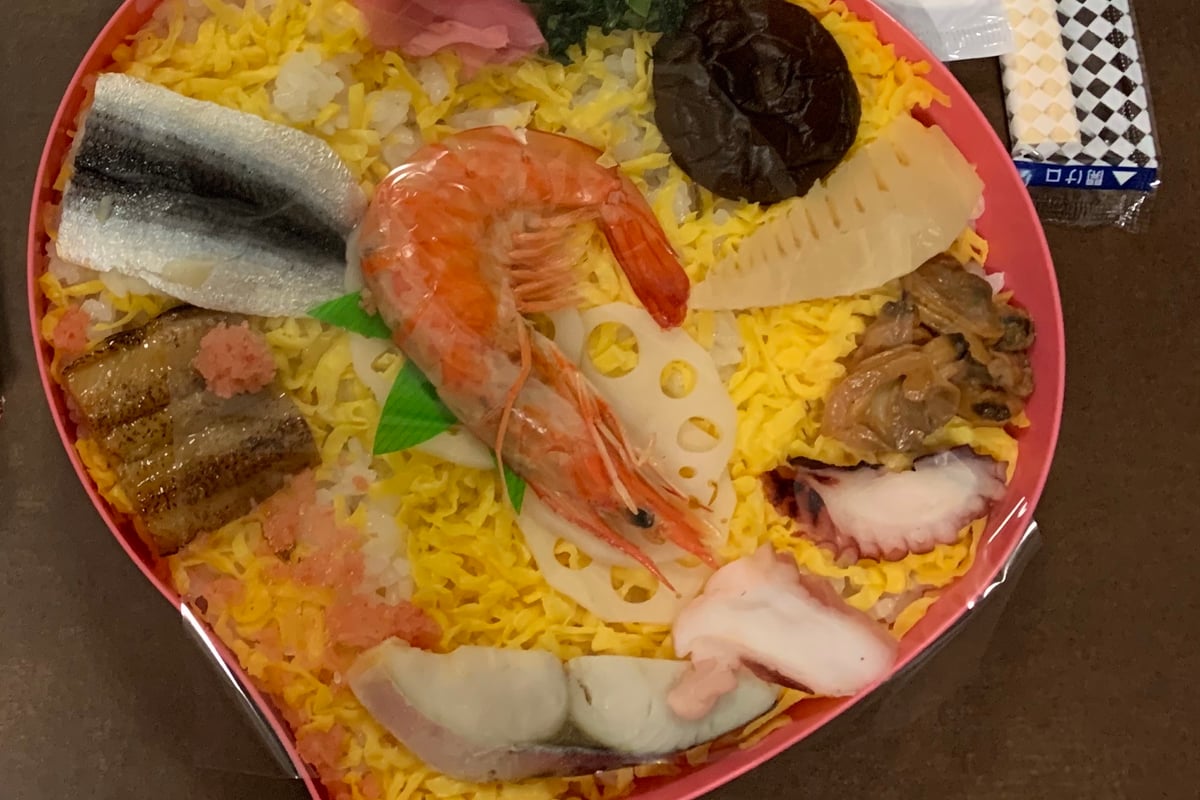
Okayama Barazushi (Festival Sushi)
Okayama Barazushi
Okayama barazushi (also called matsuri-zushi, or 'festival sushi') is a local scattered sushi from Okayama Prefecture, topped with colorful seafood from the Seto Inland Sea and seasonal vegetables arranged over vinegared rice. It is said to have originated in the Edo period, when Ikeda Mitsumasa, the first lord of the Bizen Okayama domain, issued a sumptuary edict decreeing that meals should consist of only one soup and one side dish. In response, the common people devised the idea that 'piling toppings on top of rice is still just one dish,' and the tradition is said to have grown from there. It developed into an essential dish for festive occasions such as festivals, New Year, and entertaining guests, with each household adding its own character through the ingredients and arrangement used. Today it is served year-round at sushi restaurants throughout Okayama City and is affectionately known locally as 'barazushi.' Its colorful, festive appearance also makes it a popular dish among visitors to Okayama.
Okukuji Shamo (Game Chicken)
Okukuji Shamo
Okukuji Shamo is a jidori (native breed) chicken raised primarily in Daigo Town in northern Ibaraki Prefecture, created by crossing a gentle-tempered strain of shamo (game fowl) selectively bred within the prefecture with Nagoya Cochin, known for its rich-flavored meat, and Rhode Island Red, prized for its high egg-laying ability. It is raised for roughly three times as long as ordinary broiler chickens, males for at least 110 days and females for at least 130 days, and from 28 days of age onward is kept in spacious conditions of no more than 10 birds per square meter. Full-scale production and sales began in 1985, and in 1988 it took first place in a nationwide jidori taste competition. In 2018 it became the first jidori chicken in Japan to be registered under the Geographical Indication (GI) Protection System, officially confirming its quality. With its lean, firm texture and juicy, rich flavor, it is served in Daigo Town in a wide variety of dishes, including oyakodon (chicken and egg rice bowl) and shamo nabe (hot pot).
Oshiro-no-kuchi-mochi
Oshiro-no-kuchi-mochi
Oshiro-no-kuchi-mochi is a bite-sized mochi confection made by wrapping chunky sweet red bean paste (tsubuan) in soft mochi dough (gyuhi) and dusting it with roasted soybean flour (kinako). It has been made for over 400 years by the long-established confectionery Honke Kikuya in Yamatokoriyama City. According to tradition, Honke Kikuya's history began in 1585, when its founder, Kikuya Jihei, accompanied Toyotomi Hidenaga — the younger brother of Toyotomi Hideyoshi — into the castle town of Koriyama and opened a shop there. When Hidenaga wished to entertain his brother Hideyoshi at a tea ceremony, he asked Jihei to create an unusual confection, and this mochi sweet is said to have been born from that request. Hideyoshi reportedly loved it so much that he named it 'Uguisu Mochi' (nightingale mochi). Later, because the shop stood in a prime spot at the entrance to the castle town leading to Koriyama Castle, it came to be affectionately known as 'Oshiro-no-kuchi-mochi' (literally, 'mochi at the castle entrance'). The confection is characterized by its pale greenish kinako, reminiscent of a nightingale's plumage, combined with soft gyuhi and elegantly sweet tsubuan, and it is considered one of the originators of uguisu mochi. It is enjoyed both as a souvenir when visiting Yamatokoriyama and for local celebratory occasions.
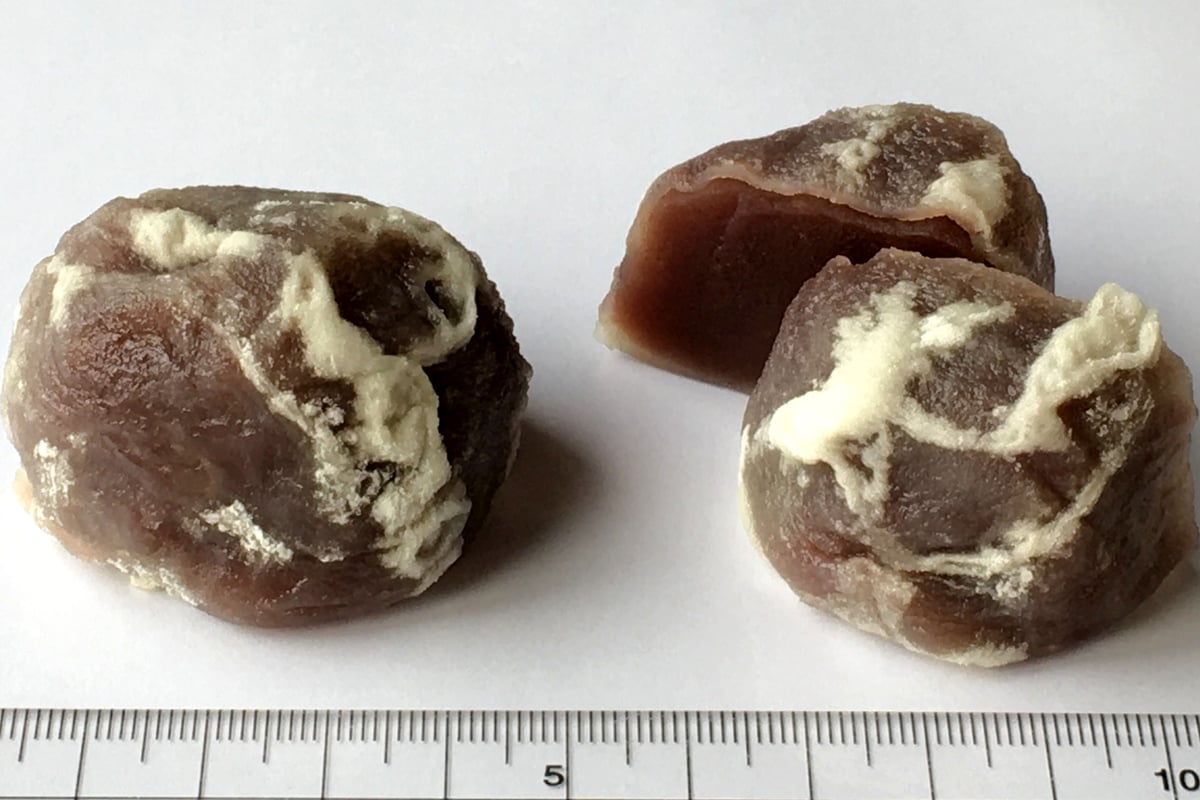
Ote Manju (sake-leavened steamed bun)
Ote Manju
Ote Manju (also written Otemanju) is a signature sake-leavened manju made by Otemanju Imbeya, a confectionery shop founded in 1837 (Tenpo 8), and one of Okayama's representative confections. The dough is kneaded with amazake brewed from Bizen rice, then wrapped around smooth koshi-an bean paste made from Hokkaido azuki beans in a thin skin and steamed, resulting in a flavor where the gentle aroma and richness of the amazake harmonize with the refined sweetness of the bean paste. The shop takes its name 'Ote Manju' from its location in Kyobashi-cho, near Ote-mon, the main gate of Okayama Castle, and it is said to have been served, along with Bizen ware tea utensils, at tea gatherings held by the Ikeda family, lords of the Okayama domain, during the Edo period. It has since been cherished as a signature confection with ties to the Okayama domain, and remains widely sold today as one of Okayama's most representative souvenirs.
Oyama Tofu (Mt. Oyama-Style Tofu)
Oyama Tofu
Oyama Tofu is a tofu-based cuisine made at the foot of Mt. Oyama, a sacred peak of the Tanzawa mountains in Isehara City, and it developed alongside the 'Oyama pilgrimage' tradition that flourished from the Edo period onward. It is said that tofu-making thrived in Oyama from early times both because pilgrimage groups (Oyama-ko) offered soybeans as thanks for prayers and blessings, and because the area was blessed with pure spring water flowing down from the Tanzawa mountains. The custom was also tied to the tradition of shojin (vegetarian) cuisine practiced by mountain ascetics and monks, and tofu became a valued dish for pilgrims that used neither meat nor fish. Today, along the Koma Sando approach, inns and restaurants specializing in tofu cuisine still line the street, offering menus built around tofu made with local water and soybeans, such as yudofu (simmered tofu), dengaku (skewered and grilled tofu), and tofu kaiseki courses. It is a representative local delicacy of Kanagawa Prefecture, selected as one of the '100 Selected Kanagawa Specialties.'
Salmon chanchan-yaki (grilled salmon with miso)
Salmon Chanchan-yaki
Salmon chanchan-yaki is a local dish of Hokkaido in which chunks of salmon and vegetables such as cabbage and onion are placed on an iron griddle or hot plate, coated with a miso-based sauce, and steam-grilled together. It is said to have originated in the fishing towns of the Ishikari region, and in the late 1930s fishermen reportedly grilled salmon they had just cleaned aboard their boats, cooking it boldly right there on improvised griddles made from cut-open oil drums. There are several theories about the origin of the name — that it can be made quickly (“chacha-tto”), that it is a dish made by one's father (“chan”), or that it comes from the sound of the spatula striking the griddle — though none has been confirmed by definitive sources. In 2007 it was selected for MAFF's “100 Best Local Dishes of Japan,” and it is counted among the three great local dishes of Hokkaido alongside Ishikari nabe and Jingisukan. The savory aroma of miso and the richness of the salmon's fat soak into the vegetables, making it a dish that brightens the table from autumn through winter.
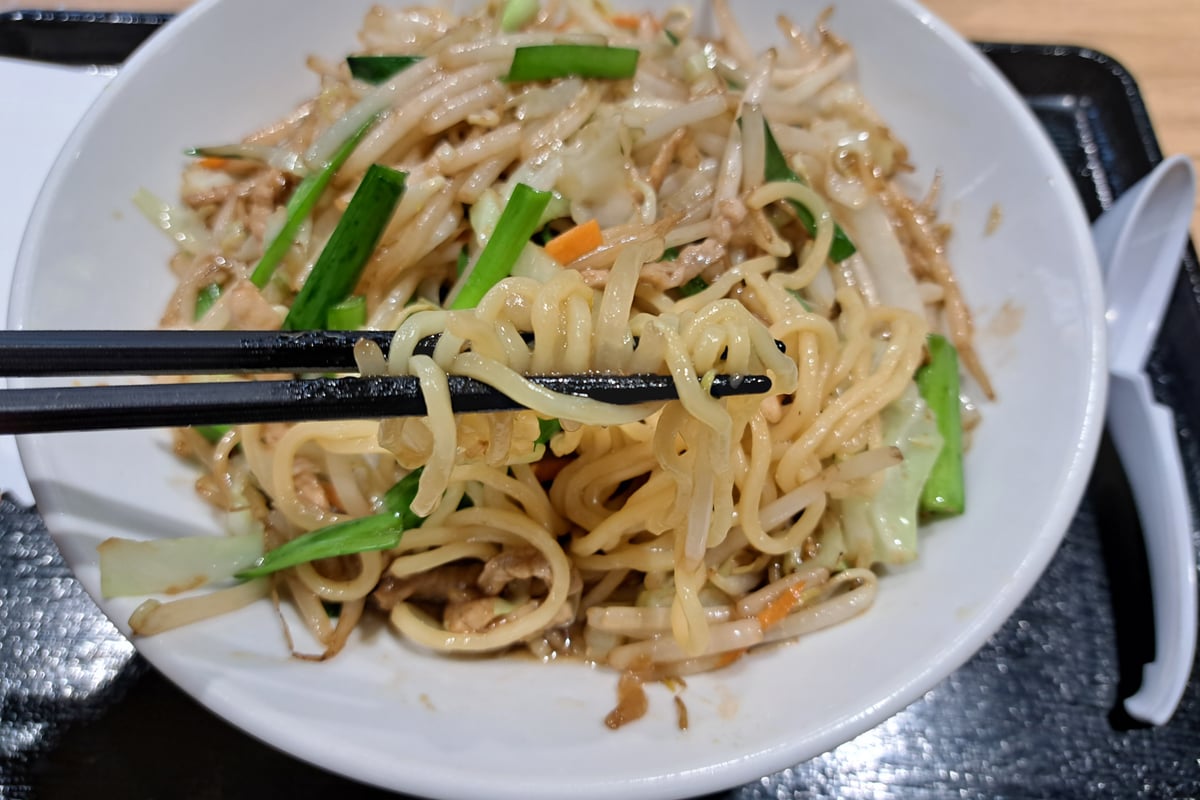
Sanma-men
Sanma-men
Sanma-men is a Yokohama-born local noodle dish topped with a thick, glossy sauce made of stir-fried pork and vegetables such as bean sprouts. Despite its name, it has no direct connection to the fish sanma (Pacific saury); the name is said to derive from the Chinese terms 'shengma-mian' or 'shengmian,' meaning roughly 'noodles topped with fresh ingredients.' It is said to have spread shortly after World War II, when it was served to laborers at the Port of Yokohama as an inexpensive, filling noodle dish that stayed warm even in winter, with theories pointing to Chinese restaurants in Yokohama Chinatown and Isezaki-cho as being involved in its origin. Colorful vegetables such as bean sprouts, chives, napa cabbage, and wood ear mushrooms are used generously, and the soy-sauce-based thickened sauce clings well to the noodles, giving the dish its homey, approachable appeal.
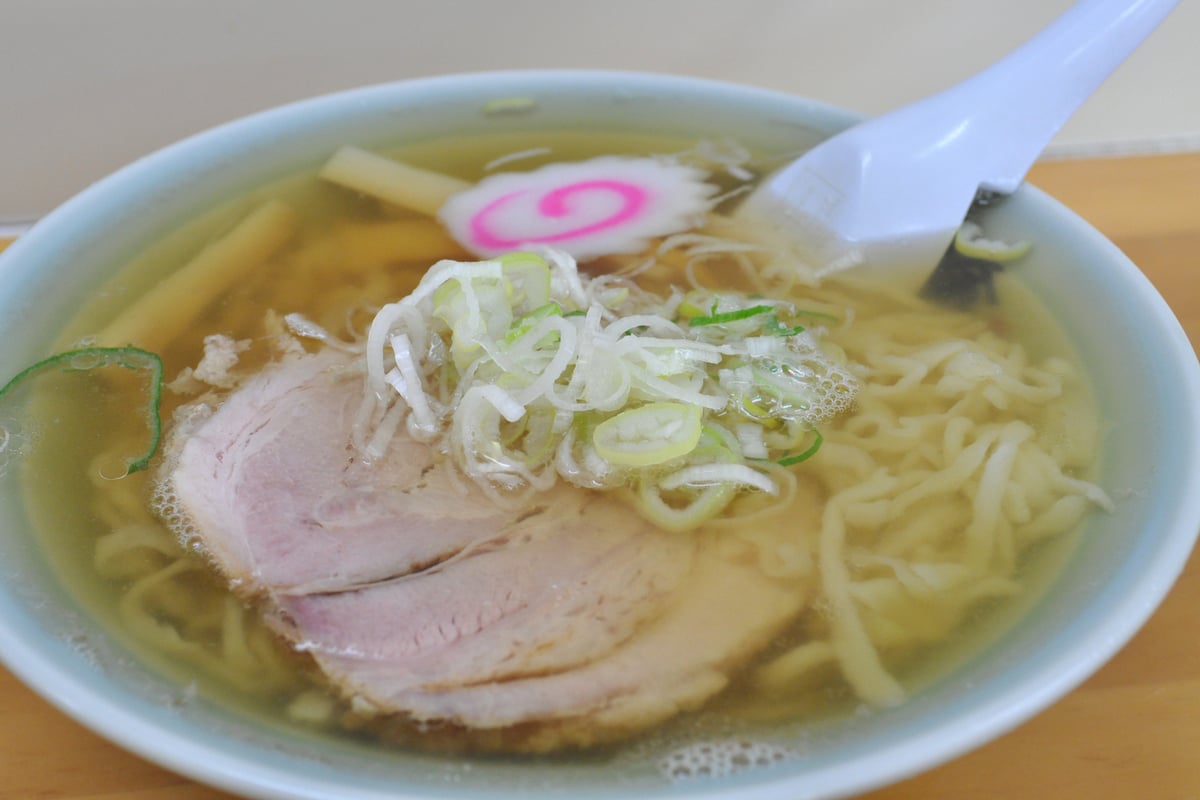
Sano Ramen
Sano Ramen
Sano Ramen is a local ramen loved in Sano City, Tochigi Prefecture, most distinguished by its flat, curly noodles made using the 'aodake-uchi' (green bamboo pole) method, in which a bamboo pole is used to stretch the dough with the maker's body weight. It is said to have begun in the Taisho era, when a Chinese cook working at a diner in the city taught the aodake-uchi technique to a local chef, and as the person who learned the technique went on to open his own shop, it spread throughout the city. The clear soy-sauce-based soup, made primarily from chicken and pork bones, has a firm body that pairs well with the irregular, curly noodles, and its light flavor never grows tiresome. Today, more than 200 ramen shops are packed into the city, many of which still carry on the traditional aodake-uchi technique. Sano City has also put effort into community revitalization as a 'ramen town,' drawing many tourists who enjoy shop-hopping.
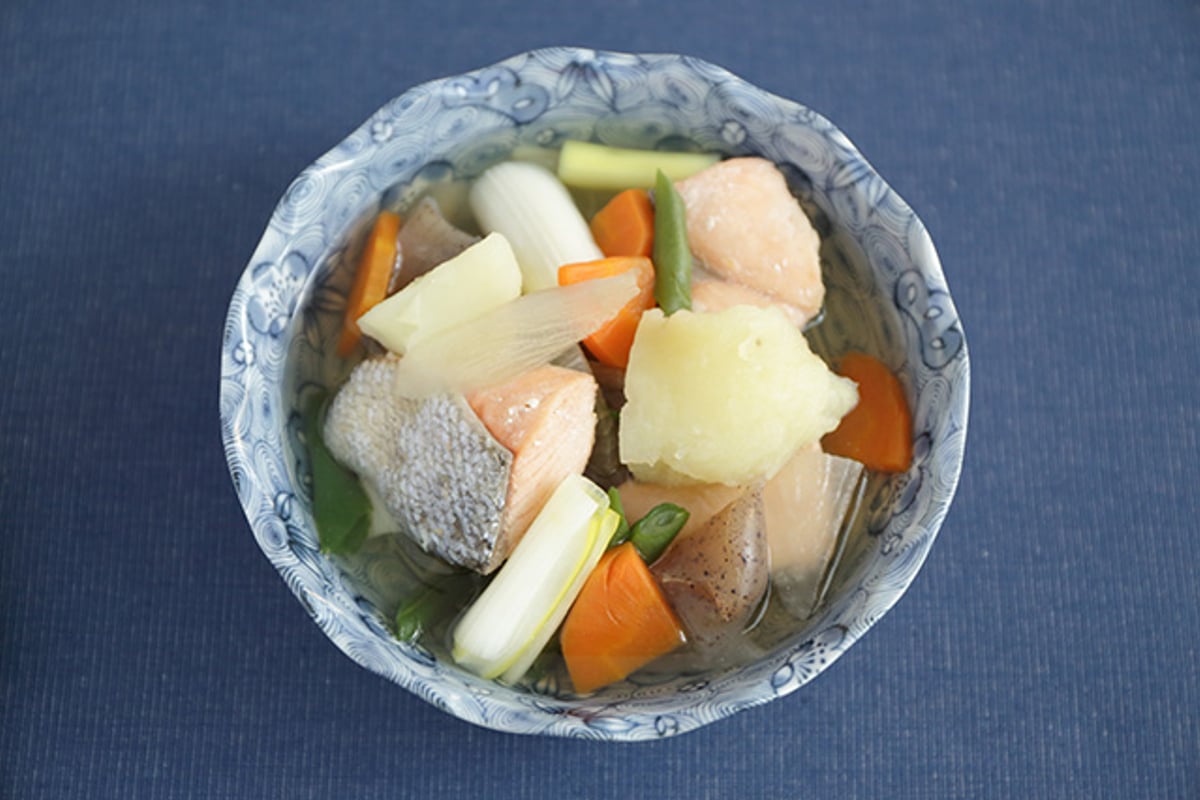
Sanpei-jiru (salted fish and vegetable soup)
Sanpei-jiru
Sanpei-jiru is a classic salt-seasoned soup of Hokkaido, made by slowly simmering salted fish—such as salted salmon or nuka-zuke herring—together with root vegetables like daikon radish, carrot, and potato in a kelp-based dashi. Its defining feature is that the seasoning relies almost entirely on the salt naturally contained in the fish, with little to no miso or soy sauce added, giving it a simple yet deeply flavorful character. The name is already recorded in a late Edo-period travel account, showing that this dish has been eaten in Hokkaido households for over 200 years. Several theories exist about the origin of the name, including one linking it to a fisherman named Saito Sanpei who served the dish to the Matsumae domain's lord, and another tracing it to a deep Arita-ware dish called 'sanpei-zara.' No theory is definitively established. Unlike Ishikari-nabe, which is seasoned with miso and uses fresh salmon, Sanpei-jiru is fundamentally based on the combination of salted fish and root vegetables, and the types of fish used and preparation style vary by region.
Sanriku Sea Urchin (Uni) Cuisine
Sanriku Sea Urchin
Sanriku sea urchin (uni) cuisine is a local seafood tradition using uni harvested along the Sanriku Coast in coastal Iwate Prefecture, in towns such as Miyako, Kuji, and Hirono. The waters off Sanriku are a rich fishing ground where the cold Oyashio Current meets the warm Kuroshio Current, and the abundance of kelp and other feed produces large, richly sweet uni, making the area one of Japan's leading uni-producing regions. Distinctive ways of enjoying the freshness and flavor have developed here, including raw uni served straight over rice ('nama-uni-don'), 'shiomizu uni' — uni preserved in saltwater without alum — and 'gyunyu-bin uni,' uni packed into bottles while still in the shell. From early to midsummer, when the season opens, 'uni-don' bowls and 'uni festivals' are held throughout the region, drawing many visitors from within and outside the prefecture in search of Sanriku's summer flavors.
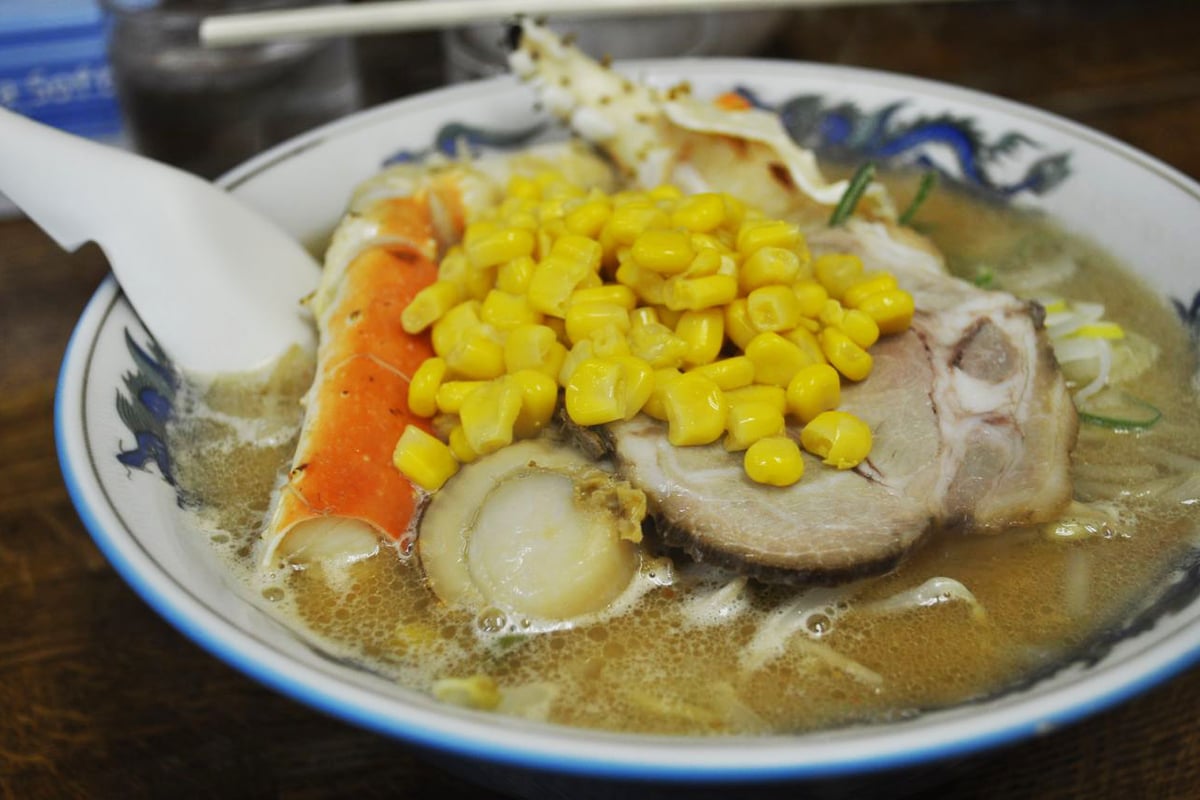
Sapporo Miso Ramen
Sapporo Miso Ramen
Sapporo miso ramen is a local ramen style from Sapporo that pairs a miso-based broth with thick, curly noodles. It is said to have originated around 1954-1955 at 'Aji no Sanpei,' a shop founded in 1950 in Susukino, Chuo Ward, Sapporo, whose owner Morito Omiya was inspired by a foreign article on the benefits of miso to develop a ramen built around it. The broth combines an animal-based pork bone or chicken stock with a miso tare, enriched with stir-fried vegetables and lard for extra depth and heat retention, making it a bowl that stays warm even in cold weather. From the 1960s onward it helped spark the nationwide Sapporo ramen boom and also prompted instant-noodle makers to commercialize miso ramen. Today the city is still home to many popular shops such as 'Sumire' and 'Junren,' each competing with their own miso tare and broth.
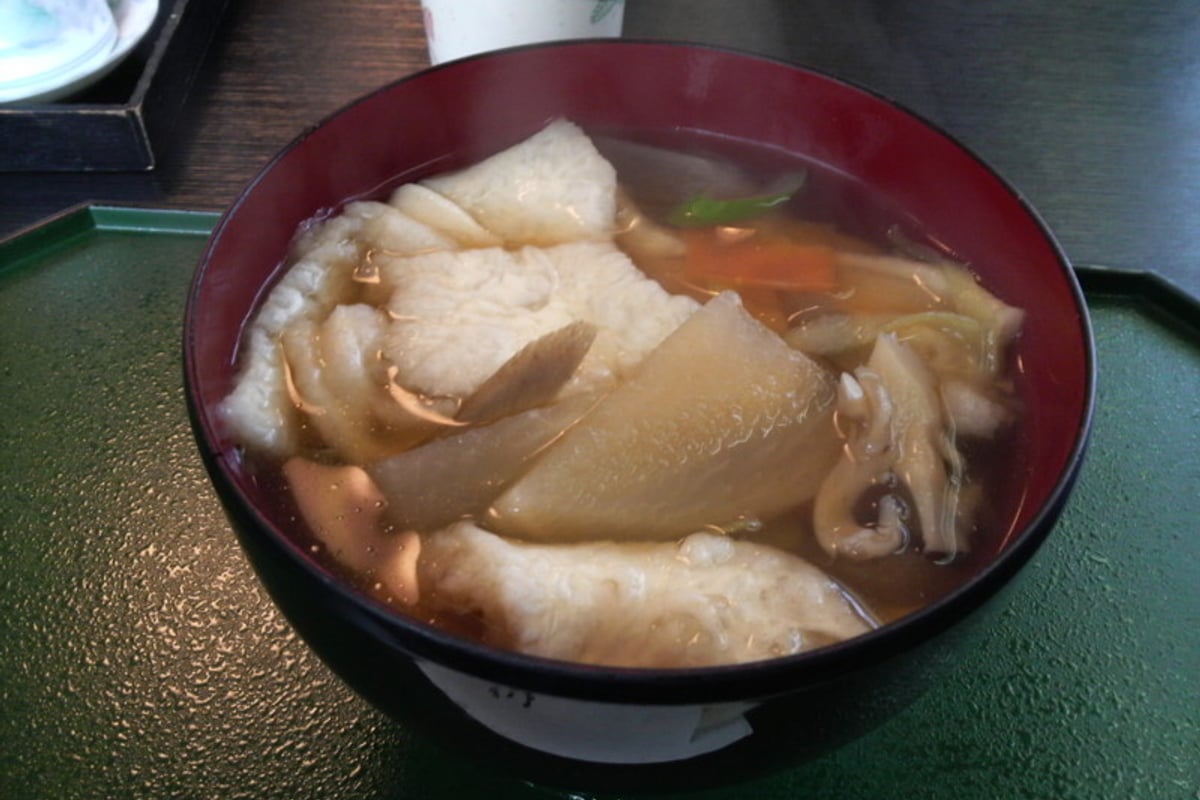
Senbei-jiru (Nanbu Cracker Hot Pot)
Senbei-jiru
Senbei-jiru is a local dish handed down mainly in Hachinohe City, Aomori Prefecture, and passed on across the area from southern Aomori Prefecture to northern Iwate Prefecture. A broth is made from chicken, fish, mushrooms, and vegetables, into which pieces of Nanbu senbei called "otsuyu senbei" — rice crackers baked specially for use in soups — are broken and simmered. The crackers take on a soft, chewy texture without falling apart, gradually soaking up the broth's flavor. In this region, where cold-weather crop damage often made rice cultivation difficult, wheat-based Nanbu senbei developed as a staple and preservable food to replace rice, and senbei-jiru grew out of that tradition. Its national recognition rose sharply after the "Hachinohe Senbei-jiru Institute," formed in 2003, began its activities and the dish won an award at the B-1 Grand Prix, and in fiscal 2022 it was also certified as one of the Agency for Cultural Affairs' "100-Year Foods."
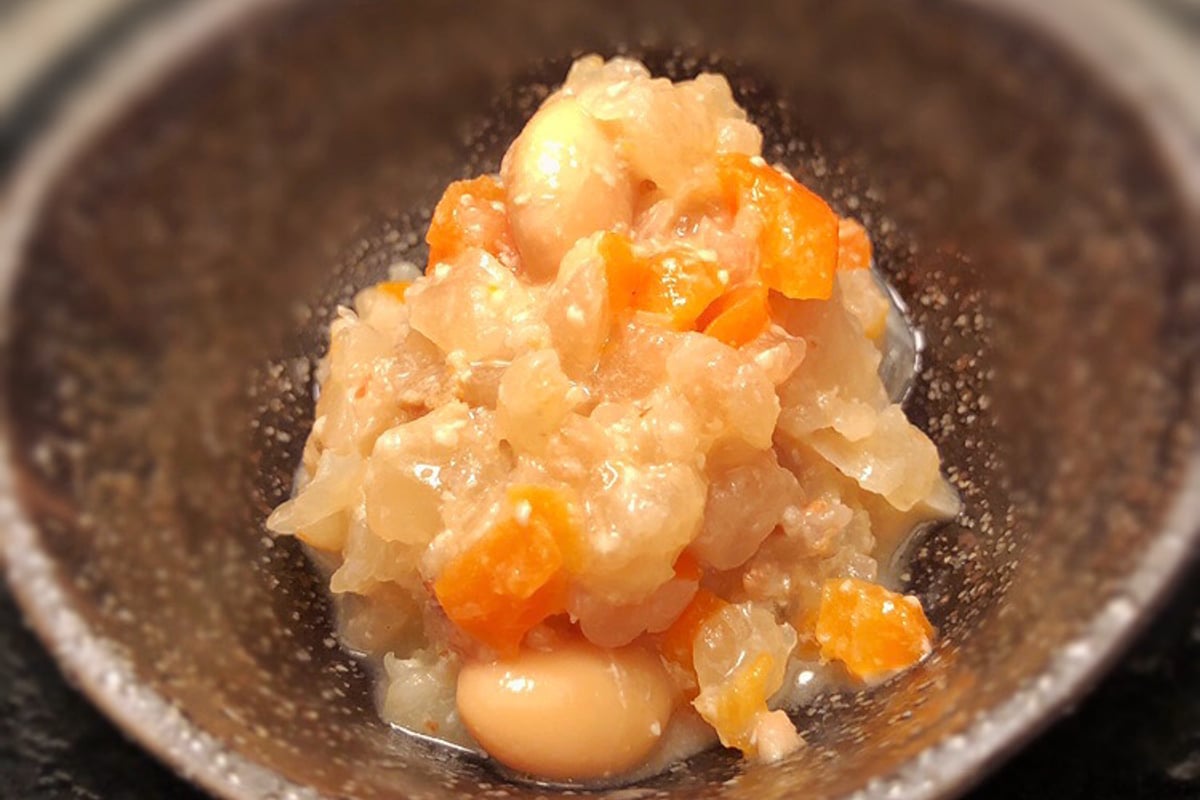
Shimotsukare
Shimotsukare
Shimotsukare is a local dish of northern Kanto centered on Tochigi Prefecture, made by simmering together leftover salted salmon heads from New Year's, leftover lucky soybeans from Setsubun, grated daikon radish and carrot, and sake lees. It is said to have been made in households since before the Edo period as a ceremonial dish offered together with red rice to Inari shrines on Hatsu-uma, the first Horse Day of the second lunar month. Its history is so old that a similar dish is said to appear in a Kamakura-era collection of tales, and there is a saying that eating shimotsukare from seven different households brings freedom from illness. Known also as a dish whose distinctive appearance and tangy, fermentation-derived flavor divide opinion, it embodies the wisdom of earlier generations who made full use of leftovers from Setsubun and New Year's without waste, and in 2023 it was designated in the traditional category of the Agency for Cultural Affairs' '100-Year Foods.' Still passed down today in homes and at direct-sales markets, it stands as a symbol of Tochigi Prefecture's food culture.
Shiroebi no Kakiage
Shiroebi no Kakiage
Shiroebi no kakiage is a signature seafood dish of Toyama Prefecture made by coating shiroebi (Toyama's white shrimp), known as ‘the jewel of Toyama Bay,’ in batter and frying it until crisp. Shiroebi are small, translucent, pale pink shrimp about 5–6 centimeters long that normally live in the deep sea at depths of around 200 to 400 meters, but the unusual topography of the seabed in Toyama Bay allows them to gather in schools even in relatively shallow layers, making Toyama the only place in Japan where they are landed in quantities sufficient to support a fishery. The main landing ports are Shinminato and Iwase, and while shiroebi were once mostly dried whole in their shells for making dashi stock, advances in freezing and shelling technology have brought renewed attention to the delicate sweetness and silky texture of the flesh, making it popular for sashimi and sushi as well. Kakiage is a classic preparation that is also easy to make at home, and its crisp batter paired with a subtle sweetness has made it beloved by many.
Soboro Natto (Shoboro Natto)
Shoboro Natto
Soboro Natto (also called Shoboro Natto) is a local dish of Mito City made by pickling sticky-stranded natto together with warihoshi daikon (sun-dried, split daikon radish) in a seasoned liquid. 'Shoboro' is said to be a Mito dialect pronunciation of 'soboro.' In the Edo period, Mito was known for natto-making using early-ripening small soybeans that could be harvested before typhoon season, and it was customary to distribute freshly made autumn natto among neighbors and temples. The dish is said to have originated as a way to keep leftover natto, or natto that hadn't stranded very well, edible for longer by pickling it together with dried daikon. Unlike the branded product Mito Natto, which is natto itself, Soboro Natto is a preserved food in which natto is processed more like a pickle, which is the key distinction between the two. Its appeal lies in the contrast between the crunchy texture of the dried daikon and the soft, crumbly texture of the natto, and today it is made and sold by long-established pickle shops and natto shops in Mito, enjoyed as a topping for rice, a snack with drinks, and a popular Mito souvenir.
Tochigi Wagyu
Tochigi Wagyu
Tochigi Wagyu is a brand name given only to beef from Japanese Black cattle raised with great care by designated producers in Tochigi Prefecture that meet a strict standard: a carcass grade of A or B and rank 4 or higher. The name was established in 1988 (Showa 63), as part of an effort to build a brand around Tochigi-produced wagyu. About 200 designated producers raise calves of superior bloodlines over a long fattening period of roughly 30 months, adding Tochigi-grown rice to the feed in the later stages of fattening to enhance meat quality and flavor. While the prefecture raises around 10,000 wagyu cattle a year, only about 3,500 head annually are certified as Tochigi Wagyu, known for their finely marbled, tender meat. It has also earned high acclaim at nationwide competitions such as the National Wagyu Carcass Competition, and can be enjoyed at sukiyaki and yakiniku restaurants both within and outside the prefecture.
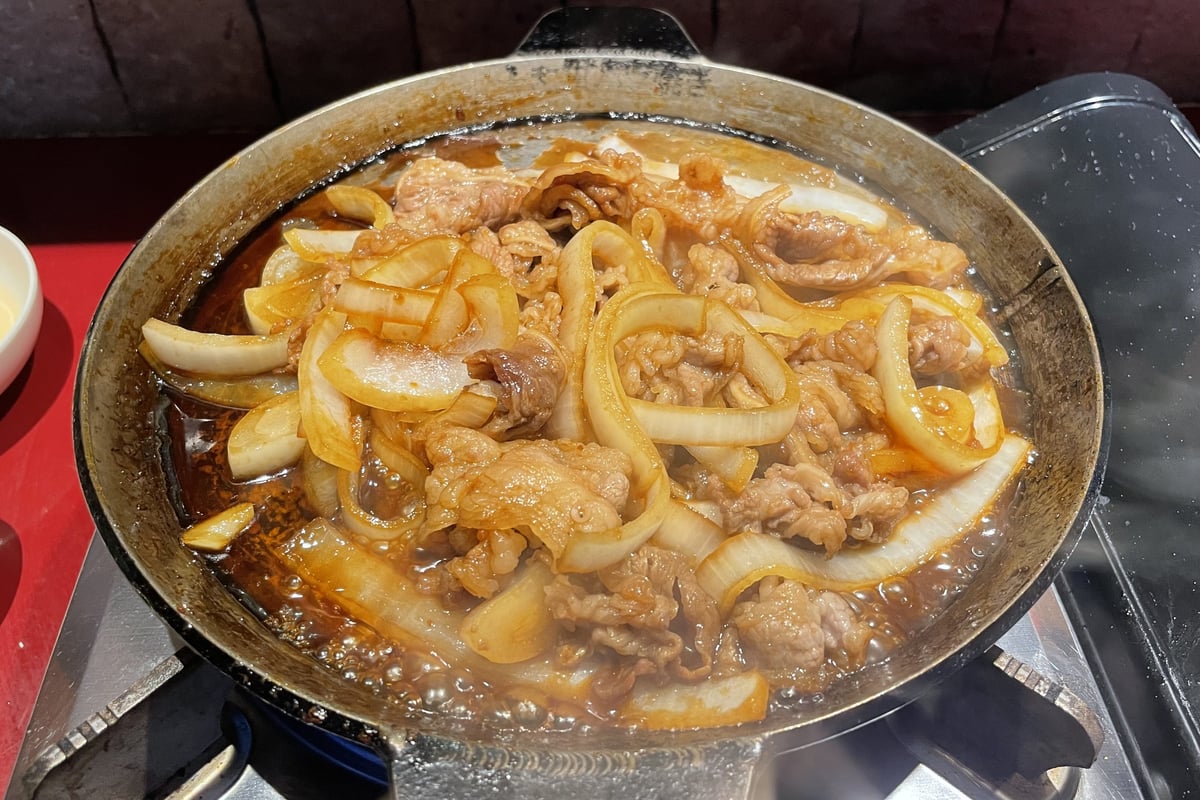
Towada Barayaki (Grilled Beef Short Plate)
Towada Barayaki
Towada barayaki is a soul food of Towada City residents, made by grilling beef short plate together with a large amount of onion on a griddle with a sweet-and-savory soy-sauce-based sauce. It is said to have originated in the 1950s at food stalls that lined the area in front of a U.S. military base in neighboring Misawa City. At the time, cattle raised by U.S. military personnel for food were used for their lean meat as steak, and the fatty short plate and offal left over were sold off cheaply; people with roots in the Korean Peninsula are said to have cooked this using plenty of onion, drawing on bulgogi as a reference, and this is considered the origin of the dish. An advertisement in a local newspaper in 1958 mentions 'beef barayaki,' and it later spread to Towada City, where it exploded in popularity. Today it is served at more than 40 shops in the city, each offering its own distinctive sauce.
Toyama Black Ramen
Toyama Black Ramen
Toyama Black is a local ramen originating in Toyama City, distinguished by its jet-black broth made with a generous amount of dark soy sauce. It is said to have begun in 1947, when Takahashi Seikan, founder of the food stall Taiki, devised a strongly seasoned Chinese noodle soup to help manual laborers rebuilding the city after the Toyama air raids replenish the salt lost through sweat. The classic style pairs thick, straight noodles with a black, dark-soy-sauce-based broth, generous slices of chashu pork, black pepper, and plenty of chopped scallions, and it has long been enjoyed as an ‘okazu ramen’ — a ramen eaten alongside a bowl of white rice as a main dish. Its saltiness is noticeably stronger than ramen from other regions, often surprising first-time diners, but it remains a firmly established lunchtime staple among locals. Today, in addition to the originating shop Taiki, several other shops in the city serve their own variations, and comparing them is a popular pastime among fans.
Toyama Zoni (Toyama-Style New Year Mochi Soup)
Toyama Zoni
Toyama-style zoni is a distinctively local New Year dish featuring square mochi and kobu-maki kamaboko (kelp-rolled fish cake) in a soy-flavored clear broth made from kelp dashi. There is regional variation within the prefecture: in the Shimoniikawa area in the east, a hearty zoni is made with seafood such as fukuragi (young yellowtail) and filefish added, while in the Tonami area in the west, the tradition is to keep the ingredients simple, using items such as long green onion and kelp. What both areas have in common is that the mochi is not grilled but simmered gently in kelp dashi until soft before being placed in the bowl, and that kobu-maki kamaboko — a fish cake made without a wooden board that is one of Toyama's signature processed fish products — is added for color. The red-and-white 'aka-maki' version is often used, making for a visually festive bowl. The food culture unique to Toyama, where kelp circulated abundantly thanks to Kitamae-bune (Edo-period trading ships) trade, shows through vividly even in this single New Year bowl of zoni.
Tsuke Kenchin (Dipping Soba with Kenchin-jiru)
Tsuke Kenchin
Tsuke Kenchin is a local dish from Ibaraki Prefecture in which thick soba noodles are served separately from a warm bowl of kenchin-jiru (vegetable soup) — a hearty broth loaded with root vegetables such as taro, daikon, burdock, and carrot, along with konnyaku, and seasoned with miso, soy sauce, and mirin — so the noodles can be dipped into the soup much like tsukemen. The dish is said to date back to the late Edo period, and the custom of eating soba at the old-calendar New Year (around the time of today's Setsubun) is believed to have spread from Mito Domain throughout Ibaraki Prefecture. It has long been prepared as a festive dish in mid-November, once the harvest is largely finished, and unlike the 'kenchin soba' found in other prefectures — where the noodles are served directly in the soup — Ibaraki's distinctive style is to keep the soba and kenchin-jiru separate, dipping the noodles as one would with tsukemen. It remains especially popular from autumn through winter, when freshly harvested soba comes into season, and is deeply rooted in eateries and households throughout the prefecture, particularly in the northern Kenhoku region.
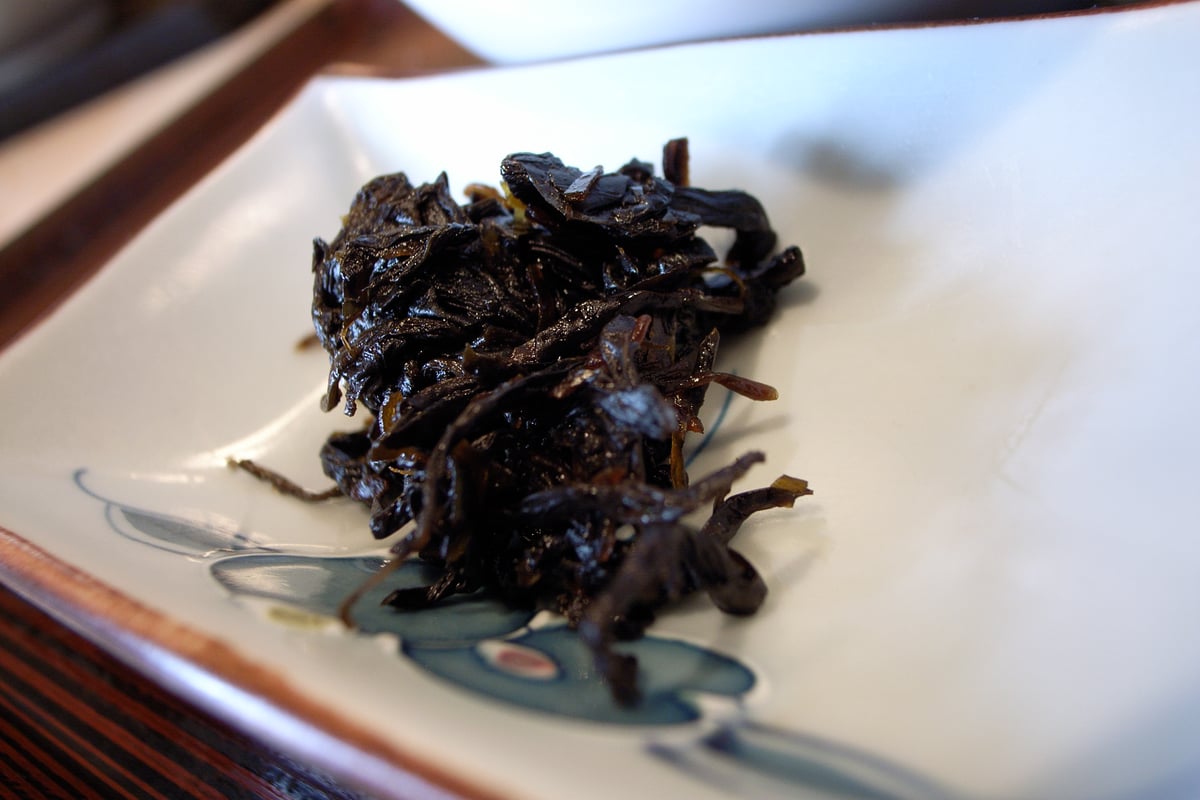
Tsukudani
Tsukudani
Tsukudani is a preserved food made by slowly simmering small fish, shellfish, or seaweed in soy sauce and sugar, and it represents the food culture of Edo, having originated on Tsukudajima (present-day Tsukuda, Chuo Ward, Tokyo). Tsukudajima is said to have begun when Tokugawa Ieyasu, founder of the Edo shogunate, invited fishermen from Tsukuda Village in Settsu Province (present-day Osaka) and settled them on a tidal flat at the mouth of the Sumida River. To avoid wasting food on days they could not fish, or small fish and shellfish too minor to sell, the fishermen devised a way of simmering them down thickly in salt and soy sauce so they would keep - this is said to be the origin of the name 'tsukudani.' As dark soy sauce became more widely produced through the Edo period, the flavor grew richer and more refined, and samurai and travelers on the sankin-kotai (alternate attendance) journeys carried it home as a souvenir, helping it spread across the country. Long-established shops dating from the Edo period still line the streets around Tsukudajima today, making and selling tsukudani from a variety of ingredients such as small fish, shellfish, kombu, and ginger. Loved as an accompaniment to rice or sake and firmly established as a household staple, it is one of Japan's representative preserved-food traditions.
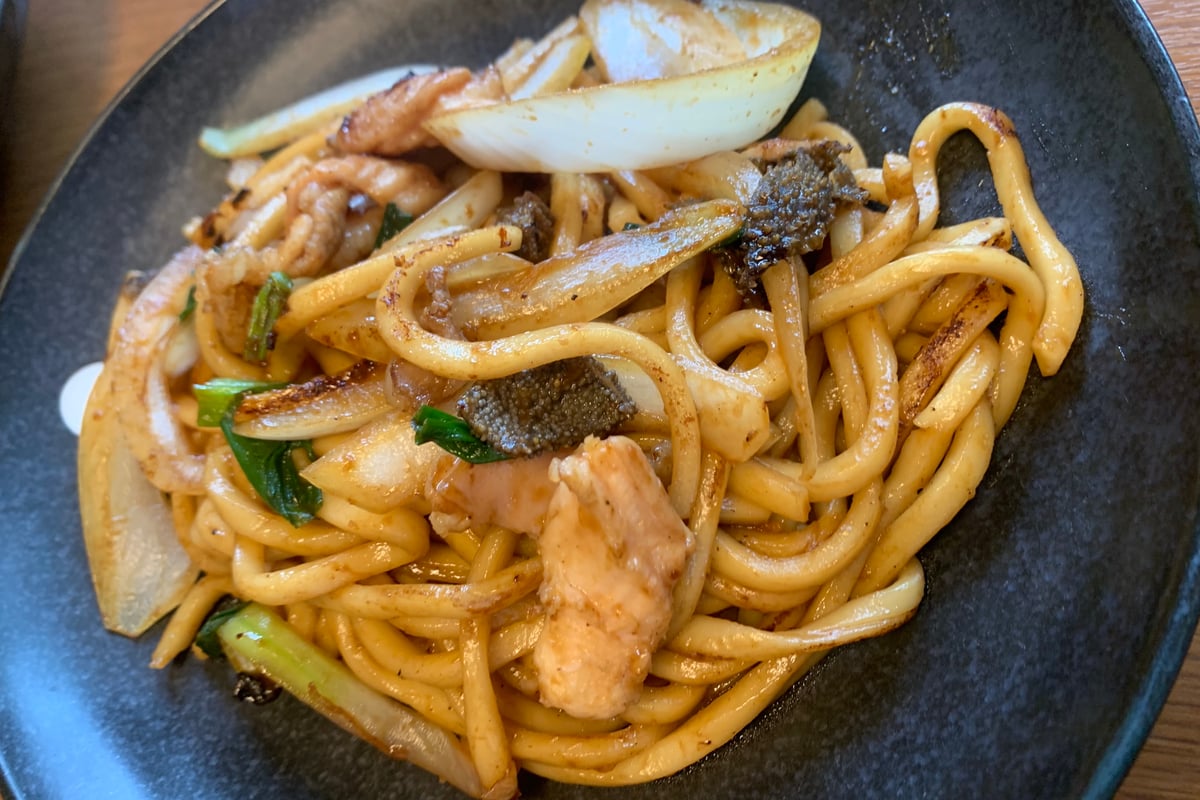
Tsuyama Horumon Udon (Offal Udon)
Tsuyama Horumon Udon
Tsuyama Horumon Udon is a local specialty of the Mimasaka region centered on Tsuyama City in Okayama Prefecture, made by stir-frying fresh mixed horumon (pork and beef offal) with vegetables and tossing it with udon noodles in a sweet-savory sauce based on miso and soy sauce. The Tsuyama area has long thrived as a hub for cattle and horse trading, and even in the era up to the Meiji period when eating meat was publicly shunned, beef was eaten there as an exception known as 'yojo-gui' (nourishing food), which allowed skills for handling fresh offal to develop. Building on this local heritage, Tsuyama Horumon Udon became a beloved way to enjoy horumon while it was still fresh. From around 2008, Tsuyama City and the 'Tsuyama Horumon Udon Kenkyukai' (Tsuyama Horumon Udon Research Group) began promoting it as a local specialty, and it won the Silver Grand Prix (2nd place) at the 2011 B-1 Grand Prix. Today more than 50 restaurants in Tsuyama City are said to serve the dish, making it a popular attraction for tourists.
Usugori (Thin Ice Confection)
Usugori
Usugori is a delicate dry confection, thin as a sheet of ice, created in 1752 (Horeki 2), in the mid-Edo period, by the long-established confectioner Usugori Honpo Goromaruya in Oyabe City, Toyama Prefecture. It is said to express the beauty of the thin ice that forms on water surfaces and rice paddies in early spring, as the deep snows of Hokuriku begin to melt. It is finished by carefully layering fine Awa wasanbon sugar onto an extremely thin cracker-like base made from Toyama's specialty Shintaisho glutinous rice. Named 'usugori' ('thin ice') for the way it melts fleetingly away in the mouth like ice dissolving, it has long been prized as a prestigious confection, said to have been presented to the shogunate and the Imperial court through the Maeda family, lords of the Kaga domain. Since the Meiji era it has been supplied to the Imperial Household Ministry, and it remains favored in the world of tea ceremony today, carried on for more than 270 years as a traditional confection that conveys the beauty of Toyama's four seasons.
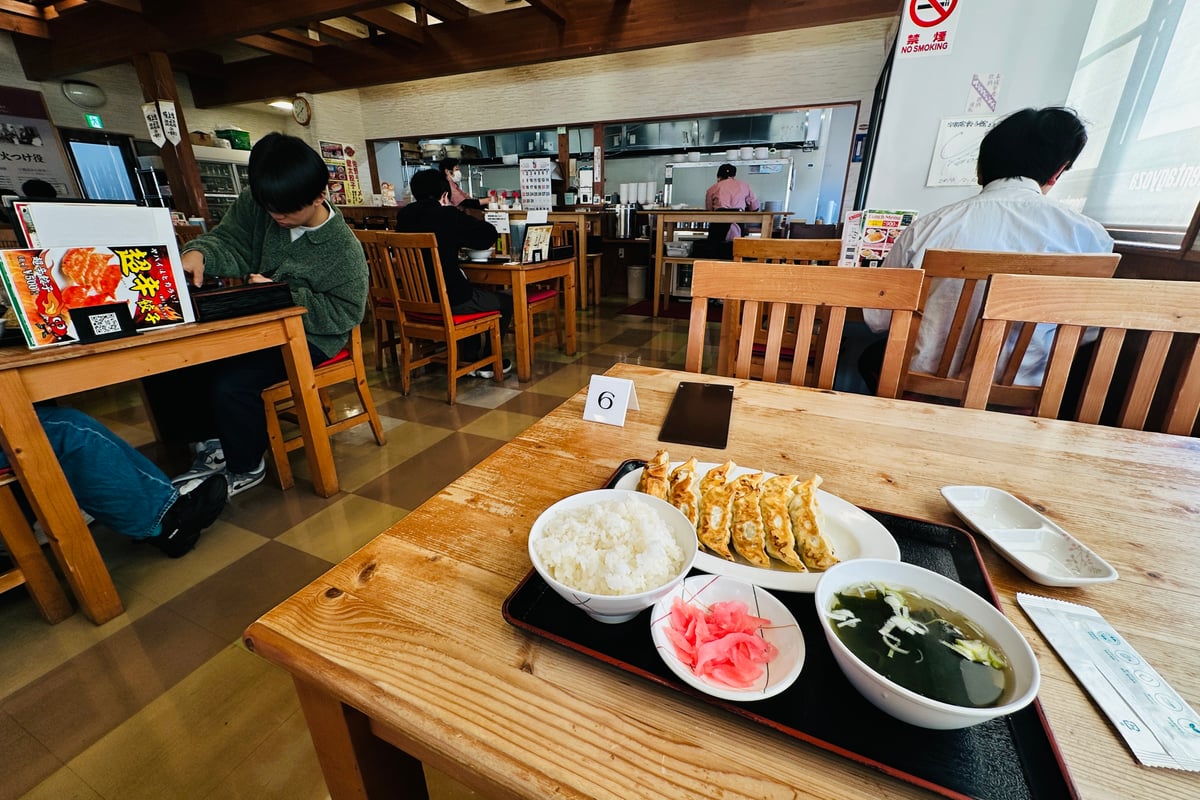
Utsunomiya Gyoza
Utsunomiya Gyoza
Utsunomiya Gyoza is a local specialty centered on Utsunomiya City in Tochigi Prefecture, known nationwide as one of Japan's leading 'gyoza towns.' During World War II, officers and soldiers of the Army's 14th Division, stationed in Utsunomiya, were dispatched to Manchuria (present-day northeastern China) and other areas, where they are said to have encountered authentic gyoza culture; after the war, returning soldiers brought the recipe back with them, and it spread throughout the city. In 1991, the trade association 'Utsunomiya Gyoza Kai' was formed, and through activities such as installing a gyoza statue, creating gyoza maps, and holding the annual 'Utsunomiya Gyoza Festival' each autumn, the city has pursued community revitalization on the strength of ranking first nationally in household gyoza spending. Featuring a sweet filling generously packed with vegetables such as cabbage, garlic chives, and green onion and only lightly seasoned with garlic, the city is home to more than 200 gyoza restaurants, where the dumplings are enjoyed pan-fried, boiled, or deep-fried in a variety of styles.
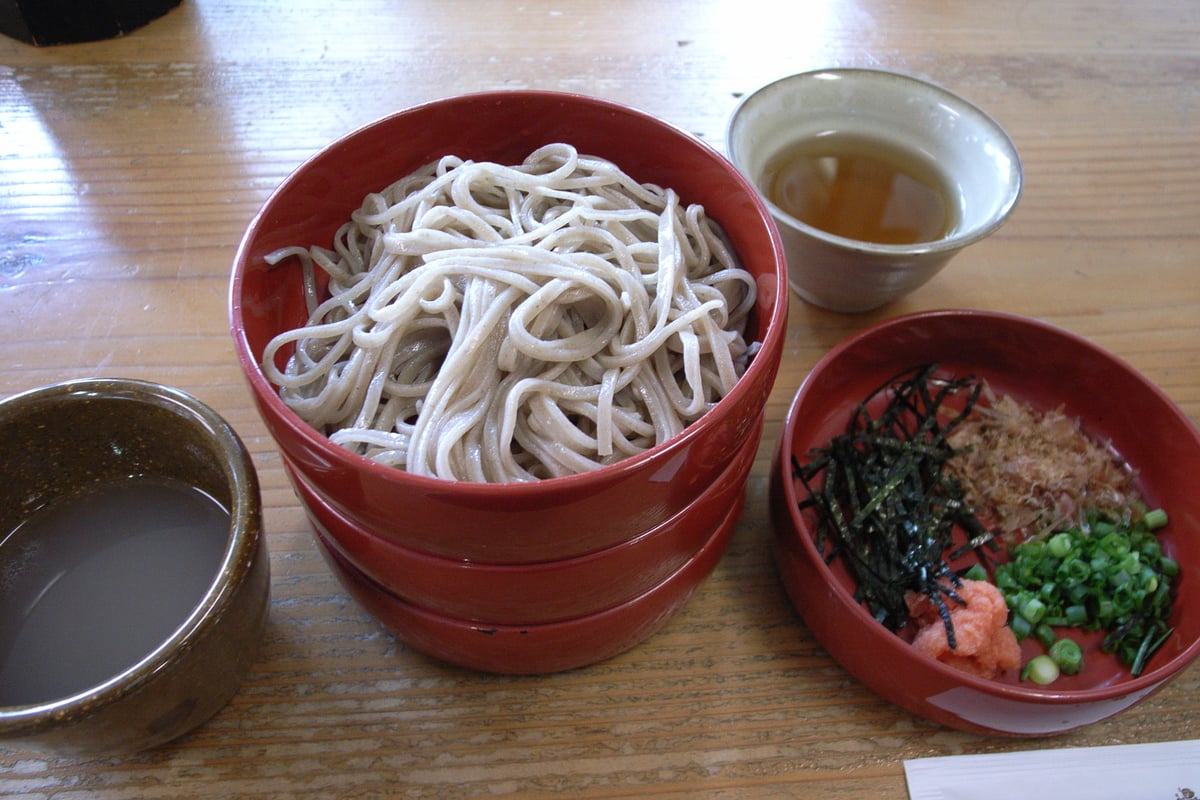
Wanko Soba (Bottomless Refill Soba)
Wanko Soba
Wanko soba is a local dish of Morioka City and Hanamaki City, Iwate Prefecture, in which servers call out phrases like 'Hai, jan-jan!' while continuously refilling a bowl with bite-sized portions of soba (buckwheat noodles) until the guest places the lid on the bowl to signal they are finished. One widely known origin story tells that in the early Edo period, when the lord of the Nanbu domain, Nanbu Toshinao, stopped at Hanamaki Castle, it was considered discourteous to serve him from the same large bowl used by commoners, so the noodles were served in small portions in a lacquered bowl instead — and he enjoyed it so much that he asked for refill after refill. Part of the fun lies in the exchange with the server, as diners vary the flavor with a wide range of condiments such as green onion, nori seaweed, katsuobushi (dried bonito flakes), grated daikon radish, sashimi, and grated yam. Far from being a simple eating contest, it remains a beloved food culture among tourists today as an embodiment of Japanese hospitality.
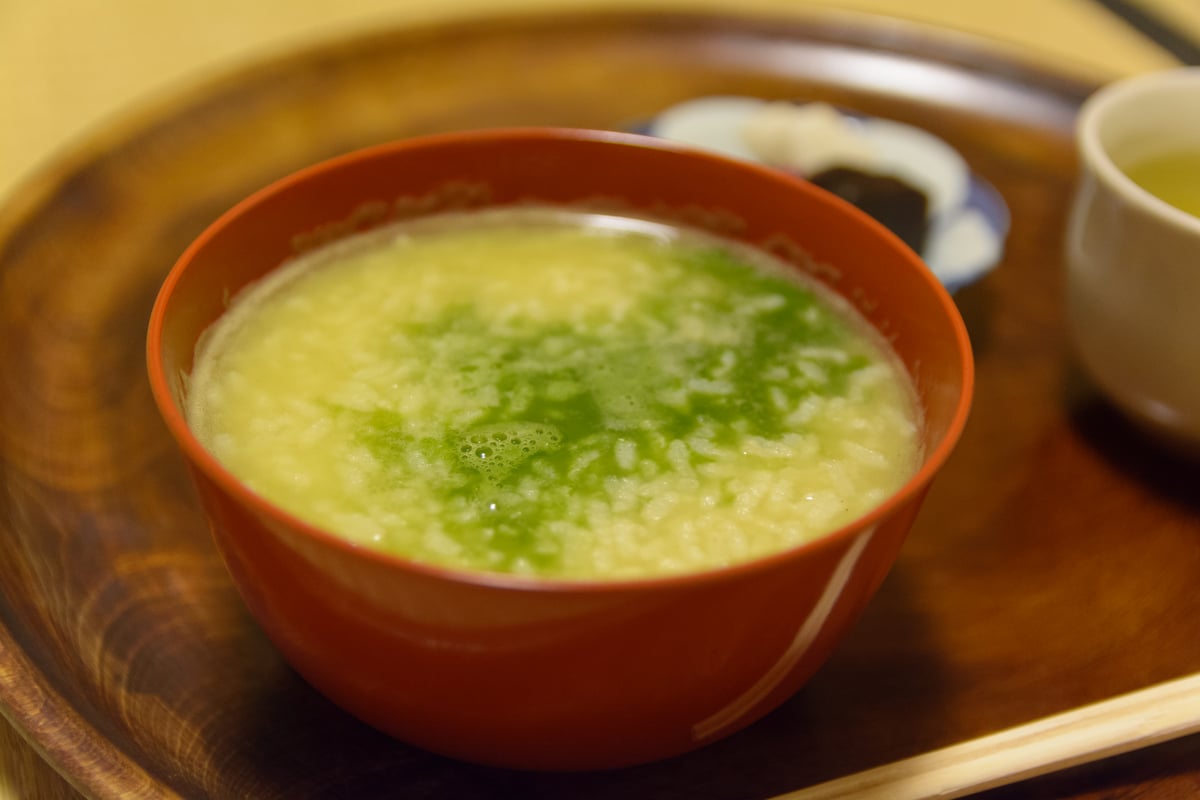
Yamato Chagayu
Yamato Chagayu
Yamato Chagayu is a signature home-style dish of Nara made by cooking rice in tea — typically hojicha (roasted green tea) — brewed into a broth. It is so deeply rooted in daily life that people say 'a Yamato morning begins with chagayu.' Its origins are said to lie in temples such as Todai-ji and Kofuku-ji, where monks are believed to have eaten it between periods of ascetic practice, and it has a deep connection to the Shuni-e ritual at Todai-ji's Nigatsu-do hall, known for the Omizutori water-drawing ceremony. The tea is boiled in a cotton tea bag, and rice is added and cooked quickly over high heat until the grains open up like blossoms — a state called 'hana ga saku' ('the flowers bloom') that is considered ideal. Its light, thin texture, without the thickening seen in chagayu from other regions (often made with potato starch), is one of its defining features. It is also said to have spread as a way for monks and ordinary people to stretch their rice supply, and today this humble yet flavorful dish, deeply rooted in Nara's climate and culture, remains a beloved staple in homes and restaurants alike.
Yamato-gyu
Yamato-gyu
Yamato-gyu is a brand name given exclusively to beef from Japanese Black (kuroge washu) cattle raised at designated producer farms within Nara Prefecture that meet a set of specific grading requirements. It is known for its finely marbled, reddish-brown lean meat and for being rich in oleic acid — an unsaturated fatty acid considered beneficial for health — which gives the fat a smooth, melting quality and a rich flavor. Nara has a long history as a cattle-raising region, documented as a source of fine cattle as far back as the Kamakura-period picture scrolls 'Shungyu Ekotoba' and 'Kokugyu Jusu.' Since the Yamato-gyu Distribution Promotion Council was established in 2003, information on each animal's pedigree, feed, and rearing environment has been recorded and managed individually, making the path from production to distribution fully traceable. Today, 12 designated producer farms raise the cattle, which are then delivered within and outside the prefecture through designated retailers and wholesalers. Beef that clears even stricter standards — including a longer fattening period and higher oleic acid content — is certified as 'Nara Prefecture Premium Select,' marking it as an especially fine grade even among Yamato-gyu.
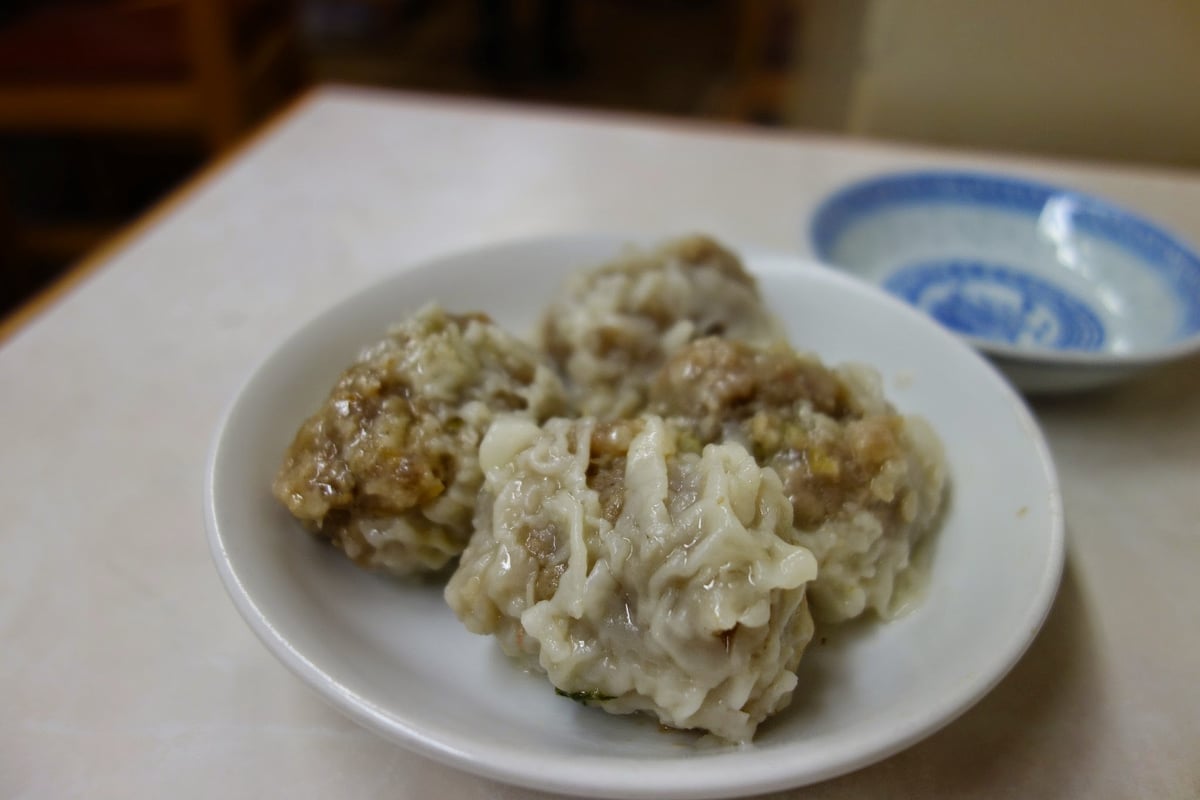
Yokohama Chinatown Shumai
Yokohama Chinatown Shumai
The shumai of Yokohama Chinatown developed against the backdrop of dim sum culture brought over by Chinese chefs who arrived at Nankin-machi (present-day Chinatown) following the opening of the port in the Meiji era. It is a type of dim sum made by wrapping pork-based filling in a wheat-flour wrapper and steaming it; Chinatown is home to numerous long-established shops with histories ranging from several decades to nearly a century, each offering its own house-made shumai with distinct blends and textures. Many are small, bite-sized pieces packed with concentrated meat juices, and takeout sales at storefronts and gift boxes for souvenirs are also common. Notably, the 'Shiumai' made by Kiyoken, nationally famous as a Yokohama ekiben (train station bento), is also said to have its roots in the shumai served in Nankin-machi (present-day Chinatown); the shumai served as Chinatown dim sum and Kiyoken's ekiben Shiumai are like siblings that branched off from the same Yokohama food culture.
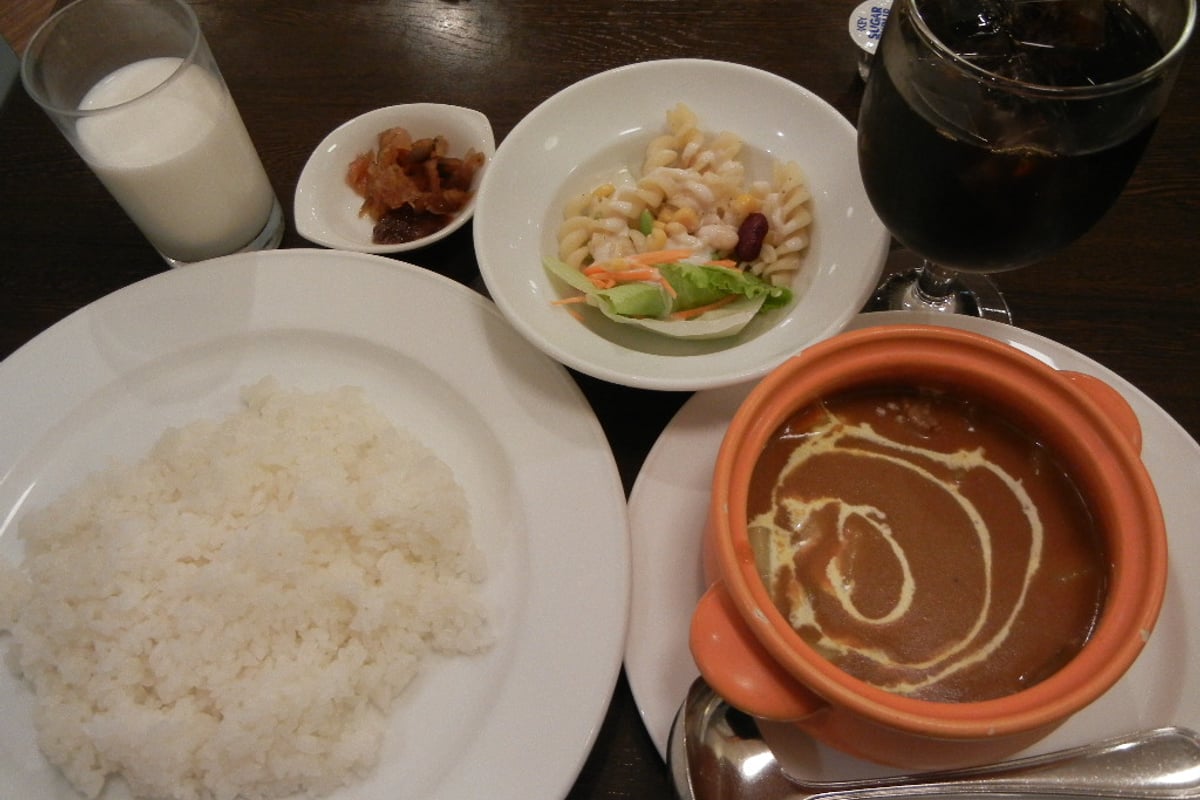
Yokosuka Kaigun Curry
Yokosuka Kaigun Curry
Yokosuka Kaigun Curry (Yokosuka Navy Curry) is a modern recreation of a curry recipe served in the former Imperial Japanese Navy during the Meiji era, and is a town-revitalization dish that originated in the city of Yokosuka. It recreates the method for 'curried rice' recorded in a 1908 navy cookbook, 'A Reference Book of Naval Culinary Techniques,' and it is a basic rule that it be served with milk and a salad on the side. It grew out of the activities of the 'Curry Town Yokosuka Promotion Committee,' launched in 1999 through cooperation between the city of Yokosuka, its chamber of commerce, and the Japan Maritime Self-Defense Force, and in principle it is served only at certified shops within Yokosuka City. The Imperial Japanese Navy of the Meiji era, whose sailors suffered from beriberi due to a diet centered on white rice, adopted a curry-flavored stew from the British Navy to improve nutritional balance — a practice regarded as one of the roots of Japan's curry culture — and Yokosuka Kaigun Curry is cherished today as a dish that carries this history forward.
Yoshino Hon-kuzu
Yoshino Hon-kuzu
Yoshino Hon-kuzu is a traditional ingredient made in the Yoshino region of southern Nara Prefecture, regarded as one of the finest grades of kuzu starch available. It is produced by extracting starch from the roots of kuzu, a climbing vine in the legume family, then refining it through a method called 'Yoshino-zarashi' — repeatedly rinsing the starch in cold well water during the coldest months of the year. The raw kuzu root is a precious material, gathered through the arduous labor of digging into the mountains, and the painstaking process, which takes several months from refining to drying, produces a purity and smooth mouthfeel unmatched by kuzu starch from other regions. Yoshino Hon-kuzu is used not only in wagashi such as kuzuyu (hot kuzu drink), kuzumochi, and kuzukiri, but also widely as a thickening agent in cooking, and its traditional techniques are still preserved today by long-established producers dating back to the Edo period. A representative maker is Kurokawa Honke, headquartered in Uda City, Nara Prefecture, which has maintained the same production method for over 400 years since its founding in 1615 and is known as a long-established house with a history of supplying the Imperial Household Agency.
Yoshiwara Denchu
Yoshiwara Denchu
Yoshiwara Denchu is a Mito local confection said to have originated when Yoshiwara, a lady-in-waiting during the time of Tokugawa Nariaki, the 9th lord of the Mito Domain, dried and toasted leftover cooked rice and coated it with roasted soybean flour (kinako) so as not to waste it. According to legend, Nariaki, who valued frugality, was so fond of the confection that he named it 'Yoshiwara Denchu' after the lady-in-waiting who created it. It is characterized by its simple flavor: rice arare (crackers) made from glutinous rice are hardened with starch syrup, shaped into sticks, coated generously with kinako, and wrapped in edible rice paper (oblate); it continues to be made by confectionery shops within Mito City. A trademark application was filed in 1963, and today it is one of Mito's signature confections, made only by shops belonging to the Mito Confectionery Industry Cooperative Association, which alone are permitted to use the name 'Yoshiwara Denchu.'
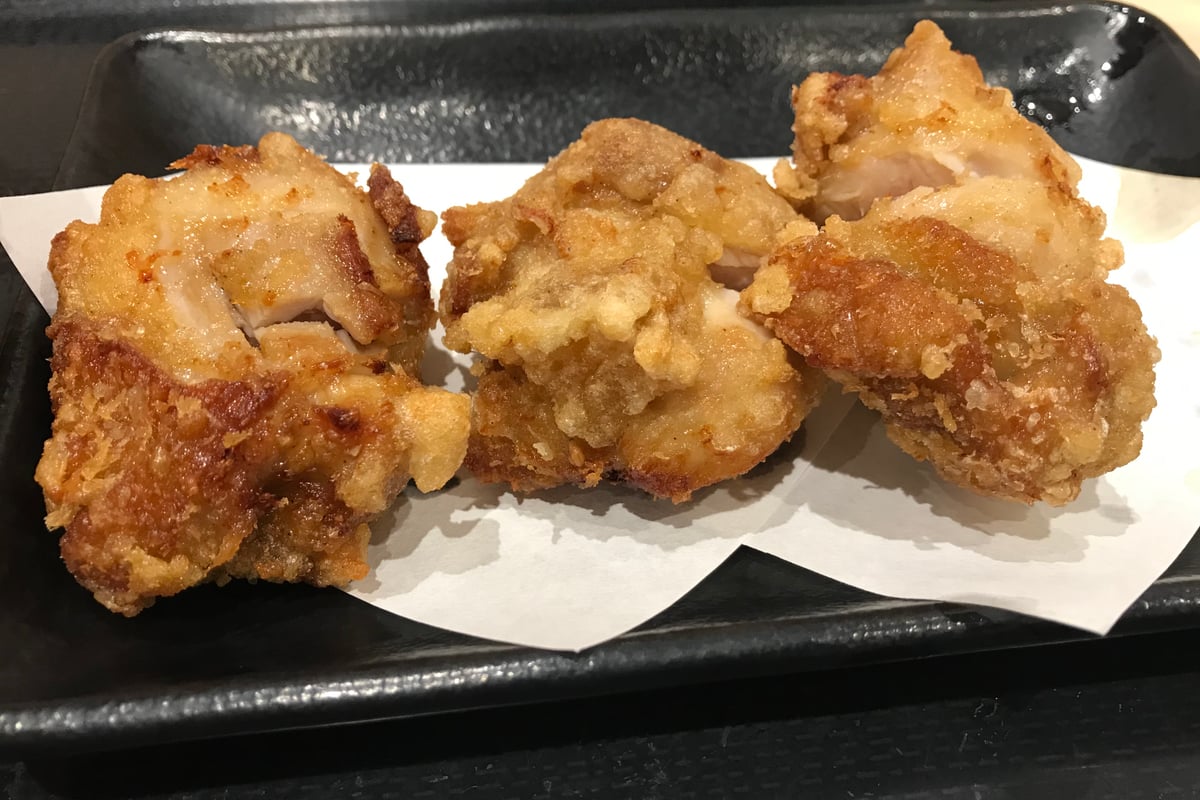
Zangi (Hokkaido-style fried chicken)
Zangi
Zangi is Hokkaido's own style of fried chicken, in which chicken is marinated firmly in a base of soy sauce, garlic, ginger, and other seasonings, coated in wheat flour, and deep-fried. It is said to have originated around 1955, when a poultry restaurant in the Suehiro entertainment district of Kushiro cut a whole chicken into pieces and deep-fried it. The name is thought to derive from the Chinese dish of deep-fried chicken, “zhaji,” with the most likely theory being that the shop's owner inserted an extra “n” sound into the word for a catchier ring and good fortune. Compared to ordinary Japanese fried chicken, zangi is characterized by a stronger marinade, strong enough to be eaten on its own, and a crunchy texture from the marinade and batter clinging firmly to the meat. In the style that originated in Kushiro, deep-fried chicken is also served drizzled with a special Worcestershire-based sauce, a way of eating that remains firmly popular. From a side dish at home to a favorite at izakaya, it is a soul food enjoyed year-round across Hokkaido.