Image: Wikimedia Commons
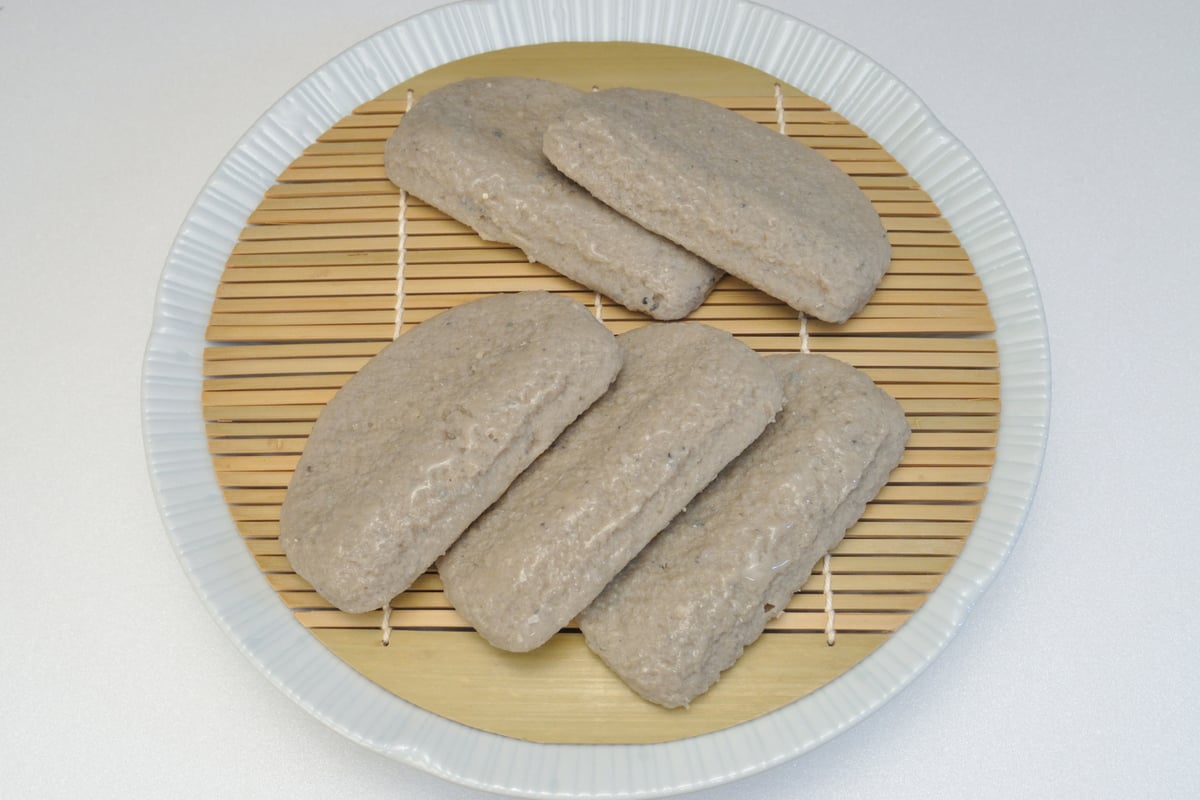
Kuro hanpen is a fish-paste product (nerimono) of Shizuoka Prefecture made by grinding blue-backed fish such as mackerel, horse mackerel, and sardine into paste, bones and skin included, and then boiling it. Because the whole fish is kneaded in, it has a grayish, blackish color. It is shaped like a half-moon, and each piece has traditionally been shaped one at a time using a mold. It is said to have originated in Yaizu and is now eaten throughout Shizuoka Prefecture. Within the prefecture, 'hanpen' means kuro hanpen, which is different from the white, fluffy hanpen. It can be eaten in many ways: as is, grilled, or simmered. 'Kuro hanpen fry,' coated in breadcrumbs and deep-fried, is a standard side dish at home and in supermarkets. It is also an essential ingredient of Shizuoka oden, enjoyed sprinkled with dashi-ko (powdered fish flakes) and aonori (green laver). It also appears in school lunches and is loved across generations, from children to adults.
Origin
Kuro hanpen is said to have originated in Yaizu. Yaizu has Yaizu Port, a base for deep-sea fishing of skipjack tuna and tuna, and Kogawa Port, where nearshore fish such as horse mackerel and mackerel are landed. In this area, where seafood processing thrives, a fish paste has been made by grinding locally caught blue-backed fish, bones and skin included. When people first began making it is not clearly known.
History
Born in Yaizu, kuro hanpen spread widely throughout Shizuoka Prefecture. It is also regarded as a specialty in areas with large fishing ports, such as Shimizu and Numazu. It became an essential ingredient of Shizuoka oden and has been familiar at oden shops and dagashiya (old-fashioned penny-candy shops). A major fish-paste maker is said to have started selling it in the Keihin area in 2007, and it has become known outside the prefecture as well.
Features
While white hanpen uses only the flesh of the fish, kuro hanpen is gray because the bones and skin are also kneaded in whole. Because the bones are used, it has a distinctive, slightly gritty texture on the tongue. Salt, sugar, starch, and other ingredients are mixed into the fish paste, which is shaped and then finished by boiling in hot water. Since it is already cooked, it can be eaten as is right after purchase.
Main Ingredients
Food Culture
Kuro hanpen is used all year round at the everyday dinner table and as a side dish in bento lunches. It can be eaten in many ways, such as raw with wasabi soy sauce, grilled and topped with green onions or ginger, or sautéed in butter. It is so much a matter of course that hanpen is black that some people from Shizuoka are said to be surprised when they see white hanpen.
How It Differs from Home Cooking
At home, store-bought kuro hanpen is grilled or coated in flour, egg, and breadcrumbs and fried. The key to the fry is to apply a thin coat of fine breadcrumbs, and it can be eaten as is or with sauce. At fish-paste shops, craftspeople make kuro hanpen using fish from Suruga Bay with traditional methods.
Famous Shops
蒲菊本店
静岡県静岡市葵区呉服町2-8-10
A fish-paste shop said to have been founded in 1889 (Meiji 22), located in Gofukucho in the center of Shizuoka City. It offers fish-paste products made by craftspeople with traditional methods using fish from Suruga Bay. Its specialty is kuro hanpen made mainly from sardines, with a pack of 10 starting from about 860 yen. It also sells kuro hanpen fry.
| 丸又 Kuro Hanpen | Kuro hanpen from 丸又, a fish-paste maker headquartered near Yaizu Port. It uses plenty of sardines, bones and all, and is seasoned with natural salt and raw cane sugar. It is distinguished by its commitment to traditional methods without chemical seasonings or preservatives. |
|---|
FAQ
Q. What is the difference between kuro hanpen and white hanpen?
A. White hanpen uses only the flesh of the fish, so it turns out white. Kuro hanpen has a grayish color because blue-backed fish such as mackerel and sardine are kneaded in, bones and skin included. Because the bones are used, another characteristic is the strong savory flavor of blue-backed fish. In Shizuoka Prefecture, 'hanpen' refers to kuro hanpen.