Traditional Crafts
Search Japan's traditional crafts by genre and region.
Genre(multiple selection allowed)
Region(multiple selection allowed)
318 items

Aizu Lacquerware
Aizu-nuri
Aizu-nuri is lacquerware handed down mainly in Aizuwakamatsu City, Fukushima Prefecture, and is a Traditional Craft Designated by the Minister of Economy, Trade and Industry. It is said to have taken firm root in 1590 (Tensho 18), when Gamō Ujisato, who became lord of Aizu, encouraged lacquer craftsmanship to promote local industry, giving it a history spanning more than 400 years. A defining feature is that wood-base craftsmen, lacquerers, and maki-e artists each handle their own specialized process in a division of labor, and it is distinctively Aizu that lacquerers themselves are further divided between round pieces (such as bowls) and flat pieces (such as tiered boxes). During domain reforms in the mid-Edo period, new decorative techniques such as keshifun maki-e were introduced, and a wide range of techniques -- including mother-of-pearl inlay, lacquer painting, dry lacquer, and chinkin -- continue to be passed down today. The craft's appeal lies in its lavish decoration using auspicious motifs such as cranes, turtles, and pine-bamboo-plum, combined with the warm luster of hana-nuri (an unpolished final coat), and it is used to make a wide range of products from bowls and tiered boxes to contemporary accessories.
Annaka Uchihamono (forged blades)
Annaka Uchihamono
Annaka Uchihamono is a forged type of farm tool and blade passed down in Annaka, Gunma Prefecture. Annaka was once a region where sericulture flourished, and from the Meiji era onward many blacksmiths were active there forging the farm tools essential to agricultural work; place names related to blacksmithing still remain within the old city of Annaka today. The uchihamono technique - shaping heated iron and steel by repeatedly hammering it - is connected to the craft of forging Japanese swords, and unlike blades mass-produced with a mold, each piece is finished by hand, one at a time, by a craftsman. Farm tools such as the kusakaki (weeding hoe) and tekuwa (hand hoe) combine durability with a supple feel in use, while blades such as kitchen knives and trimming hoes are prized for their sharp cutting edge. Today, blacksmith workshops such as Honke Matsunaga Seisakusho and Yamazaki Seisakusho continue to uphold this traditional handcraft, making tools that, through repeated repair, can be used for a long time.
Arita ware
Arita-yaki
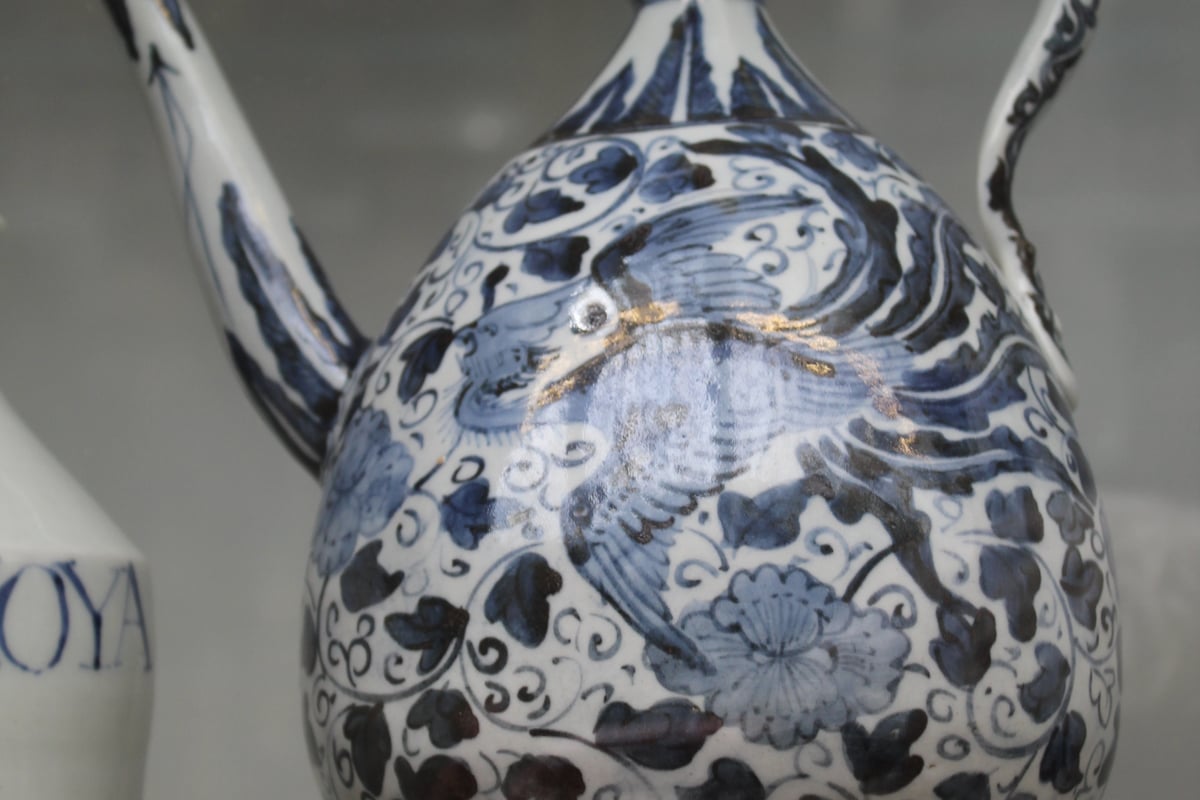
Arita ware is porcelain produced mainly in Arita, Saga Prefecture, known as the birthplace of porcelain in Japan. Around 1616, the Korean potter Yi Sam-pyeong (Ri Sanpei), who had been brought to Hizen during Toyotomi Hideyoshi's invasions of Korea, discovered high-quality porcelain stone at Izumiyama in eastern Arita and fired Japan's first white porcelain at the Tenguya kiln. During the Edo period, styles evolved from indigo-blue Early Imari ware to the red-accented Kakiemon style of the 1640s, the Nabeshima style reserved exclusively for tribute pieces made at the domain kiln, and lavish gilded Kinrande ware. Because it was shipped out through Imari Port, it was exported in large quantities to Europe via the Dutch East India Company under the name 'IMARI,' influencing Western ceramic culture. Designated a METI-designated Traditional Craft Product in 1977, the town of Arita still thrives around its porcelain industry today, centered on Tozan Shrine and the Arita Ceramics Fair.
Boshu Uchiwa
Boshu Uchiwa
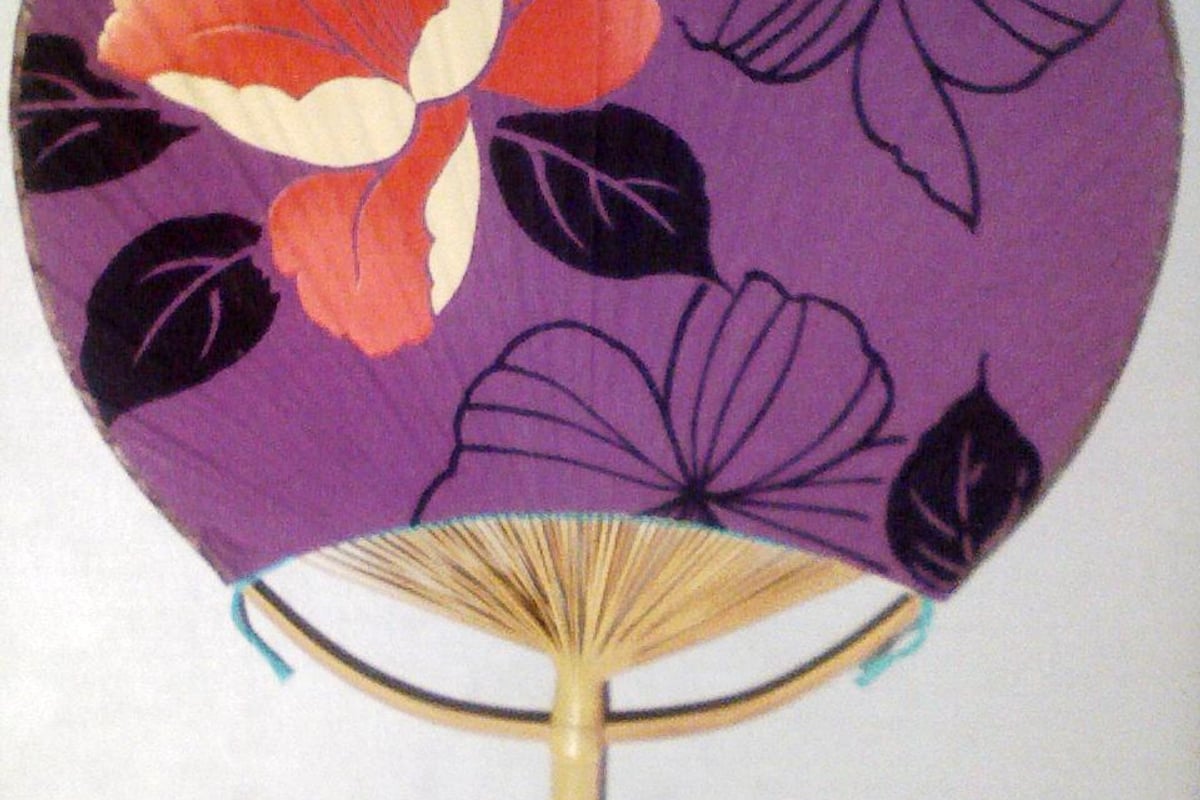
Boshu Uchiwa are traditional folding fans made in Tateyama City and Minamiboso City, Chiba Prefecture (the Boso region), and are counted among the 'Three Great Uchiwa of Japan' alongside Kyoto's Kyo-uchiwa and Kagawa's Marugame Uchiwa. In 2003, they became the first craft in Chiba Prefecture to be designated a Traditional Craft Product designated by the Minister of Economy, Trade and Industry (METI). The medake (a type of slender bamboo) that grows in the mild climate of the Boso region has wide spacing between its nodes, making it light, supple, and ideal for fan ribs. The defining feature of Boshu Uchiwa is the 'maru-e' (round handle), which uses the natural roundness of the bamboo culm as the handle itself, a feature not found in fans from other production areas, giving them exceptional ease of grip and a gentle, supple breeze. Every one of the 21 steps involved, including splitting a single bamboo culm into 40 to 64 fine, even strips and weaving them with thread to form the fan-shaped 'window,' is carried out entirely by hand. From the late Taisho era through the early Showa era, the region became a major production center producing 7 to 8 million fans a year, but output has declined with changing lifestyles, and today only a small number of craftspeople continue to preserve the tradition.
Echizen Washi (Echizen Japanese Paper)
Echizen Washi
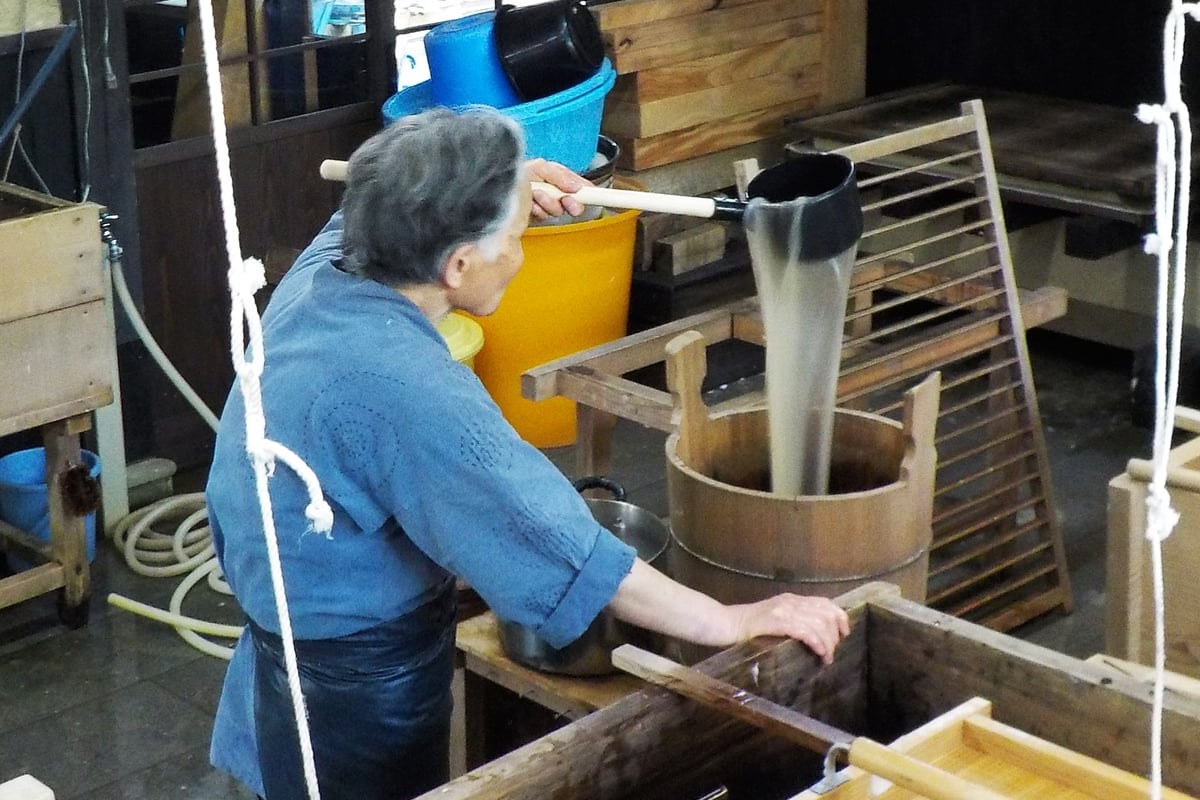
Echizen Washi is handmade Japanese paper that has long been made in the Imadate district of Echizen City, Fukui Prefecture. The production area consists of five villages, Otaki, Iwamoto, Furo, Shinzaike and Sadatomo, collectively known as 'Goka' (the Five Villages). According to legend, about 1,500 years ago a goddess named Kawakami Gozen appeared upstream on the Okamoto River and taught the villagers how to make paper, and she is enshrined at Okamoto Shrine as the goddess of papermaking. In the Nara period the paper was used for copying sutras, and in time it gave rise to 'Echizen Hosho,' a high-grade paper prized by the samurai class. The paper for the Fukui Domain's banknotes in the Edo period and for the Dajokan-satsu notes of the new Meiji government was also made here. Using kozo, mitsumata and gampi as raw materials, papermakers produce a wide variety of papers for different uses, such as hosho paper, torinoko paper and fusuma (sliding door) paper. In 1976 it became a Traditional Craft Designated by the Minister of Economy, Trade and Industry. At Echizen Washi Village, visitors can watch and try papermaking.
Hakata Ningyo (Hakata Dolls)
Hakata Ningyo
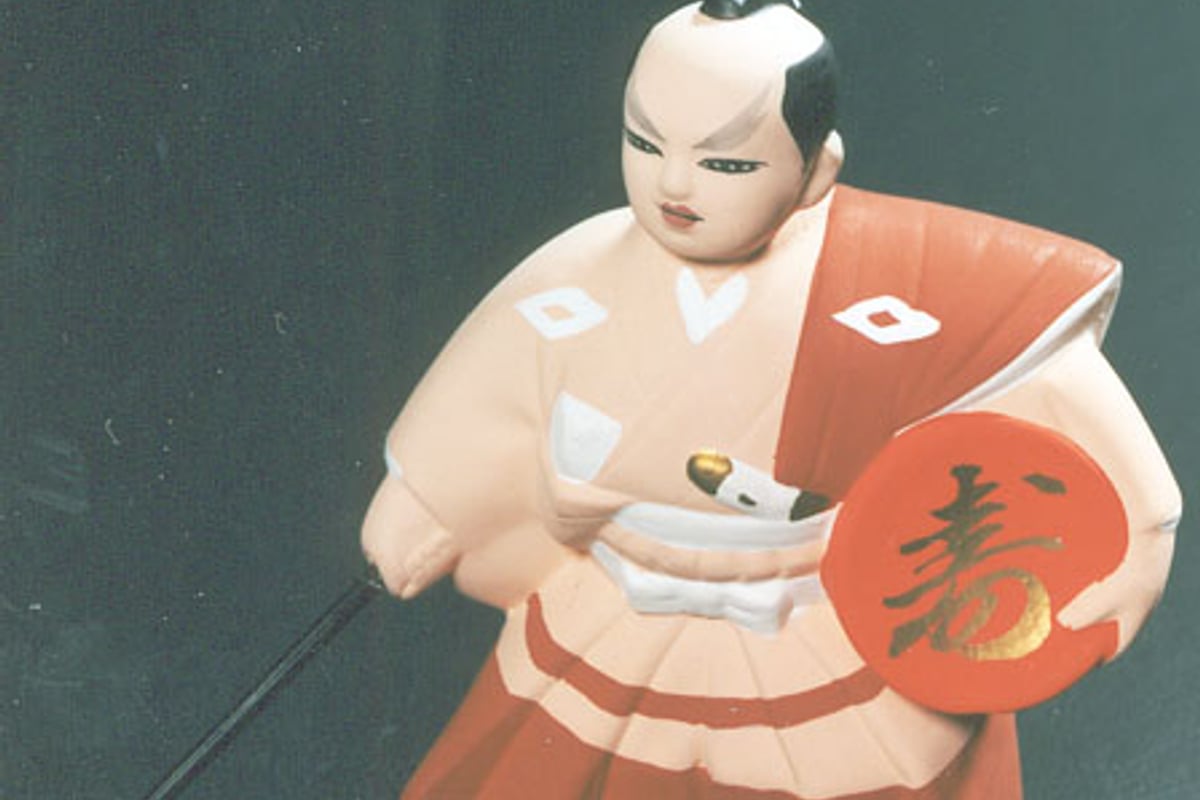
Hakata Ningyo are unglazed clay dolls traditionally made in and around Hakata Ward, Fukuoka City, and are a Traditional Craft Designated by the Minister of Economy, Trade and Industry. Their origins trace back to 1600, when Kuroda Nagamasa entered Chikuzen Province and gathered many craftsmen in Hakata; the technique of making unglazed clay dolls is said to have emerged from among them. Several lineages came together in their development, including figurative dolls made by deko craftsmen, Soshichi ware descended from roof-tile makers, and the line begun by Nakanoko Kichibei, who created folk toys in the late Edo period. A defining feature is that the dolls are fired unglazed after coloring, and they depict a wide range of subjects—from the realistic 'beauty' figures for which Hakata Ningyo are especially known to Kabuki and Noh characters, warriors, zodiac animals, and Fukusuke—with fine detail and realism. In the Meiji era, the dolls earned high acclaim at overseas expositions such as the Paris World's Fair, becoming known worldwide as a representative Japanese doll craft.
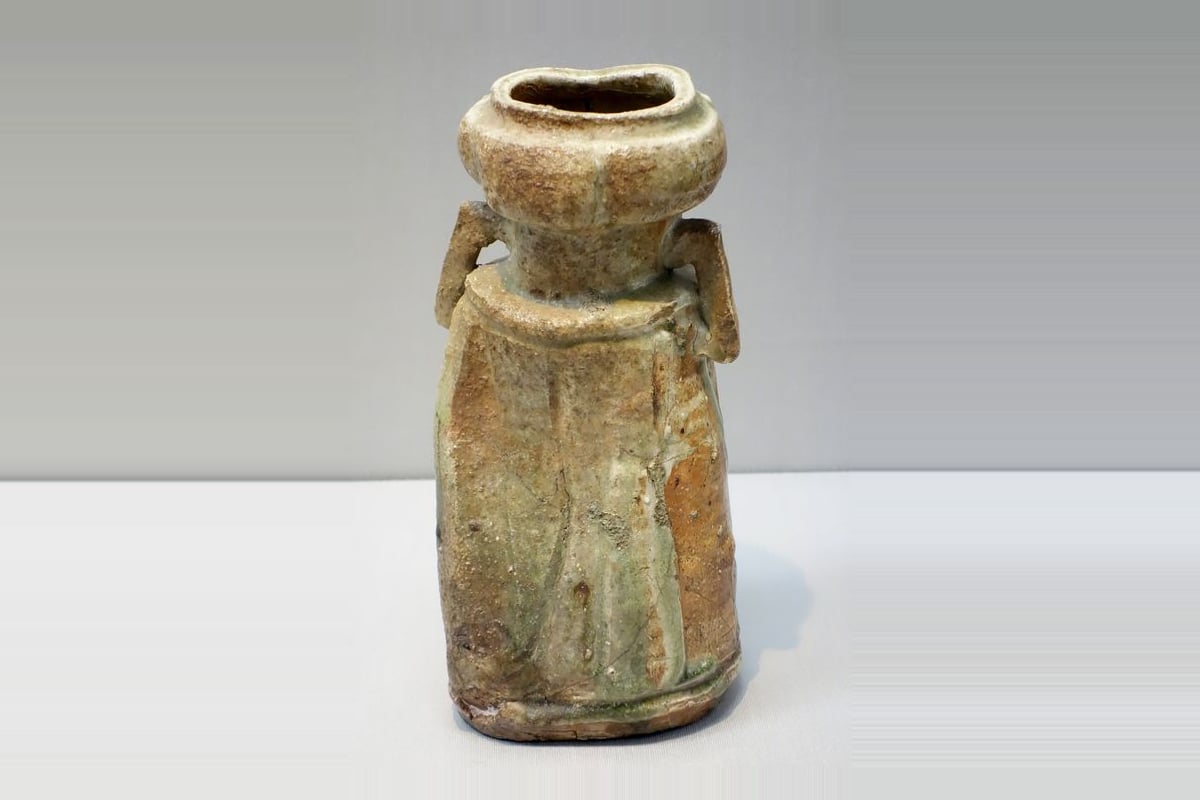
Iga-yaki (Iga Ware)
Iga Yaki (Iga Ware)
Iga-yaki is pottery fired mainly in the Marubashira (丸柱) district of Iga City, Mie Prefecture. Its origins are said to date back to around the Nara period, and locally it is introduced as pottery with a history of about 1,200 years. Its raw material is clay from the Kobiwako Formation (ancient Lake Biwa strata), deposited on the bed of ancient Lake Biwa about 4 million years ago. When fired, the clay develops many fine pores and retains heat well, so it is suited to cooking vessels such as donabe (earthenware pots) and yukihira (行平) pots. In the Momoyama period, as the tea ceremony flourished, bold flower vases (hanaire) and fresh-water jars (mizusashi) with pronounced distortions were fired. The green glassy 'bidoro' and the scorching ('koge') produced by the flames of the climbing kiln are regarded as highlights of Ko-Iga (old Iga ware). The Important Cultural Property 'Ko-Iga fresh-water jar named Yabure-bukuro (破袋),' held by the Gotoh Museum, is its representative work. After the early Edo period the kilns were temporarily abandoned, but they were revived in the mid-Edo period, after which everyday items such as donabe became the mainstay. In 1982 (Showa 57), it was designated a Traditional Craft Designated by the Minister of Economy, Trade and Industry.
Ikaho-yaki (Ikaho ware)
Ikaho-yaki
Ikaho-yaki is pottery that began in 1878 (Meiji 11), when the potter Shinoda Senka opened a kiln at Ikaho Onsen in Shibukawa, Gunma Prefecture. Its distinctive method uses yu no hana (hot spring mineral deposit) from Ikaho Onsen in the clay and glaze; because the iron-rich yu no hana is used, the finished pieces take on the rich colors unique to a hot spring town, ranging from yellow and reddish-brown to black. However, when Shinoda Senka passed away, the kiln fires went out, and for a long time Ikaho-yaki became a 'phantom pottery.' Later, the local potter Kogure Tokuro carried out his own research based on old documents and has worked to revive Ikaho-yaki. Today, works are made and exhibited for sale at Tokuro Kiln near the Ikaho Onsen hot spring town, and visitors can also try an electric potter's wheel or painting experience, enjoying the making of a one-of-a-kind piece that makes use of Ikaho Onsen's yu no hana as a travel memory.
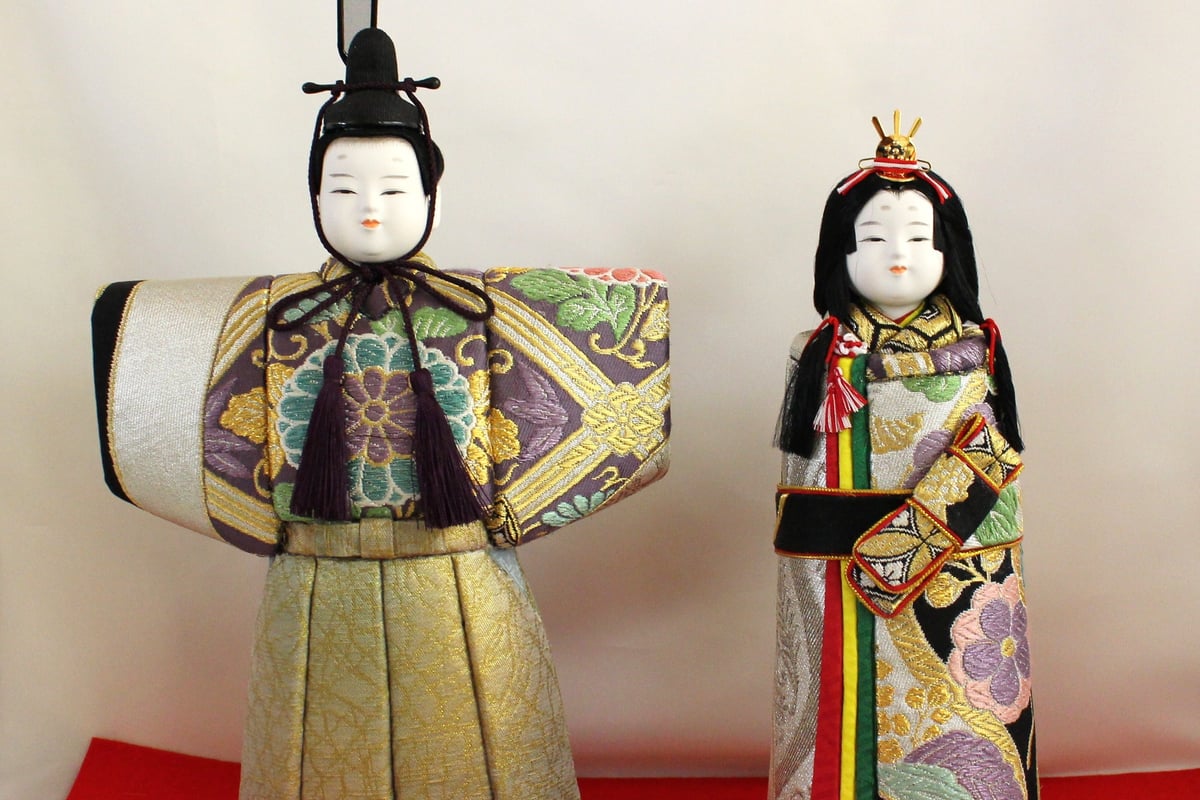
Iwatsuki Ningyo
Iwatsuki Ningyo
Iwatsuki Ningyo is a general term for the hina dolls, warrior (gogatsu) dolls, kimekomi dolls, and dressed (ishō) dolls made in the Iwatsuki ward of Saitama City. It was designated a Traditional Craft Product by the Minister of Economy, Trade and Industry (METI) in 2007. Its origins are said to date to the Kan'ei era (1634-1647), when craftsmen gathered from across the country to build Nikko Toshogu Shrine settled in Iwatsuki, a post town on the Nikko Onari Kaido road, and began making cabinetry and dolls using the paulownia wood that grew abundantly in the area. Tradition also holds that in 1697, Keishin, a Buddhist image carver from Horikawa in Kyoto, began making doll heads while staying in Iwatsuki by kneading paulownia powder with wheat-gluten paste. For roughly 380 years since then, a system of specialized craftsmen — head makers, hand-and-foot makers, dressers, and accessory makers — has passed down the tradition through division of labor, developing Iwatsuki into Japan's foremost doll-producing region. Today, known as 'Iwatsuki, the Town of Dolls,' it is lined with numerous doll shops and workshops, and its output of hina and gogatsu dolls remains among the highest in the country.
Kiryu shibori (tie-dyeing)
Kiryu-shibori
Kiryu shibori is a shibori (tie-dyed) textile that developed in Kiryu, Gunma Prefecture, a city known as a center of silk-textile production. Kiryu has long been known as a production area skilled in dyeing, weaving, and shibori alike, and Kiryu shibori is distinguished by the way it freely combines shibori techniques with bolts of Kiryu-ori, itself a Traditional Craft. Because the shibori dyeing is applied to Kiryu-ori fabric already woven with ikat, stripe, or check patterns, the result has a unique finish that can be appreciated both as a woven textile and as a dyed textile, producing innovative, delicate works in which the three techniques of dyeing, weaving, and shibori come together as one. Because each piece of shibori is done by hand, even the same pattern takes on individual character in the finished result. On January 23, 2003, it was designated 'Kiryu Shibori' as a Gunma Prefecture Furusato Traditional Craft by the governor of Gunma Prefecture.
Kiryu-ori (Kiryu textile)
Kiryu-ori
Kiryu-ori is a silk textile woven mainly in Kiryu, Gunma Prefecture, and a METI-designated Traditional Craft (Japan). Its history goes back to the Nara period: the Shoku Nihongi records that in 714, a silk textile called 'ashiginu (あしぎぬ)' was presented to the imperial court. During the Edo period it developed by adopting techniques from Nishijin and the West, and received favorable treatment from the shogunate, growing into a major production center known by the saying 'Nishijin in the west, Kiryu in the east.' Its defining feature is yarn-dyed patterned weaving (Jacquard weave), in which thread is dyed before being woven, using seven techniques: Omeshi-ori, Nuki-nishiki-ori, Tate-nishiki-ori, Futsu-ori, Uki-tate-ori, Tate-gasuri-mon-ori, and Mojiri-ori. It was designated a Traditional Craft in 1977, and today, centered on the Kiryu Textile Industry Cooperative, a wide range of products continues to be made, from kimono and obi fabric to gold-brocade cloth, clothing fabric, and Japanese and Western accessories.
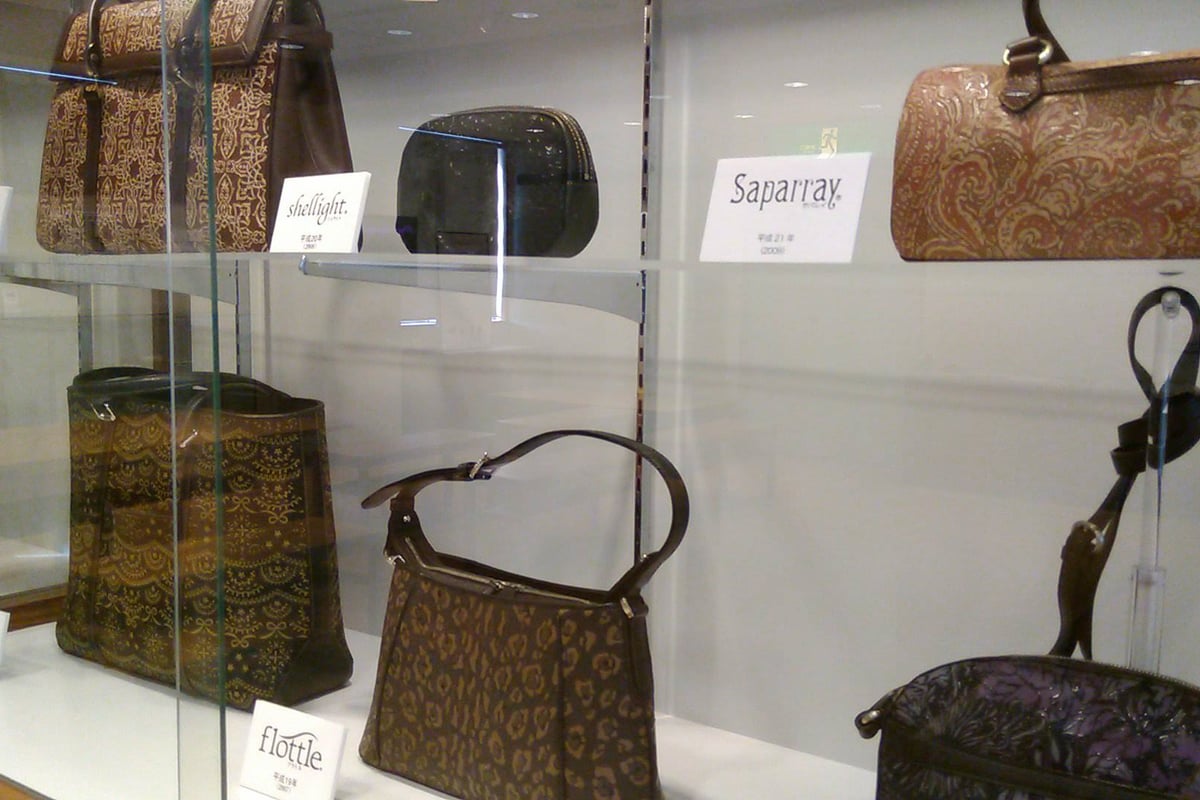
Koshu Inden (Lacquered Deerskin)
Koshu Inden
Koshu Inden is a deerskin craft made in Kofu City, Yamanashi Prefecture. Its defining feature is that a stencil is laid over tanned and dyed deerskin and urushi lacquer is rubbed in to apply patterns. The name 'inden' is said to come from decorative leather brought from India in the days of the Nanban trade (trade with the Portuguese and Spanish). Koshu Inden is said to have begun in the late Edo period, when Uehara Yushichi of Kofu devised a technique of applying lacquer to deerskin. In the Edo period inden was made in many places, but Koshu is the only place where its production methods survive today. Besides lacquer application, the techniques include 'fusube,' in which the leather is colored with the smoke of burning straw, and 'sarasa,' in which a different stencil is used for each color to create multicolored patterns. Deerskin is soft, strong and light, and the more it is used, the better it fits the hand. Over time the colors of the lacquer patterns grow clearer and take on a deep luster. In 1987 it became a Traditional Craft Designated by the Minister of Economy, Trade and Industry. On the second floor of Inden-ya's main store in Kofu City is the Inden Museum, which introduces the history and patterns of inden.
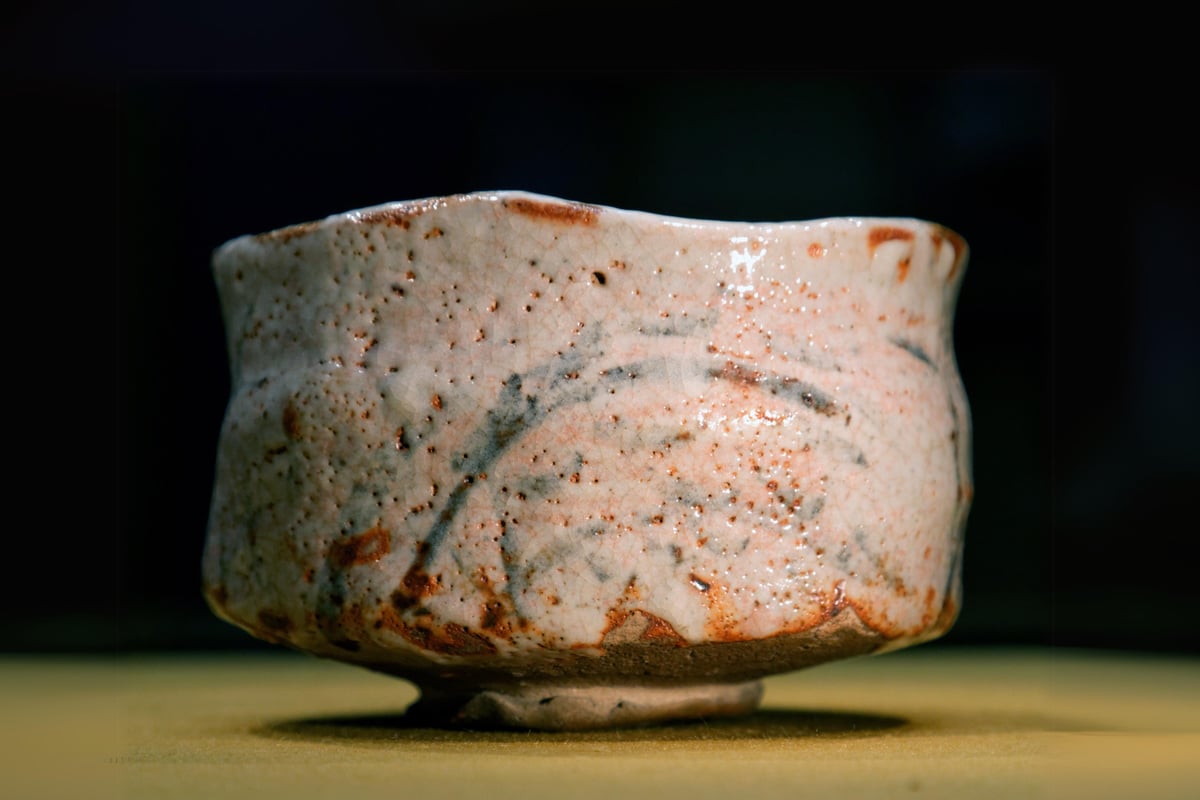
Mino-yaki
Mino-yaki
Mino-yaki is a general term for the ceramics produced for over 1,300 years mainly in Tajimi, Toki, Mizunami, and Kani cities in the Tono region of Gifu Prefecture. It is Japan's largest ceramics-producing area, supplying roughly 60% of the tableware distributed nationwide. Its greatest feature is that it is not bound to a single style or technique: Shino, Oribe, Ki-Seto, and Seto-guro, all born alongside the tea ceremony culture of the Momoyama period, are joined by as many as 15 styles and techniques recognized as Traditional Craft designated by the Minister of Economy, Trade and Industry. From rustic white-glazed Shino ware to Oribe ware with its bold green glaze and free-flowing patterns, a wide variety of expressive ceramics are all produced under the single name 'Mino-yaki,' cherished for everyday tableware as well as tea ceramics.
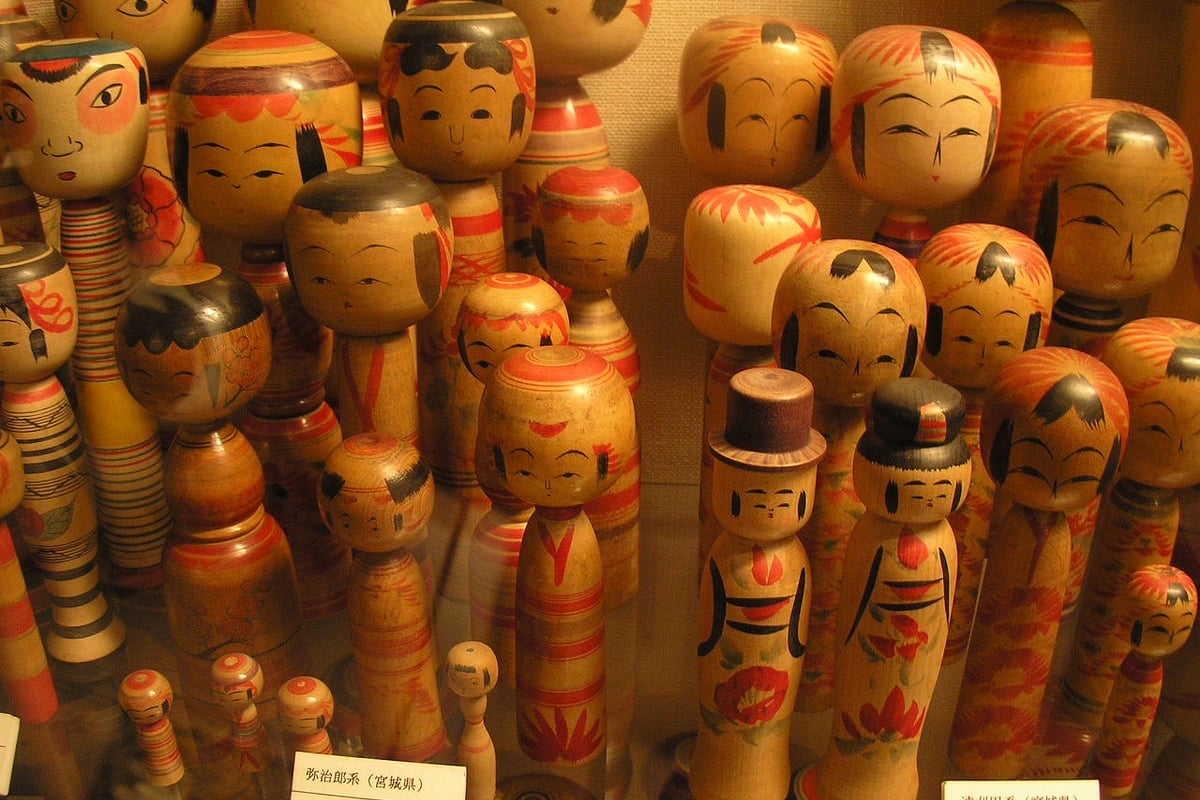
Miyagi Dento Kokeshi
Miyagi Dento Kokeshi
Miyagi Dento Kokeshi is a collective name for four lineages of kokeshi (doll) that developed within Miyagi Prefecture - the Naruko, Togatta, Yajiro, and Sakunami styles - all part of the wooden kokeshi tradition that began in the hot spring towns of the Tohoku region as souvenirs and toys for children in the late Edo period. On June 22, 1981, it was designated a Traditional Craft by the Minister of Economy, Trade and Industry (METI). Togatta kokeshi are believed to have already been made during the Bunsei era (1818-1830), making Togatta a leading candidate for the birthplace of kokeshi, though in recent years a theory tracing the origin to Sakunami Onsen in Sendai City has also drawn attention. The Naruko style is fitted tightly at the neck so that turning the head produces a squeaking sound; the Togatta style features a large head painted with a red hair ornament; the Yajiro style is known for its beret-like turned-line pattern on the head; and the Sakunami style is decorated with a crab-chrysanthemum (kani-giku) motif. The way each lineage differs completely in shape and painted design is one of the great appeals of Miyagi Dento Kokeshi. Even today, craftsmen at each hot spring town turn each doll by hand, keeping alive its simple, warm expression.
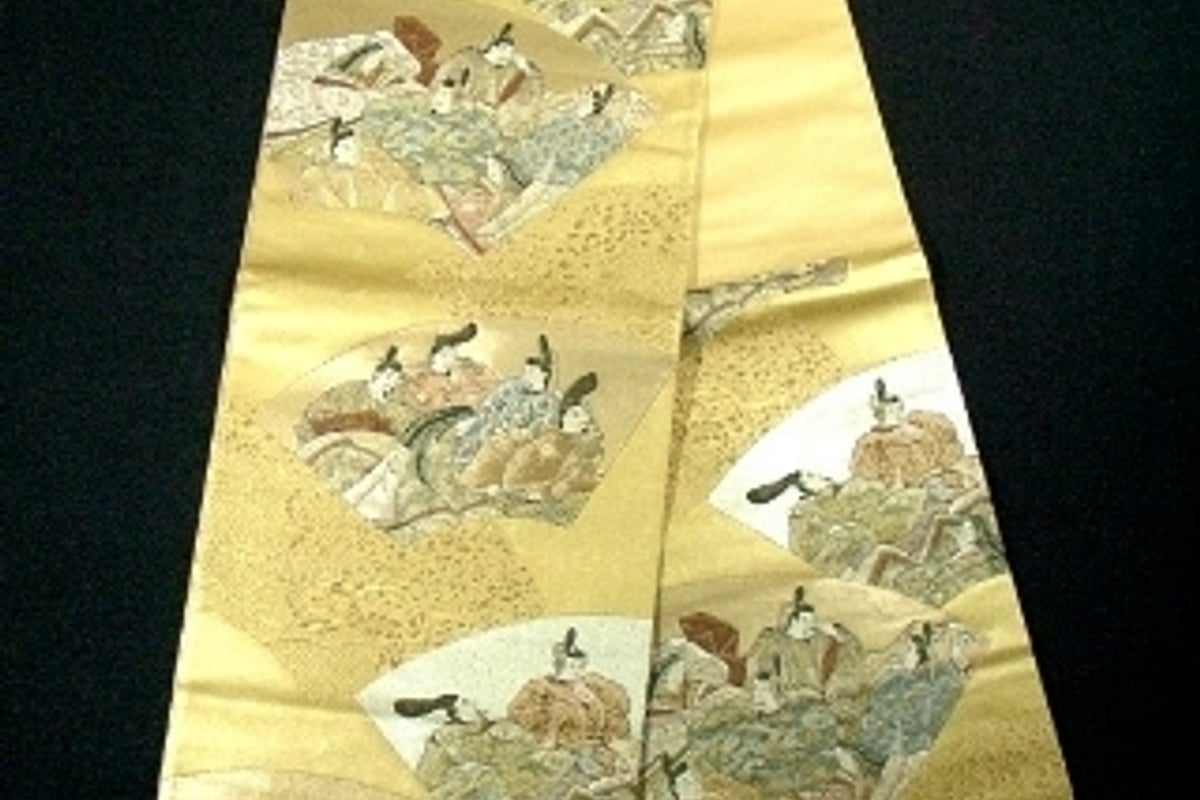
Nishijin-ori
Nishijin-ori
Nishijin-ori is the general term for high-grade, yarn-dyed silk textiles produced mainly in the Nishijin district of northern Kyoto City. It is a "mon-orimono" patterned weave in which the thread is dyed before being woven into designs, and 12 techniques designated as national Traditional Crafts have been passed down, including tsumekaki-hon-tsuzureori, tateshiki, nukishiki, donsu, shuchin, and shoha. Its origins are said to trace back to weaving techniques brought from the continent around the 5th to 6th centuries, and it developed in the Heian period under the court's Oribe no Tsukasa weaving bureau. It is said to take its name "Nishijin" ("western encampment") from the fact that weavers who had fled during the Onin War later resumed weaving on the site of the Western Army's former encampment. In the Edo period it established a reputation as a luxury textile favored by feudal lords and wealthy merchants, and it continues today to support Japanese kimono culture, mainly through obi sashes. A major characteristic is that many specialized artisans are involved through a division of labor, from design creation to dyeing and weaving, maintaining a system of producing many varieties in small quantities.
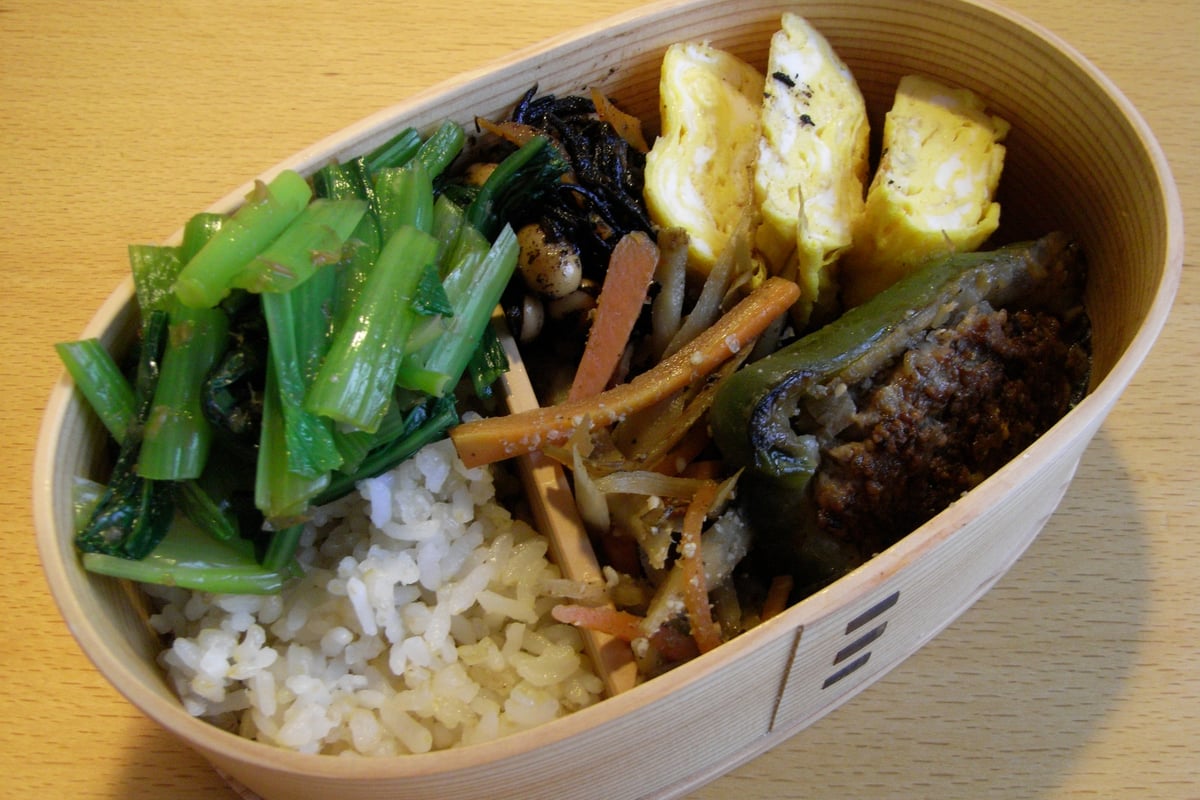
Odate Magewappa (Odate Bentwood Wooden Boxes)
Odate Magewappa
Odate Magewappa is a woodcraft made in Odate City, Akita Prefecture, using a technique in which thin sheets peeled from straight-grained (masame) natural Akita cedar are softened in hot water, bent into a cylindrical shape, and then stitched closed with the bark of the mountain cherry tree. The Odate Local History Museum holds a fragment of bentwood ware believed to date from the Heian period, suggesting that simple bentwood craftsmanship existed in the area from ancient times, but it was not until the latter half of the 17th century that it developed into a full-fledged industry. Its direct origin is said to be the encouragement of bentwood ware production as a side occupation by the Satake-Nishi family, lords of Odate Castle, who drew on the region's abundant Akita cedar resources to address the domain's financial difficulties and the hardship of its lower-ranking samurai. In addition to the cedar's beautiful grain, the wood's moderate humidity- and airflow-regulating properties are said to absorb excess moisture from packed rice and help keep it delicious, and Magewappa has recently drawn renewed attention as lunch boxes and rice containers. In October 1980 (Showa 55), it was designated a Traditional Craft Designated by the Minister of Economy, Trade and Industry.
Oitama Tsumugi
Oitama Tsumugi
Oitama Tsumugi is the collective name for tsumugi silk textiles woven in the Oitama region of southern Yamagata Prefecture (Yonezawa City, Nagai City, and Shirataka Town in Nishiokitama District). It traces its origins to Uesugi Yozan, lord of the Yonezawa domain, who encouraged the weaving industry as part of a policy to promote local industry and rebuild the domain's finances. From this beginning, three production areas -- Yonezawa Tsumugi, Nagai Tsumugi, and Shirataka Tsumugi -- each developed their own distinctive techniques. Yonezawa Tsumugi is known for the beauty of its dyeing with safflower (benibana) and other plant dyes; Nagai Tsumugi for the intricate patterns of its weft ikat and combined warp-and-weft ikat weaves; and Shirataka Tsumugi for the delicate small ikat patterns created by 'itajime-gasuri' (board-clamp ikat dyeing), a technique passed down only among weavers in Shirataka Town nationwide. In 1976 (Showa 51), the tsumugi of these three production areas were jointly designated a Traditional Craft Designated by the Minister of Economy, Trade and Industry under the unified name 'Oitama Tsumugi.' Its rustic, warm texture and the handcrafted beauty of its ikat patterns continue to attract many kimono enthusiasts.
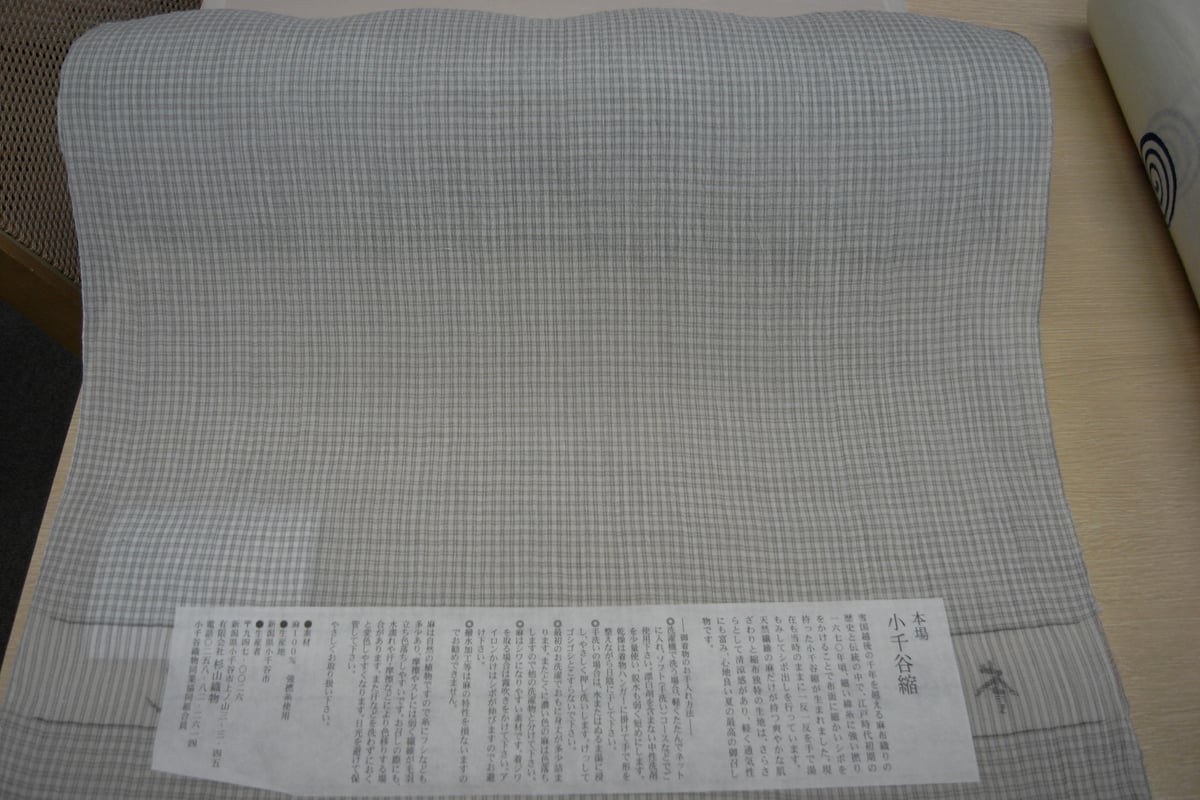
Ojiya Chijimi (ramie crepe)
Ojiya Chijimi
Ojiya Chijimi is a bast-fiber textile made from ramie (choma), woven mainly in Ojiya City, Niigata Prefecture. Choma is a plant also known as ramie, and its fibers are long, with firmness and body. The weft is given a hard twist before weaving, and the cloth is finished with yumomi (kneading in hot water), which brings out fine wrinkles on the surface of the fabric called shibo (fine crinkles). Thanks to this shibo, the cloth does not cling to the skin, and it has long been cherished as a summer kimono fabric with excellent breathability and moisture absorption. It is said to have begun in the early Edo period, when Hori Jiro Masatoshi (Akashi Jiro), who is said to have come from Akashi in Harima Province (Banshu), made improvements to the bast-fiber cloth of Echigo. On clear days from February to March, the woven bolts of cloth are spread out on snowfields for snow bleaching (yuki-zarashi), a seasonal sight in Ojiya. It was designated an Important Intangible Cultural Property in 1955 and a Traditional Craft Designated by the Minister of Economy, Trade and Industry in 1975. In 2009, it was inscribed on the UNESCO Intangible Cultural Heritage list together with Echigo Jofu.
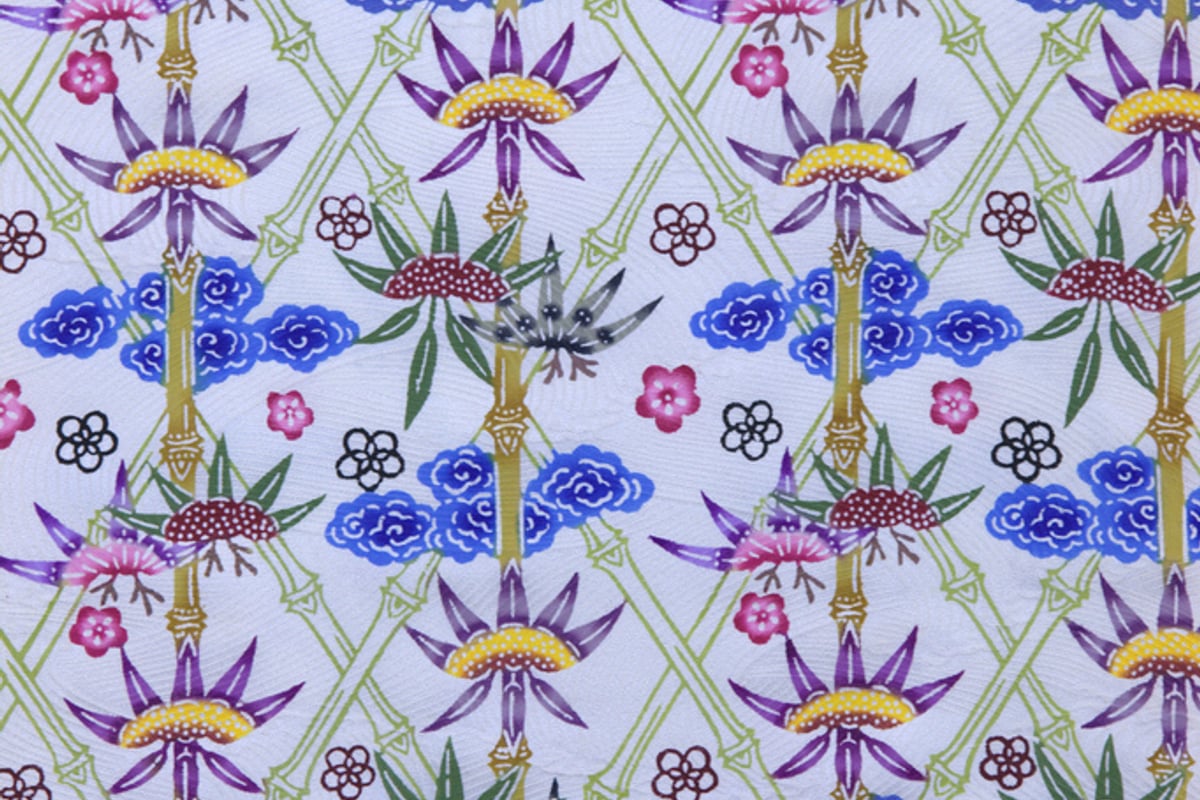
Ryukyu Bingata
Ryukyu Bingata
Ryukyu Bingata is a dyeing technique passed down mainly in Shuri, Naha City, Okinawa Prefecture, characterized by bold, vivid colors reminiscent of tropical sunlight - reds, yellows, blues, greens, and purples - and flowing patterns inspired by Okinawan nature such as deigo flowers, adan (pandanus), and fish. Its origins are said to date to around the 14th-15th centuries, when it is thought to have developed from dyeing techniques introduced through trade with China, India, and Java (sarasa/chintz dyeing), adapted in a uniquely Ryukyuan way. It developed under the protection of the Ryukyu royal government, worn as formal attire for royalty and the samurai class and as ritual costume, with the finest painters and stencil carvers of the day creating the underdrawings and stencils. It is broadly divided into the vividly multicolored 'Bingata' and the more subdued 'Aigata (e-gata)', dyed using only shades of indigo. Because processes such as stencil carving, paste-resist application, coloring, and shading are handcrafted, mostly divided among specialists within a single workshop, completing a single length of fabric takes considerable time and effort. It was designated a Traditional Craft by the Minister of Economy, Trade and Industry in 1984, and today it is used not only for kimono and obi but also for everyday items such as noren curtains and pouches.
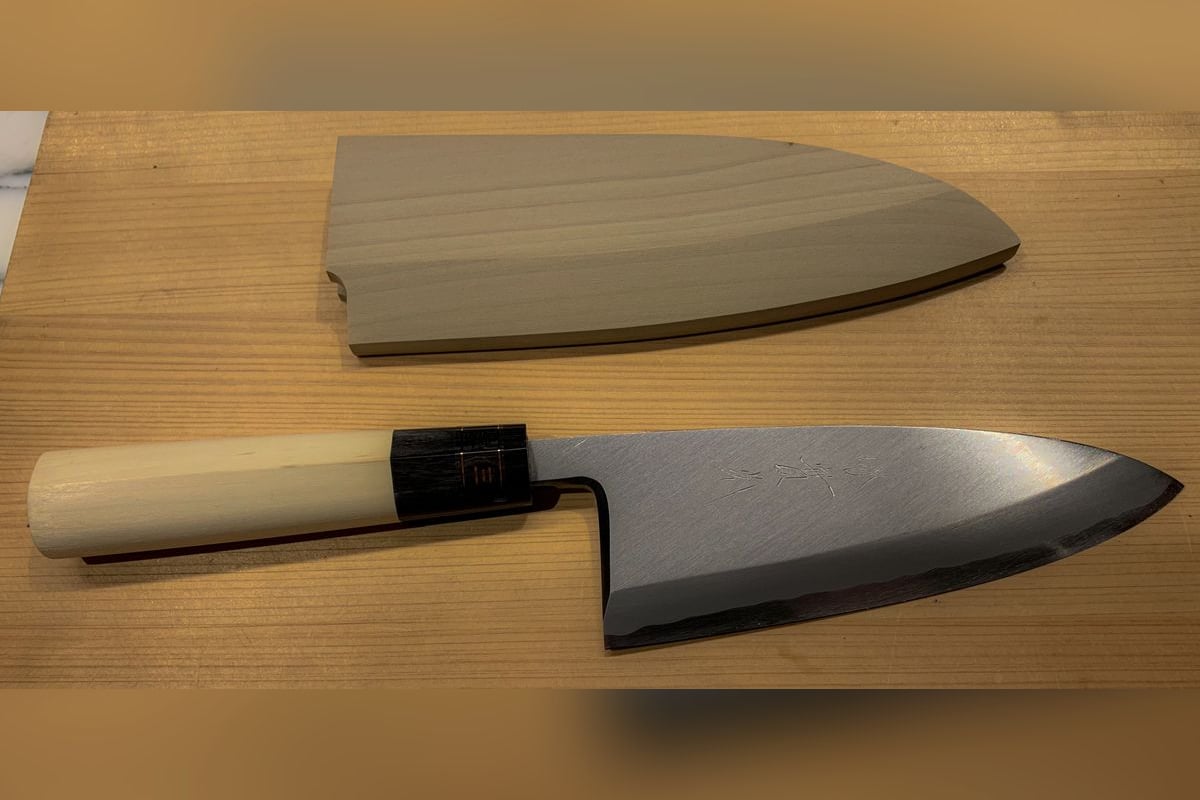
Sakai Uchihamono (Sakai Forged Knives)
Sakai Uchihamono (Sakai Forged Knives)
Sakai Uchihamono (堺打刃物) are kitchen knives, scissors and other bladed tools made mainly in Sakai City, Osaka Prefecture. After firearms and tobacco arrived from Portugal in the 16th century, Sakai began making 'tobacco knives' for shredding tobacco leaves. The Edo shogunate is said to have recognized their quality and allowed them to be sold stamped with the 'Sakai Kiwame' hallmark. This spread Sakai's name throughout the country, and production eventually developed into cooking knives such as the deba knife. Making a knife is divided among specialists: 'forging,' which shapes the blade; 'sharpening (hatsuke),' which grinds and hones the edge; and 'handle fitting (etsuke),' which attaches the handle. Knives made by forge-welding hard blade steel onto a soft iron base are said to neither break nor bend and to cut well. Sakai is also said to account for about 90 percent of the domestic market for Japanese kitchen knives (wa-bocho) used by professional chefs. In 1982 (Showa 57), Sakai Uchihamono was designated a Traditional Craft Designated by the Minister of Economy, Trade and Industry.
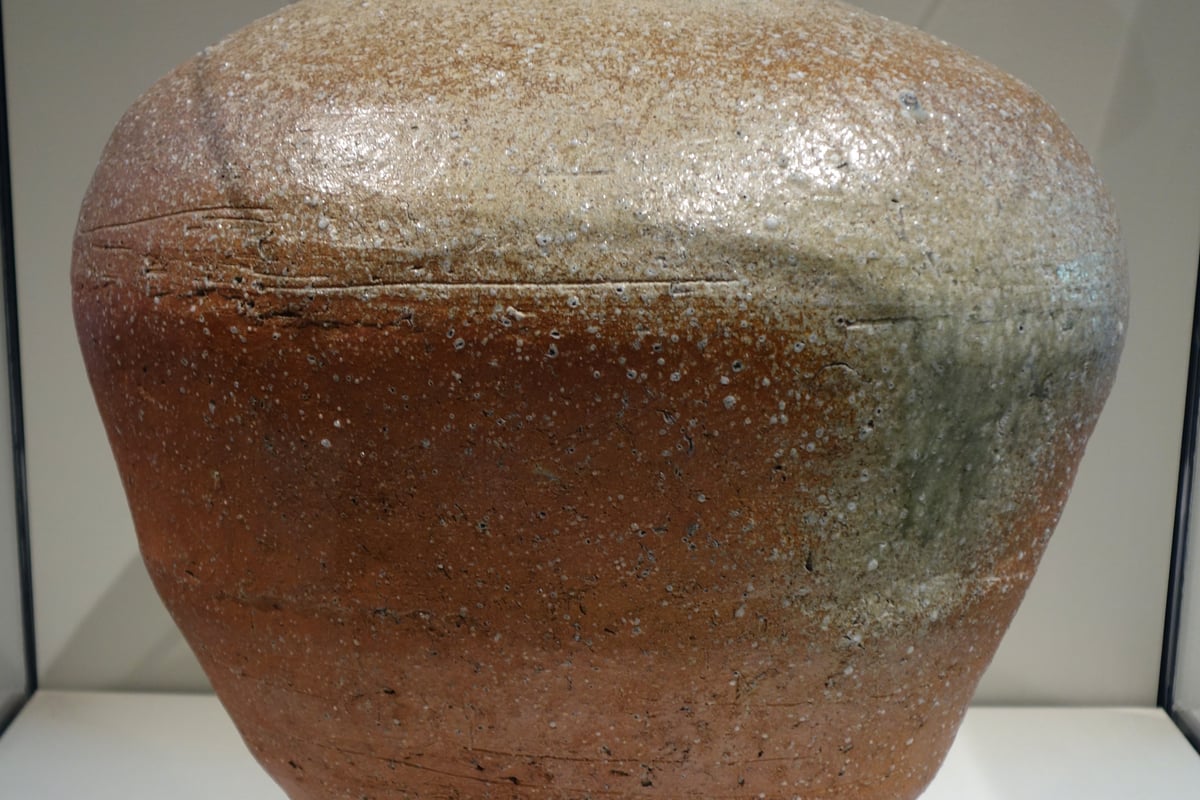
Shigaraki-yaki (Shigaraki Ware)
Shigaraki-yaki
Shigaraki-yaki is stoneware fired mainly around Shigaraki, Koka City in Shiga Prefecture, and is counted among Japan's Six Ancient Kilns alongside Seto, Tokoname, Tamba, Echizen, and Bizen. The kilns are said to have opened in the Kamakura period under the influence of neighboring Tokoname's techniques, and by the Momoyama period Shigaraki wares were prized as utensils for the tea ceremony. Today the ware is widely known for its endearing tanuki (raccoon dog) figurines, but the production area actually covers a much broader range of goods, from jars and pots to tea ceramics, tiles, planters, and contemporary art. The tanuki figurine became famous nationwide in 1951, when newspapers reported that tanuki statues holding Japanese flags had been lined up to welcome Emperor Showa during his visit to Shigaraki. The greatest appeal of Shigaraki-yaki lies in the rustic beauty created by earth and flame: the warm scarlet hue (hiiro) produced by the iron content in the clay, and the glassy vidro glaze (bidoro-yu) formed when wood-fired ash melts onto the surface.
Shinshu Tsumugi (Pongee Silk)
Shinshu Tsumugi
Shinshu Tsumugi is the collective name for the silk fabrics woven in many parts of Nagano Prefecture. It brings together the tsumugi (pongee silk) that developed in each area, such as Ueda Tsumugi, Matsumoto Tsumugi, Iida Tsumugi and Ina Tsumugi, as well as Ariake Tsumugi (Azumino Tsumugi) and Yamamayu Tsumugi, which use tensan (wild silkworm) thread. Since ancient times, sericulture flourished so much in Shinshu that it was called 'the land of silkworms.' Shinshu Tsumugi is said to have begun in the early Edo period, when each domain encouraged sericulture and farmers began, as a side job, to turn cocoons unsuitable for raw silk into silk floss, spin it and weave it. The thread is dyed with plant dyes before weaving, and the fabric is woven by hand, with the weft beaten in using a tenagehi (hand-thrown shuttle), to produce stripes, checks, kasuri (ikat) and solid-toned designs. The main products are kimono fabric, obi and haori, and in recent years Western clothing, bags and stoles are also made. In 1975 it became a Traditional Craft Designated by the Minister of Economy, Trade and Industry. At workshops in Ueda City and Komagane City, visitors can try hand weaving on a loom.
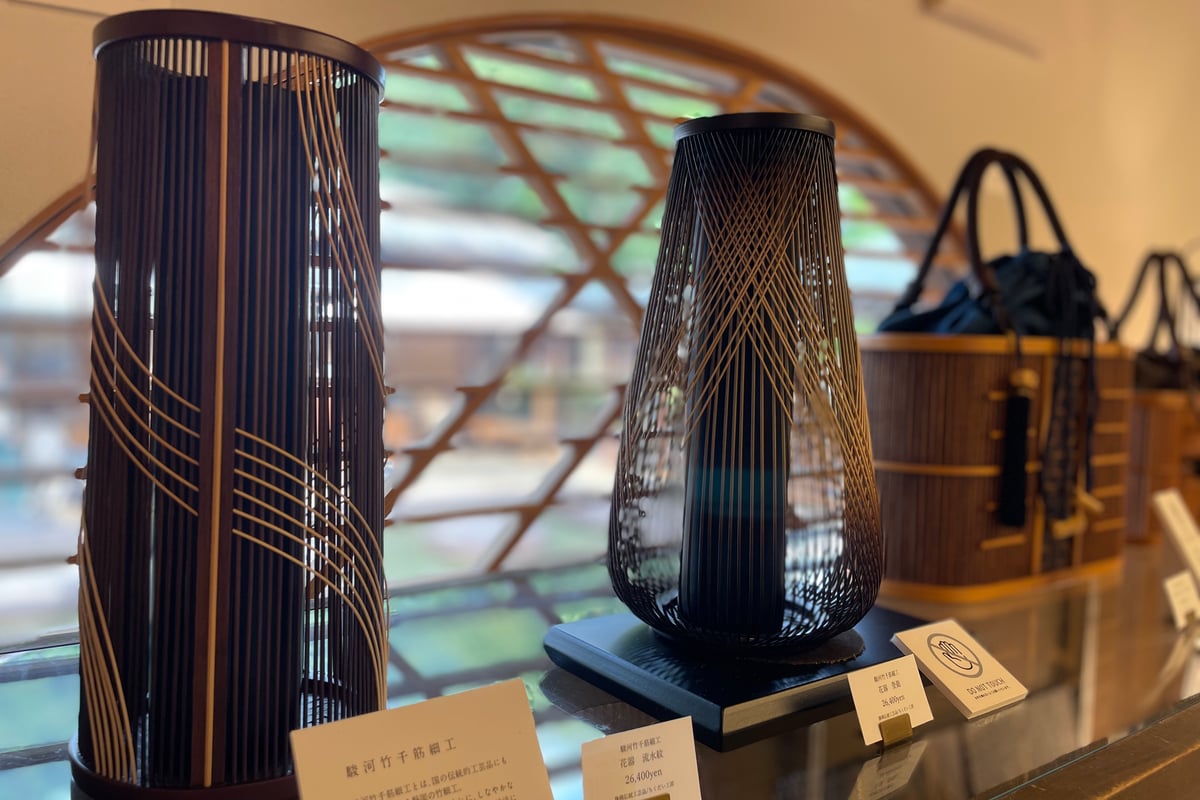
Suruga Bamboo Sensuji Ware
Suruga Take Sensuji Zaiku (Suruga Fine Bamboo Ware)
Suruga Bamboo Sensuji Ware (Suruga Take Sensuji Zaiku) is a bamboo craft made in Shizuoka City. Bamboo is split into thin pieces and finished into round bamboo strips (maru-higo), which are inserted one by one into holes drilled in bamboo rings to build up each piece. While most other production areas weave flat strips, this craft 'assembles' round strips, creating clean straight lines and graceful curves. In Shizuoka, traces of bamboo products have been found at the Yayoi-period Toro site, and bamboo work has long been rooted in daily life. In the Edo period it was called 'Suruga crafts' (駿河細工) and was popular with the daimyo and travelers who came and went along the Tokaido. In 1840 (Tenpo 11), Suganuma Ichiga, a samurai of the Okazaki Domain, passed on the technique of round bamboo strips, and this is said to have laid the foundation of today's delicate style. In 1976 it became a Traditional Craft Designated by the Minister of Economy, Trade and Industry. Besides flower vases, insect cages and confectionery containers, andon lanterns and wind chimes are also made.
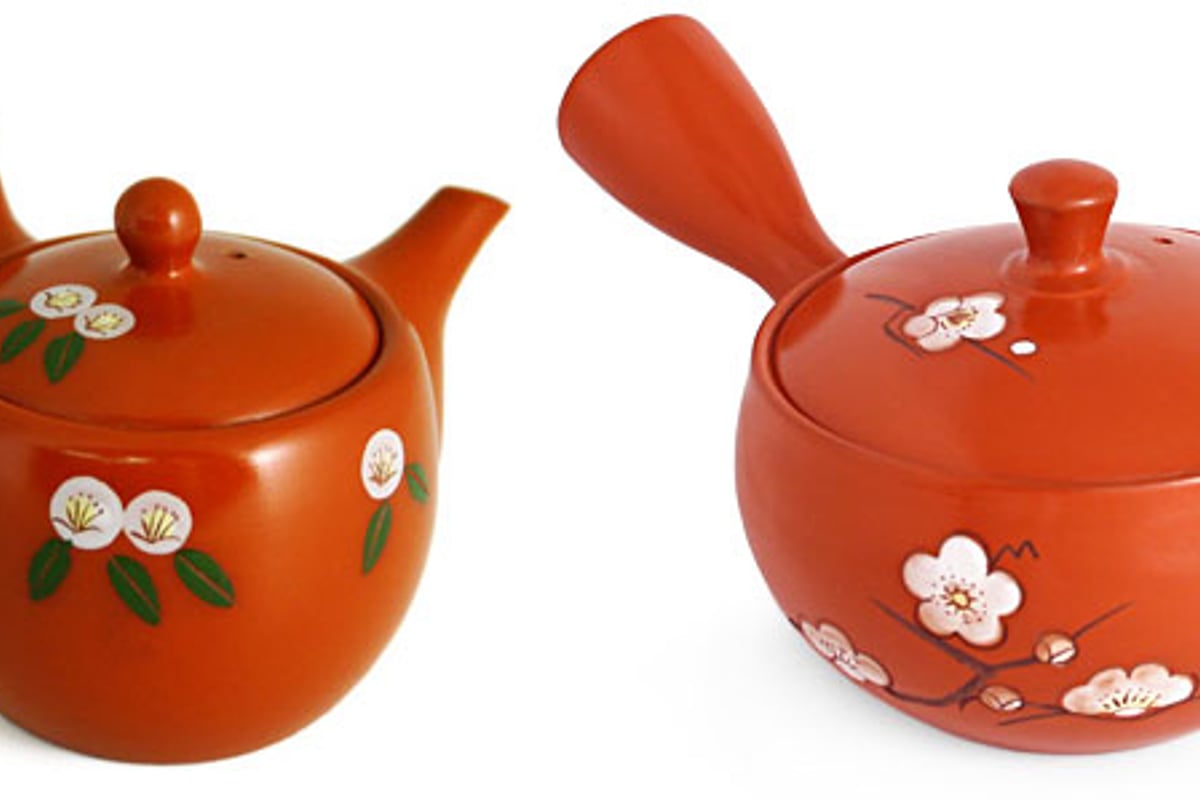
Tokoname-yaki
Tokoname-yaki
Tokoname-yaki is a stoneware tradition centered on Tokoname City on the Chita Peninsula in Aichi Prefecture, counted among 'Japan's Six Ancient Kilns' alongside Echizen-yaki, Shigaraki-yaki, Tamba Tachikui-yaki, Bizen-yaki, and Seto-yaki. Its origins trace back to around the 12th century, at the end of the Heian period, when climbing kilns dug into hillsides fired 'Old Tokoname' wares such as yamajawan bowls and sanshin-tsubo jars, and Tokoname grew into the largest production center among the Six Ancient Kilns. In 1835, during the late Edo period, the potter Koie Hokyu completed a noborigama climbing kiln, and in the 1850s the region's signature red-clay ware, shudei-yaki, was born. From the Meiji era onward, Tokoname developed into a major center for industrial ceramics such as clay pipes, sanitary ware, and tiles, and today it produces everything from shudei teapots made with iron-rich clay to tea bowls, flower vases, and beckoning-cat figurines. It was designated a national Traditional Craft in 1976.
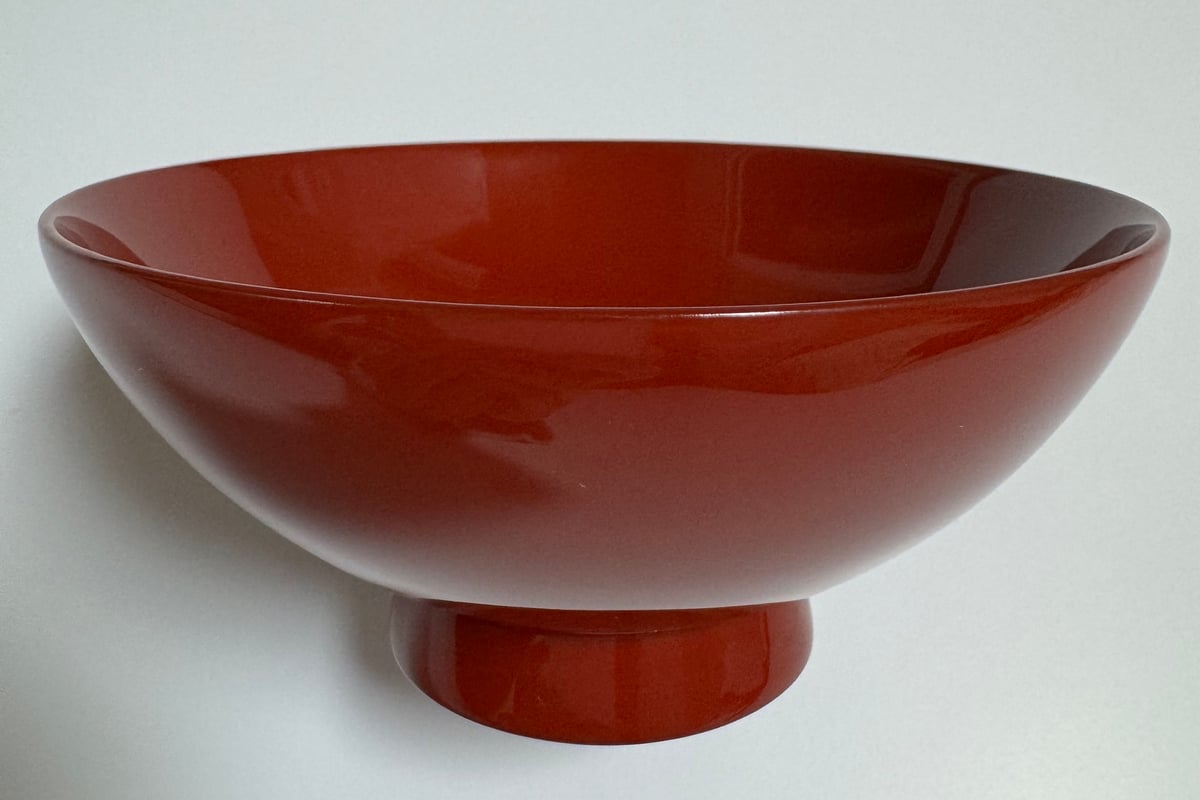
Wajima Lacquerware
Wajima-nuri
Wajima-nuri is lacquerware produced in Wajima City, Ishikawa Prefecture, representing Japan's finest lacquer craftsmanship, characterized by its sturdy undercoating and a wide range of decorative techniques. Although its origins remain uncertain, historical records confirm that lacquerers were already working in Wajima by 1476, and it is said that by 1582, in the Momoyama period, the region's distinctive undercoating material, 'jinoko,' was already in use. Through the 'nunokise' technique of reinforcing weak points in the wood base with hemp cloth and the 'hon-kataji' technique of building up the undercoat with jinoko — made from fired diatomaceous earth — mixed into lacquer, Wajima-nuri overcame the fragility that plagues ordinary lacquerware and developed into a remarkably sturdy craft. In the late Edo period, a door-to-door sales system called 'wanko' was established, expanding its market nationwide. The decorative technique of 'chinkin,' perfected in the 18th century, and 'maki-e,' introduced from Aizu in the early 19th century, also became synonymous with Wajima-nuri; it was designated a national Traditional Craft in 1975 and an Important Intangible Cultural Property in 1977. Made through more than 20 stages and over 100 individual steps in total, it is lacquerware that combines durability with splendor.
Chiba Koshogu
Chiba Koshogu
Chiba Koshogu is a general term for the blades and hand tools, such as sickles, hoes, kitchen knives, and Western-style scissors, that blacksmiths across Chiba Prefecture continue to make using traditional techniques. On November 30, 2017, it became the second craft in Chiba Prefecture, after Boshu Uchiwa, to be designated a Traditional Craft Product designated by the Minister of Economy, Trade and Industry (METI). The Boso Peninsula saw large-scale civil engineering and land reclamation projects throughout the Edo period, including the eastward diversion of the Tone River beginning in 1594 and the reclamation of Lake Inbanuma starting in 1724, and demand for hand tools such as sickles and hoes used in land clearing grew as a result, forming the basis for the craft's development in the region. Exchange of skills between swordsmiths and farm-tool smiths allowed excellent blade-edging techniques to take root locally. In the Meiji era, production of Western-style scissors began there ahead of the rest of the country, and the manufacture of barber and beauty scissors also flourished following the decree encouraging short hairstyles. Today, craftspeople, including women blacksmiths, continue to forge blades one by one entirely by hand at workshops across the prefecture, including in Kashiwa City, Tateyama City, Narita City, and Nagareyama City.
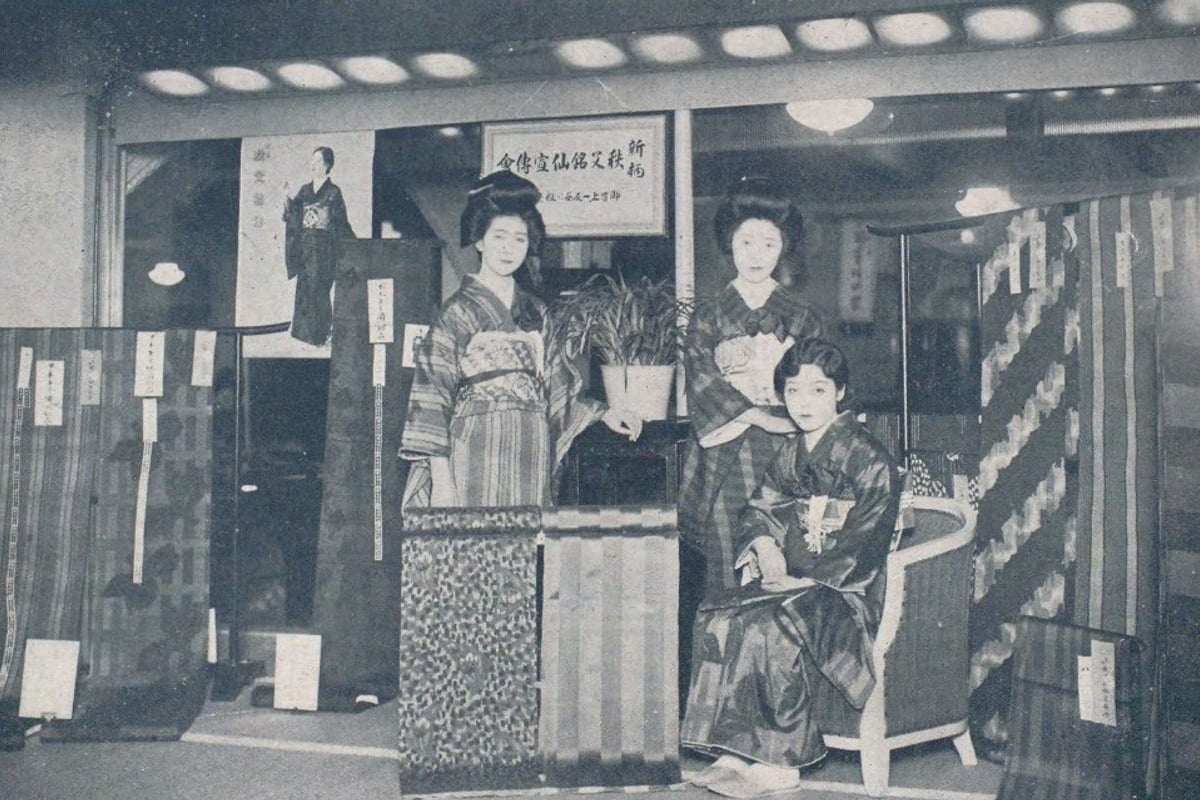
Chichibu Meisen
Chichibu Meisen
Chichibu Meisen is a plain-weave silk fabric produced mainly in Chichibu City, Saitama Prefecture, designated a Traditional Craft Product by the Minister of Economy, Trade and Industry (METI) in 2013. Tradition holds that it began in the reign of Emperor Sujin, when Chichibuhikonomikoto taught the local people the arts of sericulture and weaving. It was originally a sturdy work garment called 'futoori,' made from cocoons that did not meet standard grades, and was so durable it earned the nickname 'Oni Chichibu' ('Demon Chichibu'). The turning point came in 1908, when Sakamoto Sotaro devised the distinctive 'hogushi-nassen' technique: the warp threads are loosely pre-woven into a sheet, stencil-dyed, and then woven with the weft, so that the pattern of the warp and the color of the weft overlap to create patterns with a sense of depth. Because the dye penetrates without a clear front and back, the fabric can be used on either side — a feature that helped it become a nationally popular, fashionable, modern garment during the Taisho and Showa eras. Today, weaving houses in Chichibu City continue to pass on this technique.
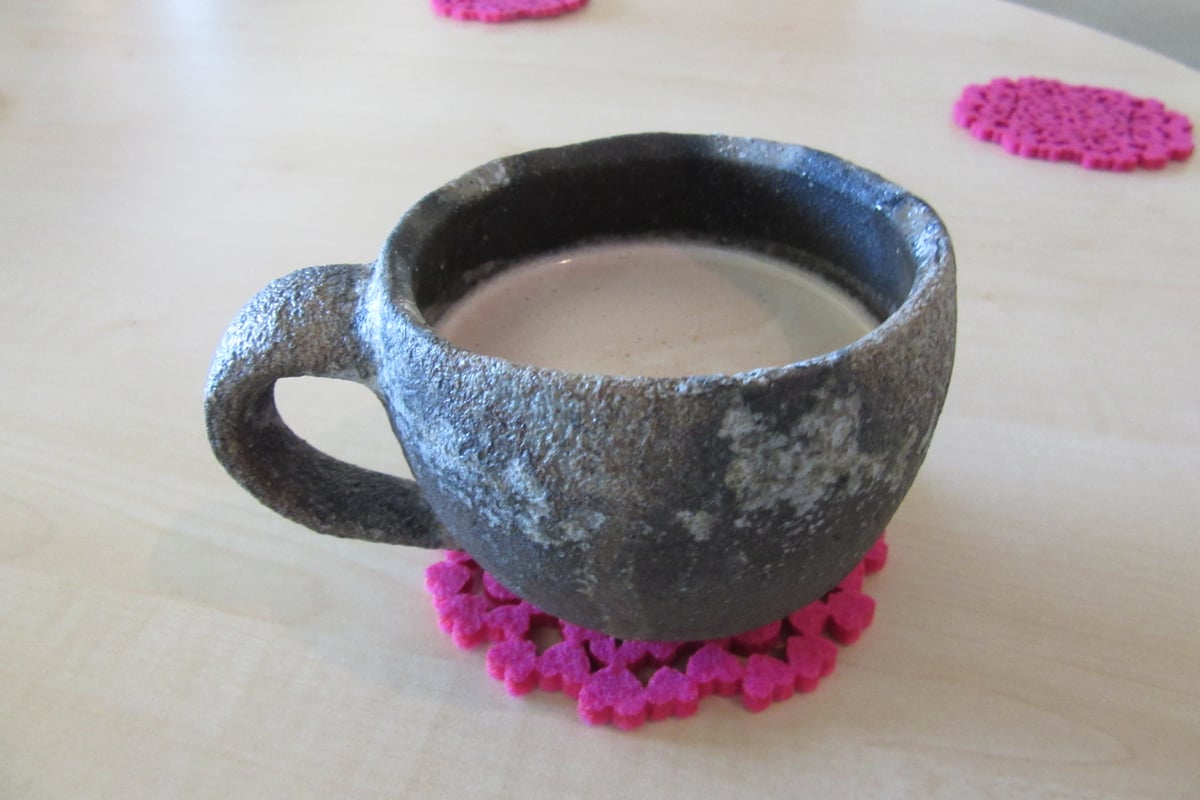
Echizen-yaki (Echizen Ware)
Echizen-yaki
Echizen-yaki is pottery made mainly in Echizen Town, Nyu District, Fukui Prefecture. It is counted among 'Japan's Six Ancient Kilns,' together with Seto, Tokoname, Shigaraki, Tanba and Bizen. The area began as a pottery center about 850 years ago, at the end of the Heian period, when it adopted techniques from the Tokai region, such as those of the Tokoname kilns, and started producing yakishime (high-fired unglazed) stoneware. Because the pieces are fired at high temperatures without glaze, they become hard and durable. A yellowish-green natural glaze, formed when wood ash melts inside the kiln, adds a rustic beauty. By the late Muromachi period, with jars, large storage vessels and mortars as its main products, it had grown into the largest pottery-producing area on the Sea of Japan side. It became a Traditional Craft Designated by the Minister of Economy, Trade and Industry in 1986, and in 2017 it was also recognized as Japan Heritage as one of the Six Ancient Kilns. At Echizen Ceramic Village (Echizen Togei-mura), visitors can choose pieces from local kilns and try making pottery.
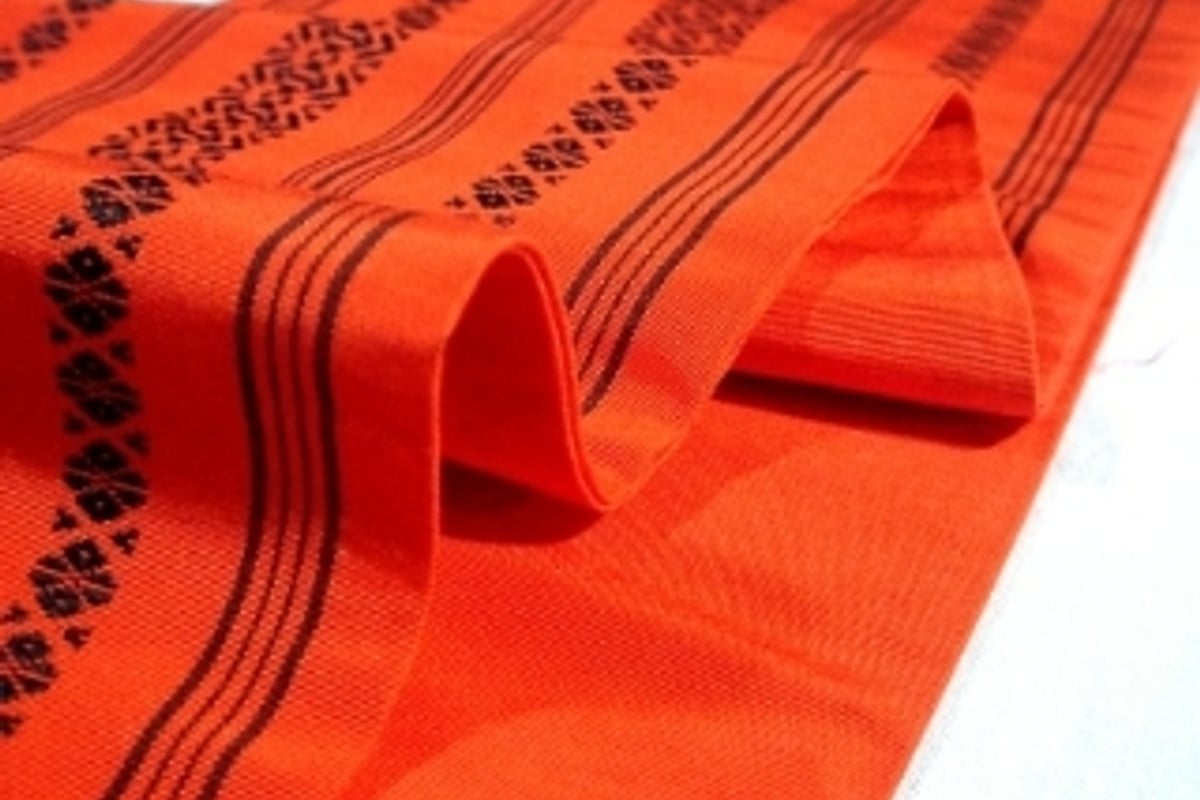
Hakata-ori
Hakata Ori
Hakata-ori is a silk textile woven in the Hakata district of Fukuoka City and is a Traditional Craft Designated by the Minister of Economy, Trade and Industry. Its origins are said to date back to 1241, when the Hakata merchant Mitta Yazaemon traveled to Song-dynasty China together with the Zen monk Enni (Shoichi Kokushi) and brought back weaving techniques. In 1600, at the start of the Edo period, Kuroda Nagamasa, who ruled Chikuzen, chose Hakata-ori as a tribute to the shogunate, beginning the annual custom of presenting obi fabric—giving rise to the name 'Kenjo Hakata-ori' ('tribute Hakata-ori'). Its representative design, the kenjo pattern, combines a motif based on the dokko and hanazara (Buddhist ritual implements) with 'oyako-jima' stripes symbolizing a parent protecting a child and 'koko-jima' stripes symbolizing a child's devotion to a parent. A distinctive weaving method—densely arranging warp threads and beating the weft in firmly—produces fabric with thickness and firmness, and the resulting obi have long been prized for staying tightly tied once fastened. Designated a national Traditional Craft in 1976, Hakata-ori has produced two Living National Treasures to date.
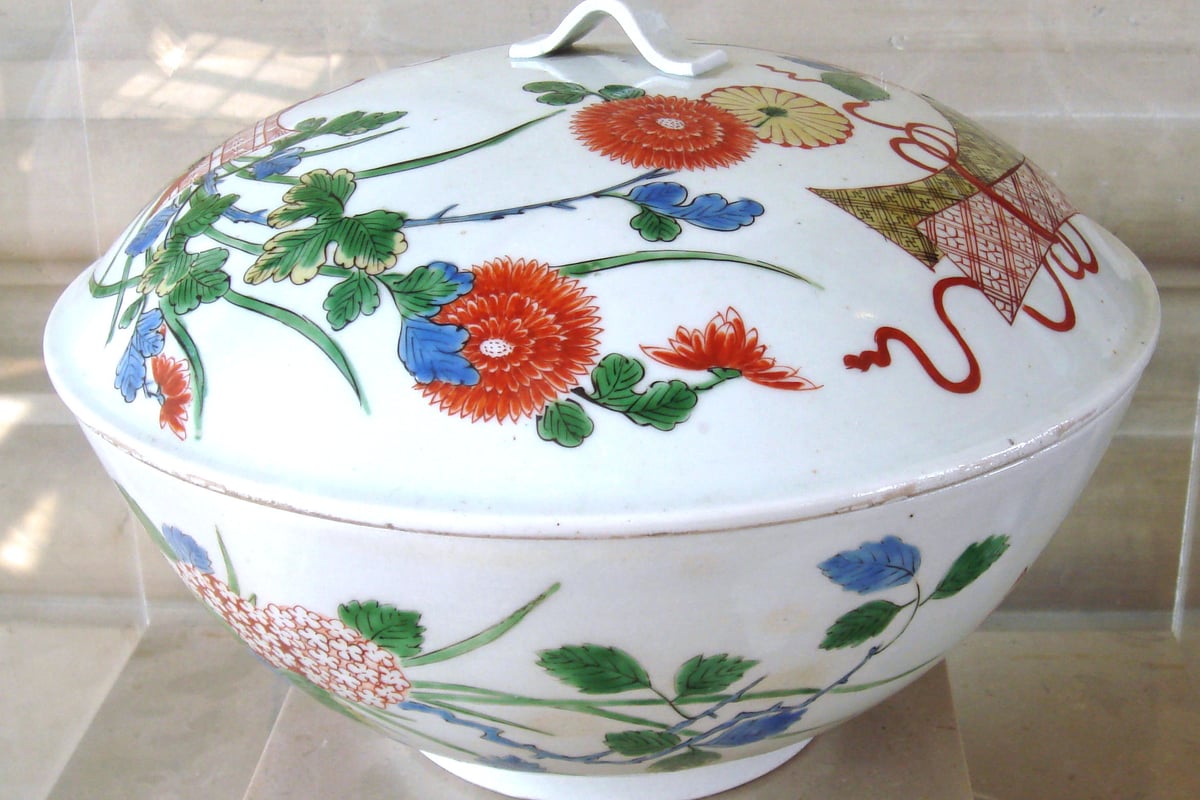
Imari ware
Imari-yaki
Imari ware takes its name from Imari Port, from which porcelain fired in the Arita area was shipped to markets across Japan and overseas. Old Arita ware exported abroad during the Edo period came to be known as 'Old Imari,' while today the name Imari ware more often refers specifically to porcelain fired in Ōkawachiyama, Imari City. In 1675, the Nabeshima clan of Saga Domain relocated its domain kiln from Arita to Ōkawachiyama, which developed as a 'village of secret kilns' producing tribute and gift wares for the shogunate and feudal lords. Set in a mountain valley, the area had checkpoints to prevent technical secrets from leaking out, and potters are said to have spent their entire lives there. General sales began after the Meiji era, and the ware was even exhibited at the 1873 Vienna World's Fair. Known for its meticulous blue-and-white designs and elegant overglaze enamel work, around 30 kilns in the area continue to preserve the tradition today.
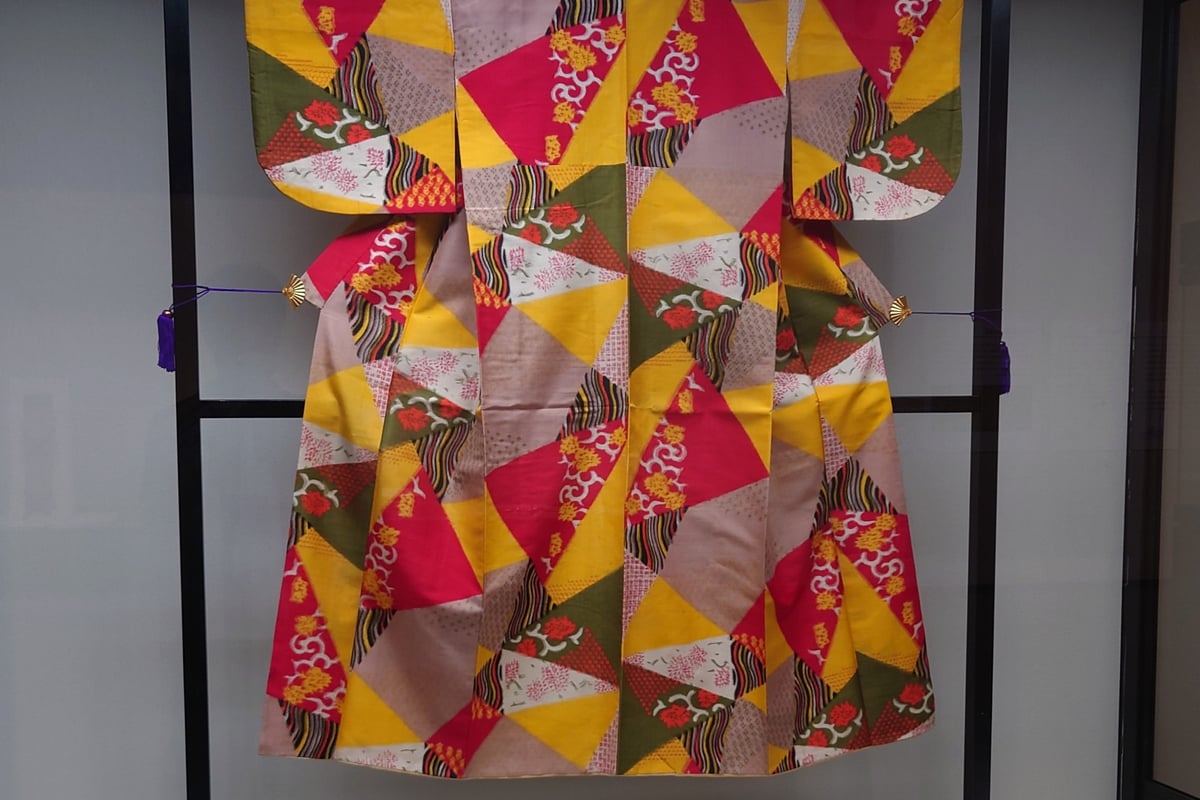
Isezaki-gasuri (Isezaki kasuri)
Isezaki-gasuri
Isezaki-gasuri is a silk textile produced in and around Isesaki, Gunma Prefecture, and a METI-designated Traditional Craft (Japan). The history of the production area is said to go back as far as the Kofun period, based on excavated hemp textiles, and commercial production began in earnest in the late Edo period. In 1880, the Isesaki Futori Company was established, improving both quality and output, and from the Taisho era into the early Showa era the area enjoyed a golden age in which production of the patterned meisen textile known as 'Isesaki meisen' accounted for roughly half of the nation's total. The region excels in ikat (kasuri) techniques using thread dyed in sections by hand-binding or itajime (board-clamp) methods, and in particular Combined kasuri, which uses ikat-dyed thread in both the warp and weft to weave intricate patterns, is considered a technique that developed only in Isesaki. It was designated a Traditional Craft in 1975, and the techniques continue to be passed down today, centered on the Isesaki Textile Cooperative and the Isesaki Textile Industry Association.
Joshu Takasaki Chusen Tenugui
Joshu Takasaki Chusen Tenugui
Joshu Takasaki Chusen Tenugui are cotton hand towels dyed using chusen, a hand-poured dyeing technique passed down in Takasaki, Gunma Prefecture. Chusen was developed in Japan during the Meiji era (1868-1912) to mass-produce tenugui: a stencil is used to apply a resist paste to the fabric, several dozen layers of cloth are stacked together, and dye is then poured over the stack so that both the front and back of every layer are dyed at once. This process gives the cloth a distinctive softness with natural bleeding and gradation not found in single-sided printed tenugui, and produces a fabric whose pattern is identical on both sides. In Takasaki, dye workshops such as Nakamura Some Kojo, founded in 1897, have carried this technique forward, and the area remains the only production site in Gunma Prefecture that still preserves the chusen technique today, designated a Gunma Prefecture Furusato Traditional Craft.
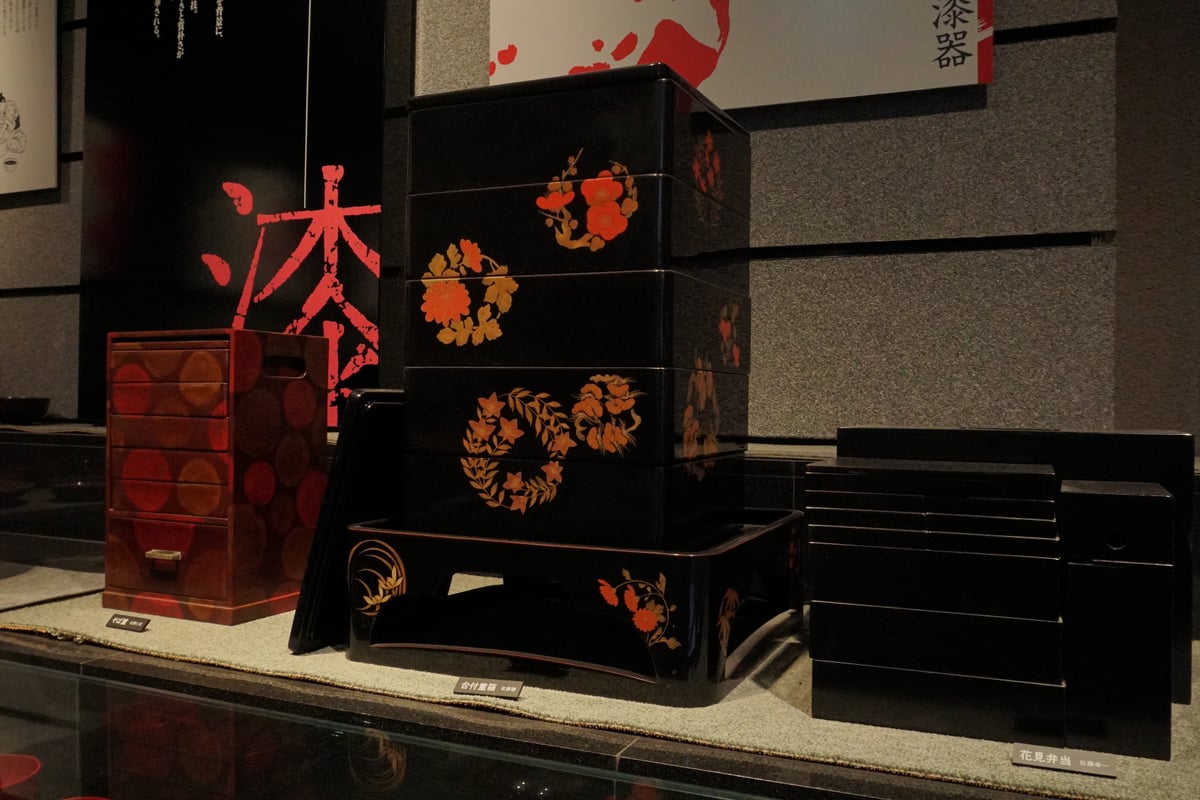
Kawatsura Lacquerware
Kawatsura Shikki
Kawatsura Shikki is lacquerware made in the area around Kawatsura, Yuzawa City, Akita Prefecture (formerly Inakawa Town), with a history said to span roughly 800 years. According to tradition, it began in 1193, when Lord Doku—younger brother of Onodera Shigemichi, a retainer of Minamoto no Yoritomo and lord of Inaniwa Castle—built a residence at Koshio-nojiri and had his retainers lacquer sword scabbards, bows, armor, and other weapons and equipment; the craft later developed into the making of everyday lacquered bowls. From the Genna era (around 1615) through the Genroku era in the early Edo period, roughly 26 households in and around Kawatsura village came to work as bowl makers, and in the latter half of the Edo period they obtained domain permission to expand their sales routes, producing a wide range of lacquerware including bowls, trays, and tiered boxes and adding decorative techniques such as chinkin and maki-e that helped establish the craft as an industry. Its defining features are the hananuri technique, in which the final coat of lacquer is left as brushed—without polishing or grinding afterward—and sturdy foundation work, making it a beloved everyday lacquerware valued for its practicality. It is a nationally designated Traditional Craft.
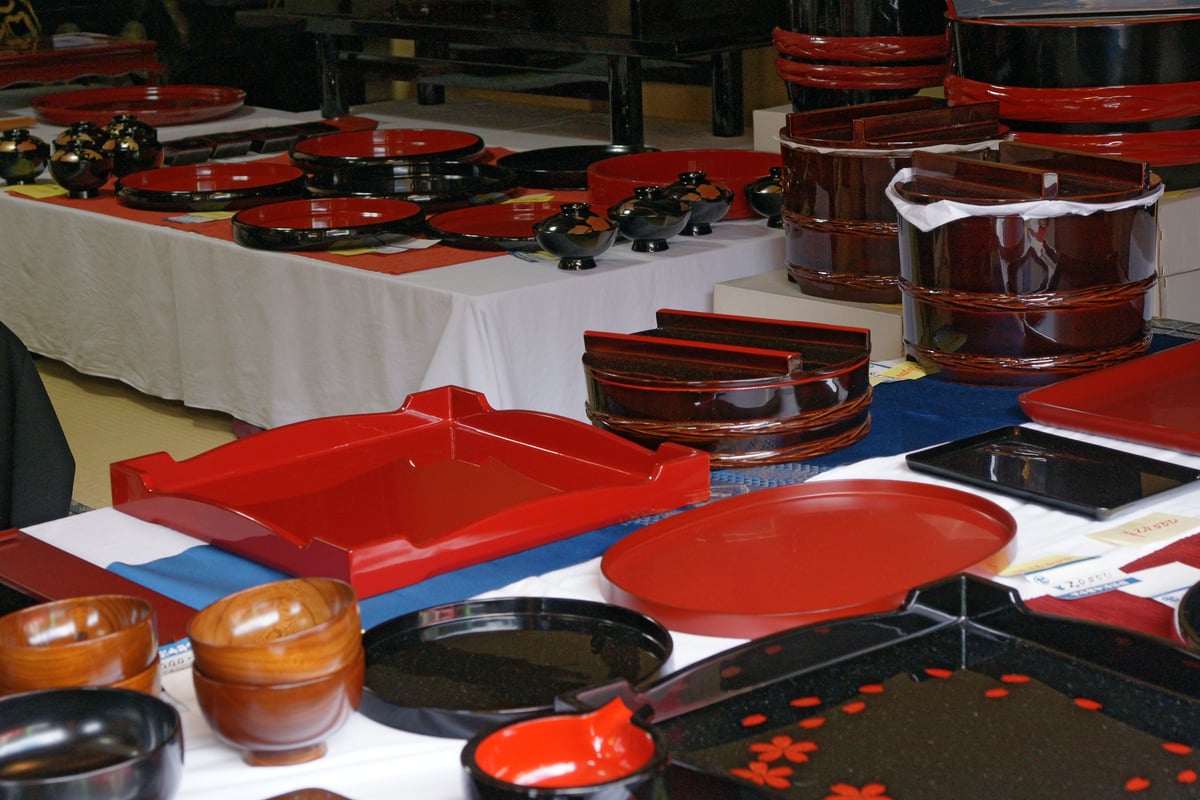
Kiso Lacquerware
Kiso Shikki (Kiso Lacquerware)
Kiso Lacquerware is lacquerware that has been made mainly in Kiso-Hirasawa and Narai in Shiojiri City, Nagano Prefecture. It is said to have begun in the early 17th century, when people applied urushi lacquer to plain woodwork made from the rich forest resources of the area, such as Kiso hinoki cypress, and sold it as souvenirs to travelers on the Nakasendo highway. Around the beginning of the Meiji period, a clay high in iron called sabitsuchi was found in Narai. Thanks to a groundwork technique in which this sabitsuchi is mixed into the lacquer, the area became renowned for sturdy lacquerware. The representative techniques are 'Kiso Shunkei,' which brings out the wood grain; 'Kiso Tsuishu,' which creates mottled patterns; and 'Nuriwake Roiro-nuri,' in which geometric patterns are painted with colored lacquers. In 1975 it became a Traditional Craft Designated by the Minister of Economy, Trade and Industry. The townscape of Kiso-Hirasawa has been selected as a national Important Preservation District for Groups of Traditional Buildings as a 'lacquer craftsmen's town.'
Koshu Hand-Carved Seals
Koshu Hand-carved Seals
Koshu Hand-Carved Seals are hand-carved hanko (personal seals) made in Yamanashi Prefecture. Every step, from designing the characters on the seal face through jiwari (character spacing), jiire (writing the characters), rough carving and finishing, is done by hand with traditional tools. The craft began with the discovery of large, high-quality crystal veins in the Mitake mountains. Craftsmen who worked crystal and tenkoku (seal engraving) artists emerged, and their skills were passed on to seal making. The main production area, the Rokugo district of Ichikawamisato Town, is called 'Japan's No. 1 Hanko Village,' and businesses related to seals, from carving and wholesale to the manufacture of seal cases, are concentrated there. Besides crystal, seal materials include boxwood and water buffalo horn. Hand-carved crystal seals are hardly made anywhere outside Yamanashi Prefecture. They were designated a Yamanashi Prefecture Designated Local Traditional Craft in 1994 and a Traditional Craft Designated by the Minister of Economy, Trade and Industry in 2000. At the Seal Museum in Rokugo, visitors can learn about the history of seals and try tenkoku.
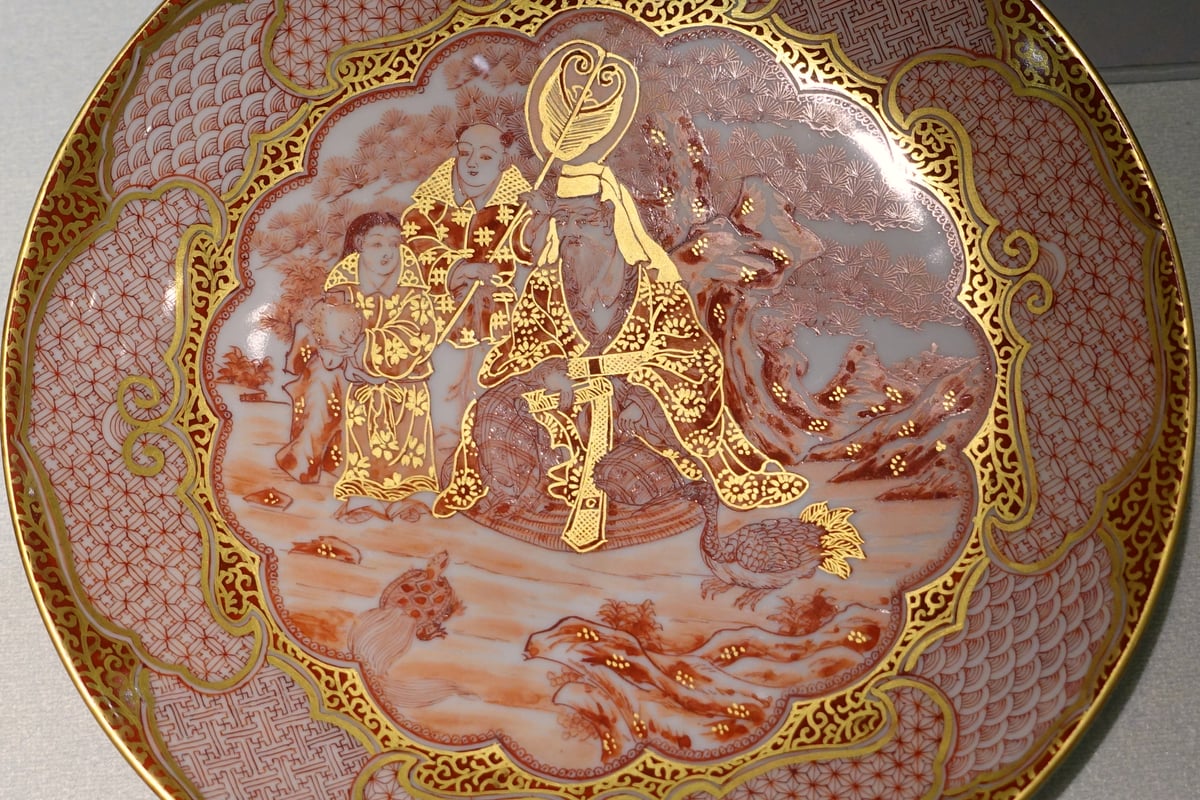
Kutani Ware
Kutani-yaki
Kutani ware is polychrome porcelain fired in the Kaga region of southern Ishikawa Prefecture, distinguished above all by its vivid overglaze painting in the 'Kutani Five Colors' — red, yellow, green, purple, and deep blue — known as Kutani gosai. Its origins trace back to the Meireki era (1655–1657), when Maeda Toshiharu, first lord of the Daishoji domain, a branch of the Kaga domain, learned that porcelain stone had been discovered in Kutani village within his territory and ordered the metalworker Goto Saijiro to fire polychrome porcelain there. Wares made during this period later became known as 'Ko-Kutani' (Old Kutani) and were highly acclaimed for their bold compositions and powerfully filled-in painting. However, the kiln at Kutani village closed after about 50 years, and production ceased for roughly a century. In the late Edo period, kilns aiming to revive Ko-Kutani sprang up one after another across the Kaga and Daishoji areas, a movement known as 'Saiko-Kutani' (Revived Kutani). Kilns such as Yoshidaya, Miyamotoya, and Eiraku each developed their own distinctive style while building on this foundation, establishing the basis for Kutani ware as it continues today. It is now produced mainly in Kanazawa, Komatsu, Kaga, and Nomi in southern Ishikawa Prefecture, and was designated a national Traditional Craft in 1975.
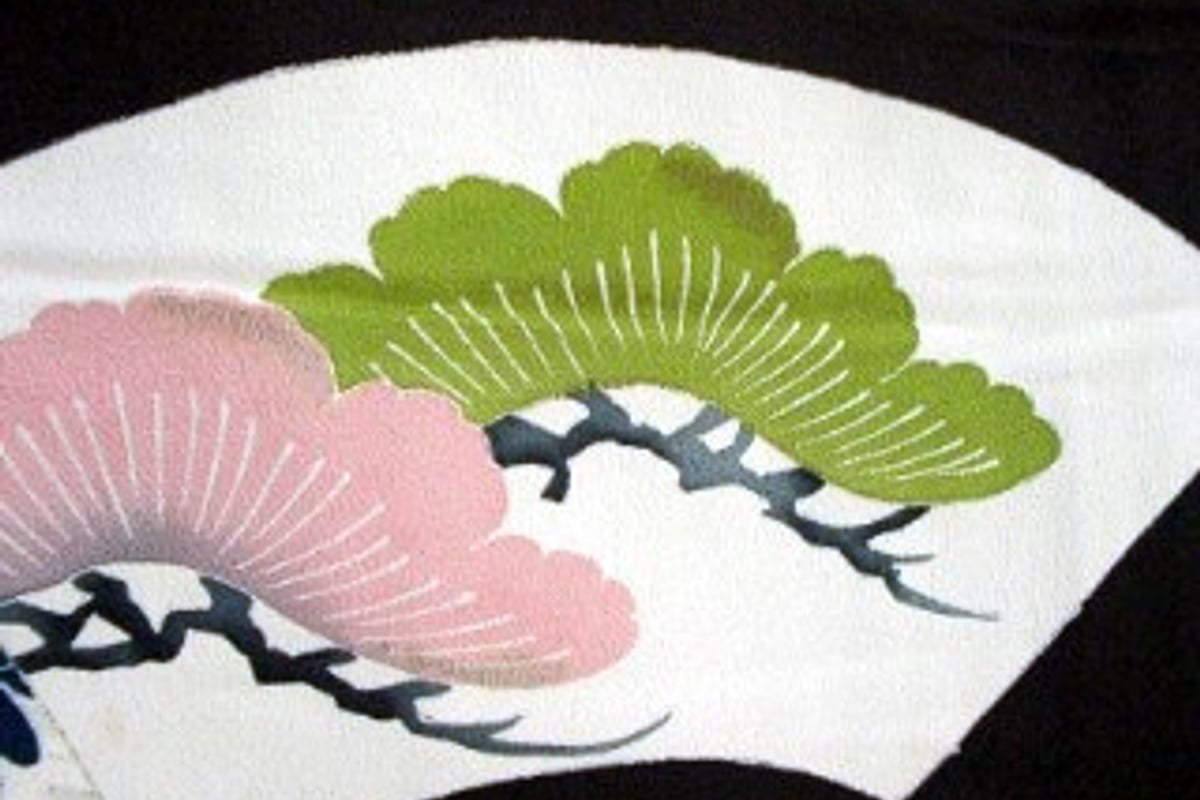
Kyo-yuzen
Kyo-yuzen
Kyo-yuzen is a patterned dyeing technique born in Kyoto during the Genroku era in the early Edo period, characterized by depicting gorgeous, elegant designs on fabric as if painted. It is said to have begun when Miyazaki Yuzensai, a popular fan painter, applied his own painting style to dyeing designs, and it spread as yuzen dyeing — a technique for dyeing pictorial patterns while resist-dyeing with paste — during an era when the shogunate's sumptuary laws restricted showy decoration such as tie-dyeing and embroidery. A single kimono is completed through many processes, including sketching, itome-nori (paste-resist outlining), color application, hikizome (immersion background dyeing), steaming, and washing (mizumoto), with each process handled by a specialized artisan under a division-of-labor system. In the Meiji era, kata-yuzen (stencil yuzen), which uses chemical dyes and paper stencils, was devised, making mass production possible. It received national Traditional Craft designation in 1976, and among Japan's three major yuzen traditions it is passed down today as the oldest dyeing technique.
Mino Washi
Mino Washi
Mino Washi is a handmade Japanese paper that has been crafted in Mino City, Gifu Prefecture, for over 1,300 years. It is known for having been used in a household registration document from 702 (the 2nd year of Taiho) preserved at the Shosoin Repository in Nara, making it one of Japan's three most celebrated types of washi. Made from kozo, mitsumata, and gampi fibers, its defining characteristic is combining seemingly contradictory qualities: thinness and even texture with remarkable strength. During the Edo period it received official protection from the shogunate as a premium paper for shoji screens. Among its varieties, 'Hon-Minoshi,' which preserves the traditional production method, was registered as UNESCO Intangible Cultural Heritage in 2014. Designated a national Traditional Craft in 1985, papermaking artisans in and around Mino City continue to pass down the technique today.
Naruko Shikki
Naruko Shikki
Naruko Shikki is lacquerware made in the Naruko Onsen hot spring area of Osaki City, Miyagi Prefecture, said to have been founded around the Kan'ei era (1624-1644) in the early Edo period. Its foundation was laid when Date Toshichika, the lord of the Iwadeyama domain, sent lacquer and maki-e craftsmen to Kyoto to study, and it developed as a souvenir for visitors taking the hot spring cure. It was designated a Traditional Craft by the Governor of Miyagi Prefecture on December 1, 1982, and a Traditional Craft designated by the Minister of Economy, Trade and Industry (METI) on May 20, 1991. Its greatest features are two lacquering techniques: Kijiro-nuri (木地呂塗), which brings out the beautiful wood grain beneath a translucent amber-colored lacquer, and Ryumon-nuri (竜文塗), which uses an ink-marbling technique to create fantastical patterns. Wood such as zelkova and Japanese horse chestnut is turned on a lathe, and the piece is finished through a painstaking process from undercoating to final lacquering, so the grain and coloring grow richer with use. Many pieces are everyday items such as soup bowls, tiered boxes, and trays, making Naruko Shikki a practical lacquerware rooted in the daily life of a hot spring town also known as the home of Naruko kokeshi.
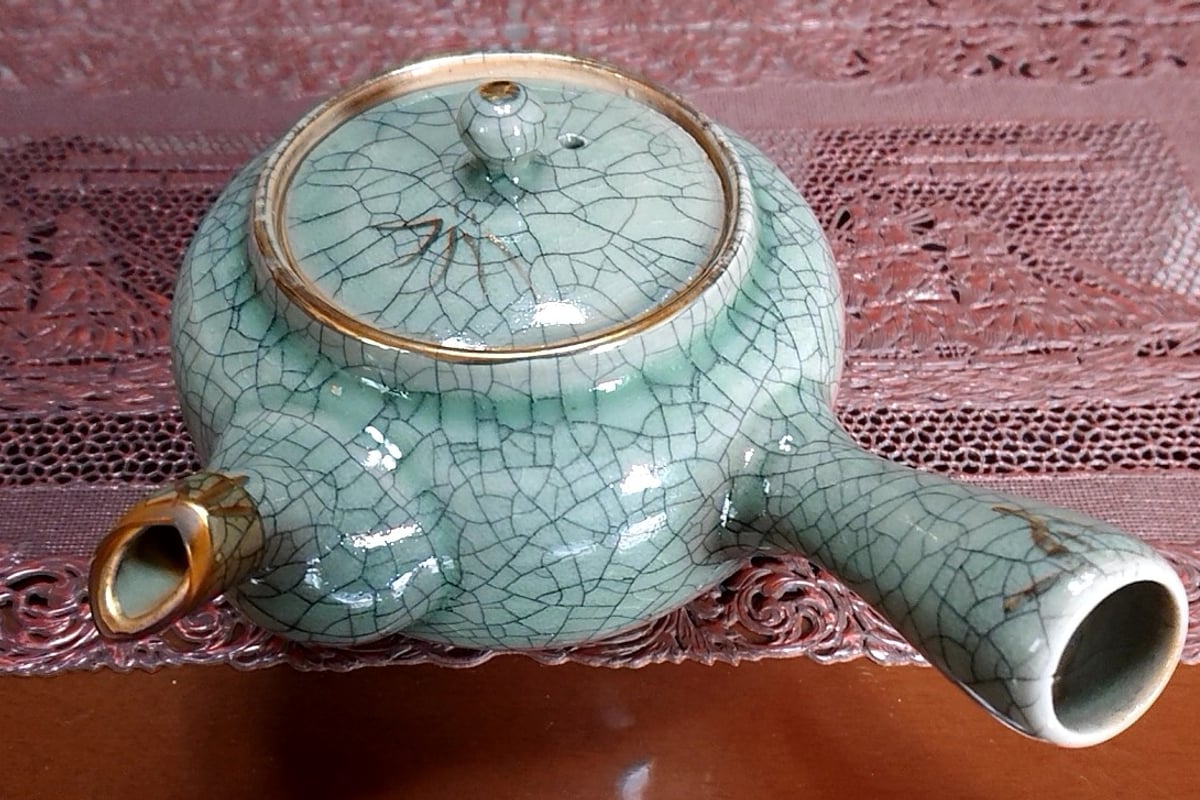
Obori-Soma Ware
Obori-Soma-yaki
Obori-Soma ware is pottery once fired in the Obori district of Namie Town, Fukushima Prefecture, and is a Nationally Designated Traditional Craft. It is said to have begun in the Genroku era (1688-1704), when Hangai Kyūkan, a retainer of the Soma-Nakamura domain, discovered clay in Obori and had his servant Sama fire everyday wares from it; wheel-forming has been maintained consistently ever since. The ware is known for three features: 'aohibi,' a fine network of crackle running across the entire surface; 'hashiri-goma,' an auspicious design depicting the Soma domain's sacred horse in the brush style of the Kanō school; and 'nijū-yaki,' a double-walled construction that keeps hot liquid from cooling quickly while remaining comfortable to hold. However, following the 2011 Great East Japan Earthquake and the accident at Tokyo Electric Power Company's Fukushima Daiichi Nuclear Power Plant, the entire town of Namie, including the Obori district, became an evacuation zone, and all of the more than 20 kilns that had operated there were forced to evacuate outside the town. Today the kilns have relocated across the prefecture to places such as Nihonmatsu City, Fukushima City, and Koriyama City, and some have also revived operations at Michi-no-Eki Namie within Namie Town, carrying on the traditional craft.
Omi-jofu (Omi Ramie/Hemp Textile)
Omi-jofu
Omi-jofu is a hemp textile woven mainly in the Koto region on the eastern shore of Lake Biwa, in what are now Aisho Town and Higashiomi City. It was designated a Traditional Craft by the Minister of Economy, Trade and Industry in 1977. The production area is said to date back to hemp weaving traditions from the Muromachi period, and in the Edo period it was distributed nationwide by Omi merchants as a luxury hemp fabric called 'Takamiya cloth,' ranked alongside Nara-zarashi and Echigo-chijimi. There are two main lines: kibira, woven using hand-spun hemp or ramie weft threads, and kasuri, woven to create ikat patterns. Both have long been prized as luxury fabrics for kimono worn in the height of summer. Thanks to hemp's characteristic crisp, cool touch and breathability, the fabric was also widely used in the modern era for mosquito netting, supporting the everyday life of the Omi region. Today the craft is carried on by a small number of certified master artisans, centered on the Omi-jofu Traditional Industry Hall in Aisho Town.
Osaka Naniwa Suzuki (Osaka Naniwa Pewterware)
Osaka Naniwa Suzuki (Osaka Naniwa Pewterware)
Osaka Naniwa Suzuki (大阪浪華錫器) is tinware (suzu-ki) made in Osaka City and other areas. Tin is a precious metal ranking next to gold and silver, and since ancient times it has been used for tableware at the imperial court and for ritual implements at shrines and temples. Tinware making is said to have begun in Kyoto, and by the mid-Edo period Osaka had become a major production center. Tin shops gathered in Shinsaibashi, Tenjinbashi and Tennoji, making sake vessels and tea utensils. The main techniques are casting, in which molten tin is poured into molds, and lathe turning (rokuro-biki), in which the piece is shaved on a lathe to refine its shape. Tin does not oxidize easily and is said to make sake taste mellower, and because it is highly airtight it is also suited to tea caddies. In 1983 (Showa 58), it was designated a Traditional Craft Designated by the Minister of Economy, Trade and Industry. Today, 大阪錫器株式会社 carries on the techniques and accounts for about 70 percent of domestic tinware produced with traditional techniques.
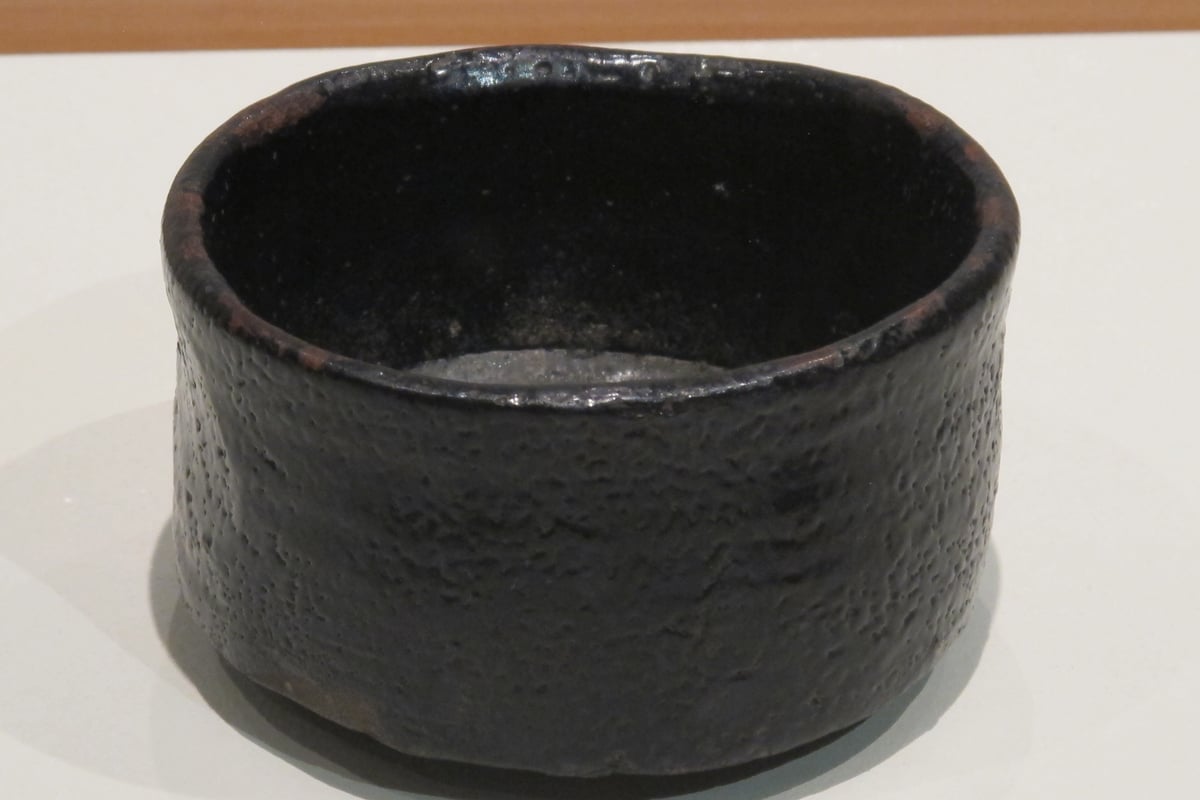
Seto-yaki
Seto-yaki
Seto-yaki is a general term for the ceramics produced around Seto City in Aichi Prefecture, and together with Tokoname-yaki it is counted among Japan's Six Ancient Kilns. Its origins trace back to the late 5th century, to the production of sue ware at the Sanage kilns in what is now the Higashiyama hills of Nagoya City, and by the end of the 12th century Seto had begun producing 'Old Seto' ware - the only Japanese region to continue firing glazed pottery throughout the medieval period. In the Bunka era of the late Edo period (1804-1818), Kato Tamikichi introduced porcelain-making techniques from Hizen Arita, and sometsuke porcelain, painted with cobalt pigment, developed from there; from then on, traditional 'hongyo-yaki' pottery and 'sometsuke-yaki' porcelain were produced side by side. Blessed with high-quality kibushi and gairome clays, Seto-yaki is known for its white, low-iron body, and its products range from everyday tableware to fine art pieces. It is also the origin of 'setomono,' the word used across Japan to mean pottery in general, and was certified as a Japan Heritage site in 2017. Nationally designated Traditional Crafts include Akazu-yaki (1977) and Seto Sometsuke-yaki (1997).
Shiozawa Tsumugi (silk pongee)
Shiozawa Tsumugi
Shiozawa Tsumugi is a yarn-dyed (dyed before weaving) silk textile woven mainly in the Shiozawa district of Minamiuonuma City, Niigata Prefecture. Yarn-dyeing is a method in which the thread is dyed first and then woven into cloth. Bast-fiber textiles have been woven in the Shiozawa area since ancient times, and bast-fiber cloth woven here during the Tenpyo era of the Nara period survives in the Shosoin Repository. Shiozawa Tsumugi is said to have been born around the Meiwa era (1764–1771) in the mid-Edo period by bringing the techniques of this bast-fiber textile, namely Echigo Jofu, to silk. Raw silk or tamaito is used for the warp and thread hand-spun from silk floss (mawata) for the weft, and kasuri (ikat) threads dyed by hand-binding or hand-rubbing (te-surikomi) are aligned one by one as the cloth is woven. Extremely fine kasuri called kagasuri (mosquito kasuri) and the delicate patterns of cross (juji) kasuri and tortoiseshell (kikko) kasuri create an elegant, understated character. It became a Traditional Craft Designated by the Minister of Economy, Trade and Industry in February 1975. The same Shiozawa production area is also home to Hon-Shiozawa, long known by the name 'Shiozawa Omeshi,' which was designated as a separate Traditional Craft in December 1976.
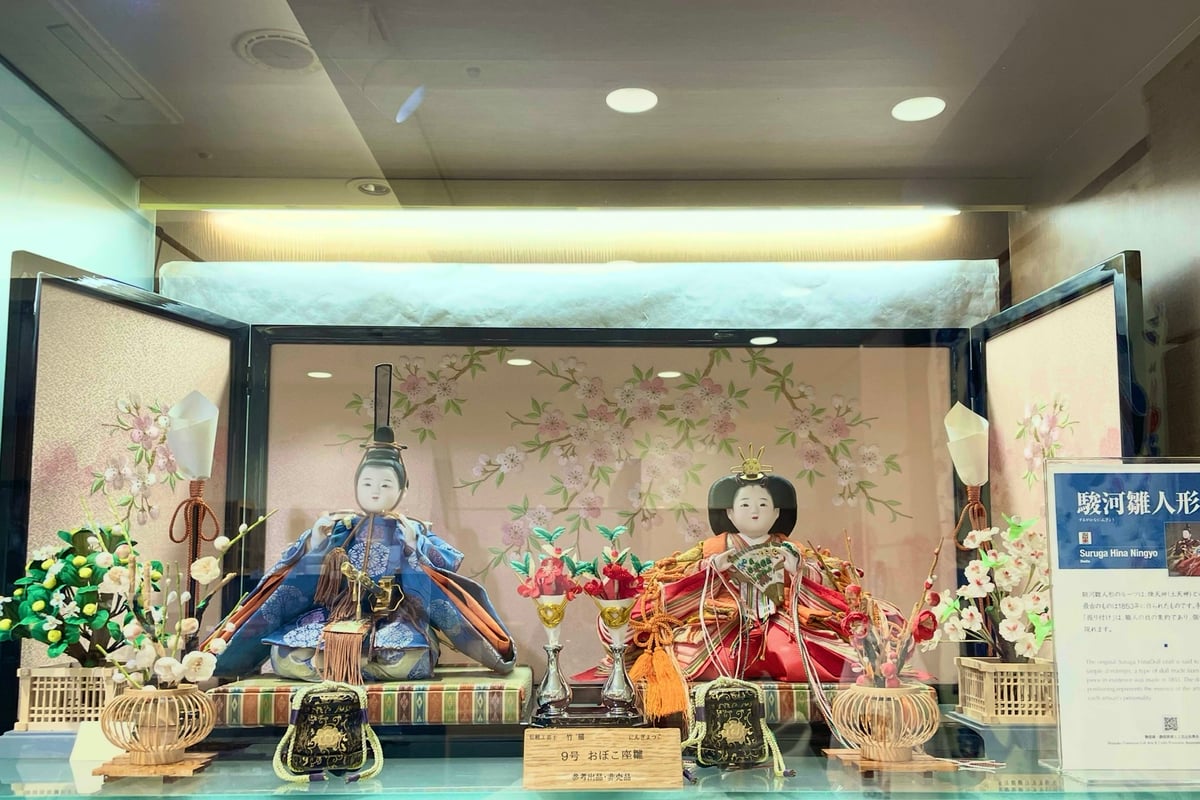
Suruga Hina Doll Furnishings and Hina Dolls
Suruga Hinagu and Suruga Hina Ningyo (Suruga Doll Furnishings and Hina Dolls)
Suruga Hinagu (Suruga hina doll furnishings) and Suruga Hina Ningyo (Suruga hina dolls) are decorations for the Hinamatsuri doll festival made mainly in Shizuoka City. Both became Traditional Crafts Designated by the Minister of Economy, Trade and Industry in 1994. Hina doll furnishings (hinagu) are the small furnishings displayed together with hina dolls, such as tansu chests, nagamochi trunks, mirror stands and goshoguruma ox carriages. There are about 40 kinds among the traditional items alone, and they are made with the same processes as real furniture. The joiners and wood turners who make the wooden bases work together with lacquerers, maki-e artists and metal-fitting makers, dividing the work to complete each piece. By the Showa 40s, hinagu had come to account for about 90% of the national market share. The hina dolls have their roots in the Tenjin dolls made in central Shizuoka Prefecture. They use a thick straw body (warado) made of tightly bundled rice straw, and the craftsperson's skill shows in furitsuke, the step in which both arms are bent to set the doll's pose. In doll bodies, the area came to account for about 70% of national production.
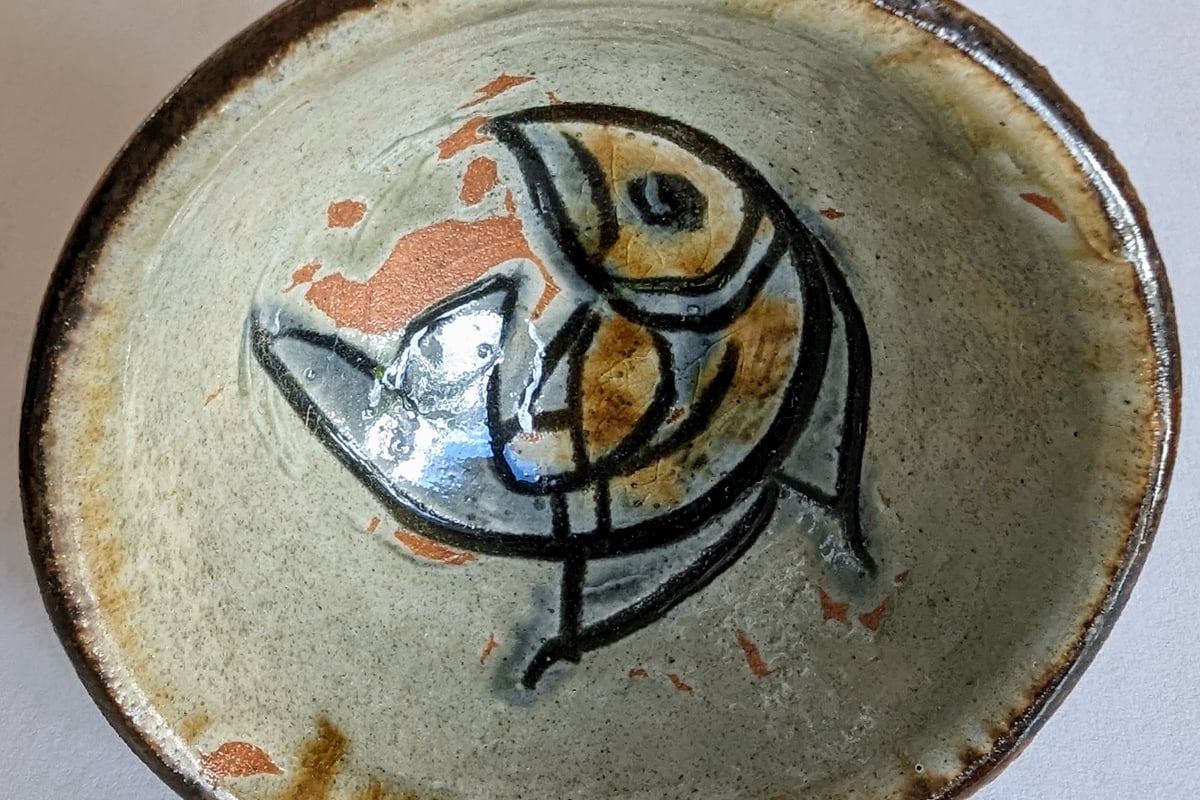
Tsuboya-yaki
Tsuboya-yaki
Tsuboya-yaki is a pottery representative of Okinawa, fired mainly in the Tsuboya district of Naha City and in Yomitan Village. Around the 14th-16th centuries, the Ryukyu Kingdom flourished as a hub for East Asian pottery through active overseas trade, but when trade declined following the Satsuma invasion (1609), the royal government invited Korean potters to introduce pottery-making techniques. In 1682, the royal government consolidated three kilns - the Chibana kiln in Misato Village, the Takarakuchi kiln in Shuri, and the Wakuta kiln in Naha - into the Tsuboya district of Naha, and this is considered the birth of present-day Tsuboya-yaki. It is characterized by thick-bodied vessels and a rustic, powerful style, and is broadly divided into two types: 'joyachi,' glazed and fired at high temperature, and 'arayachi,' fired without glaze. Joyachi centers on everyday vessels such as bowls, plates, and shisa lion-dogs, while arayachi centers on large storage vessels such as sake and water jars. In the 1970s, as it became difficult to fire the smoke-producing climbing kilns within Naha City, the late Living National Treasure Kinjo Jiro and others relocated to Yomitan Village, which subsequently became a major production area for Tsuboya-yaki as well. It was designated a Traditional Craft by the Minister of Economy, Trade and Industry in 1976.
Yamagata Imono (Yamagata Cast Metalwork)
Yamagata Imono
Yamagata Imono is a metal-casting craft centered on Yamagata City with a history of roughly 900 years. It is said to have begun in the late Heian period, during the Kohei era (mid-11th century), when foundry craftsmen who had accompanied Minamoto no Yoriyoshi's military campaign discovered that the sand and soil along the Mamigasaki River were well suited to mold-making, and settled in the area. In the Edo period, when Mogami Yoshiaki laid out the castle town, he established a foundry workers' quarter (present-day Dōmachi) where he gathered craftsmen together, laying the foundation for the area as a production center. In contrast to the heavy, decorative style of Nanbu ironware, Yamagata Imono is characterized by a simple beauty that makes the most of its thin-walled, delicate cast surface, and is used to make everything from everyday items such as tea-ceremony kettles, iron kettles (tetsubin), and vases to temple bells and stone lanterns. In 1975 (Showa 50), it was designated a Traditional Craft Designated by the Minister of Economy, Trade and Industry. In recent years, in addition to iron kettles and wind chimes, makers have also been developing new products such as interior goods suited to modern life.
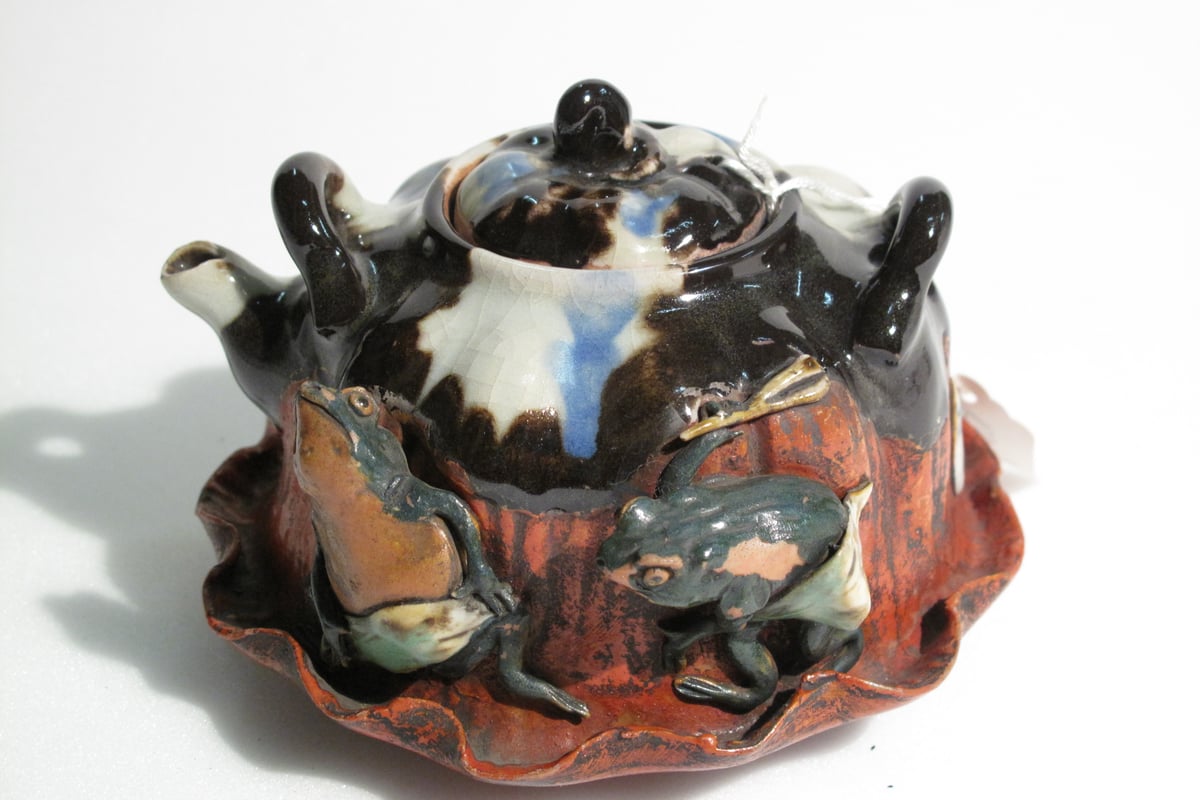
Yokkaichi Banko-yaki (Banko Ware)
Yokkaichi Banko Yaki (Yokkaichi Banko Ware)
Yokkaichi Banko-yaki is ceramics made mainly in Yokkaichi City, Mie Prefecture. It began in the mid-Edo period when Nunami Rozan (沼波弄山), a wealthy merchant of Kuwana, opened a kiln in 小向, in present-day Asahi Town (朝日町). Rozan stamped the works with seals reading 'Banko' or 'Banko Fueki.' The seals carried the wish that the works would be handed down unchanged forever, and this became the origin of the name. The ware died out after Rozan's death, but in the late Edo period it was revived by 森有節 of Kuwana and others. From the end of the Edo period into the Meiji period, 山中忠左衛門 of Yokkaichi established a pottery method suited to mass production and developed the ware into a local industry. Its representative products are the azuki-bean-colored (reddish-brown) 'shidei kyusu (teapot)' and highly heat-resistant donabe (earthenware pots). Its donabe are said to account for about 80% of domestic production. Today it is one of Japan's leading ceramics-producing areas, with more than 100 kiln companies concentrated mainly in Yokkaichi City and Komono Town. In 1979 (Showa 54), it was designated a Traditional Craft Designated by the Minister of Economy, Trade and Industry.
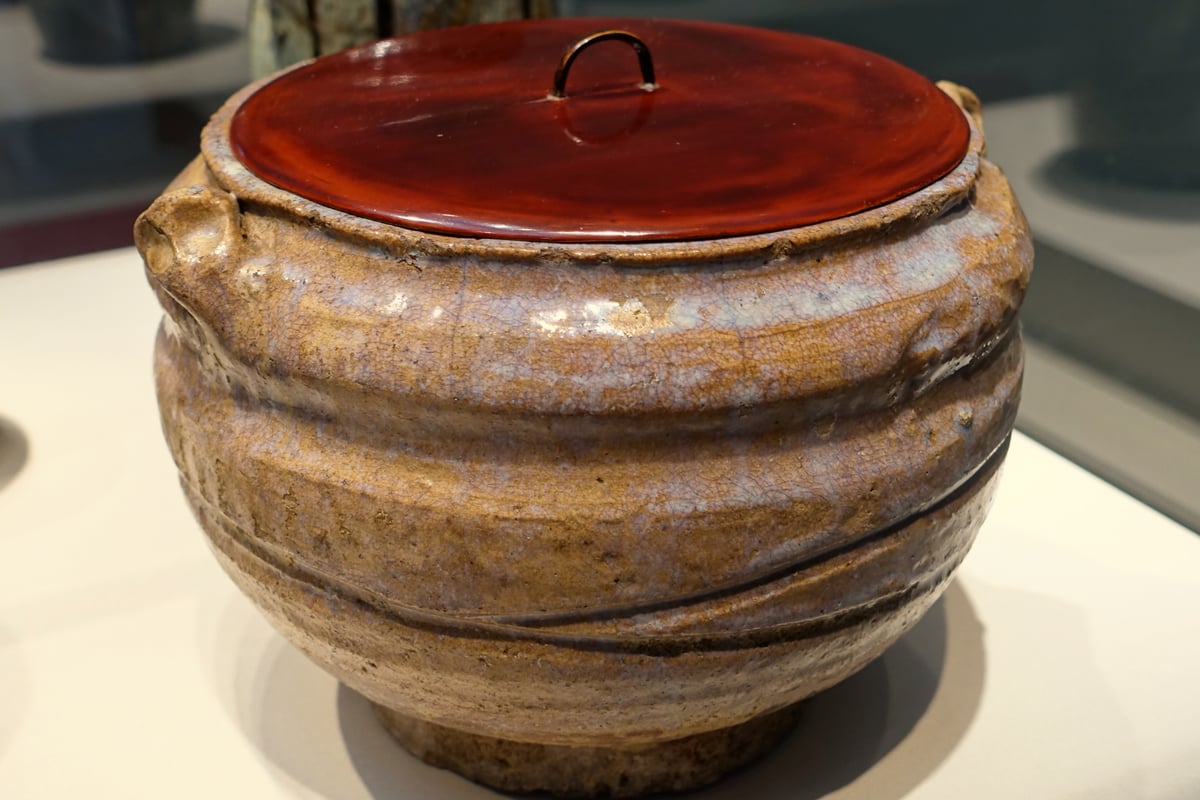
Agano ware
Agano-yaki
Agano ware is a type of pottery fired across a region centered on Fukuchi Town, Fukuoka Prefecture, and spanning also Kawara Town and Oto Town in Tagawa District, and is a Traditional Craft Designated by the Minister of Economy, Trade and Industry. It is said to have begun in 1602, when Hosokawa Tadaoki, lord of the Buzen Kokura domain, invited the Korean-born potter Sonkai to open a kiln at the foot of Mt. Fukuchi, in the village of Agano. The kiln subsequently developed as an official domain kiln under the patronage of successive lords—first the Hosokawa clan, then the Ogasawara clan—and by the Edo period it was so prized by tea masters that it was counted among the 'Enshu Seven Kilns.' Its defining characteristic is an extremely light, thin-walled construction; the ware is rarely painted, and instead is known for the beauty of its kiln transformations produced by a wide range of glazes, from the deep bluish-green 'ryokusho-nagashi' that streams down over a thin white body to iron, ash, straw-white, and sansai (three-color) glazes. Designated a national Traditional Craft in 1983, around 20 kilns still carry on the tradition today, centered on the Agano district of Fukuchi Town.
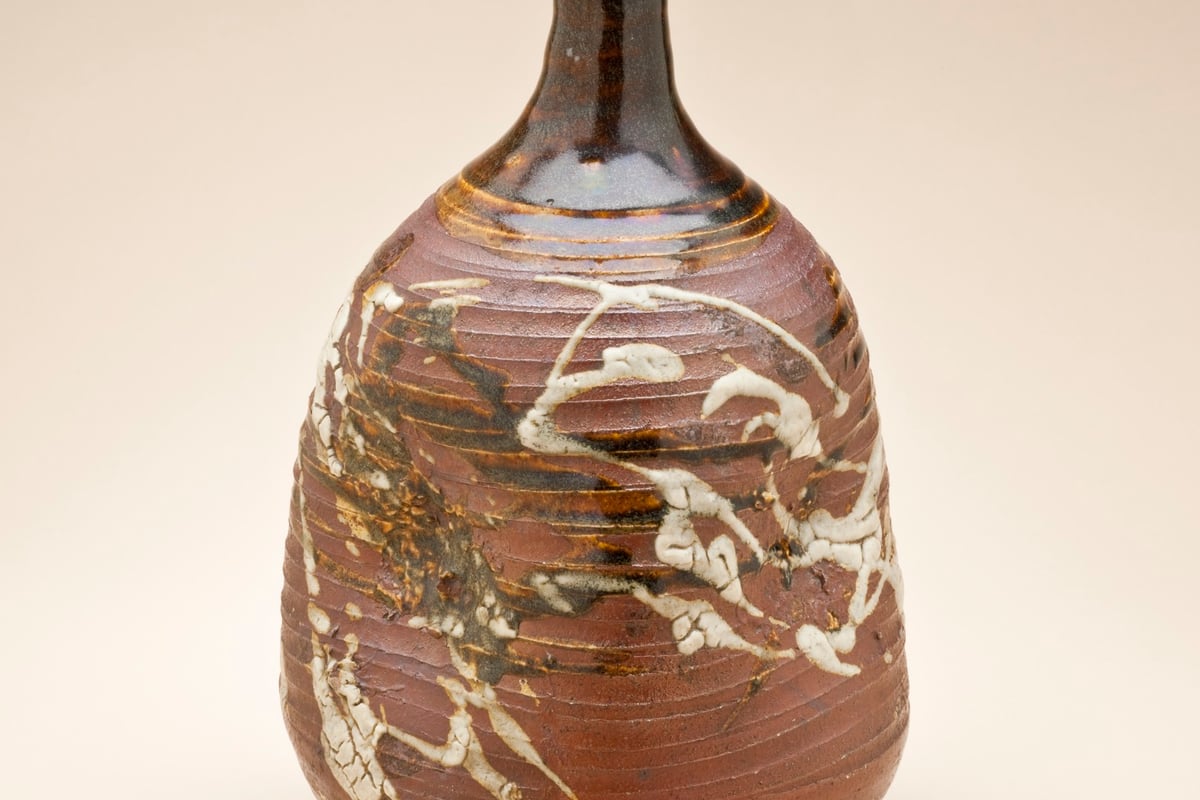
Aizu-Hongo Ware
Aizu-Hongo-yaki
Aizu-Hongo ware is ceramic ware produced in Aizumisato Town, Fukushima Prefecture, and is a Nationally Designated Traditional Craft with roughly 400 years of history as Tohoku's oldest kiln site. Its origins trace back to 1593, when Gamō Ujisato, lord of Aizuwakamatsu Castle, had roof tiles fired for the castle, and in 1645 full-scale pottery production began when Aizu domain lord Hoshina Masayuki invited the potter Mizuno Genzaemon from Seto, in Owari Province. Around 1800, Sato Ihee learned the technique for making porcelain in Arita, in Hizen Province, and brought it back, giving the region the rare distinction, unusual nationwide, of producing both pottery and porcelain in the same production area. Today, a dozen or so distinctive kilns are still scattered across the Hongo district, producing everything from everyday tableware to fine art pieces, including Ryumon-yaki, known for its flowing-glaze technique. Every year on the first Sunday of August, the 'Seto Ichi' pottery market begins before dawn, drawing many visitors from within and outside the prefecture in search of a good find, and has become a summer tradition in Aizu.

Arimatsu-Narumi Shibori
Arimatsu-Narumi Shibori
Arimatsu-Narumi Shibori is a general term for the tie-dyeing tradition passed down for about 400 years in the Arimatsu and Narumi districts of Midori Ward, Nagoya City. It is said to have begun around 1608, in the Keicho era of the early Edo period, when Owari Domain laid out the town of Arimatsu as newly reclaimed land along the Tokaido road, and Takeda Shokuro, one of the area's first settlers, began selling tie-dyed hand towels made of Mikawa cotton to travelers. Techniques developed further with the invention of shikoro-shibori in the Kanbun era, and in 1781 Owari Domain granted merchants in Arimatsu an exclusive right to produce shibori, allowing it to grow into a major industry. Techniques such as mame-shibori, Miura-shibori, arashi-shibori, and sekka-shibori proliferated, with over 100 distinct techniques developed at the tradition's peak, more than 70 of which are still practiced today. In 1975 it became the first Traditional Craft in Aichi Prefecture to receive national designation. In recent years, its use has expanded beyond kimono, with new forms of expression including collaborations with overseas brands.
Boshu Nokogiri
Boshu Nokogiri
Boshu Nokogiri is a saw-forging technique with over 450 years of history in the Minamiboso region. It is said to have originated during the Sengoku (Warring States) period, when a blacksmith serving the Satomi clan, who ruled the Boso region, created it as a 'ship saw' for building the Japanese-style boats used in trade and other purposes. During the Edo period, the technique spread throughout the coastal areas of Awa and developed its own distinctive character; a story is also told that its sharpness became known to the shogunate after thieves used Boshu Nokogiri to break into earthen storehouses, spreading the saw's fame widely. Made from the same steel used for Japanese swords, with unique refinements in blade curvature and tooth-setting, Boshu Nokogiri combines thinness and flexibility with outstanding sharpness and durability. Prioritizing quality over efficiency, the traditional method of doing all 20-plus steps entirely by hand is still upheld today. However, with no successors having been trained, the technique is currently kept alive by only a single craftsman in all of Japan, a severe situation.
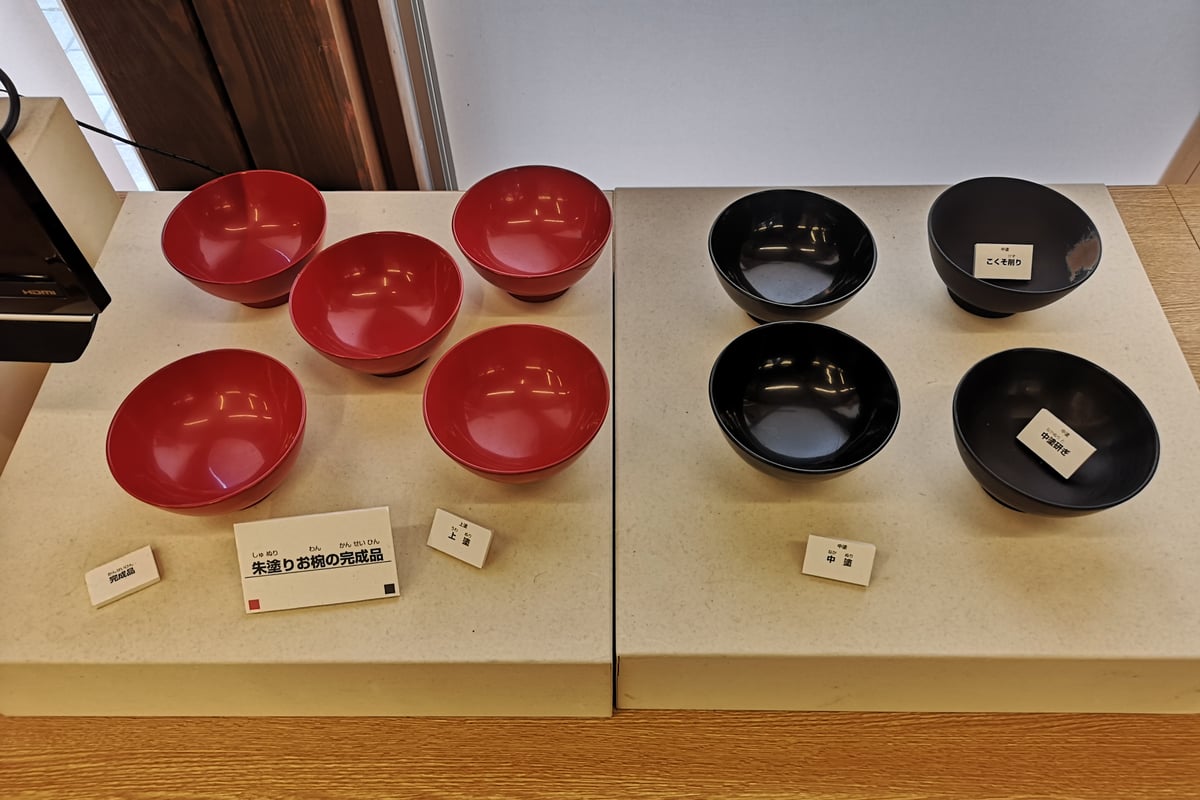
Echizen Shikki (Echizen Lacquerware)
Echizen Shikki
Echizen Shikki is lacquerware made mainly in the Kawada district of Sabae City, Fukui Prefecture. It is said to have begun about 1,500 years ago, when the future Emperor Keitai, then still a prince, ordered a lacquerer in the village of Katayama to recoat his damaged crown. The lacquerer presented the crown together with a black-lacquered bowl, and the prince, impressed by the fine workmanship, encouraged the making of lacquerware. It is characterized by a glossy, durable finish created by carefully applying layer upon layer of lacquer over a sturdy base. At the end of the Edo period, the area adopted maki-e techniques from Kyoto and chinkin techniques from Wajima. From the Meiji period onward, it expanded sales of commercial lacquerware for inns and similar businesses, and today it produces most of the lacquerware used in the restaurant and food service industry. In 1975 it became a Traditional Craft Designated by the Minister of Economy, Trade and Industry.
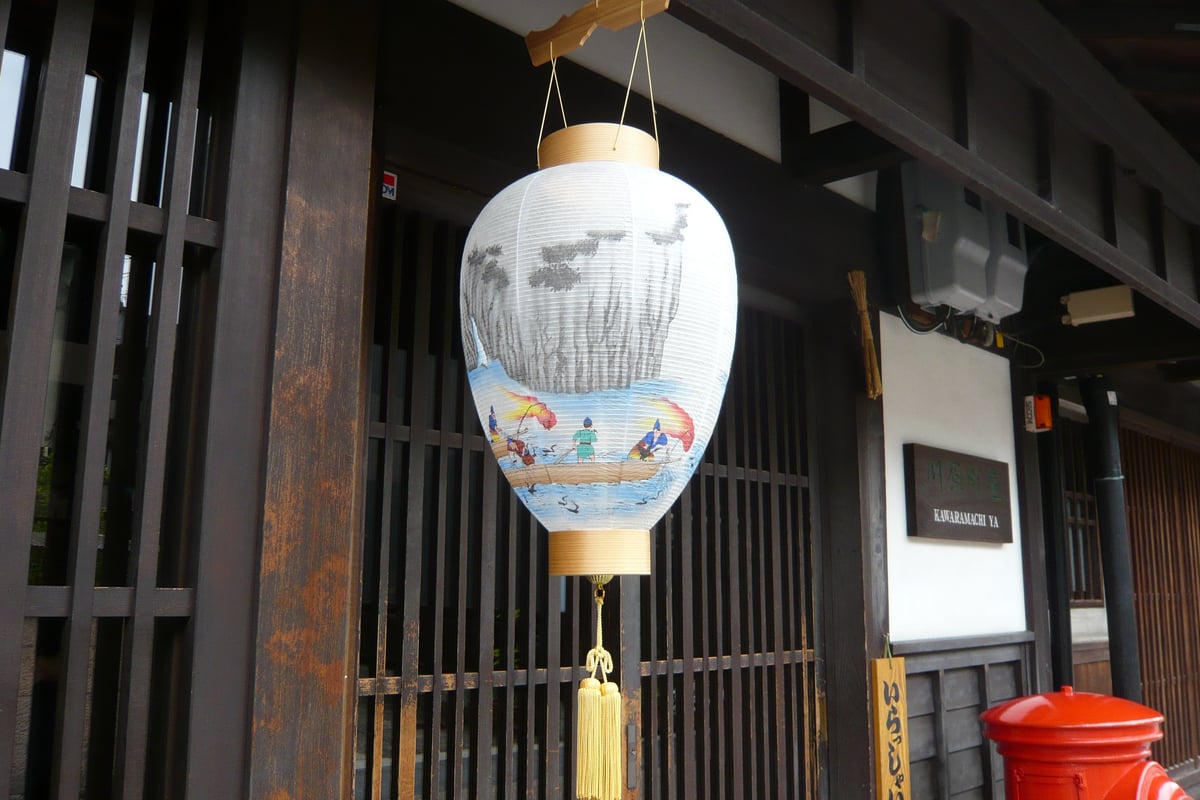
Gifu Chochin
Gifu Chochin
Gifu Chochin are Bon lanterns produced mainly in Gifu City, Gifu Prefecture, characterized by their delicate and elegant paper shades made from high-quality bamboo ribs and thin yet strong Mino Washi paper from the Mino region, decorated with autumn grasses, landscapes, and other motifs. With a history of more than 300 years dating back to the Edo period, they have also earned high acclaim overseas, winning a silver medal at the 1904 St. Louis World's Fair, a gold medal at the 1905 Liege International Exposition, and a gold medal again at the 1937 Paris International Exposition. They come in many varieties, including the hanging 'Gosho Chochin' and the standing 'Ouchi Andon' and 'Kaiten Andon,' and are loved for the elegant atmosphere and refreshing seasonal feel they create when lit. Designated a national Traditional Craft in 1995, long-established lantern makers in Gifu City continue to hand-craft them today.
Hikone Butsudan (Hikone Buddhist Altars)
Hikone Butsudan
Hikone Butsudan are gold-lacquered Buddhist altars produced mainly in Hikone City, Shiga Prefecture, and were the first product in the Buddhist altar and ritual goods industry to be designated a Traditional Craft by the Minister of Economy, Trade and Industry, in 1975. Their origin is said to trace back to the mid-Edo period, when craftsmen in the castle town of Hikone Domain who had produced arms and armor turned to making Buddhist altars as the country entered an age of peace. Under the protection of the Hikone Domain, a division-of-labor system involving seven specialized trades — woodworking, palace-structure work, carving, lacquering, maki-e (lacquer decoration), metal fittings, and gold-leaf application — became established by the late Edo period, and the street known as 'Nanamagari,' connecting Hikone Castle town with the Nakasendo highway, is still lined with altar shops and workshops today. The craft is known for its weighty, splendid finish achieved through extensive gold leaf and lacquer, as well as for being crafted entirely by hand, from the woodwork through to final assembly.
Iga Kumihimo (Iga Braided Cords)
Iga Kumihimo (Iga Braided Cords)
Iga Kumihimo is kumihimo (braided cord) made mainly in Iga City, Mie Prefecture. Kumihimo are cords made by crossing many threads diagonally and braiding them together, and they are characterized by being more elastic than woven fabrics. Mainly silk thread is used, along with gold and silver thread, and the cords are braided on braiding stands such as the marudai, the square stand (角台), the 綾竹台 and the takadai. The origins of braided cords in Iga are said to go back to before the Nara period, and in early times they were made as cords for Buddhist ritual implements and for arms and armor. It developed greatly as a regional industry only after 廣澤徳三郎 brought back the techniques of Edo kumihimo in Meiji 35 (1902). Since then, Iga has become a major production center of obijime (kimono sash cords) and haori-himo (haori jacket ties), accounting for most of Japan's hand-braided kumihimo. In 1976 (Showa 51), it was designated a Traditional Craft Designated by the Minister of Economy, Trade and Industry. Today, production with braiding machines has also advanced, and products other than kimono accessories, such as key chains and accessories, are also made.
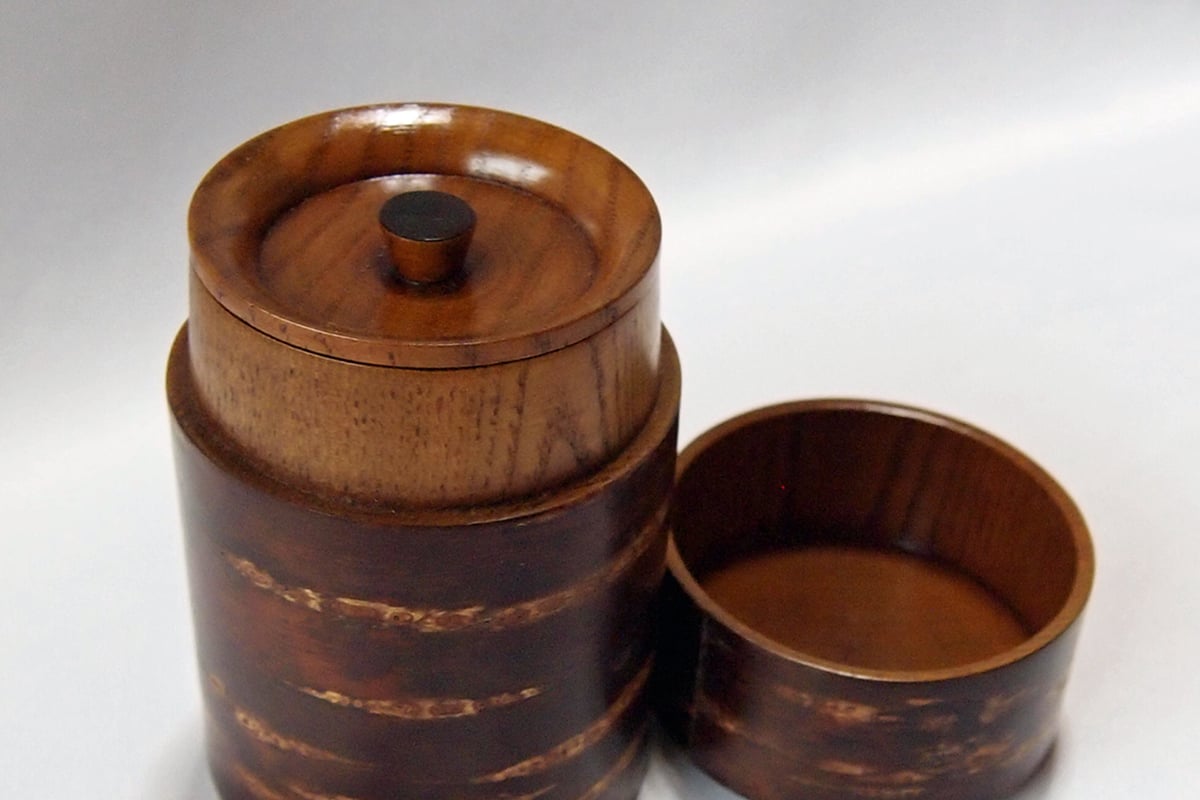
Kabazaiku (Cherry Bark Woodcraft)
Kabazaiku
Kabazaiku is a woodcraft made in Kakunodate, Semboku City, Akita Prefecture, using the bark ('kaba') of the mountain cherry tree. It is said to have originated in the Tenmei era (1781-1789), when Fujimura Hikoroku, a lower-ranking samurai of Kakunodate, learned the technique from the Gosho-no family, Shinto priests in Kamasawa, Aikawa, in northern Akita Prefecture, and spread it among the samurai of Kakunodate. At the time, the region was suffering repeated crop failures and famine, and lower-ranking samurai took up making inro (medicine cases) and netsuke as a side occupation using the low-cost bark of mountain cherry trees growing nearby. From the Meiji era onward, the emergence of influential wholesalers such as Nagamatsuya Shoten (trade name: Marugame) helped stabilize the craft as an industry, and around 1897 (Meiji 30) the kijimono technique—shaping the wood base on a lathe before applying the bark—was also added. In the Taisho and Showa eras, Ono Tozo is regarded as the figure who revived the craft, and following his encounter with Yanagi Soetsu, techniques were revitalized through workshops beginning in 1942 (Showa 17). In 1976 (Showa 51), Kabazaiku was designated a Traditional Craft Designated by the Minister of Economy, Trade and Industry, and the Kakunodate Kabazaiku Museum opened the following year, in 1978. Representative products include tea caddies, trays, and tobacco cases.
Kaga Yuzen Dyeing
Kaga-yuzen
Kaga Yuzen is a hand-painted silk dyeing tradition passed down mainly in Kanazawa, Ishikawa Prefecture, characterized by subdued coloring based on the five 'Kaga gosai' colors — indigo, ochre, grass green, ancient purple, and crimson — combined with realistic depictions of flowers and plants. Its origins are said to date back roughly 500 years to 'umezome,' a plain, undecorated dyeing technique unique to Kaga Province, and by the mid-17th century a patterned technique known as 'Kaga o-kunizome' had been established. During the Genroku era of the Edo period, Miyazaki Yuzensai, a fan painter who had made a name for himself, took up residence with the Kanazawa dye shop 'Tarodaya,' and his spread of the yuzen-nori technique of resist-dyeing with paste while applying multiple colors brought about a great leap forward for Kaga Yuzen. Distinctive design elements developed, including a naturalistic style that faithfully depicts flowers and leaves as they appear in nature with almost no use of gold or silver leaf and embroidery, the 'sotobokashi' technique of shading the outside of a pattern dark and fading toward the center, and 'mushikui,' which depicts insect-eaten marks on leaves. A system requiring each artist to sign works with their own seal has been established, and Kaga Yuzen is also well known as a craft with strong artistic individuality.
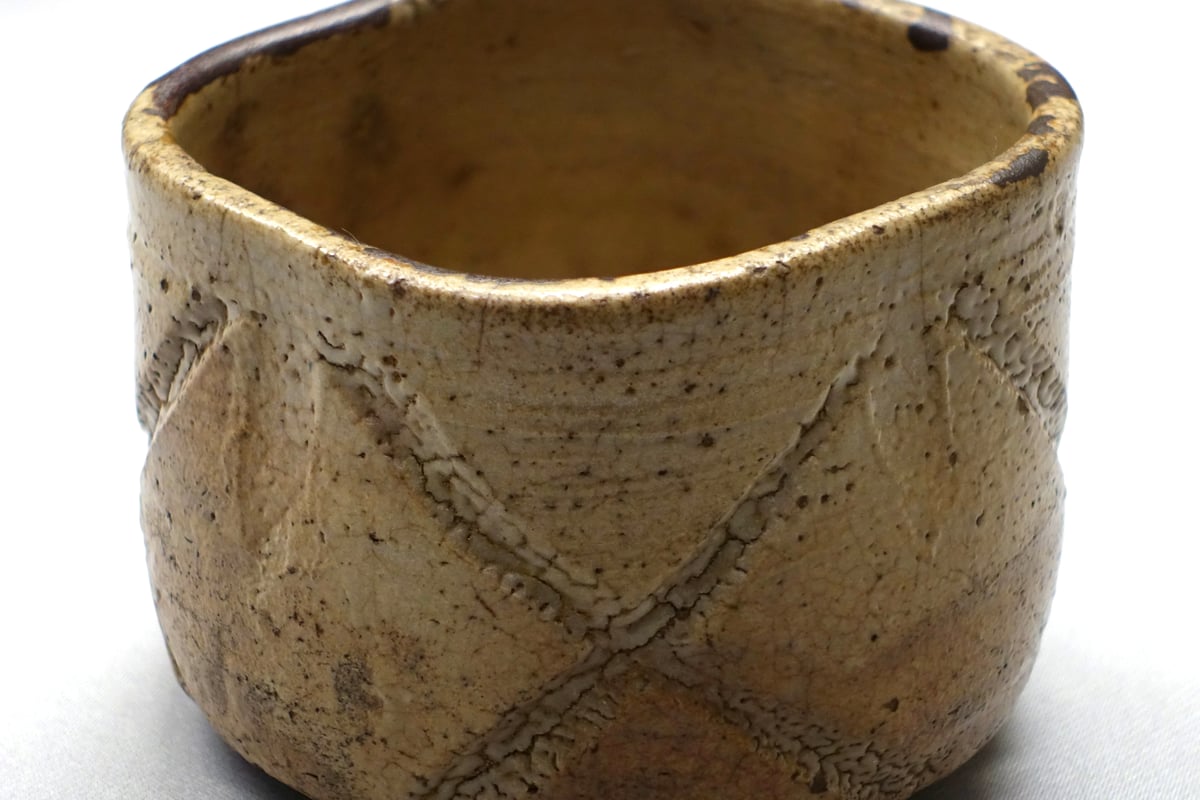
Karatsu ware
Karatsu-yaki
Karatsu ware is stoneware fired mainly around Karatsu City, Saga Prefecture, spanning from western Saga to northern Nagasaki Prefecture. Among tea practitioners it has long been prized alongside Raku ware and Hagi ware as one of the finest tea ceramics, summed up in the saying 'first Raku, second Hagi, third Karatsu.' Its origins are thought to date to the 1580s, when a kiln was opened under the patronage of the Hata clan, lords of Kishidake Castle. Korean potters brought back to Japan during Toyotomi Hideyoshi's invasions of Korea (the Bunroku-Keichō campaigns) introduced new techniques such as the kick wheel, multi-chambered climbing kilns, and hand-beaten forming (tataki-zukuri), dramatically advancing production. Distributed widely across western Japan via Karatsu Port, Karatsu ware was once so representative of the region that pottery in general came to be called 'karatsu-mono.' Production declined somewhat after the Meiji era, but was revived through the 12th-generation Nakazato Tarōemon (Muan), who restored Old Karatsu techniques, and the craft was designated a METI-designated Traditional Craft Product in 1988.
Kasukabe Kiri Tansu
Kasukabe Kiri Tansu
Kasukabe Kiri Tansu is a paulownia-wood chest of drawers made mainly in Kasukabe City, Saitama Prefecture, designated a Traditional Craft Product by the Minister of Economy, Trade and Industry (METI) in 1979. Its origins are said to trace back to the early Edo period, when some of the craftsmen gathered from across Japan to build Nikko Toshogu Shrine settled in Kasukabe, a post town on the Nikko Kaido road, and began making cabinetry and small items from the paulownia wood abundant in the area. Around the Tenpo era (circa 1830), businesses specializing in paulownia chest-making increased, taking advantage of the water transport routes of the Furutone and Edo rivers to ship products to Edo, and the region developed into a production center. Paulownia wood expands when it absorbs moisture and contracts as it dries, so during humid seasons the chests swell slightly and seal tightly, said to protect the kimono and other items stored inside from moisture and fire. The beauty of its wood grain, shown off through unfinished wood surfaces, and its sturdy, warp-resistant construction remain highly valued today.
Koshu Crystal and Gemstone Carving
Koshu Crystal and Gemstone Carving
Koshu Crystal and Gemstone Carving is a craft in which natural stones such as rock crystal, agate and jade are carved and painstakingly polished. Its production area is Kofu City and its surroundings, and items ranging from incense burners, Buddhist statues and ornamental figures of dragons and hawks to accessories such as necklaces and rings are made. It is said to have originated about 1,100 years ago, when raw crystal was found on Mt. Kinpu, deep in the interior beyond Mitake Shosenkyo Gorge. In the Tenpo era of the Edo period, craftsmen were invited from Kyoto, bringing a method of polishing crystal by scattering kongosha (a hard abrasive sand) on an iron plate. Crystal is very hard, and carving and polishing it takes a long time. This polishing technique spread to the processing of gemstones and laid the foundation for Yamanashi to become one of Japan's leading jewelry production areas. In 1976 it was designated a Traditional Craft Designated by the Minister of Economy, Trade and Industry. At the Yamanashi Jewelry Museum in Kofu City, visitors can learn about the history of Yamanashi jewelry, which began with crystal.
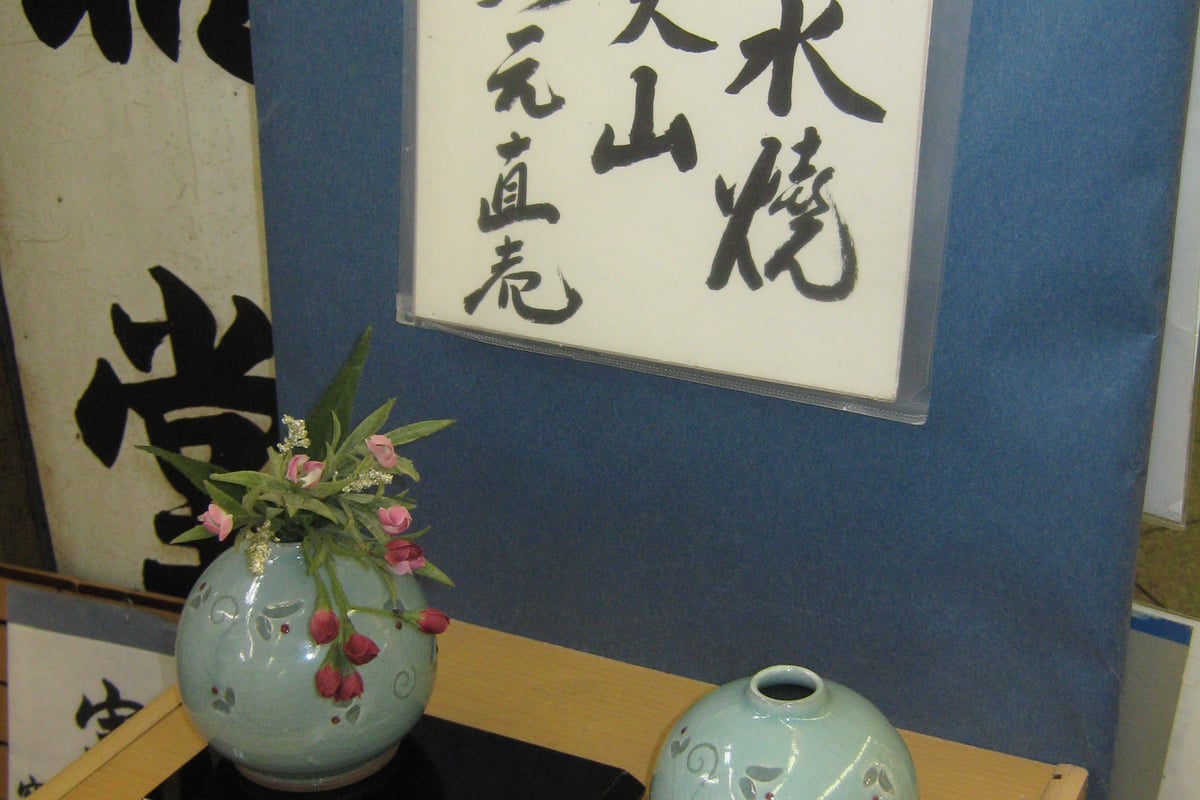
Kyo-yaki / Kiyomizu-yaki
Kiyomizu-yaki
Kyo-yaki / Kiyomizu-yaki is a general term for the porcelain and pottery representative of Kyoto, and its greatest characteristic is that it is not bound to any single style, with each maker expressing their own individuality. The first pottery in Kyoto is said to have been fired around the Kan'ei era (1624-1645) at Awataguchi in Higashiyama, known as "Awataguchi-yaki." When the tea ceremony flourished during the Momoyama period, various tea utensils and vessels, including Raku ware, began to be made throughout the city. In the Edo period, master craftsmen such as Nonomura Ninsei, Ogata Kenzan, Okuda Eisen, and Aoki Mokubei appeared one after another, firmly establishing the status of Kyo-yaki. The name comes from the kilns of the Gojozaka and Kiyomizu districts along the approach to Kiyomizu-dera Temple. Unlike other pottery-producing regions, there are no strict rules governing clay, technique, or painting style, and each potter's individuality is respected. Today, the main production areas are Gojozaka and Chawanzaka in Higashiyama Ward, the Kiyomizu-yaki Danchi in Yamashina Ward, and Sumiyama in Uji City.
Nagiso Wood Turning
Nagiso Rokuro Zaiku (Nagiso Wood Turning)
Nagiso Wood Turning is woodwork made mainly in Nagiso Town, Kiso District, Nagano Prefecture. Using the 'hikimono' (turned woodware) technique, in which a thick board or log is spun on a lathe (rokuro) and shaped by cutting with a plane blade, artisans make trays, bowls, teacup saucers, wooden bowls and more. It is said to have begun in the first half of the 18th century, when people called kijishi (woodturners), who excelled at turning wood, settled in this area. The materials are hardwoods with beautiful grain that grow in the Kiso Valley, such as tochi (Japanese horse chestnut), keyaki (zelkova), sen and katsura. Artisans judge the grain and quality of the wood and decide which item to make from each piece. The products come either as 'shiraki' (plain wood) left unfinished, or as 'urushi-fuki' (wipe-lacquered), in which lacquer is applied and wiped off. In 1980 it became a Traditional Craft Designated by the Minister of Economy, Trade and Industry. At 'Kijishi no Sato' (the Woodturners' Village) in Azuma, Nagiso Town, workshops are clustered together, and visitors can watch the work and try hand-turning on a lathe.
Osaka Ranma (Osaka Transom Panels)
Osaka Ranma (Osaka Transom Panels)
Osaka Ranma (大阪欄間) are ranma (transom panels) made in Osaka Prefecture. A ranma is a fitting installed above the lintel (kamoi) of a Japanese-style room that decorates the room while letting light and air pass through. They are said to date back to the early 17th century, and the techniques from which they derive can be seen at Hijiri Shrine in Izumi City and Shitennoji Temple in Osaka City. In the mid-Edo period, ranma were also adopted in ordinary homes, especially merchant houses. A defining feature is their wide variety, including picture-like 'carved ranma' that make use of the grain of Yakusugi cedar, and 'openwork (sukashibori) ranma' in which patterns are cut out of paulownia boards. Other types made include 'osa ranma,' with rows of thin bars, and 'kumiko ranma,' with geometric lattice patterns. Because they divide two adjoining Japanese-style rooms, they are made to be viewed from both front and back. In 1975 (Showa 50), Osaka Ranma was designated a Traditional Craft Designated by the Minister of Economy, Trade and Industry.
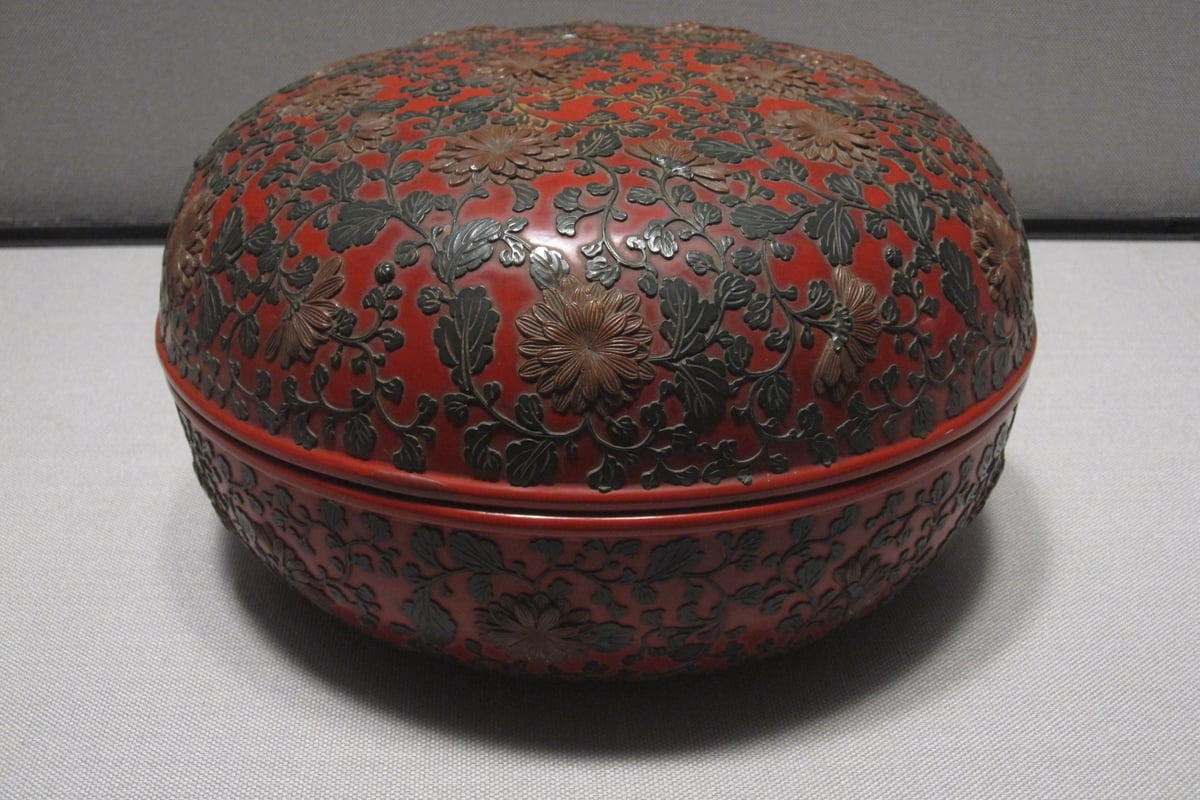
Ryukyu Shikki
Ryukyu Shikki
Ryukyu Shikki is a lacquer craft handed down mainly around Shuri in Naha City, Okinawa Prefecture. Lacquerware techniques are said to have been brought from China around the end of the 14th century, and production flourished during the Ryukyu Kingdom era of the 15th-16th centuries. The royal government established the Kaizuri Bugyosho office to manage and strengthen lacquerware production, introducing techniques from China and Satsuma while also organizing the cultivation of lacquer trees and the harvesting of lacquer as state policy. After the Satsuma invasion of 1609, Ryukyu Shikki came to be prized as a gift to the Tokugawa shogunate and various feudal lords, serving as a showcase of the Ryukyu Kingdom's technical skill abroad. Decorative techniques include chinkin, in which patterns are carved with a blade and fixed with gold; raden, in which mother-of-pearl or abalone shell is cut into patterns and inlaid; hakue, in which patterns are painted in lacquer and gold leaf applied; and tsuikin, a technique unique to Ryukyu. In tsuikin, pigment is kneaded into kurome lacquer until it forms a dough-like mass, which is rolled thin, cut into patterns, and applied, creating three-dimensional, showy decoration. The wooden bases are made from Okinawan trees such as deigo, banyan, and styrax, which shrink and crack little as they dry. It was designated a Traditional Craft of Okinawa Prefecture in 1974 and a Traditional Craft designated by the Minister of Economy, Trade and Industry in 1986.
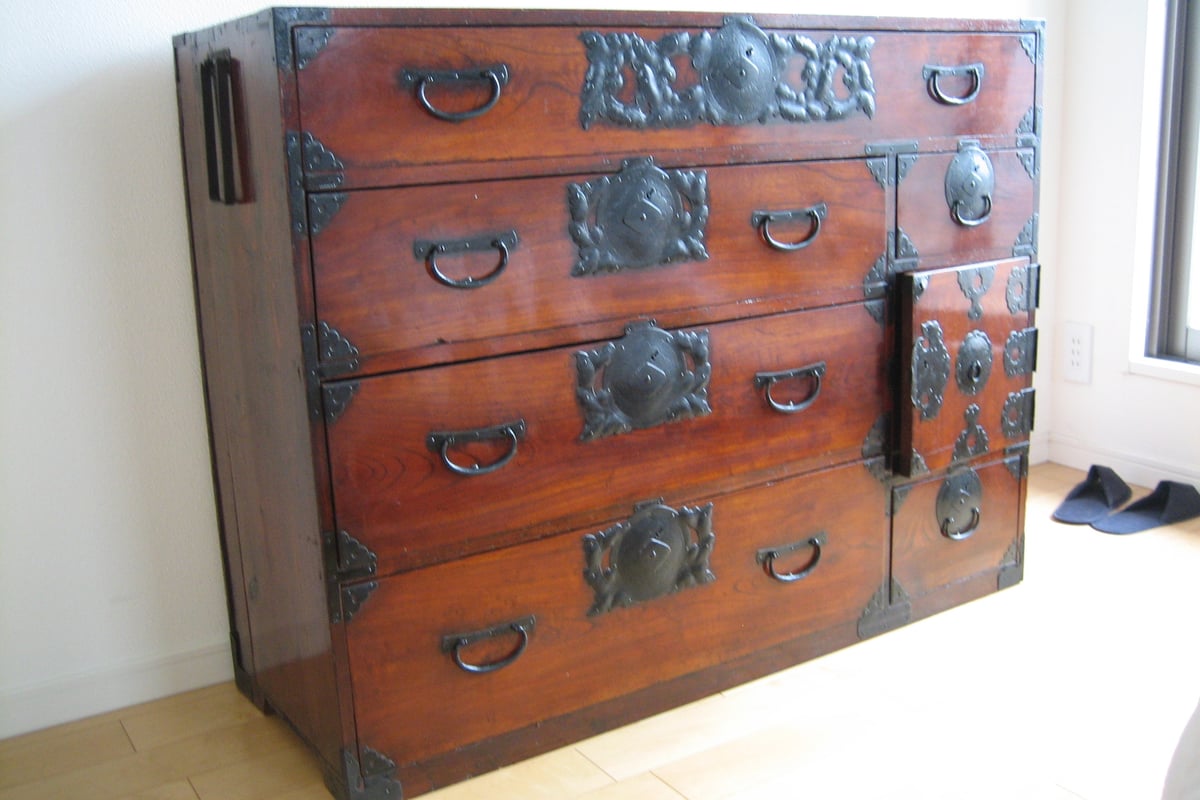
Sendai Tansu
Sendai Tansu
Sendai Tansu is a joinery-made chest of drawers produced mainly in Sendai City, a local industry born in the castle town of the Sendai Domain in the late Edo period. Originally made as a 'yaro-tansu,' a chest for storing swords and money, it was also actively exported to Europe and the United States from the Meiji through Taisho eras. Its greatest feature is a design in which solid wood such as zelkova or chestnut is finished with 'Sendai Kijiro-nuri,' a translucent crimson lacquer that beautifully shows off the wood grain, combined with imposing metal fittings hammered from iron plates about one millimeter thick into motifs favored by the samurai class, such as dragons, peonies, and Chinese lions (karajishi). The three processes of joinery, lacquering, and metalworking are each handled by specialized craftsmen through division of labor, a tradition still carried on today by craftsmen of the Sendai Tansu Cooperative. Sendai Tansu is also a relatively recent addition to the list of designated crafts: on June 18, 2015, it became the fourth Traditional Craft designated by the Minister of Economy, Trade and Industry (METI) in the prefecture, after Miyagi Dento Kokeshi, Ogatsu Suzuri, and Naruko Shikki, and the first new designation in the prefecture in 24 years.
Suruga Lacquerware
Suruga Shikki (Suruga Lacquerware)
Suruga Lacquerware (Suruga Shikki) is lacquerware made in Shizuoka City. In the Kan'ei era of the Edo period, skilled lacquerers gathered from all over Japan to build Shizuoka Sengen Shrine. Lacquerware making is said to have taken root because the craftspeople who stayed in Shizuoka after the construction passed on their skills. Its greatest characteristic is kawari-nuri (decorative lacquer finishes), which applies the basic techniques of lacquering and uses a variety of materials and methods to express distinctive patterns and textures. Kongo Ishime-nuri, devised in the Taisho period, is a technique that uses river sand in the groundwork, and it has been designated a Shizuoka Prefecture Intangible Cultural Property. From the end of the Edo period through the Meiji period, the lacquerware was exhibited at world's fairs and won recognition overseas, and the area eventually became a major production center of export lacquerware. Today it is designated a Shizuoka Prefecture Designated Local Traditional Craft, and in 2007 it became the first regional collective trademark registered in Shizuoka City.
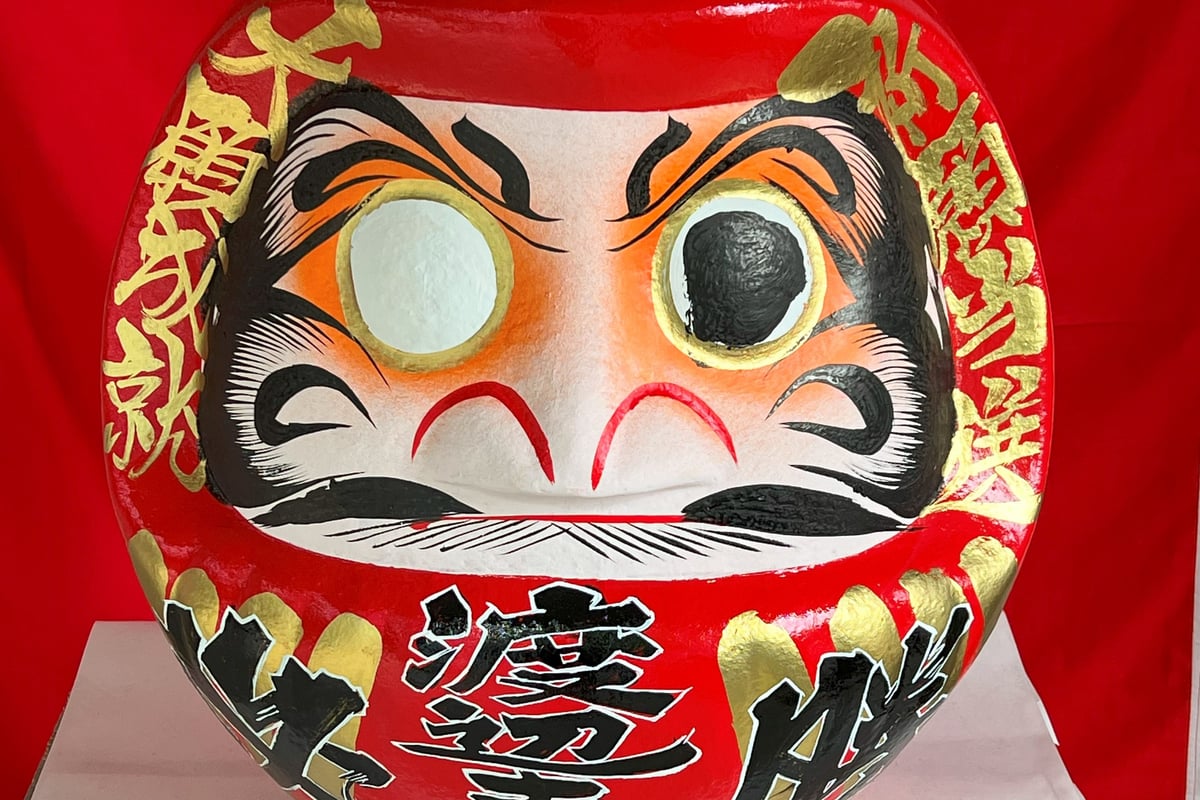
Takasaki Daruma
Takasaki Daruma
Takasaki Daruma are lucky daruma dolls made in Takasaki, Gunma Prefecture. About 900,000 are produced each year, making the area Japan's leading production center, accounting for roughly 80% of the nation's papier-mache daruma output. Tradition holds that they originated in the late Edo period, during the Kansei era, when Yamagata Tomogoro, who lived near Shorinzan Darumaji Temple, had the temple's ninth head priest, Togaku, carve him a wooden mold, over which he layered washi paper to make a daruma. The earliest dolls resembled a seated Zen meditation figure, but as sericulture farmers came to associate the 'rising' of silkworms with the daruma 'righting itself' after falling, they began enshrining daruma as lucky charms on their household altars, and the shape gradually rounded into the familiar form seen today. A defining feature unique to Takasaki Daruma, not found in daruma from other regions, is that the eyebrows are painted to resemble a crane, the mustache a turtle, and auspicious characters such as 'business prosperity' and 'household safety' are written on the shoulders. Every year on January 6 and 7, the Nanakusa Grand Festival Daruma Market held at Shorinzan Darumaji Temple draws large crowds and is a beloved feature of Takasaki's winter season.
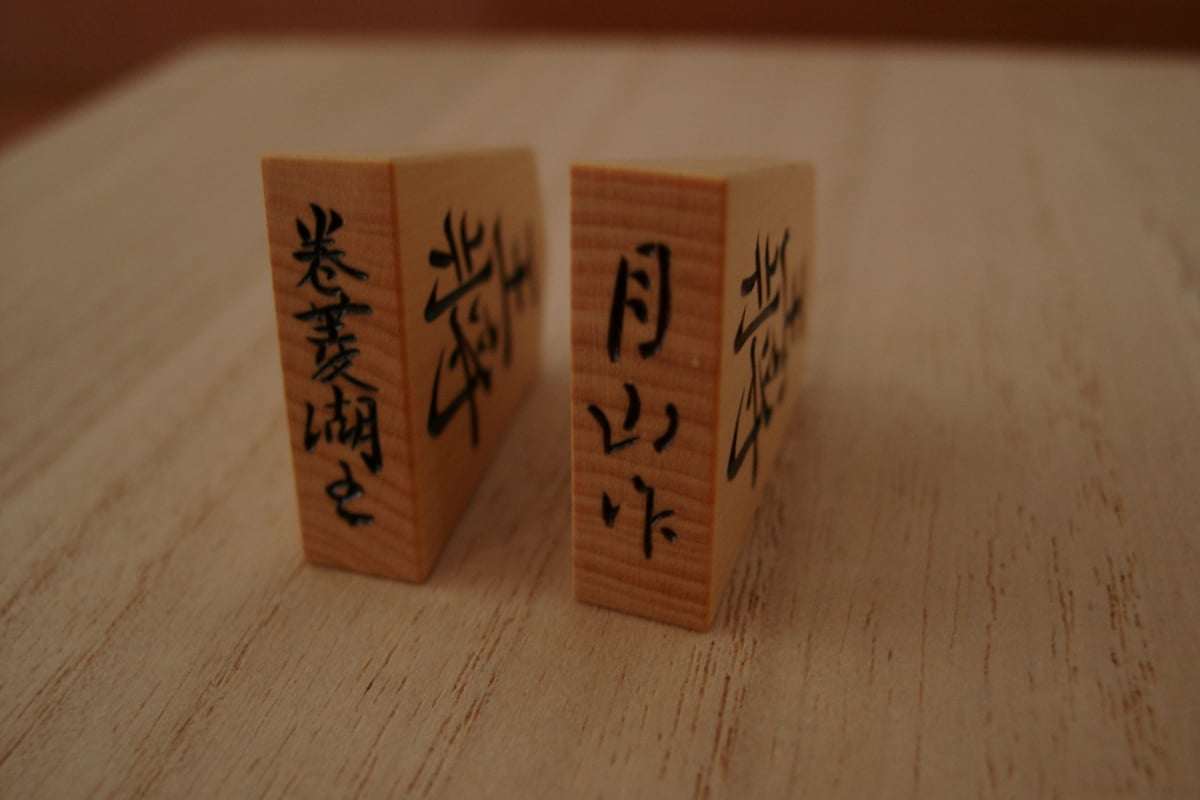
Tendo Shogi Goma (Tendo Shogi Pieces)
Tendo Shogi Goma
Tendo Shogi Goma are shogi (Japanese chess) pieces made mainly in Tendo City, Yamagata Prefecture, said to account for roughly 95% of national production. Their origins trace back to the late Edo period, when the financially struggling Tendo Oda domain encouraged lower-ranking samurai to make shogi pieces as a side occupation. The domain learned techniques from piece-makers in Osaka by way of the Yonezawa domain, and by the end of the Edo period the foundations of 'kaki-goma' (written pieces), made using cursive script, had been established. From the Meiji era onward, a division-of-labor system took shape and the area developed into a mass-production center, coming to boast the nation's largest output by the early Showa era. The raw material is boxwood (tsuge) from Mikurajima Island in the Izu Islands, sometimes called 'a jewel among woods,' and the pieces come in four types: kaki-goma (written), hori-goma (carved), horiume-goma (carved and lacquer-filled), and moriage-goma (raised-lacquer). Among these, moriage-goma, in which the characters are raised in lacquer, are considered the finest grade and are used even in shogi title matches. In 1996, the craft was designated a Traditional Craft Designated by the Minister of Economy, Trade and Industry.
Tokamachi Gasuri (silk kasuri)
Tokamachi Gasuri
Tokamachi Gasuri is a yarn-dyed (dyed before weaving) silk textile woven in Tokamachi City and Tsunan Town, Niigata Prefecture. Yarn-dyeing is a method in which the thread is dyed first and then woven into cloth. It inherited the techniques of traditional Echigo Chijimi (a bast-fiber textile) and was born in the mid-19th century when these techniques were applied to silk weaving. The weaver proceeds while aligning the patterns of warp and weft threads that have been partially dyed in advance, creating delicate designs that freely combine warp kasuri (ikat) and weft kasuri. Its appeal lies in the distinctive luster of silk and a calm, understated texture, and it is worn widely, from everyday kimono to stylish outing wear. Tokamachi has long been a weaving town and was known in the Edo period as a production area for Echigo Chijimi. From the Meiji period onward, it built its foundation as a silk textile production area with summer fabrics such as Tokamachi Akashi Chijimi, and from the Showa 30s (1955–1964) it also expanded into dyeing, represented by Tokamachi Yuzen. Today it is one of Japan's leading comprehensive kimono production areas, with techniques for both yarn-dyeing and piece-dyeing (dyeing after weaving), and Tokamachi Gasuri became a Traditional Craft Designated by the Minister of Economy, Trade and Industry in November 1982.
Tsukiyono Kiri Tansu (paulownia wood chest)
Tsukiyono Kiri Tansu
Tsukiyono Kiri Tansu is a chest of drawers made of paulownia wood, crafted continuously in the Tsukiyono district of Minakami, Tone District, Gunma Prefecture, since the workshop's founding in 1917 (Taisho 6). Paulownia wood is light and has an elegant grain, and because it slightly expands and contracts with humidity, it keeps a stable level of moisture inside a chest; compounds in its sap also help repel insects. For this reason, paulownia chests have long been valued as storage furniture that protects treasured kimono and other items from moisture and pests. The Tsukiyono district was blessed with easy access to high-quality paulownia timber, and artisans there handle every step in-house, from selecting and cutting the wood and drying the boards to joinery (sashimono) and fitting the metal hardware, producing sturdy chests that resist warping. Today, alongside chests in the traditional style, makers also produce paulownia chests and boxes designed for modern homes, and the craft is passed down as a representative woodworking technique of the region, designated a Gunma Prefecture Furusato Traditional Craft.
Akita Sugi Oke-Taru (Akita Cedar Barrels and Tubs)
Akita Sugi Oke-Taru
Akita Sugi Oke-Taru are wooden tubs (oke) and barrels (taru) made from Akita cedar, one of Japan's three great cedar forests, produced mainly in Noshiro City, Odate City, and Kita-Akita City in Akita Prefecture. A tub believed to date from the late Heian period has been excavated from the ruins of Akita Castle in Akita City, suggesting that the history of tub and barrel making in the region goes back a long way. During the Kyoho era of the Edo period, production areas were established under the protection of the Satake domain, and output grew on the strength of the region's abundant Akita cedar resources. Akita cedar has evenly spaced growth rings, resists warping, has a pleasant fragrance, and is highly water-resistant, making it well suited to containers for handling water and food, such as sake barrels, miso tubs, and rice containers. Uses are divided between tubs made from quarter-sawn wood and lidded barrels made from flat-grain wood, with hoops made of madake bamboo, copper, or brass. In May 1984 (Showa 59), it was designated a Traditional Craft Designated by the Minister of Economy, Trade and Industry.
Choshi Chijimi
Choshi Chijimi
Choshi Chijimi is a crimped cotton fabric (chijimi) woven in Choshi City, Chiba Prefecture. It is said to have originated when fishermen's wives began weaving it while praying for their husbands' safe voyages and a bountiful catch, and it has long been cherished as a summer kimono fabric prized for its distinctive texture. Its defining feature is the fine crinkled surface called 'shibo,' which is created by tightly twisting the weft threads, fixing the twist with starch, weaving the cloth on a loom, and then washing out the starch. The craft is said to date back to the Edo period, but production was interrupted in the late Taishō era, to the point that it came to be called a 'phantom textile.' It was later revived through the efforts of Tsuneyoda Shinjirō, who ran a cotton-processing business in Choshi, and in 1954 Choshi Chijimi was designated an Intangible Cultural Property of Chiba Prefecture, followed by its designation as a Chiba Prefecture-designated Traditional Craft in 1984. Today, third-generation weaver Tsuneyoda Shin'ichirō carries on the technique, exhibiting and selling products and offering indigo-dyeing experiences at the Choshi Chijimi Traditional Crafts Hall.
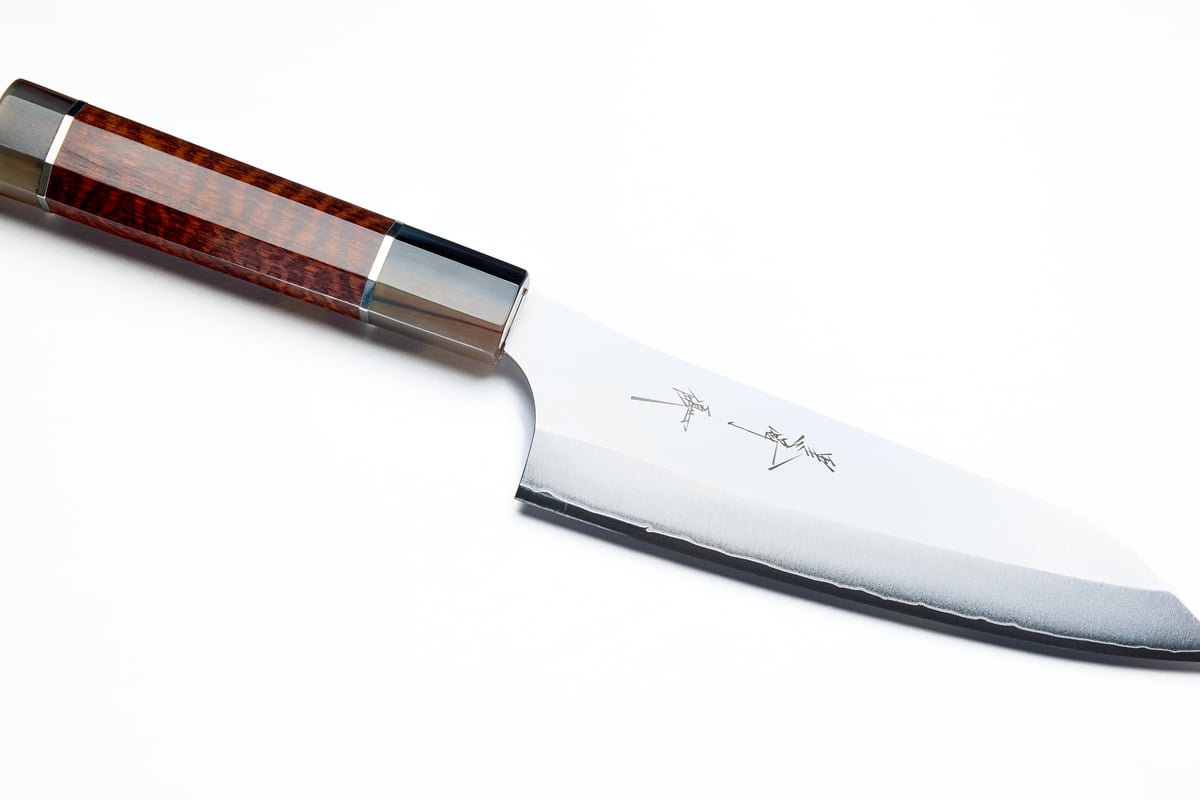
Echizen Uchihamono (Echizen Forged Blades)
Echizen Uchihamono
Echizen Uchihamono are forged blades made in Echizen City, Fukui Prefecture. They are said to have begun about 700 years ago in the Nanboku-cho period, when Chiyozuru Kuniyasu, a swordsmith from Kyoto, moved to Fuchu (present-day Echizen City) in search of good water for swordmaking and made sickles for the local farmers. In the Edo period the craft developed under the protection of the Fukui Domain. As Echizen lacquer-tapping craftsmen traveling around the country carried sickles with them and sold them, the name of Echizen blades spread far and wide. Techniques of hizukuri (hot forging) and hand finishing have been handed down, including 'nimai-hiroge,' in which two blades are stacked and hammered out together. The blades are known for being thin, light and exceptionally sharp, and today the main products are kitchen knives and other knives. In 1979, it became the first forged-blade craft to be designated a Traditional Craft Designated by the Minister of Economy, Trade and Industry. At Takefu Knife Village in the city, visitors can watch craftsmen at work up close.
Iriyama Menpa (bentwood lunch box)
Iriyama Menpa
Iriyama Menpa is a bentwood (magemono) lunch box handed down in the Iriyama district of Nakanojo, Agatsuma District, Gunma Prefecture. It is said to date back to the Bunka-Bunsei era of the late Edo period (early 19th century). In the mountainous Iriyama district, which had no notable industry besides agriculture and forestry, woodcraft developed as a livelihood that supported people's daily lives. It is made by softening thin boards of red pine in boiling water, bending them into a rounded shape, and stitching them together with strips of mountain cherry bark, without using any nails. Its distinctive oval shape is considered auspicious, and thanks to the wood's moisture-absorbing and aromatic properties, it draws just the right amount of steam from cooked rice to prevent it from becoming soggy, and the food stays fresh even in summer, making it widely used as a lunch box carried for mountain work in the past. The way the wood's color deepens with use is also part of its appeal, and it is designated a Gunma Prefecture Furusato Traditional Craft.
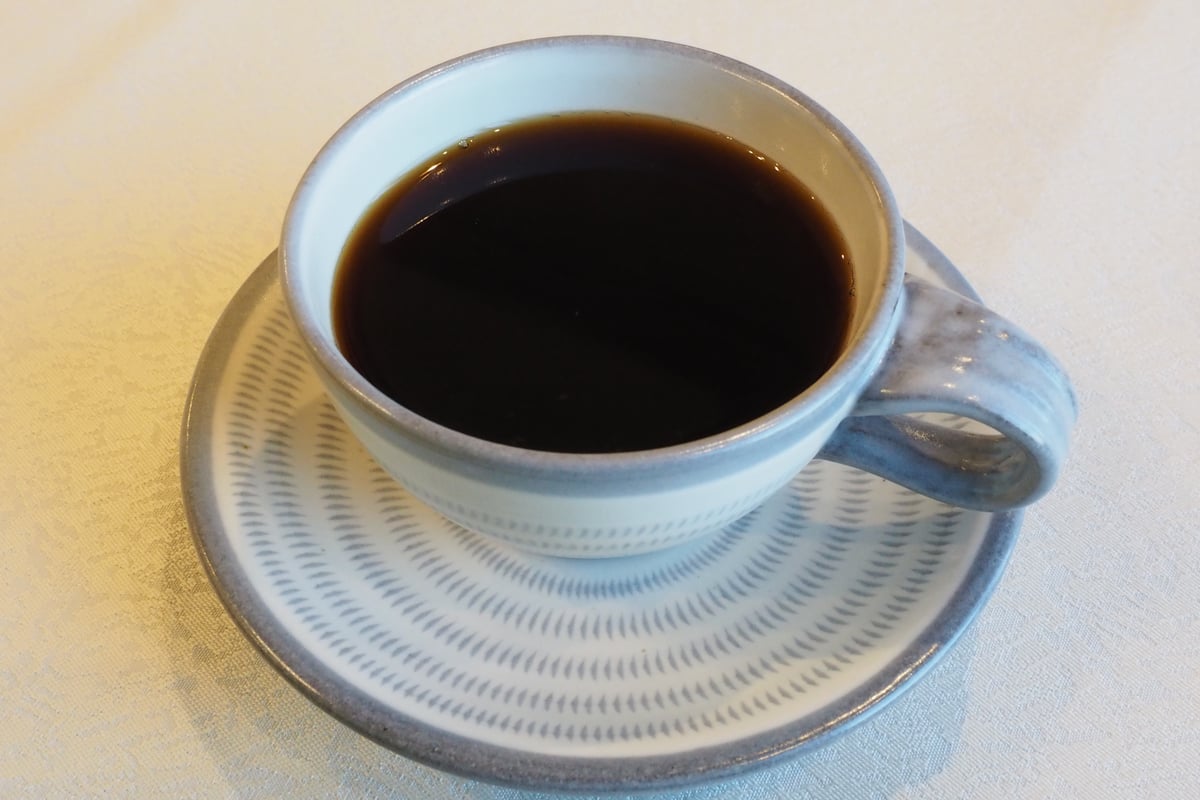
Koishiwara ware
Koishiwara-yaki
Koishiwara ware is pottery fired throughout the Koishiwara district of Toho Village, Asakura District, Fukuoka Prefecture, and is a Traditional Craft Designated by the Minister of Economy, Trade and Industry. It is said to have originated in 1682, when Kuroda Mitsuyuki, the third lord of the Chikuzen-Fukuoka domain, invited potters to open kilns in the area, modeling the venture on Imari, which was then flourishing as a center of ceramics production. Porcelain was also fired when the kilns first opened, but production gradually shifted toward everyday pottery, and the techniques have been passed down for about 340 years. Its most distinctive features are geometric patterns born from the movement of tools and hands — such as 'tobi-kanna' (flying-plane carving), in which a blade is pressed against the clay as it spins on the wheel to create rhythmic, chattered grooves, and 'hakeme,' in which patterns are brushed on with a stiff brush. Prized within the Mingei (folk-craft) movement as everyday tableware embodying the 'beauty of function,' it became the first pottery in Japan to be designated a national Traditional Craft, in 1975. Today around 50 kiln workshops remain active in the area, and the region's largest pottery market, the 'Minto Mura Matsuri,' is held each spring and autumn.
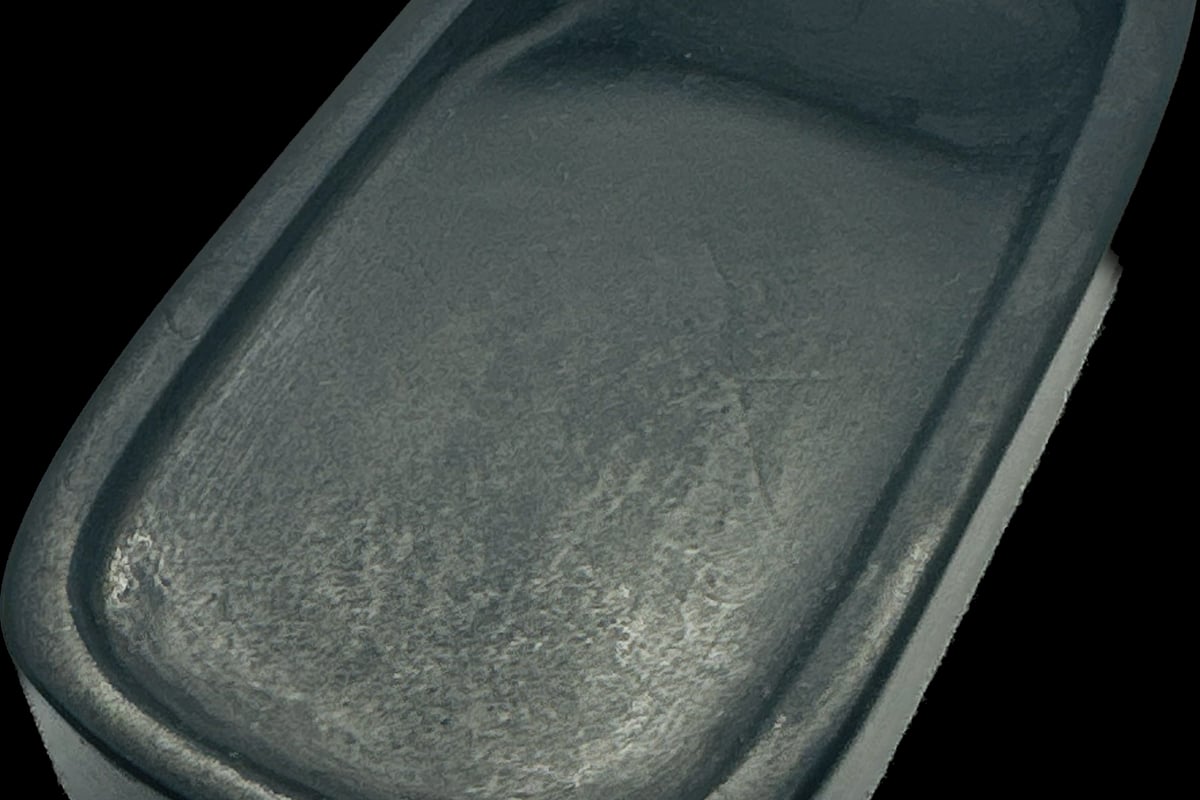
Koshu Amehata Inkstone
Koshu Amehata Inkstone
Koshu Amehata Inkstones are inkstones carved from 'Amehata Shinseki' (true Amehata stone), quarried in the Amehata district of Hayakawa Town, Yamanashi Prefecture. The stone is a black, dense slate (a rock formed from hardened mud that splits easily into thin layers) with no uneven patches. The fine, uniform particles on its surface, called 'hobo,' grind ink just right, and because it absorbs little water, it holds water well. It has long been regarded as a fine stone that surpasses even Chinese inkstones. The craft is said to have begun in Genroku 3 (1690), when Amemiya Magoemon, while traveling to worship at Mt. Minobu, picked up a black stone on the bank of the Hayakawa River and made it into an inkstone. Locally, an even older legend connected with Saint Nichiro, a disciple of Nichiren, has also been handed down. Today the production areas are Hayakawa Town and Fujikawa Town, and in Kajikazawa, Fujikawa Town, there are inkstone workshops that have continued for generations. In 1994 it was designated a Yamanashi Prefecture Designated Local Traditional Craft. At 'Amehata Suzuri no Sato Kenshoan' in Hayakawa Town, visitors can view renowned inkstones and try inkstone making.
Kyo-shikki (Kyoto Lacquerware)
Kyo-shikki
Kyo-shikki is a Kyoto lacquer craft nurtured alongside the court culture of Heian-kyo, characterized by "hon-katachi," a meticulous undercoating technique of applying lacquer in many layers to thin wooden bases, and by the beauty of maki-e, in which designs are drawn with gold and silver powder. Its origins are said to trace back to the relocation of the capital to Heian-kyo in 794; the "makkinru" technique born in the Nara period was passed down in the Heian period and perfected as togidashi maki-e and hira maki-e. As tea ceremony culture spread, demand for tea utensils also grew, and refined designs were honed to meet the requests of court nobles, temples and shrines, and tea masters. It received national Traditional Craft designation in 1976, and is highly regarded for combining a profound, elegant appeal with the qualities of "wabi" and "sabi" not found in lacquerware from other production areas. A single vessel passes through many processes, from base-wood making to undercoating, final coating, and decoration, before completion.
Matsumoto Furniture
Matsumoto Kagu (Matsumoto Furniture)
Matsumoto Furniture is Japanese-style furniture made mainly in Matsumoto City, Nagano Prefecture. It is thought to have begun as one of the commercial and industrial trades around Tensho 10 (1582), when a castle town took shape around Matsumoto Castle. Using solid wood such as keyaki (zelkova), mizume (Japanese cherry birch) and udaikanba (Japanese monarch birch), artisans have made tansu chests, display shelves, low tables, writing desks and more. Its characteristics are the sturdiness that comes from complex joinery techniques and a fuki-urushi (wipe-lacquer) finish that brings out the wood grain. Furniture making declined after the Pacific War, but prompted by a visit from Yanagi Soetsu, leader of the Mingei (folk craft) movement, Ikeda Sanshiro worked to revive it. The techniques cultivated through Japanese-style furniture are also applied to Western-style furniture such as chairs and tables. In 1976 it became a Traditional Craft Designated by the Minister of Economy, Trade and Industry. Visitors can see this furniture up close on Nakamachi Street in Matsumoto and at the Matsumoto Mingeikan (Matsumoto Folk Craft Museum).
Mizu Uchiwa
Mizu Uchiwa
Mizu Uchiwa is a summer tradition crafted around the Kawaramachi district of Gifu City, Gifu Prefecture - a truly one-of-a-kind fan that feels especially cool when dipped in water and fanned, thanks to the cooling effect of evaporation. Made by applying varnish to gampi paper pulped to an extreme thinness, it is prized for a transparency so fine that the scenery on the other side can be seen through it, a quality that developed uniquely within the history of Gifu Uchiwa fans, said to date back to the Muromachi period. Mizu Uchiwa developed as a souvenir associated with cormorant fishing on the Nagara River, but production once ceased due to difficulty obtaining gampi, the raw material, before being revived around the time of the 2005 World Exposition in Aichi. Artisans today still finish each fan entirely by hand.
Murakami Kibori Tsuishu (carved lacquerware)
Murakami Kibori Tsuishu
Murakami Kibori Tsuishu is lacquerware made in Murakami City, Niigata Prefecture. Delicate carving is applied to a wooden base of Japanese bigleaf magnolia (ho), Japanese horse chestnut (tochi), katsura, or similar woods, and natural lacquer is then applied over it again and again to finish it. Tsuishu (carved red lacquer) is originally a technique of Chinese origin in which patterns are carved into thickly built-up layers of red lacquer, but in Murakami the distinctive feature is that the wooden base itself is carved before the lacquer is applied. Its origin is said to date back about 600 years, when lacquer craftsmen who came from Kyoto to build temples passed on the techniques. In the Edo period, samurai of the Murakami domain learned carving from master craftsmen, and with the encouragement of successive domain lords, the craft spread from the samurai to the townspeople. Representative tsuishu is characterized by a calm surface texture achieved by giving the red top coat a matte finish, and the red grows more vivid with the passing years. Today, six techniques, including tsuishu, tsuikoku, and shudame-nuri, are collectively called Murakami Kibori Tsuishu. It was designated a Niigata Prefecture Intangible Cultural Property in 1955 and a Traditional Craft Designated by the Minister of Economy, Trade and Industry in February 1976.
Nagoya Yuzen
Nagoya Yuzen
Nagoya Yuzen is a dyed kimono textile produced mainly around Nagoya City in Aichi Prefecture. In contrast to the vivid, colorful palette of Kyo Yuzen, it is known for its subdued, tasteful tones. Its origins trace back to the 1730s in the early Edo period, when Tokugawa Muneharu, lord of the Owari domain, pursued an aggressive policy of prosperity that drew many Yuzen dyers back and forth between Kyoto, Edo, and Owari, bringing the technique to the region. After Muneharu's downfall, austerity edicts were imposed, refining the style toward restrained, monochromatic gradations. By the late Edo period, the production base for stencil-dyed 'kata-yuzen' had become established, and in the Taisho era, 'kuro-montsuki-zome' - dyeing that leaves family crests white against a black ground - was added. Today, the term Nagoya Yuzen collectively refers to three techniques: hand-painted yuzen (tegaki-yuzen), stencil yuzen (kata-yuzen), and black crest dyeing (kuro-montsuki-zome). It was designated a national Traditional Craft in 1983.
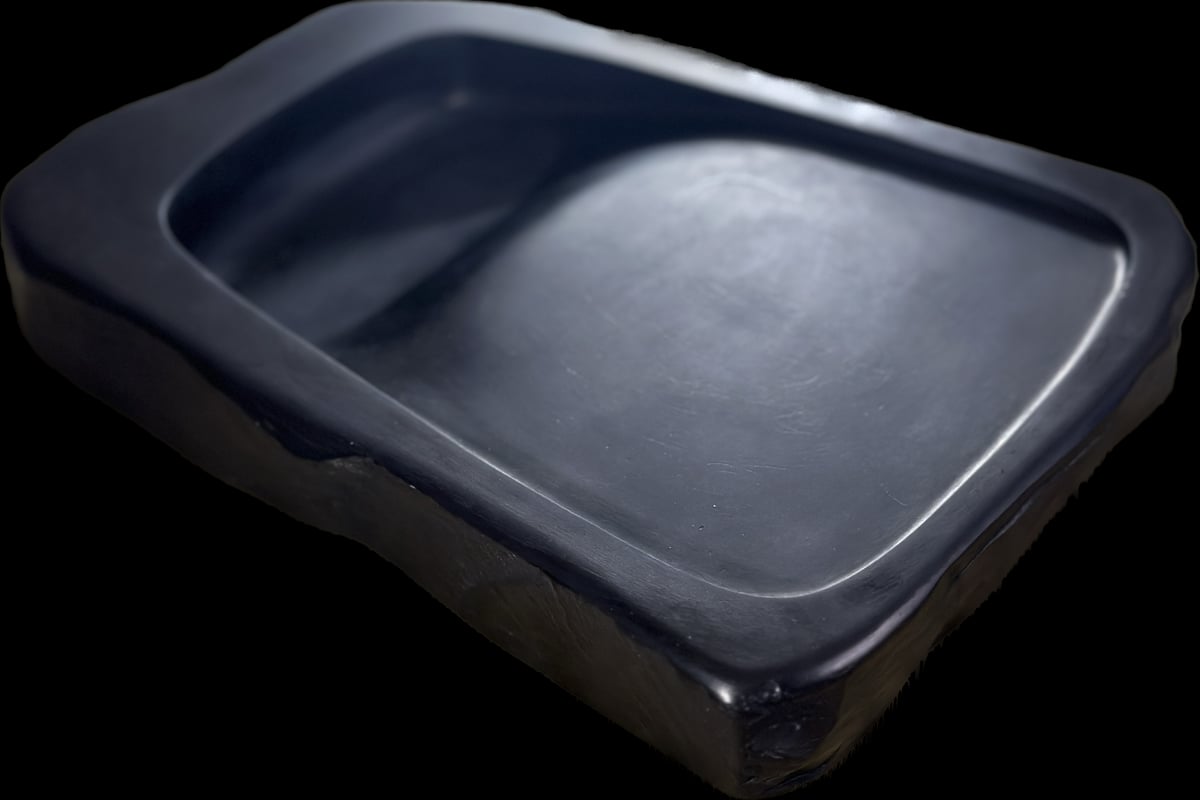
Ogatsu Suzuri
Ogatsu Suzuri
Ogatsu Suzuri are inkstones (suzuri) made in the Ogatsu district of Ishinomaki City, Miyagi Prefecture. Their raw material, gensho-seki (Ogatsu stone), is a black hard clay slate quarried from strata roughly 230 to 500 million years old. Its grain is uniform and fine, and it resists compression and bending while absorbing very little water, so it changes little over time - qualities that make it among the finest inkstone stones available. Ogatsu is said to have already been producing inkstone material around 1396, in the Muromachi era, and by the Edo period the stone is said to have been presented to Date Masamune, giving the craft a history of over 600 years. It was designated a Traditional Craft by the Minister of Economy, Trade and Industry (METI) on May 22, 1985, and at its peak, Ogatsu Suzuri accounted for more than 90% of all inkstones produced in Japan. The Great East Japan Earthquake (2011) caused severe tsunami damage throughout Ogatsu, destroying craftsmen's homes, workshops, and quarries. Even so, craftsmen resumed production using inkstones and tools found amid the rubble, and today they continue rebuilding the industry while also developing new products such as tableware in addition to inkstones.
Ogawa Washi (Hosokawa-shi)
Ogawa Washi (Hosokawa-shi)
Ogawa Washi is a handmade Japanese paper passed down in Ogawa Town and Higashichichibu Village in Saitama Prefecture. Among its traditional techniques, 'Hosokawa-shi,' which uses kōzo (paper mulberry) as its raw material, was designated a National Important Intangible Cultural Property in 1978, and in November 2014 it was registered, together with Honmino-shi (Gifu Prefecture) and Sekishu-banshi (Shimane Prefecture), as UNESCO Intangible Cultural Heritage under 'Washi, craftsmanship of traditional Japanese hand-made paper' — the first UNESCO registration in Saitama Prefecture. The name 'Hosokawa-shi' is said to derive from the technique having been transmitted to Ogawa from paper made in Hosokawa Village in the former Kii Province (present-day Wakayama Prefecture). Using only domestically grown kōzo as its raw material, the paper is made through traditional processes such as steaming, boiling, sorting out impurities, and beating the fibers, then hand-formed one sheet at a time using the 'nagashi-zuki' method with neri (a mucilage from the tororoaoi plant) added to the pulp. It combines strength with a beautiful, subtly lustrous texture and is highly regarded as a material for restoring old documents.
Okuaizu Woven Crafts
Okuaizu Amikumi-zaiku
Okuaizu woven crafts are basketry made from natural materials found in the mountainous Okuaizu region, centered on Mishima Town, Onuma District, Fukushima Prefecture -- wild grape vine (yamabudo), hiroro (a type of sedge), and matatabi (silver vine) -- and are a Nationally Designated Traditional Craft. Their history as hand work carried on during the snow-covered season is ancient: artifacts bearing traces of weaving have been found at Mishima Town's Arayashiki archaeological site (late Jōmon period, about 2,500 years ago), and the craft is also said to carry on Jōmon culture into the present. Edo-period regional records also document the making of baskets and sieves using hiroro, matatabi, and wild grape vine. In the 1965-1974 period, the craft's survival was threatened by a decline in successors, but in 1981 (Showa 56) Mishima Town launched the 'Everyday Crafts Movement,' working to pass on the techniques through guidance from craftspeople and exhibitions. Tools with a distinct texture for each material -- hand baskets, confectionery containers, kitchen implements, and more -- continue to be made today.
Osaka Karaki Sashimono (Osaka Exotic Hardwood Cabinetry)
Osaka Karaki Sashimono (Osaka Exotic Hardwood Cabinetry)
Osaka Karaki Sashimono (大阪唐木指物) is furniture and furnishings made from imported woods such as rosewood (shitan) and ebony (kokutan). These woods have long been called 'karaki,' meaning rare woods that came from the land of Tang (China). Sashimono refers to the technique of making furniture and boxes by joining boards together. In the Edo period, karaki was shipped into Nagasaki, and Osaka's medicinal-herb wholesalers are said to have handled all of it. Osaka thus became a place where karaki gathered, and by the mid-Edo period a production center for karaki sashimono had formed. The main products include display shelves, tea shelves, low tables for tatami rooms and flower stands. They are assembled without nails or screws, using joints called kumite. A finish in which raw lacquer is rubbed in many times produces a deep color and a calm luster. In 1977 (Showa 52), it was designated a Traditional Craft Designated by the Minister of Economy, Trade and Industry.
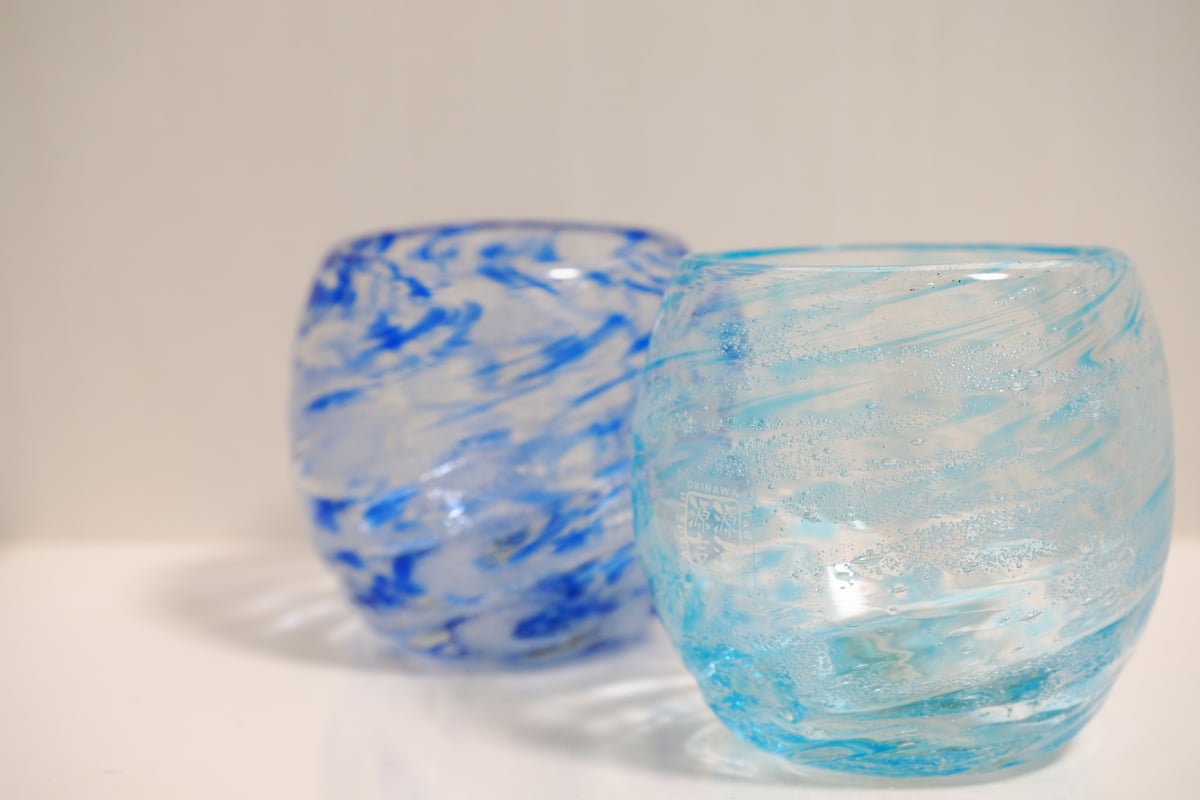
Ryukyu Glass
Ryukyu Glass
Ryukyu Glass is blown-glass craftware made in Okinawa Prefecture. Glassmaking in Okinawa is said to have begun around 1900, when glassblowers who had come from Kagoshima, Nagasaki, and Osaka set up workshops in Nishimachi, Naha City, producing everyday items such as medicine bottles and lamp chimneys. Much of the industry and its raw materials were lost during World War II, but after the war, artisans turned to empty beer and cola bottles discarded by the occupying US military bases, melting them down to bring glassmaking back to life. Because these discarded bottles contained impurities such as label residue, the finished pieces often contained countless tiny bubbles - a trait that came to be prized as the distinctive texture known as 'awa-garasu' (bubble glass), and together with the soft, muted colors derived from recycled bottles, became one of the defining charms of Ryukyu Glass. In the 1950s, orders from US military personnel increased, and colorful Western-style glass tableware spread as the industry's mainstay product. Today, workshops are scattered around Itoman City, Tomigusuku City, and Nago City, and in 1998 Ryukyu Glass was designated a Traditional Craft of Okinawa Prefecture.
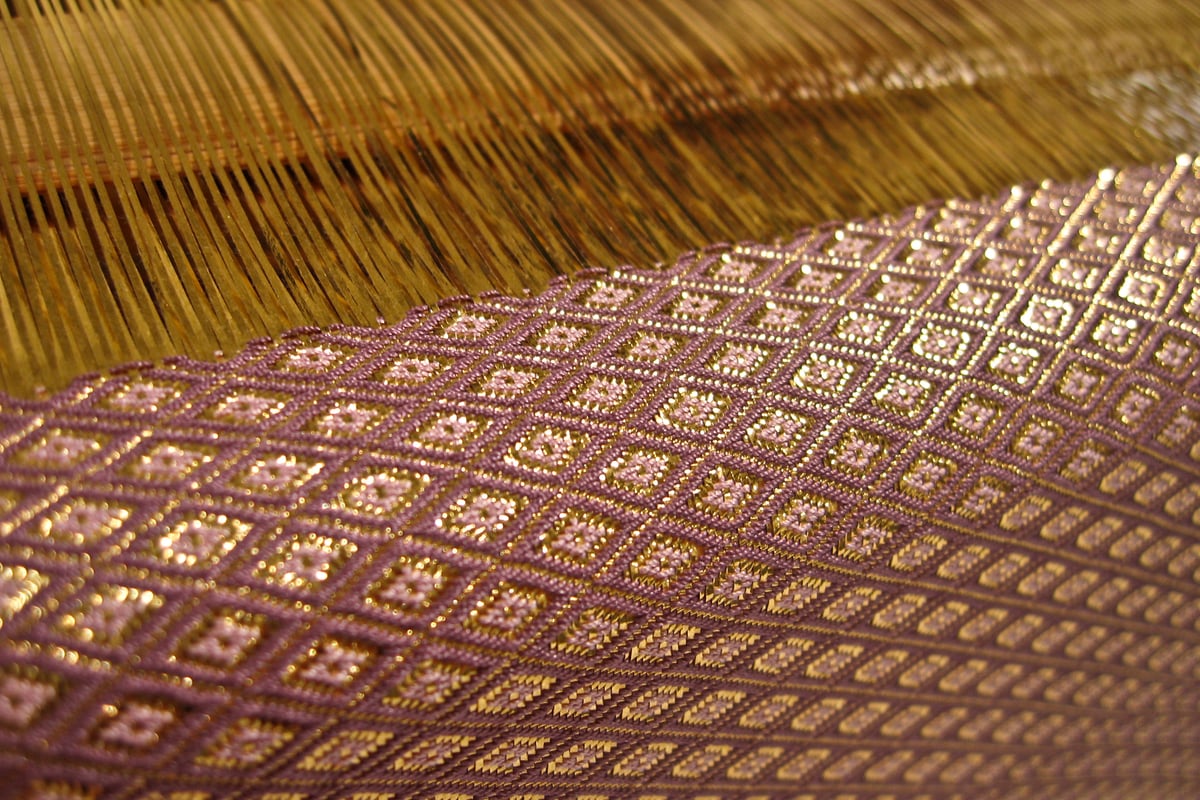
Saga-nishiki (Saga brocade)
Saga-nishiki
Saga-nishiki is a hand-woven silk textile in which the warp is made of 'foil thread'—gold and silver leaf glued onto washi paper with lacquer and cut into fine strips—while the weft is silk thread. It is said to originate in the Bunsei era (1818-1830) of the late Edo period, when Lady Kashiwaoka, wife of the 9th lord of the Kashima-Nabeshima family of Hizen Kashima Domain, was inspired by the beauty of the ajiro lattice pattern on the ceiling above her sickbed. Lady Yanagioka, wife of the 11th lord, and Kuzuko, wife of the 13th lord, developed it further as a pastime craft woven with paper and cotton threads, and it was later refined into a luxury textile using gold and silver foil thread together with silk. For a long time it was known by names such as 'okumimono,' 'kumi-nishiki,' and 'Kashima-nishiki,' but after it was exhibited to great acclaim at the 1910 Japan-British Exhibition in London, it came to be known uniformly as 'Saga-nishiki,' a name that identifies its place of origin. Its defining feature is the shimmer of gold and silver woven into intricate geometric patterns, used for obi sashes and small accessories.
Suruga Lacquered Geta
Suruga Nuri Geta (Suruga Lacquered Geta Clogs)
Suruga Lacquered Geta (Suruga Nuri Geta) are lacquered geta clogs made in Shizuoka City. They are characterized by lacquer applied to the wooden base and by gorgeous decoration with maki-e, carving and other techniques. They are said to have begun in the Meiji period, when the geta maker 本間久次郎 conceived of high-end lacquered geta by applying lacquer to geta, which until then had been inexpensive everyday items. Mass production was pursued using light Abe cedar (Abe-sugi), and once the geta were shipped through wholesalers they became a nationwide fashion. In the Taisho period, craftspeople from the struggling export lacquerware industry turned to making lacquered geta. The kawari-nuri (decorative lacquer finishes) techniques of Suruga Lacquerware were applied to geta as well, and the area grew into such a production center that people said, 'For high-end lacquered geta, it has to be Shizuoka.' Today they are designated a Shizuoka Prefecture Designated Local Traditional Craft, and craftspeople in the city carry on the traditional techniques.
Suzuka Sumi (Suzuka Ink Sticks)
Suzuka Sumi (Suzuka Inksticks)
Suzuka Sumi is solid ink (ink sticks) for calligraphy made in Suzuka City, Mie Prefecture. Soot (susu) is kneaded and hardened with animal glue (nikawa: an adhesive made from animal hides and bones), formed in wooden molds, and finished by drying over a long period. Its origins are said to go back to the Enryaku era (782-806), and it is said to have begun with collecting soot by burning pine from the mountains of Suzuka. In the Edo period, it received the protection of the Kishu Domain, and demand grew with the writing of daimyo family crests and the spread of terakoya (private elementary schools). With good color development and an elegant depth, it is used by many calligraphers as an ink in which the core of the line and the bleed harmonize well. In 1980 (Showa 55), it became the first sumi ink to be designated a Traditional Craft Designated by the Minister of Economy, Trade and Industry. Today, 進誠堂 in Jike, Suzuka City, is said to be the only maker of Suzuka Sumi. The certified traditional craftsperson 伊藤亀堂 and 伊藤晴信, the son of 伊藤亀堂, carry on the techniques.
Takashima Senkotsu (Takashima Folding Fan Ribs)
Takashima Senkotsu
Takashima Senkotsu are the bamboo ribs of folding fans, made in Takashima City, Shiga Prefecture, especially along the Ado River basin. The region produces roughly 90% of all fan ribs distributed in Japan. It is said to have begun in the Edo period as a side occupation during the winter farming off-season, making use of madake bamboo planted along the Ado River. Craftsmen make a distinction between oyabone, the outer ribs that support both ends of the fan, and nakabone, the inner ribs that fan out from the pivot, and the process of splitting, shaving, and polishing the bamboo runs to about 18 steps for the oyabone and about 16 for the nakabone, each handed from one specialized craftsman to the next in a division-of-labor system. Most finished fan ribs are sent to fan wholesalers in Kyoto, where they are papered and painted to become 'Kyo-sensu' (Kyoto folding fans) — making Takashima the unsung backbone that supports the glamorous Kyoto fan industry from behind the scenes. In recent years, efforts have also spread to create original local products, such as cloth fans using Takashima fan ribs.
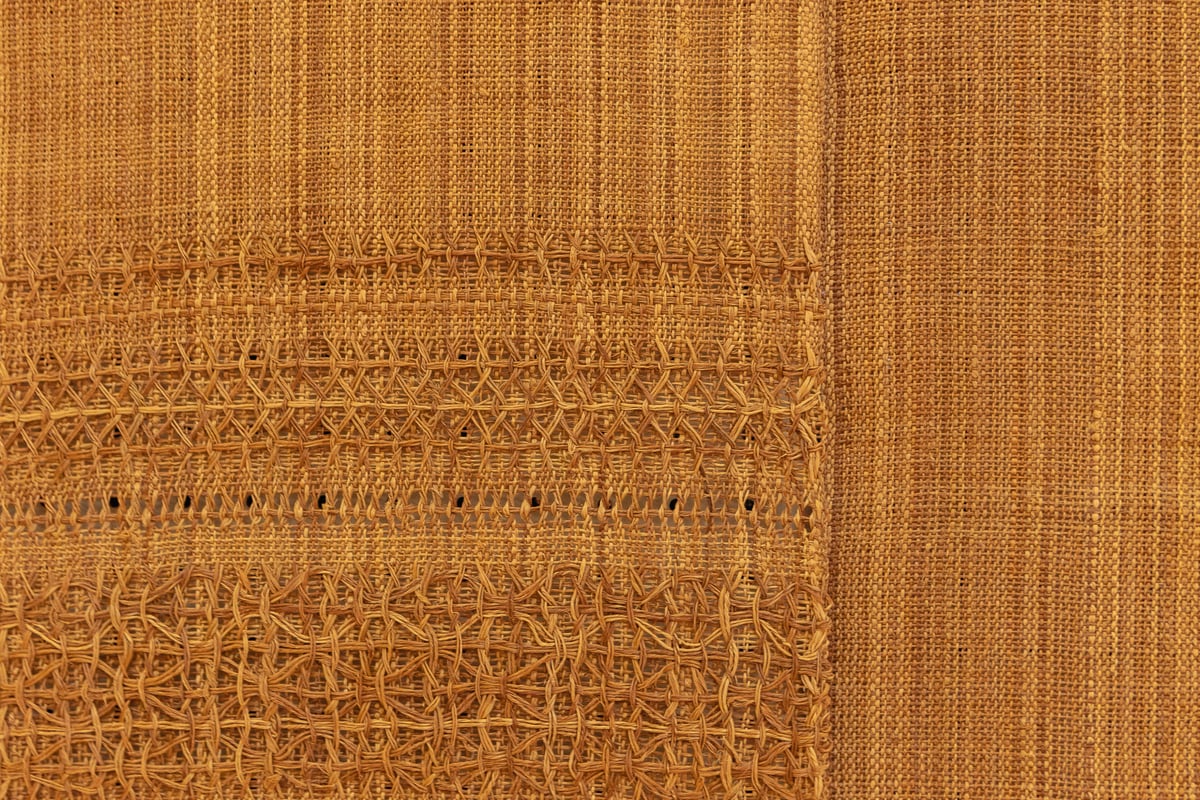
Uetsu Shinafu (bark-fiber cloth)
Uetsu Shinafu
Uetsu Shinafu is a cloth handed down in the Sekigawa district of Tsuruoka City, Yamagata Prefecture, and the Yamakumada and Kaminari districts of Murakami City, Niigata Prefecture, made by spinning thread from the bark fibers of trees such as the Japanese linden and the giant-leaved linden and weaving it into cloth. As a textile made from tree bark, it is considered the oldest of its kind in Japan, and as one of the 'primitive cloths' said to date back to the Jomon period, it is counted among Japan's three great ancient cloths, alongside Okinawa's bashofu (banana-fiber cloth) and Shizuoka's kuzufu (kudzu-fiber cloth). Every step, from thread-making to weaving, is done entirely by hand, and the cloth takes about a year to complete through roughly 22 processes. It is durable and water-resistant, and grows more supple in texture the more it is used. It was once used for work clothes, rice sacks, and fishing nets, but today it lives on in the form of hats, bags, obi sashes, and other items. In 2005, the shina cloth of the three production areas spanning Yamagata and Niigata was designated a Traditional Craft Designated by the Minister of Economy, Trade and Industry under the name 'Uetsu Shinafu.'
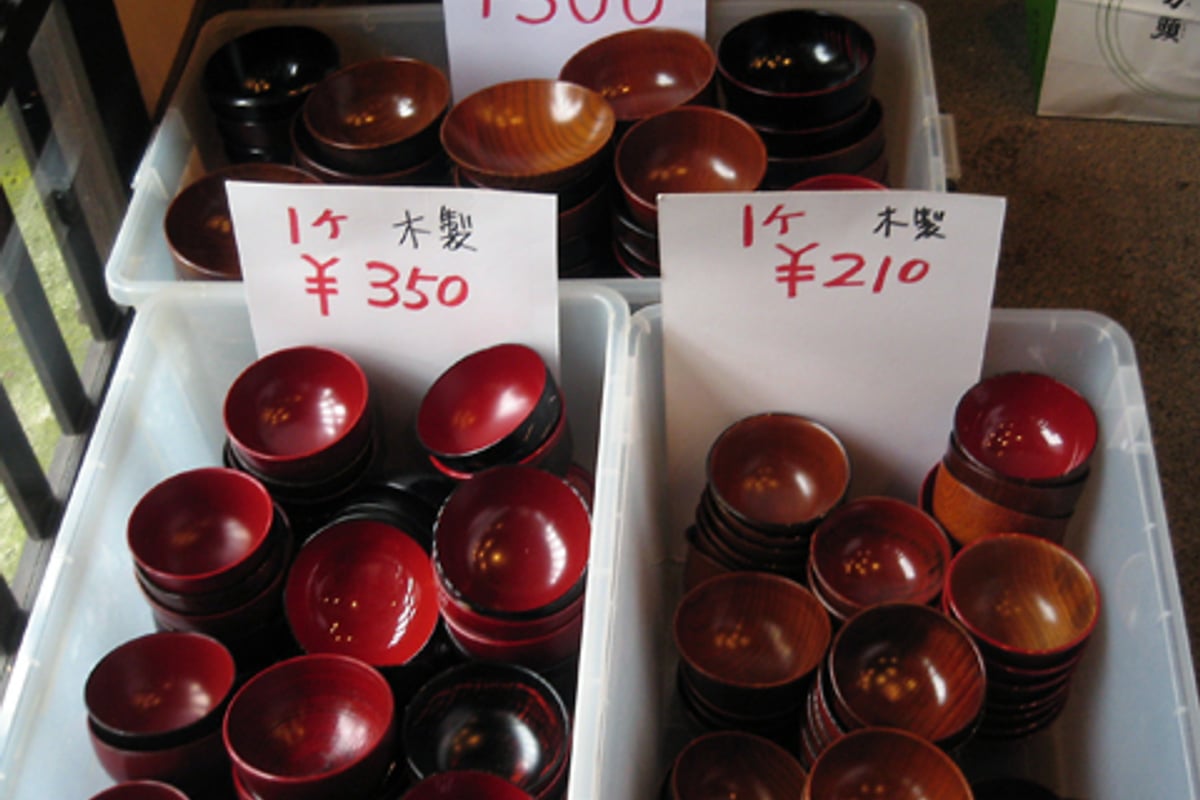
Yamanaka Lacquerware
Yamanaka-shikki
Yamanaka Lacquerware is produced mainly in the Yamanaka Onsen district of Kaga City, Ishikawa Prefecture, and is known for its exceptional wood-turning skill, earning it the nickname 'Yamanaka of the woodwork.' It is said to have begun in the Azuchi-Momoyama period, when a group of wood-turning craftsmen who traveled from mountain to mountain making bowls and trays on lathes settled in the Masago area upstream of Yamanaka Onsen and began turning wood there. During the Edo period, lacquering and maki-e techniques were introduced from Aizu, Kyoto, and Kanazawa, adding decorative turning and vermilion-tinted lacquering techniques unique to the region. Its greatest characteristic is its lathe-turning craftsmanship: 'tategi-dori,' cutting wood along the grain to produce a beautiful, warp-resistant base, along with intricate decorative turning techniques unmatched elsewhere, such as 'sensuji,' carving a dozen or more fine lines into a width of just three millimeters, and 'usubiki,' turning wood so thin it becomes translucent. In the field of turned woodwork, its craftsmen are considered top-class nationwide in both skill and numbers, and it was designated a national Traditional Craft in 1975.
Echizen Tansu (Echizen Chests)
Echizen Tansu
Echizen Tansu are chests made mainly in the Takefu district of Echizen City, Fukui Prefecture. They are assembled from solid zelkova or paulownia wood using 'sashimono' joinery, a technique that uses no nails. To this are added lacquer coating that draws on the skills of Echizen Shikki and decorative iron fittings that draw on the blacksmithing techniques of Echizen Uchihamono. By combining several advanced techniques, the chests are given a solid, stately presence. Craftsmen skilled in woodworking settled in the area from the late Edo period, and by the mid-Meiji period, chest makers had formed the core of what became known as 'Tansu-machi' (Chest Town). Even today, chest shops and workshops are concentrated along Tansu-machi Street. The heart-shaped 'inome' motif used on the fittings is a pattern meant to ward off evil. In 2013 it became a Traditional Craft Designated by the Minister of Economy, Trade and Industry.
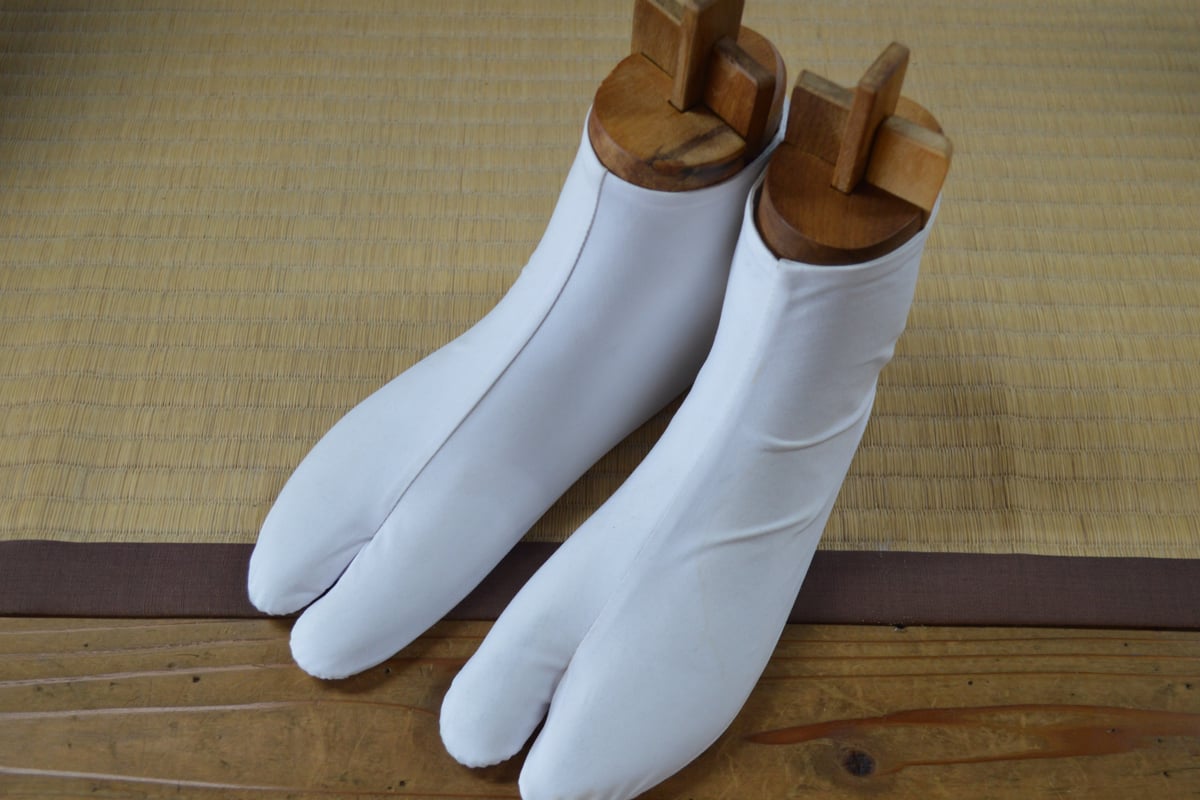
Gyoda Tabi
Gyoda Tabi
Gyoda Tabi is the traditional technique of tabi (split-toe sock) making handed down in Gyoda City, Saitama Prefecture, and is a Traditional Craft Product designated by the Minister of Economy, Trade and Industry (METI). Lying between the Tonegawa and Arakawa rivers, Gyoda has sandy alluvial soil, abundant water, and a hot, humid summer climate well suited to growing cotton and indigo, and in the Edo period it became a major production center for the indigo-dyed cotton cloth known as 'aojima.' Building on this cotton cloth and its sewing techniques, tabi making is said to have begun around the Jokyo-Kyoho era (late 17th to early 18th century), and by the Tenpo era the town had grown to house 27 tabi shops side by side. When sewing machines were introduced in the Meiji era, production expanded dramatically, and by 1938 Gyoda accounted for 80% of the nation's tabi output, making it Japan's leading tabi-producing area. Numerous 'tabi-gura' storehouses built of earthen walls and brick, which convey the prosperity of that era, still remain throughout the city, and in 2017 the city was certified as a Japan Heritage site under the title 'Tabi-gura Town of Gyoda, Supporting the Feet of Japanese Kimono Culture.' A collection of 5,484 related items has also been designated a Nationally Designated Important Tangible Folk Cultural Property, and local makers continue to produce a wide range of tabi today, from those for kimono wear to festival and running tabi.
Ichii Ittobori
Ichii Ittobori
Ichii Ittobori is a wood carving art produced mainly in Takayama City in the Hida region of Gifu Prefecture. Its greatest characteristic is that it uses ichii (Japanese yew), the prefecture's official tree, entirely without coloring, letting the wood's natural grain and hues speak for themselves. It is said to have begun in the late Edo period when Matsuda Sukenaga, a netsuke carver from Takayama, took note of the beauty of ichii wood grain and began carving frogs, turtles, animals, and other subjects, making full use of the sharp marks left by chisels and small knives. Ichii wood has a striking contrast between its whitish outer layer, called 'shirata,' and its reddish inner layer, called 'akata,' and skillfully carving to bring out this two-toned contrast creates the craft's distinctive sense of shading. Designated a national Traditional Craft in 1975, carvers centered in Takayama City continue to pass down the technique today.
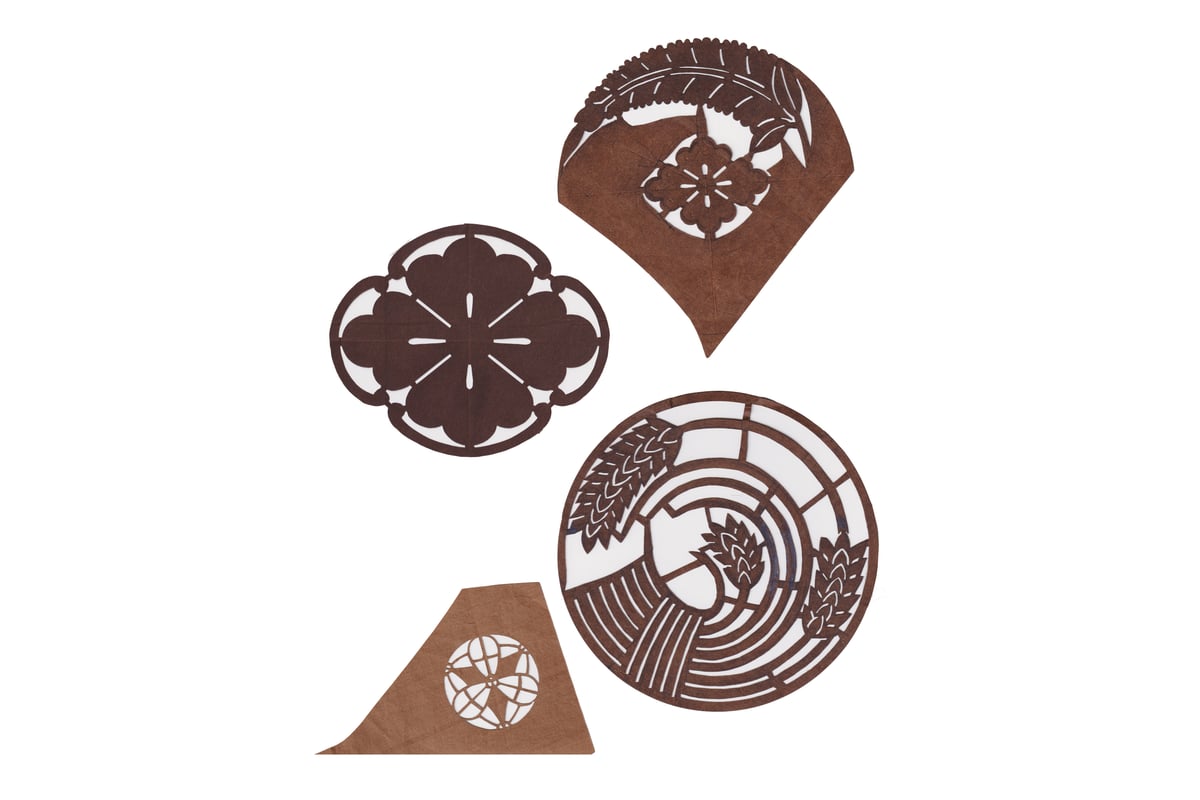
Ise Katagami (Ise Dyeing Stencils)
Ise Katagami (Ise Paper Stencils)
Ise Katagami are stencils used to dye patterns and designs onto kimono fabric, made mainly in the Shiroko, Jike and 江島 districts of Suzuka City, Mie Prefecture. The name is also written '伊勢型紙.' They are made by cutting designs with fine-tipped carving knives into katajigami (stencil base paper), which is Mino washi laminated with kakishibu (persimmon tannin). They are used for dyeing yuzen, komon (fine-patterned kimono), yukata and more, and it is said that almost all komon are dyed with Ise stencils. There are various theories about their origins, but stencils are thought to have been in use by the end of the Muromachi period. In the Edo period, they received the protection of the Kishu Domain, and stencil merchants spread their name by peddling them throughout the country. There are four carving techniques: kiribori, tsukibori, dogubori and shimabori. In 1955 the techniques were designated a national Important Intangible Cultural Property, and in 1983 the stencils were designated a Traditional Craft Designated by the Minister of Economy, Trade and Industry under the name '伊勢形紙.' In recent years, their use in interiors, such as lighting, framed pieces and fittings, has also been spreading.
Itaya-zaiku (Itaya Maple Basketry)
Itaya-zaiku
Itaya-zaiku is a type of basketry made in the Kumojikari area of Kakunodate, Semboku City, Akita Prefecture, in which young Itaya maple trees are split into thin strips and woven together. It is said to have begun around the Kansei era (around 1790) as a side occupation for farming households during the winter agricultural off-season, and has been passed down for more than 200 years. In the past, the craft mainly produced practical farm tools such as the waist basket known as 'kakkobe,' resembling a fish creel, along with baskets for farm work and mi (winnowing baskets), but over time it has broadened into craft items such as hand baskets, serving trays, and the toy horse known as Itaya-uma. The trunk of the Itaya maple used as material is split evenly to a thickness of less than 1mm and woven by hand using basketry techniques. In addition to being light and durable, it develops an amber color and deepens in character with use, an appealing change over time. It is a Prefecturally Designated Traditional Craft of Akita Prefecture, and today only two households in the Kumojikari area continue to make and sell it.
Kanazawa Gold Leaf
Kanazawa-haku
Kanazawa Gold Leaf is gold leaf produced mainly in Kanazawa, Ishikawa Prefecture, and accounts for over 99% of all gold leaf used in Japan. Its origins are said to trace back to 1593, when Maeda Toshiie, founder of the Kaga domain, ordered gold leaf production to begin in Kanazawa while on campaign accompanying Toyotomi Hideyoshi's invasion of Korea. During the Edo period, the shogunate issued a ban restricting gold and silver leaf production to Edo and Kyoto, but the Kaga domain continued making it in secret, refining techniques to produce large quantities of high-quality gold leaf from limited materials. In 1864, thanks to the efforts of its craftsmen, gold leaf production was finally officially authorized as work for the shogunate. After the Meiji Restoration, while Edo's leaf makers declined, Kanazawa's gold leaf industry continued to grow. The craftsmanship of hammering an alloy of pure gold with a small amount of silver and copper into sheets roughly one ten-thousandth of a millimeter thick, together with Kanazawa's favorable climate and water quality, has produced a level of skill unmatched by any other region. It was designated a material for Traditional Crafts in 1977.
Koshu Oishi Tsumugi (Pongee Silk)
Koshu Oishi Tsumugi
Koshu Oishi Tsumugi is a hand-woven silk fabric that has long been woven in the Oishi district of Fujikawaguchiko Town, Yamanashi Prefecture, and its official name in the prefectural designation is 'Koshu Oishi Tsumugi Orimono.' In this area on the northern shore of Lake Kawaguchi, everything from sericulture to thread making and weaving has been done by hand in one continuous process. The warp uses thread from honmayu (single cocoons), each spun by one silkworm, and the weft uses thread from tamamayu (double cocoons), spun jointly by two silkworms. The thread is drawn out of the cocoons by hand with a tool called a zaguri. The fabric is characterized by a texture that is strong, light and soft, with the smoothness unique to silk. For textiles of the Gunnai region, there is a record of silk being presented to the imperial court in 915. In the late Edo period, the fabric was sold widely by members of the Fuji-ko (Mt. Fuji worship groups) and by peddlers. In 1994 it was designated a Yamanashi Prefecture Designated Local Traditional Craft. At the Oishi Tsumugi Traditional Craft Museum, visitors can watch weaving and try hand weaving.
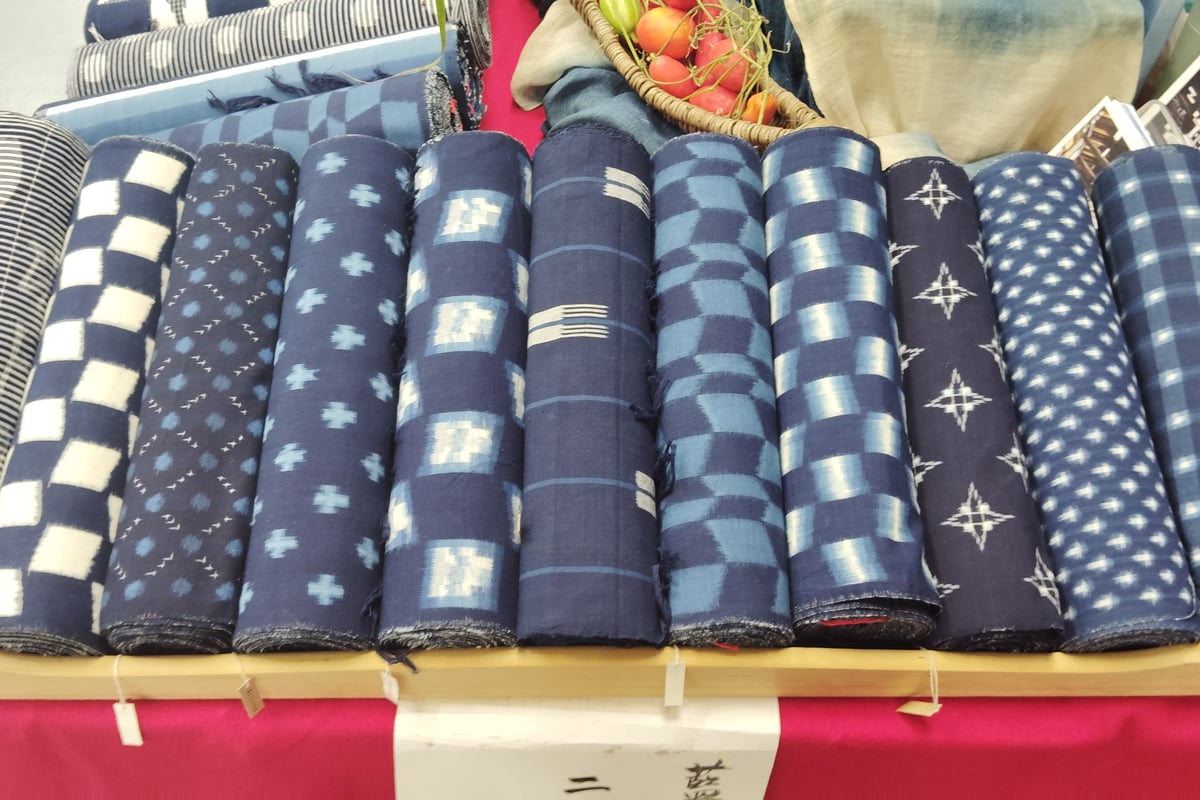
Kurume Kasuri (Kurume ikat cotton weave)
Kurume Kasuri
Kurume Kasuri is an indigo-dyed cotton ikat cloth woven in the area of the former Kurume domain, centered on present-day Kurume City in Fukuoka Prefecture, and is one of Japan's three major ikat weaves alongside Iyo Kasuri and Bingo Kasuri. It is said to have been created by a woman named Inoue Den in the late Edo period. At the age of 13, she noticed white speckles on the faded parts of a worn indigo-dyed kimono and devised a technique of binding threads beforehand to dye them selectively, producing an ikat pattern of mottled navy and white threads that came to be called 'Kasuri.' From binding the threads to resist the dye and dyeing them in indigo ('kukuri'), to untying the dyed threads and weaving them while matching the pattern, the cloth still passes through around 30 processes even today, when mechanization has advanced, and takes several months to complete. It is known for its rustic, warm texture with softly blurred outlines. It was designated an Important Intangible Cultural Property in 1957 and a national Traditional Craft in 1976.
Kyo-sashimono (Kyoto Joinery)
Kyo-sashimono
Kyo-sashimono is a Kyoto woodworking craft made without metal nails or other joining fittings, instead using "kumite" joinery techniques that fit wooden boards to boards and rods to boards, along with mortise-and-tenon joints. Its origins are said to trace back to the court culture of the Heian period, and it developed by incorporating culture that arrived from China and Korea into distinctly Japanese woodworking techniques of the kind seen in the Shosoin Repository. From the Muromachi period onward, specialized sashimono craftsmen emerged, and as tea ceremony culture spread, refined techniques were honed for both sashimono as furnishings and sashimono as tea utensils. It is characterized by discerning use of woods suited to their properties — lightweight, warp-resistant paulownia; soft, smooth cedar; and sturdy, luxurious zelkova — assembled with precision while making the most of the wood grain's beauty. It is used for a wide range of items including Kyo-tansu chests, shelving, tea utensils, and inkstone boxes, and it received national Traditional Craft designation in 1976.
Nabeshima Dantsu (Nabeshima carpet)
Nabeshima Dantsu
Nabeshima Dantsu is Japan's oldest cotton dantsu (hand-woven rug), originating in Ōgimachi village, Kase district, on the outskirts of the Saga castle town. It is said to have begun during the Genroku era of the Edo period (1688-1704), when a farmer named Koga Seiemon learned the art of dantsu weaving from a Chinese craftsman in Nagasaki and wove the first pieces as 'Ōgimachi mosen.' Although the technique is believed to have traveled from Central Asia through Turkey and China before reaching Japan, Nabeshima Dantsu differs from overseas dantsu, which typically use wool, in that it uses high-quality cotton—such as that produced in Shiroishi, Saga Prefecture—for both the warp and the weft. When Nabeshima Tsunashige, the third lord of Saga Domain, took a liking to its reputation, he granted the weaver a stipend of rice and placed it under the domain's protection, making it an official product of the domain; sale to the general public was forbidden for a long time as a result. General sale began in the Meiji era, and it was even exhibited at the 1873 Vienna World's Fair. Today it is still handed down as a precious craft, woven piece by piece with care by artisans using hand looms that remain unchanged for centuries.
Niigata Shikki (lacquerware)
Niigata Shikki
Niigata Shikki is lacquerware made in Niigata City. It is said to have begun in the Genna era (1615–1624) at the start of the Edo period, when Shunkei-nuri from Akita (Noshiro) was introduced. In the 15th year of Kan'ei (1638), an area where lacquerware was sold exclusively, called 'wandana,' was established in what is now Furumachi 7-bancho. The port town of Niigata was a port of call for the Kitamaebune trading ships, a place where goods and culture gathered, and a variety of lacquering techniques from around the country were brought here. For this reason, Niigata Shikki is called 'a treasure trove of kawari-nuri (decorative lacquer finishes),' and several dozen types of finishes are said to have been handed down. Among them, 'take-nuri (bamboo-imitation lacquer),' so realistic it can be mistaken for real bamboo, is known as a rare finish not seen in other production areas. In March 2003, five techniques, hana-nuri, ishime-nuri, nishiki-nuri, isogusa-nuri, and take-nuri, became a Traditional Craft Designated by the Minister of Economy, Trade and Industry. Chopsticks, trays, bowls, business card holders, and other items remain popular today as tools for everyday life.
Okuaizu Showa Karamushi-ori (Karamushi Ramie Weaving)
Okuaizu Showa Karamushi-ori
Okuaizu Showa Karamushi-ori is a traditional textile woven in Showa Village, Onuma District, Fukushima Prefecture, using thread spun from the fibers of karamushi (ramie), and it is a Traditional Craft Designated by the Minister of Economy, Trade and Industry. Karamushi cultivation in Showa Village is said to date back to the Muromachi period, and tradition holds that it was encouraged as an industry under the Aizu domain lord Gamō Ujisato. A document known as the 'Aoso-hatake Shomon' (blue-ramie field deed) dating to 1756 in the Edo period survives today, attesting to nearly 600 years of continuous cultivation. Karamushi is a plant fiber prized for its excellent moisture absorption and quick-drying properties, and it is also known as a raw material for premium textiles such as Ojiya-chijimi and Echigo-jofu. In Showa Village, every step from harvesting to fiber extraction, thread spinning, and weaving is still done by hand today, and since 1994 the village has run the 'Karamushi Weaving Trainee (Orihime/Hikoboshi)' program, inviting young people from outside the village to help pass the techniques on to the next generation. At the Michi-no-Eki Karamushi-ori no Sato Showa roadside station, visitors can learn about the process from cultivation to weaving at the Karamushi Craft Museum and try their hand at weaving.
Osaka Senshu Kiri Tansu (Osaka Senshu Paulownia Chests)
Osaka Senshu Kiri Tansu (Osaka Senshu Paulownia Chests)
Osaka Senshu Kiri Tansu (大阪泉州桐箪笥) are paulownia chests (kiri tansu) made mainly in the Senshu area of southern Osaka Prefecture. The main production areas are Kishiwada City, Sakai City, Izumi City and Tadaoka Town. Tansu chests are sometimes said to have first originated in Osaka, and by the mid-Edo period the techniques for making them had been established in Osaka. These techniques are said to have spread from the city of Osaka through Sakai to Izumi, forming a production area in Senshu. Because they use thick paulownia wood, have many kumite (joints that interlock boards) and are carefully built and finished, they are sometimes called 'the finest of paulownia chests.' Many are made in the 胴丸型 style with rounded corners, and another characteristic is the strong demand for custom pieces decorated with maki-e or lacquer coating. Because paulownia keeps out moisture and does not conduct heat easily, these chests have long been prized as furniture for storing precious clothing such as kimono. In 1989 (Heisei 1), they were designated a Traditional Craft Designated by the Minister of Economy, Trade and Industry.
Ota Daiko (Japanese drum)
Ota Daiko
Ota Daiko is a Japanese drum (wadaiko) that Yamaguchi Taikoten, a shop on Daikoin-monzendori in Ota, Gunma Prefecture, has been making for more than 160 years since the Edo period. It is crafted by combining woodworking techniques for making the drum body with the tanning and stretching of leather, and the technique is currently carried on by the shop's owner, Yamaguchi Soichi, the eighth-generation successor. The drum body is made from woods with beautiful grain such as zelkova; logs are cut and left to dry slowly over several years before being hollowed out and finished. The hide is tanned by soaking raw hide in rice bran to ferment it, a process called 'nuka-nameshi,' which removes the hair, and it is then stretched with a wooden mallet while checking the sound as it is fitted onto the body. Completing a single drum can take more than five years, and every step relies on manual work and the artisan's intuition, giving Ota Daiko its distinctive tone and resonance. Gunma Prefecture also holds an important place in the history of the Japanese drum: haniwa clay figures dating from around the 6th-7th centuries, depicting figures carrying drums, have been excavated from ruins in Sawa District.
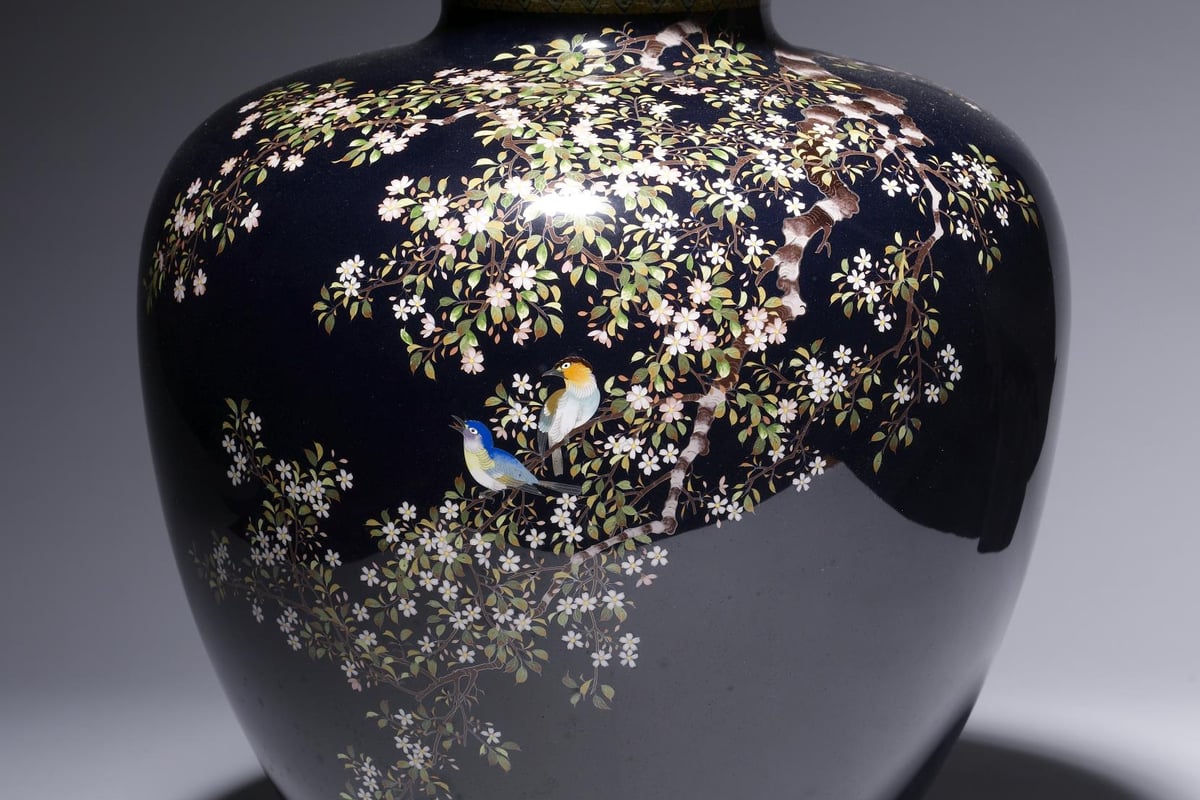
Owari Shippo
Owari Shippo
Owari Shippo is a craft produced mainly around Ama City (formerly Shippo Town) in Aichi Prefecture, in which a glass-like glaze is fired onto a metal base. Its origins trace back to the Tenpo era (1830-1844) in the late Edo period, when Kaji Tsunekichi of Owari Province studied and refined a production method based on a cloisonne dish that had arrived on a Dutch ship. Its signature technique, yusen shippo (wired cloisonne), involves standing thin silver wire along the outlines of a design on a copper or silver base and firing on glaze, producing intricate depictions of flowers, birds, and landscapes. After being exhibited at the 1867 Paris World's Fair, it gained worldwide recognition, and during the Meiji era it also developed as an export craft. Today, vases, framed panels, and accessories are still produced mainly in the Shippo district of Ama City, and it was designated a national Traditional Craft in 1995.

Shiroishi Washi
Shiroishi Washi
Shiroishi Washi is handmade Japanese paper passed down in Shiroishi City, Miyagi Prefecture, which developed in the Edo period through the industrial promotion of the Date family, lords of the Sendai Domain. As the official paper of the Sendai Domain, it was used for goods presented to the shogunate and the imperial court, and it is said that about 60 varieties of paper were made, from formal hosho paper to thick paper and tissue paper. Known for its strong yet soft, plump texture, paper from the Tohoku region has been praised as 'fukuyoka ni, kiyoku, uruwashiku' (plump, pure, and beautiful) since as far back as the time of Sei Shonagon and Murasaki Shikibu. Making use of this strength, it also developed into a material called 'kamiko,' made by rubbing the paper soft, and was used for items such as winter clothing and bags. From the Meiji era, production nearly died out as Western paper spread, but in 1940 Endo Tadao revived the traditional technique at the Oshu Shiroishi Folk Craft Research Institute, and on December 1, 1982, it was designated a Traditional Craft by Miyagi Prefecture. Today, the hand-papermaking technique is carried on alongside new forms of expression, such as kamiko made using a rubbing-dye technique.
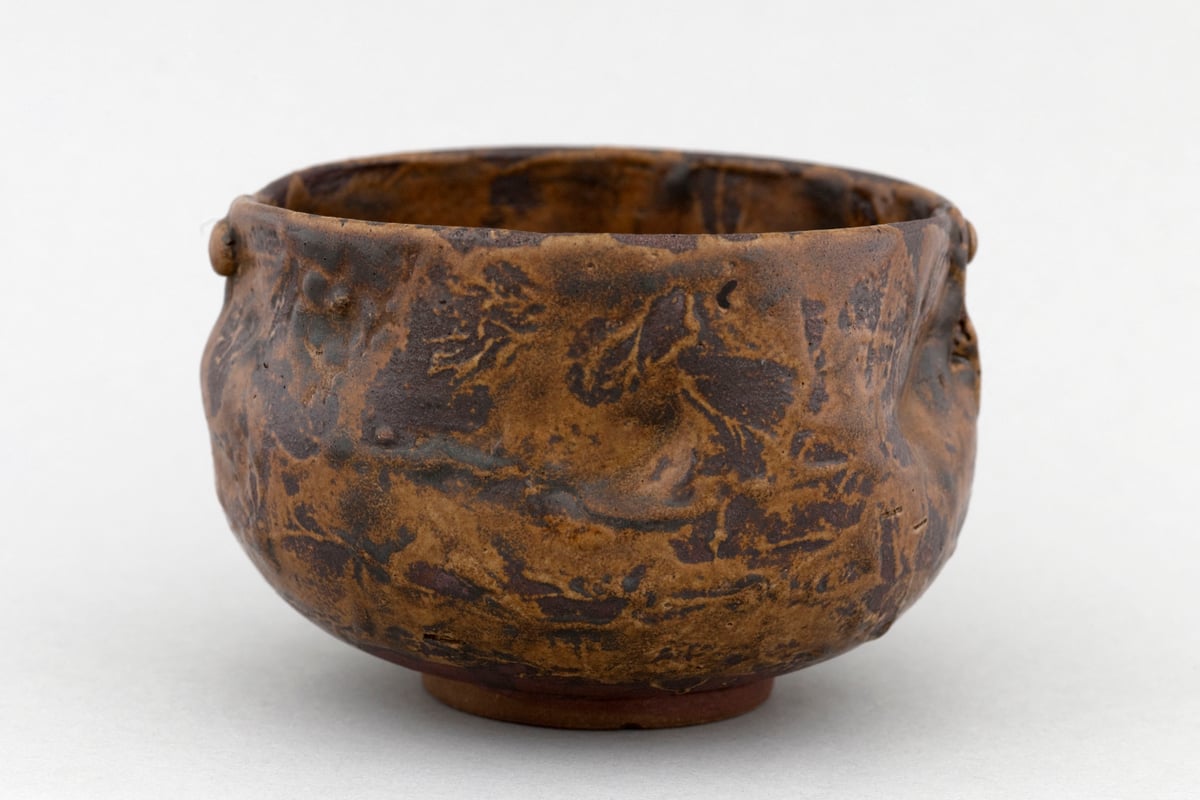
Shitoro-yaki
Shitoro Yaki (Shitoro Ware)
Shitoro-yaki is pottery that has been fired for generations in the Kanaya district of Shimada City, Shizuoka Prefecture. Its name comes from the fact that the area around Kanaya on the west bank of the Oi River was once called '志戸呂郷' (the Shitoro district). Based on excavations of kiln sites, its origins are thought to date back to the late Muromachi period. It is said to have begun when potters who had moved from Seto and Mino built kilns here. It later received the patronage of Tokugawa Ieyasu, and it is also said that Ieyasu granted it a shuinjo (vermilion-seal document). In the Edo period it was counted among Enshu's Seven Kilns (Enshu Nanagama), favored by the tea master Kobori Enshu, and became known throughout Japan as a production center of tea ceramics. The local iron-rich clay fires hard and dense, and is said to suit tea jars, which must be kept away from moisture. Its charm lies in the simple, subdued tones of brown and black iron glazes. Today there are kilns in areas such as 横岡 in Kanaya, making mainly tea utensils for matcha and sencha. It is designated a Shizuoka Prefecture Designated Local Traditional Craft.
Shuri-ori
Shuri-ori
Shuri-ori is a general term for the textiles developed in Shuri, the town that flourished as the castle town of the Ryukyu Kingdom, and it comprises five techniques: hana-ori, doton-ori, tejima, hanakura-ori, and ayanunaka. Around the 14th-15th centuries, weaving techniques were cultivated through active trade with China and Southeast Asia, and in Shuri, seat of the Ryukyu royal government, weavers produced textiles of the highest refinement in both color and pattern, worn as formal attire by the royal family and the shizoku (samurai-class gentry) and presented as tribute to investiture envoys from China. Among these, hanakura-ori and doton-ori were reserved exclusively for the royal family and nobility, developing as techniques that only Shuri was permitted to weave, unlike anywhere else. The main material is silk thread, supplemented with cotton, hemp, and basho (banana fiber) thread, dyed with plant dyes such as Ryukyu indigo and fukugi (Garcinia subelliptica). Shuri-ori became a Traditional Craft designated by the Minister of Economy, Trade and Industry in 1983, and the techniques continue to be passed down today, centered on the Naha Traditional Textile Industry Cooperative.
Tateyama Tozan
Tateyama Tozan
Tateyama Tozan is a cotton textile in which fine cotton threads are dyed with plant dyes such as indigo and yamamomo (Japanese bayberry) bark and woven into stylish striped patterns. It traces its roots to a striped fabric called 'tōzandome,' brought from India in the Momoyama period, which was beloved by ordinary townspeople in the Edo period as a fashionable kimono fabric. Production in Tateyama began in the early Meiji era, when the first-generation Saitō Mosuke learned the technique from Kawagoe Tozan artisans at a vocational training center in Tokyo and, in 1890, moved to Tateyama to set up his own workshop. Since then the technique has been passed down solely within the Saitō family, from one generation to the next, making it a rare traditional textile nationwide with no other line of successors. Extremely fine 40- to 80-count cotton threads are dyed by artisans who check the dye concentration by tasting it on the tongue, then carefully plain-woven on a high-warp loom (takabata), before a final process of pounding the cloth with a wooden mallet, called 'kinuta-uchi,' gives the fabric its distinctive sheen and supple feel. Today, fourth-generation weaver Saitō Yūji alone carries on the entire process at his workshop in Nagasuka, Tateyama City.
Uchiyama Paper
Uchiyama-gami (Uchiyama Paper)
Uchiyama Paper is a handmade washi (Japanese paper) made mainly in Iiyama City in northern Nagano Prefecture. It is said to have begun in Kanbun 1 (1661), in the early Edo period, when Hagiwara Kiuemon of Uchiyama Village (present-day Uchiyama, Kijimadaira Village) learned the method in Mino and made paper after returning home. Its name comes from this place name. Only kozo (paper mulberry) is used as the raw material, with no Western paper pulp mixed in. A major characteristic is yukizarashi (snow bleaching), typical of this heavy-snow region, in which kozo bark is laid out on the snow to bring out a natural whiteness. Because it is strong, breathes well, retains moisture and resists sun discoloration, it has long been valued as shoji paper. In 1976 it became a Traditional Craft Designated by the Minister of Economy, Trade and Industry. In Iiyama City and Kijimadaira Village, there are facilities where visitors can try papermaking.
Yamagata Butsudan (Buddhist altar)
Yamagata Butsudan
Yamagata Butsudan is a Buddhist altar made through a division of labor centered on Yamagata City, in which seven specialized crafts - woodworking, palace-shrine work, carving, lacquering, maki-e (gold lacquer decoration), metal fittings, and gold-leaf application - are each handled by their own specialist artisans. Its origin is said to date to the Kyoho era (around 1724-1736), when Hoshino Kichibei, who had studied the art of carving in Asakusa, Edo, returned to Yamagata and began making ranma (transom panels) and Buddhist ritual implements. His successor, the second-generation Kichibei Hirotaka, gathered local artisans and put altar-making on a full-scale footing, and the arrival of superior techniques and culture from the Kansai region via shipping on the Mogami River also helped spur the development of the production area. Around 1895, a production system divided among seven specialized trades was established, and the craft has continued to develop as Japan's northernmost Buddhist altar-producing region, being designated a Traditional Craft Designated by the Minister of Economy, Trade and Industry in 1980. It is characterized by sturdy wood joinery using zelkova and other woods, deep and intricate carving, and understated black metal fittings and inlaid-gold fittings.
Zeze-yaki (Zeze Ware)
Zeze-yaki
Zeze-yaki is stoneware fired in the Zeze district of Otsu City, Shiga Prefecture. It is said to have begun in the early Edo period as the official kiln of Zeze Domain, under the guidance of Kobori Enshu, the renowned tea master. Reflecting Enshu's refined tastes, it is counted among the 'Enshu Nanagama,' the seven representative kilns said to have been favored by Enshu, and became known for tea utensils such as tea caddies and water jars glazed in a dark, blackish tone overlaid with white clay. Its history as an official domain kiln was relatively short-lived due to a change of feudal lord, but in 1919 the local businessman Kenzo Iwasaki, working together with the painter Shunkyo Yamamoto, revived the kiln, and the techniques have been carried on to this day as 'Shinsei Zeze-yaki' (revived Zeze-yaki). Today, visitors can encounter its works and history at places such as the Zeze-yaki Museum in Otsu City.
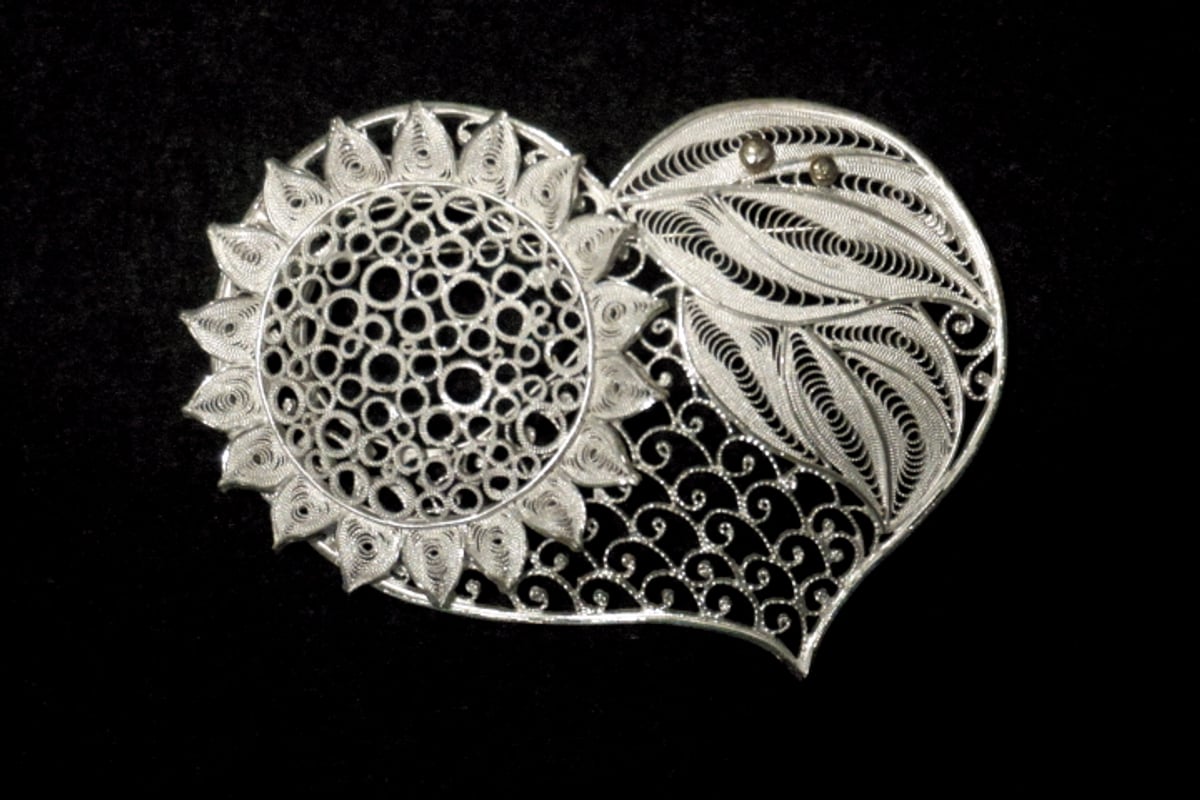
Akita Ginsen Zaiku (Silver Filigree Work)
Akita Ginsen Zaiku
Akita Ginsen Zaiku is a metalwork craft in which high-purity silver is drawn into fine wire about 0.2 to 0.3 millimeters in diameter, twisted together, and shaped into swirl- or arabesque-patterned parts called 'hirado,' which are then set into a silver frame and assembled. Its origin is traced to 1602 (Keicho 7), when Satake Yoshinobu brought gold- and silversmiths with him as he moved from Hitachi Province to Akita, and the craft developed as a technique for sword fittings and decorative metal hardware under mining development in Akita, including the Innai Silver Mine, and the protection of successive lords of the Satake clan. From the Meiji era onward, as demand from the samurai class declined, its use expanded into accessories such as brooches and pendants, and it established its own distinctive style by incorporating the 'Hirado-zaiku' technique said to have been introduced by Portuguese ships. Its greatest appeal lies in the composed luster unique to pure silver and the delicate designs created by its intricate wirework; it was selected as a national Intangible Cultural Property in 1955 (Showa 30), and today it is carried on as a Traditional Craft of Akita Prefecture and a City-Designated Intangible Cultural Property of Akita City.
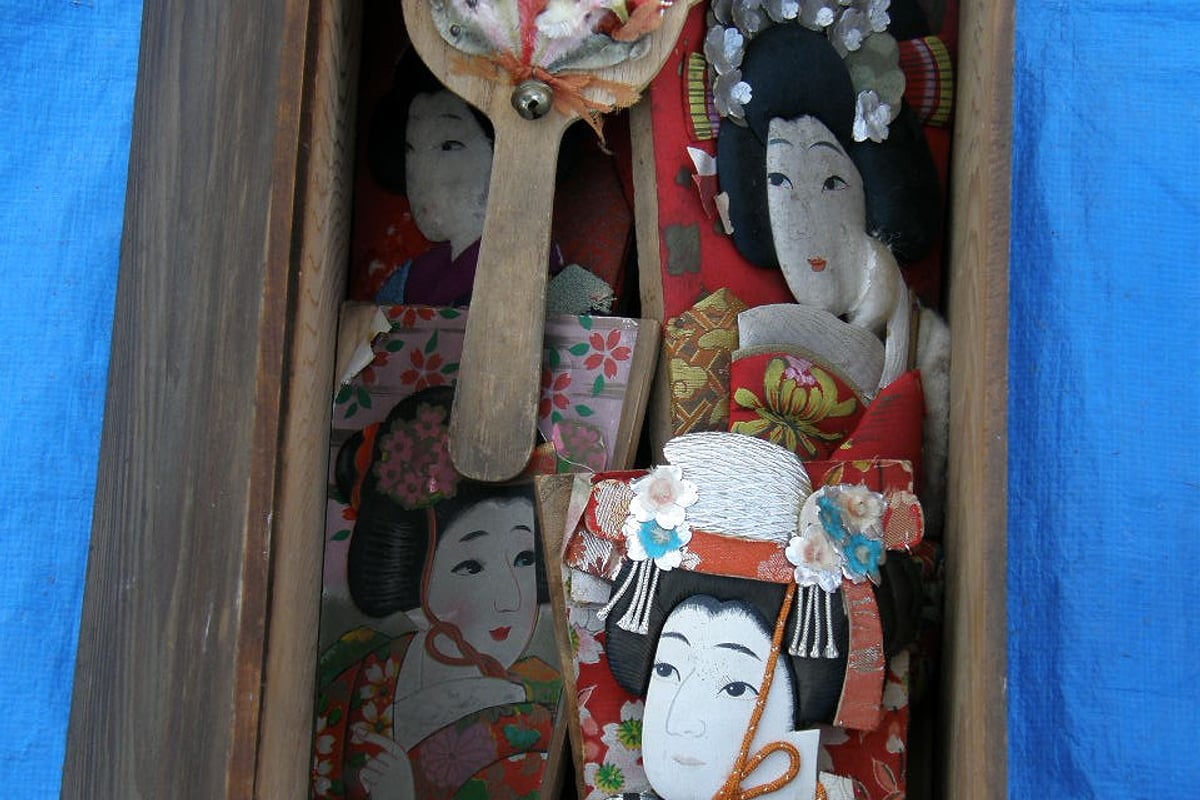
Edo Oshie Hagoita
Edo Oshie Hagoita
Edo Oshie Hagoita are battledores (hagoita) that use the 'oshie' technique, padding thick paper with cotton and wrapping it in cloth, to give three-dimensional form to kabuki actors and figures styled after them. The oshie technique developed during the Bunka-Bunsei era of the Edo period (1804-1829), and against the backdrop of kabuki's popularity and the spread of ukiyo-e prints, 'yakusha hagoita' decorated with likenesses of actors became popular within the townspeople's culture of Edo. After the war, oshie hagoita craftsmen who had lived for generations around Asakusa in Tokyo relocated to Kasukabe City, Saitama Prefecture, in search of good-quality paulownia wood suited to hagoita boards, and Kasukabe developed into a major production center; in 1977 it was designated a Saitama Prefecture-designated Traditional Handicraft. Finishing a single hagoita is said to require combining 50 to 70 kinds of materials through around 200 hand-worked steps, and the advanced techniques of varying the cotton padding and cloth handling to depict figures' expressions and gestures three-dimensionally have been passed down. In Iwatsuki Ward, known as a production area for hina dolls and Gogatsu Ningyo (May Festival dolls), doll shops also make and sell hagoita.
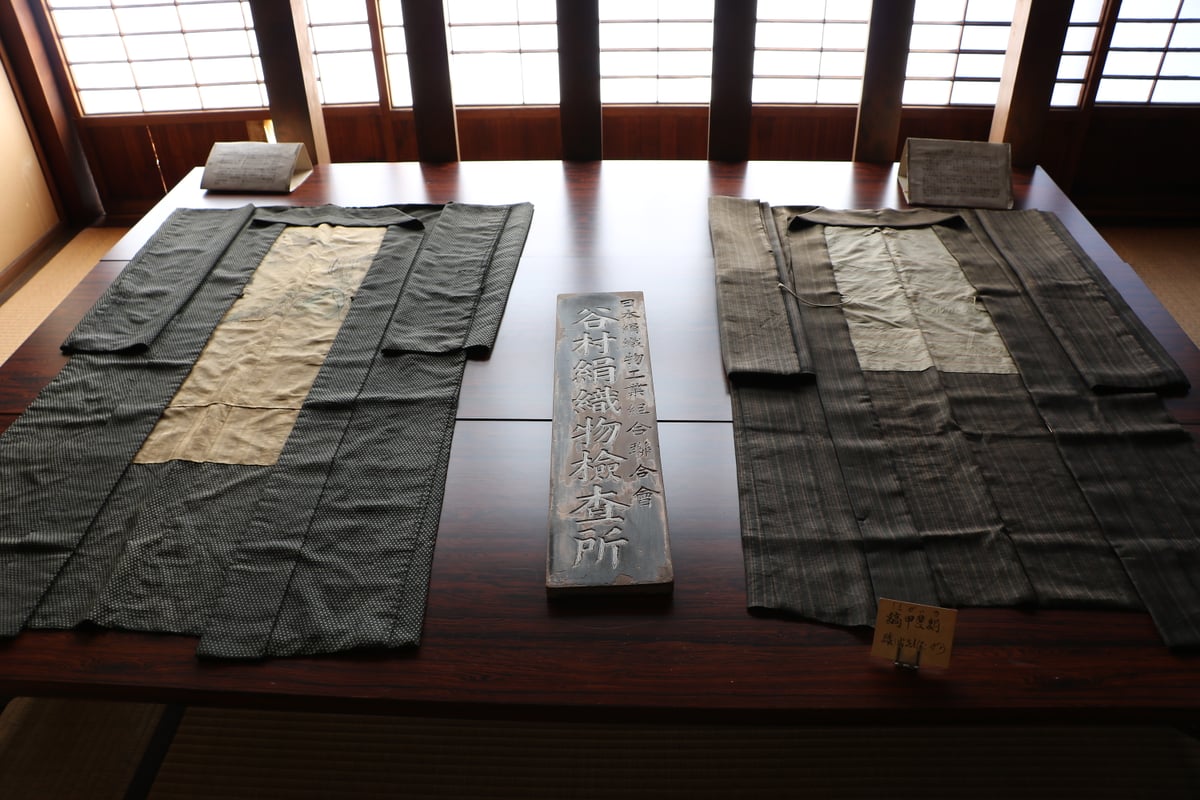
Gunnai Textiles (Kaiki Silk)
Gunnai Textiles (Kaiki Silk)
Gunnai Textiles are yarn-dyed (sakizome) fabrics that have been woven in the Gunnai region of eastern Yamanashi Prefecture, centered on Fujiyoshida City and Nishikatsura Town at the foot of Mt. Fuji. The Engishiki, a Heian-period collection of laws and regulations, lists Kai Province as a province that paid taxes in cloth, and the area is regarded as a textile-producing region with a history of more than 1,000 years. In the Edo period, silk fabrics such as Gunnai-jima (Gunnai stripes) were so well known that they appeared in the ukiyo-zoshi novels of Ihara Saikaku. Kaiki silk, which traces its roots to a fabric called 'kaiki' (海気) brought to Japan through the Nanban trade, was woven extensively from the Edo period to the early Showa period as a luxury silk used for the linings of haori jackets. Kaiki silk itself disappeared in the 1940s, but its techniques of 'yarn dyeing, fine-count yarns and high density' are still carried on today. The area now produces umbrella fabrics, necktie fabrics, apparel fabrics and interior textiles, and its fabrics are used for 40 percent of Japan's domestically made necktie fabric. Fujiyoshida, where many weaving mills (hataya) are gathered, is also called Hataori-machi (Weaving Town).
Hida Shunkei-nuri
Hida Shunkei-nuri
Hida Shunkei-nuri is a lacquerware tradition from Takayama City, Gifu Prefecture, distinguished by its use of transparent lacquer (sukiurushi) rather than black or vermilion lacquer, which lets the natural beauty of the wood grain show through. Its origins are said to trace back to the early Edo period, during the Keicho era (1596-1615), when the fine grain of sawara (Japanese false cypress) offcuts discovered during the construction of a shrine or temple in the Takayama castle town was fashioned into a tray finished with transparent lacquer, a piece said to have been presented to the imperial court and the shogunate, marking the beginning of Hida's lacquerware tradition. Since then, kijishi (woodturners) who shape the wooden base and nushi (lacquerers) who apply the lacquer have refined their crafts through a division of labor, developing everyday items such as trays, tiered boxes, and confectionery containers. On February 17, 1975 (Showa 50), it was designated a Traditional Craft by the Minister of Economy, Trade and Industry, and production continues today in kilns and workshops throughout Takayama City. Each lacquerer's individual touch gives rise to distinct hues and lustre, so that no two pieces of the same shape ever look exactly alike.
Hirashimizu-yaki (Hirashimizu ware)
Hirashimizu-yaki
Hirashimizu-yaki is pottery and porcelain fired in the village of Hirashimizu, on the southern foot of Mt. Chitose in the southeast of Yamagata City. Because its raw material is pottery stone rich in iron taken from Mt. Chitose, it is also known as 'Chitose-yaki.' Its founder is said to be the potter Ono Tojihei, who came from Hitachi Province during the Bunka era (1804-1818) of the late Edo period. In the following Bunsei era, a potter from the Soma domain opened a kiln here and brought the techniques of Soma-yaki, helping the area grow into a major pottery-producing community. At its peak in the mid-Meiji era, more than 30 kilns lined the village, but today only a handful remain, including Seiryu-gama and Shichiemon-gama. It is a rare production area where clay suitable for both pottery and porcelain can be found, and each kiln has its own distinctive glazes and techniques. Distinctive pieces are produced here, including 'Nashi-seiji,' with its blue-white speckles created by iron sulfide in the raw clay of Mt. Chitose, and 'Zansetsu,' featuring black speckles floating on a pure white glaze.
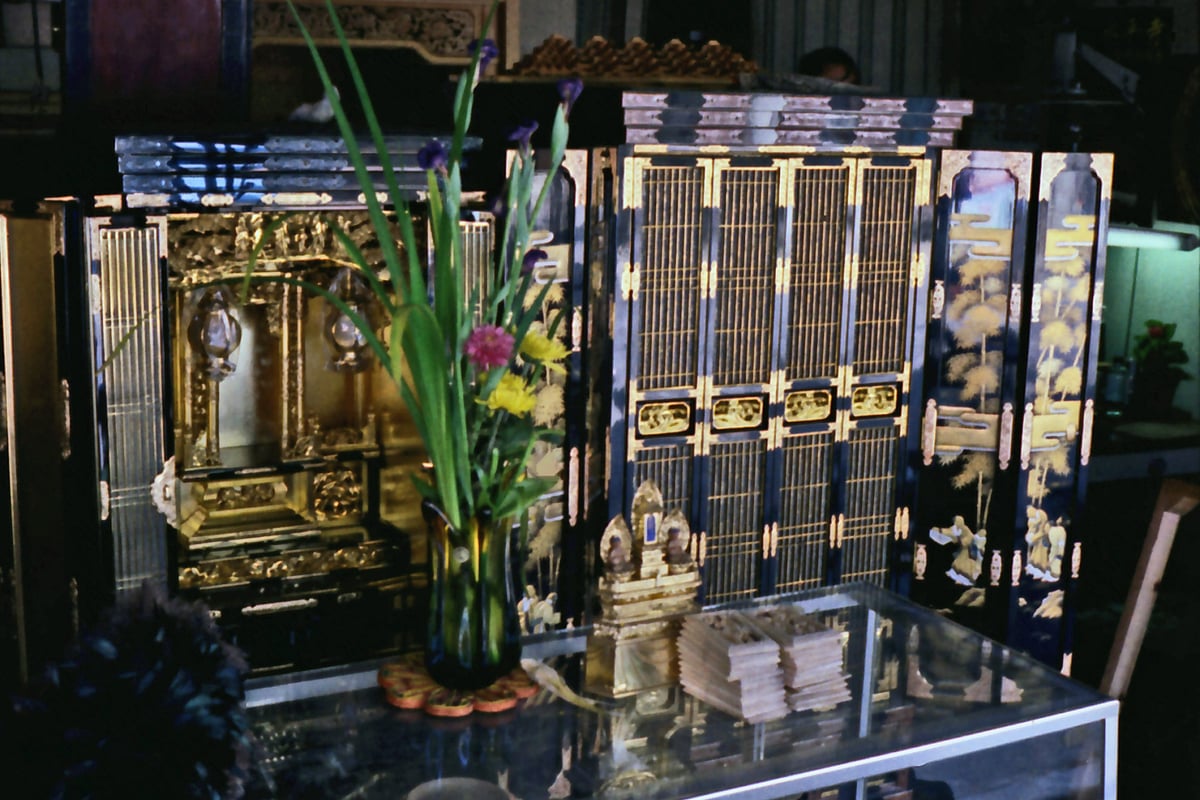
Iiyama Buddhist Altars
Iiyama Butsudan (Iiyama Buddhist Altars)
Iiyama Buddhist Altars are gilded Buddhist altars (kinbutsudan) made in Iiyama City, Nagano Prefecture. They are produced mainly in the Atago (愛宕町) area in the north of the city, and everything from making the parts to assembly and repair is carried out within the area. Jodo Shinshu Buddhism reached Iiyama from the Hokuriku region in the Muromachi period, and the city is known as a place of deep faith. Because of its townscape lined with many temples, it has also been called 'the Little Kyoto of the Snow Country.' The craft is said to have begun in Genroku 2 (1689), when 寺瀬重高, who had come from Koshu, made plain unlacquered altars. Its distinctive features are the technique of assembling the kuden (the palace-like structure inside the altar) with 'hijiki kumimono' (bracket assemblies), and the 'yuminageshi,' a lintel curved like a bow so that the kuden can be seen clearly. Through 'sentaku' (literally 'washing'), in which the altar is taken apart, washed and relacquered, it can be passed down and used over many generations. In 1975 it became a Traditional Craft Designated by the Minister of Economy, Trade and Industry. The street in Atago, lined with gangi (covered walkways that keep off the snow), is fondly known as 'Butsudan-dori' (Buddhist Altar Street), where altar shops stand side by side.
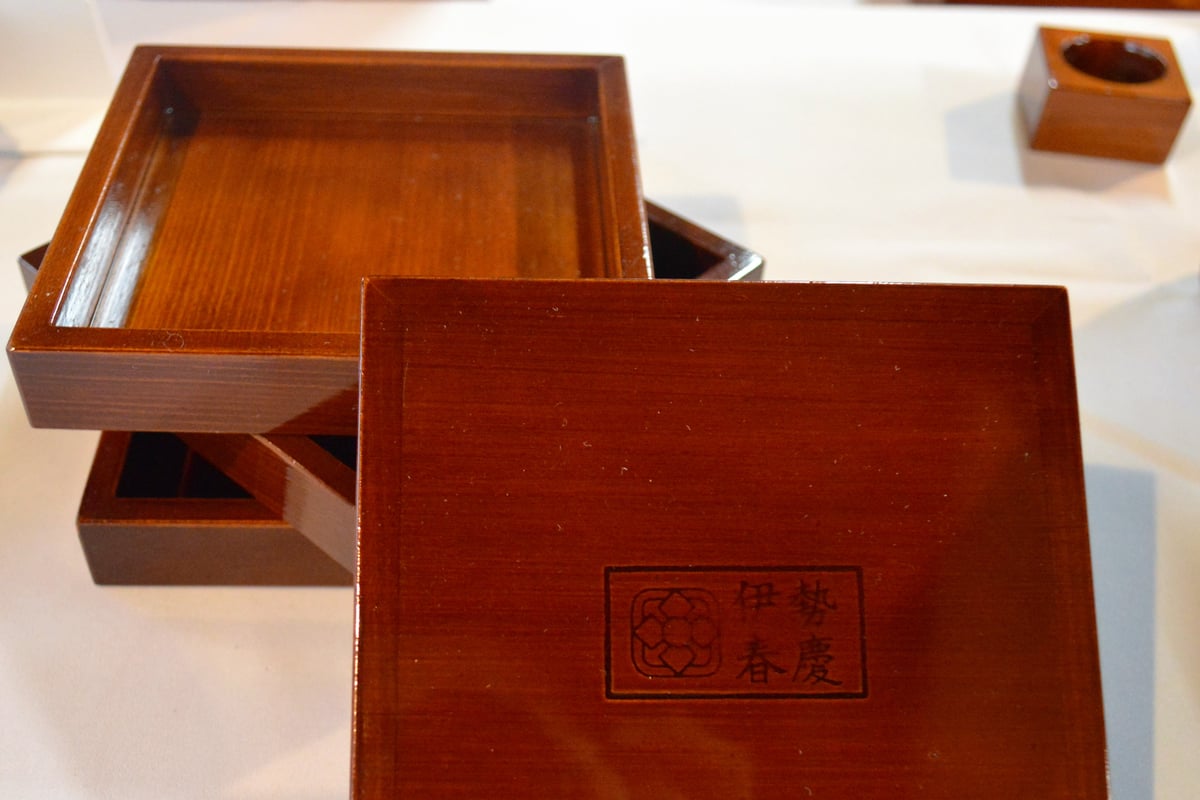
Ise Shunkei
Ise Shunkei (Ise Lacquerware)
Ise Shunkei is lacquerware that has long been made in Ise City, Mie Prefecture. It is also called Ise lacquerware (伊勢漆器) or Yamada Shunkei (山田春慶). Box-shaped wares made from hinoki cypress boards are undercoated with bengara (red iron oxide pigment) and kakishibu (persimmon tannin), then finished with transparent lacquer. Its charm lies in the grain of the hinoki showing through a reddish-brown ground. Its origins are unclear, but it is said to have been started in the Muromachi period by craftsmen involved in building the Ise Grand Shrine, using leftover timber. In the Edo period it was traded as a souvenir of the Ise pilgrimage (Oise-mairi) and shipped to various regions from the wholesalers of Kawasaki. In the Meiji period it was described as 'crude but inexpensive and sturdy,' and was used throughout Japan for everyday vessels such as tiered boxes (jubako) and meal trays. However, war and the changes in postwar lifestyles brought production to a halt for a time. In 1994 (Heisei 6) it became a Mie Prefecture Designated Traditional Craft, and the Ise Shunkei Association (伊勢春慶の会), founded in 2004 (Heisei 16), is leading its revival.
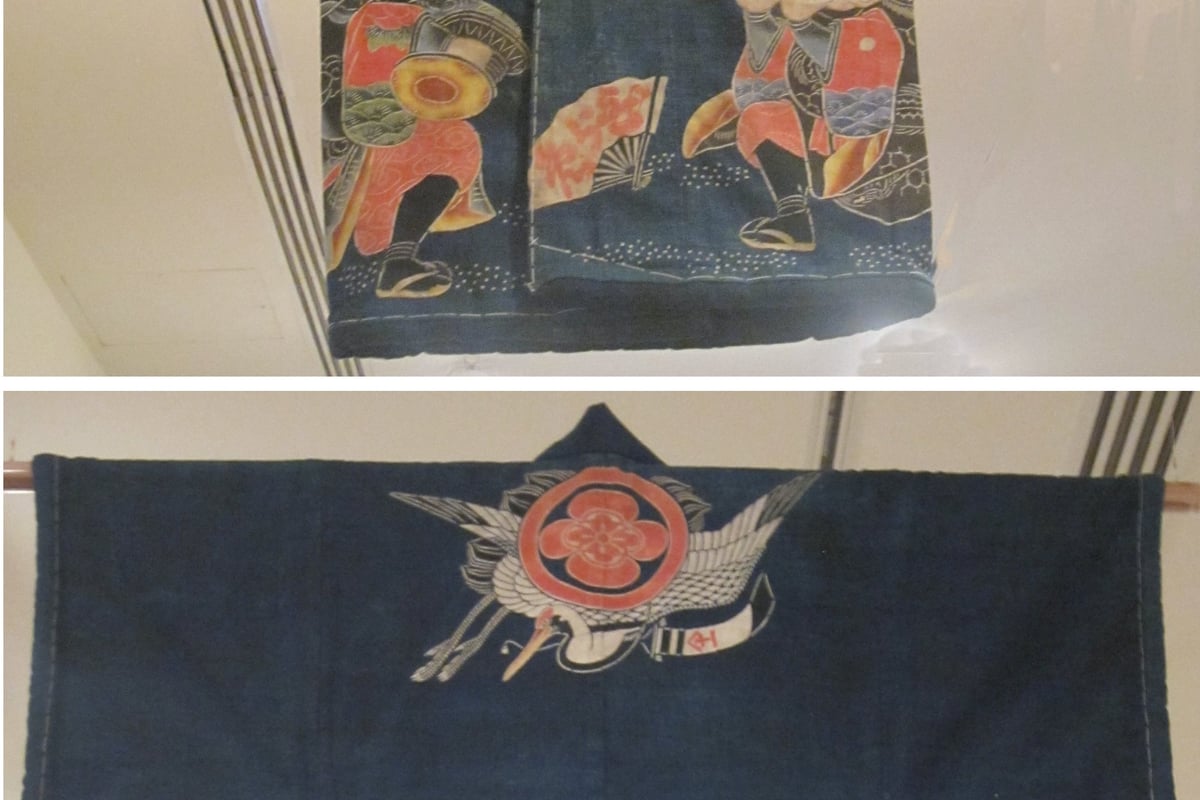
Kamogawa Maiwaizome
Kamogawa Maiwaizome
Kamogawa Maiwaizome is a traditional dyeing technique from the fishing villages of the Boso Peninsula, used to color ‘maiwai’ — the celebratory garments worn to mark a great catch. In the late Edo period, a custom arose among fishing communities in Boso in which net owners who had a great catch would give ceremonial garments to their crew and associates, giving rise to a distinctive style: auspicious motifs such as cranes, turtles, pine-bamboo-plum, treasure ships, and sea bream were either dyed white against an indigo ground or rendered boldly in vivid colors. Fishermen wearing maiwai even appear in ukiyo-e prints by Utagawa Sadahide, suggesting the garments were already established as special festive wear by the late Edo period. The dyeing tradition spread widely along the Pacific coast, from Aomori in the north to Shizuoka in the south, but changes in the fishing industry and a lack of successors caused it to die out in most production areas after the war. Today, Kamogawa City's ‘Suzusen’ is one of the few remaining keepers of the traditional stencil-dyeing technique, continuing to make maiwai kimono and small dyed goods. It was designated a Chiba Prefecture-designated Traditional Craft in 1997 (Heisei 9).
Kyo-sensu (Kyoto Folding Fans)
Kyo-sensu
Kyo-sensu is the general term for folding fans made in and around Kyoto, said to have been invented in Kyoto in the early Heian period. Rooted in the hi-ogi (cypress fans) and paper fans used at court, its greatest characteristic is that specialized artisans divide the labor by process — fan-face making, rib processing, painting, and finishing — with a single fan said to pass through more than 80 steps before completion. In contrast to Edo-sensu, where a single artisan handles the whole process, Kyo-sensu has a history of pursuing meticulous finishing through this division-of-labor system. Its designs range widely to suit purpose — from tea-ceremony fans and dance fans for uses such as tea ceremony, Noh, and dance, to practical fans and decorative fans — and Kyoto and its surrounding area still account for the majority of domestic fan production today. It became a Traditional Craft designated by the Minister of Economy, Trade and Industry in 1977.
Nao Tesuki Washi
Nao Tesuki Washi
Nao Tesuki Washi is a handmade washi paper that has been passed down for more than 300 years in the Nao district of Yamato, Saga City. It began in 1690 (Genroku 3), in the mid-Edo period, when Notomi Yusuke, the village headman of Nao, learned papermaking techniques in Mizoguchi village, Chikugo Province (present-day Yame City, Fukuoka Prefecture), and brought them back home. In the mountainous Nao area, where farmland was scarce, this technique spread as a valuable side occupation for farming households, and by its peak in the early Showa era, nearly 100 households were engaged in papermaking, making it a major production center. Its greatest characteristic is the use of kaji (a mulberry species native to and cultivated in the district) instead of the more common kozo as raw material; because its fibers are long and intertwine closely, the resulting paper is thin yet durable, and it has long been valued for lantern paper, bangasa umbrellas, rain capes, and shoji paper. However, the number of practitioners has continued to decline due to mechanization and changing lifestyles, and today only the Taniguchi family's workshop, 'Nao Tesuki Washi,' carries on the technique. The seventh-generation head, Taniguchi Gen, keeps the workshop running, working on new washi products that make use of tradition while forging new directions.
Obata Ningyo (Obata Clay Dolls)
Obata Ningyo
Obata Ningyo are traditional clay dolls handed down in Gokasho-Obata, Higashiomi City, Shiga Prefecture, designated a Shiga Prefecture Traditional Craft in 1994. According to tradition, during the Kyoho era (1716-1736), a man named Yasube, who ran a courier business to Kyoto, learned the techniques of Kyoto's popular Fushimi dolls and brought them back home, marking the craft's beginning. In workshops along the old Nakasendo highway, the traditional method of shaping figures with wooden and clay molds is still practiced today, with vivid coloring centered on pink and ultramarine applied over the dolls' rustic clay texture. Over the centuries, hundreds of molds are said to have accumulated, producing a wide variety of seasonal and auspicious items, from festival dolls to zodiac-themed clay bells. While beloved as a folk toy woven into the townscape long associated with Omi merchants, the craft now has only a single successor, Gengo Hosoi, the ninth generation counting from the founder Yasube, and the community continues efforts toward preserving and passing on the tradition.
Osaka Kongo Sudare (Bamboo Blinds)
Osaka Kongo Sudare (Bamboo Blinds)
Osaka Kongo Sudare are bamboo blinds (sudare) made from madake bamboo in Tondabayashi City, Kawachinagano City and Osaka City. The area was once blessed with fine bamboo growing at the foot of Mount Kongo and Mount Katsuragi, and blinds came to be woven alongside the making of bamboo baskets. The misu (court blind), used for partitions and decoration in the Heian-period imperial court, is said to be the prototype of today's zashiki sudare (indoor blind). The main products are misu used at shrines and temples and zashiki sudare used as room partitions and sunshades in homes. Highlights include a weaving method that uses the natural nodes of the bamboo strips (higo) to draw a 'ku'-shaped (く) pattern, and borders of Nishijin donsu (a glossy figured silk fabric). In 1985 (Showa 60), it was designated an Osaka Prefecture-designated Traditional Craft under the name 'Kongo Sudare.' In 1996 (Heisei 8), it became a Traditional Craft Designated by the Minister of Economy, Trade and Industry under the name 'Osaka Kongo Sudare.' According to a survey report by Osaka Prefecture, all the misu used in filming the NHK Taiga dramas 'Atsuhime' (篤姫) and 'Go' (江) were Osaka Kongo Sudare.
Owari Butsugu
Owari Butsugu
Owari Butsugu is the collective name for Buddhist altar fittings produced mainly around Osu, a temple town in the southern part of Nagoya City. It is characterized by the deep luster of many layers of lacquer applied over a wooden base, lavish decoration with gold leaf and gold powder, and finely crafted ornamental metal fittings (kazari-kanagu). Its origins trace back to the construction of Nagoya Castle in 1609, when the temple carpenters who built the castle town's 'Minami-deramachi' (southern temple district) later turned to making Buddhist fittings. In the late Edo period, the craft absorbed the techniques of ornamental metal fittings, which had been a side occupation for lower-ranking samurai, and developed under a sophisticated division of labor - woodworking, carving, lacquering, gold leaf application, and metal fittings - using fine materials such as Kiso cypress. From the Meiji era onward, a distribution network centered on wholesalers took shape, and with the Owari region serving as a transportation hub, Owari Butsugu came to be supplied widely to temples and households across the country. Today, more than 1,000 types of Buddhist fittings are still produced according to sect and use, characterized by forms that combine function and ornamentation, such as altar platforms (shumidan), incense burners, candlesticks, and ring lanterns (rinto). It was designated a national Traditional Craft in 2017.
Shizuhata-yaki
Shizuhata Yaki (Shizuhata Pottery)
Shizuhata-yaki is pottery fired in Aoi Ward, Shizuoka City. According to tradition, it began in the early Edo period when 太田七郎右衛門, a retainer of the Tokugawa family, was granted shuin-chi (land granted by vermilion-seal certificate) at the foot of Mt. Shizuhata (Shizuhatayama) and the title 'Shizuhata-yaki' by Tokugawa Ieyasu, who was then residing at the castle in Sunpu. It is said to have flourished thereafter as an official kiln (purveyor kiln) of the Tokugawa family. However, toward the end of the Bunsei era, a great flood of the Abe River washed away the kiln site, and the ware died out for a time. A movement to revive it arose in the Meiji era, and it was brought back to life by 青島庄助, a potter invited by Shizuoka Prefecture. Later, the second generation of the 青島 family introduced the techniques of Tokoname-yaki, and the third generation adopted nanban-style firing and the underglaze copper red (yuriko) technique, developing it into a distinctive pottery of its own. It is well known for Onifuku, a good-luck piece shaped like an ogre-faced roof tile (onigawara) on the outside and a 'fuku' (good fortune) face on the inside. Today the fifth generation of the 青島 family continues making pottery at 秋果陶房, and Shizuhata-yaki is a Shizuoka Prefecture Designated Local Traditional Craft.
Tsubame Tsuiki Doki (hammered copperware)
Tsubame Tsuiki Doki
Tsubame Tsuiki Doki is copperware made in Tsubame City, Niigata Prefecture. A single flat copper sheet is repeatedly hammered up with a metal hammer and finished into a seamless, three-dimensional vessel. 'Tsuiki' means to raise a form by hammering. In Tsubame, making Japanese forged nails (wakugi) spread as a side job for farmers in the early Edo period, and skills in handling the hammer took root there. Against the backdrop of copper being mined at nearby Mt. Yahiko, the technique of tsuiki (hammering up) is said to have been introduced in 1768 (Meiwa 5) by Toshichi, an itinerant craftsman from Sendai. Gyokusendo, founded in 1816 (Bunka 13), is the representative workshop that has carried on this technique for more than 200 years. Kettles, teapots, sake vessels, flower vases, and other items are made, and their appeal lies in the advanced skill of hammering out even the spout from a single sheet, and in coloring that deepens the more the piece is used. It was designated a national Traditional Craft in 1981.
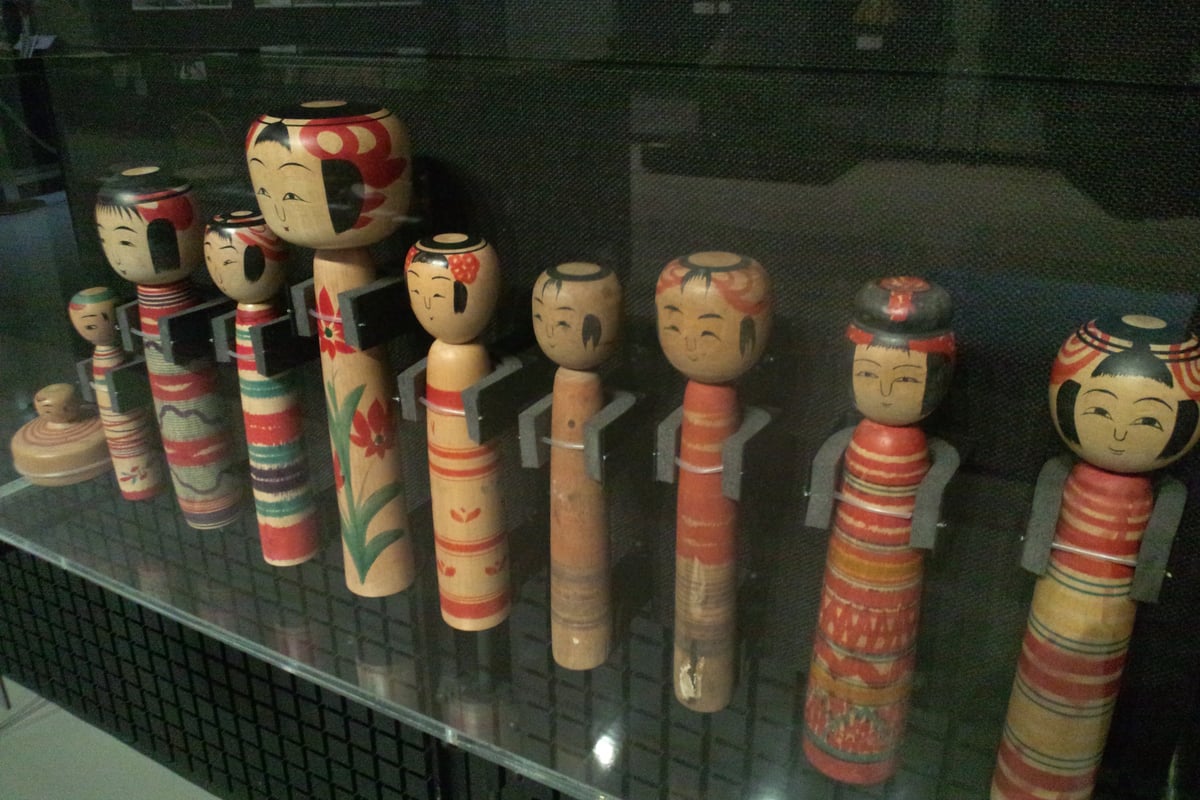
Tsuchiyu Kokeshi
Tsuchiyu Kokeshi
Tsuchiyu Kokeshi are traditional kokeshi dolls nurtured in Tsuchiyu Onsen in Fukushima City, and together with the Naruko and Togatta lineages of Miyagi Prefecture, they are counted among the three major birthplaces of kokeshi in the Tohoku region. They are said to have emerged around 300 years ago from the handiwork of kijishi (woodworking artisans) who made wooden vessels and tools during the Edo period, and since then they have been cherished as souvenirs for hot spring visitors and as children's toys. Compared with dolls from other regions, Tsuchiyu Kokeshi have a distinctively feminine look, with a small head and slender body. The head is painted with a black snake-eye ring pattern, and the face is framed by long bangs and a red hair ornament called 'kase' on either side, with whale-like eyes, a drooping nose, and a small pursed mouth giving them a simple, gentle expression. The head is fitted into the body using a socket-joint construction, and turning the head makes a distinctive squeaking sound - another charming feature unique to Tsuchiyu Kokeshi. Today, craftsmen still keep workshops in Tsuchiyu Onsen, continuing to turn each doll by hand.
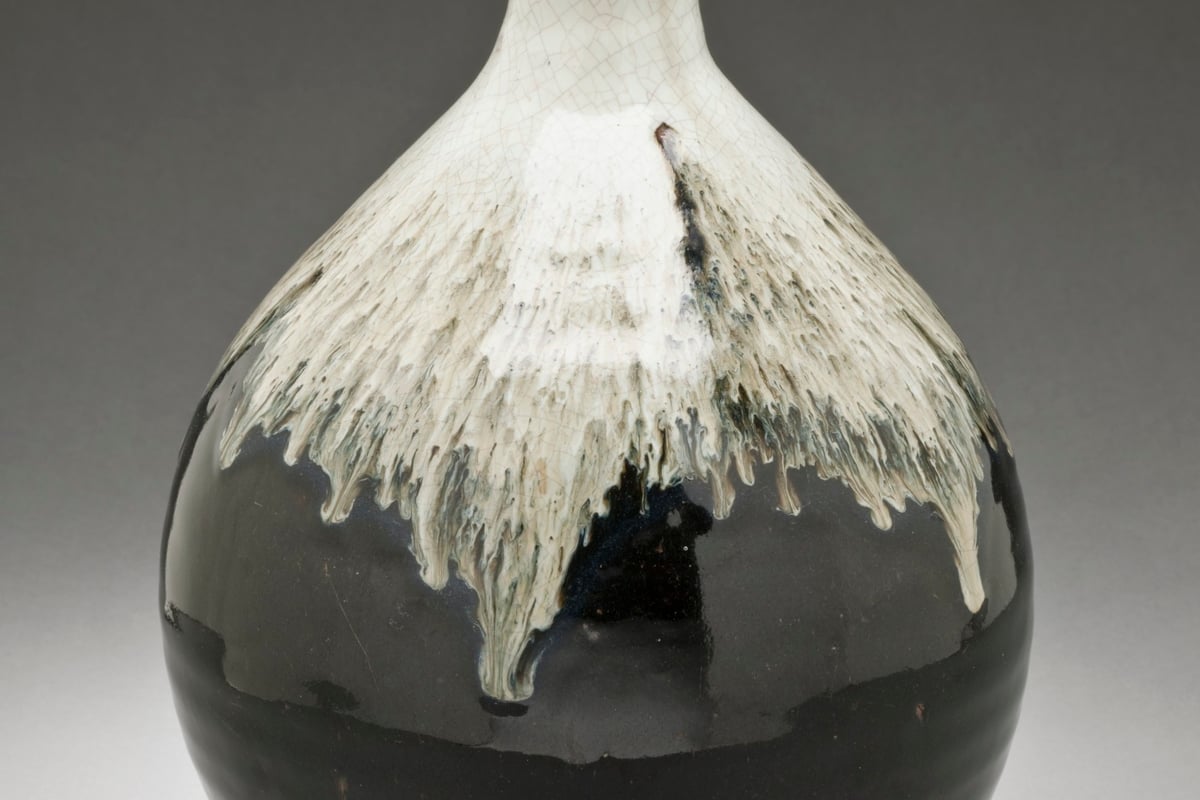
Tsutsumi ware
Tsutsumi-yaki
Tsutsumi ware is pottery produced in the former Tsutsumi-machi area of Sendai City (around present-day Tsutsumi-machi, Aoba Ward, Sendai), said to have begun in the Genroku era of the Edo period (1688-1704) when Date Tsunamura, the fourth lord of the Sendai Domain, invited potters from Kyoto to build a kiln there. It started as an official kiln producing tea utensils for the domain lord, later coming to mass-produce everyday vessels for common use, such as jars, urns, and spouted bowls. During the Edo period it was also known as a production center for unglazed clay dolls called 'Tsutsumi ningyo,' and together with Kyoto's Fushimi dolls it was celebrated in the phrase 'Fushimi in the west, Tsutsumi in the east.' Its defining feature is the bold application of black and white 'Namako-yu glaze,' made from local red clay combined with rock from around Sagi-ga-mori and ash from rice husks, producing a rustic, powerful texture. In the early Showa era it was also highly praised by Yanagi Sōetsu of the Mingei (folk craft) movement as a leading folk kiln of the Tohoku region. At its peak nearly thirty kilns operated, but today only 'Tsutsumi-yaki Kanbagama' continues to preserve the tradition. It is a Traditional Craft designated by the Governor of Miyagi Prefecture.
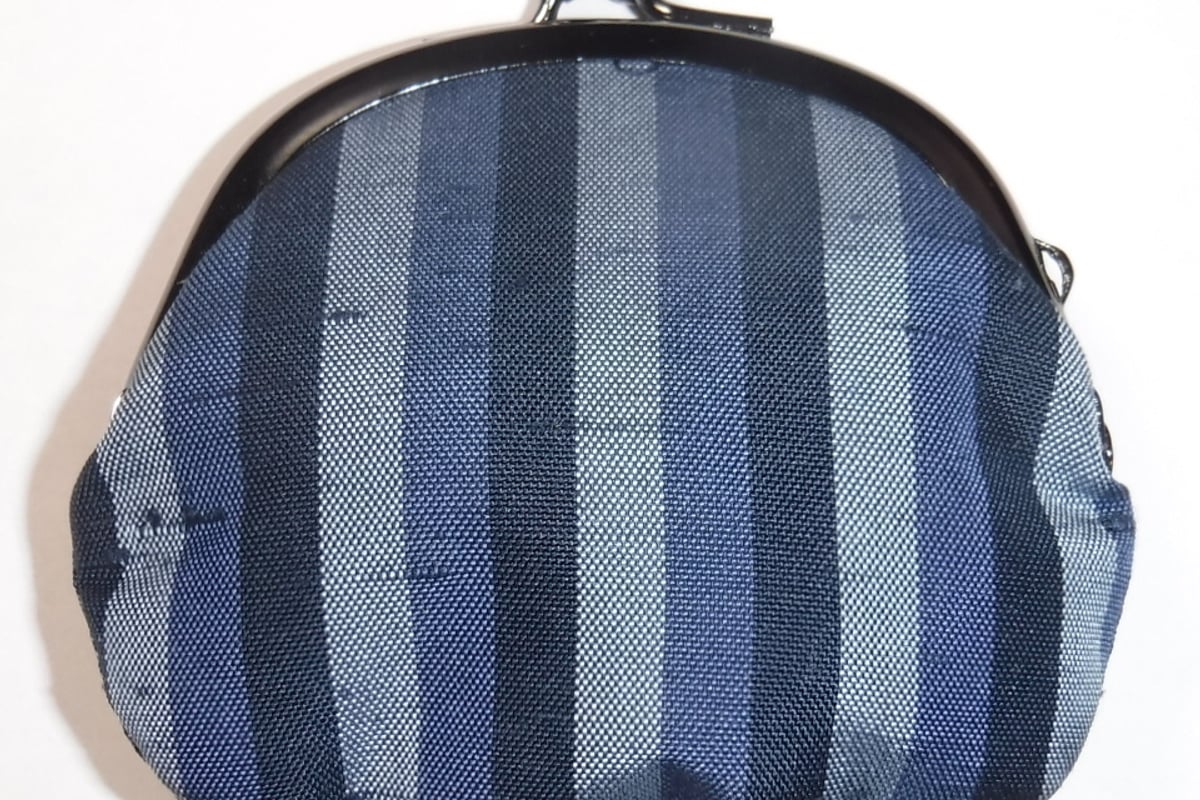
Ushikubi Tsumugi Silk
Ushikubi-tsumugi
Ushikubi Tsumugi is a silk fabric that has been woven for about 800 years in Shiramine (the former village of Ushikubi), at the foot of the sacred Mount Hakusan in Hakusan City, Ishikawa Prefecture. Its greatest characteristic is the use of 'tamamayu,' double cocoons spun jointly by two silkworms, as raw material; the thread is drawn out by hand from cocoons boiled in hot water, a traditional reeling method called 'zaguri.' This tamaito thread contains irregular slubs yet is rich in elasticity and stretch, producing fabric with a distinctive supple sheen and durability. It is strong enough to resist tearing even when caught on a nail, earning it the nickname 'nail-puller tsumugi,' and its high practicality, able to withstand everyday use, has long been valued. In Shiramine, a heavy snowfall region with steep terrain and little farmland, sericulture became a valuable source of cash income from early times, and tsumugi weaving was carried on as women's handiwork. Today the tradition continues to be preserved, centered on weaving workshops in Shiramine.
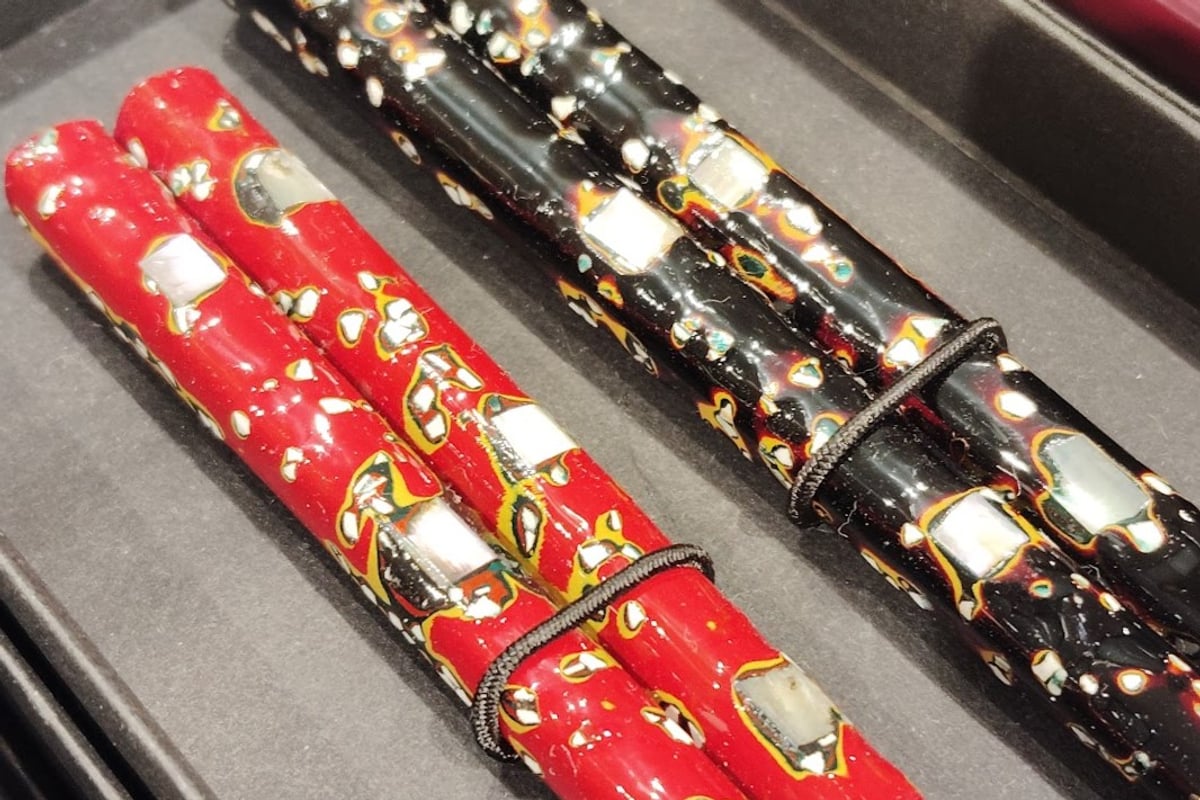
Wakasa-nuri (Wakasa Lacquerware)
Wakasa-nuri
Wakasa-nuri is lacquerware made in Obama City, Fukui Prefecture. Its defining feature is togidashi ('polishing out'): patterns are created with eggshells, abalone and other seashells, pine needles and similar materials, colored lacquer is applied in many layers, and the surface is then ground with whetstones to bring the patterns to the surface. The patterns are said to evoke the seabed of Wakasa Bay, and it was once also called 'Hoseki-nuri' (jewel lacquer). It is said to have originated in the early Edo period, when Matsuura Sanjuro, the official lacquerer of the Obama Domain, took inspiration from Chinese lacquerware to devise a lacquer finish that stylized the appearance of the seabed. The ruling Sakai family generously protected Wakasa-nuri, and more than 200 lacquering methods are said to have been developed from the mid to late Edo period. In 1978 (Showa 53), it was designated a Traditional Craft Designated by the Minister of Economy, Trade and Industry. Today its representative product is lacquered chopsticks, and Obama City is said to account for more than 80% of the lacquered chopsticks produced in Japan. At Hashi no Furusato-kan WAKASA and Wakasa Kobo in the city, visitors can try togidashi polishing on chopsticks.
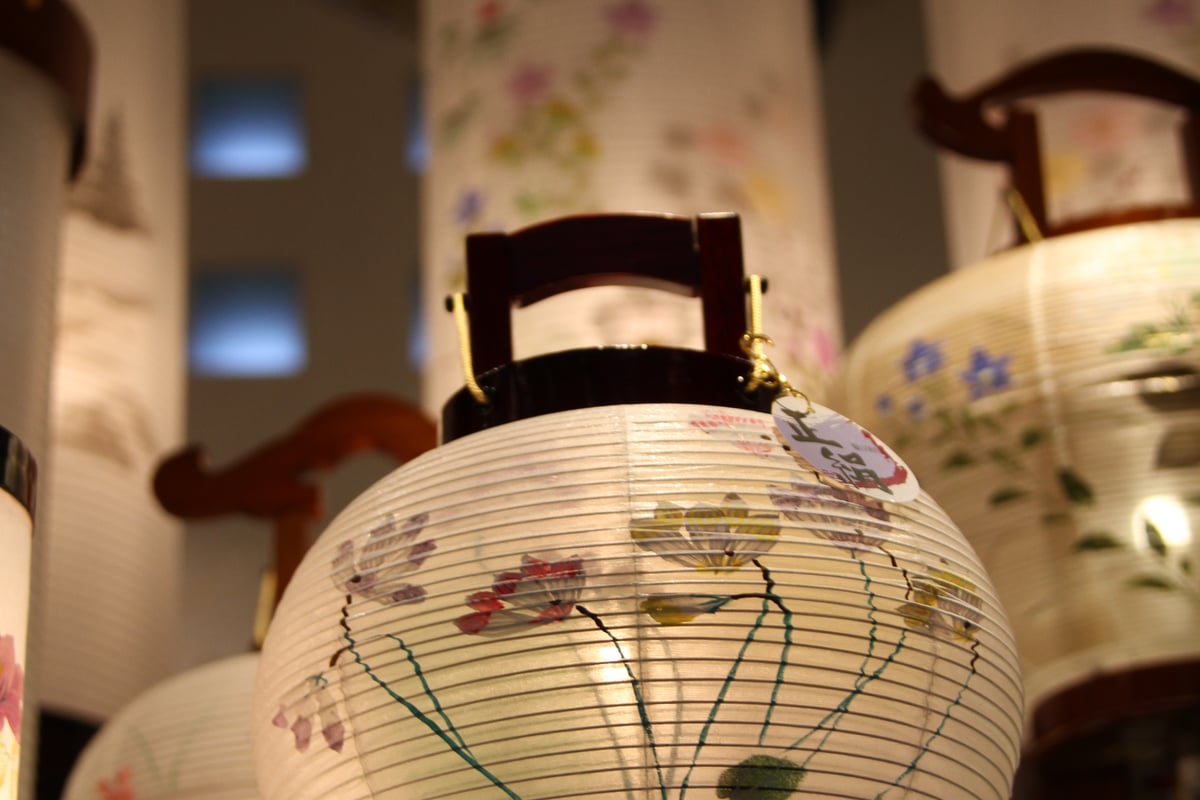
Yame Chochin
Yame Chochin
Yame Chochin is a Traditional Craft representing the Bon lanterns made in Yame City, Fukuoka Prefecture (the former town of Fukushima). It is said to have originated when Aramaki Bun'emon first created the lanterns during the Bunka era (around 1813), and later Yoshinaga Taihei devised the 'single-strand spiral method,' in which a single length of bamboo rib is wound into a spiral frame. Using thin washi paper that let the light inside glow softly through, this innovation dramatically improved the lanterns' quality. The paper shades are decorated with delicate paintings of flowers, birds, and seasonal scenery, and the lanterns come in many varieties, including Sumiyoshi Chochin, Ouchi Andon, and Gotenmaru (also written 御天丸). The single-rib spiral structure that is now the mainstream method of lantern-making is said to have originated with Yame Chochin. Designated a national Traditional Craft in 2001, Yame Chochin has the highest production volume in Japan and is also shipped overseas. Demand centers on Bon lanterns used in Buddhist observances, but in recent years young artisans have also been developing products with more contemporary designs.
Yomitanzan Hanaori
Yomitanzan Hanaori
Yomitanzan Hanaori is a patterned textile handed down in Yomitan Village, in central Okinawa Island, characterized by geometric floral motifs created by floating the warp and weft threads as they are woven. It is said to have originated when the float-weave technique, introduced from the continent during the 14th-15th centuries - the Great Trade Era when the Ryukyu Kingdom flourished through trade with China and Southeast Asia - developed uniquely in Yomitanzan (present-day Yomitan Village). The fabric was prized as tribute cloth presented to the Ryukyu royal government and as clothing for shizoku (samurai-class) families. The craft declined after the Meiji era and was nearly lost during the Battle of Okinawa in World War II, but in 1964 volunteers from Yomitan Village worked to revive it, drawing on the memories of elders and surviving old fabrics, and the technique was restored after a gap of roughly 90 years. Those who led the revival went on to form the Yomitanzan Hanaori Cooperative Association, which now trains successors and passes on the techniques. The patterns feature three basic motifs - jinbana (coin flower), ojibana (fan flower), and kajimayabana (windmill flower) - each embodying wishes for wealth, descendants' prosperity, and longevity. Designated a national Traditional Craft in 1976, the textile is used today in a wide range of products, from cotton and silk obi sashes and kimono cloth to minsa obi.
Bushu Shoai-zome
Bushu Shoai-zome
Bushu Shoai-zome is an indigo-dyeing technique passed down around Hanyu, Kazo, and Gyoda cities in northern Saitama Prefecture, whose defining feature is the use of 'shoai' dye made by naturally fermenting indigo leaves. From around the Tenmei era of the late Edo period (1781-1789), indigo cultivation spread by taking advantage of the fertile soil along the Tonegawa River, and it is said to have begun when farm wives dyed their families' clothing during the agricultural off-season. In the Meiji era it grew into a major industry, and by the 1900s and 1910s more than 200 'konya' (indigo-dyeing workshops) stood side by side, centered on Hanyu. There are two techniques: 'ito-zome' (yarn dyeing) and 'katazome' (stencil dyeing of cloth, known as 'aojima'), with roughly 70% of Bushu indigo dyeing done by yarn dyeing. Naturally fermented indigo has a depth of color that chemical dyes lack, and because the color is said to grow more beautiful as it fades, it is also affectionately known as 'Japan Blue.' It has been designated a Saitama Prefecture-designated Traditional Handicraft and was also registered as a regional collective trademark in 2008.
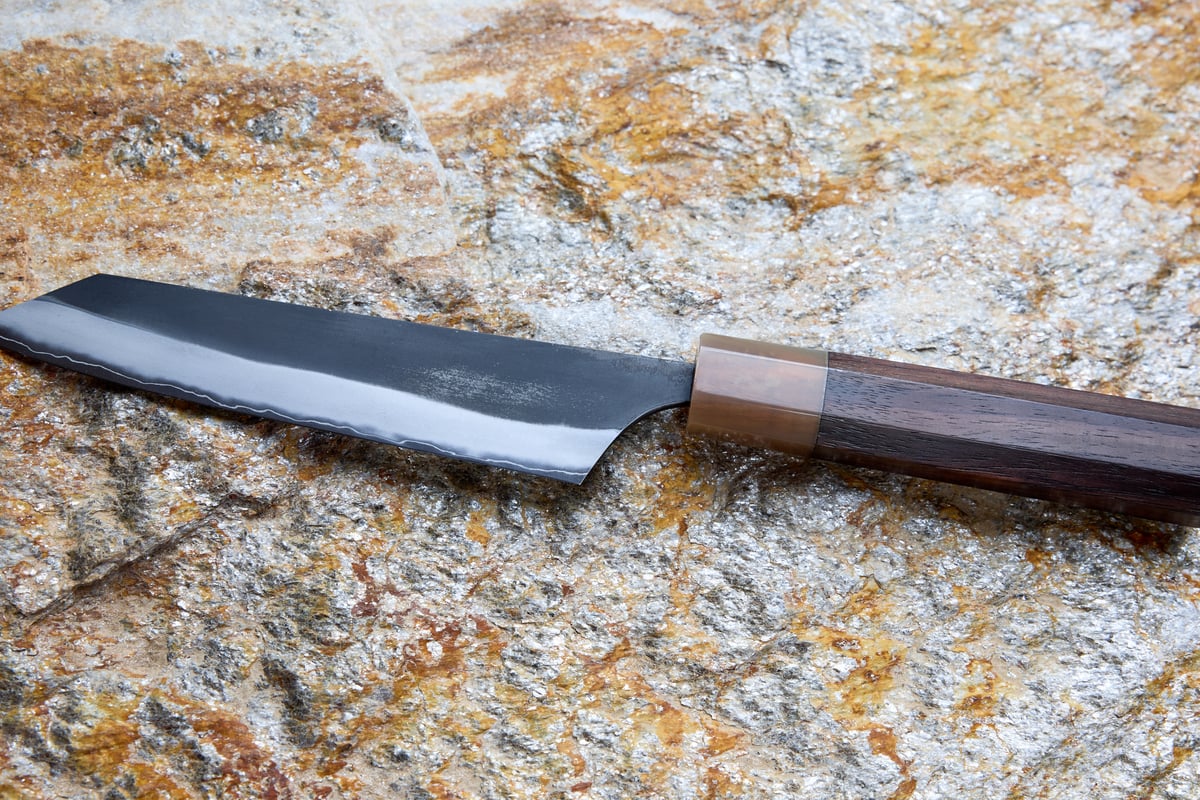
Echigo Sanjo Uchihamono (forged blades)
Echigo Sanjo Uchihamono
Echigo Sanjo Uchihamono are forged blades made in Sanjo City, Niigata Prefecture. Making use of the technique of 'free forging,' in which iron and steel are heated in a furnace until red-hot and shaped by striking them with a hammer, the area has produced a wide variety of items. The range includes kitchen knives and kiridashi knives, carpentry tools such as planes and chisels, sickles and nata hatchets, pruning shears, yattoko pincers, and even Japanese forged nails (wakugi). Its beginnings are traced to 1625 (Kan'ei 2) in the early Edo period. It is said that, to help farmers suffering from river floods, Otani Seibei invited nail smiths from Edo and spread the making of Japanese forged nails as a side job. In time, full-time blacksmiths emerged, and when methods for making saws and nata hatchets were introduced from the Aizu area, the products expanded to blades in general. Valued for shapes and materials specialized for each use, ease of handling, and long-lasting sharpness, it became a Traditional Craft Designated by the Minister of Economy, Trade and Industry in 2009. At Sanjo Blacksmith Dojo in the city, visitors can casually try their hand at blacksmithing.
Gyotoku Mikoshi
Gyotoku Mikoshi
Gyotoku Mikoshi is a traditional craft centered in Gyotoku, Ichikawa City, Chiba Prefecture, renowned as a major production center for Edo-style mikoshi (portable shrines). Gyotoku prospered so greatly from the Edo period onward that it was known by the saying ‘a thousand houses and a hundred temples in Gyotoku,’ and one account traces the origin of its mikoshi-making to craftsmen who worked on the construction of Nikko Toshogu Shrine and later settled in Gyotoku, which was then directly administered by the shogunate. Wood-base craftsmen, carvers, lacquerers, metal-fitting craftsmen, and other artisans who worked on the interiors and exteriors of temples and shrines gathered there, and from the Meiji through the Showa periods, as interest in mikoshi processions grew, production expanded — at its peak, Edo-style mikoshi made in Gyotoku are said to have accounted for roughly 80% of all mikoshi nationwide. Today, Nakadai Seisakusho, a workshop founded more than 150 years ago, is the only one in Gyotoku that still handles the entire process in-house, from woodworking and carving to lacquering, gold-leaf application, metal fittings, and assembly. In 2018, the ‘Gyotoku Mikoshi Museum’ opened on its grounds, offering free viewing of the techniques and history of mikoshi-making.
Hamamatsu Chusen Dyeing
Hamamatsu Chusen Zome (Hamamatsu Pour-Dyed Textiles)
Hamamatsu Chusen Dyeing (Hamamatsu Chusen Zome) is a type of stencil dyeing handed down in Hamamatsu City, Shizuoka Prefecture. Chusen (pour-dyeing) is a dyeing technique unique to Japan that was devised in the Meiji era. Cotton fabric on which resist paste has been applied through a stencil is placed on a table, and dye is poured from above and drawn through to the bottom to dye the cloth. The front and back of the fabric are dyed to the same depth, and the finish has a soft texture that makes use of bleeding and gradation. In Hamamatsu it began with dyeing tenugui hand towels in the Meiji 20s, and by the Taisho era yukata dyeing had become the core of the work. Blessed with abundant groundwater and river water and the dry Enshu wind, Hamamatsu has developed into a yukata-producing area ranking alongside Tokyo and Osaka. Today, besides yukata and tenugui, items such as noren curtains and tenugui for the Hamamatsu Festival are also dyed. It is a Shizuoka Prefecture Designated Local Traditional Craft, and dye works in the city continue to preserve the technique.
Hizen Biidoro
Hizen Biidoro
Hizen Biidoro is a traditional free-blown glass craft passed down in Saga City. Its roots trace back to 1852 (Kaei 5), in the closing years of the Edo period, when Nabeshima Naomasa, the 10th lord of Saga Domain, established the Seirenkata (a research institute equivalent to a modern institute of chemistry and physics) on the banks of the Tafuse River. Glassmaking was studied there for producing chemical containers needed for cannon manufacturing and medicine development, and the technique was nurtured under the domain's protection. Soejima Genichiro, who had worked at the Seirenkata since childhood, became independent and founded Soejima Glass Manufacturing in 1903 (Meiji 36), carrying the technique forward, and the company has continued making handmade glass ever since, for more than 120 years. Most products are shaped using the 'chubuki' (free-blowing) technique, which relies solely on breath rather than a mold, and among its techniques, 'Jappan-buki,' which uses two blowpipes at once, is known as a rare, advanced technique found almost nowhere else in the world. Today it is designated an Important Intangible Cultural Property of Saga City, and Soejima Glass Manufacturing preserves the tradition as its sole maker.
Kanazawa Buddhist Altars
Kanazawa-butsudan
Kanazawa Butsudan are gilded Buddhist altars developed in Kanazawa, the castle town that flourished under the Kaga domain's million-koku wealth, and were designated a national Traditional Craft in 1976. Their development traces back to 1471, when the priest Rennyo spread Jodo Shinshu Buddhism throughout the Hokuriku region, leading to the construction of meeting halls and temples in communities across the area and a corresponding rise in demand for altars. During the era of the Kaga domain's third lord, Maeda Toshitsune, master craftsmen were invited from Kyoto and Edo to work in dedicated workshops, laying the technical foundation for this art form. Kanazawa Butsudan are made through a complete division of labor among seven specialist craftsmen — woodworkers, shrine-structure carvers, lacquerers, maki-e gold-lacquer artists, wood carvers, gold-leaf appliers, and metal-fitting makers — each perfecting a distinct craft, which is a defining characteristic of the tradition. A particularly distinctive feature, rarely seen in altars from other regions, is the application of polished and raised maki-e across a wide area including the front pillars, tiered edges, central pillars, doors, and drawers. Combined with a sturdy structure using durable Aomori hiba wood joined with mortise-and-tenon joints, this results in altars that are both lavishly ornate and built to last, a tradition carried on to this day.
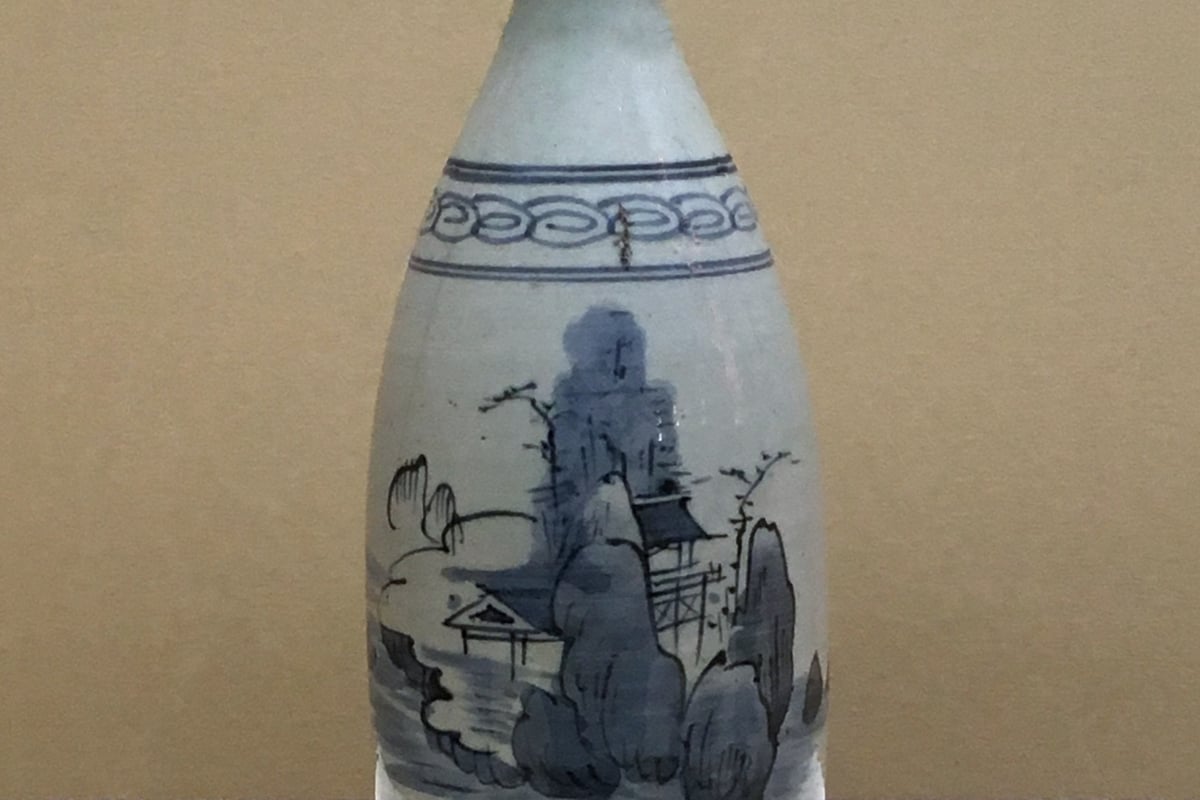
Kirigome ware
Kirigome-yaki
Kirigome ware is pottery and porcelain produced in the Kirigome district of Kami Town (formerly Miyazaki Town), Kami District, Miyagi Prefecture, made from the late Edo period until the early Meiji era. While it served as an official kiln of the Sendai Domain producing fine blue-and-white porcelain, it is also said to have produced large quantities of everyday wares for common use. Blue-and-white ware, with floral and plant motifs painted in indigo cobalt pigment on a white ground, formed the core of production; although the ground is not as pure white as Arita ware, its rustic, warm texture is its charm. Solid historical records are scarce and the details of its founding remain shrouded in mystery, but surviving blue-and-white pieces bear the date of 1835 (Tenpo 6), and it is said to have reached its peak during the Koka and Ansei eras of the late Edo period (around 1844-1860). The kilns closed once in the early Meiji 10s, and an attempted revival in the Taisho era did not take hold, but a full-scale revival was achieved in 1990 (Heisei 2) as part of a town revitalization effort. Today, 'Miura Toubou' is the sole kiln carrying on the tradition, and the Kami Town Furusato Togeikan (Kirigome Ware Memorial Museum) introduces its history and works. It was designated a Traditional Craft designated by the Governor of Miyagi Prefecture in 1984 (Showa 59).
Koshu Warrior Banners and Carp Streamers
Koshu Musha Nobori and Koinobori
Koshu Warrior Banners and Carp Streamers are banners for Tango no Sekku (the Boys' Festival) that are hand-dyed in Minami-Alps City, Yamanashi Prefecture. They are said to have originated when the hata-sashimono (battle flags) and fukinagashi (streamers) that fluttered over battlefields in the Sengoku (Warring States) period came to be raised as banners celebrating the festival in the latter half of the Edo period. In Yamanashi, musha nobori (warrior banners) have been raised in the hope that children will grow up strong like Lord Takeda Shingen. Carrying on their production is Inoue Dyeworks in Furuichiba, Minami-Alps City, which began with indigo dyeing at the end of the Edo period. Using hon-zome (authentic hand dyeing), in which outlines are drawn on cotton cloth with paste and pigments and dyes are layered on, the workshop dyes brave warriors and carp in vivid colors. Everything is done by hand, and it is said to take more than two weeks to complete a banner. In 1994 (Heisei 6), they were designated a Yamanashi Prefecture Designated Local Traditional Craft. In recent years, small carp streamers that can be displayed indoors have also been made.
Kumejima Tsumugi
Kumejima Tsumugi
Kumejima Tsumugi is a silk textile from Kumejima Island, off the west coast of the Okinawan mainland, in which a single weaver handles every stage of the process by hand, from raising silkworms through dyeing to weaving. Sericulture is thought to have already been practiced on Kumejima by around the 15th century, and after the textile was designated a tribute cloth to the Ryukyu royal government in 1637, its intricate techniques were refined further. Japan's tsumugi kasuri weaving techniques are said to have spread from Kumejima to the Okinawan mainland and Amami Oshima and on to mainland Japan, and it is considered one of the origins of tsumugi textiles nationwide, including Oshima Tsumugi and Yuki Tsumugi. Its defining feature is that a single weaver carries out every stage from spinning the thread to choosing the pattern, dyeing, and weaving. After repeated dyeing with plant materials such as fukugi and gūru (sarsaparilla) and tekachi (Chinese hawthorn), the cloth is iron-mordanted through mud dyeing using the island's soil, producing a deep, subdued blackish-brown sheen. It was designated a national Traditional Craft in 1975 and a national Important Intangible Cultural Property in 2004. The Kumejima Tsumugi Cooperative leads the transmission of the technique, and the Kumejima Tsumugi no Sato Yuimaru Hall offers tours of the production process and weaving and dyeing experiences.
Kyo-uchiwa (Kyoto Flat Fans)
Kyo-uchiwa
Kyo-uchiwa is a Kyoto flat fan whose greatest characteristic is its "sashie" (inserted handle) structure, in which the handle and the fan face are made separately and the handle is inserted afterward. Unlike typical uchiwa fans in which the ribs and handle are made from a single piece of bamboo, Kyo-uchiwa's fan face has numerous bamboo ribs arranged radially, and its distinctiveness lies in attaching a separately lacquered and decorated handle afterward. Its origin is said to trace back to the Nanboku-cho period, when fans brought from the Korean Peninsula reached Fukakusa near Kyoto, and in the Edo period it developed into "gosho-uchiwa," fans painted by court painters for the imperial court. Though a practical item, it is cherished as a craft in which beautiful designs reminiscent of Japanese-style painting harmonize with precise bamboo work.
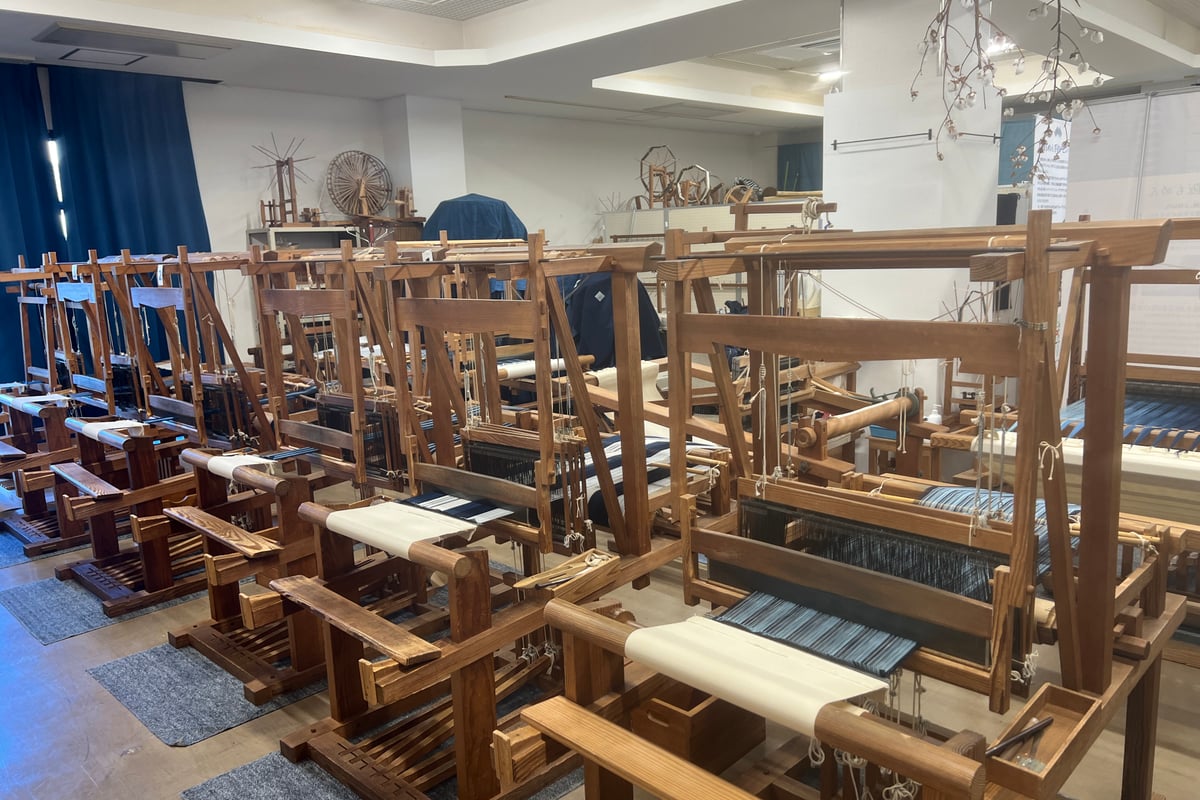
Matsusaka Momen (Matsusaka Cotton)
Matsusaka Momen (Matsusaka Cotton)
Matsusaka Momen is a cotton textile made in Matsusaka City and Meiwa Town, Mie Prefecture. It is characterized by being woven into fine stripes using yarn dyed beforehand with natural indigo. These stripes are also called 松阪縞 (Matsusaka stripes). The area around Matsusaka has long been known for spinning and weaving, and when cotton arrived around the 15th century, those skills were carried over into cotton weaving. In the Edo period it was woven extensively as a side job by farming households, and Matsusaka merchants such as the Mitsui, 長谷川 and 小津 families spread its sales in Edo. The pattern, which looks plain from a distance but reveals stripes up close, was prized as 'iki' (understated chic) in an era of sumptuary edicts. It is said that at its height, 500,000 to 600,000 tan (bolts) were sold in Edo in a single year. Today, 御絲織物 continues production by machine weaving, and the hand-weaving techniques are passed on by groups such as 松阪もめん手織り伝承グループゆうづる会. It is a Mie Prefecture Designated Traditional Craft.
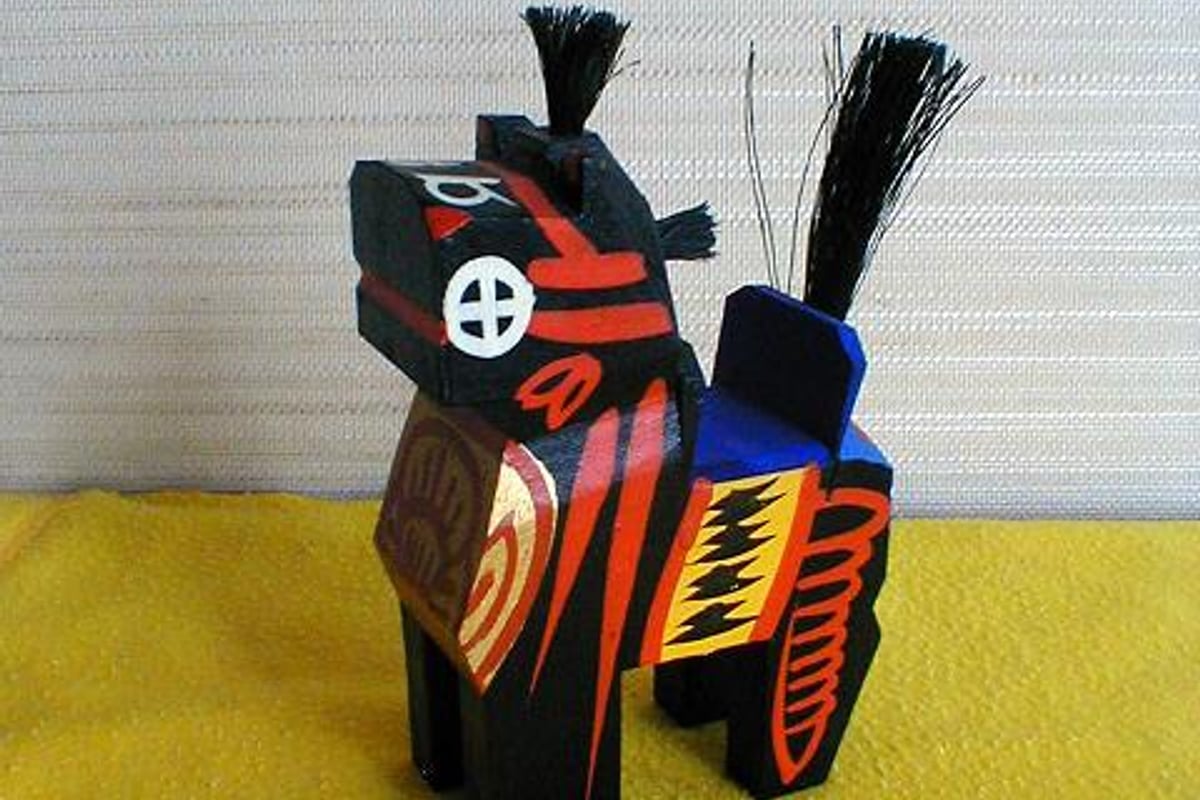
Miharu Koma
Miharu Koma
Miharu Koma are carved wooden horse folk toys that originated in what is now Nishida-Takashiba, Koriyama City, and are counted among the 'Three Great Horses of Japan' alongside Aomori Prefecture's Yawata-uma and Miyagi Prefecture's Kinoshita-goma. According to legend, the toy traces back to the Heian-period general Sakanoue no Tamuramaro, who around the year 791 was struggling during his campaign to subdue the Emishi when a wooden horse appeared out of nowhere and came to his aid; in tribute, a children's toy called kosodate mokuba (子育木馬, 'child-rearing wooden horse') was said to have first been made. In the Edo period, the Miharu domain, known as a horse-breeding region, gave the name 'Miharu Koma' to a fine breed developed from wild horses, and the name spread to the toy as well. The toys come as white horses and black horses, painted in red, black, and gold; the black horse is considered a charm for fertility, safe childbirth, and child-rearing, while the white horse is believed to bring peace in old age and protection against senility. In 1954 it was even chosen as the design for Japan's first New Year's postage stamp, making it a nationally known folk toy.
Miyama Washi
Miyama Washi
Miyama Washi is handmade paper passed down in the Miyama district of Shirataka Town, Yamagata Prefecture, made from locally grown kozo (paper mulberry). Its origins are said to date back around 400 years, and it was long known for its high quality, even being used as official paper for the Uesugi domain in the capital city of Kyoto; it has been handed down for generations as a household industry in a mountain village that endures long, harsh winters. During the Edo period, Yonezawa domain lord Uesugi Yozan encouraged the cultivation of kozo as part of his fiscal reform policies, and many villagers took up papermaking as an off-season occupation. The paper has a distinctive, warm texture and is used for letter paper, torn-paper collage art, washi dolls, and even as a material for wedding dresses. It was designated an Intangible Cultural Property of Yamagata Prefecture in 1978, and the Miyama Washi Promotion and Research Center now serves as a base for passing on the technique and offering papermaking experiences.
Nagoya Kiri-tansu (Paulownia Wood Chests)
Nagoya Kiri-tansu
Nagoya Kiri-tansu is the general term for chests of drawers and other furniture made entirely of paulownia wood (kiri) that developed in the castle town of Nagoya. Its origins trace back roughly 400 years to the construction of Nagoya Castle, when carpenters gathered from across the country and settled around the Fukuromachi and Osu districts of the castle town, going on to make chests and long chests (nagamochi). The production area was further boosted by the abundant high-quality paulownia timber available from the nearby Hida region (Gifu Prefecture). The craft involves more than 130 processes -- from timber selection and cutting to correcting warping, shaping, decorating, and fitting metal hardware -- and its defining feature is that a single craftsperson handles the entire process from start to finish. Compared with kiri-tansu from other production areas, Nagoya Kiri-tansu is built wider, and nails are made from hiba cypress or an equivalent material. The natural humidity-regulating properties of paulownia wood keep out moisture and make the furniture highly resistant to fire and heat, with little warping -- qualities that have long made it prized as high-grade furniture. It was designated a Traditional Craft (designated by the Minister of Economy, Trade and Industry) on June 22, 1981.
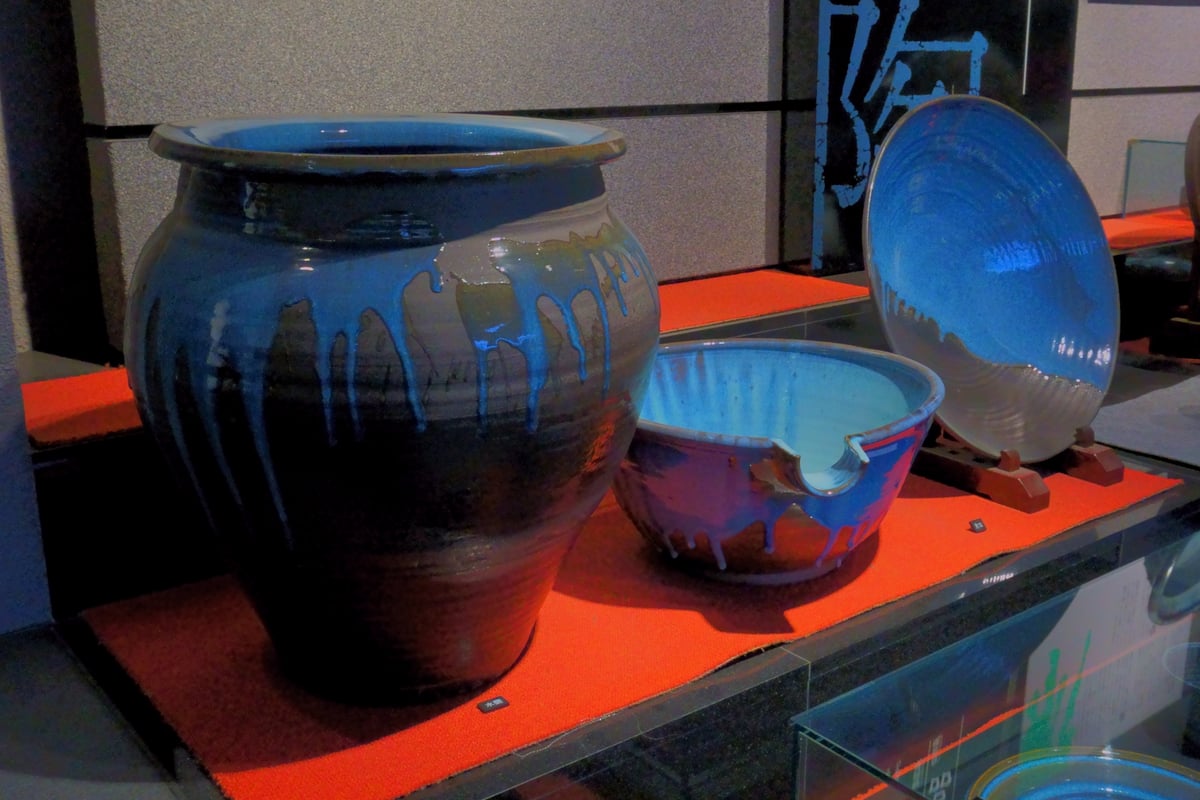
Naraoka ware (Naraoka-yaki)
Naraoka-yaki
Naraoka ware is pottery fired in the Naraoka district of Nangai, Daisen City, Akita Prefecture, and is said to have the longest history of any pottery within the prefecture. It began in 1863 (Bunkyu 3), when Komatsu Seiji, a member of a local old family, invited a potter and built a kiln; in its early years the kiln mainly produced olive-colored tea utensils and the like, but from the mid-Meiji era onward, robust pieces using the bluish 'namako glaze (a bluish-grey glaze)' became the mainstream. Today, production continues in the Takano area of Nangai, to which the kiln relocated in 1908 (Meiji 41), using local clay and glaze and firing with wood in a climbing kiln. The Naraoka Togen kiln has kept the kiln running for five generations, and is also known for having received guidance from the potters Kato Tokuro and Shoji Hamada in the early Showa era to refine its techniques. The deep ultramarine of its ware was even used as inspiration for the interior design of the Green Car (first-class car) of the Akita Shinkansen's E6 series.
Osaka Butsudan (Buddhist Altars)
Osaka Butsudan (Buddhist Altars)
Osaka Butsudan are Buddhist altars (butsudan) that have been made in various parts of the prefecture, including Osaka City, Sakai City and Yao City. Their origins go back to the Asuka period and are said to lie with artisans invited from Baekje (Kudara) when Prince Shotoku founded Shitennoji Temple. The full-scale formation of the production area is said to have followed the founding of Kita-Mido and Minami-Mido in the Edo period. The national traditional craft 'Osaka Butsudan' is a lacquered butsudan (gold-lacquered butsudan, or kin-butsudan): natural lacquer is applied to the wooden base, which is decorated with gold leaf, coloring and decorative metal fittings (kazari kanagu). Its greatest feature is takamaki-e (raised maki-e), a technique of building up lacquer to draw designs, which makes them look as if metal fittings had been nailed on. Because no metal fittings are used, damage to the wooden base from rust is said to be prevented. Processes such as woodworking, carving, lacquering, maki-e and gold-leaf application are each carried out by specialized craftspeople in a division of labor. In 1982 (Showa 57), it was designated a Traditional Craft Designated by the Minister of Economy, Trade and Industry. 'Osaka Karaki Meiboku Butsudan,' which use rosewood (shitan), ebony (kokutan) and other woods, and 'Osaka Nuri Butsudan' are designated as Osaka Prefecture-designated Traditional Crafts.
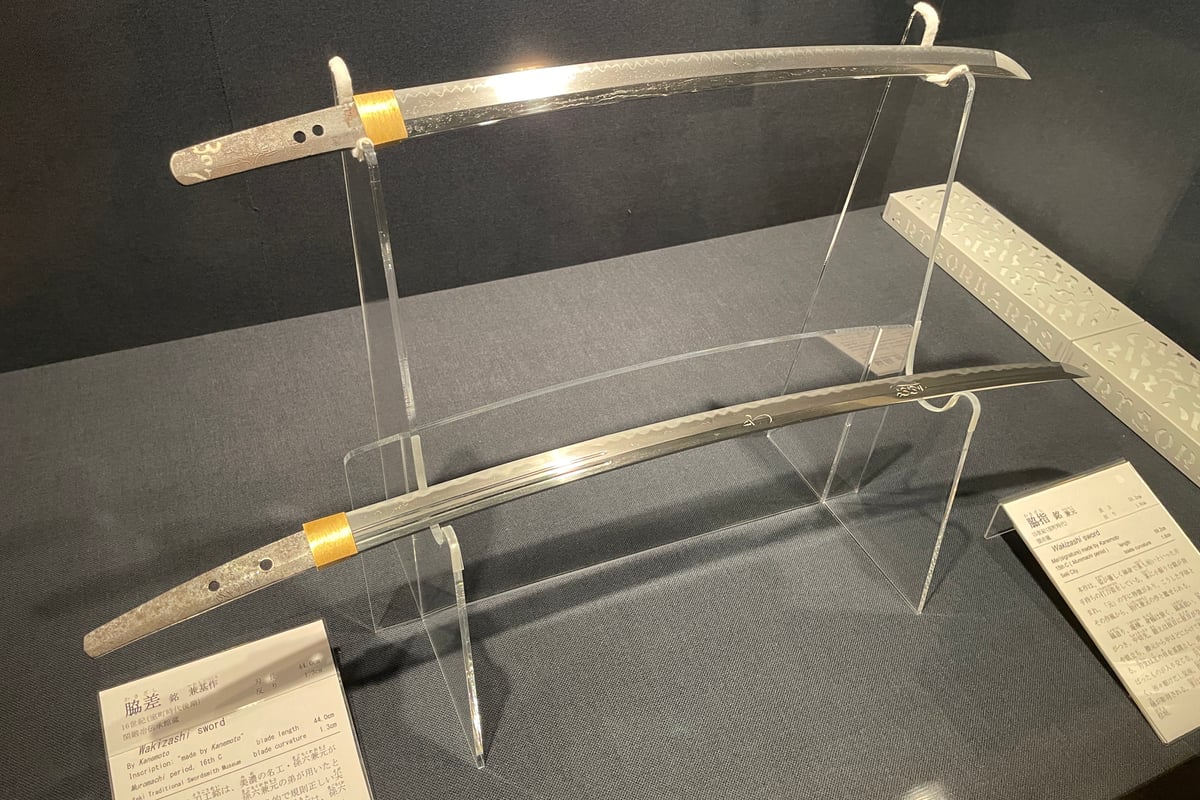
Seki Hamono
Seki Hamono
Seki Hamono is the collective name for the cutlery and blades made in Seki City, Gifu Prefecture, a leading production center that accounts for roughly half of Japan's total shipment value of household blades. Its origins are said to trace back to the Kamakura period, when the swordsmith Motoshige settled in Seki and began forging swords there. In the Nanboku-cho period, Kaneshige and Kaneuji, two of the Ten Great Disciples of Masamune, and others established a distinctive forging technique known as the Mino tradition, which came to be counted among the Five Traditions (Gokaden) of Japanese swordmaking. By the Muromachi period, the number of swordsmiths in Seki exceeded 300, and swords from Seki, praised as unbreakable, unbending, and sharp, became known throughout the country. From the Edo period onward, as demand for swords declined, blacksmiths shifted their skills toward everyday blades such as kitchen knives, razors, and scissors, and from the Meiji era the craft developed into a modern cutlery industry. Today, Seki Hamono is registered as a regional collective trademark by the Japan Patent Office, and Seki is regarded as one of the world's three great cutlery-producing regions.
Shinshu Forged Blades
Shinshu Uchihamono (Shinshu Forged Blades)
Shinshu Forged Blades are forged blades made mainly in Shinano Town, Kamiminochi District, in northern Nagano Prefecture. Iron and steel are heated in a forge and hammered out one by one with a hammer (tsuchi) to shape them. The representative product is the 'Shinshu sickle' (Shinshu-gama), whose back is thick and whose blade is extremely thin, making it sturdy and sharp. Thanks to 'shibatsuke,' which bends the part inserted into the handle, and 'tsuri,' which curves the blade face inward, the grass that has been cut gathers toward the user's hand. The craft is said to have originated in the mid-16th century, around the time of the Battles of Kawanakajima. It is believed to have begun when local villagers learned the techniques from blacksmiths who came to repair armor and swords. The prototype of today's Shinshu sickle was born at the end of the Edo period, and when the Shin'etsu Line opened in the Meiji period, its sales routes expanded nationwide. In 1982 it became a Traditional Craft Designated by the Minister of Economy, Trade and Industry. Today, besides sickles, hoes (kuwa), hatchets (nata), kitchen knives and other tools are also made.
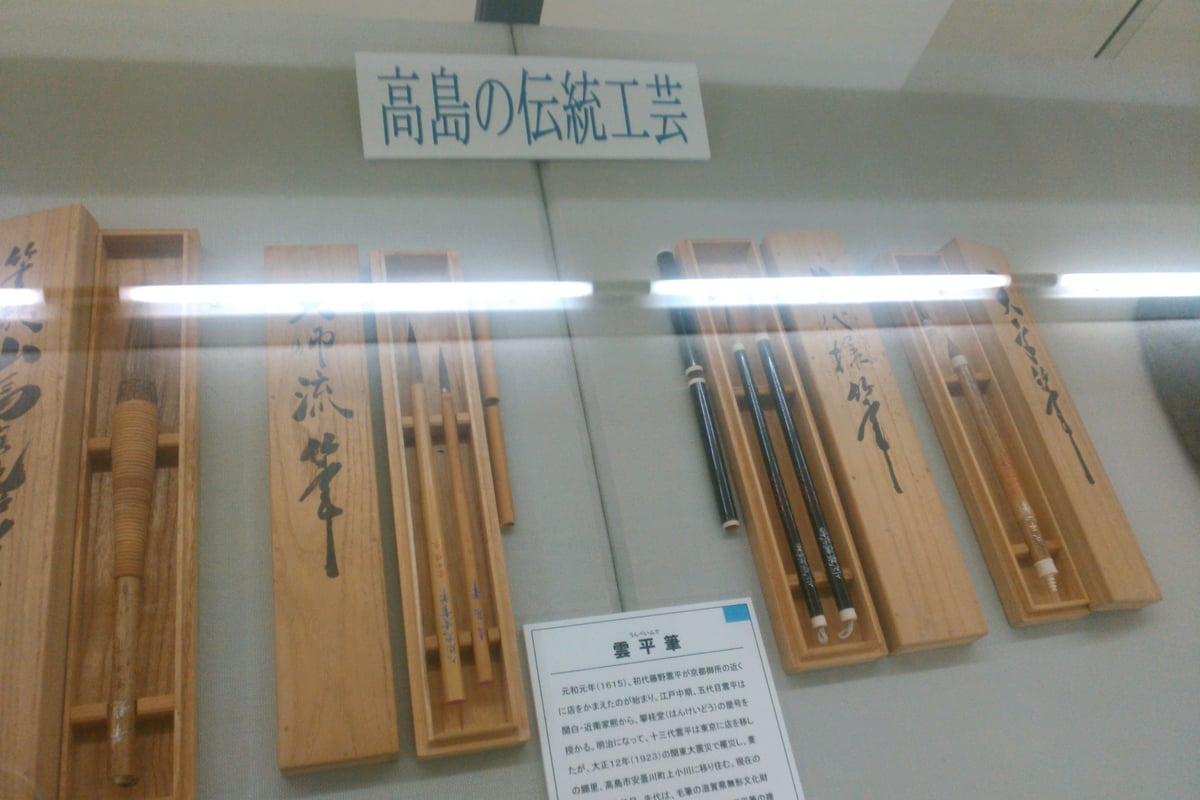
Umpei-fude (Umpei Calligraphy Brushes)
Umpei-fude
Umpei-fude are calligraphy brushes that carry on the technique of 'makifude' (wrapped brushes), in which the brush tip is formed by wrapping washi paper around the hair core. The craft's founder is said to be Fujino Umpei, a brush maker who established his workshop in Kyoto during the Genna era (around 1615); he served the imperial court and is said to have had close ties with the Arisugawa-no-miya family, known for its devotion to calligraphy. In the Shotoku era, the fifth-generation Umpei received the title 'Hankeido' from the then-regent Konoe Iehiro, and successive brush makers have carried on the technique under this name ever since. Today the workshop is located in Adogawa, Takashima City, Shiga Prefecture, where the fifteenth-generation Fujino Umpei and his child are known as the only makers in Japan of makifude brushes, whose tips are wrapped and fixed with washi paper. The brush tips, made using a combination of animal hairs such as raccoon dog, sheep, and weasel, hold ink well and are said to produce powerful lines, and have long been cherished by calligraphers and many enthusiasts. In 1966 the fourteenth generation was recognized as a holder of Shiga Prefecture's Intangible Cultural Property, and Umpei-fude itself has been designated a Traditional Craft by the Governor of Shiga Prefecture.
Wakasa Meno Zaiku (Wakasa Agate Craft)
Wakasa Meno Zaiku
Wakasa Meno Zaiku is a gemstone craft handed down in Obama City, Fukui Prefecture. Rough agate is heated in a process called yakiire to bring out a vivid red color, then carved and polished into ornaments and accessories. Some traditions trace its origins to the Nara period, but the foundations of its techniques were laid in the mid-Edo period. It is said that in the Kyoho era (1716-1736), Takayama Kihei of Onyu Village (present-day Onyu, Obama City) learned polishing techniques in Osaka and heat-treating techniques in Tsugaru, and then began making agate beads in his village. In the Meiji era, carving techniques were developed, and incense burners, Buddhist statues, animal figurines and other pieces also came to be made. In 1976 (Showa 51), it was designated a Traditional Craft Designated by the Minister of Economy, Trade and Industry. At its peak there were about 50 artisans, but today Uenishi Soichiro of Sosuke Kobo carries on the techniques as the only artisan in the production area. At Wakasa Kobo in Obama City, visitors can also try agate polishing.
Yame Fukushima Butsudan
Yame Fukushima Butsudan
Yame Fukushima Butsudan are magnificent tower-style Buddhist altars made in Yame City, Fukuoka Prefecture (the former town of Fukushima), finished with gold leaf and lacquer. It is said that in 1821 (Bunsei 4), the joiner-carpenter Toowatari Sansaku had a dream of building a splendid temple and, together with fellow carpenters Inoue Rikyuhei and Hirai Sansaku, began making altars, and by around 1850 the production techniques had been established. By the end of the Edo period, the craft had grown into a major industry bringing together artisans specializing in lacquering, metal fittings, carving, Buddhist images, and woodwork. Under a system in which woodworkers, palace-structure makers, carvers, metal-fitting makers, lacquerers, and maki-e artists each handle a separate stage, a single altar is completed through about 80 processes, from the wood base and palace structure to carving, metal fittings, lacquering, and maki-e and gold-leaf application. On March 30, 1977 (Showa 52), it was designated a Traditional Craft Designated by the Minister of Economy, Trade and Industry, establishing its status as Fukuoka Prefecture's leading center of Buddhist altar production.
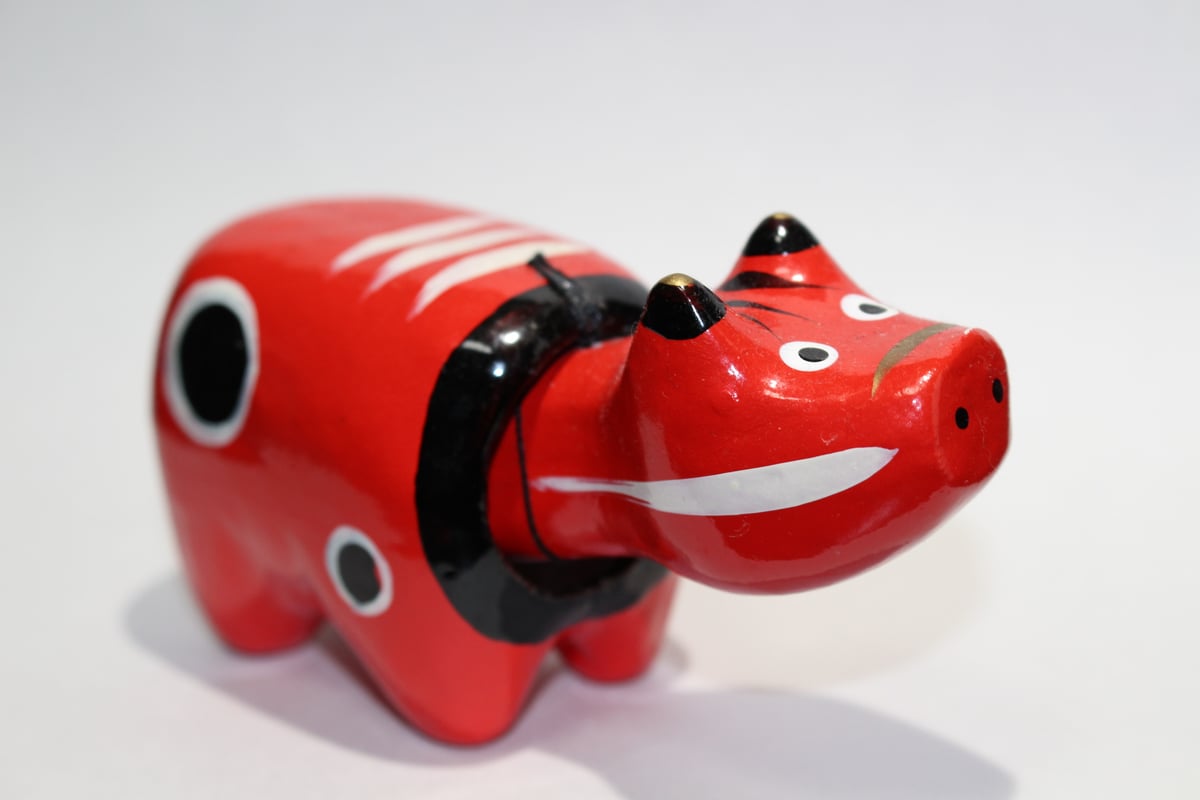
Akabeko
Akabeko
Akabeko is a papier-mâché (hariko) folk toy representing the Aizu region of Fukushima Prefecture, shaped like a red-painted cow. 'Beko' is a Tohoku dialect word for cow, and the toy's origin is said to date back roughly 1,200 years, to a legend of a red-haired ox that, when many other oxen collapsed from exhaustion during the construction of the main hall of Enzō-ji Temple (Fukuman Kokuzōson) in Aizu-Yanaizu, alone carried timber to the very end. The hariko technique itself is said to have been introduced to Aizu during the Tenshō era (1573-1592) by craftsmen invited by Gamō Ujisato, who became lord of Aizu and sought to promote local industry. In 1713, when smallpox spread through the Aizu region, a tale spread that children who owned an Akabeko were spared from the disease, and ever since, Akabeko has been treasured as a lucky charm to ward off evil and disease. The red of its body is said to represent protection from evil, while the spots painted on it represent the marks of smallpox, and its head, which sways gently when touched, still makes it a signature souvenir of Aizu today.
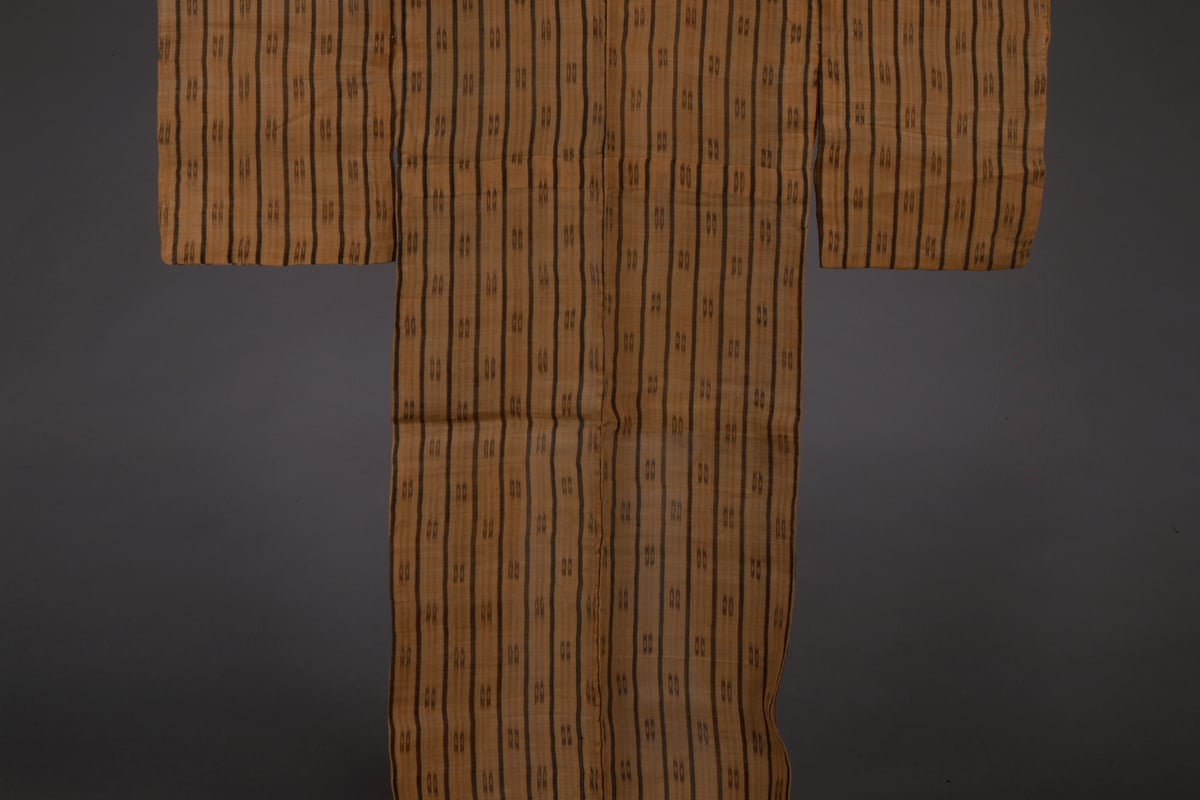
Bashofu
Bashofu
Bashofu is a representative summer textile of Okinawa, woven from thread made of fiber taken from the stalk of the ito basho (Japanese fiber banana) plant. Old records suggest it was already being woven by around the 13th century, and it is said that by around the 15th century a production method almost identical to today's had been established. During the Ryukyu Kingdom era, it was grown in banana gardens directly managed by the royal government, and as a cloth used everywhere from royal garments to the everyday clothing of commoners, it was the fabric most familiar to the people of Okinawa. Kijoka, in Ogimi Village, Kunigami District, has long been known as a leading production area for bashofu. Production suffered devastating damage in the Battle of Okinawa during World War II, but soon after the war, Taira Toshiko began working to revive the craft, reestablishing the technique in Kijoka. In 1974, it was designated a national Important Intangible Cultural Property as "Kijoka no Bashofu," and the Kijoka Bashofu Preservation Society, centered on Taira Toshiko, was certified as the holding organization. Its defining feature is a taut, cool texture achieved through a process spanning about three years, from growing the ito basho plant to spinning the thread, kasuri binding, dyeing, and weaving; Taira Toshiko herself was certified as a Living National Treasure (holder of an Important Intangible Cultural Property) in 2000.
Echizen Take Ningyo (Echizen Bamboo Dolls)
Echizen Take Ningyo
Echizen Take Ningyo are dolls from Fukui Prefecture in which every part, from the costume and body to the hair, is made of bamboo or bamboo sheath. They are said to have been created after much trial and error in the Showa 20s (1945-1954) by the brothers Morota Yasutaka and Sanshiro, who ran a bamboo craft business in Maruoka, Sakai City, and their form is said to have been established around 1952 (Showa 27). Their exhibition at the 1955 (Showa 30) Toyama Exposition prompted full-scale bamboo doll production. In 1963 (Showa 38), Mizukami Tsutomu published the novel 'Echizen Take Ningyo', which was made into a film the same year, spreading the name nationwide. Many of the dolls are elegant figures based on Noh, Kabuki and other themes, and a highlight is the black hair, expressed by inserting 5,000 to 7,000 finely split strips of bamboo into each doll. It is not a Traditional Craft Designated by the Minister of Economy, Trade and Industry, but has been designated a Fukui Prefecture-designated Local Craft. At Echizen Take Ningyo no Sato (Echizen Bamboo Doll Village) in Maruoka, visitors can watch artisans at work and try making bamboo dolls.
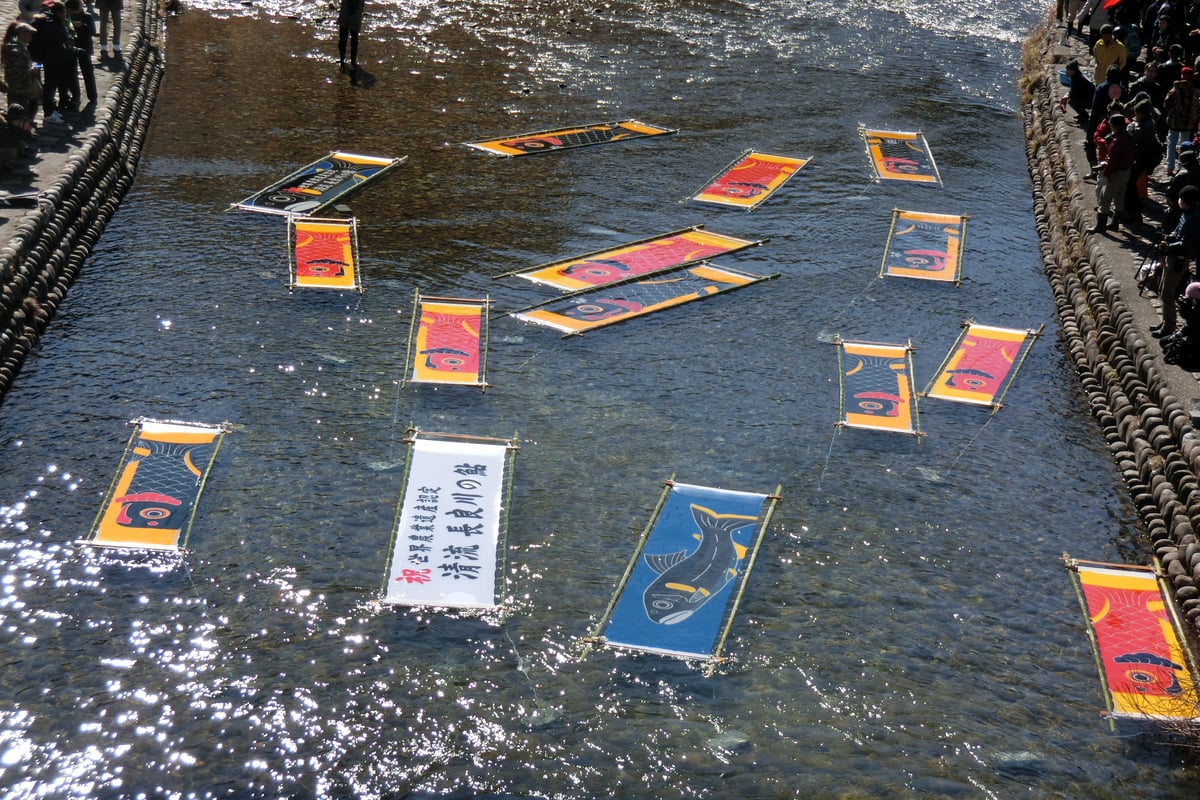
Gujo Honzome
Gujo Honzome
Gujo Honzome is an indigo-dyeing tradition from the town of Hachiman in Gujo City, Gifu Prefecture, known for its tsutsugaki (tube-drawing) technique used to dye carp-shaped koinobori streamers and other banners. Its origins are said to date back to the Tensho era (1573-1592) of the Azuchi-Momoyama period, and the craft has been handed down for more than 400 years in Hachiman, a town blessed with the abundant, clear waters of the Yoshida River, a tributary of the Nagara River. Craftspeople use a resist paste called managori, made from glutinous rice, squeezed from a cloth cone directly onto the fabric (tsutsugaki), or apply the paste through a stencil (katazome) to outline the pattern, before dyeing the cloth more than a dozen times in natural indigo to achieve a deep, vivid blue. Designated an Important Intangible Cultural Property of Gifu Prefecture in 1977 (Showa 52), the tradition is still carried on today by the Watanabe Dyeworks in Hachiman, now in its 15th generation. The annual kanzarashi (cold rinsing) of koinobori in the Yoshida River, held around the coldest time of the year, is a beloved winter tradition of Gujo Hachiman.
Iida Mizuhiki (Decorative Paper Cords)
Iida Mizuhiki
Iida Mizuhiki is mizuhiki made in Iida City and the surrounding area in southern Nagano Prefecture. Mizuhiki are cords made by twisting washi into strings, stiffening them with water-based starch paste (mizunori) and coloring them, and they are used to decorate gifts such as congratulatory money envelopes and betrothal gifts (yuino). Iida has long been a center of washi making, and in the Edo period it made its name as a production area for motoyui made from that washi. Motoyui are paper cords used to tie and bind the topknot (mage), and those improved by Sakurai Bunshichi in the Genroku era became famous even in Edo as 'Bunshichi Motoyui.' When demand for motoyui fell sharply because of the Haircut Edict (Dampatsurei) in the Meiji period, sturdy, glossy mizuhiki came to be made using those techniques. Today the Iida area produces about 70 percent of the mizuhiki products in Japan. In addition to money envelopes (kinpu) and betrothal gifts, mizuhiki ornaments in the shapes of cranes and of pine, bamboo and plum (shochikubai), as well as accessories, are also made. In 2014 it became a Traditional Craft Designated by the Governor of Nagano Prefecture.
Ise Ittobori
Ise Ittobori (Ise Single-Knife Carving)
Ise Ittobori is a carved wooden good-luck charm made in Ise City and Tamaki Town, Mie Prefecture. It is said to have begun when shrine carpenters (miyadaiku) involved in building the Ise Grand Shrine carved figures of Ebisu and Daikoku from timber left over from the shrine's rebuilding. It is characterized by boldly cutting away the corners of the wood with a large chisel and leaving the carved faces as the finished surface. Because it is neither polished nor painted, the knife marks and wood grain give it a rustic strength and warmth. The main material is camphor wood, and hinoki cypress is also used. Subjects include the zodiac animal of the year, as well as sacred roosters, frogs and other motifs associated with Ise. Ise has long been home to many netsuke carvers, and the accumulated carving skills of the area are also said to have formed part of its background. Today the techniques are carried on by 岸川行輝, 泉廣典, and 太田結衣, who studied under 岸川行輝, among others. It is a Mie Prefecture Designated Traditional Craft.
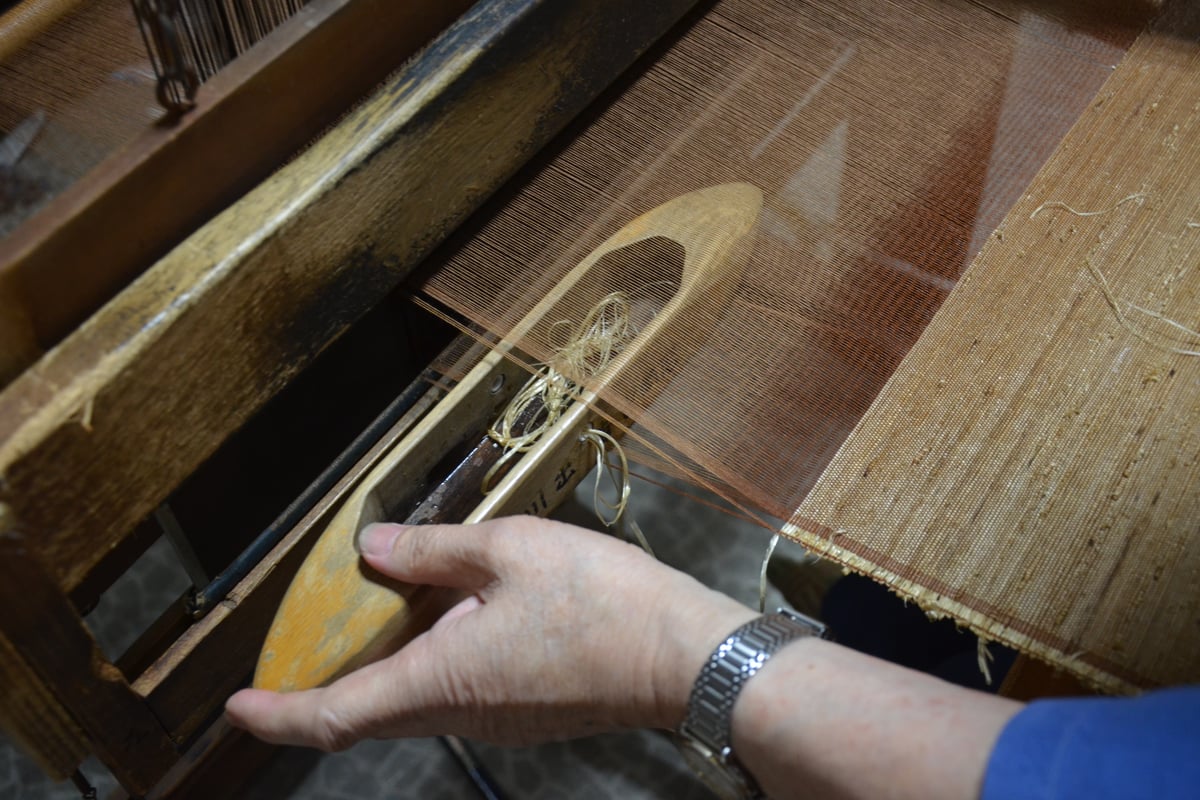
Kakegawa Kuzufu (Kudzu Cloth)
Kakegawa Kuzufu (Kakegawa Kudzu Cloth)
Kakegawa Kuzufu is cloth that has been woven for generations in Kakegawa City, Shizuoka Prefecture. Fibers are taken from the vines of kudzu, which grows wild in the hills and fields, made into thread, and hand-woven in as the weft. Its appeal lies in a gentle, subdued luster and an understated refinement that differ from silk or hemp. It is said to have already been used for samurai attire and other garments in the Kamakura period. In the Edo period, under the protection and encouragement of the Kakegawa Domain, it was prized as fabric for kamishimo, hakama and kappa raincoats. It also became a souvenir for daimyo traveling on sankin-kotai through Kakegawa-juku, a post town on the Tokaido. When samurai demand was lost in the Meiji era, it was revived by shifting its use to fabric for fusuma sliding doors. From around Meiji 30, it was exported to the United States as wallpaper. Today two weaving houses preserve the traditional handwork, from gathering the vines to weaving by hand. It is a Shizuoka Prefecture Designated Local Traditional Craft under the name Kakegawa Hand-woven Kuzufu (Kakegawa Teori Kuzufu).
Kamo Kiri Tansu (paulownia chests)
Kamo Kiri Tansu
Kamo Kiri Tansu are chests of drawers made of paulownia wood in Kamo City, Niigata Prefecture, and the surrounding area. Paulownia swells when humidity is high, keeping moisture out, and shrinks when dry, improving ventilation, which makes it well suited to storing clothing. Chest-making in Kamo began in the Tenmei era (1781-1789) of the Edo period, and it is said to have originated with Maruya Koemon, who made chests from cedar alongside his carpentry work. Because natural paulownia wood was plentiful in the surrounding mountains, the area grew into a production center for paulownia chests (kiri-tansu), which were shipped by boat via the Kamo River and the Shinano River to Niigata and the Tohoku region. It is still regarded as Japan's leading production area, accounting for about 70 percent of national paulownia chest output, and in 1976 it became a Traditional Craft Designated by the Minister of Economy, Trade and Industry (at the time, the Minister of International Trade and Industry). The chests are assembled without gaps using sashimono joinery techniques that use no metal nails, and because the surface can be planed down and restored even when old, they are said to last more than 100 years.
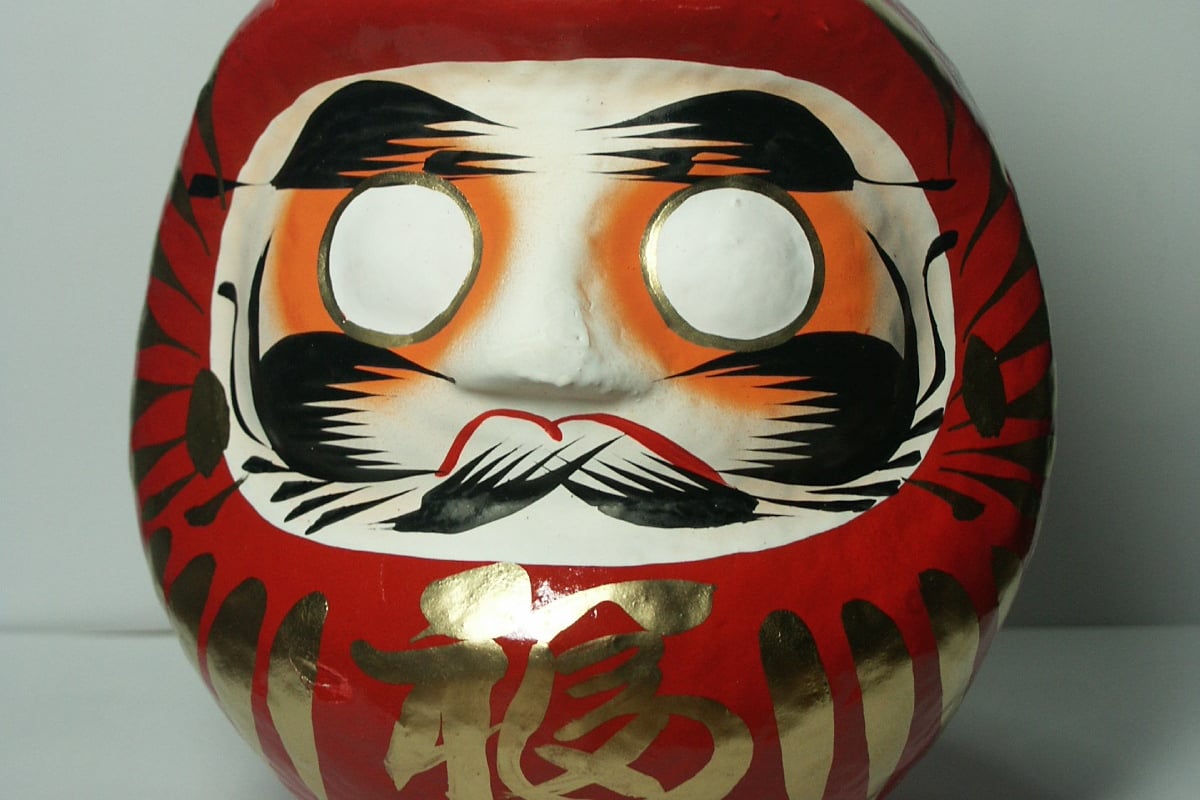
Koshigaya Daruma
Koshigaya Daruma
Koshigaya Daruma is a hariko (papier-mache) daruma made mainly in Koshigaya City, Saitama Prefecture, known for its pale, whitish skin tone, somewhat high nose bridge, and refined, gentle expression. It is said to have begun around the Kyoho era of the mid-Edo period (1716-1736), when a doll maker known as 'Darukichi' in the Makuri area of Koshigaya City added the figure of the seated Bodhidharma to the then-popular okiagari-koboshi (self-righting toy). Every step of the process is done by hand, from layering and pasting Japanese paper over a mold, drying it and removing it from the mold, applying the base coat and coloring, to finally painting in the beard and eyebrows. Painting the beard in particular requires the skilled technique of using a long-tipped menso brush and finishing with the same brush regardless of the daruma's size. Cherished as an auspicious symbol of 'falling down seven times, getting up eight,' it is popular at New Year's lucky-charm markets, and several workshops in Koshigaya City continue production today; it was designated a Saitama Prefecture-designated Traditional Handicraft in 1984.
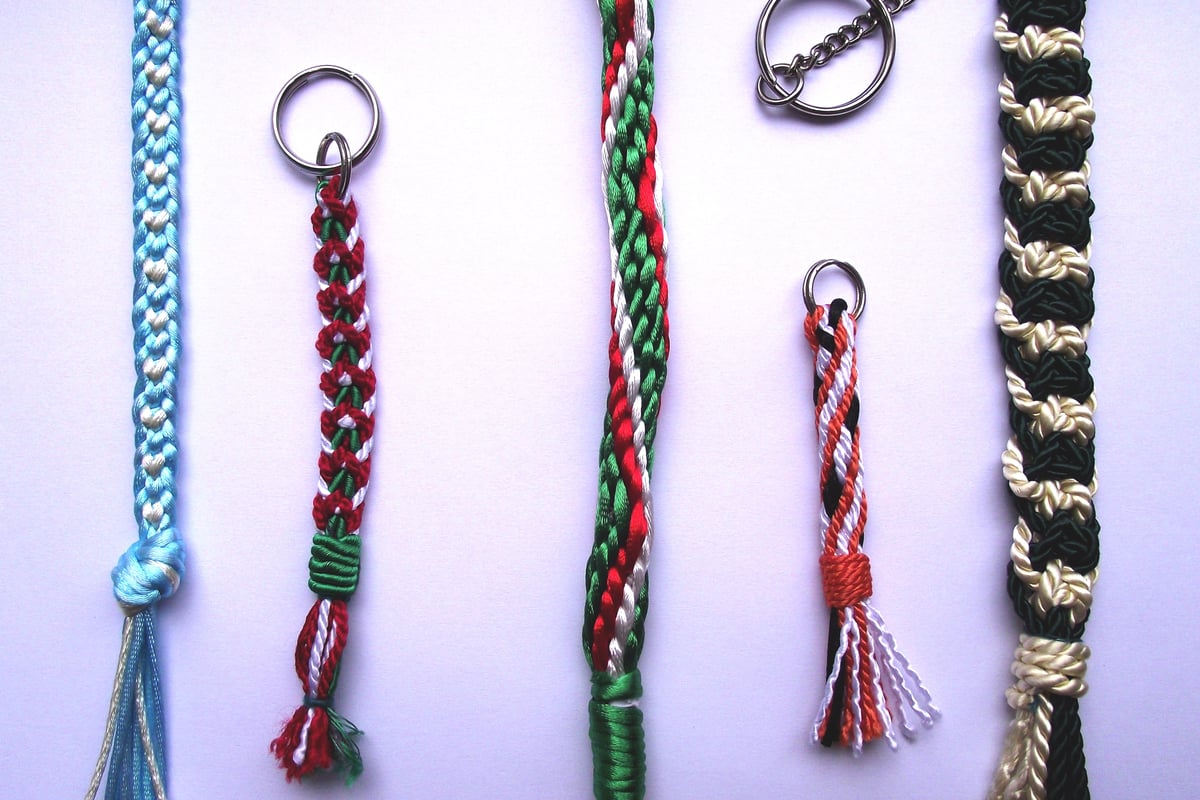
Kyo-kumihimo (Kyoto Braided Cords)
Kyo-kumihimo
Kyo-kumihimo is braided cord made around Kyoto City and Uji City, in which artisans use multiple types of braiding stands — maru-dai, kaku-dai, and taka-dai — to hand-braid dozens of silk threads into a single cord. The techniques are remarkably varied: roughly 40 basic braiding patterns exist, and including pattern variations there are said to be more than 3,000, producing intricately braided, delicate weave patterns with an elegant sheen. It was once used for the cords of ritual and Buddhist implements, weapon fittings, and personal accessories, and today it is used mainly for kimono obijime sashes and haori cords, as well as a wide range of accessories. It received national Traditional Craft designation in 1976.
Morodomi Furniture
Morodomi Kagu
Morodomi Furniture is the collective name for furniture made in Morodomi, Saga City, and it developed thanks to its location facing the furniture-producing city of Okawa, Fukuoka Prefecture, across the Chikugo River. Morodomi had long been home to woodworking centered on sashimono joinery, but when the former Japan National Railways Saga Line opened in 1935, exchange with Okawa's 400-year-old furniture-producing area became active, bringing new woodworking techniques to Morodomi. Ties deepened further when the Morodomi and Okawa bridges were built over the Chikugo River in 1955, and when the bridges were opened toll-free in 1966, furniture manufacturers from Okawa moved in at an accelerated pace, and the area grew into one of Kyushu's leading furniture-producing regions. In 1980, the annual shipment value of furniture exceeded 10 billion yen, making it Kyushu's second-largest furniture-producing area. It handles a wide range of items, from traditional Japanese furniture such as paulownia chests and low tables to modern chairs and sofas, and in 2022 'Morodomi Kagu' was registered as a regional collective trademark. As a furniture-producing area combining high woodworking skill with strong design, it is now also focusing on exports overseas.
Nagoya Butsudan (Nagoya Buddhist Altars)
Nagoya Butsudan
Nagoya Butsudan is the general term for Buddhist altars developed in and around Nagoya City, characterized by a raised base structure known as 'makuri' and, representatively, by the lavishly decorated miya-den style known as 'kuden-gobo-zukuri.' The raised base is said to reflect the wisdom of daily life, protecting the altar from flooding by the Kiso Three Rivers. Its origins are said to trace back to 1695 (Genroku 8), when Takagi Niemon founded the Buddhist altar specialty shop 'Hiroya.' Since then, a single altar has been built through the division of labor among specialized craftsmen known as the 'eight trades' -- kijishi (woodworkers), shogonshi (ornamentation specialists), chokokushi (carvers), kazarikanagushi (metal fitting makers), nushishi (lacquerers), makieshi (maki-e artists), hakuokishi (gold leaf appliers), and shikumishi (assemblers). High-grade woods such as zelkova, cypress, and sandalwood are used, and skilled techniques are applied at every stage, from the wood base to lacquering, gold leafing, and maki-e. It was designated a Traditional Craft (designated by the Minister of Economy, Trade and Industry) in 1976.
Naniwa Honzome (Chusen Dyeing)
Naniwa Honzome (Chusen Dyeing)
Naniwa Honzome are tenugui (cotton hand towels) and yukata dyed using chusen (pour-dyeing), a technique born in Osaka around Meiji 20 (1887). Chusen is a dyeing method unique to Japan in which cloth coated with resist paste is folded and stacked in many layers, and dye is poured in from above. Because the dye penetrates to the core of the threads, the fabric is dyed in the same pattern and the same color with no distinction between front and back, and it resists fading. The soft texture of gradation (bokashi), possible only with hand dyeing, is another attraction. The fabric used is wazarashi (bleached cotton), cotton cloth bleached in Sakai, where the craft is said to have continued for 400 years. After chusen workshops in Osaka City suffered war damage in World War II, they moved to Sakai, and the 津久野 and 毛穴 areas along the 石津川 river became the main production areas. On November 20, 2019 (Reiwa 1), it was designated a Traditional Craft Designated by the Minister of Economy, Trade and Industry. 'Naniwa Honzome Yukata' and 'Naniwa Honzome Tenugui' had already been designated as Osaka Prefecture-designated Traditional Crafts before that.
Nishijima Washi (Japanese Paper)
Nishijima Washi
Nishijima Washi is handmade paper made in the Nishijima district of Minobu Town, Minamikoma District, Yamanashi Prefecture. According to tradition, it began in 1571 (Genki 2), when Mochizuki Seibei, who had studied papermaking at Shuzenji in Izu on the orders of Takeda Shingen, brought the method back to Nishijima, Seibei's hometown. Shingen was pleased with the smooth, glossy paper made mainly from mitsumata (Oriental paperbush), and gave it the name '西未.' In the Edo period, paper was made widely along the Fuji River basin, and papermakers continued to make paper by hand after the Meiji era. After World War II, when calligraphy and painting paper could no longer be obtained from China, Nishijima became the first in Japan to develop handmade gasenshi (calligraphy and painting paper) blended with recycled paper and rice straw. It excels in ink color, ink bleeding and the feel of the brush, and is favored by calligraphers. In 1994 (Heisei 6), it was designated a Yamanashi Prefecture Designated Local Traditional Craft. In 2025 the roadside station (michi-no-eki) 'Nishijima Washi no Sato Kamisuki Park' opened, where visitors can also try papermaking.
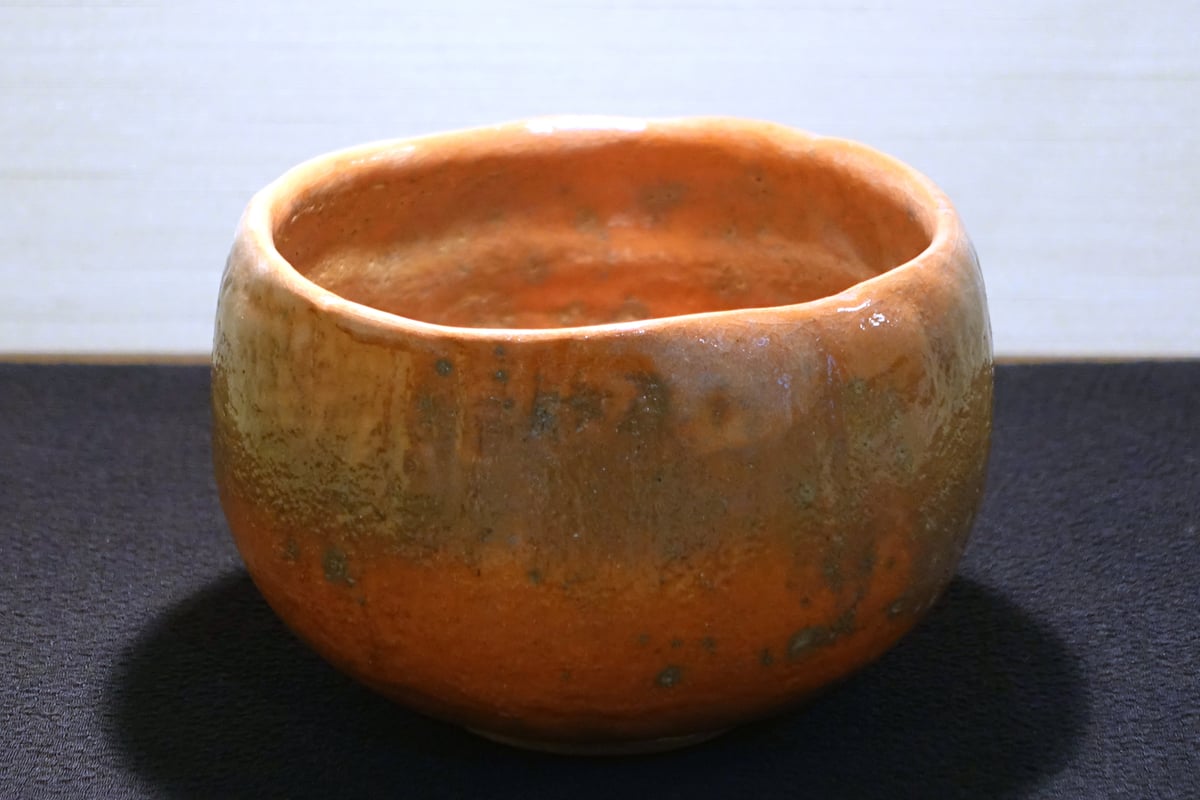
Ohi Ware
Ohi-yaki
Ohi ware is a ceramic tradition that has continued in Kanazawa for over 350 years as a branch kiln of Kyoto's raku ware. It began in 1666 (Kanbun 6), when Maeda Tsunanori, fifth lord of the Kaga domain, invited Sensō Sōshitsu, fourth-generation head of the Urasenke school of tea, from Kyoto to serve as tea-implement magistrate; the potter Haji Chozaemon, a senior disciple of Ichinyū, fourth-generation head of the Raku family and Sensō's teacher, accompanied him. Even after Sensō returned to Kyoto, Chozaemon remained in Kanazawa, and, discovering fine clay in Kahoku District's Ohi village (present-day Ohi-machi, Kanazawa), began calling his ware Ohi-yaki after the place name. Since the Raku family held an exclusive monopoly on black and red raku glazes, the Ohi family developed its own amber glaze, giving rise to warm, amber-colored tea bowls suited to the snow country — its most distinctive feature. The hand-forming technique, shaping vessels by hand and spatula without a potter's wheel, also carries on the raku tradition, and having flourished as the official kiln of the Maeda family, it continues today as a tea ceramic representative of Kanazawa.
Okawa Kumiko
Okawa Kumiko
Okawa Kumiko is a woodworking technique developed in Okawa City, Fukuoka Prefecture—a delicate craft of assembling thin, finely shaped pieces of wood into geometric patterns without using any nails or metal fittings. Kumiko techniques transmitted from China during the Bunka era (around 1804-1818) became linked with Okawa's sashimono and fittings-making, in a town known for furniture and fittings, and developed through use in shoin-style shoji screens, ranma transoms, and folding screens. Around 200 or more patterns, including asanoha (hemp leaf), are worked into a triangular base lattice called 'mitsu-gumite,' with as many as tens of thousands of pieces sometimes combined to complete a single work. Its greatest characteristic is that, while it looks delicate and fragile, the precise interlocking of its components gives it the strength of a single solid board. Designated a Traditional Craft Product Designated by the Governor of Fukuoka Prefecture in 1987 (Showa 62), the traditional technique has also been put to use in contemporary interiors, including the interior of the luxury sleeper train 'Nanatsuboshi in Kyushu.'
Otsu-e (Otsu Folk Paintings)
Otsu-e
Otsu-e are folk paintings that were sold as souvenirs to travelers at the Otsu post station on the Tokaido road (around Oiwake and Otani) in the early Edo period. They are said to have begun around the Kan'ei era (1624-1644) as Buddhist paintings depicting religious subjects, and are also known from Matsuo Basho's haiku 'What Buddha did the brush of Otsu-e begin with?' Over time the subject matter broadened to secular themes, and during the Bunka-Bunsei era (1804-1829), ten representative subjects — the 'Ten Otsu-e Themes' — including 'Oni no Nembutsu' (Demon's Prayer) and 'Fuji Musume' (Wisteria Maiden), became established. Each painting carries a moral verse and a talismanic meaning: Oni no Nembutsu is cherished as a charm against children's night crying, while Fuji Musume is valued as an auspicious image for good marriage. Today, near Otsu City's Miidera Temple, the Takahashi Shozan family, who run the 'Otsu-e no Mise' shop founded in the early Meiji era, continue to carry on the traditional technique and paint Otsu-e as holders of an Otsu City-designated Intangible Cultural Property.
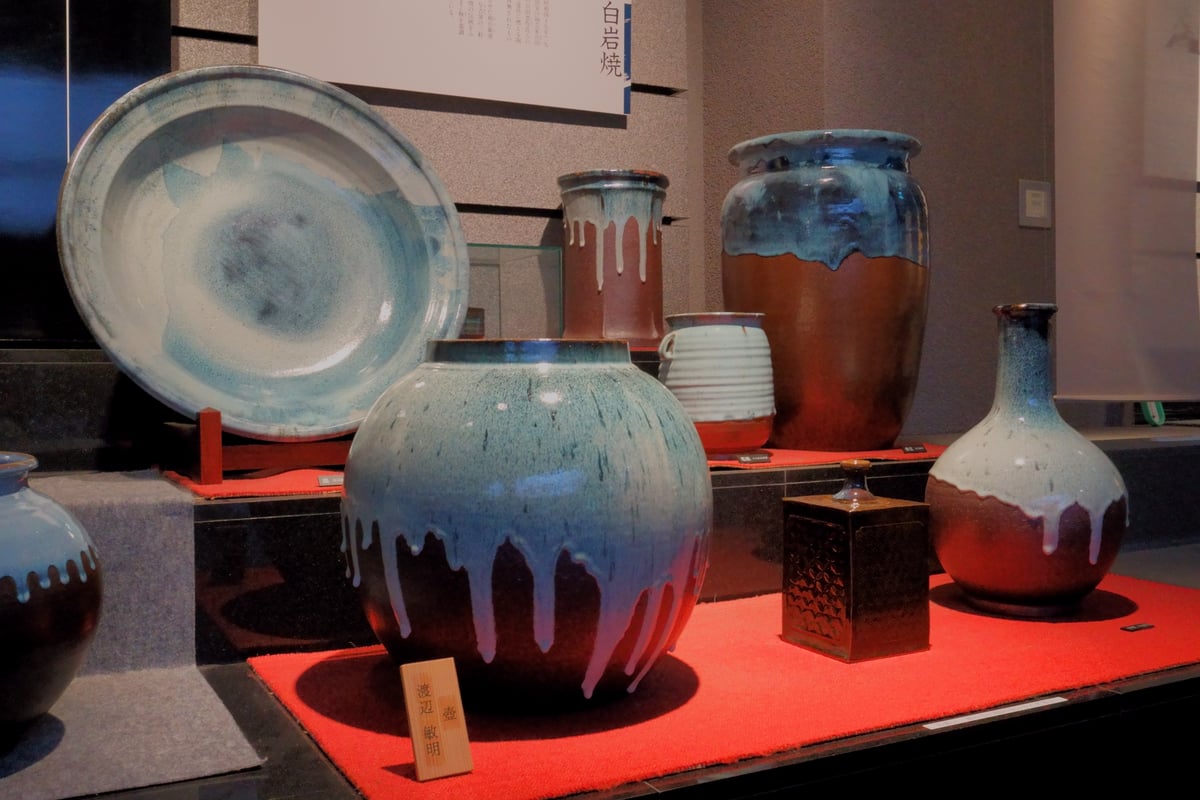
Shiraiwa ware (Shiraiwa-yaki)
Shiraiwa-yaki
Shiraiwa ware is pottery fired in the Shiraiwa district of Kakunodate, Semboku City, and is said to have the oldest history of any pottery in Akita Prefecture. It began in 1771 (Meiwa 8), when Matsumoto Unshichi, a potter from Soma in Mutsu Province (present-day Fukushima Prefecture), opened a kiln with the support of samurai from Kakunodate; several kilns were subsequently opened, and at its peak more than 40,000 pieces of everyday earthenware were produced annually. However, after the Meiji Restoration the kilns lost the protection of the domain, and combined with the influx of porcelain and kiln damage from an earthquake, its 130-year history came to a temporary end in 1900 (Meiji 33). In 1974 (Showa 49), a meeting with the potter Shoji Hamada sparked momentum for revival, and the following year, in 1975 (Showa 50), local volunteers opened the 'Waheegama' kiln and revived the technique. Its defining feature is the contrast between the reddish local clay color and the bluish namako glaze, and today Waheegama continues to carry on the tradition.
Tamamushi-nuri lacquerware
Tamamushi-nuri
Tamamushi-nuri is a relatively new lacquer art born in Sendai. It was devised and patented in 1932 (Showa 7) by lacquer artist Koiwa Shun at the 'National Craft Guidance Institute,' established in Sendai to promote industry and develop export craft products in the Tohoku region. A wooden or dry-lacquer base is first coated with a lacquer undercoat, then covered entirely with silver powder, over which a special semi-transparent 'tamamushi lacquer' tinted with color is applied in many layers and carefully polished to completion. The name comes from its lustrous shine, which subtly changes color depending on the viewing angle and how light falls on it, resembling the wings of the jewel beetle (tamamushi). Since Tohoku Kogei Seisakusho, founded in 1933 with Saura Motojirō as its first president, obtained the rights to practice the patent in 1939, it has continued production as a craft representative of Sendai. A wide range of products are made, from vases and trays to accessories and Western tableware, and it was designated a Traditional Craft designated by the Governor of Miyagi Prefecture in 1985 (Showa 60). Because its history as a traditional craft is relatively short, another appeal is that many of its designs suit contemporary lifestyles.
Ujo Yoji
Ujo Yoji
Ujo Yoji are ornamental toothpicks carved from kuromoji (Lindera umbellata) wood, a craft handed down in Kururi, Kimitsu City, Chiba Prefecture. It is said to have begun in the Edo period as a side occupation of samurai retainers of the Kururi Domain in Kazusa Province, who made toothpicks from kuromoji growing wild in the surrounding mountains; at the time they were a plain product known as ‘Kazusa ko-yoji’ (small toothpicks of Kazusa). After the abolition of the domain, production spread among former samurai who had lost their stipends and needed a livelihood, and by the end of the Meiji era, toothpicks of various designs that made the most of the wood's white grain and texture had been devised, becoming known as folk craft items. In the mid-Showa era, the craft was renamed ‘Ujo Yoji’ after ‘Ujo’ (‘Rain Castle’), an alternate name for Kururi Castle. In addition to the basic ‘zaku yoji,’ there are ‘novelty toothpicks’ shaped like pine, bamboo, plum, folding fans, eels, swords, and other auspicious or seasonal motifs, and their skillful craftsmanship and refined look have made them a favorite at tea gatherings and in Japanese restaurants to this day. Today, Mori Takao carries on the tradition as the second-generation holder of the name Mori Mitsuyoshi.
Yamagata Uchihamono (forged blades)
Yamagata Uchihamono
Yamagata Uchihamono refers to forged bladed tools whose blacksmithing techniques have been passed down mainly in Yamagata City. Its origins are said to trace back to 1356, during the Nanboku-cho period, when Shiba Kaneyori, the founding ancestor of the Mogami clan, brought blacksmiths with him when he entered Yamagata; they formed a blacksmithing settlement and made weapons and farming tools. During the Edo period, Yamagata domain lord Mogami Yoshiaki established a blacksmiths' district in the castle town and gave preferential treatment to smiths, and the craft was refined under the patronage of successive lords. In the late Edo period, the district produced the renowned swordsmith Shoji Naotane, and from the Meiji era onward, as demand for swords declined, the focus shifted to blades rooted in daily life, such as kitchen knives, sickles, scissors, and hoes. The technique known as 'jiyu-tanren' (freehand forging), in which soft iron and hard steel are joined by fire-forging and carefully hammered together, is still practiced today, and the resulting blades are prized for combining sharpness with toughness.
Enshu Cotton Tsumugi
Enshu Men Tsumugi (Enshu Cotton Pongee)
Enshu Cotton Tsumugi (Enshu Men Tsumugi) is a cotton textile that has been woven in the Enshu region of western Shizuoka Prefecture. Enshu is warm with long hours of sunshine, and from the Edo period it flourished as a cotton-producing area alongside Mikawa and Senshu. Hand-woven cotton textiles spread as a side job for farming households, and the striped cotton came to be called Enshu stripes (Enshu-jima). Using uneven nep yarn and slub yarn for both warp and weft and weaving slowly on traditional shuttle looms produces a rustic texture like that of tsumugi (pongee). Another feature is that with each wash the twist of the yarn loosens and takes in air, making the cloth softer to the touch. From the Meiji era onward, helped by loom inventions by Toyoda Sakichi and others, Enshu grew into one of Japan's leading textile-producing areas. Today ぬくもり工房 in Hamamatsu City produces fabrics and small items, with more than 100 patterns available at any given time. Said to be a root of Hamamatsu's textile design, it is cherished as a textile that represents the region.
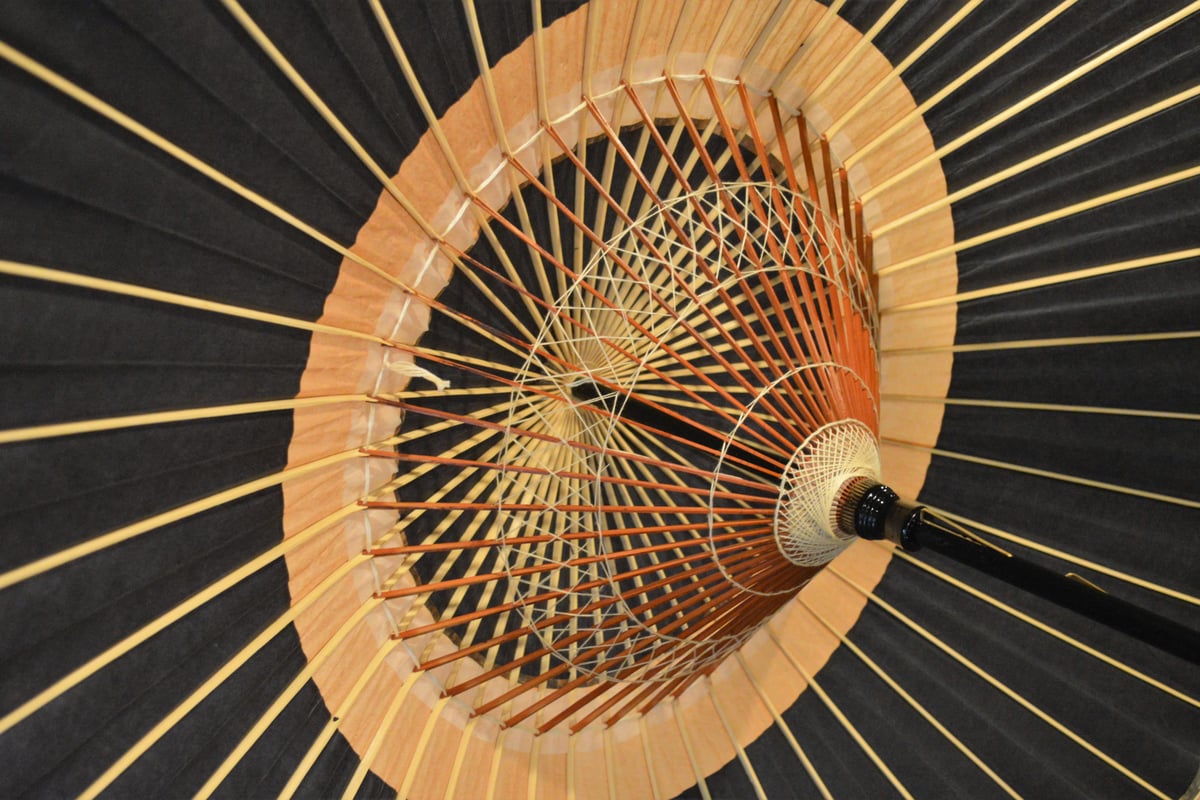
Gifu Wagasa
Gifu Wagasa
Gifu Wagasa is a traditional Japanese umbrella made in the Kano district of Gifu City, known for its hosomono (slender-fold) construction, which allows the umbrella to close into a slim form, along with a wide range of decorative techniques. Its origins are said to date back to 1639 (Kan'ei 16) in the early Edo period, when an umbrella maker from Akashi in present-day Hyogo Prefecture began making umbrellas in Kano. In 1756 (Horeki 6), Nagai Naonobu, lord of the Kano domain, encouraged umbrella making as a side occupation for impoverished lower-ranking samurai, and with the domain's backing the craft developed into a full-fledged industry. Blessed with proximity to sources of good-quality bamboo and Mino washi paper, the craft flourished, and at its peak in the mid-1950s, more than 600 wholesalers gathered in the area, producing 1.2 to 1.3 million umbrellas a month. Demand declined sharply with the spread of Western-style umbrellas, but a handful of wholesalers and workshops continue to uphold the tradition today, making rain umbrellas and parasols as well as ceremonial umbrellas used to mark occasions such as the Shichi-Go-San festival and weddings.
Ichikawa Daimon Handmade Washi
Ichikawa Daimon Washi
Ichikawa Daimon Handmade Washi is washi that has long been made in the Ichikawa Daimon district of Ichikawamisato Town, Nishiyatsushiro District, Yamanashi Prefecture. Records of paper from Kai date back to the Nara period, and the Shosoin documents of 773 (Hoki 4) list Kai as a paper-producing area. In Ichikawa, papermaking is said to have begun when Jinzaemon, a paper craftsman who served Minamoto no Yoshikiyo, regarded as the founder of the Kai Genji clan, taught papermaking techniques to the local people. In the time of the Takeda clan, 'Hadayoshi-gami' paper, likened to being 'as beautiful as the skin of a beautiful woman,' was made here, and the papermakers were generously protected as the 'Hadayoshi-shu.' In the Edo period, the paper was presented to the shogunate as official paper. Later the area became a major production center for shoji paper, boasting the largest output in Japan. The raw materials are kozo (paper mulberry) and mitsumata (Oriental paperbush), and the paper is also well suited to art paper and gasenshi (calligraphy and painting paper). In 1995 (Heisei 7), it was designated a Yamanashi Prefecture Designated Local Traditional Craft.
Izumi Tonbodama (Glass Beads)
Izumi Tonbodama (Glass Beads)
Izumi Tonbodama are glass beads (tonbodama) made in Izumi City and Sakai City. Tonbodama are round glass beads whose surfaces are decorated with patterns in two or more colors of glass. The name is said to come from the resemblance of their dotted patterns to the compound eyes of a dragonfly (tonbo). In Izumi Province (present-day Sakai City and the area to its south), glass beads are said to have been made since before the Nara period. In the Edo period, they were widely known as '泉州玉' (Senshu beads) and 'saka-tonbo.' Production techniques were established in the early Meiji era, and in the Shinoda area of Izumi City, glass-bead making flourished as a side business for farmers. In the Taisho era, the production of artificial pearls, made by coating glass beads, also spread. The beads are formed by winding colored glass rods melted in a flame around a mandrel, and patterns are then added to the surface. The color techniques created by combining multiple kinds of glass are also put to use in restoring National Treasures and repairing cultural properties. In 2002 (Heisei 14), it was designated an Osaka Prefecture-designated Traditional Craft.
Kaga Embroidery
Kaga-nui
Kaga-nui is an embroidery craft of Ishikawa Prefecture that uses silk thread along with gold and silver thread to raise designs into vivid, three-dimensional relief. It is said to have begun in the early Muromachi period, transmitted from Kyoto as a decorative technique for altar cloths and priests' vestments alongside the spread of Buddhism into the Kaga region. During the Edo period, it received generous protection from successive lords of the Kaga domain and came to be used to decorate samurai battle coats and Noh costumes, developing independently as one of Kaga's traditional dyeing and weaving crafts alongside Kanazawa gold leaf and Kaga Yuzen. Its greatest characteristic is the ability to render painting-like delicacy and dimensionality in thread, using a range of techniques such as 'kusarinui' (chain stitch), 'matsurinui,' and 'suganui.' In May 1991, it was designated a national Traditional Craft by the Minister of International Trade and Industry (now the Minister of Economy, Trade and Industry), and today it is produced mainly in Kanazawa, Hakusan, and Nomi, with a wide range of items made — from ceremonial garments to contemporary accessories.
Koshigaya Katchu
Koshigaya Katchu
Koshigaya Katchu is a traditional technique from Koshigaya City, Saitama Prefecture, for making the miniature armor and helmets of Gogatsu Ningyo displayed for Boys' Day (Tango no Sekku). Its distinctive feature is combining several craft techniques passed down since the Edo period, metalworking, lacquerwork, leather craft, and braided cord, into a single suit of armor, resulting in vivid colors and a dignified, stately look. Craftsmen known as 'katchushi' apply specialized skills to each part, such as the helmet bowl, the fukikaeshi (turned-back brim), and the odoshi (lacing) of the armor, and because everything is finished by hand, the doll maker's skill determines the quality of the finished piece. Workshops in Koshigaya City, led by Katchu Kobo Asahina, founded in 1959, have been central to passing down the technique, and in 1996 (Heisei 8) it was designated a Saitama Prefecture-designated Traditional Handicraft as 'Koshigaya Katchu.' Armor with designs inspired by Sengoku-era warlords is also popular, and demand continues today for Boys' Day gifts.
Kyo-kuromontsuki-zome (Kyoto Black Crested Dyeing)
Kyo-kuromontsuki-zome
Kyo-kuromontsuki-zome is a Kyoto dyeing technique that dyes silk fabric a deep black and precisely dyes-out the family crest, used for black tomesode kimono worn at weddings and mourning wear worn at funerals. There are two dyeing techniques: hikizome, used for patterned fabric such as black tomesode, and shinsome (immersion dyeing), used for plain fabric such as mourning wear. Dyes such as safflower red and indigo are layered to produce a distinctive black with depth and luster, not simply a flat black. The mon-sho-uwae technique of dyeing the family crest white onto the finished fabric is also indispensable. Kyoto is said to account for over 90% of the black crested fabric produced nationwide, and it received national Traditional Craft designation in 1976.
Matsushiro Ware
Matsushiro-yaki (Matsushiro Ware)
Matsushiro Ware is pottery that has been fired mainly in the Matsushiro area of Nagano City, Nagano Prefecture. It flourished in the late Edo period with the encouragement of the Matsushiro Domain, ruled by the Sanada clan, and practical vessels indispensable to daily life, such as water jars, kneading bowls and sake bottles (tokkuri), were made. Its distinctive feature is a blue-green glaze that flows over a dark brown body made from local iron-rich clay, creating patterns that differ from piece to piece. This blue-green comes not from pigments but from glazes blended from white clay, copper and other materials obtained locally. From the Meiji period onward it declined, overwhelmed by inexpensive pottery brought in by rail, and it had died out by the beginning of the Showa period. Later, in the mid-Showa period, potters carried out repeated research based on old potsherds and documents and revived the techniques. In 2014 it became a Traditional Craft Designated by the Governor of Nagano Prefecture. Today, at places such as 松代陶苑 (Matsushiro Toen) in Matsushiro Town, visitors can experience making Matsushiro Ware through pottery workshops.
Miyako Jofu
Miyako Jofu
Miyako Jofu is a ramie textile woven on Miyako Island, ranked alongside Echigo Jofu and Ojiya Chijimi as one of the finest, lightest, and most lustrous summer textiles in Japan. According to tradition, it began in the 16th century when a woman named Inaishi presented a woven cloth called 'ayasabi-nuno' to the King of Ryukyu. After being designated in 1637 as one of the tribute textiles owed by the Miyako and Yaeyama regions under the Ryukyu royal government's poll tax system, extremely fine and precise weaving was demanded of the cloth, and that technical tradition has been passed down to the present day. The raw material is ramie grown on the island; the fiber is patiently split by hand into fine strands without knots and twisted together into thread in a process called 'teumi' (hand-spinning). The textile is best known for its design of fine cross-shaped kasuri patterns woven into a deep indigo-dyed ground, and after weaving, the cloth is beaten with a wooden mallet in a finishing process called 'kinuta-uchi,' which gives it its distinctive supple sheen. Another characteristic is that thread-making, indigo dyeing, weaving, washing (finishing), and repair are each carried out by specialized artisans working in a division of labor. Miyako Jofu was designated an Important Intangible Cultural Property of Japan in 1978, and in 2003 the hand-spinning technique for ramie thread was recognized as a nationally Selected Conservation Technique.
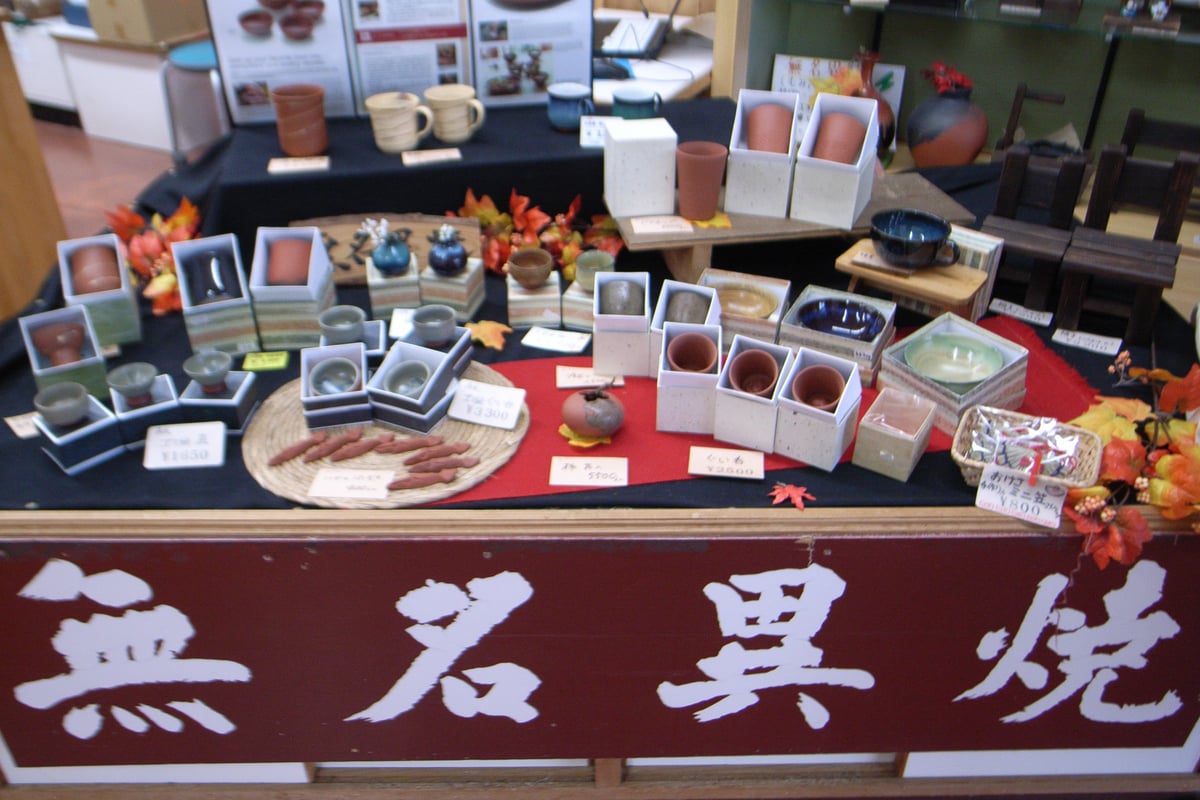
Mumyoi-yaki (Sado red-clay pottery)
Mumyoi-yaki
Mumyoi-yaki is pottery made mainly in the Aikawa district of Sado City, Niigata Prefecture. 'Mumyoi' refers to a red clay rich in iron oxide that is produced at the Sado Gold and Silver Mine, and in the past it was also used as a medicine, for example to stop bleeding. When this mumyoi is used in the clay body and fired hard at high temperatures, it shrinks by as much as about 30 percent between forming and drying, and the finished piece is extremely hard. It is characterized by the clear metallic sound it makes when tapped and by a luster that increases the more it is used. Its beginnings are traced to 1819 (Bunsei 2), when raku ware using mumyoi was fired, and the present technique of firing it hard at high temperatures was established in the Meiji era. In 2003 it was designated a national Important Intangible Cultural Property, and Ito Sekisui V was recognized as its holder (Living National Treasure). Further, in October 2024, it became a Traditional Craft Designated by the Minister of Economy, Trade and Industry under the name 'Sado Mumyoi-yaki.' Some kilns on the island offer pottery wheel experiences.
Nakayama Ningyo (Nakayama Dolls)
Nakayama Ningyo
Nakayama Ningyo are clay dolls made in the Nakayama district of Hiraka-machi, Yokote City, prized for their rounded, endearing shapes and vivid coloring. They are said to have originated in the mid-Meiji era, when Hiwatashi Yoshi, a local woman, began making clay figures inspired by anesama ningyo (traditional paper dolls) and oshie (padded fabric pictures) as a means of supporting herself after the death of her husband, giving the craft a history of about 150 years. At first the dolls were mainly seasonal figures for festivals, such as hina dolls and Kabuki characters, but later the craft came to include motifs distinctive to Akita, such as kamakura snow huts, Kanto pole lanterns, Bonden, and Akita dogs, as well as clay bells shaped like the animals of the zodiac. The 'zodiac clay bells' devised by third-generation maker Hiwatashi Giichi became known nationwide after the sheep design was adopted for a New Year's postage stamp in 1979 (Showa 54). Today, the Hiwatashi Doll Shop in Yokote City continues to carry on the tradition, and in January 2021 (Reiwa 3), Nakayama Ningyo was designated a Traditional Craft of Akita Prefecture.
Nishikawanobori Takezaiku
Nishikawanobori Takezaiku
Nishikawanobori Takezaiku is a bamboo craft passed down in Nishikawanobori, Takeo City, Saga Prefecture, in which artisans hand-weave everyday items such as baskets, colanders, and lunch boxes from madake and hachiku bamboo. It is said to have begun in the early Meiji era as a side occupation for farming households, and developed into a local industry as the Nishikawanobori Village Bamboo Craft Association was established in 1909; from the early 20th century through the postwar years it grew into a major bamboo-craft production area with more than 500 artisans. However, from the 1950s onward, as synthetic resin products spread into furniture and farm tools, demand gradually declined, and today the craft is carried on by only a handful of workshops, foremost among them Kuriyama Shoten. Every step, from splitting the bamboo and shaping its width to weaving with its natural spring, is done entirely by hand, and unique techniques such as the chrysanthemum-base weave used for rice-washing colanders have been passed down. Designated a Saga Prefecture Traditional Local Product, in recent years the craft has also produced items suited to modern life, such as lunch boxes and lampshades, drawing renewed attention from younger generations from an SDGs perspective.
Otsu Kumihimo (Otsu Braided Cords)
Otsu Kumihimo
Otsu Kumihimo is a traditional craft of braided cords (kumihimo) passed down mainly in the Ōsaka district (逢坂) of Otsu City. Kumihimo braiding was introduced to Japan along with Buddhism, and was originally used as cords for binding sutra scrolls and Buddhist vestments, as well as decorative cords for the robes of court nobles and samurai. In Otsu, the craft is said to have begun during the Edo period, when samurai and townspeople traveling the Tokaido road into Kyoto had the cords on their sword scabbards and inro cases repaired locally. Using several types of braiding stands — including the maru-dai (round stand), kaku-dai (square stand), aya-take-dai, and naiki-dai — artisans braid threads by hand into a single cord, with high-grade products using thread dyed with plant-based dyes. Today, Tozaburo Himo, founded in 1867 (Keio 3), remains the only kumihimo workshop in the Ōsaka district, producing a wide range of items from obi-jime sashes and haori cords to small accessories such as straps.
Owase Wappa (Bentwood Boxes)
Owase Wappa (Owase Bentwood Lacquerware)
Owase Wappa is bentwood (magemono) lacquerware made in Owase City, Mie Prefecture. Thin boards of high-quality Owase hinoki cypress are bent, the seams are stitched with cherry bark, and the pieces are finished with natural lacquer. Forestry flourished in Owase from the early Edo period, and people working in the mountains used wooden bentwood vessels as tableware. The fishermen of the bonito fishery, which also flourished around the same time, are said to have been fond of wappa as well. Today the only maker is 世古効史, the fourth-generation head of 'ぬし熊,' founded in 1887 (Meiji 20). 世古効史 handles all 45 steps alone, from making the wooden base to lacquering, and a single piece takes more than a month to complete. It is said that there can be a wait of a year after ordering, but the boxes are renowned for a sturdiness said to 'last 100 years.' In 1994 (Heisei 6) it became a Mie Prefecture Designated Traditional Craft, and in 2013 (Heisei 25) its production techniques were designated an Intangible Cultural Property of Owase City.
Sabae Eyewear
Sabae Eyewear
Sabae Eyewear refers to eyeglass frames made mainly in Sabae City, Fukui Prefecture. It is not a Traditional Craft Designated by the Minister of Economy, Trade and Industry but a local industry that began in the Meiji era, and through the skills of its artisans and a system of divided labor, it has built a production area known around the world. It began in 1905 (Meiji 38), when Masunaga Gozaemon of Shono, Asozu Village, Asuwa District (present-day Shono-cho, Fukui City) invited eyeglass craftsmen from Osaka and spread eyeglass making as a side business for farming households during the snowy winters. The techniques eventually spread to Sabae, and the city came to promote itself as 'Megane no Machi Sabae' (Sabae, the eyeglass town). In 1983, the world's first titanium eyeglass frames were successfully developed and produced here. Today, about 95% of Japanese-made eyeglass frames are made in Fukui Prefecture, with Sabae City at its center. At the Megane Museum in the city, visitors can learn about the history of the production area, try making frames by hand and buy products from manufacturers in the prefecture.
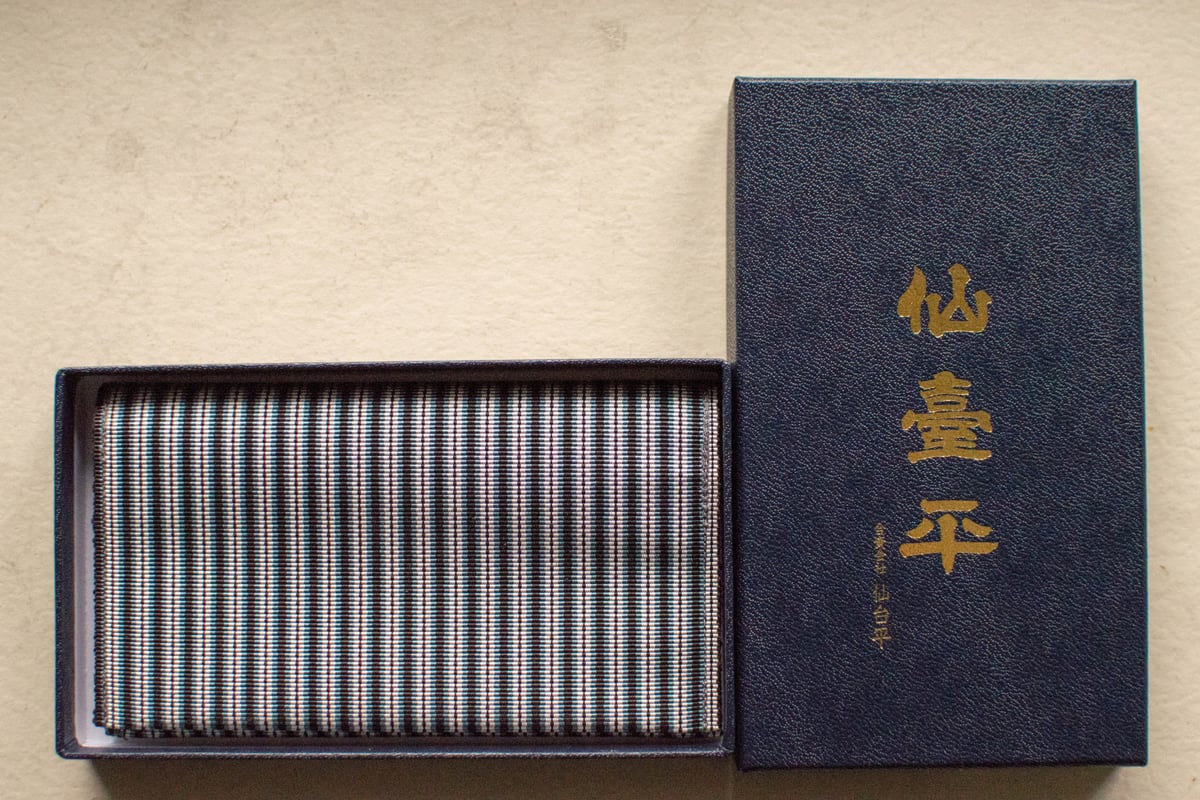
Sendai-hira
Sendai-hira
Sendai-hira silk is a woven silk fabric for men's hakama produced in Sendai City. According to tradition, its origins date to the Joukyo and Genroku eras of the mid-Edo period (roughly the 1680s to 1704), when Date Tsunamura, the fourth lord of the Sendai Domain, retained official weavers to produce hakama fabric and Noh costumes. The fabric is woven by twisting raw silk for the warp threads and forcefully beating in weft threads of near-raw silk while dampening them with water, producing cloth that is supple yet firm, resists wrinkling, and has a distinctive sheen and rustling sound as it moves. From the Edo period through the Meiji and Taisho eras, Sendai-hira was renowned as the finest of all hakama fabrics, reaching an annual production of as much as 30,000 tan (bolts) at its peak. As demand declined, the number of weaving houses gradually dwindled, and today Sendaihira Co., Ltd. is the sole workshop preserving the tradition. Its finest grade, known as seigo Sendai-hira, was designated an Important Intangible Cultural Property by the national government in 2002, and its head, Koda Yoshio, has been recognized as a Living National Treasure. In 1985 (Showa 60), it was also designated a Traditional Craft by the Governor of Miyagi Prefecture.
Shibayama Zaiku
Shibayama Zaiku
Shibayama Zaiku (Shibayama-zogan) is an inlay technique in which shell, coral, tortoiseshell, jade, ivory, and other materials are carved into the shapes of flowers, birds, and figures and set into the surface of lacquered objects to create raised, three-dimensional designs. It is said to have been devised in 1775 by Onogi Senzo, born in Shibayama village in Kazusa Province (present-day Shibayama Town, Chiba Prefecture); Senzo later moved to Edo, took the name Shibayama Senzo, and spread the technique widely. After the opening of Japan at the end of the shogunate, craftsmen gathered in Yokohama, which flourished as a treaty port, and the technique won high praise from Western merchants, developing its own distinct style known as ‘Yokohama Shibayama-nuri.’ It even won a prize at the 1893 World's Columbian Exposition in Chicago, gaining international recognition. However, the Great Kanto Earthquake and the Second World War took a heavy toll, and the number of craftsmen fell sharply — from around 100 at its peak to, as of 2017, reportedly just a single craftsman capable of producing large-scale works. In Shibayama Town, the birthplace of the craft, a ‘Shibayama-zogan plaque’ made in 1805 survives and is carefully preserved as a cultural property of the town.
Shirakawa Daruma
Shirakawa Daruma
Shirakawa Daruma are papier-mâché (hariko) daruma dolls made in Shirakawa City, Fukushima Prefecture, known for their distinctive design in which the eyebrows are painted to resemble a crane and the mustache a turtle, with pine and plum branches on either side of the face and bamboo beneath the mouth — earning them the nickname 'Shirakawa Crane-Turtle-Pine-Bamboo-Plum Daruma.' Daruma making in Shirakawa is said to have already been underway in the early Edo period, but it was in 1783, after the Tenmei famine had devastated the region's industries, that Matsudaira Sadanobu, who became lord of the Shirakawa domain, had his court painter Tani Bunchō design a daruma to help revive local industry, giving rise to the form that survives today. Every year on February 11 (National Foundation Day), the 'Shirakawa Daruma Market' is held in central Shirakawa City, drawing roughly 150,000 visitors and standing as a signature winter tradition of Shirakawa.
Shonai Sashiko
Shonai Sashiko
Shonai Sashiko is a traditional sashiko craft passed down in the Shonai region, centered on Sakata City, and is counted as one of Japan's Three Great Sashiko traditions, alongside Aomori Prefecture's Kogin-zashi and Nanbu Hishizashi. The Shonai region's economy centered on rice farming, which was not suited to growing cotton, so producing clothing locally had its limits. It is said to have begun in the mid-Edo period, when used clothing and cloth brought in from Kyoto and Osaka through the trade of Kitamae-bune (trading ships) were layered together and stitched, regardless of the fabric's grain, to make sturdy work clothes. Fine stitches of white cotton thread were sewn into indigo-dyed cotton cloth to improve warmth and durability, while also carrying the meaning of warding off evil. There are around 40 basic stitch patterns, such as 'kome-zashi' (rice stitch), 'uroko-zashi' (scale stitch), and 'hishi-zashi' (diamond stitch), and the geometric designs are notable for expressing wishes such as bountiful harvests, big catches of fish, and family health. In 1983 (Showa 58), enthusiasts formed the 'Hirata Sashiko no Kai' to pass on the techniques.
Toyohashi Fude (Toyohashi Writing Brushes)
Toyohashi Fude
Toyohashi Fude are calligraphy brushes made primarily in Toyohashi City, Aichi Prefecture, along with Tahara City and Toyokawa City, with hundreds of varieties produced for calligraphy as well as Japanese painting and cosmetic use. Its origins are said to trace back to 1804 (Bunka 1), when Suzuki Jinzaemon was invited from Kyoto to the Yoshida domain (present-day Toyohashi) and introduced the craft of brush-making. Its defining feature is a unique technique called 'nerimaze,' in which animal hair such as raccoon dog and weasel fur is softened with water and blended together, skillfully combining hair of different types, thicknesses, and lengths to achieve a smooth writing feel and excellent ink retention and release. About 36 processes -- from selecting and kneading the hair to cutting, blending, mounting, finishing, and engraving the maker's name -- are all done by hand. In production volume it ranks second nationwide after Kumano Fude (Hiroshima Prefecture), but as a production area for high-grade brushes for calligraphers it holds one of the leading positions in Japan, with roughly 1.8 million brushes distributed nationwide each year. It was designated a Traditional Craft (designated by the Minister of Economy, Trade and Industry) in 1976.
Yame Washi
Yame Washi
Yame Washi (Yame handmade washi paper) is traditional handmade Japanese paper (washi) produced mainly in Yame City, Fukuoka Prefecture. According to tradition, its origins date to the Tensho era (the 1590s), when a Buddhist priest named Nichigen Shonin, who came from Echizen Province (present-day Fukui Prefecture), visited Yame, recognized that the water quality and climate of the Yabe River basin were well suited to papermaking, and passed the technique on to the local people. Made using kozo (paper mulberry) with fibers that are longer and thicker than those found in other production areas, together with the clear water of the Yabe River, Yame Washi is known for a strength and durability not found in paper from other regions. Because its thick, sturdy fibers give the paper excellent durability, it is highly valued as a mounting paper for hanging scrolls, shoji paper, and the inner lining of fusuma sliding doors, and it is said to have even been used to restore National Treasures. It is regarded as one of the oldest washi-producing areas in Kyushu and has been designated a Traditional Craft Product by the Governor of Fukuoka Prefecture.
Aizu Momen (Aizu Cotton Textiles)
Aizu Momen
Aizu Momen is a cotton textile that has been woven in the Aizu region of Fukushima Prefecture for roughly 400 years. It is said to have begun in the Tensho era (1573-1592) of the Azuchi-Momoyama period, when the Aizu domain lord Gamō Ujisato encouraged cotton cultivation alongside his development of the castle town of Wakamatsu, and production expanded in earnest after 1627, when the domain lord Kato Yoshiaki is said to have invited weavers from his former domain of Iyo-Matsuyama to pass on their techniques. As a sturdy cotton textile with simple striped patterns that grows softer with washing, it has been used since the Edo period for everyday clothing and work wear among ordinary people. At its peak in the Taisho era, around 30 weaving workshops lined the area around Aizuwakamatsu, but today only two remain within Aizuwakamatsu City and one in Aizubange Town. Designated as a Prefecturally Designated Traditional Craft of Fukushima Prefecture, the surviving workshops still use old-style looms from the early Showa era to weave fabrics centered on vertical and check stripe patterns.
Akita Hachijo
Akita Hachijo
Akita Hachijo is a silk textile woven with striped and checkered patterns based on a reddish-brown 'tobi-iro' color, using silk thread dyed with plant dyes such as the root bark of hamanasu (rugosa rose), kariyasu (a type of grass), and rengetsutsuji (a species of azalea). Its origin is said to date to around 1784 (Tenmei 4), when Ishikawa Takiuemon and others brought the weaving technique to the region; building on plant-dyeing techniques related to 'Honba Kihachijo' of the Izu Islands, further improvements were made during the Bunka era, when a craftsman was invited from Kiryu in Joshu. Production reached its peak around 1903-1904 (Meiji 36-37), but the number of producers gradually declined afterward, and the craft was once interrupted when the Namekawa Textile Factory (Akita City), the last remaining producer, closed in 2003. In 2006, Toshiko Narada, a former employee of that factory, took over its equipment and set up a workshop in Kitaakita City, single-handedly reviving the technique. In 2023, the workshop relocated and was renamed 'Akita Hachijo Hamanasu Workshop'; today Narada remains the sole producer, handling everything from dyeing the thread to weaving, while also working to pass on the technique to members of the local Community Revitalization Cooperator program.
Fuji Katsuyama Suzutake Bamboo Craft
Fuji Katsuyama Suzutake Craft
Fuji Katsuyama Suzutake Bamboo Craft is a bamboo craft handed down in the Katsuyama district of Fujikawaguchiko Town, Minamitsuru District, Yamanashi Prefecture. Thin suzutake bamboo that grows wild around the second station of Mt. Fuji is split and woven into everyday tools such as zaru (bamboo colanders) and baskets. Improvements were made over generations in the lives of the villagers from around the beginning of the Edo period, and there is said to be a record of baskets being offered when the main shrine of Fuji Omuro Sengen Shrine was built in 1610 (Keicho 15). The Kai Kokushi, a regional gazetteer of 1814 (Bunka 11), also records that suzutake from the northern foot of Mt. Fuji was used as material for making mi (winnowing baskets) and zaru. Suzutake is supple and fragrant, and the woven products are light, sturdy and drain water well. With careful use they are said to last 30 or 40 years, and they have long been valued as kitchen tools such as rice-washing colanders. In 1998 (Heisei 10), the craft was designated a Yamanashi Prefecture Designated Local Traditional Craft. Today, makers carry on the techniques at the Katsuyama Suzutake Traditional Craft Center.
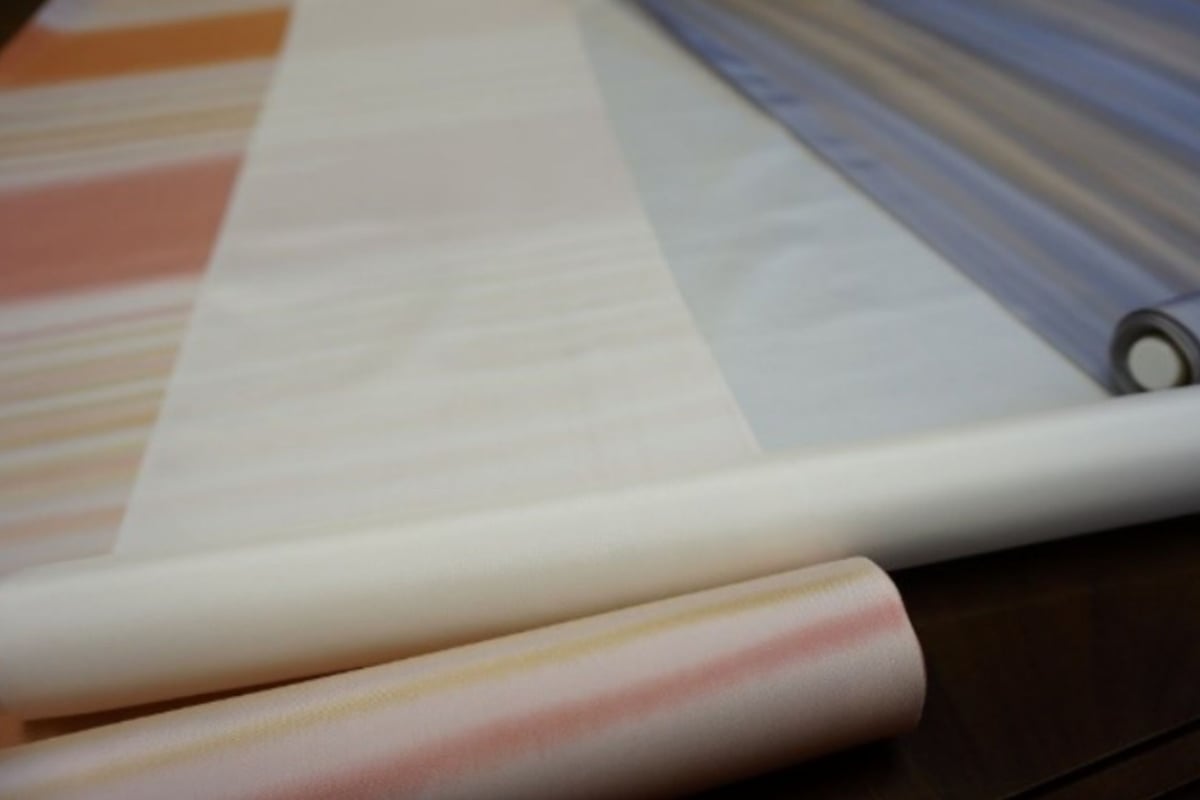
Fukui Habutae Silk
Fukui Habutae
Fukui Habutae is a silk fabric that was woven extensively in Fukui Prefecture for export during the Meiji era. Habutae is a plain-woven fabric made by drawing together two fine, untwisted warp threads, and it is light and soft with a beautiful white luster. In Fukui, research into new silk fabrics began in the early Meiji era, including sending trainees to Kyoto. In the late 1880s, habutae weaving techniques were introduced by inviting engineers from the advanced weaving center of Kiryu. The techniques spread throughout the prefecture, and in the early 1890s Fukui Prefecture's silk fabric output became the highest in Japan. Electric power looms spread by the early Taisho era, and the Hokuriku region grew into one of the country's leading producers of export habutae. The area later shifted to rayon (artificial silk) and synthetic fibers, and Fukui remains one of Japan's foremost textile-producing regions today. In Katsuyama City, 'nure-yoko habutae', woven with wet weft threads, is still produced. Habutae Mochi, a famous Fukui confection, was also named after this habutae weave.
Futamata Washi Paper
Futamata-washi
Futamata Washi is a handmade paper that has been produced in the Futamata district of Kanazawa for over 1,300 years. Tradition holds that it began during the Yoro era of the Nara period (717–724), when the monk Taicho opened a temple on Mount Ioyama, and it developed further during the Bunroku era (1592–1596) as a papermaking site protected for producing paper for official use by the Kaga domain. When Maeda Toshiie entered Kaga Province in 1583, he learned that Futamata was already a papermaking area, ordered paper from it, and extended his protection, and thereafter the Kaga domain is said to have used Futamata paper as its official ceremonial paper, 'goryoshi.' The climate of Futamata causes the kozo (paper mulberry) fibers to grow short, producing paper that is both strong and delicate in texture — a quality that has made it suitable for calligraphy paper, colored paper, foil-beating paper used in making Kanazawa gold leaf, and the prestigious Kaga hosho ceremonial paper. Today, local craftspeople still carry out the entire process from growing kozo to papermaking, preserving the traditional methods.
Hakata Magemono
Hakata Magemono
Hakata Magemono is bentwood ware (magemono) made by bending thin sheets of cedar or cypress into a round shape, binding the seams with cherry bark, and fitting a base panel into the bottom, all without using a single metal nail. Its origins are said to be old: the Shibata family of Hakata has carried on magemono-making as a family trade for more than 400 years, and the current head of the family, the eighteenth generation, is Tamaki Shibata. In the Edo period, magemono were also dedicated as ritual vessels at Hakozaki-gu Shrine in Higashi Ward. Loved as everyday items such as ohitsu (rice tubs), bento boxes, and tea caddies, cedar ohitsu in particular are prized by sushi chefs and many other cooks because the wood absorbs and releases excess moisture, keeping cooked rice fluffy. Depending on how it is used and cared for, a piece is said to last as long as 50 years, and in March 2025 (Reiwa 7), Hakata Magemono was newly designated an Intangible Cultural Property Designated by Fukuoka Prefecture (craft technique).
Hida Kagu
Hida Kagu
Hida Kagu refers to furniture made in the Hida region centered on Takayama City, Gifu Prefecture, and is one of Japan's leading furniture-producing areas, known especially for chairs, tables, and other leg furniture that make use of magiki, the technique of bending wood with steam. Its origins trace back to 1920 (Taisho 9), when local businesspeople, aiming to make use of underused beech timber, took up bentwood furniture making and founded Chuo Mokko Co., Ltd. (now Hida Sangyo Co., Ltd.), marking the beginning of Hida Kagu. The Hida region has a roughly 1,300-year-old tradition of woodworking craftsmen known as Hida no Takumi, said to have taken part in the construction of Heijo-kyo and Todai-ji Temple, and the skills of these craftsmen have carried through into modern furniture making. The craft makes use of beech, which is hard and pliant and well suited to bentwood processing, and oak, prized for its calm grain, to produce beautiful, refined designs that highlight the natural color and grain of the wood. In 2008 (Heisei 20), Hida no Kagu and Hida/Takayama no Kagu were registered as regional collective trademarks.
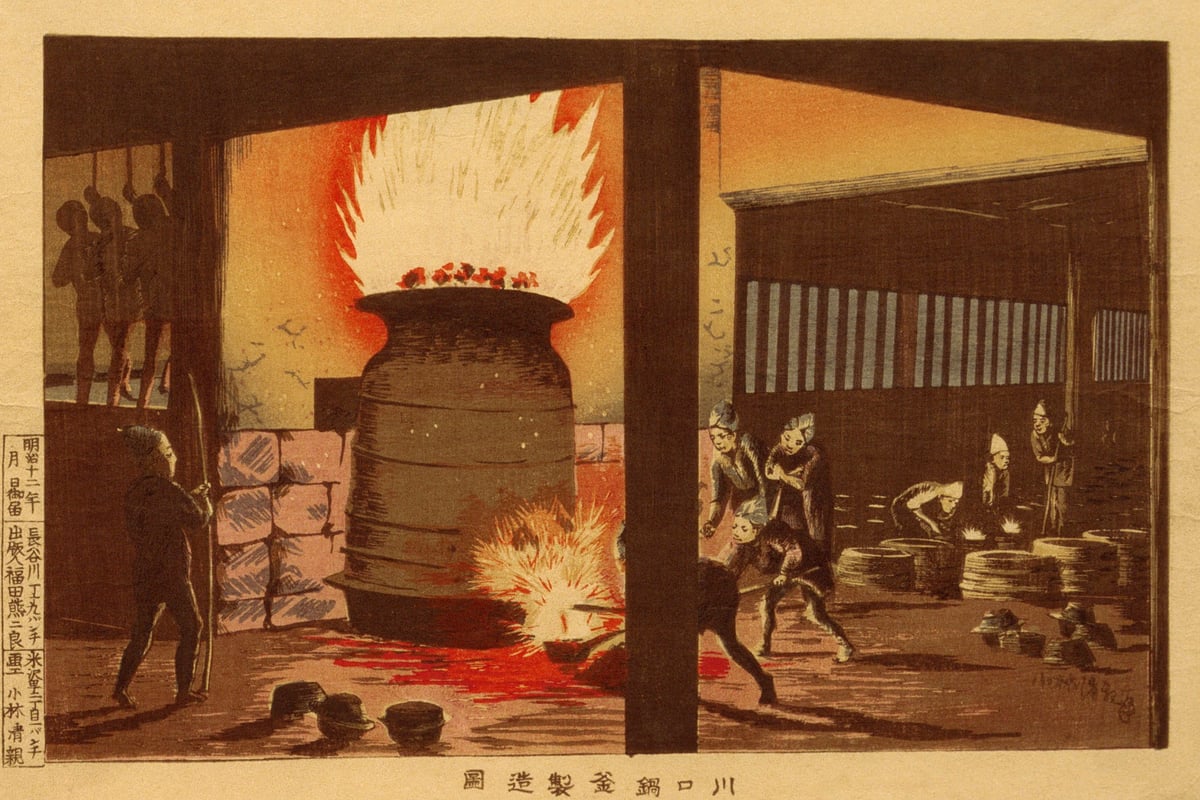
Kawaguchi Imono
Kawaguchi Imono
Kawaguchi Imono is the general term for the casting industry that developed in Kawaguchi City, situated between the Arakawa and Shiba rivers, an area known as 'Kawaguchi, the Town of Casting.' Its origins remain uncertain, with several competing theories placing its beginnings in the Heian, Kamakura, Nanboku-cho, or Sengoku periods, but it is thought that casters had settled in the area by at least the medieval period. Good-quality sand and clay suited to mold-making could be obtained along the Arakawa and Shiba river basins, and the area's proximity to the major consumer center of Edo (Tokyo), together with its convenient water transport, allowed it to develop from the Edo period onward into a major production center for pots, kettles, farm tools, temple bells, and more. From the Meiji era, factory production and technological innovation advanced, and in 1942 Kawaguchi achieved the highest production volume in Japan among single cities; it is also known as the setting of the film 'Kyupora no Aru Machi' (The Town with the Cupola Furnace). In recent years, production has continued across a wide range of fields, from household goods to industrial products, pursuing lighter weight and refined design.
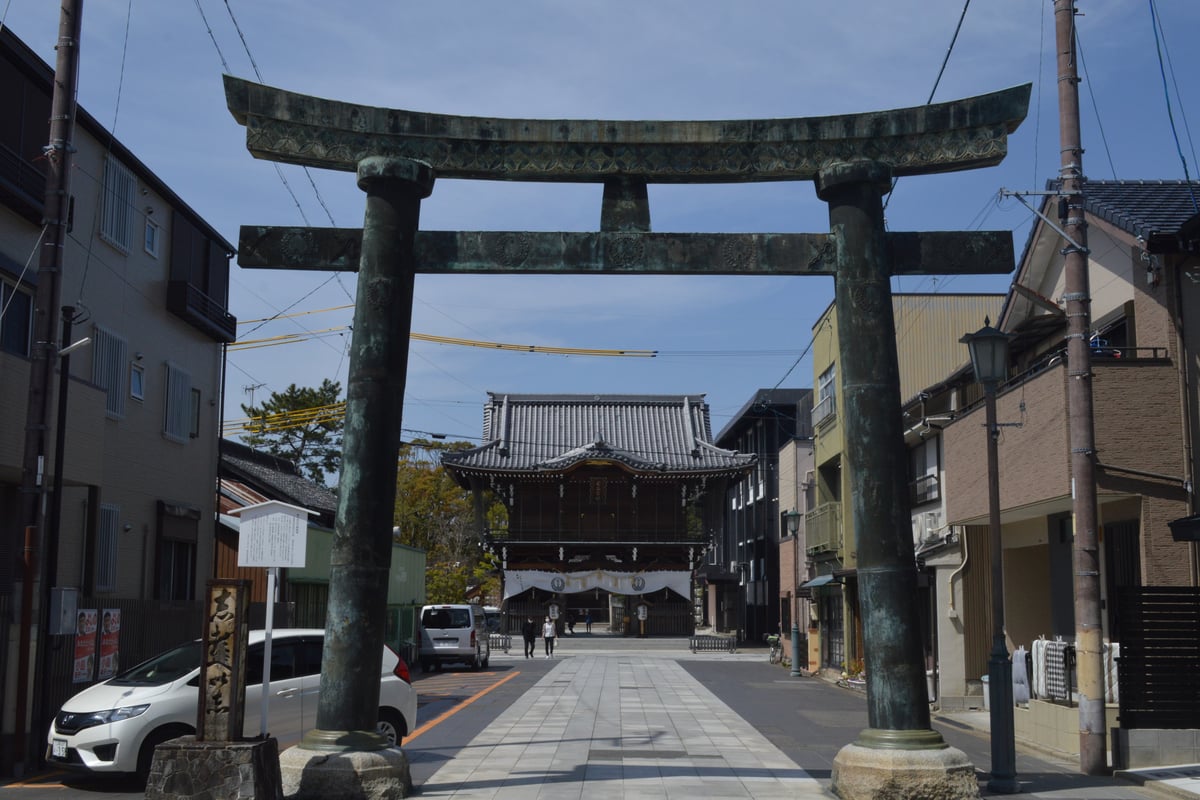
Kuwana Imono (Kuwana Casting)
Kuwana Imono (Kuwana Cast Metalwork)
Kuwana Imono is cast metalwork made in Kuwana City, Mie Prefecture. It is said to have begun in 1601 (Keicho 6), when Honda Tadakatsu became the first lord of the Kuwana Domain and invited casters (imoji) to the area. Under the domain's encouragement, firearms and other items were manufactured, and the casting industry took root. In the Edo period, lanterns, temple bells, pots and other items were made, and the bronze torii gate of Kuwana Sosha (Kasuga Shrine) is a renowned example. In the Meiji period, machine casting for products such as noodle-making machines and water-supply fittings began, and Kuwana grew into a production center ranked alongside Kawaguchi in the saying 'Kawaguchi in the east, Kuwana in the west.' Kuwana, which prospered as a post town on the Tokaido, is still known as a 'town of casting.' Today, industrial castings such as manhole covers and machine parts are the mainstay, but everyday items such as iron kettles and pots are also made. In 2026 (Reiwa 8), it became a Mie Prefecture Designated Traditional Craft, covering kettlebells and iron pots.
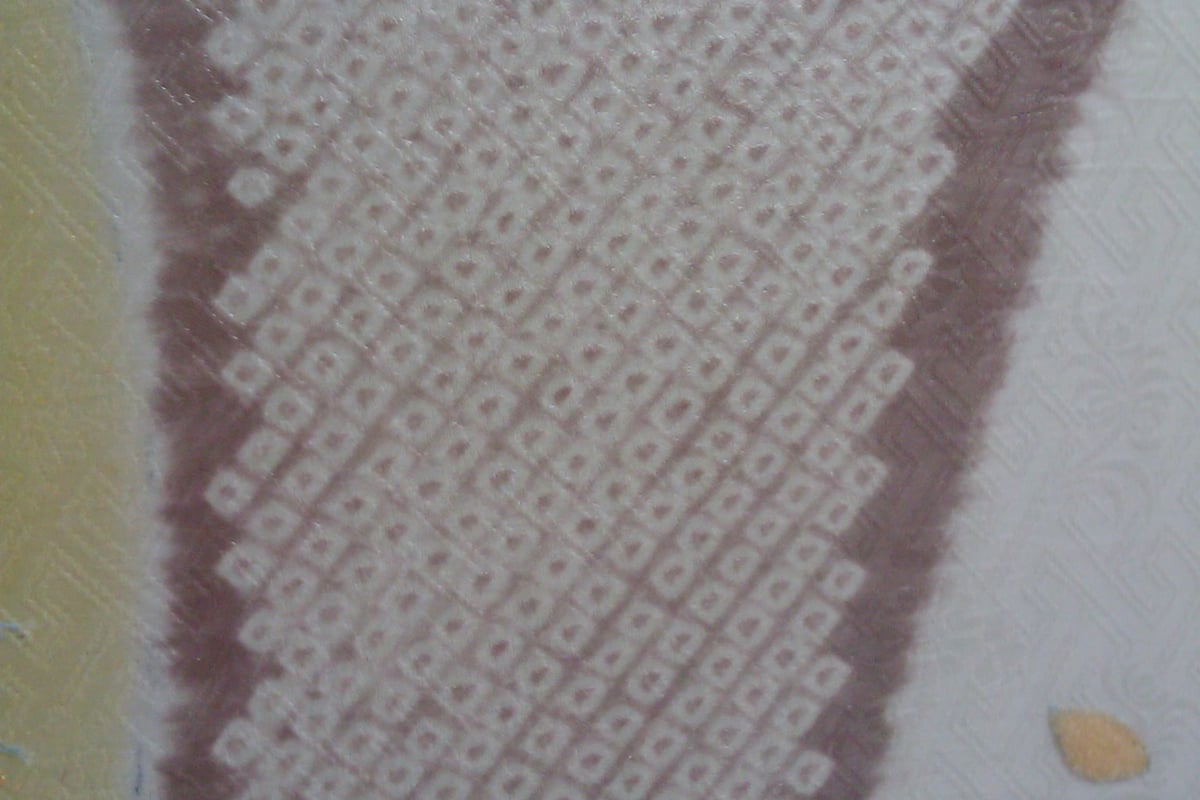
Kyo-kanoko Shibori (Kyoto Fawn-Spot Tie-Dyeing)
Kyo-kanoko Shibori
Kyo-kanoko Shibori is a Kyoto tie-dyeing craft in which fabric is bound grain by grain with thread to resist dye and create patterns; it is said to take its name from the way the finished pattern resembles the spots on a fawn's back. Combining numerous binding techniques such as hitta shibori and hitome shibori, it is characterized by the three-dimensional effect produced by finely bound grains and vivid multicolor dyeing, and because every step is done by hand, it has a distinctive richness and warmth not found in machine dyeing. It flourished as tsujigahana dyeing from the Muromachi through the early Edo period and reached its peak during the Genroku era in the mid-Edo period. Its origin is said to be India, with one theory holding it was brought to Japan around the 7th century; it has a long history, with references to tie-dyeing already found in the Nihon Shoki. It received national Traditional Craft designation in 1976.
Mikawa Momen (Mikawa Cotton Textiles)
Mikawa Momen
Mikawa Momen is the general term for cotton textiles that have long been grown and produced in the Mikawa region of eastern Aichi Prefecture (around Nishio City, Gamagori City, and Toyokawa City). According to tradition, cotton cultivation in Japan began in 799 (Enryaku 18), when a person from Konron (said to have been Indian) drifted ashore and introduced cotton seeds, in a place identified as Hazu District, Mikawa Province (present-day Nishio City). The earliest documentary reference dates to 1510 (Eisho 7), when the record 'Eisho-nenchuki' of Kofuku-ji Temple's Daijo-in notes that 'Mikawa momen' was paid as a tax tribute. During the Edo period, cotton growing and cotton weaving flourished throughout the Mikawa region, and the textiles were shipped to Edo as one of the 'three white products' (sanpaku momen). From the Meiji era onward, the industry developed by adopting Western spinning and weaving technology, and it became known nationwide under the brand names 'Mikawa Momen' and 'Mikawa-jima.' Products include 'Mikawa-jima,' known for its distinctive vertical stripes and pale indigo color, and multi-layered woven gauze prized for its warmth and absorbency. It was registered as a Regional Collective Trademark in 2007.
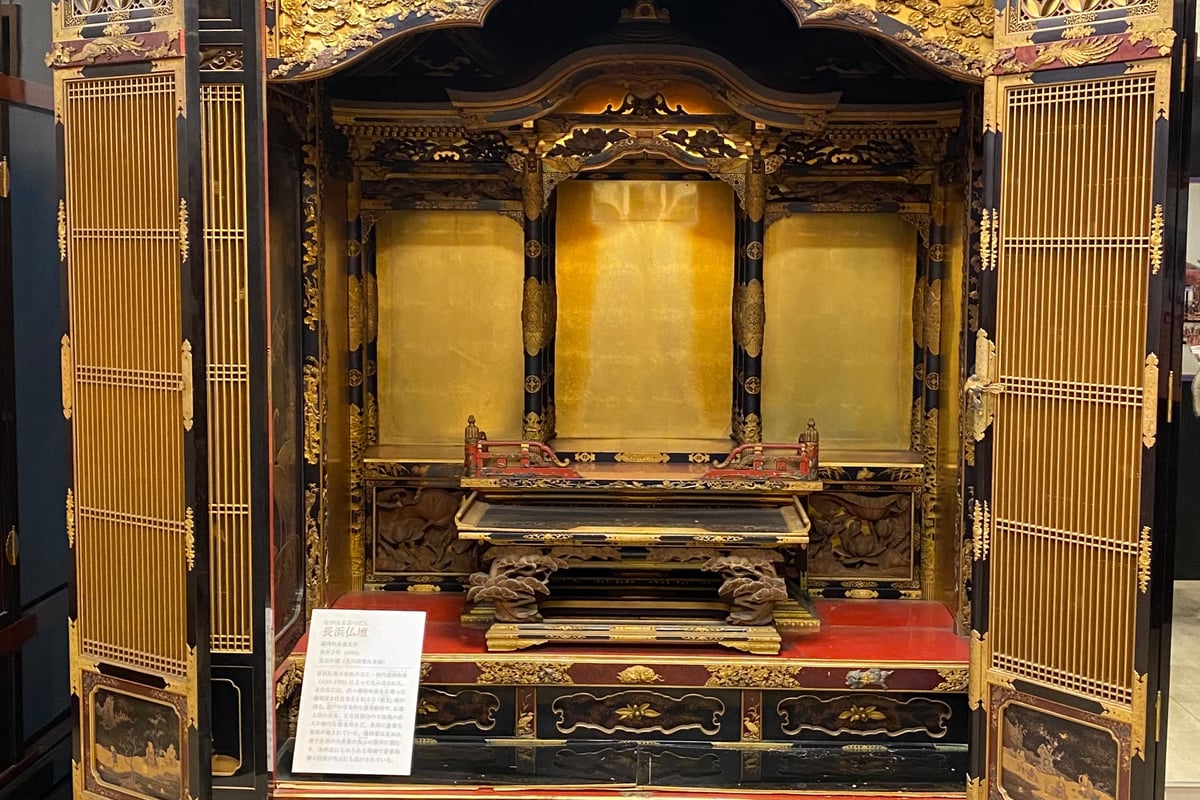
Nagahama Butsudan (Nagahama Buddhist Altars)
Nagahama Butsudan
Nagahama Butsudan are gold-lacquered Buddhist altars (kin-butsudan) made mainly in Nagahama City, Shiga Prefecture, and are recognized as a production center distinct from Hikone Butsudan. It is said that altar-making spread to various regions during the Muromachi period, carried by craftsmen who had moved out from Kyoto's 'Hachi-busho,' a group of Buddhist image and altar makers, and that in Nagahama — a region with deep devotion to Jodo Shinshu Buddhism — Fujioka Izumi laid the foundations of the local industry. The oldest surviving example bears a date corresponding to 1680 (Enpo 8), showing that the production center was already established by the mid-17th century. Altars are made through a division of labor across seven processes — woodworking, the kuden (miniature shrine housing the principal image), carving, metal fittings, lacquering, maki-e (lacquer decoration), and gold-leaf application — a collaborative art involving multiple craftsmen such as woodworkers, metal-fitting artisans, lacquerers, and maki-e artists. The kokashiki (frame-assembly) technique, which joins parts without adhesives or nails, allows altars to be disassembled and repaired even after completion, so they can be used for generations. The woodworking, carving, and metalwork skills cultivated in building the floats for the Nagahama Hikiyama Festival have long supported the local altar-making industry.
Nakaniida Uchihamono
Nakaniida Uchihamono
Nakaniida Uchihamono forged blades are hand-forged cutlery rooted in the blacksmithing tradition of Kami Town (formerly Nakaniida Town), Kamigun, Miyagi Prefecture. According to tradition, their origins trace back to the Kanbun era of the Edo period (roughly 1661 to 1673), when Funano Gorobei, a bladesmith of the Sendai Domain, began making sickles. For more than 300 years since, a forging method known as the kuu-uchi method, using the same hand-forging technique as swordsmithing, has been passed down for beating and combining iron and steel. The distinctively shaped sickles, designed to be used with the blade facing upward, are valued for reducing friction with soil so the edge resists chipping and can be easily re-sharpened. Beyond sickles, various other forged blades are also made, including nakiri kitchen knives and peeling knives. At its peak, eleven blacksmith workshops operated side by side, but due to a shortage of successors, today only Ishikawa Michio, the fourth-generation head of Ishikawa Hamono Seisakusho, continues to preserve the technique as its sole craftsman. It was designated a Traditional Craft by the Governor of Miyagi Prefecture in 1982 (Showa 57).
Oguni Washi (handmade paper)
Oguni Washi
Oguni Washi is handmade washi paper made in Oguni Town, Nagaoka City, Niigata Prefecture. In Oguni, an area of heavy snowfall, unique methods that make use of snow have been handed down. Representative examples are snow bleaching (yuki-zarashi), in which the bark of the raw material, kozo (paper mulberry), is laid out on the snow in the sun to bleach it, and kangure, in which the stack of freshly made sheets (shito) is buried in snow and kept there until spring. The practice of 'drying in the sun on the snow,' in which made sheets are pasted onto boards and dried on the snow, is also carried out. According to records, kozo cultivation and papermaking were carried out as winter work by farming households in 1682 (Tenna 2). In the Edo period, paper was paid as annual tax from mountain settlements that had no rice paddies. In the early Showa era, as many as 22 million sheets were produced in a single winter, and today the Oguni Washi Production Cooperative passes on these skills. The methods using snow became a national Selected Intangible Cultural Property and a Niigata Prefecture Intangible Cultural Property, and in 2022 it was designated a Prefecturally Designated Traditional Craft of Niigata Prefecture. It is used for calligraphy and painting paper, sake labels, and more.
Sakai Teori Dantsu (Hand-Woven Carpets)
Sakai Teori Dantsu (Hand-Woven Carpets)
Sakai Teori Dantsu is a hand-woven floor covering that began in Sakai in the late Edo period. Dantsu (pile carpet) refers to thick woven floor coverings; the technique is said to have come from China and spread via the Nabeshima Domain of Hizen to Ako in Banshu and Sakai in Senshu. In Sakai, it began in Tenpo 2 (1831), when the thread merchant 藤本庄左衛門 had 泉利兵衛 weave dantsu and sold them as 'Sakai Dantsu.' It became widely known after being exhibited at the 1st National Industrial Exhibition (Naikoku Kangyo Hakurankai) in Meiji 10 (1877). 藤本荘太郎, 藤本庄左衛門's grandchild, who was called the 'Dantsu King,' improved the techniques and personally traveled to the United States to spread it overseas. In the mid-Meiji era, they were shipped in large numbers both in Japan and abroad, and production reached its peak. Woven by hand using techniques that require great skill, the carpets are durable and have a substantial, weighty finish. In 1986 (Showa 61), it was designated an Osaka Prefecture-designated Traditional Craft. In 2006 (Heisei 18), its techniques were also designated an Osaka Prefecture Intangible Folk Cultural Property.
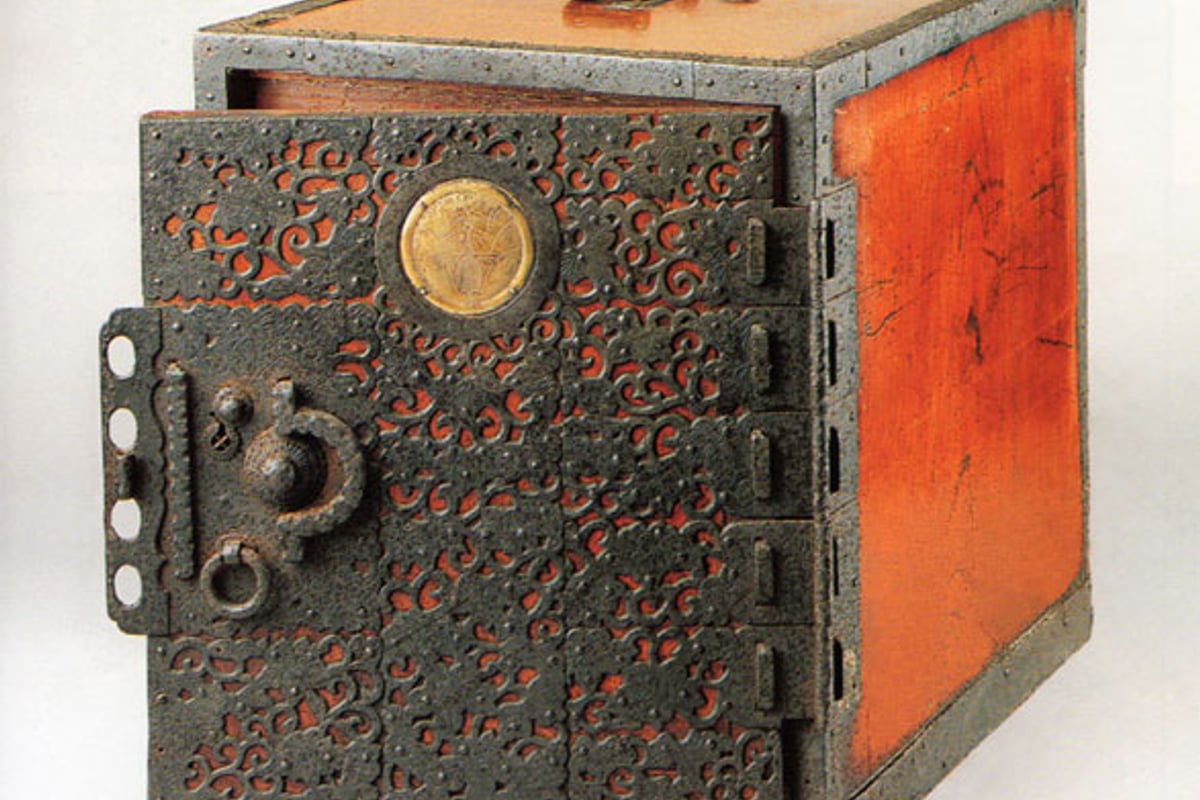
Sakata Funadansu
Sakata Funadansu
Sakata Funadansu are sturdy chests that sailors on Kitamae-bune (trading ships) had made to store valuables aboard ship, from the Edo period through the Taisho era. Sakata is counted as one of the three great production centers for funadansu (ship chests), alongside Ogi in Sado and Mikuni in Fukui Prefecture. Under a form of shipping business known as 'kaizumi,' in which ships bought and sold goods along the Sea of Japan coast, a distinctive style of funadansu-making developed in Sakata, one of the trade's port towns. The chests have a double-layer structure, using sturdy zelkova wood and highly decorative iron fittings on the outside, and paulownia wood on the inside, which swells in high humidity to keep water out. They were built small so they could be carried out quickly in the event of fire or shipwreck, and different styles were made for different uses, such as kakesuzuri (hanging writing boxes), chobako (ledger boxes), and hanbitsu (half-size chests). Master craftsmen such as Saito Josai appeared during the Edo period, but today there is a shortage of artisans skilled in decorative metal fittings and lacquering, making the transmission of the craft a challenge.
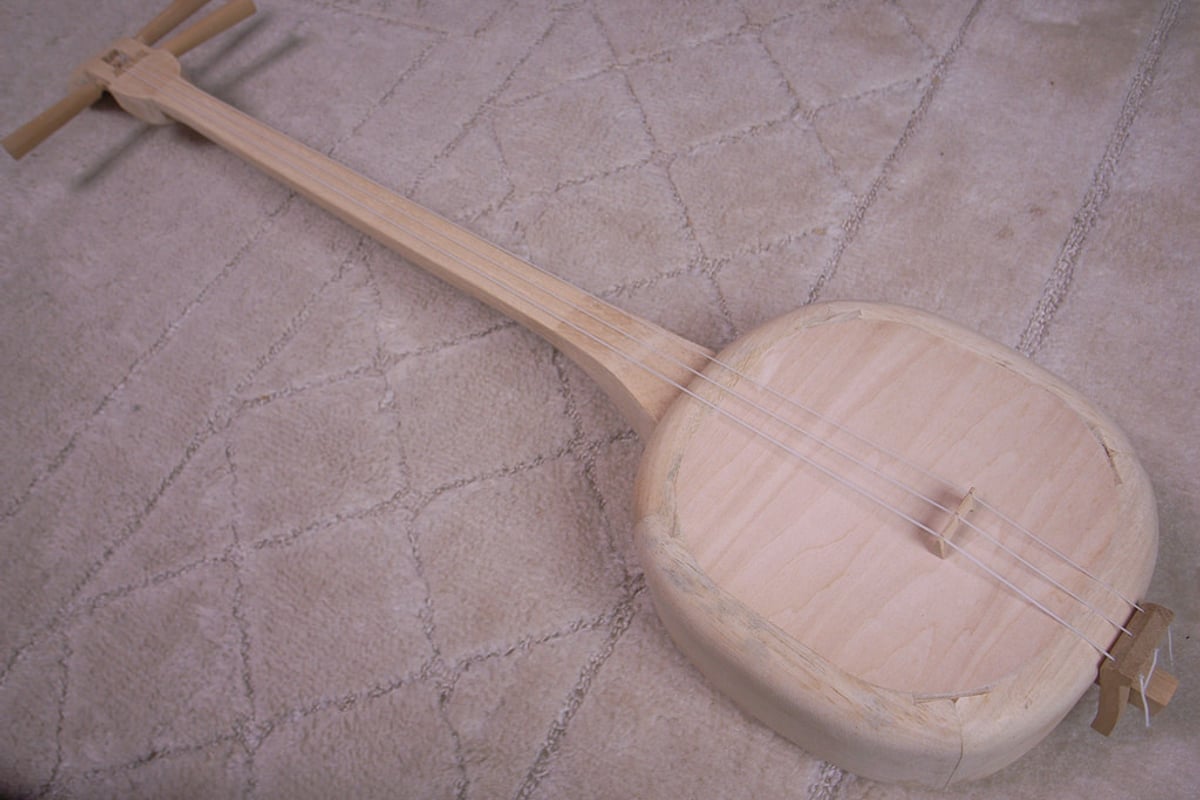
Sanshin
Sanshin
The sanshin is a three-stringed instrument with a body covered in snakeskin and a wooden neck, and it is indispensable to Okinawan music and performing arts. It is said to have originated around the end of the 14th century, when the Chinese sanxian, a stringed instrument from Fujian Province, was brought to the Ryukyu Kingdom through trade and developed into a distinctly Ryukyuan instrument centered on Kume Village (present-day Kume, Naha City). From the 15th century onward it spread among the Ryukyuan shizoku (gentry) class and developed as an accompaniment instrument for court banquet music and performing arts. The neck comes in seven traditional shapes named after master craftsmen of the Ryukyu Kingdom era, such as the Makabi, Haebaru, and Yunaa types, and instruments are made by combining a neck of wood such as kuruchi (Okinawan blackwood) with a body covered in python skin. Sanshin workshops and cooperatives carry on the craft techniques today; the sanshin was designated a national Traditional Craft in 2018, having already been designated an Okinawa Prefecture traditional craft product in 2012. Prices range from a few tens of thousands of yen for beginner instruments to several hundred thousand yen or more for high-end models with genuine python skin and prized woods, and the tone and appearance vary greatly depending on the type and materials chosen, which is part of its appeal.
Shuzenji Washi
Shuzenji Gami (Shuzenji Washi Paper)
Shuzenji Washi (Shuzenji-gami) is washi that has been made in the Kamiya district of Shuzenji, Izu City, Shizuoka Prefecture. Its origins are unclear, but it is said to have been made from around the Heian period, and it is thought to have a history spanning a thousand years. Its name appears in The Tale of the Heike, and it is said to have been used for the documents Minamoto no Yoritomo sent to warriors in the Kanto region when raising an army. In the Edo period, Tokugawa Ieyasu recognized its quality and encouraged its production, and it is said to have been used as official paper for the shogunate. In the past it was a thin paper with a pale pink tint, characterized by a pattern of bamboo screen lines (sudareme). From the Meiji to the Taisho era, production died out due to factors such as the spread of Western paper. In 1985 a workshop was built in Kamiya with the cooperation of local residents, and efforts to restore the paper began. Today papermaking continues at 修善寺紙谷和紙工房, which also offers hands-on papermaking experiences.
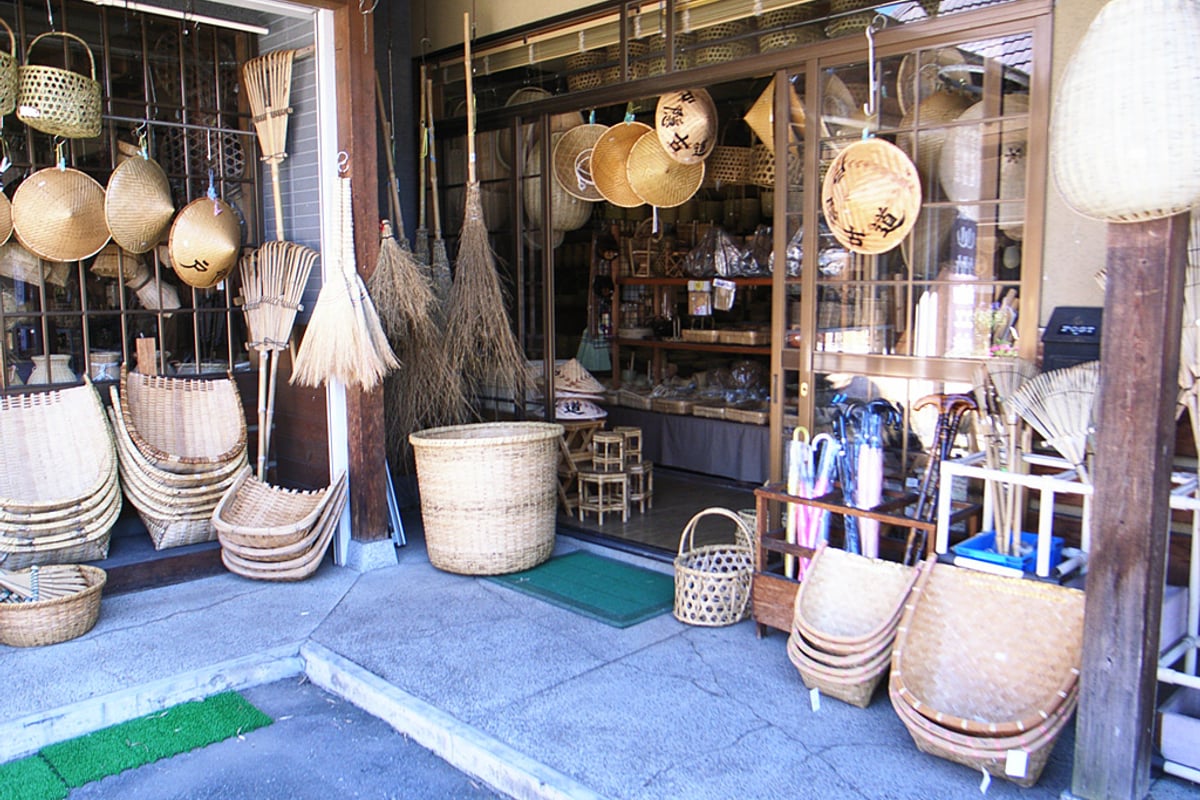
Togakushi Bamboo Craft
Togakushi Takezaiku (Togakushi Bamboo Craft)
Togakushi Bamboo Craft is bamboo craft made in Togakushi, Nagano City. The material is chishima-zasa (a dwarf bamboo) that grows wild in the mountains of Togakushi; because its base is bent, it is locally called 'nemagari-dake' (literally 'bent-root bamboo'). Though thin, this bamboo is hard and supple, strong enough to bend without breaking even under heavy winter snow. In Togakushi, which lies at a high altitude and is unsuited to rice growing, it is said that in the Edo period people were permitted to pay their annual tax (nengu) in bamboo instead of rice. From the Meiji period onward, demand rose for large baskets used in sericulture, and eventually everyday tools such as zaru (draining baskets) and kago (baskets) came to be made. The representative product is the soba zaru, used to serve Togakushi soba. A distinctive feature is that a single craftsperson handles every step, from cutting the bamboo in the mountains and making bamboo strips (takehigo) to weaving. In 1983, together with the bamboo crafts of Yamanouchi Town and Ina City, it became a Traditional Craft Designated by the Governor of Nagano Prefecture under the name 'Shinshu Takezaiku' (Shinshu Bamboo Craft). In front of Togakushi Shrine, bamboo craft shops and facilities offering hands-on experiences are dotted around.
Yumino Ningyo
Yumino Ningyo
Yumino Ningyo are clay folk dolls made in the Yumino area of Nishikawanobori, Takeo City, Saga Prefecture. Their origin is said to date to 1882, when Kamejiro Harada, who had trained under the Hakata-doll craftsman Kiyoshige Fujiwara, grew unsatisfied with the Hakata-doll style and set out on a training journey around Kyushu. While stopping at Mount Yoshida in Yumino, he encountered the dark grey clay found there, which sparked his creative drive and led him to start doll-making in the area. The dolls initially had a refined style close to Hakata dolls, but gradually evolved into rustic, approachable figures characterized by thick layers of gofun (a white shell-based pigment) giving them a plump, rounded form and vivid coloring. The basic process involves packing clay into plaster molds to shape the dolls, drying and firing them, building up facial features with repeated coats of gofun, and hand-painting each one. Auspicious motifs such as beckoning cats (maneki-neko) and the twelve zodiac animals are common, and the beckoning-cat coin bank is especially well known as a popular product. Today, Eguchi Ningyo-ten, founded more than 140 years ago, is nearly the sole keeper of this tradition.
Kyo-nui (Kyoto Embroidery)
Kyo-nui
Kyo-nui (Kyoto embroidery) is a traditional Kyoto embroidery craft in which patterns are sewn onto fabric using a single needle and multicolored silk, gold, and silver threads. It began when the "Nuibe no Tsukasa" bureau, responsible for court clothing decoration, was established with the relocation of the capital to Heian-kyo, and it developed alongside garments such as juni-hitoe court robes, warlords' dobuku coats, Noh costumes, and kosode kimono. Alongside dyeing and weaving, it holds an important place in the history of Japanese textile arts, and it is characterized by the way overall composition, thread color coordination, and embroidery techniques and methods combine to create three-dimensional, evocative expression on flat fabric. About 30 techniques survive today, of which 15 — including nuikiri, komazukai-nui, and matsui-nui — are recognized as designated techniques of the Traditional Craft certified by the Minister of Economy, Trade and Industry. In recent years it has been applied beyond kimono-related items to framed works and accessories, opening up new demand.
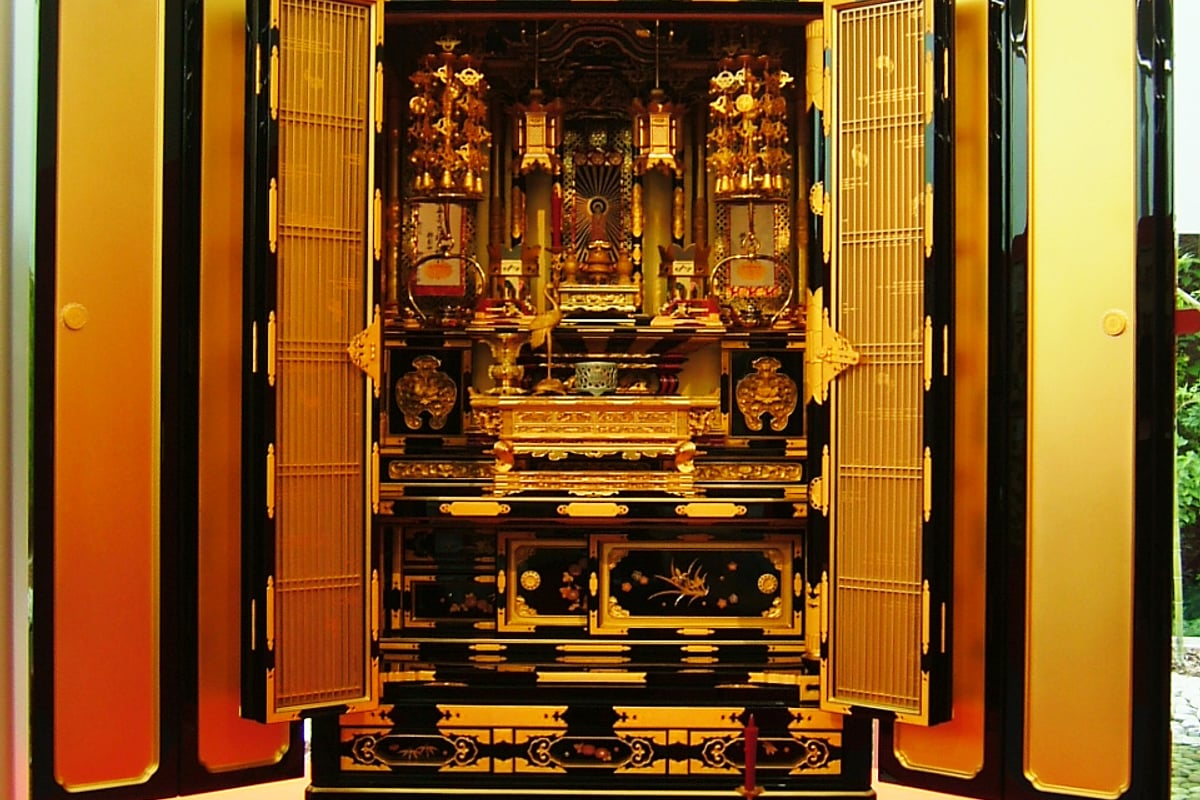
Kyo-butsudan (Kyoto Buddhist Altars)
Kyo-butsudan
Kyo-butsudan are traditional Kyoto Buddhist altars made through a division-of-labor system involving more than forty specialized trades, including woodworking, roof (miya-den) construction, wood carving, lacquering, roiro polishing, pure gold leaf application, ornamental metal fittings, maki-e, and coloring. Buddhist altar fitting production in Kyoto is believed to have begun around the 8th century, shortly after the introduction of Buddhism, and became fully established in the early 11th century when the Buddhist sculptor Jocho set up the "Shichijo Busho" workshop in Shichijo. Demand surged in the early Edo period when the shogunate's temple registration system spread the custom of enshrining an altar in every household. Because styles of religious ornamentation differ by sect, mass production is unsuited to this craft, giving it the character of a comprehensive art form that draws together woodworking, lacquerwork, metalwork, and other traditional techniques. Today, roughly 70% of the altars and altar fittings produced in Kyoto are for temple use, and Kyoto supplies much of the temple altar equipment used nationwide. It was designated a Traditional Craft by the Minister of Economy, Trade and Industry in 1976.
Kyo-butsugu (Kyoto Buddhist Fittings)
Kyo-butsugu
Kyo-butsugu is a general term for the tools used in Buddhist rites at temples and homes, including incense burners, candlesticks, flower vases (kebyo), Buddhist statues, and other ceremonial fittings — a comprehensive art form drawing together woodworking, lacquerwork, metalwork, dyeing and weaving, and other diverse techniques. Production of Buddhist fittings is said to have begun with the introduction of Buddhism in the 6th century, and in Kyoto it became fully established in the early 11th century when the Buddhist sculptor Jocho set up the "Shichijo Busho" workshop in Shichijo, marking over a thousand years of history since. Because the design and specifications of fittings differ by Buddhist sect, mass production is unsuited to this craft, and each piece is finished by hand under a division-of-labor system involving more than forty specialized trades. Today, roughly 70% of the fittings produced in Kyoto are for temple use, and Kyoto supplies much of the Buddhist fitting equipment used in temples nationwide. It became a Traditional Craft designated by the Minister of Economy, Trade and Industry in 1976.
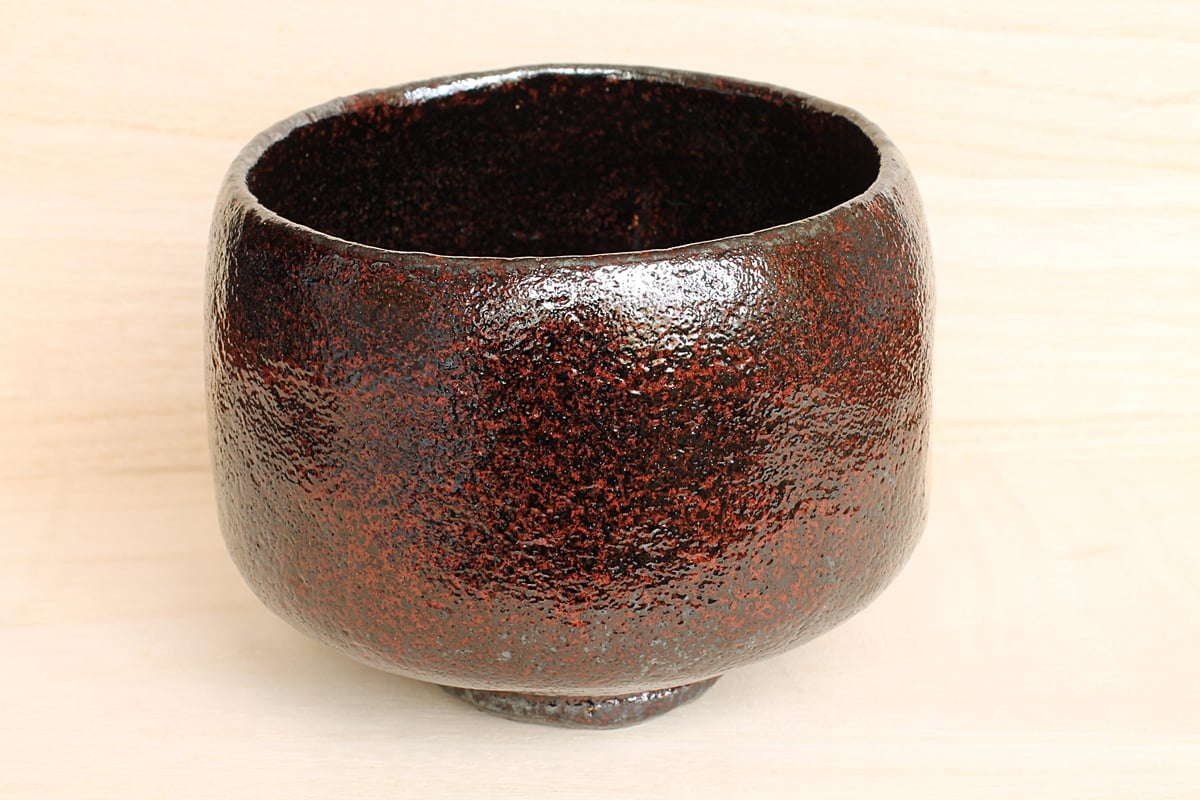
Raku-yaki
Raku-yaki
Raku-yaki is a ceramic art originating from the hand-formed tea bowls devised in the Momoyama period by Chojiro, the first-generation head of the Raku family, embodying the wabi-cha philosophy of Sen no Rikyu, and it has been passed down in Kyoto for over 450 years. Its characteristic technique is shaping each bowl one at a time by hand and spatula alone, without a potter's wheel, then firing it at a low temperature; the unadorned, generous forms and the soft texture that seems to cradle the palm have long been loved by tea practitioners. The technical roots are said to lie in Chinese sancai (three-color) ware of the Ming dynasty, believed to have been transmitted by Ameya, an immigrant craftsman said to be Chojiro's father. The Raku family has passed the craft down from father to a single chosen heir from the first-generation Chojiro to the current sixteenth generation, with each generation's head developing a distinctively individual style — a feature not seen in other ceramic traditions. Today, alongside the mainline Raku-yaki of the Raku family, several other kilns in Kyoto also produce aka-raku and kuro-raku tea bowls modeled on this tradition.
Kyo-hyogu (Kyoto Mounting and Framing)
Kyo-hyogu
Kyo-hyogu is a traditional Kyoto craft in which paintings, calligraphy, and dyed or woven textiles are mounted and preserved using fabric and Japanese paper, taking the form of hanging scrolls, folding screens, sliding doors, and framed pieces. It originates in the mounting of Buddhist sutra scrolls brought from China with the introduction of Buddhism, and in Kyoto, once the imperial capital, the technique was refined through its ties to the worship of Buddhist paintings, the tokonoma alcove culture of shoin-zukuri architecture, and the flourishing of the tea ceremony. The basin climate's high humidity is also said to have supported the craft's development, being well suited to the process of layering paste and Japanese paper before drying them. Mounters (kyoji) not only create new hanging scrolls and folding screens but also handle the repair and restoration of old paintings, calligraphy, and cultural properties, and their skills are relied upon in the restoration of National Treasures and Important Cultural Properties. It received national Traditional Craft designation in 1997 and was registered as a regional collective trademark in 2007.
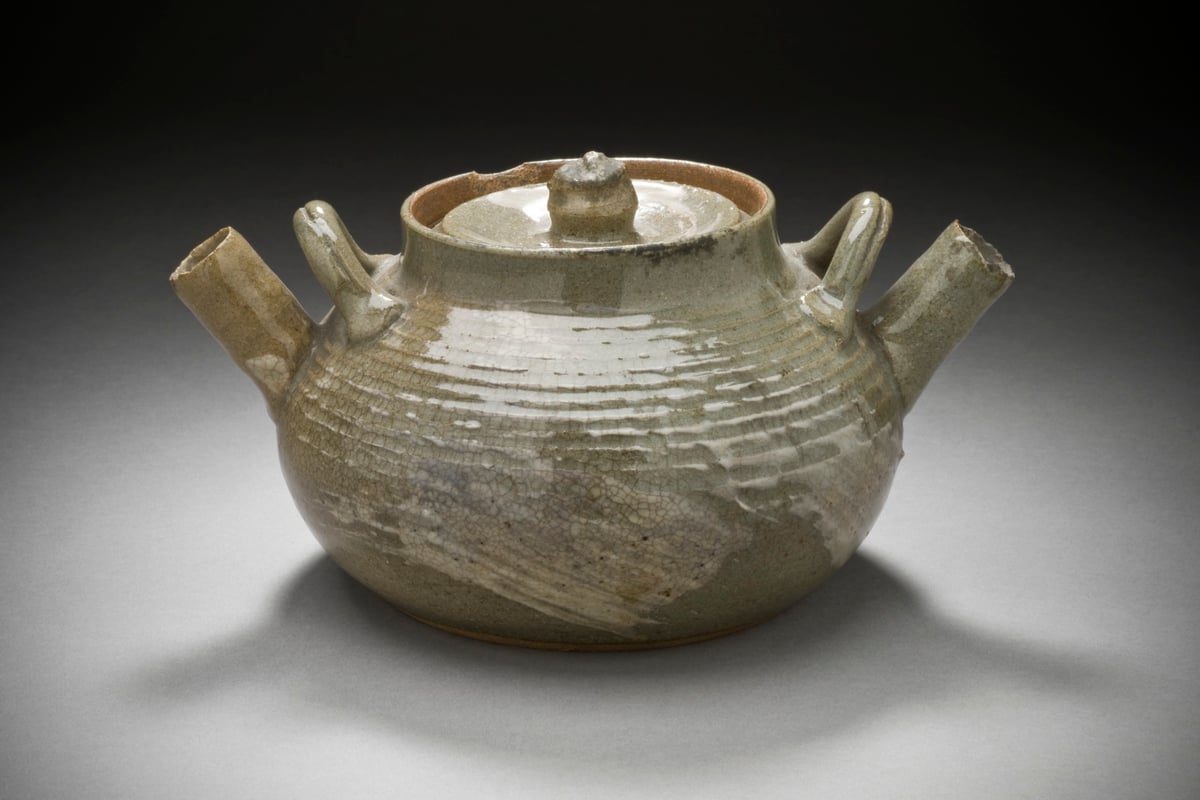
Akahada-yaki
Akahada-yaki
Akahada-yaki is a pottery ware fired in the area stretching from western Nara City to Yamatokoriyama City, known for its soft, milky-white-tinged glaze and for 'Nara-e,' a decorative style depicting figures reminiscent of Gosho dolls. Tradition holds that during the Momoyama period, Toyotomi Hidenaga—lord of Yamatokoriyama Castle and younger brother of Toyotomi Hideyoshi—invited potters from Tokoname in Owari Province to open a kiln on Mt. Gojo (also called Mt. Akahada), though no reliable historical records or artifacts confirm this account. In the late Edo period, it became an official kiln under the patronage of the Yanagisawa family, lords of Koriyama Domain, and came to be counted among the 'Enshu Nanagama' (Seven Kilns favored by tea master Kobori Enshu). In the closing years of the Edo period, the master potter Okuda Mokuhaku revived Akahada-yaki through his exceptional skill, producing a wide range of works including Nara-e pieces, and is honored as the craft's great restorer. Today, several kilns spanning Yamatokoriyama City and Nara City each carry on the tradition with their own interpretations of glaze and decoration.
Akebi-tsuru Zaiku
Akebi-tsuru Zaiku
Akebi-tsuru Zaiku is a Tsugaru basketry craft that traces its origin to the late Edo period, when charcoal baskets and hand baskets woven from the vines of the akebi plant growing wild in the surrounding mountains were made as souvenirs for visitors to Dake Onsen hot spring at the foot of Mount Iwaki. Using akebi vine gathered around the Hakkoda mountains and Lake Towada and around Mount Iwaki, as well as the bark of the yamabudou (a wild grape), every process from selecting the vine to shade-drying, soaking in water, and weaving is done by hand by the artisans. It is characterized by sturdy, skillfully woven texture and a natural sheen, and part of its appeal is that it develops more luster and fits the hand better the more it is used. From the Meiji era onward it was exhibited at exhibitions in Japan and abroad and gained wider recognition, and in March 1996 it was designated an Aomori Prefecture Traditional Craft. Today, hand baskets, baskets, and trays that make the most of the natural texture of materials gathered from the mountains and fields continue to be made mainly in Hirosaki City.
Asahikawa Furniture
Asahikawa Furniture
Asahikawa Furniture is a general term for wood furniture made in and around Asahikawa, Hokkaido, recognized as one of Japan's leading furniture-producing regions alongside Shizuoka, Hida, Tokushima, and Okawa. Its origins trace back to a sawmill opened in 1890 (Meiji 23) alongside the founding of Asahikawa Village; the completion of the railway in 1898 and the relocation of the Army's 7th Division in 1899 prompted carpenters and furniture and joinery craftsmen from Honshu to settle in Asahikawa, putting the woodworking industry on a full-scale footing. A cold-damage crop failure in 1913 led to the opening of a woodworking training institute that advanced technical skills, and in 1949 Asahikawa was the only district in Hokkaido designated a nationally important woodworking industrial district. The region draws on high-quality hardwood from the old-growth forests of the Taisetsu mountain range near Asahikawa, and has continued pursuing world-class design through the International Furniture Design Fair Asahikawa (IFDA), first held in 1990. Today, about 40 furniture makers in Asahikawa, Higashikawa, Higashikagura, and Toma belong to the Asahikawa Furniture Manufacturers' Cooperative, supporting the region's brand as a whole through joint exhibitions and joint order-taking.
Awano Shunkei-nuri
Awano Shunkei-nuri
Awano Shunkei-nuri is a lacquerware tradition passed down in Awano, Shirosato Town, Higashi-Ibaraki District, Ibaraki Prefecture. It is said to have begun in 1489 (Entoku 1), in the Muromachi period, when Inagawa Yamashiro-no-kami Minamoto no Yoshiaki devised a way of lacquering using lacquer, hinoki cypress, and plum wood native to the area. In the Edo period, Okobei, the 8th-generation head of the Inagawa family, competed in skill against a lacquer craftsman from Kishu before Tokugawa Mitsukuni, the 2nd lord of the Mito Domain, and the superior finish of his work earned the family the position of official lacquerware supplier to the Mito Domain. The technique involves tinting the wooden base yellow or red and then applying repeated coats of transparent lacquer (sukiurushi) over it so the wood grain shows through, and it is counted, alongside Hida Shunkei-nuri of Gifu and Noshiro Shunkei-nuri of Akita, as one of Japan's three great Shunkei-nuri lacquerware traditions. It was designated an Intangible Cultural Property of Ibaraki Prefecture on January 25, 1989 (Heisei 1), but today only a single workshop, that of the Inagawa family, carries on the tradition.
Bizen ware (Bizen-yaki)
Bizen-yaki
Bizen-yaki is an unglazed stoneware centered on the Ibe district of Bizen City, Okayama Prefecture, and is counted among Japan's Six Ancient Kilns alongside Seto, Tokoname, Tanba, Shigaraki, and Echizen. Also known as 'Ibe-yaki' after its production area, its defining feature is that it is fired at high temperature without any glaze whatsoever. The raw material is 'hiyose,' an iron-rich clay accumulated at the bottom of paddy fields stretching from Bizen and Ibe to Kagato; after prolonged firing, the way flames pass through the kiln and ash settles on each piece produces distinctive markings called 'yohen' (kiln transformations). Representative types of yohen include hidasuki (crimson cord marks left by wrapping straw around a piece before firing), sangiri (color changes that occur where pieces are buried in ash), and goma (sesame-like specks left where melted ash adheres to the surface), giving each piece the appeal of a one-of-a-kind work. Bizen-yaki developed as a center for everyday earthenware in the Kamakura period, and in the Momoyama period, amid the vogue for the tea ceremony, it was highly prized by tea masters in Sakai and Kyoto, producing many outstanding pieces of tea ceramics. In the modern era, potters led by Kaneshige Toyo further refined the techniques, and to this day many kilns still line the streets of Ibe.
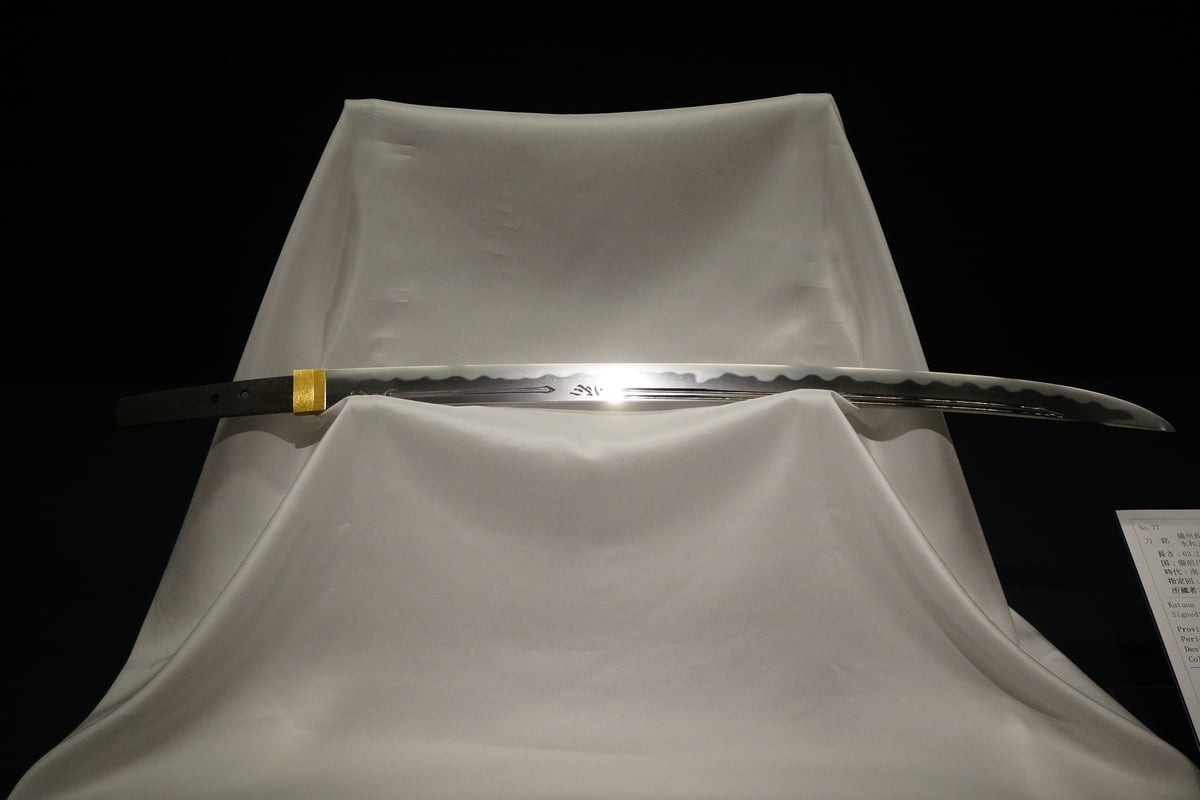
Bizen-to (Osafune)
Bizen-to (Osafune)
Bizen-to is the collective name for Japanese swords produced in the former province of Bizen (present-day Setouchi City and the eastern part of Okayama City, Okayama Prefecture). Among its swordsmiths, the 'Osafune school,' based at Osafune along the Yoshii River (present-day Osafune-cho, Setouchi City), is known as the largest group of swordsmiths in the history of the Japanese sword. Bizen province produced high-quality iron sand (akome sand iron) in the lower reaches of the Yoshii River, making it a major center of Japanese sword production throughout the medieval period. It formed the 'Bizen tradition,' one of the five major schools known as the 'Gokaden,' and Bizen swords are said to account for roughly 40 percent of Japanese swords designated as National Treasures or Important Cultural Properties. Although production declined at times due to warfare and shifting demand, in the Taisho and Showa periods Imaizumi Toshimitsu researched and revived swordmaking techniques through self-study and orally transmitted knowledge, and came to be known as 'the father of the Bizen sword revival.' Today, active swordsmiths still work in Osafune-cho, Setouchi City, and visitors can observe forging and polishing processes at the Bizen Osafune Sword Museum and the Bizen Osafune Sword Village.
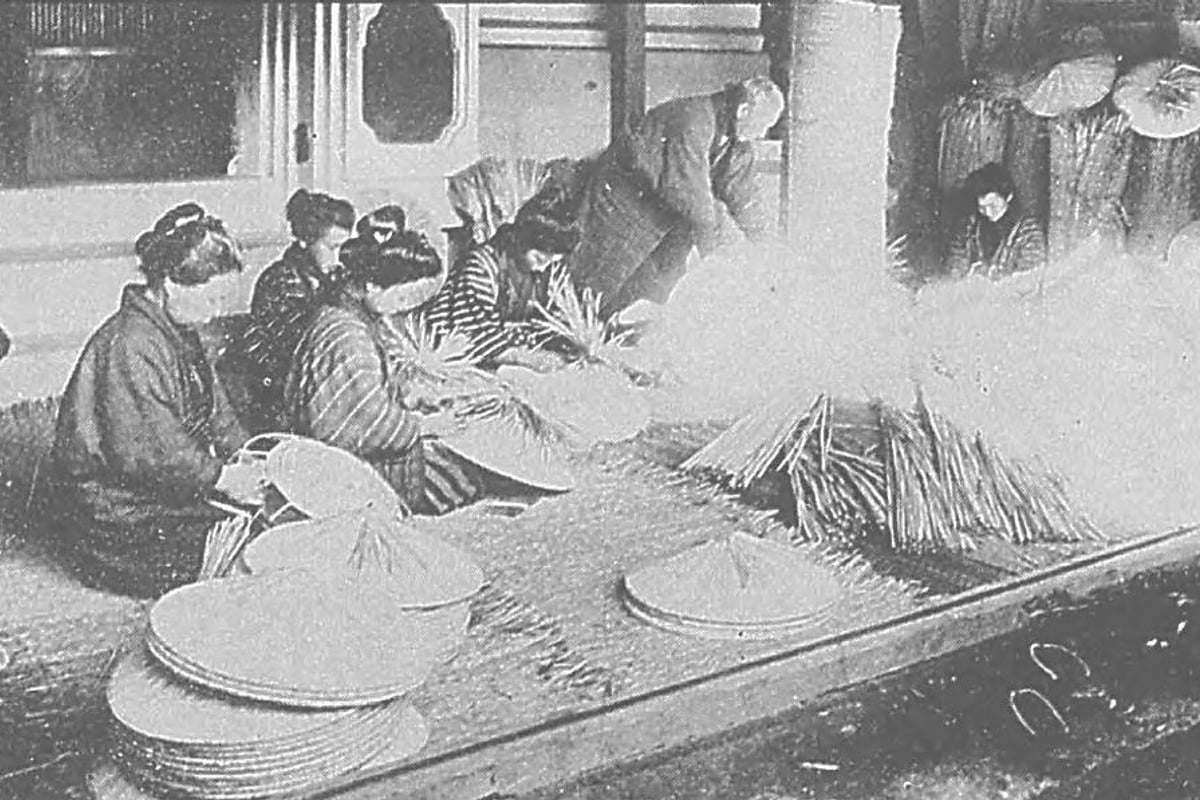
Ecchu Fukuoka no Sugegasa
Ecchu Fukuoka no Sugegasa
Ecchu Fukuoka Sugegasa is a sedge-woven hat made throughout the Fukuoka-machi area of Takaoka City, Toyama Prefecture, with a history of over 400 years as sun and rain protection used in farm work and festivals across Japan. Its origin is said to lie in the flooding of the Oyabe River more than 400 years ago, which turned the coastal area into a marsh where good-quality sedge began to grow wild, leading local villagers to start making hats as a side business. Around 1670, in the mid-Edo period, the craft developed into a full-fledged industry under the protection and encouragement of the Kaga Domain lord Maeda Tsunanori, and in the late Edo period, hat wholesalers emerged in Fukuoka-machi and began selling directly across Japan. At its peak in 1864, as many as 2.1 million sedge hats are said to have been shipped. Its distinctive feature is that men and women divide the labor between 'kasabone-zukuri' (making the conical bamboo frame from bamboo cut into thin strips) and 'kasanui' (sewing sedge grown specifically for the hats onto the frame), with the entire process from cultivation to finishing and shipping completed within the region. It still accounts for about 90% of domestic sedge hat production today. It was designated a nationally designated Important Intangible Folk Cultural Property in 2009 and a METI-designated Traditional Craft in 2017.
Ecchu Seto Ware
Ecchu Seto-yaki
Ecchu Seto ware is pottery fired in the Seto and Kamisue districts of Tateyama, Nakaniikawa District, Toyama Prefecture - an old kiln unique to Toyama, distinct in both production area and lineage from the 'Seto ware' of Aichi Prefecture. This district has been a center of ancient kiln production firing sue ware since the early Heian period, and it is said that potters migrated here from Owari Seto (Aichi) between the Momoyama period and the Bunroku-Keicho era, founding Seto Village, from which the name Ecchu Seto ware derives. The second lord of the Kaga Domain invited potters from Owari to make tea utensils, and the kiln flourished as an official kiln of the Kaga Domain, known as one of the leading old kiln sites in the Hokuriku region with a history older than Kutani ware. In the Meiji and Taisho eras, the spread of the railway network brought competition from cheaper products of other regions, and many kilns switched to producing roof tiles, but in the Showa era, the pottery-making tradition was revived through the efforts of a local preservation society. The craft's hallmark is its bold, varied glazing achieved with a wide range of local clays - red, yellow, blue, and white - and glazes made from plant ash, and today kilns belonging to 'かなくれ会' (Kanakure-kai) continue a tradition of more than 430 years.
Ecchu Washi
Ecchu Washi
Ecchu Washi is the collective name for handmade washi paper produced in three areas: 'Yatsuo Washi' in Yatsuo, Toyama City; 'Gokayama Washi' in Nanto City; and 'Hiruya Washi' in Asahi, Shimoniikawa District. It was designated a METI-designated Traditional Craft in 1984. Its history is ancient: the 'Zushoryoge,' compiled in 774 during the Nara period, records Ecchu (present-day Toyama Prefecture) as a papermaking region, and 'Ecchu-kuni-shi' (Ecchu Province paper) is also mentioned in documents preserved at the Shosoin Repository. Records in the Heian-period 'Engishiki' show that washi from Ecchu was paid as tax. In the Edo period, the second lord of Toyama Domain, Maeda Masatoshi, promoted the Toyama medicine trade, which sharply increased demand for Yatsuo Washi as material for medicine wrappers and kakebacho (customer ledgers used by traveling medicine peddlers). Made from kozo (paper mulberry), mitsumata, and ganpi fibers, all three areas share a durable, warm texture, while Yatsuo Washi is known for its vivid katazome stencil-dyeing technique and Gokayama Washi for combining strength and whiteness through methods such as yukisarashi (snow bleaching). Today it is widely used for everything from everyday items to interior goods and crafts.
Edo Glass
Edo Glass
Edo Glass is a general term for glassware handcrafted piece by piece by artisans, carrying on techniques that developed in the old Edo region (present-day Tokyo). It is said to have begun in the early 18th century, when Kagaya (Minagawa) Kyubei of Nihonbashi Toshiocho made mirrors and eyeglasses, and Kazusaya Tomesaburo of Asakusa made hairpins and wind chimes; by the late 19th century it had grown into one of Tokyo's leading industries. Whereas Edo Kiriko is characterized by decorative cut-glass patterns, Edo Glass centers on plain glassware shaped without molds through 'free-blowing (mold-free glassblowing)' -- using only a blowpipe and molten glass -- or through 'mold-blowing,' in which the glass is blown into a mold, giving it a simple, warm texture. It has produced many everyday items rooted in daily life, such as cups, glass bowls, goldfish bowls, and Edo furin (wind chimes), and, unlike mass-produced imports, is also highly regarded for custom-made items such as wine glasses and sake vessels, thanks to its ability to handle small-batch, many-variety production. It was designated a Traditional Craft Designated by the Tokyo Metropolitan Government in 2002 and a Traditional Craft Designated by the Minister of Economy, Trade and Industry in 2014, and today many small, workshop-style glass studios continue to pass down the technique, mainly in Sumida, Koto, and Edogawa wards.
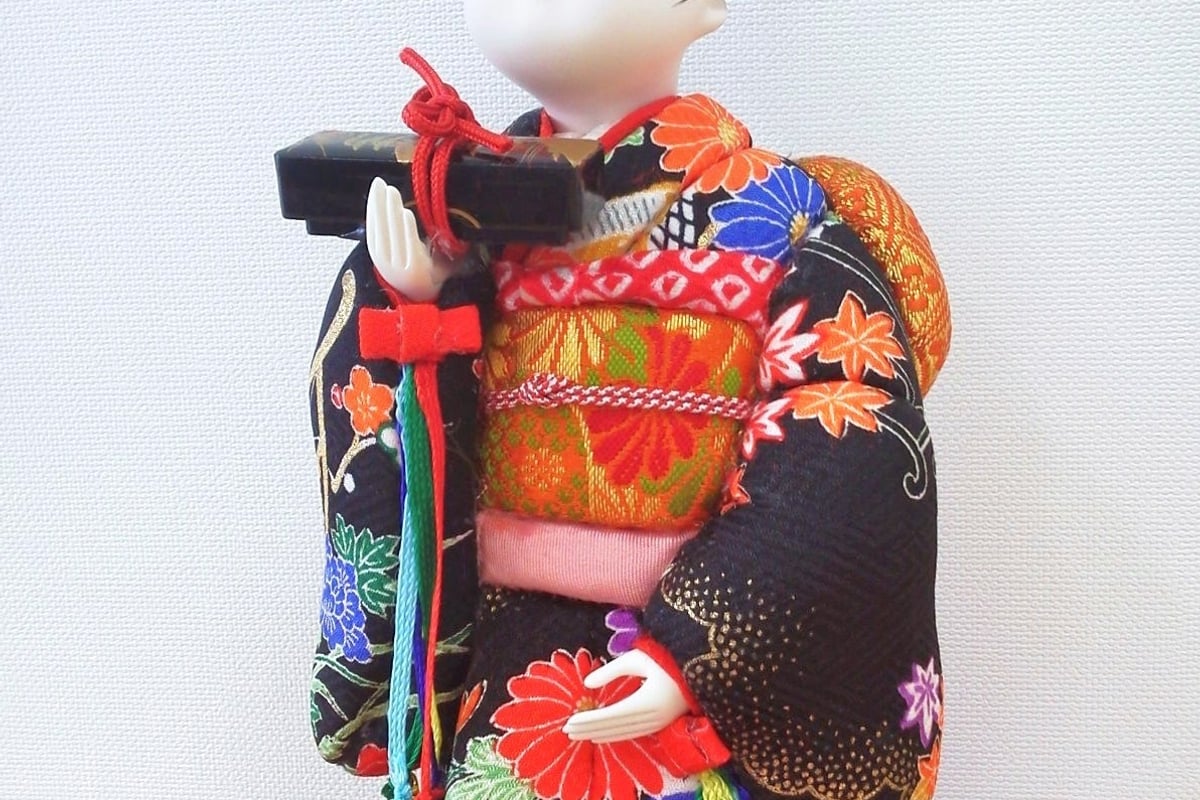
Edo Kimekomi Ningyo
Edo Kimekomi Ningyo
Edo kimekomi ningyo are dolls made using a distinctive technique in which fine grooves are carved into a doll's base form—made of toso (paulownia-powder clay paste) or wood—and the edges of fabric are pressed, or 'kimekomi'-ed, into those grooves to dress the doll. The technique originates in Kyoto during the Genbun era (1736–1741), when Takahashi Tadashige, who served the priests of Kamigamo Shrine, is said to have carved a doll's base form from willow wood and pressed scraps of priestly robes into it, giving rise to what became known as 'yanagi ningyo' (willow dolls) or 'kamo ningyo' (Kamo dolls). This technique was later passed on to Edo, where it developed independently after the Meiji era in Tokyo and became established as 'Edo kimekomi ningyo.' While dolls made in Kyoto are characterized by plump, courtly faces, those made in Tokyo are known for a somewhat slender-faced, modern look with sharply defined features. Making a single doll involves many stages of handwork, from applying layer upon layer of finishing coats to a toso base, to pressing fabric into the grooves, to painting the face with a fine detail brush and finishing the hair. Still widely loved today as hina dolls and Boys' Day dolls, Edo kimekomi ningyo was designated a Traditional Craft Designated by the Minister of Economy, Trade and Industry in 1978.
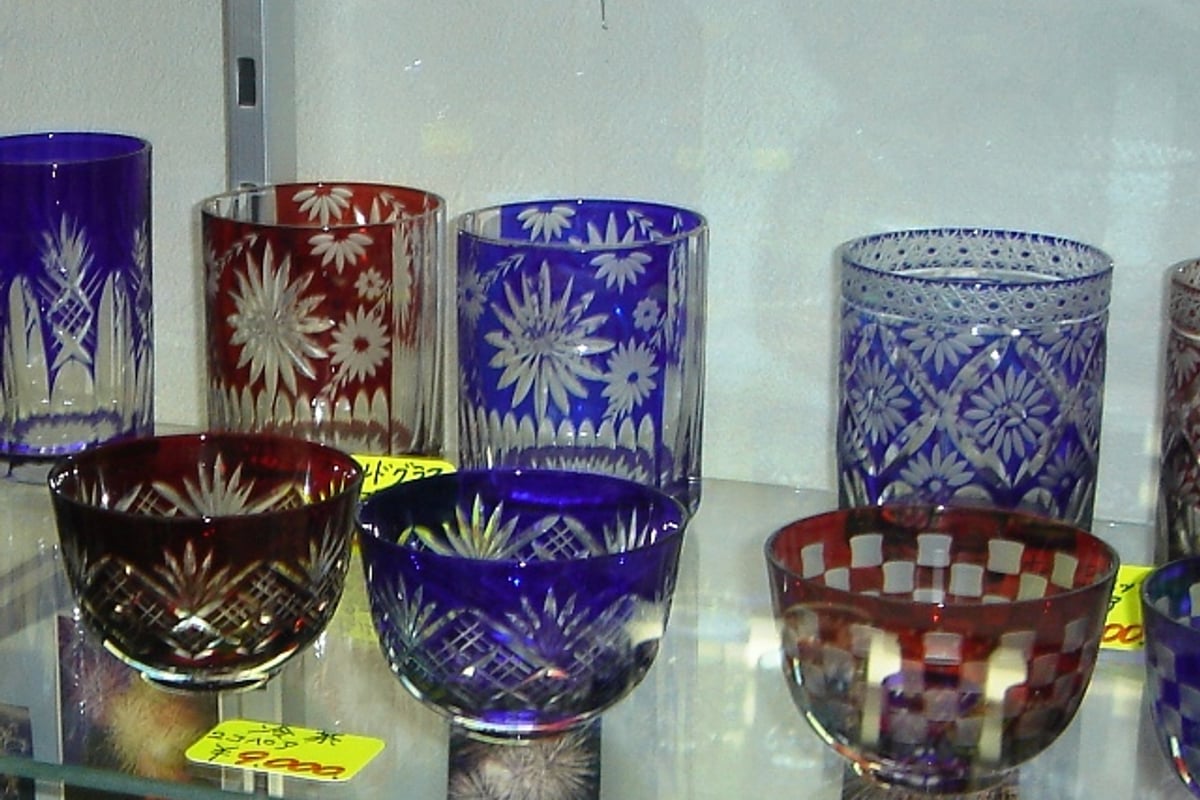
Edo Kiriko
Edo Kiriko
Edo Kiriko is a cut-glass craft born in Edo (present-day Tokyo), made by carving fine patterns into the surface of glass. It is said to have begun in 1834 (Tenpo 5), when Kagaya Kyubei, a glassware dealer in Edo's Odenmacho district, used abrasive sand to engrave patterns onto glass. During the Meiji era, Japanese artisans studied under the British engineer Emanuel Hauptmann, invited by the government, and established the cutting technique still used today. The craft uses 'overlay glass (cased glass)' -- clear glass thinly coated with colored glass -- into which patterns are cut with a blade. Because the colored layer is only about 1mm thick, the boundaries of each cut stand out sharp and crisp. About 20 traditional patterns exist, including nanako (fish-roe pattern), kiku-tsunagi (linked chrysanthemums), asa-no-ha (hemp leaf), and yarai (bamboo fence), and the fine cuts catch the light with delicate brilliance. Whereas Satsuma Kiriko, another well-known cut-glass tradition, has a thicker colored layer that creates a gradated effect, Edo Kiriko is known for its sharp, crisp cuts. It was designated a Traditional Craft Designated by the Tokyo Metropolitan Government in 1985 and a Traditional Craft Designated by the Minister of Economy, Trade and Industry in 2002, and today many artisans continue to pass down the technique, mainly in Koto, Edogawa, and Sumida wards.
Edo Sashimono
Edo Sashimono
Edo Sashimono is a woodworking craft produced in Tokyo's Taito, Arakawa, and Koto wards, in which furniture and small items are made using the sashimono joinery (nail-free wood joinery) technique of carving and fitting together the joints of wood without using any nails. Sashimono itself dates back to Heian-period Kyoto, but the technique that reached Edo developed its own distinctive character alongside the economic and cultural growth of Edo from the 17th to 19th centuries. While samurai households favored solid, linear designs for their furnishings, sashimono for kabuki actors—known as 'Rien Sashimono'—and for townspeople gave rise to playful, chic, and delicate designs, and the craft gradually spread into the everyday lives of common people. Making the most of the natural grain of woods such as mulberry, zelkova, paulownia, and cedar, and keeping the use of metal fittings to a minimum, Edo Sashimono is characterized by simple design and achieves sturdy construction without nails through diverse wood-joinery techniques such as edge-joining (hagitsugi), mortise-and-tenon joints (hozotsugi), and halved joints (aikakitsugi). From paulownia chests of drawers to other pieces, it remains a craft of handmade work carried on by artisans today, cherished and used for decades. It was designated a Traditional Craft Designated by the Minister of Economy, Trade and Industry in 1997.
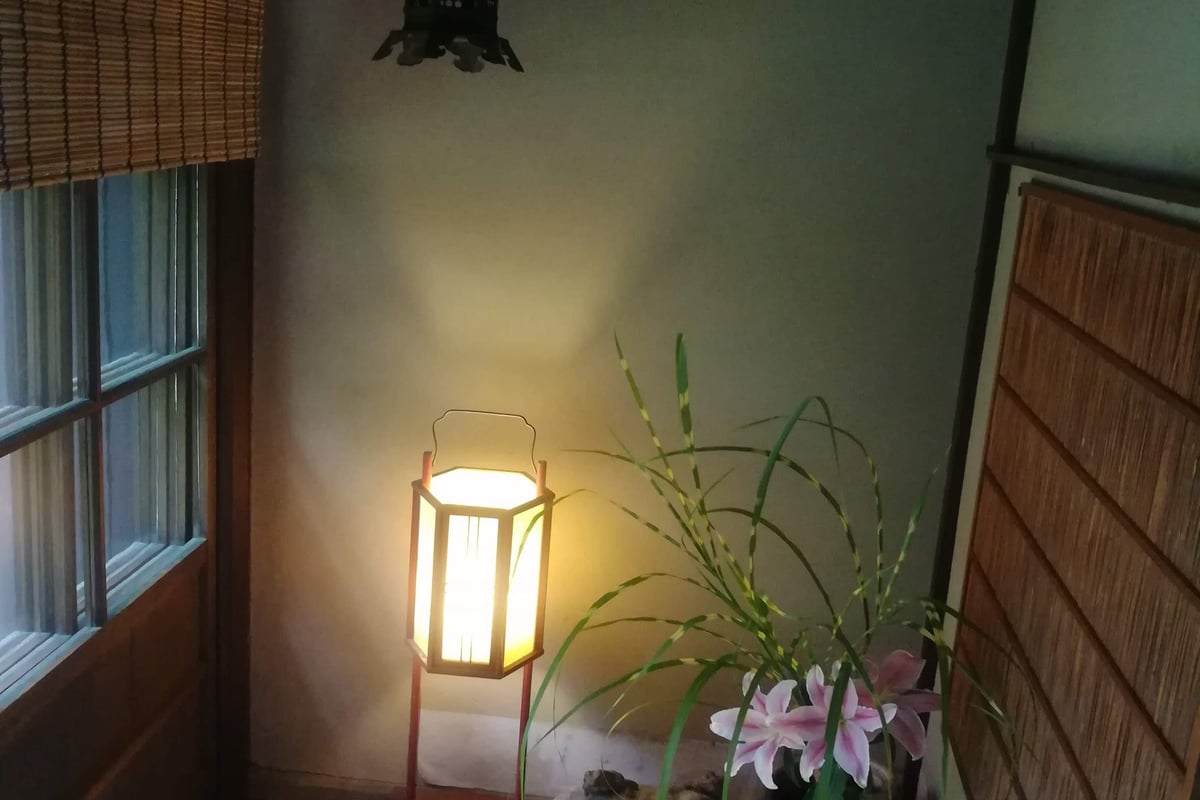
Edo Sudare
Edo Sudare
Edo sudare are traditional woven blinds made in Tokyo's Taito and Minato wards by weaving natural materials such as bamboo and reed together with thread. Blinds have a long history in Japan, appearing in the Manyoshu, the country's oldest anthology of poetry compiled in the 7th–8th centuries, and during the Heian period they were used in imperial courts, aristocratic residences, and shrines and temples as room dividers and sunshades. As the town of Edo developed, sudare spread into everyday commoners' life, and books from the Genroku era record the existence of specialist blind craftsmen known as misu-shi. In contrast to the lavish kyo-sudare of Kyoto, Edo sudare emphasize practicality and simple design as everyday household items, retaining the natural texture of materials such as bamboo, reed, bush clover, and cattail. Bamboo strips that have been finely split or thinly shaved are woven using a variety of techniques, including single-strand weave, double-strand weave, twist weave, and tortoiseshell weave, creating a breathable interior space that carries a pleasant breeze. Edo sudare was designated a Traditional Craft by the Tokyo Metropolitan Government in 1983.
Gobara Shikki (Gobara lacquerware)
Gobara Shikki
Gobara Shikki is an everyday lacquerware tradition from Hiruzen in Maniwa City, Okayama Prefecture (formerly the Gobara district). Its origins are said to date back to the Meitoku era (around 1390-1400), and it is known for a production method found nowhere else in Japan's lacquerware regions: chestnut wood native to the Hiruzen highlands is turned on a lathe while still freshly felled, or 'green,' rather than dried first. Bowls and trays finished with natural lacquer such as Bicchu-urushi, which brings out the beauty of the wood grain, have long served as everyday household tools rather than decorative objects. Production peaked in the late Taisho and early Showa periods but was interrupted around the time of World War II. A local revival effort began in 1989, and in 1996 Gobara Shikki was designated an Okayama Prefecture Important Intangible Folk Cultural Property. Today, the tradition of green-wood lathe turning, spanning more than 600 years, is carried on at the Gobara Shikki Museum ('Gobara Shikki no Yakata').
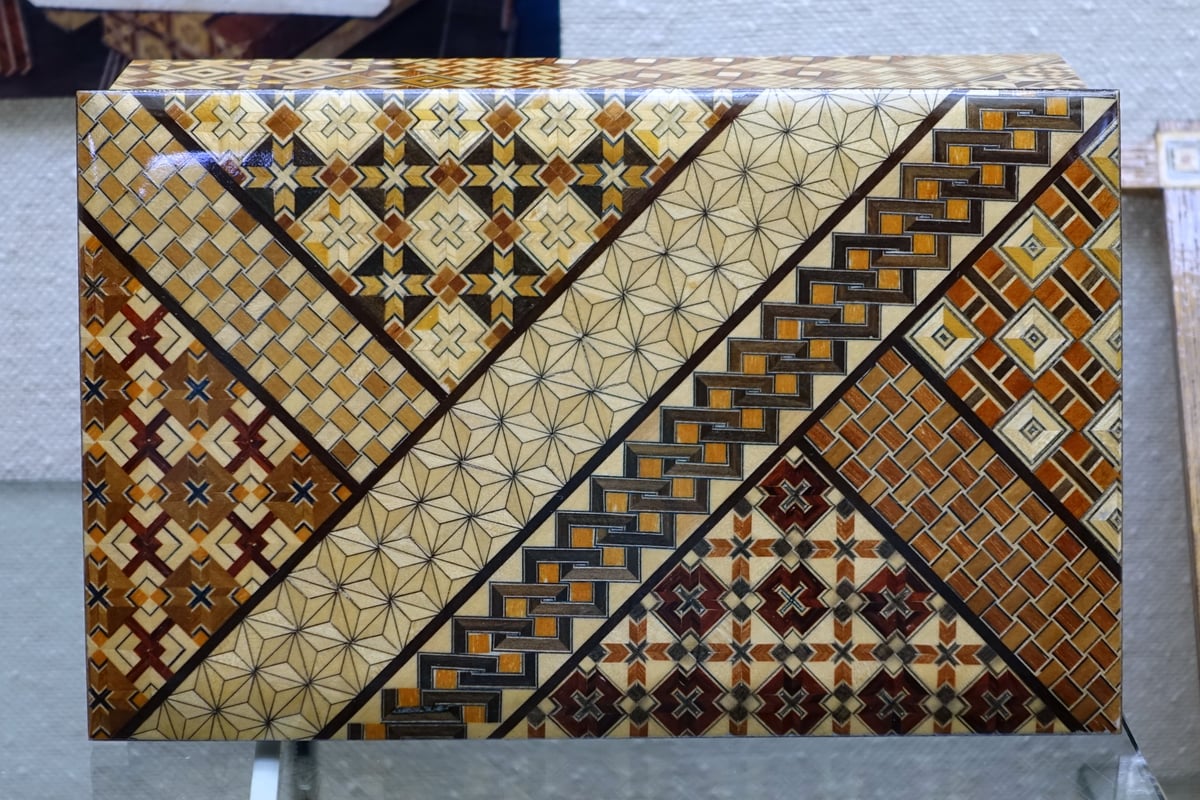
Hakone Yosegi-zaiku (Marquetry)
Hakone Yosegi Zaiku
Hakone Yosegi-zaiku is a traditional woodworking craft from Hakone, Kanagawa Prefecture, that assembles geometric patterns from the natural colors and grain of different woods, with no dyeing involved. It is said to have begun in the late Edo period, when Ishikawa Nihei of Hatajuku, noting the wide variety of tree species found in the mountains of Hakone, began combining pieces of wood with different colors and grains to make trays and boxes. In the Meiji era, marquetry techniques from the Shizuoka region were incorporated, giving rise to more intricate geometric patterns. The himitsu-bako (puzzle box), fitted with a trick-opening mechanism, became a popular souvenir among travelers on the Tokaido and visitors to the hot springs, and it remains a signature Hakone souvenir today. Designated a national Traditional Craft in 1984, the technique is still carried on today, centered on workshops and museums in Hatajuku, the craft's birthplace.
Hidehira-nuri
Hidehira-nuri
Hidehira-nuri is lacquerware produced mainly in Hiraizumi (town), Iwate Prefecture. Its origins are said to trace back to the late Heian period, when Fujiwara no Hidehira, the third head of the Oshu Fujiwara clan, invited craftspeople from Kyoto and had them make vessels using lacquer and gold, both specialties of Hiraizumi. The Konjikido Golden Hall of Chuson-ji Temple employs a range of lacquer techniques - lacquer, gold leaf, maki-e, and raden (mother-of-pearl inlay) - showing that Hiraizumi possessed highly advanced lacquer craftsmanship during the Heian period. The most distinctive feature is the 'Hidehira pattern,' in which diamond-shaped pieces of gold leaf are applied and then floral motifs are painted over them in lacquer; a design combining the cloud motif known as 'Genji-gumo' with diamond shapes, called 'yusoku-hishi-mon,' is often used on bowls and tiered boxes. This rustic yet gold-gilded, festive design remains a style unique to this region, unlike lacquerware from other production areas, and continues to be passed down to this day.
Hitachi Jishi (Hitachi Lion Heads)
Hitachi Jishi
Hitachi Jishi is a style of lion head (shishigashira) passed down in Ishioka City, Ibaraki Prefecture, characterized by its lack of horns and its thick, powerful eyebrows and fierce expression. The oldest record of lion dancing in Ishioka appears in a document from 1854, and the lions are said to have originally developed as part of 'gyodo,' a ritual in which Buddhist monks paraded through town chanting sutras to ward off evil spirits. In the modern era, lions from each neighborhood in the city began gathering together for the region's largest festival, the Grand Festival of Hitachi-no-kuni Sosha-gu Shrine (the Ishioka Festival), and the demand for lion heads spurred the refinement of the craftsmanship. In production by today's artisans, locally grown paulownia wood is used for the base, with the ears, eyebrows, eyes, nose, and upper and lower jaws each carved separately and then assembled, before being finished with genuine lacquer and pure gold leaf. Ishioka City is home to classes and workshops that teach the techniques for making lion heads, and finished decorative lions can also be purchased—making it a nationally rare example of a 'living' local craft.
Hitachi Take Ningyo (Hitachi Bamboo Dolls)
Hitachi Take Ningyo
Hitachi Take Ningyo are bamboo-craft dolls made in a workshop in the Omika neighborhood of Hitachi City, Ibaraki Prefecture, by a bamboo-doll artisan carrying on the techniques of Echizen Take Ningyo, a traditional craft of Fukui Prefecture. It is said to be one of only about three remaining makers nationwide working in the Echizen bamboo-doll lineage; bamboo-doll artisan Shibata Shigemitsu, after training in Fukui, opened his workshop in Hitachi in 1972, marking the craft's beginning there. Bamboo selected at three years of age is harvested and then left to season for a further three years before use, meaning it takes a full six years from felling to a finished doll. A variety of bamboo types—including madake, sarashi-dake (bleached bamboo), goma-dake (speckled bamboo), kurochiku (black bamboo), monchiku (patterned bamboo), and tora-dake (tiger bamboo)—are chosen according to their purpose, and the dolls depict subjects drawn from Noh, Kabuki, and local folk performing arts. The craft's defining feature is a form that makes the most of bamboo's natural character, and the material's color, which deepens to an amber hue over time, is also part of its appeal—making it one of Ibaraki Prefecture's representative bamboo crafts.
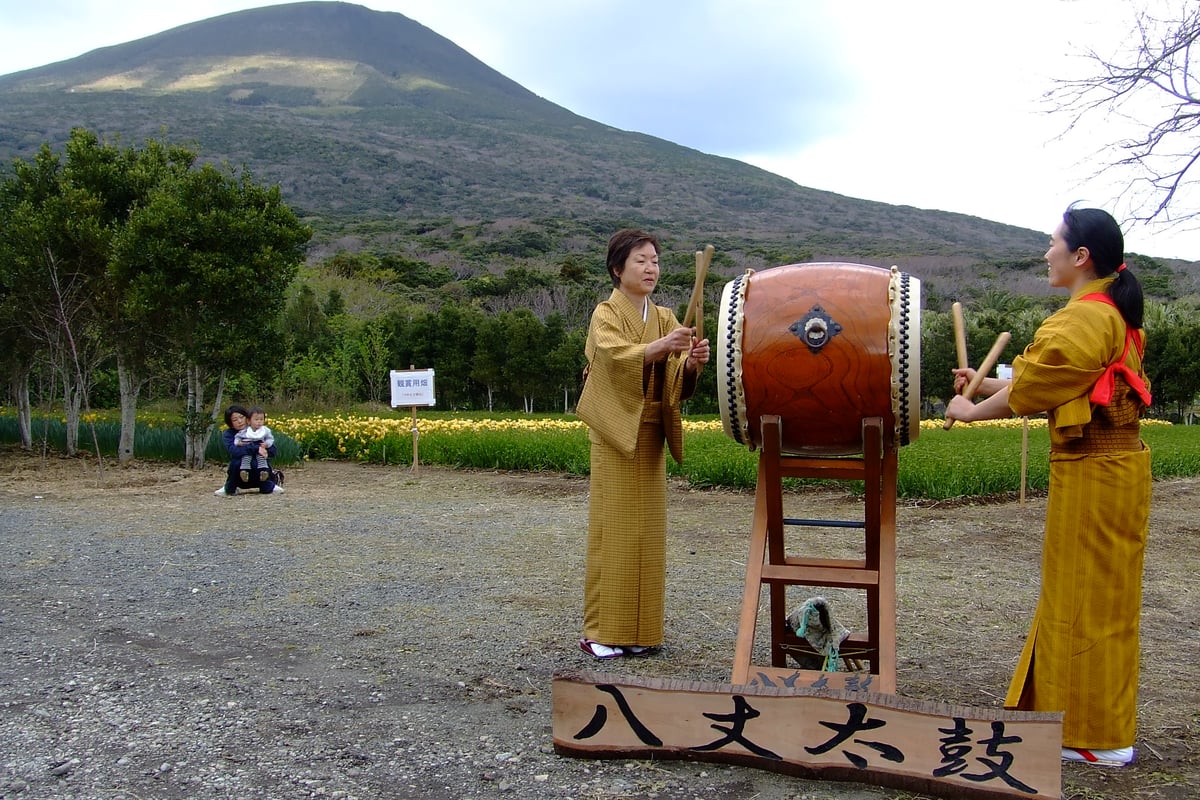
Honba Kihachijo
Honba Kihachijo
Honba Kihachijo is a plant-dyed silk textile handed down on Hachijojima, a remote island about 290 kilometers south of central Tokyo. Once called 'the island no bird visits,' Hachijojima is said to have paid plain pongee as tribute as early as the Muromachi period, and the dyeing techniques still used today are believed to have been established around the Kansei era (1789-1801) of the Edo period. Thread is dyed using only plants native to the island: yellow from hachijo-kariyasu (a type of grass), kaba-iro (russet brown) from the bark of madami (machilus trees), and black through mud-dyeing with the bark of chinquapin trees. The dyed thread is woven on a hand-thrown shuttle into extremely simple designs -- plain, striped, or checkered -- and the fabric is said to grow softer with wear and its colors more vivid with washing. Dyeing black requires a painstaking process of soaking the thread in a decoction of chinquapin bark and sun-drying it as many as 40 times, producing a deep, lustrous black. From the mid-Edo period onward, striped and checkered patterns also came to be woven, and the craft survives today as handwork passed down through generations of women on the island. It was designated a Traditional Craft Designated by the Minister of Economy, Trade and Industry in 1977 (Showa 52).
Inami Chokoku
Inami Chokoku
Inami Chokoku is a traditional wood-carving craft passed down mainly in the Inami district of Nanto City, Toyama Prefecture. It is said to have begun when Zuisenji Temple, the head temple of Inami Betsuin founded in 1390, suffered repeated fires, and during reconstruction work in the Horeki and An'ei eras (1763-1774), local carpenters learned full-fledged carving techniques from Maekawa Sanshiro, an official carver for Kyoto's Nishi Hongwanji Temple. Initially focused on ranma (transom) panels and canopy carvings decorating temple and shrine architecture, demand expanded from the Meiji era onward to transom carvings for ordinary homes, and the craft developed into a local industry known nationwide as 'Inami ranma.' Its greatest feature is the 'sukashibori' (openwork carving) technique, in which patterns are cut through using only chisels; motifs such as pine, bamboo, and plum, flowers and birds, or dragons and lions are carved in multiple layers from both front and back, producing a three-dimensional, lifelike sense of movement. Designated a METI-designated Traditional Craft in 1975, Inami Chokoku today continues to produce a wide range of items, from temple and shrine carvings to transoms and shishi (lion) heads, and the region is known as a leading production center with a large share of Japan's transom-carving output.
Iwate Homespun
Iwate Homespun
Iwate Homespun is a woolen textile made from hand-spun yarn and finished by hand weaving. It is said to have begun around 1881, when sheep farming was introduced to the Ninohe region and a British missionary stationed there taught the local people how to spin and weave the wool. The craft was later developed into an industry by the mother-and-son team of Umehara Otoko and Goro in the former town of Towa (now part of Hanamaki City), and the techniques spread to several workshops and companies in and around Morioka, including Michinoku Akane-kai and Nippon Homespun. The hand-spun yarn gives the fabric a distinctive elasticity and resistance to wrinkling, along with a light, comfortable feel, and its muted, elegant colors from plant dyes are another highlight. Iwate is said to be the only production area in Japan where hand-spinning techniques are still practiced today, and its stoles, mufflers, and other products are prized as durable textiles that can be used across three generations of a family.
Iwayado Tansu
Iwayado Tansu
Iwayado Tansu is a traditional wooden chest of drawers made in the Iwayado district of Esashi, Oshu City, Iwate Prefecture. Its origins trace back to the Tenmei era (1781-1788), when the lord of Iwayado Castle at the time is said to have had his retainers research the commercialization of wooden furniture such as wheeled chests and long chests. In the Bunsei era (1818-1830), the blacksmith Tokubei devised engraved metal fittings, which became the prototype for the Iwayado Tansu known today. Made from zelkova and paulownia wood, the craft is defined by its combination of rich, heavy lacquer finishes that bring out the natural wood grain and elaborate, hand-forged and hand-engraved metal fittings. It was designated a Traditional Craft by the Minister of Economy, Trade and Industry in 1982, and the careful, divided craftsmanship of woodworking, lacquering, and metal fitting is still passed down today.
Joboji-nuri
Joboji-nuri
Joboji-nuri is practical, everyday lacquerware crafted mainly in Joboji, Ninohe City, Iwate Prefecture. Its origins are traced to 728 CE (the 5th year of Jinki), when the monk Gyoki founded Tendai-ji Temple in the area, and monks dispatched from the capital brought lacquer craftsmanship with them to make their own everyday utensils. Plain, understated vessels with minimal decoration became known as 'Oyama-goki,' and the craft spread as a product of the Nanbu domain during the feudal era. Joboji, in Ninohe City, is Japan's leading production area for domestic lacquer, supplying roughly 70 to 80 percent of all lacquer harvested in Japan. Using abundant locally sourced lacquer, the plain finishes in vermilion, black, and tame (amber-brown) develop a deeper luster with use, and the craft of making everyday tableware, valued for its practicality, continues to be passed down today.
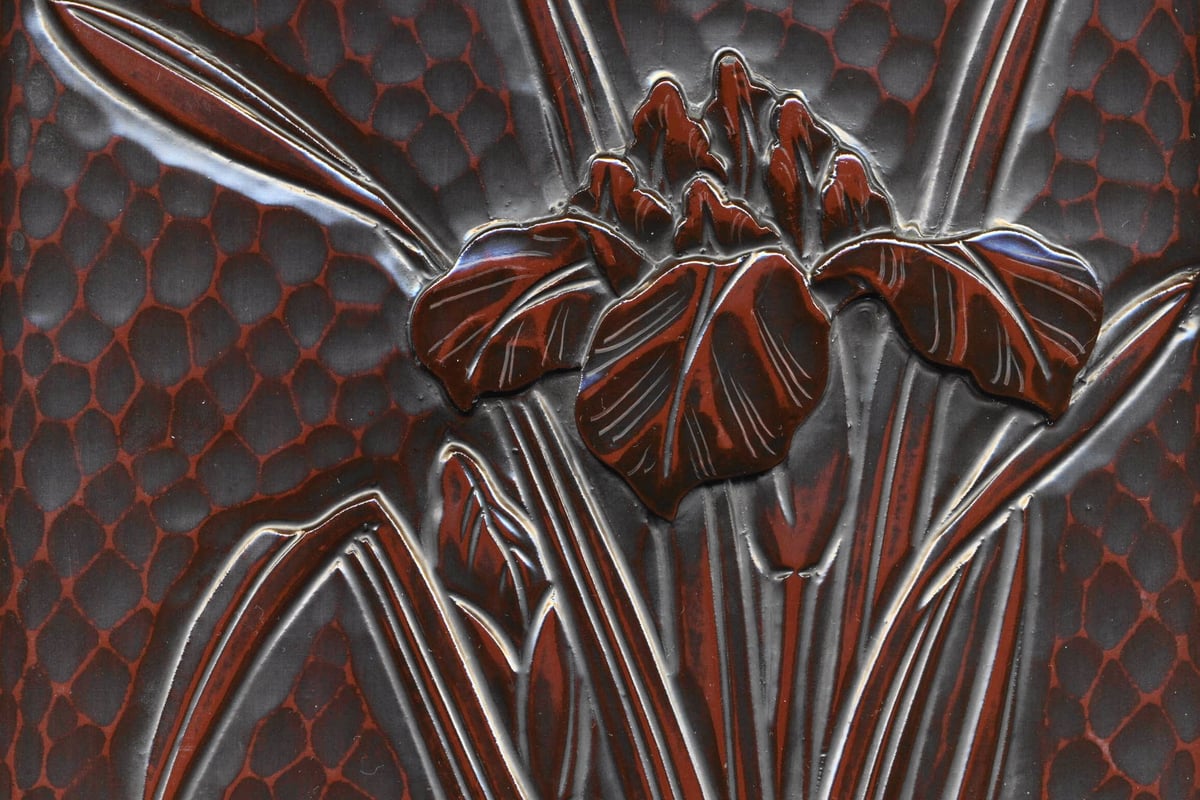
Kamakura-bori (Carved Lacquerware)
Kamakura-bori
Kamakura-bori is a traditional craft of Kamakura, Kanagawa Prefecture, in which wood is carved and then finished with layers of lacquer. It is said to have begun in the Kamakura period, when Buddhist sculptors in Kamakura, influenced by the carved lacquerware (tsuishu and tsuikoku) technique brought from Song-dynasty China, devised a simpler way to achieve three-dimensional designs: carving a pattern into the wood base and then applying lacquer over it. Originally made as Buddhist altar fittings and implements for Zen temples, the craft evolved into today's Kamakura-bori after the Buddhist sculptors, who lost their work during the anti-Buddhist movement of the early Meiji era, found a new path making everyday items such as trays and tea-cup stands. It is based on yagen-bori, a carving style with a V-shaped cross-section, and is characterized by deep, rich lacquer finishes that make the most of the wood's texture. Designated a Traditional Craft by the Minister of Economy, Trade and Industry in 1979, its techniques continue to be passed down today, centered on workshops and a cooperative association within Kamakura.
Kanuma Kumiko
Kanuma Kumiko
Kanuma Kumiko is a representative woodcraft of Kanuma City, Tochigi Prefecture, known as 'the town of woodworking.' It is said to have originated when woodworking craftsmen gathered from across the country for the construction of Nikko Toshogu Shrine settled in the area and used fine local Nikko cedar to beautifully decorate shoji screen lattices, a tradition carried on for about 400 years. Woods such as Kiso cypress, Akita cedar, and Nikko cedar are finely processed and assembled entirely by hand, without any nails or metal fittings, to intricately render geometric patterns such as asanoha (hemp leaf), gomagara (sesame), and kikko (tortoiseshell). Traditionally used in fittings such as shoin-style shoji screens, ranma transoms, and Buddhist altars, in recent years it has also expanded into interior goods such as coasters, vases, and lighting, gaining popularity across generations. It is designated a Traditional Craft of Tochigi Prefecture and has also been certified under Kanuma City's own 'Kanuma Brand,' continuing to be promoted as a craft representative of the region.
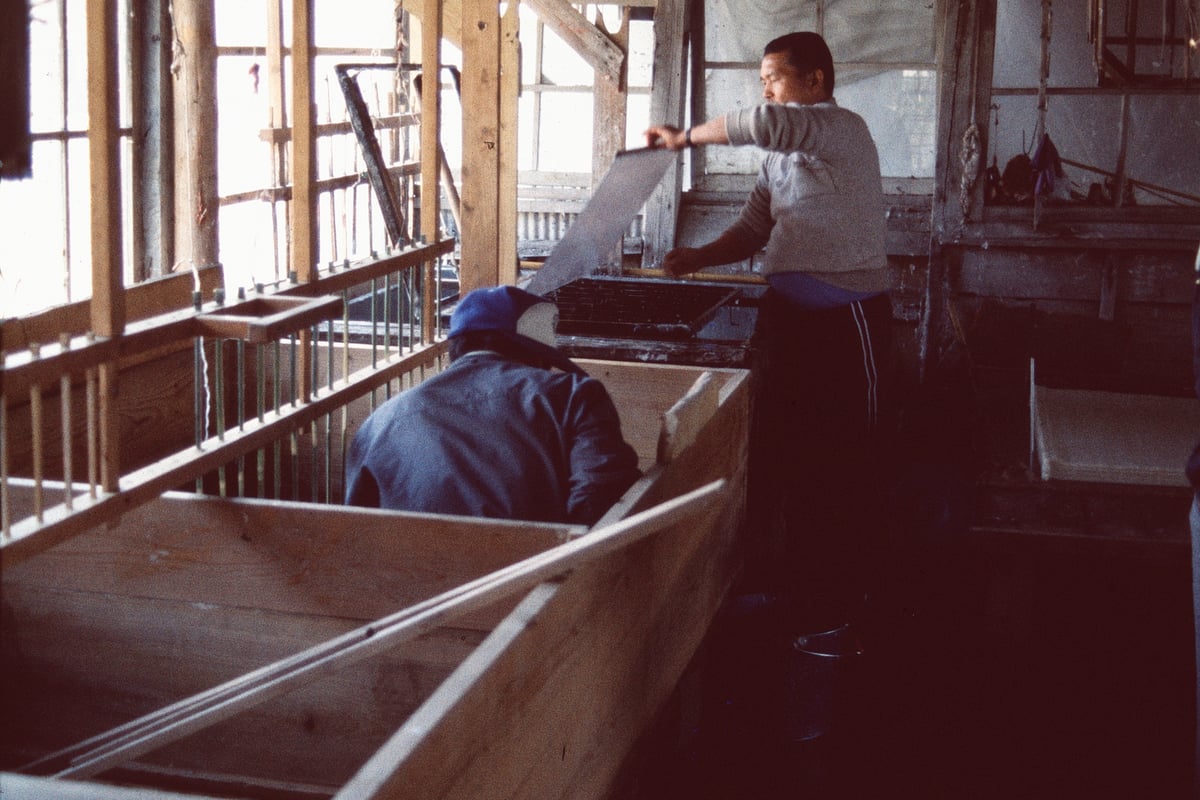
Karasuyama Washi
Karasuyama Washi
Karasuyama Washi is a handmade Japanese paper passed down in Nasukarasuyama City, Tochigi Prefecture. It is said to have originated in the Kenpo era (1213-1219) of the Kamakura period, when the Nasu clan, who ruled this region, invited paper-making artisans from Echizen (present-day Fukui Prefecture) to produce Nasu-hosho paper in Mukoda village (now Nasukarasuyama City). Made by hand from kozo (mulberry bark) fiber, it is characterized by a thick, dense texture, and by the mid-Edo period it was known as a fine paper on par with Echizen hosho, Mino-gami, and Nishinouchi paper. Among its varieties, the Hodomura-gami handed down in the Shimosakai area is a thick paper made from Nasu kozo, a high-quality mulberry bark unique to the Nasu region, using traditional techniques such as the distinctive hannagashi ('half-flow') papermaking method and sun-drying on ginkgo wood boards. Prized for combining strength with an elegant character, it was designated a National Selected Intangible Cultural Property in 1977. Today, Fukuda Washi Seishijo, the only remaining paper mill in Nasukarasuyama City, carries on this tradition, and the paper is used for a wide range of purposes, from diplomas and craftwork to decorations for the floats of the Yamaage Festival.
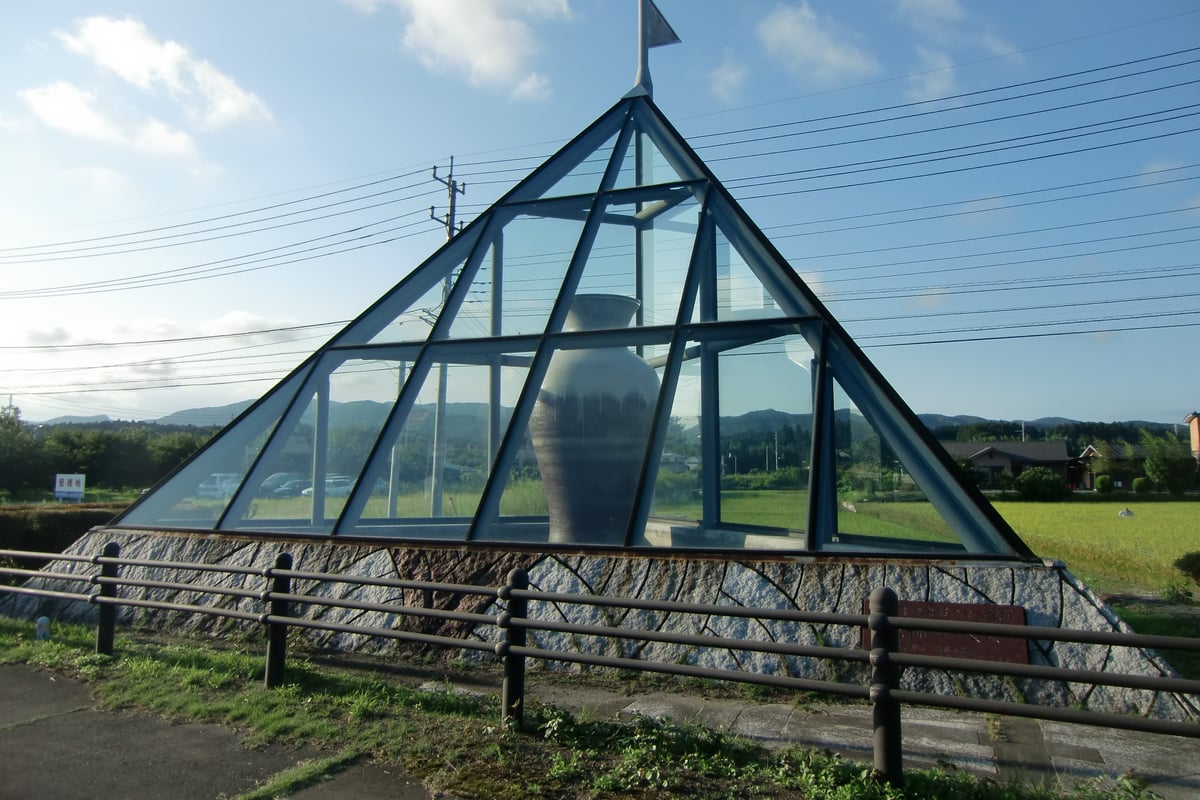
Kasama Ware
Kasama Ware
Kasama ware is pottery produced mainly in Kasama City, Ibaraki Prefecture. Its origins are said to date to the An'ei era (1772-1781) in the mid-Edo period, when Kuno Han'emon of Hakoda village (present-day Hakoda, Kasama City) built a kiln after receiving instruction from Choemon, a potter invited from Shigaraki in Omi Province. From the late Edo period through the Meiji era, taking advantage of its location near Edo, the area developed as a major production center for everyday earthenware such as water jars and sake bottles. Demand fell sharply after World War II with the spread of plastic products, but through joint efforts of government and industry the region shifted from everyday tableware to artistic pottery, and on October 8, 1992, it was designated a METI-designated Traditional Craft Product. Kasama ware is known for its exceptionally free range of styles - so much so that it is said 'having no fixed characteristics is its characteristic' - and today about 300 potters and kilns continue to produce individually distinctive works.
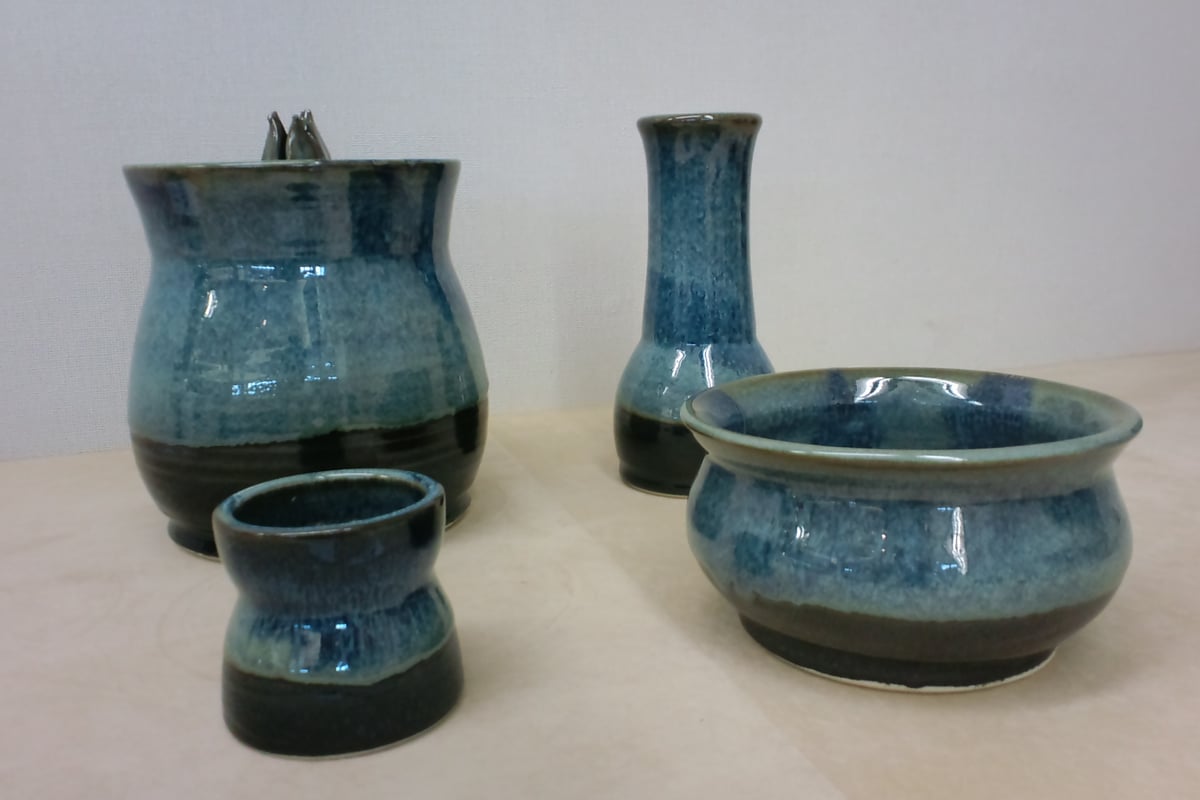
Kobushi-yaki
Kobushi-yaki
Kobushi-yaki is pottery fired at the 'Kobushi-gama' kiln in Iwamizawa, Hokkaido, known as the oldest mingama (kiln producing everyday-use wares) in Hokkaido. It began in 1946 (Showa 21) when the first-generation potter, a ceramics engineer known as Miaki, opened the kiln in Iwamizawa, his wife's hometown. The kiln was named 'Kobushi-gama' because the kobushi (magnolia) flowers were in bloom when the first firing took place. At the time the kiln opened, Hokkaido was considered barren ground for ceramics, and everything from clay preparation to glazes and firing had to be worked out through trial and error - a constraint that, in turn, nurtured a distinctive style. Among its wares, the indigo-based 'namako-yu' (sea-cucumber glaze) became especially well regarded for producing stable coloring from early in the kiln's history, and it remains the glaze most representative of Kobushi-yaki to this day. Following the second-generation potter, Yamaoka Kei, the kiln is now led by Yamaoka Chiaki, who is pursuing new efforts such as clay-making using raw materials sourced entirely within Hokkaido.
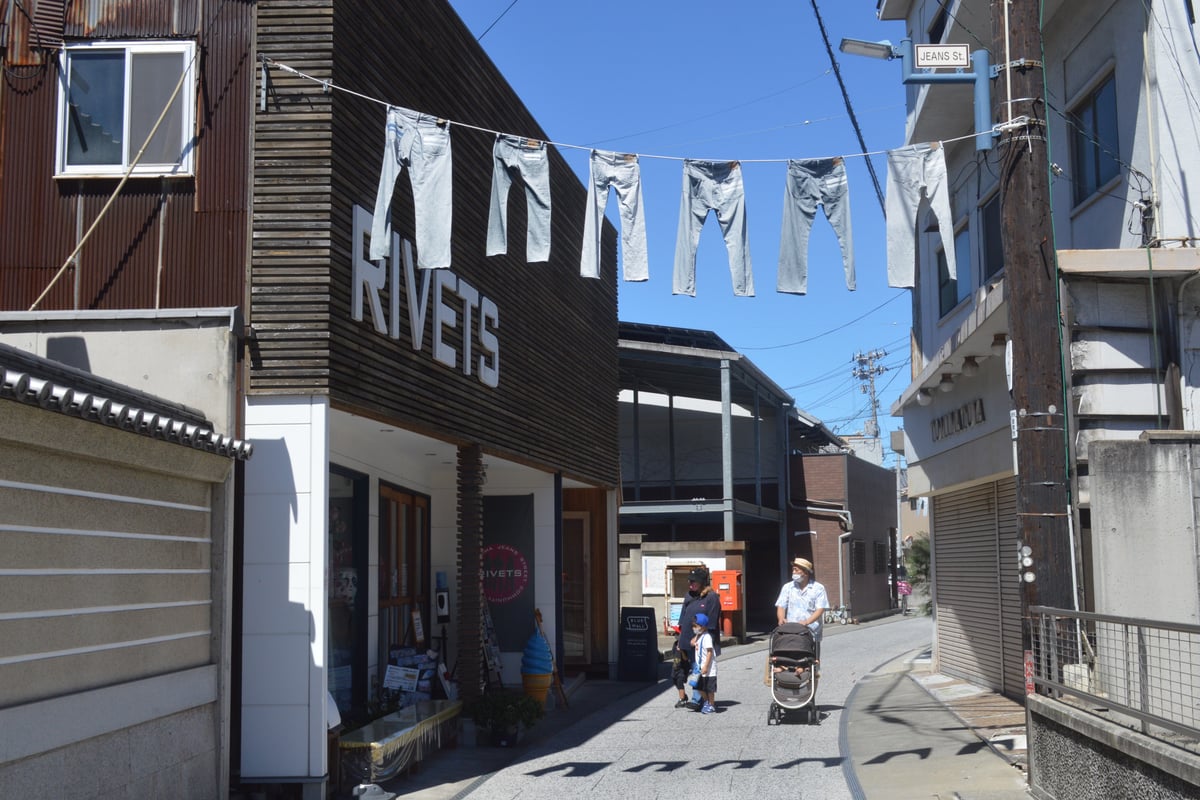
Kojima Denim
Kojima Denim
Kojima Denim is the general term for denim fabric and jeans produced in the Kojima district of Kurashiki City, Okayama Prefecture, known as the 'birthplace of Japan-made jeans.' In the Edo period, cotton farming resistant to salt thrived on land reclaimed from the shallow sea, and the cotton-weaving industry that grew from it gave rise to kokura-ori weaving and sanada-himo braided cords. In the Meiji and Taisho eras, the area developed as a center for tabi socks and school uniforms, and the techniques and know-how of this textile industry were later carried over into the denim and jeans industry. In 1965, Kotaro Ozaki of Maruo Seifuku (now Big John) used denim fabric imported from the United States, applying the sewing techniques used for school uniforms to manufacture and sell Japan's first domestically made jeans. In 1973, Kurashiki Spinning succeeded in producing domestic denim fabric, and Kojima developed into a production area capable of handling everything from yarn to fabric, sewing, and wash processing in one place. Today, about 40 specialty jeans shops line 'Kojima Jeans Street,' which runs from Kojima Station, and it has become a sightseeing spot visited by many people from Japan and abroad.
Kokuji-yaki
Kokuji-yaki
Kokuji-yaki is pottery fired in the Kokuji district of Kuji City, Iwate Prefecture. According to tradition, it began in 1813 when Kazo, a potter from Soma (in present-day Fukushima Prefecture), built a kiln in Mikkamachi with the help of a local resident named Jinroku; Jinroku's son, Kumagai Jin'emon, later studied under Kazo and inherited the technique, which has since been passed down through generations of the Kumagai family. Kokuji-yaki has been produced by a single kiln continuously since its founding, making it the northernmost kiln in Japan among those with roots predating the Edo period. It is known for everyday tableware made with local clay, featuring a rustic white glaze (nukashiro-yu) made from straw ash and an amber glaze made with iron sand, and it was highly praised by Yanagi Muneyoshi, the founder of the Mingei (folk craft) movement, during the Meiji era.
Kosunago-yaki
Kosunago-yaki
Kosunago-yaki is pottery fired in Kosunago, Nakagawa Town, Nasu District, Tochigi Prefecture. Tradition holds that it began around 1830 (Tenpo 1), in the late Edo period, when Tokugawa Nariaki, lord of the Mito Domain, discovered high-quality clay in the area and had it used as raw material for the domain's official pottery works. The area became established as a production center when the potter known as first-generation Hanpei (Saito Eizaburo), who had come from Etchu Toyama, was invited by the Fujita family, village headmen of Kosunago, from Shitori Village (present-day Nasukarasuyama City) to build a climbing kiln there. Its representative features are a golden-hued 'kinkessho' (gold crystal) glaze and a softly pink-tinted 'shinsha' (cinnabar) glaze; because the local Kosunago clay is rich in kaolin, it produces ware with a distinctive character combining qualities of both pottery and porcelain. Today, kilns in the area such as Fujita Seitosho and Ichikawa Gama continue to carry on the tradition, and in 2013 the Kosunago district became the first area in Tochigi Prefecture to join the 'Most Beautiful Villages in Japan' association.
Kurashiki Dantsu (Kurashiki woven rug)
Kurashiki Dantsu
Kurashiki Dantsu is a hand-woven rug made in Kurashiki City, Okayama Prefecture, characterized by combining rush (igusa), Japanese paper (washi), and hemp or cotton thread. Kurashiki had been known since the Edo period as a production area for tatami facing and hanagoza (patterned rush mats), and it is said to have begun when Yabuki Kan'ichirō, an inventor from Hayashima Town, devised 'Kinpa-ori' in the early Shōwa era as a rug suited to Western-style architecture. In 1932, the folk-craft movement leader Yanagi Sōetsu discovered the rug, commissioned the designer Serizawa Keisuke to create striped patterns for it, and named it 'Kurashiki Dantsu'. After the war it reached its peak while remaining hand-woven, popular enough to be exported overseas, but rising raw-material costs and the aging of its artisans brought production to a halt in 1986. Takiyama Yūichi, who joined the Traditional Industry Revival Study Group founded in 1991, taught himself the technique and resumed production in 1993. Today he continues to be almost the sole maker, producing the rugs at his workshop in Hayataka, Kurashiki City.
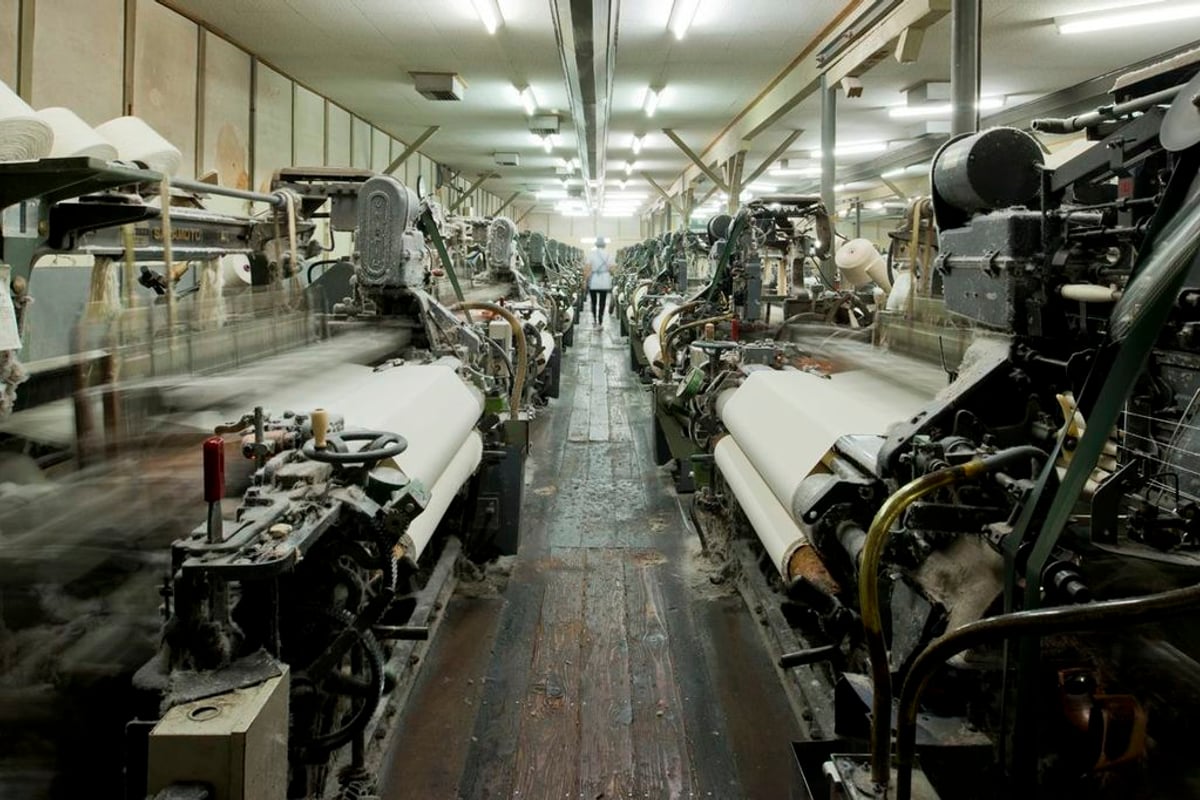
Kurashiki Hanpu (Canvas)
Kurashiki Hanpu
Kurashiki Hanpu is a thick cotton canvas fabric made in the Kojima district of Kurashiki City, Okayama Prefecture, with a history rooted in its development as sailcloth for ships. Kojima, land reclaimed in the Edo period, was suited to growing salt-resistant cotton, and its cotton industry flourished to the point that the area became known for 'Kojima's three whites'—cotton, together with the whiteness of the local sand-lance fish and salt. The transmission of a loom technique developed by Kuraku Matsuemon of Banshu Takasago, which used thick thread, is said to have laid the foundation for producing sturdy, thick canvas. The direct roots of modern Kurashiki Hanpu trace back to 1888, when the husband-and-wife weavers Ishigoro and Ume Butakiri founded a textile mill in Kurashiki, and business expanded after Ume's hand-woven cloth earned a reputation among local cotton wholesalers. Today it remains a rare production area capable of weaving extra-thick canvas from No. 1 to No. 3 weight using a thread-twisting technique that twines together several strands of pure cotton yarn and old-style shuttle looms. It is characterized by the beautiful selvedge unique to shuttle looms and a warm, textured feel, and its uses have expanded to everyday items such as bags and sundries.
Kurobane Aizome
Kurobane Aizome
Kurobane Aizome is an indigo-dyeing tradition passed down in the Kurobane district of Otawara City, Tochigi Prefecture. It is said to have originated when the first-generation dyer, Konya Shinbei, buried indigo vats in the ground at Kurobane and began kon-zome dyeing during the Bunka-Bunsei era (around 1804-1829). The technique uses a traditional dye made by adding wheat bran, lime, and sake to sukumo (fermented indigo leaves) from Tokushima and fermenting it further in the indigo vats, and combines this with a pre-dyeing process called kon-zome, using pine soot ink (shoen-boku) and soybean liquid, to achieve a deep, rich indigo blue that resists fading. Kurobane Aizome Konya, which has tended its indigo vats for around 200 years, is now the only workshop known to carry on this technique, and it has been designated a Tochigi Prefecture Traditional Craft. Kurobane is also known as the place where the haiku poet Matsuo Basho stayed longest during his journey recorded in Oku no Hosomichi (The Narrow Road to the Deep North) - thirteen nights over fourteen days - and the culture of indigo dyeing lives on alongside the atmosphere of this merchant town dating back to the Edo period.
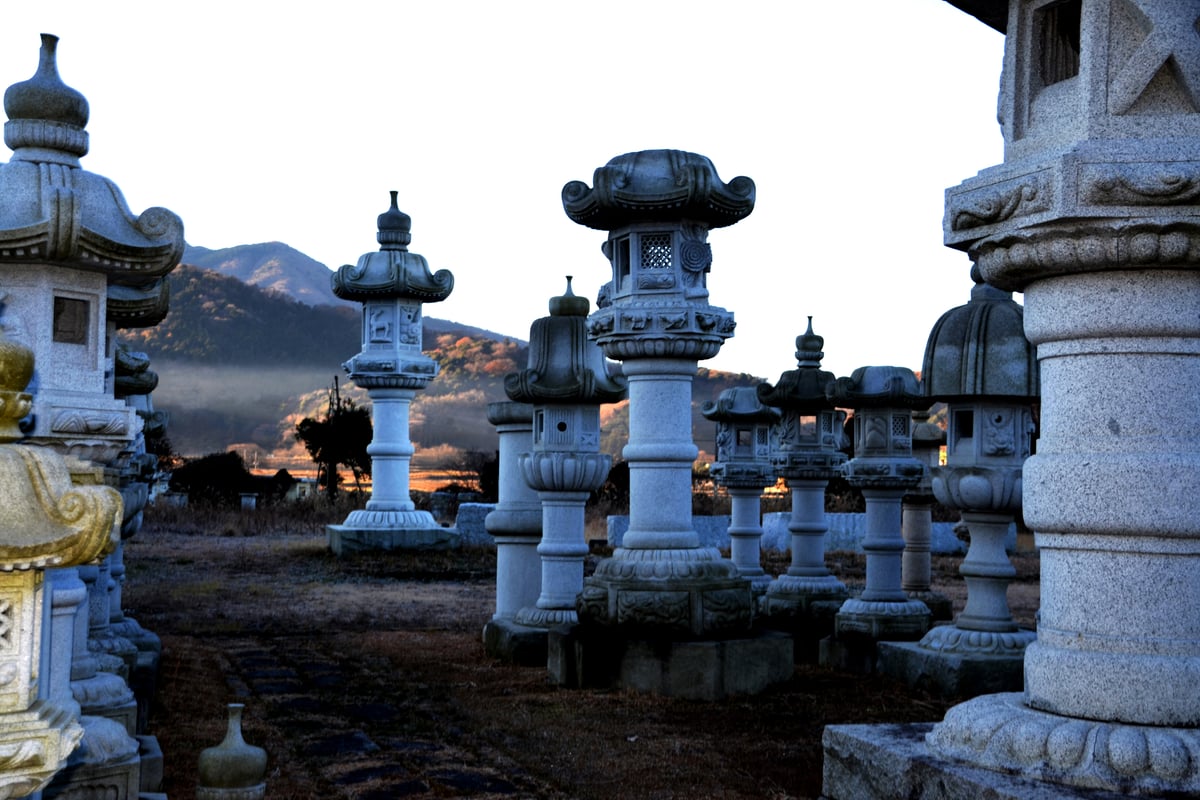
Makabe Stone Lantern
Makabe Stone Lantern
Makabe stone lanterns are stone lanterns made from high-quality granite known as 'Makabe stone,' quarried in and around Makabe, Sakuragawa City, Ibaraki Prefecture. Their origins are said to date to around the 16th century, when the production of Buddhist stone images began in the Makabe area. A stone lantern believed to have been made in 1824 (Bunsei 7) still stands in the grounds of a temple in Makabe, and the techniques were established through strict master-apprentice transmission tracing back to the late-Edo-period stonemason Kubota Kichibei. The craft is characterized by the use of 18 techniques from quarrying to finishing, including delicate carving methods such as tsukibori (chisel relief), shizumebori (sunken relief), and sukashibori (openwork carving), and it was designated a METI-designated Traditional Craft Product on April 5, 1995. It is the third such designation in the prefecture after Yuki-tsumugi silk and Kasama ware, and the Makabe district of Sakuragawa City is counted, along with Okazaki in Aichi Prefecture and Aji in Kagawa Prefecture, as one of Japan's three major stone-producing regions.
Mamada Himo
Mamada Himo
Mamada Himo is a braided cord (kumihimo) technique said to have been passed down since the Kamakura period in Mamada, Oyama City, Tochigi Prefecture. Using a technique in which weights are attached to both ends of the threads to keep them constantly taut while crossing many strands, it produces cords with intricate, finely detailed patterns. Its beautiful finish, achieved with gold and silver thread and plant-dyed pure silk thread, is a hallmark, and it was once used for the cords of samurai armor and sword sageo (hanging cords). The area's modern history as a production center began in 1922 (Taisho 11), when first-generation Watanabe Asaichi returned to Mamada after completing an apprenticeship in kumihimo braiding in Kinshicho, Tokyo, and opened a shop. In 1954, Yanagi Muneyoshi of the Mingei (Folk Craft) Movement named the technique 'Mamada Himo,' and it was designated an Intangible Cultural Property of Oyama City in 1964 and of Tochigi Prefecture in 1973. The Watanabe family has carried on the technique across generations, and today it is enjoyed as a kimono accessory and everyday item, used for obi cords, haori cords, and loop ties.
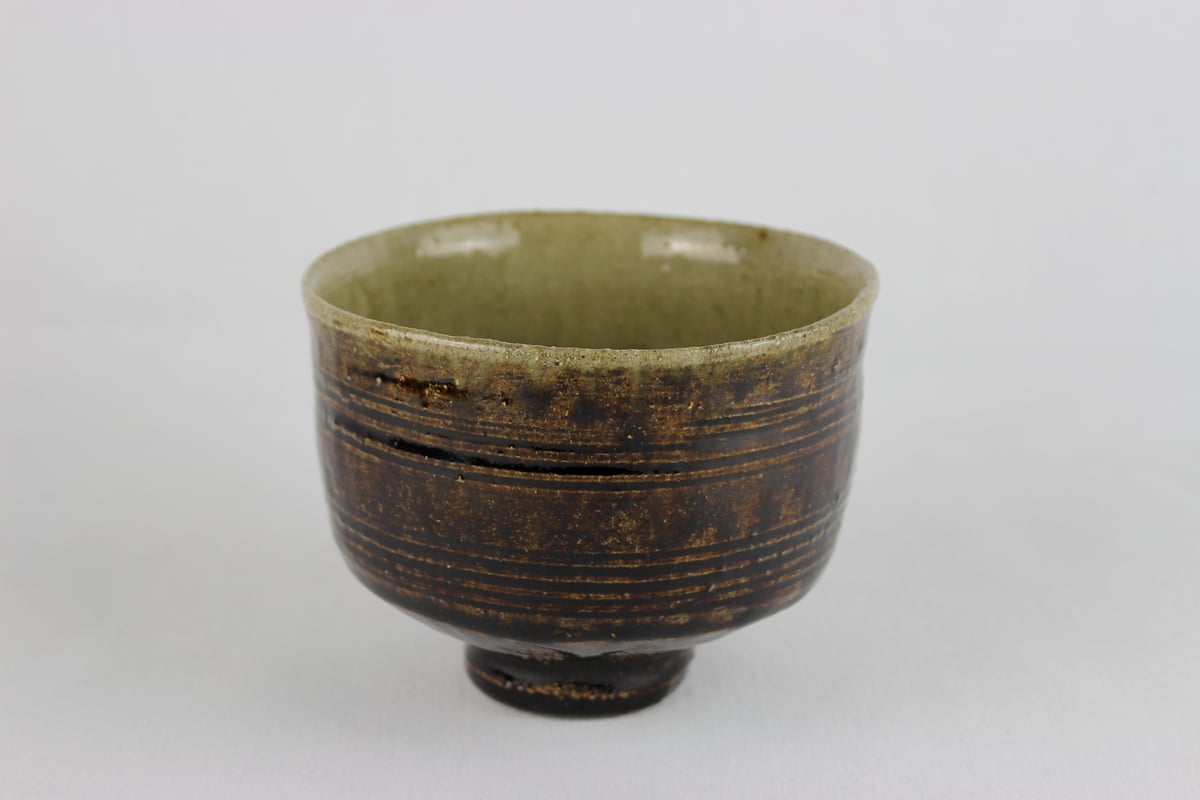
Mashiko-yaki
Mashiko-yaki
Mashiko-yaki is pottery produced in Mashiko, Haga District, Tochigi Prefecture, designated a Traditional Craft by the Minister of Economy, Trade and Industry on August 3, 1979. Its origins are said to trace back to around 1853, when Otsuka Keizaburo, who had trained in Kasama, opened a kiln in Mashiko; the area first developed as a production center for everyday earthenware such as jars, teapots, and mortars. In 1924, near the end of the Taisho era, the potter Hamada Shoji settled in Mashiko and made it a base for advancing the Mingei (Folk Craft) Movement together with Yanagi Muneyoshi and Kawai Kanjiro, while his deep friendship with the British potter Bernard Leach also helped spread the fame of Mashiko-yaki. Fired with thick applications of persimmon glaze and rice-husk-ash white glaze over coarse, iron-rich clay, the ware has a rustic, warm texture combined with a sense of weight. Another hallmark is its free style, unbound by any fixed convention and shaped by each maker's individuality, ranging from everyday tableware to works with strong artistic character. Today, many kilns are gathered in Mashiko, and the spring and autumn pottery markets together draw around 600,000 visitors.
Murayama Oshima Tsumugi
Murayama Oshima Tsumugi
Murayama Oshima Tsumugi is a kasuri (ikat-patterned) silk textile that has been woven in and around Musashimurayama City, Tokyo, along with Mizuho Town and Akishima City. It traces its roots to two textile traditions: 'Murayama Kon-gasuri,' a striped cotton fabric that began around the Genroku era (1688–1704) of the Edo period, and 'Sunagawa Futoori,' a coarse silk weave made from silk thread spun from double cocoons. As demand for silk textiles grew from the mid-Meiji era onward, these two traditions merged into a silk fabric around 1920, giving birth to Murayama Oshima Tsumugi. Despite carrying 'Oshima' in its name, it is entirely distinct from Honba Oshima Tsumugi, woven on Amami Oshima island; the key difference lies in the dyeing technique used for the kasuri threads. While Amami's Honba Oshima Tsumugi achieves its intricate kasuri patterns through labor-intensive methods such as mud-dyeing with a shime-bata (binding loom), Murayama Oshima Tsumugi uses a technique called itajime dyeing, introduced from Isesaki, Gunma Prefecture, in 1919. By sandwiching threads between carved pattern boards and dyeing them under pressure, this method achieves intricately matched kasuri patterns in the warp and weft at a relatively accessible price. The fabric is prized for its smooth, light feel, with men's designs favoring understated, refined fine kasuri patterns and women's designs favoring chic patterns wearable at any age. It was designated a national Traditional Craft in 1975.
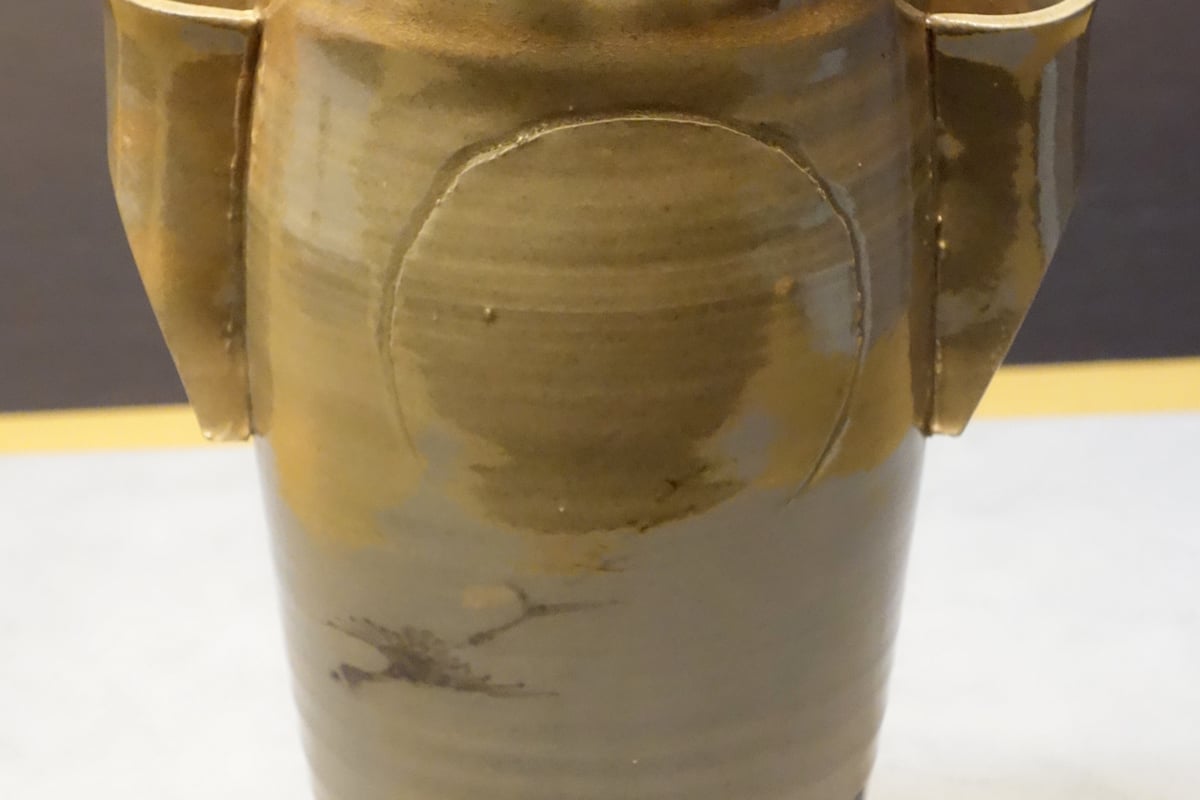
Mushiake ware (Mushiake-yaki)
Mushiake-yaki
Mushiake-yaki is a tea ceramic fired in Mushiake, Oku-cho, Setouchi City, said to originate from a private kiln (oniwa-gama) established in Mushiake in the mid-Edo period by the Igi clan, chief retainers of the Okayama domain. Whereas Bizen-yaki, another representative ware of the same prefecture, is characterized by its unglazed, fired-to-hardness technique, Mushiake-yaki is known for its thinly potted, refined glazed forms and elegant designs reminiscent of Kyoto styles, and the two have followed distinct lineages within the same prefecture. In 1847, in the late Edo period, Igi Tadazumi (also known by his art name Sanenzai) opened his own private kiln and invited leading potters of the day from Kyoto, such as Seifu Yohei, Raku Chozo, and Miyagawa Kozan, establishing a thin, elegant style reminiscent of the Awata style of Kyoto ceramics. Today, using a distinctive clay made from local mountain soil, artisans apply a clear glaze made from natural pine ash, along with iron and copper glazes, and fire the pieces without sharply separating oxidation and reduction, producing kiln transformations that add to their character. Designated a Local Traditional Craft of Okayama Prefecture in 1988, a small number of kilns continue to carry on the tradition today in the scenic seaside area of Mushiake facing the Seto Inland Sea.
Nanbu Hishizashi
Nanbu Hishizashi
Nanbu Hishizashi is a sashiko stitching technique handed down mainly in Hachinohe City in Aomori Prefecture's Nanbu region, and, alongside Kogin-zashi from the Tsugaru region, is one of Aomori Prefecture's representative sashiko traditions. It is said to have begun during the Edo period, when farming women who were forbidden from wearing cotton stitched cotton thread into hemp cloth to strengthen it and guard against the cold, and it is believed to have been developed in the Nanbu region around Hachinohe roughly 200 years ago. While Kogin-zashi counts the vertical threads of the weave in odd numbers, Hishizashi is distinguished by counting even numbers as the stitching progresses, weaving elongated diamond-shaped geometric patterns known as "ume no hana" (plum blossom) and "kiji no ashi" (pheasant's foot). Today, in addition to traditional items such as aprons and table runners, the technique is applied to modern products like neckties and tapestries, with skills passed down through workshops and classes in Hachinohe City. It is also notable that Tsugaru and Nanbu, though both within Aomori Prefecture, developed distinct sashiko traditions of their own.
Nanbu Kodai Katazome
Nanbu Kodai Katazome
Nanbu Kodai Katazome is a stencil-dyeing technique passed down in Morioka City. It is said to have begun in the Kan'ei era (1624-1643), when the lord of the Nanbu domain invited the dyer Ebisuya Sanemon (of the Ono family) from Kyoto to serve as the domain's official dyer, using stencils to dye kamishimo, kosode, and armor undergarments with the Nanbu family crest, the 'mukaizuru' (facing cranes), along with patterns such as small chrysanthemums, peonies, and plovers. Since then, the technique has been passed down through generations of the Ono family, and more than 300 stencils dating back to the domain era have survived to this day. The craft is characterized by its subdued indigo-based colors and the beauty of the patterns carefully dyed from a single stencil, and it is used to produce a wide range of items, from kimono fabric and obi sashes to table runners suited to modern life. The tradition continues to be preserved today at a workshop in Morioka City.
Nanbu Sakiori
Nanbu Sakiori
Nanbu Sakiori is a hand-weaving technique passed down mainly in Towada City, Aomori Prefecture, in which worn-out cotton cloth is torn into narrow strips to use as weft thread, woven together with hemp or cotton warp thread to create a reborn fabric. In the Edo period, cotton cloth was extremely precious in the cold Nanbu region, so worn-out cloth that could no longer be worn was torn into thread and rewoven into kimono fabric, kotatsu covers, and other items as a way to use every last scrap. After the Cannabis Control Act was enacted in 1948 (Showa 23), hemp cultivation for warp thread became impossible, and the technique nearly died out. In 1975 (Showa 50), Eiko Kanno, a native of Towada City, founded the Nanbu Sakiori Preservation Society and opened workshops, reviving the craft by rediscovering and spreading its techniques. This method of transforming worn-out cloth into new fabric without waste is now drawing renewed attention as a sustainable craft.
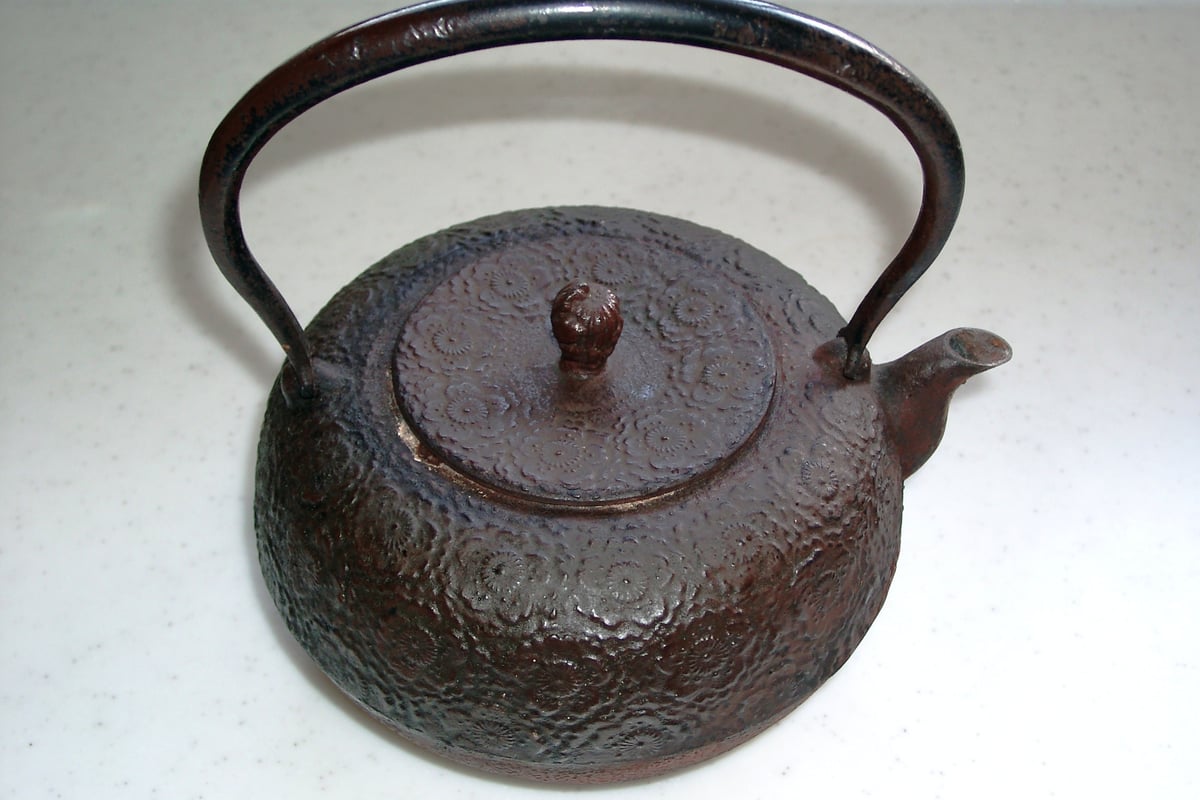
Nanbu Tekki
Nanbu Tekki
Nanbu Tekki is cast ironware produced mainly in Morioka City and the Mizusawa district of Oshu City, Iwate Prefecture, with a history of around 400 years. In Morioka, the craft is said to have begun in the mid-17th century when a lord of the Nanbu domain invited kettle-makers from Kyoto to produce tea-ceremony kettles, while in Mizusawa it is said to trace back to the late Heian period, when the Oshu Fujiwara clan invited casters from Omi Province. Both areas were rich in resources well suited to casting, such as iron sand, river sand, clay, and charcoal, and casting has flourished there since ancient times. In 1975 Nanbu Tekki was designated a Traditional Craft by the Minister of Economy, Trade and Industry. Prized for its solid, sturdy build and its ability to transmit heat evenly while retaining warmth, it is used to make iron kettles, teapots, pots, and wind chimes, and in recent years has become highly popular overseas as teaware. The handcrafted 'yakigata' (baked-mold) technique continues to be passed down today.
Nanbu-kei Kokeshi
Nanbu-kei Kokeshi
Nanbu-kei Kokeshi are traditional kokeshi dolls originating in Hanamaki City, Iwate Prefecture, modeled after a toy called 'kinakina' made by woodworkers. The head and body are turned separately on a lathe, and the head is deliberately fitted loosely so that it wobbles on its axis - a structural feature found only in the Nanbu style among Japan's eleven traditional kokeshi lineages. Originally the dolls had no painted face or pattern and were left as plain wood, but they later came to be decorated with flowers and patterns under the influence of craftsmen from the Naruko and Togatta lineages, and they also became known as Hanamaki kokeshi. The dolls are also known for using a fine wood called kosanbara (Japanese holly), prized for its white, hard grain, and they continue to be handmade by craftsmen mainly in Hanamaki and Morioka cities today. Their simple, expressive appearance remains beloved as a folk toy nurtured by the climate of the Tohoku region.
Nara Fude (Nara Writing Brushes)
Nara Fude
Nara Fude are calligraphy and cosmetic brushes made mainly in Nara City, designated a Traditional Craft by the Minister of Economy, Trade and Industry. Tradition holds that during the Nara period, Kukai (Kobo Daishi), who traveled to Tang China as an envoy to Tang China (kentoshi), mastered brush-making techniques there and, upon returning to Japan, transmitted them to Sakanai Kiyokawa of Imai in Yamato Province. For more than 1,200 years since, the technique has been passed down as Japan's birthplace of brush-making. Its defining feature is a technique called 'nerimaze-ho' (kneading and blending method), in which more than a dozen types of animal hair—including squirrel, weasel, raccoon dog, sheep, and horse—are carefully proportioned and blended according to hair quality to complete a single brush. This process is considered the most difficult step, and it is said to take many years for a craftsperson to master. In 1977, Nara Fude was designated a Traditional Craft by the Minister of International Trade and Industry, earning high acclaim not only for calligraphy brushes but also in the field of cosmetic brushes.
Nara Ittobori
Nara Ittobori
Nara Ittobori is a style of wood-carved doll made from woods such as cypress, katsura, and camphor, boldly carved with a chisel and finished in vivid colors using gold leaf and mineral pigments. It is said to originate from the painted dolls used to decorate the flower hats and shimadai stands of the dengaku-hoshi performers at the Kasuga Wakamiya On-Matsuri, a festival that began in 1136 in the late Heian period and has continued without interruption ever since, carrying its distinctive forms down through the generations. Unlike ordinary rounded carving, it is characterized by simple, powerful forms that make use of flat planes and ridgelines—a style said to reflect the mindset of dolls offered to the gods, expressing the essence of a subject without relying on superficial detail. In the Meiji era, the craft came to be called 'Ittobori Nara Ningyo' and later 'Nara Ittobori'; the name is said to have been given by Mizutani-gawa Tadaoki, the first chief priest of Kasuga Taisha, reflecting the way the dolls appear carved with a single decisive stroke, imbued with spirit. Today, a wide range of works—from hina dolls and Boys' Day dolls to zodiac figurines—continue to be made in Nara.
Nara Kumihimo
Nara Kumihimo
Kumihimo is a traditional technique of braiding multiple strands of silk thread together into cords, said to have been introduced from the continent along with Buddhism during the Asuka and Nara periods. Ancient braided cords survive among the treasures of the Shosoin and those handed down at Horyu-ji, and Nara remains essential to the history of kumihimo — one traditional braiding technique still practiced today is even called 'Nara-gumi,' named for the braiding pattern seen on an item associated with Emperor Shomu that is preserved in the Shosoin. In the Nara period, kumihimo cords were used for Buddhist implements such as sutra scrolls and priests' robes; over time they came to be used for armor cords and tea-ceremony implements, and from the late Edo period onward, widely as obijime (sash cords) for women's kimono. Today, at the Nishinokyo workshop 'Nara Kumihimo Homi' in Nara City, the tradition of kumihimo braiding using traditional stands such as the kakudai (square stand), marudai (round stand), and takadai (high stand) is carried on through classes and hands-on programs.
Nara Lacquerware
Nara Shikki
Nara lacquerware traces its roots to the lacquer craftsmanship of the Nara period seen in the treasures of the Shosoin and the ancient sacred objects of Kasuga Taisha, and Nara is sometimes called 'the birthplace of Japanese lacquerware.' Lacquer techniques introduced from the continent along with Buddhism in the Asuka period flourished during the Tempyo culture of the Nara period, and the Shosoin came to house numerous fine works, including the celebrated Five-Stringed Biwa with Mother-of-Pearl Inlay on Rosewood. From the Meiji era onward, Nara produced artisans who undertook the repair and reproduction of Shosoin treasures and the ancient sacred objects of shrines and temples, and through this work the technique of raden — mother-of-pearl inlay using lustrous shells such as yakogai (turban shell) — has been passed down. In raden work, layers of lacquer are applied to a wooden base, and shells cut into the shape of a design are inlaid and then polished to reveal a brilliance reminiscent of the Tempyo era. Lacquer artists including Kitamura Shosai, a Living National Treasure for raden, have carried on the art of Nara lacquerware to this day through both the conservation of cultural properties and original creation.
Nara Sumi (Nara Ink Sticks)
Nara Sumi
Nara Sumi is calligraphy ink produced mainly in Nara City, and Nara is said to be Japan's largest ink-producing region, accounting for roughly 90% of domestic production. It is said to have originated in the early Muromachi period, when ink-making using yuen (soot collected from burning oil) began at Kofuku-ji temple's Nitai-bo hall. This ink came to be called 'Nanto yuen' after Nara's old alternative name, and became widely known as synonymous with fine-quality ink. Around 40 ink makers are said to have operated in Nara City during the Edo period, and although the number has fallen to fewer than 10 today, the traditional method — collecting soot, blending it with animal glue (nikawa), kneading, molding, drying, polishing with shells, and coloring — is still carried out entirely by hand at every stage. In November 2018 (Heisei 30), it was designated a Traditional Craft by the Minister of Economy, Trade and Industry, and it remains highly regarded among calligraphers and enthusiasts.
Nara Uchiwa
Nara Uchiwa
Nara uchiwa is a traditional craft of Nara City said to be among the oldest types of uchiwa (flat fan) in Japan. Its origin is traced to the 'Negi Uchiwa,' made by a Shinto priest serving at Kasuga Taisha, founded in the Nara period. In the early Edo period, a monk of Kofuku-ji added his own refinements to a fan style introduced from China, perfecting a distinctive design featuring openwork carving (sukashibori) of motifs associated with Nara, such as deer and wisteria. Its defining feature is the openwork carving technique itself: 60 to 90 ribs — more than three times the number found in an ordinary uchiwa — are split from thin strips of medake bamboo and covered with washi paper, with the pattern areas then cut out with a carving knife. The unusually high number of ribs lets the fan flex gently, producing a soft breeze. All 13 steps, from dyeing the paper to bamboo-rib processing, sketching, openwork carving, and paper-mounting, are done entirely by hand within a single workshop without any division of labor — a feature not found in uchiwa from other production areas. Today, Japan's only specialty shop for Nara uchiwa, located in Nara City, has preserved this technique for more than 170 years.
Nara-zarashi (Nara Bleached Hemp Cloth)
Nara-zarashi
Nara-zarashi is a high-grade hemp cloth produced mainly around Nara. A reference to bleaching appears in the 1549 (Tenbun 18) entry of the 'Tamon-in Nikki,' a record from the late Muromachi period, and in 1611 (Keicho 16) Tokugawa Ieyasu ordered that bleached hemp cloth could only be sold if it carried the red 'Nanto-aratame' stamp at its edge, after which it circulated nationwide as a product favored by the shogunate. During the Kyoho era (1716-1735) it gained such renown that people said 'the finest hemp comes from Nanto,' with annual production said to have reached 300,000 to 400,000 rolls (hiki). Thread hand-spun from ramie is woven on a loom and then bleached to a pure white finish, with every step done entirely by hand, and the cloth has long been used for prestigious items such as Buddhist priests' vestments, samurai ceremonial dress (kamishimo), and tea ceremony cloths. Since the Meiji era, production has shrunk considerably as demand has changed, but long-established weaving houses founded in the Edo period still pass on the technique by hand today.
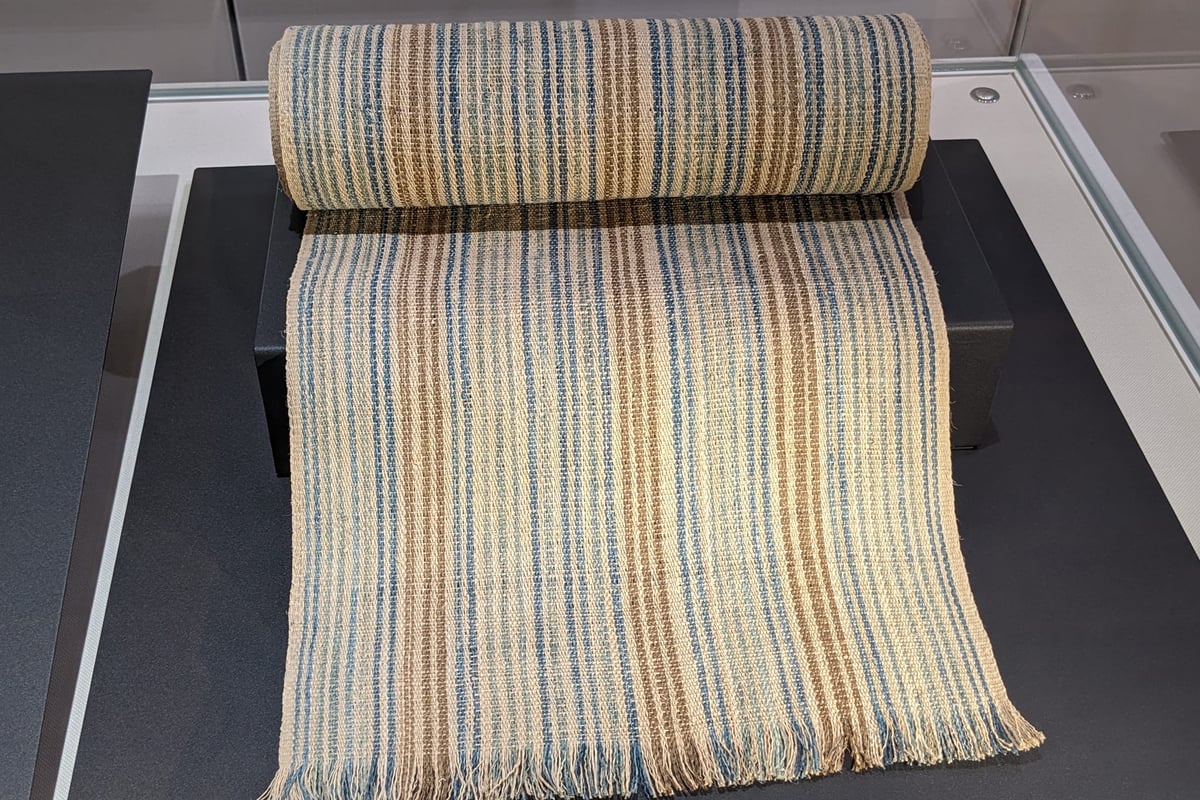
Nibutani Attus (Bark-cloth Textile)
Nibutani Attus
Nibutani Attus is a bark-cloth textile of the Ainu people, handed down in the Nibutani district of Biratori Town, Saru District, Hokkaido. The inner bark of trees such as Ohyo elm and Japanese linden, grown in the Saru River basin, is stripped, boiled, and dried, then torn into thin strips to make thread, which is twisted before being woven on a loom. Making the thread alone is said to account for as much as 80% of the entire process, an extremely labor-intensive task that requires a long time and much effort from the harvesting of the bark to the completion of a bolt of cloth. It is characterized by striped patterns created by the natural coloring of the bark, and is said to be water-resistant, highly breathable, and remarkably strong for a natural fiber. It was once widely used for Ainu clothing, and techniques passed down for more than 100 years continue to be carried on today. On March 8, 2013, together with Nibutani Ita, it became the first Traditional Craft Product designated by the Minister of Economy, Trade and Industry (METI) in Hokkaido.
Nibutani Ita (Carved Wooden Tray)
Nibutani Ita
Nibutani Ita is a wood-carved tray (ita) of the Ainu people, handed down since ancient times in the Nibutani district of Biratori (Biratori Town), Saru District, Hokkaido. Craftspeople carve boards of Hokkaido-grown wood such as katsura (Japanese Judas tree) and walnut that have been dried for several years, engraving Ainu patterns such as morew-noka (spiral pattern), aiush-noka (thorn-like pattern), and shik-noka (eye-like pattern). The technique of ramram-noka (scale carving), applied to fill the spaces between the larger patterns, is also considered indispensable to Nibutani Ita. These patterns are said to carry meanings of warding off evil and misfortune. On March 8, 2013, together with Nibutani Attus, it became the first Traditional Craft Product designated by the Minister of Economy, Trade and Industry (METI) in Hokkaido. Although it has long been used as an everyday tray, the arrangement of patterns and the depth of carving differ from carver to carver, making it a craft in which the individuality of the maker is strongly expressed. The technique continues to be passed down today by local artisans and workshops centered on Nibutani in Biratori Town.
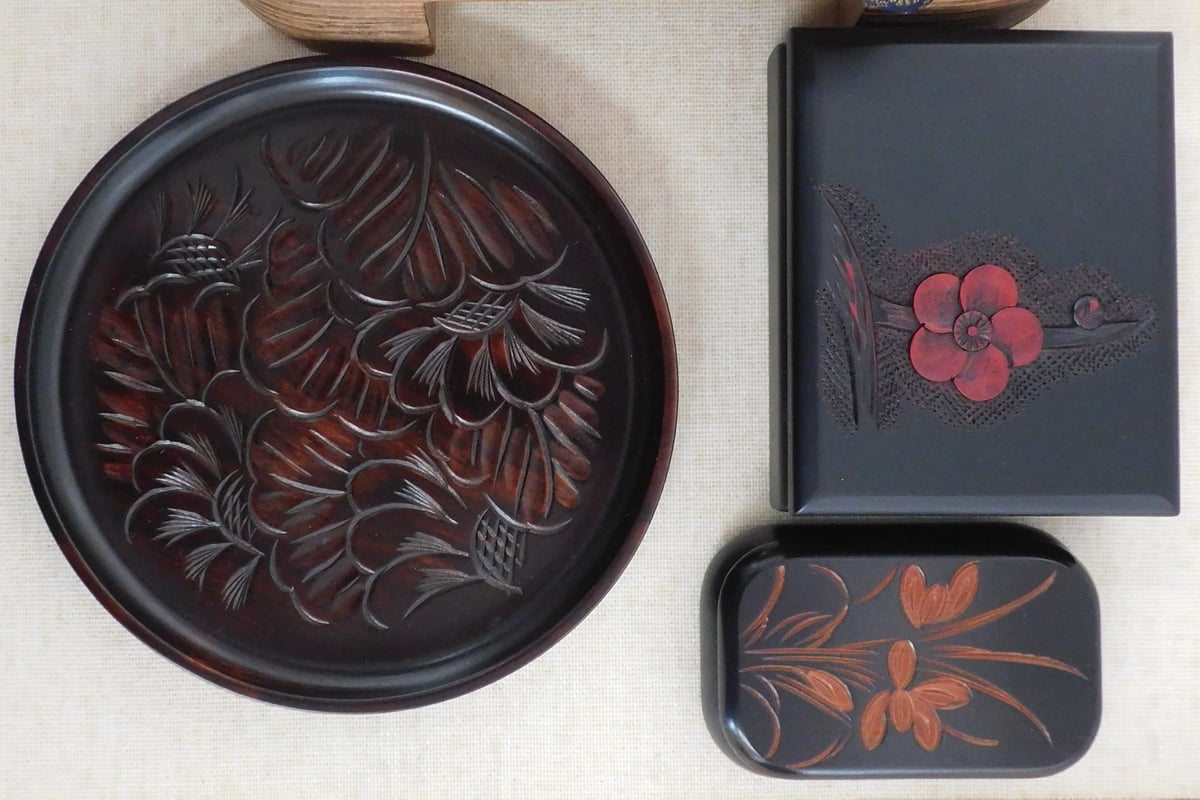
Nikko-bori
Nikko-bori
Nikko-bori is a traditional wood-carving craft passed down in Nikko City, Tochigi Prefecture. It is said to have originated as a sideline pursued in their spare time by master craftsmen gathered from across the country for the rebuilding of Nikko Toshogu Shrine (1634-1636) under the third Tokugawa shogun, Iemitsu. Its most distinctive feature is a unique carving knife called the 'hikkaki,' or 'Nikko sankakuto' (Nikko triangular knife), originally a tool used to scrape off lacquer during shrine repairs. Carving by folding the blade tip and pulling it toward oneself produces Nikko-bori's characteristic flowing curves, and designs are strongly influenced by the Toshogu carvings, centering on plant motifs such as peonies, chrysanthemums, plum blossoms, and cherry blossoms. The carved wood is finished with layers of lacquer, and the craft has long been cherished for everyday items such as trays, tea-cup stands, and small drawers. Today, visitors to workshops and hands-on facilities in Nikko City can try carving a hand mirror or confectionery dish using the hikkaki knife themselves.
Nishinouchi Washi
Nishinouchi Washi
Nishinouchi washi is a handmade Japanese paper (washi) produced mainly around Funyu in Hitachiomiya City, Ibaraki Prefecture (formerly Nishinouchi in the old town of Yamagata). Its defining feature is that it is made purely from kozo (paper mulberry) fiber, without mixing in mitsumata or ganpi. The raw material is 'Nasu kozo,' grown around Hitachiomiya City and Daigo Town, whose fibers are said to grow to a fineness and length comparable to silk thanks to the sharp swings between day and night temperatures. During the Edo period, the Mito Domain's paper monopoly system (established in 1688) made it a key industry, with the domain purchasing the entire output, and its strength and durability led Edo merchant houses to use it for their account books (daifukucho). On December 2, 1971 (Showa 46), it was designated an Intangible Cultural Property of Ibaraki Prefecture, and the tradition is still carried on today by a small number of papermakers.
Odawara Casting
Odawara Imono
Odawara Casting is a metalworking craft passed down in Odawara City, Kanagawa Prefecture. It is said to have begun in 1534, near the end of the Muromachi period, when Yamada Jirōzaemon, who had moved to Odawara from Kawachi Province, opened a foundry there. In 1702, during the Edo period, the Kashiwagi family started their own foundry business and made a name for themselves producing sound-making objects using an alloy of copper and tin blended to their own ratio, called sahari. Today the main products are 'sound objects' — wind chimes (furin), Buddhist altar bells (orin), and hand bells — prized for their clear, long-lingering tones, and the Kashiwagi Art Casting Institute, the only foundry now remaining in Odawara, carries this tradition forward. The workshop is also known for making the ornate palace-style wind chimes used in Akira Kurosawa's film 'Red Beard,' and it displays and sells wind chimes, altar bells, and other products at its on-site 'Sahari Gallery: Sound Object Hall,' while in recent years it has also worked on collaborative pieces with Hakone Yosegi-zaiku (marquetry).
Odawara Chochin (Folding Paper Lantern)
Odawara Chochin
Odawara Chochin is a paper lantern from Odawara, Kanagawa Prefecture, said to have been devised in the mid-Edo period by a local lantern maker, Jinzaemon, for travelers crossing the Hakone mountains. Unlike ordinary lanterns, its body ribs form a single independent ring, so that when folded, the body collapses completely into its upper and lower lids, making it compact enough to carry inside a kimono breast pocket — its greatest feature. The bamboo strips used are shaved into a square cross-section to increase the surface area for gluing, making the lantern resistant to rain and fog, and the upper and lower lids are made from sacred wood from Saijoji Temple on Mt. Daiyuzan, which was also believed to ward off evil on the road. These three advantages — portability, durability, and protection from evil — were promoted as the santoku (three virtues), and in the Edo period the lantern became known nationwide as a souvenir among travelers on the Tokaido. Today only a small number of lantern shops in the city continue to uphold the traditional techniques, and efforts are made to pass on the skills through workshops and other activities.
Odawara Lacquerware
Odawara Shikki
Odawara Lacquerware is a traditional craft of Odawara City, Kanagawa Prefecture, finished in a way that preserves the beautiful natural grain of the wood. It is said to have begun in the mid-Muromachi period, when zelkova and other timber cut from the Hakone mountains was turned on a lathe into vessels and coated with raw lacquer rubbed directly into the wood. During the Warring States period, Hojo Ujiyasu invited lacquerers to his castle town and introduced colored lacquer techniques, and in the Edo period the craft developed in Odawara, which flourished as a post town on the Tokaido, expanding its range from everyday items to parts for military equipment. Its two signature techniques are 'suri-urushi-nuri,' in which raw lacquer is applied thinly to preserve the wood grain, and 'kijiro-nuri,' which builds up an undercoat with sabi-urushi (lacquer putty). Zelkova, valued for its durability and resistance to warping, is widely used to make its vessels. In 1984 it was designated a national Traditional Craft.
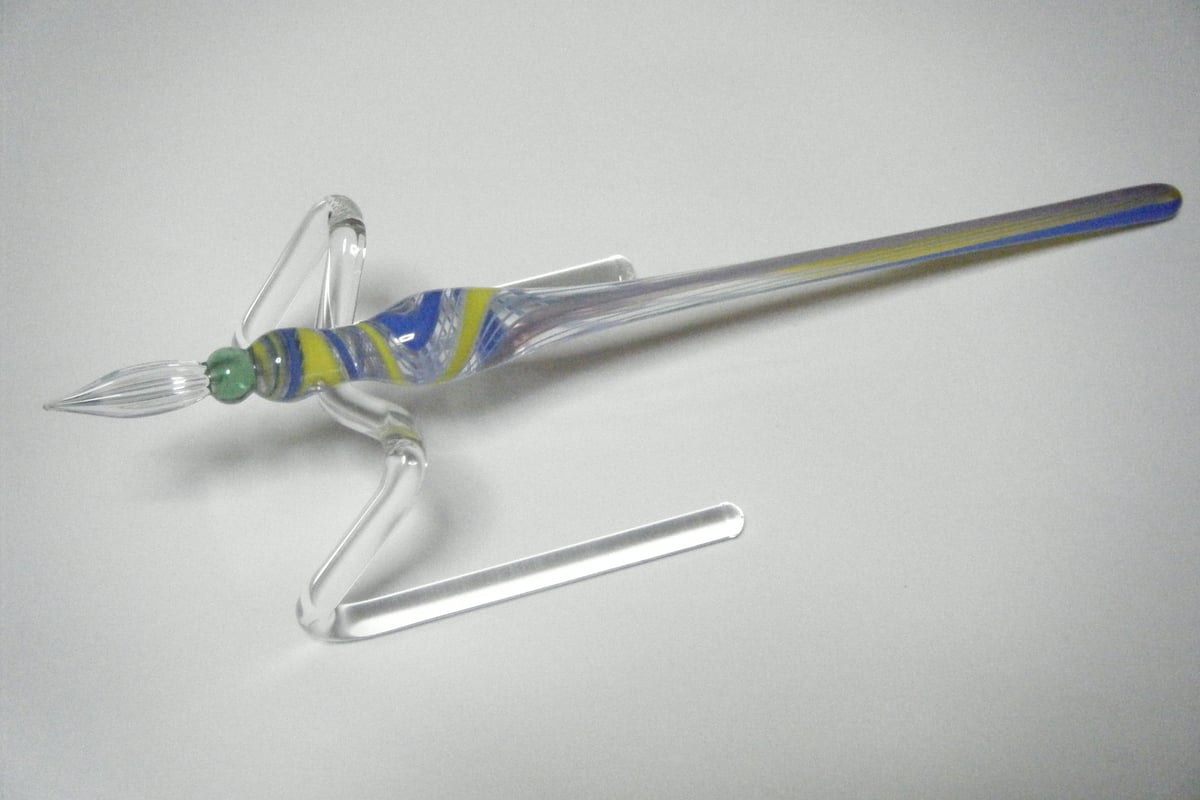
Otaru Glass
Otaru Glass
Otaru Glass is a general term for the glass craft that developed in Otaru City, Hokkaido. It began in 1901, when Asahara Hisakichi, who had come to Hokkaido from Kyushu, founded Asahara Glass in Otaru to manufacture kerosene lamps. From 1910, the company also began producing glass floats for fishing, and grew to a scale that included factories in Otaru, Muroran, Asahikawa, Kushiro, and Karafuto (Sakhalin). However, as electric and kerosene stoves spread, demand for lamps declined, and glass floats were gradually replaced by plastic ones, leaving Asahara Glass as the only glass manufacturer in Otaru by 1960. In 1971, Asahara Glass changed its name to Kitaichi Glass, and when it dared to display kerosene lamps, once an everyday necessity, in its storefront, they became popular among travelers as interior décor, marking a shift from industrial glass to glass craft and household goods. Today, multiple workshops and shops, including Kitaichi Glass and Taisho Glass, are clustered around the Otaru Canal, and the area is also known as a tourist destination where visitors can try glassblowing.
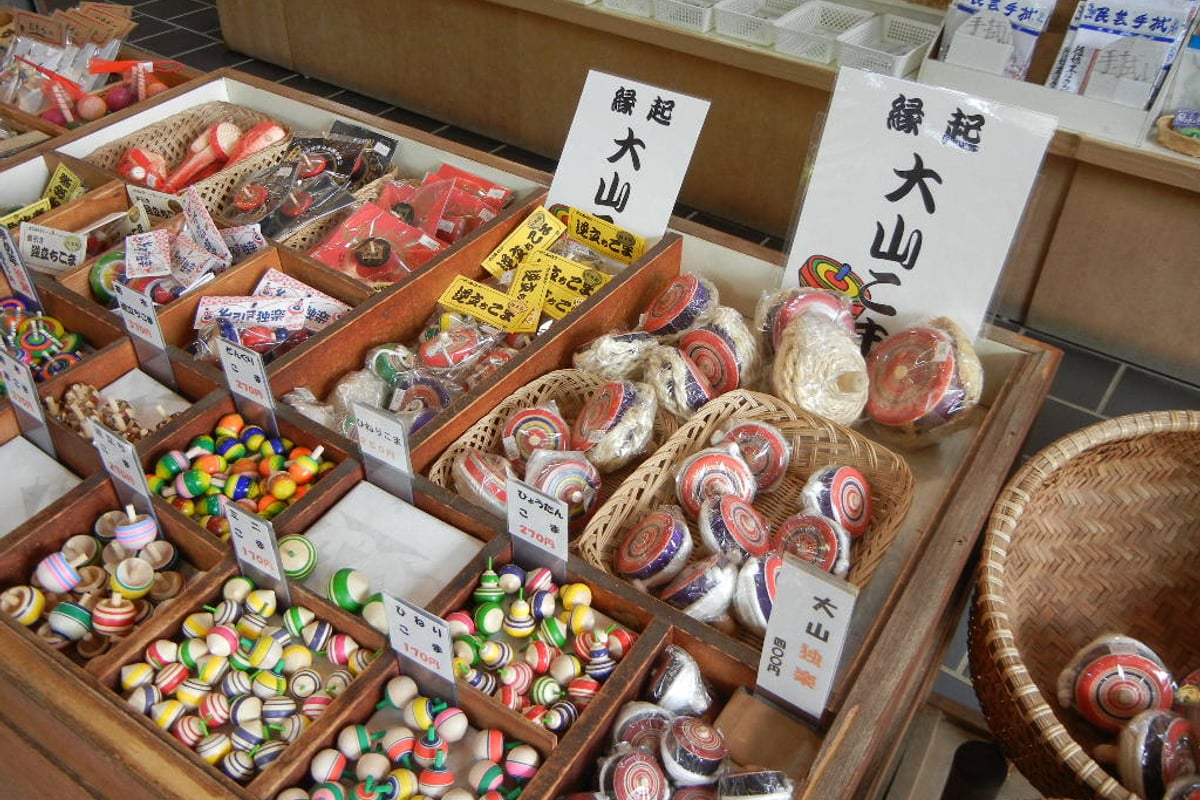
Oyama Top (Oyama-koma)
Oyama Koma
Oyama-koma are wooden spinning tops passed down at the foot of Mt. Oyama in Isehara City, Kanagawa Prefecture, which developed as souvenirs of the 'Oyama pilgrimage' that flourished in the mid-Edo period. Local mizuki wood is turned on a lathe by woodturners and finished in a plain wood base painted in bold bands of vermilion, indigo, and purple that blend together as the top spins. Their thick, long axle and rounded, substantial shape are designed, through a construction in which a separate piece of hard wood is inserted into the axle, to withstand use as 'fighting tops' knocked hard against one another, and because they 'spin well,' they have long been cherished as lucky charms believed to bring good fortune and business prosperity. Many woodturners and top shops once lined the pilgrimage approach, giving rise to the street's name 'Koma-sando' (Top Approach), but as lifestyles changed the number of makers declined, and today only a few shops along the approach carry the tradition forward. In 2023, 'the techniques for making Oyama-koma' were selected as a national Intangible Folk Cultural Property requiring documentation.
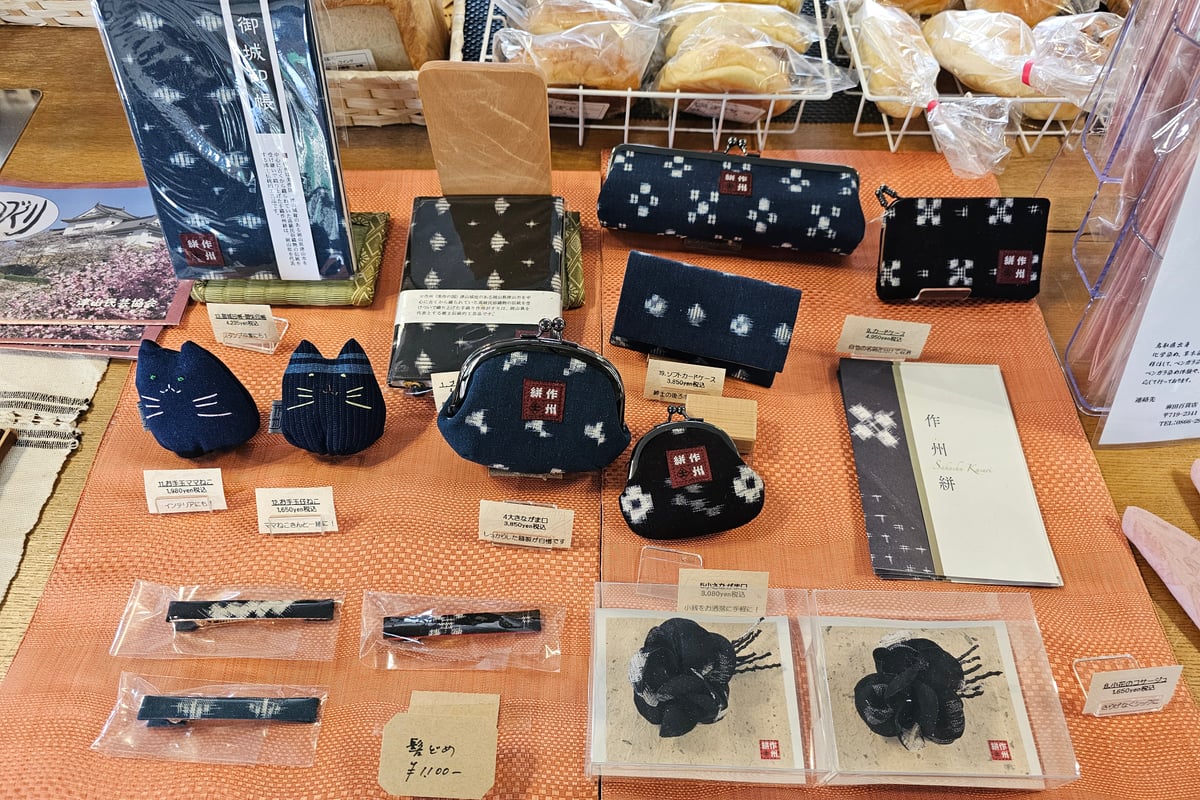
Sakushu Kasuri (Sakushu ikat cotton weave)
Sakushu Kasuri
Sakushu Kasuri is a cotton ikat textile woven in the Mimasaka region centered on Tsuyama City, Okayama Prefecture. High-grade silk textiles had long been woven in the Tsuyama area, but from the early 17th century cotton cultivation spread, and hand-spun cotton thread dyed indigo by local dye houses began to be woven into solid indigo and striped cloth for commoners' clothing. In the early Meiji era, influenced by Kurayoshi Kasuri from Tottori Prefecture, indigo cotton ikat became widespread, but as mass-produced textiles from other regions gained ground, both production and technique nearly died out at one point. After the war, Sakushu Kasuri was revived as part of Tsuyama City's industrial promotion policy, gaining popularity in Tokyo around 1955, and at its peak annual production reached about 30,000 tan (bolts) combining power-loom and hand weaving. In 1981 it was designated an Okayama Prefecture Local Traditional Craft as 'Hand-woven Sakushu Kasuri', but weavers later disappeared for a time until Hinagawa Shigemi was officially certified as its successor in 2012, allowing the technique to be passed on again. The geometric patterns set against indigo blue are created through the 'kukuri' technique, in which threads are bound with cord to resist dyeing.
Sesson Uchiwa
Sesson Uchiwa
Sesson Uchiwa is a fan designated as an Ibaraki Prefecture Folk Craft, passed down in Hitachiota City, Ibaraki Prefecture. It is said to have originated when the itinerant Buddhist painter-monk Sesson Shukei, who stayed in the area during the Muromachi period, gave out fans on which he had painted ink-wash pictures. The ribs are made by splitting local madake bamboo into thin strips and weaving them together with rush (igusa), and the fan is finished by pasting on the sturdy local washi paper 'Nishinouchi-gami,' made in nearby Hitachiomiya City. The designs—featuring motifs such as horses, morning glories, scarecrows, and the Eight Views of Mito—are drawn from the landscape and bird-and-flower paintings associated with Sesson, and the fans are said to have also been favored by Tokugawa Mitsukuni, the second lord of the Mito Domain. Because every one of the 33 steps, from harvesting the bamboo to finishing, is done entirely by hand, only around 2,000 fans are produced each year. A single shop has carried on the craft as a family business for more than 200 years since the Edo period, and today the fourth generation is the sole remaining maker.
Shitakawara-yaki Tsuchi-ningyo
Shitakawara-yaki Tsuchi-ningyo
Shitakawara-yaki Tsuchi-ningyo is a rustic clay doll that has been fired in the Shitakawara district of Hirosaki City. It is said to have originated in the Bunka era (1804-1814), when the ninth lord of the Tsugaru domain, Tsugaru Yasuchika, concerned that the Tsugaru region had few toys for children, had potters of the domain kiln in Shitakawara, including Takaya Kinzo and Ota Kumejiro, make them. Clay made by blending red clay with sand is shaped in plaster molds, fired at about 800 degrees, and then colored entirely by hand, so no two dolls have quite the same expression. Among the most representative pieces is the dove-shaped whistle, which produces a gentle "ho" sound, and hundreds of varieties of clay dolls have been made over the years, including zodiac figures. Since the Meiji era it has continued to be cherished as a folk toy of Hirosaki and has also been designated an Aomori Prefecture Traditional Craft. Today, the handful of kilns still remaining in Hirosaki City carry on techniques passed down for more than two hundred years.
Shogawa Hikimono Kiji
Shogawa Hikimono Kiji
Shogawa Hikimono Kiji is a woodworking craft centered on Shogawa-cho in Tonami City, Toyama Prefecture, in which timber is turned on a lathe to finish trays, bowls, and other wooden ware. It is said to originate in 1866 (Keio 2), when Echigoya Seiji, a wood-turner from Uozu, moved to Kanaya (present-day Shogawa-cho, Tonami City) drawn by the abundant timber gathered through the Shogawa River log-driving trade, and began turning wood on a lathe there. During the Meiji era, timber accumulated at the Aoshima log pond, and the surrounding area developed into a major timber hub lined with sawmills and woodworking shops. A hallmark of the craft is the technique of turning wood along its horizontal grain to bring out the beauty of the woodgrain to the fullest, with pieces gaining more luster and character the longer they are used. Domestic woods such as horse chestnut and zelkova are used, finished with tools the artisans make themselves, such as karakasa planes and thin blades. It was designated a METI-designated Traditional Craft in 1978 (Showa 53), and artisans belonging to 庄川木工挽物会 continue to pass on the techniques today.
Suifu Chochin
Suifu Chochin
Suifu Chochin is a type of paper lantern passed down in Mito City, Ibaraki Prefecture, taking its name from 'Suifu,' an Edo-period alternate name for Mito. It is said to have originated around 400 years ago, when lower-ranking samurai of the financially struggling Mito Domain began making lanterns as a side occupation, and the craft developed after the domain began promoting it as a local specialty. Its defining feature is a unique method called 'ippon-gake' (one-strand binding), in which thread is wound around each individual bamboo hoop one strand at a time rather than in a continuous spiral, producing a sturdy, long-lasting lantern. Another characteristic is the use of the durable local washi paper 'Nishinouchi-gami,' and Suifu Chochin is still counted today, alongside Gifu and Yame, as one of Japan's three major lantern-producing regions. At its peak, Mito City was home to more than 30 workshops, but in recent years the number has dropped to just a handful; long-established makers such as Kageyama Rihei Shoten and Aono Shoten continue to pass on the traditional techniques, producing everything from festival lanterns to hands-on experiences for visitors.
Takaoka Butsudan (Buddhist Altars)
Takaoka Butsudan
Takaoka Butsudan are Buddhist altars manufactured in Takaoka City, Toyama Prefecture, a comprehensive craft that applies the metalworking and lacquer techniques nurtured by Takaoka's copperware and lacquerware traditions to altar-making. Records from the Keicho era already show joiners producing lacquered furniture, which is thought to be the origin of altar-making in the area. Altar production had formed into an industry by at least the end of the Edo period, and an altar made around 1846 (Koka 3) is said to be almost identical in style to today's Takaoka Butsudan. The craft is characterized by a division of labor among woodworkers, carvers, lacquerers, maki-e decorators, and metal fitting makers: three-dimensional wood carving is applied to a wooden frame made of ginkgo and Podocarpus macrophyllus (kusamaki), the ground is carefully prepared and lacquer is applied in many layers, and the piece is finished with hand-forged, thick metal fittings colored to a reddish hue through a boiling process. The engraving techniques developed through Takaoka copperware are said to have supported the development of the altars' decorative work, and it was designated a Toyama Prefecture-designated Traditional Craft in 2013 (Heisei 25).
Takaoka-doki
Takaoka-doki
Takaoka-doki is a cast metalware craft produced mainly in Takaoka City, Toyama Prefecture, and is known as Japan's leading production center, accounting for the majority of the country's copperware output. Its origin dates back to 1611, when Maeda Toshinaga, the second lord of the Kaga Domain, invited seven metal casters from the Tonami region and elsewhere to Kanaya-machi in the castle town of Takaoka to promote local industry. Production initially centered on everyday iron items such as pots and farm tools, but expanded into copperware in the late Edo period, developing into Buddhist altar fittings, temple bells, and art objects. After being exhibited at the 1867 Paris World's Fair and receiving high acclaim, output grew dramatically during the Meiji and Taisho eras, spreading Takaoka's reputation at home and abroad. Its greatest strength lies in combining a range of casting techniques—including double-shell molds, baked molds, lost-wax casting, and green-sand molds—with engraving methods such as line engraving and openwork, plus coloring techniques that produce hues such as blackened iron and bronze tones, allowing craftsmen to create everything from small ornaments to temple bells and large outdoor monuments. Designated a METI-designated Traditional Craft in 1975, Takaoka-doki today spans a wide range of products from Buddhist altar fittings to contemporary art and everyday household goods.
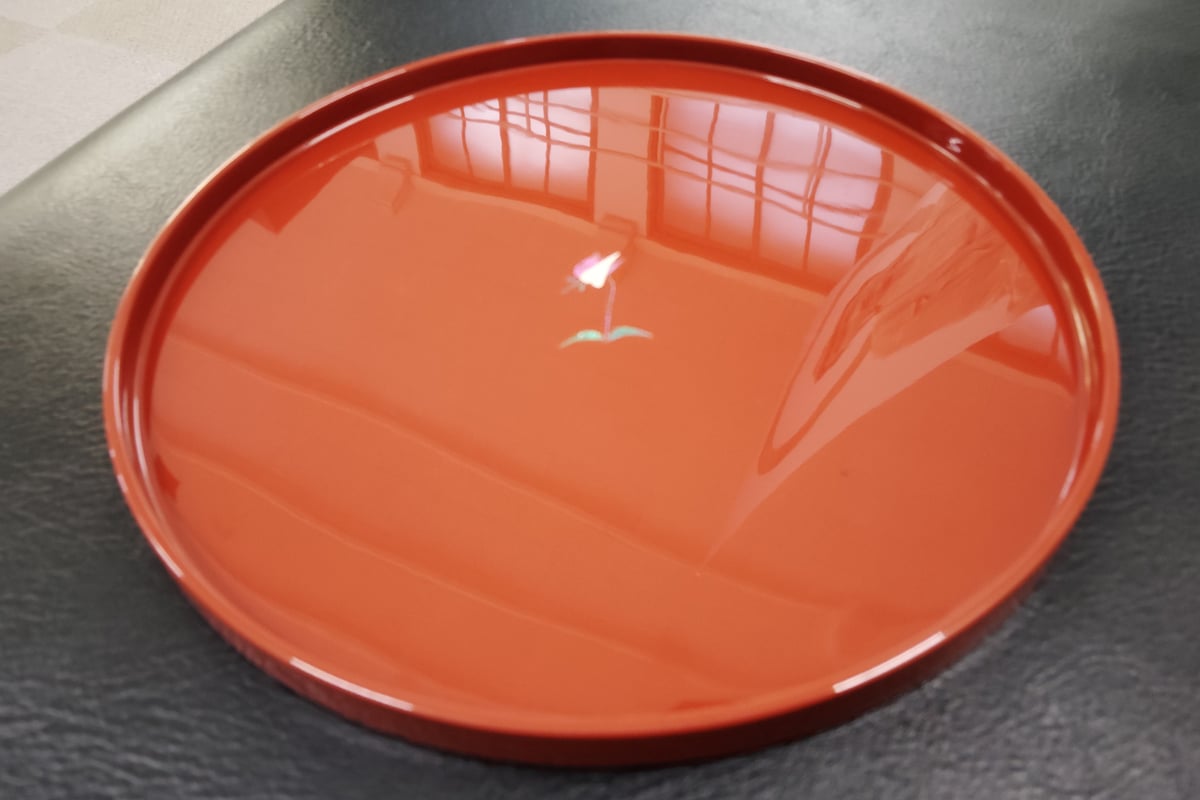
Takaoka-shikki
Takaoka-shikki
Takaoka-shikki is lacquerware produced in Takaoka City, Toyama Prefecture. It is said to have begun in the early Edo period, during the Keicho era, when Maeda Toshinaga, the second lord of the Kaga Domain, had lacquer applied to everyday items such as armor, chests, and trays while building Takaoka Castle. Later, in the Meiwa era, Tsujiya Tanpo established the tsuishu and zonsei techniques modeled on Chinese lacquerware, and 'aogai-nuri' (mother-of-pearl inlay) developed based on the skill of the master craftsman Somada Seisuke, who had been invited from Kyoto by Toyama Domain lord Maeda Masatoshi; in the late Edo period, the first Ishii Yusuke studied Ming-dynasty Chinese lacquerware to create the original 'Yusuke-nuri' technique. Its greatest feature is that this single production area possesses a wider variety of decorative techniques than most others. With the establishment of the Toyama Prefectural Craft School in 1891 helping to advance technical instruction, the craft has been applied to a wide range of items, from everyday goods such as trays, tiered boxes, and tea utensils to art and craft pieces. Designated a METI-designated Traditional Craft in 1975, its traditional techniques continue to be passed down in workshops throughout Takaoka City today.
Takayama Chasen (Takayama Bamboo Tea Whisks)
Takayama Chasen
Takayama Chasen is a bamboo tea whisk for tea ceremony use made in Takayama-cho, Ikoma City, Nara Prefecture, and is a Traditional Craft designated by the Minister of Economy, Trade and Industry. It is said to have originated in the Muromachi period, when Takayama Minbu-no-jo Nyudo Soze, son of the lord of Takayama Castle, devised it at the request of Murata Juko, regarded as the founder of the tea ceremony. The technique has been passed down for over 500 years within a single family line at a time, and today Takayama-cho, Ikoma City, is said to produce the majority of tea whisks distributed in Japan, making it one of the few remaining chasen-producing areas in the country. The main material is hachiku (henon bamboo), along with kurochiku (black bamboo) and susudake (smoke-cured bamboo); every step, from splitting the bamboo to thinly shaving the tines and weaving them together with thread, is done entirely by hand. Shapes and the number of tines vary by school and use, with more than 100 varieties said to exist, making it a tool prized among tea utensils for combining delicate beauty with practicality.
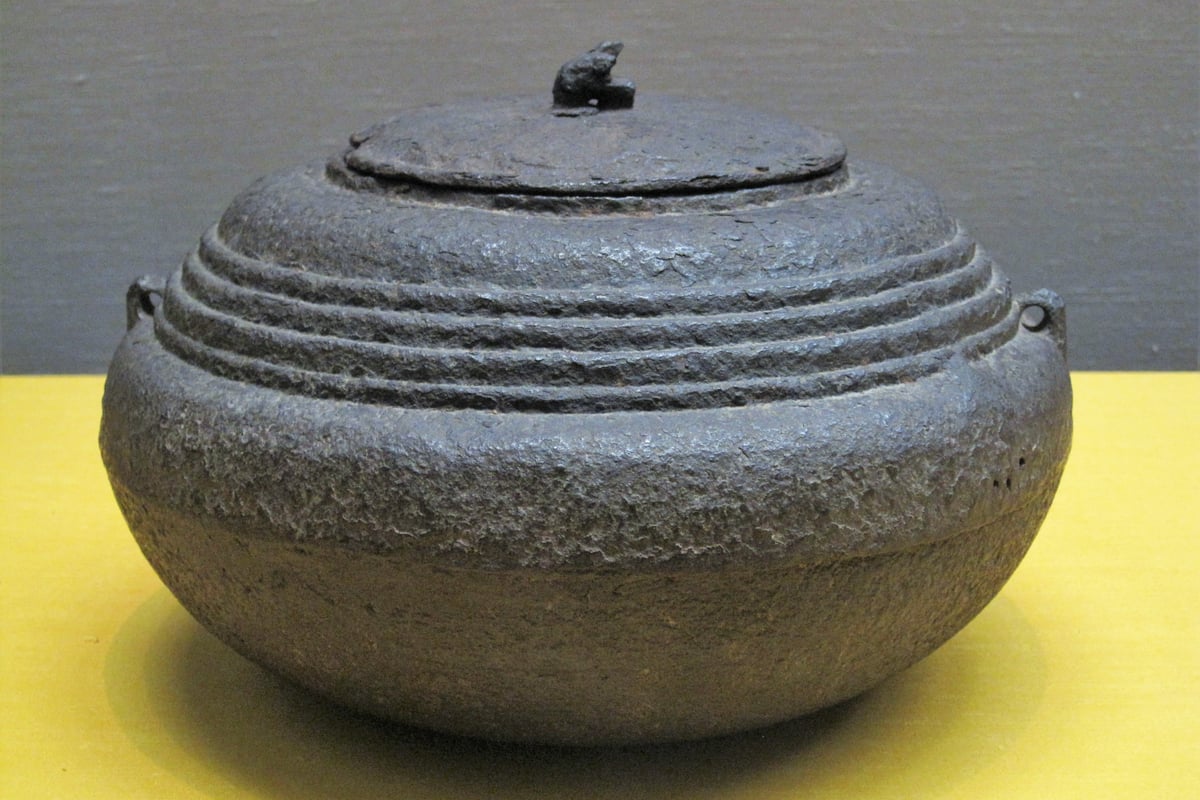
Temmyo Imono
Temmyo Imono
Temmyo Imono is a traditional cast-metal craft passed down in Sano City, Tochigi Prefecture. According to tradition, it began during the Tengyo era (938-947), when five casters who had relocated from Kawachi Province cast weapons on the order of Fujiwara no Hidesato, making it one of the oldest surviving casting centers in Japan with a history of over a thousand years. By the end of the Kamakura period, everyday cast-iron pots such as rice-porridge cauldrons and water-boiling kettles were being widely produced, and as the tea ceremony grew popular, tea kettles with a rustic, rough-textured surface became prized by tea masters, earning Temmyo the nickname 'Ashiya in the west, Temmyo in the east' alongside the Ashiya kettles of Fukuoka. Sen no Rikyu, Oda Nobunaga, and Toyotomi Hideyoshi are all said to have used Temmyo tea kettles. Today, casters in Sano still preserve the sand-mold casting technique much as it was in the Edo period, hand-finishing wind chimes, tea kettles, and temple bells one at a time. In March 2024, 'Tools and Products of Sano's Temmyo Casting' was designated an Important Tangible Folk Cultural Property, drawing renewed attention to its value.
Tokyo Ginki
Tokyo Ginki
Tokyo Ginki is a silverware craft produced in Tokyo's Taito, Arakawa, and Bunkyo wards, in which tea utensils, personal accessories, and sake vessels are made using traditional techniques such as forging (tankin), chasing/engraving (chokin), inlay work (kirihame), and soldering/brazing. Japan's history of silverware dates back a long way; records of silver tableware and sake vessels already appear in the Engishiki, a Heian-period legal code. From the mid-Edo period, silverware came into wide use among townspeople who had gained economic power, and specialist artisans known as kazari-shokunin (ornament makers) and shirogane-shi (silversmiths) developed their craft. From the Meiji era onward, Western refining techniques were also incorporated, and at the 1867 Paris Exposition, the sophistication of Japanese silverware is said to have astonished experts from abroad. Made with silver of at least 92.5% purity, the craft is characterized by techniques such as hammered texture (tsuchime), created by striking patterns with a metal hammer, and distinctive surface textures such as rock-grain (ganseki-me) and matting (goza-me). Today it remains widely loved as tea utensils, accessories, and other items that grow more comfortable to use with age. It was designated a Traditional Craft Designated by the Minister of Economy, Trade and Industry in 1979.
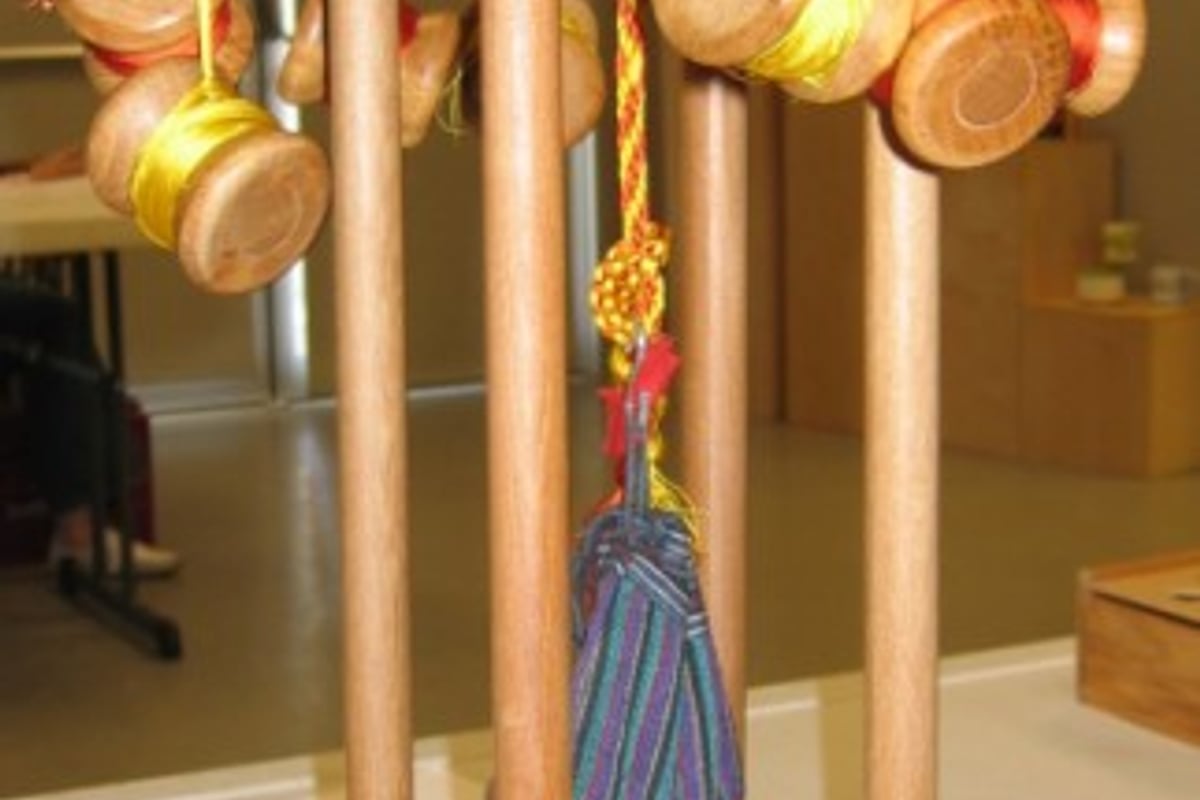
Tokyo Kumihimo
Tokyo Kumihimo
Tokyo Kumihimo is a braided cord craft made mainly from silk thread in Tokyo's Taito, Suginami, and Kita wards, produced using dedicated braiding stands such as the maru-dai (round stand), kaku-dai (square stand), aya-take-dai (twill-bamboo stand), and taka-dai (high stand). Its origins trace back to the cords used for sutra scrolls and priestly robes that arrived with the transmission of Buddhism, as well as sashes accompanying the ceremonial robes of court nobles. Under samurai society, braiding methods combining practicality and beauty developed for the lacing cords of armor and helmets and for sword hilt wrappings. In contrast to the flamboyant Kyo Kumihimo shaped by court noble culture, Tokyo Kumihimo reflects the influence of samurai society and Edo townsfolk culture, characterized by understated, muted colors and sturdy braid patterns. From the late Edo period into the Meiji era, it came into wide use among ordinary people for obi cords (waist-sash cords) and haori cords, and long-established braiding houses such as Domyo, founded in 1652, still carry on the technique today. In addition to obi cords, contemporary products such as neckties and accessories are now also made to suit modern lifestyles.
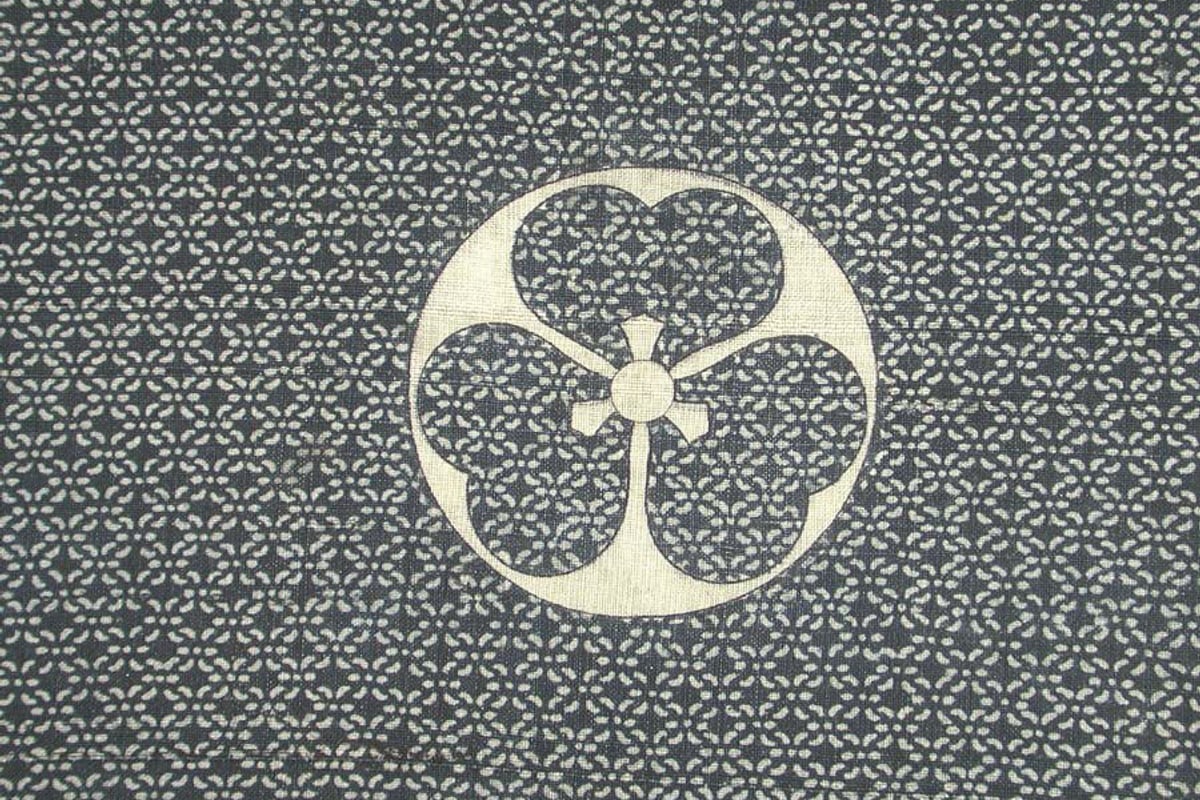
Tokyo Some Komon
Tokyo Some Komon
Tokyo Some Komon is a stencil-dyeing technique born in Edo that uses finely carved Ise katagami (stencil paper) to dye minute patterns onto fabric with a single-color rice-paste dye. The development of komon (fine-patterned dyeing) itself is said to date back to the Muromachi period, but the technique flourished in the early Edo period, when the various daimyo houses began dyeing fine, house-specific patterns onto the kamishimo (formal attire) worn at their Edo residences. Because daimyo from across the country gathered in Edo, demand for komon grew rapidly, and the patterns once reserved for samurai kamishimo eventually spread among the common people, blossoming as a dyeing tradition beloved in townsman culture from the mid-Edo period onward. The three representative patterns -- same (shark skin), gyogi (proper conduct), and kaku-doshi (square lattice) -- are considered especially prestigious and are known as the 'Edo Komon Sanyaku' (three most prestigious Edo Komon patterns). The patterns are made up of extremely small dots and lines, roughly 0.5 to 1mm in size, and their defining feature is an intricacy so fine that the goku-same (ultra-fine shark-skin) pattern can contain a thousand dots within a 3-centimeter square, each placed without the slightest deviation. Appearing plain from a distance but revealing delicate patterns up close, it embodies the aesthetic of Edo 'iki' (chic refinement) and has long been cherished as an adornment for women's kimono; it was designated a Traditional Craft Designated by the Minister of Economy, Trade and Industry in 1976 (Showa 51).
Torigoe Takezaiku
Torigoe Takezaiku
Torigoe Takezaiku is a bamboo craft passed down in the Torigoe district of Ichinohe Town, Ninohe District, Iwate Prefecture. It is made from Nanbu suzutake, a slender, pliant species of dwarf bamboo that grows wild in the mountains of northern Iwate, and is woven using the awase-ami (double-weave) technique, which produces a beautiful finish whether viewed from inside or outside. Its origins are said to trace back to the Heian period, and a legend tells of the priest Jikaku Daishi, who was staying in Torigoe, receiving a revelation from Kannon and spreading the craft of bamboo weaving among the local people. Long cherished as everyday tools such as baskets and sieves, the craft has in recent years seen its number of makers and production volume decline due to the mass die-off of the suzutake bamboo used as raw material, prompting the formation of the Torigoe Takezaiku Sanchi wo Mamoru Kai (Association to Protect the Torigoe Takezaiku Production Area), which works to train successors and promote the craft and its production area.
Toyama Mokuzogan (Wood Inlay)
Toyama Mokuzogan
Toyama Mokuzogan is a woodworking technique that originated in Toyama City, in which natural woods of differing colors and grain are cut out with a scroll saw and inlaid to create pictures and patterns on a single panel. It is said to have begun in 1907 (Meiji 40), when Nakashima Mokudo, a native of Toyama, apprenticed himself to Shirakawa Senseki, a wood-inlay craftsman in Odawara, Kanagawa Prefecture, learned modern inlay techniques using a scroll-saw machine, and brought them back to Toyama. Nakashima Mokudo was designated a Toyama Prefecture Intangible Cultural Property in 1964 (Showa 39) and established a distinctive style rooted in the local character of Toyama. Its defining feature, unlike yosegi-zaiku, which assembles simple shapes such as triangles and squares, is that pieces are cut with a scroll saw to precisely follow a design drawn on a base panel, then inlaid with matching pieces of patterned wood, allowing the craft to express pictorial designs. In addition to traditional products such as framed panels and tables, new types of products, including tea utensils and lighting, have also been developed in recent years. The efforts of its successors have been recognized, and it was designated a Toyama Prefecture Traditional Craft in 2013 (Heisei 25).
Toyama Tsuchi Ningyo
Toyama Tsuchi Ningyo
Toyama Tsuchi Ningyo are unglazed clay dolls that date back to the era of the Toyama Domain and have been made mainly in Toyama City as a local folk toy. Tradition holds that during the Kaei era, Hirose Hidenobu, a potter from Nagoya, presented a clay doll to Maeda Toshiyasu, the tenth lord of the Toyama Domain, marking the craft's beginning; his son Yasujiro is said to have fired and presented a figure of Tenjin riding an ox, an event regarded as the origin of Toyama Tsuchi Ningyo. Clay is shaped in molds, fired unglazed at about 800 degrees, and then colored entirely by hand, one doll at a time, giving the dolls a simple, warm palette that is their hallmark. A wide range of auspicious, regionally distinctive subjects have been made over the years, led by Tenjin, beloved as the god of learning, along with beckoning cats, zodiac figures, and embracing-style hina dolls. In Toyama, where devotion to Tenjin runs deep, the custom of giving a Tenjin figure to a baby boy on his first New Year has tied the dolls closely to family life, and they remain cherished in homes today. Designated a Toyama Prefecture Traditional Craft in 2013, the techniques are still carried on at a workshop within the Toyama City Folklore Village.
Tozan Washi
Tozan Washi
Tozan Washi is a handmade washi paper with roughly 800 years of history in Higashiyama, Ichinoseki City, Iwate Prefecture. Its origins are told in two ways: one theory holds that survivors of the Oshu Fujiwara clan, defeated by Kamakura forces at the end of the Heian period, settled in the area and began making paper for daily use alongside farming; another holds that the construction of Hiraizumi's Chuson-ji temple created a huge demand for paper to copy sutras, and papermaking began in the neighboring Higashiyama area to meet that need. The name 'Higashiyama' is said to come from the view eastward from Mt. Tabashine near Chuson-ji, which resembled Kyoto's Higashiyama, and the district still retains a place name that literally means 'birthplace of paper,' Kamiagari. The paper is known for its simple, sturdy texture, made with kozo (paper mulberry) as almost its sole raw material.
Tsugaru Forged Blades (Tsugaru Uchihamono)
Tsugaru Uchihamono
Tsugaru Uchihamono are forged blades that trace their roots to the sword- and farm-tool smiths who once lined the streets of Hirosaki Castle Town during the domain era. So many blacksmiths gathered in early-Edo-period Hirosaki that a district was named 'Kajimachi' (Blacksmith Town), and their skills in forging swords and cannons were passed down over the generations into the making of everyday tools such as sickles, hoes, and kitchen knives. Blades forged using the traditional 'hizukuri' (fire-forging) and 'dorotsuchi' (mud-coating) tempering techniques combine excellent sharpness with durability. Because Aomori Prefecture is a major apple-growing region, the shears and saws used for pruning and fruit thinning have also become an important Tsugaru Uchihamono product, and the craft has developed hand in hand with apple cultivation around Hirosaki. It was designated an Aomori Prefecture Traditional Craft in March 1996, and blacksmiths today continue to carry out the entire process, from fire-forging to finishing, by hand.
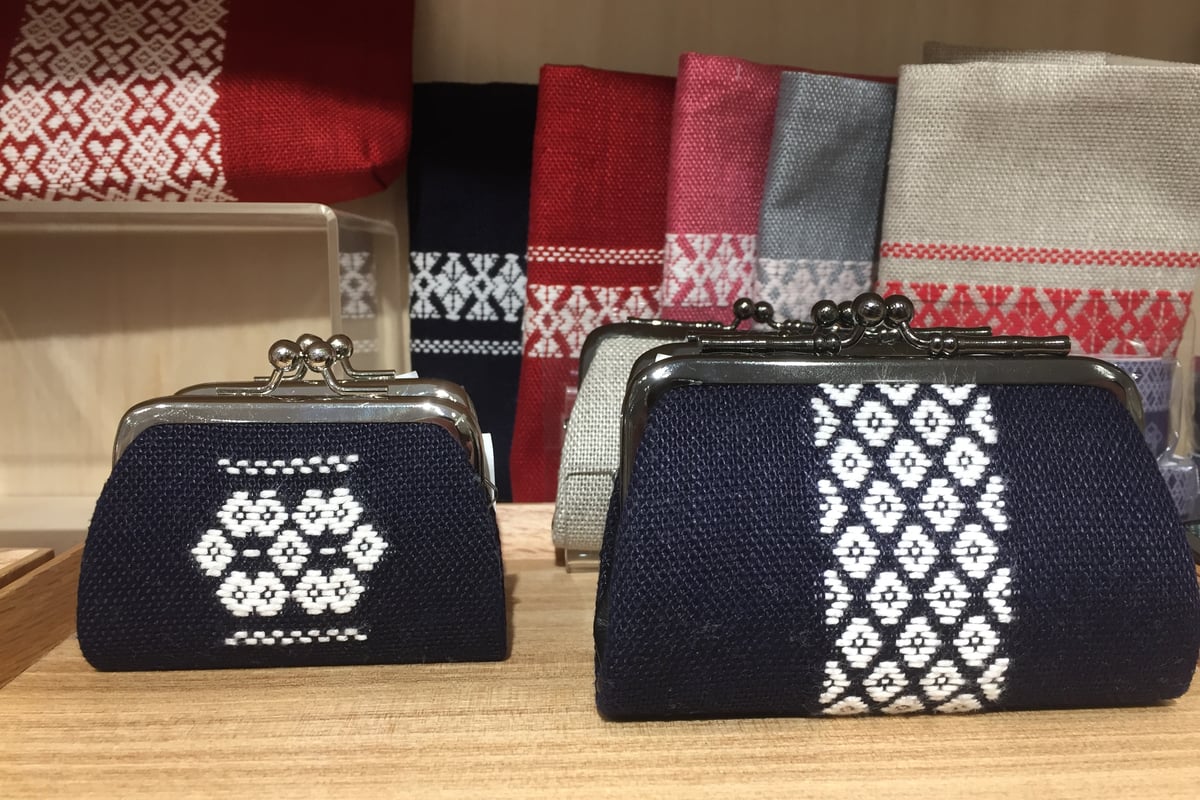
Tsugaru Kogin-zashi
Tsugaru Kogin-zashi
Tsugaru Kogin-zashi is a sashiko stitching technique passed down in the Tsugaru region, centered on Hirosaki City, Aomori Prefecture. During the Edo period, farmers in the Tsugaru domain were restricted to hemp clothing and forbidden from wearing cotton, so women in the harsh Tsugaru winters devised a way to strengthen and insulate their hemp work clothes by stitching the fabric densely with cotton thread. Its defining feature is the way geometric patterns are built up by counting the vertical threads of the weave in odd numbers - one, three, five - and it is divided into three regional styles: "Higashi Kogin" (East Kogin), known for large-scale patterns; "Nishi Kogin" (West Kogin), which divides patterns with horizontal stripes; and "Mishima Kogin" (Three-Stripe Kogin), marked by three thick horizontal stripes. After cotton became widely available from the Meiji era onward, the craft declined for a time, but its formal beauty was reappraised during the Mingei (folk craft) movement of the early Showa era, and the technique continues to be passed down today, centered on Hirosaki. As one of Aomori Prefecture's representative sashiko traditions, it is often compared with Nanbu Hishizashi, which is characterized by diamond-shaped patterns.
Tsugaru Kokeshi Dolls (Tsugaru-kei Kokeshi)
Tsugaru-kei Kokeshi
Tsugaru-kei Kokeshi is one of the eleven traditional lineages of kokeshi dolls found across the six Tohoku prefectures, produced mainly around Nuruyu Onsen in Kuroishi City, Aomori Prefecture, with production also spreading to Owani Town. It is said to have begun in the early Taisho era, when kijishi (wood-turning craftsman) Mori Hidetaro started making kokeshi for hot-spring visitors at Nuruyu Onsen, laying the foundation for the lineage together with Hasegawa Tatsuo of Owani Town. Because it took shape later than other lineages, it developed a freer style unbound by the traditional apprentice system, and is characterized by distinctive design elements not found in other production areas: the 'tsukuritsuke' technique of carving the head and body from a single piece of wood, a body shape that flares broadly at the hem, and motifs influenced by the peony crest of the Tsugaru domain, Ainu patterns, and Nebuta festival paintings. The Tsugaru Kokeshi Museum opened in Kuroishi City in 1988, and its skills and charm continue to be passed on today through production demonstrations and painting workshops led by Tsugaru-kei kokeshi craftsmen.
Tsugaru Vidro
Tsugaru Vidro
Tsugaru Vidro is a handmade glass craft produced by Hokuyo Glass in Aomori City, Aomori Prefecture. Hokuyo Glass was founded in 1949 (Showa 24) as a factory making glass fishing floats, and became a top domestic producer using the chubuki (free-blown, mold-free) technique it developed for making sturdy floats. However, as the spread of plastic floats reduced demand, the craftsmen applied their skills to making tableware and vases instead, and 'Tsugaru Vidro' was born in 1977 (Showa 52). When sand from Tsugaru's Shichiri-Nagahama beach was added as a raw material, it produced a rich green color, launching full-scale production of colored glass; today the company blends more than 100 varieties of colored glass in-house. In March 1996 (Heisei 8), it was designated a Traditional Craft by Aomori Prefecture, and it remains loved at home and abroad as a glass craft reflecting Aomori's nature.
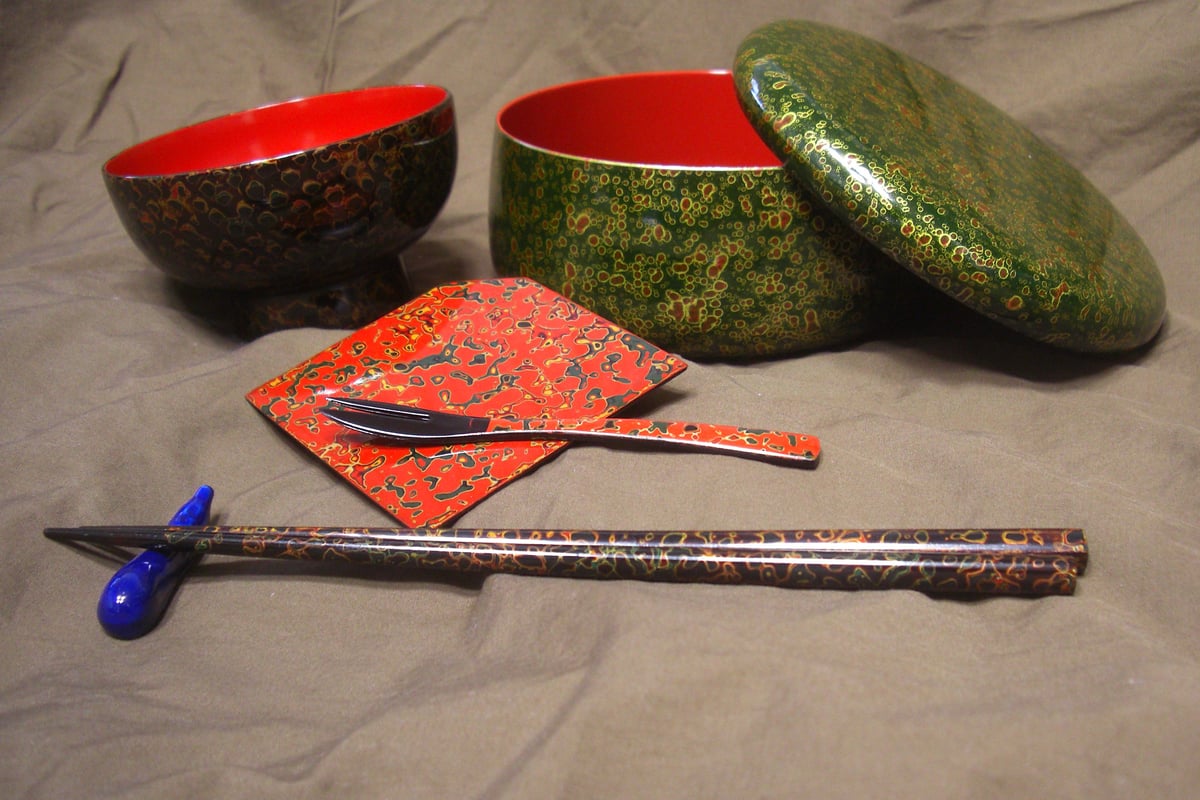
Tsugaru-nuri
Tsugaru-nuri
Tsugaru-nuri is lacquerware produced mainly in Hirosaki City, Aomori Prefecture, and the only Traditional Craft designated by the Minister of Economy, Trade and Industry from Aomori Prefecture. Its origins trace to the mid-Edo period, when Tsugaru Nobumasa, the fourth lord of the Hirosaki domain, invited the lacquer craftsman Ikeda Genbei from Wakasa Province to help develop local industry. Genbei's son Gentaro later studied the seigaiha-nuri technique in Edo and went on to create original lacquerware in Tsugaru. Over the roughly 300 years since, four representative techniques - Karanuri (唐塗), Nanako-nuri (七々子塗), Monsha-nuri (紋紗塗), and Nishiki-nuri (錦塗) - were established, each involving repeated layers of lacquer built up and then polished down, a process that can take around 50 steps and many months to complete. Because of this painstaking process, Tsugaru-nuri is also known by the nickname "baka-nuri" ("foolish lacquering"). The name Tsugaru-nuri became widely known after the craft was exhibited at the 1873 Vienna World's Fair. In 1975 it was designated a Traditional Craft by the Minister of Economy, Trade and Industry, and today many craftspeople in and around Hirosaki continue to carry on the tradition.
Tsuyama Hakuaishi
Tsuyama Hakuaishi
Tsuyama Hakuaishi is a handmade Japanese paper produced in the Yokono district (Kami-Yokono and Shimo-Yokono) of Tsuyama City, Okayama Prefecture, using mitsumata (Edgeworthia) as its raw material. Thin, compact, yet strong, with a smooth surface that does not damage gold or silver leaf, it has long been prized by leaf-gilding artisans in Kyoto and Kanazawa as an indispensable 'hakuaishi,' or leaf-interleaving paper, used in gold-leaf craftsmanship. It is characterized by a slightly reddish, lustrous surface, and is also used for the restoration of old documents and, overseas in Germany and Canada, as paper for copperplate printing and etching. The mitsumata used as raw material is a specialty of the Mimasaka region, also known as a production area of 'kyokuno mitsumata,' supplied as banknote raw material to the Ministry of Finance's Printing Bureau. Designated a Traditional Craft of Okayama Prefecture in January 1981 (Showa 56), Tsuyama Hakuaishi is today made by only a single workshop nationwide, Ueda Papermaking Mill (Yokono Washi Studio) in the Yokono district, which continues this precious handcraft.
Uda-gami (Uda Paper)
Uda-gami
Uda-gami is a handmade Japanese paper produced in the Yoshino region in southern Nara Prefecture. Made from kozo (paper mulberry) with white clay from crushed pumice mixed in, it becomes a paper that combines strength and suppleness with a distinctive soft texture. It is produced in the Kuzu district of Yoshino-cho, upstream on the Yoshino River, and was originally called 'Kuzu-gami.' In the Edo period, merchants from Uda County in Yamato Province (around present-day Uda City), who had close economic ties to the area, bought up the paper and sold it around the country, and it is said to have gradually become known as 'Uda-gami' after them. Because the mixed-in white clay prevents the paper from shrinking or being damaged by insects and keeps it from curling back when rolled, it is regarded as the finest lining paper for mounting hanging scrolls and folding screens, and is also used in the restoration of National Treasures and Important Cultural Properties. This technique is designated a nationally Selected Conservation Technique, 'Production of Uda-gami, hand-made paper for mounting,' and today is carried on by a long-established papermaking workshop in the Kuzu district of Yoshino-cho.
Ujo-bori
Ujo-bori
Ujo-bori is a wood-carved lacquerware from Okayama City, named after 'Ujo,' another name for Okayama Castle. Its founder was Kiguchi Kyuho (real name Kiguchi Fusashiro, 1895-1969), who became devoted to woodcarving after carving tea utensils and the like as a hobby, and in 1927 (Showa 2) named his own work 'Ujo-bori.' On a single board of keyaki (zelkova), oak, katsura, or paulownia wood, motifs such as vegetables, fruit, flowers and grasses, or ancient roof-tile patterns are carved in relief, and the piece is finished by repeating a 'fuki-urushi' (wiped lacquer) process—applying raw lacquer and wiping it off with cloth—about 13 to 24 times. Its defining feature is that the luster and character deepen the more it is used. Originally devised not for commercial purposes but as a social enterprise to create work for people with disabilities, the Ujo-bori Association (a foundation) was established in 1953. Ujo-bori incense trays and tea caddies have been presented to Emperor Showa on two occasions, in 1930 and 1946. With a history spanning more than 90 years, it continues today to be handed down as a specialty craft of Okayama City.
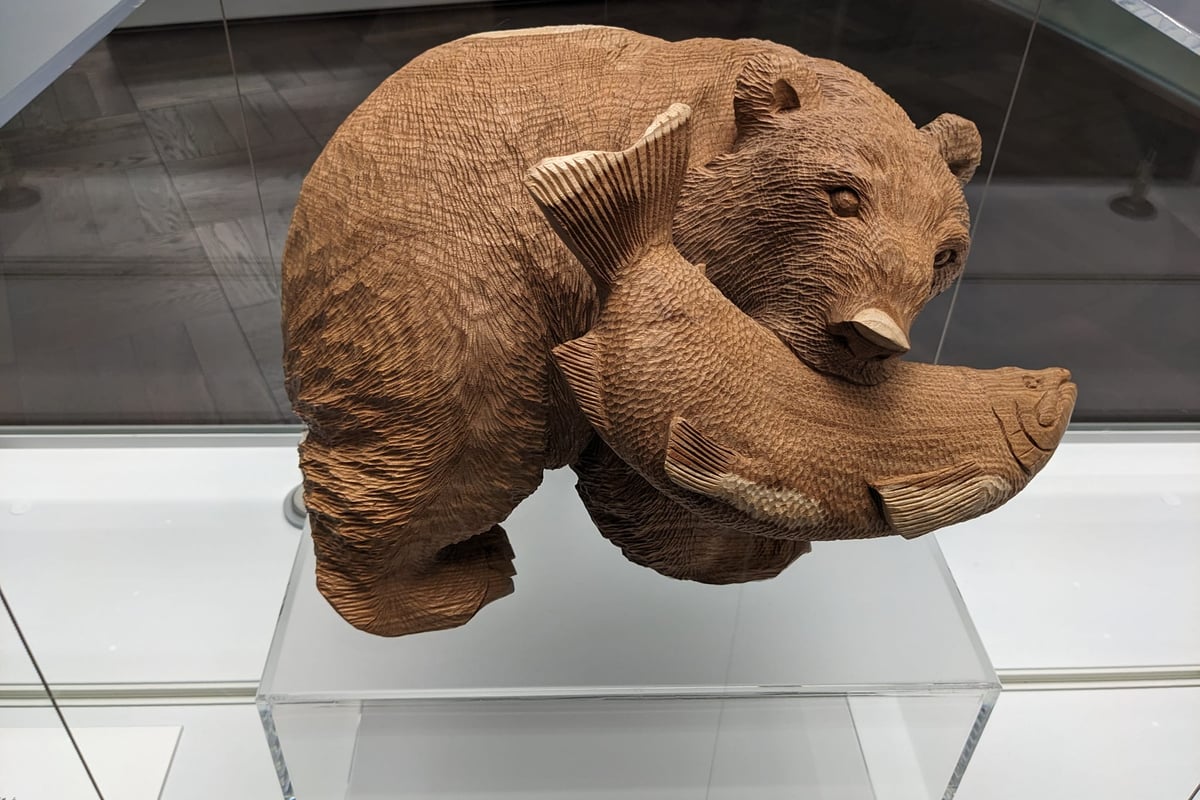
Wood-carved Bear (Kibori-guma)
Kibori-guma (Wood-carved Bear)
Kibori-guma (wood-carved bear) is a carved wooden statue of a bear, widely known as a representative wood-carving craft of Hokkaido. Its origin is attributed to Yakumo Town on the Oshima Peninsula. Tokugawa Yoshichika, 19th head of the Owari Tokugawa family, brought back folk-craft items including wood-carved bears that he had seen while stopping in Switzerland during a 1921-1922 tour of Europe, and encouraged local farmers to make similar carvings as winter side work at the Yakumo Farm that he operated. A work carved by dairy farmer Ito Masao based on the imported piece is regarded as the first wood-carved bear made in Hokkaido, and was exhibited at the Yakumo Rural Art and Craft Exhibition in 1924. In Yakumo, two styles of expression developed: the delicate 'kebori' (fur-carving) technique established by Nihonga painter Tokura Kinnosuke, and the powerful 'menbori' (facet-carving, or hatsuri-bori) technique established by Shibasaki Shigeyuki. Meanwhile, in Asahikawa, around 1926, Ainu bear hunter Matsui Umetaro carved a bear based on his own experience, giving rise to a distinct lineage that developed into the 'Asahikawa style,' characterized by abstract forms created with facets. Today it is known nationwide as a classic Hokkaido souvenir.
Yawata-uma
Yawata-uma
Yawata-uma is a wooden folk toy horse handed down in the Nanbu region centered on Hachinohe City in Aomori Prefecture, and it is counted, together with Miharu-goma from Fukushima Prefecture and Kinoshita-goma from Miyagi Prefecture, as one of the "Three Great Horses of Japan" (Nihon San-Koma). The region was once home to the celebrated Nanbu horse breed, and the toy is said to have originated when wooden horses were sold as souvenirs to worshippers gathering for the grand festival of Kushihiki Hachiman-gu Shrine in the Yawata district of Hachinohe City; the name "Yawata-uma" comes from the place name Yawata. The rustic wooden horse set on a pedestal, decorated with vivid red and blue patterns, is said to reflect the finely dressed horses that once paraded in rural wedding processions. From the Meiji era onward, its role expanded from a children's toy to a keepsake for celebratory occasions, and today it is cherished as a gift for weddings, new homes, and births. In March 1996 it was designated an Aomori Prefecture Traditional Craft, and the skills required to finish it entirely by hand - from cutting the wood and painting to attaching the mane - continue to be passed down.
Yokohama Furniture
Yokohama Kagu
Yokohama Furniture is a craft that emerged in the wake of the opening of the port of Yokohama at the end of the Edo period, and is regarded as the birthplace of Western-style furniture-making in Japan. According to tradition, it began around 1863, when Goldman, an Englishman residing in Yokohama, asked a local harness-maker, Hara Yasuzō, to repair a chair. Impressed with the quality of the repair, Goldman then commissioned furniture in the same style made back home, prompting local woodworkers to study the structure and design of Western furniture and develop it in their own way. Its distinguishing techniques combine traditional Japanese woodworking with Western furniture styles: precise wood-joinery that uses almost no nails, and shaping of graceful curved surfaces with a specially curved-blade plane. In the Meiji era, Yokohama Furniture won international acclaim, even being exhibited at the Paris World's Fair, but the number of makers declined after the Great Kanto Earthquake and wartime destruction, and today only a handful of workshops and companies carry on the technique.
Yokohama Scarf
Yokohama Scarf
Yokohama Scarf is a traditional craft of Yokohama, Kanagawa Prefecture, born out of the raw silk and silk textile export industry that developed following the opening of the port of Yokohama in 1859. The skills of ukiyo-e painters and printers who gathered in Yokohama after the port opened combined with raw silk and silk goods, then the mainstay of the city's exports, giving rise to a dyeing industry for silk handkerchiefs and scarves. Screen-printing techniques were established in the early Showa era, and the delicate dyeing achieved through 'tenassen' (hand printing) — pressing dye through a stencil with a spatula — won worldwide acclaim. During the postwar period of rapid economic growth, Yokohama Scarf came to account for 80% of the world's export share, and by around 1976 as much as 90% of domestic production, but production has since contracted due to a strong yen and the shift of manufacturing overseas. Even so, the hand-printing techniques of Yokohama's craftspeople continue to be passed down today, and the craft is recognized as a Kanagawa Prefecture Designated Traditional Craft.
Yokohama Shibayama Lacquerware
Yokohama Shibayama-nuri
Yokohama Shibayama Lacquerware is a craft that uses an inlay technique in which carved pieces of shell, ivory, tortoiseshell, and other materials are set into the surface of lacquerware to raise motifs of flowers, birds, and natural scenery in relief. The technique itself derives from 'Shibayama-zōgan' (Shibayama inlay), devised in Edo in the late Edo period by Onogi Senzo, a native of Shibayama village in Kazusa Province (present-day Shibayama, Chiba Prefecture). Following the opening of the port of Yokohama at the end of the Edo period, the technique developed independently in the trading port of Yokohama as an export craft aimed at overseas markets. It was highly regarded in Europe and the United States during the Meiji era, and at its peak nearly 100 craftspeople gathered in Yokohama, but the number of artisans fell sharply due to damage from the Great Kanto Earthquake and World War II, together with declining export demand. Today, Miyazaki Teruo is said to be the only active craftsperson still able to produce even large-scale works, and surviving pieces themselves are rare within Japan, making this an extremely scarce traditional technique.
Yukara-ori
Yukara-ori
Yukara-ori is a distinctive Hokkaido textile craft founded in 1962 by Kiuchi Aya (1924-2006), a dyer and weaver born in Asahikawa. Wool is dyed into more than 200 shades, and these colored threads are woven using tapestry-weave (tsuzure-ori) and float-weave (uki-ori) techniques to depict Hokkaido's natural scenery - drift ice, the black lily (kuroyuri), and the surface of Lake Mashu - almost like painting an oil canvas in cloth. Every stage, from dyeing and spinning to weaving, is carried out entirely by hand. The name derives from the Ainu word 'yukar,' meaning 'to hand down a tradition,' reflecting the hope of passing on Hokkaido's natural heritage to future generations through craft. Kiuchi Aya earned wide international acclaim, including the Grand Prize at the Japan Folk Art Public Exhibition (1977) and a gold medal at the International Textile Biennial in Hungary (1978). After her death, however, the Hokkaido Traditional Arts and Crafts Village that had taken over the business went bankrupt in 2016, leaving the Yukara-ori Craft Museum, its base of operations, closed for an extended period (effectively shut down). Today, 'Yukara-ori Kobo LLC,' established in 2018 by Takashima Yoshiki, a former creditor, carries on the techniques and works with the cooperation of veteran weavers and dyers.
Yuki Paulownia Chest
Yuki Paulownia Chest
The Yuki paulownia chest is a chest of drawers made of paulownia wood produced in Yuki City, Ibaraki Prefecture. Its origins are said to trace back to the late Muromachi period, when chests using zelkova wood were made as furnishings for the residence of the local lord, the Yuki family. Because the Yuki family had planted paulownia trees throughout their domain, and paulownia's breathable, fire-resistant properties were recognized as well suited to storing clothing, chest-making using paulownia wood spread from the late Edo period onward. Paulownia wood expands in humid conditions to seal tightly and contracts when dry to improve ventilation, making it a prized material for storage furniture that protects kimono and valuables from mold and insect damage. In 1958 (Showa 33), it was designated a special product of Ibaraki Prefecture, and Yuki City is still counted today as one of Japan's eight major production areas. It has also long been cherished as a wedding furnishing, based on the tradition that if a paulownia tree is planted when a daughter is born, it can be crafted into a chest for her wedding by the time she marries.
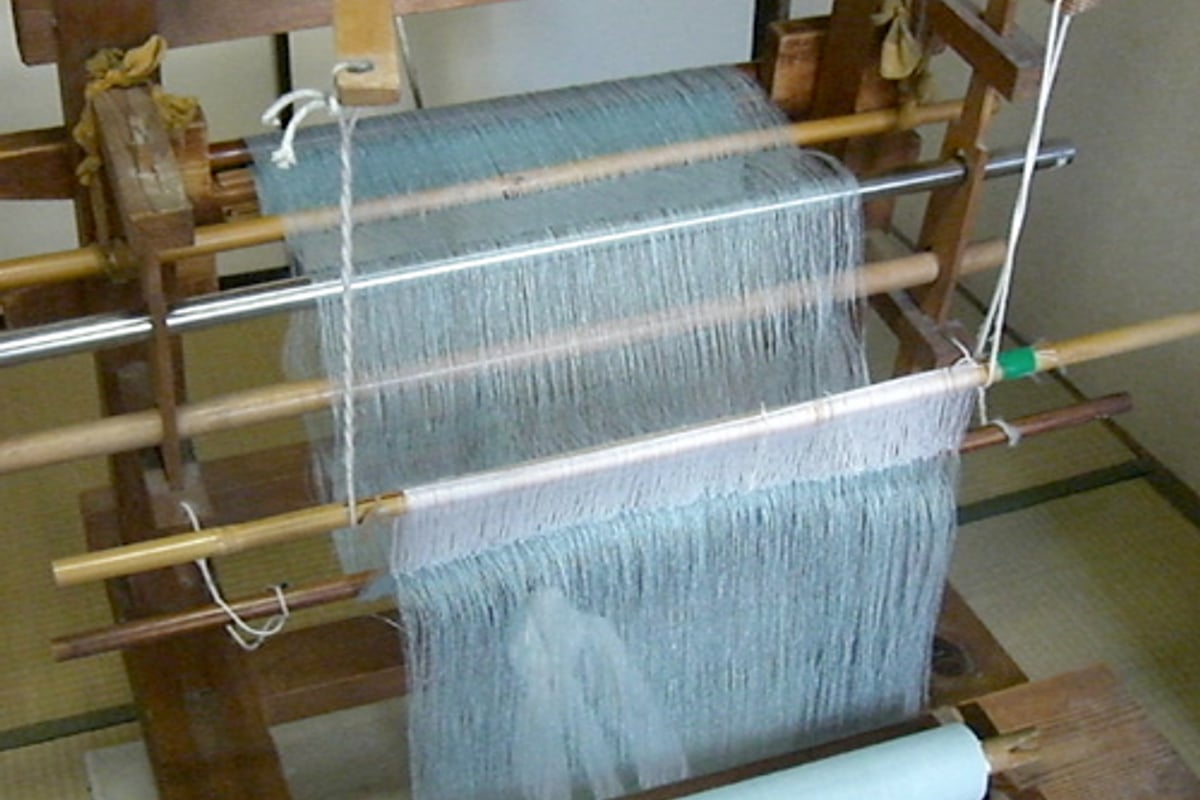
Yuki-tsumugi
Yuki-tsumugi
Yuki-tsumugi is a silk textile woven for centuries across present-day Yuki City in Ibaraki Prefecture and, across the Kinu River, the area around Oyama City in Tochigi Prefecture. Its prototype is said to be 'ashiginu,' a silk fabric presented to the imperial court by Hitachi Province in the Nara period; in the Kamakura period its plain, sturdy look made it popular with warriors of the Kanto region, and Yuki became the center of its production. By the Muromachi period it was known nationwide as a specialty product presented to the shogunate under the name 'Yuki-tsumugi.' During the Keicho era (1596-1615), techniques were established through improvements led by the magistrate Ina Tadatsugu, and the textile was designated a Traditional Craft by the Minister of Economy, Trade and Industry on March 30, 1977, followed by UNESCO Intangible Cultural Heritage listing in 2010. Its defining feature is the 'jibata' (ground loom) technique, in which the weaver ties the warp threads to their own waist and weaves with the whole body, using almost untwisted thread hand-spun from silk floss - producing fabric lighter than that woven with reeled silk, with a distinctively soft feel and finely detailed kasuri (ikat) patterns.