Image: Wikimedia Commons
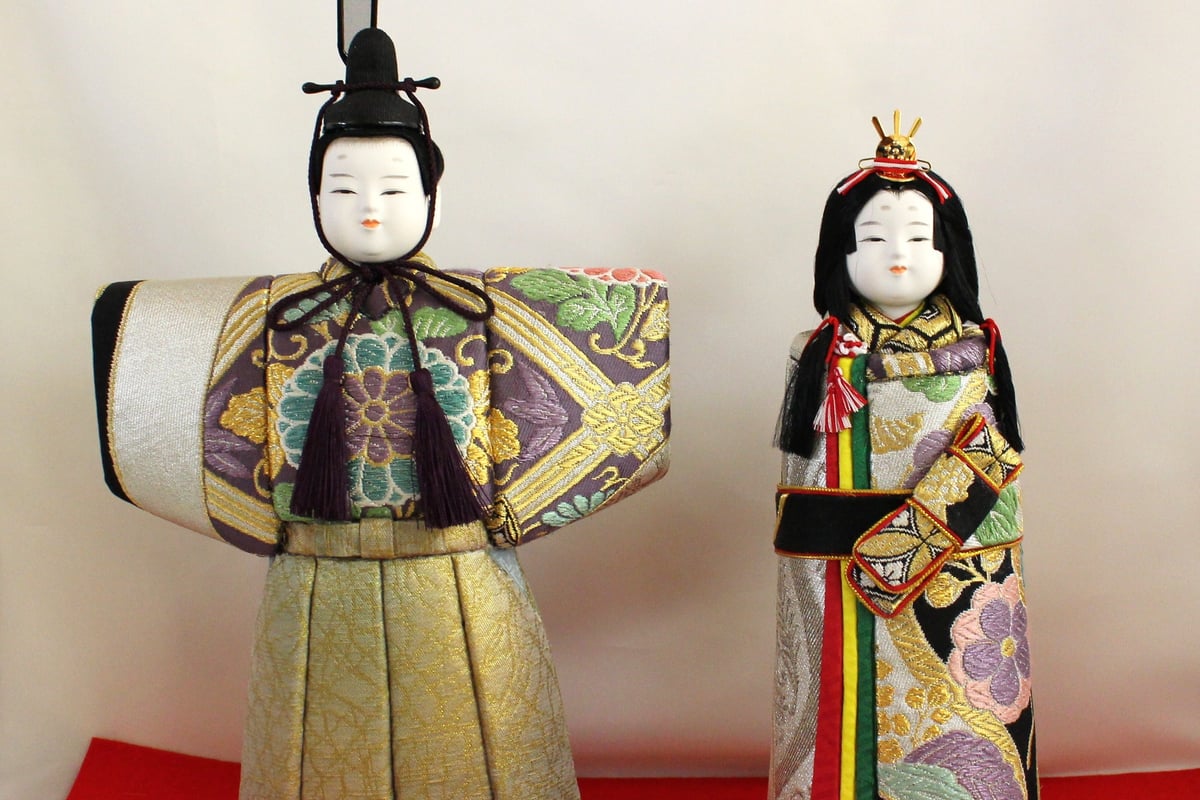
Iwatsuki Ningyo is a general term for the hina dolls, warrior (gogatsu) dolls, kimekomi dolls, and dressed (ishō) dolls made in the Iwatsuki ward of Saitama City. It was designated a Traditional Craft Product by the Minister of Economy, Trade and Industry (METI) in 2007. Its origins are said to date to the Kan'ei era (1634-1647), when craftsmen gathered from across the country to build Nikko Toshogu Shrine settled in Iwatsuki, a post town on the Nikko Onari Kaido road, and began making cabinetry and dolls using the paulownia wood that grew abundantly in the area. Tradition also holds that in 1697, Keishin, a Buddhist image carver from Horikawa in Kyoto, began making doll heads while staying in Iwatsuki by kneading paulownia powder with wheat-gluten paste. For roughly 380 years since then, a system of specialized craftsmen — head makers, hand-and-foot makers, dressers, and accessory makers — has passed down the tradition through division of labor, developing Iwatsuki into Japan's foremost doll-producing region. Today, known as 'Iwatsuki, the Town of Dolls,' it is lined with numerous doll shops and workshops, and its output of hina and gogatsu dolls remains among the highest in the country.
Origin
There are two theories about the origin of Iwatsuki Ningyo. One holds that during the Kan'ei era (1634-1647), craftsmen gathered from across Japan to build Nikko Toshogu Shrine under the third shogun, Tokugawa Iemitsu, settled in Iwatsuki — the first post town on the Nikko Onari Kaido road — and began making chests and dolls from the paulownia wood planted widely in the area. The other holds that in 1697, Keishin, a Buddhist image carver from Horikawa in Kyoto, fell ill while in Iwatsuki, was treated and recovered under the care of a physician to the Iwatsuki domain, and remained in the area afterward, where he took notice of the local paulownia powder and began using it to make doll heads.
History
Throughout the Edo period, Iwatsuki accumulated doll-making expertise, establishing a distinctive production system in which head makers, hand-and-foot makers, dressers, and accessory makers each handled a separate stage of the work, with doll wholesalers assembling the finished pieces. In 1915, forty-five businesses joined together to found the Iwatsuki Ningyo Cooperative, strengthening the region's cohesion as a production center. Craftsmanship and skilled artisans continued to accumulate in the area, and in 2007 it was designated a national Traditional Craft Product by the Minister of Economy, Trade and Industry. Today Iwatsuki is known as Japan's leading producer of hina and gogatsu dolls.
Features
The defining feature of Iwatsuki Ningyo is its thoroughgoing division of labor, in which specialized craftsmen separately handle the head, hands and feet, body (costume), and accessories. Dressed (ishō) dolls are built by fitting costumes onto a 'wara-do' base of a straw bundle wrapped in washi paper, while kimekomi dolls use a body made of tōso (a kneaded mixture of paulownia powder and wheat-gluten paste) carved with fine grooves, into which fabric is tucked and glued to represent the costume. The heads are finished with many layers of gofun (shell-based pigment), giving them delicate, refined expressions.
Materials Used
Production Process
- 1
Making the head
Tōso is packed into a wooden mold and shaped, then after drying it is coated with many layers of gofun and painted to create a delicate expression.
- 2
Making the hands and feet
Hands and feet are shaped from tōso or wood and finished with gofun. Fine details, such as the positioning of the fingers, are also done entirely by hand.
- 3
Making the body and costume
For dressed (ishō) dolls, a wara-do base of straw wrapped in washi is made and the costume fitted onto it. For kimekomi dolls, fabric is tucked into grooves carved into the body to represent the costume.
- 4
Assembly
A doll wholesaler combines the separately finished head, hands and feet, body, and accessories — each produced by a different specialist — into a single completed doll.
Artisans & Workshops
鈴木人形(鈴木賢一)
Founded in 1934, this long-established doll workshop was established by Suzuki Ryuzo, known as a leading master of Edo kimekomi dolls. Workshop tours are available, and the studio produces a wide range of works, from hina and gogatsu dolls to kimekomi dolls.
Official site →How to Buy
- 人形の東玉 岩槻総本店
- The main store of a leading Iwatsuki doll shop with roots going back to the Edo period. The fourth floor houses a museum displaying around 3,000 dolls dating from the Edo period to the early Showa era.Where to buy →PR
- さいたま市岩槻人形博物館
- Japan's first public museum dedicated entirely to dolls. Its exhibits introduce Iwatsuki's doll culture and production process, alongside special exhibitions and events.Where to buy →PR
Hands-on Experiences
さいたま市岩槻人形博物館 江戸木目込人形体験
さいたま市岩槻区本町6-1-1
Reservation required; choose your favorite kimono fabric to make the doll; includes seasonal Japanese sweets and matcha; finished piece can be taken home the same day.
View details →人形の東玉 岩槻総本店 体験教室
さいたま市岩槻区本町1-3
Kimekomi doll 'Osumashi' from around 2,160 yen; held May-November; reservation required.
View details →