 Image: Wikimedia Commons
Saitama Prefecture
Bordering Tokyo, Saitama is a prefecture where the craftsmanship and food culture that once supported daily life in Edo and Tokyo still thrive today. It retains a rich variety of traditional crafts that grew into full-fledged industries, from the doll-making of Iwatsuki - settled by artisans who gathered for the construction of Nikko Toshogu Shrine - to the cast ironware of Kawaguchi, blessed with fine sand along the Arakawa and Shibakawa rivers, and the silk textile 'Chichibu Meisen' of the Chichibu region. Its food culture is likewise rooted in everyday life, from the sweet-potato confectionery culture of Koedo Kawagoe to Gyoda's tabi socks and its local specialty 'Zeri Furai,' as well as Miso Potato and Shakushina-zuke pickles handed down in the mountain villages of Chichibu. From the plateaus of Musashino to the mountains of Chichibu, each area has nurtured its own distinct industries and food culture.
Saitama's Traditional Crafts
Iwatsuki Ningyo
Iwatsuki Ningyo
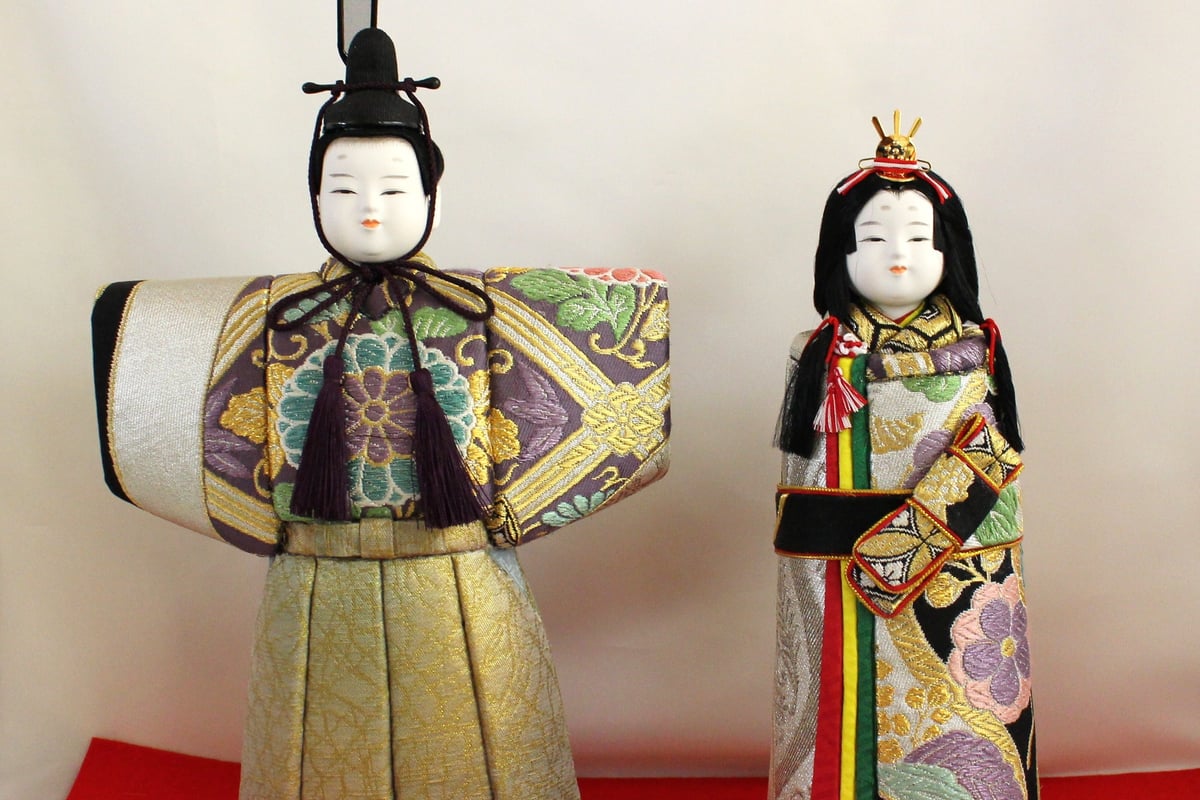
Iwatsuki Ningyo is a general term for the hina dolls, warrior (gogatsu) dolls, kimekomi dolls, and dressed (ishō) dolls made in the Iwatsuki ward of Saitama City. It was designated a Traditional Craft Product by the Minister of Economy, Trade and Industry (METI) in 2007. Its origins are said to date to the Kan'ei era (1634-1647), when craftsmen gathered from across the country to build Nikko Toshogu Shrine settled in Iwatsuki, a post town on the Nikko Onari Kaido road, and began making cabinetry and dolls using the paulownia wood that grew abundantly in the area. Tradition also holds that in 1697, Keishin, a Buddhist image carver from Horikawa in Kyoto, began making doll heads while staying in Iwatsuki by kneading paulownia powder with wheat-gluten paste. For roughly 380 years since then, a system of specialized craftsmen — head makers, hand-and-foot makers, dressers, and accessory makers — has passed down the tradition through division of labor, developing Iwatsuki into Japan's foremost doll-producing region. Today, known as 'Iwatsuki, the Town of Dolls,' it is lined with numerous doll shops and workshops, and its output of hina and gogatsu dolls remains among the highest in the country.
Chichibu Meisen
Chichibu Meisen
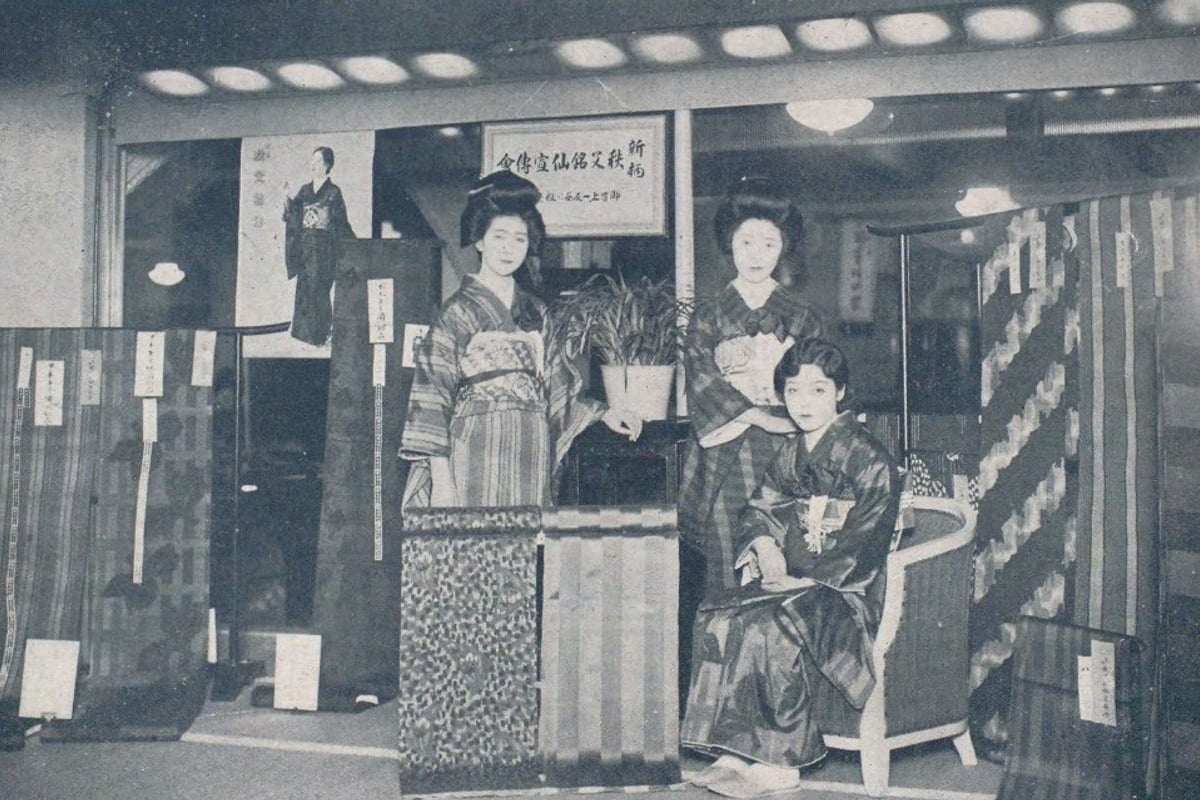
Chichibu Meisen is a plain-weave silk fabric produced mainly in Chichibu City, Saitama Prefecture, designated a Traditional Craft Product by the Minister of Economy, Trade and Industry (METI) in 2013. Tradition holds that it began in the reign of Emperor Sujin, when Chichibuhikonomikoto taught the local people the arts of sericulture and weaving. It was originally a sturdy work garment called 'futoori,' made from cocoons that did not meet standard grades, and was so durable it earned the nickname 'Oni Chichibu' ('Demon Chichibu'). The turning point came in 1908, when Sakamoto Sotaro devised the distinctive 'hogushi-nassen' technique: the warp threads are loosely pre-woven into a sheet, stencil-dyed, and then woven with the weft, so that the pattern of the warp and the color of the weft overlap to create patterns with a sense of depth. Because the dye penetrates without a clear front and back, the fabric can be used on either side — a feature that helped it become a nationally popular, fashionable, modern garment during the Taisho and Showa eras. Today, weaving houses in Chichibu City continue to pass on this technique.

Kasukabe Kiri Tansu
Kasukabe Kiri Tansu
Kasukabe Kiri Tansu is a paulownia-wood chest of drawers made mainly in Kasukabe City, Saitama Prefecture, designated a Traditional Craft Product by the Minister of Economy, Trade and Industry (METI) in 1979. Its origins are said to trace back to the early Edo period, when some of the craftsmen gathered from across Japan to build Nikko Toshogu Shrine settled in Kasukabe, a post town on the Nikko Kaido road, and began making cabinetry and small items from the paulownia wood abundant in the area. Around the Tenpo era (circa 1830), businesses specializing in paulownia chest-making increased, taking advantage of the water transport routes of the Furutone and Edo rivers to ship products to Edo, and the region developed into a production center. Paulownia wood expands when it absorbs moisture and contracts as it dries, so during humid seasons the chests swell slightly and seal tightly, said to protect the kimono and other items stored inside from moisture and fire. The beauty of its wood grain, shown off through unfinished wood surfaces, and its sturdy, warp-resistant construction remain highly valued today.
Ogawa Washi (Hosokawa-shi)
Ogawa Washi (Hosokawa-shi)
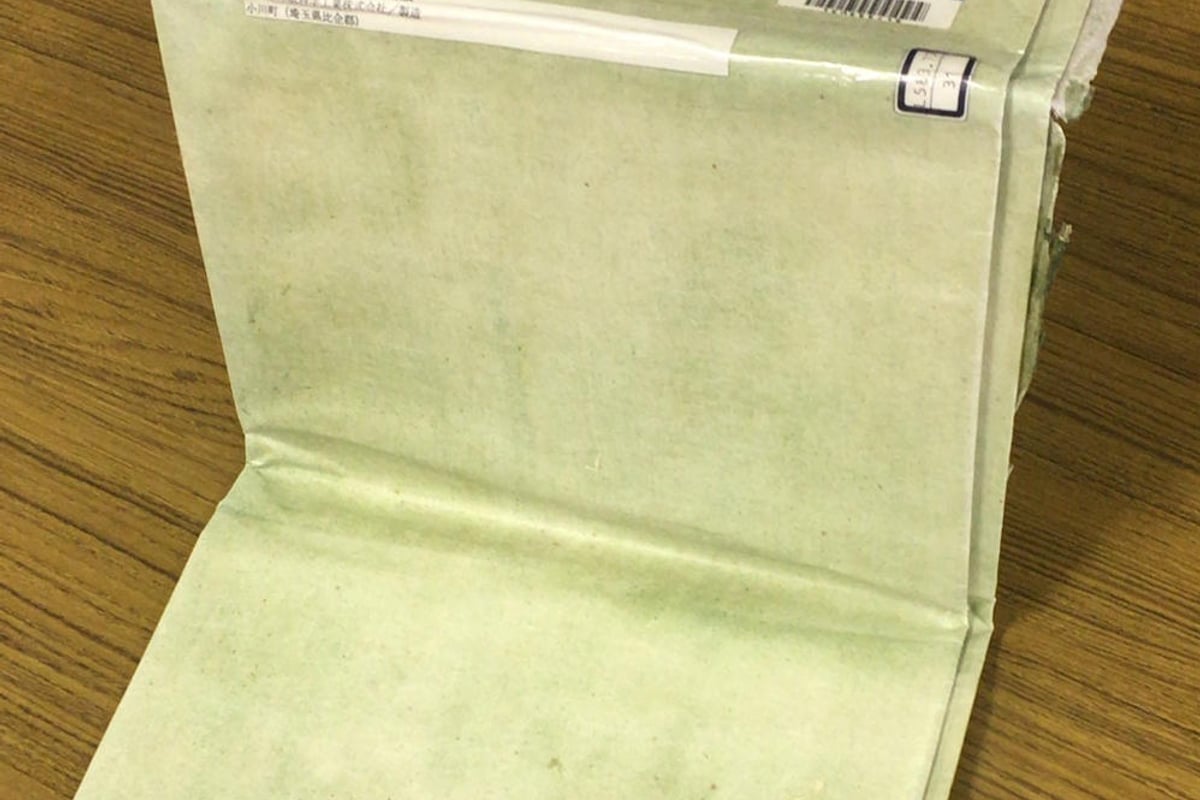
Ogawa Washi is a handmade Japanese paper passed down in Ogawa Town and Higashichichibu Village in Saitama Prefecture. Among its traditional techniques, 'Hosokawa-shi,' which uses kōzo (paper mulberry) as its raw material, was designated a National Important Intangible Cultural Property in 1978, and in November 2014 it was registered, together with Honmino-shi (Gifu Prefecture) and Sekishu-banshi (Shimane Prefecture), as UNESCO Intangible Cultural Heritage under 'Washi, craftsmanship of traditional Japanese hand-made paper' — the first UNESCO registration in Saitama Prefecture. The name 'Hosokawa-shi' is said to derive from the technique having been transmitted to Ogawa from paper made in Hosokawa Village in the former Kii Province (present-day Wakayama Prefecture). Using only domestically grown kōzo as its raw material, the paper is made through traditional processes such as steaming, boiling, sorting out impurities, and beating the fibers, then hand-formed one sheet at a time using the 'nagashi-zuki' method with neri (a mucilage from the tororoaoi plant) added to the pulp. It combines strength with a beautiful, subtly lustrous texture and is highly regarded as a material for restoring old documents.
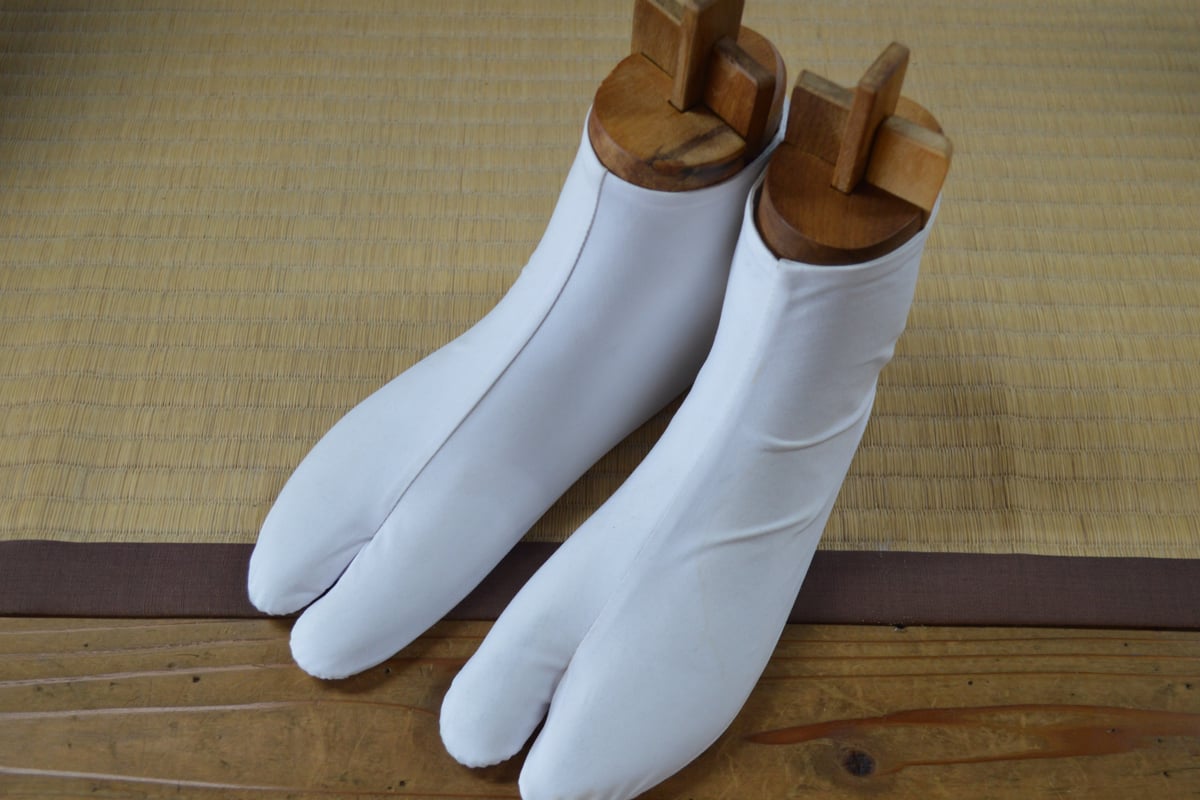
Gyoda Tabi
Gyoda Tabi
Gyoda Tabi is the traditional technique of tabi (split-toe sock) making handed down in Gyoda City, Saitama Prefecture, and is a Traditional Craft Product designated by the Minister of Economy, Trade and Industry (METI). Lying between the Tonegawa and Arakawa rivers, Gyoda has sandy alluvial soil, abundant water, and a hot, humid summer climate well suited to growing cotton and indigo, and in the Edo period it became a major production center for the indigo-dyed cotton cloth known as 'aojima.' Building on this cotton cloth and its sewing techniques, tabi making is said to have begun around the Jokyo-Kyoho era (late 17th to early 18th century), and by the Tenpo era the town had grown to house 27 tabi shops side by side. When sewing machines were introduced in the Meiji era, production expanded dramatically, and by 1938 Gyoda accounted for 80% of the nation's tabi output, making it Japan's leading tabi-producing area. Numerous 'tabi-gura' storehouses built of earthen walls and brick, which convey the prosperity of that era, still remain throughout the city, and in 2017 the city was certified as a Japan Heritage site under the title 'Tabi-gura Town of Gyoda, Supporting the Feet of Japanese Kimono Culture.' A collection of 5,484 related items has also been designated a Nationally Designated Important Tangible Folk Cultural Property, and local makers continue to produce a wide range of tabi today, from those for kimono wear to festival and running tabi.
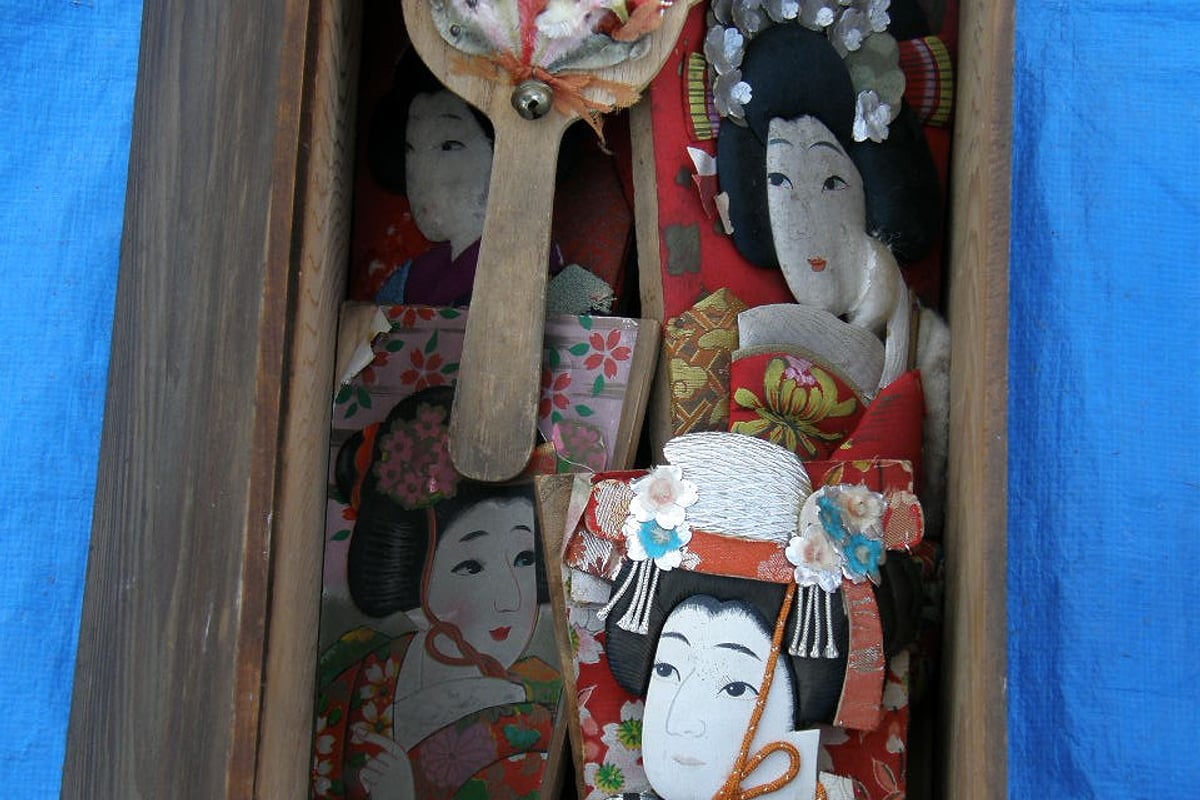
Edo Oshie Hagoita
Edo Oshie Hagoita
Edo Oshie Hagoita are battledores (hagoita) that use the 'oshie' technique, padding thick paper with cotton and wrapping it in cloth, to give three-dimensional form to kabuki actors and figures styled after them. The oshie technique developed during the Bunka-Bunsei era of the Edo period (1804-1829), and against the backdrop of kabuki's popularity and the spread of ukiyo-e prints, 'yakusha hagoita' decorated with likenesses of actors became popular within the townspeople's culture of Edo. After the war, oshie hagoita craftsmen who had lived for generations around Asakusa in Tokyo relocated to Kasukabe City, Saitama Prefecture, in search of good-quality paulownia wood suited to hagoita boards, and Kasukabe developed into a major production center; in 1977 it was designated a Saitama Prefecture-designated Traditional Handicraft. Finishing a single hagoita is said to require combining 50 to 70 kinds of materials through around 200 hand-worked steps, and the advanced techniques of varying the cotton padding and cloth handling to depict figures' expressions and gestures three-dimensionally have been passed down. In Iwatsuki Ward, known as a production area for hina dolls and Gogatsu Ningyo (May Festival dolls), doll shops also make and sell hagoita.
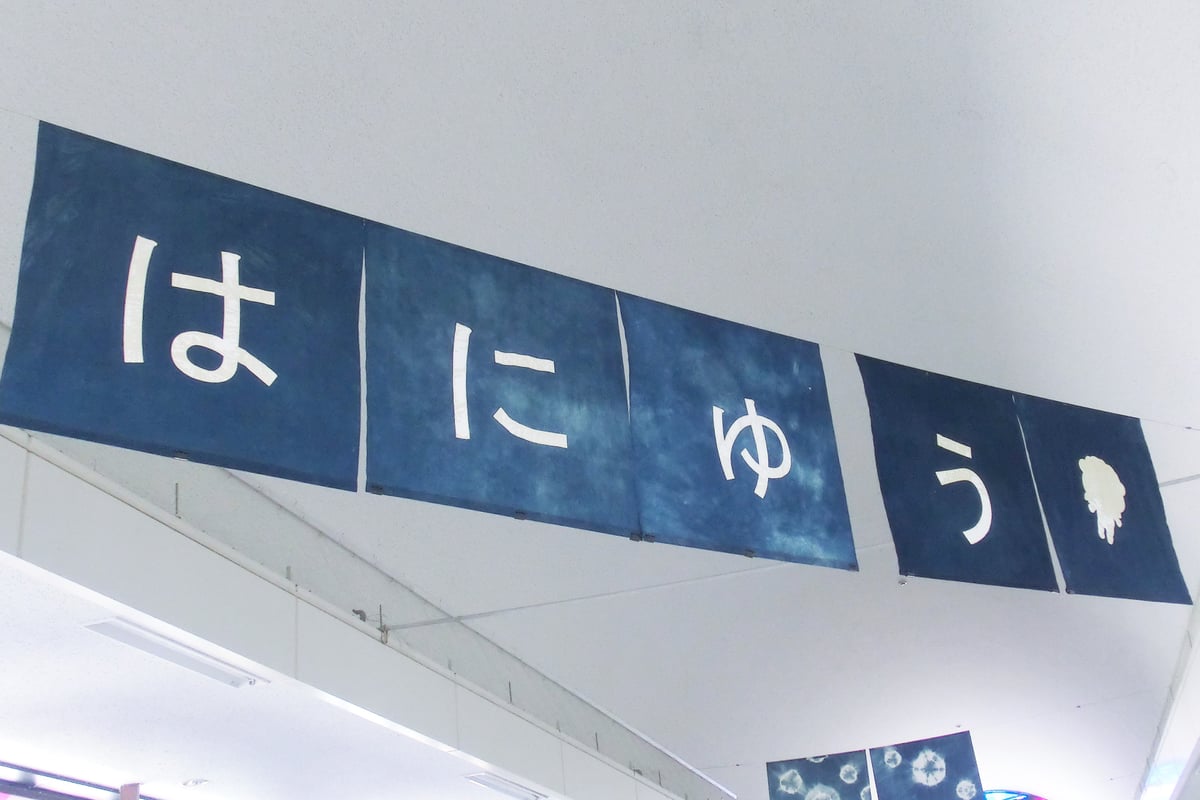
Bushu Shoai-zome
Bushu Shoai-zome
Bushu Shoai-zome is an indigo-dyeing technique passed down around Hanyu, Kazo, and Gyoda cities in northern Saitama Prefecture, whose defining feature is the use of 'shoai' dye made by naturally fermenting indigo leaves. From around the Tenmei era of the late Edo period (1781-1789), indigo cultivation spread by taking advantage of the fertile soil along the Tonegawa River, and it is said to have begun when farm wives dyed their families' clothing during the agricultural off-season. In the Meiji era it grew into a major industry, and by the 1900s and 1910s more than 200 'konya' (indigo-dyeing workshops) stood side by side, centered on Hanyu. There are two techniques: 'ito-zome' (yarn dyeing) and 'katazome' (stencil dyeing of cloth, known as 'aojima'), with roughly 70% of Bushu indigo dyeing done by yarn dyeing. Naturally fermented indigo has a depth of color that chemical dyes lack, and because the color is said to grow more beautiful as it fades, it is also affectionately known as 'Japan Blue.' It has been designated a Saitama Prefecture-designated Traditional Handicraft and was also registered as a regional collective trademark in 2008.
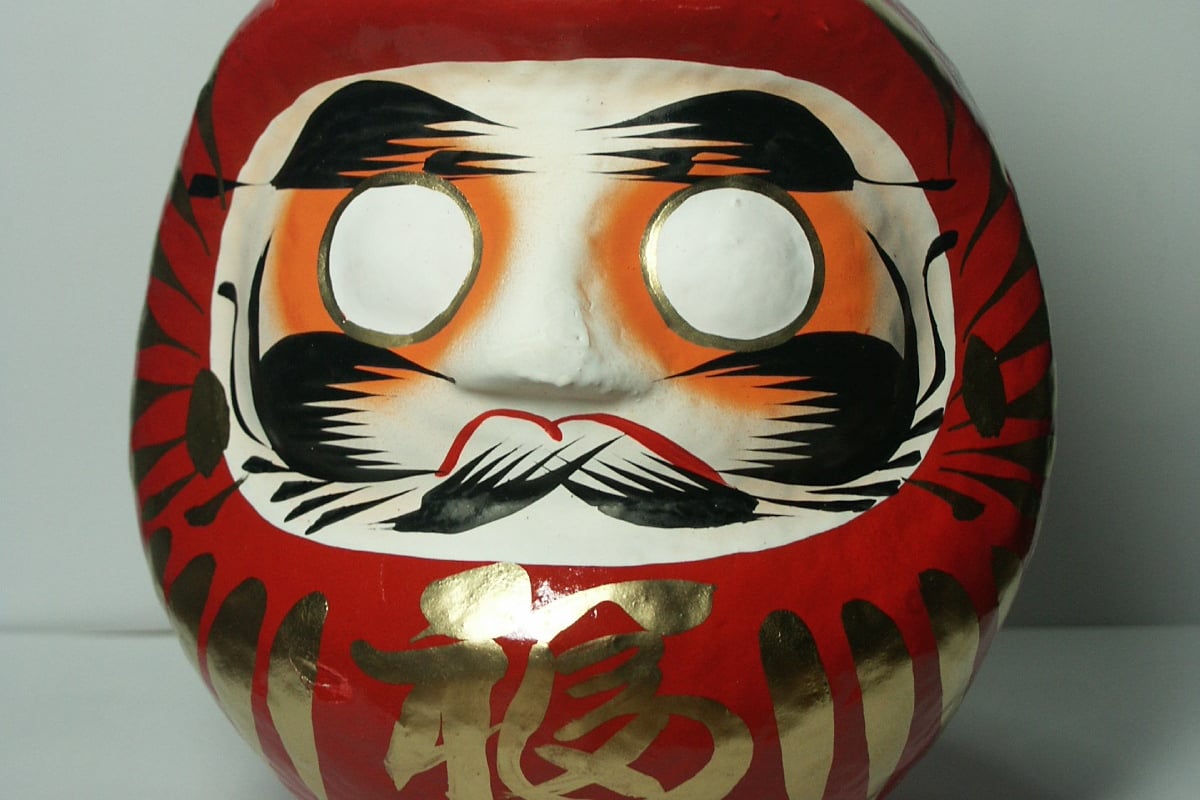
Koshigaya Daruma
Koshigaya Daruma
Koshigaya Daruma is a hariko (papier-mache) daruma made mainly in Koshigaya City, Saitama Prefecture, known for its pale, whitish skin tone, somewhat high nose bridge, and refined, gentle expression. It is said to have begun around the Kyoho era of the mid-Edo period (1716-1736), when a doll maker known as 'Darukichi' in the Makuri area of Koshigaya City added the figure of the seated Bodhidharma to the then-popular okiagari-koboshi (self-righting toy). Every step of the process is done by hand, from layering and pasting Japanese paper over a mold, drying it and removing it from the mold, applying the base coat and coloring, to finally painting in the beard and eyebrows. Painting the beard in particular requires the skilled technique of using a long-tipped menso brush and finishing with the same brush regardless of the daruma's size. Cherished as an auspicious symbol of 'falling down seven times, getting up eight,' it is popular at New Year's lucky-charm markets, and several workshops in Koshigaya City continue production today; it was designated a Saitama Prefecture-designated Traditional Handicraft in 1984.
Koshigaya Katchu
Koshigaya Katchu
Koshigaya Katchu is a traditional technique from Koshigaya City, Saitama Prefecture, for making the miniature armor and helmets of Gogatsu Ningyo displayed for Boys' Day (Tango no Sekku). Its distinctive feature is combining several craft techniques passed down since the Edo period, metalworking, lacquerwork, leather craft, and braided cord, into a single suit of armor, resulting in vivid colors and a dignified, stately look. Craftsmen known as 'katchushi' apply specialized skills to each part, such as the helmet bowl, the fukikaeshi (turned-back brim), and the odoshi (lacing) of the armor, and because everything is finished by hand, the doll maker's skill determines the quality of the finished piece. Workshops in Koshigaya City, led by Katchu Kobo Asahina, founded in 1959, have been central to passing down the technique, and in 1996 (Heisei 8) it was designated a Saitama Prefecture-designated Traditional Handicraft as 'Koshigaya Katchu.' Armor with designs inspired by Sengoku-era warlords is also popular, and demand continues today for Boys' Day gifts.
Kawaguchi Imono
Kawaguchi Imono
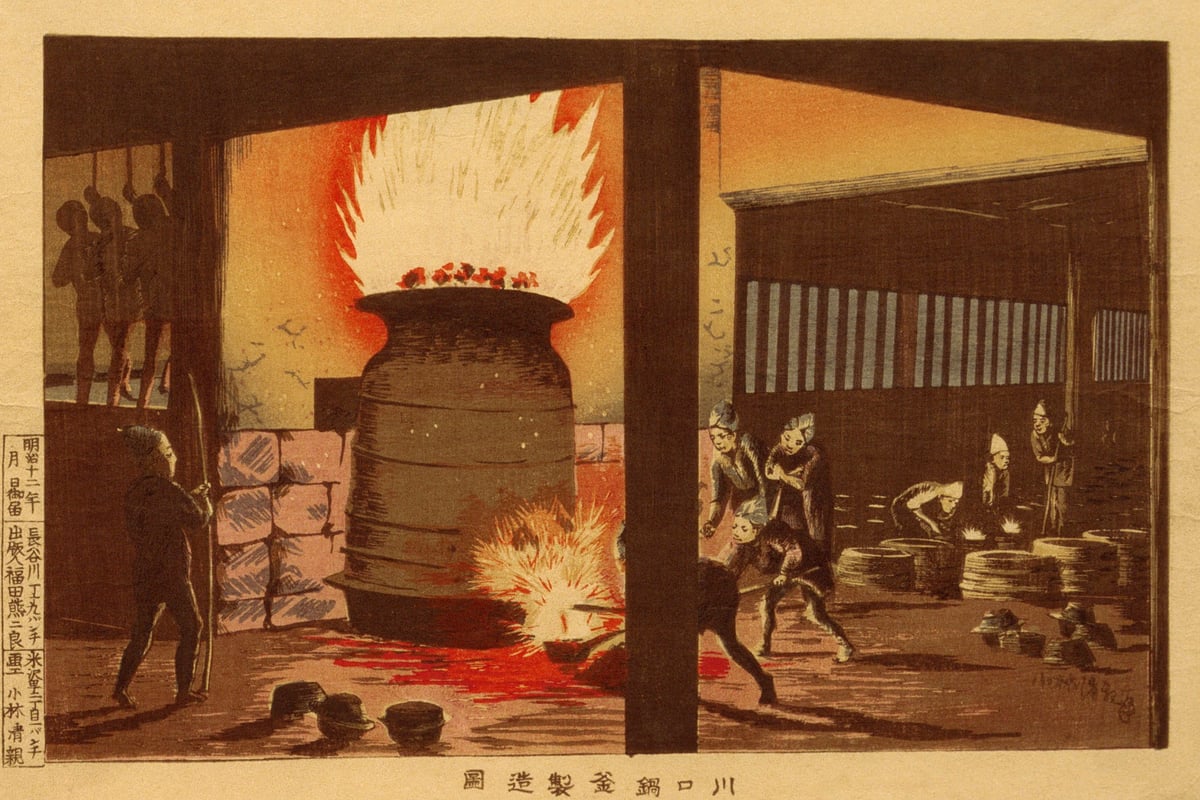
Kawaguchi Imono is the general term for the casting industry that developed in Kawaguchi City, situated between the Arakawa and Shiba rivers, an area known as 'Kawaguchi, the Town of Casting.' Its origins remain uncertain, with several competing theories placing its beginnings in the Heian, Kamakura, Nanboku-cho, or Sengoku periods, but it is thought that casters had settled in the area by at least the medieval period. Good-quality sand and clay suited to mold-making could be obtained along the Arakawa and Shiba river basins, and the area's proximity to the major consumer center of Edo (Tokyo), together with its convenient water transport, allowed it to develop from the Edo period onward into a major production center for pots, kettles, farm tools, temple bells, and more. From the Meiji era, factory production and technological innovation advanced, and in 1942 Kawaguchi achieved the highest production volume in Japan among single cities; it is also known as the setting of the film 'Kyupora no Aru Machi' (The Town with the Cupola Furnace). In recent years, production has continued across a wide range of fields, from household goods to industrial products, pursuing lighter weight and refined design.
Saitama's Local Food
Soka Senbei
Soka Senbei
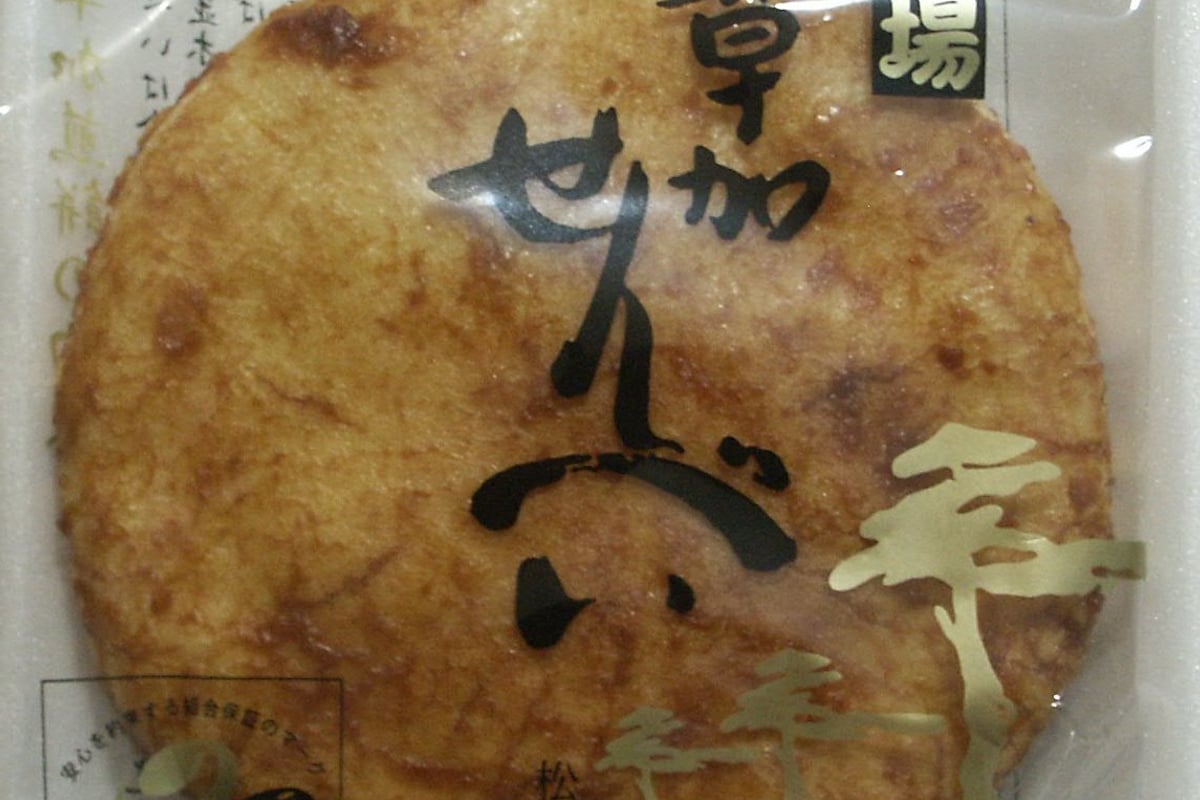
Soka senbei is a hard-baked soy sauce rice cracker that originated in Soka City, Saitama Prefecture. Rice steamed and pounded into dough is sun-dried, then slowly grilled over charcoal before being brushed with soy sauce. Soka has long been known as a rice-growing region, and as a post town on the Nikko Kaido highway lined with teahouses for travelers, a trade grew up selling grilled rice cakes made from dumpling-shaped dried rice, a preserved food. When soy sauce production flourished in the late Edo period, the current style of brushing soy sauce onto grilled dough took hold, and from the Meiji era onward specialist cracker shops multiplied, spreading Soka senbei's fame. It is known for its crisp bite and fragrant soy sauce aroma, and today many shops in the city still make and sell it, making it one of Saitama's best-loved souvenir sweets.
Jumangoku Manju
Jumangoku Manju
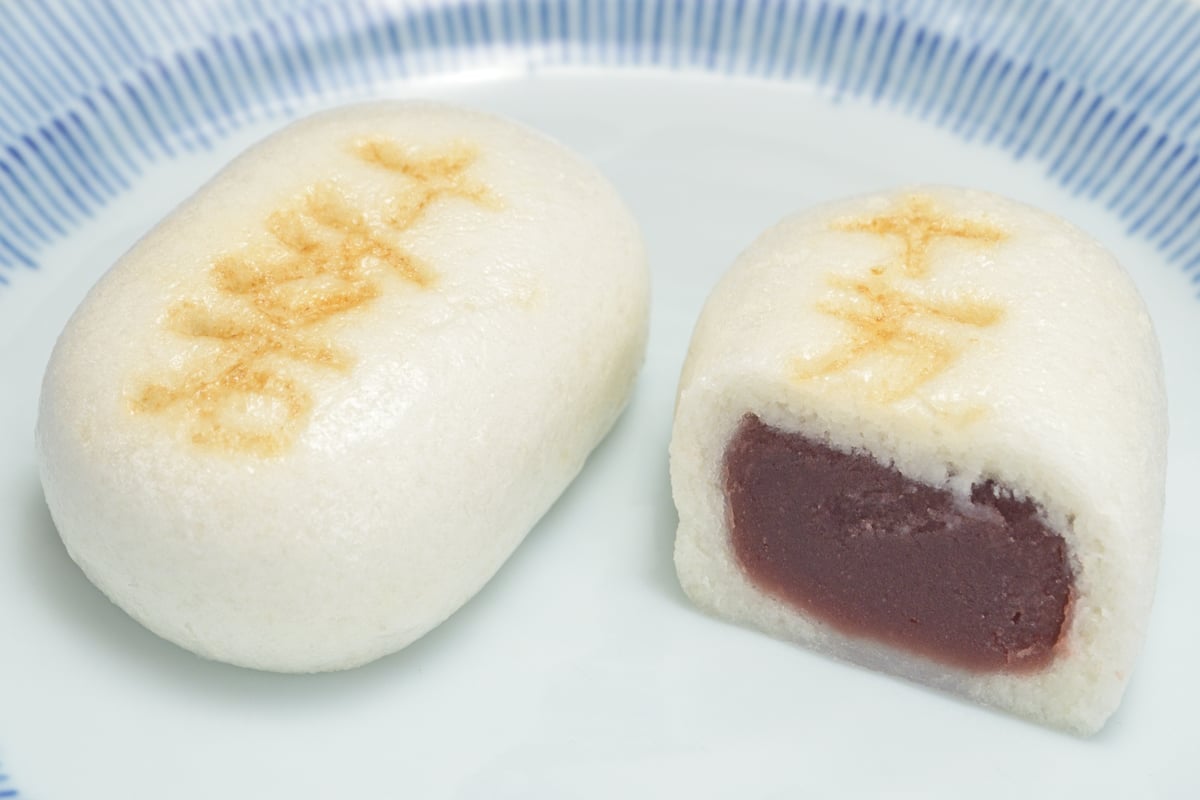
Jumangoku Manju is a jo-yo manju made by the confectionery shop 'Jumangoku Fukusaya' in Gyoda City, Saitama Prefecture — a refined, delicately sweet treat in which white bean paste is wrapped in a moist dough containing gyuhi (pounded mochi). The name comes from Gyoda's history as the castle town of the 100,000-koku Oshi Domain. In 1952, when sugar rationing was lifted, the Japanese confectionery shop 'Fukuchaya' was founded and began selling the treat, and in 1960 the company was renamed 'Jumangoku Fukusaya' to build the brand. It became widely known through TV Saitama's local commercials featuring the catchphrase 'Umai, umasugiru!' ('Delicious, too delicious!'), said to have been created by the woodblock print artist Shiko Munakata, and it is now a familiar Saitama souvenir found in gift shops both inside and outside the prefecture.
Gokabo
Gokabo
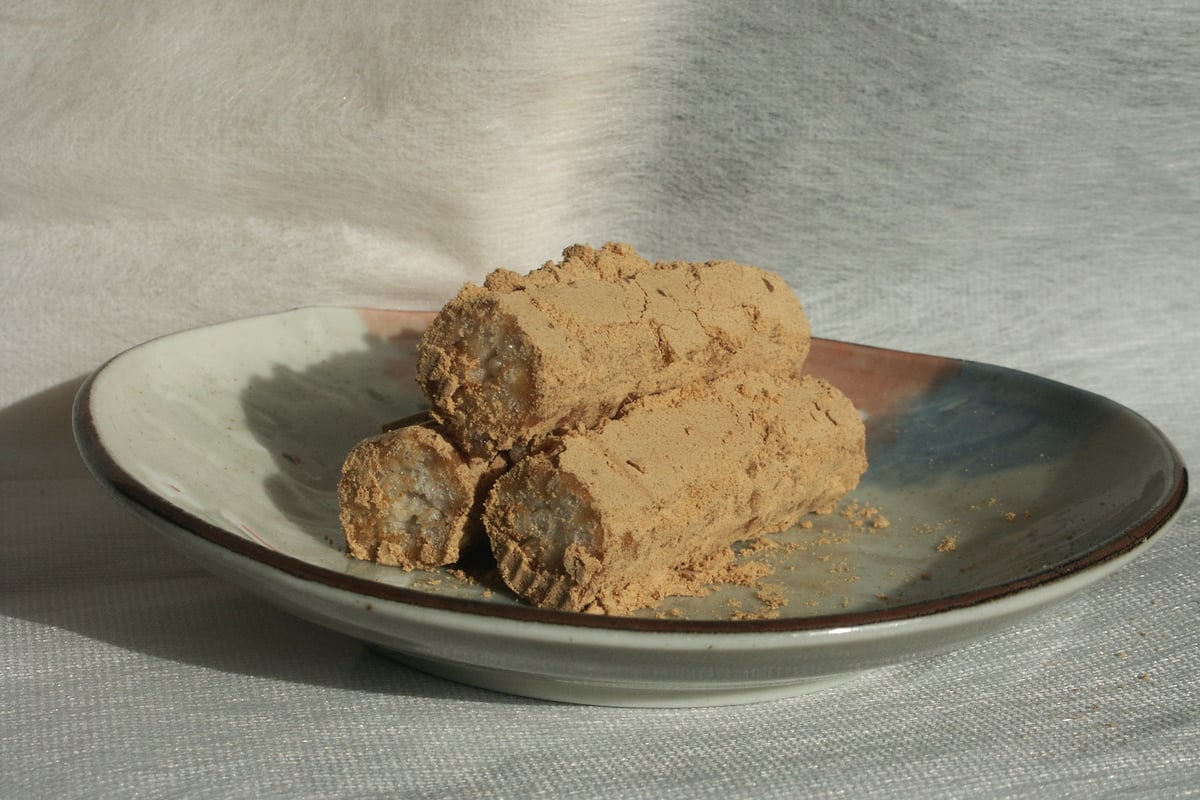
Gokabo is a local confection that originated in Kumagaya City, Saitama Prefecture, made by parching steamed glutinous rice into a malted 'okoshidane,' binding it into a stick shape with starch syrup, and coating the outside with roasted soybean flour (kinako). Kumagaya, which flourished as a post town on the Nakasendo highway, had an abundance of high-quality 'Ishihara rice,' soybeans, and the barley used to make starch syrup, and it is said the confection was first sold under the name 'Gokabo' during the Bunsei era (1818-1829). Later, the characters were changed to mean 'the five grains are the treasure of the household.' There are several theories about its origin, including one tracing it to a confectioner in Gunma and another to Gokamura Village in Shimosa Province, and amid these mixed accounts it spread across the northern Kanto region. Known for the fragrant aroma of kinako, the gentle sweetness of starch syrup, and a chewy texture, it continues to be made mainly by long-established confectioners in Kumagaya City today.
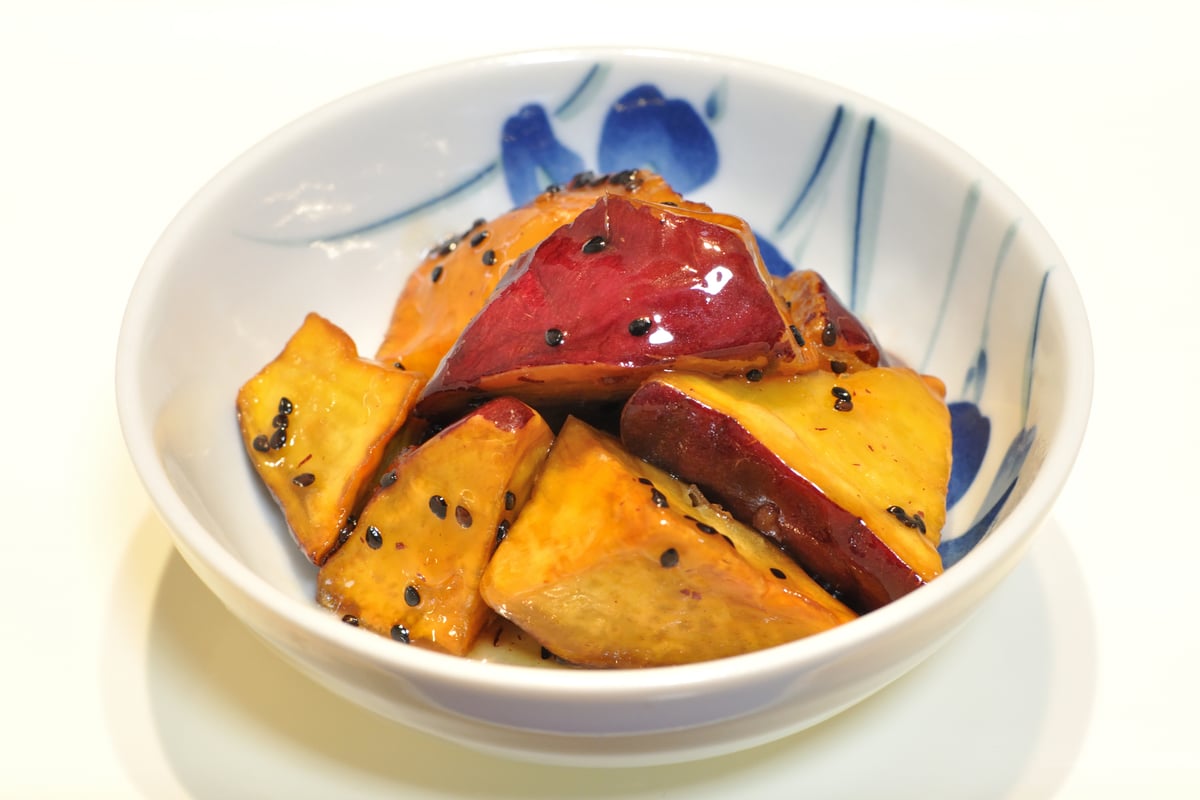
Kawagoe Imo Ryori (Daigaku-imo etc.)
Kawagoe Imo Ryori (Daigaku-imo etc.)
Kawagoe imo ryori is a general term for daigaku-imo (candied sweet potato), dried sweet potato, and other sweet potato confections made using 'Kawagoe imo,' a sweet potato long cultivated around Kawagoe City in Saitama Prefecture. The Musashino Plateau where the Kawagoe domain was located is covered in Kanto loam, and cultivation that makes use of its well-drained soil and fallen-leaf compost has long been known to produce sweet potatoes with a strong sweetness and rich flavor. In the Edo period, the distance from Kawagoe to Nihonbashi in Edo was thirteen ri (about 52 km), and this became linked to a pun on 'kuri (chestnut) yori (than) umai (delicious)' -- nine ri plus four ri makes thirteen ri -- giving rise to the popular saying 'tastier than chestnuts, thirteen ri away,' which spread the fame of Kawagoe sweet potatoes. Today, Kashiya Yokocho, Kawagoe's iconic sightseeing spot, is lined with shops selling sweet potato confections centered on daigaku-imo, and Kawagoe imo remains beloved as one of Saitama's representative food cultures.
Kazo Udon
Kazo Udon
Kazo udon is hand-made udon produced in and around Kazo City, Saitama Prefecture, also known as 'Kazo's hand-made udon.' Its history is said to date back to the mid-Edo period, when it was first served to welcome worshippers in front of Sogan-ji Temple, home to the Fudogaoka Fudoson, one of the three great Fudo temples of the Kanto region. Specialty udon shops are believed to have appeared in Kazo about 200 years ago, and records remain of Okamuraya running a hand-made udon shop in front of the temple. The noodles are known for their strong chewiness and smooth texture, and sesame-based dipping sauce is often used; the custom of serving udon to close out celebrations and funerals remains alive today. Kazo City promotes itself as the 'hometown of udon,' and many hand-made udon shops line its streets.
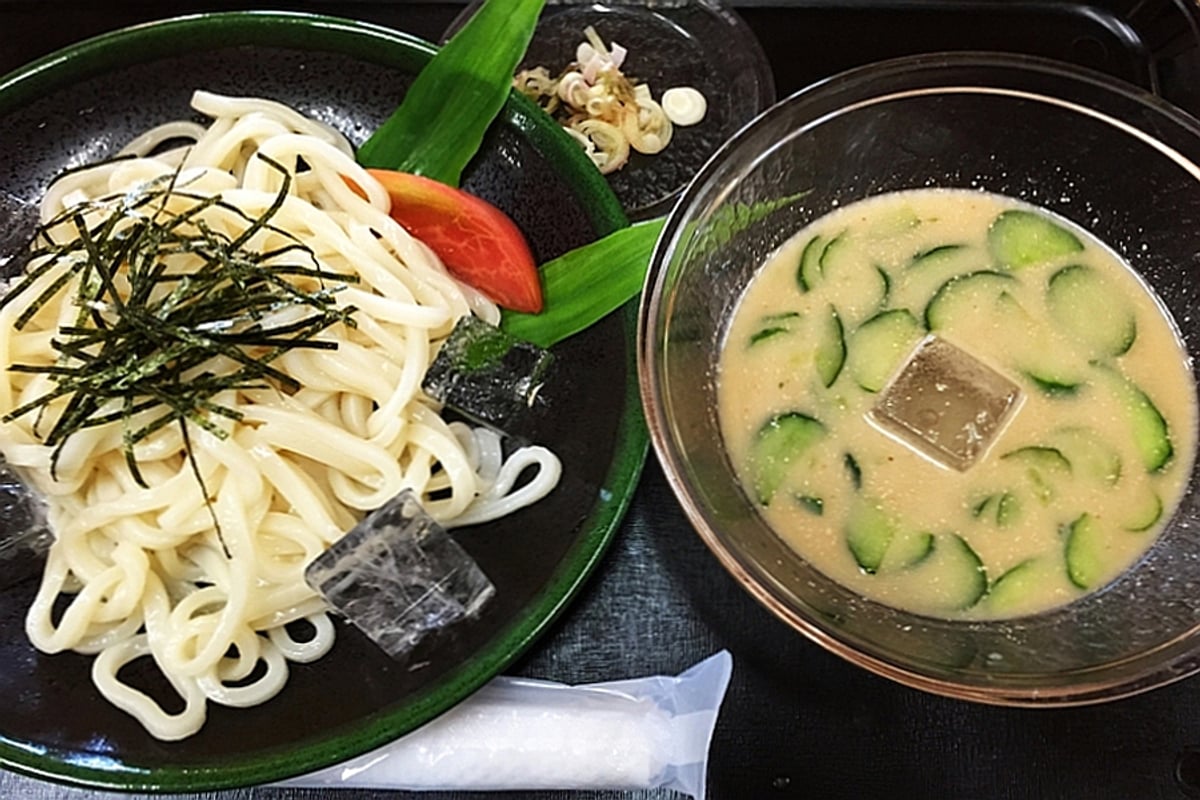
Hiyajiru Udon (Suttate)
Hiyajiru Udon (Suttate)
Hiyajiru udon is a local specialty of Saitama Prefecture in which udon noodles are dipped into a cold sauce made by grinding sesame and miso together in a mortar, then thinning it with cold water and adding summer vegetables such as cucumber, shiso, and myoga ginger. It is also called 'suttate,' a name derived from eating the sauce freshly ground ('suritate'), and has long been enjoyed in the rice-farming areas of the prefecture, centered on Kawajima in Hiki District, as well as Omiya, Kawagoe, and Kazo. Saitama developed its own distinctive 'udon culture' from growing wheat as a secondary crop after rice, and suttate evolved within that tradition as a wise dish that let farmers quickly restore their energy during the hot, busy farming season. The cold dipping sauce, combining the fragrance of sesame, the richness of miso, and the freshness of the garnish vegetables, goes down easily even when summer heat dulls the appetite, and each household has its own blend of ingredients and garnishes. In recent years it has drawn attention as a local 'B-kyu gourmet' dish, and a growing number of restaurants in Kawajima serve it as 'Kawajima Suttate.'
Namazu Ryori (Catfish Cuisine)
Namazu Ryori (Catfish Cuisine)
Namazu ryori is a local specialty of the water-rich lowlands of eastern Saitama Prefecture, between the Arakawa and Edogawa rivers, made with the freshwater fish namazu (catfish). Yoshikawa City in particular is known as the 'hometown of namazu,' and a variety of preparations have been passed down there, including tempura, kabayaki (grilled and glazed), and 'tataki,' in which the flesh is minced, mixed with miso, and deep-fried. Yoshikawa prospered through river transport on the Nakagawa and Edogawa rivers connecting it to Edo, and river-fish merchants gathered there, making namazu, alongside eel, a local specialty so celebrated that people used to say, 'Don't leave Yoshikawa without eating catfish and eel.' In the Kitakawabe district of Kazo City as well, catfish tempura and other dishes rooted in the river-fish food culture of the Tone River basin remain popular, and can now be enjoyed at the dining hall of a roadside station. Known for its white, delicate flesh and distinctive texture, namazu ryori requires skillful preparation and is a Saitama delicacy typically finished by the hands of specialist river-fish restaurants.
Shakushina-zuke
Shakushina-zuke
Shakushina-zuke is a preserved dish representing winter in the Chichibu region, made by pickling 'shakushina' (a leafy Brassica vegetable also known as yukishiro taina) long cultivated there. Its name is said to come from the resemblance of its leaf shape to a rice-serving ladle ('shakushi'), and because Chichibu, surrounded by mountains with little flat farmland, could not rely on rice farming, a pickling culture using field-grown vegetables developed there instead. It is pickled not only with salt but also through lactic acid fermentation, giving it a crisp texture and a pleasant sourness without the heaviness sometimes found in napa cabbage. Households once had their own distinct methods and flavors, and the sight of entire families pickling shakushina together before the onset of winter was once a familiar seasonal scene in Chichibu. Today it can be bought year-round at farm-product direct-sales shops and specialty pickle stores, and is enjoyed not only on its own but also stir-fried in oil or used as a filling for steamed buns.
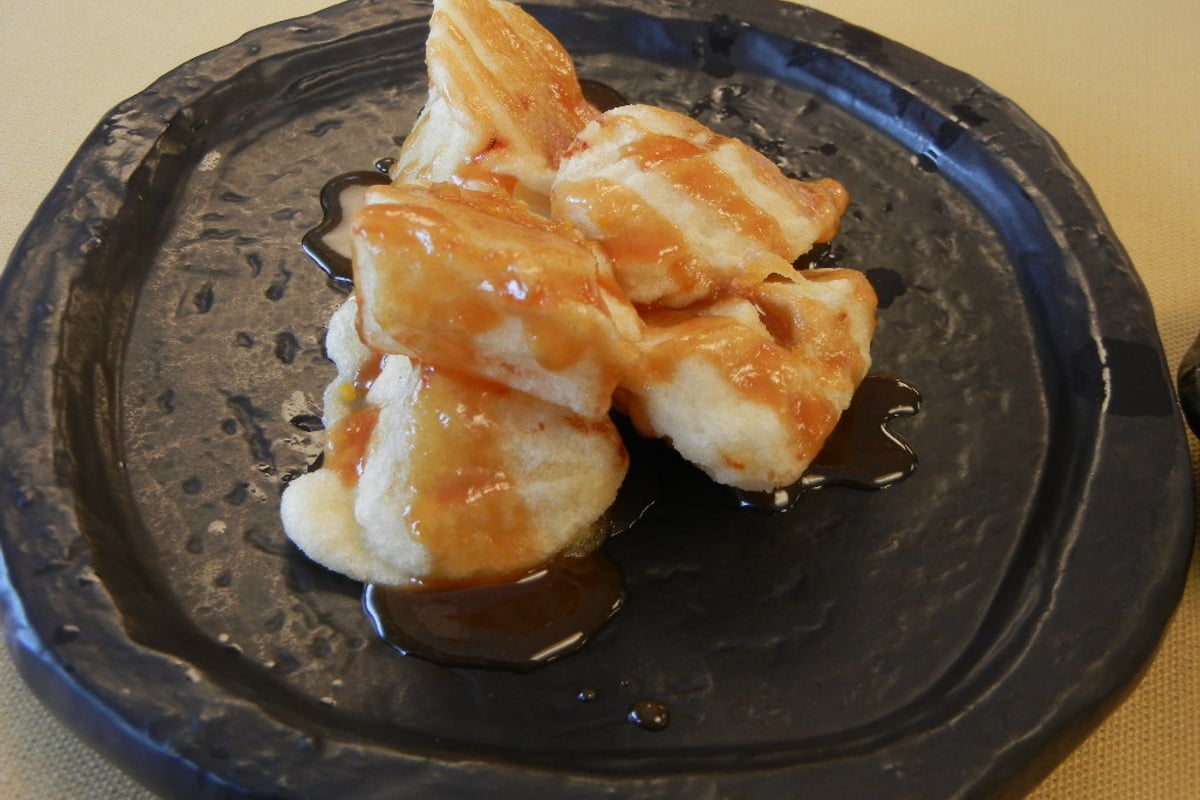
Miso Potato
Miso Potato
Miso potato is a local specialty of the Chichibu region in which boiled potatoes are coated in batter, deep-fried, and topped generously with a sweet-and-savory miso sauce. With little flat land and farming centered on dry fields, Chichibu is said to have originated the dish when small potatoes from the harvest were roasted over an irori hearth and spread with miso sauce, and it was long enjoyed as 'kojuhan,' a light meal eaten between farm chores. For a long time it was known only as a local home-style dish, but after winning the '5th Saitama B-Kyu Local Gourmet Championship in Chichibu' in 2009, its fame spread nationwide. The simple flavor of fluffy potatoes coated in sweet-and-savory miso is enjoyed as a snack, a side dish for drinks, or a regular side dish, and it can now be found at various places around Chichibu City, including eateries, souvenir shops, and shops at tourist spots.
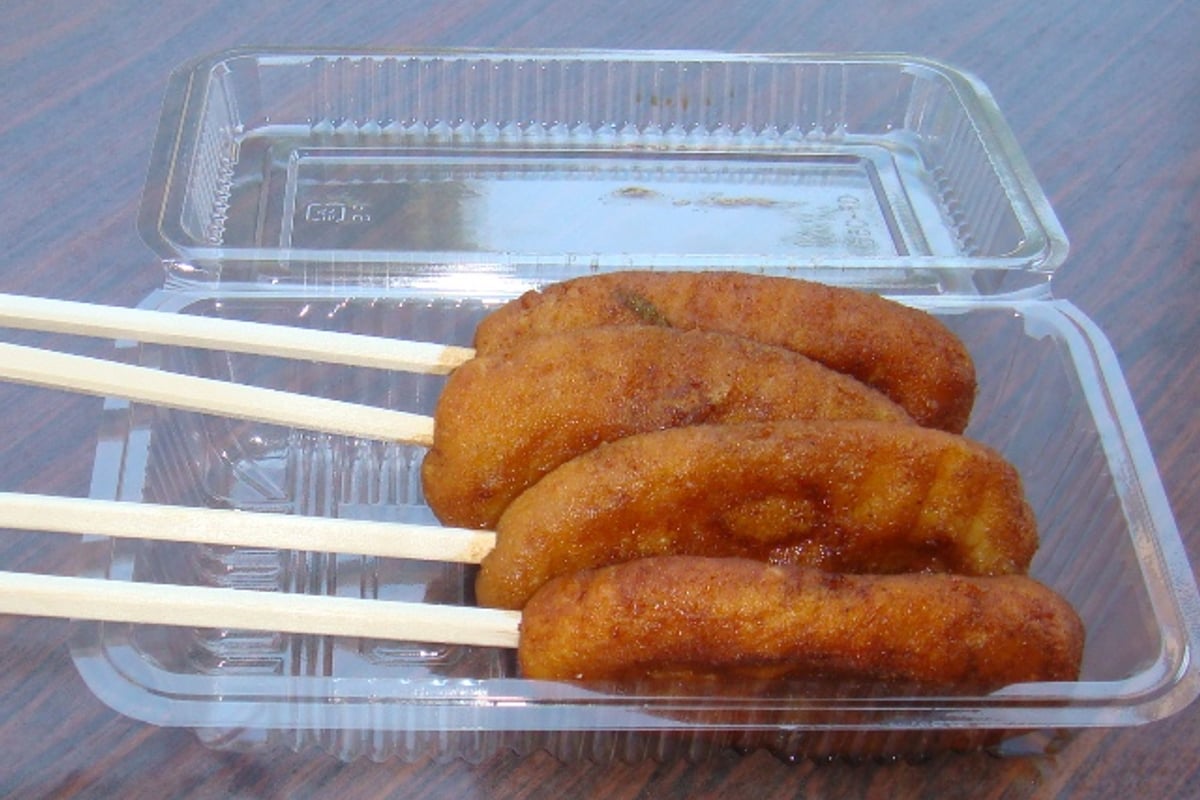
Zeri Furai
Zeri Furai
Zeri furai is a local specialty of Gyoda City made by boiling and mashing potatoes, mixing them with okara (soy pulp), chopped green onion, carrot, and other ingredients, shaping the mixture into small oval discs resembling coins, deep-frying it without any batter, and dipping it in Worcestershire sauce before eating. Despite the name, it has nothing to do with dessert 'jelly'; the widely known theory is that it was originally called 'zenifurai' ('coin-fried,' written with characters meaning 'money' and 'coming'), for its coin-like shape, and the name gradually shifted to 'zeri furai.' Its roots are said to trace back to the owner of 'Ippuku Chaya' in Mochida, Gyoda, who served in the Russo-Japanese War and adapted a vegetable-bun dish he ate in northeastern China; it is said to have already existed by the late Meiji era. Because it uses plenty of okara, it is rich in dietary fiber and considered a healthy dish, and its chewy texture combined with the flavor of the sauce that soaks into it has made it a favorite. It is served and sold at several places around Gyoda City, including specialty shops, tofu shops, and candy stores, and is beloved as a representative everyday snack and light meal of the city.
Model Course
Half-Day Course Around Iwatsuki, the Town of Dolls
Learn about the history and production process of Iwatsuki Ningyo at the Saitama City Iwatsuki Ningyo Museum, then look in on a long-established shop that carries on the Edo Oshie technique, and stroll through streets lined with doll wholesalers.
Koedo Kawagoe Course: Tasting Sweet Potato Confections and Udon
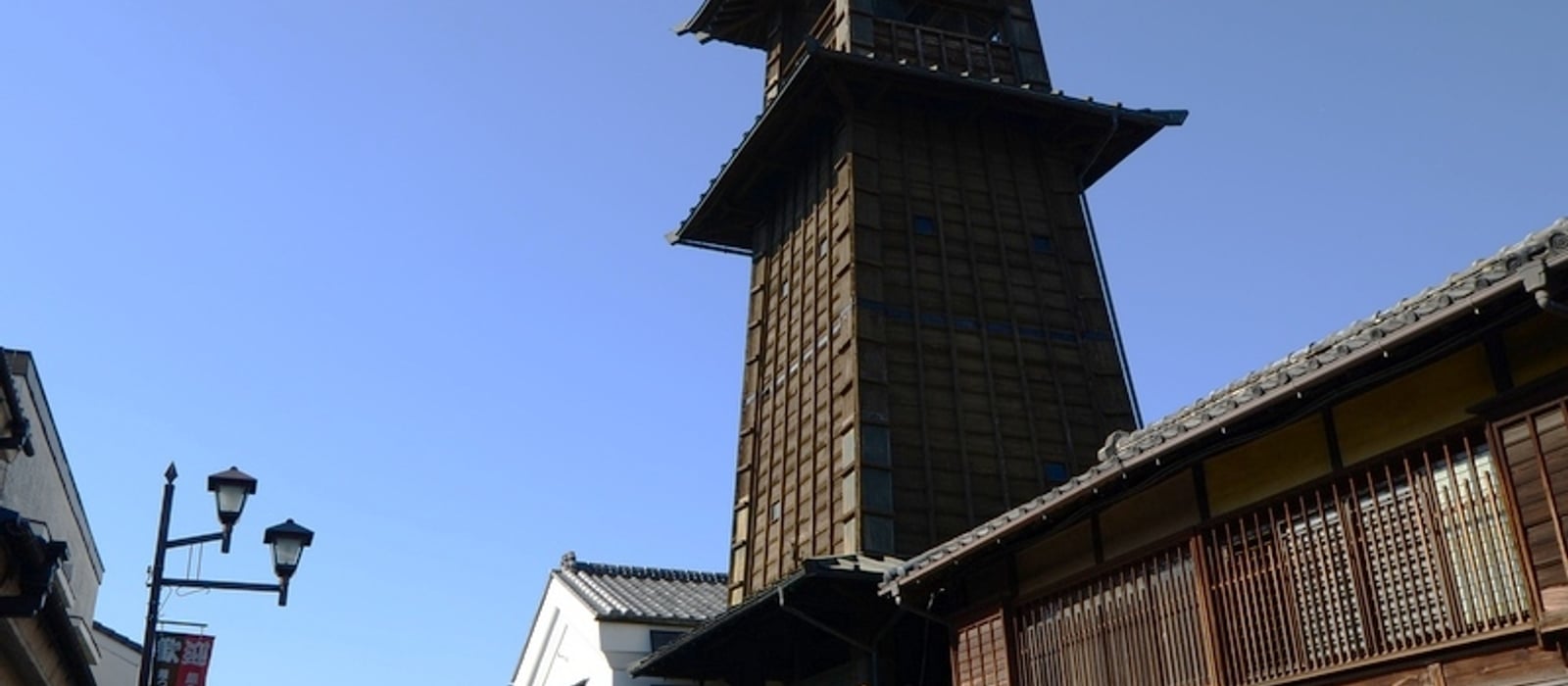
Stroll past the Bell of Time and Kashiya Yokocho (Candy Alley) while enjoying daigaku imo and other confections made with Kawagoe's sweet potatoes, and trace the lineage of Kazo Udon, part of Musashino's wheat-flour food culture - a course exploring the food and history of Kawagoe.
Course Visiting the Mountain-Village Crafts and Local Flavors of Chichibu
Tour the Chichibu Meisen Museum to see the techniques behind this pre-dyed silk textile, then taste Miso Potato and Shakushina-zuke pickles handed down in the Chichibu region - a course savoring the food culture of its mountain villages.
Course Around the Textile Industry and Tabi Gourmet of Gyoda and Hanyu
Learn about the history of the town of tabi warehouses at the Gyoda City Folk Museum, encounter the indigo blue of Bushu Shoai-zome dyeing handed down around Hanyu and Gyoda, then finish your walk with Gyoda's famous Zeri Furai.