Image: Wikimedia Commons
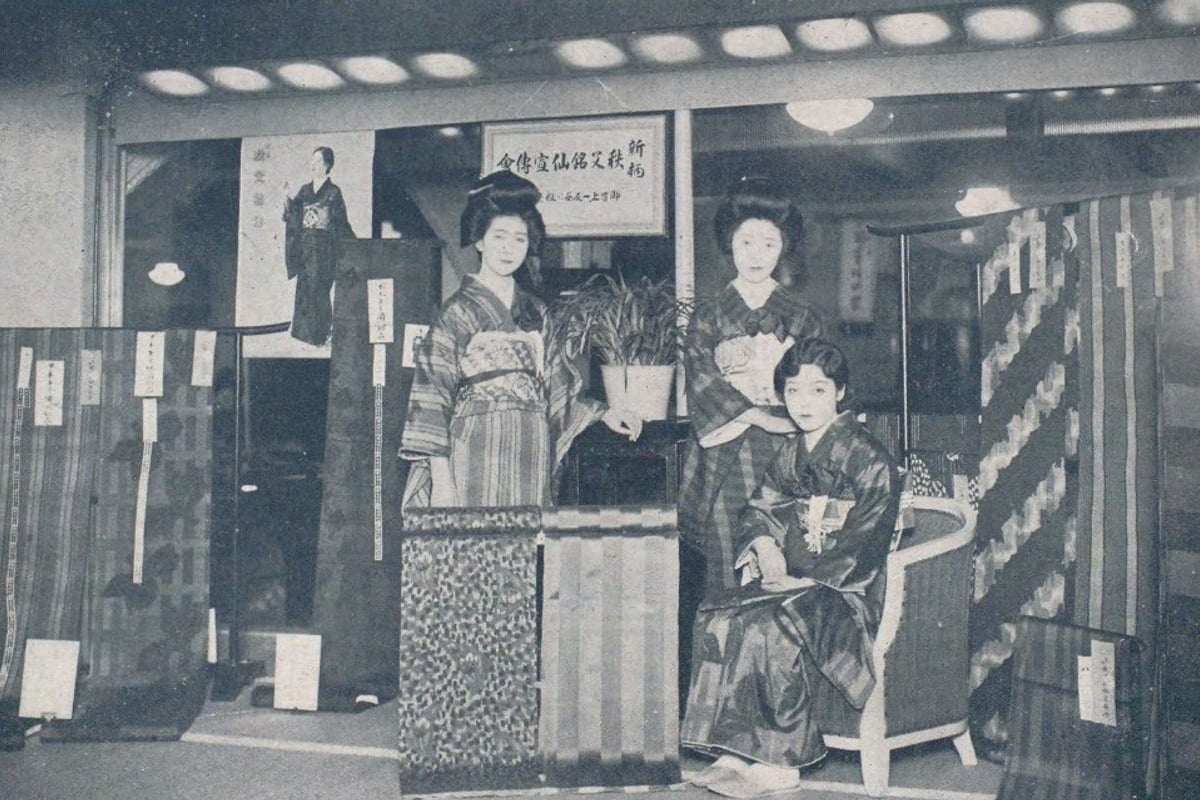
Chichibu Meisen is a plain-weave silk fabric produced mainly in Chichibu City, Saitama Prefecture, designated a Traditional Craft Product by the Minister of Economy, Trade and Industry (METI) in 2013. Tradition holds that it began in the reign of Emperor Sujin, when Chichibuhikonomikoto taught the local people the arts of sericulture and weaving. It was originally a sturdy work garment called 'futoori,' made from cocoons that did not meet standard grades, and was so durable it earned the nickname 'Oni Chichibu' ('Demon Chichibu'). The turning point came in 1908, when Sakamoto Sotaro devised the distinctive 'hogushi-nassen' technique: the warp threads are loosely pre-woven into a sheet, stencil-dyed, and then woven with the weft, so that the pattern of the warp and the color of the weft overlap to create patterns with a sense of depth. Because the dye penetrates without a clear front and back, the fabric can be used on either side — a feature that helped it become a nationally popular, fashionable, modern garment during the Taisho and Showa eras. Today, weaving houses in Chichibu City continue to pass on this technique.
Origin
In the Chichibu region, tradition holds that during the reign of Emperor Sujin, Chichibuhikonomikoto taught the local people the techniques of sericulture and weaving, marking the origin of the area's textile industry. Originally, the fabric was made as a sturdy work garment called 'futoori,' put to practical use with cocoons that did not meet standard grades, and it was widely worn as everyday clothing by ordinary people, earning the nickname 'Oni Chichibu' for its toughness. The region's suitability for sericulture supported its development as a silk-weaving center.
History
In 1908, Sakamoto Sotaro, a native of Chichibu, developed a major advance for Chichibu Meisen with his 'hogushi-nassen' technique, in which the warp threads are stencil-dyed before weaving. This technique made bold, vividly colored patterns possible, transforming the fabric's reputation from ordinary work clothes into a fashionable, modern garment during the Taisho and Showa eras, and it gained nationwide popularity. In 2013, it was designated a national Traditional Craft Product by the Minister of Economy, Trade and Industry, and its techniques continue to be passed down today by weaving houses in Chichibu City.
Features
The defining feature of Chichibu Meisen lies in the patterning achieved through the 'hogushi-nassen' technique. The warp threads are loosely pre-woven into a sheet form, hand-dyed using stencils, and then woven together with the weft in the final weaving stage; the overlapping colors of warp and weft create a distinctive sense of depth and vivid coloring. Because the threads themselves are dyed beforehand, the fabric has almost no distinction between front and back, giving it a light, soft feel while also combining durability with practicality.
Materials Used
Production Process
- 1
Pre-weaving (kariori)
The warp threads are loosely woven with weft to keep them from becoming disordered, forming them into a sheet.
- 2
Hogushi-nassen (stencil dyeing)
The sheet of warp threads is hand-dyed using stencils. The stencils must be placed precisely to avoid misaligning the pattern.
- 3
Final weaving (honori)
The dyed warp threads are dried and rewound to adjust the tension, then woven together with the weft to complete the finished bolt of cloth.
Artisans & Workshops
新啓織物(あらけいおりもの)
A weaving house producing Chichibu Meisen. In addition to weaving bolts of cloth using the hogushi technique, the company handles both the dyeing and weaving processes in-house, as the number of dedicated dyers has declined.
Official site →How to Buy
- ちちぶ銘仙館
- A facility exhibiting and selling historical materials on Chichibu Meisen. It occupies the former Saitama Prefectural Textile Industry Testing Station's Chichibu branch, a registered tangible cultural property built of Oya stone, and also sells products through its online shop.Where to buy →PR
Hands-on Experiences
ちちぶ銘仙館 機織り体験
埼玉県秩父市熊木町28-1
Admission is around 210 yen for adults and 100 yen for elementary and junior high school students; a hand-loom coaster-making experience costs around 1,500 yen for 30 minutes; handkerchief indigo-dyeing and stencil-dyeing experiences are also available (reservation required).
View details →