Image: Wikimedia Commons
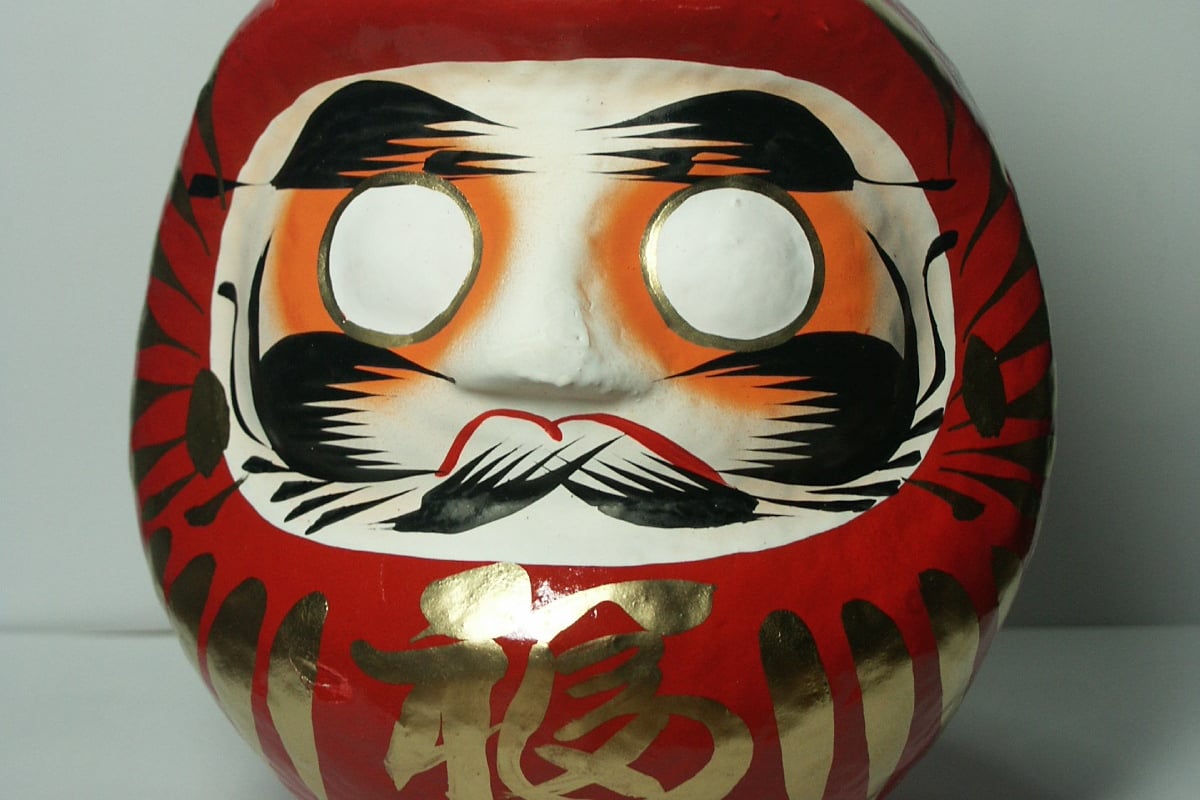
Koshigaya Daruma is a hariko (papier-mache) daruma made mainly in Koshigaya City, Saitama Prefecture, known for its pale, whitish skin tone, somewhat high nose bridge, and refined, gentle expression. It is said to have begun around the Kyoho era of the mid-Edo period (1716-1736), when a doll maker known as 'Darukichi' in the Makuri area of Koshigaya City added the figure of the seated Bodhidharma to the then-popular okiagari-koboshi (self-righting toy). Every step of the process is done by hand, from layering and pasting Japanese paper over a mold, drying it and removing it from the mold, applying the base coat and coloring, to finally painting in the beard and eyebrows. Painting the beard in particular requires the skilled technique of using a long-tipped menso brush and finishing with the same brush regardless of the daruma's size. Cherished as an auspicious symbol of 'falling down seven times, getting up eight,' it is popular at New Year's lucky-charm markets, and several workshops in Koshigaya City continue production today; it was designated a Saitama Prefecture-designated Traditional Handicraft in 1984.
Origin
Koshigaya Daruma is said to have begun around the Kyoho era of the mid-Edo period (1716-1736), when a doll maker known as 'Darukichi' in the Makuri area of Koshigaya City added the figure of the seated Bodhidharma to the existing okiagari-koboshi self-righting toy. In connection with the auspicious meaning of 'falling down seven times, getting up eight,' it came to be cherished mainly around New Year's as a charm for warding off evil and bringing good fortune.
History
Koshigaya Daruma has been passed down as a local cottage industry since the Edo period, and today about 400,000 pieces are produced annually by several workshops belonging to the Koshigaya Daruma Association, as well as workshops in Iwatsuki Ward of Saitama City and Kasukabe City. Most are still made by hand, and in 1984 (Showa 59) it was designated a Saitama Prefecture-designated Traditional Handicraft as 'Koshigaya Hariko Daruma.'
Features
Koshigaya Daruma is characterized by its pale, whitish face, somewhat high nose bridge, and refined, gentle expression. Japanese paper is layered and pasted onto a mold, dried, and then removed from the mold, followed by a base coat and coloring, and finally the beard and eyebrows are painted in with a long-tipped menso brush. The craftsmanship shows in finishing with the same brush regardless of the daruma's size, and it remains widely cherished today as a New Year's charm for good fortune.
Artisans & Workshops
松崎達磨産業
A Koshigaya Daruma maker with a workshop near Ofukuro Station on the Tobu Skytree Line. It carries on the tradition of hariko daruma making that has continued since the Edo period.