Image: Wikimedia Commons
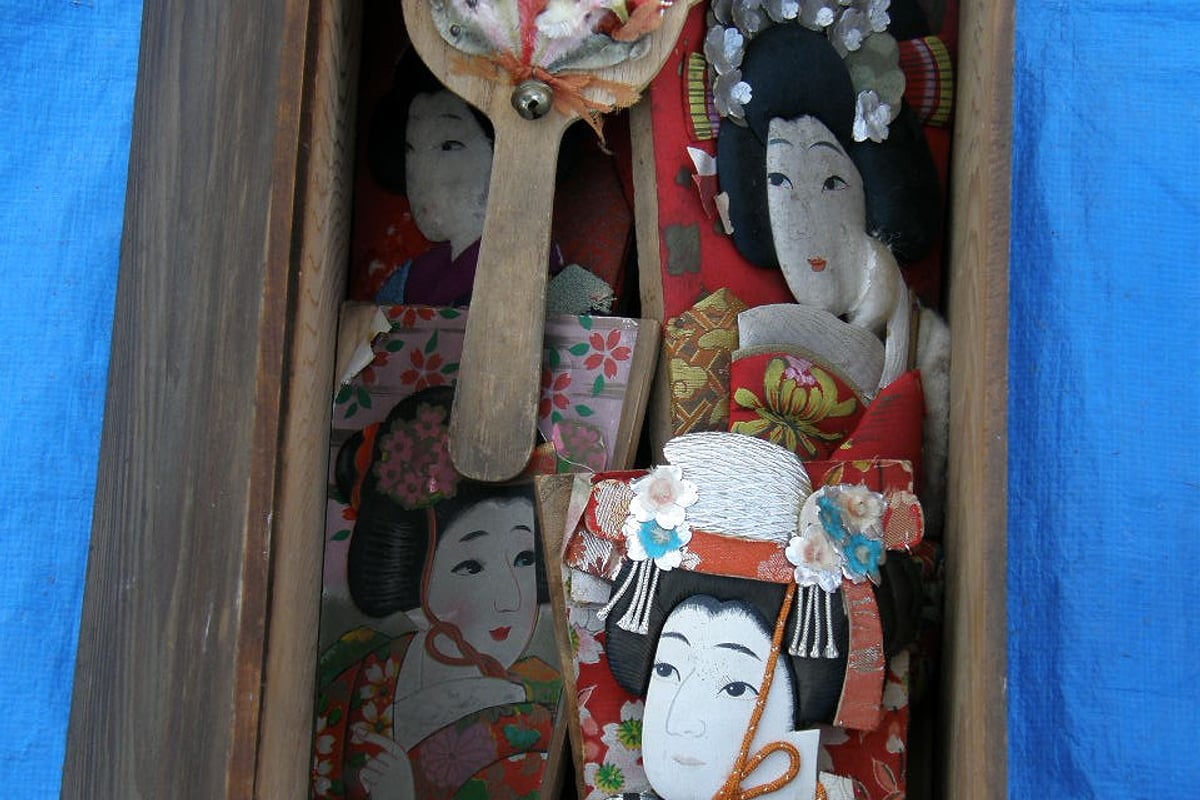
Edo Oshie Hagoita are battledores (hagoita) that use the 'oshie' technique, padding thick paper with cotton and wrapping it in cloth, to give three-dimensional form to kabuki actors and figures styled after them. The oshie technique developed during the Bunka-Bunsei era of the Edo period (1804-1829), and against the backdrop of kabuki's popularity and the spread of ukiyo-e prints, 'yakusha hagoita' decorated with likenesses of actors became popular within the townspeople's culture of Edo. After the war, oshie hagoita craftsmen who had lived for generations around Asakusa in Tokyo relocated to Kasukabe City, Saitama Prefecture, in search of good-quality paulownia wood suited to hagoita boards, and Kasukabe developed into a major production center; in 1977 it was designated a Saitama Prefecture-designated Traditional Handicraft. Finishing a single hagoita is said to require combining 50 to 70 kinds of materials through around 200 hand-worked steps, and the advanced techniques of varying the cotton padding and cloth handling to depict figures' expressions and gestures three-dimensionally have been passed down. In Iwatsuki Ward, known as a production area for hina dolls and Gogatsu Ningyo (May Festival dolls), doll shops also make and sell hagoita.
Origin
The oshie technique is said to have developed during the Bunka-Bunsei era of the Edo period (1804-1829); against the backdrop of the maturing townspeople's culture and the flourishing of kabuki, 'yakusha hagoita' were created, giving three-dimensional form to likenesses of kabuki actors based on ukiyo-e actor prints. Hagoita themselves are far older: records show that hanetsuki (a battledore-and-shuttlecock game) was played at the imperial court in the New Year of 1433 (Eikyo 4) during the Muromachi period, and hagoita have long been regarded as auspicious objects believed to ward off evil and misfortune.
History
After the Pacific War, oshie hagoita craftsmen relocated from around Asakusa in Tokyo to Kasukabe City, Saitama Prefecture, in search of good-quality paulownia wood, and full-scale production began as a local industry in Kasukabe. Production took root as the paulownia-producing area of Kasukabe combined with oshie techniques, and in 1977 it was designated a Saitama Prefecture-designated Traditional Handicraft as 'Kasukabe Oshie Hagoita.' In Iwatsuki Ward of Saitama City, known as a town of dolls, doll shops with hina-doll and Gogatsu Ningyo skills have also taken on the making and selling of hagoita.
Features
Its greatest feature is the handwork involved: finishing a single hagoita requires 50 to 70 kinds of materials and around 200 steps. The 'oshie' technique of layering cotton over thick paper and wrapping it in cloth gives three-dimensional form to figures' faces and kimono patterns, and varying the cotton padding and how the cloth is pulled taut brings out lively expressions and gestures for figures such as kabuki actors. The 'menso' facial details, hand-painted one at a time by craftspeople, reflect each maker's individuality, and hagoita remain widely used today as auspicious gifts to celebrate a baby's first New Year.
Artisans & Workshops
羽子板のさか田(匠一好)
An oshie hagoita workshop in Kasukabe City. It uses more component pieces than other workshops to create hagoita with exceptional three-dimensionality and expressiveness, and is known for having craftspeople hand-paint each face (menso) one at a time.
Official site →How to Buy
- 羽子板のさか田(匠一好)
- A long-established Kasukabe oshie hagoita workshop where custom-made hagoita can be ordered through the official website, starting at around 30,000 yen each.Where to buy →PR
- 岩槻本舗
- A doll and hagoita specialty shop in Iwatsuki Ward, Saitama City, that makes and sells oshie hagoita alongside Gogatsu Ningyo and hina dolls.