Craft Genre
Woodwork
A cross-regional look at Woodwork from across Japan.
Region(multiple selection allowed)
86 items
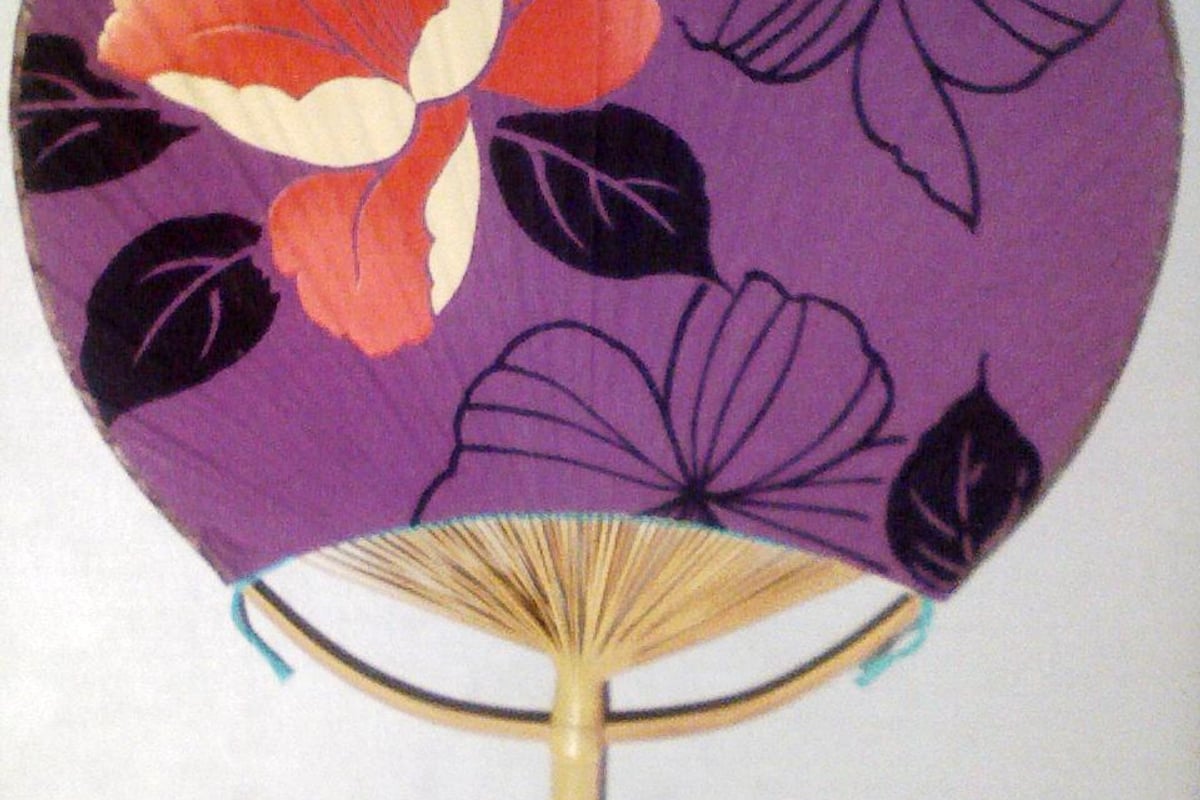
Boshu Uchiwa
Boshu Uchiwa
Boshu Uchiwa are traditional folding fans made in Tateyama City and Minamiboso City, Chiba Prefecture (the Boso region), and are counted among the 'Three Great Uchiwa of Japan' alongside Kyoto's Kyo-uchiwa and Kagawa's Marugame Uchiwa. In 2003, they became the first craft in Chiba Prefecture to be designated a Traditional Craft Product designated by the Minister of Economy, Trade and Industry (METI). The medake (a type of slender bamboo) that grows in the mild climate of the Boso region has wide spacing between its nodes, making it light, supple, and ideal for fan ribs. The defining feature of Boshu Uchiwa is the 'maru-e' (round handle), which uses the natural roundness of the bamboo culm as the handle itself, a feature not found in fans from other production areas, giving them exceptional ease of grip and a gentle, supple breeze. Every one of the 21 steps involved, including splitting a single bamboo culm into 40 to 64 fine, even strips and weaving them with thread to form the fan-shaped 'window,' is carried out entirely by hand. From the late Taisho era through the early Showa era, the region became a major production center producing 7 to 8 million fans a year, but output has declined with changing lifestyles, and today only a small number of craftspeople continue to preserve the tradition.
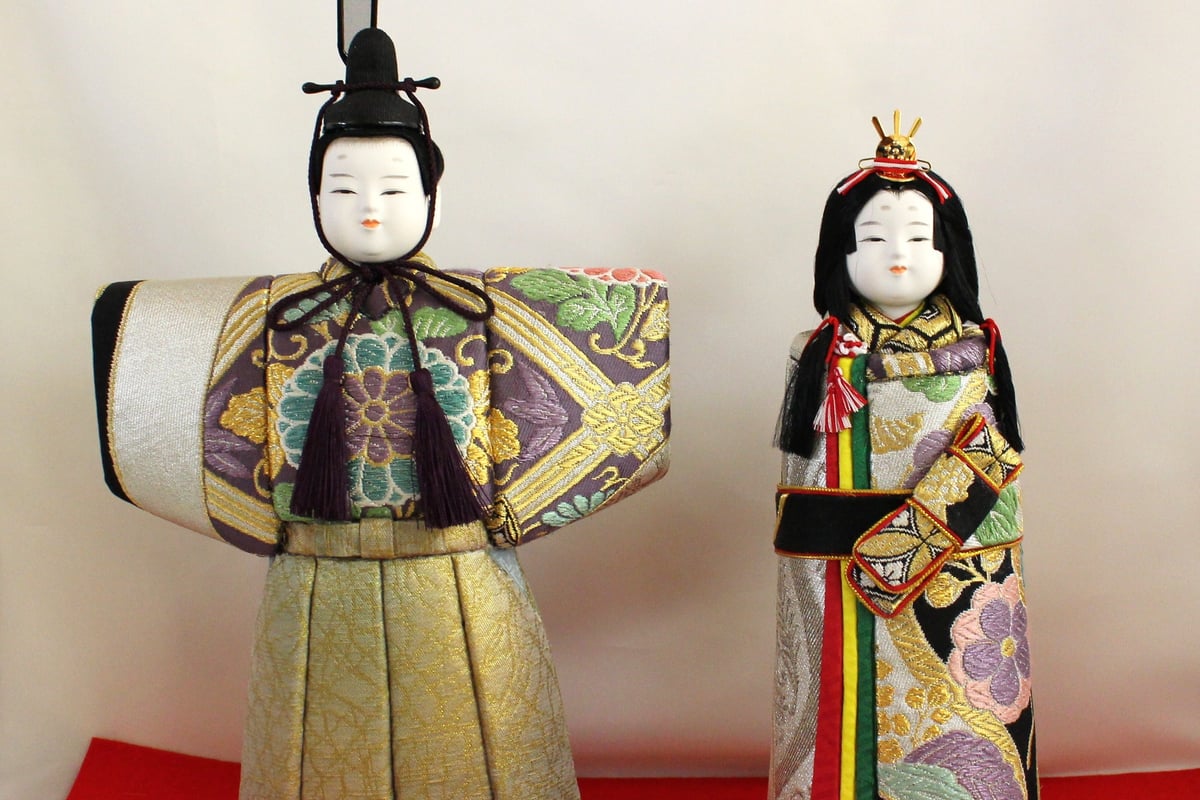
Iwatsuki Ningyo
Iwatsuki Ningyo
Iwatsuki Ningyo is a general term for the hina dolls, warrior (gogatsu) dolls, kimekomi dolls, and dressed (ishō) dolls made in the Iwatsuki ward of Saitama City. It was designated a Traditional Craft Product by the Minister of Economy, Trade and Industry (METI) in 2007. Its origins are said to date to the Kan'ei era (1634-1647), when craftsmen gathered from across the country to build Nikko Toshogu Shrine settled in Iwatsuki, a post town on the Nikko Onari Kaido road, and began making cabinetry and dolls using the paulownia wood that grew abundantly in the area. Tradition also holds that in 1697, Keishin, a Buddhist image carver from Horikawa in Kyoto, began making doll heads while staying in Iwatsuki by kneading paulownia powder with wheat-gluten paste. For roughly 380 years since then, a system of specialized craftsmen — head makers, hand-and-foot makers, dressers, and accessory makers — has passed down the tradition through division of labor, developing Iwatsuki into Japan's foremost doll-producing region. Today, known as 'Iwatsuki, the Town of Dolls,' it is lined with numerous doll shops and workshops, and its output of hina and gogatsu dolls remains among the highest in the country.
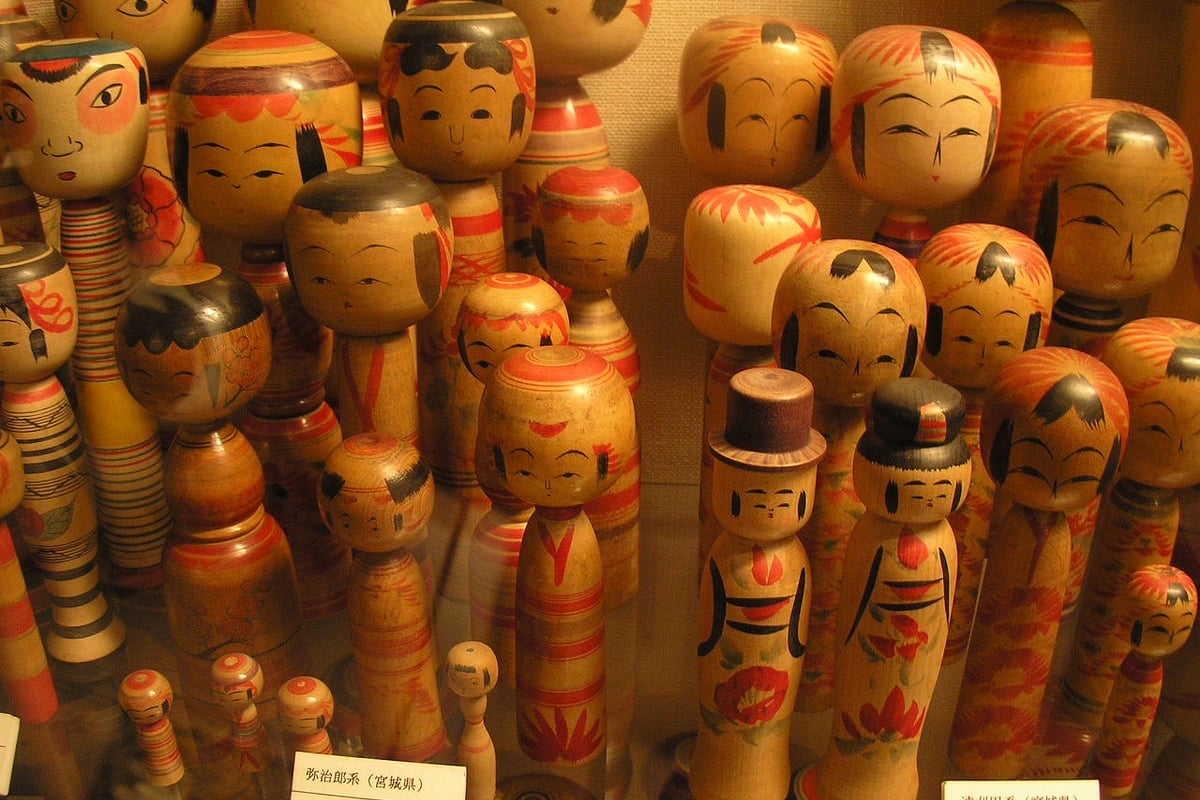
Miyagi Dento Kokeshi
Miyagi Dento Kokeshi
Miyagi Dento Kokeshi is a collective name for four lineages of kokeshi (doll) that developed within Miyagi Prefecture - the Naruko, Togatta, Yajiro, and Sakunami styles - all part of the wooden kokeshi tradition that began in the hot spring towns of the Tohoku region as souvenirs and toys for children in the late Edo period. On June 22, 1981, it was designated a Traditional Craft by the Minister of Economy, Trade and Industry (METI). Togatta kokeshi are believed to have already been made during the Bunsei era (1818-1830), making Togatta a leading candidate for the birthplace of kokeshi, though in recent years a theory tracing the origin to Sakunami Onsen in Sendai City has also drawn attention. The Naruko style is fitted tightly at the neck so that turning the head produces a squeaking sound; the Togatta style features a large head painted with a red hair ornament; the Yajiro style is known for its beret-like turned-line pattern on the head; and the Sakunami style is decorated with a crab-chrysanthemum (kani-giku) motif. The way each lineage differs completely in shape and painted design is one of the great appeals of Miyagi Dento Kokeshi. Even today, craftsmen at each hot spring town turn each doll by hand, keeping alive its simple, warm expression.
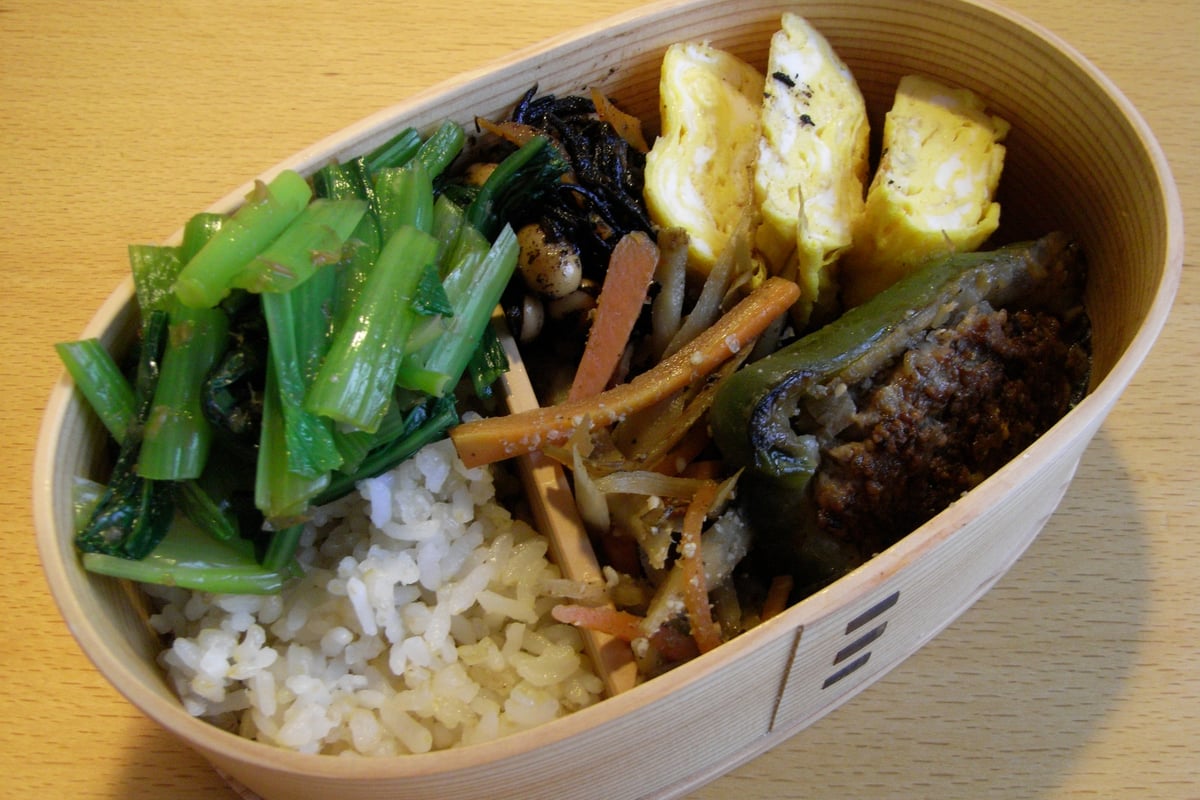
Odate Magewappa (Odate Bentwood Wooden Boxes)
Odate Magewappa
Odate Magewappa is a woodcraft made in Odate City, Akita Prefecture, using a technique in which thin sheets peeled from straight-grained (masame) natural Akita cedar are softened in hot water, bent into a cylindrical shape, and then stitched closed with the bark of the mountain cherry tree. The Odate Local History Museum holds a fragment of bentwood ware believed to date from the Heian period, suggesting that simple bentwood craftsmanship existed in the area from ancient times, but it was not until the latter half of the 17th century that it developed into a full-fledged industry. Its direct origin is said to be the encouragement of bentwood ware production as a side occupation by the Satake-Nishi family, lords of Odate Castle, who drew on the region's abundant Akita cedar resources to address the domain's financial difficulties and the hardship of its lower-ranking samurai. In addition to the cedar's beautiful grain, the wood's moderate humidity- and airflow-regulating properties are said to absorb excess moisture from packed rice and help keep it delicious, and Magewappa has recently drawn renewed attention as lunch boxes and rice containers. In October 1980 (Showa 55), it was designated a Traditional Craft Designated by the Minister of Economy, Trade and Industry.
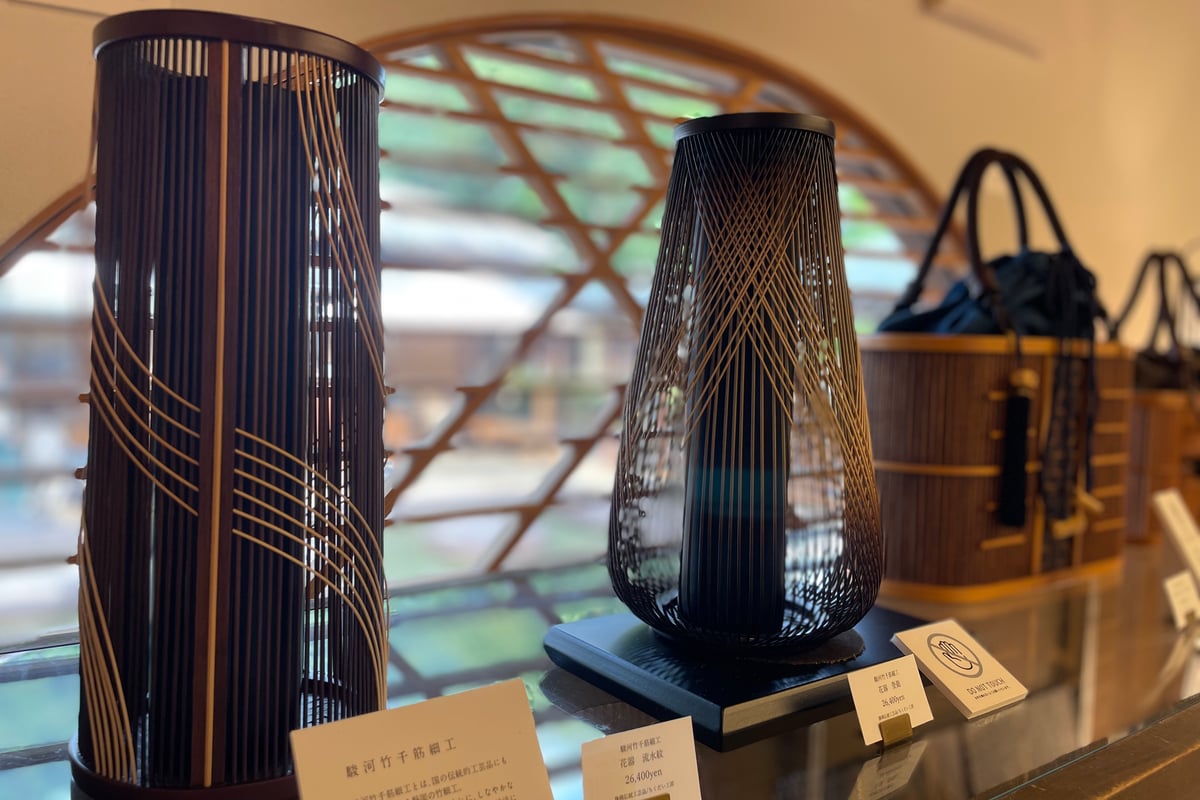
Suruga Bamboo Sensuji Ware
Suruga Take Sensuji Zaiku (Suruga Fine Bamboo Ware)
Suruga Bamboo Sensuji Ware (Suruga Take Sensuji Zaiku) is a bamboo craft made in Shizuoka City. Bamboo is split into thin pieces and finished into round bamboo strips (maru-higo), which are inserted one by one into holes drilled in bamboo rings to build up each piece. While most other production areas weave flat strips, this craft 'assembles' round strips, creating clean straight lines and graceful curves. In Shizuoka, traces of bamboo products have been found at the Yayoi-period Toro site, and bamboo work has long been rooted in daily life. In the Edo period it was called 'Suruga crafts' (駿河細工) and was popular with the daimyo and travelers who came and went along the Tokaido. In 1840 (Tenpo 11), Suganuma Ichiga, a samurai of the Okazaki Domain, passed on the technique of round bamboo strips, and this is said to have laid the foundation of today's delicate style. In 1976 it became a Traditional Craft Designated by the Minister of Economy, Trade and Industry. Besides flower vases, insect cages and confectionery containers, andon lanterns and wind chimes are also made.
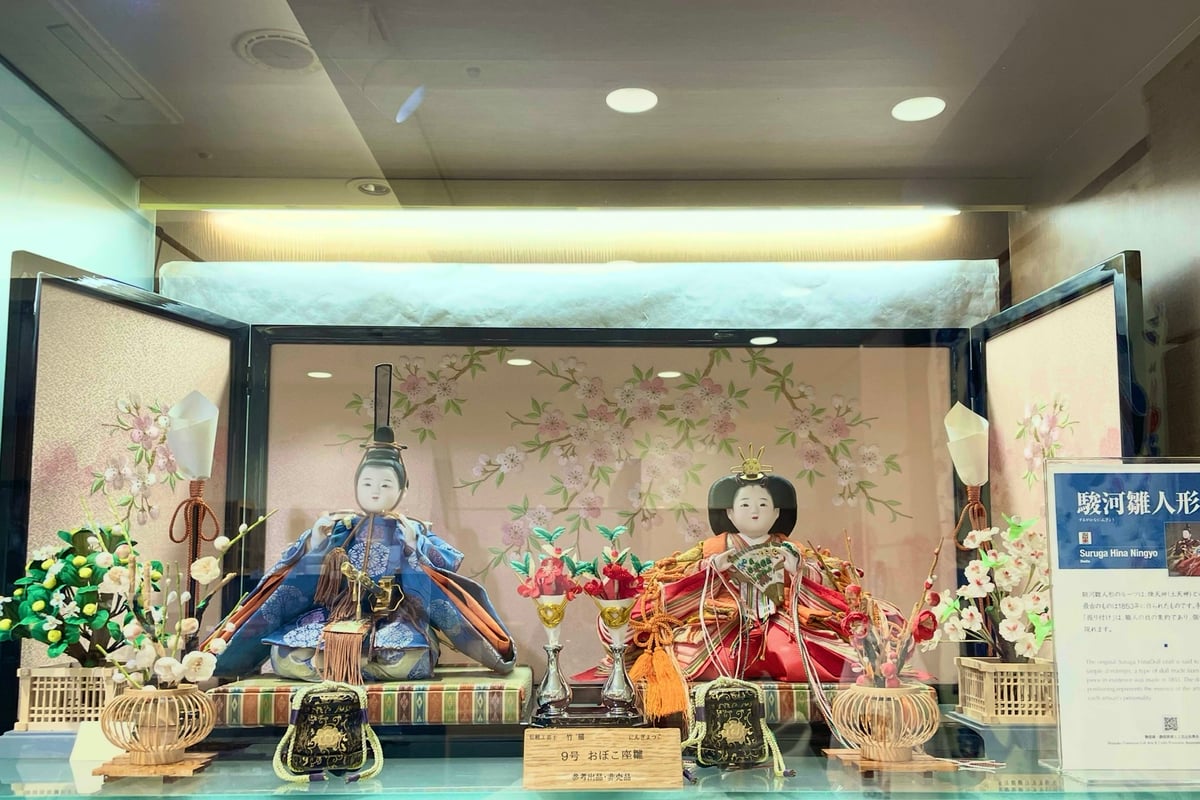
Suruga Hina Doll Furnishings and Hina Dolls
Suruga Hinagu and Suruga Hina Ningyo (Suruga Doll Furnishings and Hina Dolls)
Suruga Hinagu (Suruga hina doll furnishings) and Suruga Hina Ningyo (Suruga hina dolls) are decorations for the Hinamatsuri doll festival made mainly in Shizuoka City. Both became Traditional Crafts Designated by the Minister of Economy, Trade and Industry in 1994. Hina doll furnishings (hinagu) are the small furnishings displayed together with hina dolls, such as tansu chests, nagamochi trunks, mirror stands and goshoguruma ox carriages. There are about 40 kinds among the traditional items alone, and they are made with the same processes as real furniture. The joiners and wood turners who make the wooden bases work together with lacquerers, maki-e artists and metal-fitting makers, dividing the work to complete each piece. By the Showa 40s, hinagu had come to account for about 90% of the national market share. The hina dolls have their roots in the Tenjin dolls made in central Shizuoka Prefecture. They use a thick straw body (warado) made of tightly bundled rice straw, and the craftsperson's skill shows in furitsuke, the step in which both arms are bent to set the doll's pose. In doll bodies, the area came to account for about 70% of national production.

Hikone Butsudan (Hikone Buddhist Altars)
Hikone Butsudan
Hikone Butsudan are gold-lacquered Buddhist altars produced mainly in Hikone City, Shiga Prefecture, and were the first product in the Buddhist altar and ritual goods industry to be designated a Traditional Craft by the Minister of Economy, Trade and Industry, in 1975. Their origin is said to trace back to the mid-Edo period, when craftsmen in the castle town of Hikone Domain who had produced arms and armor turned to making Buddhist altars as the country entered an age of peace. Under the protection of the Hikone Domain, a division-of-labor system involving seven specialized trades — woodworking, palace-structure work, carving, lacquering, maki-e (lacquer decoration), metal fittings, and gold-leaf application — became established by the late Edo period, and the street known as 'Nanamagari,' connecting Hikone Castle town with the Nakasendo highway, is still lined with altar shops and workshops today. The craft is known for its weighty, splendid finish achieved through extensive gold leaf and lacquer, as well as for being crafted entirely by hand, from the woodwork through to final assembly.
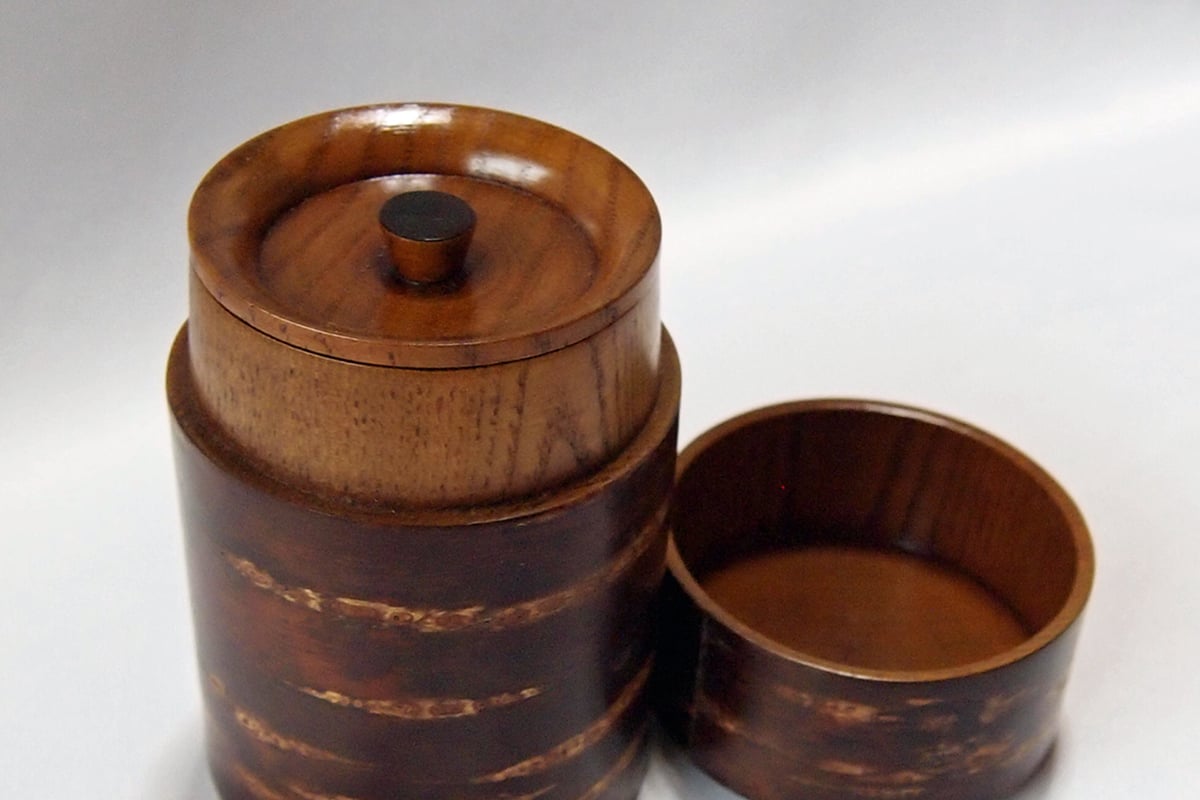
Kabazaiku (Cherry Bark Woodcraft)
Kabazaiku
Kabazaiku is a woodcraft made in Kakunodate, Semboku City, Akita Prefecture, using the bark ('kaba') of the mountain cherry tree. It is said to have originated in the Tenmei era (1781-1789), when Fujimura Hikoroku, a lower-ranking samurai of Kakunodate, learned the technique from the Gosho-no family, Shinto priests in Kamasawa, Aikawa, in northern Akita Prefecture, and spread it among the samurai of Kakunodate. At the time, the region was suffering repeated crop failures and famine, and lower-ranking samurai took up making inro (medicine cases) and netsuke as a side occupation using the low-cost bark of mountain cherry trees growing nearby. From the Meiji era onward, the emergence of influential wholesalers such as Nagamatsuya Shoten (trade name: Marugame) helped stabilize the craft as an industry, and around 1897 (Meiji 30) the kijimono technique—shaping the wood base on a lathe before applying the bark—was also added. In the Taisho and Showa eras, Ono Tozo is regarded as the figure who revived the craft, and following his encounter with Yanagi Soetsu, techniques were revitalized through workshops beginning in 1942 (Showa 17). In 1976 (Showa 51), Kabazaiku was designated a Traditional Craft Designated by the Minister of Economy, Trade and Industry, and the Kakunodate Kabazaiku Museum opened the following year, in 1978. Representative products include tea caddies, trays, and tobacco cases.
Kasukabe Kiri Tansu
Kasukabe Kiri Tansu
Kasukabe Kiri Tansu is a paulownia-wood chest of drawers made mainly in Kasukabe City, Saitama Prefecture, designated a Traditional Craft Product by the Minister of Economy, Trade and Industry (METI) in 1979. Its origins are said to trace back to the early Edo period, when some of the craftsmen gathered from across Japan to build Nikko Toshogu Shrine settled in Kasukabe, a post town on the Nikko Kaido road, and began making cabinetry and small items from the paulownia wood abundant in the area. Around the Tenpo era (circa 1830), businesses specializing in paulownia chest-making increased, taking advantage of the water transport routes of the Furutone and Edo rivers to ship products to Edo, and the region developed into a production center. Paulownia wood expands when it absorbs moisture and contracts as it dries, so during humid seasons the chests swell slightly and seal tightly, said to protect the kimono and other items stored inside from moisture and fire. The beauty of its wood grain, shown off through unfinished wood surfaces, and its sturdy, warp-resistant construction remain highly valued today.
Nagiso Wood Turning
Nagiso Rokuro Zaiku (Nagiso Wood Turning)
Nagiso Wood Turning is woodwork made mainly in Nagiso Town, Kiso District, Nagano Prefecture. Using the 'hikimono' (turned woodware) technique, in which a thick board or log is spun on a lathe (rokuro) and shaped by cutting with a plane blade, artisans make trays, bowls, teacup saucers, wooden bowls and more. It is said to have begun in the first half of the 18th century, when people called kijishi (woodturners), who excelled at turning wood, settled in this area. The materials are hardwoods with beautiful grain that grow in the Kiso Valley, such as tochi (Japanese horse chestnut), keyaki (zelkova), sen and katsura. Artisans judge the grain and quality of the wood and decide which item to make from each piece. The products come either as 'shiraki' (plain wood) left unfinished, or as 'urushi-fuki' (wipe-lacquered), in which lacquer is applied and wiped off. In 1980 it became a Traditional Craft Designated by the Minister of Economy, Trade and Industry. At 'Kijishi no Sato' (the Woodturners' Village) in Azuma, Nagiso Town, workshops are clustered together, and visitors can watch the work and try hand-turning on a lathe.
Osaka Ranma (Osaka Transom Panels)
Osaka Ranma (Osaka Transom Panels)
Osaka Ranma (大阪欄間) are ranma (transom panels) made in Osaka Prefecture. A ranma is a fitting installed above the lintel (kamoi) of a Japanese-style room that decorates the room while letting light and air pass through. They are said to date back to the early 17th century, and the techniques from which they derive can be seen at Hijiri Shrine in Izumi City and Shitennoji Temple in Osaka City. In the mid-Edo period, ranma were also adopted in ordinary homes, especially merchant houses. A defining feature is their wide variety, including picture-like 'carved ranma' that make use of the grain of Yakusugi cedar, and 'openwork (sukashibori) ranma' in which patterns are cut out of paulownia boards. Other types made include 'osa ranma,' with rows of thin bars, and 'kumiko ranma,' with geometric lattice patterns. Because they divide two adjoining Japanese-style rooms, they are made to be viewed from both front and back. In 1975 (Showa 50), Osaka Ranma was designated a Traditional Craft Designated by the Minister of Economy, Trade and Industry.
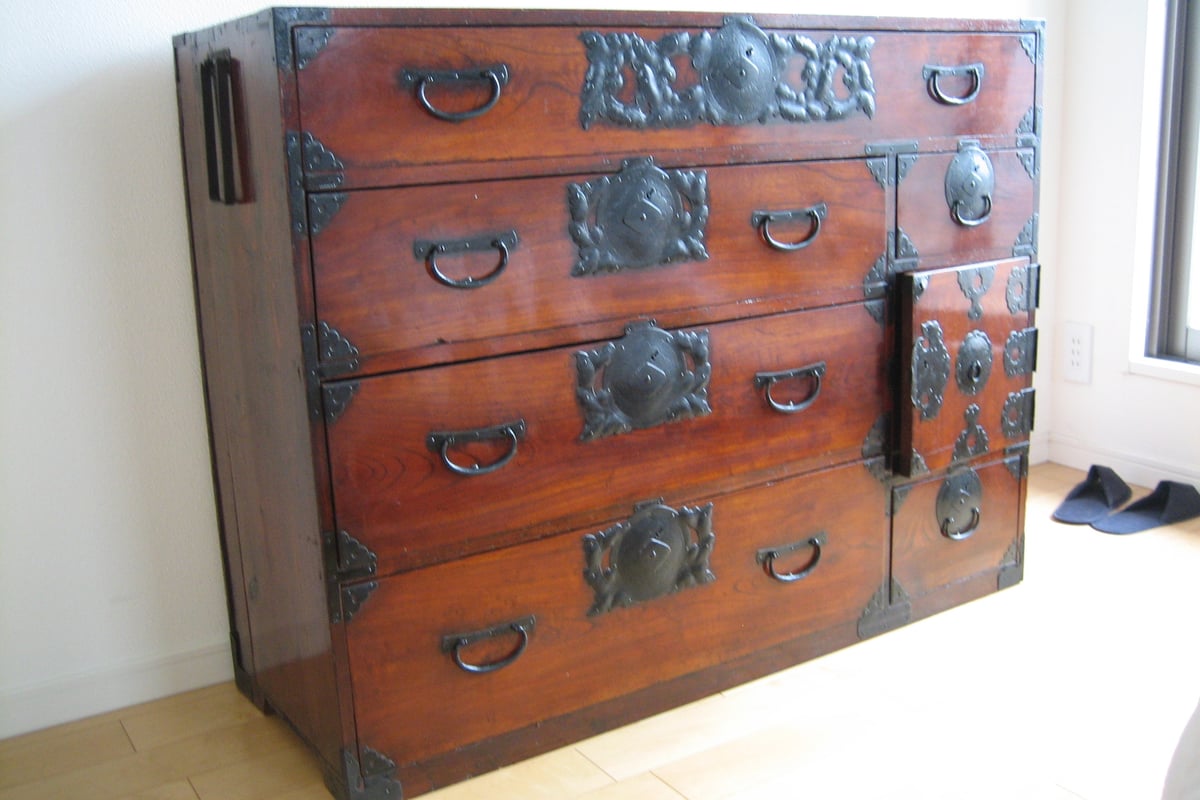
Sendai Tansu
Sendai Tansu
Sendai Tansu is a joinery-made chest of drawers produced mainly in Sendai City, a local industry born in the castle town of the Sendai Domain in the late Edo period. Originally made as a 'yaro-tansu,' a chest for storing swords and money, it was also actively exported to Europe and the United States from the Meiji through Taisho eras. Its greatest feature is a design in which solid wood such as zelkova or chestnut is finished with 'Sendai Kijiro-nuri,' a translucent crimson lacquer that beautifully shows off the wood grain, combined with imposing metal fittings hammered from iron plates about one millimeter thick into motifs favored by the samurai class, such as dragons, peonies, and Chinese lions (karajishi). The three processes of joinery, lacquering, and metalworking are each handled by specialized craftsmen through division of labor, a tradition still carried on today by craftsmen of the Sendai Tansu Cooperative. Sendai Tansu is also a relatively recent addition to the list of designated crafts: on June 18, 2015, it became the fourth Traditional Craft designated by the Minister of Economy, Trade and Industry (METI) in the prefecture, after Miyagi Dento Kokeshi, Ogatsu Suzuri, and Naruko Shikki, and the first new designation in the prefecture in 24 years.
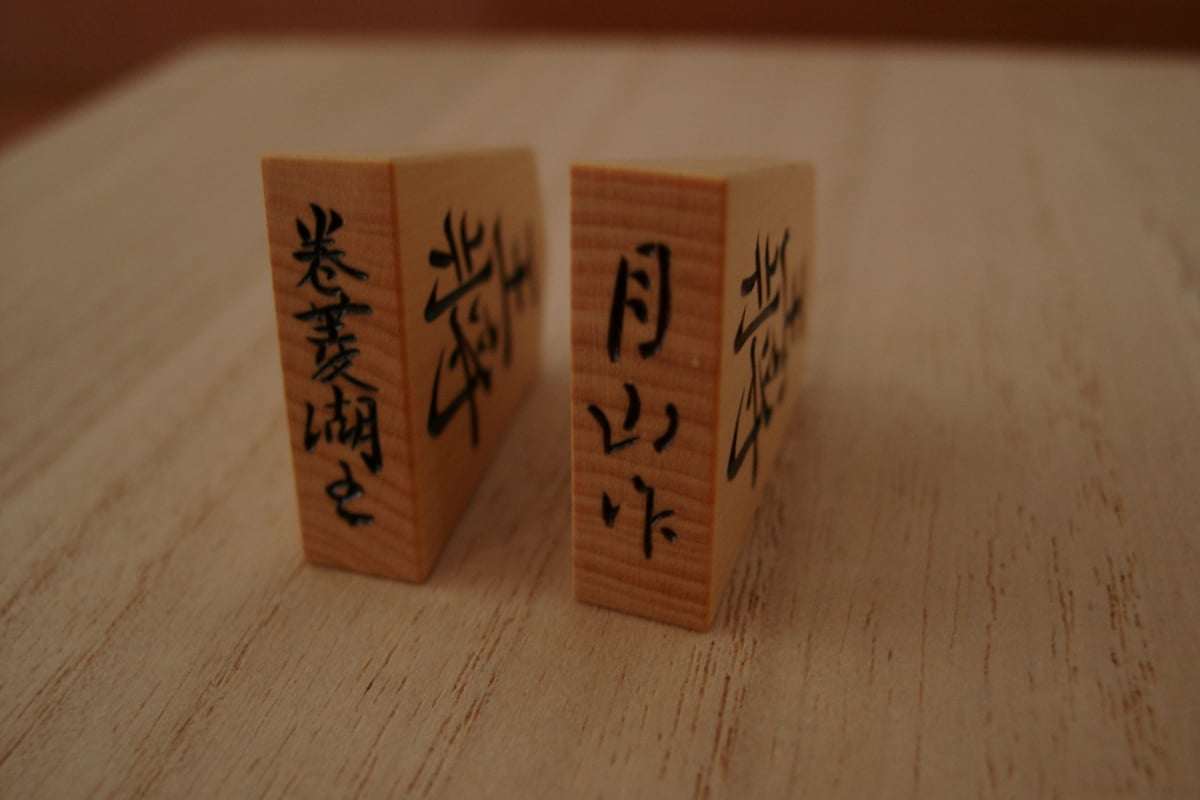
Tendo Shogi Goma (Tendo Shogi Pieces)
Tendo Shogi Goma
Tendo Shogi Goma are shogi (Japanese chess) pieces made mainly in Tendo City, Yamagata Prefecture, said to account for roughly 95% of national production. Their origins trace back to the late Edo period, when the financially struggling Tendo Oda domain encouraged lower-ranking samurai to make shogi pieces as a side occupation. The domain learned techniques from piece-makers in Osaka by way of the Yonezawa domain, and by the end of the Edo period the foundations of 'kaki-goma' (written pieces), made using cursive script, had been established. From the Meiji era onward, a division-of-labor system took shape and the area developed into a mass-production center, coming to boast the nation's largest output by the early Showa era. The raw material is boxwood (tsuge) from Mikurajima Island in the Izu Islands, sometimes called 'a jewel among woods,' and the pieces come in four types: kaki-goma (written), hori-goma (carved), horiume-goma (carved and lacquer-filled), and moriage-goma (raised-lacquer). Among these, moriage-goma, in which the characters are raised in lacquer, are considered the finest grade and are used even in shogi title matches. In 1996, the craft was designated a Traditional Craft Designated by the Minister of Economy, Trade and Industry.
Tsukiyono Kiri Tansu (paulownia wood chest)
Tsukiyono Kiri Tansu
Tsukiyono Kiri Tansu is a chest of drawers made of paulownia wood, crafted continuously in the Tsukiyono district of Minakami, Tone District, Gunma Prefecture, since the workshop's founding in 1917 (Taisho 6). Paulownia wood is light and has an elegant grain, and because it slightly expands and contracts with humidity, it keeps a stable level of moisture inside a chest; compounds in its sap also help repel insects. For this reason, paulownia chests have long been valued as storage furniture that protects treasured kimono and other items from moisture and pests. The Tsukiyono district was blessed with easy access to high-quality paulownia timber, and artisans there handle every step in-house, from selecting and cutting the wood and drying the boards to joinery (sashimono) and fitting the metal hardware, producing sturdy chests that resist warping. Today, alongside chests in the traditional style, makers also produce paulownia chests and boxes designed for modern homes, and the craft is passed down as a representative woodworking technique of the region, designated a Gunma Prefecture Furusato Traditional Craft.
Akita Sugi Oke-Taru (Akita Cedar Barrels and Tubs)
Akita Sugi Oke-Taru
Akita Sugi Oke-Taru are wooden tubs (oke) and barrels (taru) made from Akita cedar, one of Japan's three great cedar forests, produced mainly in Noshiro City, Odate City, and Kita-Akita City in Akita Prefecture. A tub believed to date from the late Heian period has been excavated from the ruins of Akita Castle in Akita City, suggesting that the history of tub and barrel making in the region goes back a long way. During the Kyoho era of the Edo period, production areas were established under the protection of the Satake domain, and output grew on the strength of the region's abundant Akita cedar resources. Akita cedar has evenly spaced growth rings, resists warping, has a pleasant fragrance, and is highly water-resistant, making it well suited to containers for handling water and food, such as sake barrels, miso tubs, and rice containers. Uses are divided between tubs made from quarter-sawn wood and lidded barrels made from flat-grain wood, with hoops made of madake bamboo, copper, or brass. In May 1984 (Showa 59), it was designated a Traditional Craft Designated by the Minister of Economy, Trade and Industry.
Iriyama Menpa (bentwood lunch box)
Iriyama Menpa
Iriyama Menpa is a bentwood (magemono) lunch box handed down in the Iriyama district of Nakanojo, Agatsuma District, Gunma Prefecture. It is said to date back to the Bunka-Bunsei era of the late Edo period (early 19th century). In the mountainous Iriyama district, which had no notable industry besides agriculture and forestry, woodcraft developed as a livelihood that supported people's daily lives. It is made by softening thin boards of red pine in boiling water, bending them into a rounded shape, and stitching them together with strips of mountain cherry bark, without using any nails. Its distinctive oval shape is considered auspicious, and thanks to the wood's moisture-absorbing and aromatic properties, it draws just the right amount of steam from cooked rice to prevent it from becoming soggy, and the food stays fresh even in summer, making it widely used as a lunch box carried for mountain work in the past. The way the wood's color deepens with use is also part of its appeal, and it is designated a Gunma Prefecture Furusato Traditional Craft.
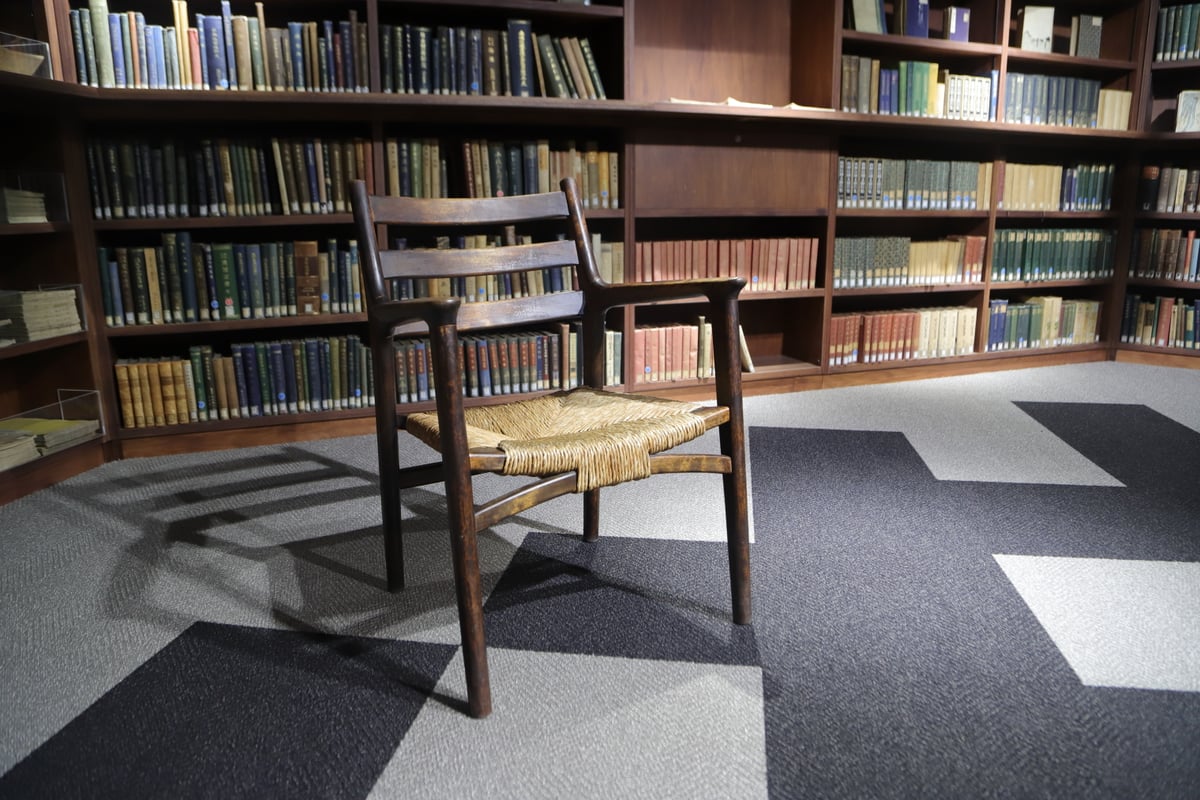
Matsumoto Furniture
Matsumoto Kagu (Matsumoto Furniture)
Matsumoto Furniture is Japanese-style furniture made mainly in Matsumoto City, Nagano Prefecture. It is thought to have begun as one of the commercial and industrial trades around Tensho 10 (1582), when a castle town took shape around Matsumoto Castle. Using solid wood such as keyaki (zelkova), mizume (Japanese cherry birch) and udaikanba (Japanese monarch birch), artisans have made tansu chests, display shelves, low tables, writing desks and more. Its characteristics are the sturdiness that comes from complex joinery techniques and a fuki-urushi (wipe-lacquer) finish that brings out the wood grain. Furniture making declined after the Pacific War, but prompted by a visit from Yanagi Soetsu, leader of the Mingei (folk craft) movement, Ikeda Sanshiro worked to revive it. The techniques cultivated through Japanese-style furniture are also applied to Western-style furniture such as chairs and tables. In 1976 it became a Traditional Craft Designated by the Minister of Economy, Trade and Industry. Visitors can see this furniture up close on Nakamachi Street in Matsumoto and at the Matsumoto Mingeikan (Matsumoto Folk Craft Museum).
Okuaizu Woven Crafts
Okuaizu Amikumi-zaiku
Okuaizu woven crafts are basketry made from natural materials found in the mountainous Okuaizu region, centered on Mishima Town, Onuma District, Fukushima Prefecture -- wild grape vine (yamabudo), hiroro (a type of sedge), and matatabi (silver vine) -- and are a Nationally Designated Traditional Craft. Their history as hand work carried on during the snow-covered season is ancient: artifacts bearing traces of weaving have been found at Mishima Town's Arayashiki archaeological site (late Jōmon period, about 2,500 years ago), and the craft is also said to carry on Jōmon culture into the present. Edo-period regional records also document the making of baskets and sieves using hiroro, matatabi, and wild grape vine. In the 1965-1974 period, the craft's survival was threatened by a decline in successors, but in 1981 (Showa 56) Mishima Town launched the 'Everyday Crafts Movement,' working to pass on the techniques through guidance from craftspeople and exhibitions. Tools with a distinct texture for each material -- hand baskets, confectionery containers, kitchen implements, and more -- continue to be made today.
Osaka Karaki Sashimono (Osaka Exotic Hardwood Cabinetry)
Osaka Karaki Sashimono (Osaka Exotic Hardwood Cabinetry)
Osaka Karaki Sashimono (大阪唐木指物) is furniture and furnishings made from imported woods such as rosewood (shitan) and ebony (kokutan). These woods have long been called 'karaki,' meaning rare woods that came from the land of Tang (China). Sashimono refers to the technique of making furniture and boxes by joining boards together. In the Edo period, karaki was shipped into Nagasaki, and Osaka's medicinal-herb wholesalers are said to have handled all of it. Osaka thus became a place where karaki gathered, and by the mid-Edo period a production center for karaki sashimono had formed. The main products include display shelves, tea shelves, low tables for tatami rooms and flower stands. They are assembled without nails or screws, using joints called kumite. A finish in which raw lacquer is rubbed in many times produces a deep color and a calm luster. In 1977 (Showa 52), it was designated a Traditional Craft Designated by the Minister of Economy, Trade and Industry.
Takashima Senkotsu (Takashima Folding Fan Ribs)
Takashima Senkotsu
Takashima Senkotsu are the bamboo ribs of folding fans, made in Takashima City, Shiga Prefecture, especially along the Ado River basin. The region produces roughly 90% of all fan ribs distributed in Japan. It is said to have begun in the Edo period as a side occupation during the winter farming off-season, making use of madake bamboo planted along the Ado River. Craftsmen make a distinction between oyabone, the outer ribs that support both ends of the fan, and nakabone, the inner ribs that fan out from the pivot, and the process of splitting, shaving, and polishing the bamboo runs to about 18 steps for the oyabone and about 16 for the nakabone, each handed from one specialized craftsman to the next in a division-of-labor system. Most finished fan ribs are sent to fan wholesalers in Kyoto, where they are papered and painted to become 'Kyo-sensu' (Kyoto folding fans) — making Takashima the unsung backbone that supports the glamorous Kyoto fan industry from behind the scenes. In recent years, efforts have also spread to create original local products, such as cloth fans using Takashima fan ribs.
Echizen Tansu (Echizen Chests)
Echizen Tansu
Echizen Tansu are chests made mainly in the Takefu district of Echizen City, Fukui Prefecture. They are assembled from solid zelkova or paulownia wood using 'sashimono' joinery, a technique that uses no nails. To this are added lacquer coating that draws on the skills of Echizen Shikki and decorative iron fittings that draw on the blacksmithing techniques of Echizen Uchihamono. By combining several advanced techniques, the chests are given a solid, stately presence. Craftsmen skilled in woodworking settled in the area from the late Edo period, and by the mid-Meiji period, chest makers had formed the core of what became known as 'Tansu-machi' (Chest Town). Even today, chest shops and workshops are concentrated along Tansu-machi Street. The heart-shaped 'inome' motif used on the fittings is a pattern meant to ward off evil. In 2013 it became a Traditional Craft Designated by the Minister of Economy, Trade and Industry.
Ichii Ittobori
Ichii Ittobori
Ichii Ittobori is a wood carving art produced mainly in Takayama City in the Hida region of Gifu Prefecture. Its greatest characteristic is that it uses ichii (Japanese yew), the prefecture's official tree, entirely without coloring, letting the wood's natural grain and hues speak for themselves. It is said to have begun in the late Edo period when Matsuda Sukenaga, a netsuke carver from Takayama, took note of the beauty of ichii wood grain and began carving frogs, turtles, animals, and other subjects, making full use of the sharp marks left by chisels and small knives. Ichii wood has a striking contrast between its whitish outer layer, called 'shirata,' and its reddish inner layer, called 'akata,' and skillfully carving to bring out this two-toned contrast creates the craft's distinctive sense of shading. Designated a national Traditional Craft in 1975, carvers centered in Takayama City continue to pass down the technique today.
Itaya-zaiku (Itaya Maple Basketry)
Itaya-zaiku
Itaya-zaiku is a type of basketry made in the Kumojikari area of Kakunodate, Semboku City, Akita Prefecture, in which young Itaya maple trees are split into thin strips and woven together. It is said to have begun around the Kansei era (around 1790) as a side occupation for farming households during the winter agricultural off-season, and has been passed down for more than 200 years. In the past, the craft mainly produced practical farm tools such as the waist basket known as 'kakkobe,' resembling a fish creel, along with baskets for farm work and mi (winnowing baskets), but over time it has broadened into craft items such as hand baskets, serving trays, and the toy horse known as Itaya-uma. The trunk of the Itaya maple used as material is split evenly to a thickness of less than 1mm and woven by hand using basketry techniques. In addition to being light and durable, it develops an amber color and deepens in character with use, an appealing change over time. It is a Prefecturally Designated Traditional Craft of Akita Prefecture, and today only two households in the Kumojikari area continue to make and sell it.
Kyo-sashimono (Kyoto Joinery)
Kyo-sashimono
Kyo-sashimono is a Kyoto woodworking craft made without metal nails or other joining fittings, instead using "kumite" joinery techniques that fit wooden boards to boards and rods to boards, along with mortise-and-tenon joints. Its origins are said to trace back to the court culture of the Heian period, and it developed by incorporating culture that arrived from China and Korea into distinctly Japanese woodworking techniques of the kind seen in the Shosoin Repository. From the Muromachi period onward, specialized sashimono craftsmen emerged, and as tea ceremony culture spread, refined techniques were honed for both sashimono as furnishings and sashimono as tea utensils. It is characterized by discerning use of woods suited to their properties — lightweight, warp-resistant paulownia; soft, smooth cedar; and sturdy, luxurious zelkova — assembled with precision while making the most of the wood grain's beauty. It is used for a wide range of items including Kyo-tansu chests, shelving, tea utensils, and inkstone boxes, and it received national Traditional Craft designation in 1976.
Osaka Senshu Kiri Tansu (Osaka Senshu Paulownia Chests)
Osaka Senshu Kiri Tansu (Osaka Senshu Paulownia Chests)
Osaka Senshu Kiri Tansu (大阪泉州桐箪笥) are paulownia chests (kiri tansu) made mainly in the Senshu area of southern Osaka Prefecture. The main production areas are Kishiwada City, Sakai City, Izumi City and Tadaoka Town. Tansu chests are sometimes said to have first originated in Osaka, and by the mid-Edo period the techniques for making them had been established in Osaka. These techniques are said to have spread from the city of Osaka through Sakai to Izumi, forming a production area in Senshu. Because they use thick paulownia wood, have many kumite (joints that interlock boards) and are carefully built and finished, they are sometimes called 'the finest of paulownia chests.' Many are made in the 胴丸型 style with rounded corners, and another characteristic is the strong demand for custom pieces decorated with maki-e or lacquer coating. Because paulownia keeps out moisture and does not conduct heat easily, these chests have long been prized as furniture for storing precious clothing such as kimono. In 1989 (Heisei 1), they were designated a Traditional Craft Designated by the Minister of Economy, Trade and Industry.
Ota Daiko (Japanese drum)
Ota Daiko
Ota Daiko is a Japanese drum (wadaiko) that Yamaguchi Taikoten, a shop on Daikoin-monzendori in Ota, Gunma Prefecture, has been making for more than 160 years since the Edo period. It is crafted by combining woodworking techniques for making the drum body with the tanning and stretching of leather, and the technique is currently carried on by the shop's owner, Yamaguchi Soichi, the eighth-generation successor. The drum body is made from woods with beautiful grain such as zelkova; logs are cut and left to dry slowly over several years before being hollowed out and finished. The hide is tanned by soaking raw hide in rice bran to ferment it, a process called 'nuka-nameshi,' which removes the hair, and it is then stretched with a wooden mallet while checking the sound as it is fitted onto the body. Completing a single drum can take more than five years, and every step relies on manual work and the artisan's intuition, giving Ota Daiko its distinctive tone and resonance. Gunma Prefecture also holds an important place in the history of the Japanese drum: haniwa clay figures dating from around the 6th-7th centuries, depicting figures carrying drums, have been excavated from ruins in Sawa District.
Yamagata Butsudan (Buddhist altar)
Yamagata Butsudan
Yamagata Butsudan is a Buddhist altar made through a division of labor centered on Yamagata City, in which seven specialized crafts - woodworking, palace-shrine work, carving, lacquering, maki-e (gold lacquer decoration), metal fittings, and gold-leaf application - are each handled by their own specialist artisans. Its origin is said to date to the Kyoho era (around 1724-1736), when Hoshino Kichibei, who had studied the art of carving in Asakusa, Edo, returned to Yamagata and began making ranma (transom panels) and Buddhist ritual implements. His successor, the second-generation Kichibei Hirotaka, gathered local artisans and put altar-making on a full-scale footing, and the arrival of superior techniques and culture from the Kansai region via shipping on the Mogami River also helped spur the development of the production area. Around 1895, a production system divided among seven specialized trades was established, and the craft has continued to develop as Japan's northernmost Buddhist altar-producing region, being designated a Traditional Craft Designated by the Minister of Economy, Trade and Industry in 1980. It is characterized by sturdy wood joinery using zelkova and other woods, deep and intricate carving, and understated black metal fittings and inlaid-gold fittings.
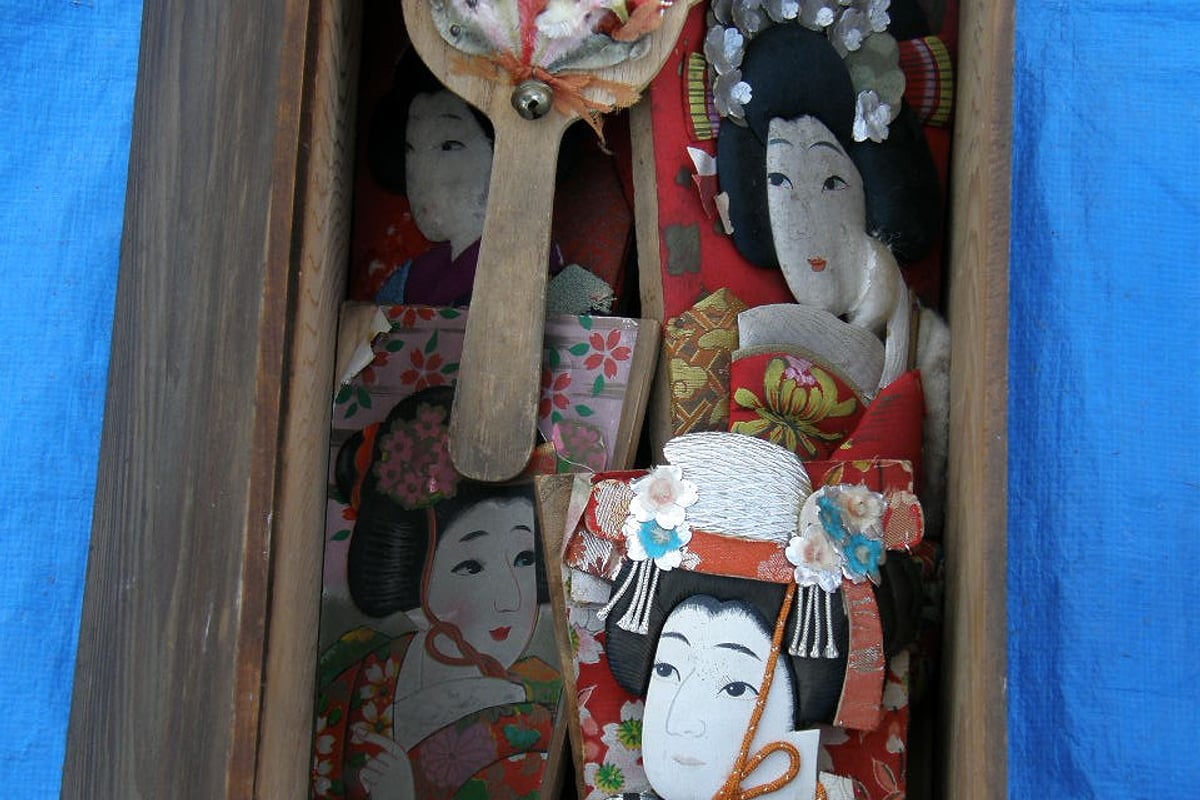
Edo Oshie Hagoita
Edo Oshie Hagoita
Edo Oshie Hagoita are battledores (hagoita) that use the 'oshie' technique, padding thick paper with cotton and wrapping it in cloth, to give three-dimensional form to kabuki actors and figures styled after them. The oshie technique developed during the Bunka-Bunsei era of the Edo period (1804-1829), and against the backdrop of kabuki's popularity and the spread of ukiyo-e prints, 'yakusha hagoita' decorated with likenesses of actors became popular within the townspeople's culture of Edo. After the war, oshie hagoita craftsmen who had lived for generations around Asakusa in Tokyo relocated to Kasukabe City, Saitama Prefecture, in search of good-quality paulownia wood suited to hagoita boards, and Kasukabe developed into a major production center; in 1977 it was designated a Saitama Prefecture-designated Traditional Handicraft. Finishing a single hagoita is said to require combining 50 to 70 kinds of materials through around 200 hand-worked steps, and the advanced techniques of varying the cotton padding and cloth handling to depict figures' expressions and gestures three-dimensionally have been passed down. In Iwatsuki Ward, known as a production area for hina dolls and Gogatsu Ningyo (May Festival dolls), doll shops also make and sell hagoita.
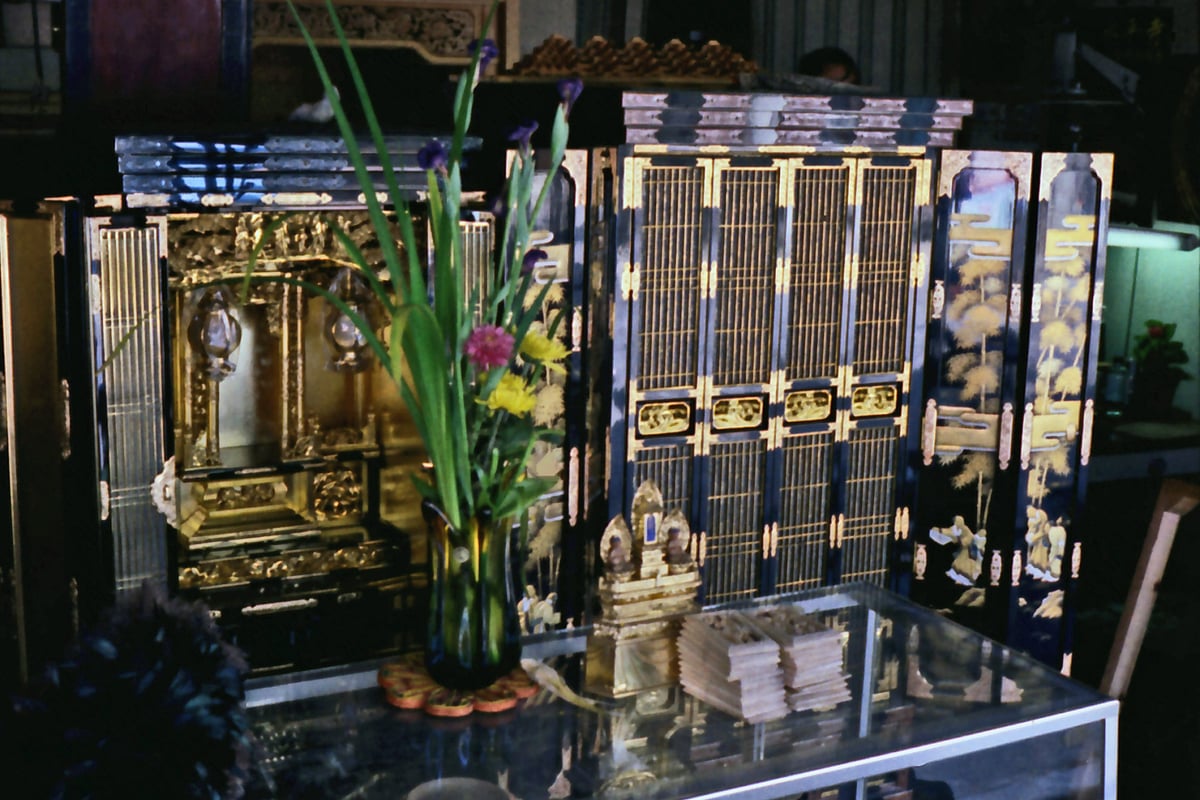
Iiyama Buddhist Altars
Iiyama Butsudan (Iiyama Buddhist Altars)
Iiyama Buddhist Altars are gilded Buddhist altars (kinbutsudan) made in Iiyama City, Nagano Prefecture. They are produced mainly in the Atago (愛宕町) area in the north of the city, and everything from making the parts to assembly and repair is carried out within the area. Jodo Shinshu Buddhism reached Iiyama from the Hokuriku region in the Muromachi period, and the city is known as a place of deep faith. Because of its townscape lined with many temples, it has also been called 'the Little Kyoto of the Snow Country.' The craft is said to have begun in Genroku 2 (1689), when 寺瀬重高, who had come from Koshu, made plain unlacquered altars. Its distinctive features are the technique of assembling the kuden (the palace-like structure inside the altar) with 'hijiki kumimono' (bracket assemblies), and the 'yuminageshi,' a lintel curved like a bow so that the kuden can be seen clearly. Through 'sentaku' (literally 'washing'), in which the altar is taken apart, washed and relacquered, it can be passed down and used over many generations. In 1975 it became a Traditional Craft Designated by the Minister of Economy, Trade and Industry. The street in Atago, lined with gangi (covered walkways that keep off the snow), is fondly known as 'Butsudan-dori' (Buddhist Altar Street), where altar shops stand side by side.
Kyo-sensu (Kyoto Folding Fans)
Kyo-sensu
Kyo-sensu is the general term for folding fans made in and around Kyoto, said to have been invented in Kyoto in the early Heian period. Rooted in the hi-ogi (cypress fans) and paper fans used at court, its greatest characteristic is that specialized artisans divide the labor by process — fan-face making, rib processing, painting, and finishing — with a single fan said to pass through more than 80 steps before completion. In contrast to Edo-sensu, where a single artisan handles the whole process, Kyo-sensu has a history of pursuing meticulous finishing through this division-of-labor system. Its designs range widely to suit purpose — from tea-ceremony fans and dance fans for uses such as tea ceremony, Noh, and dance, to practical fans and decorative fans — and Kyoto and its surrounding area still account for the majority of domestic fan production today. It became a Traditional Craft designated by the Minister of Economy, Trade and Industry in 1977.
Osaka Kongo Sudare (Bamboo Blinds)
Osaka Kongo Sudare (Bamboo Blinds)
Osaka Kongo Sudare are bamboo blinds (sudare) made from madake bamboo in Tondabayashi City, Kawachinagano City and Osaka City. The area was once blessed with fine bamboo growing at the foot of Mount Kongo and Mount Katsuragi, and blinds came to be woven alongside the making of bamboo baskets. The misu (court blind), used for partitions and decoration in the Heian-period imperial court, is said to be the prototype of today's zashiki sudare (indoor blind). The main products are misu used at shrines and temples and zashiki sudare used as room partitions and sunshades in homes. Highlights include a weaving method that uses the natural nodes of the bamboo strips (higo) to draw a 'ku'-shaped (く) pattern, and borders of Nishijin donsu (a glossy figured silk fabric). In 1985 (Showa 60), it was designated an Osaka Prefecture-designated Traditional Craft under the name 'Kongo Sudare.' In 1996 (Heisei 8), it became a Traditional Craft Designated by the Minister of Economy, Trade and Industry under the name 'Osaka Kongo Sudare.' According to a survey report by Osaka Prefecture, all the misu used in filming the NHK Taiga dramas 'Atsuhime' (篤姫) and 'Go' (江) were Osaka Kongo Sudare.
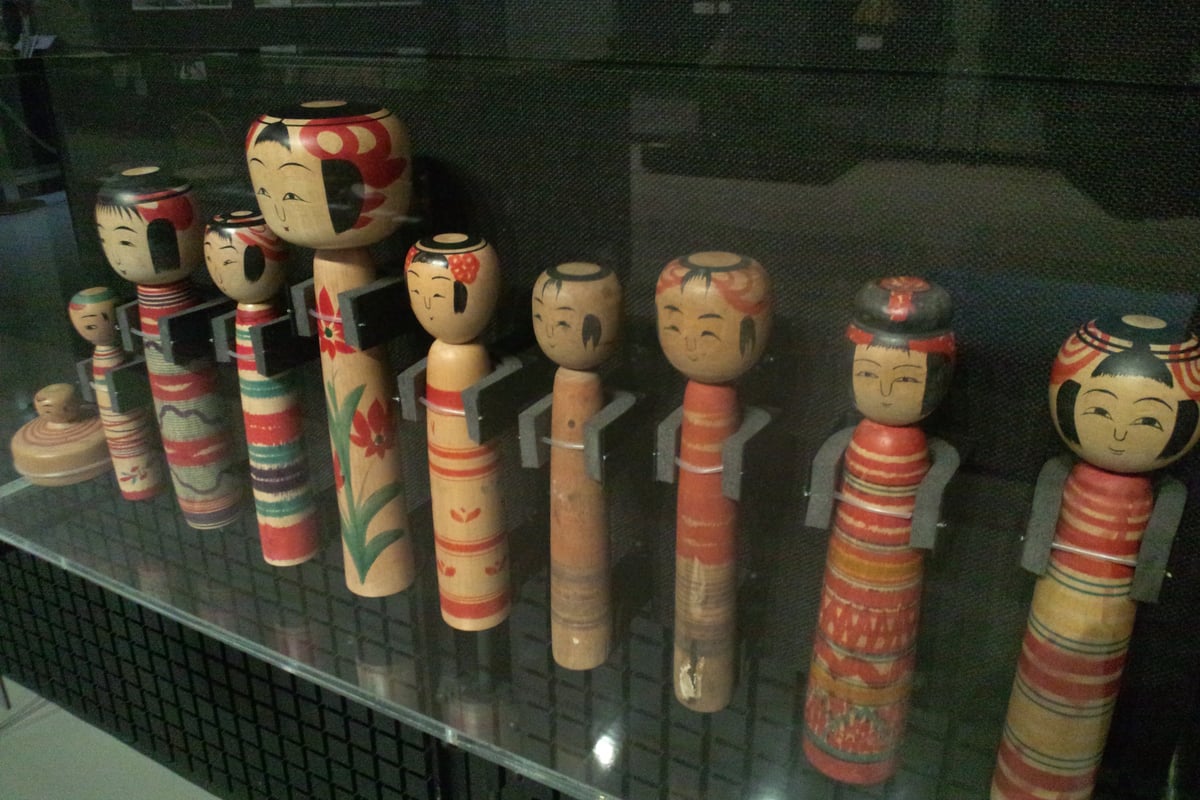
Tsuchiyu Kokeshi
Tsuchiyu Kokeshi
Tsuchiyu Kokeshi are traditional kokeshi dolls nurtured in Tsuchiyu Onsen in Fukushima City, and together with the Naruko and Togatta lineages of Miyagi Prefecture, they are counted among the three major birthplaces of kokeshi in the Tohoku region. They are said to have emerged around 300 years ago from the handiwork of kijishi (woodworking artisans) who made wooden vessels and tools during the Edo period, and since then they have been cherished as souvenirs for hot spring visitors and as children's toys. Compared with dolls from other regions, Tsuchiyu Kokeshi have a distinctively feminine look, with a small head and slender body. The head is painted with a black snake-eye ring pattern, and the face is framed by long bangs and a red hair ornament called 'kase' on either side, with whale-like eyes, a drooping nose, and a small pursed mouth giving them a simple, gentle expression. The head is fitted into the body using a socket-joint construction, and turning the head makes a distinctive squeaking sound - another charming feature unique to Tsuchiyu Kokeshi. Today, craftsmen still keep workshops in Tsuchiyu Onsen, continuing to turn each doll by hand.
Gyotoku Mikoshi
Gyotoku Mikoshi
Gyotoku Mikoshi is a traditional craft centered in Gyotoku, Ichikawa City, Chiba Prefecture, renowned as a major production center for Edo-style mikoshi (portable shrines). Gyotoku prospered so greatly from the Edo period onward that it was known by the saying ‘a thousand houses and a hundred temples in Gyotoku,’ and one account traces the origin of its mikoshi-making to craftsmen who worked on the construction of Nikko Toshogu Shrine and later settled in Gyotoku, which was then directly administered by the shogunate. Wood-base craftsmen, carvers, lacquerers, metal-fitting craftsmen, and other artisans who worked on the interiors and exteriors of temples and shrines gathered there, and from the Meiji through the Showa periods, as interest in mikoshi processions grew, production expanded — at its peak, Edo-style mikoshi made in Gyotoku are said to have accounted for roughly 80% of all mikoshi nationwide. Today, Nakadai Seisakusho, a workshop founded more than 150 years ago, is the only one in Gyotoku that still handles the entire process in-house, from woodworking and carving to lacquering, gold-leaf application, metal fittings, and assembly. In 2018, the ‘Gyotoku Mikoshi Museum’ opened on its grounds, offering free viewing of the techniques and history of mikoshi-making.
Kanazawa Buddhist Altars
Kanazawa-butsudan
Kanazawa Butsudan are gilded Buddhist altars developed in Kanazawa, the castle town that flourished under the Kaga domain's million-koku wealth, and were designated a national Traditional Craft in 1976. Their development traces back to 1471, when the priest Rennyo spread Jodo Shinshu Buddhism throughout the Hokuriku region, leading to the construction of meeting halls and temples in communities across the area and a corresponding rise in demand for altars. During the era of the Kaga domain's third lord, Maeda Toshitsune, master craftsmen were invited from Kyoto and Edo to work in dedicated workshops, laying the technical foundation for this art form. Kanazawa Butsudan are made through a complete division of labor among seven specialist craftsmen — woodworkers, shrine-structure carvers, lacquerers, maki-e gold-lacquer artists, wood carvers, gold-leaf appliers, and metal-fitting makers — each perfecting a distinct craft, which is a defining characteristic of the tradition. A particularly distinctive feature, rarely seen in altars from other regions, is the application of polished and raised maki-e across a wide area including the front pillars, tiered edges, central pillars, doors, and drawers. Combined with a sturdy structure using durable Aomori hiba wood joined with mortise-and-tenon joints, this results in altars that are both lavishly ornate and built to last, a tradition carried on to this day.
Kyo-uchiwa (Kyoto Flat Fans)
Kyo-uchiwa
Kyo-uchiwa is a Kyoto flat fan whose greatest characteristic is its "sashie" (inserted handle) structure, in which the handle and the fan face are made separately and the handle is inserted afterward. Unlike typical uchiwa fans in which the ribs and handle are made from a single piece of bamboo, Kyo-uchiwa's fan face has numerous bamboo ribs arranged radially, and its distinctiveness lies in attaching a separately lacquered and decorated handle afterward. Its origin is said to trace back to the Nanboku-cho period, when fans brought from the Korean Peninsula reached Fukakusa near Kyoto, and in the Edo period it developed into "gosho-uchiwa," fans painted by court painters for the imperial court. Though a practical item, it is cherished as a craft in which beautiful designs reminiscent of Japanese-style painting harmonize with precise bamboo work.
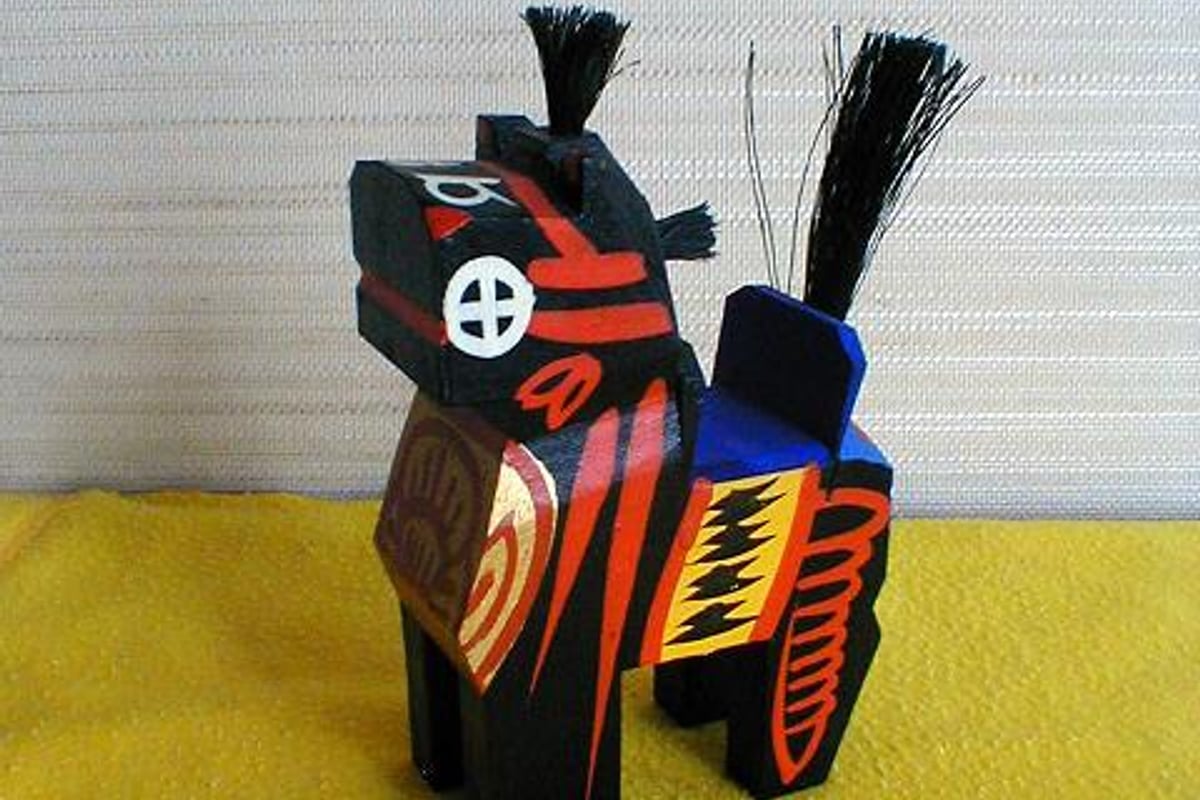
Miharu Koma
Miharu Koma
Miharu Koma are carved wooden horse folk toys that originated in what is now Nishida-Takashiba, Koriyama City, and are counted among the 'Three Great Horses of Japan' alongside Aomori Prefecture's Yawata-uma and Miyagi Prefecture's Kinoshita-goma. According to legend, the toy traces back to the Heian-period general Sakanoue no Tamuramaro, who around the year 791 was struggling during his campaign to subdue the Emishi when a wooden horse appeared out of nowhere and came to his aid; in tribute, a children's toy called kosodate mokuba (子育木馬, 'child-rearing wooden horse') was said to have first been made. In the Edo period, the Miharu domain, known as a horse-breeding region, gave the name 'Miharu Koma' to a fine breed developed from wild horses, and the name spread to the toy as well. The toys come as white horses and black horses, painted in red, black, and gold; the black horse is considered a charm for fertility, safe childbirth, and child-rearing, while the white horse is believed to bring peace in old age and protection against senility. In 1954 it was even chosen as the design for Japan's first New Year's postage stamp, making it a nationally known folk toy.
Nagoya Kiri-tansu (Paulownia Wood Chests)
Nagoya Kiri-tansu
Nagoya Kiri-tansu is the general term for chests of drawers and other furniture made entirely of paulownia wood (kiri) that developed in the castle town of Nagoya. Its origins trace back roughly 400 years to the construction of Nagoya Castle, when carpenters gathered from across the country and settled around the Fukuromachi and Osu districts of the castle town, going on to make chests and long chests (nagamochi). The production area was further boosted by the abundant high-quality paulownia timber available from the nearby Hida region (Gifu Prefecture). The craft involves more than 130 processes -- from timber selection and cutting to correcting warping, shaping, decorating, and fitting metal hardware -- and its defining feature is that a single craftsperson handles the entire process from start to finish. Compared with kiri-tansu from other production areas, Nagoya Kiri-tansu is built wider, and nails are made from hiba cypress or an equivalent material. The natural humidity-regulating properties of paulownia wood keep out moisture and make the furniture highly resistant to fire and heat, with little warping -- qualities that have long made it prized as high-grade furniture. It was designated a Traditional Craft (designated by the Minister of Economy, Trade and Industry) on June 22, 1981.
Osaka Butsudan (Buddhist Altars)
Osaka Butsudan (Buddhist Altars)
Osaka Butsudan are Buddhist altars (butsudan) that have been made in various parts of the prefecture, including Osaka City, Sakai City and Yao City. Their origins go back to the Asuka period and are said to lie with artisans invited from Baekje (Kudara) when Prince Shotoku founded Shitennoji Temple. The full-scale formation of the production area is said to have followed the founding of Kita-Mido and Minami-Mido in the Edo period. The national traditional craft 'Osaka Butsudan' is a lacquered butsudan (gold-lacquered butsudan, or kin-butsudan): natural lacquer is applied to the wooden base, which is decorated with gold leaf, coloring and decorative metal fittings (kazari kanagu). Its greatest feature is takamaki-e (raised maki-e), a technique of building up lacquer to draw designs, which makes them look as if metal fittings had been nailed on. Because no metal fittings are used, damage to the wooden base from rust is said to be prevented. Processes such as woodworking, carving, lacquering, maki-e and gold-leaf application are each carried out by specialized craftspeople in a division of labor. In 1982 (Showa 57), it was designated a Traditional Craft Designated by the Minister of Economy, Trade and Industry. 'Osaka Karaki Meiboku Butsudan,' which use rosewood (shitan), ebony (kokutan) and other woods, and 'Osaka Nuri Butsudan' are designated as Osaka Prefecture-designated Traditional Crafts.
Yame Fukushima Butsudan
Yame Fukushima Butsudan
Yame Fukushima Butsudan are magnificent tower-style Buddhist altars made in Yame City, Fukuoka Prefecture (the former town of Fukushima), finished with gold leaf and lacquer. It is said that in 1821 (Bunsei 4), the joiner-carpenter Toowatari Sansaku had a dream of building a splendid temple and, together with fellow carpenters Inoue Rikyuhei and Hirai Sansaku, began making altars, and by around 1850 the production techniques had been established. By the end of the Edo period, the craft had grown into a major industry bringing together artisans specializing in lacquering, metal fittings, carving, Buddhist images, and woodwork. Under a system in which woodworkers, palace-structure makers, carvers, metal-fitting makers, lacquerers, and maki-e artists each handle a separate stage, a single altar is completed through about 80 processes, from the wood base and palace structure to carving, metal fittings, lacquering, and maki-e and gold-leaf application. On March 30, 1977 (Showa 52), it was designated a Traditional Craft Designated by the Minister of Economy, Trade and Industry, establishing its status as Fukuoka Prefecture's leading center of Buddhist altar production.
Echizen Take Ningyo (Echizen Bamboo Dolls)
Echizen Take Ningyo
Echizen Take Ningyo are dolls from Fukui Prefecture in which every part, from the costume and body to the hair, is made of bamboo or bamboo sheath. They are said to have been created after much trial and error in the Showa 20s (1945-1954) by the brothers Morota Yasutaka and Sanshiro, who ran a bamboo craft business in Maruoka, Sakai City, and their form is said to have been established around 1952 (Showa 27). Their exhibition at the 1955 (Showa 30) Toyama Exposition prompted full-scale bamboo doll production. In 1963 (Showa 38), Mizukami Tsutomu published the novel 'Echizen Take Ningyo', which was made into a film the same year, spreading the name nationwide. Many of the dolls are elegant figures based on Noh, Kabuki and other themes, and a highlight is the black hair, expressed by inserting 5,000 to 7,000 finely split strips of bamboo into each doll. It is not a Traditional Craft Designated by the Minister of Economy, Trade and Industry, but has been designated a Fukui Prefecture-designated Local Craft. At Echizen Take Ningyo no Sato (Echizen Bamboo Doll Village) in Maruoka, visitors can watch artisans at work and try making bamboo dolls.
Ise Ittobori
Ise Ittobori (Ise Single-Knife Carving)
Ise Ittobori is a carved wooden good-luck charm made in Ise City and Tamaki Town, Mie Prefecture. It is said to have begun when shrine carpenters (miyadaiku) involved in building the Ise Grand Shrine carved figures of Ebisu and Daikoku from timber left over from the shrine's rebuilding. It is characterized by boldly cutting away the corners of the wood with a large chisel and leaving the carved faces as the finished surface. Because it is neither polished nor painted, the knife marks and wood grain give it a rustic strength and warmth. The main material is camphor wood, and hinoki cypress is also used. Subjects include the zodiac animal of the year, as well as sacred roosters, frogs and other motifs associated with Ise. Ise has long been home to many netsuke carvers, and the accumulated carving skills of the area are also said to have formed part of its background. Today the techniques are carried on by 岸川行輝, 泉廣典, and 太田結衣, who studied under 岸川行輝, among others. It is a Mie Prefecture Designated Traditional Craft.
Kamo Kiri Tansu (paulownia chests)
Kamo Kiri Tansu
Kamo Kiri Tansu are chests of drawers made of paulownia wood in Kamo City, Niigata Prefecture, and the surrounding area. Paulownia swells when humidity is high, keeping moisture out, and shrinks when dry, improving ventilation, which makes it well suited to storing clothing. Chest-making in Kamo began in the Tenmei era (1781-1789) of the Edo period, and it is said to have originated with Maruya Koemon, who made chests from cedar alongside his carpentry work. Because natural paulownia wood was plentiful in the surrounding mountains, the area grew into a production center for paulownia chests (kiri-tansu), which were shipped by boat via the Kamo River and the Shinano River to Niigata and the Tohoku region. It is still regarded as Japan's leading production area, accounting for about 70 percent of national paulownia chest output, and in 1976 it became a Traditional Craft Designated by the Minister of Economy, Trade and Industry (at the time, the Minister of International Trade and Industry). The chests are assembled without gaps using sashimono joinery techniques that use no metal nails, and because the surface can be planed down and restored even when old, they are said to last more than 100 years.
Morodomi Furniture
Morodomi Kagu
Morodomi Furniture is the collective name for furniture made in Morodomi, Saga City, and it developed thanks to its location facing the furniture-producing city of Okawa, Fukuoka Prefecture, across the Chikugo River. Morodomi had long been home to woodworking centered on sashimono joinery, but when the former Japan National Railways Saga Line opened in 1935, exchange with Okawa's 400-year-old furniture-producing area became active, bringing new woodworking techniques to Morodomi. Ties deepened further when the Morodomi and Okawa bridges were built over the Chikugo River in 1955, and when the bridges were opened toll-free in 1966, furniture manufacturers from Okawa moved in at an accelerated pace, and the area grew into one of Kyushu's leading furniture-producing regions. In 1980, the annual shipment value of furniture exceeded 10 billion yen, making it Kyushu's second-largest furniture-producing area. It handles a wide range of items, from traditional Japanese furniture such as paulownia chests and low tables to modern chairs and sofas, and in 2022 'Morodomi Kagu' was registered as a regional collective trademark. As a furniture-producing area combining high woodworking skill with strong design, it is now also focusing on exports overseas.
Nagoya Butsudan (Nagoya Buddhist Altars)
Nagoya Butsudan
Nagoya Butsudan is the general term for Buddhist altars developed in and around Nagoya City, characterized by a raised base structure known as 'makuri' and, representatively, by the lavishly decorated miya-den style known as 'kuden-gobo-zukuri.' The raised base is said to reflect the wisdom of daily life, protecting the altar from flooding by the Kiso Three Rivers. Its origins are said to trace back to 1695 (Genroku 8), when Takagi Niemon founded the Buddhist altar specialty shop 'Hiroya.' Since then, a single altar has been built through the division of labor among specialized craftsmen known as the 'eight trades' -- kijishi (woodworkers), shogonshi (ornamentation specialists), chokokushi (carvers), kazarikanagushi (metal fitting makers), nushishi (lacquerers), makieshi (maki-e artists), hakuokishi (gold leaf appliers), and shikumishi (assemblers). High-grade woods such as zelkova, cypress, and sandalwood are used, and skilled techniques are applied at every stage, from the wood base to lacquering, gold leafing, and maki-e. It was designated a Traditional Craft (designated by the Minister of Economy, Trade and Industry) in 1976.
Okawa Kumiko
Okawa Kumiko
Okawa Kumiko is a woodworking technique developed in Okawa City, Fukuoka Prefecture—a delicate craft of assembling thin, finely shaped pieces of wood into geometric patterns without using any nails or metal fittings. Kumiko techniques transmitted from China during the Bunka era (around 1804-1818) became linked with Okawa's sashimono and fittings-making, in a town known for furniture and fittings, and developed through use in shoin-style shoji screens, ranma transoms, and folding screens. Around 200 or more patterns, including asanoha (hemp leaf), are worked into a triangular base lattice called 'mitsu-gumite,' with as many as tens of thousands of pieces sometimes combined to complete a single work. Its greatest characteristic is that, while it looks delicate and fragile, the precise interlocking of its components gives it the strength of a single solid board. Designated a Traditional Craft Product Designated by the Governor of Fukuoka Prefecture in 1987 (Showa 62), the traditional technique has also been put to use in contemporary interiors, including the interior of the luxury sleeper train 'Nanatsuboshi in Kyushu.'
Ujo Yoji
Ujo Yoji
Ujo Yoji are ornamental toothpicks carved from kuromoji (Lindera umbellata) wood, a craft handed down in Kururi, Kimitsu City, Chiba Prefecture. It is said to have begun in the Edo period as a side occupation of samurai retainers of the Kururi Domain in Kazusa Province, who made toothpicks from kuromoji growing wild in the surrounding mountains; at the time they were a plain product known as ‘Kazusa ko-yoji’ (small toothpicks of Kazusa). After the abolition of the domain, production spread among former samurai who had lost their stipends and needed a livelihood, and by the end of the Meiji era, toothpicks of various designs that made the most of the wood's white grain and texture had been devised, becoming known as folk craft items. In the mid-Showa era, the craft was renamed ‘Ujo Yoji’ after ‘Ujo’ (‘Rain Castle’), an alternate name for Kururi Castle. In addition to the basic ‘zaku yoji,’ there are ‘novelty toothpicks’ shaped like pine, bamboo, plum, folding fans, eels, swords, and other auspicious or seasonal motifs, and their skillful craftsmanship and refined look have made them a favorite at tea gatherings and in Japanese restaurants to this day. Today, Mori Takao carries on the tradition as the second-generation holder of the name Mori Mitsuyoshi.
Nishikawanobori Takezaiku
Nishikawanobori Takezaiku
Nishikawanobori Takezaiku is a bamboo craft passed down in Nishikawanobori, Takeo City, Saga Prefecture, in which artisans hand-weave everyday items such as baskets, colanders, and lunch boxes from madake and hachiku bamboo. It is said to have begun in the early Meiji era as a side occupation for farming households, and developed into a local industry as the Nishikawanobori Village Bamboo Craft Association was established in 1909; from the early 20th century through the postwar years it grew into a major bamboo-craft production area with more than 500 artisans. However, from the 1950s onward, as synthetic resin products spread into furniture and farm tools, demand gradually declined, and today the craft is carried on by only a handful of workshops, foremost among them Kuriyama Shoten. Every step, from splitting the bamboo and shaping its width to weaving with its natural spring, is done entirely by hand, and unique techniques such as the chrysanthemum-base weave used for rice-washing colanders have been passed down. Designated a Saga Prefecture Traditional Local Product, in recent years the craft has also produced items suited to modern life, such as lunch boxes and lampshades, drawing renewed attention from younger generations from an SDGs perspective.
Owase Wappa (Bentwood Boxes)
Owase Wappa (Owase Bentwood Lacquerware)
Owase Wappa is bentwood (magemono) lacquerware made in Owase City, Mie Prefecture. Thin boards of high-quality Owase hinoki cypress are bent, the seams are stitched with cherry bark, and the pieces are finished with natural lacquer. Forestry flourished in Owase from the early Edo period, and people working in the mountains used wooden bentwood vessels as tableware. The fishermen of the bonito fishery, which also flourished around the same time, are said to have been fond of wappa as well. Today the only maker is 世古効史, the fourth-generation head of 'ぬし熊,' founded in 1887 (Meiji 20). 世古効史 handles all 45 steps alone, from making the wooden base to lacquering, and a single piece takes more than a month to complete. It is said that there can be a wait of a year after ordering, but the boxes are renowned for a sturdiness said to 'last 100 years.' In 1994 (Heisei 6) it became a Mie Prefecture Designated Traditional Craft, and in 2013 (Heisei 25) its production techniques were designated an Intangible Cultural Property of Owase City.
Fuji Katsuyama Suzutake Bamboo Craft
Fuji Katsuyama Suzutake Craft
Fuji Katsuyama Suzutake Bamboo Craft is a bamboo craft handed down in the Katsuyama district of Fujikawaguchiko Town, Minamitsuru District, Yamanashi Prefecture. Thin suzutake bamboo that grows wild around the second station of Mt. Fuji is split and woven into everyday tools such as zaru (bamboo colanders) and baskets. Improvements were made over generations in the lives of the villagers from around the beginning of the Edo period, and there is said to be a record of baskets being offered when the main shrine of Fuji Omuro Sengen Shrine was built in 1610 (Keicho 15). The Kai Kokushi, a regional gazetteer of 1814 (Bunka 11), also records that suzutake from the northern foot of Mt. Fuji was used as material for making mi (winnowing baskets) and zaru. Suzutake is supple and fragrant, and the woven products are light, sturdy and drain water well. With careful use they are said to last 30 or 40 years, and they have long been valued as kitchen tools such as rice-washing colanders. In 1998 (Heisei 10), the craft was designated a Yamanashi Prefecture Designated Local Traditional Craft. Today, makers carry on the techniques at the Katsuyama Suzutake Traditional Craft Center.
Hakata Magemono
Hakata Magemono
Hakata Magemono is bentwood ware (magemono) made by bending thin sheets of cedar or cypress into a round shape, binding the seams with cherry bark, and fitting a base panel into the bottom, all without using a single metal nail. Its origins are said to be old: the Shibata family of Hakata has carried on magemono-making as a family trade for more than 400 years, and the current head of the family, the eighteenth generation, is Tamaki Shibata. In the Edo period, magemono were also dedicated as ritual vessels at Hakozaki-gu Shrine in Higashi Ward. Loved as everyday items such as ohitsu (rice tubs), bento boxes, and tea caddies, cedar ohitsu in particular are prized by sushi chefs and many other cooks because the wood absorbs and releases excess moisture, keeping cooked rice fluffy. Depending on how it is used and cared for, a piece is said to last as long as 50 years, and in March 2025 (Reiwa 7), Hakata Magemono was newly designated an Intangible Cultural Property Designated by Fukuoka Prefecture (craft technique).
Hida Kagu
Hida Kagu
Hida Kagu refers to furniture made in the Hida region centered on Takayama City, Gifu Prefecture, and is one of Japan's leading furniture-producing areas, known especially for chairs, tables, and other leg furniture that make use of magiki, the technique of bending wood with steam. Its origins trace back to 1920 (Taisho 9), when local businesspeople, aiming to make use of underused beech timber, took up bentwood furniture making and founded Chuo Mokko Co., Ltd. (now Hida Sangyo Co., Ltd.), marking the beginning of Hida Kagu. The Hida region has a roughly 1,300-year-old tradition of woodworking craftsmen known as Hida no Takumi, said to have taken part in the construction of Heijo-kyo and Todai-ji Temple, and the skills of these craftsmen have carried through into modern furniture making. The craft makes use of beech, which is hard and pliant and well suited to bentwood processing, and oak, prized for its calm grain, to produce beautiful, refined designs that highlight the natural color and grain of the wood. In 2008 (Heisei 20), Hida no Kagu and Hida/Takayama no Kagu were registered as regional collective trademarks.
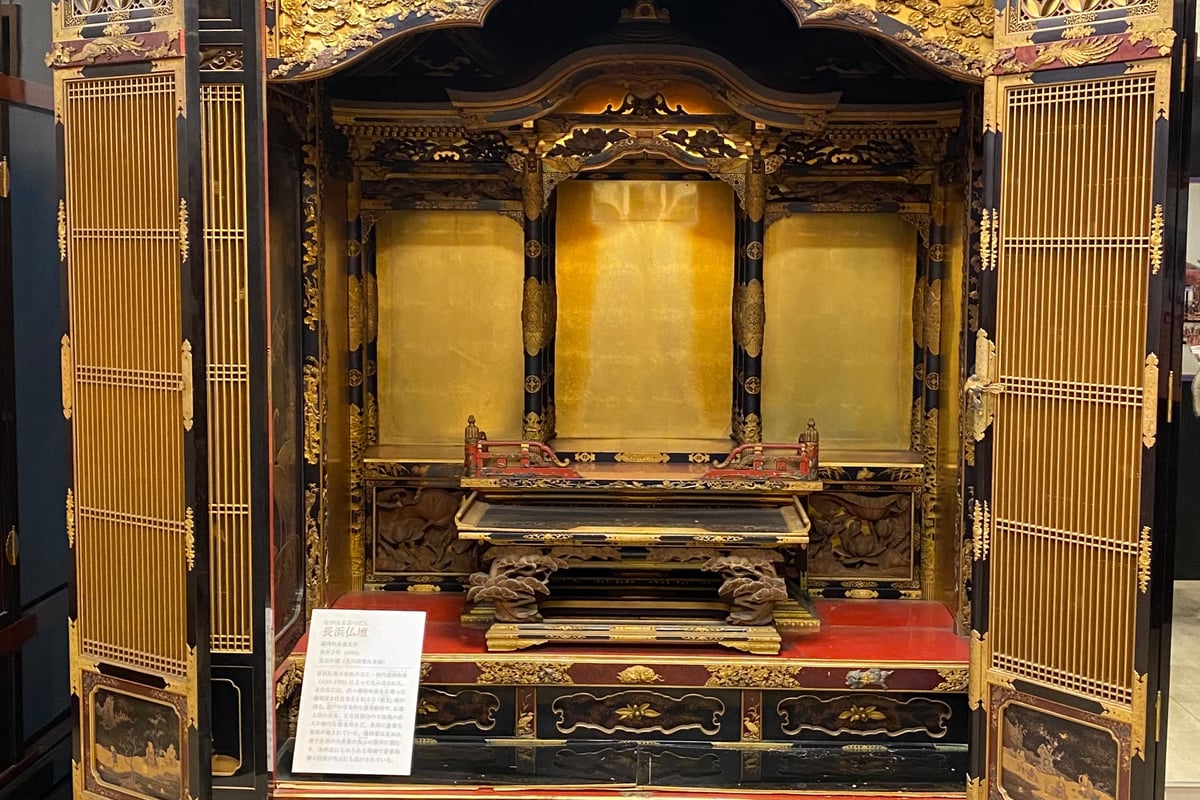
Nagahama Butsudan (Nagahama Buddhist Altars)
Nagahama Butsudan
Nagahama Butsudan are gold-lacquered Buddhist altars (kin-butsudan) made mainly in Nagahama City, Shiga Prefecture, and are recognized as a production center distinct from Hikone Butsudan. It is said that altar-making spread to various regions during the Muromachi period, carried by craftsmen who had moved out from Kyoto's 'Hachi-busho,' a group of Buddhist image and altar makers, and that in Nagahama — a region with deep devotion to Jodo Shinshu Buddhism — Fujioka Izumi laid the foundations of the local industry. The oldest surviving example bears a date corresponding to 1680 (Enpo 8), showing that the production center was already established by the mid-17th century. Altars are made through a division of labor across seven processes — woodworking, the kuden (miniature shrine housing the principal image), carving, metal fittings, lacquering, maki-e (lacquer decoration), and gold-leaf application — a collaborative art involving multiple craftsmen such as woodworkers, metal-fitting artisans, lacquerers, and maki-e artists. The kokashiki (frame-assembly) technique, which joins parts without adhesives or nails, allows altars to be disassembled and repaired even after completion, so they can be used for generations. The woodworking, carving, and metalwork skills cultivated in building the floats for the Nagahama Hikiyama Festival have long supported the local altar-making industry.
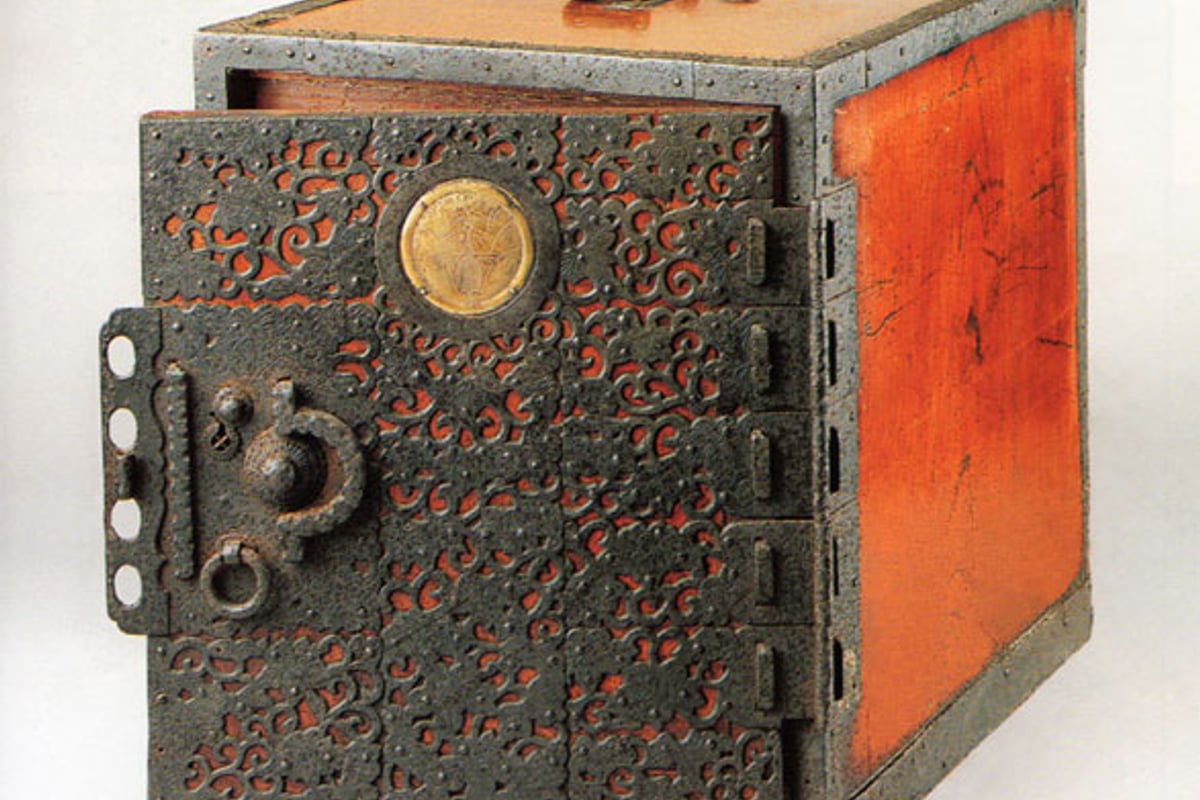
Sakata Funadansu
Sakata Funadansu
Sakata Funadansu are sturdy chests that sailors on Kitamae-bune (trading ships) had made to store valuables aboard ship, from the Edo period through the Taisho era. Sakata is counted as one of the three great production centers for funadansu (ship chests), alongside Ogi in Sado and Mikuni in Fukui Prefecture. Under a form of shipping business known as 'kaizumi,' in which ships bought and sold goods along the Sea of Japan coast, a distinctive style of funadansu-making developed in Sakata, one of the trade's port towns. The chests have a double-layer structure, using sturdy zelkova wood and highly decorative iron fittings on the outside, and paulownia wood on the inside, which swells in high humidity to keep water out. They were built small so they could be carried out quickly in the event of fire or shipwreck, and different styles were made for different uses, such as kakesuzuri (hanging writing boxes), chobako (ledger boxes), and hanbitsu (half-size chests). Master craftsmen such as Saito Josai appeared during the Edo period, but today there is a shortage of artisans skilled in decorative metal fittings and lacquering, making the transmission of the craft a challenge.
Sanshin
Sanshin
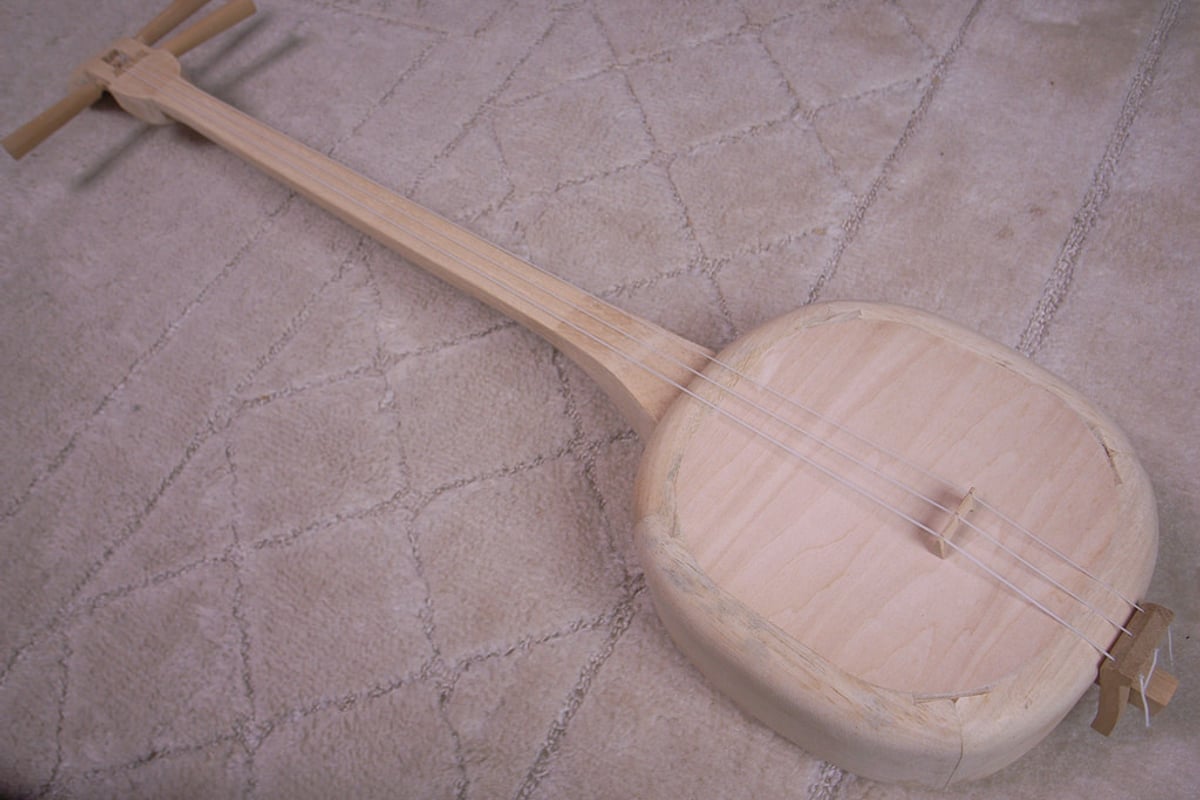
The sanshin is a three-stringed instrument with a body covered in snakeskin and a wooden neck, and it is indispensable to Okinawan music and performing arts. It is said to have originated around the end of the 14th century, when the Chinese sanxian, a stringed instrument from Fujian Province, was brought to the Ryukyu Kingdom through trade and developed into a distinctly Ryukyuan instrument centered on Kume Village (present-day Kume, Naha City). From the 15th century onward it spread among the Ryukyuan shizoku (gentry) class and developed as an accompaniment instrument for court banquet music and performing arts. The neck comes in seven traditional shapes named after master craftsmen of the Ryukyu Kingdom era, such as the Makabi, Haebaru, and Yunaa types, and instruments are made by combining a neck of wood such as kuruchi (Okinawan blackwood) with a body covered in python skin. Sanshin workshops and cooperatives carry on the craft techniques today; the sanshin was designated a national Traditional Craft in 2018, having already been designated an Okinawa Prefecture traditional craft product in 2012. Prices range from a few tens of thousands of yen for beginner instruments to several hundred thousand yen or more for high-end models with genuine python skin and prized woods, and the tone and appearance vary greatly depending on the type and materials chosen, which is part of its appeal.
Togakushi Bamboo Craft
Togakushi Takezaiku (Togakushi Bamboo Craft)
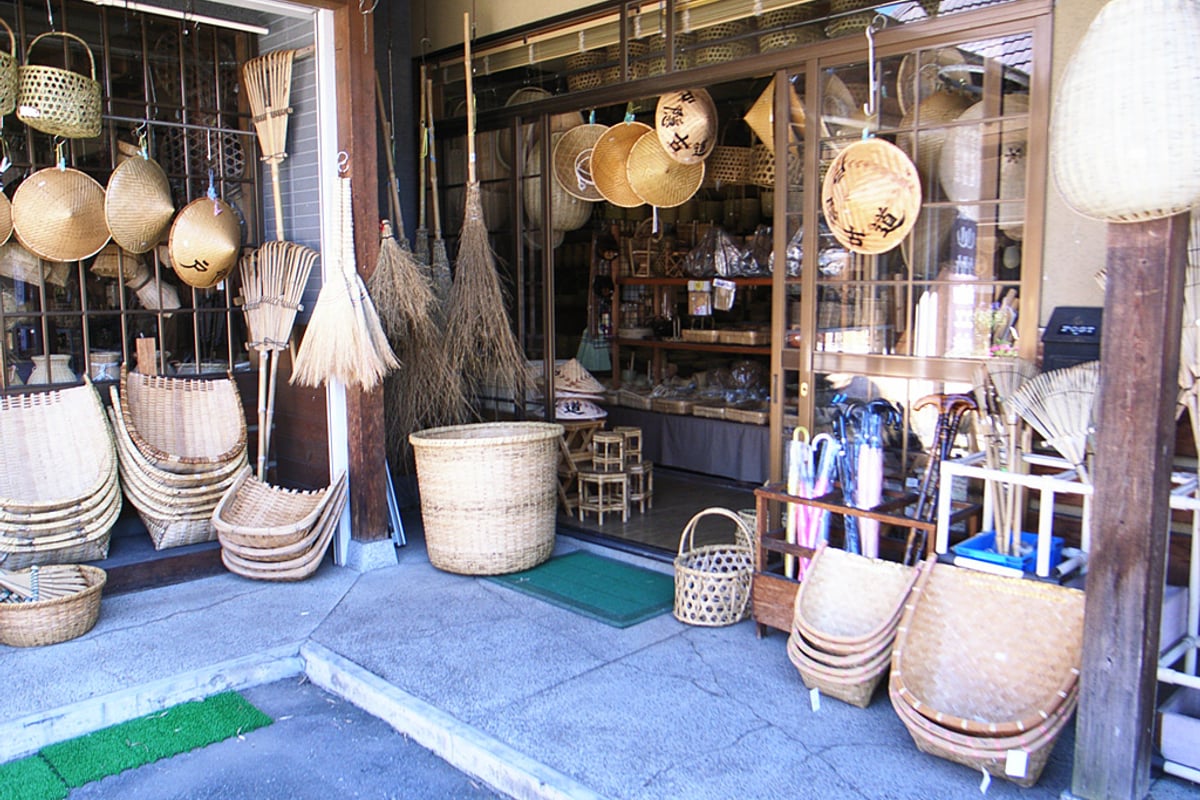
Togakushi Bamboo Craft is bamboo craft made in Togakushi, Nagano City. The material is chishima-zasa (a dwarf bamboo) that grows wild in the mountains of Togakushi; because its base is bent, it is locally called 'nemagari-dake' (literally 'bent-root bamboo'). Though thin, this bamboo is hard and supple, strong enough to bend without breaking even under heavy winter snow. In Togakushi, which lies at a high altitude and is unsuited to rice growing, it is said that in the Edo period people were permitted to pay their annual tax (nengu) in bamboo instead of rice. From the Meiji period onward, demand rose for large baskets used in sericulture, and eventually everyday tools such as zaru (draining baskets) and kago (baskets) came to be made. The representative product is the soba zaru, used to serve Togakushi soba. A distinctive feature is that a single craftsperson handles every step, from cutting the bamboo in the mountains and making bamboo strips (takehigo) to weaving. In 1983, together with the bamboo crafts of Yamanouchi Town and Ina City, it became a Traditional Craft Designated by the Governor of Nagano Prefecture under the name 'Shinshu Takezaiku' (Shinshu Bamboo Craft). In front of Togakushi Shrine, bamboo craft shops and facilities offering hands-on experiences are dotted around.
Kyo-butsudan (Kyoto Buddhist Altars)
Kyo-butsudan
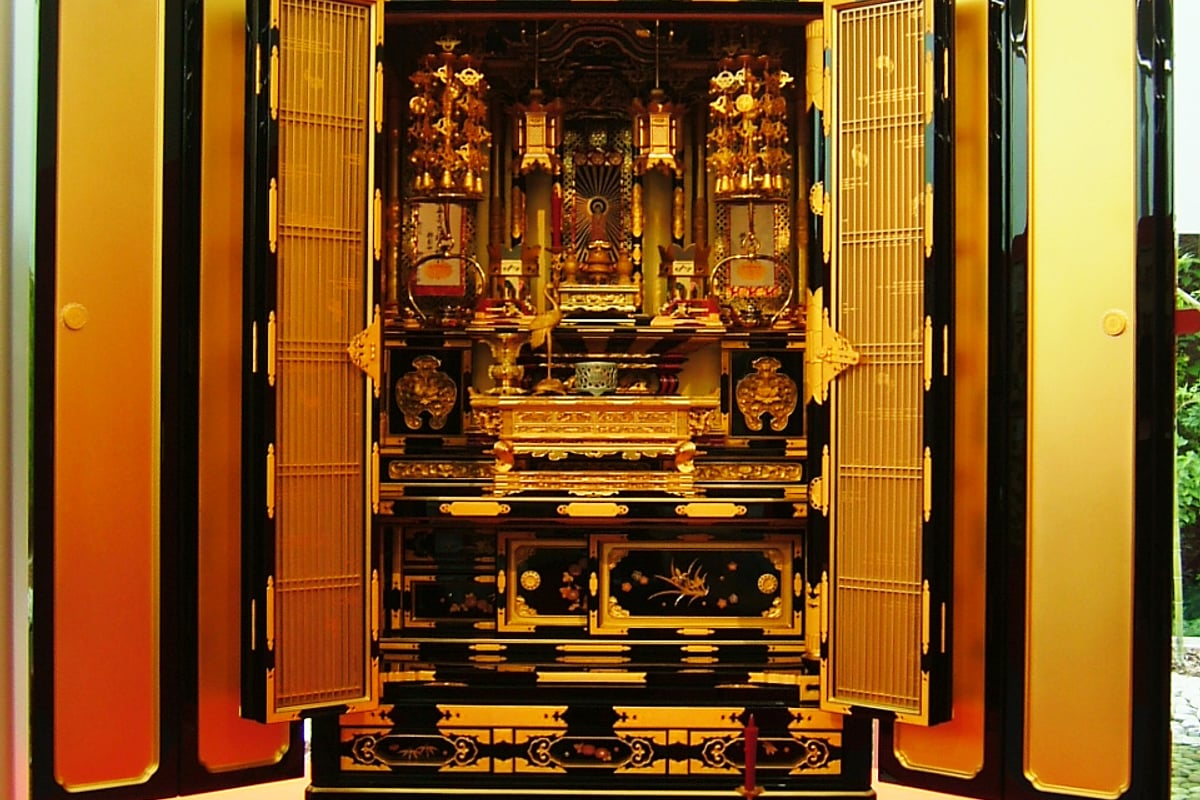
Kyo-butsudan are traditional Kyoto Buddhist altars made through a division-of-labor system involving more than forty specialized trades, including woodworking, roof (miya-den) construction, wood carving, lacquering, roiro polishing, pure gold leaf application, ornamental metal fittings, maki-e, and coloring. Buddhist altar fitting production in Kyoto is believed to have begun around the 8th century, shortly after the introduction of Buddhism, and became fully established in the early 11th century when the Buddhist sculptor Jocho set up the "Shichijo Busho" workshop in Shichijo. Demand surged in the early Edo period when the shogunate's temple registration system spread the custom of enshrining an altar in every household. Because styles of religious ornamentation differ by sect, mass production is unsuited to this craft, giving it the character of a comprehensive art form that draws together woodworking, lacquerwork, metalwork, and other traditional techniques. Today, roughly 70% of the altars and altar fittings produced in Kyoto are for temple use, and Kyoto supplies much of the temple altar equipment used nationwide. It was designated a Traditional Craft by the Minister of Economy, Trade and Industry in 1976.
Akebi-tsuru Zaiku
Akebi-tsuru Zaiku
Akebi-tsuru Zaiku is a Tsugaru basketry craft that traces its origin to the late Edo period, when charcoal baskets and hand baskets woven from the vines of the akebi plant growing wild in the surrounding mountains were made as souvenirs for visitors to Dake Onsen hot spring at the foot of Mount Iwaki. Using akebi vine gathered around the Hakkoda mountains and Lake Towada and around Mount Iwaki, as well as the bark of the yamabudou (a wild grape), every process from selecting the vine to shade-drying, soaking in water, and weaving is done by hand by the artisans. It is characterized by sturdy, skillfully woven texture and a natural sheen, and part of its appeal is that it develops more luster and fits the hand better the more it is used. From the Meiji era onward it was exhibited at exhibitions in Japan and abroad and gained wider recognition, and in March 1996 it was designated an Aomori Prefecture Traditional Craft. Today, hand baskets, baskets, and trays that make the most of the natural texture of materials gathered from the mountains and fields continue to be made mainly in Hirosaki City.
Asahikawa Furniture
Asahikawa Furniture
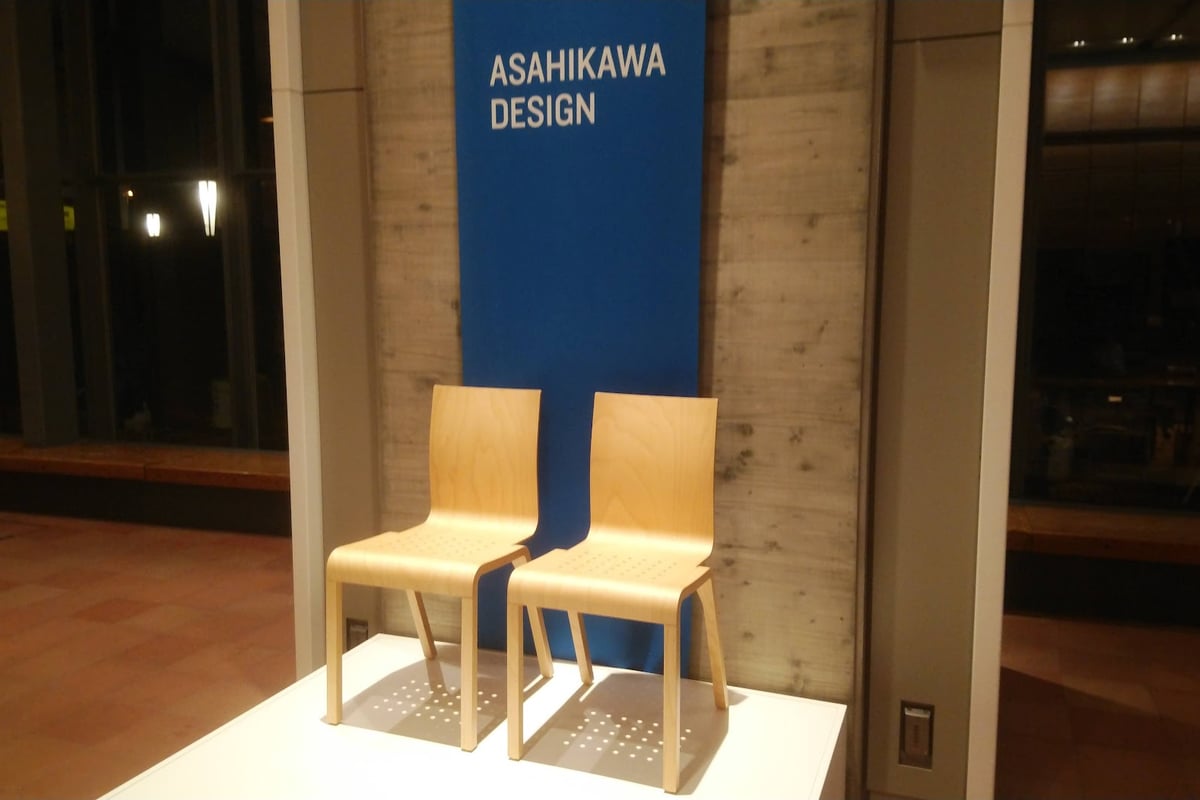
Asahikawa Furniture is a general term for wood furniture made in and around Asahikawa, Hokkaido, recognized as one of Japan's leading furniture-producing regions alongside Shizuoka, Hida, Tokushima, and Okawa. Its origins trace back to a sawmill opened in 1890 (Meiji 23) alongside the founding of Asahikawa Village; the completion of the railway in 1898 and the relocation of the Army's 7th Division in 1899 prompted carpenters and furniture and joinery craftsmen from Honshu to settle in Asahikawa, putting the woodworking industry on a full-scale footing. A cold-damage crop failure in 1913 led to the opening of a woodworking training institute that advanced technical skills, and in 1949 Asahikawa was the only district in Hokkaido designated a nationally important woodworking industrial district. The region draws on high-quality hardwood from the old-growth forests of the Taisetsu mountain range near Asahikawa, and has continued pursuing world-class design through the International Furniture Design Fair Asahikawa (IFDA), first held in 1990. Today, about 40 furniture makers in Asahikawa, Higashikawa, Higashikagura, and Toma belong to the Asahikawa Furniture Manufacturers' Cooperative, supporting the region's brand as a whole through joint exhibitions and joint order-taking.
Edo Kimekomi Ningyo
Edo Kimekomi Ningyo
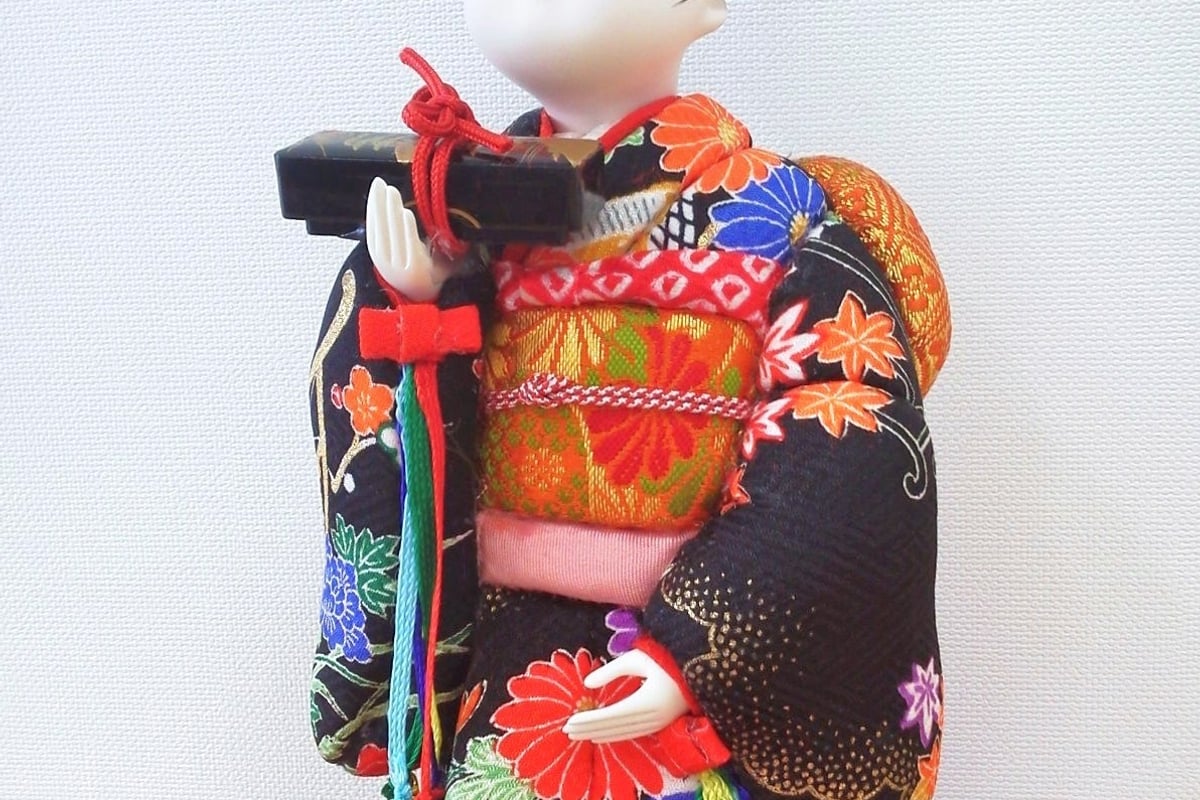
Edo kimekomi ningyo are dolls made using a distinctive technique in which fine grooves are carved into a doll's base form—made of toso (paulownia-powder clay paste) or wood—and the edges of fabric are pressed, or 'kimekomi'-ed, into those grooves to dress the doll. The technique originates in Kyoto during the Genbun era (1736–1741), when Takahashi Tadashige, who served the priests of Kamigamo Shrine, is said to have carved a doll's base form from willow wood and pressed scraps of priestly robes into it, giving rise to what became known as 'yanagi ningyo' (willow dolls) or 'kamo ningyo' (Kamo dolls). This technique was later passed on to Edo, where it developed independently after the Meiji era in Tokyo and became established as 'Edo kimekomi ningyo.' While dolls made in Kyoto are characterized by plump, courtly faces, those made in Tokyo are known for a somewhat slender-faced, modern look with sharply defined features. Making a single doll involves many stages of handwork, from applying layer upon layer of finishing coats to a toso base, to pressing fabric into the grooves, to painting the face with a fine detail brush and finishing the hair. Still widely loved today as hina dolls and Boys' Day dolls, Edo kimekomi ningyo was designated a Traditional Craft Designated by the Minister of Economy, Trade and Industry in 1978.
Edo Sashimono
Edo Sashimono
Edo Sashimono is a woodworking craft produced in Tokyo's Taito, Arakawa, and Koto wards, in which furniture and small items are made using the sashimono joinery (nail-free wood joinery) technique of carving and fitting together the joints of wood without using any nails. Sashimono itself dates back to Heian-period Kyoto, but the technique that reached Edo developed its own distinctive character alongside the economic and cultural growth of Edo from the 17th to 19th centuries. While samurai households favored solid, linear designs for their furnishings, sashimono for kabuki actors—known as 'Rien Sashimono'—and for townspeople gave rise to playful, chic, and delicate designs, and the craft gradually spread into the everyday lives of common people. Making the most of the natural grain of woods such as mulberry, zelkova, paulownia, and cedar, and keeping the use of metal fittings to a minimum, Edo Sashimono is characterized by simple design and achieves sturdy construction without nails through diverse wood-joinery techniques such as edge-joining (hagitsugi), mortise-and-tenon joints (hozotsugi), and halved joints (aikakitsugi). From paulownia chests of drawers to other pieces, it remains a craft of handmade work carried on by artisans today, cherished and used for decades. It was designated a Traditional Craft Designated by the Minister of Economy, Trade and Industry in 1997.
Edo Sudare
Edo Sudare
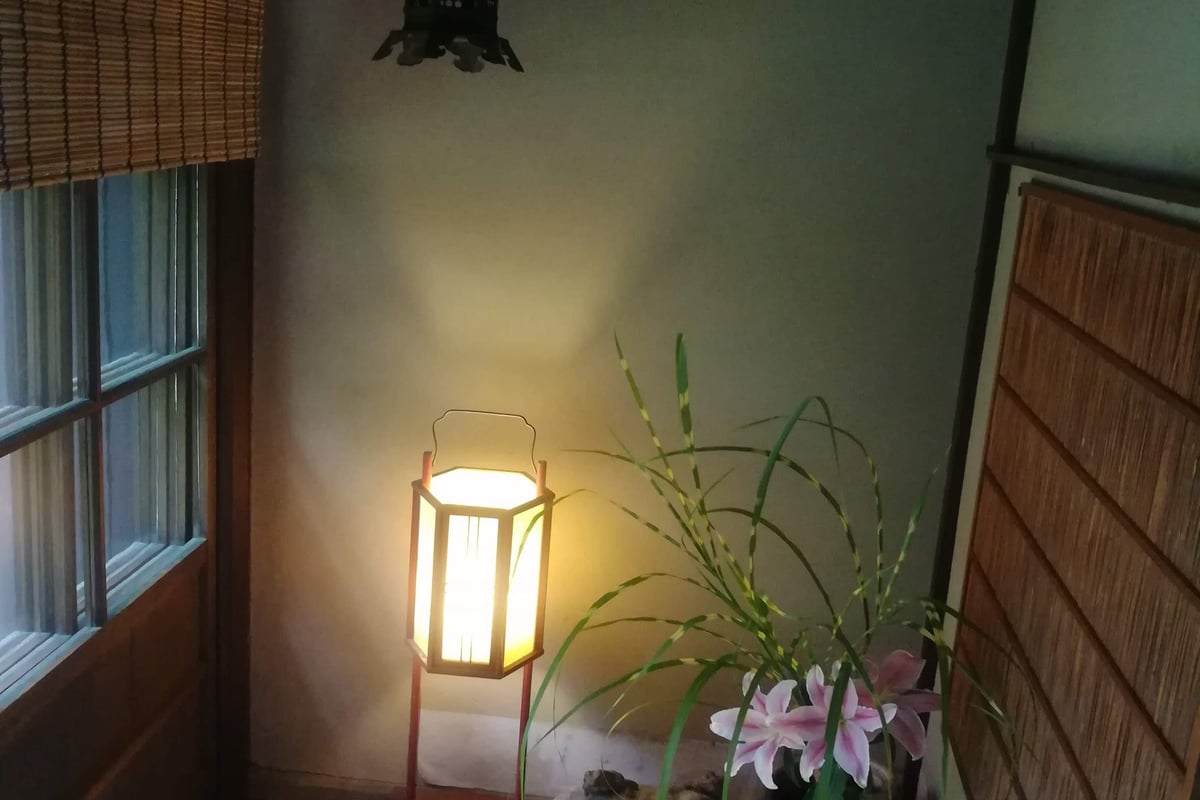
Edo sudare are traditional woven blinds made in Tokyo's Taito and Minato wards by weaving natural materials such as bamboo and reed together with thread. Blinds have a long history in Japan, appearing in the Manyoshu, the country's oldest anthology of poetry compiled in the 7th–8th centuries, and during the Heian period they were used in imperial courts, aristocratic residences, and shrines and temples as room dividers and sunshades. As the town of Edo developed, sudare spread into everyday commoners' life, and books from the Genroku era record the existence of specialist blind craftsmen known as misu-shi. In contrast to the lavish kyo-sudare of Kyoto, Edo sudare emphasize practicality and simple design as everyday household items, retaining the natural texture of materials such as bamboo, reed, bush clover, and cattail. Bamboo strips that have been finely split or thinly shaved are woven using a variety of techniques, including single-strand weave, double-strand weave, twist weave, and tortoiseshell weave, creating a breathable interior space that carries a pleasant breeze. Edo sudare was designated a Traditional Craft by the Tokyo Metropolitan Government in 1983.
Hakone Yosegi-zaiku (Marquetry)
Hakone Yosegi Zaiku
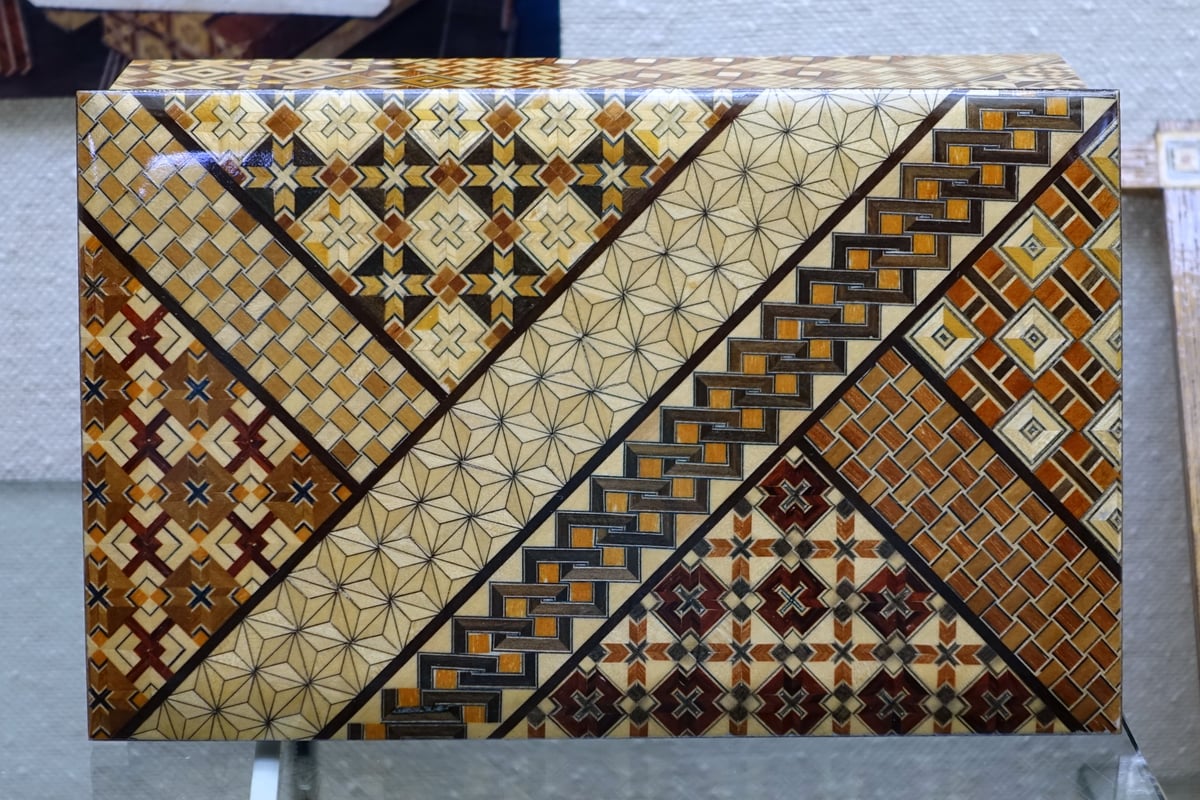
Hakone Yosegi-zaiku is a traditional woodworking craft from Hakone, Kanagawa Prefecture, that assembles geometric patterns from the natural colors and grain of different woods, with no dyeing involved. It is said to have begun in the late Edo period, when Ishikawa Nihei of Hatajuku, noting the wide variety of tree species found in the mountains of Hakone, began combining pieces of wood with different colors and grains to make trays and boxes. In the Meiji era, marquetry techniques from the Shizuoka region were incorporated, giving rise to more intricate geometric patterns. The himitsu-bako (puzzle box), fitted with a trick-opening mechanism, became a popular souvenir among travelers on the Tokaido and visitors to the hot springs, and it remains a signature Hakone souvenir today. Designated a national Traditional Craft in 1984, the technique is still carried on today, centered on workshops and museums in Hatajuku, the craft's birthplace.
Hitachi Jishi (Hitachi Lion Heads)
Hitachi Jishi
Hitachi Jishi is a style of lion head (shishigashira) passed down in Ishioka City, Ibaraki Prefecture, characterized by its lack of horns and its thick, powerful eyebrows and fierce expression. The oldest record of lion dancing in Ishioka appears in a document from 1854, and the lions are said to have originally developed as part of 'gyodo,' a ritual in which Buddhist monks paraded through town chanting sutras to ward off evil spirits. In the modern era, lions from each neighborhood in the city began gathering together for the region's largest festival, the Grand Festival of Hitachi-no-kuni Sosha-gu Shrine (the Ishioka Festival), and the demand for lion heads spurred the refinement of the craftsmanship. In production by today's artisans, locally grown paulownia wood is used for the base, with the ears, eyebrows, eyes, nose, and upper and lower jaws each carved separately and then assembled, before being finished with genuine lacquer and pure gold leaf. Ishioka City is home to classes and workshops that teach the techniques for making lion heads, and finished decorative lions can also be purchased—making it a nationally rare example of a 'living' local craft.
Hitachi Take Ningyo (Hitachi Bamboo Dolls)
Hitachi Take Ningyo
Hitachi Take Ningyo are bamboo-craft dolls made in a workshop in the Omika neighborhood of Hitachi City, Ibaraki Prefecture, by a bamboo-doll artisan carrying on the techniques of Echizen Take Ningyo, a traditional craft of Fukui Prefecture. It is said to be one of only about three remaining makers nationwide working in the Echizen bamboo-doll lineage; bamboo-doll artisan Shibata Shigemitsu, after training in Fukui, opened his workshop in Hitachi in 1972, marking the craft's beginning there. Bamboo selected at three years of age is harvested and then left to season for a further three years before use, meaning it takes a full six years from felling to a finished doll. A variety of bamboo types—including madake, sarashi-dake (bleached bamboo), goma-dake (speckled bamboo), kurochiku (black bamboo), monchiku (patterned bamboo), and tora-dake (tiger bamboo)—are chosen according to their purpose, and the dolls depict subjects drawn from Noh, Kabuki, and local folk performing arts. The craft's defining feature is a form that makes the most of bamboo's natural character, and the material's color, which deepens to an amber hue over time, is also part of its appeal—making it one of Ibaraki Prefecture's representative bamboo crafts.
Inami Chokoku
Inami Chokoku
Inami Chokoku is a traditional wood-carving craft passed down mainly in the Inami district of Nanto City, Toyama Prefecture. It is said to have begun when Zuisenji Temple, the head temple of Inami Betsuin founded in 1390, suffered repeated fires, and during reconstruction work in the Horeki and An'ei eras (1763-1774), local carpenters learned full-fledged carving techniques from Maekawa Sanshiro, an official carver for Kyoto's Nishi Hongwanji Temple. Initially focused on ranma (transom) panels and canopy carvings decorating temple and shrine architecture, demand expanded from the Meiji era onward to transom carvings for ordinary homes, and the craft developed into a local industry known nationwide as 'Inami ranma.' Its greatest feature is the 'sukashibori' (openwork carving) technique, in which patterns are cut through using only chisels; motifs such as pine, bamboo, and plum, flowers and birds, or dragons and lions are carved in multiple layers from both front and back, producing a three-dimensional, lifelike sense of movement. Designated a METI-designated Traditional Craft in 1975, Inami Chokoku today continues to produce a wide range of items, from temple and shrine carvings to transoms and shishi (lion) heads, and the region is known as a leading production center with a large share of Japan's transom-carving output.
Iwayado Tansu
Iwayado Tansu
Iwayado Tansu is a traditional wooden chest of drawers made in the Iwayado district of Esashi, Oshu City, Iwate Prefecture. Its origins trace back to the Tenmei era (1781-1788), when the lord of Iwayado Castle at the time is said to have had his retainers research the commercialization of wooden furniture such as wheeled chests and long chests. In the Bunsei era (1818-1830), the blacksmith Tokubei devised engraved metal fittings, which became the prototype for the Iwayado Tansu known today. Made from zelkova and paulownia wood, the craft is defined by its combination of rich, heavy lacquer finishes that bring out the natural wood grain and elaborate, hand-forged and hand-engraved metal fittings. It was designated a Traditional Craft by the Minister of Economy, Trade and Industry in 1982, and the careful, divided craftsmanship of woodworking, lacquering, and metal fitting is still passed down today.
Kanuma Kumiko
Kanuma Kumiko
Kanuma Kumiko is a representative woodcraft of Kanuma City, Tochigi Prefecture, known as 'the town of woodworking.' It is said to have originated when woodworking craftsmen gathered from across the country for the construction of Nikko Toshogu Shrine settled in the area and used fine local Nikko cedar to beautifully decorate shoji screen lattices, a tradition carried on for about 400 years. Woods such as Kiso cypress, Akita cedar, and Nikko cedar are finely processed and assembled entirely by hand, without any nails or metal fittings, to intricately render geometric patterns such as asanoha (hemp leaf), gomagara (sesame), and kikko (tortoiseshell). Traditionally used in fittings such as shoin-style shoji screens, ranma transoms, and Buddhist altars, in recent years it has also expanded into interior goods such as coasters, vases, and lighting, gaining popularity across generations. It is designated a Traditional Craft of Tochigi Prefecture and has also been certified under Kanuma City's own 'Kanuma Brand,' continuing to be promoted as a craft representative of the region.
Nanbu-kei Kokeshi
Nanbu-kei Kokeshi
Nanbu-kei Kokeshi are traditional kokeshi dolls originating in Hanamaki City, Iwate Prefecture, modeled after a toy called 'kinakina' made by woodworkers. The head and body are turned separately on a lathe, and the head is deliberately fitted loosely so that it wobbles on its axis - a structural feature found only in the Nanbu style among Japan's eleven traditional kokeshi lineages. Originally the dolls had no painted face or pattern and were left as plain wood, but they later came to be decorated with flowers and patterns under the influence of craftsmen from the Naruko and Togatta lineages, and they also became known as Hanamaki kokeshi. The dolls are also known for using a fine wood called kosanbara (Japanese holly), prized for its white, hard grain, and they continue to be handmade by craftsmen mainly in Hanamaki and Morioka cities today. Their simple, expressive appearance remains beloved as a folk toy nurtured by the climate of the Tohoku region.
Nara Ittobori
Nara Ittobori
Nara Ittobori is a style of wood-carved doll made from woods such as cypress, katsura, and camphor, boldly carved with a chisel and finished in vivid colors using gold leaf and mineral pigments. It is said to originate from the painted dolls used to decorate the flower hats and shimadai stands of the dengaku-hoshi performers at the Kasuga Wakamiya On-Matsuri, a festival that began in 1136 in the late Heian period and has continued without interruption ever since, carrying its distinctive forms down through the generations. Unlike ordinary rounded carving, it is characterized by simple, powerful forms that make use of flat planes and ridgelines—a style said to reflect the mindset of dolls offered to the gods, expressing the essence of a subject without relying on superficial detail. In the Meiji era, the craft came to be called 'Ittobori Nara Ningyo' and later 'Nara Ittobori'; the name is said to have been given by Mizutani-gawa Tadaoki, the first chief priest of Kasuga Taisha, reflecting the way the dolls appear carved with a single decisive stroke, imbued with spirit. Today, a wide range of works—from hina dolls and Boys' Day dolls to zodiac figurines—continue to be made in Nara.
Nara Uchiwa
Nara Uchiwa
Nara uchiwa is a traditional craft of Nara City said to be among the oldest types of uchiwa (flat fan) in Japan. Its origin is traced to the 'Negi Uchiwa,' made by a Shinto priest serving at Kasuga Taisha, founded in the Nara period. In the early Edo period, a monk of Kofuku-ji added his own refinements to a fan style introduced from China, perfecting a distinctive design featuring openwork carving (sukashibori) of motifs associated with Nara, such as deer and wisteria. Its defining feature is the openwork carving technique itself: 60 to 90 ribs — more than three times the number found in an ordinary uchiwa — are split from thin strips of medake bamboo and covered with washi paper, with the pattern areas then cut out with a carving knife. The unusually high number of ribs lets the fan flex gently, producing a soft breeze. All 13 steps, from dyeing the paper to bamboo-rib processing, sketching, openwork carving, and paper-mounting, are done entirely by hand within a single workshop without any division of labor — a feature not found in uchiwa from other production areas. Today, Japan's only specialty shop for Nara uchiwa, located in Nara City, has preserved this technique for more than 170 years.
Nibutani Ita (Carved Wooden Tray)
Nibutani Ita
Nibutani Ita is a wood-carved tray (ita) of the Ainu people, handed down since ancient times in the Nibutani district of Biratori (Biratori Town), Saru District, Hokkaido. Craftspeople carve boards of Hokkaido-grown wood such as katsura (Japanese Judas tree) and walnut that have been dried for several years, engraving Ainu patterns such as morew-noka (spiral pattern), aiush-noka (thorn-like pattern), and shik-noka (eye-like pattern). The technique of ramram-noka (scale carving), applied to fill the spaces between the larger patterns, is also considered indispensable to Nibutani Ita. These patterns are said to carry meanings of warding off evil and misfortune. On March 8, 2013, together with Nibutani Attus, it became the first Traditional Craft Product designated by the Minister of Economy, Trade and Industry (METI) in Hokkaido. Although it has long been used as an everyday tray, the arrangement of patterns and the depth of carving differ from carver to carver, making it a craft in which the individuality of the maker is strongly expressed. The technique continues to be passed down today by local artisans and workshops centered on Nibutani in Biratori Town.
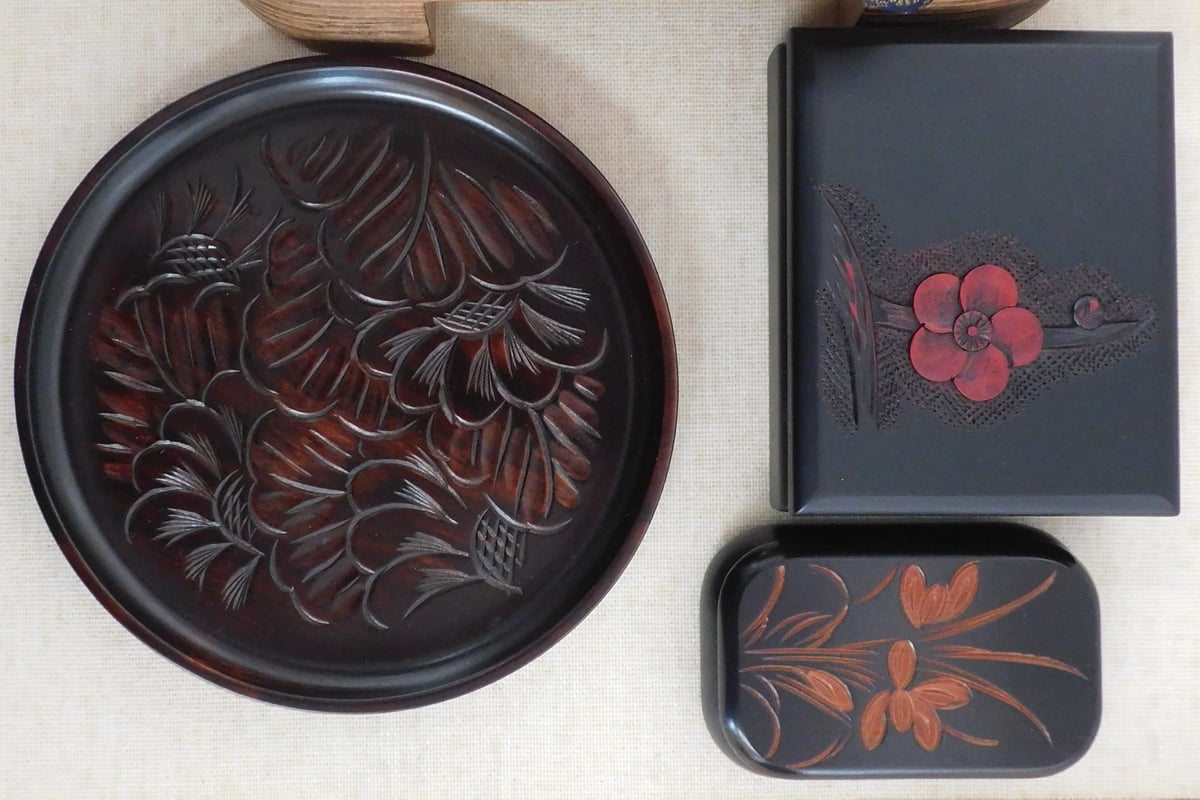
Nikko-bori
Nikko-bori
Nikko-bori is a traditional wood-carving craft passed down in Nikko City, Tochigi Prefecture. It is said to have originated as a sideline pursued in their spare time by master craftsmen gathered from across the country for the rebuilding of Nikko Toshogu Shrine (1634-1636) under the third Tokugawa shogun, Iemitsu. Its most distinctive feature is a unique carving knife called the 'hikkaki,' or 'Nikko sankakuto' (Nikko triangular knife), originally a tool used to scrape off lacquer during shrine repairs. Carving by folding the blade tip and pulling it toward oneself produces Nikko-bori's characteristic flowing curves, and designs are strongly influenced by the Toshogu carvings, centering on plant motifs such as peonies, chrysanthemums, plum blossoms, and cherry blossoms. The carved wood is finished with layers of lacquer, and the craft has long been cherished for everyday items such as trays, tea-cup stands, and small drawers. Today, visitors to workshops and hands-on facilities in Nikko City can try carving a hand mirror or confectionery dish using the hikkaki knife themselves.
Odawara Chochin (Folding Paper Lantern)
Odawara Chochin
Odawara Chochin is a paper lantern from Odawara, Kanagawa Prefecture, said to have been devised in the mid-Edo period by a local lantern maker, Jinzaemon, for travelers crossing the Hakone mountains. Unlike ordinary lanterns, its body ribs form a single independent ring, so that when folded, the body collapses completely into its upper and lower lids, making it compact enough to carry inside a kimono breast pocket — its greatest feature. The bamboo strips used are shaved into a square cross-section to increase the surface area for gluing, making the lantern resistant to rain and fog, and the upper and lower lids are made from sacred wood from Saijoji Temple on Mt. Daiyuzan, which was also believed to ward off evil on the road. These three advantages — portability, durability, and protection from evil — were promoted as the santoku (three virtues), and in the Edo period the lantern became known nationwide as a souvenir among travelers on the Tokaido. Today only a small number of lantern shops in the city continue to uphold the traditional techniques, and efforts are made to pass on the skills through workshops and other activities.
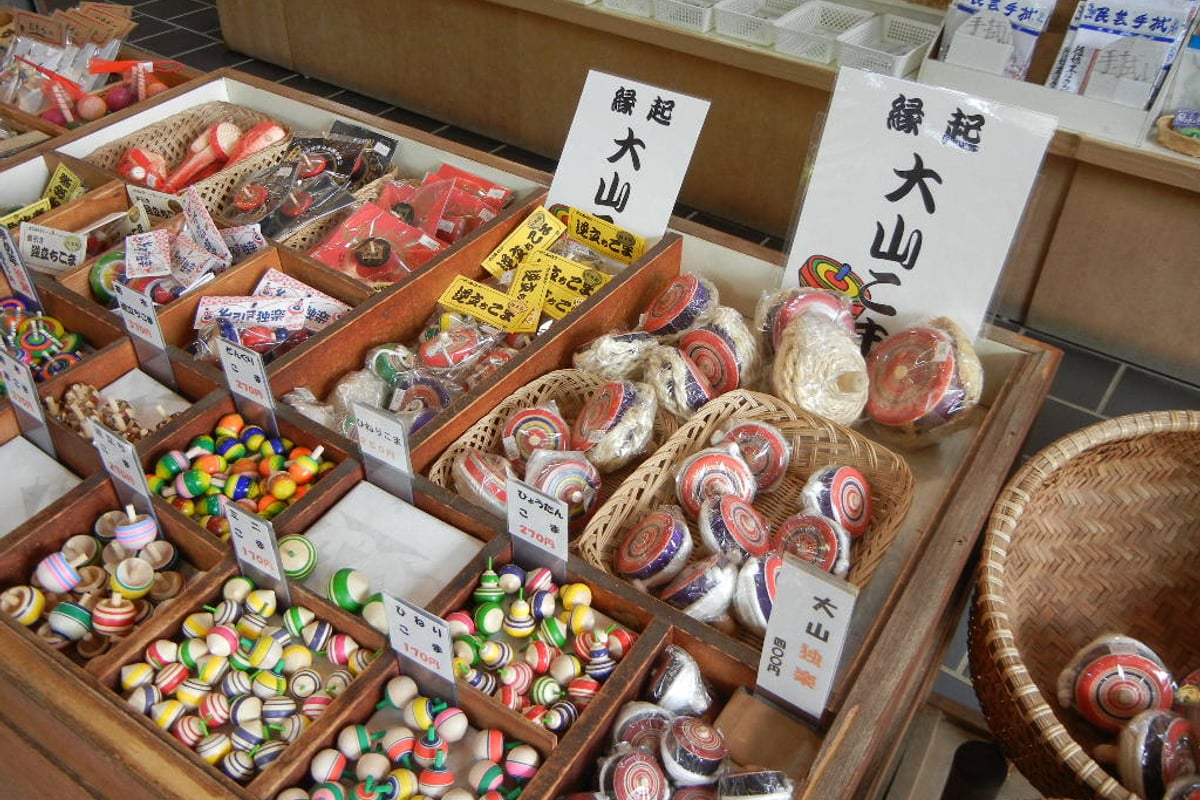
Oyama Top (Oyama-koma)
Oyama Koma
Oyama-koma are wooden spinning tops passed down at the foot of Mt. Oyama in Isehara City, Kanagawa Prefecture, which developed as souvenirs of the 'Oyama pilgrimage' that flourished in the mid-Edo period. Local mizuki wood is turned on a lathe by woodturners and finished in a plain wood base painted in bold bands of vermilion, indigo, and purple that blend together as the top spins. Their thick, long axle and rounded, substantial shape are designed, through a construction in which a separate piece of hard wood is inserted into the axle, to withstand use as 'fighting tops' knocked hard against one another, and because they 'spin well,' they have long been cherished as lucky charms believed to bring good fortune and business prosperity. Many woodturners and top shops once lined the pilgrimage approach, giving rise to the street's name 'Koma-sando' (Top Approach), but as lifestyles changed the number of makers declined, and today only a few shops along the approach carry the tradition forward. In 2023, 'the techniques for making Oyama-koma' were selected as a national Intangible Folk Cultural Property requiring documentation.
Sesson Uchiwa
Sesson Uchiwa
Sesson Uchiwa is a fan designated as an Ibaraki Prefecture Folk Craft, passed down in Hitachiota City, Ibaraki Prefecture. It is said to have originated when the itinerant Buddhist painter-monk Sesson Shukei, who stayed in the area during the Muromachi period, gave out fans on which he had painted ink-wash pictures. The ribs are made by splitting local madake bamboo into thin strips and weaving them together with rush (igusa), and the fan is finished by pasting on the sturdy local washi paper 'Nishinouchi-gami,' made in nearby Hitachiomiya City. The designs—featuring motifs such as horses, morning glories, scarecrows, and the Eight Views of Mito—are drawn from the landscape and bird-and-flower paintings associated with Sesson, and the fans are said to have also been favored by Tokugawa Mitsukuni, the second lord of the Mito Domain. Because every one of the 33 steps, from harvesting the bamboo to finishing, is done entirely by hand, only around 2,000 fans are produced each year. A single shop has carried on the craft as a family business for more than 200 years since the Edo period, and today the fourth generation is the sole remaining maker.
Shogawa Hikimono Kiji
Shogawa Hikimono Kiji
Shogawa Hikimono Kiji is a woodworking craft centered on Shogawa-cho in Tonami City, Toyama Prefecture, in which timber is turned on a lathe to finish trays, bowls, and other wooden ware. It is said to originate in 1866 (Keio 2), when Echigoya Seiji, a wood-turner from Uozu, moved to Kanaya (present-day Shogawa-cho, Tonami City) drawn by the abundant timber gathered through the Shogawa River log-driving trade, and began turning wood on a lathe there. During the Meiji era, timber accumulated at the Aoshima log pond, and the surrounding area developed into a major timber hub lined with sawmills and woodworking shops. A hallmark of the craft is the technique of turning wood along its horizontal grain to bring out the beauty of the woodgrain to the fullest, with pieces gaining more luster and character the longer they are used. Domestic woods such as horse chestnut and zelkova are used, finished with tools the artisans make themselves, such as karakasa planes and thin blades. It was designated a METI-designated Traditional Craft in 1978 (Showa 53), and artisans belonging to 庄川木工挽物会 continue to pass on the techniques today.
Takaoka Butsudan (Buddhist Altars)
Takaoka Butsudan
Takaoka Butsudan are Buddhist altars manufactured in Takaoka City, Toyama Prefecture, a comprehensive craft that applies the metalworking and lacquer techniques nurtured by Takaoka's copperware and lacquerware traditions to altar-making. Records from the Keicho era already show joiners producing lacquered furniture, which is thought to be the origin of altar-making in the area. Altar production had formed into an industry by at least the end of the Edo period, and an altar made around 1846 (Koka 3) is said to be almost identical in style to today's Takaoka Butsudan. The craft is characterized by a division of labor among woodworkers, carvers, lacquerers, maki-e decorators, and metal fitting makers: three-dimensional wood carving is applied to a wooden frame made of ginkgo and Podocarpus macrophyllus (kusamaki), the ground is carefully prepared and lacquer is applied in many layers, and the piece is finished with hand-forged, thick metal fittings colored to a reddish hue through a boiling process. The engraving techniques developed through Takaoka copperware are said to have supported the development of the altars' decorative work, and it was designated a Toyama Prefecture-designated Traditional Craft in 2013 (Heisei 25).
Takayama Chasen (Takayama Bamboo Tea Whisks)
Takayama Chasen
Takayama Chasen is a bamboo tea whisk for tea ceremony use made in Takayama-cho, Ikoma City, Nara Prefecture, and is a Traditional Craft designated by the Minister of Economy, Trade and Industry. It is said to have originated in the Muromachi period, when Takayama Minbu-no-jo Nyudo Soze, son of the lord of Takayama Castle, devised it at the request of Murata Juko, regarded as the founder of the tea ceremony. The technique has been passed down for over 500 years within a single family line at a time, and today Takayama-cho, Ikoma City, is said to produce the majority of tea whisks distributed in Japan, making it one of the few remaining chasen-producing areas in the country. The main material is hachiku (henon bamboo), along with kurochiku (black bamboo) and susudake (smoke-cured bamboo); every step, from splitting the bamboo to thinly shaving the tines and weaving them together with thread, is done entirely by hand. Shapes and the number of tines vary by school and use, with more than 100 varieties said to exist, making it a tool prized among tea utensils for combining delicate beauty with practicality.
Torigoe Takezaiku
Torigoe Takezaiku
Torigoe Takezaiku is a bamboo craft passed down in the Torigoe district of Ichinohe Town, Ninohe District, Iwate Prefecture. It is made from Nanbu suzutake, a slender, pliant species of dwarf bamboo that grows wild in the mountains of northern Iwate, and is woven using the awase-ami (double-weave) technique, which produces a beautiful finish whether viewed from inside or outside. Its origins are said to trace back to the Heian period, and a legend tells of the priest Jikaku Daishi, who was staying in Torigoe, receiving a revelation from Kannon and spreading the craft of bamboo weaving among the local people. Long cherished as everyday tools such as baskets and sieves, the craft has in recent years seen its number of makers and production volume decline due to the mass die-off of the suzutake bamboo used as raw material, prompting the formation of the Torigoe Takezaiku Sanchi wo Mamoru Kai (Association to Protect the Torigoe Takezaiku Production Area), which works to train successors and promote the craft and its production area.
Toyama Mokuzogan (Wood Inlay)
Toyama Mokuzogan
Toyama Mokuzogan is a woodworking technique that originated in Toyama City, in which natural woods of differing colors and grain are cut out with a scroll saw and inlaid to create pictures and patterns on a single panel. It is said to have begun in 1907 (Meiji 40), when Nakashima Mokudo, a native of Toyama, apprenticed himself to Shirakawa Senseki, a wood-inlay craftsman in Odawara, Kanagawa Prefecture, learned modern inlay techniques using a scroll-saw machine, and brought them back to Toyama. Nakashima Mokudo was designated a Toyama Prefecture Intangible Cultural Property in 1964 (Showa 39) and established a distinctive style rooted in the local character of Toyama. Its defining feature, unlike yosegi-zaiku, which assembles simple shapes such as triangles and squares, is that pieces are cut with a scroll saw to precisely follow a design drawn on a base panel, then inlaid with matching pieces of patterned wood, allowing the craft to express pictorial designs. In addition to traditional products such as framed panels and tables, new types of products, including tea utensils and lighting, have also been developed in recent years. The efforts of its successors have been recognized, and it was designated a Toyama Prefecture Traditional Craft in 2013 (Heisei 25).
Tsugaru Kokeshi Dolls (Tsugaru-kei Kokeshi)
Tsugaru-kei Kokeshi
Tsugaru-kei Kokeshi is one of the eleven traditional lineages of kokeshi dolls found across the six Tohoku prefectures, produced mainly around Nuruyu Onsen in Kuroishi City, Aomori Prefecture, with production also spreading to Owani Town. It is said to have begun in the early Taisho era, when kijishi (wood-turning craftsman) Mori Hidetaro started making kokeshi for hot-spring visitors at Nuruyu Onsen, laying the foundation for the lineage together with Hasegawa Tatsuo of Owani Town. Because it took shape later than other lineages, it developed a freer style unbound by the traditional apprentice system, and is characterized by distinctive design elements not found in other production areas: the 'tsukuritsuke' technique of carving the head and body from a single piece of wood, a body shape that flares broadly at the hem, and motifs influenced by the peony crest of the Tsugaru domain, Ainu patterns, and Nebuta festival paintings. The Tsugaru Kokeshi Museum opened in Kuroishi City in 1988, and its skills and charm continue to be passed on today through production demonstrations and painting workshops led by Tsugaru-kei kokeshi craftsmen.
Ujo-bori
Ujo-bori
Ujo-bori is a wood-carved lacquerware from Okayama City, named after 'Ujo,' another name for Okayama Castle. Its founder was Kiguchi Kyuho (real name Kiguchi Fusashiro, 1895-1969), who became devoted to woodcarving after carving tea utensils and the like as a hobby, and in 1927 (Showa 2) named his own work 'Ujo-bori.' On a single board of keyaki (zelkova), oak, katsura, or paulownia wood, motifs such as vegetables, fruit, flowers and grasses, or ancient roof-tile patterns are carved in relief, and the piece is finished by repeating a 'fuki-urushi' (wiped lacquer) process—applying raw lacquer and wiping it off with cloth—about 13 to 24 times. Its defining feature is that the luster and character deepen the more it is used. Originally devised not for commercial purposes but as a social enterprise to create work for people with disabilities, the Ujo-bori Association (a foundation) was established in 1953. Ujo-bori incense trays and tea caddies have been presented to Emperor Showa on two occasions, in 1930 and 1946. With a history spanning more than 90 years, it continues today to be handed down as a specialty craft of Okayama City.
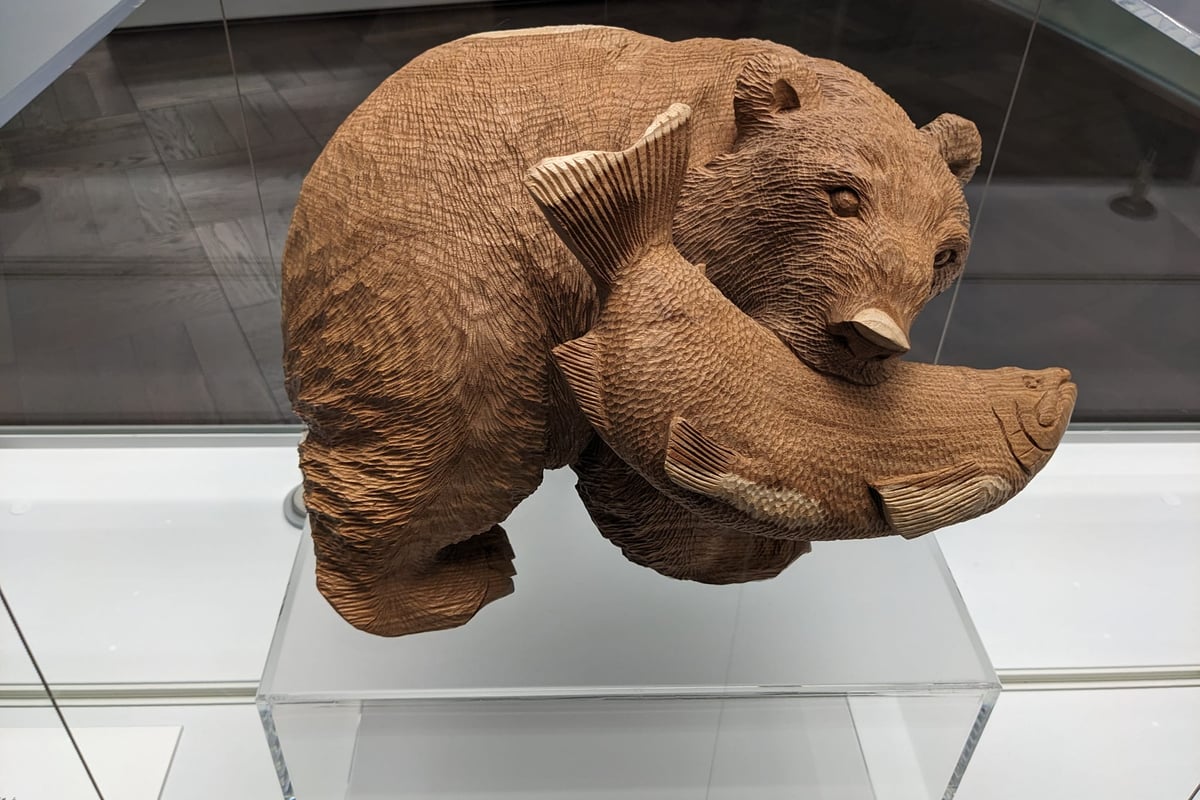
Wood-carved Bear (Kibori-guma)
Kibori-guma (Wood-carved Bear)
Kibori-guma (wood-carved bear) is a carved wooden statue of a bear, widely known as a representative wood-carving craft of Hokkaido. Its origin is attributed to Yakumo Town on the Oshima Peninsula. Tokugawa Yoshichika, 19th head of the Owari Tokugawa family, brought back folk-craft items including wood-carved bears that he had seen while stopping in Switzerland during a 1921-1922 tour of Europe, and encouraged local farmers to make similar carvings as winter side work at the Yakumo Farm that he operated. A work carved by dairy farmer Ito Masao based on the imported piece is regarded as the first wood-carved bear made in Hokkaido, and was exhibited at the Yakumo Rural Art and Craft Exhibition in 1924. In Yakumo, two styles of expression developed: the delicate 'kebori' (fur-carving) technique established by Nihonga painter Tokura Kinnosuke, and the powerful 'menbori' (facet-carving, or hatsuri-bori) technique established by Shibasaki Shigeyuki. Meanwhile, in Asahikawa, around 1926, Ainu bear hunter Matsui Umetaro carved a bear based on his own experience, giving rise to a distinct lineage that developed into the 'Asahikawa style,' characterized by abstract forms created with facets. Today it is known nationwide as a classic Hokkaido souvenir.
Yawata-uma
Yawata-uma
Yawata-uma is a wooden folk toy horse handed down in the Nanbu region centered on Hachinohe City in Aomori Prefecture, and it is counted, together with Miharu-goma from Fukushima Prefecture and Kinoshita-goma from Miyagi Prefecture, as one of the "Three Great Horses of Japan" (Nihon San-Koma). The region was once home to the celebrated Nanbu horse breed, and the toy is said to have originated when wooden horses were sold as souvenirs to worshippers gathering for the grand festival of Kushihiki Hachiman-gu Shrine in the Yawata district of Hachinohe City; the name "Yawata-uma" comes from the place name Yawata. The rustic wooden horse set on a pedestal, decorated with vivid red and blue patterns, is said to reflect the finely dressed horses that once paraded in rural wedding processions. From the Meiji era onward, its role expanded from a children's toy to a keepsake for celebratory occasions, and today it is cherished as a gift for weddings, new homes, and births. In March 1996 it was designated an Aomori Prefecture Traditional Craft, and the skills required to finish it entirely by hand - from cutting the wood and painting to attaching the mane - continue to be passed down.
Yokohama Furniture
Yokohama Kagu
Yokohama Furniture is a craft that emerged in the wake of the opening of the port of Yokohama at the end of the Edo period, and is regarded as the birthplace of Western-style furniture-making in Japan. According to tradition, it began around 1863, when Goldman, an Englishman residing in Yokohama, asked a local harness-maker, Hara Yasuzō, to repair a chair. Impressed with the quality of the repair, Goldman then commissioned furniture in the same style made back home, prompting local woodworkers to study the structure and design of Western furniture and develop it in their own way. Its distinguishing techniques combine traditional Japanese woodworking with Western furniture styles: precise wood-joinery that uses almost no nails, and shaping of graceful curved surfaces with a specially curved-blade plane. In the Meiji era, Yokohama Furniture won international acclaim, even being exhibited at the Paris World's Fair, but the number of makers declined after the Great Kanto Earthquake and wartime destruction, and today only a handful of workshops and companies carry on the technique.
Yuki Paulownia Chest
Yuki Paulownia Chest
The Yuki paulownia chest is a chest of drawers made of paulownia wood produced in Yuki City, Ibaraki Prefecture. Its origins are said to trace back to the late Muromachi period, when chests using zelkova wood were made as furnishings for the residence of the local lord, the Yuki family. Because the Yuki family had planted paulownia trees throughout their domain, and paulownia's breathable, fire-resistant properties were recognized as well suited to storing clothing, chest-making using paulownia wood spread from the late Edo period onward. Paulownia wood expands in humid conditions to seal tightly and contracts when dry to improve ventilation, making it a prized material for storage furniture that protects kimono and valuables from mold and insect damage. In 1958 (Showa 33), it was designated a special product of Ibaraki Prefecture, and Yuki City is still counted today as one of Japan's eight major production areas. It has also long been cherished as a wedding furnishing, based on the tradition that if a paulownia tree is planted when a daughter is born, it can be crafted into a chest for her wedding by the time she marries.