Image: Wikimedia Commons
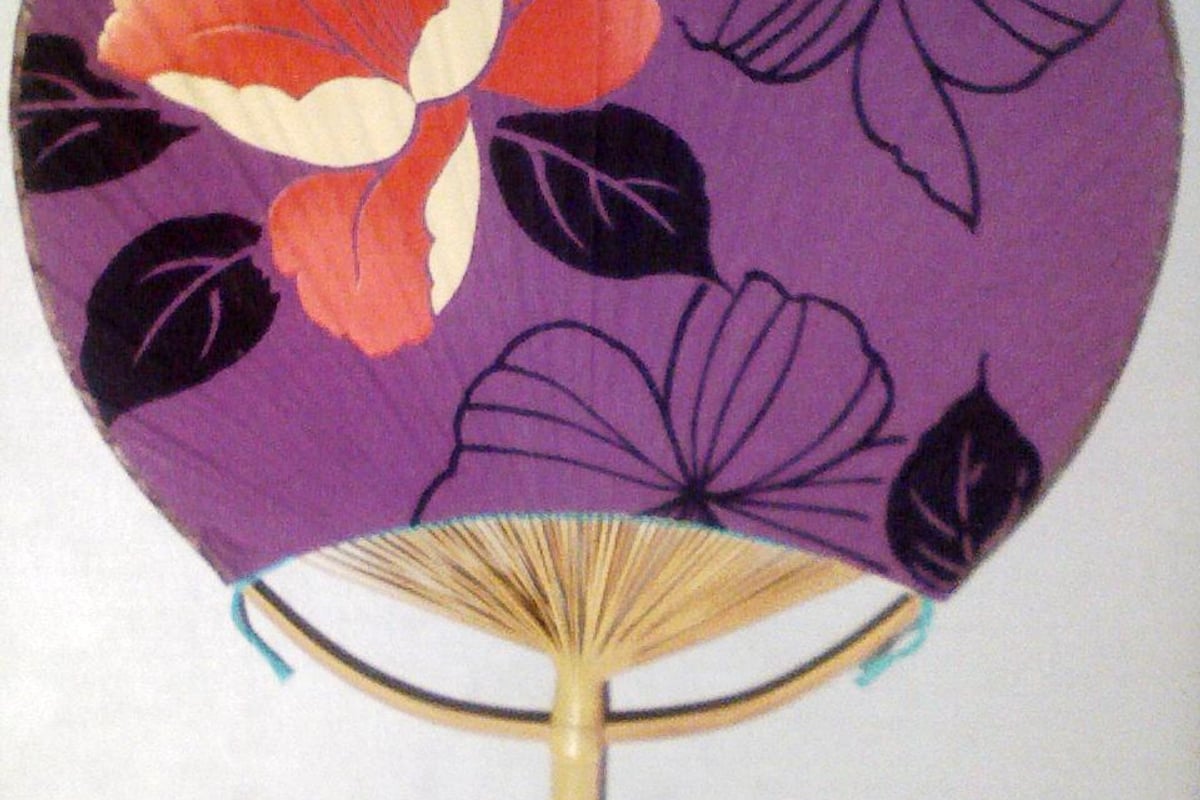
Boshu Uchiwa are traditional folding fans made in Tateyama City and Minamiboso City, Chiba Prefecture (the Boso region), and are counted among the 'Three Great Uchiwa of Japan' alongside Kyoto's Kyo-uchiwa and Kagawa's Marugame Uchiwa. In 2003, they became the first craft in Chiba Prefecture to be designated a Traditional Craft Product designated by the Minister of Economy, Trade and Industry (METI). The medake (a type of slender bamboo) that grows in the mild climate of the Boso region has wide spacing between its nodes, making it light, supple, and ideal for fan ribs. The defining feature of Boshu Uchiwa is the 'maru-e' (round handle), which uses the natural roundness of the bamboo culm as the handle itself, a feature not found in fans from other production areas, giving them exceptional ease of grip and a gentle, supple breeze. Every one of the 21 steps involved, including splitting a single bamboo culm into 40 to 64 fine, even strips and weaving them with thread to form the fan-shaped 'window,' is carried out entirely by hand. From the late Taisho era through the early Showa era, the region became a major production center producing 7 to 8 million fans a year, but output has declined with changing lifestyles, and today only a small number of craftspeople continue to preserve the tradition.
Origin
Fan-making in the Boso region is said to have begun around 1890 (Meiji 23), when Shintaro Oshidari, who lived in Nako (present-day Tateyama City), began processing split bamboo as a side business. At first the work centered on processing bamboo for fan ribs, but from around 1921 (Taisho 10), production shifted to 'Boshu Uchiwa' made entirely within the Boso region, from rib-making through pasting and finishing. The abundant supply of high-quality medake bamboo grown in the region's mild climate was the backdrop that allowed Boso to develop into a major fan-producing area.
History
Production of Boshu Uchiwa reached its peak from the late Taisho era through the early Showa era, growing into a major industry that produced 7 to 8 million fans a year. They remained popular as everyday items after the war, but demand gradually declined with the spread of plastic fans, electric fans, and air conditioners. In 2003, following Kyoto's Kyo-uchiwa and Kagawa's Marugame Uchiwa, Boshu Uchiwa became the first craft in Chiba Prefecture to be designated a Traditional Craft Product designated by the Minister of Economy, Trade and Industry (METI), spurring region-wide efforts to pass on the tradition. Today, a small number of craftspeople and workshops, including Uyama Kobo and Uchiwa Kobo Yoko, continue to carry on the technique.
Features
The defining feature of Boshu Uchiwa is the 'maru-e' (round handle), which uses the natural roundness of the medake bamboo as the handle itself. This gives the fan a comfortable grip and produces a soft, supple breeze not found in flat-handled fans from other regions. Notably, every one of the 21 steps, from selecting the bamboo, splitting a single culm into 40 to 64 fine, even strips to form the ribs, weaving them with thread into the fan-shaped 'window,' through pasting and finishing, is done entirely by hand. The process of pasting washi paper or cloth onto the ribs and finishing the edge with colored washi produces the distinctive design unique to Boshu Uchiwa.
Materials Used
Production Process
- 1
Splitting the bamboo
High-quality medake bamboo, kept at roughly 1.5 cm thick, is split into 40 to 64 fine, even strips.
- 2
Weaving (forming the 'window')
The split bamboo strips are woven together with thread and shaped into a fan form to create the 'window,' the skeletal frame of the fan.
- 3
Pasting and cutting
Washi paper or cloth is pasted onto the frame, and the excess is trimmed away along the shape of the fan.
- 4
Edging
Colored washi paper is wrapped and pasted around the edge to complete the design distinctive to Boshu Uchiwa.
| Main Production Areas |
|
|---|
Artisans & Workshops
うやま工房
A Boshu Uchiwa workshop that was based in Minamiboso City. Its founder, Masao Uyama, started the workshop at age 60 and remained active in fan-making for 27 years until his death in 2017. His techniques are now carried on by his daughter, Mayumi.
Official site →うちわ工房よこ
A workshop based in Chikura, Minamiboso City, that makes and sells Boshu Uchiwa. To help pass on the local traditional craft, it actively runs hands-on workshops and offers outreach experience programs for schools and companies.
Official site →How to Buy
- 房州堂
- A supporting member of the Boshu Uchiwa Promotion Council that makes and sells Boshu Uchiwa. It has no physical store, delivering products through mail order on its official online shop and through partner stores in Minamiboso City and Tateyama City.Where to buy →PR
Hands-on Experiences
うちわ工房よこ
千葉県南房総市千倉町
Holds hands-on workshops around Chikura, Minamiboso City (reservation required; phone 090-4715-6060). Also offers outreach experience programs for schools and companies, where participants can learn about the history and techniques of Boshu Uchiwa while making one themselves.
View details →うやま工房
千葉県南房総市
Reservations are required by phone, and sessions are available for a single participant (phone 0470-36-2130). Of the 21 steps involved in making a Boshu Uchiwa, participants can experience steps 16 through 18, in which washi paper or cloth is pasted onto the bamboo ribs to finish the fan.
View details →