 Image: Wikimedia Commons
Chiba Prefecture
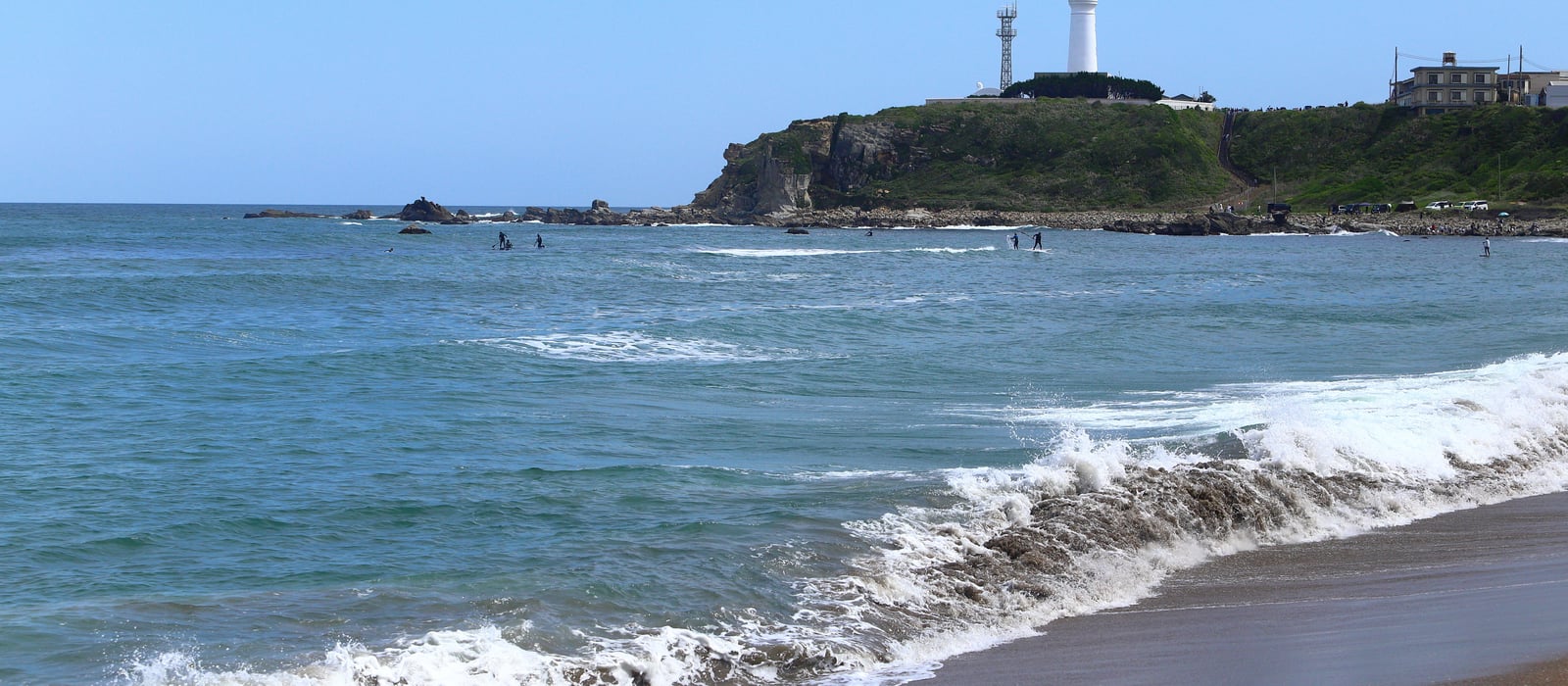
Home to the Boso Peninsula, surrounded by the sea on three sides, Chiba Prefecture still carries on traditional crafts born of wisdom shaped by life alongside the sea, from 'Boshu Uchiwa,' one of Japan's three great fans, to 'Chiba Koshogu,' which keeps alive the skill of its blacksmiths. In the fishing towns of Choshi and Kujukuri, local dishes such as 'Namerou' - made from minced horse mackerel - and 'Futomaki Matsurizushi,' whose cross-sections reveal colorful patterns, developed thanks to the region's rich fishing grounds. The temple town of Naritasan Shinshoji and the mikoshi-making tradition of Gyotoku facing Tokyo Bay reflect a strong craftsman culture shaped by the area's proximity to Edo.
Chiba's Traditional Crafts
Boshu Uchiwa
Boshu Uchiwa
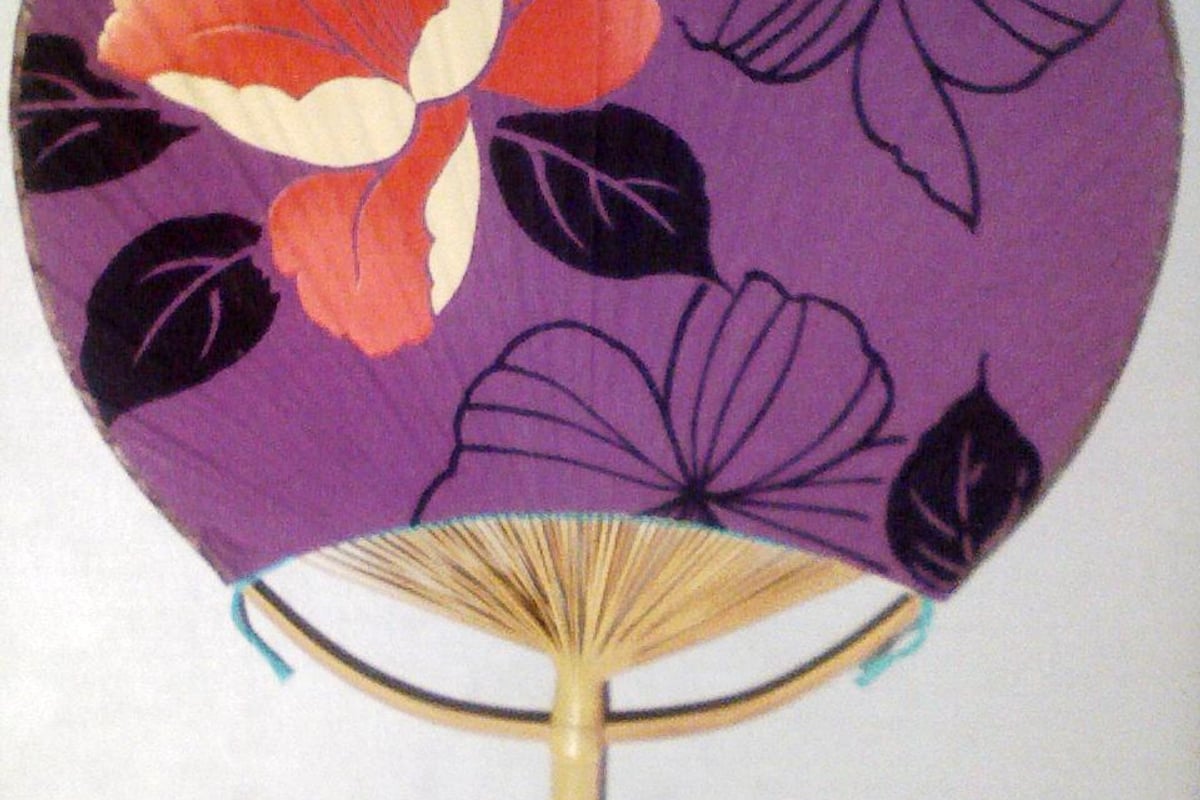
Boshu Uchiwa are traditional folding fans made in Tateyama City and Minamiboso City, Chiba Prefecture (the Boso region), and are counted among the 'Three Great Uchiwa of Japan' alongside Kyoto's Kyo-uchiwa and Kagawa's Marugame Uchiwa. In 2003, they became the first craft in Chiba Prefecture to be designated a Traditional Craft Product designated by the Minister of Economy, Trade and Industry (METI). The medake (a type of slender bamboo) that grows in the mild climate of the Boso region has wide spacing between its nodes, making it light, supple, and ideal for fan ribs. The defining feature of Boshu Uchiwa is the 'maru-e' (round handle), which uses the natural roundness of the bamboo culm as the handle itself, a feature not found in fans from other production areas, giving them exceptional ease of grip and a gentle, supple breeze. Every one of the 21 steps involved, including splitting a single bamboo culm into 40 to 64 fine, even strips and weaving them with thread to form the fan-shaped 'window,' is carried out entirely by hand. From the late Taisho era through the early Showa era, the region became a major production center producing 7 to 8 million fans a year, but output has declined with changing lifestyles, and today only a small number of craftspeople continue to preserve the tradition.

Chiba Koshogu
Chiba Koshogu
Chiba Koshogu is a general term for the blades and hand tools, such as sickles, hoes, kitchen knives, and Western-style scissors, that blacksmiths across Chiba Prefecture continue to make using traditional techniques. On November 30, 2017, it became the second craft in Chiba Prefecture, after Boshu Uchiwa, to be designated a Traditional Craft Product designated by the Minister of Economy, Trade and Industry (METI). The Boso Peninsula saw large-scale civil engineering and land reclamation projects throughout the Edo period, including the eastward diversion of the Tone River beginning in 1594 and the reclamation of Lake Inbanuma starting in 1724, and demand for hand tools such as sickles and hoes used in land clearing grew as a result, forming the basis for the craft's development in the region. Exchange of skills between swordsmiths and farm-tool smiths allowed excellent blade-edging techniques to take root locally. In the Meiji era, production of Western-style scissors began there ahead of the rest of the country, and the manufacture of barber and beauty scissors also flourished following the decree encouraging short hairstyles. Today, craftspeople, including women blacksmiths, continue to forge blades one by one entirely by hand at workshops across the prefecture, including in Kashiwa City, Tateyama City, Narita City, and Nagareyama City.
Boshu Nokogiri
Boshu Nokogiri
Boshu Nokogiri is a saw-forging technique with over 450 years of history in the Minamiboso region. It is said to have originated during the Sengoku (Warring States) period, when a blacksmith serving the Satomi clan, who ruled the Boso region, created it as a 'ship saw' for building the Japanese-style boats used in trade and other purposes. During the Edo period, the technique spread throughout the coastal areas of Awa and developed its own distinctive character; a story is also told that its sharpness became known to the shogunate after thieves used Boshu Nokogiri to break into earthen storehouses, spreading the saw's fame widely. Made from the same steel used for Japanese swords, with unique refinements in blade curvature and tooth-setting, Boshu Nokogiri combines thinness and flexibility with outstanding sharpness and durability. Prioritizing quality over efficiency, the traditional method of doing all 20-plus steps entirely by hand is still upheld today. However, with no successors having been trained, the technique is currently kept alive by only a single craftsman in all of Japan, a severe situation.
Choshi Chijimi
Choshi Chijimi
Choshi Chijimi is a crimped cotton fabric (chijimi) woven in Choshi City, Chiba Prefecture. It is said to have originated when fishermen's wives began weaving it while praying for their husbands' safe voyages and a bountiful catch, and it has long been cherished as a summer kimono fabric prized for its distinctive texture. Its defining feature is the fine crinkled surface called 'shibo,' which is created by tightly twisting the weft threads, fixing the twist with starch, weaving the cloth on a loom, and then washing out the starch. The craft is said to date back to the Edo period, but production was interrupted in the late Taishō era, to the point that it came to be called a 'phantom textile.' It was later revived through the efforts of Tsuneyoda Shinjirō, who ran a cotton-processing business in Choshi, and in 1954 Choshi Chijimi was designated an Intangible Cultural Property of Chiba Prefecture, followed by its designation as a Chiba Prefecture-designated Traditional Craft in 1984. Today, third-generation weaver Tsuneyoda Shin'ichirō carries on the technique, exhibiting and selling products and offering indigo-dyeing experiences at the Choshi Chijimi Traditional Crafts Hall.
Tateyama Tozan
Tateyama Tozan
Tateyama Tozan is a cotton textile in which fine cotton threads are dyed with plant dyes such as indigo and yamamomo (Japanese bayberry) bark and woven into stylish striped patterns. It traces its roots to a striped fabric called 'tōzandome,' brought from India in the Momoyama period, which was beloved by ordinary townspeople in the Edo period as a fashionable kimono fabric. Production in Tateyama began in the early Meiji era, when the first-generation Saitō Mosuke learned the technique from Kawagoe Tozan artisans at a vocational training center in Tokyo and, in 1890, moved to Tateyama to set up his own workshop. Since then the technique has been passed down solely within the Saitō family, from one generation to the next, making it a rare traditional textile nationwide with no other line of successors. Extremely fine 40- to 80-count cotton threads are dyed by artisans who check the dye concentration by tasting it on the tongue, then carefully plain-woven on a high-warp loom (takabata), before a final process of pounding the cloth with a wooden mallet, called 'kinuta-uchi,' gives the fabric its distinctive sheen and supple feel. Today, fourth-generation weaver Saitō Yūji alone carries on the entire process at his workshop in Nagasuka, Tateyama City.
Kamogawa Maiwaizome
Kamogawa Maiwaizome
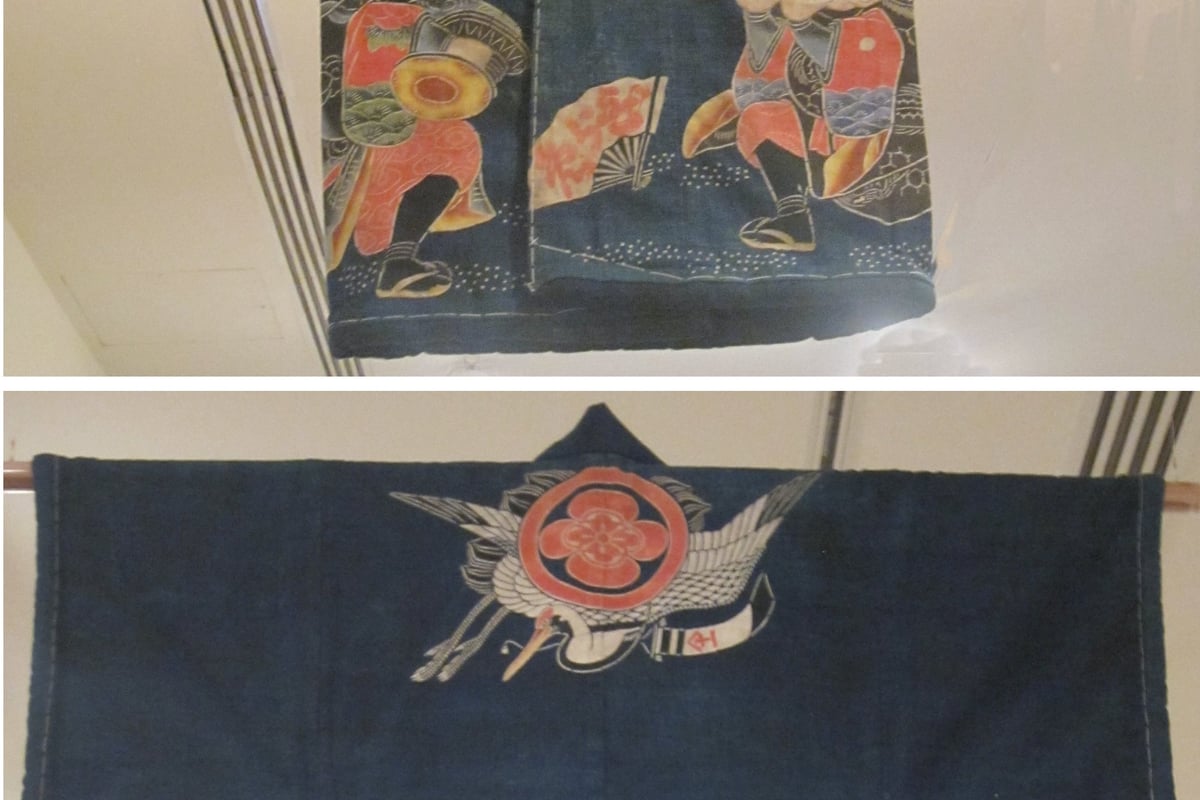
Kamogawa Maiwaizome is a traditional dyeing technique from the fishing villages of the Boso Peninsula, used to color ‘maiwai’ — the celebratory garments worn to mark a great catch. In the late Edo period, a custom arose among fishing communities in Boso in which net owners who had a great catch would give ceremonial garments to their crew and associates, giving rise to a distinctive style: auspicious motifs such as cranes, turtles, pine-bamboo-plum, treasure ships, and sea bream were either dyed white against an indigo ground or rendered boldly in vivid colors. Fishermen wearing maiwai even appear in ukiyo-e prints by Utagawa Sadahide, suggesting the garments were already established as special festive wear by the late Edo period. The dyeing tradition spread widely along the Pacific coast, from Aomori in the north to Shizuoka in the south, but changes in the fishing industry and a lack of successors caused it to die out in most production areas after the war. Today, Kamogawa City's ‘Suzusen’ is one of the few remaining keepers of the traditional stencil-dyeing technique, continuing to make maiwai kimono and small dyed goods. It was designated a Chiba Prefecture-designated Traditional Craft in 1997 (Heisei 9).
Gyotoku Mikoshi
Gyotoku Mikoshi
Gyotoku Mikoshi is a traditional craft centered in Gyotoku, Ichikawa City, Chiba Prefecture, renowned as a major production center for Edo-style mikoshi (portable shrines). Gyotoku prospered so greatly from the Edo period onward that it was known by the saying ‘a thousand houses and a hundred temples in Gyotoku,’ and one account traces the origin of its mikoshi-making to craftsmen who worked on the construction of Nikko Toshogu Shrine and later settled in Gyotoku, which was then directly administered by the shogunate. Wood-base craftsmen, carvers, lacquerers, metal-fitting craftsmen, and other artisans who worked on the interiors and exteriors of temples and shrines gathered there, and from the Meiji through the Showa periods, as interest in mikoshi processions grew, production expanded — at its peak, Edo-style mikoshi made in Gyotoku are said to have accounted for roughly 80% of all mikoshi nationwide. Today, Nakadai Seisakusho, a workshop founded more than 150 years ago, is the only one in Gyotoku that still handles the entire process in-house, from woodworking and carving to lacquering, gold-leaf application, metal fittings, and assembly. In 2018, the ‘Gyotoku Mikoshi Museum’ opened on its grounds, offering free viewing of the techniques and history of mikoshi-making.
Ujo Yoji
Ujo Yoji
Ujo Yoji are ornamental toothpicks carved from kuromoji (Lindera umbellata) wood, a craft handed down in Kururi, Kimitsu City, Chiba Prefecture. It is said to have begun in the Edo period as a side occupation of samurai retainers of the Kururi Domain in Kazusa Province, who made toothpicks from kuromoji growing wild in the surrounding mountains; at the time they were a plain product known as ‘Kazusa ko-yoji’ (small toothpicks of Kazusa). After the abolition of the domain, production spread among former samurai who had lost their stipends and needed a livelihood, and by the end of the Meiji era, toothpicks of various designs that made the most of the wood's white grain and texture had been devised, becoming known as folk craft items. In the mid-Showa era, the craft was renamed ‘Ujo Yoji’ after ‘Ujo’ (‘Rain Castle’), an alternate name for Kururi Castle. In addition to the basic ‘zaku yoji,’ there are ‘novelty toothpicks’ shaped like pine, bamboo, plum, folding fans, eels, swords, and other auspicious or seasonal motifs, and their skillful craftsmanship and refined look have made them a favorite at tea gatherings and in Japanese restaurants to this day. Today, Mori Takao carries on the tradition as the second-generation holder of the name Mori Mitsuyoshi.
Shibayama Zaiku
Shibayama Zaiku
Shibayama Zaiku (Shibayama-zogan) is an inlay technique in which shell, coral, tortoiseshell, jade, ivory, and other materials are carved into the shapes of flowers, birds, and figures and set into the surface of lacquered objects to create raised, three-dimensional designs. It is said to have been devised in 1775 by Onogi Senzo, born in Shibayama village in Kazusa Province (present-day Shibayama Town, Chiba Prefecture); Senzo later moved to Edo, took the name Shibayama Senzo, and spread the technique widely. After the opening of Japan at the end of the shogunate, craftsmen gathered in Yokohama, which flourished as a treaty port, and the technique won high praise from Western merchants, developing its own distinct style known as ‘Yokohama Shibayama-nuri.’ It even won a prize at the 1893 World's Columbian Exposition in Chicago, gaining international recognition. However, the Great Kanto Earthquake and the Second World War took a heavy toll, and the number of craftsmen fell sharply — from around 100 at its peak to, as of 2017, reportedly just a single craftsman capable of producing large-scale works. In Shibayama Town, the birthplace of the craft, a ‘Shibayama-zogan plaque’ made in 1805 survives and is carefully preserved as a cultural property of the town.
Chiba's Local Food
Namerou
Namerou
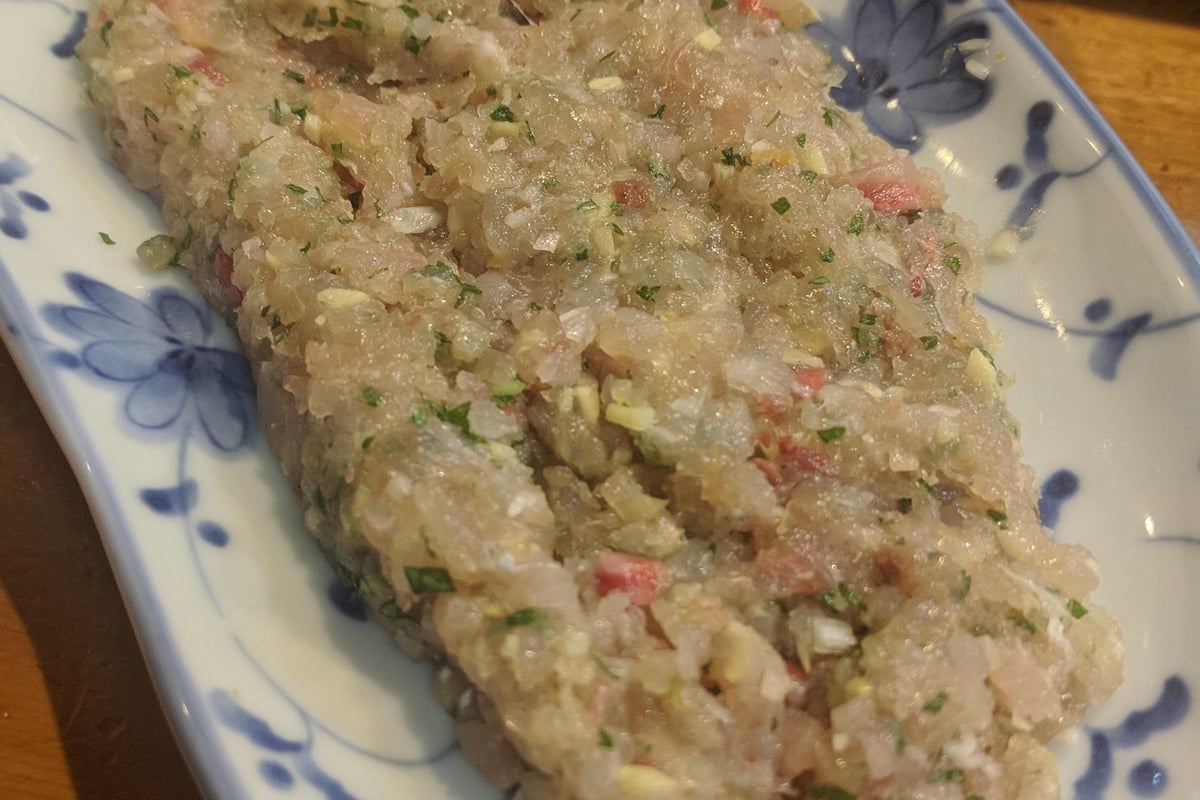
Namerou is a fisherman's dish handed down along the coast of the Boso Peninsula in Chiba Prefecture. Oily fish such as horse mackerel (aji) or sardines are combined with miso, green onion, ginger, and other aromatics, then minced with a knife until the mixture turns sticky. It is said to have originated as a dish fishermen could prepare quickly aboard a rocking boat—miso was used instead of soy sauce because soy sauce would spill, while miso keeps well. The name is said to come either from the dish being 'so delicious you want to lick (nameru) the plate clean,' or from the sticky minced fish clinging to the plate so that you 'have to lick it to finish it.' Today Namerou is enjoyed not only as a home-cooked dish but also as a standard item at diners and izakaya throughout the Boso region—a simple yet deeply flavorful dish where the richness of the oily fish and the fragrance of the aromatics shine.
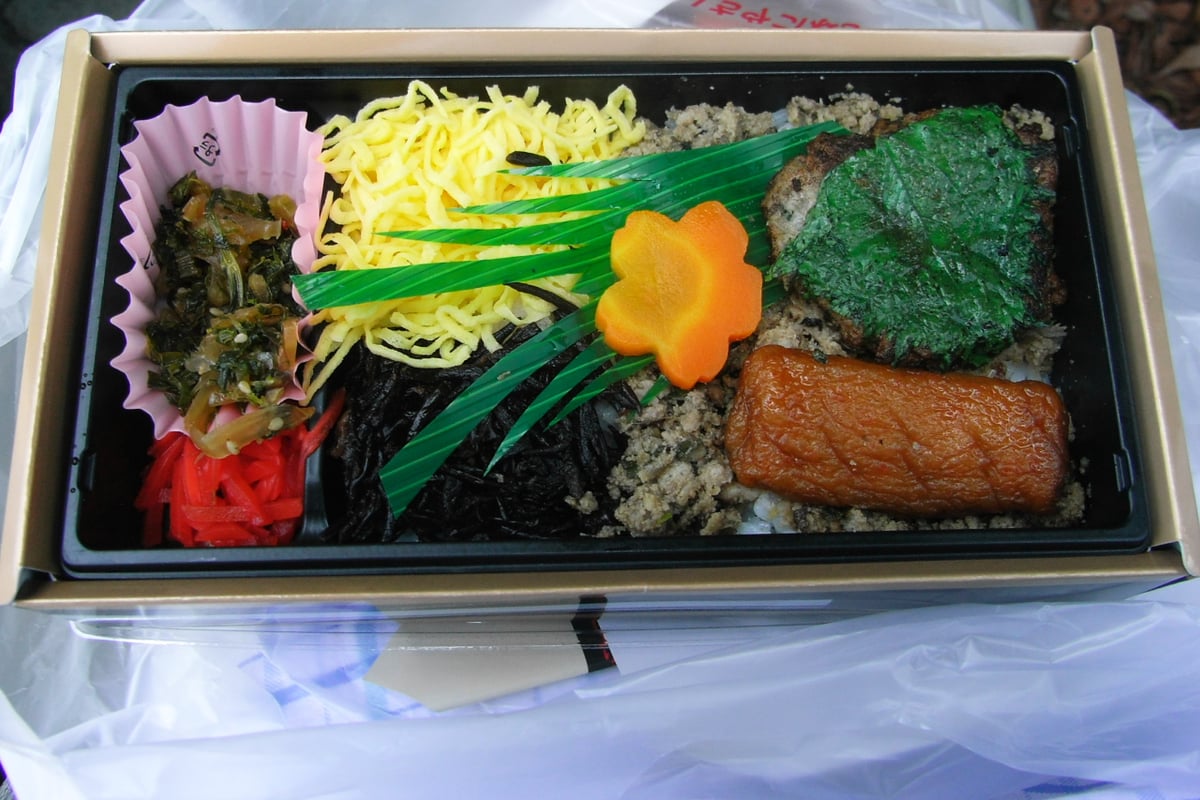
Sangayaki
Sangayaki
Sangayaki is a dish in which Namerou, a local specialty of the Boso Peninsula, is packed into abalone or scallop shells and grilled. It is said to get its name from the practice of fishermen taking the Namerou they had prepared offshore up into the mountains for work, where they cooked it over a fire in a mountain hut—hence 'sanga-yaki,' or 'mountain-house grill.' Unlike raw Namerou, cooking it adds a savory aroma and improves keeping quality, making it a valued meal for busy fishermen and mountain laborers alike. Today it is easily made at home in a frying pan or on a grill, and it is also served at restaurants throughout the Boso region using shells as serving dishes—a dish enjoyed for a savoriness quite different from that of raw Namerou.
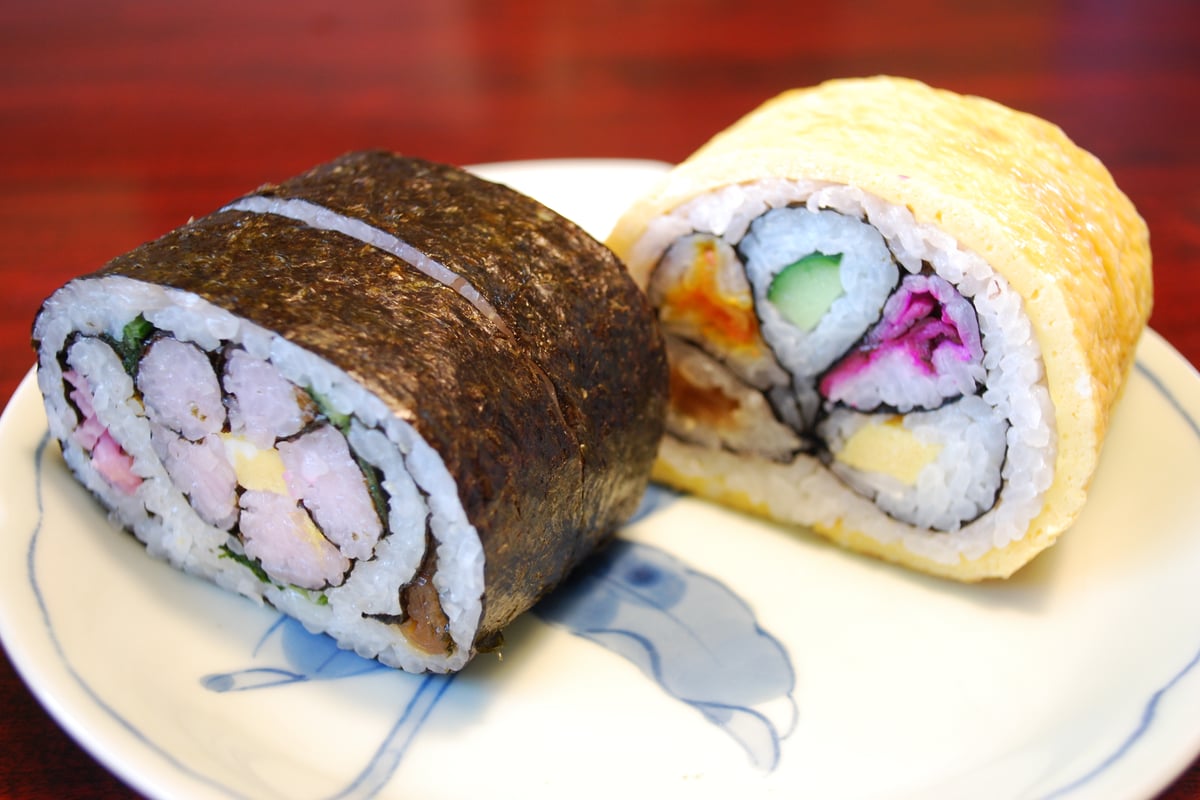
Futomaki Matsurizushi
Futomaki Matsurizushi
Futomaki Matsurizushi is a signature local dish of Chiba Prefecture, handed down in the Boso Peninsula (the Awa and Kazusa regions). Its defining feature is that when the rolled sushi is sliced, the cross-section reveals pictures of flowers, animals, characters, and more. It is said there are over 100 different designs, each passed down uniquely by region and household. Its history is said to trace back to the Kansei era (1789-1801) in the late Edo period, with one theory holding that its roots lie in 'mehari-zushi,' brought to Boso by fishermen who had relocated from Kishu. It was once made as a hospitality dish for celebratory gatherings such as village festivals, weddings, and children's birth celebrations that brought together large groups of people, and in 2007 it was selected as Chiba Prefecture's representative in the Ministry of Agriculture, Forestry and Fisheries' '100 Local Dishes of Rural and Fishing Villages' and '100 Furusato Onigiri.' Today it remains a beloved celebratory sushi, enjoyable to look at as well as to eat, indispensable for ceremonial occasions and annual events.
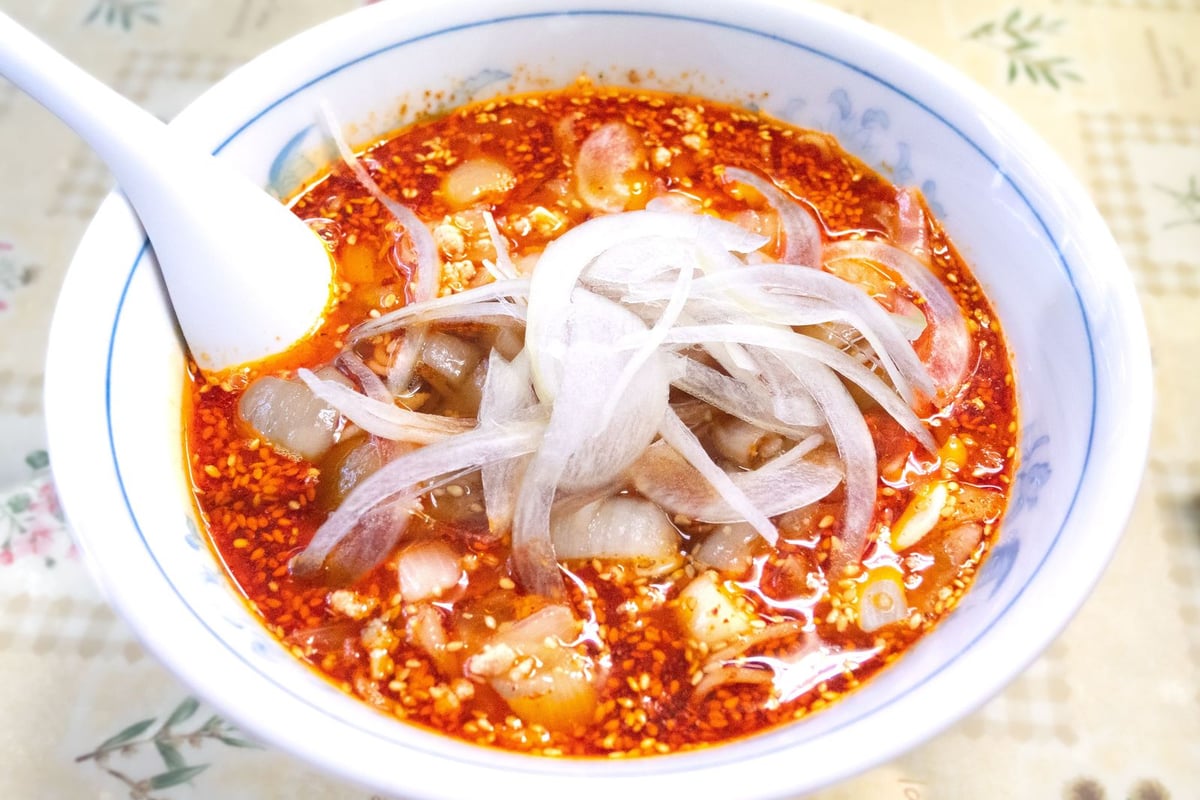
Katsuura Tantanmen
Katsuura Tantanmen
Katsuura Tantanmen is a local ramen dish originating in Katsuura City, Chiba Prefecture, featuring a soy sauce-based broth generously spiced with chili oil for a bold balance of heat and umami. Unlike typical tantanmen, which uses a sesame-based sauce or a milky white broth, Katsuura Tantanmen is distinguished by its soy sauce base. Minced onion and ground meat are stir-fried and blended into the broth, creating a flavor where richness and spiciness come together in harmony. It is said to have originated when local eateries began serving the dish to warm the bodies of fishermen and ama divers chilled from working offshore, with the diner Ezawa, founded in 1954, known as the original shop. In 2011, a citizens' group began promotional activities, and the dish's fame spread nationwide after winning the B-1 Grand Prix in 2015. As of November 2023, 40 shops both inside and outside the prefecture are certified as official participating shops.
Kujira no Tare (Dried Whale Meat)
Kujira no Tare
Kujira no Tare is a preserved food handed down since the Edo period in Wada, Minamiboso City, Chiba Prefecture. Palm-sized, thinly sliced pieces of Baird's beaked whale meat are marinated in a special sauce made from soy sauce, sugar, and other seasonings, then dried in the sun. Wada Port, home to the Wada-ura area, is known as the only coastal small-type whaling base in the Kanto region, and Baird's beaked whales are landed there every year during the fishing season from late June to late August. Drying concentrates the meat's umami, and when lightly grilled, the fragrant soy-based sauce and the whale meat's distinctive rich red-meat flavor come through. Enjoyed locally as a snack and an accompaniment to sake, it is also a dish that developed from local wisdom for using whale meat without waste. In recent years it has also become available by mail order from roadside stations and specialty shops, and it remains a beloved souvenir representing Wada-ura.
Rakkasei Miso (Peanut Miso)
Rakkasei Miso
Rakkasei Miso (Peanut Miso) is a local specialty enjoyed around Yachimata City, Chiba Prefecture, Japan's leading producer of peanuts. Raw peanuts with their skins still on are slowly roasted over low heat, then kneaded together with miso, sugar, and sake to create a sweet-and-savory miso paste eaten daily as a side with rice, a tea snack, or an accompaniment to sake. Peanut cultivation began in Yachimata City in the Meiji era, and the area developed into a leading production center from the Taisho to Showa periods. Along the way, many peanuts that did not meet market standards went unsold. Rakkasei Miso is said to have been devised by local farmers as a way to make good use of these peanuts rather than let them go to waste. Today it is made not only at home but also served in school lunches and sold as a packaged product at local peanut specialty shops and roadside stations, firmly established as one of Chiba's representative preserved foods and local specialties.
Seguro Iwashi no Gomazuke
Seguro Iwashi no Gomazuke
Seguro Iwashi no Gomazuke is a preserved food made from anchovies (called 'seguro' locally) caught along Chiba Prefecture's Pacific coast, including Kujukuri Beach. The anchovies are cleaned of their heads and innards, salted, and then pickled for two to three days with vinegar, sesame seeds, ginger, yuzu, and red chili pepper. Kujukuri Beach, which boasts one of Japan's largest catches, has a long tradition of beach seine fishing for anchovies dating back to the Edo period. While anchovies were caught in huge quantities, they also spoiled easily, so the technique of pickling them in vinegar and sesame to extend their shelf life was passed down as a piece of local wisdom. Because the pickling process softens even the bones, the fish can be eaten whole, and the dish is enjoyed as an everyday side or an accompaniment to sake, especially in winter. It was selected as one of the '100 Local Dishes of Japan's Farming, Mountain, and Fishing Villages' by the Ministry of Agriculture, Forestry and Fisheries, and stands as a symbol of Chiba's fishing culture.
Haba Zoni
Haba Zoni
Haba Zoni is a New Year's zoni (mochi soup) eaten mainly in the Kazusa region of Chiba Prefecture, distinguished by a strongly fragrant seaweed called 'habanori' placed on top as a finishing touch. Habanori is a spatula-shaped seaweed that takes root in autumn and grows through winter into spring, harvested in areas such as Kamogawa City and Minamiboso City in the southern Boso Peninsula. Because of its uneven appearance, it rarely appears on the market and has mainly been consumed locally. To prepare the dish, grilled square mochi is placed in a clear soup made with bonito-flake dashi, then topped with toasted and crumbled habanori, aonori (green laver), and bonito flakes. The dish is also known for a play on words: 'haba,' meaning the seaweed, is associated with the word for 'presence' or 'influence,' making it an auspicious dish eaten with the wish to 'hold sway (haba wo kikaseru) all year round.' Even in areas far from the production region, such as the Kujukuri area and Ichihara City, it has been passed down as an essential New Year's dish.
Takatsu no Torimeshi
Takatsu no Torimeshi
Takatsu no Torimeshi is a simple mixed rice dish handed down in the Takatsu district of Yachiyo City, Chiba Prefecture, made by simmering chicken in soy sauce and mixing it into freshly cooked rice. Small pieces of chicken thigh are simmered in soy sauce and then stirred through the hot rice. A ratio of one bowl of soy sauce to one sho (about 1.8 liters) of rice has been passed down by word of mouth for generations, giving the dish its plain, unadorned flavor without any special seasonings. The dish also has a role as festival food, traditionally served at Koyasu-ko gatherings, where women pray for safe childbirth by worshipping the deity Koyasu-gami, and at Hassaku, a harvest-prayer event held on the first day of the eighth month of the old lunar calendar. It is said that cutting the chicken into small pieces was also a way to make a precious ingredient go around evenly among everyone present, back when meat was scarce. Today it continues to be passed on to the next generation through home cooking, school lunches, and parent-child cooking classes in the Takatsu district of Yachiyo City.
Narita no Kuri Yokan
Narita Kuriyokan
Narita no Kuri Yokan is a Japanese confection created by Nagomi no Yoneya, a long-established confectionery founded in 1899 (Meiji 32) on the approach to Naritasan Shinshoji Temple. Its founder, Morooka Chozo, is said to have taken inspiration from 'kurikan,' a chestnut sweet served as part of the temple's shojin ryori (Buddhist vegetarian cuisine), and created Japan's first kuri yokan (chestnut yokan) using locally grown small chestnuts called shiba-guri, selling it as a souvenir for visitors to Naritasan Shinshoji Temple. Since then it has been cherished as a signature souvenir of the temple's approach, and the main shop houses the 'Narita Yokan Museum,' which displays the shop's history since its founding along with tools used in making yokan. Known for its refined sweetness that highlights the flavor of shiba-guri chestnuts, it remains a popular choice today both as a snack to enjoy while strolling the approach and as a souvenir for visitors and returning travelers.
Model Course
Half-Day Course: Traditional Crafts and Fishermen's Cuisine in Minamiboso and Tateyama
In the morning, visit workshops in Tateyama and Minamiboso City making 'Boshu Uchiwa,' one of Japan's three great fans, and experience the texture of 'Tateyama Tozan,' a striped textile passed down within a single family for generations. For lunch, enjoy the fishermen's dish 'Namerou' and its grilled version, 'Sangayaki.'
Course Exploring the Sea's Bounty and Traditional Textiles in Choshi and Kujukuri
Visit a workshop in Choshi City that keeps alive 'Choshi Chijimi,' a textile once known as the 'phantom fabric' after production ceased for a time, then sample local flavors shaped by the sea's bounty - the preserved dish 'Seguro Iwashi no Gomazuke' and 'Haba Zoni,' a New Year's soup made with haba-nori seaweed, both handed down in the fishing towns of Kujukuri and Choshi.
Course Visiting Craftsmanship and Sweets in Gyotoku and Narita
Visit Nakadai Seisakusho, a mikoshi workshop that has continued for more than 150 years in Gyotoku, Ichikawa City, and see the full range of mikoshi-making skills from woodworking and carving to gold leaf application. Finish the day along the approach to Naritasan Shinshoji Temple with 'Narita no Kuri Yokan,' a chestnut yokan said to have been created for the first time in Japan.
Events
Sawara no Taisai (Summer and Autumn Festivals)
Summer festival: Friday-Sunday on or after July 10 / Autumn festival: Friday-Sunday centered on the second Saturday of October / Sawara, Katori City (around Yasaka Shrine and Suwa Shrine)
View details →Minamiboso Shirahama Ama Matsuri (Diving Women's Festival)
Every year in mid-July (July 18-19 in 2026) / Shirahama Nojimazaki Lighthouse Park Square, Minamiboso City
View details →