Image: Wikimedia Commons
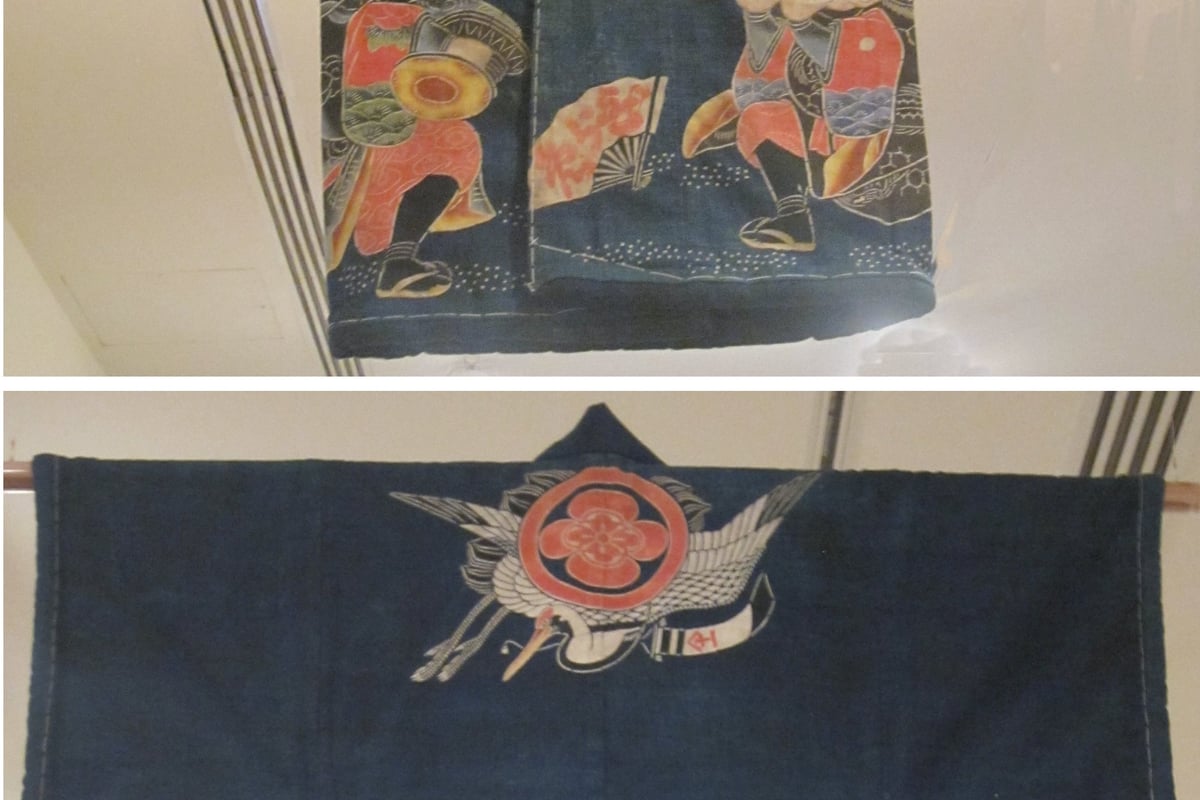
Kamogawa Maiwaizome is a traditional dyeing technique from the fishing villages of the Boso Peninsula, used to color ‘maiwai’ — the celebratory garments worn to mark a great catch. In the late Edo period, a custom arose among fishing communities in Boso in which net owners who had a great catch would give ceremonial garments to their crew and associates, giving rise to a distinctive style: auspicious motifs such as cranes, turtles, pine-bamboo-plum, treasure ships, and sea bream were either dyed white against an indigo ground or rendered boldly in vivid colors. Fishermen wearing maiwai even appear in ukiyo-e prints by Utagawa Sadahide, suggesting the garments were already established as special festive wear by the late Edo period. The dyeing tradition spread widely along the Pacific coast, from Aomori in the north to Shizuoka in the south, but changes in the fishing industry and a lack of successors caused it to die out in most production areas after the war. Today, Kamogawa City's ‘Suzusen’ is one of the few remaining keepers of the traditional stencil-dyeing technique, continuing to make maiwai kimono and small dyed goods. It was designated a Chiba Prefecture-designated Traditional Craft in 1997 (Heisei 9).
Origin
Maiwai were celebratory garments given out in the fishing villages of the Boso Peninsula to mark a great catch, said to have originated in the late Edo period. The custom is thought to have begun when net owners who had a great catch had garments made and distributed to their crew and associates. The exact starting date is unknown, but because fishermen wearing maiwai appear in works by the late-Edo ukiyo-e artist Utagawa Sadahide, the garments are believed to have already been established as special festive wear by the late Edo period.
History
Kamogawa Maiwaizome spread along with the fishing culture of the Boso region to fishing villages up and down the Pacific coast, and came to be cherished from Aomori to Shizuoka as a celebratory garment for a great catch. After the war, however, changes in the fishing industry and in ways of life caused the dyeing techniques to die out in many production areas. Amid this decline, Kamogawa City's ‘Suzusen’ has kept alive the stencil-dyeing technique passed down since the Edo period, and the craft was designated a Chiba Prefecture-designated Traditional Craft in 1997 (Heisei 9).
Features
The hallmark of Kamogawa Maiwaizome is its bold compositions, ranging from subdued designs of cranes, turtles, pine-bamboo-plum, treasure ships, and sea bream dyed white against an indigo ground, to vividly colored, showier designs using a range of pigments. The technique involves sketching a design onto cotton cloth with a resist paste, applying color, and then washing out the paste to finish the piece. Today the designs are used not only for ceremonial garments but also for noren curtains, happi coats, drawstring pouches, and other small items.
Materials Used
Production Process
- 1
Stencil placement and paste resist
The outline of the design is transferred onto the cloth, and resist paste is applied to prevent the dye from bleeding, creating a base that preserves the shape of the pattern.
- 2
Coloring
Pigment is picked up on a brush and applied one color at a time to motifs such as cranes, turtles, and treasure ships — a hand process unique to Maiwaizome that calls for careful color planning.
- 3
Drying
Once the coloring is complete, the cloth is thoroughly dried in a well-ventilated place so the pigments set firmly into the fibers before moving on to the next step.
- 4
Washing and finishing
After drying, the resist paste is washed out and any excess pigment is removed, bringing the vivid design to life on the finished cloth.
Artisans & Workshops
鈴染
A dye workshop in Maehara, Kamogawa City, that keeps the traditional techniques of Maiwaizome alive today. Using stencil-dyeing methods passed down since the Edo period, it continues to make kimono and small dyed goods.
Official site →How to Buy
- Kamogawa City furusato nozei (hometown tax) gift
- Small dyed items made by Suzusen, such as indigo-dyed drawstring pouches featuring the Chiba Prefecture-designated Traditional Craft ‘Maiwaizome,’ are offered as furusato nozei (hometown tax donation) gifts.Where to buy →PR
Hands-on Experiences
鴨川萬祝染 鈴染
千葉県鴨川市前原211
Reservation required. Visitors can choose one of three designs — crane, turtle, or shimenawa (sacred rope) — to try hand-coloring. Fees are offered in three courses of 1,980, 3,850, and 4,950 yen (tax included, revised September 2025).
View details →