Craft Genre
Dyeing
A cross-regional look at Dyeing from across Japan.
Region(multiple selection allowed)
22 items

Kiryu shibori (tie-dyeing)
Kiryu-shibori
Kiryu shibori is a shibori (tie-dyed) textile that developed in Kiryu, Gunma Prefecture, a city known as a center of silk-textile production. Kiryu has long been known as a production area skilled in dyeing, weaving, and shibori alike, and Kiryu shibori is distinguished by the way it freely combines shibori techniques with bolts of Kiryu-ori, itself a Traditional Craft. Because the shibori dyeing is applied to Kiryu-ori fabric already woven with ikat, stripe, or check patterns, the result has a unique finish that can be appreciated both as a woven textile and as a dyed textile, producing innovative, delicate works in which the three techniques of dyeing, weaving, and shibori come together as one. Because each piece of shibori is done by hand, even the same pattern takes on individual character in the finished result. On January 23, 2003, it was designated 'Kiryu Shibori' as a Gunma Prefecture Furusato Traditional Craft by the governor of Gunma Prefecture.
Koshu Inden (Lacquered Deerskin)
Koshu Inden
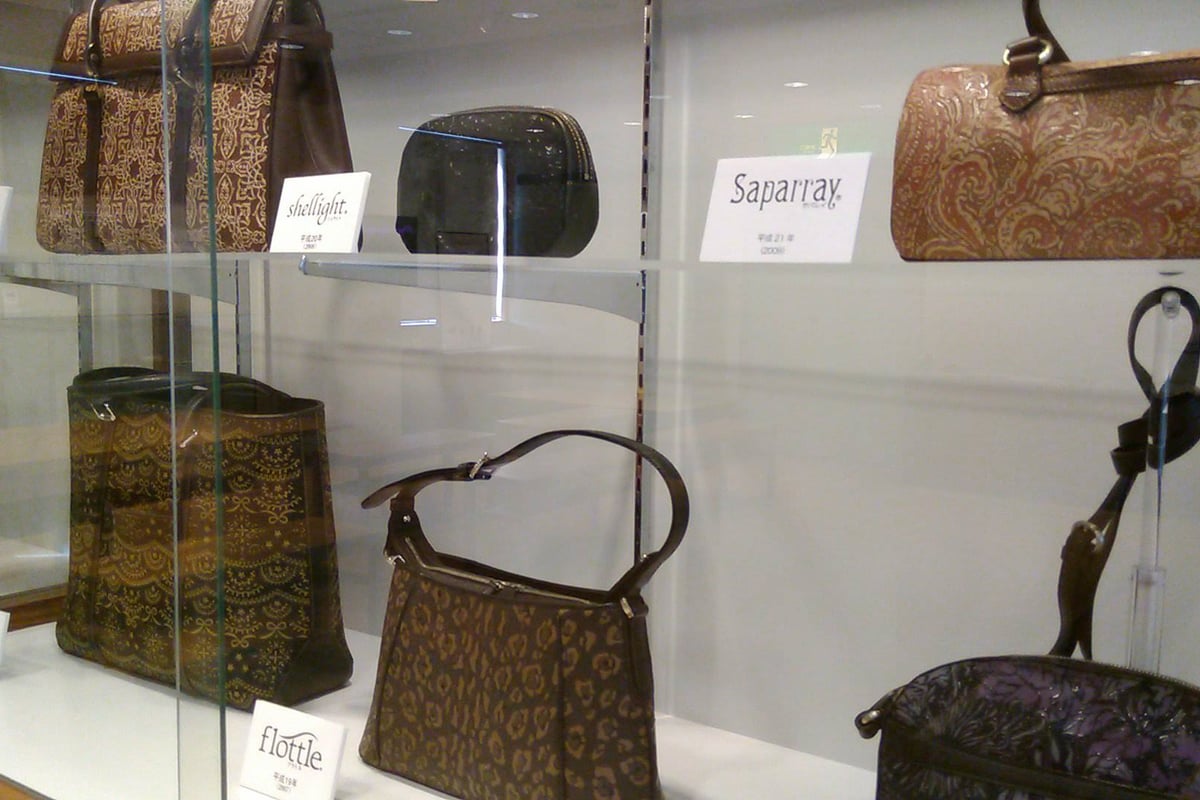
Koshu Inden is a deerskin craft made in Kofu City, Yamanashi Prefecture. Its defining feature is that a stencil is laid over tanned and dyed deerskin and urushi lacquer is rubbed in to apply patterns. The name 'inden' is said to come from decorative leather brought from India in the days of the Nanban trade (trade with the Portuguese and Spanish). Koshu Inden is said to have begun in the late Edo period, when Uehara Yushichi of Kofu devised a technique of applying lacquer to deerskin. In the Edo period inden was made in many places, but Koshu is the only place where its production methods survive today. Besides lacquer application, the techniques include 'fusube,' in which the leather is colored with the smoke of burning straw, and 'sarasa,' in which a different stencil is used for each color to create multicolored patterns. Deerskin is soft, strong and light, and the more it is used, the better it fits the hand. Over time the colors of the lacquer patterns grow clearer and take on a deep luster. In 1987 it became a Traditional Craft Designated by the Minister of Economy, Trade and Industry. On the second floor of Inden-ya's main store in Kofu City is the Inden Museum, which introduces the history and patterns of inden.
Ryukyu Bingata
Ryukyu Bingata
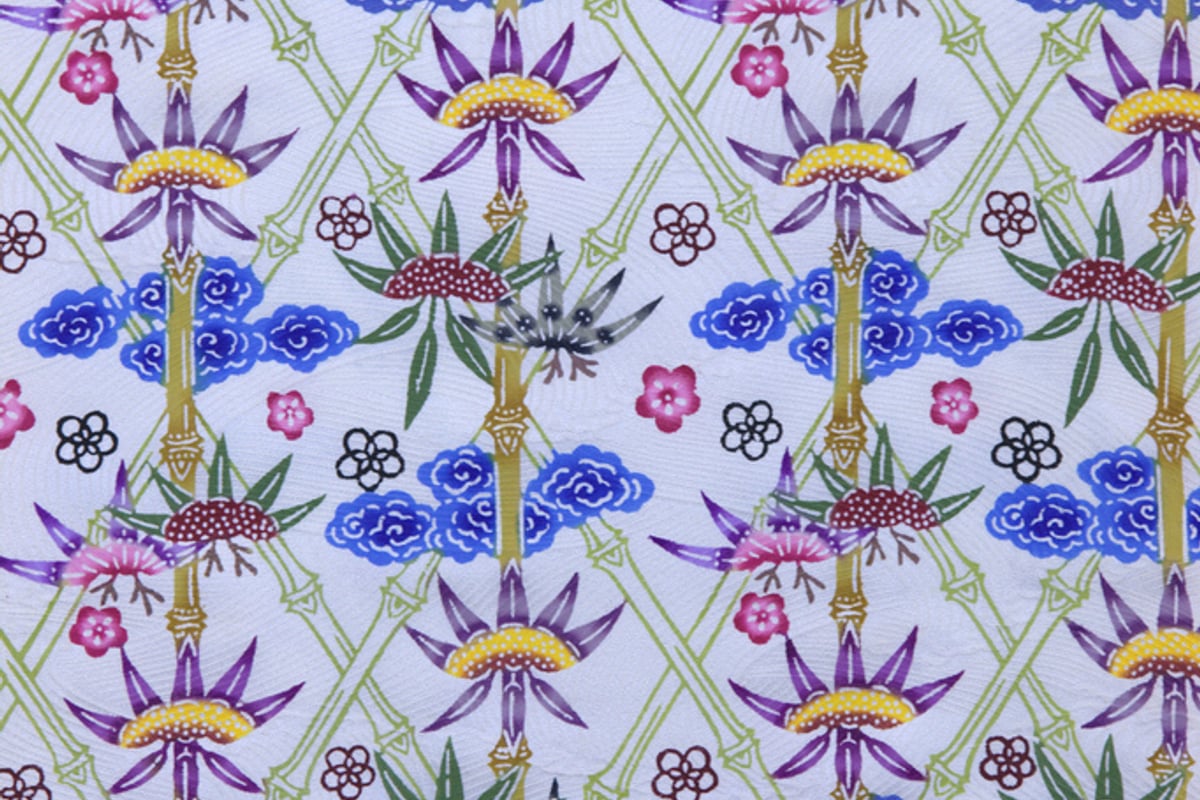
Ryukyu Bingata is a dyeing technique passed down mainly in Shuri, Naha City, Okinawa Prefecture, characterized by bold, vivid colors reminiscent of tropical sunlight - reds, yellows, blues, greens, and purples - and flowing patterns inspired by Okinawan nature such as deigo flowers, adan (pandanus), and fish. Its origins are said to date to around the 14th-15th centuries, when it is thought to have developed from dyeing techniques introduced through trade with China, India, and Java (sarasa/chintz dyeing), adapted in a uniquely Ryukyuan way. It developed under the protection of the Ryukyu royal government, worn as formal attire for royalty and the samurai class and as ritual costume, with the finest painters and stencil carvers of the day creating the underdrawings and stencils. It is broadly divided into the vividly multicolored 'Bingata' and the more subdued 'Aigata (e-gata)', dyed using only shades of indigo. Because processes such as stencil carving, paste-resist application, coloring, and shading are handcrafted, mostly divided among specialists within a single workshop, completing a single length of fabric takes considerable time and effort. It was designated a Traditional Craft by the Minister of Economy, Trade and Industry in 1984, and today it is used not only for kimono and obi but also for everyday items such as noren curtains and pouches.
Joshu Takasaki Chusen Tenugui
Joshu Takasaki Chusen Tenugui
Joshu Takasaki Chusen Tenugui are cotton hand towels dyed using chusen, a hand-poured dyeing technique passed down in Takasaki, Gunma Prefecture. Chusen was developed in Japan during the Meiji era (1868-1912) to mass-produce tenugui: a stencil is used to apply a resist paste to the fabric, several dozen layers of cloth are stacked together, and dye is then poured over the stack so that both the front and back of every layer are dyed at once. This process gives the cloth a distinctive softness with natural bleeding and gradation not found in single-sided printed tenugui, and produces a fabric whose pattern is identical on both sides. In Takasaki, dye workshops such as Nakamura Some Kojo, founded in 1897, have carried this technique forward, and the area remains the only production site in Gunma Prefecture that still preserves the chusen technique today, designated a Gunma Prefecture Furusato Traditional Craft.
Kyo-yuzen
Kyo-yuzen
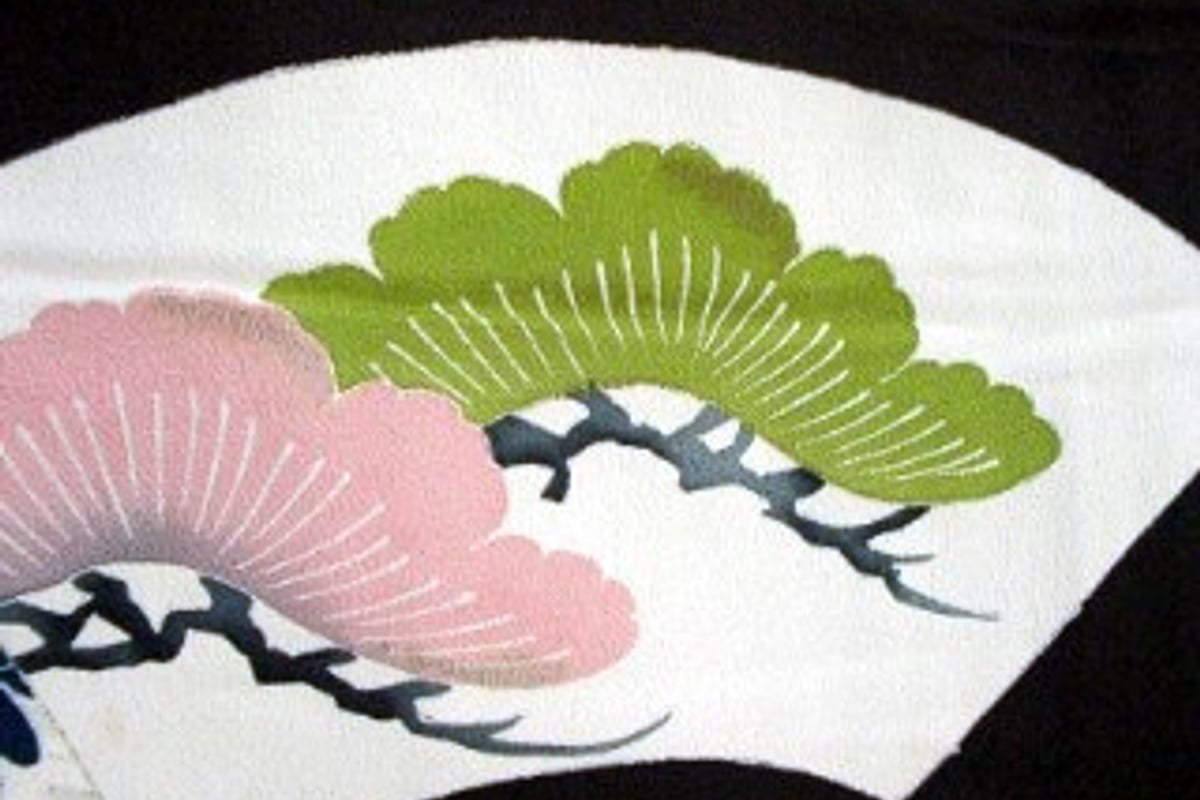
Kyo-yuzen is a patterned dyeing technique born in Kyoto during the Genroku era in the early Edo period, characterized by depicting gorgeous, elegant designs on fabric as if painted. It is said to have begun when Miyazaki Yuzensai, a popular fan painter, applied his own painting style to dyeing designs, and it spread as yuzen dyeing — a technique for dyeing pictorial patterns while resist-dyeing with paste — during an era when the shogunate's sumptuary laws restricted showy decoration such as tie-dyeing and embroidery. A single kimono is completed through many processes, including sketching, itome-nori (paste-resist outlining), color application, hikizome (immersion background dyeing), steaming, and washing (mizumoto), with each process handled by a specialized artisan under a division-of-labor system. In the Meiji era, kata-yuzen (stencil yuzen), which uses chemical dyes and paper stencils, was devised, making mass production possible. It received national Traditional Craft designation in 1976, and among Japan's three major yuzen traditions it is passed down today as the oldest dyeing technique.

Arimatsu-Narumi Shibori
Arimatsu-Narumi Shibori
Arimatsu-Narumi Shibori is a general term for the tie-dyeing tradition passed down for about 400 years in the Arimatsu and Narumi districts of Midori Ward, Nagoya City. It is said to have begun around 1608, in the Keicho era of the early Edo period, when Owari Domain laid out the town of Arimatsu as newly reclaimed land along the Tokaido road, and Takeda Shokuro, one of the area's first settlers, began selling tie-dyed hand towels made of Mikawa cotton to travelers. Techniques developed further with the invention of shikoro-shibori in the Kanbun era, and in 1781 Owari Domain granted merchants in Arimatsu an exclusive right to produce shibori, allowing it to grow into a major industry. Techniques such as mame-shibori, Miura-shibori, arashi-shibori, and sekka-shibori proliferated, with over 100 distinct techniques developed at the tradition's peak, more than 70 of which are still practiced today. In 1975 it became the first Traditional Craft in Aichi Prefecture to receive national designation. In recent years, its use has expanded beyond kimono, with new forms of expression including collaborations with overseas brands.
Kaga Yuzen Dyeing
Kaga-yuzen
Kaga Yuzen is a hand-painted silk dyeing tradition passed down mainly in Kanazawa, Ishikawa Prefecture, characterized by subdued coloring based on the five 'Kaga gosai' colors — indigo, ochre, grass green, ancient purple, and crimson — combined with realistic depictions of flowers and plants. Its origins are said to date back roughly 500 years to 'umezome,' a plain, undecorated dyeing technique unique to Kaga Province, and by the mid-17th century a patterned technique known as 'Kaga o-kunizome' had been established. During the Genroku era of the Edo period, Miyazaki Yuzensai, a fan painter who had made a name for himself, took up residence with the Kanazawa dye shop 'Tarodaya,' and his spread of the yuzen-nori technique of resist-dyeing with paste while applying multiple colors brought about a great leap forward for Kaga Yuzen. Distinctive design elements developed, including a naturalistic style that faithfully depicts flowers and leaves as they appear in nature with almost no use of gold or silver leaf and embroidery, the 'sotobokashi' technique of shading the outside of a pattern dark and fading toward the center, and 'mushikui,' which depicts insect-eaten marks on leaves. A system requiring each artist to sign works with their own seal has been established, and Kaga Yuzen is also well known as a craft with strong artistic individuality.
Nagoya Yuzen
Nagoya Yuzen
Nagoya Yuzen is a dyed kimono textile produced mainly around Nagoya City in Aichi Prefecture. In contrast to the vivid, colorful palette of Kyo Yuzen, it is known for its subdued, tasteful tones. Its origins trace back to the 1730s in the early Edo period, when Tokugawa Muneharu, lord of the Owari domain, pursued an aggressive policy of prosperity that drew many Yuzen dyers back and forth between Kyoto, Edo, and Owari, bringing the technique to the region. After Muneharu's downfall, austerity edicts were imposed, refining the style toward restrained, monochromatic gradations. By the late Edo period, the production base for stencil-dyed 'kata-yuzen' had become established, and in the Taisho era, 'kuro-montsuki-zome' - dyeing that leaves family crests white against a black ground - was added. Today, the term Nagoya Yuzen collectively refers to three techniques: hand-painted yuzen (tegaki-yuzen), stencil yuzen (kata-yuzen), and black crest dyeing (kuro-montsuki-zome). It was designated a national Traditional Craft in 1983.
Ise Katagami (Ise Dyeing Stencils)
Ise Katagami (Ise Paper Stencils)
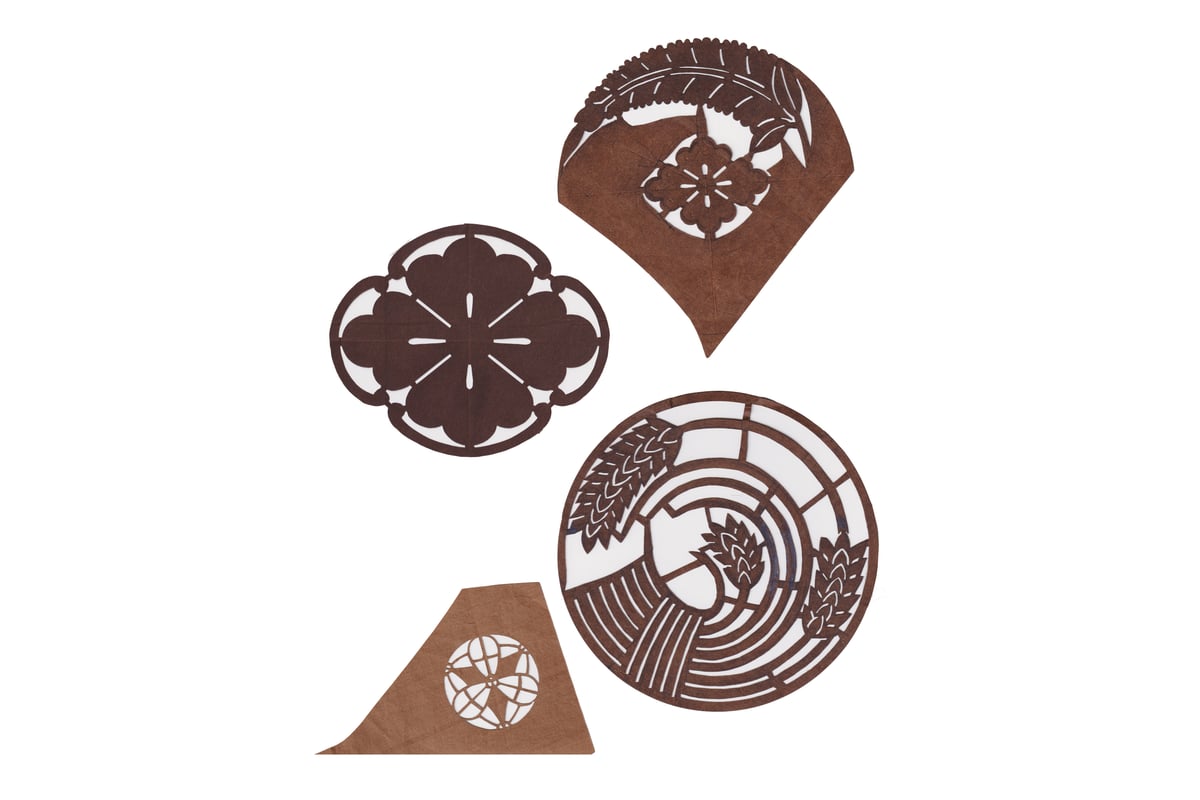
Ise Katagami are stencils used to dye patterns and designs onto kimono fabric, made mainly in the Shiroko, Jike and 江島 districts of Suzuka City, Mie Prefecture. The name is also written '伊勢型紙.' They are made by cutting designs with fine-tipped carving knives into katajigami (stencil base paper), which is Mino washi laminated with kakishibu (persimmon tannin). They are used for dyeing yuzen, komon (fine-patterned kimono), yukata and more, and it is said that almost all komon are dyed with Ise stencils. There are various theories about their origins, but stencils are thought to have been in use by the end of the Muromachi period. In the Edo period, they received the protection of the Kishu Domain, and stencil merchants spread their name by peddling them throughout the country. There are four carving techniques: kiribori, tsukibori, dogubori and shimabori. In 1955 the techniques were designated a national Important Intangible Cultural Property, and in 1983 the stencils were designated a Traditional Craft Designated by the Minister of Economy, Trade and Industry under the name '伊勢形紙.' In recent years, their use in interiors, such as lighting, framed pieces and fittings, has also been spreading.
Kamogawa Maiwaizome
Kamogawa Maiwaizome
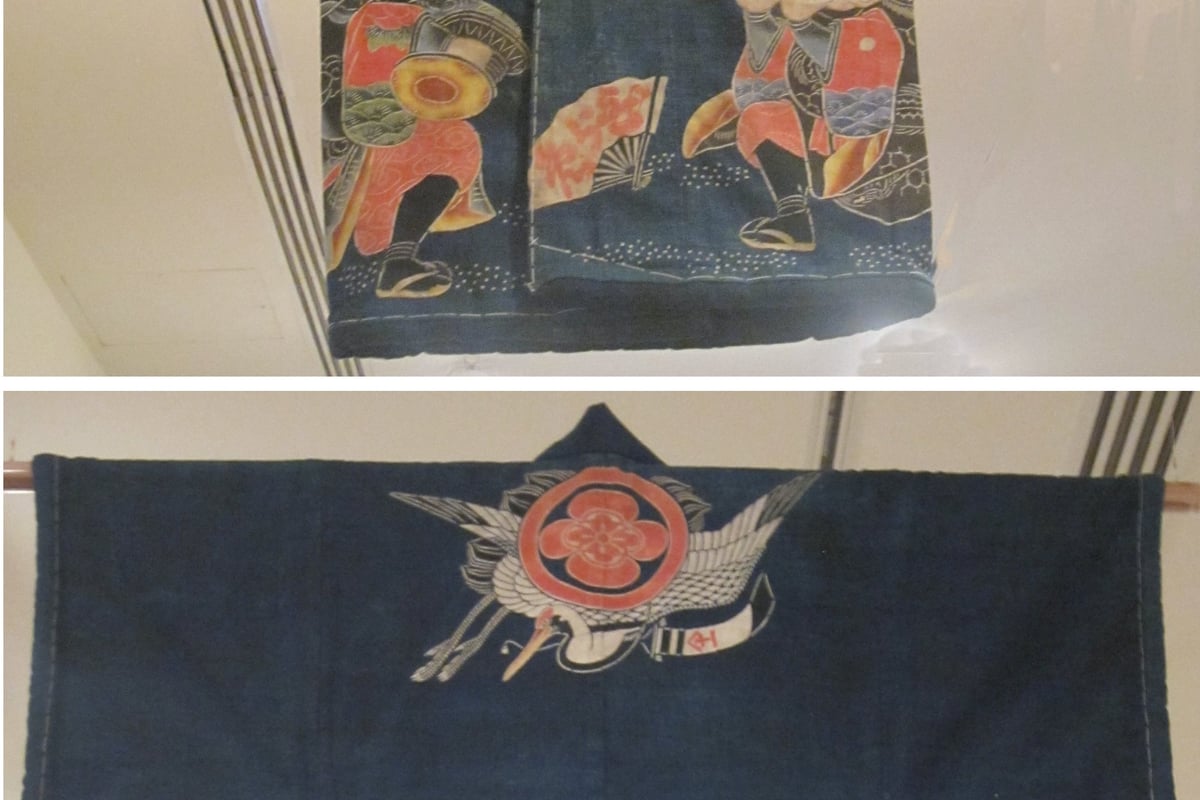
Kamogawa Maiwaizome is a traditional dyeing technique from the fishing villages of the Boso Peninsula, used to color ‘maiwai’ — the celebratory garments worn to mark a great catch. In the late Edo period, a custom arose among fishing communities in Boso in which net owners who had a great catch would give ceremonial garments to their crew and associates, giving rise to a distinctive style: auspicious motifs such as cranes, turtles, pine-bamboo-plum, treasure ships, and sea bream were either dyed white against an indigo ground or rendered boldly in vivid colors. Fishermen wearing maiwai even appear in ukiyo-e prints by Utagawa Sadahide, suggesting the garments were already established as special festive wear by the late Edo period. The dyeing tradition spread widely along the Pacific coast, from Aomori in the north to Shizuoka in the south, but changes in the fishing industry and a lack of successors caused it to die out in most production areas after the war. Today, Kamogawa City's ‘Suzusen’ is one of the few remaining keepers of the traditional stencil-dyeing technique, continuing to make maiwai kimono and small dyed goods. It was designated a Chiba Prefecture-designated Traditional Craft in 1997 (Heisei 9).
Bushu Shoai-zome
Bushu Shoai-zome
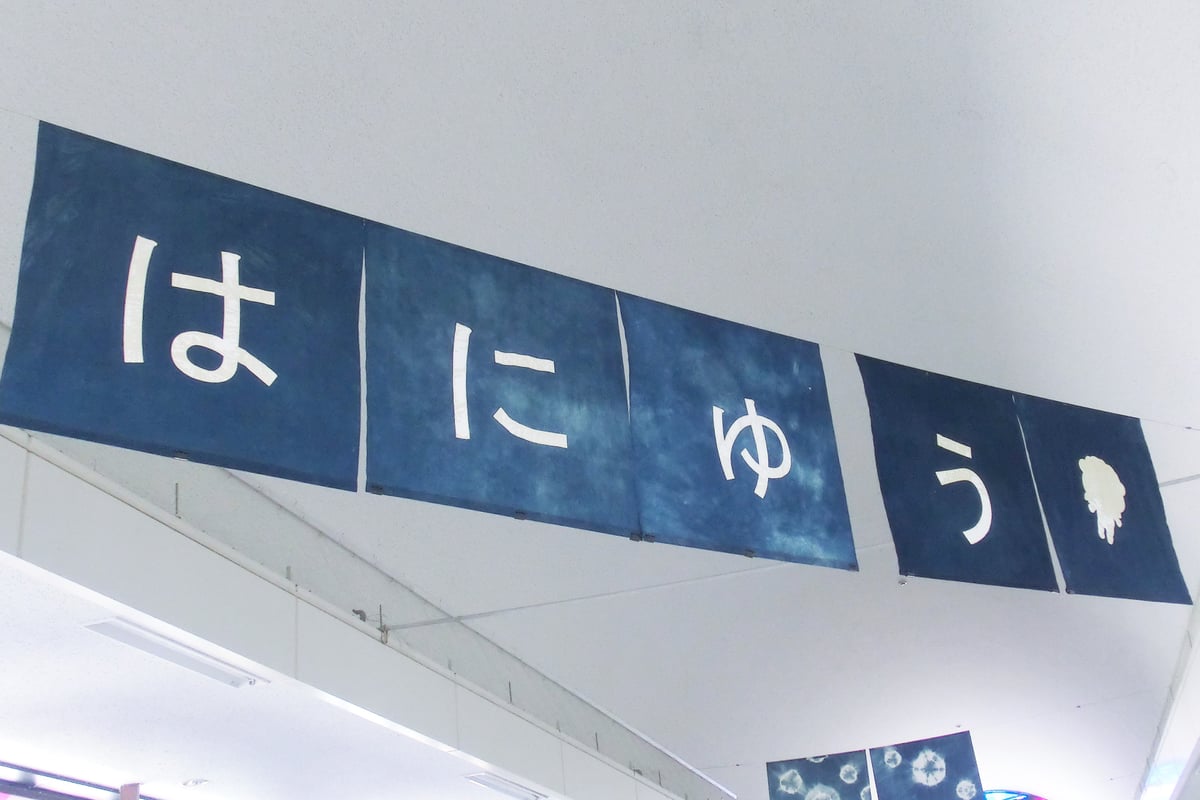
Bushu Shoai-zome is an indigo-dyeing technique passed down around Hanyu, Kazo, and Gyoda cities in northern Saitama Prefecture, whose defining feature is the use of 'shoai' dye made by naturally fermenting indigo leaves. From around the Tenmei era of the late Edo period (1781-1789), indigo cultivation spread by taking advantage of the fertile soil along the Tonegawa River, and it is said to have begun when farm wives dyed their families' clothing during the agricultural off-season. In the Meiji era it grew into a major industry, and by the 1900s and 1910s more than 200 'konya' (indigo-dyeing workshops) stood side by side, centered on Hanyu. There are two techniques: 'ito-zome' (yarn dyeing) and 'katazome' (stencil dyeing of cloth, known as 'aojima'), with roughly 70% of Bushu indigo dyeing done by yarn dyeing. Naturally fermented indigo has a depth of color that chemical dyes lack, and because the color is said to grow more beautiful as it fades, it is also affectionately known as 'Japan Blue.' It has been designated a Saitama Prefecture-designated Traditional Handicraft and was also registered as a regional collective trademark in 2008.
Hamamatsu Chusen Dyeing
Hamamatsu Chusen Zome (Hamamatsu Pour-Dyed Textiles)
Hamamatsu Chusen Dyeing (Hamamatsu Chusen Zome) is a type of stencil dyeing handed down in Hamamatsu City, Shizuoka Prefecture. Chusen (pour-dyeing) is a dyeing technique unique to Japan that was devised in the Meiji era. Cotton fabric on which resist paste has been applied through a stencil is placed on a table, and dye is poured from above and drawn through to the bottom to dye the cloth. The front and back of the fabric are dyed to the same depth, and the finish has a soft texture that makes use of bleeding and gradation. In Hamamatsu it began with dyeing tenugui hand towels in the Meiji 20s, and by the Taisho era yukata dyeing had become the core of the work. Blessed with abundant groundwater and river water and the dry Enshu wind, Hamamatsu has developed into a yukata-producing area ranking alongside Tokyo and Osaka. Today, besides yukata and tenugui, items such as noren curtains and tenugui for the Hamamatsu Festival are also dyed. It is a Shizuoka Prefecture Designated Local Traditional Craft, and dye works in the city continue to preserve the technique.
Koshu Warrior Banners and Carp Streamers
Koshu Musha Nobori and Koinobori
Koshu Warrior Banners and Carp Streamers are banners for Tango no Sekku (the Boys' Festival) that are hand-dyed in Minami-Alps City, Yamanashi Prefecture. They are said to have originated when the hata-sashimono (battle flags) and fukinagashi (streamers) that fluttered over battlefields in the Sengoku (Warring States) period came to be raised as banners celebrating the festival in the latter half of the Edo period. In Yamanashi, musha nobori (warrior banners) have been raised in the hope that children will grow up strong like Lord Takeda Shingen. Carrying on their production is Inoue Dyeworks in Furuichiba, Minami-Alps City, which began with indigo dyeing at the end of the Edo period. Using hon-zome (authentic hand dyeing), in which outlines are drawn on cotton cloth with paste and pigments and dyes are layered on, the workshop dyes brave warriors and carp in vivid colors. Everything is done by hand, and it is said to take more than two weeks to complete a banner. In 1994 (Heisei 6), they were designated a Yamanashi Prefecture Designated Local Traditional Craft. In recent years, small carp streamers that can be displayed indoors have also been made.
Gujo Honzome
Gujo Honzome
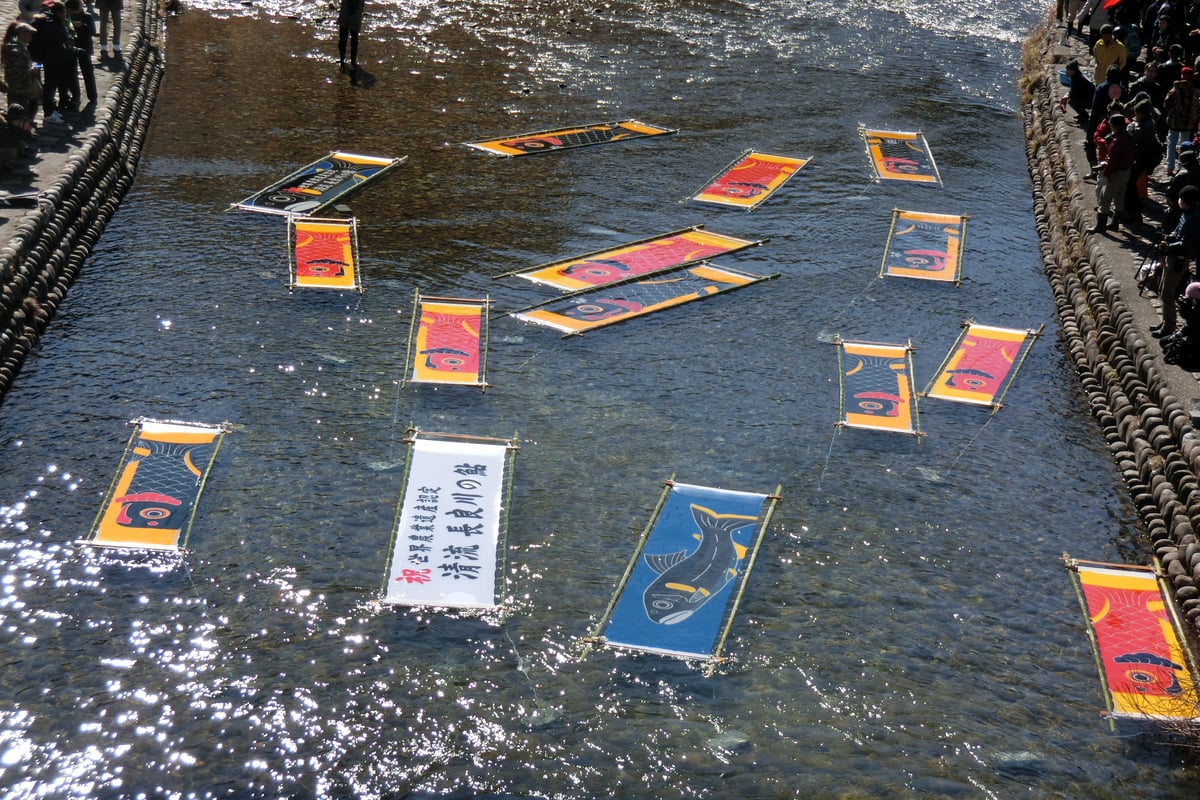
Gujo Honzome is an indigo-dyeing tradition from the town of Hachiman in Gujo City, Gifu Prefecture, known for its tsutsugaki (tube-drawing) technique used to dye carp-shaped koinobori streamers and other banners. Its origins are said to date back to the Tensho era (1573-1592) of the Azuchi-Momoyama period, and the craft has been handed down for more than 400 years in Hachiman, a town blessed with the abundant, clear waters of the Yoshida River, a tributary of the Nagara River. Craftspeople use a resist paste called managori, made from glutinous rice, squeezed from a cloth cone directly onto the fabric (tsutsugaki), or apply the paste through a stencil (katazome) to outline the pattern, before dyeing the cloth more than a dozen times in natural indigo to achieve a deep, vivid blue. Designated an Important Intangible Cultural Property of Gifu Prefecture in 1977 (Showa 52), the tradition is still carried on today by the Watanabe Dyeworks in Hachiman, now in its 15th generation. The annual kanzarashi (cold rinsing) of koinobori in the Yoshida River, held around the coldest time of the year, is a beloved winter tradition of Gujo Hachiman.
Naniwa Honzome (Chusen Dyeing)
Naniwa Honzome (Chusen Dyeing)
Naniwa Honzome are tenugui (cotton hand towels) and yukata dyed using chusen (pour-dyeing), a technique born in Osaka around Meiji 20 (1887). Chusen is a dyeing method unique to Japan in which cloth coated with resist paste is folded and stacked in many layers, and dye is poured in from above. Because the dye penetrates to the core of the threads, the fabric is dyed in the same pattern and the same color with no distinction between front and back, and it resists fading. The soft texture of gradation (bokashi), possible only with hand dyeing, is another attraction. The fabric used is wazarashi (bleached cotton), cotton cloth bleached in Sakai, where the craft is said to have continued for 400 years. After chusen workshops in Osaka City suffered war damage in World War II, they moved to Sakai, and the 津久野 and 毛穴 areas along the 石津川 river became the main production areas. On November 20, 2019 (Reiwa 1), it was designated a Traditional Craft Designated by the Minister of Economy, Trade and Industry. 'Naniwa Honzome Yukata' and 'Naniwa Honzome Tenugui' had already been designated as Osaka Prefecture-designated Traditional Crafts before that.
Kyo-kuromontsuki-zome (Kyoto Black Crested Dyeing)
Kyo-kuromontsuki-zome
Kyo-kuromontsuki-zome is a Kyoto dyeing technique that dyes silk fabric a deep black and precisely dyes-out the family crest, used for black tomesode kimono worn at weddings and mourning wear worn at funerals. There are two dyeing techniques: hikizome, used for patterned fabric such as black tomesode, and shinsome (immersion dyeing), used for plain fabric such as mourning wear. Dyes such as safflower red and indigo are layered to produce a distinctive black with depth and luster, not simply a flat black. The mon-sho-uwae technique of dyeing the family crest white onto the finished fabric is also indispensable. Kyoto is said to account for over 90% of the black crested fabric produced nationwide, and it received national Traditional Craft designation in 1976.
Shonai Sashiko
Shonai Sashiko
Shonai Sashiko is a traditional sashiko craft passed down in the Shonai region, centered on Sakata City, and is counted as one of Japan's Three Great Sashiko traditions, alongside Aomori Prefecture's Kogin-zashi and Nanbu Hishizashi. The Shonai region's economy centered on rice farming, which was not suited to growing cotton, so producing clothing locally had its limits. It is said to have begun in the mid-Edo period, when used clothing and cloth brought in from Kyoto and Osaka through the trade of Kitamae-bune (trading ships) were layered together and stitched, regardless of the fabric's grain, to make sturdy work clothes. Fine stitches of white cotton thread were sewn into indigo-dyed cotton cloth to improve warmth and durability, while also carrying the meaning of warding off evil. There are around 40 basic stitch patterns, such as 'kome-zashi' (rice stitch), 'uroko-zashi' (scale stitch), and 'hishi-zashi' (diamond stitch), and the geometric designs are notable for expressing wishes such as bountiful harvests, big catches of fish, and family health. In 1983 (Showa 58), enthusiasts formed the 'Hirata Sashiko no Kai' to pass on the techniques.
Kyo-kanoko Shibori (Kyoto Fawn-Spot Tie-Dyeing)
Kyo-kanoko Shibori
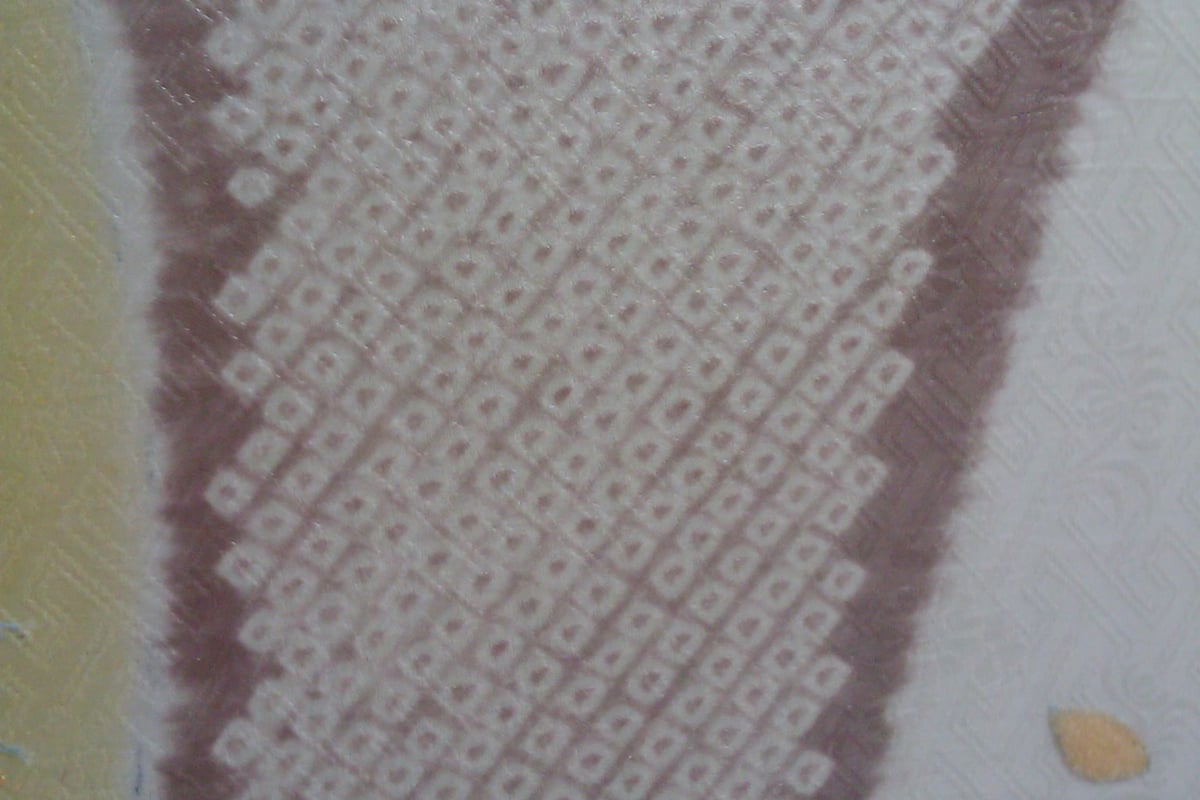
Kyo-kanoko Shibori is a Kyoto tie-dyeing craft in which fabric is bound grain by grain with thread to resist dye and create patterns; it is said to take its name from the way the finished pattern resembles the spots on a fawn's back. Combining numerous binding techniques such as hitta shibori and hitome shibori, it is characterized by the three-dimensional effect produced by finely bound grains and vivid multicolor dyeing, and because every step is done by hand, it has a distinctive richness and warmth not found in machine dyeing. It flourished as tsujigahana dyeing from the Muromachi through the early Edo period and reached its peak during the Genroku era in the mid-Edo period. Its origin is said to be India, with one theory holding it was brought to Japan around the 7th century; it has a long history, with references to tie-dyeing already found in the Nihon Shoki. It received national Traditional Craft designation in 1976.
Kurobane Aizome
Kurobane Aizome
Kurobane Aizome is an indigo-dyeing tradition passed down in the Kurobane district of Otawara City, Tochigi Prefecture. It is said to have originated when the first-generation dyer, Konya Shinbei, buried indigo vats in the ground at Kurobane and began kon-zome dyeing during the Bunka-Bunsei era (around 1804-1829). The technique uses a traditional dye made by adding wheat bran, lime, and sake to sukumo (fermented indigo leaves) from Tokushima and fermenting it further in the indigo vats, and combines this with a pre-dyeing process called kon-zome, using pine soot ink (shoen-boku) and soybean liquid, to achieve a deep, rich indigo blue that resists fading. Kurobane Aizome Konya, which has tended its indigo vats for around 200 years, is now the only workshop known to carry on this technique, and it has been designated a Tochigi Prefecture Traditional Craft. Kurobane is also known as the place where the haiku poet Matsuo Basho stayed longest during his journey recorded in Oku no Hosomichi (The Narrow Road to the Deep North) - thirteen nights over fourteen days - and the culture of indigo dyeing lives on alongside the atmosphere of this merchant town dating back to the Edo period.
Nanbu Kodai Katazome
Nanbu Kodai Katazome
Nanbu Kodai Katazome is a stencil-dyeing technique passed down in Morioka City. It is said to have begun in the Kan'ei era (1624-1643), when the lord of the Nanbu domain invited the dyer Ebisuya Sanemon (of the Ono family) from Kyoto to serve as the domain's official dyer, using stencils to dye kamishimo, kosode, and armor undergarments with the Nanbu family crest, the 'mukaizuru' (facing cranes), along with patterns such as small chrysanthemums, peonies, and plovers. Since then, the technique has been passed down through generations of the Ono family, and more than 300 stencils dating back to the domain era have survived to this day. The craft is characterized by its subdued indigo-based colors and the beauty of the patterns carefully dyed from a single stencil, and it is used to produce a wide range of items, from kimono fabric and obi sashes to table runners suited to modern life. The tradition continues to be preserved today at a workshop in Morioka City.
Tokyo Some Komon
Tokyo Some Komon
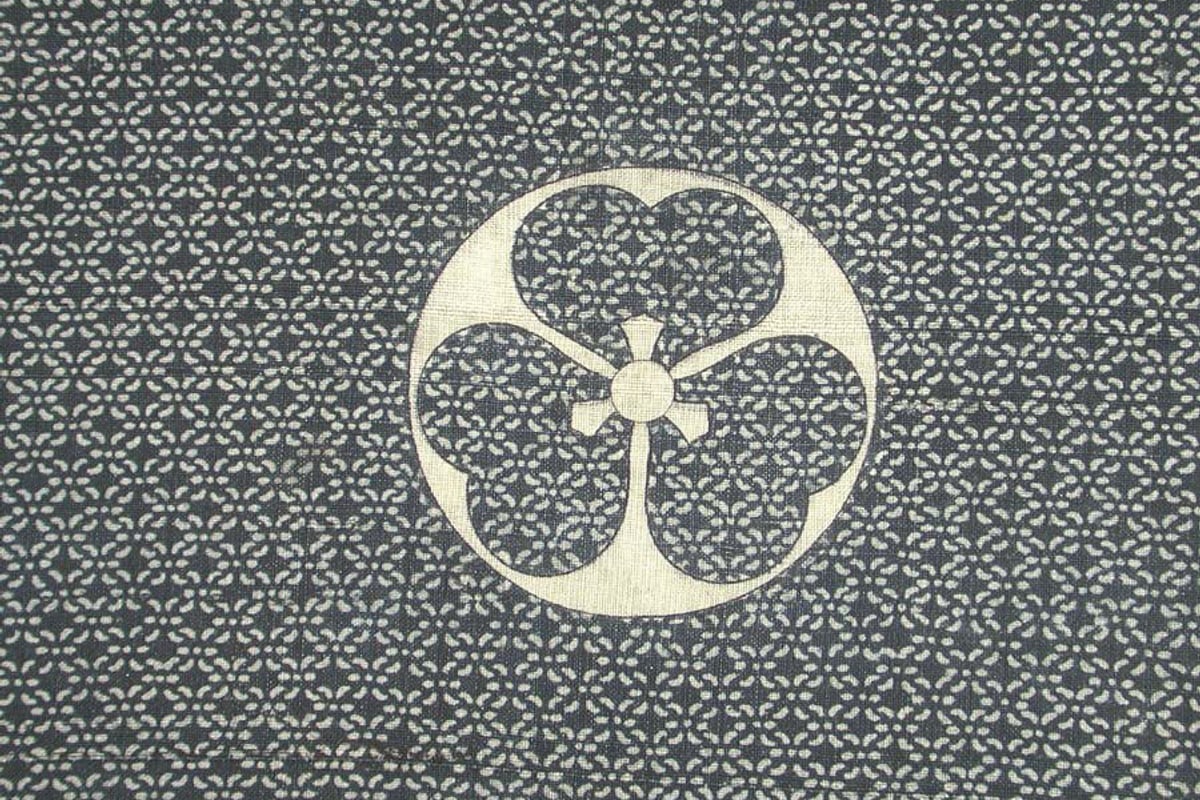
Tokyo Some Komon is a stencil-dyeing technique born in Edo that uses finely carved Ise katagami (stencil paper) to dye minute patterns onto fabric with a single-color rice-paste dye. The development of komon (fine-patterned dyeing) itself is said to date back to the Muromachi period, but the technique flourished in the early Edo period, when the various daimyo houses began dyeing fine, house-specific patterns onto the kamishimo (formal attire) worn at their Edo residences. Because daimyo from across the country gathered in Edo, demand for komon grew rapidly, and the patterns once reserved for samurai kamishimo eventually spread among the common people, blossoming as a dyeing tradition beloved in townsman culture from the mid-Edo period onward. The three representative patterns -- same (shark skin), gyogi (proper conduct), and kaku-doshi (square lattice) -- are considered especially prestigious and are known as the 'Edo Komon Sanyaku' (three most prestigious Edo Komon patterns). The patterns are made up of extremely small dots and lines, roughly 0.5 to 1mm in size, and their defining feature is an intricacy so fine that the goku-same (ultra-fine shark-skin) pattern can contain a thousand dots within a 3-centimeter square, each placed without the slightest deviation. Appearing plain from a distance but revealing delicate patterns up close, it embodies the aesthetic of Edo 'iki' (chic refinement) and has long been cherished as an adornment for women's kimono; it was designated a Traditional Craft Designated by the Minister of Economy, Trade and Industry in 1976 (Showa 51).
Yokohama Scarf
Yokohama Scarf
Yokohama Scarf is a traditional craft of Yokohama, Kanagawa Prefecture, born out of the raw silk and silk textile export industry that developed following the opening of the port of Yokohama in 1859. The skills of ukiyo-e painters and printers who gathered in Yokohama after the port opened combined with raw silk and silk goods, then the mainstay of the city's exports, giving rise to a dyeing industry for silk handkerchiefs and scarves. Screen-printing techniques were established in the early Showa era, and the delicate dyeing achieved through 'tenassen' (hand printing) — pressing dye through a stencil with a spatula — won worldwide acclaim. During the postwar period of rapid economic growth, Yokohama Scarf came to account for 80% of the world's export share, and by around 1976 as much as 90% of domestic production, but production has since contracted due to a strong yen and the shift of manufacturing overseas. Even so, the hand-printing techniques of Yokohama's craftspeople continue to be passed down today, and the craft is recognized as a Kanagawa Prefecture Designated Traditional Craft.