Image: Wikimedia Commons
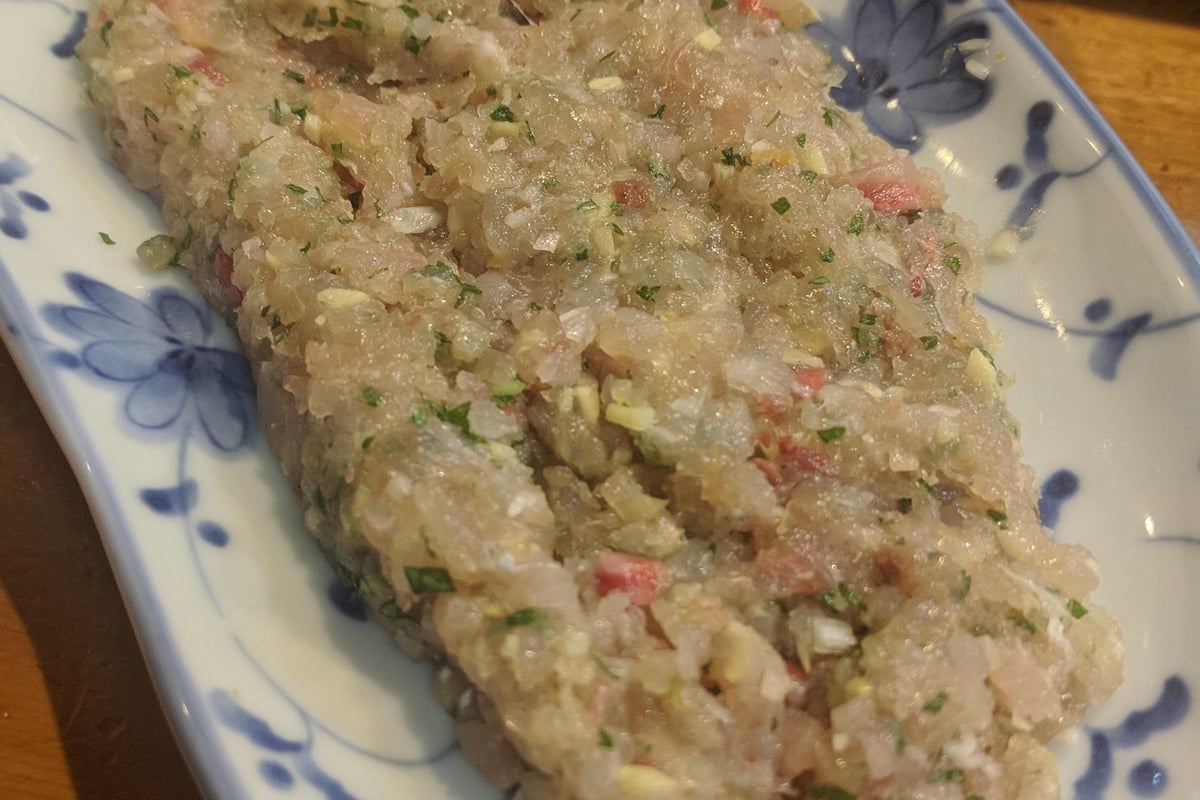
Namerou is a fisherman's dish handed down along the coast of the Boso Peninsula in Chiba Prefecture. Oily fish such as horse mackerel (aji) or sardines are combined with miso, green onion, ginger, and other aromatics, then minced with a knife until the mixture turns sticky. It is said to have originated as a dish fishermen could prepare quickly aboard a rocking boat—miso was used instead of soy sauce because soy sauce would spill, while miso keeps well. The name is said to come either from the dish being 'so delicious you want to lick (nameru) the plate clean,' or from the sticky minced fish clinging to the plate so that you 'have to lick it to finish it.' Today Namerou is enjoyed not only as a home-cooked dish but also as a standard item at diners and izakaya throughout the Boso region—a simple yet deeply flavorful dish where the richness of the oily fish and the fragrance of the aromatics shine.
Origin
Namerou was created by fishermen of the Boso Peninsula, whose waters are enriched by the Kuroshio Current. To eat freshly caught horse mackerel or sardines quickly aboard the boat, they added miso, green onion, and ginger and minced the fish with a knife. Because soy sauce spills easily on a rocking boat, miso—which spills less and keeps well—was chosen instead, according to tradition.
History
Namerou began as a dish fishermen prepared aboard their boats, and it eventually spread to the homes of fishermen on land, becoming a household dish as more aromatics, such as shiso leaf and myoga ginger, were added. Today it is widely served at diners and izakaya throughout Chiba Prefecture, and it has become known to tourists as a signature local dish of the Boso region.
Features
The basic method is to fillet seasonal oily fish such as horse mackerel or sardine into three pieces, then mince it together with miso, green onion, ginger, and other aromatics until it becomes sticky. The fragrance of the aromatics brings out the distinctive flavor of the oily fish, and combined with the richness of the miso, it makes for an irresistible dish. Many households also add shiso leaf or myoga ginger as a finishing touch.
Main Ingredients
Food Culture
Because it developed as a dish that could be prepared quickly aboard a rocking boat, Namerou is regarded as a dish that strongly reflects the fishing culture of the Boso region. It has been passed down in homes and diners alike as a way to make the most of freshly caught fish without waste.
How It Differs from Home Cooking
When fishermen originally made it aboard their boats, it was a simple dish of just fish, miso, and aromatics. In homes and diners, however, a wider variety of aromatics such as shiso leaf and myoga ginger have been added, with more attention paid to color and fragrance.
Famous Shops
きんざ食堂
千葉県館山市北条1241-2
A casual diner founded in 1967. The Aji Namerou set meal starts at around 1,100 yen.
View details →FAQ
Q. Where does the name 'Namerou' come from?
A. One theory says it was named for being so delicious that people wanted to lick (nameru) the plate clean; another says it comes from the sticky texture of the minced fish clinging to the plate, meaning you have to lick it to finish eating.