Image: Wikimedia Commons
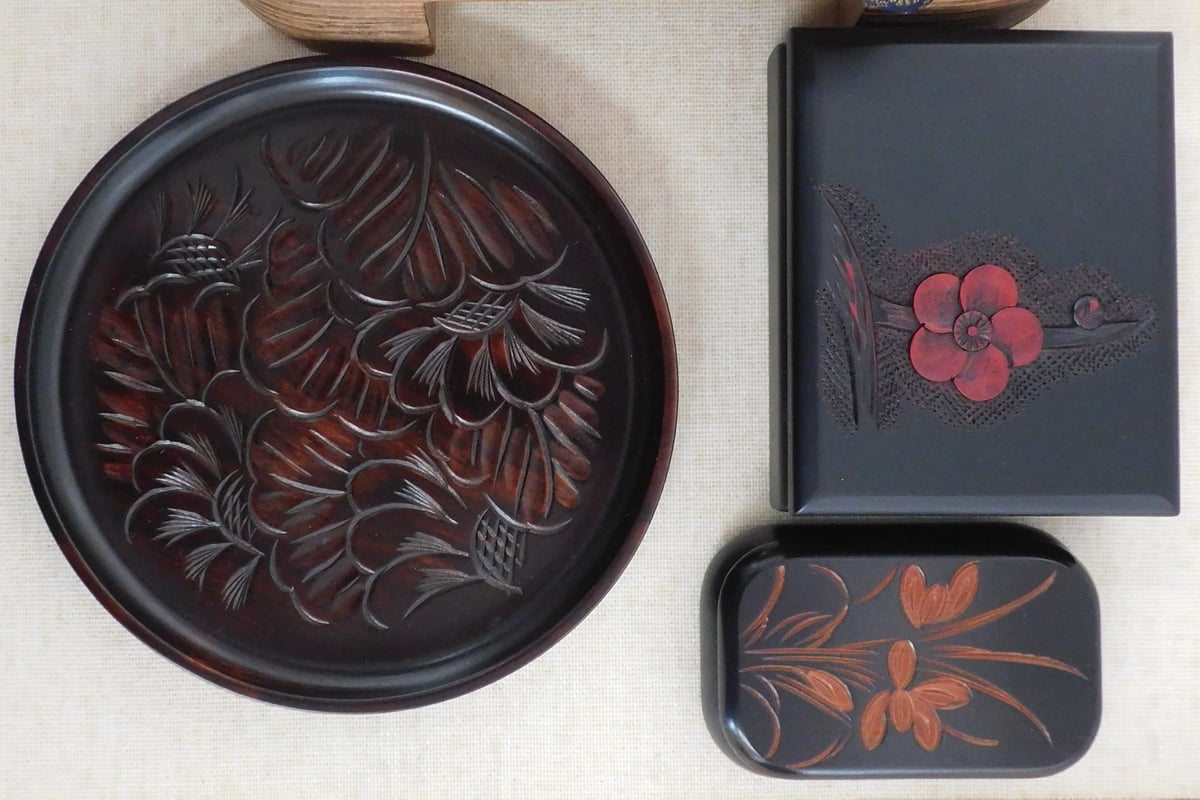
Nikko-bori is a traditional wood-carving craft passed down in Nikko City, Tochigi Prefecture. It is said to have originated as a sideline pursued in their spare time by master craftsmen gathered from across the country for the rebuilding of Nikko Toshogu Shrine (1634-1636) under the third Tokugawa shogun, Iemitsu. Its most distinctive feature is a unique carving knife called the 'hikkaki,' or 'Nikko sankakuto' (Nikko triangular knife), originally a tool used to scrape off lacquer during shrine repairs. Carving by folding the blade tip and pulling it toward oneself produces Nikko-bori's characteristic flowing curves, and designs are strongly influenced by the Toshogu carvings, centering on plant motifs such as peonies, chrysanthemums, plum blossoms, and cherry blossoms. The carved wood is finished with layers of lacquer, and the craft has long been cherished for everyday items such as trays, tea-cup stands, and small drawers. Today, visitors to workshops and hands-on facilities in Nikko City can try carving a hand mirror or confectionery dish using the hikkaki knife themselves.
Origin
The origin of Nikko-bori is said to date to 1634-1636, when the third shogun, Tokugawa Iemitsu, rebuilt Nikko Toshogu Shrine into its magnificent current form, and master craftsmen such as skilled carving carpenters gathered from across the country began carving as a sideline in their spare time. The advanced skills of the craftsmen who gathered for this major shrine-building project took root in Nikko as a wood-carving culture.
History
In the late Edo period, the tool with a folded, forward-pulling tip that had been used to scrape lacquer off the shrine buildings during repairs came to be called the 'hikkaki' or 'Nikko sankakuto,' and began to be used as a carving implement. As this technique using the distinctive knife became established and expanded into everyday goods such as trays and tea-cup stands, it became firmly rooted as a woodcraft representative of Nikko. Today the technique continues to be passed down in workshops throughout Nikko City, and hands-on experiences for visitors are widely offered.
Features
The greatest feature of Nikko-bori lies in the technique of carving by pulling the distinctive 'hikkaki' knife toward oneself, producing flowing curves unlike those made with an ordinary triangular knife. Plant motifs such as peonies, chrysanthemums, plum blossoms, and cherry blossoms are frequently used, with designs strongly influenced by the carvings at Nikko Toshogu Shrine. The carved wood, typically horse chestnut or magnolia, is finished with layers of lacquer, producing a deep luster and texture.
Materials Used
Production Process
- 1
Sketching
Motifs such as peonies and chrysanthemums are traced onto the wood.
- 2
Rough carving
The hikkaki (Nikko sankakuto) knife is pulled toward the carver to cut the outline of the pattern.
- 3
Finish carving
Shadow and depth are added while making the most of the curved lines.
- 4
Lacquering
Layers of lacquer are applied to the carved wood.
- 5
Drying and finishing
The lacquer is fully dried and polished to a finish with luster.
| Main Production Areas |
|
|---|
Artisans & Workshops
五十嵐漆器店
A Nikko-bori manufacturer and retailer located three minutes on foot from Tobu-Nikko Station and five minutes from JR Nikko Station. In addition to making and selling Nikko-bori products such as trays and tea-cup stands, it regularly offers carving experiences of about one hour.
Official site →How to Buy
- 五十嵐漆器店
- A long-established shop that makes and sells Nikko-bori trays, tea-cup stands, confectionery dishes, and more. Just a few minutes' walk from both Tobu-Nikko and JR Nikko stations, making it easy to stop by while sightseeing in Nikko.Where to buy →PR
- 日光木彫りの里工芸センター
- A facility displaying and selling Nikko's traditional crafts, including Nikko-bori and Nikko tea-ceremony utensils. Located along the bus route to Kirifuri Highland, it also has carving workshops on-site, so visitors can watch pieces being made while they choose.Where to buy →PR
Hands-on Experiences
日光木彫りの里工芸センター
栃木県日光市所野2848
Reservation required in advance; open to groups (10 or more) of 5th-grade elementary school students and older. Visitors carve a pattern into a hand mirror or confectionery dish using the hikkaki knife. Cost starts around 1,000 yen, taking about 1 to 1 hour 20 minutes.
View details →五十嵐漆器店
栃木県日光市松原町17-7
Taking advantage of its location near the station, offers Nikko-bori experiences of about one hour on a regular basis. Carved pieces can be taken home right away.
View details →mekke日光郷土センター
栃木県日光市御幸町591
Nikko-bori experiences using the hikkaki knife are open to individuals; visitors can choose a favorite motif such as a sleeping cat, the three wise monkeys, a dragon, or flowers. Takes about 1 to 1.5 hours, and the finished piece can be taken home.
View details →FAQ
Q. What is the 'hikkaki,' the tool that gives Nikko-bori its name?
A. It is a distinctive carving knife with a folded tip that is pulled toward the carver, originally a tool used to scrape lacquer off the shrine buildings during repairs at Nikko Toshogu Shrine. It is also called the 'Nikko sankakuto' (Nikko triangular knife).
Q. What kinds of patterns are common in Nikko-bori?
A. Plant-themed motifs such as peonies, chrysanthemums, plum blossoms, and cherry blossoms are common, with designs strongly influenced by the carvings at Nikko Toshogu Shrine. Part of the appeal is how each carver's individuality shows in the way the curves are drawn.