Image: Wikimedia Commons
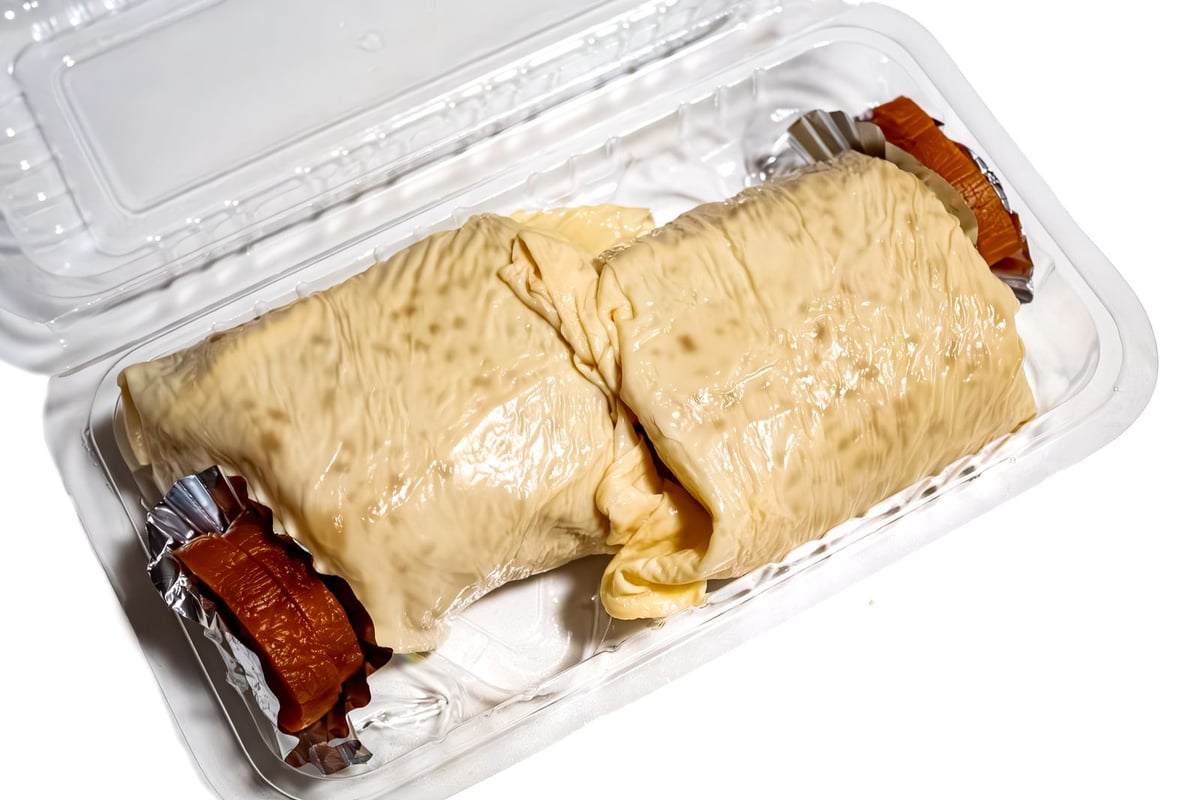
Nikko Yuba is a processed soy milk food that has been made in Nikko City, Tochigi Prefecture, since ancient times. It is characterized by its thick, hearty texture, created by layering the skin that forms when soy milk is simmered. It is said to have originated when yuba, brought back from Tang-dynasty China by a traveling monk, was introduced as shojin cuisine (Buddhist vegetarian cooking) to Nikko-san Rinno-ji Temple, founded by the priest Shodo Shonin in 766. When Tokugawa Ieyasu was enshrined at Nikko Toshogu in the early Edo period, the inns and shojin cuisine restaurants that served worshippers developed their own refinements, and the dish earned a reputation as 'Nikko Yuba.' The biggest difference from Kyoto's yuba (湯葉) — made by inserting a skewer at the edge of the skin and lifting it up flat — is that Nikko's yuba (湯波) is rolled up by inserting a skewer at the center and folding it in two, giving it a rounded shape with many layered folds. It has long been enjoyed raw, like sashimi, as well as cooked in deep-fried and simmered dishes.
Origin
Yuba is a shojin cuisine ingredient said to have been brought to Japan by monks such as Kukai and Saicho, who studied Buddhism after traveling to Tang-dynasty China with the envoys to Tang. In Nikko, this method of preparation was passed down to Nikko-san Rinno-ji Temple, founded by the priest Shodo Shonin in 766, where it was carefully preserved and developed within shojin cuisine as a valuable source of protein for monks forbidden from eating meat.
History
In the early Edo period, once Tokugawa Ieyasu was enshrined at Nikko Toshogu, Nikko became a major place of pilgrimage that drew worshippers from across the country. Inns and shojin cuisine restaurants that hosted these visitors refined their yuba dishes again and again, polishing them into a distinctive food culture. The 'Nikko Yuba' born from this process has come to be regarded, alongside Kyoto's 'yuba,' as one of the two great yuba specialties, and it is still handed down today.
Features
Nikko Yuba is made by inserting a skewer into the center of the skin that forms when soy milk is simmered and rolling it up while folding it in two, which gives it its characteristic thick, hearty volume built from many layers. Whereas Kyoto's yuba, lifted up sheet by sheet from the edge, comes out thin and flat, Nikko Yuba takes on a rounded shape with a chewy, satisfying texture. It is enjoyed raw as sashimi yuba, as well as in a wide range of cooked dishes such as deep-fried rolled yuba.
Main Ingredients
Food Culture
Having developed as a shojin cuisine dish at Nikko-san Rinno-ji Temple, Nikko Yuba has long been enjoyed not only raw, like sashimi, but also cooked in deep-fried and simmered dishes. It is also cherished as a souvenir for worshippers and is one of the essential flavors of a visit to Nikko.
How It Differs from Home Cooking
At home, sashimi yuba is often eaten as is with soy sauce, but at Nikko's long-established restaurants it is served as part of a shojin cuisine course featuring dishes such as deep-fried rolled yuba and simmered yuba, letting diners enjoy both the flavor of the ingredient itself and the range of ways it can be prepared.
Famous Shops
元祖 日光湯波 海老屋長造
栃木県日光市下鉢石町948
Founded in 1872. A long-established shop that continues to hand-make yuba using domestic soybeans and Nikko's natural spring water without any defoaming agents, and has a history of supplying yuba to shrines, temples, and imperial villas.
View details →日光湯波 ふじや
栃木県日光市下鉢石町809
Founded in 1868. A long-established shop offering more than ten varieties, from sashimi yuba to yuba for simmering and sweet yuba confections, with a good selection of long-lasting souvenir products such as dried yuba and skewered yuba.
FAQ
Q. What is the difference between 'yuba' (湯葉) and 'yuba' (湯波)?
A. Both are the same processed soy milk food, but their spelling and method differ. In Kyoto, a skewer is inserted at the edge of the skin and lifted up, so it is written 湯葉 and comes out flat, while in Nikko a skewer is inserted at the center and rolled up while folded in two, so it is written 湯波 and comes out with a thick, layered texture.