Food Genre
Fermented Foods
A cross-regional look at Fermented Foods from across Japan.
Region(multiple selection allowed)
52 items
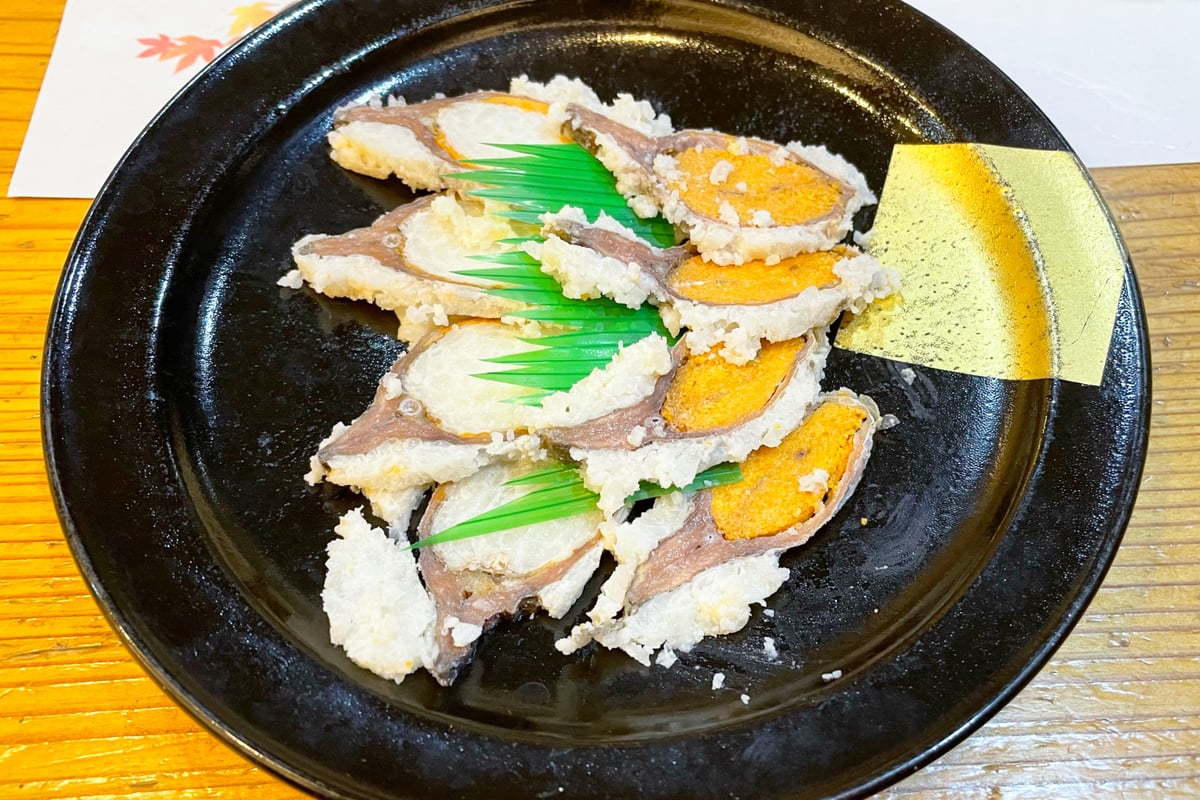
Funazushi (Fermented Crucian Carp Sushi)
Funazushi
Funazushi is a signature narezushi (fermented sushi) of Shiga Prefecture, made by salting nigorobuna — a crucian carp species found only in Lake Biwa — and then packing it with cooked rice to undergo lactic acid fermentation. Unlike modern nigiri-zushi, which gets its tartness from vinegar, funazushi develops its sourness naturally through the prolonged fermentation of rice and fish, and it is often described as a living link to the origins of sushi itself. Its history is remarkably old: wooden tablets (mokkan) from the Nara period and the Heian-era legal code Engishiki record 'sushi funa' (鮨鮒) being sent as tribute from Omi Province. Funazushi is known for its strong sourness and a distinctive fermented aroma sometimes compared to cheese — a flavor that divides opinion, though well-made funazushi is prized for its rich umami without any fishy smell. It is typically sliced thin and eaten as is, enjoyed with tea over rice (ochazuke) or as an accompaniment to sake, and remains a treasured traditional dish served on special occasions such as New Year and when hosting guests.
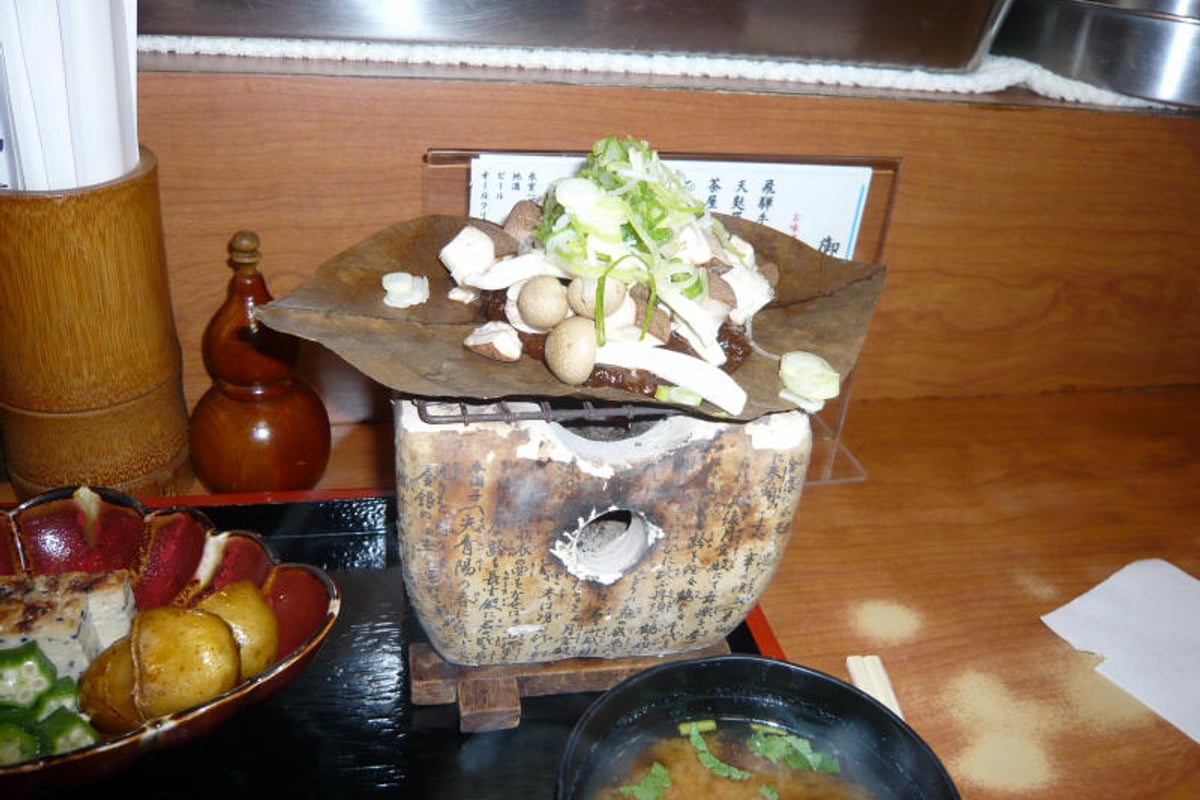
Hoba Miso
Hoba Miso
Hoba Miso is a local dish from the Hida-Takayama region in which koji miso is placed on a magnolia (hoba) leaf and grilled over charcoal or on a small hibachi grill. As it cooks, the fragrance of the hoba leaf infuses the miso, bringing out a savory aroma and gentle sweetness. It is said to have originated when woodcutters working in the mountains used hoba leaves as makeshift bowls for their meals, then grilled the leftover miso on the leaf to eat. The custom eventually spread to ordinary households, and grilling miso around the irori (sunken hearth) became a fixture of winter meals in the Hida region. Today it is common to grill the miso together with chopped green onion, mushrooms, or Hida beef, and the dish is a beloved specialty served at ryokan breakfasts and Takayama restaurants. In 2007 it was selected by the Ministry of Agriculture, Forestry and Fisheries as one of Japan's '100 Local Dishes of Farming, Mountain and Fishing Villages,' bringing national recognition to this signature taste of Hida.
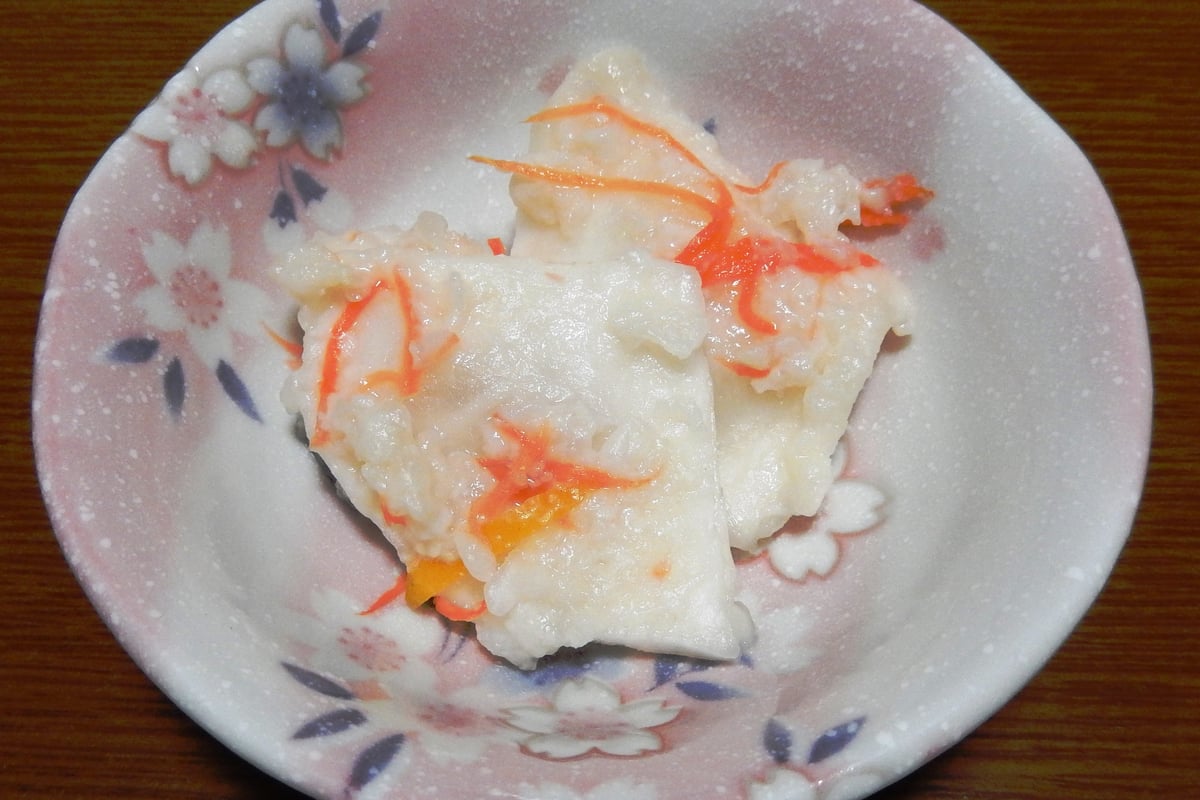
Kaburazushi
Kaburazushi
Kaburazushi is a fermented dish representative of Ishikawa Prefecture, made by sandwiching salted yellowtail between slices of salted 'kabura' (a Kaga heirloom vegetable, a type of turnip) and pickling them together with rice malt (koji) to ferment. Unlike Edo-style sushi, which uses vinegared rice, this is a type of 'narezushi,' drawing out sourness and umami through lactic fermentation, and it has long been cherished in the Kanazawa and Kaga regions as a festive dish and gift item from winter into the New Year. The richness of the yellowtail fat, the sweetness of the koji, and the crisp texture of the kabura layer together, deepening in flavor with every bite. Its origins remain uncertain, with several theories in circulation — that fishermen of Kanaishi-cho prayed for a bountiful catch and safe voyages by eating it as a New Year dish, or that it was served to a Maeda domain lord — but none has been confirmed. Today it is still sold as a winter-only item at Kanazawa's pickle shops and traditional restaurants, and remains one of Ishikawa's representative winter delicacies.
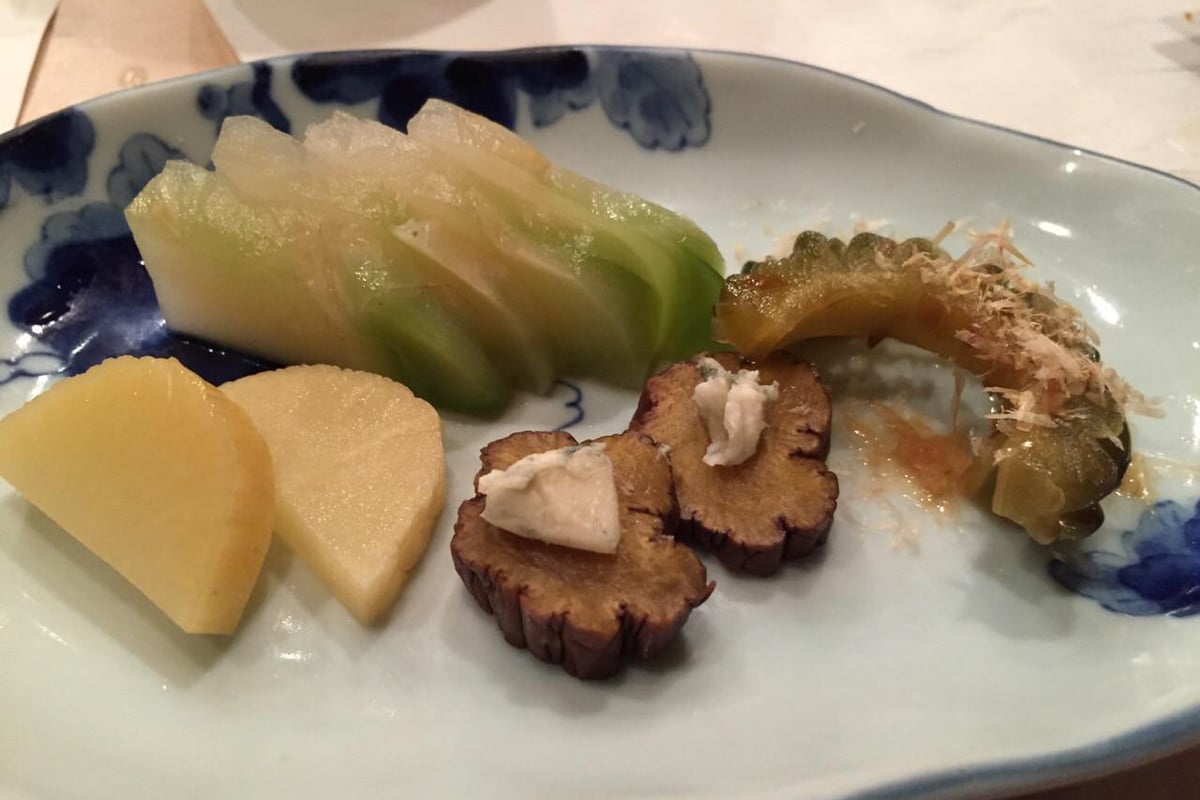
Iburigakko
Iburigakko
Iburigakko is a pickle originating in the inland southern part of Akita Prefecture, made by smoking daikon radish over an irori (sunken hearth) fire, drying it, and then pickling it in rice bran and salt. 'Iburi' means 'to smoke,' and 'gakko' is an Akita dialect word for pickles. It is said to have developed from the wisdom of farmers who, in a climate with heavy snowfall that made sun-drying difficult, hung daikon from the beams of their houses and dried it using the heat and smoke of the irori — a practice believed to date back to the Muromachi period. Known for its fragrant smoky aroma and crisp, crunchy texture, it developed mainly in the area around Yokote City. In 2019 it was registered under Japan's national Geographical Indication (GI) protection system, and it is now known nationwide as one of Akita's signature fermented foods.

Nattojiru (Natto Soup)
Nattojiru
Nattojiru is a winter dish passed down mainly in the inland areas of Yamagata Prefecture — a soup in which natto (fermented soybeans), ground in a mortar until the beans are no longer visible, is stirred into a hearty miso soup to give it a thick, silky texture. In snowy Yamagata, it was customary to make homemade natto as a preserved winter food, and the dish is said to have originated as a way to use natto whose stickiness had weakened. For inland residents who had few opportunities to eat animal protein, it was a dish that supplemented protein through soybean-based natto and tofu. It has long been cherished as a nutritionally excellent dish, since adding imogara (dried taro stem), a preserved food, along with mushrooms, wild mountain vegetables, and konnyaku also provides vitamins and dietary fiber. The timing of when it is eaten varies by region: it is customary to eat it around the Nanakusa festival on January 7 in the Murayama region, at New Year's in the Mogami region, and on Daikoku-sama's Otoshiya (a year-end-eve tradition, in December) in the Shonai region. Because it takes considerable effort to prepare, fewer households make it from scratch today, but it is still passed down at inns, restaurants, and school lunches.
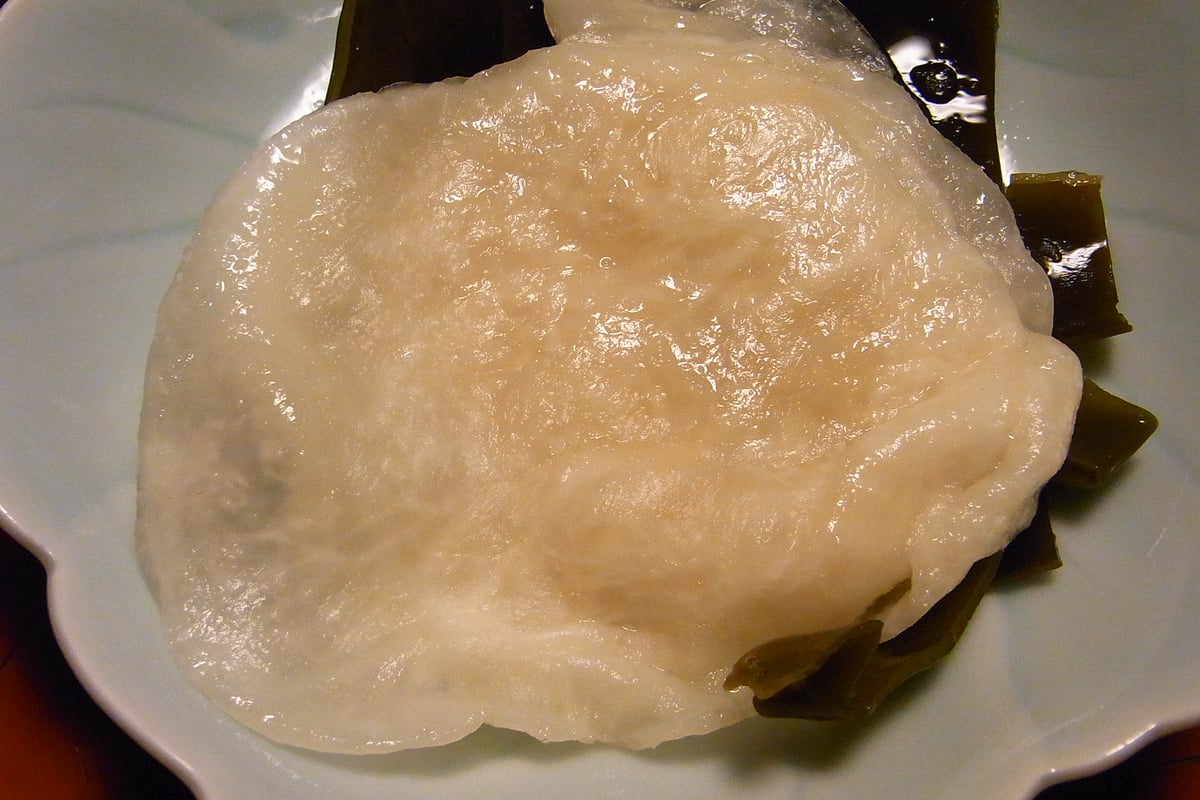
Senmaizuke (Thousand-Layer Pickled Turnip)
Senmaizuke
Senmaizuke is a pickle representative of Kyoto, made by salting thinly sliced Shogoin turnip (kabura) together with kelp and finishing it with a sweet-sour flavor using vinegar and mirin. Counted alongside sugukizuke and shibazuke as one of "Kyoto's three great pickles," it is especially cherished as a winter flavor of Kyoto. It is said to have originated in 1865 (Keio 1), created by the first-generation Daikokuya Tozaburo, who served as a cook at the Imperial court, and there is a sense of historical background in its design, in which the turnip represents the white gravel and the accompanying mibuna greens represent the green of the pines, evoking the scenery of the Imperial Palace. Its distinctive elegant sweetness, the umami of the kelp, and its crisp texture make it a staple Kyoto souvenir as well.
Fugunoko Nukazuke (Fermented Pufferfish Ovaries)
Fugunoko nukazuke
Fugunoko Nukazuke is a delicacy handed down in the Mikawa district of Hakusan City, Ishikawa Prefecture, and other areas, made by salting and then rice-bran pickling the ovaries of pufferfish, which contain the deadly poison tetrodotoxin, fermenting them slowly for two to three years to detoxify them before eating. It is a fermented food with a long history, prized since the Edo period as a gift presented to the Kaga domain. The disposal of the highly poisonous organs is normally required by the Food Sanitation Act, but in Ishikawa, because it is a traditional industry continuing since the Edo period and no accidents have been reported over many years, its production is permitted only to operators licensed by the prefecture. Exactly how the poison is removed is still not fully understood scientifically even today; it is an extraordinary fermented food transformed into a safe delicacy through methods and experience passed down across generations. Thinly sliced, it is enjoyed as an accompaniment to sake or as a topping for ochazuke.
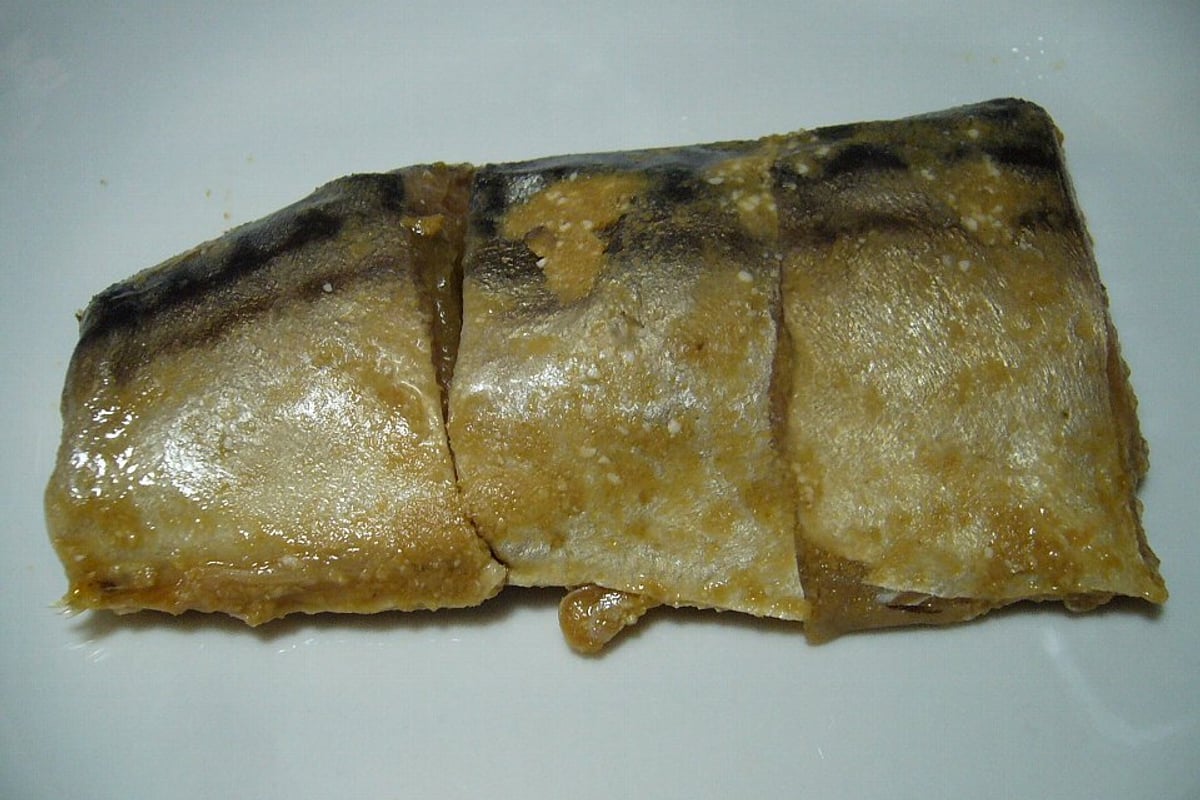
Heshiko (Rice-bran Fermented Mackerel)
Heshiko
Heshiko is a traditional preserved food of Fukui Prefecture, made by salting fish such as mackerel and then pickling it in rice bran to mature. It has long been made in the Wakasa region and along the Echizen Coast. Fish with the innards removed are salted for about a month, then packed in rice bran for more than half a year to ferment and mature. While it is salty, it is characterized by the concentrated umami and aroma of the fish. It is thought to have been made in Wakasa by the mid-Edo period, and it was a valuable source of protein for getting through harsh winters. The standard way to eat it is to remove the bran, grill it lightly, and serve it as a snack with sake or in ochazuke (rice with tea poured over it). In recent years, it has also come to be used like anchovies, in dishes such as pasta and pizza. In Obama City, 'Saba no Narezushi' (fermented mackerel sushi) is also made by desalting heshiko and pickling it again with rice koji and cooked rice.
Omizuke (Chopped Vegetable Pickle)
Omizuke
Omizuke is a pickle made mainly in Yonezawa City, Yamagata Prefecture. It is an everyday side dish made by finely chopping Yamagata seiritsu greens (Yamagata mustard greens) — the prefecture's signature leafy green — together with vegetables such as daikon radish and carrot, and salt-pickling them. Yamagata seiritsu greens are a variety brought from Chongqing, China in 1904; full-scale cultivation in Yamagata Prefecture began in 1908 and spread across the entire prefecture from the Taisho into the Showa era. Several theories exist about the origin of the name, but the most widely accepted one involves a merchant from Omi. While the thick stalks of pickled Yamagata greens were prized, the leaf tips tended to be left over, and this merchant is said to have chopped up the leftover tips to make a pickle called 'Omi-zuke,' which is said to have become 'Omizuke.' Another theory holds that the name comes from 'momi-zuke' (kneaded pickle), referring to the way the chopped vegetables are kneaded before pickling. Eaten even in the season before pickled greens come into store, Omizuke is a local flavor born from the wisdom of using up precious winter vegetables without waste, and it continues to be made in homes and pickle shops today.
Shottsuru Nabe
Shottsuru Nabe
Shottsuru Nabe is a hot pot dish from the coastal area of Akita Prefecture, centered on the Oga Peninsula, that uses shottsuru — a fish sauce made by fermenting fish such as hatahata (sailfin sandfish) with salt over a long period — as its broth. Shottsuru is counted as one of Japan's three great fish sauces, alongside Noto's ishiru and Kagawa's ikanago shoyu. Since around the early Edo period, fishing villages in Akita, including Oga, have passed down the technique of salting the large hatahata catches in barrels and slowly fermenting them into fish sauce. The hot pot, in which hatahata, tofu, napa cabbage, mushrooms, and other ingredients are simmered in a shottsuru-based broth in an earthenware pot, is prized for the rich umami and distinctive flavor unique to fish sauce, and it is cherished as a signature winter taste of Oga.
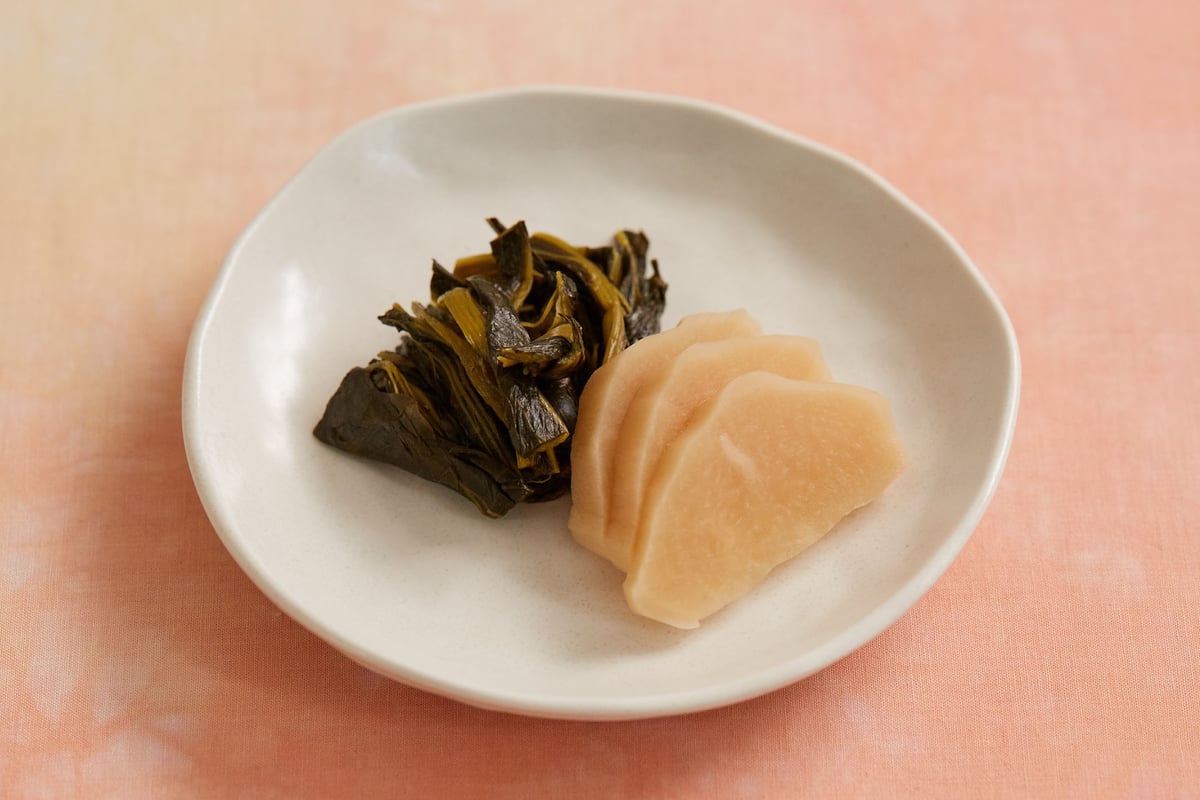
Sugukizuke (Fermented Suguki Pickles)
Sugukizuke
Sugukizuke is a pickle with a distinctive sourness, made by pickling "sugukina," a Kyoto vegetable specific to the Kamigamo area of Kyoto, using only salt and allowing it to lactic-ferment. Alongside senmaizuke and shibazuke, it is one of "Kyoto's three great pickles," and it is said that the shake (hereditary priestly families) of Kamigamo Shrine began making it in the early Edo period. It was once a valuable item whose method was passed down only among the shake families, and in the Edo period it was guarded so strictly that an official notice was issued declaring that "not a single suguki may be taken outside the village." Labor-intensive traditional methods are still carried on today, including a unique weighting method called "tenbin-zuke" and a process of placing it in a muro (heated chamber) to promote fermentation.
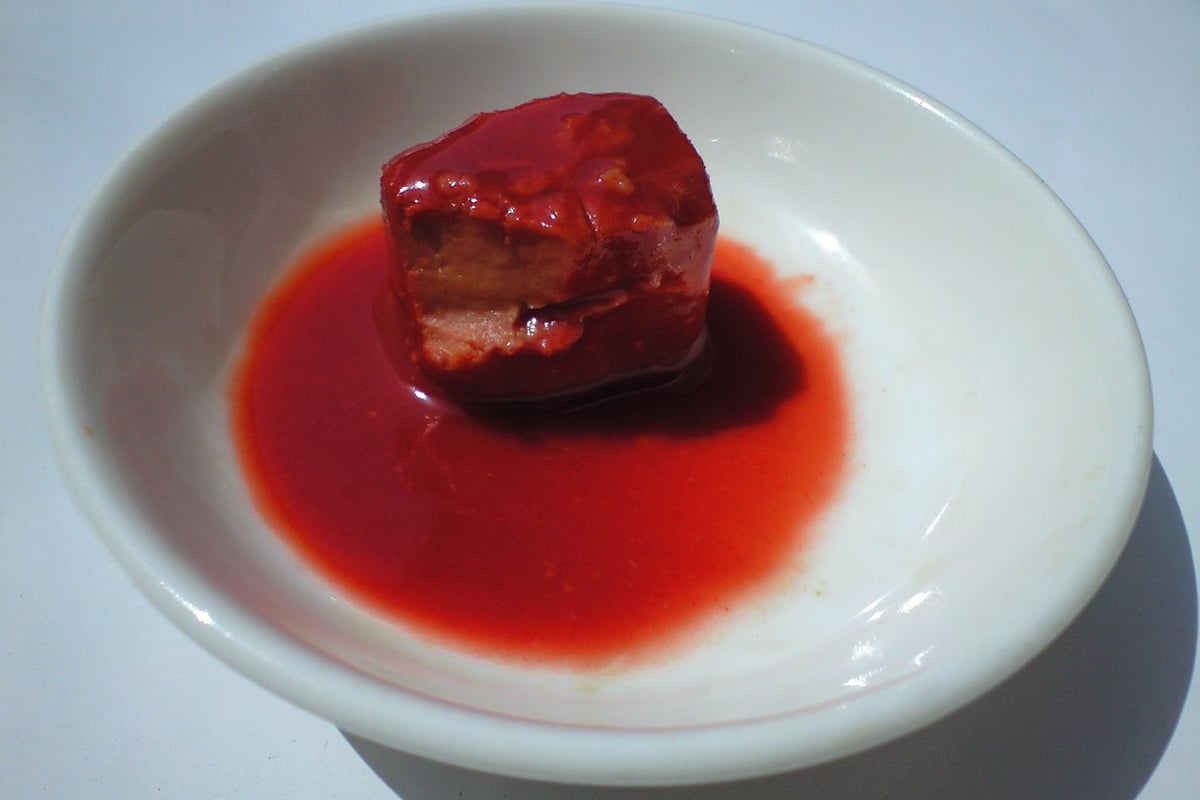
Tofuyo (Fermented Tofu)
Tofuyo
Tofuyo is a fermented food made by aging shima tofu (Okinawan firm tofu) for several months in red koji, rice koji, and awamori, producing a rich flavor and creamy texture sometimes likened to cheese — a delicacy handed down from the Ryukyu Kingdom. It is said to have been created around the 18th century, when the Ryukyu royal government's culinary bureau refined a method for fermented tofu ('furu,' known in China as fu-ru) introduced from China, and at the time it was treasured as a noble delicacy reserved for the upper classes. Unlike the salt-cured fu-ru of China and Taiwan, tofuyo differs significantly in that it is aged in awamori, a spirit familiar to Okinawa. Fermentation is believed to involve Monascus mold and koji fungi, giving the food its distinctive flavor. Today it is typically enjoyed in small amounts, taken with chopsticks as an accompaniment to awamori, and remains a popular Okinawan fermented food and souvenir item.
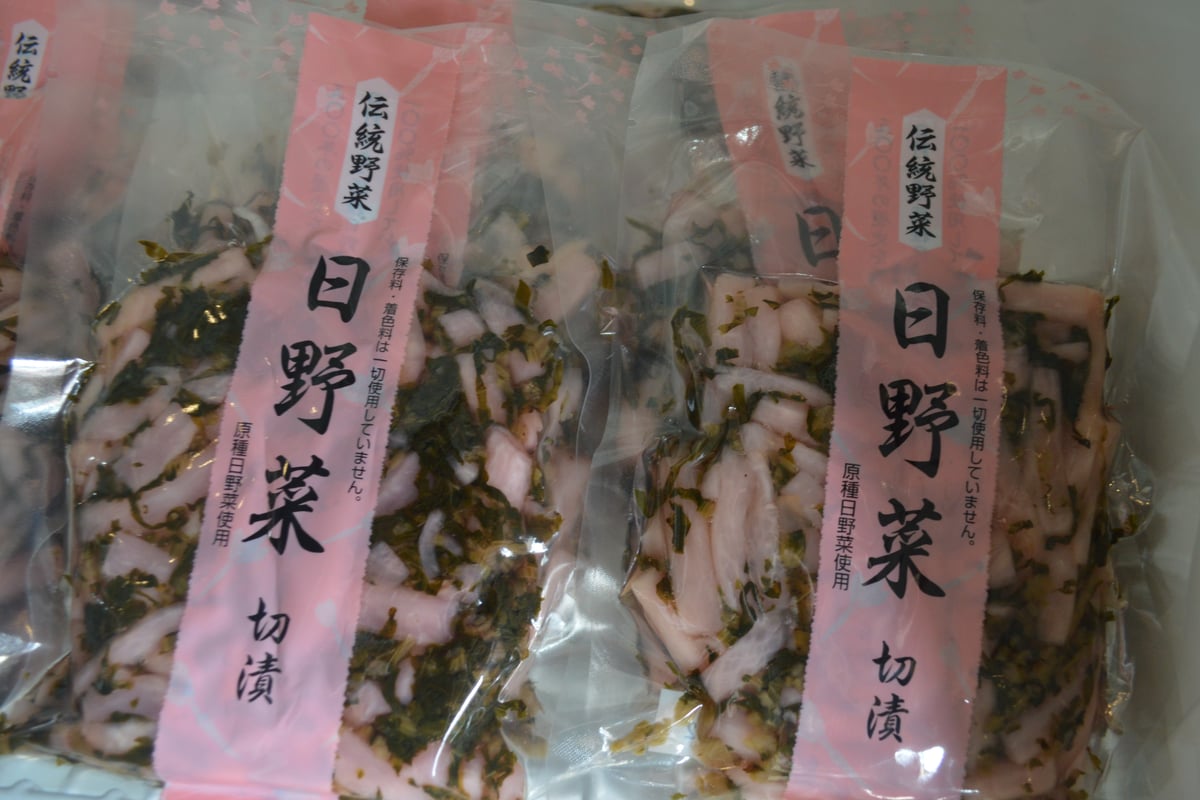
Hinona-zuke (Pickled Hino Turnip)
Hinona-zuke
Hinona-zuke is a pickle made from hinona, a traditional vegetable native to Hino, Gamo District, Shiga Prefecture — a slender turnip variety whose root gradates from white to purple. It is prized for its distinctive pungency and faint bitterness, and is prepared in several ways, including 'sakura-zuke,' in which chopped leaves and root are pickled together in vinegar; 'ebi-zuke,' finished with sweet vinegar; and 'hine-zuke,' a rice-bran pickle. According to tradition, it was discovered about 500 years ago by the Gamo clan, the lords of Hino, on a visit to a Kannon hall, and cultivation of hinona and its pickling traditions later spread to places such as Ise and Aizu, carried by the Gamo clan's later relocation and the nationwide trading networks of the Omi merchants. In 1998, it was designated one of Shiga Prefecture's Selected Intangible Folk Cultural Properties as part of 'Shiga's Food Culture Properties,' making it a representative pickle of the Lake Biwa region.
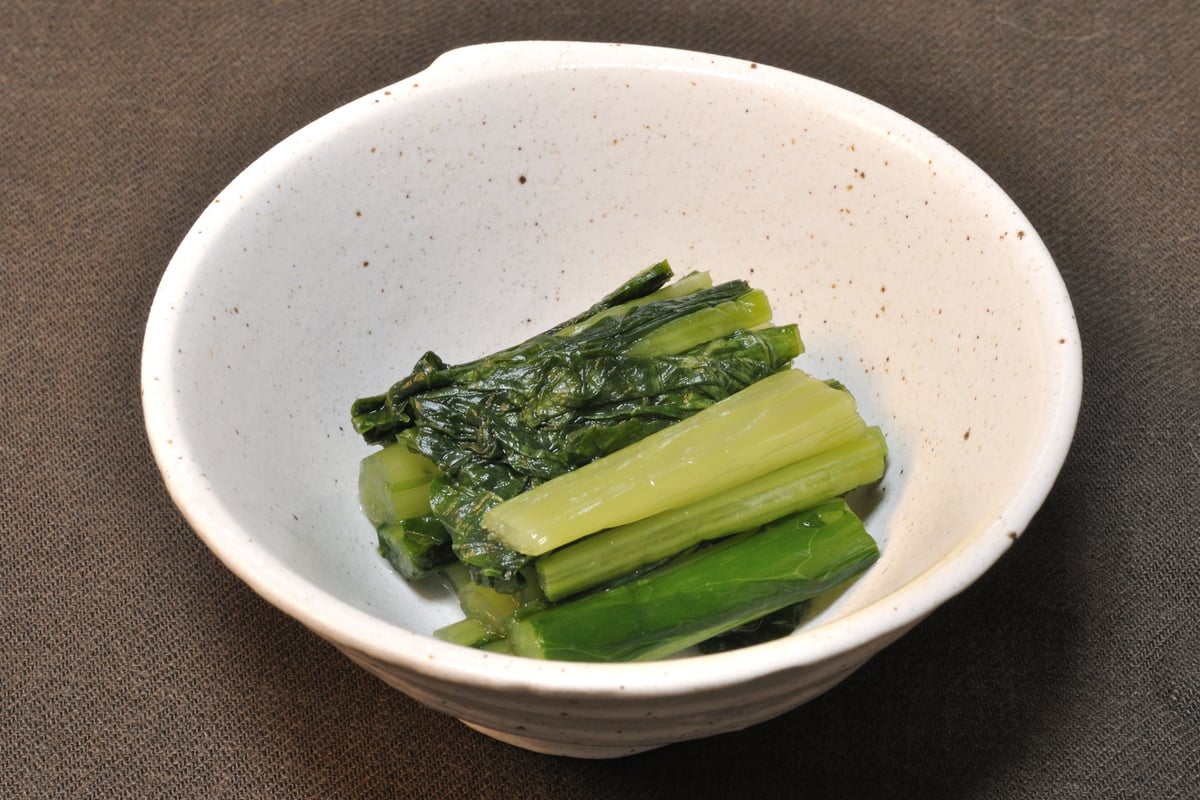
Nozawana-zuke (Pickled Nozawana Greens)
Nozawana-zuke (Pickled Nozawana Greens)
Nozawana-zuke is Nagano Prefecture's signature pickle, made by pickling 'nozawana,' a leafy vegetable of the Brassicaceae family, with salt and other ingredients. The name nozawana comes from the fact that it has been grown in Nozawa Onsen Village in the Hokushin region. It is said to have begun in 1756 (Horeki 6), when the head priest of Kenmeiji Temple in the village brought back seeds of Tennoji-kabu (Tennoji turnip) from Kyoto and sowed them. In the snowy, cold highland climate, the turnip roots did not develop, and it is said to have become a unique vegetable in which only the leaves and stems grow large. In Nagano Prefecture, pickled leafy greens are collectively called 'ohazuke,' and Nozawana-zuke is the representative example. It has been pickled in each household as a preserved food for the winter and enjoyed as an accompaniment to rice and as a snack with tea. Its appeal lies in its crisp texture and moderate saltiness.
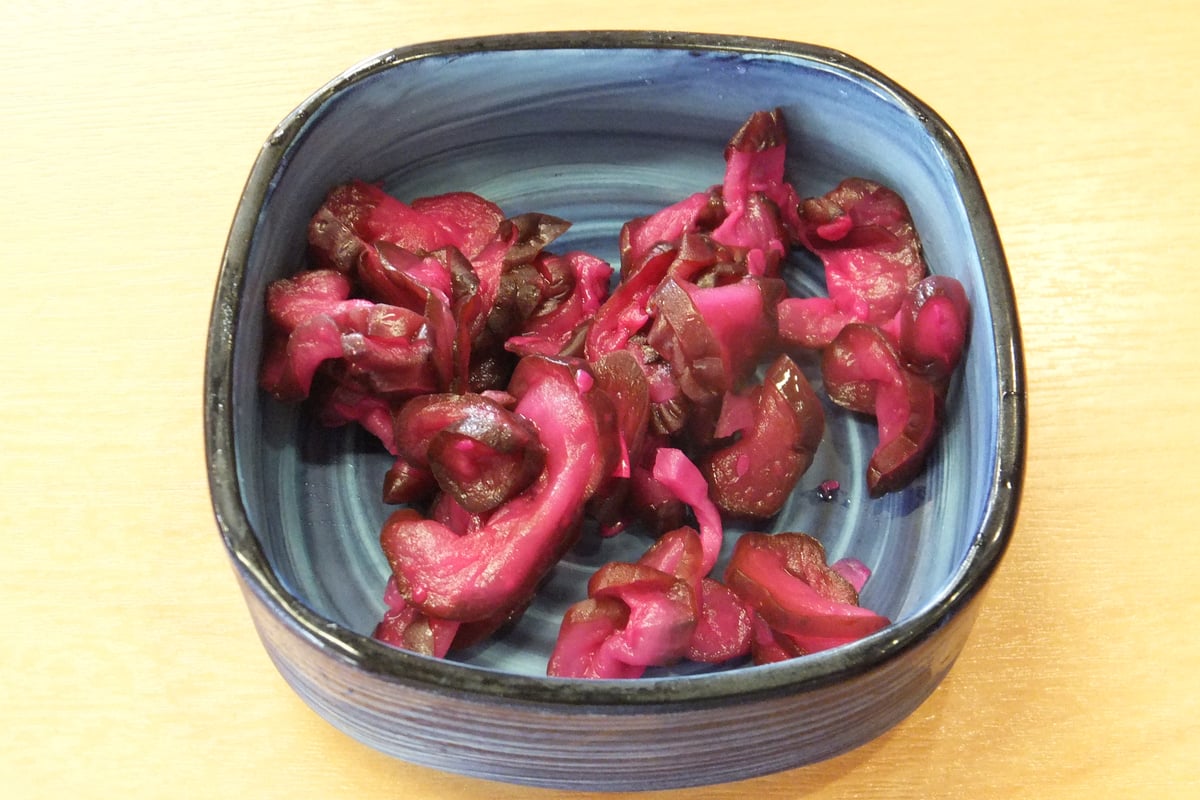
Shibazuke (Purple Shiso Pickles)
Shibazuke
Shibazuke is a vividly purple Kyoto pickle made by salting summer vegetables such as eggplant and cucumber together with red shiso leaves and allowing them to lactic-ferment. Alongside sugukizuke and senmaizuke, it is one of "Kyoto's three great pickles," and the high-quality red shiso grown in the Ohara district of Sakyo Ward, Kyoto City, is an indispensable ingredient. The name is said to originate from an anecdote in which Kenreimon-in Tokuko, the empress consort of Emperor Takakura, spent her remaining years at Jakko-in Temple in Ohara; delighted by the beautiful purple color of the shiso pickles presented to her by local villagers, she named it "murasaki-ha-zuke" ("purple leaf pickle"). While many commercial products are pickled with seasoned vinegar, Ohara still upholds the traditional method of "nama-shibazuke," fermented with only salt and red shiso.
Funankogui (Kelp-Wrapped Carp Stew)
Funankogui
Funankogui is a local dish from Kashima City, Saga Prefecture, in which live crucian carp (funa) are wrapped whole in kelp and simmered for a long time together with vegetables such as daikon radish and lotus root, in a broth of red miso and starch syrup (mizuame). The long simmering softens the fish all the way to the bones, so it can be eaten whole, and it has a distinctive flavor with none of the fishy smell one might expect. It is said to have originated because sea bream, traditionally served at celebratory occasions, was once rare and expensive along the Ariake Sea, so the readily available crucian carp was used in its place. In Kashima's Hamamachi district, a market called the 'Funa-ichi,' where the carp and vegetables used in the dish are sold, has been held every January 19th for more than 300 years, and the following day, January 20th — known as Hatsuka Shogatsu ('Twentieth-Day New Year') — people still carry on the custom of offering this dish to the god Ebisu to pray for a good catch, business prosperity, and safety at home.
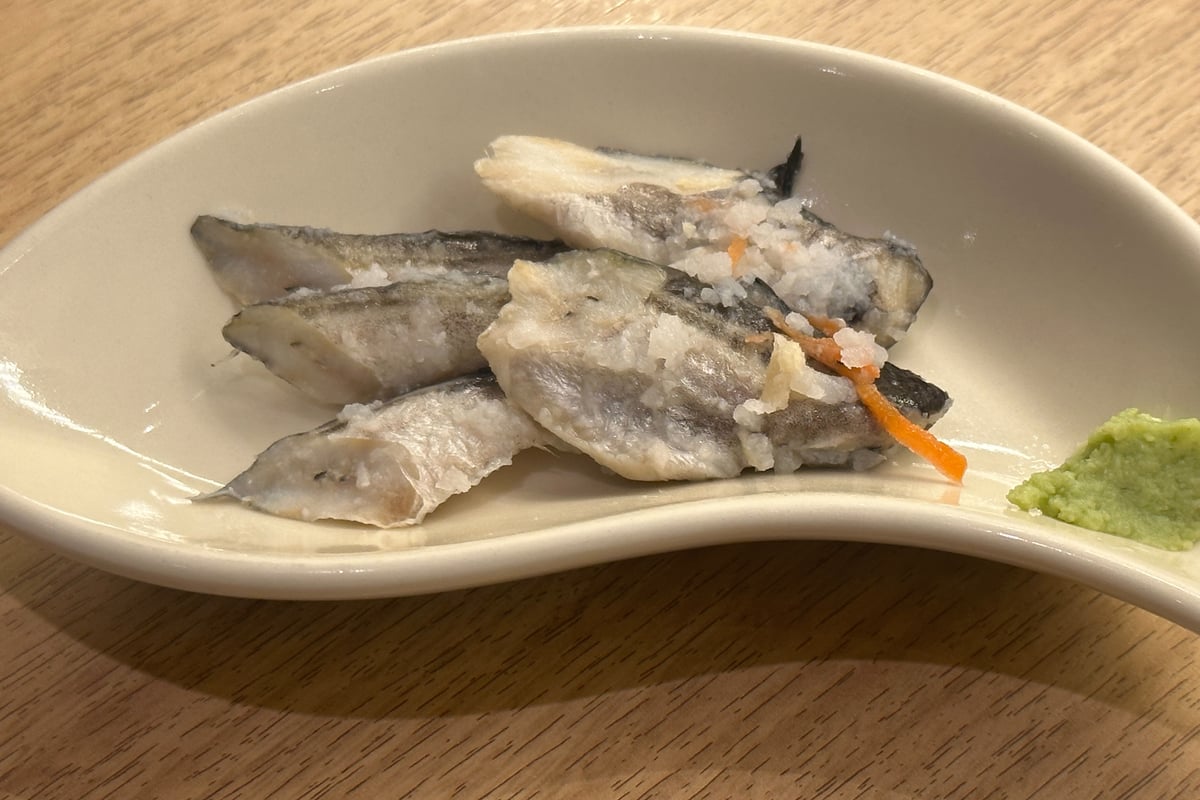
Hatahata-zushi
Hatahata-zushi
Hatahata-zushi is a signature narezushi (fermented sushi) of Akita Prefecture, made by layering hatahata (Japanese sandfish) — Akita's official prefectural fish — with rice, rice malt (koji), and vegetables in a wooden barrel and allowing the mixture to undergo lactic fermentation. Salted hatahata are desalted, then layered in a barrel in alternating layers with koji-mixed rice, vegetables such as carrot, and kelp, weighted down with a heavy stone, and left to ferment slowly for about three to four weeks. Hatahata is said to have earned the name 'hatahata-gami,' after an old word evoking thunder, because it appears in great schools along the coast during its spawning season, when thunder often rumbles over the sea. In Akita, the fish is so deeply woven into daily life that people traditionally say 'the New Year cannot be welcomed without hatahata.' The dish's flavor — the sweetness of koji blended with the tang of fermentation and the umami of the fish — remains an indispensable part of the New Year's Eve and New Year's holiday feast to this day.
Rakkasei Miso (Peanut Miso)
Rakkasei Miso
Rakkasei Miso (Peanut Miso) is a local specialty enjoyed around Yachimata City, Chiba Prefecture, Japan's leading producer of peanuts. Raw peanuts with their skins still on are slowly roasted over low heat, then kneaded together with miso, sugar, and sake to create a sweet-and-savory miso paste eaten daily as a side with rice, a tea snack, or an accompaniment to sake. Peanut cultivation began in Yachimata City in the Meiji era, and the area developed into a leading production center from the Taisho to Showa periods. Along the way, many peanuts that did not meet market standards went unsold. Rakkasei Miso is said to have been devised by local farmers as a way to make good use of these peanuts rather than let them go to waste. Today it is made not only at home but also served in school lunches and sold as a packaged product at local peanut specialty shops and roadside stations, firmly established as one of Chiba's representative preserved foods and local specialties.
Sunki-zuke (Salt-Free Fermented Turnip Greens)
Sunki-zuke (Salt-Free Fermented Turnip Greens)
Sunki-zuke is a pickle handed down in the Kiso area of Nagano Prefecture, made by lactic-acid fermenting the stems and leaves of red turnips without using any salt at all. Locally it is also simply called 'sunki.' It is said to have originated in Otaki Village and the Kaida Kogen highlands of Kiso Town at the foot of Mt. Ontake, and it has been made for at least 300 years. Because salt was precious in these mountain valleys far from the sea, it is thought to have developed as a way of preserving winter vegetables with the power of the acid produced by fermentation. A distinctive feature is that the previous year's sunki is used as a 'starter' (tane) for pickling, and several kinds of plant-derived lactic acid bacteria are at work. The finished pickle is amber in color and has a refreshing sourness. Salt-free lactic-acid fermented foods are rare both in Japan and abroad, and in 2017 (Heisei 29) it was registered under the national Geographical Indication (GI) protection system. 'Sunki soba,' in which sunki is placed on hot soba, is loved as a taste of winter in Kiso.
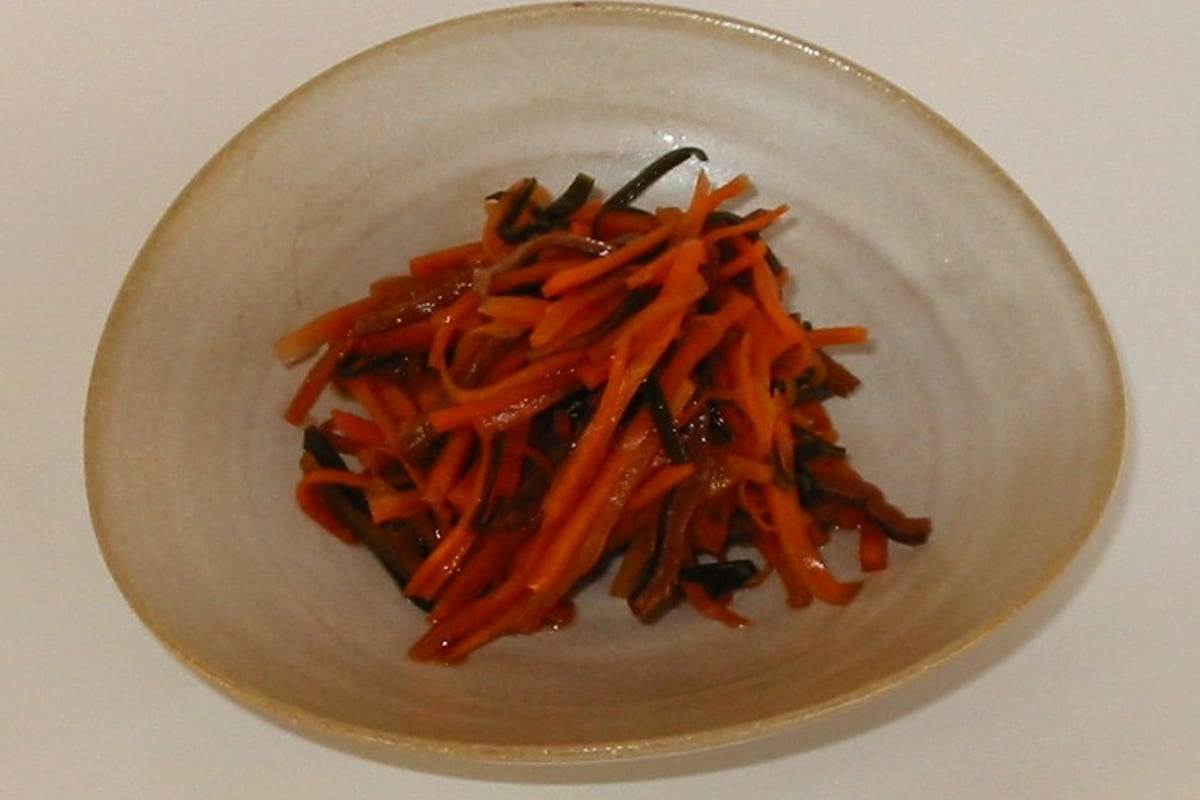
Ika Ninjin (Squid and Carrot Pickle)
Ika Ninjin
Ika Ninjin is a local dish from Fukushima Prefecture made by marinating thin strips of dried squid (surume-ika) and carrot in a sweet-savory sauce of soy sauce, sake, and mirin (or coarse sugar). In Fukushima, where heavy snow makes it hard to harvest vegetables in winter, this long-keeping preserved food has been made since long ago. Because surume can be written with characters meaning 'a long-lived woman,' making it an auspicious food, it has also become an essential New Year's dish, and households throughout the prefecture — not only in the Fukushima City area of the Kenpoku region but also in Aizu — still keep the custom of preparing a large batch at year's end to serve at the New Year's table. It is also being reappraised as a low-carbohydrate, low-fat preserved food, and today it is enjoyed year-round as a side dish and an accompaniment to sake, as well as being a popular souvenir. It is often compared to Hokkaido's matsumae-zuke, but its Fukushima character is said to lie in its simplicity — made with just squid and carrot, without kombu kelp.
Seguro Iwashi no Gomazuke
Seguro Iwashi no Gomazuke
Seguro Iwashi no Gomazuke is a preserved food made from anchovies (called 'seguro' locally) caught along Chiba Prefecture's Pacific coast, including Kujukuri Beach. The anchovies are cleaned of their heads and innards, salted, and then pickled for two to three days with vinegar, sesame seeds, ginger, yuzu, and red chili pepper. Kujukuri Beach, which boasts one of Japan's largest catches, has a long tradition of beach seine fishing for anchovies dating back to the Edo period. While anchovies were caught in huge quantities, they also spoiled easily, so the technique of pickling them in vinegar and sesame to extend their shelf life was passed down as a piece of local wisdom. Because the pickling process softens even the bones, the fish can be eaten whole, and the dish is enjoyed as an everyday side or an accompaniment to sake, especially in winter. It was selected as one of the '100 Local Dishes of Japan's Farming, Mountain, and Fishing Villages' by the Ministry of Agriculture, Forestry and Fisheries, and stands as a symbol of Chiba's fishing culture.
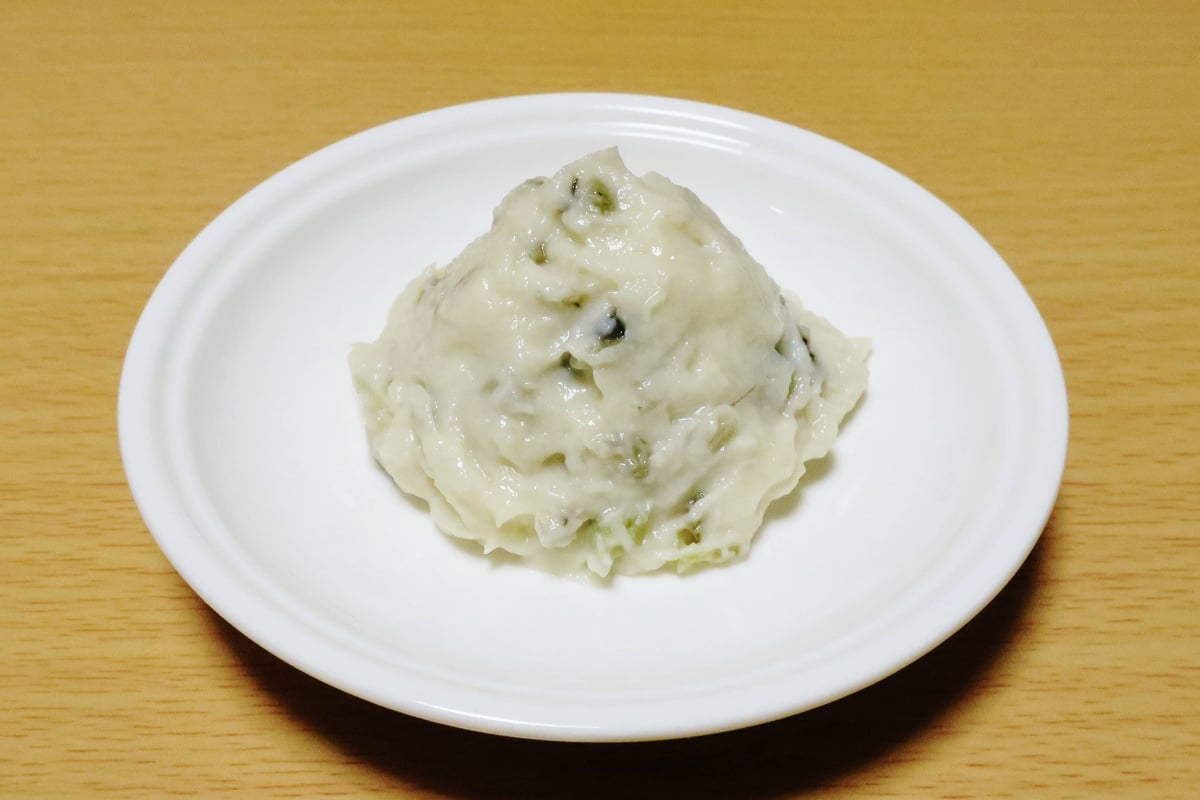
Wasabi-zuke (Wasabi Pickled in Sake Lees)
Wasabi-zuke (Wasabi Pickled in Sake Lees)
Wasabi-zuke is a famous product of Shizuoka Prefecture made by salting finely chopped wasabi rhizomes, stems, and leaves and then pickling them together with sake lees. Within the mellow flavor of the sake lees, you can taste the sharp, nose-tingling heat and aroma of wasabi. It is said to have been devised in the mid-Edo period by 田尻屋利助, a wasabi merchant of Sunpu (present-day Shizuoka City). 田尻屋利助 improved on something that had been made in Utogi Village and pickled it in sake lees, and it gained a reputation and became a specialty of Sunpu. Wasabi cultivation is said to have originated in Utogi, in the mountains of Aoi Ward, Shizuoka City. Shizuoka Prefecture is still the nation's top producer of wasabi in both output value and cultivated area. When Shizuoka Station on the Tokaido Line opened in 1889 (Meiji 22), wasabi-zuke became known throughout the country as a station souvenir. It is eaten every day, all year round, for example on top of warm rice or as a snack with sake. It is still one of the souvenirs that represent Shizuoka.
Hama Natto (Fermented Salted Soybeans)
Hama Natto (Fermented Salted Soybeans)
Hama Natto is a traditional fermented food of Hamamatsu City, Shizuoka Prefecture, made by fermenting soybeans with koji mold, aging them in salt water, and then drying them. The blackish-brown beans are not stringy and have a saltiness and umami resembling rich miso. This type of natto is called salted fermented soybeans (shiokara natto) or temple natto (tera-natto); it was introduced from China long ago and has been made at temples. The production method is said to have been transmitted during the Muromachi period to Daifukuji Temple in Mikkabi-cho, Hamana Ward, Hamamatsu City, where it is still handmade at the temple today as 'Daifukuji Natto.' It is said to have been a favorite of Tokugawa Ieyasu, and the name is said to come from the words Ieyasu spoke while eagerly awaiting an offering of it: 'Has the Hamana natto not come yet?' In the Edo period it also became an offering to successive shoguns. Today it is also produced by breweries in the city, among others. Besides being eaten as is as a snack with drinks, it is used as a seasoning and as a secret ingredient in curry and mapo tofu. In elementary and junior high school lunches in Hamamatsu, curry with Hama Natto as a secret ingredient is also served.
Nishin no Sansho-zuke (Herring Pickled with Sansho Leaves)
Nishin no Sansho-zuke (Herring pickled with sansho leaves)
Nishin no Sansho-zuke is a preserved food handed down in the Aizu region, made by pickling dried, filleted herring (mikaki-nishin) together with sansho leaves in a marinade of soy sauce, vinegar, and sake. In landlocked Aizu, where fresh fish was hard to come by, dried mikaki-nishin brought from Hokkaido by ships such as the kitamae-bune became a valued source of protein. The dish reflects the wisdom of using the fragrance of sansho to soften herring's distinctive odor, and it is also a seasonal fixture of Aizu, made in households when the young sansho leaves bud from spring into early summer. The custom of pickling it in a dedicated 'nishin-bachi' bowl made of Aizu-Hongo ware also survives today, carrying on a local food culture in which the vessel and the dish are inseparable. Herring pickled for anywhere from a few days to a few weeks is eaten on its own as an accompaniment to sake, or served over hot soba noodles — a taste passed down across generations in Aizu households and traditional restaurants alike.
Nukadaki
Nukadaki
Nukadaki is a local dish from the Kokura area of Kitakyushu City in which oily fish such as sardines or mackerel are simmered for a long time together with a fermented rice-bran bed seasoned with chili pepper and sansho pepper. It is also known as 'nukamiso-daki' or 'jinda-ni.' It is said to have originated roughly 400 years ago when Ogasawara Tadazane, the first lord of Kokura Domain, brought rice-bran miso with him when he was transferred to Kokura from Shinshu, where it met the abundant oily fish caught in the Genkai Sea and Suo Sea. The fish is simmered until even the bones become tender, and the savory aroma of the rice-bran bed together with a sweet-and-salty broth mellows the distinctive smell of the oily fish, resulting in a rich flavor that pairs well with rice or sake. The rice-bran bed, continually replenished at each household or shop, has been the key to its flavor and passed down through generations.
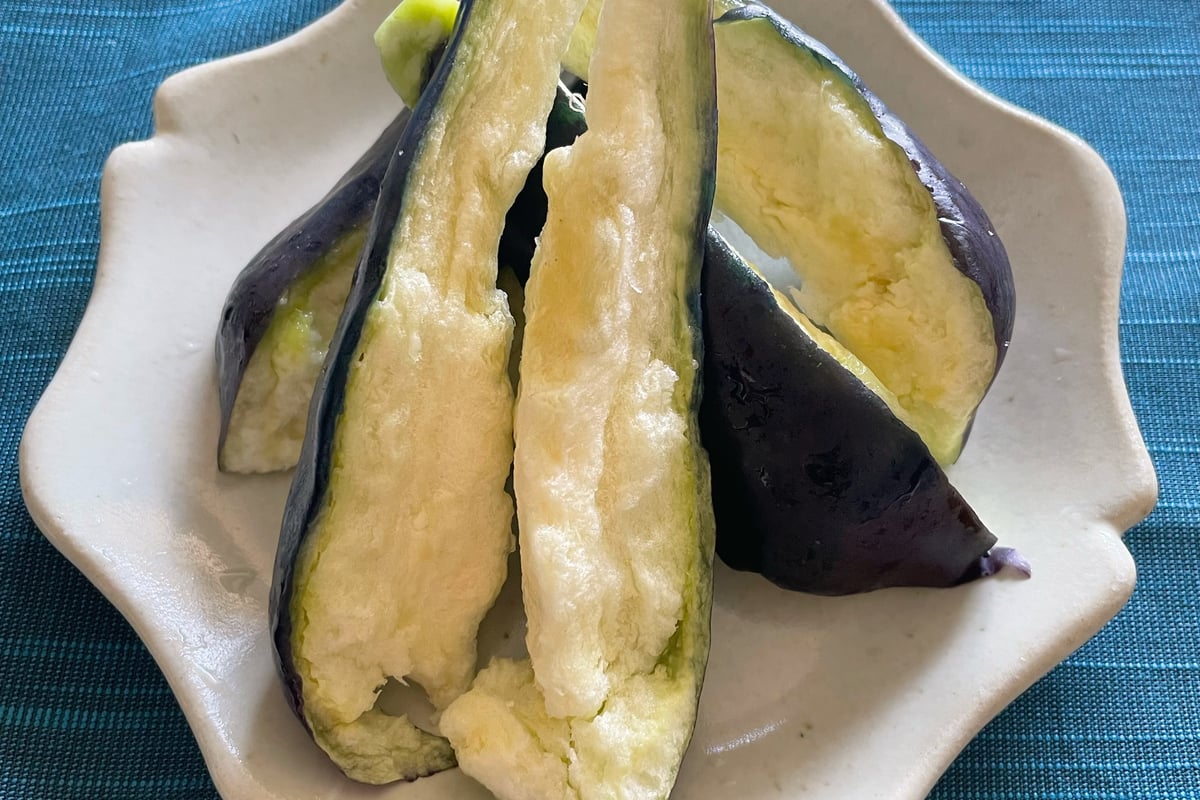
Senshu Mizunasu-zuke (Pickled Water Eggplant)
Senshu Mizunasu-zuke (Pickled Water Eggplant)
Senshu mizunasu-zuke are pickles made by steeping mizunasu (water eggplant), grown in the Senshu area of southern Osaka Prefecture, in a rice-bran bed or a seasoning liquid. Mizunasu is so juicy that water drips from it when squeezed tightly, and its skin and flesh are soft with a subtle sweetness. Because its skin is thin and it has little bitterness (aku), it can even be eaten raw, and asazuke (lightly pickled) that brings out these qualities has taken root as part of the local food culture. Cultivation is said to have continued since the early Edo period, and the area around 澤 in Kaizuka City and 上之郷 in Izumisano City is said to be its birthplace. In 2007, the local JA (agricultural cooperative) registered 'Senshu Mizunasu' as a regional collective trademark. In January 2025 (Reiwa 7), it was also registered as a national Geographical Indication (GI). 'Senshu mizunasu no asazuke' is listed in the Ministry of Agriculture, Forestry and Fisheries' 'Our Regional Cuisines' (Uchi no Kyodo Ryori). Besides being eaten daily at home, it is also popular as a souvenir and gift representing Osaka.
Shakushina-zuke
Shakushina-zuke
Shakushina-zuke is a preserved dish representing winter in the Chichibu region, made by pickling 'shakushina' (a leafy Brassica vegetable also known as yukishiro taina) long cultivated there. Its name is said to come from the resemblance of its leaf shape to a rice-serving ladle ('shakushi'), and because Chichibu, surrounded by mountains with little flat farmland, could not rely on rice farming, a pickling culture using field-grown vegetables developed there instead. It is pickled not only with salt but also through lactic acid fermentation, giving it a crisp texture and a pleasant sourness without the heaviness sometimes found in napa cabbage. Households once had their own distinct methods and flavors, and the sight of entire families pickling shakushina together before the onset of winter was once a familiar seasonal scene in Chichibu. Today it can be bought year-round at farm-product direct-sales shops and specialty pickle stores, and is enjoyed not only on its own but also stir-fried in oil or used as a filling for steamed buns.
Yokanzuke (Stuffed Pickled Melon)
Yokanzuke (Iga Stuffed White Melon Pickles)
Yokanzuke is a pickle of shirouri (Oriental pickling melon) handed down in the Iga region of Mie Prefecture. Shirouri is a type of melon and a summer specialty of the Iga Basin. The core of the shirouri is hollowed out and stuffed with finely chopped shiso, ginger, daikon radish, and other ingredients, and the melon is then pickled and matured in tamari soy sauce. Tamari soy sauce is a dark, thick soy sauce made mainly from soybeans. The name means 'to nourish the kimo' (the liver; figuratively, courage). According to tradition, it comes from the story that Todo Takatora, who governed Iga Ueno Castle, kept these pickles on hand as field rations for soldiers to nourish the warriors' morale (kimottama, or 'guts'). There is also a legend that Iga ninja carried them as portable food. In the Iga region, shirouri harvested in summer were originally preserved in homemade miso and were also served to entertain guests. Today, a long-established pickle shop in Ueno, Iga City, carries on the traditional method.
Echizen Uni (Salted Sea Urchin)
Echizen Uni (Salted Sea Urchin)
Echizen Uni is 'shio-uni' (salted sea urchin), made by salting and maturing the gonads of bafun sea urchins caught along the Echizen Coast of Fukui Prefecture. It is also written as 汐うに or 塩雲丹. In the Edo-period book Nihon Sankai Meisan Zue (Illustrated Famous Products of Japan's Mountains and Seas), it was praised as 'the finest of all shiokara (salted delicacies)'. Together with Mikawa's konowata and Hizen's karasumi, it is counted among Japan's three great delicacies (chinmi). The bafun sea urchin used as the raw material is a small urchin with a shell only a few centimeters across, and around 100 urchins are said to be needed to make 100 g of the product. The roe is firmed with salt to draw out moisture, kneaded into a paste, and then matured. Its hallmarks are rich umami, the aroma of the sea, and a smooth texture, and even a tiny amount delivers deep flavor. The current method is said to have been devised in the late Edo period by Tennoya (now Tentatsu), an official purveyor to the Fukui Domain. The catch of bafun sea urchins in the prefecture is very small, and it remains a precious delicacy that still relies on handwork.
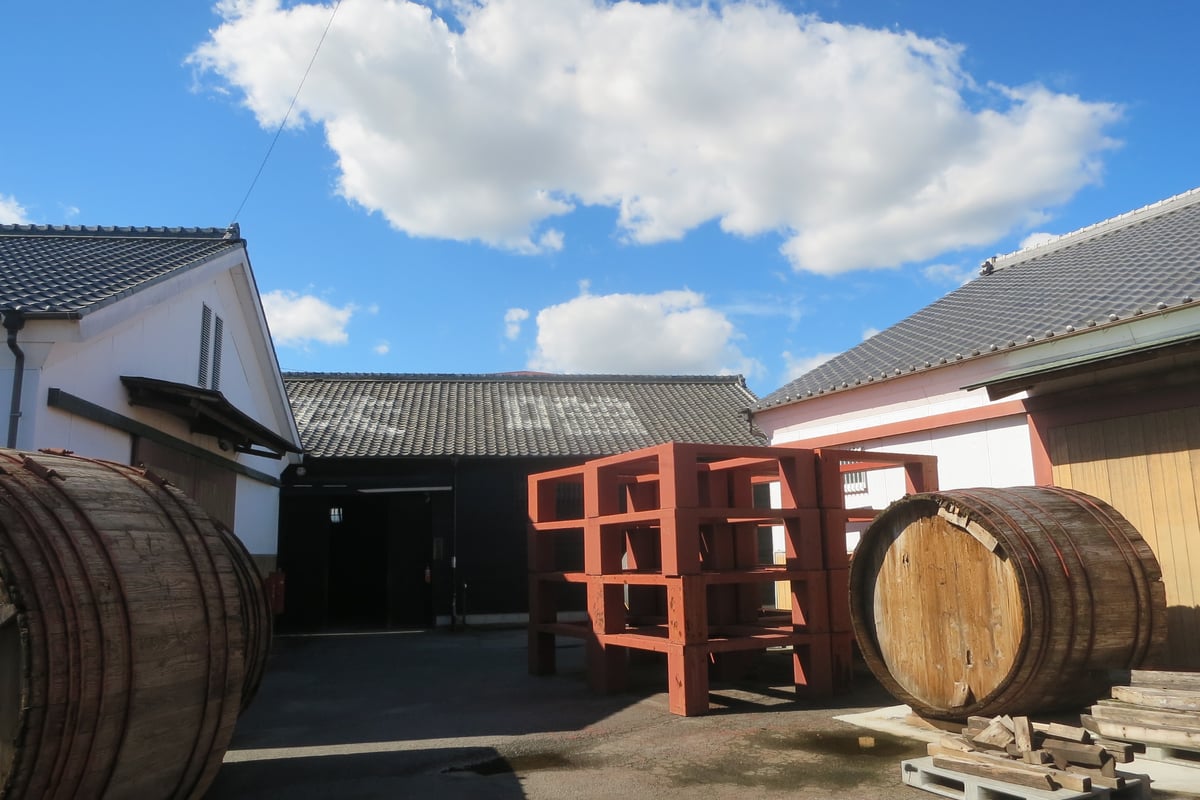
Hatcho Miso
Hatcho Miso
Hatcho miso is a soybean miso from Okazaki City, Aichi Prefecture, made from only soybeans and salt, packed into wooden barrels, weighted with a conical pile of heavy stones, and aged for two years or more. The name comes from Hatcho village (present-day Hatchodori, Okazaki City), located hatcho — about 870 meters — west of Okazaki Castle. Blessed with groundwater from the Yahagi River and situated at a key point on the Tokaido road and waterway network, Hatcho village has been home to two miso breweries, Kakukyu and Maruya Hatcho Miso, which have brewed miso facing each other since the early Edo period; the miso's long shelf life is also said to have made it valuable as military provisions. It is defined by a distinctive flavor combining rich umami with a characteristic astringency and bitterness, and it forms the flavor foundation of Aichi's signature local dishes such as miso nikomi udon and Misokatsu.
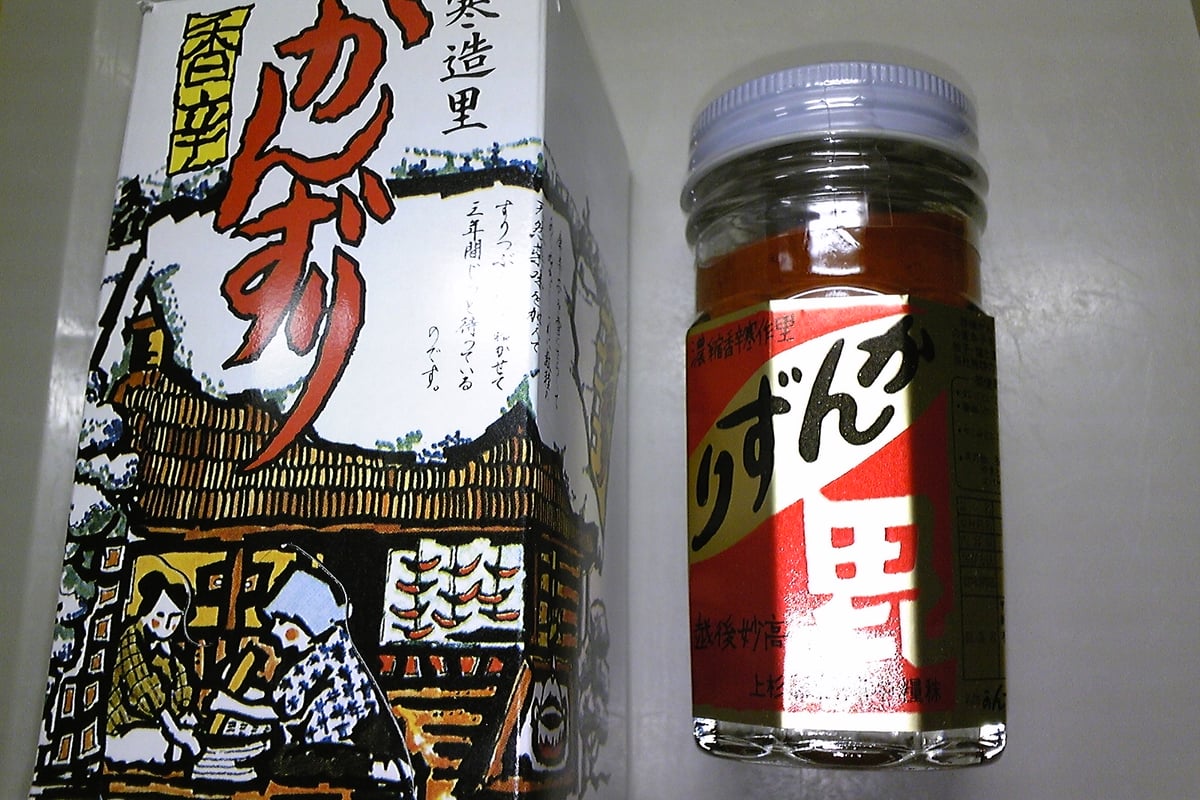
Kanzuri (Fermented Chili Paste)
Kanzuri
Kanzuri is a fermented spicy seasoning handed down in Myoko City (formerly Arai City), Niigata Prefecture. Salt-pickled chili peppers are laid out on the snow around Daikan (around January 20, the coldest time of year), then combined with rice koji, yuzu, and salt and aged and fermented for about three years. Exposing the chilies to the snow is said to draw out their strong harshness, giving a mellower heat, and it is characterized by a deep flavor in which the aroma of yuzu overlaps with the umami of koji. It is a local flavor that has long been eaten to warm chilled bodies in Myoko, so snowy that it is designated a Special Heavy Snowfall Area, and it is also written with the characters '寒造里.' This regional traditional food was commercialized in 1966 (Showa 41) by Kanzuri Co., Ltd., and the name 'Kanzuri' is the company's registered trademark. 'Snow bleaching' (yuki-zarashi), in which bright red chilies are scattered over white snowfields at Daikan, is known as a signature winter scene of Myoko. Its uses are wide-ranging, from a condiment for hot pots and ramen to an accompaniment for sashimi, and it has become established as a Niigata souvenir.
Minobu Yuba (Tofu Skin)
Minobu Yuba
Minobu Yuba is yuba (tofu skin) handed down in Minobu Town, Yamanashi Prefecture, which flourished as the temple town of Minobusan Kuonji Temple, the head temple of the Nichiren sect. It is the thin film that forms on the surface of heated soy milk, lifted off; there is nama yuba (fresh yuba), eaten just as it is lifted, and kanso yuba (dried yuba). Minobu Town is known as a yuba-producing area alongside Kyoto and Nikko. It is said to have begun in the Kamakura period, around the time the priest Nichiren entered Mt. Minobu, and according to tradition, his disciples made it as a source of nourishment out of concern for their master's health. Yuba, which contains high-quality plant protein and fat, has been handed down together with Kuonji Temple as an important ingredient of shojin ryori (Buddhist vegetarian cuisine), which uses no meat or fish. A popular dish is yuba sashimi, in which nama yuba is cut into bite-sized pieces and eaten with wasabi and soy sauce. Restaurants serving yuba dishes, shukubo (temple lodging), and yuba makers with direct sales shops are scattered around the town.
Nata-zuke
Nata-zuke
Nata-zuke is a quick Akita pickle made by roughly chopping raw daikon radish with a thick-bladed hatchet (nata) and pickling it for a short time in rice malt (koji), amazake, sugar, and other seasonings. Deliberately splitting the daikon so the cut surfaces turn rough and jagged lets the koji flavor soak in all the way through, producing a light pickle known for its crisp texture and natural sweetness. Akita Prefecture is rich in forest resources, including high-quality Akita cedar, and its long tradition of forestry meant that most households kept a hatchet on hand — using it to cut the daikon is said to be the origin of the dish's name. Unlike Iburigakko, which is made by smoking and drying the daikon before pickling, Nata-zuke uses raw daikon and is ready in just a few days, making it one of the winter 'gakko' (pickles) essential to the Akita table.
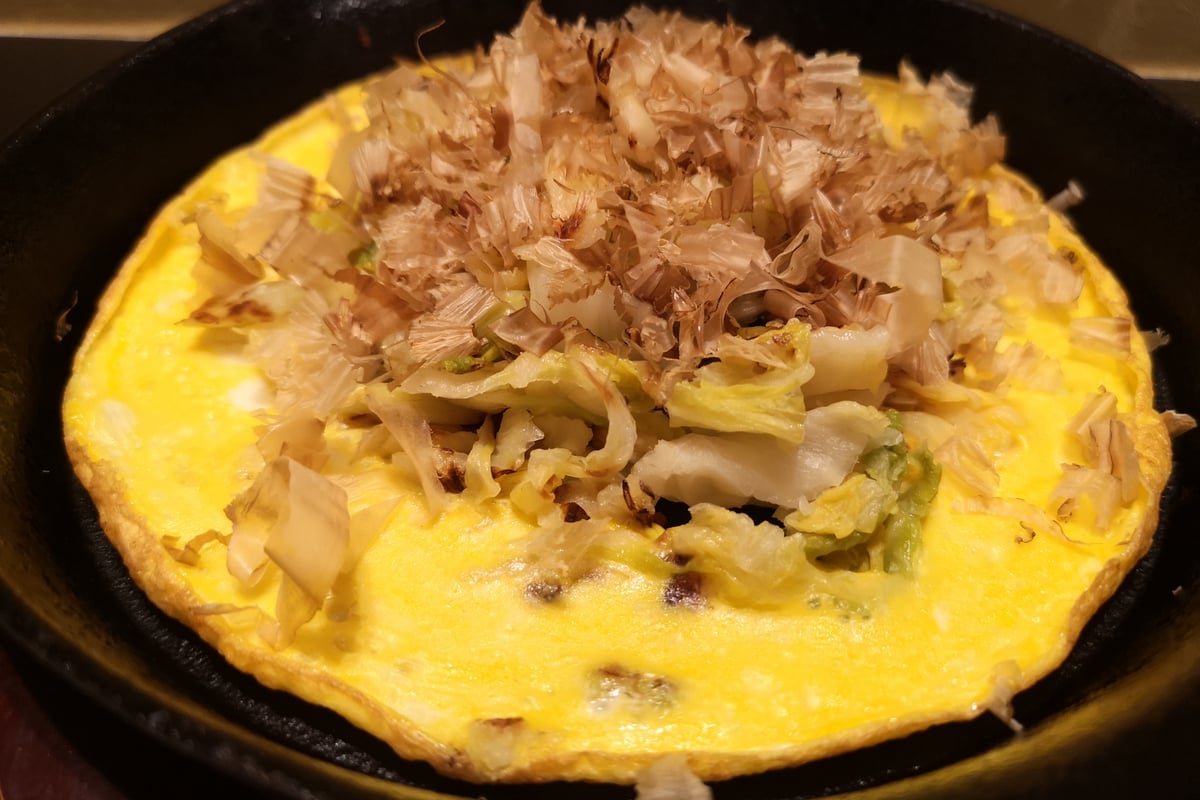
Tsukemono Steak
Tsukemono Steak
Tsukemono Steak is a local dish from the Hida region of Gifu Prefecture in which napa cabbage pickles are bound with egg and cooked on a griddle or in a pan; locals also call it tsuke-sute. In the depths of winter in Hida, pickles — once a vital source of vegetables — would freeze solid, so people are said to have started placing them on hoba leaves and warming them over the irori hearth to thaw before eating, which is considered the dish's origin. It also served as a resourceful way to make good use of pickles that had turned overly sour from fermenting too long. Despite its name, the dish contains no meat whatsoever, but it is thought to be called a steak because the sizzling sound as it cooks on a griddle, along with its appearance and the way it's eaten, evokes an actual steak. Today it is a standard menu item at nearly every izakaya in Hida-Takayama, enjoyed by tourists both as a side dish with drinks and as an accompaniment to rice.
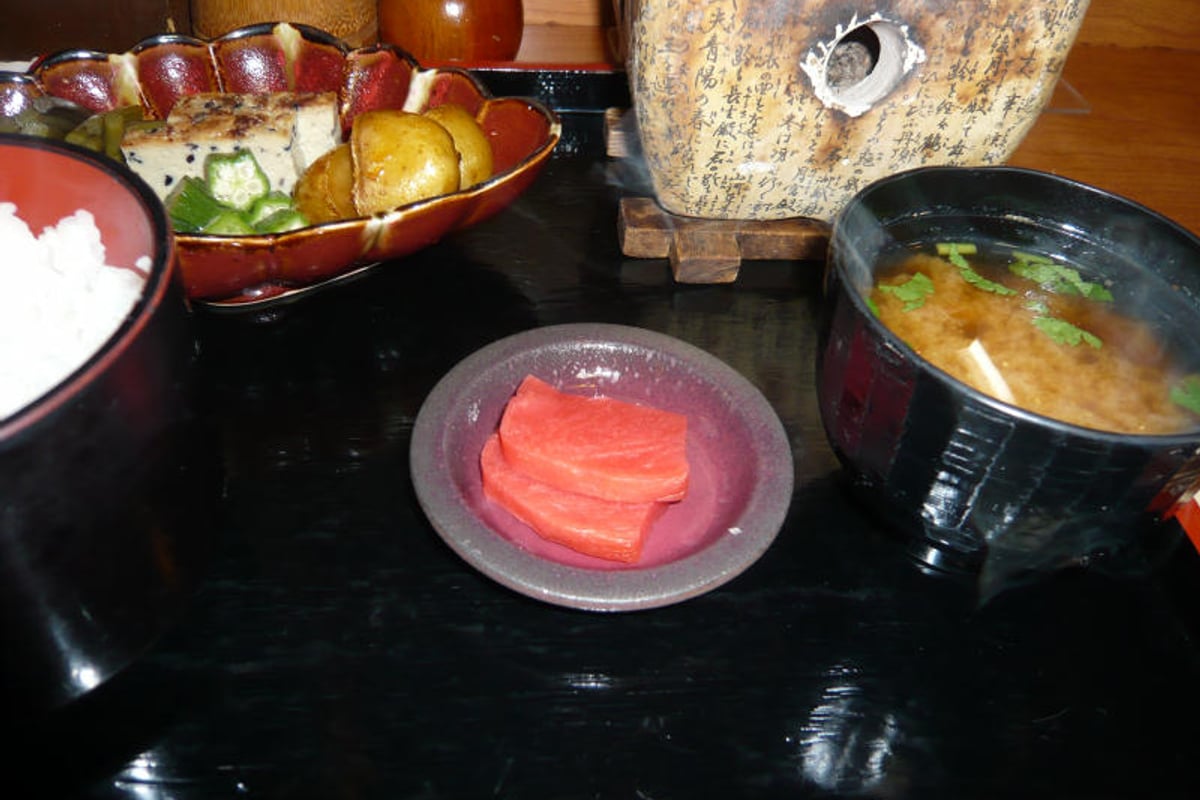
Aka Kabu Zuke
Aka Kabu Zuke
Aka Kabu Zuke is a local dish of the Hida region of Gifu Prefecture made by salting the region's specialty red turnips and allowing them to undergo lactic fermentation. In the Hida region, which sits at high elevation and is blanketed in snow through the winter, pickling has been practiced in individual households since the Edo period as a vital way to preserve food for the season when vegetables cannot be harvested. It is also said to have developed as a way to boost preservability using only a small amount of salt, since salt was once precious in this mountainous area. The Hida beni-kabu red turnip used in today's Aka Kabu Zuke originated from a naturally occurring red-colored mutant discovered in 1918 (Taisho 7) among the traditional Yoshika turnip variety. Natural pigments in the turnip's skin combine with lactic fermentation to produce its vivid red color along with a subtle tartness and sweetness, and it is also popular as a signature souvenir of Hida-Takayama.
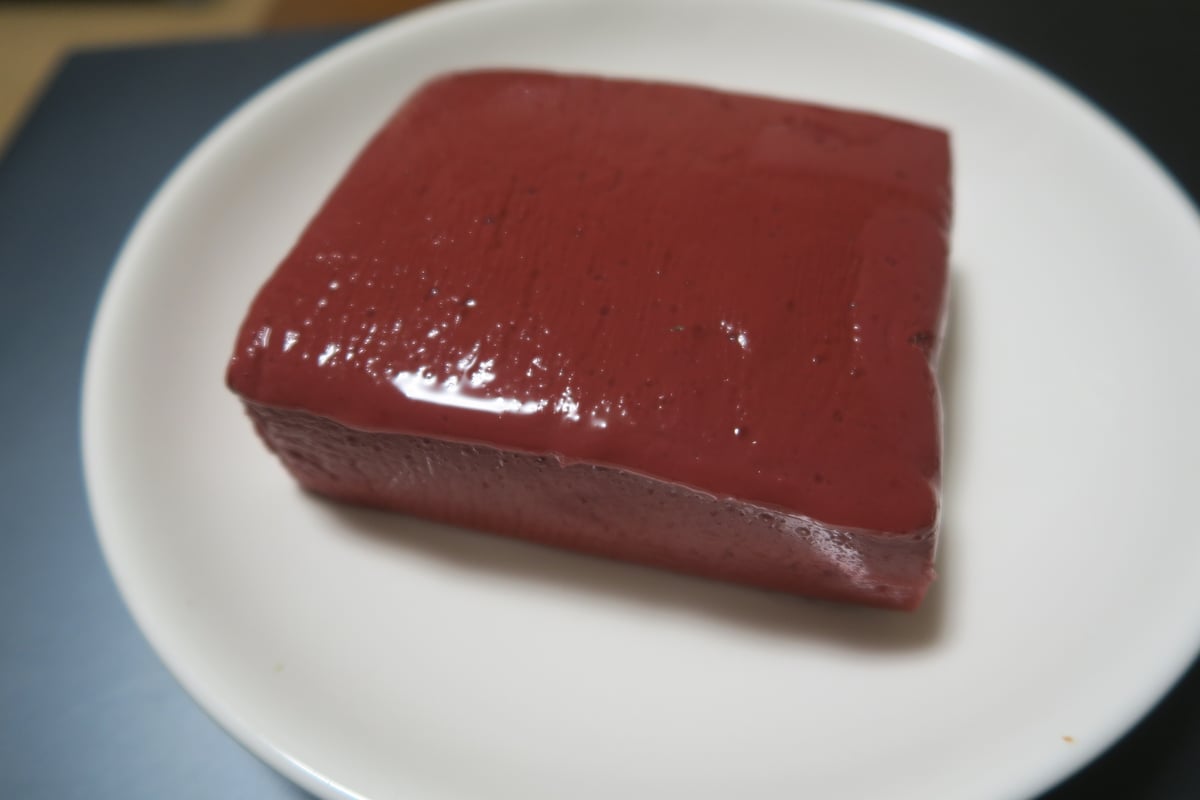
Aka-konnyaku (Red Konjac)
Aka-konnyaku
Aka-konnyaku is a vividly red-colored konjac known as a specialty of Omihachiman City in Shiga Prefecture. It is colored with iron sesquioxide, a food additive that resists fading even when cooked, and it has a distinctively firm, chewy texture. Several stories are told about its origin, including that Oda Nobunaga, said to have loved flamboyant things, had even the konjac dyed red, or that the color was inspired by Nobunaga's red battle surcoat, but no story has been reliably confirmed. The 1940 'History of Hachiman Town, Shiga Prefecture' includes an account from an elderly resident that the color was once produced by boiling down corn husks; from the Meiji era onward, food dye was used, and once the use of iron sesquioxide was approved in 1971, the production method used today became established. It is used in a wide range of dishes, from simmered dishes and dengaku (skewered and grilled with miso) to sashimi-style preparations, and it remains a classic souvenir for visitors to Omihachiman.
Ganzuke (Fermented Crab Paste)
Ganzuke
Ganzuke is a Saga Prefecture specialty made by grinding whole small crabs, such as fiddler crabs found on the tidal flats of the Ariake Sea, shell and all, then mixing them with salt, soy sauce, and chili pepper and letting them ferment and mature. Depending on the area it is also called 'ganizuke' or 'ganezuke.' It is said to be a preserved food with a long history, made along the Ariake Sea coast since the Edo period, born from the wisdom of using the tidal flats' wide difference between high and low tide to make full use of the small crabs found there in abundance. It is characterized by its rich salty flavor, strong crab taste, and the gritty texture of the crushed shells, and in Saga it is more commonly eaten spooned over hot rice than as a snack with alcohol. It is also sometimes used as a seasoning in fried rice, miso soup, or pasta.
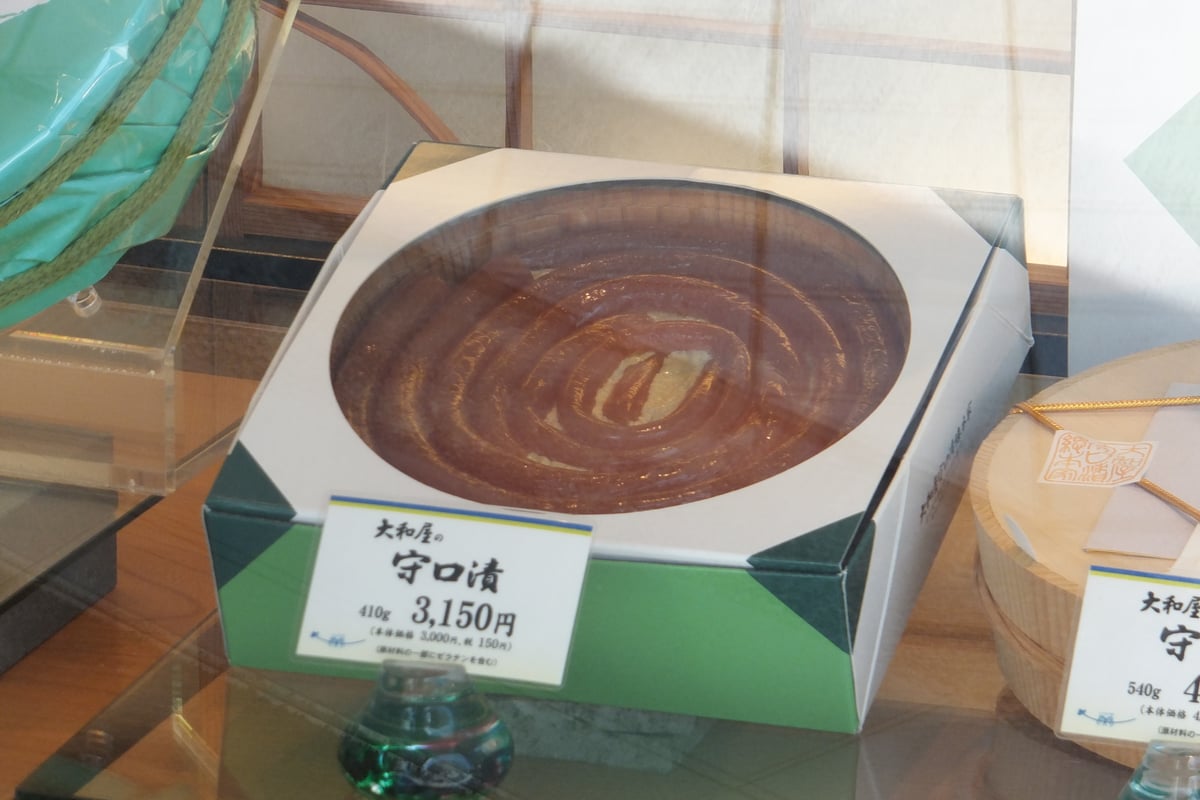
Moriguchi-zuke (Pickled Moriguchi Daikon Radish)
Moriguchi-zuke
Moriguchi-zuke is a Nara-zuke-style pickle unique to Aichi Prefecture, made by curing Moriguchi daikon — said to be the world's longest daikon radish — in sake lees and mirin lees. Moriguchi daikon is a slender radish about 2 centimeters in diameter and over a meter long, and it is one of Aichi's traditional vegetables, with much of the nationwide crop grown around the town of Fuso along the Kiso River. Both the cultivation and the pickling process are labor-intensive, and the whole process from sowing to a finished pickle is said to take roughly three years. Repeated re-pickling in sake lees and mirin lees produces an amber color, refined sweetness, rich aroma, and pleasant crunch, making it a beloved souvenir and gift item representative of Nagoya.
Shoyu no Mi (Fermented Soybean Relish)
Shoyu no Mi
Shoyu no Mi is a traditional preserved food of Yamanashi Prefecture made by fermenting soybeans with barley koji. According to tradition, households in Yamanashi once made their own soy sauce from soybeans, and the soybeans left over in the process were fermented and called 'shoyu no mi.' It was once a traditional food of the Kyochu area of the Kofu Basin, but today it is handed down only in the Ashiyasu area of Minami-Alps City. Ashiyasu is a cold, high-altitude area at the foot of the Southern Alps with much sloping land. Because the land is unsuited to growing vegetables and rice, soybeans, which are hardy against the cold, have long been widely cultivated. Boiled soybeans are mixed with barley koji, left to grow mold in wooden boxes, and dried; they are then rehydrated with water and sake and seasoned with salt to finish. The traditional way to enjoy it is with green onions or shirasu-boshi (dried baby sardines) added, served on barley rice. As a valuable source of protein, it has supported winter meals in the mountains.
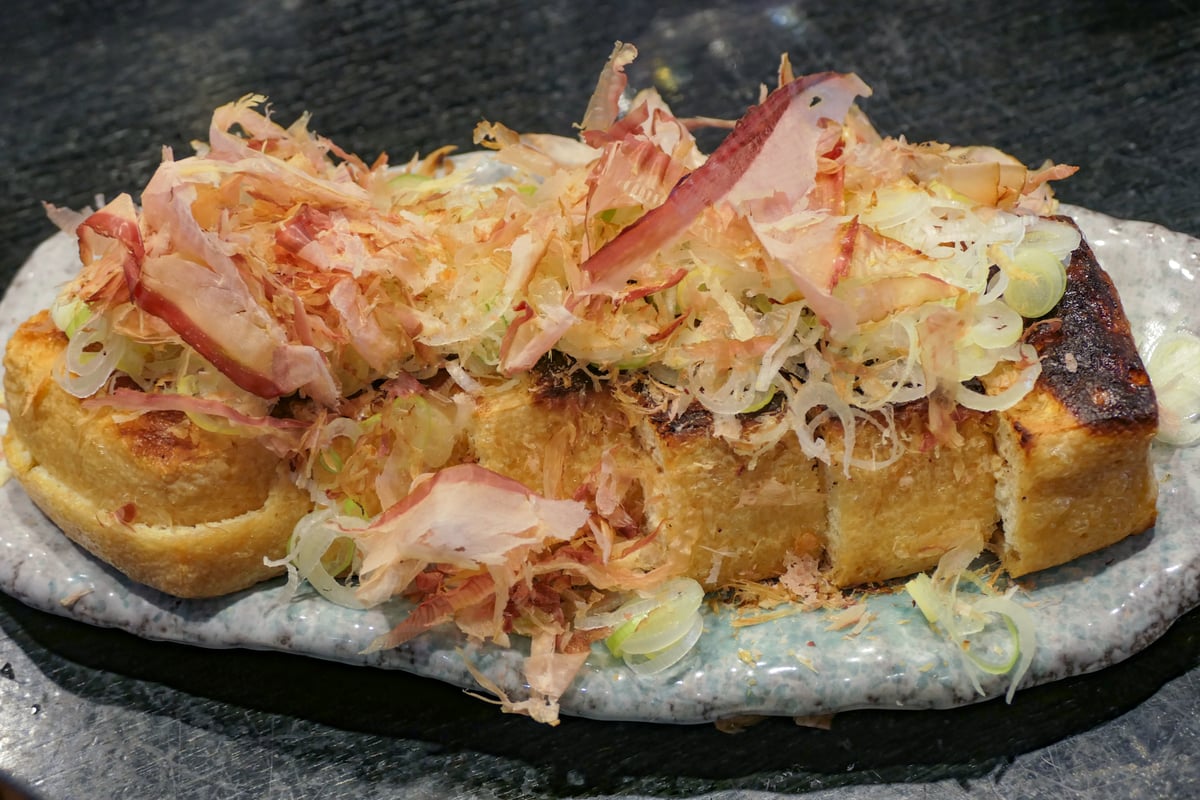
Tochio Aburaage (Giant Deep-Fried Tofu)
Tochio Aburaage
Tochio Aburaage is a large deep-fried tofu made in the Tochio area of Nagaoka City, Niigata Prefecture, and called 'aburage' in the local dialect. Measuring about 20 to 22 cm long, 6 to 8 cm wide, and 3 cm thick, it is more than three times the size of ordinary aburaage, and it is characterized by a crisp exterior and a fluffy interior. It is fried twice, in two pots at low and high temperatures, and after frying it is pierced with metal skewers to drain the oil, leaving a skewer hole in the center. Its origins are said to date back to the mid-Edo period. One theory holds that it was devised as a souvenir for pilgrims to Akiha Sanjakubo Daigongen, worshiped as a deity that protects against fire, and another holds that bakuro (livestock dealers) at Tochio's horse market ate it as a snack with sake. Today there are more than 15 aburage shops in the Tochio area, and besides being grilled and eaten with ginger and soy sauce, it is also used in simmered dishes and in dishes where it is stuffed with fillings and grilled.
Kamonasu Dengaku (Grilled Kamo Eggplant with Miso)
Kamonasu Dengaku
Kamonasu Dengaku is a local dish representative of a Kyoto summer, made using "kamonasu," a traditional Kyoto vegetable. Whole, round kamonasu eggplants are cut into rounds or halves and slowly deep-pan-fried in oil, then generously topped with dengaku miso — a paste made by blending white or red miso with mirin, sugar, and sake. Kamonasu has firm flesh that holds its shape well when cooked and pairs well with oil, making it a vegetable well suited to dengaku preparation. Around July, the time of the Gion Festival, it is served as a seasonal delicacy not only at home but also in Kyoto's traditional restaurants (ryotei) and eateries, and it is cherished as a dish that adds color to a Kyoto summer. Kamonasu has a long history of cultivation, appearing in the 1684 (Joukyou 1) text Yoshu Fushi, and it is said to have once been grown in the Yoshida and Tanaka districts of Sakyo Ward.
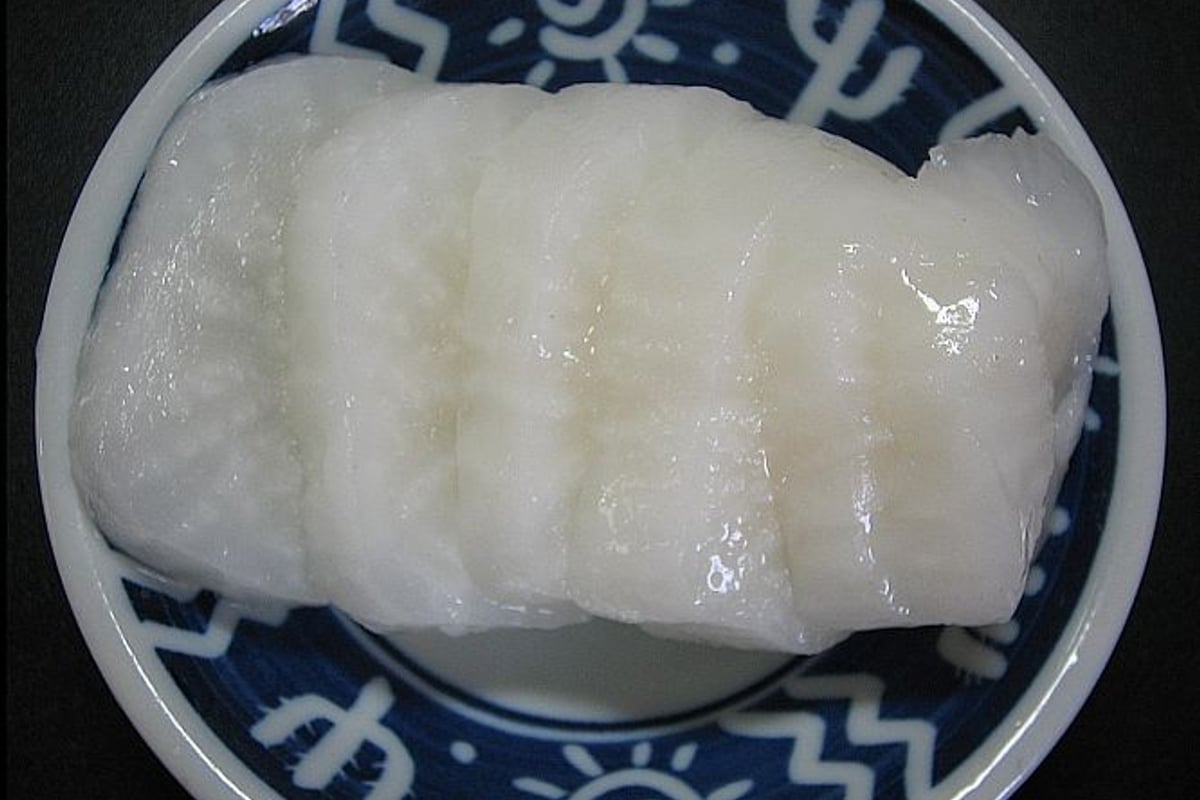
Bettarazuke
Bettarazuke
Bettarazuke is a traditional Tokyo pickle known for its sweetness and gentle tartness, made by first salting fresh daikon radish and then curing it further in rice malt (koji) and sugar to ferment. It became known nationwide under this name from the mid-Edo period, when it was sold every October 19 and 20 at the Bettara Ichi (Bettara Market) held at Takarada Ebisu Shrine in Odenmacho, Nihonbashi. There are two theories about the origin of the name: one holds that it came from the way rice malt from the curing bed stuck ('betta-betta') to the surface of the daikon, and another that street vendors would call out 'bettara, bettara' while playfully trying to press the malt onto customers' kimono sleeves. In an era when salty pickles were the norm, this lightly cured style with the natural sweetness of rice malt won popularity among the people of Edo, and the Bettara Ichi remains a beloved autumn tradition in Nihonbashi to this day, carried on since the Edo period. It is now sold year-round at specialty shops and pickle stores around Nihonbashi and has become a classic Tokyo souvenir.
Ika no Kurozukuri (Squid Ink-Cured Delicacy)
Ika no Kurozukuri
Ika no Kurozukuri is a representative fermented food of Toyama Prefecture, made by cutting squid (surume-ika) flesh into thin strips, adding the liver and squid ink, salting it, and letting it slowly mature. It is known for its distinctive flavor, combining the rich aroma and deep umami unique to squid ink with the aged character of a shiokara-style dish, and it has long been prized as an accompaniment to sake for its excellent compatibility with Japanese rice wine. Records from the Edo period note that the lord of the Kaga domain presented it to the shogunate during his sankin kotai processions, suggesting it was already known as a leading specialty of Toyama at the time. Squid ink has long been believed to have preservative properties, and it was also put to use as a way to keep shiokara-style delicacies from spoiling in an age before refrigeration. Its black appearance can surprise first-time tasters, but on the palate it delivers a rich umami and a subtle saltiness, and it is now applied not only as a rice accompaniment or in ochazuke but also as a pasta ingredient, remaining one of Toyama's representative delicacies sold nationwide.
Isshozuke (fermented chili and rice koji condiment)
Isshozuke
Isshozuke is a fermented all-purpose condiment that has long been made in the Tsugaru region. It is distinguished by its use of "Shimizumori Nanba," a heirloom chili pepper variety said to have been brought back from Kyoto by Tamenobu Tsugaru, the first lord of the Tsugaru domain. The name comes from the practice of pickling green chili peppers, rice koji, and soy sauce together in equal measures of one sho (about 1.8 liters) each. Shimizumori Nanba is low in capsaicin, giving it a mild heat and pronounced sweetness; the condiment is prepared during the coldest part of winter and, when aged for two to three years, mellows and deepens in flavor. As an all-purpose seasoning that pairs with meat, fish, vegetables, tofu, and rice alike, it has been used in a wide range of dishes, from a garnish for grilled and stir-fried dishes to a base for hot pot sauces. In 2020, Shimizumori Nanba was registered under the Geographical Indication (GI) protection system, and in 2022, isshozuke made with Shimizumori Nanba became the first food from Aomori Prefecture to be certified as one of the Agency for Cultural Affairs' "100-Year Foods," drawing renewed attention as part of the region's food culture.
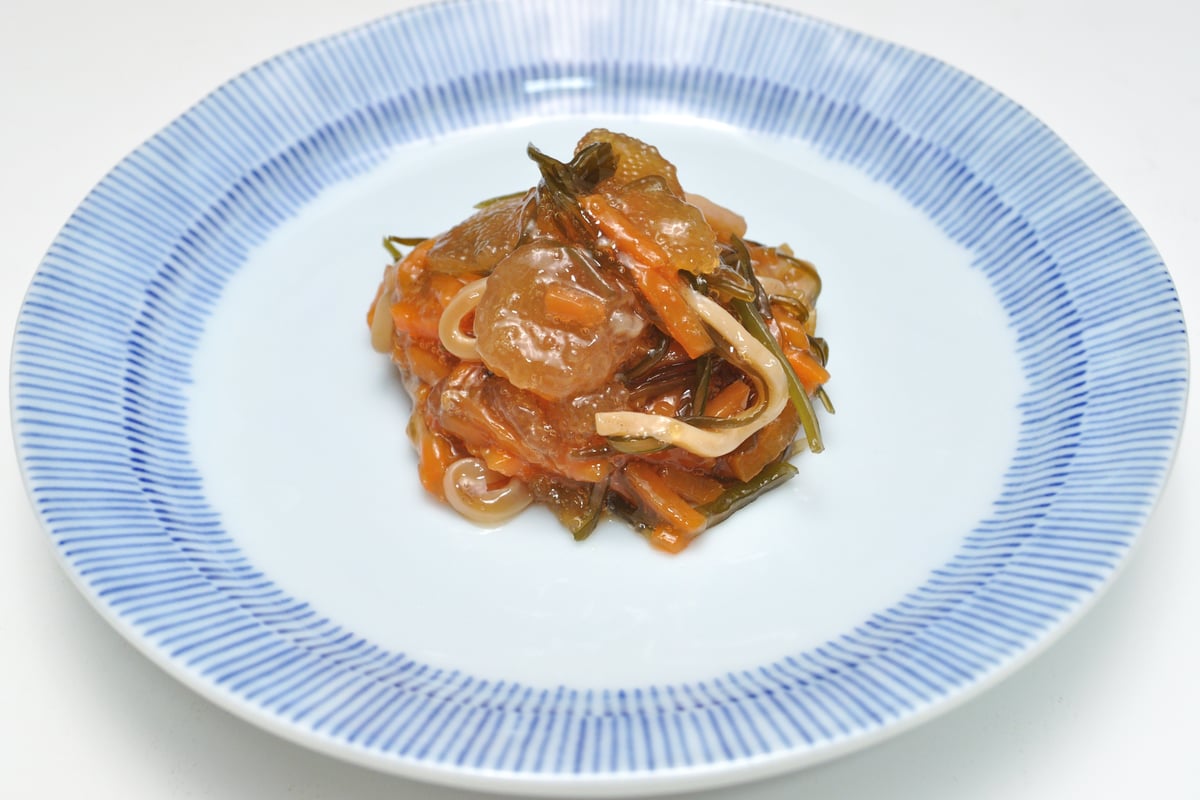
Matsumae-zuke (squid and kelp pickle)
Matsumae-zuke
Matsumae-zuke is a preserved dish from the Matsumae region of Hokkaido, made by thinly slicing dried squid (surume) and kelp and pickling them in a soy sauce-based marinade. Herring roe (kazunoko) is traditionally added as a finishing touch, giving the dish its characteristic sticky, stringy texture from the kelp, a satisfying crunch from the roe, and layers of umami flavor. The name is said to derive from Matsumae, the former castle town of the Matsumae domain (now Matsumae Town, Matsumae District), where the local kelp was known as 'Matsumae kelp.' During the Edo period, the Matsumae and Fukushima areas thrived on herring fishing, and locals combined the abundant kazunoko, dried squid, and kelp into a pickle that later became a staple of New Year's cuisine and a classic Hokkaido souvenir known throughout Japan. Today, several producers in Matsumae Town still make this pickle, and its simple, home-style flavor—varying slightly from household to household—continues to be passed down.
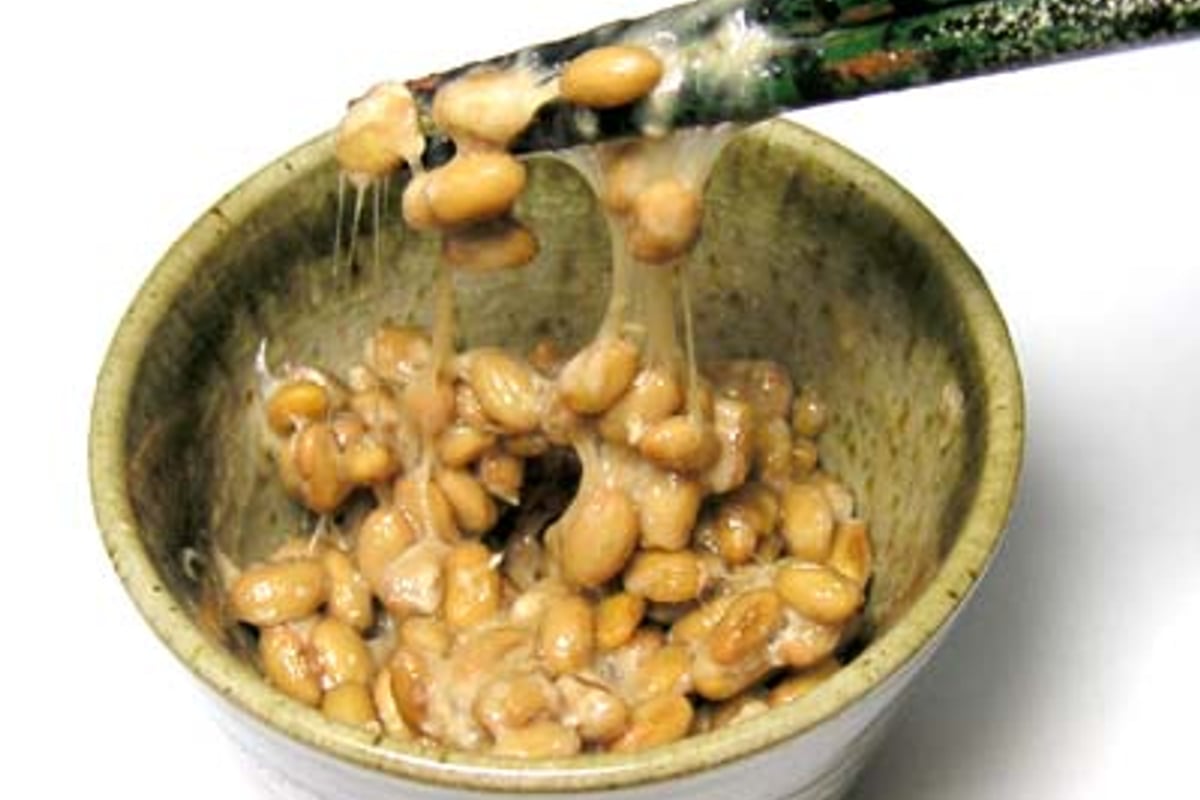
Mito Natto
Mito Natto
Mito Natto is a brand name for natto made around Mito City in Ibaraki Prefecture, known for its small, uniform soybeans that stick together well with fine strands, a signature natto texture. Around Mito, along the Naka River basin, farmers have long grown flood-resistant small soybeans, and this locally suited soybean variety helped natto-making take root here. In 1889 (Meiji 22), Seizaemon Sasanuma I founded 'Tengu Natto' and began selling it in front of Mito Station to coincide with the railway's opening that same year, which is said to be how Mito natto became known nationwide. Traditional methods such as 'waratsuto natto,' wrapped in rice straw, have also been passed down, and today Mito City continues to promote its identity as the 'town of natto,' even enacting an ordinance designating July 10 as 'Natto Day.'
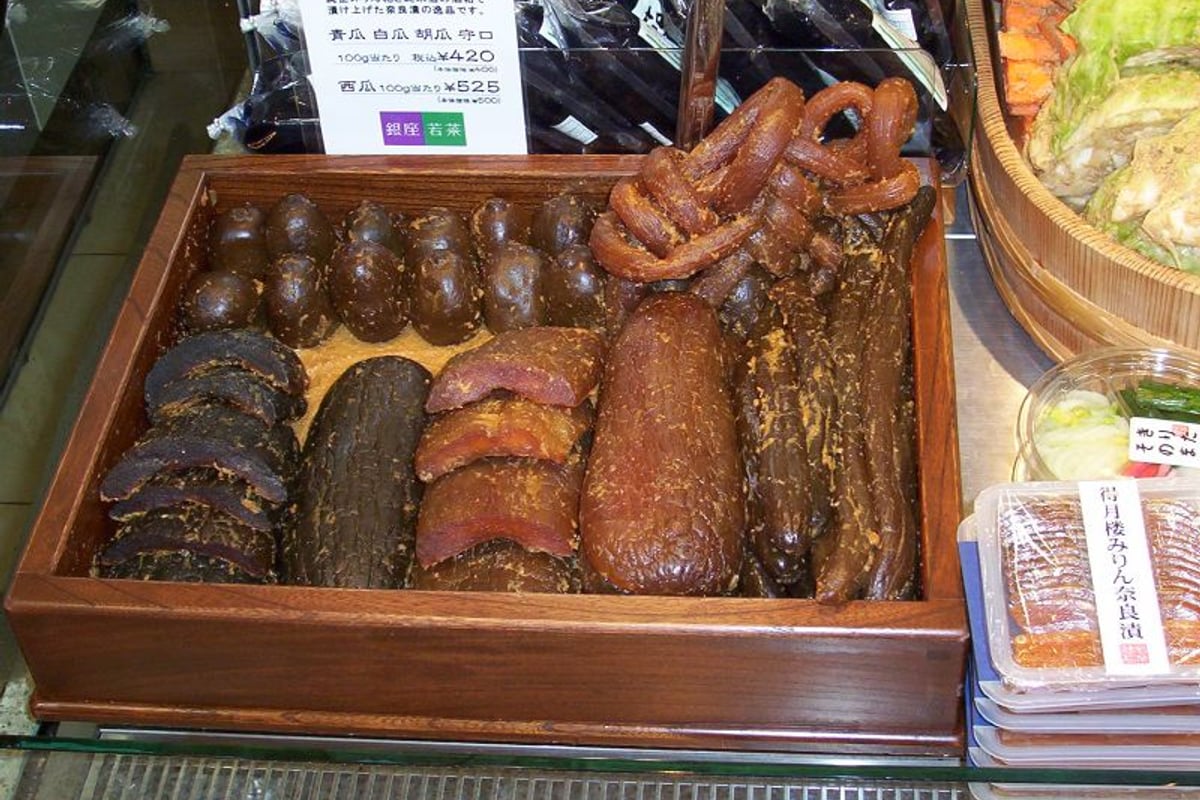
Narazuke
Narazuke
Narazuke is a sake-lees pickle that originated in Nara, made by repeatedly pickling vegetables such as shirouri (a type of white melon) in sake lees. A wooden tablet excavated from the ruins of Prince Nagaya's residence at the Heijo-kyo capital site is said to bear the phrase 'kasuzuke uri, offered as a gift' (進物加須津毛瓜), suggesting the dish may have been eaten as far back as more than 1,300 years ago, giving it a long history. It is said to have originated when vegetables were pickled in the leftover lees from drinking the clear portion of doburoku (unrefined sake) as an alcoholic drink; after refined sake brewing began in the Muromachi period, the current method using sake lees was established. Narazuke became widely sold as a commercial product between the Azuchi-Momoyama and Edo periods, when Itoya Sosen, a physician in Nara, is said to have started pickling shirouri in sake lees and selling it. Being repeatedly re-pickled in fresh sake lees allows the rich aroma of sake and the savory taste of rice to soak into the vegetables, turning them a deep amber color, and it remains a beloved souvenir representative of Nara today.
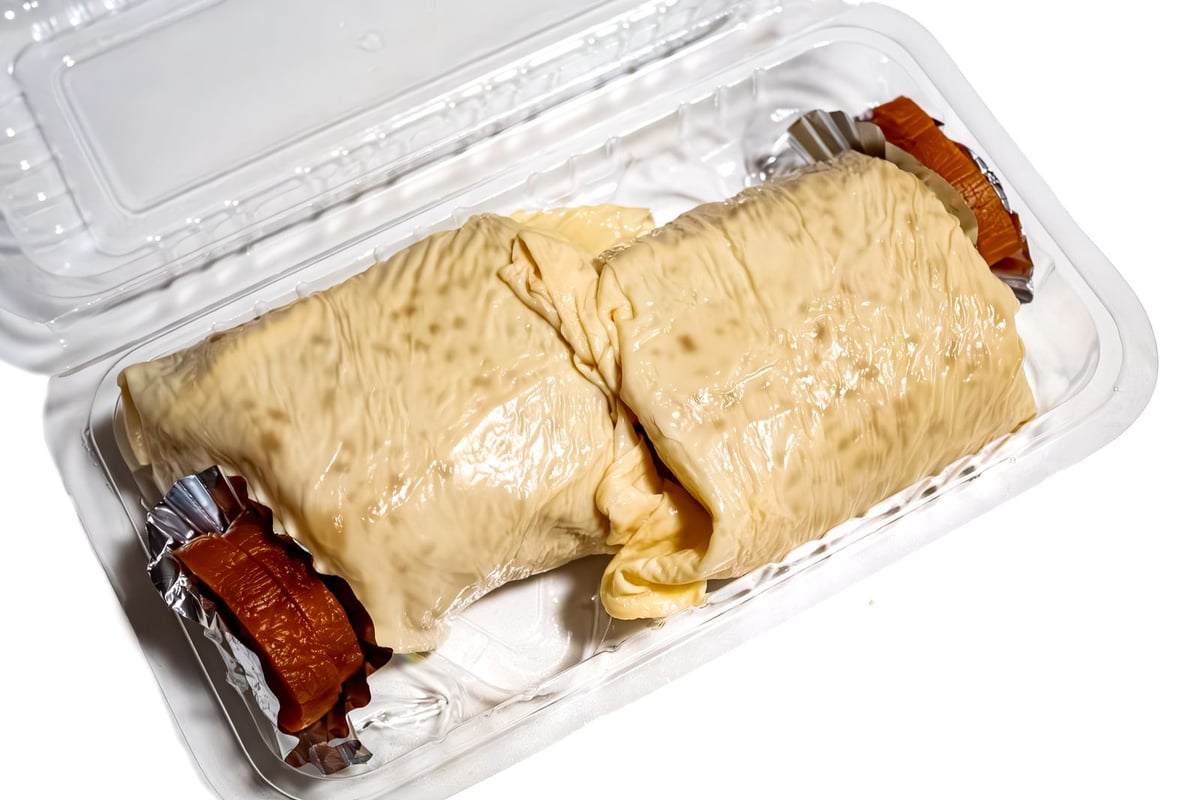
Nikko Yuba
Nikko Yuba
Nikko Yuba is a processed soy milk food that has been made in Nikko City, Tochigi Prefecture, since ancient times. It is characterized by its thick, hearty texture, created by layering the skin that forms when soy milk is simmered. It is said to have originated when yuba, brought back from Tang-dynasty China by a traveling monk, was introduced as shojin cuisine (Buddhist vegetarian cooking) to Nikko-san Rinno-ji Temple, founded by the priest Shodo Shonin in 766. When Tokugawa Ieyasu was enshrined at Nikko Toshogu in the early Edo period, the inns and shojin cuisine restaurants that served worshippers developed their own refinements, and the dish earned a reputation as 'Nikko Yuba.' The biggest difference from Kyoto's yuba (湯葉) — made by inserting a skewer at the edge of the skin and lifting it up flat — is that Nikko's yuba (湯波) is rolled up by inserting a skewer at the center and folding it in two, giving it a rounded shape with many layered folds. It has long been enjoyed raw, like sashimi, as well as cooked in deep-fried and simmered dishes.
Oyama Tofu (Mt. Oyama-Style Tofu)
Oyama Tofu
Oyama Tofu is a tofu-based cuisine made at the foot of Mt. Oyama, a sacred peak of the Tanzawa mountains in Isehara City, and it developed alongside the 'Oyama pilgrimage' tradition that flourished from the Edo period onward. It is said that tofu-making thrived in Oyama from early times both because pilgrimage groups (Oyama-ko) offered soybeans as thanks for prayers and blessings, and because the area was blessed with pure spring water flowing down from the Tanzawa mountains. The custom was also tied to the tradition of shojin (vegetarian) cuisine practiced by mountain ascetics and monks, and tofu became a valued dish for pilgrims that used neither meat nor fish. Today, along the Koma Sando approach, inns and restaurants specializing in tofu cuisine still line the street, offering menus built around tofu made with local water and soybeans, such as yudofu (simmered tofu), dengaku (skewered and grilled tofu), and tofu kaiseki courses. It is a representative local delicacy of Kanagawa Prefecture, selected as one of the '100 Selected Kanagawa Specialties.'
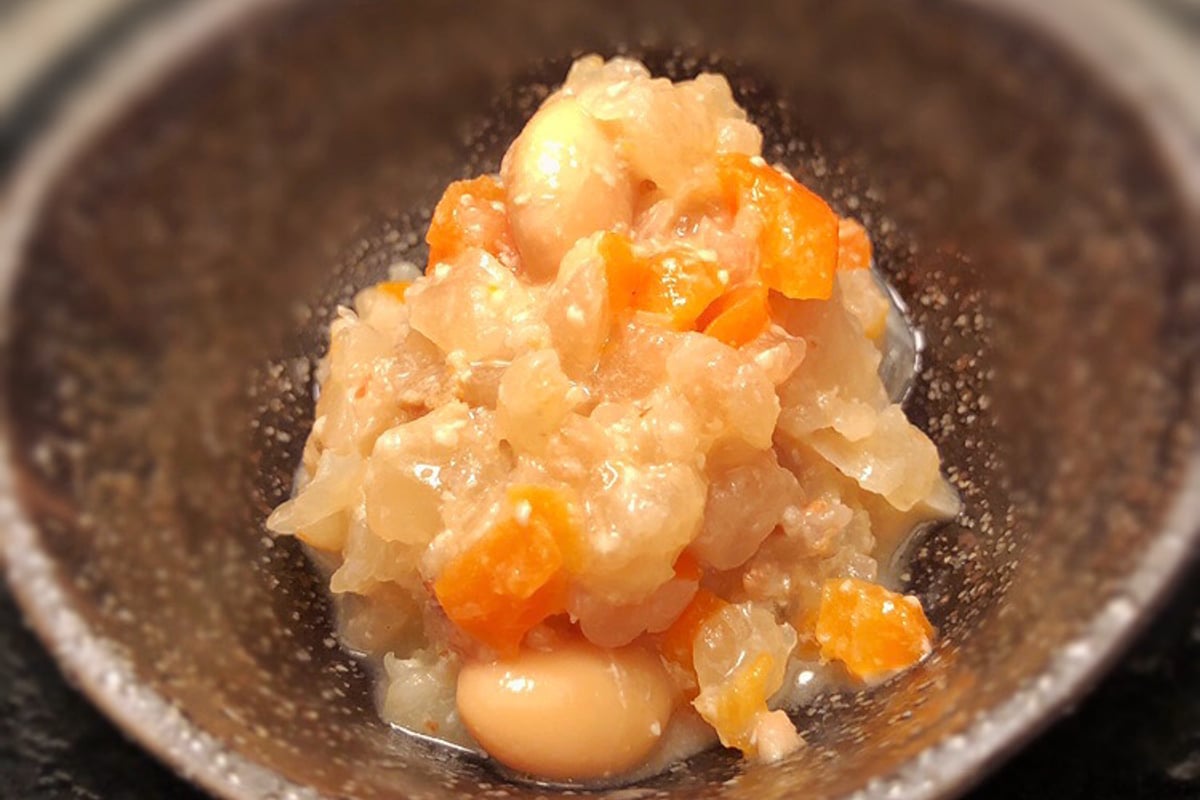
Shimotsukare
Shimotsukare
Shimotsukare is a local dish of northern Kanto centered on Tochigi Prefecture, made by simmering together leftover salted salmon heads from New Year's, leftover lucky soybeans from Setsubun, grated daikon radish and carrot, and sake lees. It is said to have been made in households since before the Edo period as a ceremonial dish offered together with red rice to Inari shrines on Hatsu-uma, the first Horse Day of the second lunar month. Its history is so old that a similar dish is said to appear in a Kamakura-era collection of tales, and there is a saying that eating shimotsukare from seven different households brings freedom from illness. Known also as a dish whose distinctive appearance and tangy, fermentation-derived flavor divide opinion, it embodies the wisdom of earlier generations who made full use of leftovers from Setsubun and New Year's without waste, and in 2023 it was designated in the traditional category of the Agency for Cultural Affairs' '100-Year Foods.' Still passed down today in homes and at direct-sales markets, it stands as a symbol of Tochigi Prefecture's food culture.
Soboro Natto (Shoboro Natto)
Shoboro Natto
Soboro Natto (also called Shoboro Natto) is a local dish of Mito City made by pickling sticky-stranded natto together with warihoshi daikon (sun-dried, split daikon radish) in a seasoned liquid. 'Shoboro' is said to be a Mito dialect pronunciation of 'soboro.' In the Edo period, Mito was known for natto-making using early-ripening small soybeans that could be harvested before typhoon season, and it was customary to distribute freshly made autumn natto among neighbors and temples. The dish is said to have originated as a way to keep leftover natto, or natto that hadn't stranded very well, edible for longer by pickling it together with dried daikon. Unlike the branded product Mito Natto, which is natto itself, Soboro Natto is a preserved food in which natto is processed more like a pickle, which is the key distinction between the two. Its appeal lies in the contrast between the crunchy texture of the dried daikon and the soft, crumbly texture of the natto, and today it is made and sold by long-established pickle shops and natto shops in Mito, enjoyed as a topping for rice, a snack with drinks, and a popular Mito souvenir.
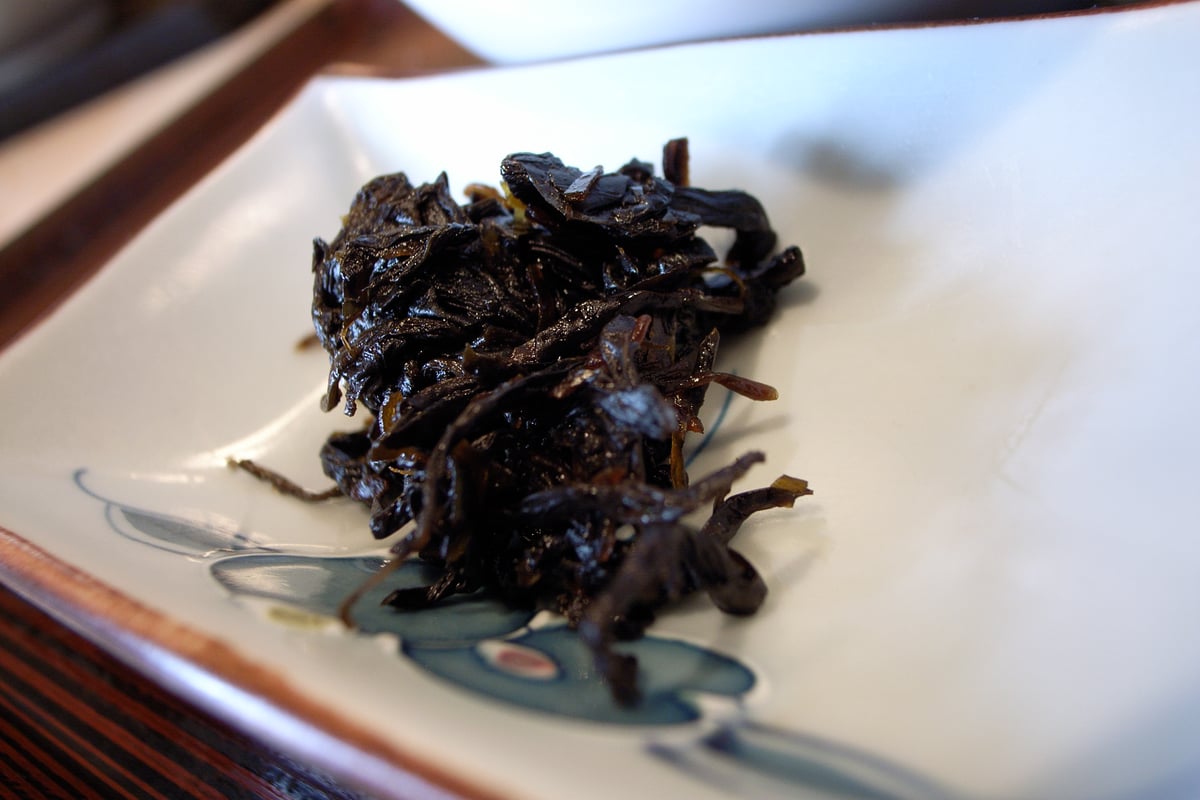
Tsukudani
Tsukudani
Tsukudani is a preserved food made by slowly simmering small fish, shellfish, or seaweed in soy sauce and sugar, and it represents the food culture of Edo, having originated on Tsukudajima (present-day Tsukuda, Chuo Ward, Tokyo). Tsukudajima is said to have begun when Tokugawa Ieyasu, founder of the Edo shogunate, invited fishermen from Tsukuda Village in Settsu Province (present-day Osaka) and settled them on a tidal flat at the mouth of the Sumida River. To avoid wasting food on days they could not fish, or small fish and shellfish too minor to sell, the fishermen devised a way of simmering them down thickly in salt and soy sauce so they would keep - this is said to be the origin of the name 'tsukudani.' As dark soy sauce became more widely produced through the Edo period, the flavor grew richer and more refined, and samurai and travelers on the sankin-kotai (alternate attendance) journeys carried it home as a souvenir, helping it spread across the country. Long-established shops dating from the Edo period still line the streets around Tsukudajima today, making and selling tsukudani from a variety of ingredients such as small fish, shellfish, kombu, and ginger. Loved as an accompaniment to rice or sake and firmly established as a household staple, it is one of Japan's representative preserved-food traditions.