Image: Wikimedia Commons
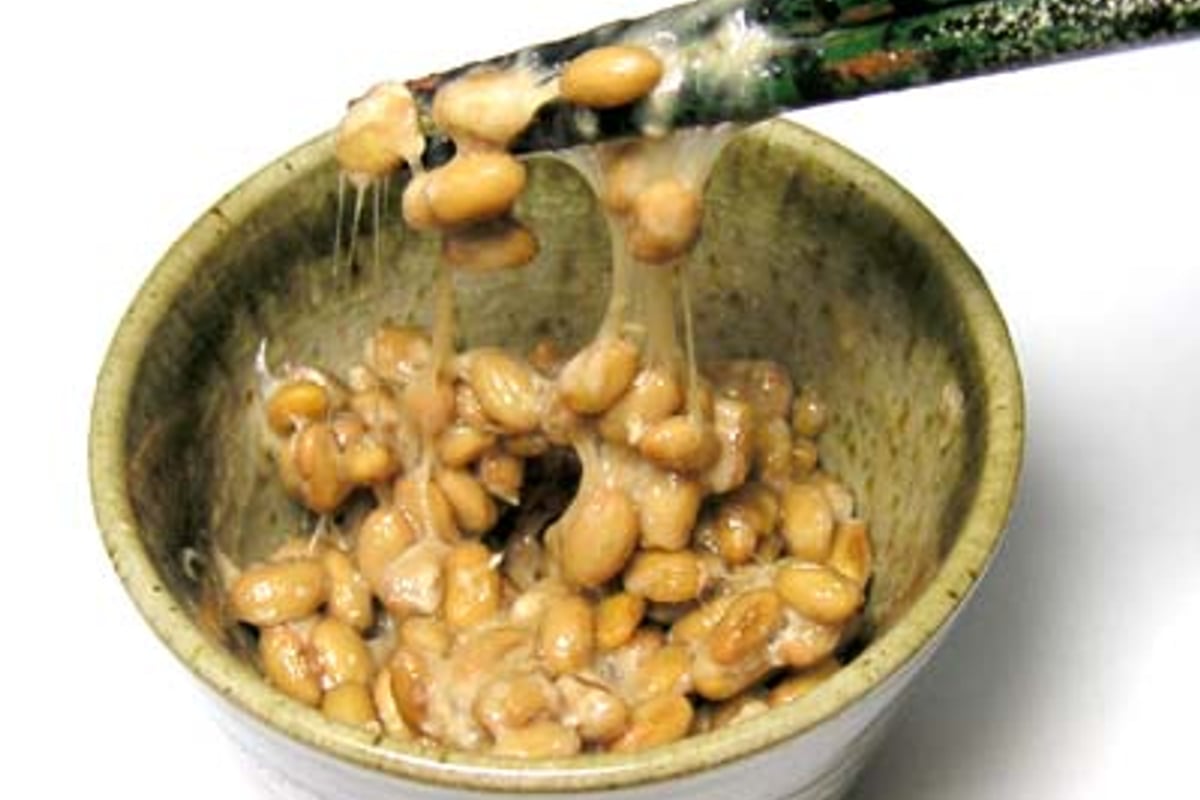
Mito Natto is a brand name for natto made around Mito City in Ibaraki Prefecture, known for its small, uniform soybeans that stick together well with fine strands, a signature natto texture. Around Mito, along the Naka River basin, farmers have long grown flood-resistant small soybeans, and this locally suited soybean variety helped natto-making take root here. In 1889 (Meiji 22), Seizaemon Sasanuma I founded 'Tengu Natto' and began selling it in front of Mito Station to coincide with the railway's opening that same year, which is said to be how Mito natto became known nationwide. Traditional methods such as 'waratsuto natto,' wrapped in rice straw, have also been passed down, and today Mito City continues to promote its identity as the 'town of natto,' even enacting an ordinance designating July 10 as 'Natto Day.'
Origin
According to legend, in 1083 (Eiho 3), when Minamoto no Yoshiie stopped at the residence of a wealthy man named Ichimori in Mito (present-day Watari-cho, Mito City) on his way to the Later Three-Year War, leftover boiled soybeans intended as horse feed fermented and became natto. The area around Mito, in the Naka River basin, has long been known for growing flood-resistant small soybeans, and this soybean variety being well suited to natto-making is also considered a key reason natto-making took root in Mito.
History
In 1889 (Meiji 22), Seizaemon Sasanuma I founded 'Tengu Natto' in Sakuramachi, Mito City. It is said that, noticing sticky-stranded natto was popular in Edo, he worked to make natto a specialty of Mito. Selling it in the square in front of Mito Station to coincide with the opening of the Oyama-Mito railway line that same year became the catalyst for Mito natto becoming known nationwide.
Features
Mito natto is characterized by its use of uniform small soybeans, said to produce good stickiness and let the flavor soak in well. 'Waratsuto natto,' made by wrapping natto in rice straw to ferment, is a traditional method still practiced today, imparting the fragrance of straw. In recent years, natto from Ibaraki Prefecture has come to account for a large share of nationwide distribution, and Mito City also uses its identity as the 'town of natto' for tourism and community revitalization.
Main Ingredients
Food Culture
Mito City has branded itself the 'town of natto,' and in June 2022 the city council enacted an ordinance designating July 10 as 'Natto Day.' Many specialty natto shops line the area near the station and among souvenir stores, and some long-established shops even have exhibition halls offering tastings and factory tours, making natto a tourism resource as well.
Famous Shops
水戸天狗納豆(株)笹沼五郎商店
茨城県水戸市三の丸3-4-30
A long-established shop founded in 1889 (Meiji 22). Waratsuto natto (bundle of 5) is priced at around 1,350 yen, and soboro natto (300g) at around 756 yen (tax included).
View details →| わらつと納豆 | Natto wrapped in rice straw and fermented using a traditional method. Sold in a bundle of 5 (with mustard included) for around 1,350 yen, it is a beloved classic Mito souvenir.Where to buy →PR |
|---|
FAQ
Q. Why did natto become famous in Mito?
A. It is said to date back to 1889 (Meiji 22), when Seizaemon Sasanuma founded 'Tengu Natto' and began selling it in front of Mito Station, which had opened via railway that same year. The fact that the area around Mito was already a production region for small soybeans well suited to natto-making is also part of the background.