 Image: Wikimedia Commons
Ibaraki Prefecture
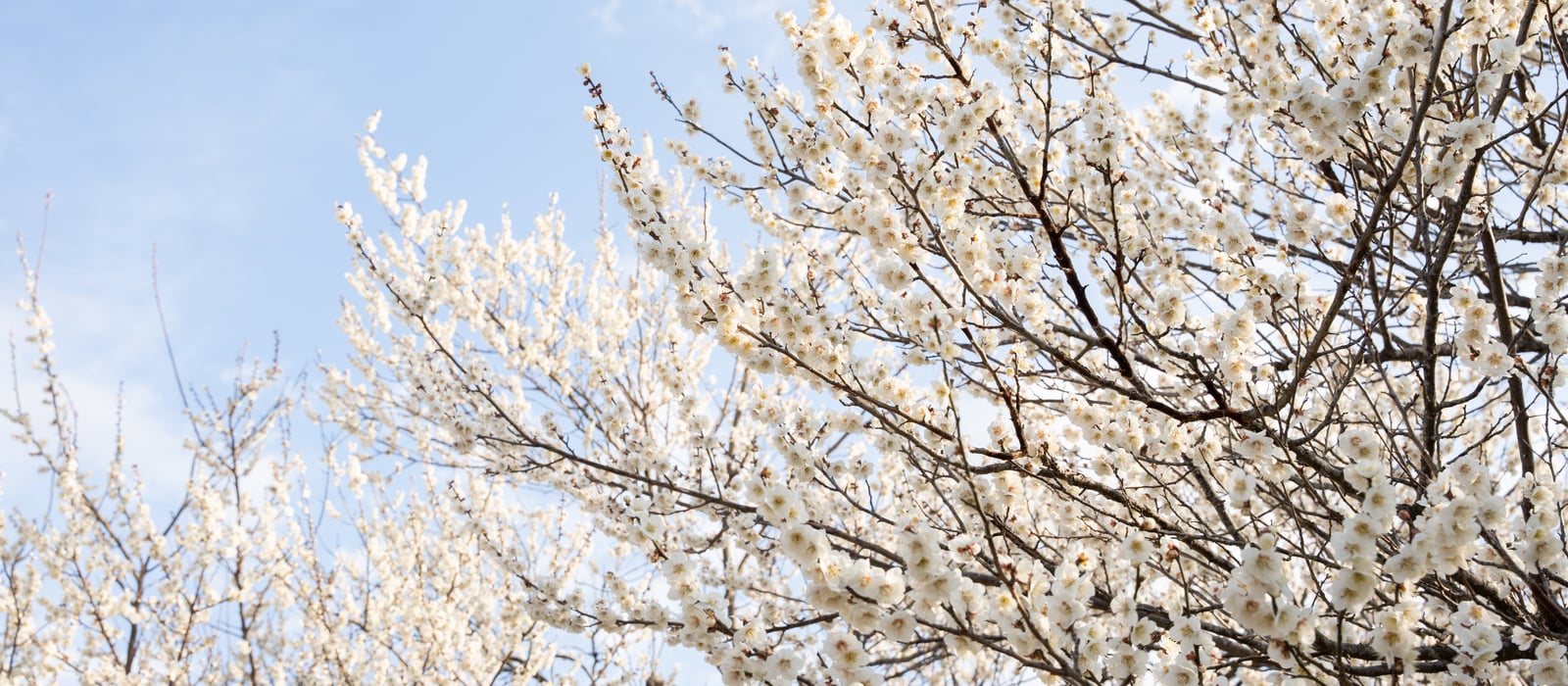
Located in the northeast of the Kanto Plain, Ibaraki Prefecture is home to Mito, the castle town of the Mito Domain, one of the three branches of the Tokugawa family, where the plum blossoms of Kairakuen, one of Japan's three great gardens, still bloom each spring. Its food culture has been shaped by the sail-net fishing boats of Lake Kasumigaura, while a wealth of traditional crafts, from Kasama Ware to Yuki-tsumugi silk, is passed down alongside local dishes such as Anko Nabe and Hitachi Gyu beef that draw on the bounty of both sea and land. As one of Japan's leading agricultural and fishing prefectures, Ibaraki is the country's top producer of natto, dried sweet potatoes, and lotus root, while handcrafts such as Makabe stone lanterns and Suifu paper lanterns continue to be made by hand to this day.
Ibaraki's Traditional Crafts

Awano Shunkei-nuri
Awano Shunkei-nuri
Awano Shunkei-nuri is a lacquerware tradition passed down in Awano, Shirosato Town, Higashi-Ibaraki District, Ibaraki Prefecture. It is said to have begun in 1489 (Entoku 1), in the Muromachi period, when Inagawa Yamashiro-no-kami Minamoto no Yoshiaki devised a way of lacquering using lacquer, hinoki cypress, and plum wood native to the area. In the Edo period, Okobei, the 8th-generation head of the Inagawa family, competed in skill against a lacquer craftsman from Kishu before Tokugawa Mitsukuni, the 2nd lord of the Mito Domain, and the superior finish of his work earned the family the position of official lacquerware supplier to the Mito Domain. The technique involves tinting the wooden base yellow or red and then applying repeated coats of transparent lacquer (sukiurushi) over it so the wood grain shows through, and it is counted, alongside Hida Shunkei-nuri of Gifu and Noshiro Shunkei-nuri of Akita, as one of Japan's three great Shunkei-nuri lacquerware traditions. It was designated an Intangible Cultural Property of Ibaraki Prefecture on January 25, 1989 (Heisei 1), but today only a single workshop, that of the Inagawa family, carries on the tradition.
Hitachi Jishi (Hitachi Lion Heads)
Hitachi Jishi
Hitachi Jishi is a style of lion head (shishigashira) passed down in Ishioka City, Ibaraki Prefecture, characterized by its lack of horns and its thick, powerful eyebrows and fierce expression. The oldest record of lion dancing in Ishioka appears in a document from 1854, and the lions are said to have originally developed as part of 'gyodo,' a ritual in which Buddhist monks paraded through town chanting sutras to ward off evil spirits. In the modern era, lions from each neighborhood in the city began gathering together for the region's largest festival, the Grand Festival of Hitachi-no-kuni Sosha-gu Shrine (the Ishioka Festival), and the demand for lion heads spurred the refinement of the craftsmanship. In production by today's artisans, locally grown paulownia wood is used for the base, with the ears, eyebrows, eyes, nose, and upper and lower jaws each carved separately and then assembled, before being finished with genuine lacquer and pure gold leaf. Ishioka City is home to classes and workshops that teach the techniques for making lion heads, and finished decorative lions can also be purchased—making it a nationally rare example of a 'living' local craft.
Hitachi Take Ningyo (Hitachi Bamboo Dolls)
Hitachi Take Ningyo
Hitachi Take Ningyo are bamboo-craft dolls made in a workshop in the Omika neighborhood of Hitachi City, Ibaraki Prefecture, by a bamboo-doll artisan carrying on the techniques of Echizen Take Ningyo, a traditional craft of Fukui Prefecture. It is said to be one of only about three remaining makers nationwide working in the Echizen bamboo-doll lineage; bamboo-doll artisan Shibata Shigemitsu, after training in Fukui, opened his workshop in Hitachi in 1972, marking the craft's beginning there. Bamboo selected at three years of age is harvested and then left to season for a further three years before use, meaning it takes a full six years from felling to a finished doll. A variety of bamboo types—including madake, sarashi-dake (bleached bamboo), goma-dake (speckled bamboo), kurochiku (black bamboo), monchiku (patterned bamboo), and tora-dake (tiger bamboo)—are chosen according to their purpose, and the dolls depict subjects drawn from Noh, Kabuki, and local folk performing arts. The craft's defining feature is a form that makes the most of bamboo's natural character, and the material's color, which deepens to an amber hue over time, is also part of its appeal—making it one of Ibaraki Prefecture's representative bamboo crafts.
Kasama Ware
Kasama Ware
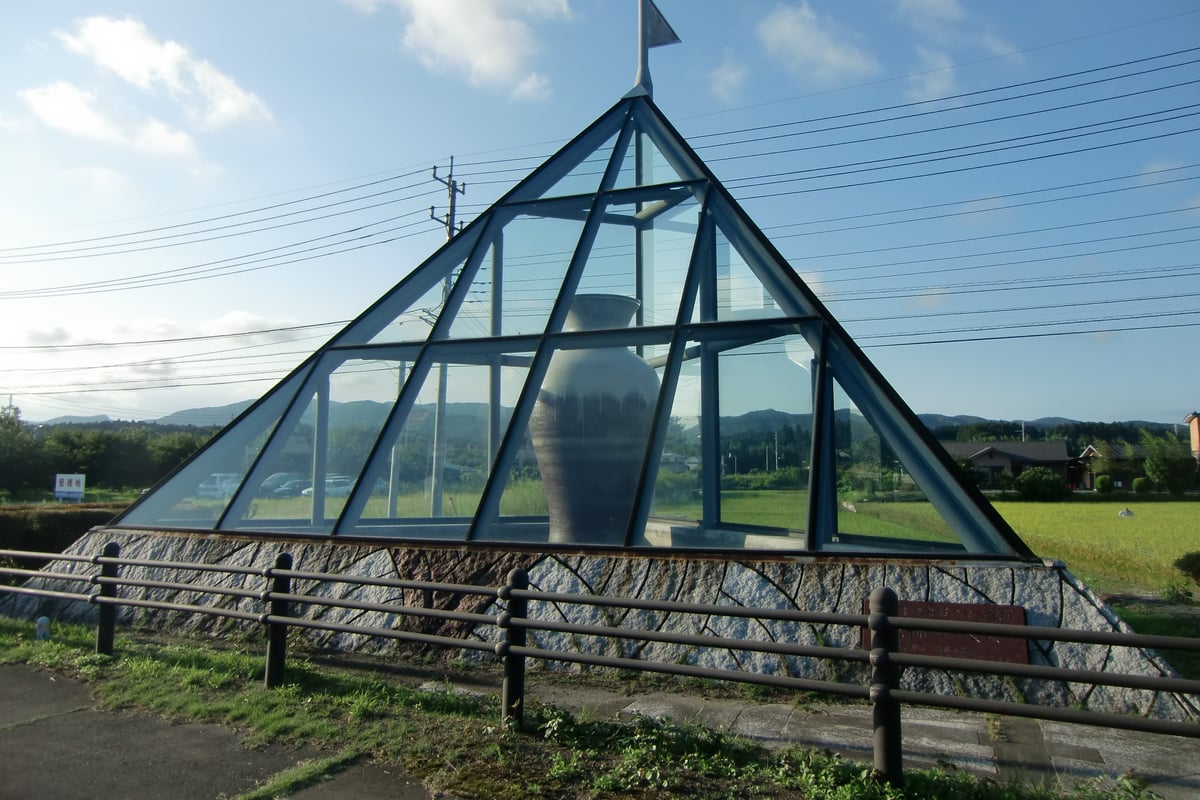
Kasama ware is pottery produced mainly in Kasama City, Ibaraki Prefecture. Its origins are said to date to the An'ei era (1772-1781) in the mid-Edo period, when Kuno Han'emon of Hakoda village (present-day Hakoda, Kasama City) built a kiln after receiving instruction from Choemon, a potter invited from Shigaraki in Omi Province. From the late Edo period through the Meiji era, taking advantage of its location near Edo, the area developed as a major production center for everyday earthenware such as water jars and sake bottles. Demand fell sharply after World War II with the spread of plastic products, but through joint efforts of government and industry the region shifted from everyday tableware to artistic pottery, and on October 8, 1992, it was designated a METI-designated Traditional Craft Product. Kasama ware is known for its exceptionally free range of styles - so much so that it is said 'having no fixed characteristics is its characteristic' - and today about 300 potters and kilns continue to produce individually distinctive works.
Makabe Stone Lantern
Makabe Stone Lantern
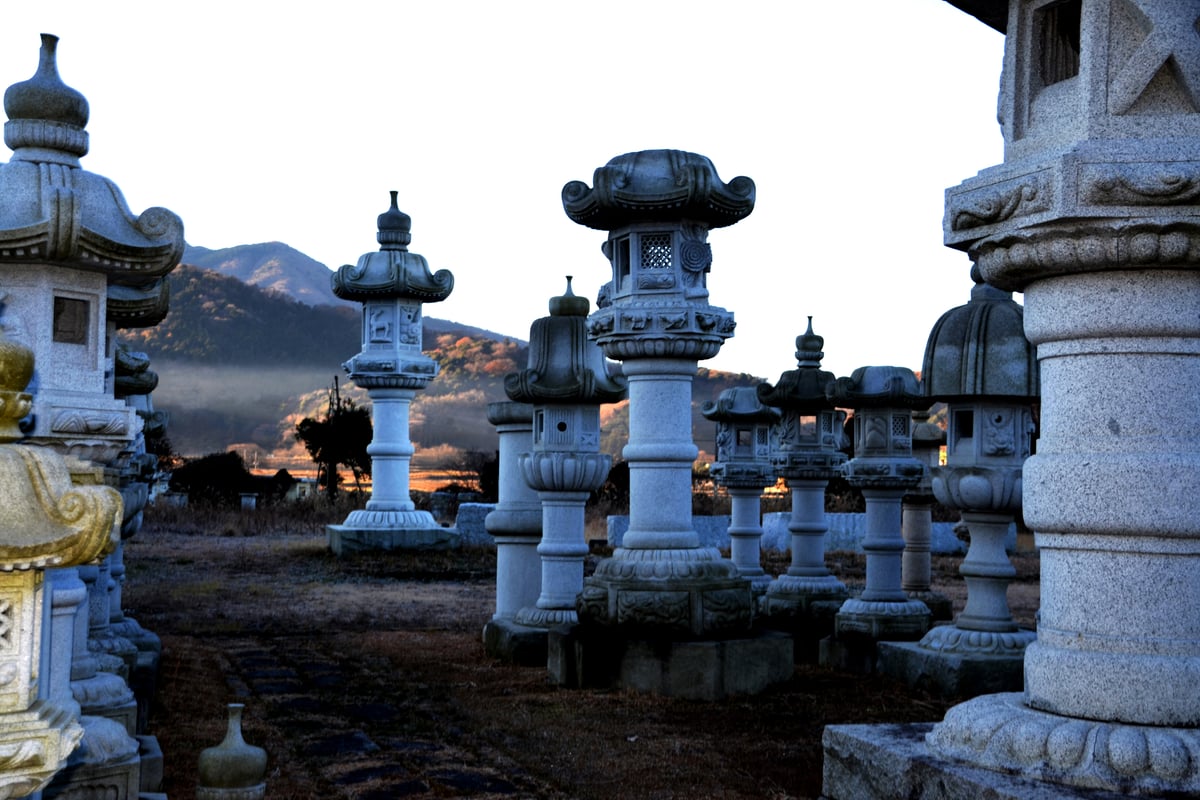
Makabe stone lanterns are stone lanterns made from high-quality granite known as 'Makabe stone,' quarried in and around Makabe, Sakuragawa City, Ibaraki Prefecture. Their origins are said to date to around the 16th century, when the production of Buddhist stone images began in the Makabe area. A stone lantern believed to have been made in 1824 (Bunsei 7) still stands in the grounds of a temple in Makabe, and the techniques were established through strict master-apprentice transmission tracing back to the late-Edo-period stonemason Kubota Kichibei. The craft is characterized by the use of 18 techniques from quarrying to finishing, including delicate carving methods such as tsukibori (chisel relief), shizumebori (sunken relief), and sukashibori (openwork carving), and it was designated a METI-designated Traditional Craft Product on April 5, 1995. It is the third such designation in the prefecture after Yuki-tsumugi silk and Kasama ware, and the Makabe district of Sakuragawa City is counted, along with Okazaki in Aichi Prefecture and Aji in Kagawa Prefecture, as one of Japan's three major stone-producing regions.
Nishinouchi Washi
Nishinouchi Washi
Nishinouchi washi is a handmade Japanese paper (washi) produced mainly around Funyu in Hitachiomiya City, Ibaraki Prefecture (formerly Nishinouchi in the old town of Yamagata). Its defining feature is that it is made purely from kozo (paper mulberry) fiber, without mixing in mitsumata or ganpi. The raw material is 'Nasu kozo,' grown around Hitachiomiya City and Daigo Town, whose fibers are said to grow to a fineness and length comparable to silk thanks to the sharp swings between day and night temperatures. During the Edo period, the Mito Domain's paper monopoly system (established in 1688) made it a key industry, with the domain purchasing the entire output, and its strength and durability led Edo merchant houses to use it for their account books (daifukucho). On December 2, 1971 (Showa 46), it was designated an Intangible Cultural Property of Ibaraki Prefecture, and the tradition is still carried on today by a small number of papermakers.
Sesson Uchiwa
Sesson Uchiwa
Sesson Uchiwa is a fan designated as an Ibaraki Prefecture Folk Craft, passed down in Hitachiota City, Ibaraki Prefecture. It is said to have originated when the itinerant Buddhist painter-monk Sesson Shukei, who stayed in the area during the Muromachi period, gave out fans on which he had painted ink-wash pictures. The ribs are made by splitting local madake bamboo into thin strips and weaving them together with rush (igusa), and the fan is finished by pasting on the sturdy local washi paper 'Nishinouchi-gami,' made in nearby Hitachiomiya City. The designs—featuring motifs such as horses, morning glories, scarecrows, and the Eight Views of Mito—are drawn from the landscape and bird-and-flower paintings associated with Sesson, and the fans are said to have also been favored by Tokugawa Mitsukuni, the second lord of the Mito Domain. Because every one of the 33 steps, from harvesting the bamboo to finishing, is done entirely by hand, only around 2,000 fans are produced each year. A single shop has carried on the craft as a family business for more than 200 years since the Edo period, and today the fourth generation is the sole remaining maker.
Suifu Chochin
Suifu Chochin
Suifu Chochin is a type of paper lantern passed down in Mito City, Ibaraki Prefecture, taking its name from 'Suifu,' an Edo-period alternate name for Mito. It is said to have originated around 400 years ago, when lower-ranking samurai of the financially struggling Mito Domain began making lanterns as a side occupation, and the craft developed after the domain began promoting it as a local specialty. Its defining feature is a unique method called 'ippon-gake' (one-strand binding), in which thread is wound around each individual bamboo hoop one strand at a time rather than in a continuous spiral, producing a sturdy, long-lasting lantern. Another characteristic is the use of the durable local washi paper 'Nishinouchi-gami,' and Suifu Chochin is still counted today, alongside Gifu and Yame, as one of Japan's three major lantern-producing regions. At its peak, Mito City was home to more than 30 workshops, but in recent years the number has dropped to just a handful; long-established makers such as Kageyama Rihei Shoten and Aono Shoten continue to pass on the traditional techniques, producing everything from festival lanterns to hands-on experiences for visitors.
Yuki Paulownia Chest
Yuki Paulownia Chest
The Yuki paulownia chest is a chest of drawers made of paulownia wood produced in Yuki City, Ibaraki Prefecture. Its origins are said to trace back to the late Muromachi period, when chests using zelkova wood were made as furnishings for the residence of the local lord, the Yuki family. Because the Yuki family had planted paulownia trees throughout their domain, and paulownia's breathable, fire-resistant properties were recognized as well suited to storing clothing, chest-making using paulownia wood spread from the late Edo period onward. Paulownia wood expands in humid conditions to seal tightly and contracts when dry to improve ventilation, making it a prized material for storage furniture that protects kimono and valuables from mold and insect damage. In 1958 (Showa 33), it was designated a special product of Ibaraki Prefecture, and Yuki City is still counted today as one of Japan's eight major production areas. It has also long been cherished as a wedding furnishing, based on the tradition that if a paulownia tree is planted when a daughter is born, it can be crafted into a chest for her wedding by the time she marries.
Yuki-tsumugi
Yuki-tsumugi
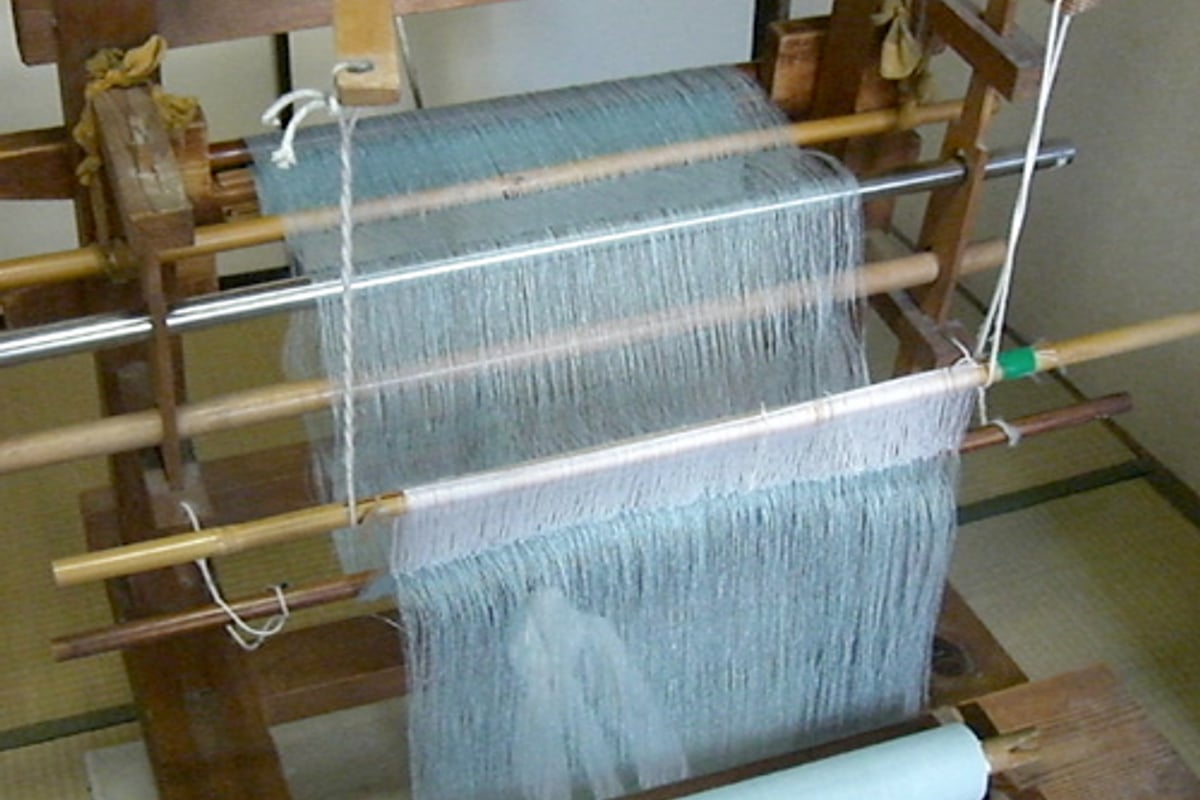
Yuki-tsumugi is a silk textile woven for centuries across present-day Yuki City in Ibaraki Prefecture and, across the Kinu River, the area around Oyama City in Tochigi Prefecture. Its prototype is said to be 'ashiginu,' a silk fabric presented to the imperial court by Hitachi Province in the Nara period; in the Kamakura period its plain, sturdy look made it popular with warriors of the Kanto region, and Yuki became the center of its production. By the Muromachi period it was known nationwide as a specialty product presented to the shogunate under the name 'Yuki-tsumugi.' During the Keicho era (1596-1615), techniques were established through improvements led by the magistrate Ina Tadatsugu, and the textile was designated a Traditional Craft by the Minister of Economy, Trade and Industry on March 30, 1977, followed by UNESCO Intangible Cultural Heritage listing in 2010. Its defining feature is the 'jibata' (ground loom) technique, in which the weaver ties the warp threads to their own waist and weaves with the whole body, using almost untwisted thread hand-spun from silk floss - producing fabric lighter than that woven with reeled silk, with a distinctively soft feel and finely detailed kasuri (ikat) patterns.
Ibaraki's Local Food
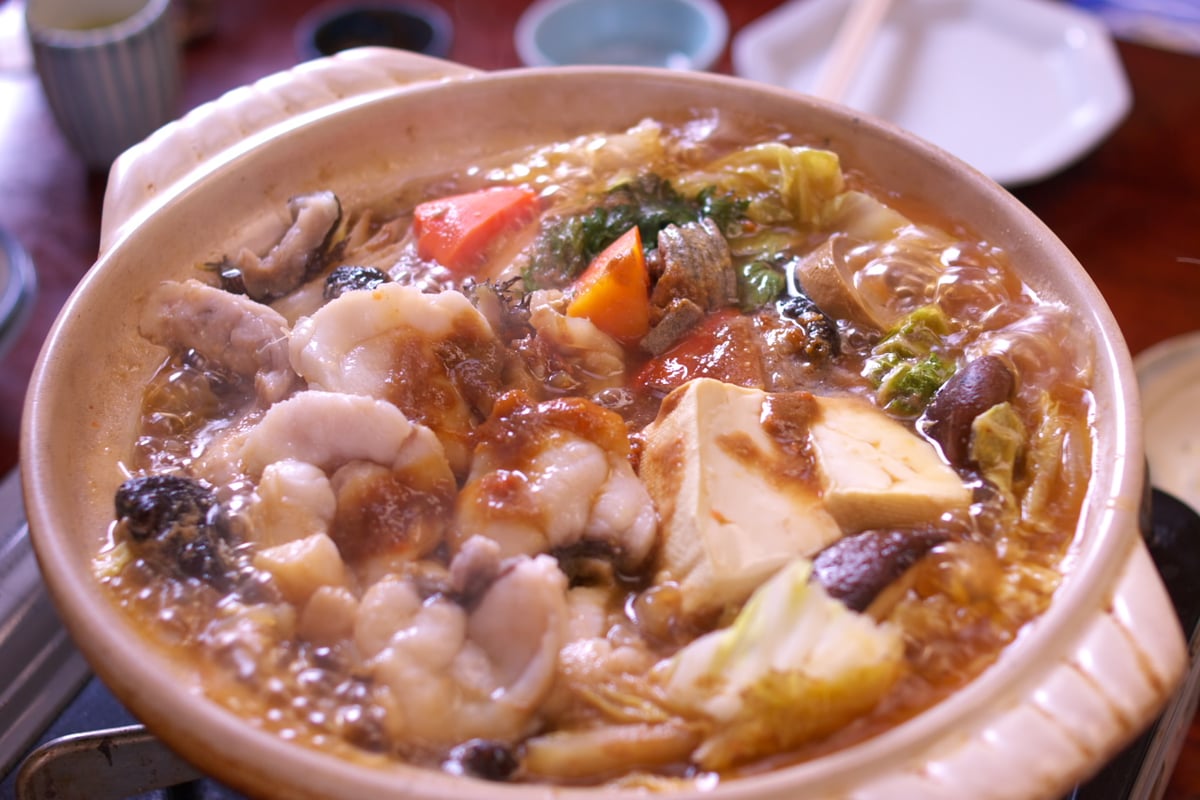
Anko Nabe (Monkfish Hot Pot)
Anko Nabe
Anko Nabe is a hot pot dish centered on monkfish landed at fishing ports such as Oarai Town, Hirakata and Otsu in Kitaibaraki City, and Nakaminato in Hitachinaka City, and it is a representative winter hot pot of Ibaraki Prefecture. In the Edo period, monkfish was a prized delicacy, ranked among the five great delicacies known as 'san-cho ni-gyo' (three birds, two fish) alongside crane, skylark, moorhen, and sea bream, and records remain showing that it was presented as tribute from the Mito Tokugawa family to the shogunate. Almost nothing of the monkfish goes to waste except the bones, and the dish makes full use of what are known as the 'seven tools of the monkfish' — nuno (ovaries), gills, tomo (fins), suibukuro (stomach), liver, yanagi-niku (flesh), and skin. Said to have originated from dobu-jiru, a stew fishermen made on board their boats without using fresh water, the dish today features flesh and organs simmered in a rich miso-based broth enriched with dissolved monkfish liver, and it is cherished as a signature winter hospitality dish of Ibaraki.
Hitachi Akisoba
Hitachi Akisoba
Hitachi Akisoba is a branded soba variety that originated in the Kanasago district (formerly Kanasago Village) of Hitachiota City, Ibaraki Prefecture, and is often called 'the finest of unshelled buckwheat.' Its story began in 1978 (Showa 53), when the Ibaraki Prefectural Agricultural Experiment Station set out to cultivate a soba brand unique to Ibaraki, launching a selective breeding program based on a local strain from Akatsuchi-cho in Hitachiota City. After seven years of selection, the variety was established and, in 1985 (Showa 60), was adopted as a recommended variety by Ibaraki Prefecture. In 1993, the Hitachi Akisoba Promotion Council was established, and through a certified-shop system, the group has worked to maintain quality and spread the brand's reputation. Known for its strong aroma, sweetness, and rich flavor, Hitachi Akisoba now accounts for nearly all the soba grown in Ibaraki Prefecture and is cultivated in multiple cities across the prefecture, including Hitachiota, firmly established as Ibaraki's representative soba variety.
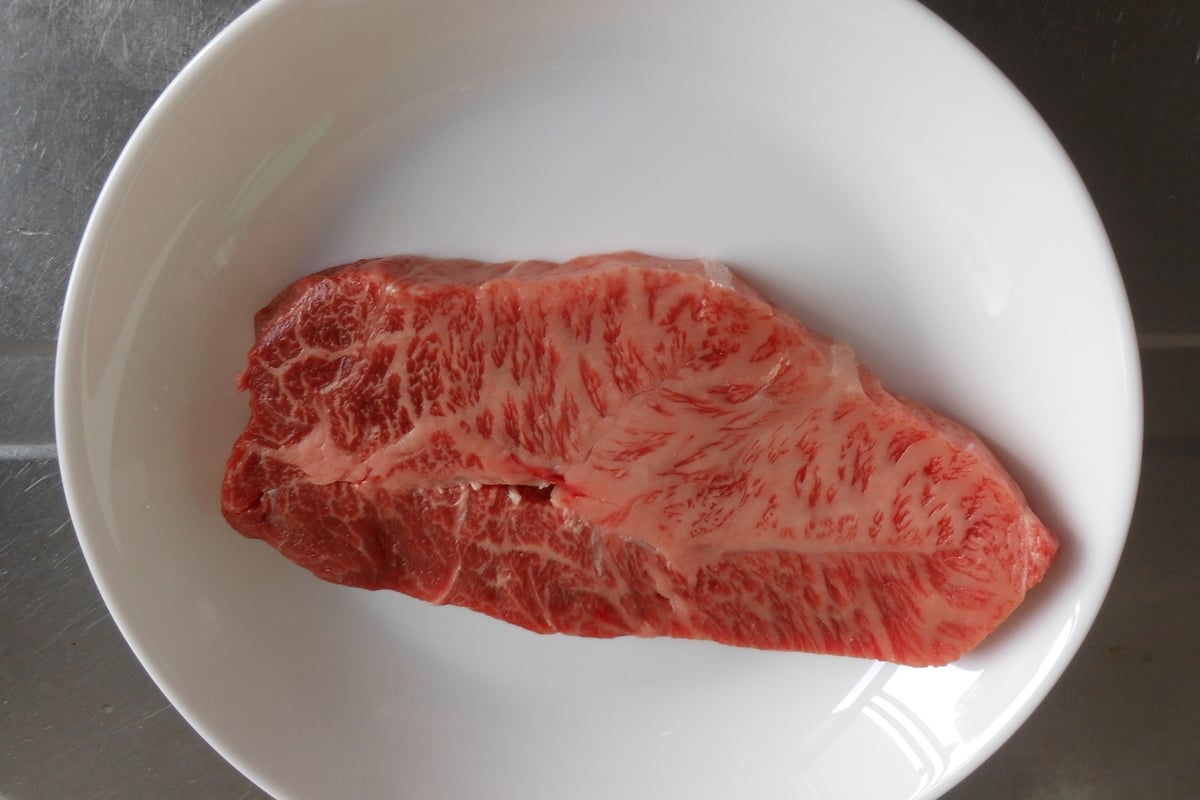
Hitachi Gyu (Hitachi Beef)
Hitachi Gyu
Hitachi Gyu is a branded Wagyu beef from Ibaraki Prefecture, awarded only to Japanese Black cattle raised in the prefecture for at least 27 months that earn a grade of A or B4 or higher from the Japan Meat Grading Association, with especially fine meat quality. Its roots trace back to 1832, when Tokugawa Nariaki, the 9th lord of the Mito Domain, opened the 'Sakurano' ranch in what is now Mito City's Mikawa-cho and began raising black cattle there. In 1976, the Ibaraki Prefecture Beef Brand Establishment Promotion Council named superior Japanese Black cattle raised in the prefecture 'Hitachi Gyu,' and the following year the Ibaraki Hitachi Gyu Promotion Association was established, unifying it as a single brand. Cuts such as rib loin, sirloin, and fillet are prized for their well-marbled, tender texture with a good balance of lean meat and fat, while shoulder loin and thigh are enjoyed grilled or in sukiyaki, and outer thigh and shank are suited to simmered dishes, each cut enjoyed in ways that highlight its own character.
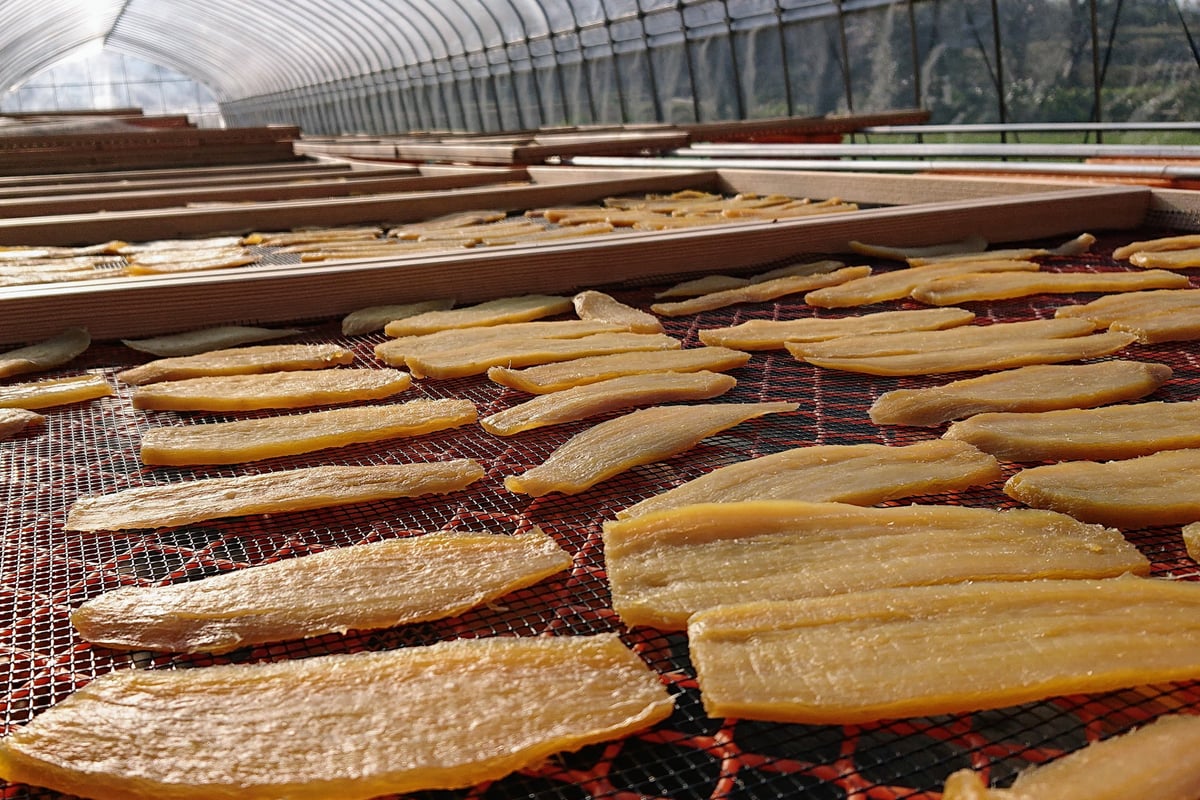
Hoshi Imo (Dried Sweet Potato)
Hoshi Imo (Dried Sweet Potato)
Hoshi imo is a preserved food made by steaming sweet potatoes, slicing them thin, and drying them in the sun; the coastal area of Ibaraki Prefecture centered on Hitachinaka City and Tokai Village accounts for the great majority of Japan's national production. Ibaraki's production is said to originate around 1908, when Terunuma Kantaro brought back a method he had seen in Shizuoka, prompting Yuasa Toshichi, a cracker maker in Minato (present-day Hitachinaka City), and others to begin making hoshi imo. The number of producers grew steadily from the Taisho era into the early Showa era, and after the war, production expanded rapidly with prefectural encouragement; by around 1955, Ibaraki had overtaken Shizuoka Prefecture, the birthplace of the product, to become Japan's top producing region. Taking advantage of the coastal area's winter sea breezes and ample sunshine, the region offers a range of flavors and textures across varieties, from the long-established Tamayutaka to the popular newer Beniharuka, and hoshi imo remains a beloved souvenir representative of Ibaraki today.
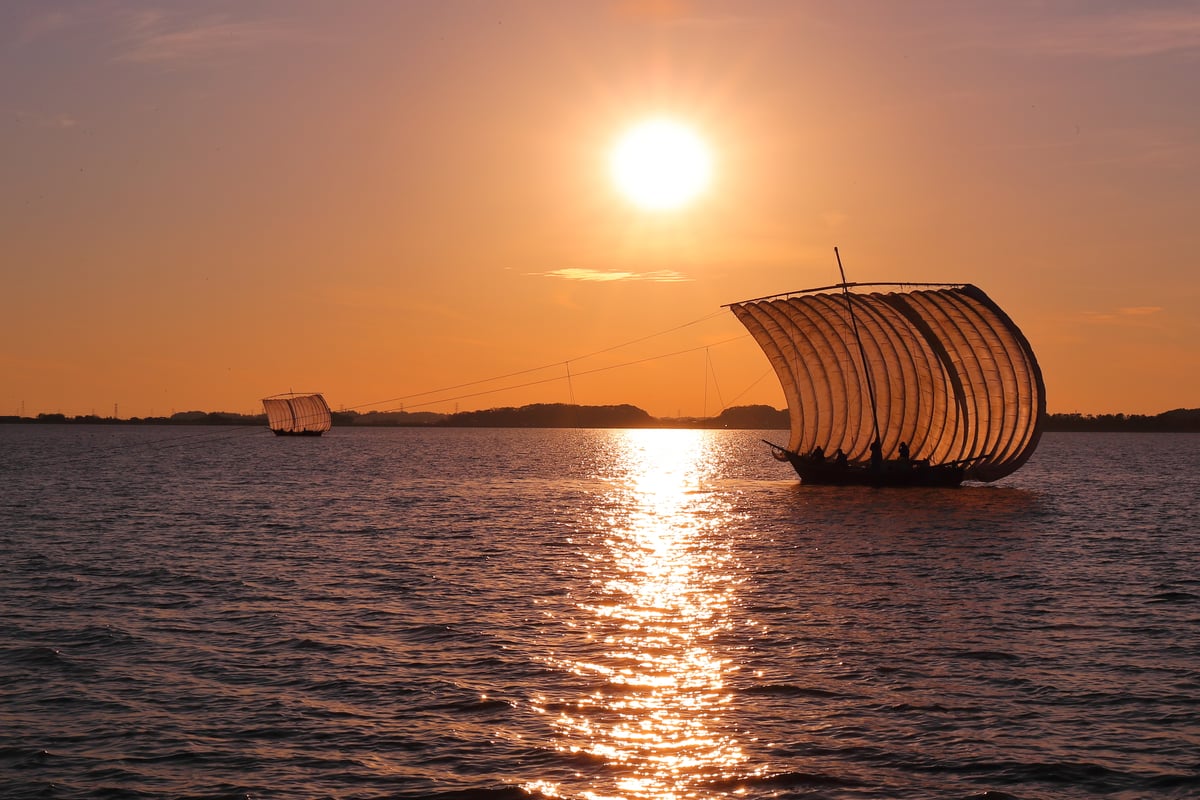
Lake Kasumigaura Wakasagi Cuisine (Hobikibune Fishing)
Kasumigaura Wakasagi Cuisine (Hobikibune Fishing)
Lake Kasumigaura wakasagi (pond smelt) cuisine is a fish-eating culture around Kasumigaura City and Tsuchiura City that developed alongside hobikibune (sail-net fishing boat) fishing, said to have been devised around 1880 by local fisherman Orimoto Ryohei. The hobikibune is a distinctive fishing boat that catches fish in a bag-shaped net towed behind it while the whole boat is pushed sideways by wind caught in its large sail; originally devised for icefish fishing, it later became the main method for catching wakasagi, and remained the mainstay of Lake Kasumigaura fishing for about a century until it was replaced by motorized boats around 1967. The wakasagi that are caught are prepared into dishes that make the most of freshwater fish's mild flavor and bones soft enough to eat whole, such as sweet-and-savory simmered tsukudani and kanroni, as well as deep-fried and tempura preparations, and are enjoyed at local eateries and souvenir shops. Today, sightseeing hobikibune boats operate seasonally to recreate the scenes of the past, letting visitors enjoy both the lake's food culture and its fishing history together.
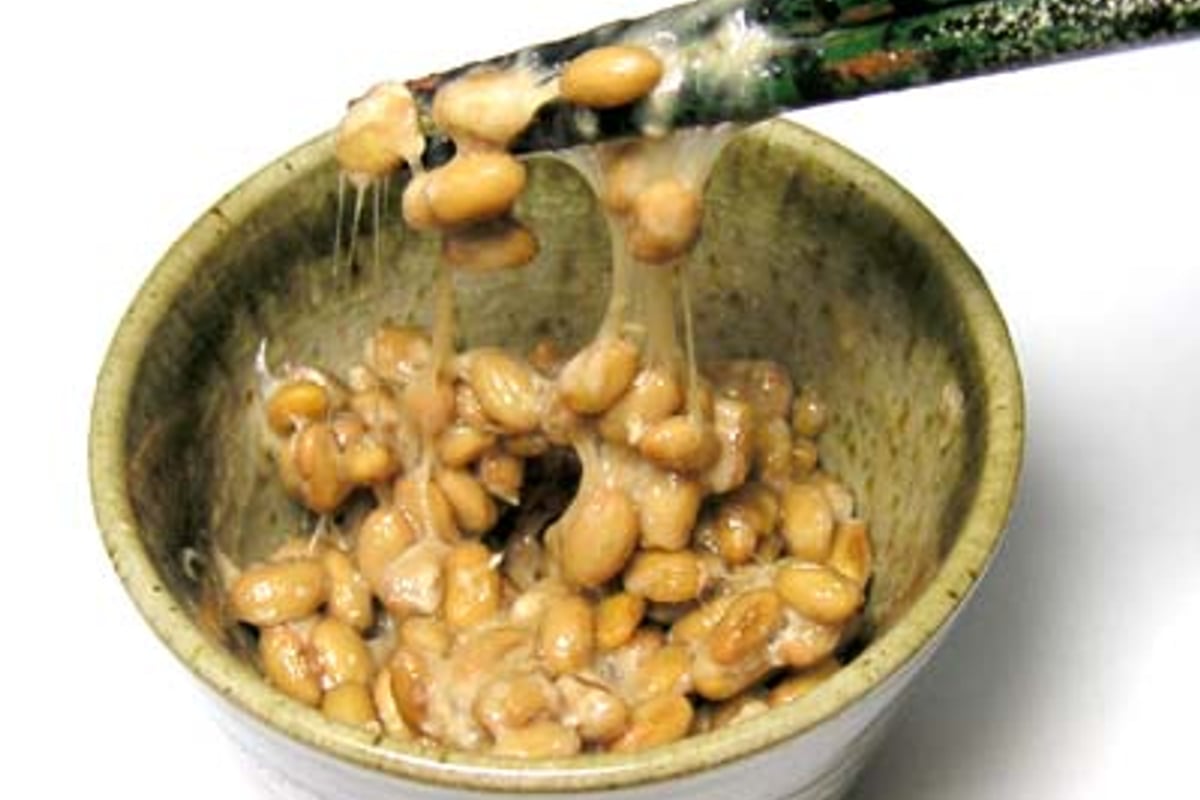
Mito Natto
Mito Natto
Mito Natto is a brand name for natto made around Mito City in Ibaraki Prefecture, known for its small, uniform soybeans that stick together well with fine strands, a signature natto texture. Around Mito, along the Naka River basin, farmers have long grown flood-resistant small soybeans, and this locally suited soybean variety helped natto-making take root here. In 1889 (Meiji 22), Seizaemon Sasanuma I founded 'Tengu Natto' and began selling it in front of Mito Station to coincide with the railway's opening that same year, which is said to be how Mito natto became known nationwide. Traditional methods such as 'waratsuto natto,' wrapped in rice straw, have also been passed down, and today Mito City continues to promote its identity as the 'town of natto,' even enacting an ordinance designating July 10 as 'Natto Day.'
Okukuji Shamo (Game Chicken)
Okukuji Shamo
Okukuji Shamo is a jidori (native breed) chicken raised primarily in Daigo Town in northern Ibaraki Prefecture, created by crossing a gentle-tempered strain of shamo (game fowl) selectively bred within the prefecture with Nagoya Cochin, known for its rich-flavored meat, and Rhode Island Red, prized for its high egg-laying ability. It is raised for roughly three times as long as ordinary broiler chickens, males for at least 110 days and females for at least 130 days, and from 28 days of age onward is kept in spacious conditions of no more than 10 birds per square meter. Full-scale production and sales began in 1985, and in 1988 it took first place in a nationwide jidori taste competition. In 2018 it became the first jidori chicken in Japan to be registered under the Geographical Indication (GI) Protection System, officially confirming its quality. With its lean, firm texture and juicy, rich flavor, it is served in Daigo Town in a wide variety of dishes, including oyakodon (chicken and egg rice bowl) and shamo nabe (hot pot).
Soboro Natto (Shoboro Natto)
Shoboro Natto
Soboro Natto (also called Shoboro Natto) is a local dish of Mito City made by pickling sticky-stranded natto together with warihoshi daikon (sun-dried, split daikon radish) in a seasoned liquid. 'Shoboro' is said to be a Mito dialect pronunciation of 'soboro.' In the Edo period, Mito was known for natto-making using early-ripening small soybeans that could be harvested before typhoon season, and it was customary to distribute freshly made autumn natto among neighbors and temples. The dish is said to have originated as a way to keep leftover natto, or natto that hadn't stranded very well, edible for longer by pickling it together with dried daikon. Unlike the branded product Mito Natto, which is natto itself, Soboro Natto is a preserved food in which natto is processed more like a pickle, which is the key distinction between the two. Its appeal lies in the contrast between the crunchy texture of the dried daikon and the soft, crumbly texture of the natto, and today it is made and sold by long-established pickle shops and natto shops in Mito, enjoyed as a topping for rice, a snack with drinks, and a popular Mito souvenir.
Tsuke Kenchin (Dipping Soba with Kenchin-jiru)
Tsuke Kenchin
Tsuke Kenchin is a local dish from Ibaraki Prefecture in which thick soba noodles are served separately from a warm bowl of kenchin-jiru (vegetable soup) — a hearty broth loaded with root vegetables such as taro, daikon, burdock, and carrot, along with konnyaku, and seasoned with miso, soy sauce, and mirin — so the noodles can be dipped into the soup much like tsukemen. The dish is said to date back to the late Edo period, and the custom of eating soba at the old-calendar New Year (around the time of today's Setsubun) is believed to have spread from Mito Domain throughout Ibaraki Prefecture. It has long been prepared as a festive dish in mid-November, once the harvest is largely finished, and unlike the 'kenchin soba' found in other prefectures — where the noodles are served directly in the soup — Ibaraki's distinctive style is to keep the soba and kenchin-jiru separate, dipping the noodles as one would with tsukemen. It remains especially popular from autumn through winter, when freshly harvested soba comes into season, and is deeply rooted in eateries and households throughout the prefecture, particularly in the northern Kenhoku region.
Yoshiwara Denchu
Yoshiwara Denchu
Yoshiwara Denchu is a Mito local confection said to have originated when Yoshiwara, a lady-in-waiting during the time of Tokugawa Nariaki, the 9th lord of the Mito Domain, dried and toasted leftover cooked rice and coated it with roasted soybean flour (kinako) so as not to waste it. According to legend, Nariaki, who valued frugality, was so fond of the confection that he named it 'Yoshiwara Denchu' after the lady-in-waiting who created it. It is characterized by its simple flavor: rice arare (crackers) made from glutinous rice are hardened with starch syrup, shaped into sticks, coated generously with kinako, and wrapped in edible rice paper (oblate); it continues to be made by confectionery shops within Mito City. A trademark application was filed in 1963, and today it is one of Mito's signature confections, made only by shops belonging to the Mito Confectionery Industry Cooperative Association, which alone are permitted to use the name 'Yoshiwara Denchu.'
Model Course
A Half-Day Course of History and Local Flavors in Mito
In the morning, visit a Suifu Chochin shop in Mito to see the paper-lantern craft handed down since the Edo period. For lunch, try Mito Natto and Soboro Natto at a long-established shop, then pick up Yoshiwara Denchu, a confection tied to the Mito Domain, as a souvenir — a course that captures Mito's history and flavor in one visit.
A Full-Day Course of Traditional Crafts in Kasama and Sakuragawa
Enjoy a pottery-making experience and kiln tour in Kasama, home of Kasama Ware, then head to the Makabe district of Sakuragawa City to see the display garden of Makabe stone lanterns. On the way back, sample Hitachi Akisoba buckwheat noodles in Hitachiota City — a course that combines Ibaraki's craftsmanship with its noodle culture.
A Course of Sea and Lake Delicacies in Oarai and Lake Kasumigaura
In winter, enjoy Anko Nabe in Oarai Town; the rest of the year, head to Kasumigaura City for Wakasagi smelt dishes and a chance to see the traditional Hobikibune sail-net fishing boats. Extend the trip to Ishioka City to see the wood carvings of Hitachi-jishi lion heads used at the Grand Festival of Hitachi-no-kuni Sosha-gu Shrine.
Events
Mito Plum Blossom Festival
Every year, mid-February to late March (in 2026: February 11 - March 22) / Kairakuen and Kodokan (Mito City)
View details →Kasama Pottery Festival (Himatsuri)
Every year, April 29 - May 5 / Kasama Geijutsu-no-mori Park (2345 Kasama, Kasama City)
View details →