Image: Wikimedia Commons
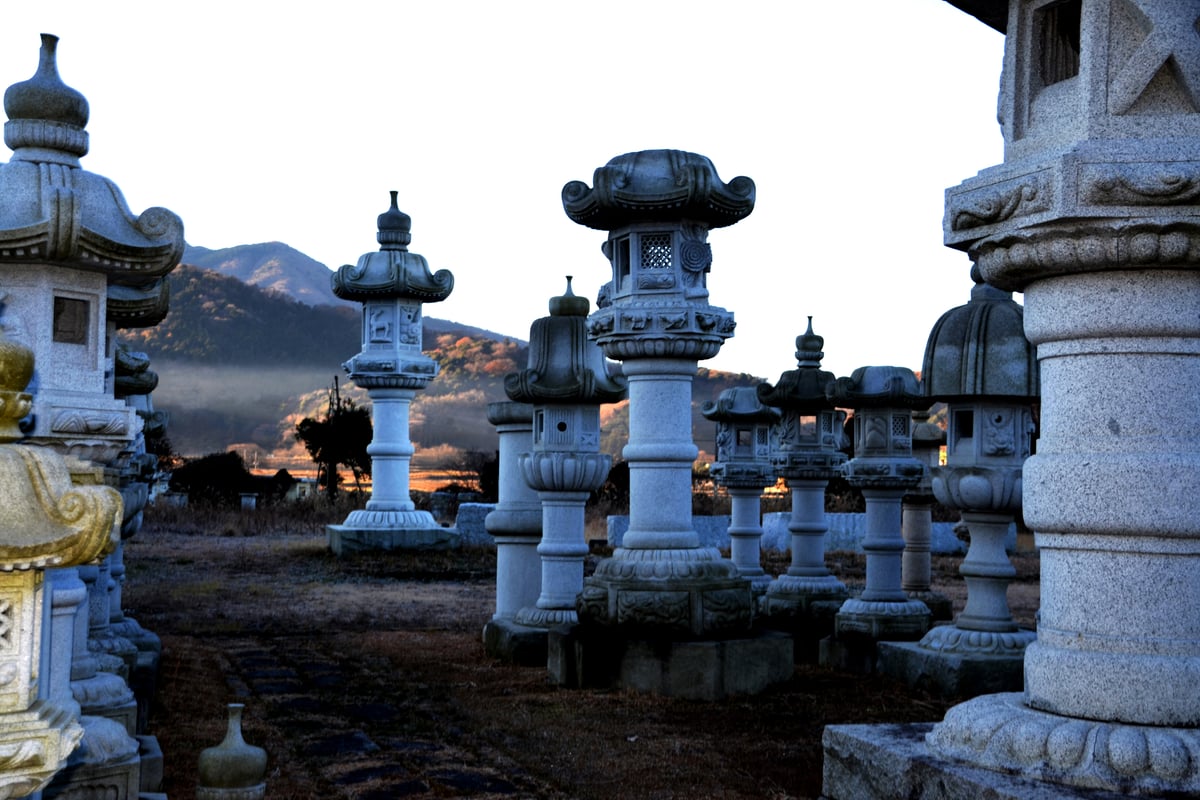
Makabe stone lanterns are stone lanterns made from high-quality granite known as 'Makabe stone,' quarried in and around Makabe, Sakuragawa City, Ibaraki Prefecture. Their origins are said to date to around the 16th century, when the production of Buddhist stone images began in the Makabe area. A stone lantern believed to have been made in 1824 (Bunsei 7) still stands in the grounds of a temple in Makabe, and the techniques were established through strict master-apprentice transmission tracing back to the late-Edo-period stonemason Kubota Kichibei. The craft is characterized by the use of 18 techniques from quarrying to finishing, including delicate carving methods such as tsukibori (chisel relief), shizumebori (sunken relief), and sukashibori (openwork carving), and it was designated a METI-designated Traditional Craft Product on April 5, 1995. It is the third such designation in the prefecture after Yuki-tsumugi silk and Kasama ware, and the Makabe district of Sakuragawa City is counted, along with Okazaki in Aichi Prefecture and Aji in Kagawa Prefecture, as one of Japan's three major stone-producing regions.
Origin
The origins of Makabe stone lanterns are said to date to around the 16th century, when the production of Buddhist stone images began in the Makabe area. The oldest confirmed Makabe stone lantern is one believed to have been made in 1824 (Bunsei 7), located in the grounds of a temple in Makabe, and local stonemasons continued to refine their skills and techniques over time. In the late Edo period, the techniques were passed down through strict master-apprentice transmission tracing back to the stonemason Kubota Kichibei.
History
During the Edo period, stone lanterns came to be dedicated as eternal lamps at shrines and temples, and the skills of local stonemasons steadily improved. From the Meiji era onward, use expanded into building materials as well, and Makabe stone was adopted for prestigious structures such as the State Guest House, the Imperial Palace, and the exterior of department store flagship buildings. It was designated a METI-designated Traditional Craft Product on April 5, 1995, becoming the third such designation in Ibaraki Prefecture after Yuki-tsumugi silk and Kasama ware.
Features
The process from quarrying to finishing the stone employs 18 techniques, including marking, shaping, carving, and finishing, with a variety of methods such as tsukibori (chisel relief), shizumebori (sunken relief), sukashibori (openwork carving), ukashibori (raised relief), and nikubori (deep relief) used to create delicate, elegant carvings. Makabe stone, the raw material, is a high-quality granite that is sturdy and highly resistant to weathering, and the technique of 'hozo-tsugi' (mortise-and-tenon joining), which fits component pieces together, allows heavy lanterns to be assembled stably.
Techniques
The 18 Traditional Techniques
The process is divided into stages of marking and shaping (rough cutting, medium cutting, edge trimming, etc.), carving (tsukibori, shizumebori, sukashibori, ukashibori, nikubori), and finishing (chisel dressing, bisyan hammering, tataki texturing, etc.), with the hozo-tsugi (mortise-and-tenon) technique used to join the component pieces.
Materials Used
Artisans & Workshops
大関石材店
A stone workshop based in Sakurai, Makabe, Sakuragawa City. It employs two certified traditional craftsmen qualified to make the nationally designated Traditional Craft 'Makabe stone lanterns,' and its adjoining exhibition grounds, 'Higure no Niwa,' permanently display stone lanterns made in-house.
Official site →海老原石材店
A stone workshop founded in the Meiji era, engaged in quarrying, processing, and selling Makabe stone. In addition to stone lanterns made from Makabe stone, it produces gravestones and stone products for exterior use.
Official site →How to Buy
- 真壁石材協同組合
- A cooperative association of manufacturers, quarrying operators, and certified traditional craftsmen involved in producing Makabe stone lanterns. It offers estimates and purchase consultations for stone lanterns, and also accepts applications for tours of the stone quarries.Where to buy →PR
Hands-on Experiences
大関石材店「日暮の庭」
茨城県桜川市真壁町桜井583
An exhibition garden lined with several hundred stone lanterns, where visitors can view actual lanterns alongside seasonal scenery, with the option to purchase any piece they like on the spot.
View details →