Craft Genre
Stonework
A cross-regional look at Stonework from across Japan.
Region(multiple selection allowed)
3 items

Koshu Crystal and Gemstone Carving
Koshu Crystal and Gemstone Carving
Koshu Crystal and Gemstone Carving is a craft in which natural stones such as rock crystal, agate and jade are carved and painstakingly polished. Its production area is Kofu City and its surroundings, and items ranging from incense burners, Buddhist statues and ornamental figures of dragons and hawks to accessories such as necklaces and rings are made. It is said to have originated about 1,100 years ago, when raw crystal was found on Mt. Kinpu, deep in the interior beyond Mitake Shosenkyo Gorge. In the Tenpo era of the Edo period, craftsmen were invited from Kyoto, bringing a method of polishing crystal by scattering kongosha (a hard abrasive sand) on an iron plate. Crystal is very hard, and carving and polishing it takes a long time. This polishing technique spread to the processing of gemstones and laid the foundation for Yamanashi to become one of Japan's leading jewelry production areas. In 1976 it was designated a Traditional Craft Designated by the Minister of Economy, Trade and Industry. At the Yamanashi Jewelry Museum in Kofu City, visitors can learn about the history of Yamanashi jewelry, which began with crystal.
Wakasa Meno Zaiku (Wakasa Agate Craft)
Wakasa Meno Zaiku
Wakasa Meno Zaiku is a gemstone craft handed down in Obama City, Fukui Prefecture. Rough agate is heated in a process called yakiire to bring out a vivid red color, then carved and polished into ornaments and accessories. Some traditions trace its origins to the Nara period, but the foundations of its techniques were laid in the mid-Edo period. It is said that in the Kyoho era (1716-1736), Takayama Kihei of Onyu Village (present-day Onyu, Obama City) learned polishing techniques in Osaka and heat-treating techniques in Tsugaru, and then began making agate beads in his village. In the Meiji era, carving techniques were developed, and incense burners, Buddhist statues, animal figurines and other pieces also came to be made. In 1976 (Showa 51), it was designated a Traditional Craft Designated by the Minister of Economy, Trade and Industry. At its peak there were about 50 artisans, but today Uenishi Soichiro of Sosuke Kobo carries on the techniques as the only artisan in the production area. At Wakasa Kobo in Obama City, visitors can also try agate polishing.
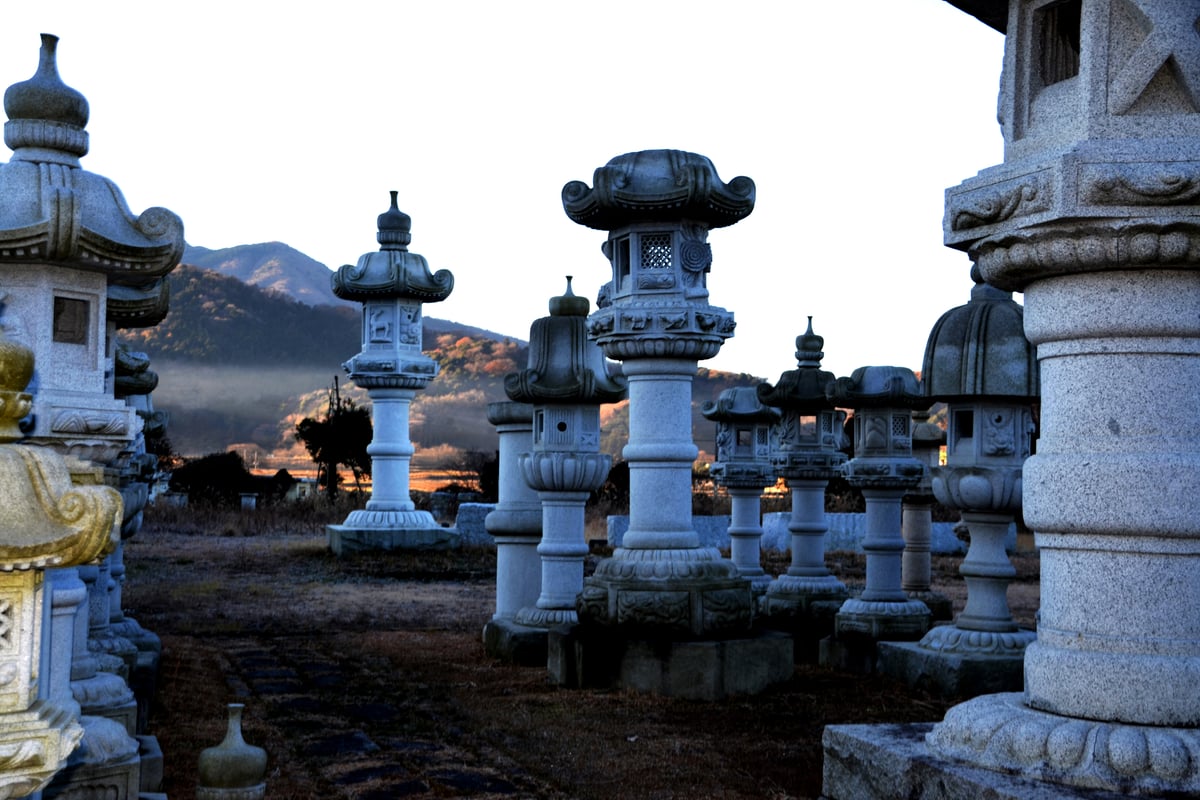
Makabe Stone Lantern
Makabe Stone Lantern
Makabe stone lanterns are stone lanterns made from high-quality granite known as 'Makabe stone,' quarried in and around Makabe, Sakuragawa City, Ibaraki Prefecture. Their origins are said to date to around the 16th century, when the production of Buddhist stone images began in the Makabe area. A stone lantern believed to have been made in 1824 (Bunsei 7) still stands in the grounds of a temple in Makabe, and the techniques were established through strict master-apprentice transmission tracing back to the late-Edo-period stonemason Kubota Kichibei. The craft is characterized by the use of 18 techniques from quarrying to finishing, including delicate carving methods such as tsukibori (chisel relief), shizumebori (sunken relief), and sukashibori (openwork carving), and it was designated a METI-designated Traditional Craft Product on April 5, 1995. It is the third such designation in the prefecture after Yuki-tsumugi silk and Kasama ware, and the Makabe district of Sakuragawa City is counted, along with Okazaki in Aichi Prefecture and Aji in Kagawa Prefecture, as one of Japan's three major stone-producing regions.