Lake Kasumigaura Wakasagi Cuisine (Hobikibune Fishing)
Kasumigaura Wakasagi Cuisine (Hobikibune Fishing)
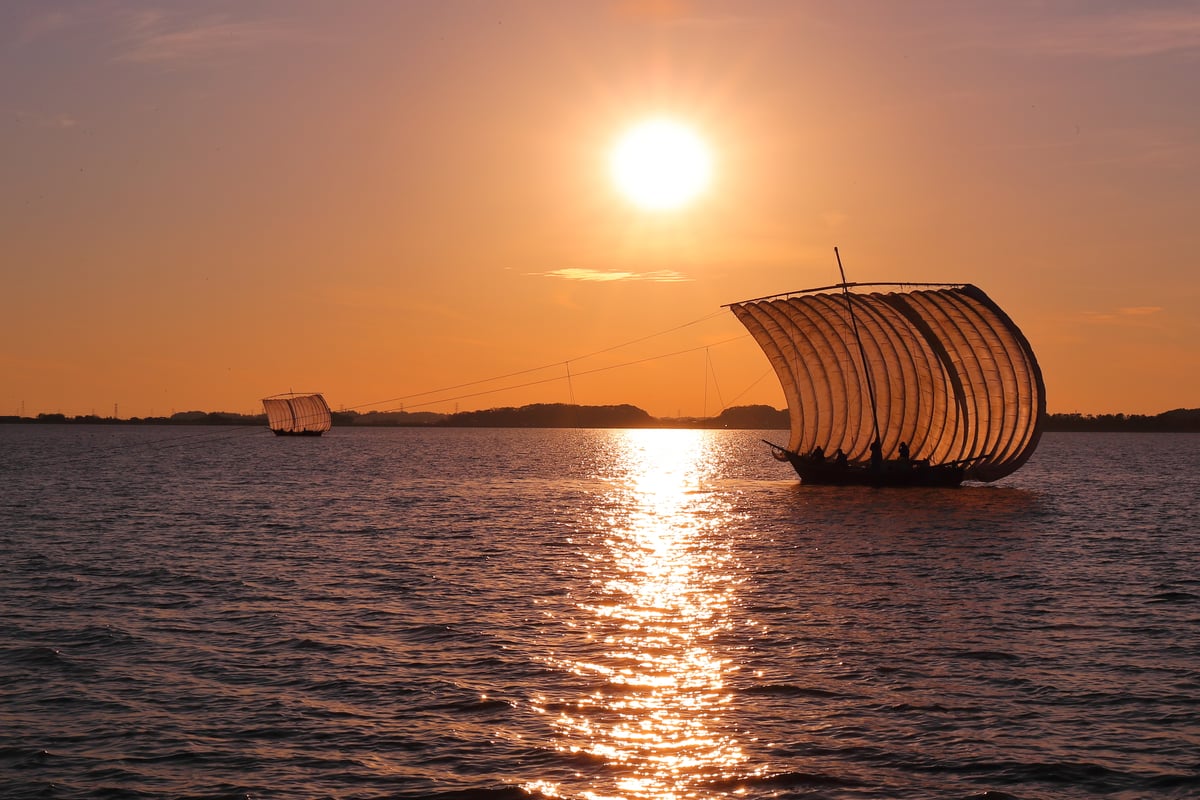
Image: Wikimedia Commons
Lake Kasumigaura wakasagi (pond smelt) cuisine is a fish-eating culture around Kasumigaura City and Tsuchiura City that developed alongside hobikibune (sail-net fishing boat) fishing, said to have been devised around 1880 by local fisherman Orimoto Ryohei. The hobikibune is a distinctive fishing boat that catches fish in a bag-shaped net towed behind it while the whole boat is pushed sideways by wind caught in its large sail; originally devised for icefish fishing, it later became the main method for catching wakasagi, and remained the mainstay of Lake Kasumigaura fishing for about a century until it was replaced by motorized boats around 1967. The wakasagi that are caught are prepared into dishes that make the most of freshwater fish's mild flavor and bones soft enough to eat whole, such as sweet-and-savory simmered tsukudani and kanroni, as well as deep-fried and tempura preparations, and are enjoyed at local eateries and souvenir shops. Today, sightseeing hobikibune boats operate seasonally to recreate the scenes of the past, letting visitors enjoy both the lake's food culture and its fishing history together.
Origin
Hobikibune fishing is said to have been devised around 1880 by Orimoto Ryohei, a fisherman born in what is now Kasumigaura City, who spent three years perfecting the technique after being inspired by a boat gliding across the water's surface. It was originally devised for icefish fishing but was later applied to wakasagi fishing as well; the unique technique of towing a net using wind power alone was generously shared with other fishermen and spread throughout the Lake Kasumigaura area.
History
Hobikibune fishing remained the mainstay method of Lake Kasumigaura fishing for about a century after it was devised, but around 1967 it was gradually replaced by trawl fishing using motorized boats. Today it is positioned as a tourism resource that conveys the techniques and scenery of the past; in Kasumigaura City, sightseeing hobikibune boats operate seasonally around Ayumizaki Park, allowing visitors to see the fishing methods of old up close.
Features
The hobikibune is a distinctive fishing method devised for the calm waters of Lake Kasumigaura, in which a large sail catches the wind to push the whole boat sideways, driving wakasagi and icefish into a bag-shaped net trailed behind it. The wakasagi that are caught have soft bones that can be eaten whole, and are served in dishes such as tsukudani and kanroni as well as tempura and deep-fried preparations that highlight the mild, natural flavor of the fish.
Food Culture
Around Kasumigaura City and Tsuchiura City, many tsukudani shops and eateries dealing in Lake Kasumigaura's fish and shellfish remain, and kanroni or deep-fried wakasagi are also popular souvenirs. The sightseeing hobikibune boats that operate from late July through November are a local tourism draw, and many visitors come to enjoy both the history of the fishery and its wakasagi dishes.
Famous Shops
御食事処 梅澤
茨城県かすみがうら市下志筑1798-2
An eatery serving tempura and sashimi teishoku (set meals) made with fish and shellfish from Lake Kasumigaura.
| わかさぎ甘露煮(出羽屋) | Sweet simmered wakasagi (kanroni) made by a tsukudani shop on the shores of Lake Kasumigaura, founded in 1932. Priced at around 864 yen (tax included).Where to buy →PR |
|---|