Image: Wikimedia Commons
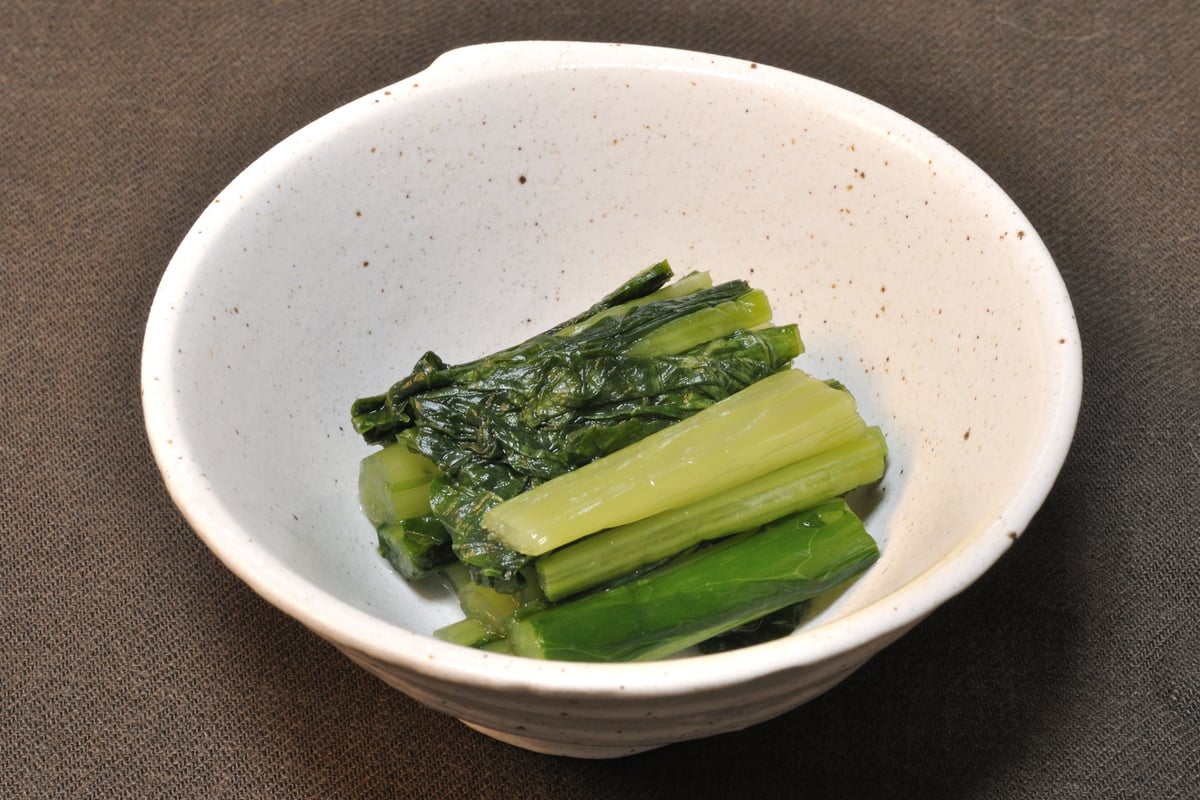
Nozawana-zuke is Nagano Prefecture's signature pickle, made by pickling 'nozawana,' a leafy vegetable of the Brassicaceae family, with salt and other ingredients. The name nozawana comes from the fact that it has been grown in Nozawa Onsen Village in the Hokushin region. It is said to have begun in 1756 (Horeki 6), when the head priest of Kenmeiji Temple in the village brought back seeds of Tennoji-kabu (Tennoji turnip) from Kyoto and sowed them. In the snowy, cold highland climate, the turnip roots did not develop, and it is said to have become a unique vegetable in which only the leaves and stems grow large. In Nagano Prefecture, pickled leafy greens are collectively called 'ohazuke,' and Nozawana-zuke is the representative example. It has been pickled in each household as a preserved food for the winter and enjoyed as an accompaniment to rice and as a snack with tea. Its appeal lies in its crisp texture and moderate saltiness.
Origin
The beginnings of nozawana go back to a story handed down at Kenmeiji Temple in Nozawa Onsen Village. In 1756 (Horeki 6), the eighth-generation head priest is said to have brought back seeds of Tennoji-kabu during religious training in Kyoto and sown them in the temple's field. In this snowy land at an elevation of nearly 600 m, the turnip roots did not grow large, and only the leaves and stems grew well. It is said that the greens born in this way eventually came to be called nozawana.
History
A monument marking the birthplace of nozawana stands on the grounds of Kenmeiji Temple, and nozawana is still grown in the temple's field today. The seeds that the temple has harvested generation after generation are called 'teradane' (temple seeds) and have been passed down as precious seeds. Nozawana was selected as one of the 'Shinshu Traditional Vegetables' in 2007. It has also been selected as one of Nagano Prefecture's 'Taste Cultural Assets,' and in 2006 the Nozawa Onsen Tourism Association designated November 1 as 'Nozawana Day.'
Features
Nozawana is said to lose its bitterness and become sweet and tender when exposed to frost, and it is harvested from November onward. The leaves are washed one by one and then pickled in salt, and a weighted stone is placed on top until the liquid rises. The flavor settles in after about two weeks to a month, and it is ready to eat. In addition to the green color and crispness of lightly pickled asazuke, furuzuke (long-pickled nozawana), which turns an amber color as lactic acid fermentation progresses, can also be enjoyed for its sourness and flavor.
Main Ingredients
Food Culture
In Nozawa Onsen Village, 'onaarai,' the washing of harvested nozawana in the hot spring water that wells up in the village, is a seasonal sight of late autumn. Because cold water makes hands numb, hot spring water has been used. Throughout the winter, the pickled nozawana appears on the table as an accompaniment to rice, a snack with tea, and a side dish with drinks.
How It Differs from Home Cooking
At home, it is common to pickle a large amount at once in a big wooden tub and eat it little by little until the end of winter. In shops, besides asazuke and honzuke (fully pickled), products with various seasonings are lined up, such as 'tokizuke,' in which the nozawana is chopped and pickled in soy sauce and other seasonings, and kimchi-style versions. Furuzuke that has turned sour is also used in stir-fries and fried rice.
Famous Shops
野沢菜本舗
長野県下高井郡野沢温泉村豊郷9511
A shop facing Oyu-dori, the busiest street in the hot spring town, which deals in preserved foods such as pickles, including its homemade Nozawana-zuke, and jams. It carries honzuke and asazuke of nozawana, soy sauce pickles, beer pickles, and more.
ハウスサンアントン ジャムファクトリー&カフェ
長野県下高井郡野沢温泉村豊郷9515
A jam workshop and cafe in the hot spring town of Nozawa Onsen. It offers products that arrange 'nozawana tokizuke,' pickled with the stems cut, with Sichuan pepper (huajiao), olive oil, and other ingredients, starting from about 660 yen.
黄金屋物産店
長野県下高井郡野沢温泉村豊郷9304
A souvenir shop in the hot spring town of Nozawa Onsen. 'Hangoroshi Kimchi,' nozawana pickled as kimchi, is a product characterized by a spiciness strong enough to numb the tongue, starting from about 650 yen. It offers a way to enjoy nozawana that differs from the standard pickles.
| Teradane Nozawana Seeds (健命寺) | At Kenmeiji Temple (野沢温泉村豊郷9320), regarded as the temple where nozawana originated, visitors can purchase 'teradane,' the nozawana seeds handed down through generations. The monument marking the birthplace also stands on the grounds, offering a glimpse into the history of nozawana. |
|---|
FAQ
Q. When is Nozawana-zuke at its best?
A. Nozawana is harvested and pickled from November onward. The flavor settles in about two weeks to a month after pickling, and it is at its best from the end of the year through the winter. As time passes, lactic acid fermentation progresses, and it becomes sour, amber-colored furuzuke.
Q. What is 'ohazuke'?
A. It is a term used in Nagano Prefecture to collectively refer to pickles of leafy greens, starting with nozawana. They have been pickled in each household as preserved food for the winter months when vegetables cannot be harvested. Nozawana-zuke is the representative ohazuke.