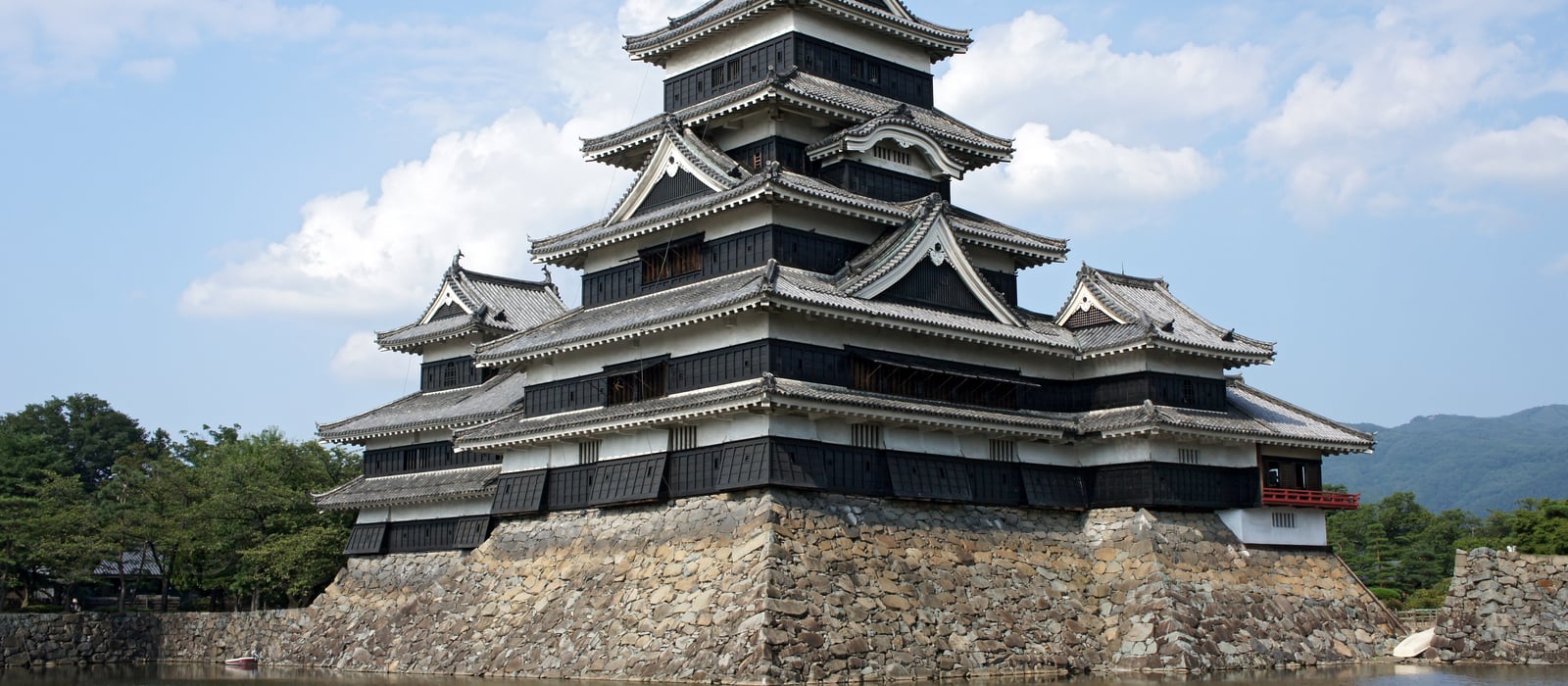
 Image: Wikimedia Commons
Nagano Prefecture
Surrounded by the Japanese Alps, Nagano Prefecture has nurtured crafts and food cultures that make use of the bounty of the mountains in each of its regions: Hokushin, Toshin, Chushin and Nanshin. The prefecture has seven Traditional Crafts Designated by the Minister of Economy, Trade and Industry. In the Kiso Valley, Kiso Lacquerware from Kiso-Hirasawa in Shiojiri City and Nagiso Wood Turning, shaped by the kijishi (woodturners) of Nagiso Town, have been handed down. Matsumoto Furniture from the castle town of Matsumoto, Shinshu Tsumugi woven in Ueda and elsewhere, and Shinshu Forged Blades from Shinano Town are also nationally designated. In snowy Iiyama City in the Hokushin region, Uchiyama Paper and Iiyama Buddhist Altars are made. Iida City is a major production area for mizuhiki. In food, Nagano is known for Shinshu Soba, made from buckwheat grown in the cool highlands. Oyaki from the Hokushin region, Nozawana-zuke, said to have originated in Nozawa Onsen Village, and Kiso's Sunki-zuke, made without salt, are also tastes of Nagano. Visitors can also enjoy local specialties such as Sanzoku-yaki from Matsumoto and Shiojiri, Romen from Ina, Saku Carp and Obuse Chestnut Confections.
Nagano's Traditional Crafts

Shinshu Tsumugi (Pongee Silk)
Shinshu Tsumugi
Shinshu Tsumugi is the collective name for the silk fabrics woven in many parts of Nagano Prefecture. It brings together the tsumugi (pongee silk) that developed in each area, such as Ueda Tsumugi, Matsumoto Tsumugi, Iida Tsumugi and Ina Tsumugi, as well as Ariake Tsumugi (Azumino Tsumugi) and Yamamayu Tsumugi, which use tensan (wild silkworm) thread. Since ancient times, sericulture flourished so much in Shinshu that it was called 'the land of silkworms.' Shinshu Tsumugi is said to have begun in the early Edo period, when each domain encouraged sericulture and farmers began, as a side job, to turn cocoons unsuitable for raw silk into silk floss, spin it and weave it. The thread is dyed with plant dyes before weaving, and the fabric is woven by hand, with the weft beaten in using a tenagehi (hand-thrown shuttle), to produce stripes, checks, kasuri (ikat) and solid-toned designs. The main products are kimono fabric, obi and haori, and in recent years Western clothing, bags and stoles are also made. In 1975 it became a Traditional Craft Designated by the Minister of Economy, Trade and Industry. At workshops in Ueda City and Komagane City, visitors can try hand weaving on a loom.
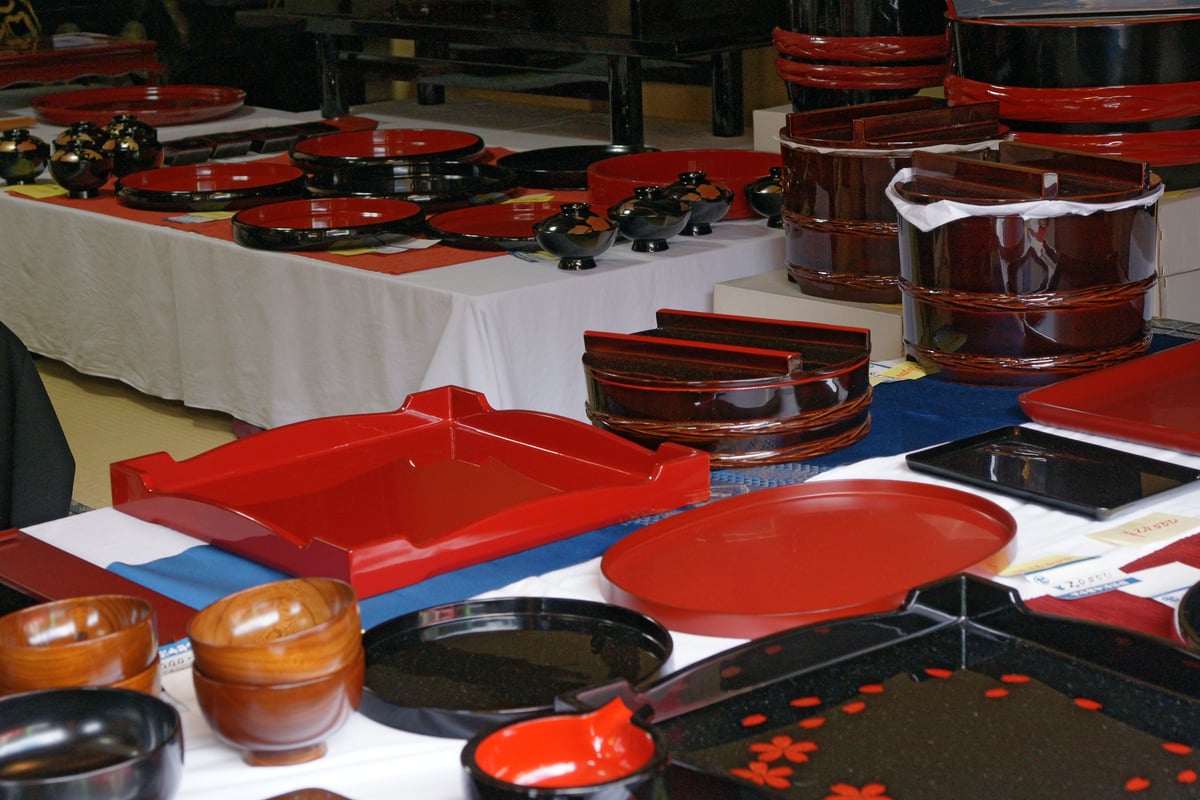
Kiso Lacquerware
Kiso Shikki (Kiso Lacquerware)
Kiso Lacquerware is lacquerware that has been made mainly in Kiso-Hirasawa and Narai in Shiojiri City, Nagano Prefecture. It is said to have begun in the early 17th century, when people applied urushi lacquer to plain woodwork made from the rich forest resources of the area, such as Kiso hinoki cypress, and sold it as souvenirs to travelers on the Nakasendo highway. Around the beginning of the Meiji period, a clay high in iron called sabitsuchi was found in Narai. Thanks to a groundwork technique in which this sabitsuchi is mixed into the lacquer, the area became renowned for sturdy lacquerware. The representative techniques are 'Kiso Shunkei,' which brings out the wood grain; 'Kiso Tsuishu,' which creates mottled patterns; and 'Nuriwake Roiro-nuri,' in which geometric patterns are painted with colored lacquers. In 1975 it became a Traditional Craft Designated by the Minister of Economy, Trade and Industry. The townscape of Kiso-Hirasawa has been selected as a national Important Preservation District for Groups of Traditional Buildings as a 'lacquer craftsmen's town.'
Nagiso Wood Turning
Nagiso Rokuro Zaiku (Nagiso Wood Turning)
Nagiso Wood Turning is woodwork made mainly in Nagiso Town, Kiso District, Nagano Prefecture. Using the 'hikimono' (turned woodware) technique, in which a thick board or log is spun on a lathe (rokuro) and shaped by cutting with a plane blade, artisans make trays, bowls, teacup saucers, wooden bowls and more. It is said to have begun in the first half of the 18th century, when people called kijishi (woodturners), who excelled at turning wood, settled in this area. The materials are hardwoods with beautiful grain that grow in the Kiso Valley, such as tochi (Japanese horse chestnut), keyaki (zelkova), sen and katsura. Artisans judge the grain and quality of the wood and decide which item to make from each piece. The products come either as 'shiraki' (plain wood) left unfinished, or as 'urushi-fuki' (wipe-lacquered), in which lacquer is applied and wiped off. In 1980 it became a Traditional Craft Designated by the Minister of Economy, Trade and Industry. At 'Kijishi no Sato' (the Woodturners' Village) in Azuma, Nagiso Town, workshops are clustered together, and visitors can watch the work and try hand-turning on a lathe.
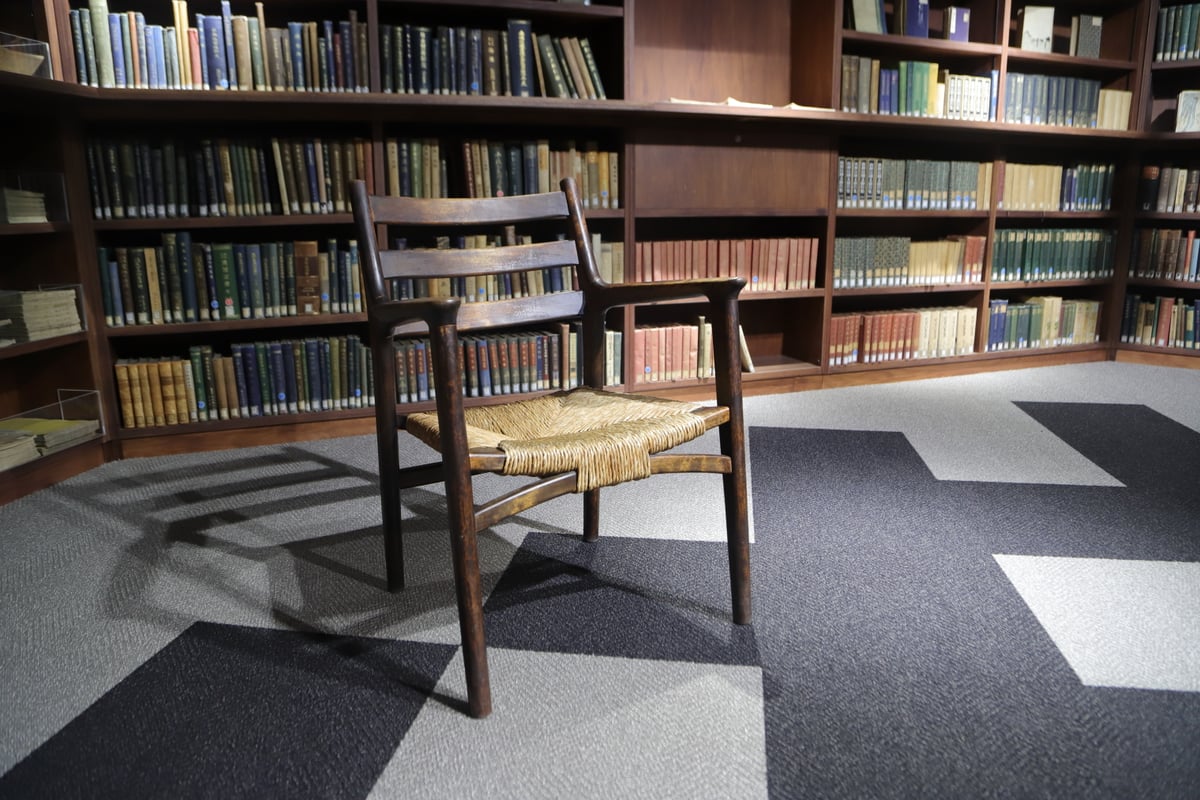
Matsumoto Furniture
Matsumoto Kagu (Matsumoto Furniture)
Matsumoto Furniture is Japanese-style furniture made mainly in Matsumoto City, Nagano Prefecture. It is thought to have begun as one of the commercial and industrial trades around Tensho 10 (1582), when a castle town took shape around Matsumoto Castle. Using solid wood such as keyaki (zelkova), mizume (Japanese cherry birch) and udaikanba (Japanese monarch birch), artisans have made tansu chests, display shelves, low tables, writing desks and more. Its characteristics are the sturdiness that comes from complex joinery techniques and a fuki-urushi (wipe-lacquer) finish that brings out the wood grain. Furniture making declined after the Pacific War, but prompted by a visit from Yanagi Soetsu, leader of the Mingei (folk craft) movement, Ikeda Sanshiro worked to revive it. The techniques cultivated through Japanese-style furniture are also applied to Western-style furniture such as chairs and tables. In 1976 it became a Traditional Craft Designated by the Minister of Economy, Trade and Industry. Visitors can see this furniture up close on Nakamachi Street in Matsumoto and at the Matsumoto Mingeikan (Matsumoto Folk Craft Museum).
Uchiyama Paper
Uchiyama-gami (Uchiyama Paper)
Uchiyama Paper is a handmade washi (Japanese paper) made mainly in Iiyama City in northern Nagano Prefecture. It is said to have begun in Kanbun 1 (1661), in the early Edo period, when Hagiwara Kiuemon of Uchiyama Village (present-day Uchiyama, Kijimadaira Village) learned the method in Mino and made paper after returning home. Its name comes from this place name. Only kozo (paper mulberry) is used as the raw material, with no Western paper pulp mixed in. A major characteristic is yukizarashi (snow bleaching), typical of this heavy-snow region, in which kozo bark is laid out on the snow to bring out a natural whiteness. Because it is strong, breathes well, retains moisture and resists sun discoloration, it has long been valued as shoji paper. In 1976 it became a Traditional Craft Designated by the Minister of Economy, Trade and Industry. In Iiyama City and Kijimadaira Village, there are facilities where visitors can try papermaking.
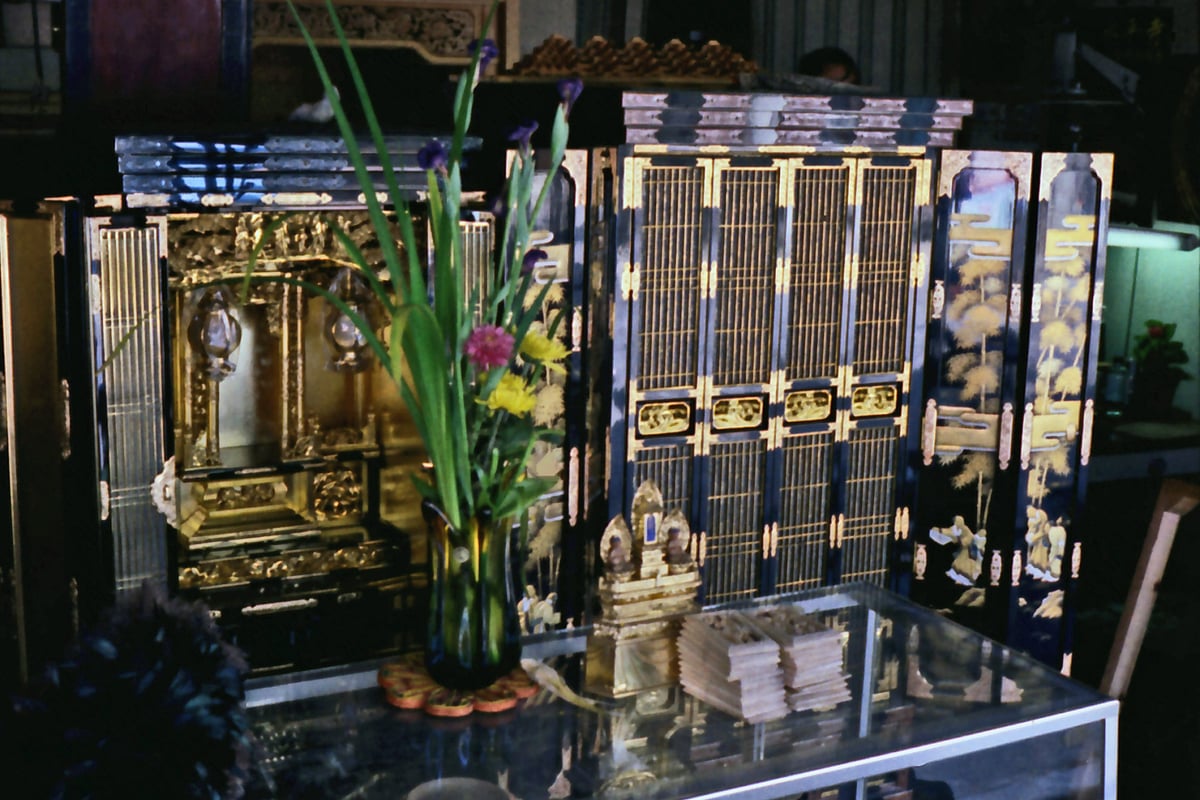
Iiyama Buddhist Altars
Iiyama Butsudan (Iiyama Buddhist Altars)
Iiyama Buddhist Altars are gilded Buddhist altars (kinbutsudan) made in Iiyama City, Nagano Prefecture. They are produced mainly in the Atago (愛宕町) area in the north of the city, and everything from making the parts to assembly and repair is carried out within the area. Jodo Shinshu Buddhism reached Iiyama from the Hokuriku region in the Muromachi period, and the city is known as a place of deep faith. Because of its townscape lined with many temples, it has also been called 'the Little Kyoto of the Snow Country.' The craft is said to have begun in Genroku 2 (1689), when 寺瀬重高, who had come from Koshu, made plain unlacquered altars. Its distinctive features are the technique of assembling the kuden (the palace-like structure inside the altar) with 'hijiki kumimono' (bracket assemblies), and the 'yuminageshi,' a lintel curved like a bow so that the kuden can be seen clearly. Through 'sentaku' (literally 'washing'), in which the altar is taken apart, washed and relacquered, it can be passed down and used over many generations. In 1975 it became a Traditional Craft Designated by the Minister of Economy, Trade and Industry. The street in Atago, lined with gangi (covered walkways that keep off the snow), is fondly known as 'Butsudan-dori' (Buddhist Altar Street), where altar shops stand side by side.
Shinshu Forged Blades
Shinshu Uchihamono (Shinshu Forged Blades)
Shinshu Forged Blades are forged blades made mainly in Shinano Town, Kamiminochi District, in northern Nagano Prefecture. Iron and steel are heated in a forge and hammered out one by one with a hammer (tsuchi) to shape them. The representative product is the 'Shinshu sickle' (Shinshu-gama), whose back is thick and whose blade is extremely thin, making it sturdy and sharp. Thanks to 'shibatsuke,' which bends the part inserted into the handle, and 'tsuri,' which curves the blade face inward, the grass that has been cut gathers toward the user's hand. The craft is said to have originated in the mid-16th century, around the time of the Battles of Kawanakajima. It is believed to have begun when local villagers learned the techniques from blacksmiths who came to repair armor and swords. The prototype of today's Shinshu sickle was born at the end of the Edo period, and when the Shin'etsu Line opened in the Meiji period, its sales routes expanded nationwide. In 1982 it became a Traditional Craft Designated by the Minister of Economy, Trade and Industry. Today, besides sickles, hoes (kuwa), hatchets (nata), kitchen knives and other tools are also made.
Iida Mizuhiki (Decorative Paper Cords)
Iida Mizuhiki
Iida Mizuhiki is mizuhiki made in Iida City and the surrounding area in southern Nagano Prefecture. Mizuhiki are cords made by twisting washi into strings, stiffening them with water-based starch paste (mizunori) and coloring them, and they are used to decorate gifts such as congratulatory money envelopes and betrothal gifts (yuino). Iida has long been a center of washi making, and in the Edo period it made its name as a production area for motoyui made from that washi. Motoyui are paper cords used to tie and bind the topknot (mage), and those improved by Sakurai Bunshichi in the Genroku era became famous even in Edo as 'Bunshichi Motoyui.' When demand for motoyui fell sharply because of the Haircut Edict (Dampatsurei) in the Meiji period, sturdy, glossy mizuhiki came to be made using those techniques. Today the Iida area produces about 70 percent of the mizuhiki products in Japan. In addition to money envelopes (kinpu) and betrothal gifts, mizuhiki ornaments in the shapes of cranes and of pine, bamboo and plum (shochikubai), as well as accessories, are also made. In 2014 it became a Traditional Craft Designated by the Governor of Nagano Prefecture.
Matsushiro Ware
Matsushiro-yaki (Matsushiro Ware)
Matsushiro Ware is pottery that has been fired mainly in the Matsushiro area of Nagano City, Nagano Prefecture. It flourished in the late Edo period with the encouragement of the Matsushiro Domain, ruled by the Sanada clan, and practical vessels indispensable to daily life, such as water jars, kneading bowls and sake bottles (tokkuri), were made. Its distinctive feature is a blue-green glaze that flows over a dark brown body made from local iron-rich clay, creating patterns that differ from piece to piece. This blue-green comes not from pigments but from glazes blended from white clay, copper and other materials obtained locally. From the Meiji period onward it declined, overwhelmed by inexpensive pottery brought in by rail, and it had died out by the beginning of the Showa period. Later, in the mid-Showa period, potters carried out repeated research based on old potsherds and documents and revived the techniques. In 2014 it became a Traditional Craft Designated by the Governor of Nagano Prefecture. Today, at places such as 松代陶苑 (Matsushiro Toen) in Matsushiro Town, visitors can experience making Matsushiro Ware through pottery workshops.
Togakushi Bamboo Craft
Togakushi Takezaiku (Togakushi Bamboo Craft)
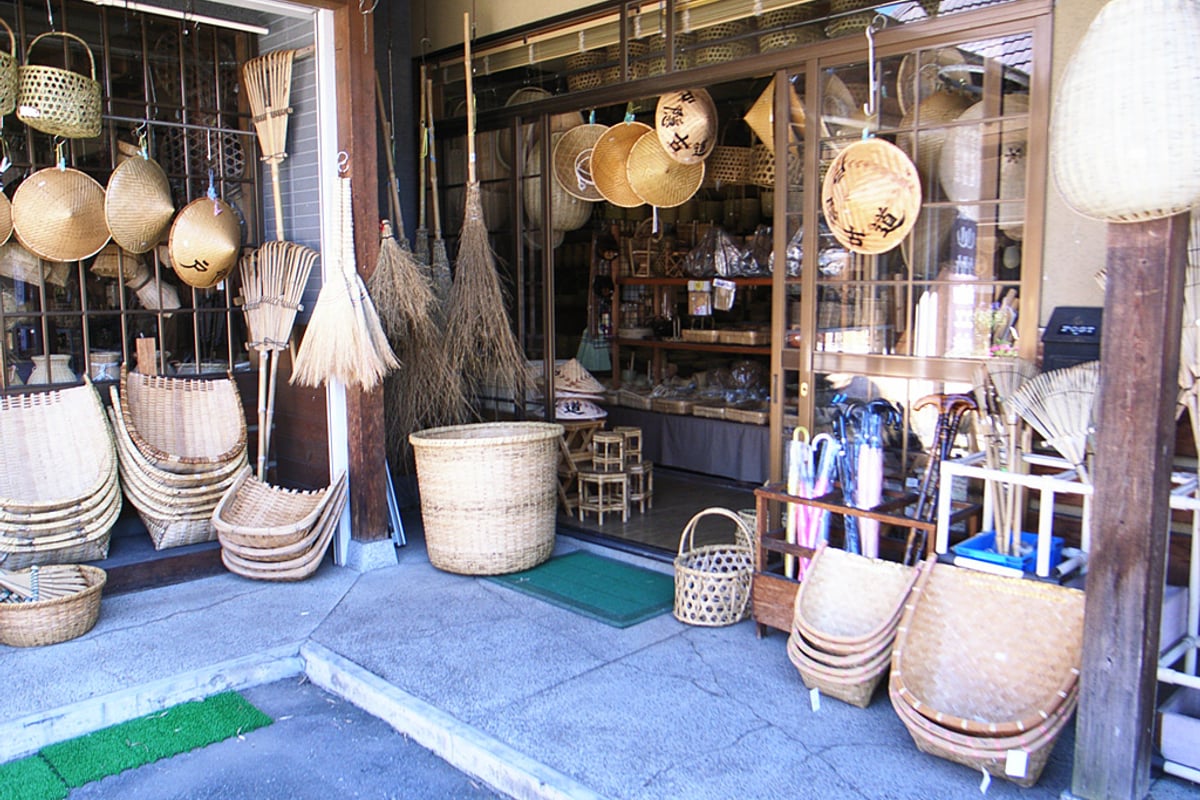
Togakushi Bamboo Craft is bamboo craft made in Togakushi, Nagano City. The material is chishima-zasa (a dwarf bamboo) that grows wild in the mountains of Togakushi; because its base is bent, it is locally called 'nemagari-dake' (literally 'bent-root bamboo'). Though thin, this bamboo is hard and supple, strong enough to bend without breaking even under heavy winter snow. In Togakushi, which lies at a high altitude and is unsuited to rice growing, it is said that in the Edo period people were permitted to pay their annual tax (nengu) in bamboo instead of rice. From the Meiji period onward, demand rose for large baskets used in sericulture, and eventually everyday tools such as zaru (draining baskets) and kago (baskets) came to be made. The representative product is the soba zaru, used to serve Togakushi soba. A distinctive feature is that a single craftsperson handles every step, from cutting the bamboo in the mountains and making bamboo strips (takehigo) to weaving. In 1983, together with the bamboo crafts of Yamanouchi Town and Ina City, it became a Traditional Craft Designated by the Governor of Nagano Prefecture under the name 'Shinshu Takezaiku' (Shinshu Bamboo Craft). In front of Togakushi Shrine, bamboo craft shops and facilities offering hands-on experiences are dotted around.
Nagano's Local Food
Shinshu Soba
Shinshu Soba
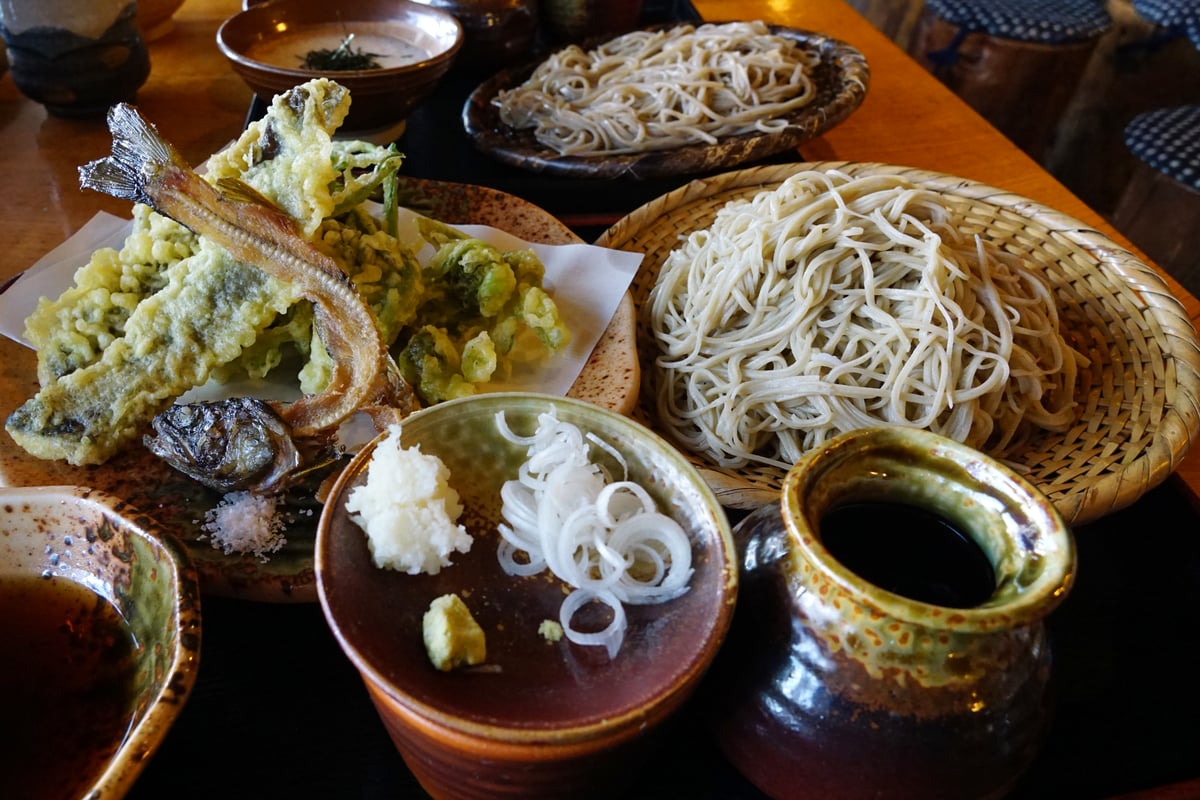
Shinshu Soba is Nagano Prefecture's signature noodle dish, made from buckwheat grown in various parts of the prefecture. The cool highland climate, where temperatures drop at night, is well suited to growing buckwheat, and Nagano Prefecture is one of Japan's leading buckwheat producers, ranking second in the nation with 3,960 tons in 2020 (Reiwa 2). Buckwheat, which bears fruit even in mountain areas where rice and wheat grow poorly, has long been a crop that supported people's livelihoods. Shinshu is also said to be the birthplace of 'soba-kiri' (buckwheat cut into noodles), and the oldest record of it, dated 1574 (Tensho 2), survives at Joshoji Temple in Okuwa Village, Kiso District. There is also a theory that it originated at Motoyama-juku (present-day Shiojiri City) on the Nakasendo highway, but there are other theories as well, such as one placing its origin in Koshu (Yamanashi Prefecture). Within the prefecture, soba with distinct local character has been handed down from place to place, such as Togakushi soba and the soba of the Kaida Kogen highlands. During the autumn harvest season, soba festivals are held throughout the prefecture, where visitors can enjoy freshly harvested shin-soba (new-crop soba).
Toji Soba (Soba Dipped in Hot Pot Broth)
Toji Soba
Toji Soba is a local soba dish handed down in Nagawa, Matsumoto City, Nagano Prefecture (formerly Nagawa Village), and it is also written with the characters 投汁そば. A single mouthful of soba is placed in a small 'toji-kago,' a basket woven from bamboo, then dipped in broth simmering in a pot to warm it before eating. Seasonal vegetables, mountain vegetables, mushrooms, chicken, and other ingredients are added to the broth and served into bowls together with the soba. Nagawa is a mountain area at an elevation of about 1,200 m along the Nomugi Kaido road, which runs from Matsumoto toward Hida. The large difference between day and night temperatures suits the cultivation of buckwheat, and it is said that in the past soba, rather than rice, was the staple food. It was a dish that families ate gathered around an iron pot hung over the irori (sunken hearth), and it was also indispensable for entertaining on festive occasions, such as ceremonial occasions like weddings and funerals. It is eaten mainly in Nagawa and also in parts of the Kiso region.
Romen (Ina Mutton Noodles)
Romen (Ina Romen)
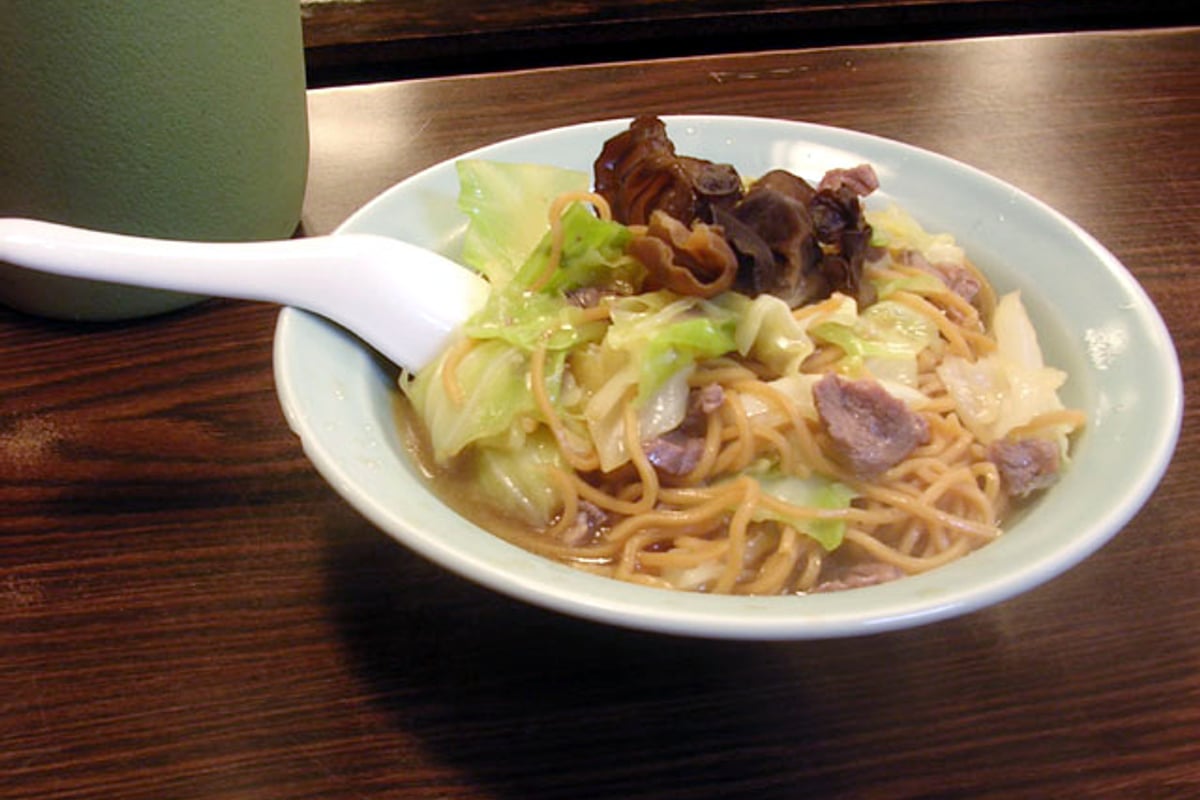
Romen is a noodle dish born in Ina City, Nagano Prefecture, made with steamed Chinese-style noodles, mutton (sheep meat), and cabbage. It was devised in 1955 (Showa 30) by Ito Waichi, the owner of 'Banri' (萬里), a Chinese restaurant in Ina City. It is said to have begun with steaming the noodles to make them keep longer at a time when refrigerators were not yet widespread. It is described as 'neither ramen nor yakisoba,' and there are soup versions in which the noodles are immersed in broth as well as soupless versions in the style of yakisoba. Another characteristic is that diners pour sauce, vinegar, sesame oil, and other condiments from the table over it to finish it to their own taste. About 90 restaurants in and around Ina City serve it, and it also appears in school lunches. It is a soul food that has long been loved by local people.
Oyaki (Stuffed Dumplings)
Oyaki
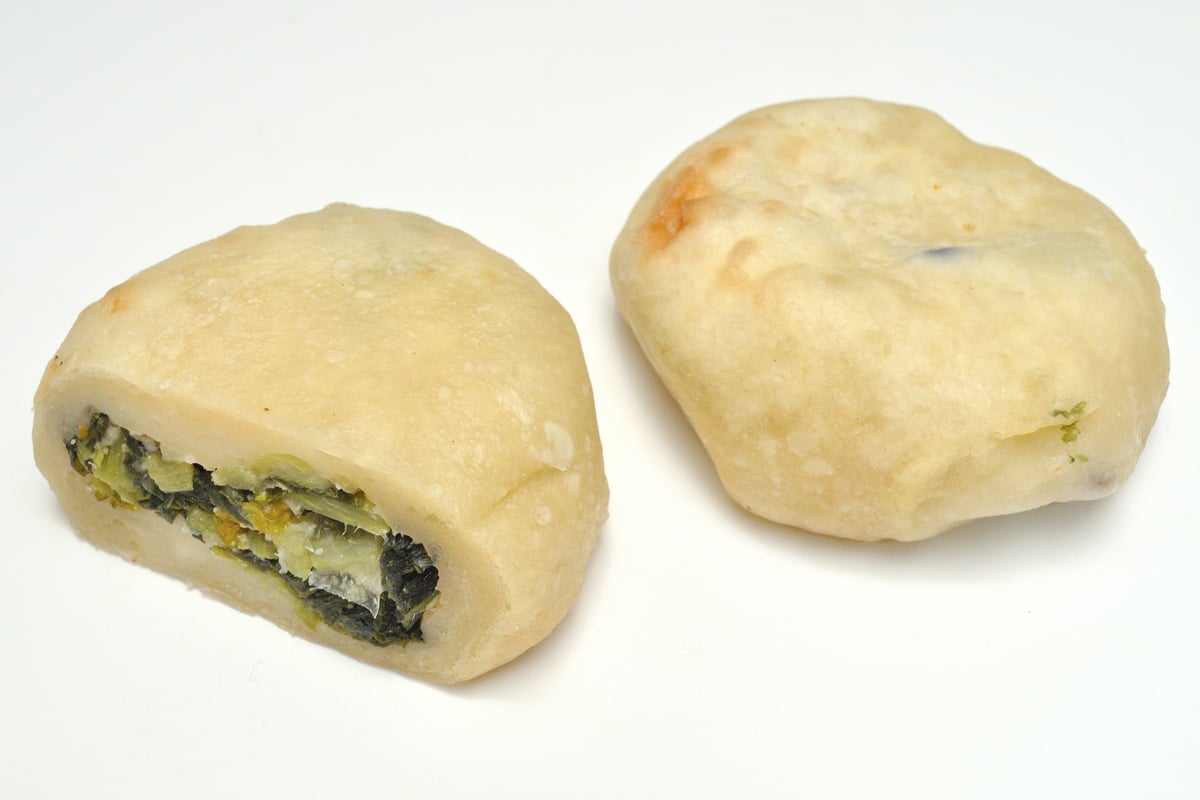
Oyaki is a local dish of Nagano Prefecture in which vegetables, mountain vegetables, mushrooms, anko (sweet bean paste), and other fillings are wrapped in a dough made from wheat flour or buckwheat flour and then grilled or steamed. It is said to have originated in the Nishiyama area spreading west of Nagano City (Ogawa Village, the former Nakajo Village, the former Shinshushinmachi, and elsewhere). In the cool mountain areas unsuited to rice farming, wheat and buckwheat took the place of rice, and oyaki has supported people's diets. Fillings such as Nozawana-zuke (Pickled Nozawana Greens), eggplant, kiriboshi daikon (dried shredded radish), and kabocha squash are used, seasoned with miso or soy sauce. In the past, 'haiyaki oyaki,' steam-baked by burying them in the ashes of the irori (sunken hearth), was the mainstream. Today the methods vary by area and shop, including grilling, steaming, grilling and then steaming, and frying and then grilling. It is a representative flour-based dish of Shinshu that serves both as a staple food and as a snack.
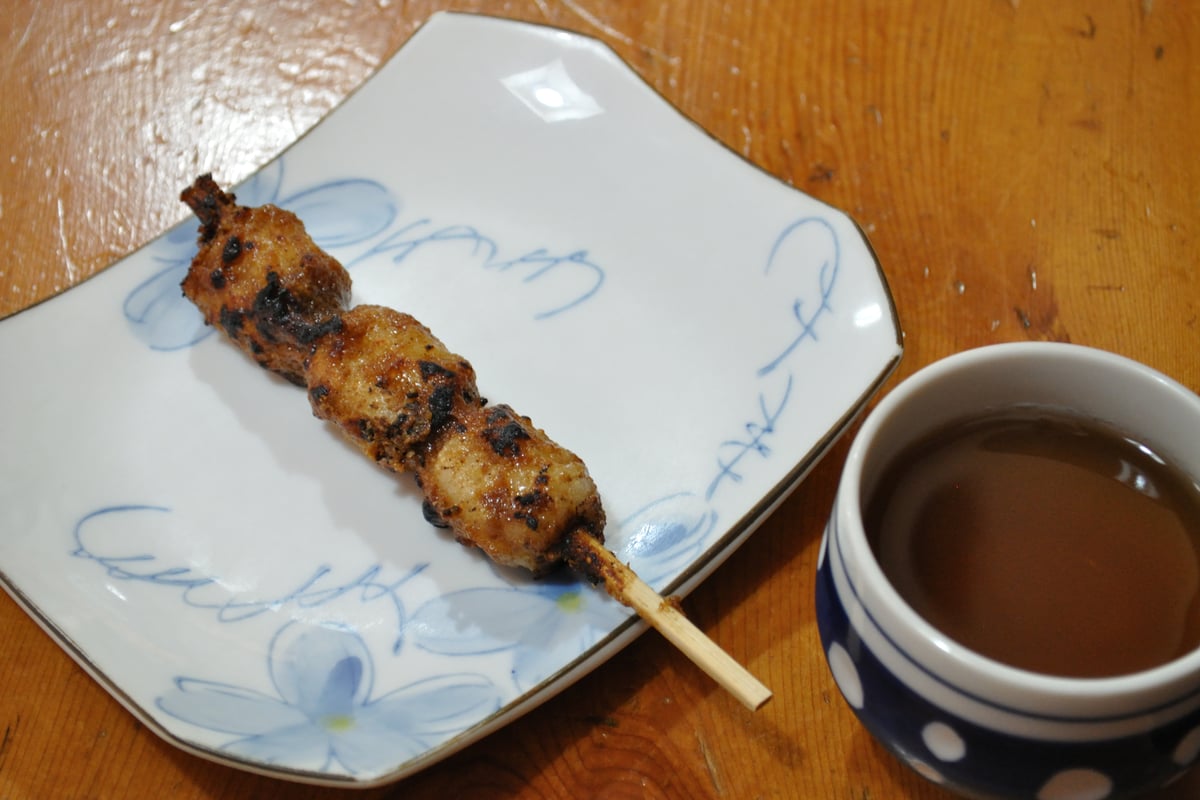
Gohei Mochi
Gohei Mochi
Gohei Mochi is a local dish made by mashing cooked non-glutinous rice, skewering it, coating it with a sweet-savory sauce made from walnuts, white sesame, or peanuts, and grilling it over charcoal until fragrant. It is widely eaten from the Tono region of Gifu Prefecture (Nakatsugawa City, Ena City, and others) through the Kiso and Ina areas of Nagano Prefecture to the Mikawa region of Aichi Prefecture, with the shape varying by region and household — dumpling-shaped, sandal (waraji)-shaped, or round. Its origin is said to lie in the mid-Edo period in the Kiso area, where woodcutters are said to have pressed rice onto the ends of tree branches, grilled it over a bonfire during breaks in mountain work, and eaten it with miso. It later became established as a special food offered to the mountain deity and prepared for celebrations such as the new rice harvest and local festivals. There are differing accounts of the name's origin, some saying it resembles the shape of a gohei, a ritual paper offering used in Shinto rites, and others saying it was created by a man named Gohei — the story varies by region.
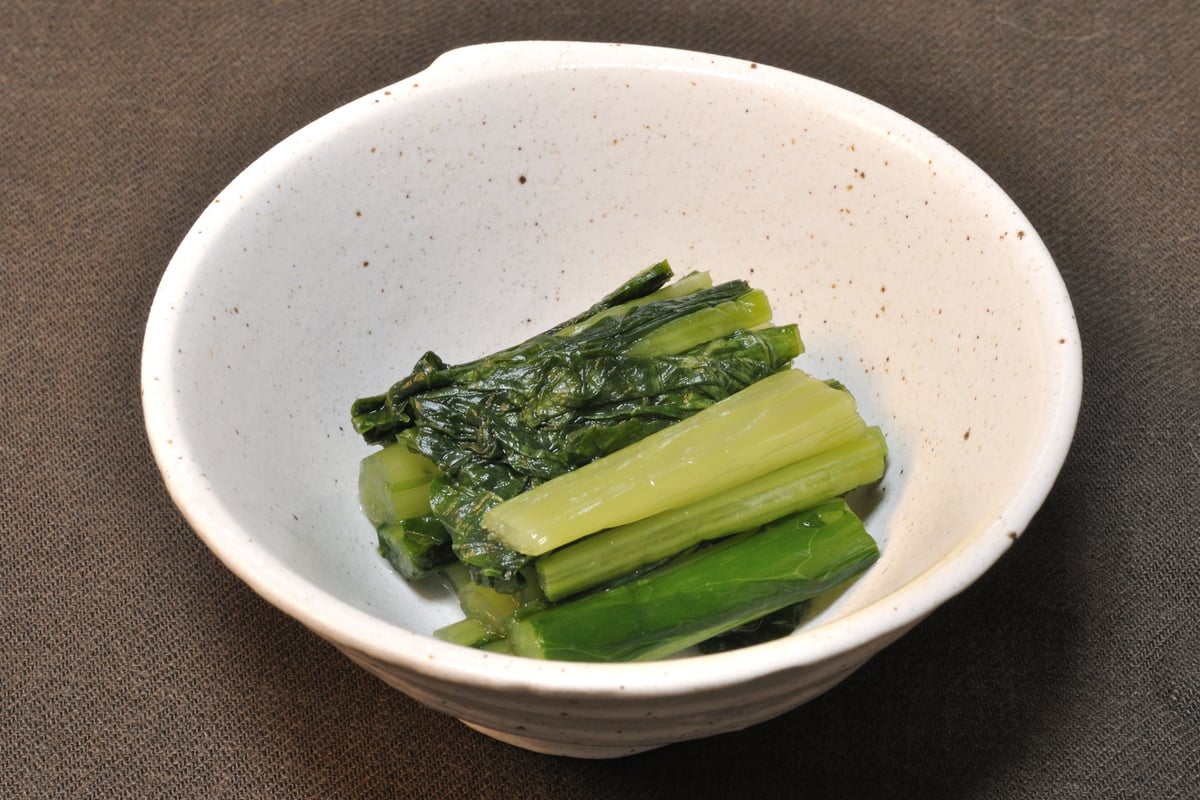
Nozawana-zuke (Pickled Nozawana Greens)
Nozawana-zuke (Pickled Nozawana Greens)
Nozawana-zuke is Nagano Prefecture's signature pickle, made by pickling 'nozawana,' a leafy vegetable of the Brassicaceae family, with salt and other ingredients. The name nozawana comes from the fact that it has been grown in Nozawa Onsen Village in the Hokushin region. It is said to have begun in 1756 (Horeki 6), when the head priest of Kenmeiji Temple in the village brought back seeds of Tennoji-kabu (Tennoji turnip) from Kyoto and sowed them. In the snowy, cold highland climate, the turnip roots did not develop, and it is said to have become a unique vegetable in which only the leaves and stems grow large. In Nagano Prefecture, pickled leafy greens are collectively called 'ohazuke,' and Nozawana-zuke is the representative example. It has been pickled in each household as a preserved food for the winter and enjoyed as an accompaniment to rice and as a snack with tea. Its appeal lies in its crisp texture and moderate saltiness.
Sunki-zuke (Salt-Free Fermented Turnip Greens)
Sunki-zuke (Salt-Free Fermented Turnip Greens)
Sunki-zuke is a pickle handed down in the Kiso area of Nagano Prefecture, made by lactic-acid fermenting the stems and leaves of red turnips without using any salt at all. Locally it is also simply called 'sunki.' It is said to have originated in Otaki Village and the Kaida Kogen highlands of Kiso Town at the foot of Mt. Ontake, and it has been made for at least 300 years. Because salt was precious in these mountain valleys far from the sea, it is thought to have developed as a way of preserving winter vegetables with the power of the acid produced by fermentation. A distinctive feature is that the previous year's sunki is used as a 'starter' (tane) for pickling, and several kinds of plant-derived lactic acid bacteria are at work. The finished pickle is amber in color and has a refreshing sourness. Salt-free lactic-acid fermented foods are rare both in Japan and abroad, and in 2017 (Heisei 29) it was registered under the national Geographical Indication (GI) protection system. 'Sunki soba,' in which sunki is placed on hot soba, is loved as a taste of winter in Kiso.
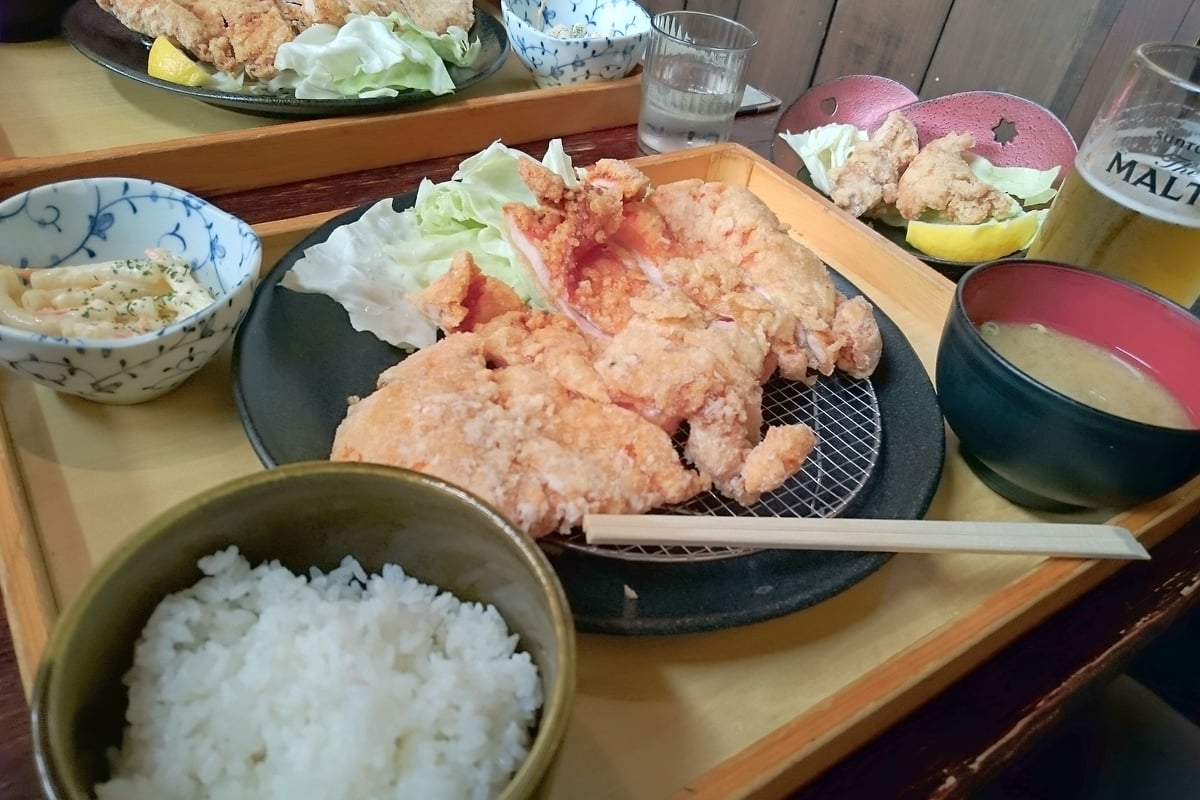
Sanzoku-yaki (Garlic Soy Fried Chicken)
Sanzoku-yaki
Sanzoku-yaki is a chicken dish enjoyed mainly in Matsumoto City and Shiojiri City in the Chushin region of Nagano Prefecture. Chicken thigh or other cuts are marinated whole in a soy sauce marinade seasoned with garlic and onion, coated with katakuriko (potato starch), and deep-fried. The boldness of frying the meat without cutting it up is the major difference from ordinary karaage (Japanese fried chicken). Although the name includes 'yaki' (grilled), it is actually a fried dish. It is said to have originated at the izakaya 'Sanzoku' (山賊) in Shiojiri City, and there are several theories about the name, such as that the owner looked like a sanzoku (mountain bandit), or that it is a pun on 'toriageru' (to rob), read as 'tori ageru' (to fry chicken). From around 2009, a local restaurant cooperative and citizens' groups worked to promote it as a local specialty, and it has now become one of the representative local dishes of Nagano Prefecture. As a set meal at restaurants or a dish at izakaya, it is a familiar taste for local people from childhood.
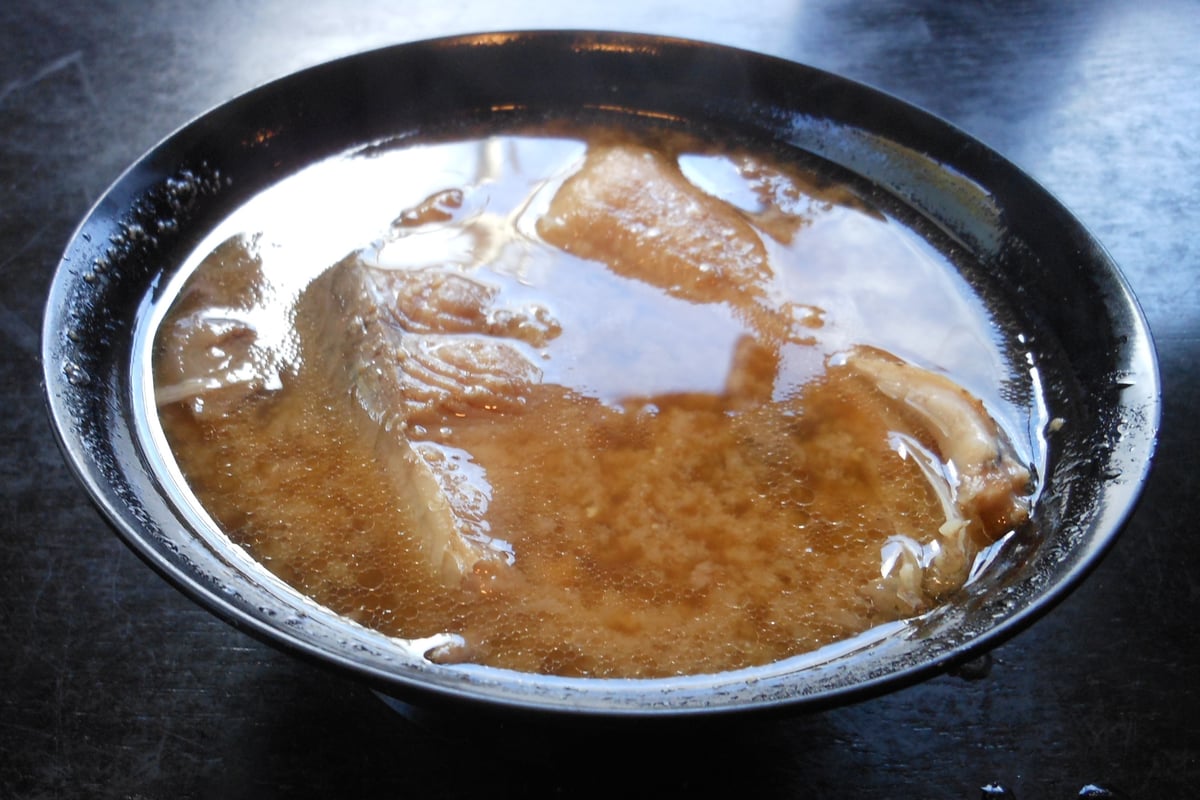
Saku Carp
Saku Koi (Saku Carp)
Saku Carp (Saku-goi) refers both to the edible carp raised in the Saku area of eastern Nagano Prefecture and to the local carp dishes made with them. It is said to have begun when a merchant from the Sakurai district of Saku City brought back 'Yodo-goi' (Yodo carp) from the Yodo River in Osaka during the Tenmei era of the Edo period. Because they are raised in the cold, clear water of the Chikuma River, the carp grow slowly and are shipped after about three years, longer than in other production areas. The flesh is firm with little odor and a moderate amount of fat. From the Meiji period onward, production increased through methods such as raising carp in rice paddies, and in the early Showa period the name was unified as 'Saku Carp.' Traditional ways of eating it include 'koikoku,' carp cut into round slices and simmered in miso; 'umani,' simmered in a sweet-savory sauce; and 'arai,' thin slices firmed up in cold water. It is still treasured by the people of Saku as a feast for New Year and celebrations.
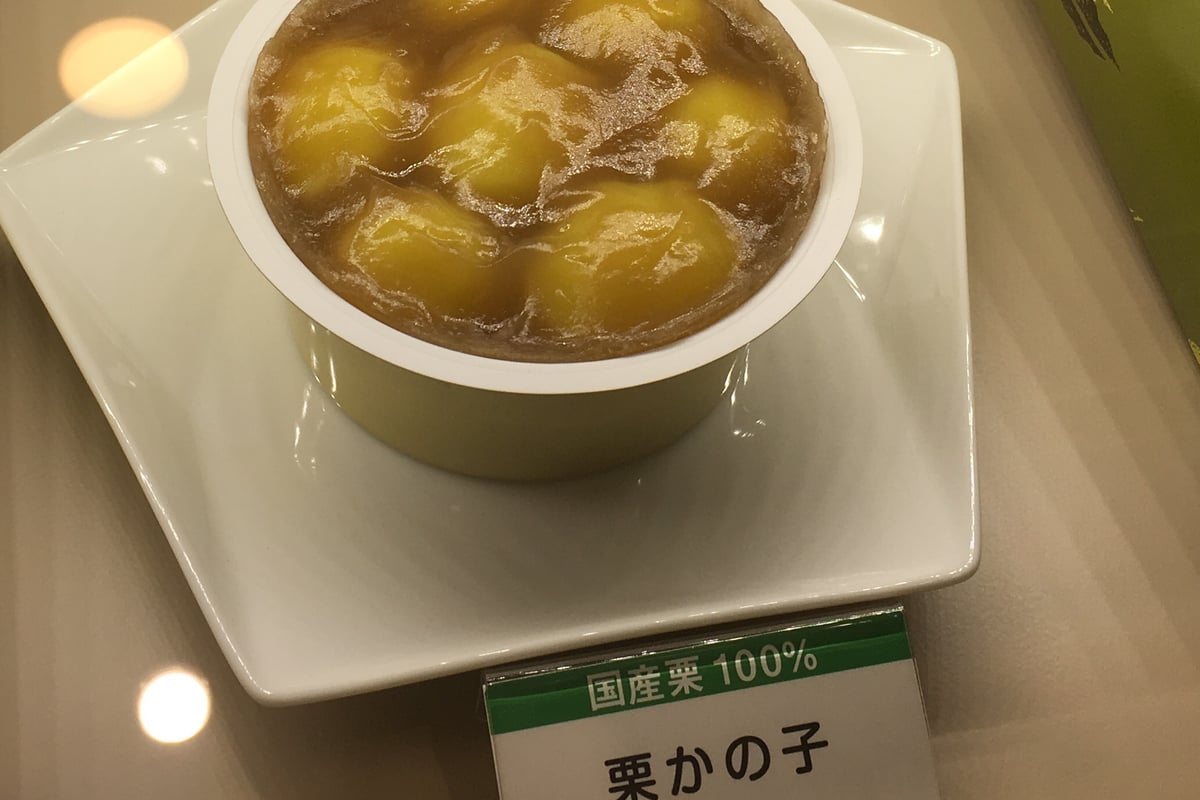
Obuse Chestnut Confections
Obuse Chestnut Confections
Obuse Chestnut Confections is the collective term for wagashi (Japanese confections) made with local chestnuts in Obuse Town, Kamitakai District, in northern Nagano Prefecture. Chestnut cultivation in Obuse is said to date back to the Muromachi period, and the acidic soil of the well-drained alluvial fan suited the growth of chestnuts. In the Edo period, high-quality chestnuts were made 'kenjo-guri' (chestnuts presented as tribute) to the shogun's family, and the name 'Obuse-guri' (Obuse chestnuts) spread. Chestnut confections began in 1808 (Bunka 5), when 桜井幾右衛門, the founder of Sakurai Kanseido, is said to have been the first to make 'kuri rakugan' (pressed chestnut sweets). Later, kuri yokan (chestnut yokan) and kuri kanoko (chestnut paste studded with candied chestnuts) were created, and in the Meiji period canning technology made them available all year round. Even today, long-established chestnut confectioners line the center of town, and you can also enjoy new chestnut flavors such as kuri okowa (chestnut sticky rice) and Mont Blanc. In the season of new chestnuts in autumn, the town bustles with many tourists.
Model Course
A Course Through Togakushi's Shinshu Soba and Bamboo Craft, Ending with Obuse's Chestnut Confections
At Uzuraya (うずら家) near the Chusha shrine of Togakushi Shrine, enjoy Shinshu Soba served with wasabi and local spicy daikon radish. Bamboo craft shops such as Inoue Takezaiku-ten (井上竹細工店) line the area around Chusha, where you can choose soba trays and baskets made of nemagari-dake. At the bamboo craft workshop 戸隠竹細工工房 文の郷, you can also try making small items such as single-flower vases (reservation required). In the afternoon, head to Obuse Town. Enjoy chestnut okowa (sticky rice) at Chikufudo Obuse Honten (竹風堂 小布施本店), and choose chestnut confections such as kuri-kanoko at Sakurai Kanseido (桜井甘精堂) and Obusedo (小布施堂).
A Course from Matsumoto's Folk Craft Furniture to Shiojiri's Sanzoku-yaki and the Lacquerware Town of Kiso-Hirasawa
At the Chuo Mingei Showroom (中央民芸ショールーム) on Nakamachi Street in Matsumoto City, try sitting on Matsumoto folk craft furniture for yourself. A short trip farther takes you to the Matsumoto Mingeikan (松本民芸館), a folk craft museum where you can see folk crafts such as Matsumoto chests. For lunch, move to Shiojiri and enjoy Sanzoku-yaki made from fried bone-in chicken thigh at Sanzoku (山賊), said to be the originator of the dish (closed Wednesdays). In the afternoon, head to Kiso-Hirasawa, a town of lacquerware. Choose Kiso Lacquerware at Kiso Kurashi no Kogeikan (木曾くらしの工芸館), and see production tools and masterpieces at the Kiso Lacquerware Museum (木曽漆器館).
A Course Along the Kiso Road: Kijishi Wood Turning and Winter Sunki Soba
At Kijishi no Sato Yamaichi (木地師の里 ヤマイチ) in Azuma, Nagiso Town, see trays and vessels turned from horse chestnut and zelkova wood, and try hand-turning on a lathe and painting (reservation required for two or more people; closed Tuesdays). Head north along the Nakasendo highway to Kiso-Fukushima. In winter, you can enjoy sunki soba topped with sunki pickled without salt at Kurumaya Honten (くるまや本店) near JR Kiso-Fukushima Station (winter only). At the roadside station (michi-no-eki) Kiso-Fukushima (道の駅 木曽福島) along National Route 19, sunki is sold in winter.
A Course Through Snowy Iiyama's Buddhist Altars and Uchiyama Paper, Then Nozawana in Nozawa Onsen
At the Iiyama City Traditional Industry Hall (飯山市伝統産業会館), see the processes of Iiyama Buddhist Altars and Uchiyama Paper and works by craftsmen (closed Mondays). On the Buddhist altar street in Atago-machi, about a 10-minute walk from Iiyama Station, altar shops line the street under gangi (snow-sheltering eaves). From spring to autumn, you can also try papermaking at the nearby Iiyama Handmade Washi Experience Workshop (飯山手すき和紙体験工房) (closed December 29 to March 31). In the afternoon, head to Nozawa Onsen Village. Visit Kenmeiji Temple (健命寺), said to be the birthplace of nozawana, and choose Nozawana-zuke at Nozawana Honpo (野沢菜本舗) on Oyu Street.
A Course South Through the Ina Valley, Tracing Romen, Shinshu Tsumugi and Iida Mizuhiki
For lunch, enjoy the original Romen, created in 1955, at Banri (中国風菜館 萬里) in Ina City. At 久保田織染工業 in Komagane City, you can tour the factory and hand-weave a vase mat of Shinshu Tsumugi (weekdays only, reservation required). In the evening, head to Iida City. If you buy a mizuhiki kit at the shop 南信州まるごとショップ おいでなんしょ inside S-BIRD (エス・バード), you can try tying knots such as the awaji knot. In the Ina and Iida area, Gohei Mochi, grilled with a sweet and savory sauce, is also popular.
A Course in Southern Nagano City: Matsushiro Ware Pottery and Making Oyaki
At Matsushiro Toen (松代陶苑), a kiln in Matsushiro-machi, Nagano City, see Matsushiro Ware vessels with flowing blue-green glaze and try pottery making (by reservation; about 40 days until your piece is finished). At the attached shop, you can also choose Matsushiro Ware that can be used in microwaves and dishwashers. In the afternoon, head to OYAKI FARM BY IROHADO in Shinonoi. Enjoy classic oyaki, and you can also tour the factory and try making oyaki (by reservation).
Events
Kiso Lacquerware Festival and Narai-juku Festival (木曽漆器祭・奈良井宿場祭)
Every June (the 57th festival in 2026: June 6 and 7) / Narakawa district, Shiojiri City (Kiso-Hirasawa, Narai and other areas)
View details →Togakushi Soba Festival (戸隠そば祭り)
Usually in autumn (the 57th festival in 2026; the half-tray soba tasting tour runs from September 1 to October 4, excluding some days) / Togakushi, Nagano City (Chusha and Hokosha of Togakushi Shrine, and participating shops)
View details →