Image: Wikimedia Commons
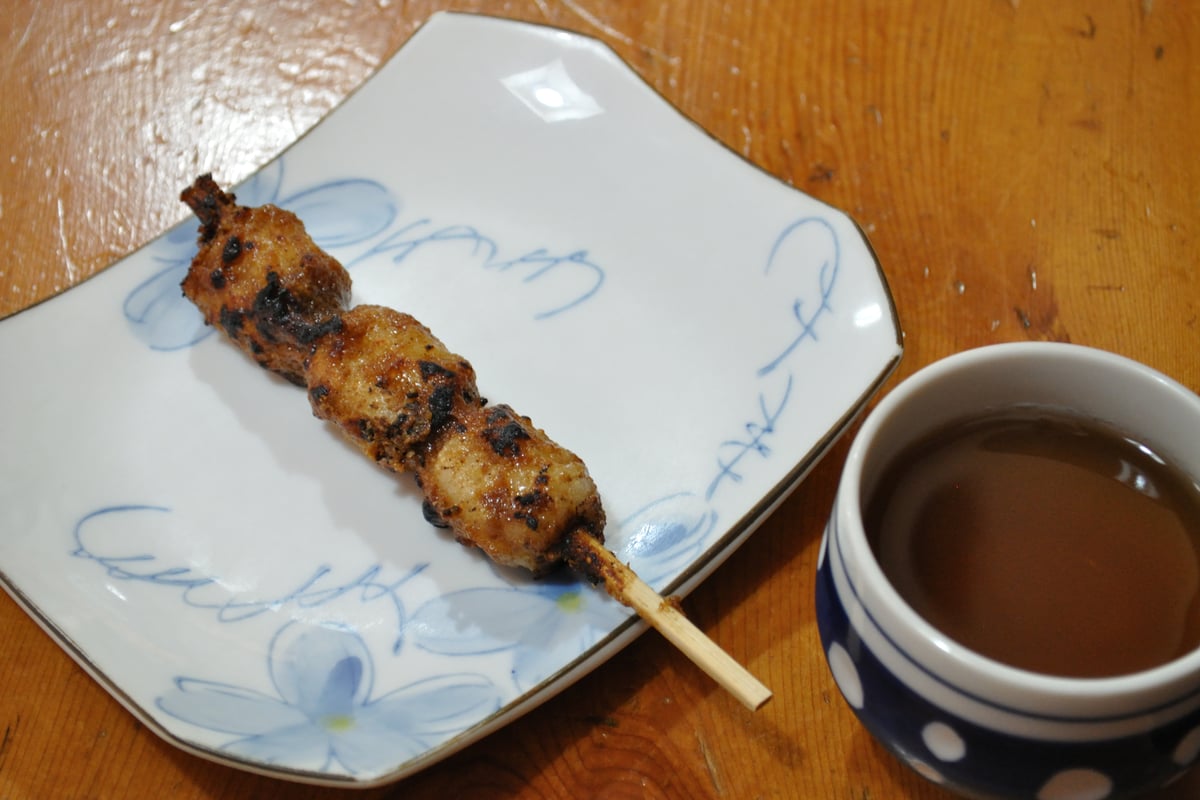
Gohei Mochi is a local dish made by mashing cooked non-glutinous rice, skewering it, coating it with a sweet-savory sauce made from walnuts, white sesame, or peanuts, and grilling it over charcoal until fragrant. It is widely eaten from the Tono region of Gifu Prefecture (Nakatsugawa City, Ena City, and others) through the Kiso and Ina areas of Nagano Prefecture to the Mikawa region of Aichi Prefecture, with the shape varying by region and household — dumpling-shaped, sandal (waraji)-shaped, or round. Its origin is said to lie in the mid-Edo period in the Kiso area, where woodcutters are said to have pressed rice onto the ends of tree branches, grilled it over a bonfire during breaks in mountain work, and eaten it with miso. It later became established as a special food offered to the mountain deity and prepared for celebrations such as the new rice harvest and local festivals. There are differing accounts of the name's origin, some saying it resembles the shape of a gohei, a ritual paper offering used in Shinto rites, and others saying it was created by a man named Gohei — the story varies by region.
Origin
The origin of Gohei Mochi is said to lie in the mid-Edo period, when woodcutters in the Kiso area pressed rice onto the ends of tree branches, grilled it over a bonfire during mountain work, and ate it with miso. It later came to be offered to the mountain deity as well, taking on the character of a ritual food eaten to pray for safety at work and a good harvest.
History
As a special food prepared for autumn celebrations of the new rice harvest and for festivals, Gohei Mochi spread from the Kiso and Ina areas through the Tono region of Gifu Prefecture to the Mikawa region of Aichi Prefecture. In the Nakatsugawa and Ena areas, a form using three bite-sized dumplings on a single skewer became the mainstream style, and as local butcher shops and confectioners began selling it as a souvenir, it also became established as a tourist specialty.
Features
Non-glutinous rice is lightly mashed, skewered, generously coated with a sweet-savory sauce made from ground walnuts, white sesame, or peanuts, and grilled over charcoal. In Nakatsugawa, the dumpling shape is common, while in Ena and other areas, waraji (sandal) or round shapes and different sauce blends are also seen, varying by region and shop. Its appeal lies in the fragrant aroma when freshly grilled and its chewy, mochi-like texture.
Main Ingredients
Food Culture
Gohei Mochi carries the character of a ritual food prepared for celebrations of the new rice harvest and local festivals, and has been offered in gratitude to the mountain deity. The sauce blend and shape vary by region and household, and many tourists enjoy comparing the differences.
Famous Shops
五平餅の喜楽
岐阜県中津川市太田町2-1-16
Founded in 1943 (Showa 18), a long-established shop now in its fourth generation. Located in front of JR Nakatsugawa Station.
五平餅のおふくろ
岐阜県中津川市太田町2-4-12
Known for its fragrant, dumpling-shaped Gohei Mochi grilled to order. A serving of five skewers costs around 580 yen.
View details →FAQ
Q. Where does the name Gohei Mochi come from?
A. There are differing accounts: one says it comes from the resemblance to the shape of a gohei, a ritual paper offering used in Shinto rites, and another says it comes from a woodcutter named Gohei who flattened rice balls, coated them with miso, and grilled them — the story varies by region.