Food Genre
Local Confectionery
A cross-regional look at Local Confectionery from across Japan.
Region(multiple selection allowed)
45 items
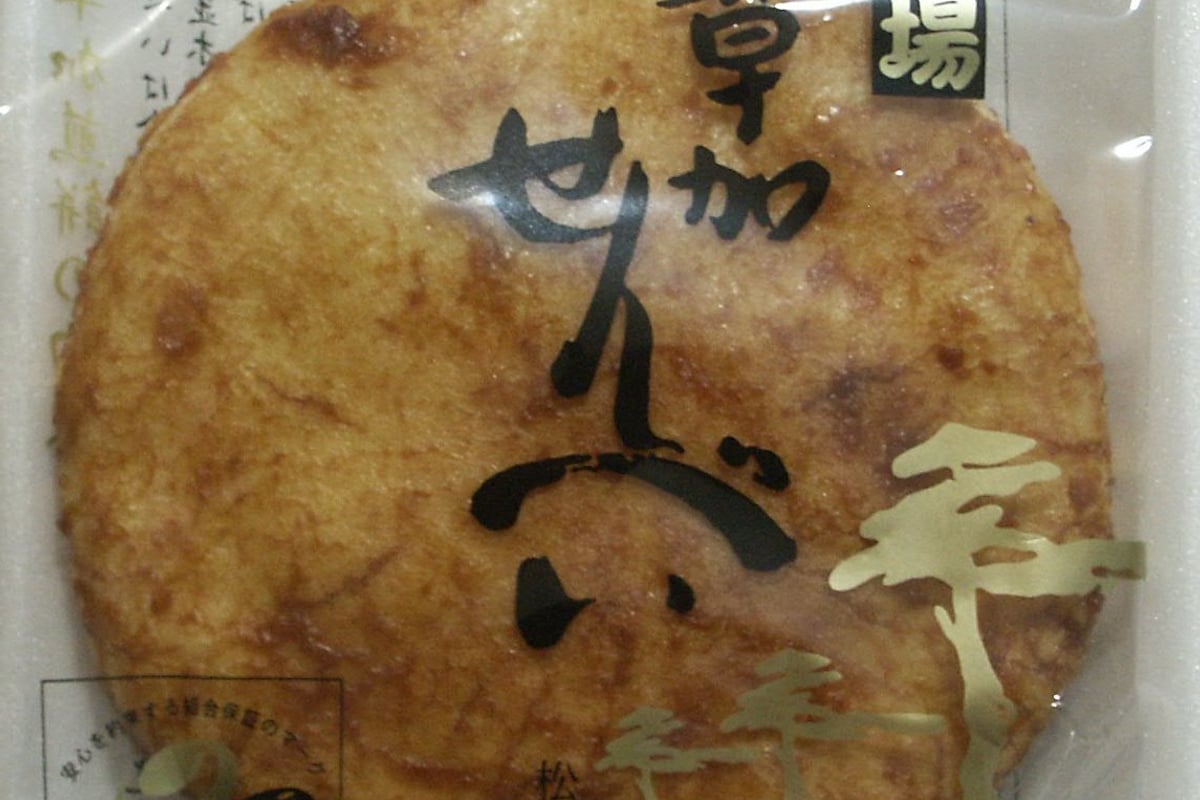
Soka Senbei
Soka Senbei
Soka senbei is a hard-baked soy sauce rice cracker that originated in Soka City, Saitama Prefecture. Rice steamed and pounded into dough is sun-dried, then slowly grilled over charcoal before being brushed with soy sauce. Soka has long been known as a rice-growing region, and as a post town on the Nikko Kaido highway lined with teahouses for travelers, a trade grew up selling grilled rice cakes made from dumpling-shaped dried rice, a preserved food. When soy sauce production flourished in the late Edo period, the current style of brushing soy sauce onto grilled dough took hold, and from the Meiji era onward specialist cracker shops multiplied, spreading Soka senbei's fame. It is known for its crisp bite and fragrant soy sauce aroma, and today many shops in the city still make and sell it, making it one of Saitama's best-loved souvenir sweets.
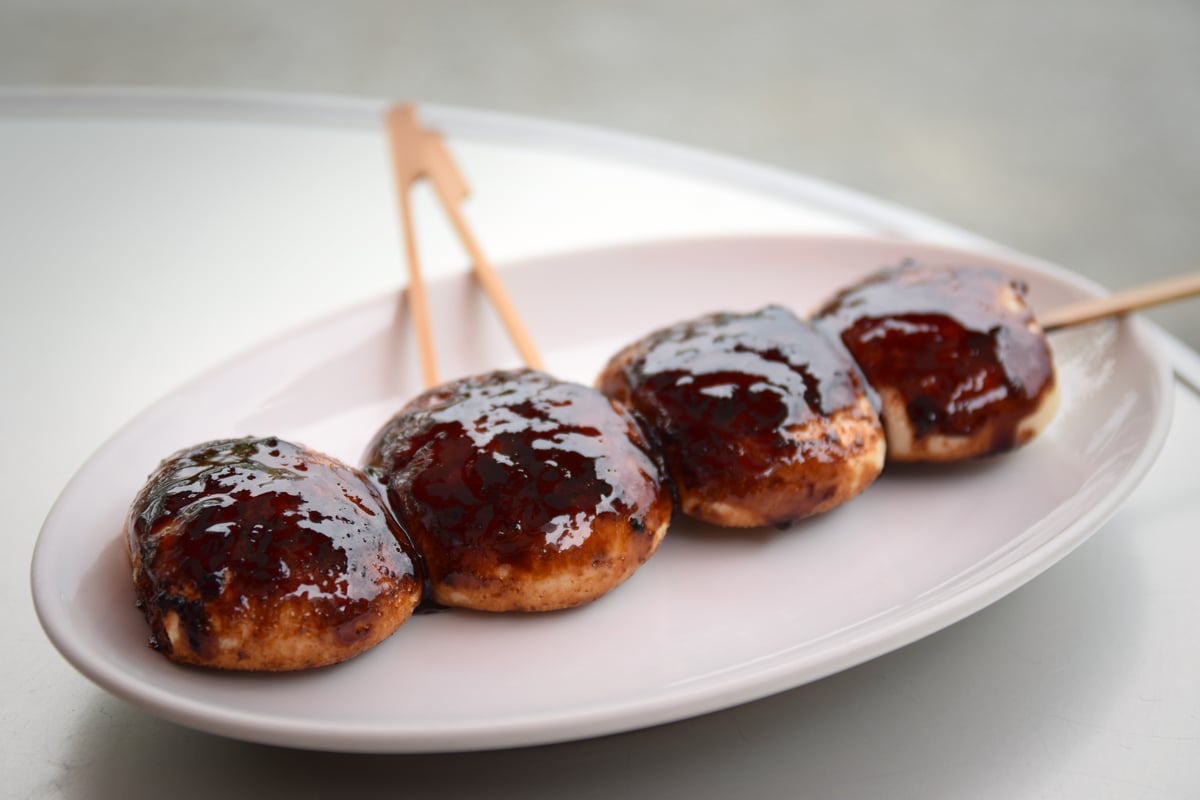
Yaki Manju (grilled miso-glazed buns)
Yaki Manju
Yaki Manju is a soul food representative of Gunma Prefecture: a dough of wheat flour fermented with rice koji is steamed into fist-sized round buns, skewered, generously coated with a sweet-savory miso glaze, and grilled over charcoal until fragrant. The distinctive style of skewering steamed buns with no bean-paste filling and grilling them is unusual even by national standards, and specialty shops and long-established stores are found throughout the prefecture, from Maebashi and Takasaki to Isesaki and Numata. The most widely accepted theory traces its origin to the late Edo period, when Ruizō Harashima of Maebashi is said to have devised a 'miso-pickled bun,' whose novel use of doburoku (unrefined sake) as a fermenting agent and the idea of skewering the buns caused a stir at the time. Long served at festival stalls and local fairs, it remains a fixture of community events such as cherry-blossom viewing and summer festivals today.
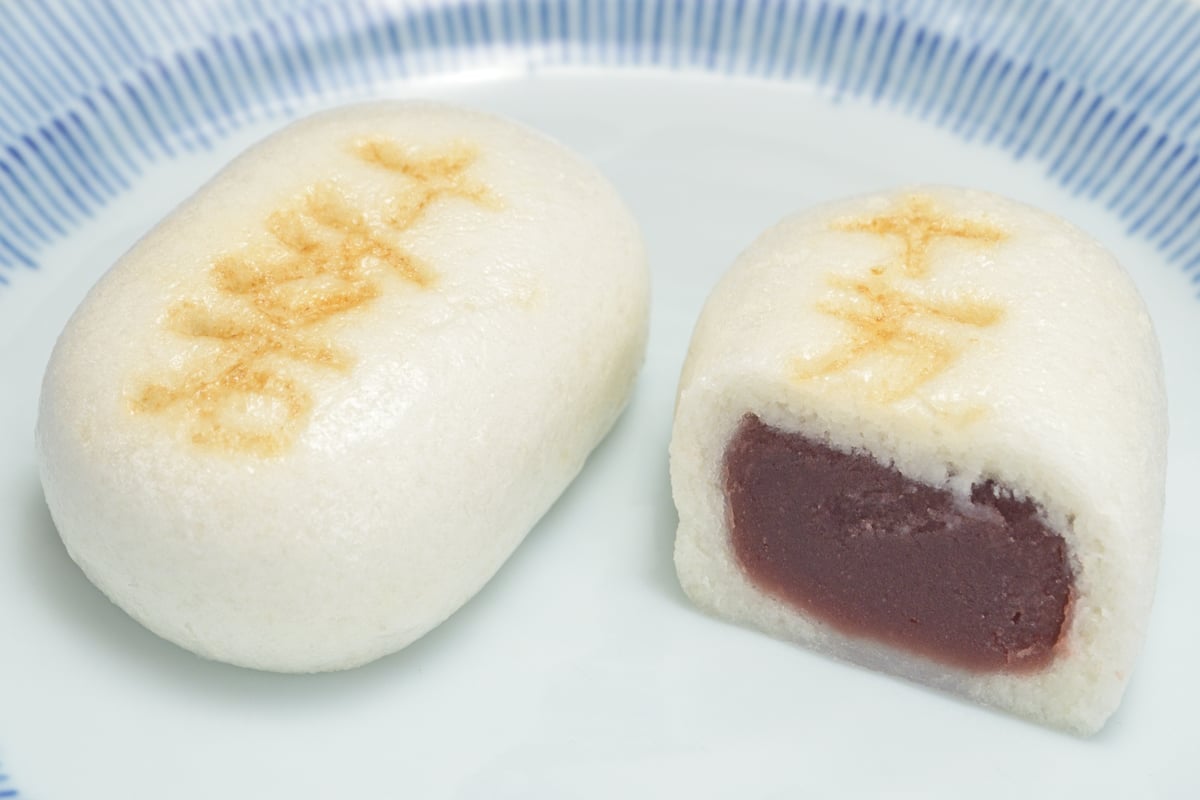
Jumangoku Manju
Jumangoku Manju
Jumangoku Manju is a jo-yo manju made by the confectionery shop 'Jumangoku Fukusaya' in Gyoda City, Saitama Prefecture — a refined, delicately sweet treat in which white bean paste is wrapped in a moist dough containing gyuhi (pounded mochi). The name comes from Gyoda's history as the castle town of the 100,000-koku Oshi Domain. In 1952, when sugar rationing was lifted, the Japanese confectionery shop 'Fukuchaya' was founded and began selling the treat, and in 1960 the company was renamed 'Jumangoku Fukusaya' to build the brand. It became widely known through TV Saitama's local commercials featuring the catchphrase 'Umai, umasugiru!' ('Delicious, too delicious!'), said to have been created by the woodblock print artist Shiko Munakata, and it is now a familiar Saitama souvenir found in gift shops both inside and outside the prefecture.
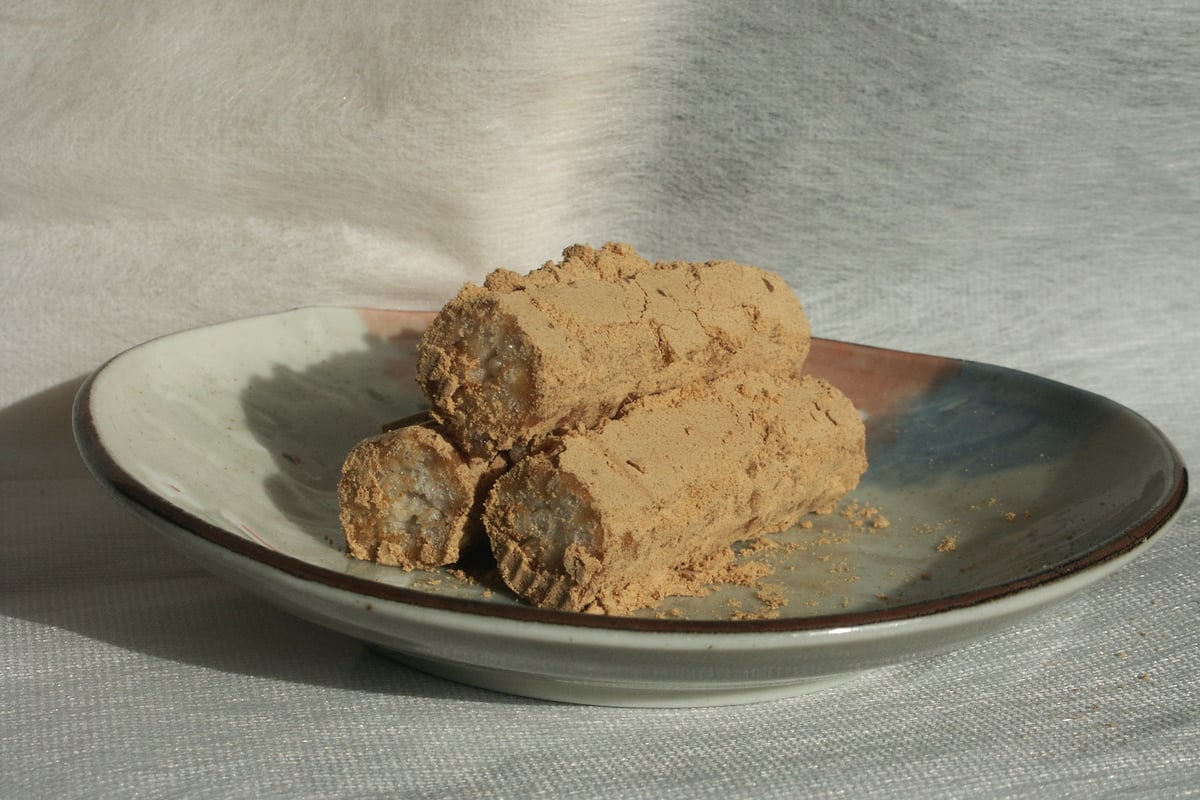
Gokabo
Gokabo
Gokabo is a local confection that originated in Kumagaya City, Saitama Prefecture, made by parching steamed glutinous rice into a malted 'okoshidane,' binding it into a stick shape with starch syrup, and coating the outside with roasted soybean flour (kinako). Kumagaya, which flourished as a post town on the Nakasendo highway, had an abundance of high-quality 'Ishihara rice,' soybeans, and the barley used to make starch syrup, and it is said the confection was first sold under the name 'Gokabo' during the Bunsei era (1818-1829). Later, the characters were changed to mean 'the five grains are the treasure of the household.' There are several theories about its origin, including one tracing it to a confectioner in Gunma and another to Gokamura Village in Shimosa Province, and amid these mixed accounts it spread across the northern Kanto region. Known for the fragrant aroma of kinako, the gentle sweetness of starch syrup, and a chewy texture, it continues to be made mainly by long-established confectioners in Kumagaya City today.

Ogi Yokan
Ogi Yokan
Ogi Yokan is a famous yokan (sweet bean jelly) product developed in Ogi City, Saga Prefecture, from the Meiji era onward. During the Edo period, the Nagasaki Kaidō, which connected Nagasaki and Kokura, was also known as the 'Sugar Road' because sugar brought by Nanban (European) trade was transported along it, and Ogi, one of the sugar collection points along the route, likewise developed a flourishing confectionery culture. In 1899, the founder of Muraoka Sohonpo learned yokan-making techniques from a yokan artisan in Nagasaki and began producing yokan there, and it is said that the second-generation head, Muraoka Yasukichi, was the first to use the name 'Ogi Yokan.' Ogi is a rare production area nationally, with more than twenty yokan shops clustered in a small town of about 50,000 people, and in 2020 it was certified as a component asset of the Japan Heritage designation 'The Nagasaki Kaidō That Spread Sugar Culture — the Sugar Road.' The fact that Ogi flourished as a castle town of the Nabeshima Domain is also said to have provided fertile ground for its confectionery culture to blossom.
Decchi Yokan (Apprentice's Yokan)
Decchi Yokan
Decchi yokan is a rustic yokan (sweet bean jelly) made by kneading smooth red bean paste (koshian) with wheat flour and other ingredients, then wrapping it in bamboo bark and steaming it. It is a local confection that originated in Omihachiman City, Shiga Prefecture. Compared to standard neri yokan, it has a milder sweetness and a distinctive chewy texture infused with a faint aroma from the bamboo bark. There are several theories about the origin of its name: one holds that it was named after the 'decchi' (apprentice boys) who worked as live-in servants for merchant houses in Osaka and the Kanto region, who could afford this modestly priced sweet as a gift when returning home for their rare holidays; another traces it to the dialect word 'decchiru,' meaning 'to knead together.' The long-established shop Watayo, founded in 1863, is known as the birthplace of the confection, which grew out of the region's ready access to bamboo bark as a wrapping material — a distinctly Omihachiman innovation. It remains a beloved local souvenir today. Beyond Omihachiman, similar sweets spread to other regions, such as Iga City in Mie Prefecture, through the trading networks of Omi merchants.
Oyaki (Stuffed Dumplings)
Oyaki
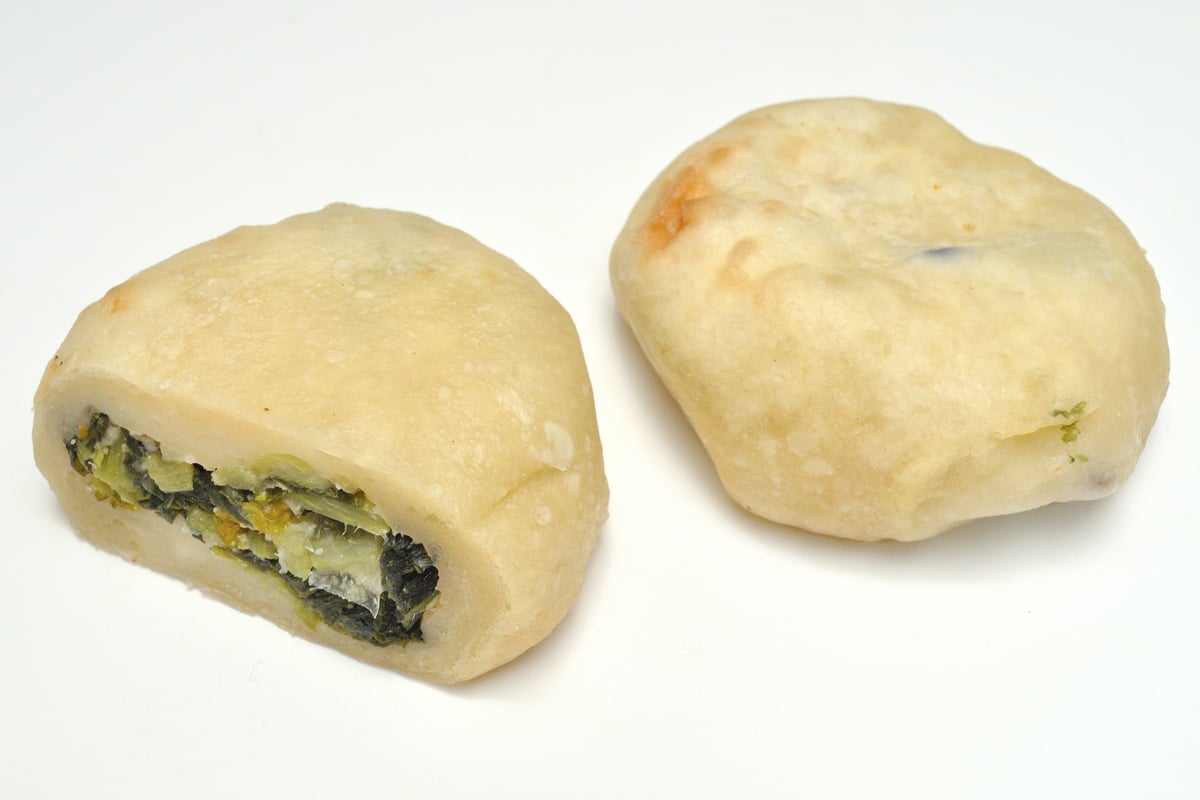
Oyaki is a local dish of Nagano Prefecture in which vegetables, mountain vegetables, mushrooms, anko (sweet bean paste), and other fillings are wrapped in a dough made from wheat flour or buckwheat flour and then grilled or steamed. It is said to have originated in the Nishiyama area spreading west of Nagano City (Ogawa Village, the former Nakajo Village, the former Shinshushinmachi, and elsewhere). In the cool mountain areas unsuited to rice farming, wheat and buckwheat took the place of rice, and oyaki has supported people's diets. Fillings such as Nozawana-zuke (Pickled Nozawana Greens), eggplant, kiriboshi daikon (dried shredded radish), and kabocha squash are used, seasoned with miso or soy sauce. In the past, 'haiyaki oyaki,' steam-baked by burying them in the ashes of the irori (sunken hearth), was the mainstream. Today the methods vary by area and shop, including grilling, steaming, grilling and then steaming, and frying and then grilling. It is a representative flour-based dish of Shinshu that serves both as a staple food and as a snack.
Gohei Mochi
Gohei Mochi
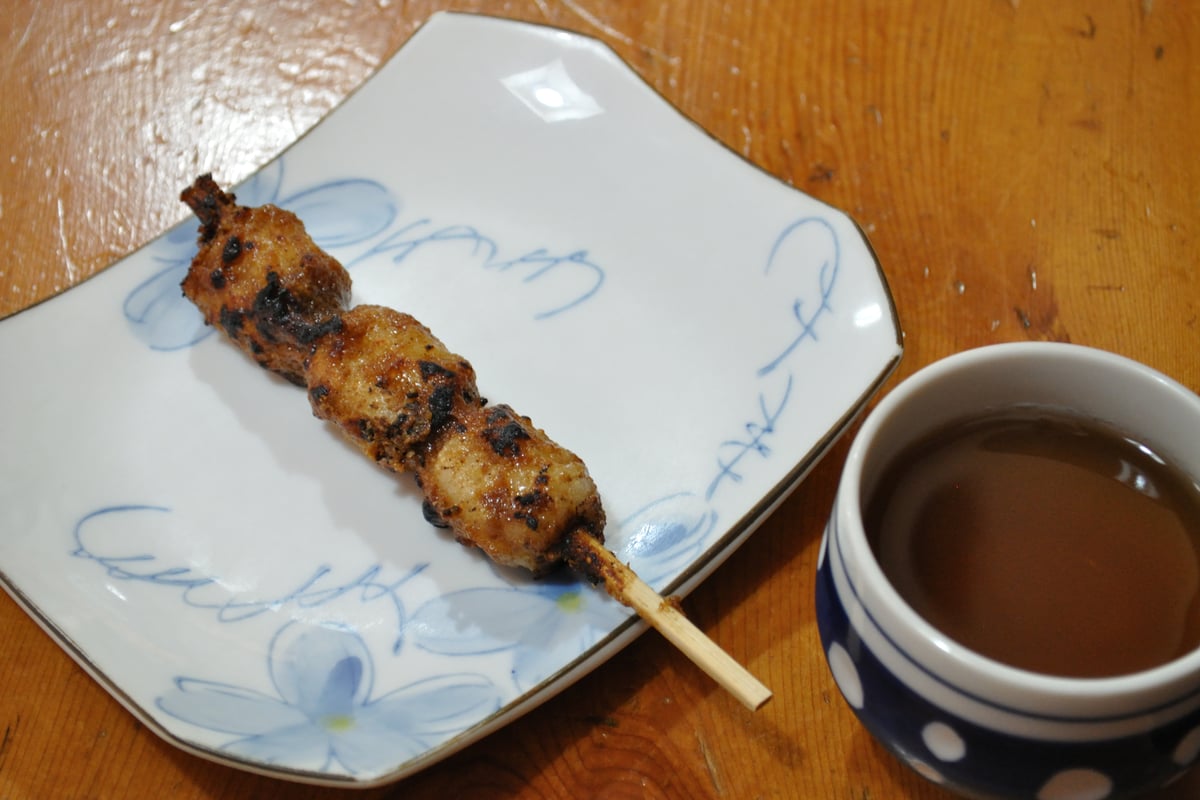
Gohei Mochi is a local dish made by mashing cooked non-glutinous rice, skewering it, coating it with a sweet-savory sauce made from walnuts, white sesame, or peanuts, and grilling it over charcoal until fragrant. It is widely eaten from the Tono region of Gifu Prefecture (Nakatsugawa City, Ena City, and others) through the Kiso and Ina areas of Nagano Prefecture to the Mikawa region of Aichi Prefecture, with the shape varying by region and household — dumpling-shaped, sandal (waraji)-shaped, or round. Its origin is said to lie in the mid-Edo period in the Kiso area, where woodcutters are said to have pressed rice onto the ends of tree branches, grilled it over a bonfire during breaks in mountain work, and eaten it with miso. It later became established as a special food offered to the mountain deity and prepared for celebrations such as the new rice harvest and local festivals. There are differing accounts of the name's origin, some saying it resembles the shape of a gohei, a ritual paper offering used in Shinto rites, and others saying it was created by a man named Gohei — the story varies by region.
Chinsuko (Okinawan Shortbread Cookies)
Chinsuko
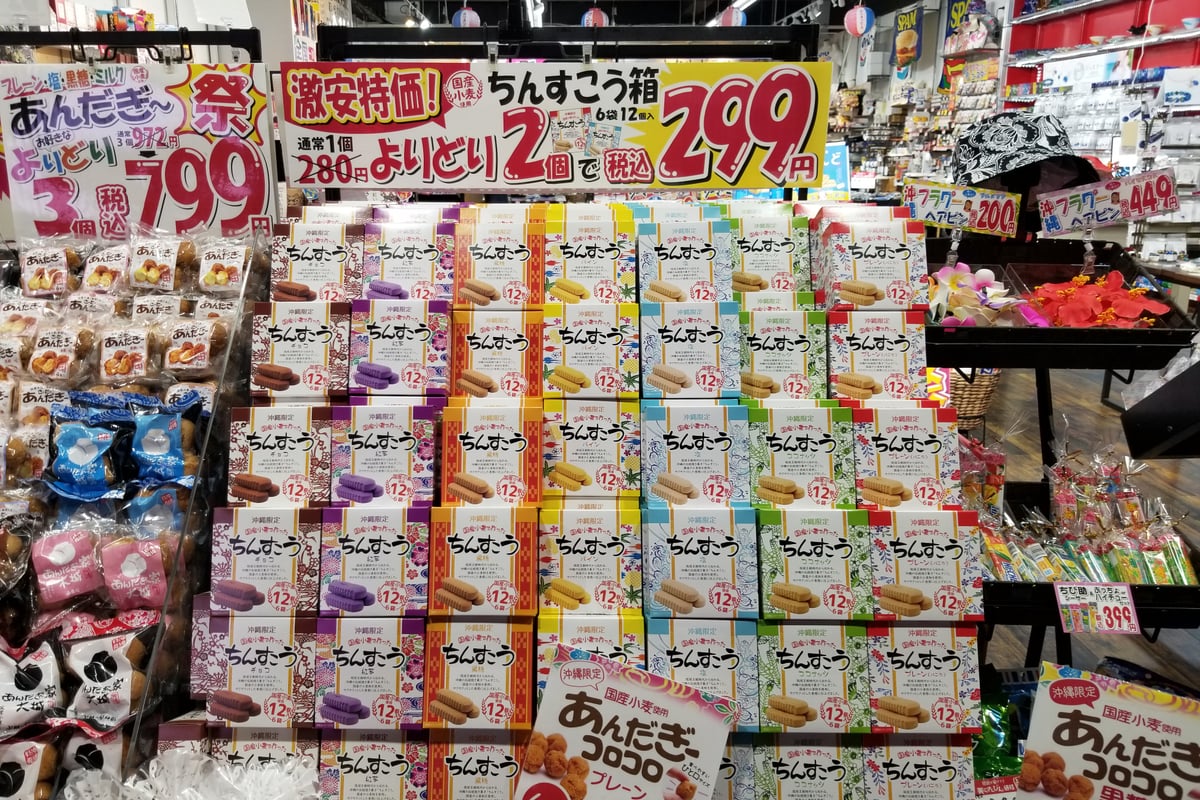
Chinsuko is a classic Okinawan confection made mainly from wheat flour, sugar, and lard. Known for its distinctively crumbly texture and the rich, savory flavor that lard imparts, it is one of the best-known Okinawan souvenirs nationwide in Japan. Its roots lie in a court confection of the Ryukyu Kingdom era, said to have been a special treat served only to royalty, nobility, and investiture envoys from China. Several theories exist for the origin of its name — one holds that it comes from 'chin-so-ko,' meaning 'rare confection,' another from 'kin-so-ko,' meaning 'expensive confection' — but the true origin remains unclear. Originally shaped as round pieces resembling a chrysanthemum flower, it was later remade into bite-sized sticks, giving it the familiar shape known today. Beyond the plain version, many variations have emerged using ingredients such as purple sweet potato, brown sugar, and Yukishio salt, and it continues to be beloved by visitors to Okinawa.
Yatsuhashi
Yatsuhashi
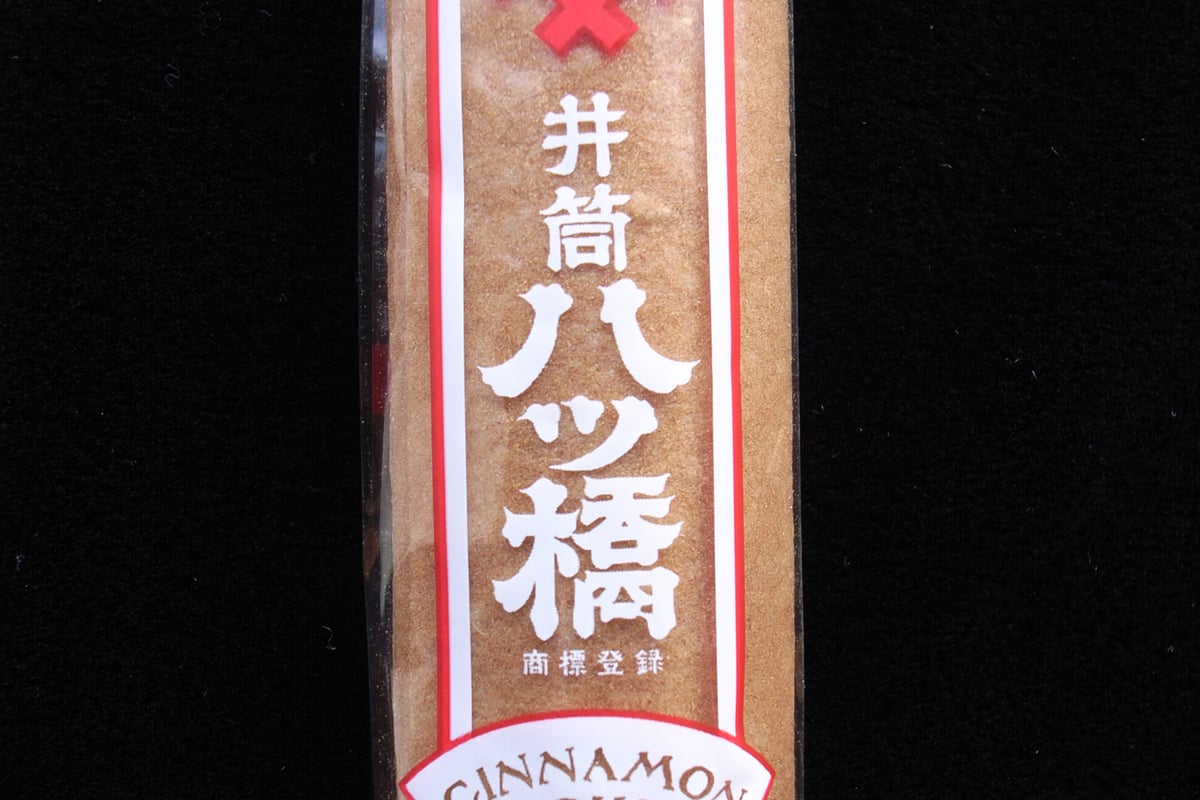
Yatsuhashi is a famous Kyoto confection made by steaming rice flour with sugar and cinnamon (nikki), then rolling it thin and baking it. Its distinctive feature is a shape curved like a crescent moon, said by one theory to be named after the Edo-period koto musician Yatsuhashi Kengyo, and by another to derive from the shape of the wooden bridge at Yatsuhashi in Mikawa Province that appears in The Tales of Ise. It was once only a hard-baked cracker, but from the Showa era onward, an unbaked, soft version called "nama-yatsuhashi" was created, and the triangular nama-yatsuhashi wrapped around bean paste became the mainstream souvenir version. Today there is a wide range of flavors, including matcha, chocolate, and seasonal strawberry, and more than a dozen companies belonging to the Kyoto Yatsuhashi Industry Cooperative Association each manufacture and sell it using their own methods.
Sasa Dango (Bamboo-Leaf Wrapped Mugwort Dumplings)
Sasa Dango
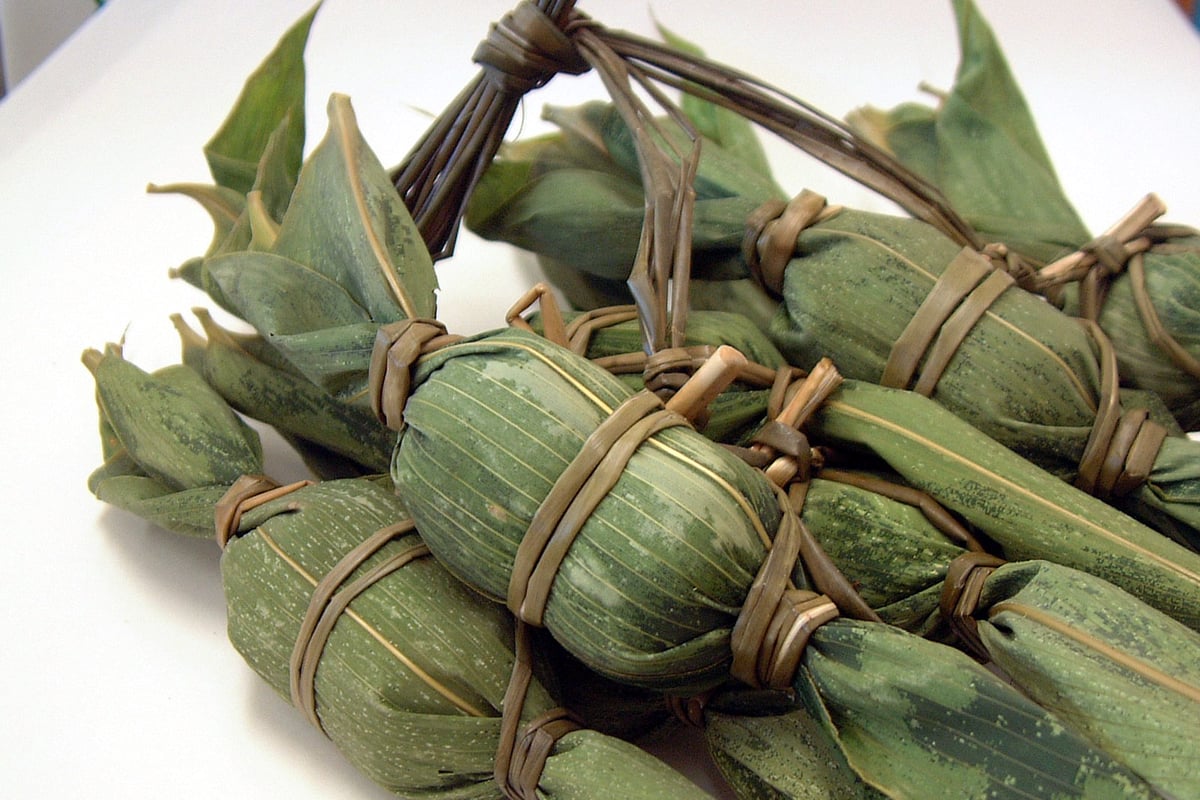
Sasa Dango is a local confection representative of Niigata Prefecture, made by wrapping sweet red bean paste in dumpling dough kneaded with mugwort (yomogi), enclosing it in several sasa (bamboo-grass) leaves, tying it with cords of sedge or rush, and steaming it. It is distinguished by its bale-like shape, with cords tied at both ends. It is said to have been eaten for about 500 years in the Chuetsu and Kaetsu regions of Niigata and in parts of the Aizu region of Fukushima Prefecture. One theory holds that it was a portable preserved food of the Sengoku (Warring States) period that made use of the antibacterial properties of sasa leaves, and that Uesugi Kenshin carried it as field rations; another holds that it arose from the wisdom of making tasty use of broken rice that could not be paid as annual tax. It was once a confection for seasonal events, offered to Yakushi (the Buddha of healing) on the eighth day of the fourth month of the old lunar calendar and made in large quantities for the Boys' Festival (Tango no Sekku) on May 5. It became known nationwide after being chosen as a recommended souvenir by the prefecture and city for the Niigata National Sports Festival (1964, Showa 39), and it is now a classic Niigata souvenir.
Shingen Mochi
Shingen Mochi
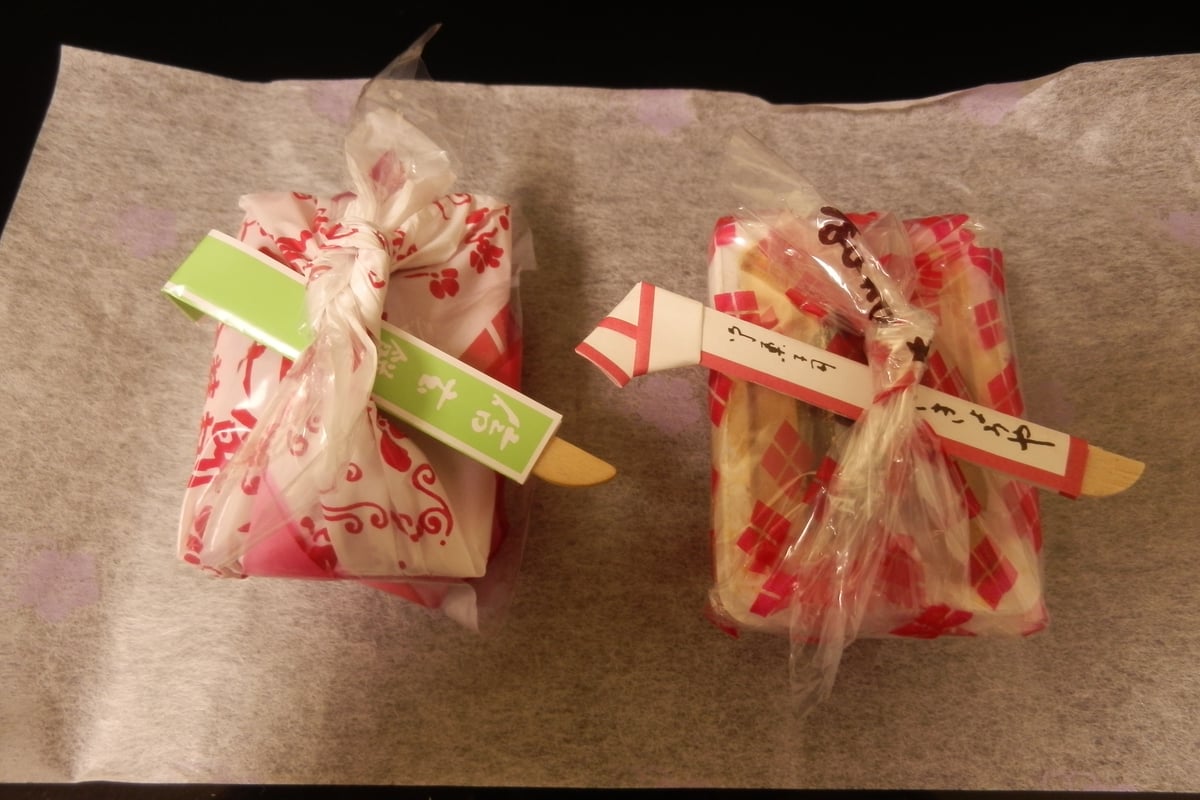
Shingen Mochi is a signature confection of Yamanashi Prefecture: soft mochi coated in kinako (roasted soybean flour) and eaten with kuromitsu (brown sugar syrup) poured over it. Bite-sized pieces of mochi come in a small container with a generous amount of fragrant kinako. In 1968 (Showa 43), Kikyouya of Fuefuki City launched 'Kikyou Shingen Mochi,' and it became known nationwide as a classic Yamanashi souvenir. Kinseiken, a long-established shop in Hokuto City, also makes 'Shingen Mochi,' and both companies' products are loved in their own right. The name comes from Takeda Shingen, the Sengoku-period feudal lord of Kai. It is said to derive either from the mochi Shingen used as emergency rations when going into battle, or to have been inspired by abekawa mochi, which is eaten in Yamanashi during Obon. Each Kikyou Shingen Mochi is wrapped in a vinyl furoshiki (wrapping cloth), and the knots are tied by hand by craftspeople. At the factory in Fuefuki City, visitors can tour the production process and enjoy all-you-can-pack sweets.
Ajari Mochi
Ajari Mochi
Ajari Mochi is a semi-moist confection made by wrapping a chunky sweet red bean paste (tsubuan) of Tanba Dainagon azuki beans in a dough of glutinous rice flour, egg, and sugar, and baking it on a griddle. The chewy dough, its fragrant golden-brown surface, and the mild sweetness of the tsubuan combine in a balance that has made it a beloved staple of Kyoto souvenirs. Both the name and the distinctive shape, with its raised center, are said to derive from the ajiro-gasa (woven bamboo hat) worn by "ajari" — Buddhist monks who complete the thousand-day circumambulation practice (sennichi kaiho-gyo) on Mt. Hiei. Since the long-established Kyoto confectionery Mangetsu created it in the Taisho era, it has remained the shop's signature product for over a hundred years, and in recent times other confectioners have begun making similar sweets, making it one of Kyoto's representative wagashi.
Habutae Mochi
Habutae Mochi
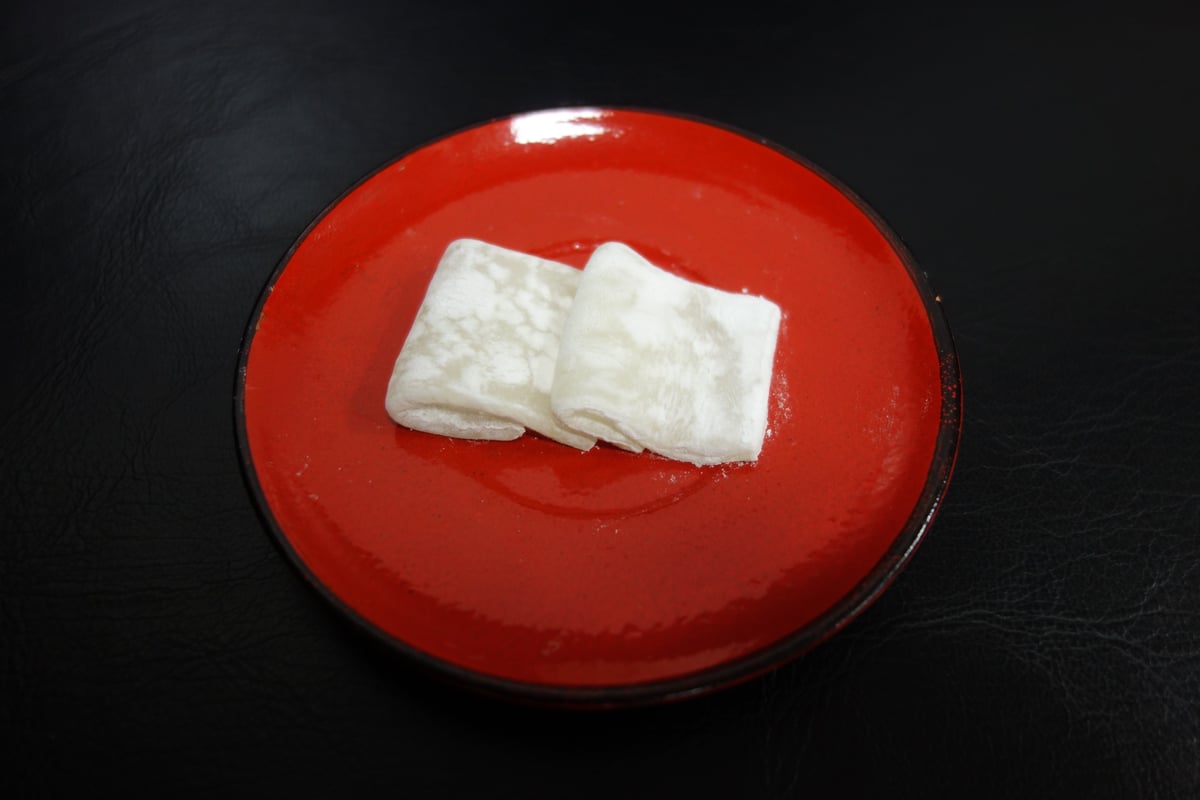
Habutae Mochi is a local confection of Fukui Prefecture made by steaming glutinous rice flour (mochiko), kneading it with sugar and starch syrup (mizuame), spreading it thin, and cutting it into squares. It is a simple mochi sweet whose basic ingredients are just three: mochiko, sugar, and mizuame. Its name comes from habutae, a silk fabric that has represented Fukui since the Meiji era. Habutae is a high-grade plain-weave silk with a smooth, lustrous finish. Habutae Mochi expresses the whiteness and fine, delicate feel of that fabric in the form of a mochi sweet. Its hallmark is a soft, airy texture that seems to melt in the mouth. It is said to have been created in the Meiji era, and the Ministry of Agriculture, Forestry and Fisheries dates the appearance of a sweet named 'Habutae Mochi' to 1905 (Meiji 38). However, several shops are known as its originator, and there are various theories about its origin. Today it is a classic Fukui souvenir, made by many confectioners, each with its own recipe. There are also many derivative sweets, such as versions dusted with kinako (roasted soybean flour), versions wrapped around sweet bean paste, and versions sandwiched in monaka wafers.
Korogaki (Koshu Dried Persimmons)
Koshu Korogaki
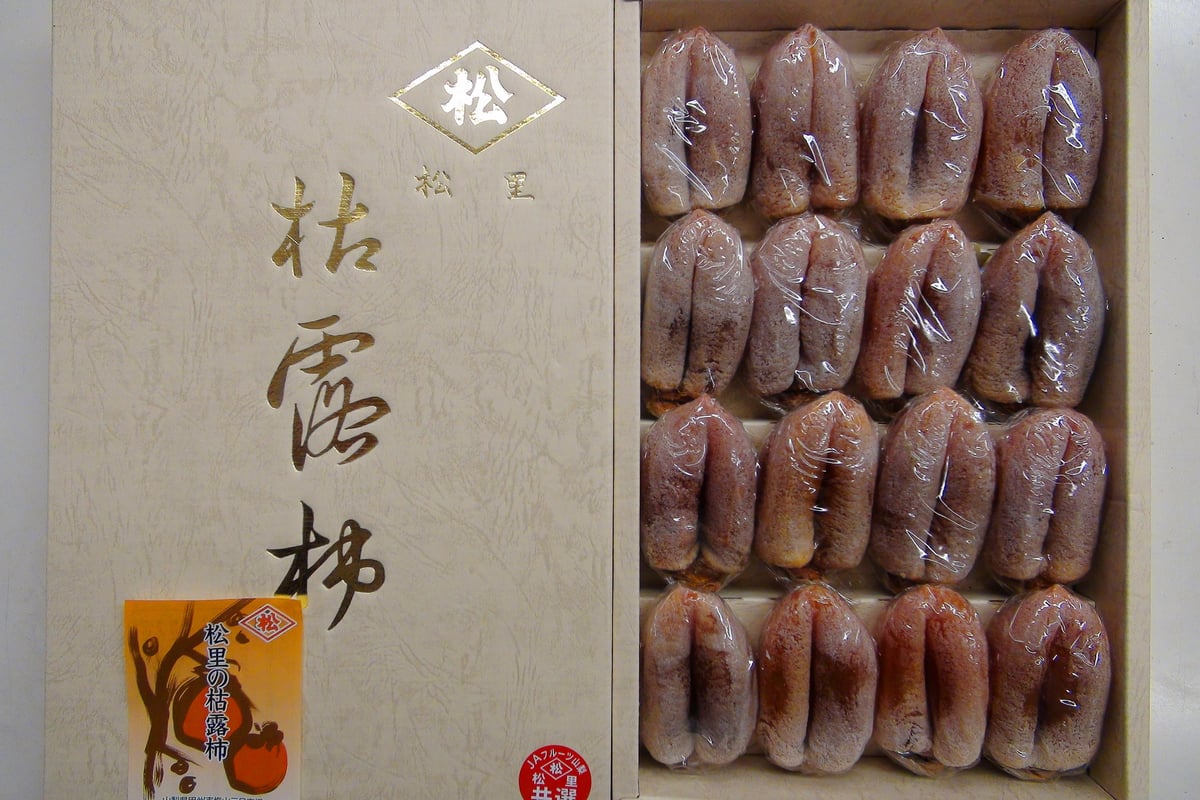
Korogaki are dried persimmons handed down in Koshu City and other parts of Yamanashi Prefecture, made by peeling large astringent persimmons and drying them in the sun. They mainly use 'Koshu Hyakume-gaki' persimmons grown in Koshu City, which are dried slowly until a white powder blooms on the surface. The name is said to come from rolling (korokoro) the fruit to change its orientation so that it receives sunlight evenly while drying. It is also said to have begun when Takeda Shingen encouraged their production as field rations, and in the Edo period they were used as a Koshu specialty presented to the shogunate. The Matsusato district of Enzan in Koshu City is known as a renowned production area, and from early November to early December, the eaves of houses are decorated with orange kaki-sudare (curtains of hanging persimmons). With their deep sweetness and thick, meaty texture, they are a winter delicacy of Yamanashi.
Kujira Mochi
Kujira Mochi
Kujira Mochi is a local confection from Shinjo City and the Mogami region, made by mixing non-glutinous or glutinous rice flour with sugar, walnuts, and other ingredients, pouring the mixture into a mold, and steaming it into a flat, elongated rice cake. Despite its name, which literally means 'whale mochi,' it contains no whale meat at all. Several theories exist about the origin of the name, including that it comes from 'hisashiku mochi ga yoi' ('keeps well for a long time'), rendered as 'kujira' (久持良); that the large size once made from a sho (about 1.8 liters) of rice was likened to a whale; and that its appearance resembles salted whale meat. It is said to have originated in the Edo period during the time of Tozawa Masatsune, the 3rd lord of the Shinjo Domain, when it was used as military provisions, and it has been passed down in households alongside the custom of offering it as a Hina confection for the old-calendar Peach Festival (April 3). Today it is a signature Shinjo souvenir made and sold by confectionery shops in Shinjo City.
Poppo-yaki (Brown Sugar Baked Sticks)
Poppo-yaki
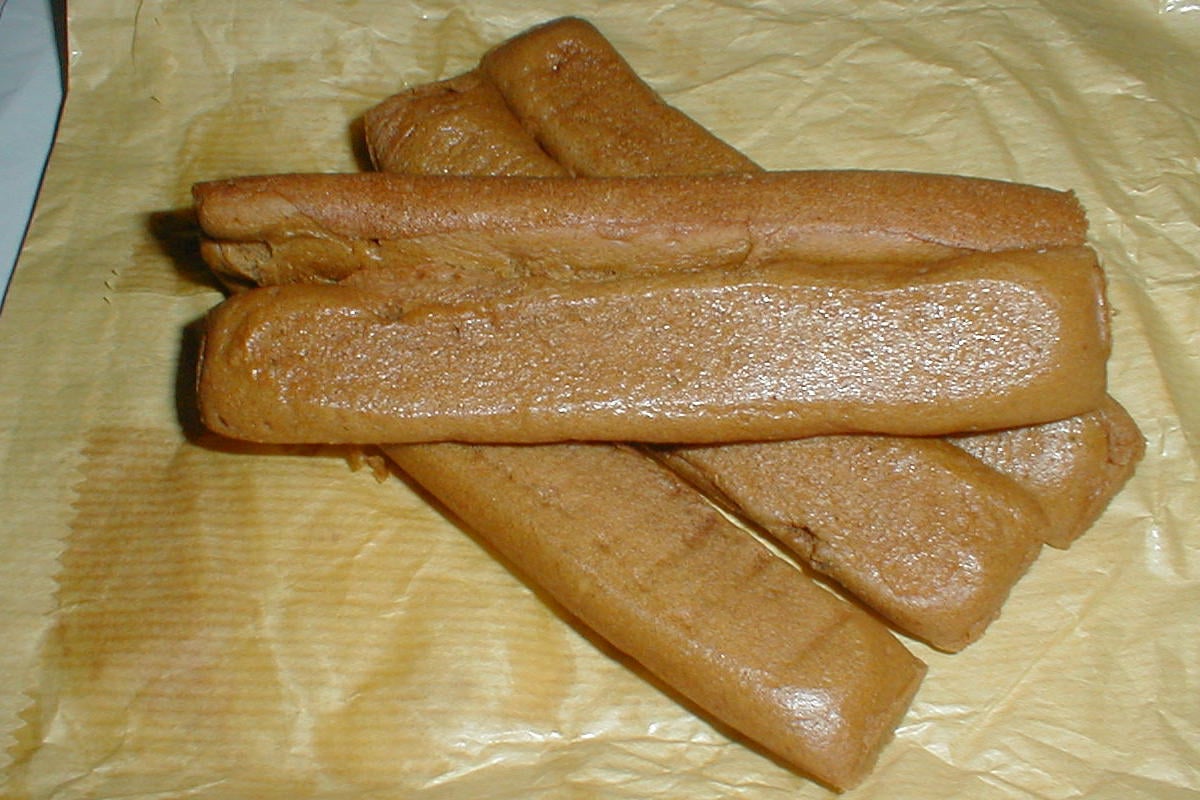
Poppo-yaki is a local confection of the Kaetsu region of Niigata Prefecture, made by baking a batter of wheat flour mixed with brown sugar (kokuto), water, and baking soda into long, thin sticks in a special baking device. It is brown and shaped like a slightly flattened stick, and its appeal lies in its chewy texture and the rustic sweetness of brown sugar. It is said to have originated around the end of the Meiji era as a baked dough confection devised by townspeople in the castle town of Shibata City, and north of the Agano River, centered on Shibata City, it is also called 'joki-pan.' It is sold mainly at stalls at festivals, temple and shrine fairs, and cherry blossom viewing sites, and the steam rising from the baking device and its sweet aroma are a seasonal hallmark of Niigata festivals. Sales are centered in the Kaetsu region, including Shibata City, Niigata City, and Murakami City, and have spread to Sanjo City in Chuetsu, with more stalls appearing in the Joetsu region in recent years. There are also shops that sell it year-round as well as vacuum-packed products, so it can now be enjoyed outside festival season too.
Yubeshi
Yubeshi
Yubeshi is a traditional confection of Wajima, Ishikawa Prefecture, made by hollowing out a yuzu citrus like a vessel, filling it with miso and glutinous rice flour, smoking it, and then slowly drying it over about half a year. In particular, the Wajima version made using a whole yuzu is known as 'maru yubeshi' (whole yubeshi) and is celebrated as a signature confection representative of the Noto region. Its origins are said to trace back to a preserved, portable food of the Genpei period, with descriptions believed to be its prototype found in Muromachi-era documents. Because of its long shelf life, it was valued as a portable food and a gift for business contacts by Wajima-nuri lacquerware peddlers who traveled the country selling their wares, and its reputation spread far and wide. The recipe has traditionally been handed down within families as a closely guarded secret, and it continues to be made using time-honored handwork today.
Abekawa Mochi
Abekawa Mochi (Rice Cakes with Sweet Soybean Flour)
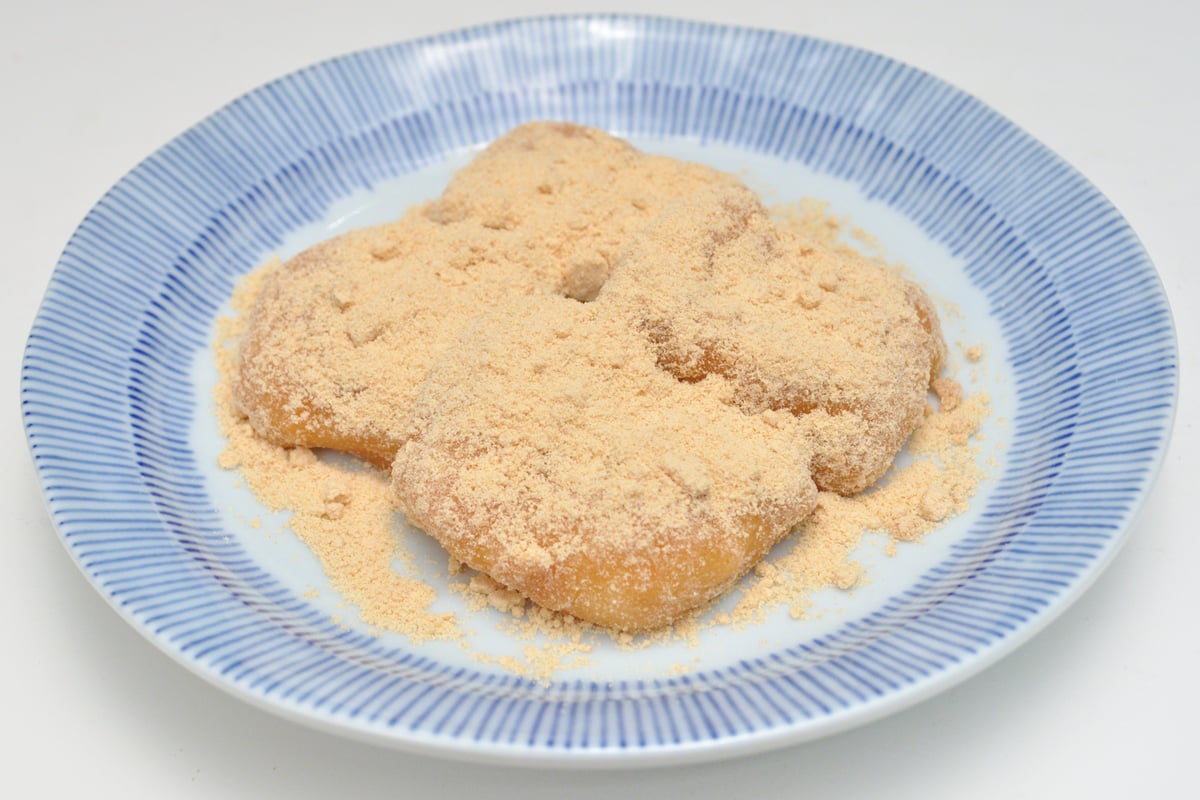
Abekawa mochi is a famous sweet of Shizuoka City made by coating freshly pounded mochi in kinako (roasted soybean flour) and sprinkling it with white sugar. It is often served together with mochi wrapped in smooth red bean paste (koshian), and since the Edo period it has been loved by travelers as a specialty of the Tokaido. The name is said to come from the fact that it became famous when sold at teahouses on the banks of the Abe River, which flows through Shizuoka City. There is also a legend that Tokugawa Ieyasu named it, and an anecdote remains that Ieyasu likened the kinako to the gold dust of the Abe River and called it 'kinako mochi' written with the character for gold (金な粉餅). In the Edo period, white sugar was very rare, so mochi topped with sugar delighted travelers. It also appears as a specialty of the Abe River in Jippensha Ikku's 'Tokaidochu Hizakurige.' During the war it disappeared because sugar became hard to obtain, but it was revived after the war. Today it can be enjoyed at long-established shops at the foot of Abekawa Bridge, and it is also loved as a classic Shizuoka souvenir.
Akafuku Mochi
Akafuku Mochi
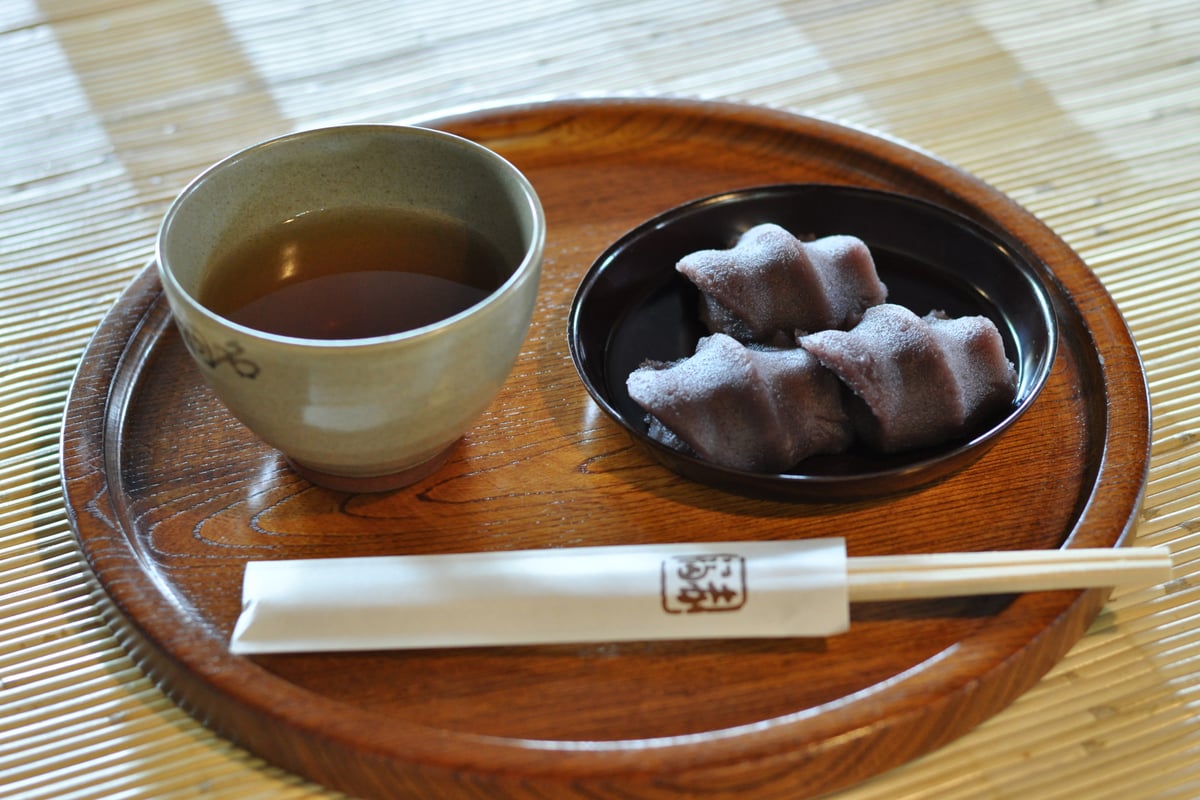
Akafuku mochi is a famous confection of Ise City, Mie Prefecture, made of soft mochi topped with smooth red bean paste (koshi-an). It is made by Akafuku, whose main store stands in Oharai-machi in front of the Naiku (Inner Shrine) of Ise Grand Shrine, and the company is said to have been founded in 1707 (Hoei 4). The three ridges pressed into the bean paste represent the clear stream of the Isuzu River, which flows through the shrine grounds. The white mochi is said to represent the pebbles lying on the riverbed. The shop name comes from the phrase 'sekishin keifuku' (赤心慶福), meaning to rejoice in the happiness of oneself and others with a sincere heart, free of falsehood like that of a newborn baby. In the Edo period, the Ise Kaido (pilgrimage road to Ise) running from Kuwana to Ise was also called the 'Mochi Road' (Mochi Kaido), and many famous mochi treats for welcoming pilgrims were born along the road. Akafuku mochi is the leading example. At the main store, you can enjoy freshly made Akafuku mochi with hojicha (roasted green tea) made with water boiled on a vermilion-lacquered kamado (hearth). 'Tsuitachi-mochi' (朔日餅), sold only on the first day of each month, is also popular.
Anpogaki (Semi-dried persimmon)
Anpogaki (Semi-dried persimmon)
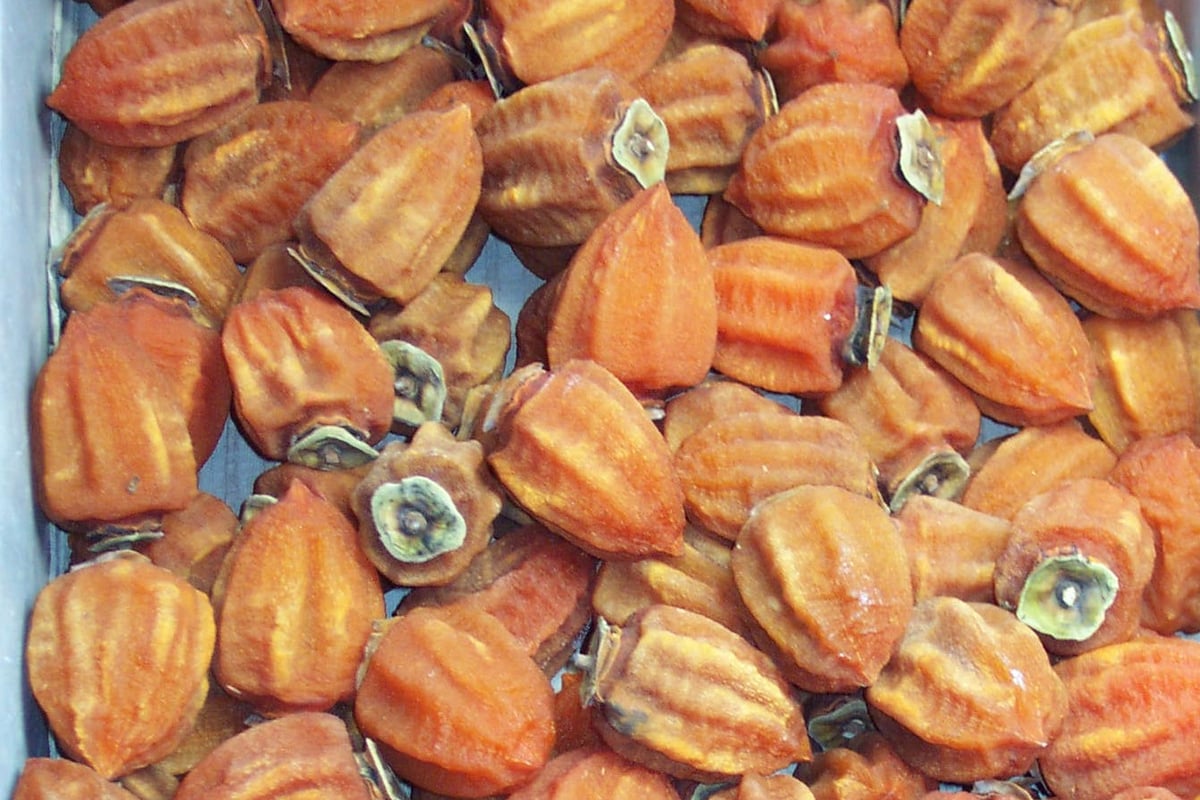
Anpogaki is a semi-dried persimmon that originated in the Isazawa district of Yanagawa-machi, Date City, Fukushima Prefecture. Astringent persimmons are fumigated with sulfur before being dried, producing vivid orange flesh with a soft, jelly-like texture. While ordinary dried persimmons are dried until firm, anpogaki is characterized by retaining more moisture, offering a refined sweetness that can be enjoyed either eaten as is or scooped out with a spoon. In the Isazawa district, regarded as the birthplace of anpogaki nationwide, techniques passed down through persimmon-growing families for more than a hundred years since the early Taisho era continue to be used, and the fruit is shipped nationwide as a taste representative of winter in Fukushima. In an area once known for sericulture, producers historically poured their efforts into persimmon cultivation as a new specialty product unaffected by fluctuations in the raw silk market, and today the whole of Date City is known as one of Japan's leading anpogaki-producing areas.
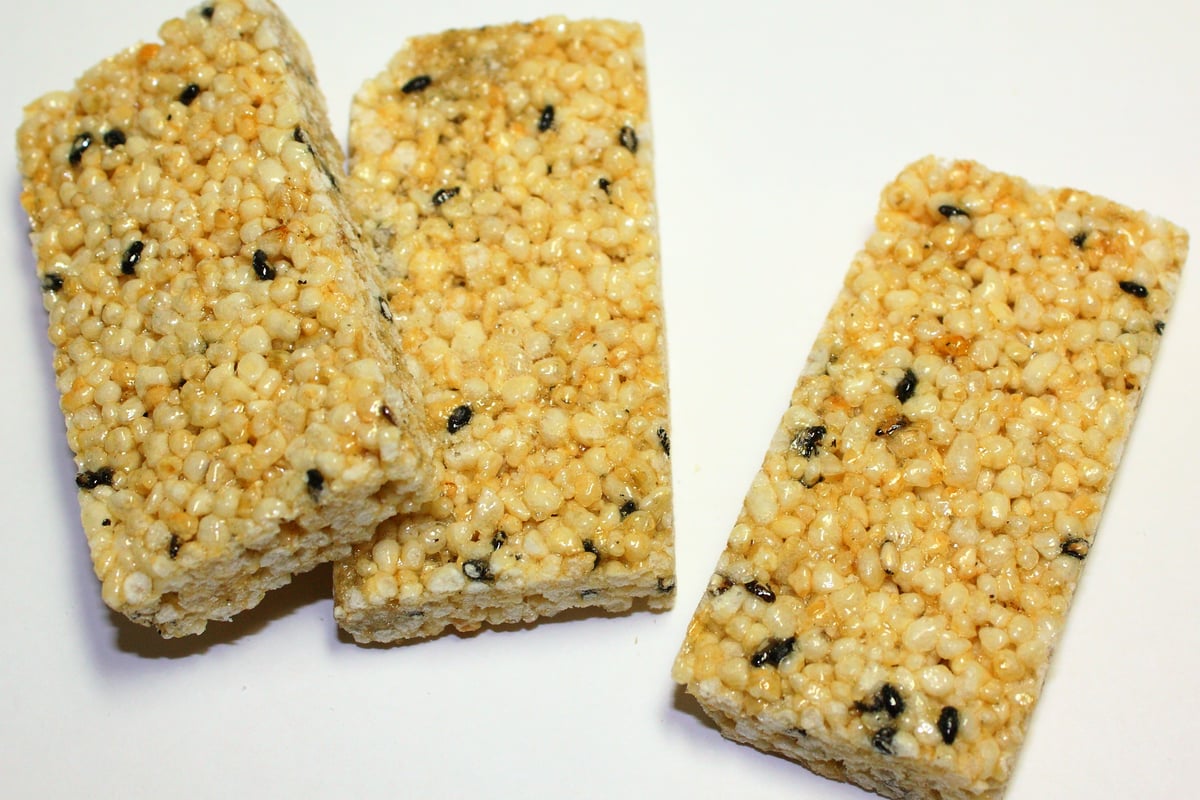
Awa Okoshi and Iwa Okoshi
Awa Okoshi and Iwa Okoshi (Osaka Puffed Rice Crackers)
Awa okoshi and iwa okoshi are regional sweets that represent Osaka. Okoshi is a dry confection made by binding steamed and dried rice, millet, or other grains with mizuame (starch syrup) and sugar. It was originally a sweet for ordinary people made from millet (awa), barnyard millet (hie), and other grains, but in Osaka in the mid-Edo period, 'awa okoshi,' made from rice crushed finely into millet-sized grains, was born. In the background was the fact that high-quality rice, mizuame, and sugar gathered from all over Japan in Osaka, which was called 'the nation's kitchen' (Tenka no Daidokoro). 'Iwa okoshi' is made by crushing the rice even more finely and pressing it firmly, flavored with ginger and kokuto (brown sugar). It took hold as an Osaka specialty as a lucky sweet said to 'raise oneself up, raise the household, raise the nation, and raise good fortune' (okosu meaning 'to raise'). Long-established makers such as Amidaike Daikoku (あみだ池大黒), founded in 1805 (Bunka 2), still continue to produce it today. In fiscal 2024 (Reiwa 6), awa okoshi was recognized under the Agency for Cultural Affairs' '100-Year Food' program (Traditional 100-Year Food category).
Choseiden
Chouseiden
Choseiden is a red-and-white rakugan confection made by the long-established Kanazawa confectioner Morihachi, counted alongside Niigata Prefecture's 'Koshi-no-yuki' and Shimane Prefecture's 'Sanka' as one of Japan's 'Three Great Confections.' It began in the early Edo period when Maeda Toshitsune, third lord of the Kaga domain, ordered the making of a confection for the Tanabata festival; the design was decided with advice from Kobori Enshu, founder of the Enshu school of tea, who is also said to have named the confection himself. Made with wasanbon sugar from Shikoku and glutinous rice flour from the Hokuriku region, it is still pressed one piece at a time in wooden molds engraved with the characters 'Choseiden' in Kobori Enshu's own hand, a traditional method preserved to this day. Once revered as a confection reserved exclusively for the Kaga domain's lord, it has a distinguished history of being presented to Emperor Gomizunoo and the Tokugawa shogunate, and today it remains beloved as a souvenir confection representative of Kanazawa.
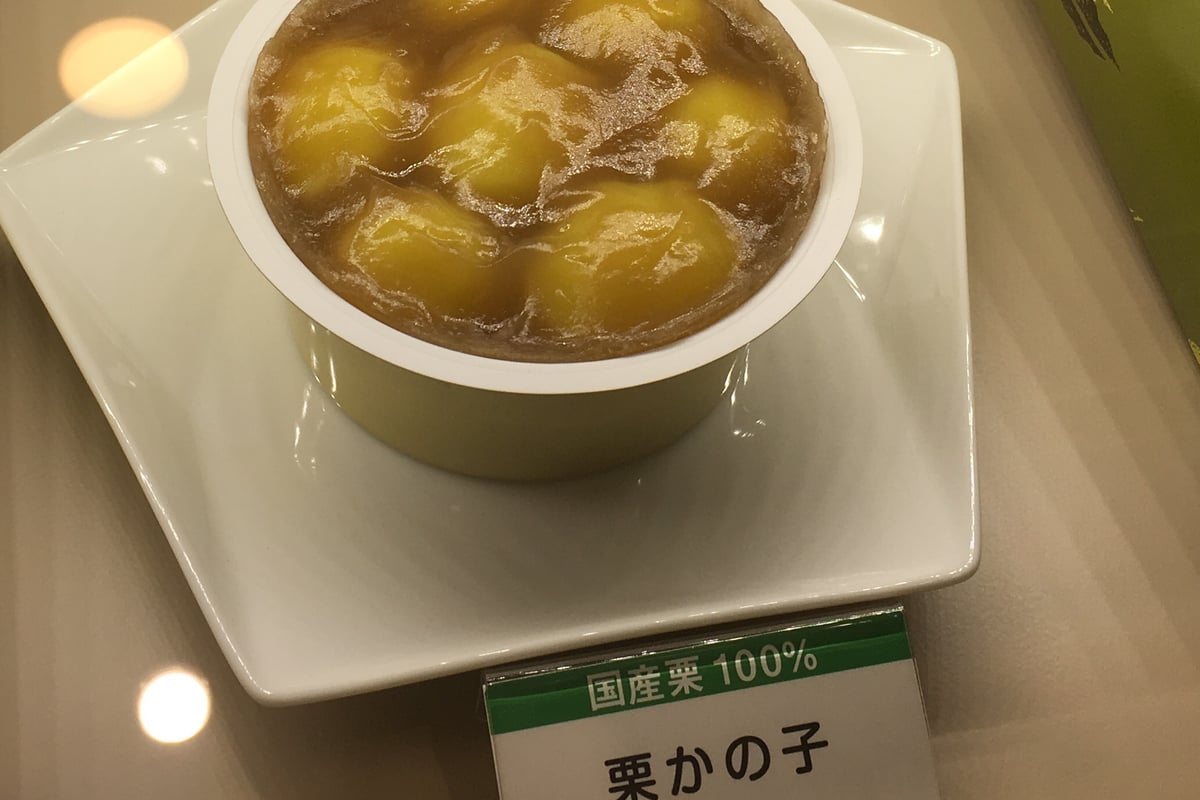
Obuse Chestnut Confections
Obuse Chestnut Confections
Obuse Chestnut Confections is the collective term for wagashi (Japanese confections) made with local chestnuts in Obuse Town, Kamitakai District, in northern Nagano Prefecture. Chestnut cultivation in Obuse is said to date back to the Muromachi period, and the acidic soil of the well-drained alluvial fan suited the growth of chestnuts. In the Edo period, high-quality chestnuts were made 'kenjo-guri' (chestnuts presented as tribute) to the shogun's family, and the name 'Obuse-guri' (Obuse chestnuts) spread. Chestnut confections began in 1808 (Bunka 5), when 桜井幾右衛門, the founder of Sakurai Kanseido, is said to have been the first to make 'kuri rakugan' (pressed chestnut sweets). Later, kuri yokan (chestnut yokan) and kuri kanoko (chestnut paste studded with candied chestnuts) were created, and in the Meiji period canning technology made them available all year round. Even today, long-established chestnut confectioners line the center of town, and you can also enjoy new chestnut flavors such as kuri okowa (chestnut sticky rice) and Mont Blanc. In the season of new chestnuts in autumn, the town bustles with many tourists.
Sasamaki (bamboo-leaf wrapped mochi rice)
Sasamaki
Sasamaki is a local dish of Yamagata Prefecture in which glutinous rice soaked in water is wrapped in sasa (bamboo-grass) leaves into a triangular or bale shape, tied with a cord such as rush grass, and boiled in hot water — it corresponds to what other prefectures call 'chimaki.' It has traditionally been made in each household for the Boys' Festival (Tango no Sekku, the fifth day of the fifth lunar month) to pray for children's healthy growth. Sasa leaves are said to have antiseptic and antibacterial properties and have long been valued as a wrapping material for preserved and portable food. The way it is wrapped varies by region: it is shaped into a cone in the Mogami region and into a fist shape in the Oitama region, while the southern part of Tsuruoka City has its own distinctive method of boiling it in lye water (aku-mizu). To eat it, the sasa leaves are untied and the rice cake is topped with roasted soybean flour (kinako) and black sugar syrup (or sugar).
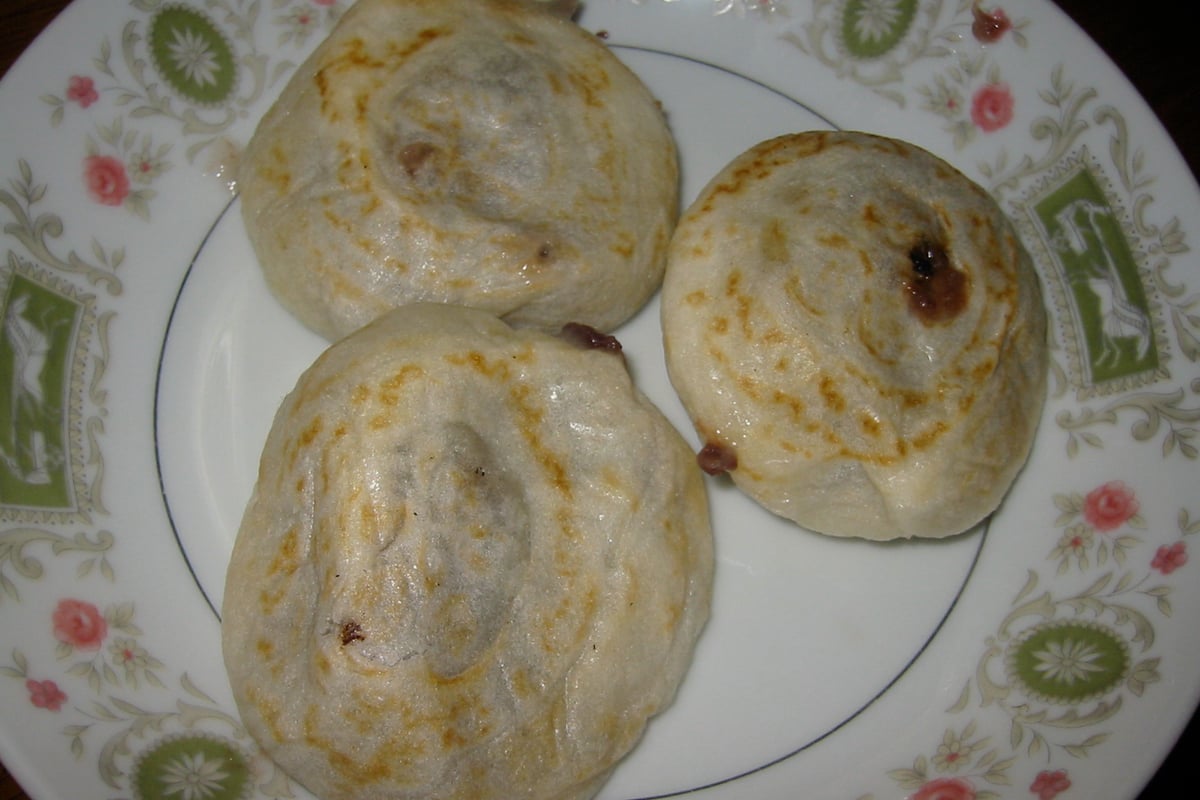
Umegae-mochi
Umegae-mochi
Umegae-mochi is a specialty of the approach to Dazaifu Tenmangu Shrine: sweet red bean paste wrapped in mochi dough and grilled to a fragrant finish using a special mold stamped with a plum blossom design. Known as a mochi confection closely associated with Sugawara no Michizane, the god of learning, the shrine's approach is lined with teahouses and mochi shops serving the cakes freshly grilled, filling the whole street with their fragrant aroma. The name is said to derive from a legend in which an old woman delivered mochi to Michizane skewered on a plum branch. The dish was already known as a specialty of the approach by the Edo period, and long-established shops, including Kasanoya, founded in 1922, continue to insist on serving the mochi freshly grilled today. Crisp and fragrant on the outside with a chewy interior, it pairs beautifully with the refined sweetness of its chunky red bean paste. Eating one fresh off the grill while strolling along the approach is the classic way to enjoy it.
Akita Morokoshi
Akita Morokoshi
Akita Morokoshi is a local confection classified as a type of rakugan (a pressed, dry sugar confection), made by mixing red-bean (azuki) flour with sugar, pressing it in wooden molds, and slowly baking it. Its origin is said to trace back to 1705 (Hoei 2) in the Edo period, when Satake Yoshitada, the 4th lord of the Kubota domain, had a parched-rice confection made to reward his retainers for their service. Later, Sugiyama Ryosaku, the founding master of the confectionery shop Sugiyama Jusando, presented a confection made with red-bean flour to Lord Yoshitada, who praised it highly, saying it 'surpassed every other confection in flavor' — and this remark is said to be the origin of the name 'Morokoshi.' (There is also another theory that the name instead derives from 'morokoshi,' a word of Chinese origin, so its precise etymology remains debated.) With a history spanning more than 300 years, it is known for its refined sweetness that melts gently in the mouth and the fragrant flavor of red beans, and it remains beloved today as a signature souvenir confection of Akita.
Ganzuki (Steamed Cake)
Ganzuki
Ganzuki is a local confection of Miyagi Prefecture made by mixing wheat flour with baking soda (or baking powder), brown sugar, and water, pouring the batter into a mold, and steaming it — a fluffy yet substantial steamed cake. There are several theories about the origin of its name: one holds that the color and appearance of the steamed batter resembles the meat of a wild goose (gan), while another holds that the round shape and the sesame seeds scattered on the surface evoke the image of the moon and a goose. In the Sendai Domain, rice cultivation was encouraged, and because farmers had to hand over much of their harvested rice as tax, wheat cultivation and a flour-based food culture spread among them — this is thought to be the background behind the development of local confections made with wheat flour, such as ganzuki. 'Kuro ganzuki,' made with brown sugar, is the representative version, but there are many regional and household variations, including 'shiro ganzuki,' made with white sugar, and versions with added miso, soy sauce, walnuts, or sesame. While enjoyed as an everyday snack, it also has a side as a ceremonial food made for memorial services and celebrations.
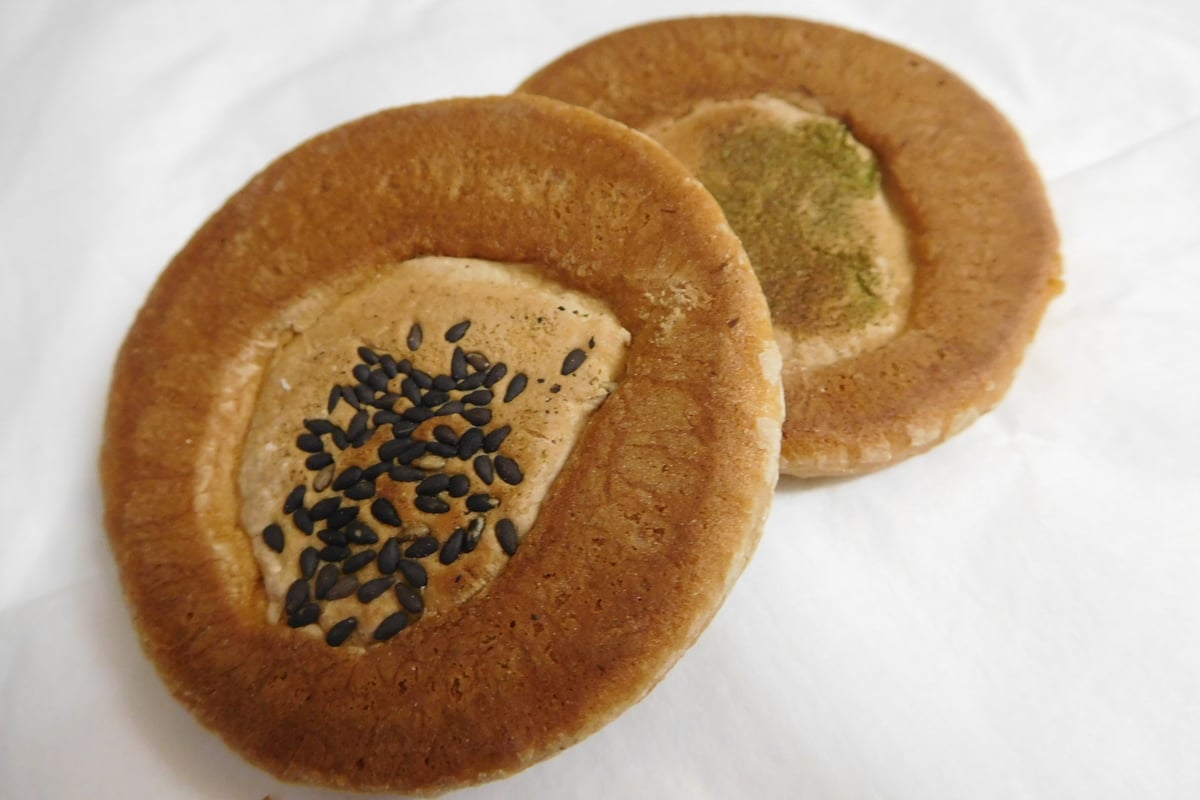
Iga Katayaki (Hard Baked Biscuits)
Iga Katayaki (Hard-Baked Ninja Crackers)
Katayaki is a very hard baked confection handed down in Iga City and Nabari City, Mie Prefecture. A dough made mainly from wheat flour and sugar is baked on an iron griddle and flavored with black sesame or aonori (green laver). As its name ('hard-baked') suggests, it is hard, and it is even called 'the hardest senbei in Japan.' Because it is compact, nutritious, and keeps for a long time, Iga ninja are said to have carried it as portable food, and it is also called 'ninka' (忍菓). It is also said to have been valued as preserved food on the battlefield. Records even remain of people once breaking it with the scabbard (saya) or hand guard (tsuba) of a sword to eat it. Today, it is usually broken by striking it with the included wooden mallet or by knocking pieces of katayaki against each other. It can also be softened by soaking it in tea or milk. Today's sweet katayaki is thought to have taken its current form more than 200 years ago. Producers are scattered around the castle town of Iga Ueno and elsewhere, and some shops let you watch the baking.
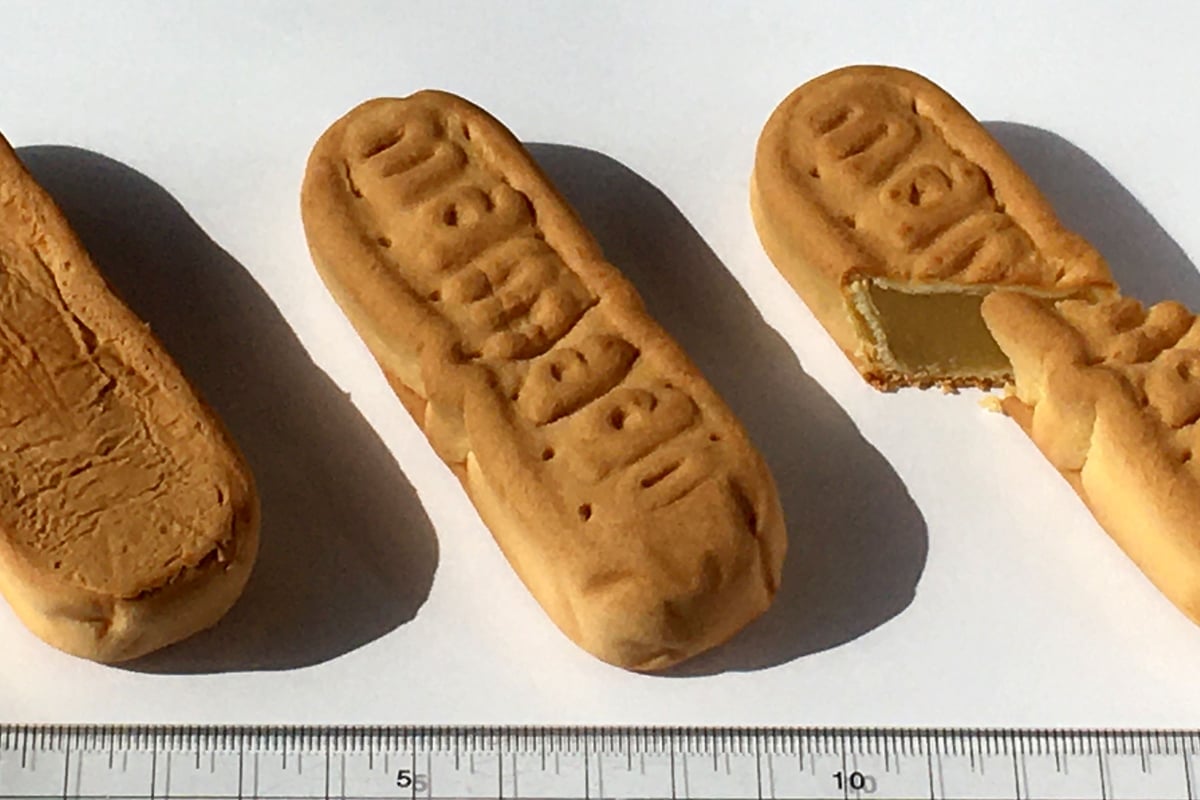
Mamadoru (Milk-filled butter cake)
Mamadoru (Milk-filled butter cake)
Mamadoru is a traditional local confection representative of Fukushima Prefecture, made by wrapping a milk-flavored filling in butter-enriched dough and baking it. It has been a long-selling favorite since Sanmangoku, a long-established confectionery in Koriyama City, Fukushima Prefecture, first released it in 1967, and it is widely known as a classic Fukushima souvenir enjoyed for more than half a century. The name is said to derive from a Spanish phrase meaning 'a child nursing at the breast,' and the confection is characterized by the combination of a gentle milk aroma and moist dough. At the time of its release, it drew attention as a Western-style baked confection that was still uncommon, and today it is counted among the representative confections not only of Fukushima but of the wider Tohoku region. The yellow-based packaging has remained largely unchanged since its debut, and its simple flavor, beloved across generations, is one reason for its long-standing popularity.
Narita no Kuri Yokan
Narita Kuriyokan
Narita no Kuri Yokan is a Japanese confection created by Nagomi no Yoneya, a long-established confectionery founded in 1899 (Meiji 32) on the approach to Naritasan Shinshoji Temple. Its founder, Morooka Chozo, is said to have taken inspiration from 'kurikan,' a chestnut sweet served as part of the temple's shojin ryori (Buddhist vegetarian cuisine), and created Japan's first kuri yokan (chestnut yokan) using locally grown small chestnuts called shiba-guri, selling it as a souvenir for visitors to Naritasan Shinshoji Temple. Since then it has been cherished as a signature souvenir of the temple's approach, and the main shop houses the 'Narita Yokan Museum,' which displays the shop's history since its founding along with tools used in making yokan. Known for its refined sweetness that highlights the flavor of shiba-guri chestnuts, it remains a popular choice today both as a snack to enjoy while strolling the approach and as a souvenir for visitors and returning travelers.
Oiwake Yokan
Oiwake Yokan (Bamboo-Wrapped Steamed Yokan)
Oiwake Yokan is a steamed yokan wrapped in bamboo sheath, made by 追分羊かん本店 in Oiwake, Shimizu Ward, Shizuoka City, Shizuoka Prefecture. The shop is said to have been founded in 1695 (Genroku 8). It stands on the outskirts of Ejiri-juku post town on the old Tokaido, at the fork (oiwake) where the Kuno road branches off toward Kunozan. Beloved by travelers coming and going on the Tokaido, it has been handed down as a specialty of the highway for more than 300 years. Because azuki bean paste mixed with glutinous rice is wrapped in bamboo sheath and steamed, the fragrance of the bamboo transfers to it. It has a distinctive sticky, smooth texture and a simple taste with restrained sweetness. Another distinctive feature is that it is cut with a knife through the bamboo sheath, and the sheath is peeled off before eating. It is also said to have been a favorite of Tokugawa Yoshinobu, the last shogun of the Edo shogunate. It is also one of the component cultural properties of the Japan Heritage story themed on travel along the Tokaido, 'Yaji-san and Kita-san, Who Started Japan's First Travel Boom: A Journey through Sunshu.'
Hikichigiri (Hinamatsuri Wagashi)
Hikichigiri
Hikichigiri is a traditional premium wagashi (jonamagashi) made in Kyoto around the time of the Hinamatsuri (Doll's Festival). Dough such as mugwort mochi is stretched into a ladle-like shape, finished with an edge that looks as though it has been torn off, and topped with sweet bean paste or kinton (sweetened mashed bean paste) in the central hollow. Said to derive from a court ritual confection, it has long been cherished in Kyoto as a special sweet displayed alongside the Hinamatsuri dolls. The name is said to come from an anecdote in which, being too busy to properly round the mochi, someone simply tore it apart; and because its distinctive shape resembles an akoya pearl oyster, it is also said to carry a wish to protect and nurture a child's growth like a pearl. Its roots are traced to "itadaki-mochi," a rice cake used in court rituals for childbirth and the ceremony of the maternity sash, and many versions are colored green by mixing mugwort into the dough.
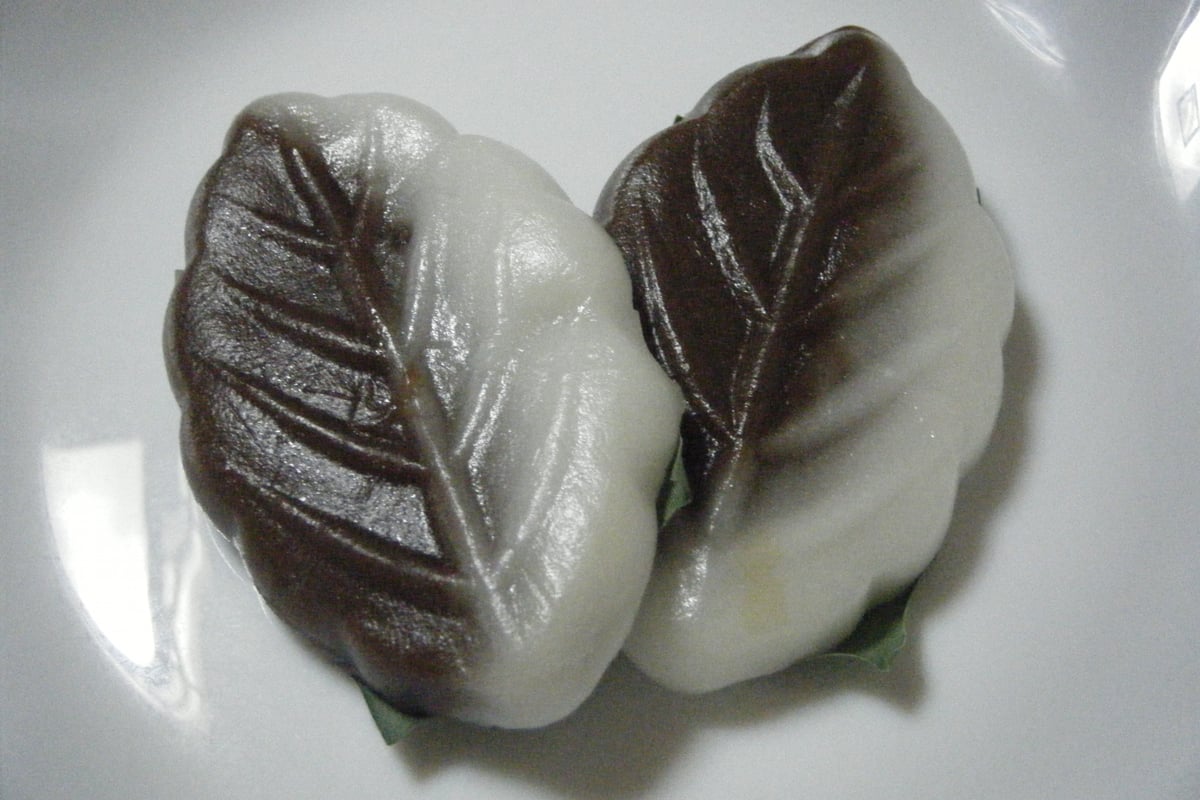
Bekomochi (marbled mochi sweet)
Bekomochi
Bekomochi is a regional confectionery of Hokkaido made by combining white and black (or brown) dough, typically shaped to resemble a leaf. A dough of joshinko (non-glutinous rice flour) or shiratamako (glutinous rice flour) mixed with sugar is combined with a dough colored with brown sugar, shaped, and then steamed. Its appeal lies in its soft, chewy texture and the gentle sweetness of the brown sugar. In Hokkaido, it is customarily eaten mainly around Tango no Sekku (Boys' Festival, May 5), and it has been especially popular in the Dounan (southern Hokkaido) region. Several theories exist about the origin of the name: one holds that the black-and-white coloring resembles a Holstein dairy cow, leading to the name 'beko' (a dialect word for cow); another traces it to the resemblance of the brown-sugar portion's color to tortoiseshell (bekkou); and yet another suggests it derives from rice flour (beiko) being the main ingredient—though no theory is firmly established. Centered on the Dounan region, shops produce a wide variety of distinctive bekomochi beyond the classic leaf shape, including green dough mixed with mugwort and versions filled with sweet red bean paste.
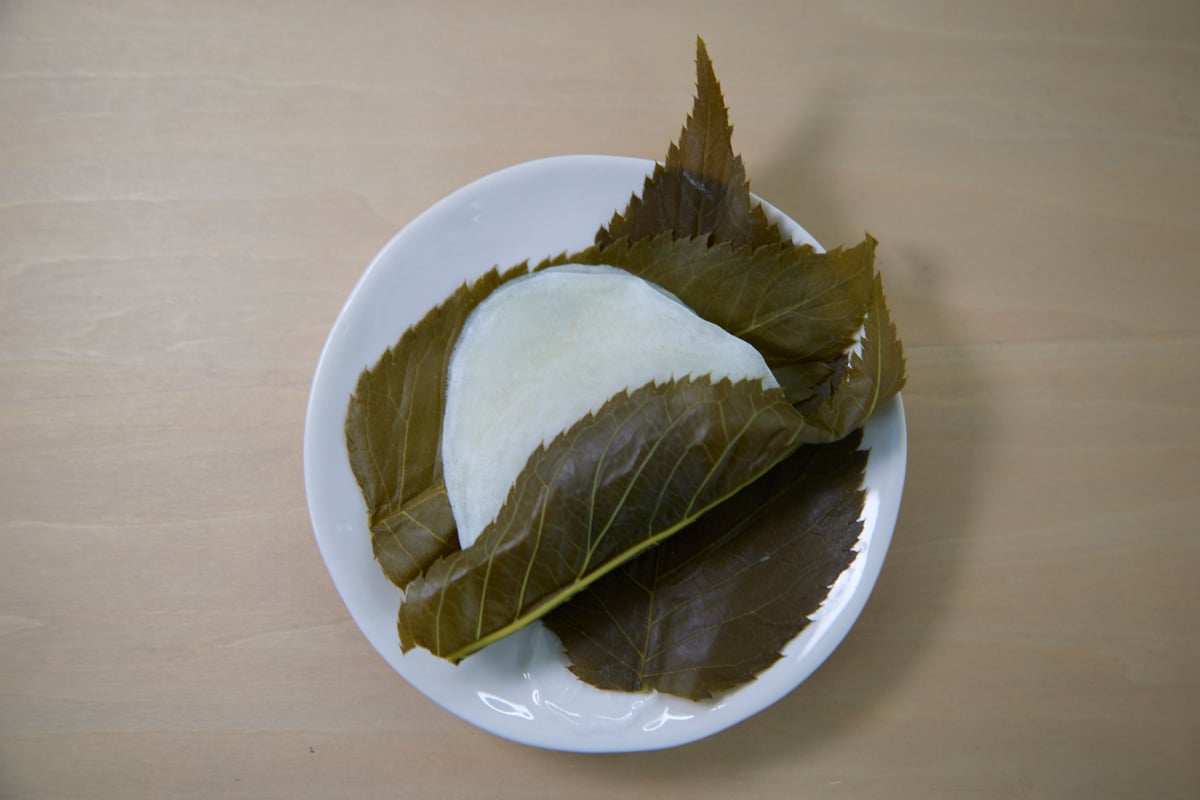
Chomeiji Sakuramochi (Edo-Style Sakura Mochi)
Chomeiji Sakuramochi
Chomeiji sakuramochi is a Japanese confection regarded as the original Edo-style (Kanto-style) sakura mochi: a thin, crepe-like wheat-flour skin wrapped around sweet bean paste, then wrapped again in a salt-pickled cherry leaf. According to tradition, it originated in 1717, when Yamamoto Shinroku, a gatekeeper at Chomeiji Temple in Mukojima along the Sumida River, came up with the idea of salt-pickling the fallen cherry leaves he swept from the temple grounds and using them with mochi, and began selling the confection at the temple gate. Unlike Domyoji-style (Kansai-style) sakura mochi, which makes the most of the coarse, grainy texture of domyoji-ko (glutinous rice flour), Chomeiji sakuramochi is characterized by a thin, crepe-like wheat-flour skin wrapped around smooth koshian (strained red bean paste), and the shop still preserves its own distinctive style of wrapping each piece in two or three cherry leaves. During cherry blossom season, it draws crowds of visitors to the Sumida embankment, and Yamamoto-ya, which has operated continuously as a sakura mochi specialty shop in Mukojima for roughly 300 years since its founding, is cherished as a celebrated shop that keeps Edo's hanami culture alive today.
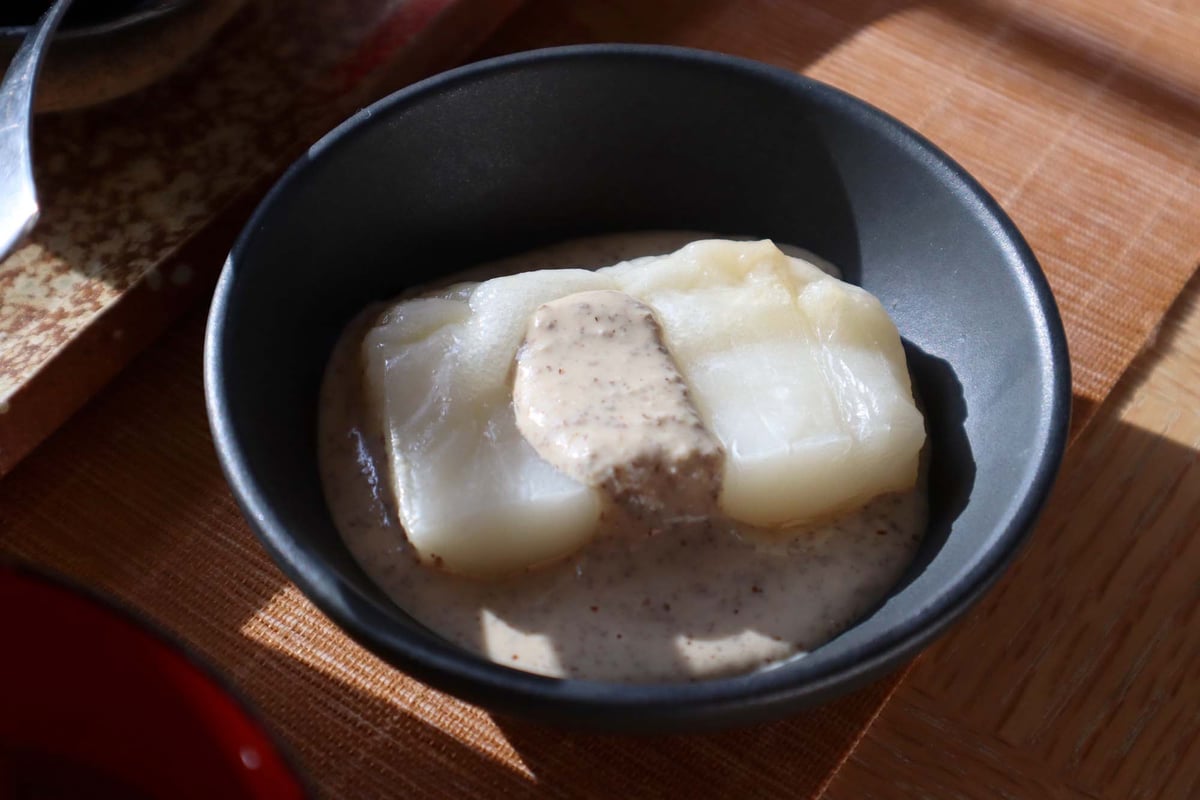
Ichinoseki and Hiraizumi Mochi Cuisine
Ichinoseki Mochi Cuisine
Mochi cuisine from Ichinoseki and Hiraizumi is a food culture handed down in Ichinoseki City and Hiraizumi Town, Iwate Prefecture, encompassing a reported 300-plus varieties of mochi dishes. The custom of pounding mochi persists not only at New Year but also for weddings, funerals, and other ceremonial occasions, at seasonal farming milestones such as rice planting and harvest, and at life's rites of passage — a practice so deeply woven into daily life that the area is known as 'the village of mochi.' Alongside sweet red-bean mochi ('anko-mochi'), the region is known for a rich variety of distinctive mochi that draw on the bounty of mountain and river, including 'jyune-mochi' made with ground perilla seeds, 'fusube-mochi' dressed with grated daikon and soy sauce, and 'numa-ebi-mochi' made with freshwater shrimp. On formal occasions, a unique dining style called the 'mochi honzen' is followed, in which guests taste a sequence of flavors in an order set by a facilitator; this custom is said to derive from the practices of the Date domain, which governed the Ichinoseki region during the Edo period.
Kanko-yaki
Kanko-yaki
Kanko-yaki is a local dish handed down since the Edo period in the Tsukui area of Midori Ward, Sagamihara City — a simple grilled-and-steamed dumpling made by wrapping seasonal ingredients such as wild greens and mushrooms, azuki beans, kabocha squash, and pickles in kneaded wheat-flour dough, then grilling it before steaming it through. Because the mountainous Tsukui area was unsuited to rice cultivation, wheat and bean farming flourished there from early times, and a wheat-based flour-food culture took root. In the Edo period, the dough was filled with uruka (salted ayu-fish innards) or miso and steam-baked in the hot ash of a hearth, and the dish was enjoyed as a meal or snack between farm work. The name is said to derive from its resemblance in shape to the kakko, a drum used in gagaku (Japanese court music). In 2007, it was selected as a local dish of Kanagawa Prefecture in the Ministry of Agriculture, Forestry and Fisheries' 100 Local Dishes of Farming, Mountain, and Fishing Villages.
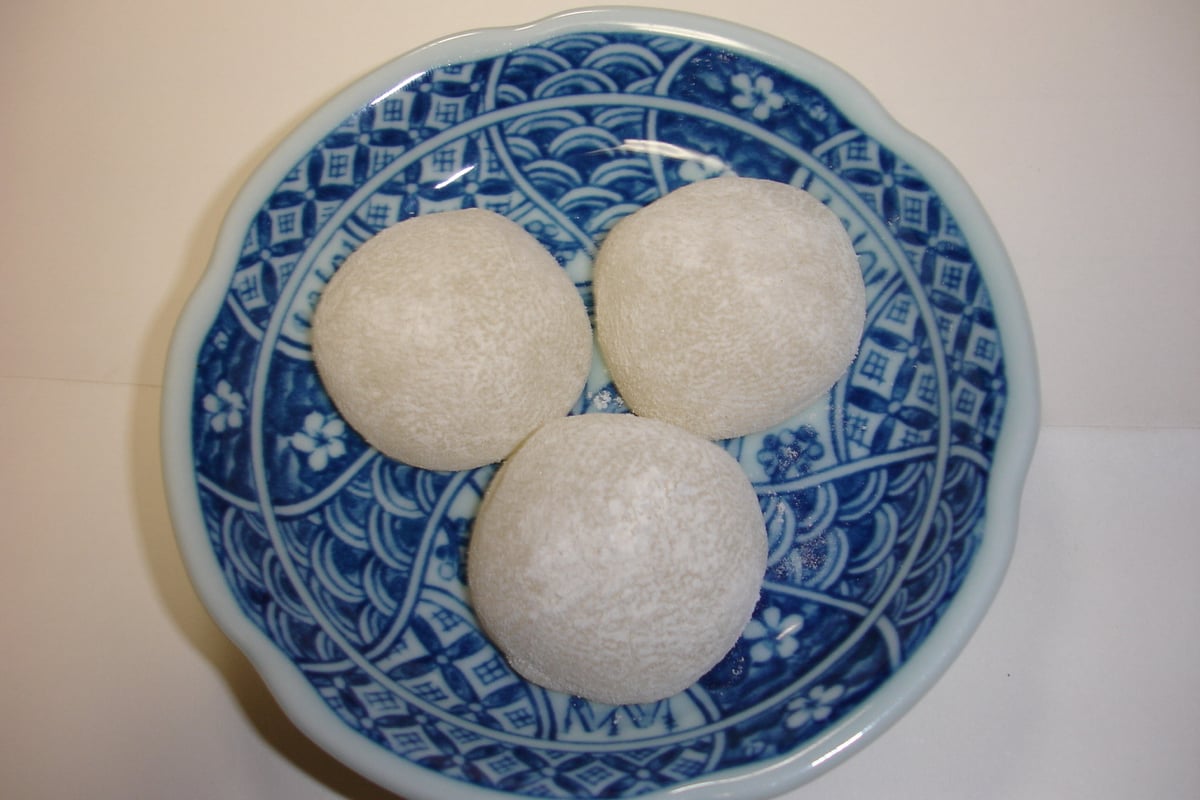
Kibi Dango (millet dumplings)
Kibi Dango
Kibi Dango (written 吉備団子) is a signature confection of Okayama and one of the most famous Okayama souvenirs, closely associated with the legend of Momotaro (the Peach Boy). The name is written with characters referring to 'Kibi,' the old provincial name for the Okayama area, and does not actually mean a dumpling made from millet (also pronounced kibi in Japanese), despite the similar-sounding name. It began as a simple steamed dumpling made from millet flour eaten as everyday food, but the confectionery shop Koeido, founded in 1856 (Ansei 3), transformed it into an elegant gyuhi-style confection suitable for tea gatherings under the guidance of Sanenzai Igi, a senior retainer of the Okayama domain at the time, establishing its status as a signature confection. Because Okayama is home to many sites associated with the legend of Kibitsuhiko-no-Mikoto and Ura, said to be the origin of the folktale Momotaro, the confection became linked in people's minds with the 'kibi dango' Momotaro carried in the story, and it grew into Okayama's most iconic souvenir.
Komugi Manju
Komugi Manju
Komugi Manju is a traditional confectionery of Tochigi Prefecture consisting of a wheat-flour dough wrapped around sweet red bean paste and steamed. Because baking soda is added to the dough to make it rise light and fluffy, it is also called 'Tanzan Manju' (soda buns), and it is known for its simple, gentle sweetness. Tochigi Prefecture has long practiced double-cropping of wheat alongside rice, so wheat-based foods such as udon and manju have long been part of everyday life. It is considered an essential treat during the Obon season, when the wheat harvest is finished and freshly milled flour becomes available, and it has traditionally been offered at the family Buddhist altar and shared with relatives and neighbors. In the Nasu region of northern Tochigi, there is also a custom of offering this manju on August 1, known as 'Kamanofuta Tsuitachi' (the day the lid of the hell cauldron opens), and it remains a home-cooked flavor deeply tied to the region's annual observances.
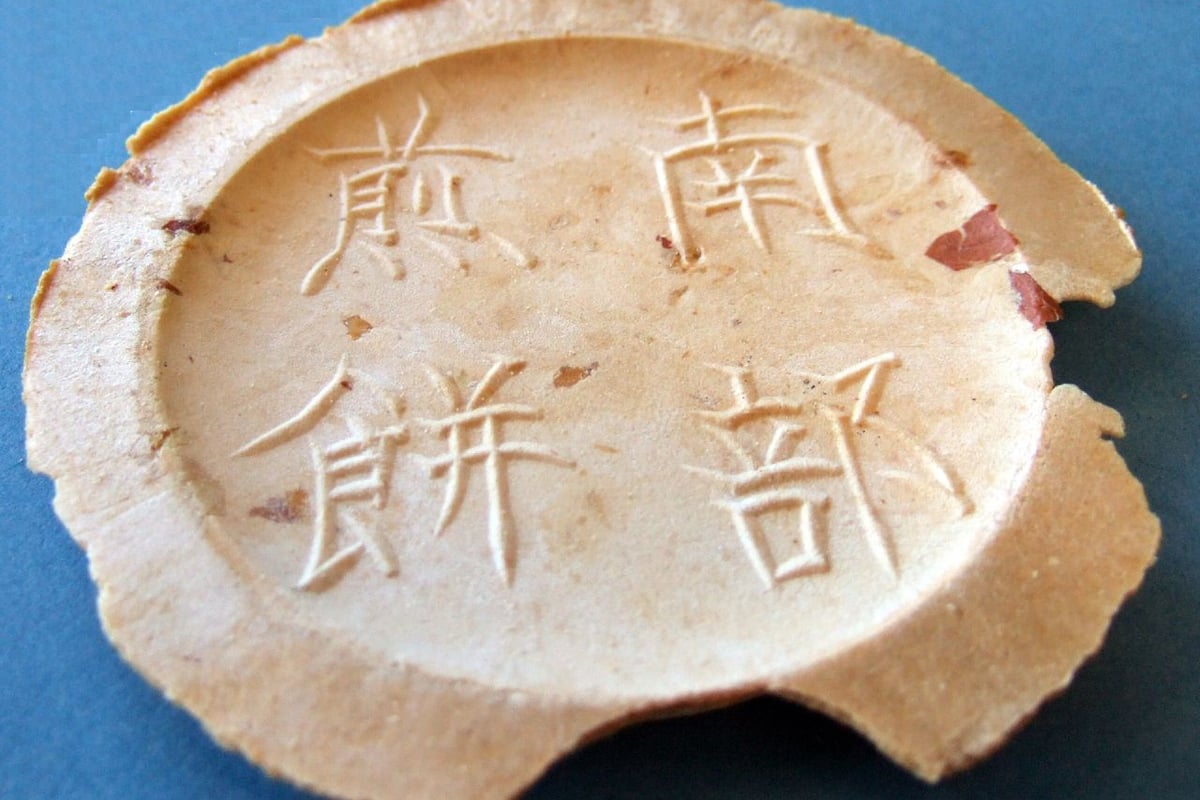
Nanbu Senbei (wheat flour cracker)
Nanbu Senbei
Nanbu senbei is a wheat-flour cracker that has long been made in the former Nanbu domain, spanning the southeastern part of Aomori Prefecture and the northern part of Iwate Prefecture. Dough made from wheat flour, salt, and water is sandwiched between round iron molds engraved with patterns such as cranes and turtles or pine, bamboo, and plum, then baked crisp on both sides. There are various theories about its origin, but the best-known legend holds that during the Nanboku-cho period, when Emperor Chokei of the Southern Court visited the Nanbu region, his retainer Akamatsu Sukezaemon used his iron helmet in place of a pot to bake buckwheat flour and sesame and presented it to the emperor. In the Nanbu region, where cold-weather crop damage was frequent and rice harvests were unstable, senbei made from long-lasting wheat and buckwheat flour became a valued preserved food and staple, and by the Meiji era it is said there were as many as 140 manufacturers just around Hachinohe, showing how deeply it took root in daily life. There is a wide variety, including "mame senbei" bean crackers kneaded with sesame or peanuts, and it is also an indispensable main ingredient in the local dish "senbei-jiru" (senbei hot pot), in which it is simmered in soup.
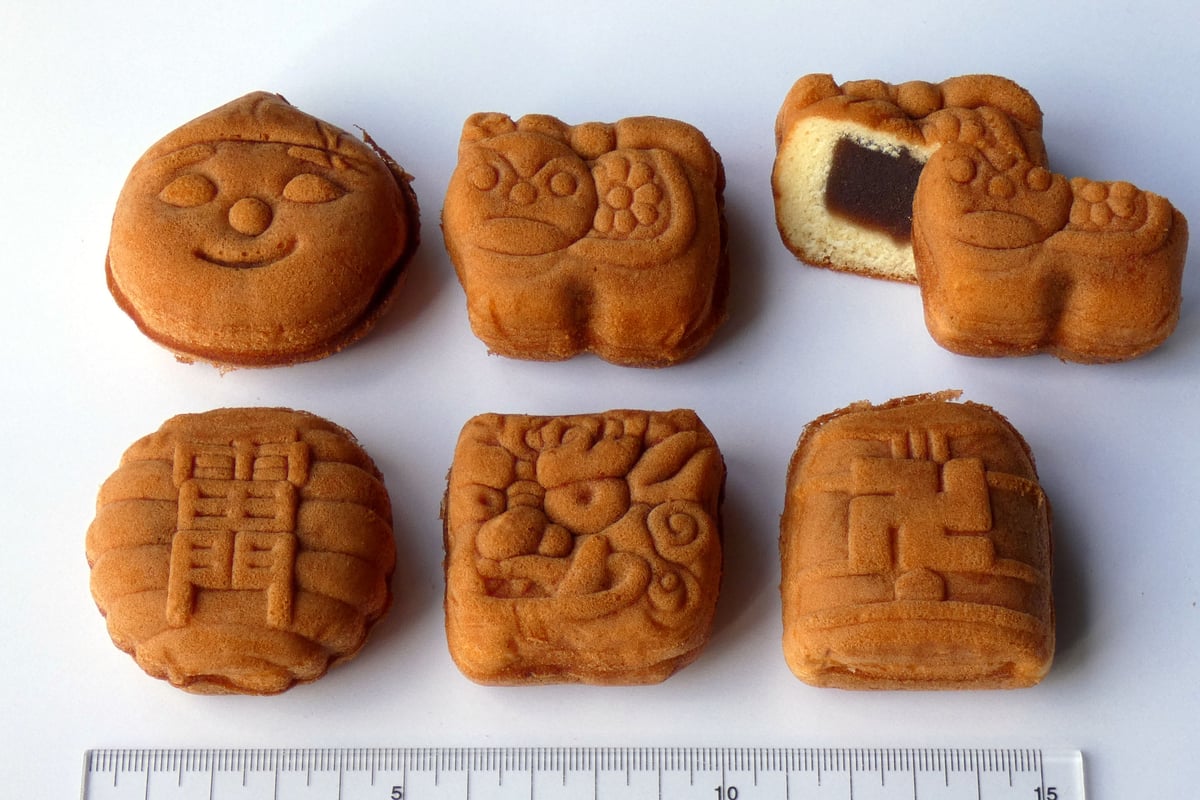
Ningyoyaki
Ningyoyaki
Ningyoyaki is a signature Tokyo baked confection made from a castella-like, egg-flavored batter wrapped around sweet red bean paste (usually smooth koshian) and baked in wooden molds shaped like figures or famous local landmarks. Although several theories exist about its origin, it is generally said to have been created around 1907 (Meiji 40) in Nihonbashi Ningyocho, a district that flourished as a theater town, where it was baked using wooden molds shaped like the Seven Lucky Gods and kabuki actors. In the Taisho era, an artisan who had trained in Ningyocho moved his shop to Asakusa and devised new wooden molds shaped after Asakusa landmarks such as the Kaminarimon Gate, the five-story pagoda, lanterns, and doves; at first it was also called 'meisho-yaki' (landmark-shaped confection) and became a staple Asakusa souvenir. Its simple, comforting taste, in which the fragrant, fluffy batter harmonizes with the moist sweetness of the bean paste, remains highly popular today, helped by the appeal of being able to buy it freshly baked right at the storefront. Long-established shops still stand in both Ningyocho and Asakusa, and it is known nationwide as a Tokyo souvenir.
Oshiro-no-kuchi-mochi
Oshiro-no-kuchi-mochi
Oshiro-no-kuchi-mochi is a bite-sized mochi confection made by wrapping chunky sweet red bean paste (tsubuan) in soft mochi dough (gyuhi) and dusting it with roasted soybean flour (kinako). It has been made for over 400 years by the long-established confectionery Honke Kikuya in Yamatokoriyama City. According to tradition, Honke Kikuya's history began in 1585, when its founder, Kikuya Jihei, accompanied Toyotomi Hidenaga — the younger brother of Toyotomi Hideyoshi — into the castle town of Koriyama and opened a shop there. When Hidenaga wished to entertain his brother Hideyoshi at a tea ceremony, he asked Jihei to create an unusual confection, and this mochi sweet is said to have been born from that request. Hideyoshi reportedly loved it so much that he named it 'Uguisu Mochi' (nightingale mochi). Later, because the shop stood in a prime spot at the entrance to the castle town leading to Koriyama Castle, it came to be affectionately known as 'Oshiro-no-kuchi-mochi' (literally, 'mochi at the castle entrance'). The confection is characterized by its pale greenish kinako, reminiscent of a nightingale's plumage, combined with soft gyuhi and elegantly sweet tsubuan, and it is considered one of the originators of uguisu mochi. It is enjoyed both as a souvenir when visiting Yamatokoriyama and for local celebratory occasions.
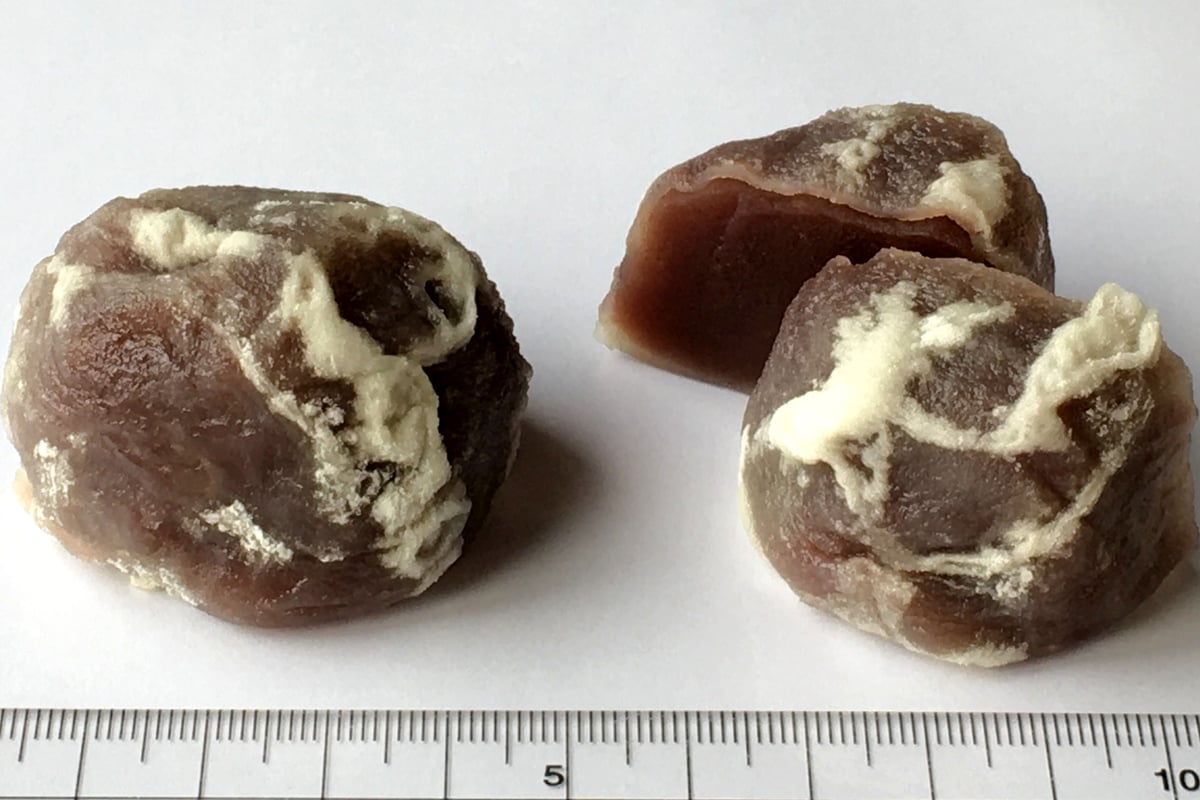
Ote Manju (sake-leavened steamed bun)
Ote Manju
Ote Manju (also written Otemanju) is a signature sake-leavened manju made by Otemanju Imbeya, a confectionery shop founded in 1837 (Tenpo 8), and one of Okayama's representative confections. The dough is kneaded with amazake brewed from Bizen rice, then wrapped around smooth koshi-an bean paste made from Hokkaido azuki beans in a thin skin and steamed, resulting in a flavor where the gentle aroma and richness of the amazake harmonize with the refined sweetness of the bean paste. The shop takes its name 'Ote Manju' from its location in Kyobashi-cho, near Ote-mon, the main gate of Okayama Castle, and it is said to have been served, along with Bizen ware tea utensils, at tea gatherings held by the Ikeda family, lords of the Okayama domain, during the Edo period. It has since been cherished as a signature confection with ties to the Okayama domain, and remains widely sold today as one of Okayama's most representative souvenirs.
Usugori (Thin Ice Confection)
Usugori
Usugori is a delicate dry confection, thin as a sheet of ice, created in 1752 (Horeki 2), in the mid-Edo period, by the long-established confectioner Usugori Honpo Goromaruya in Oyabe City, Toyama Prefecture. It is said to express the beauty of the thin ice that forms on water surfaces and rice paddies in early spring, as the deep snows of Hokuriku begin to melt. It is finished by carefully layering fine Awa wasanbon sugar onto an extremely thin cracker-like base made from Toyama's specialty Shintaisho glutinous rice. Named 'usugori' ('thin ice') for the way it melts fleetingly away in the mouth like ice dissolving, it has long been prized as a prestigious confection, said to have been presented to the shogunate and the Imperial court through the Maeda family, lords of the Kaga domain. Since the Meiji era it has been supplied to the Imperial Household Ministry, and it remains favored in the world of tea ceremony today, carried on for more than 270 years as a traditional confection that conveys the beauty of Toyama's four seasons.
Yoshiwara Denchu
Yoshiwara Denchu
Yoshiwara Denchu is a Mito local confection said to have originated when Yoshiwara, a lady-in-waiting during the time of Tokugawa Nariaki, the 9th lord of the Mito Domain, dried and toasted leftover cooked rice and coated it with roasted soybean flour (kinako) so as not to waste it. According to legend, Nariaki, who valued frugality, was so fond of the confection that he named it 'Yoshiwara Denchu' after the lady-in-waiting who created it. It is characterized by its simple flavor: rice arare (crackers) made from glutinous rice are hardened with starch syrup, shaped into sticks, coated generously with kinako, and wrapped in edible rice paper (oblate); it continues to be made by confectionery shops within Mito City. A trademark application was filed in 1963, and today it is one of Mito's signature confections, made only by shops belonging to the Mito Confectionery Industry Cooperative Association, which alone are permitted to use the name 'Yoshiwara Denchu.'