Image: Wikimedia Commons
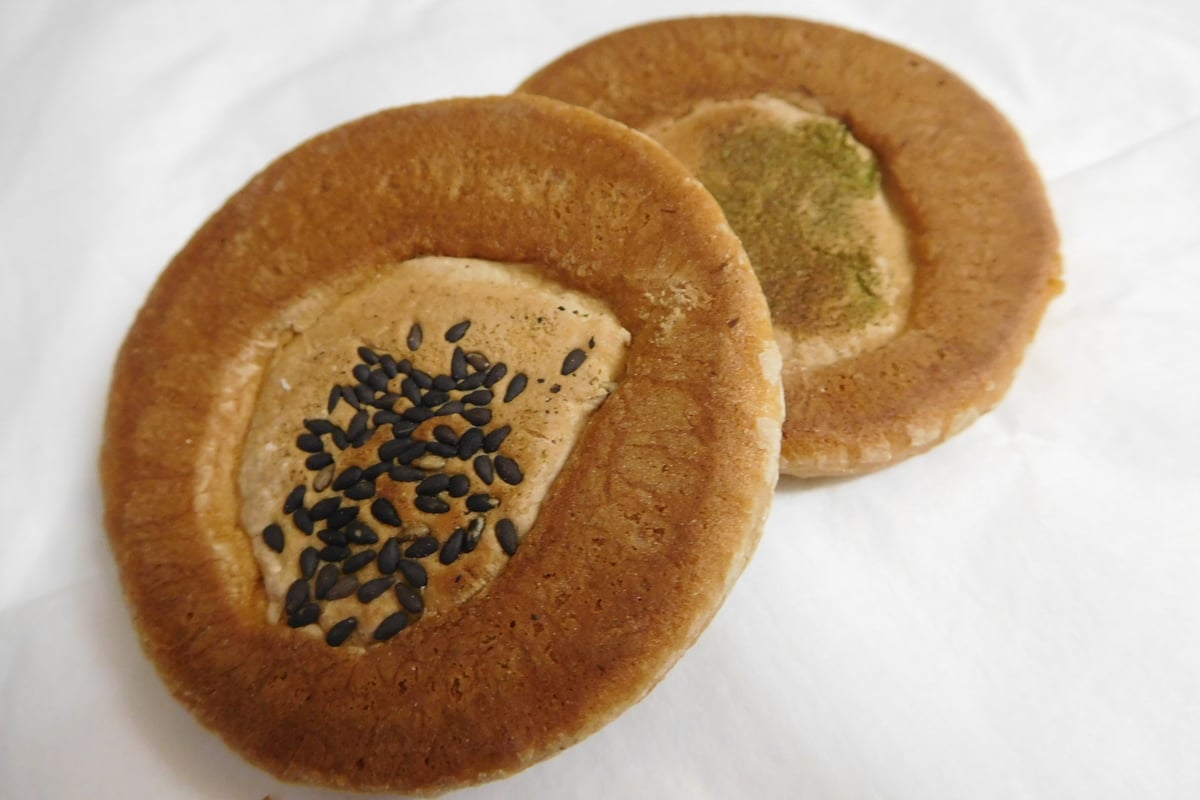
Katayaki is a very hard baked confection handed down in Iga City and Nabari City, Mie Prefecture. A dough made mainly from wheat flour and sugar is baked on an iron griddle and flavored with black sesame or aonori (green laver). As its name ('hard-baked') suggests, it is hard, and it is even called 'the hardest senbei in Japan.' Because it is compact, nutritious, and keeps for a long time, Iga ninja are said to have carried it as portable food, and it is also called 'ninka' (忍菓). It is also said to have been valued as preserved food on the battlefield. Records even remain of people once breaking it with the scabbard (saya) or hand guard (tsuba) of a sword to eat it. Today, it is usually broken by striking it with the included wooden mallet or by knocking pieces of katayaki against each other. It can also be softened by soaking it in tea or milk. Today's sweet katayaki is thought to have taken its current form more than 200 years ago. Producers are scattered around the castle town of Iga Ueno and elsewhere, and some shops let you watch the baking.
Origin
The origin of katayaki is said to lie in the emergency rations of Iga ninja in the Sengoku (Warring States) period. It is said that when ninja hid in attics or under floors waiting for their chance, they carried it as food that was compact, nutritious, and kept for a long time. Because of this origin, it is also called 'ninka.' However, the story that it was portable food for ninja is told as a legend.
History
Today's katayaki is said to be the emergency rations of the ninja era improved with sugar and seasonings to make them easier to eat. It is thought that more than 200 years have passed since it took its current form. It is also said to have been useful as preserved food in times of battle. Today, confectionery shops in Iga City and Nabari City carry on the hand-baking method. Some shops demonstrate how it is baked at local elementary schools or develop new Western-style confectionery products in collaboration with universities.
Features
A dough of wheat flour, sugar, and water is rested overnight, formed into a log, and cut into pieces about 2.5 cm thick. Each piece is stretched into a circle with a special metal tool while both sides are slowly baked on an iron griddle. Adjusting the baking to the temperature, humidity, and condition of the dough is where the artisan's skill lies. It is fairly soft when freshly baked but becomes harder as it cools. Another feature is that it keeps well even without preservatives.
Main Ingredients
Food Culture
Rather than biting into it as is, people are thought to have savored it slowly, holding it in the mouth and softening it little by little. Today many people break it with a wooden mallet before eating, and some products are sold with a wooden mallet included. It is also popular as a souvenir among visitors to Iga.
Famous Shops
鎌田製菓
三重県伊賀市上野丸之内8-31
A katayaki producer in the castle town of Iga Ueno where you can watch the production process, as it is one of the 'Iga Street-Corner Museums' (伊賀まちかど博物館). A distinctive feature is that grated yamaimo is added to the dough. At the store, you can also enjoy freshly baked katayaki that can only be bought here.
小澤製菓 かたやき本舗
三重県伊賀市平野東町62
A producer that has baked katayaki for generations. Skilled artisans spend about 40 minutes baking each piece, and some products come with a wooden mallet for breaking them. Factory tours are accepted on weekdays. It is closed on Saturdays and Sundays, so take care when planning a visit.
大屋戸製菓
三重県名張市瀬古口6181
A confectionery shop in Nabari City that specializes in selling katayaki. It bakes katayaki, said to have been portable food for ninja, one piece at a time. The shop is said to finely adjust its baking to the temperature, humidity, and condition of the dough.
| Original Bean-Paste-Filled Katayaki (森本芭蕉堂) | A katayaki filled with bean paste, said to have been devised in 1980 (Showa 55) by 森本芭蕉堂, a confectionery shop in 三田, Iga City. The shop bakes katayaki using the traditional method and sells both the bean-paste-filled and regular versions. It is a good choice for anyone who wants to try a taste different from the classic katayaki broken with a wooden mallet. |
|---|
FAQ
Q. How should katayaki be eaten?
A. It is very hard, so biting into it forcibly could damage your teeth. Break it into small pieces before eating by striking it with the included wooden mallet or knocking pieces of katayaki against each other. You can also soften it by soaking it in tea or warm milk before eating.
Q. Did ninja really eat katayaki?
A. The story that Iga ninja carried it as portable food is told as a legend. The reasons given are that it is compact, nutritious, and keeps for a long time. Today's sweet katayaki is an improved version made easier to eat, and it is thought to have taken its current form more than 200 years ago.