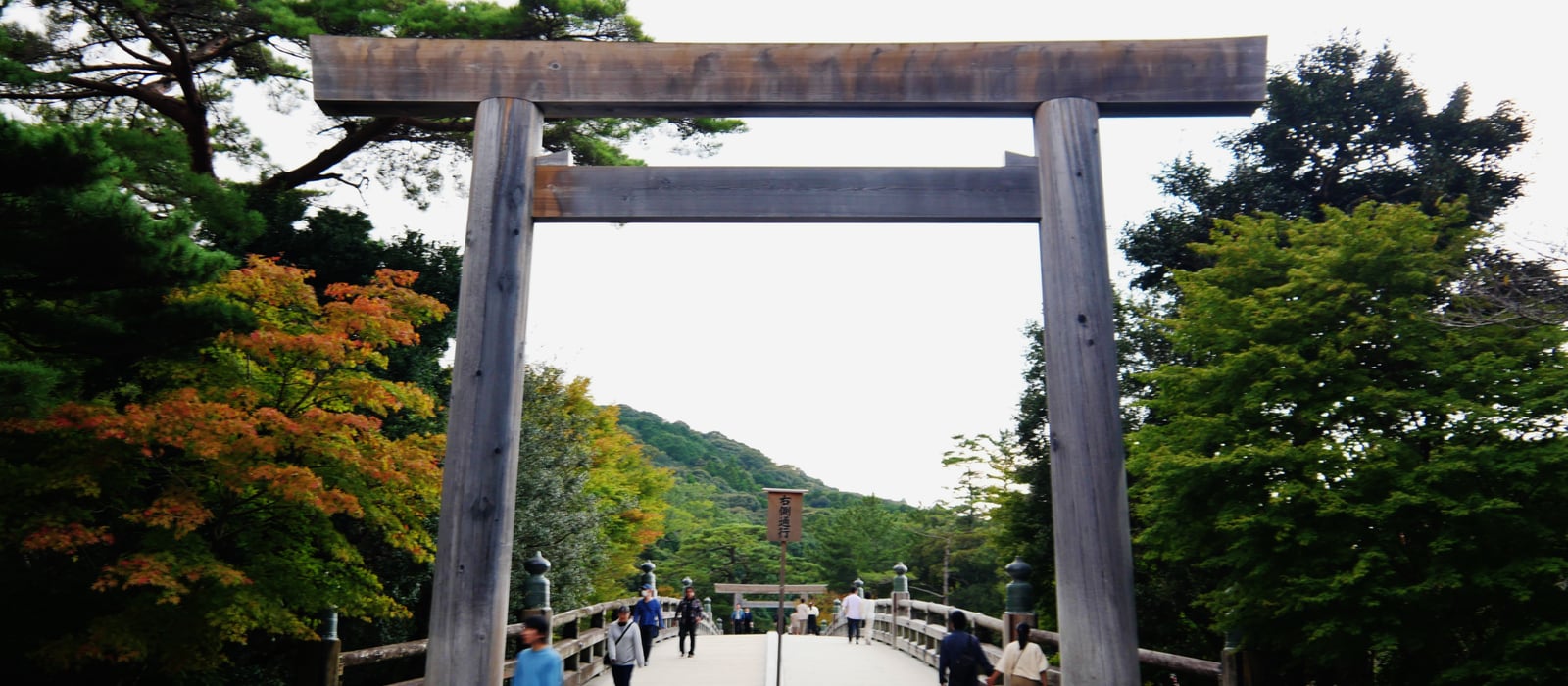
 Image: Wikimedia Commons
Mie Prefecture
Mie Prefecture, home to Ise Grand Shrine, is a prefecture where cultures of handcraft and food have been nurtured amid the comings and goings of people along the Tokaido and the Ise Kaido. Its Traditional Crafts Designated by the Minister of Economy, Trade and Industry are five items: Iga-yaki, Yokkaichi Banko-yaki, Iga Kumihimo, Suzuka Sumi and Ise Katagami. Ise Shunkei and Ise Ittobori spread in the Edo period as souvenirs of the Ise pilgrimage. The understated stripes of Matsusaka Momen were carried to Edo by Matsusaka merchants and admired as 'iki' (chic). Owase Wappa and Kuwana Imono are also designated as traditional crafts of the prefecture. In food, Ise Udon and Akafuku Mochi, which have long been served to welcome pilgrims, and Tekone-zushi, a fishermen's dish from Shima, are well known. Sukiyaki of Matsusaka Beef, the grilled clams of Kuwana, Yokkaichi Tonteki and Kameyama Miso Yaki Udon are also specialties of their areas. Flavors rooted in local life are passed down as well, such as Yokanzuke and katayaki from the castle town of Iga, and Sanma-zushi made with Pacific saury from the Kumano Sea.
Mie's Traditional Crafts
Iga-yaki (Iga Ware)
Iga Yaki (Iga Ware)
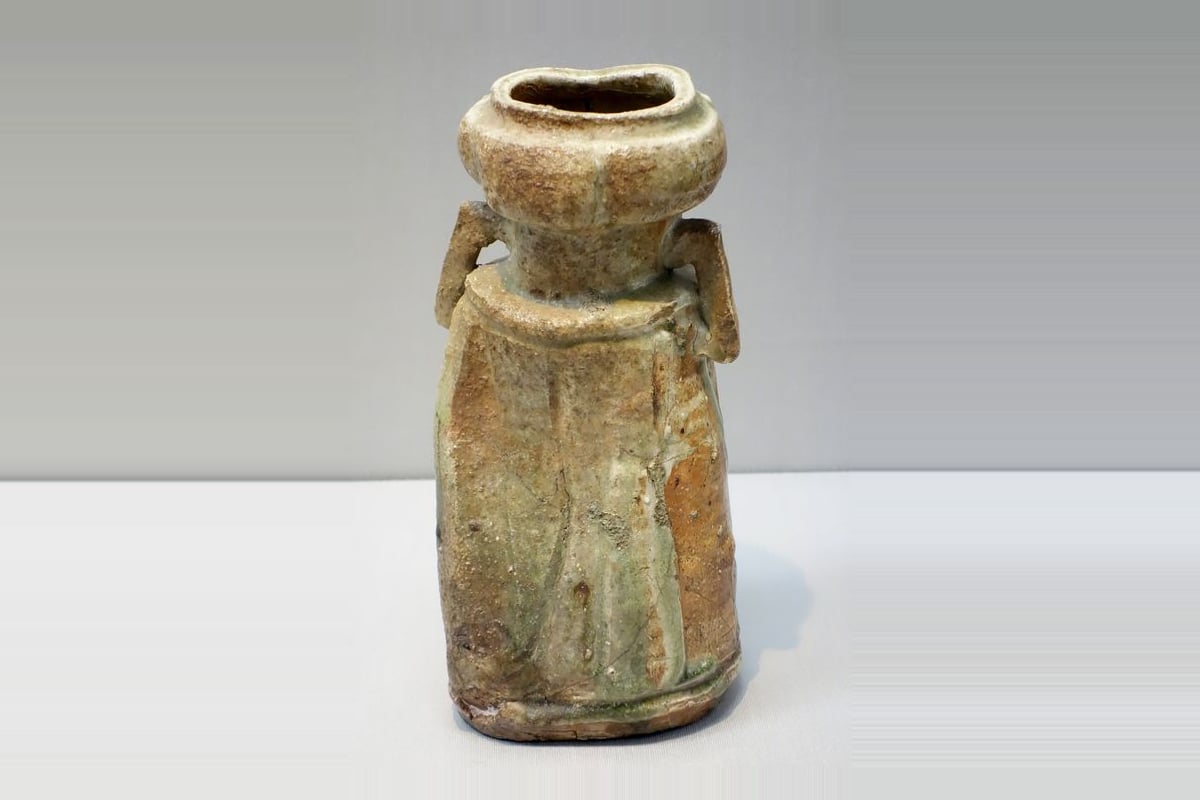
Iga-yaki is pottery fired mainly in the Marubashira (丸柱) district of Iga City, Mie Prefecture. Its origins are said to date back to around the Nara period, and locally it is introduced as pottery with a history of about 1,200 years. Its raw material is clay from the Kobiwako Formation (ancient Lake Biwa strata), deposited on the bed of ancient Lake Biwa about 4 million years ago. When fired, the clay develops many fine pores and retains heat well, so it is suited to cooking vessels such as donabe (earthenware pots) and yukihira (行平) pots. In the Momoyama period, as the tea ceremony flourished, bold flower vases (hanaire) and fresh-water jars (mizusashi) with pronounced distortions were fired. The green glassy 'bidoro' and the scorching ('koge') produced by the flames of the climbing kiln are regarded as highlights of Ko-Iga (old Iga ware). The Important Cultural Property 'Ko-Iga fresh-water jar named Yabure-bukuro (破袋),' held by the Gotoh Museum, is its representative work. After the early Edo period the kilns were temporarily abandoned, but they were revived in the mid-Edo period, after which everyday items such as donabe became the mainstay. In 1982 (Showa 57), it was designated a Traditional Craft Designated by the Minister of Economy, Trade and Industry.
Yokkaichi Banko-yaki (Banko Ware)
Yokkaichi Banko Yaki (Yokkaichi Banko Ware)
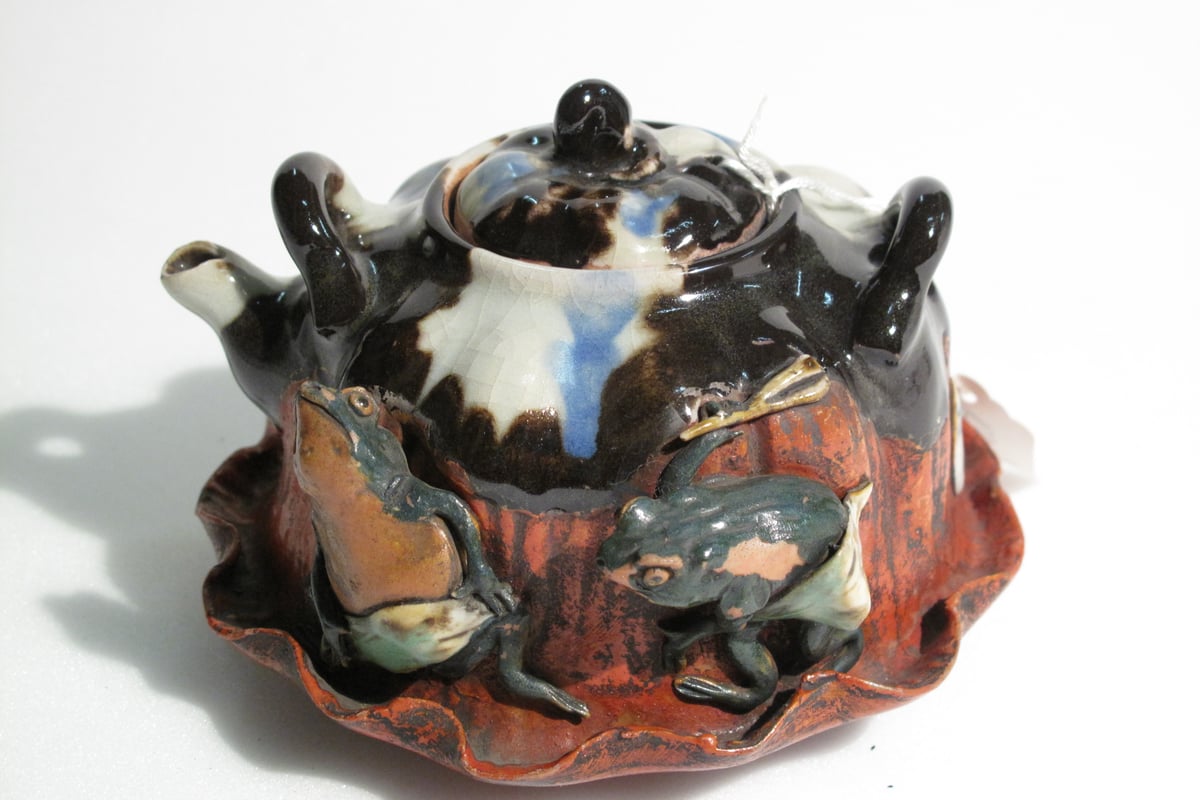
Yokkaichi Banko-yaki is ceramics made mainly in Yokkaichi City, Mie Prefecture. It began in the mid-Edo period when Nunami Rozan (沼波弄山), a wealthy merchant of Kuwana, opened a kiln in 小向, in present-day Asahi Town (朝日町). Rozan stamped the works with seals reading 'Banko' or 'Banko Fueki.' The seals carried the wish that the works would be handed down unchanged forever, and this became the origin of the name. The ware died out after Rozan's death, but in the late Edo period it was revived by 森有節 of Kuwana and others. From the end of the Edo period into the Meiji period, 山中忠左衛門 of Yokkaichi established a pottery method suited to mass production and developed the ware into a local industry. Its representative products are the azuki-bean-colored (reddish-brown) 'shidei kyusu (teapot)' and highly heat-resistant donabe (earthenware pots). Its donabe are said to account for about 80% of domestic production. Today it is one of Japan's leading ceramics-producing areas, with more than 100 kiln companies concentrated mainly in Yokkaichi City and Komono Town. In 1979 (Showa 54), it was designated a Traditional Craft Designated by the Minister of Economy, Trade and Industry.

Iga Kumihimo (Iga Braided Cords)
Iga Kumihimo (Iga Braided Cords)
Iga Kumihimo is kumihimo (braided cord) made mainly in Iga City, Mie Prefecture. Kumihimo are cords made by crossing many threads diagonally and braiding them together, and they are characterized by being more elastic than woven fabrics. Mainly silk thread is used, along with gold and silver thread, and the cords are braided on braiding stands such as the marudai, the square stand (角台), the 綾竹台 and the takadai. The origins of braided cords in Iga are said to go back to before the Nara period, and in early times they were made as cords for Buddhist ritual implements and for arms and armor. It developed greatly as a regional industry only after 廣澤徳三郎 brought back the techniques of Edo kumihimo in Meiji 35 (1902). Since then, Iga has become a major production center of obijime (kimono sash cords) and haori-himo (haori jacket ties), accounting for most of Japan's hand-braided kumihimo. In 1976 (Showa 51), it was designated a Traditional Craft Designated by the Minister of Economy, Trade and Industry. Today, production with braiding machines has also advanced, and products other than kimono accessories, such as key chains and accessories, are also made.
Suzuka Sumi (Suzuka Ink Sticks)
Suzuka Sumi (Suzuka Inksticks)
Suzuka Sumi is solid ink (ink sticks) for calligraphy made in Suzuka City, Mie Prefecture. Soot (susu) is kneaded and hardened with animal glue (nikawa: an adhesive made from animal hides and bones), formed in wooden molds, and finished by drying over a long period. Its origins are said to go back to the Enryaku era (782-806), and it is said to have begun with collecting soot by burning pine from the mountains of Suzuka. In the Edo period, it received the protection of the Kishu Domain, and demand grew with the writing of daimyo family crests and the spread of terakoya (private elementary schools). With good color development and an elegant depth, it is used by many calligraphers as an ink in which the core of the line and the bleed harmonize well. In 1980 (Showa 55), it became the first sumi ink to be designated a Traditional Craft Designated by the Minister of Economy, Trade and Industry. Today, 進誠堂 in Jike, Suzuka City, is said to be the only maker of Suzuka Sumi. The certified traditional craftsperson 伊藤亀堂 and 伊藤晴信, the son of 伊藤亀堂, carry on the techniques.
Ise Katagami (Ise Dyeing Stencils)
Ise Katagami (Ise Paper Stencils)
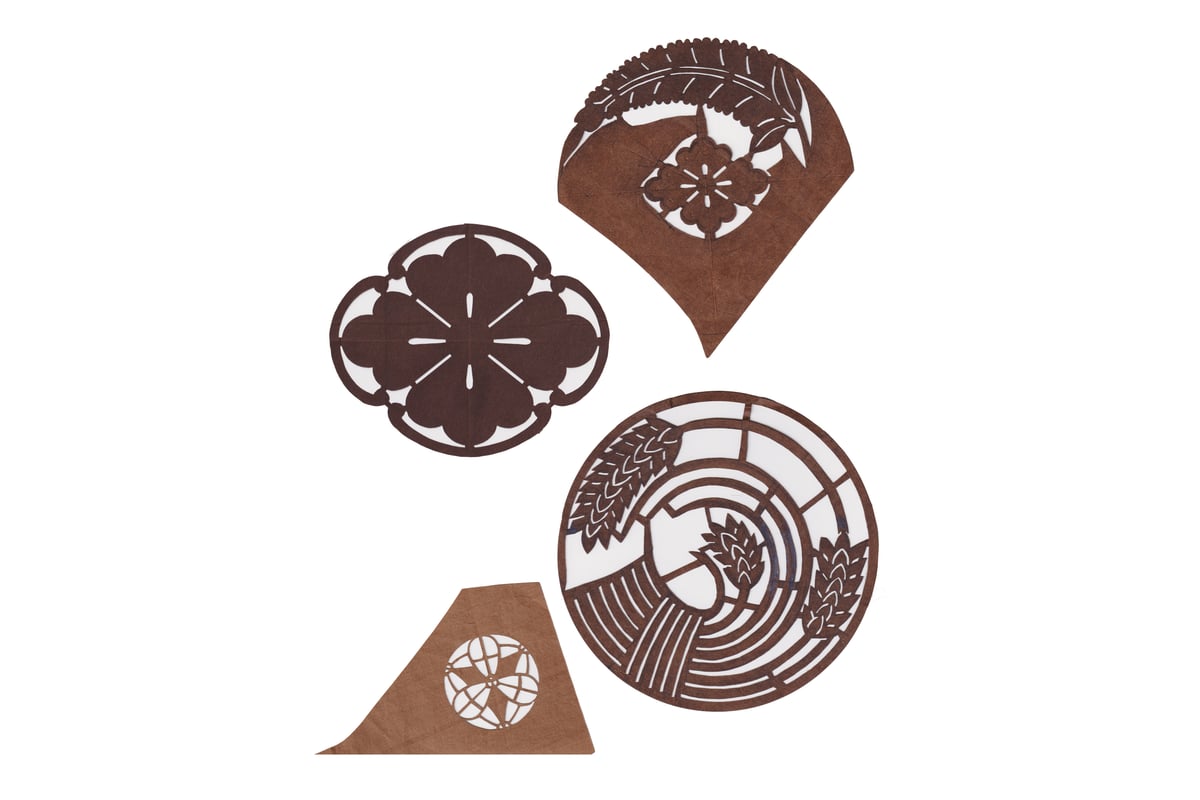
Ise Katagami are stencils used to dye patterns and designs onto kimono fabric, made mainly in the Shiroko, Jike and 江島 districts of Suzuka City, Mie Prefecture. The name is also written '伊勢型紙.' They are made by cutting designs with fine-tipped carving knives into katajigami (stencil base paper), which is Mino washi laminated with kakishibu (persimmon tannin). They are used for dyeing yuzen, komon (fine-patterned kimono), yukata and more, and it is said that almost all komon are dyed with Ise stencils. There are various theories about their origins, but stencils are thought to have been in use by the end of the Muromachi period. In the Edo period, they received the protection of the Kishu Domain, and stencil merchants spread their name by peddling them throughout the country. There are four carving techniques: kiribori, tsukibori, dogubori and shimabori. In 1955 the techniques were designated a national Important Intangible Cultural Property, and in 1983 the stencils were designated a Traditional Craft Designated by the Minister of Economy, Trade and Industry under the name '伊勢形紙.' In recent years, their use in interiors, such as lighting, framed pieces and fittings, has also been spreading.
Ise Shunkei
Ise Shunkei (Ise Lacquerware)
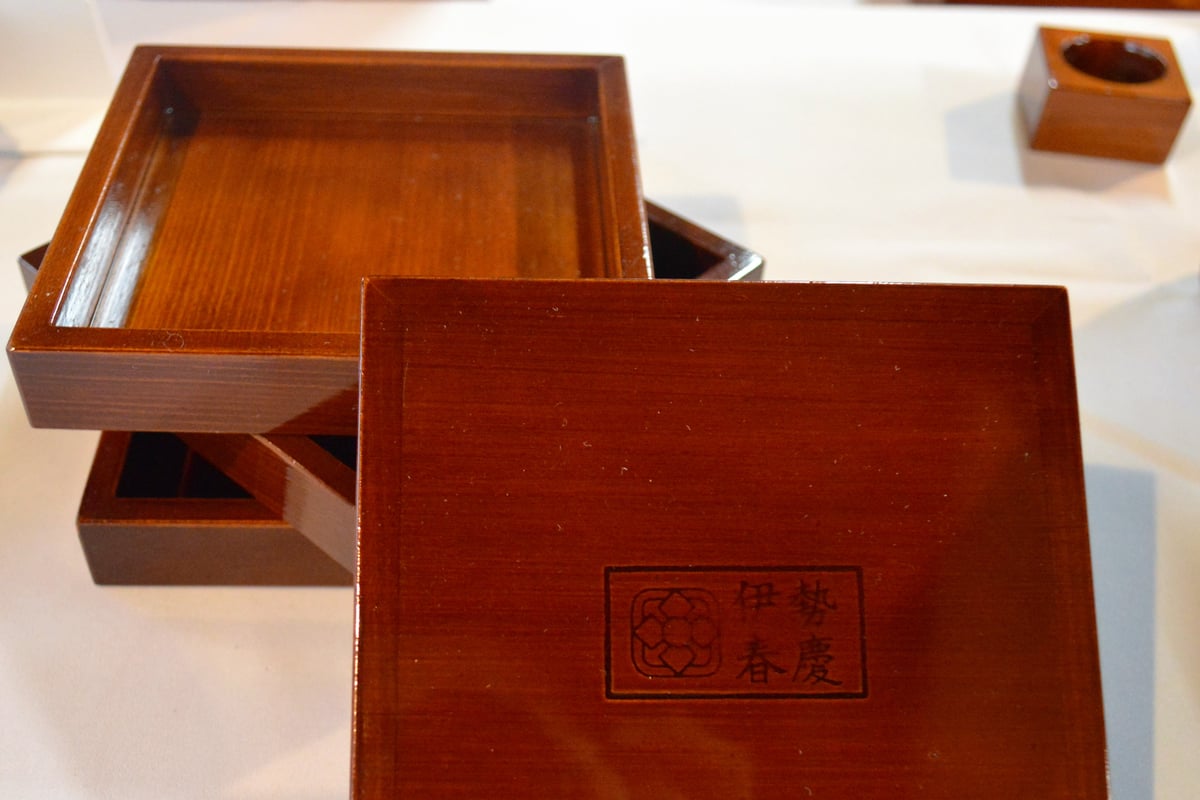
Ise Shunkei is lacquerware that has long been made in Ise City, Mie Prefecture. It is also called Ise lacquerware (伊勢漆器) or Yamada Shunkei (山田春慶). Box-shaped wares made from hinoki cypress boards are undercoated with bengara (red iron oxide pigment) and kakishibu (persimmon tannin), then finished with transparent lacquer. Its charm lies in the grain of the hinoki showing through a reddish-brown ground. Its origins are unclear, but it is said to have been started in the Muromachi period by craftsmen involved in building the Ise Grand Shrine, using leftover timber. In the Edo period it was traded as a souvenir of the Ise pilgrimage (Oise-mairi) and shipped to various regions from the wholesalers of Kawasaki. In the Meiji period it was described as 'crude but inexpensive and sturdy,' and was used throughout Japan for everyday vessels such as tiered boxes (jubako) and meal trays. However, war and the changes in postwar lifestyles brought production to a halt for a time. In 1994 (Heisei 6) it became a Mie Prefecture Designated Traditional Craft, and the Ise Shunkei Association (伊勢春慶の会), founded in 2004 (Heisei 16), is leading its revival.
Matsusaka Momen (Matsusaka Cotton)
Matsusaka Momen (Matsusaka Cotton)
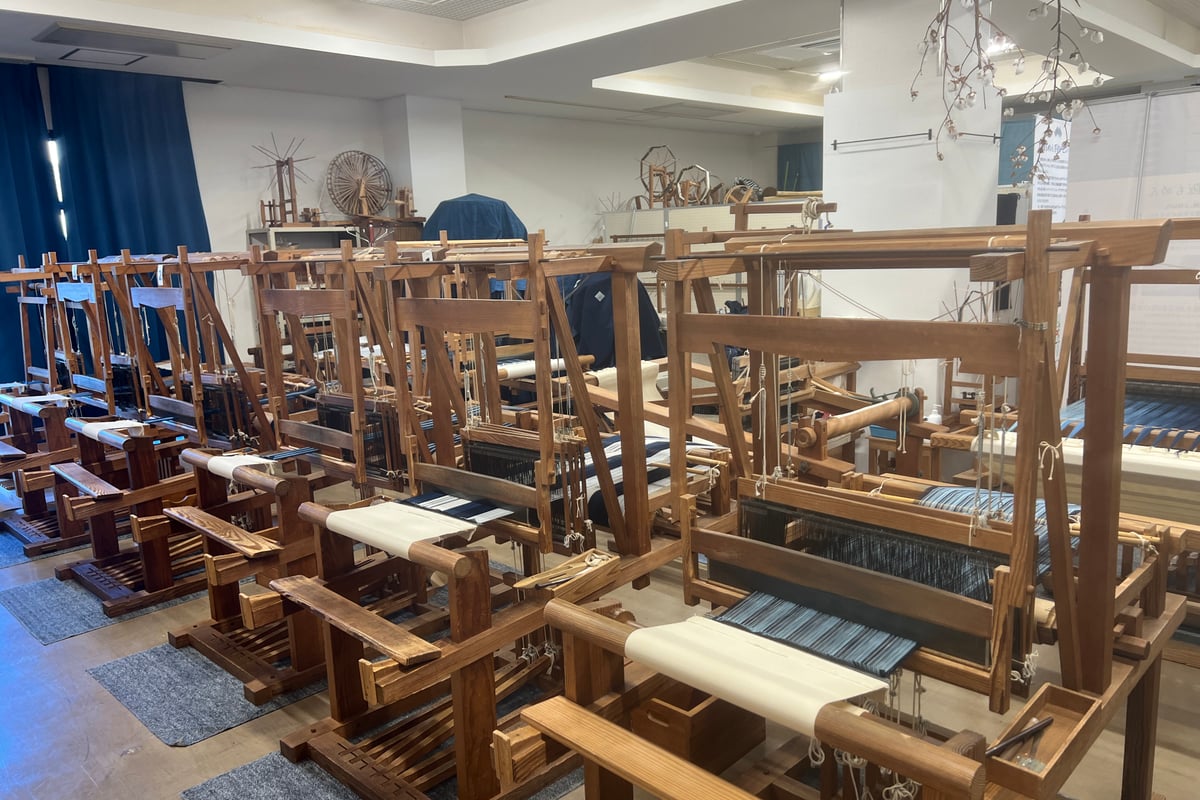
Matsusaka Momen is a cotton textile made in Matsusaka City and Meiwa Town, Mie Prefecture. It is characterized by being woven into fine stripes using yarn dyed beforehand with natural indigo. These stripes are also called 松阪縞 (Matsusaka stripes). The area around Matsusaka has long been known for spinning and weaving, and when cotton arrived around the 15th century, those skills were carried over into cotton weaving. In the Edo period it was woven extensively as a side job by farming households, and Matsusaka merchants such as the Mitsui, 長谷川 and 小津 families spread its sales in Edo. The pattern, which looks plain from a distance but reveals stripes up close, was prized as 'iki' (understated chic) in an era of sumptuary edicts. It is said that at its height, 500,000 to 600,000 tan (bolts) were sold in Edo in a single year. Today, 御絲織物 continues production by machine weaving, and the hand-weaving techniques are passed on by groups such as 松阪もめん手織り伝承グループゆうづる会. It is a Mie Prefecture Designated Traditional Craft.
Ise Ittobori
Ise Ittobori (Ise Single-Knife Carving)
Ise Ittobori is a carved wooden good-luck charm made in Ise City and Tamaki Town, Mie Prefecture. It is said to have begun when shrine carpenters (miyadaiku) involved in building the Ise Grand Shrine carved figures of Ebisu and Daikoku from timber left over from the shrine's rebuilding. It is characterized by boldly cutting away the corners of the wood with a large chisel and leaving the carved faces as the finished surface. Because it is neither polished nor painted, the knife marks and wood grain give it a rustic strength and warmth. The main material is camphor wood, and hinoki cypress is also used. Subjects include the zodiac animal of the year, as well as sacred roosters, frogs and other motifs associated with Ise. Ise has long been home to many netsuke carvers, and the accumulated carving skills of the area are also said to have formed part of its background. Today the techniques are carried on by 岸川行輝, 泉廣典, and 太田結衣, who studied under 岸川行輝, among others. It is a Mie Prefecture Designated Traditional Craft.
Owase Wappa (Bentwood Boxes)
Owase Wappa (Owase Bentwood Lacquerware)
Owase Wappa is bentwood (magemono) lacquerware made in Owase City, Mie Prefecture. Thin boards of high-quality Owase hinoki cypress are bent, the seams are stitched with cherry bark, and the pieces are finished with natural lacquer. Forestry flourished in Owase from the early Edo period, and people working in the mountains used wooden bentwood vessels as tableware. The fishermen of the bonito fishery, which also flourished around the same time, are said to have been fond of wappa as well. Today the only maker is 世古効史, the fourth-generation head of 'ぬし熊,' founded in 1887 (Meiji 20). 世古効史 handles all 45 steps alone, from making the wooden base to lacquering, and a single piece takes more than a month to complete. It is said that there can be a wait of a year after ordering, but the boxes are renowned for a sturdiness said to 'last 100 years.' In 1994 (Heisei 6) it became a Mie Prefecture Designated Traditional Craft, and in 2013 (Heisei 25) its production techniques were designated an Intangible Cultural Property of Owase City.
Kuwana Imono (Kuwana Casting)
Kuwana Imono (Kuwana Cast Metalwork)
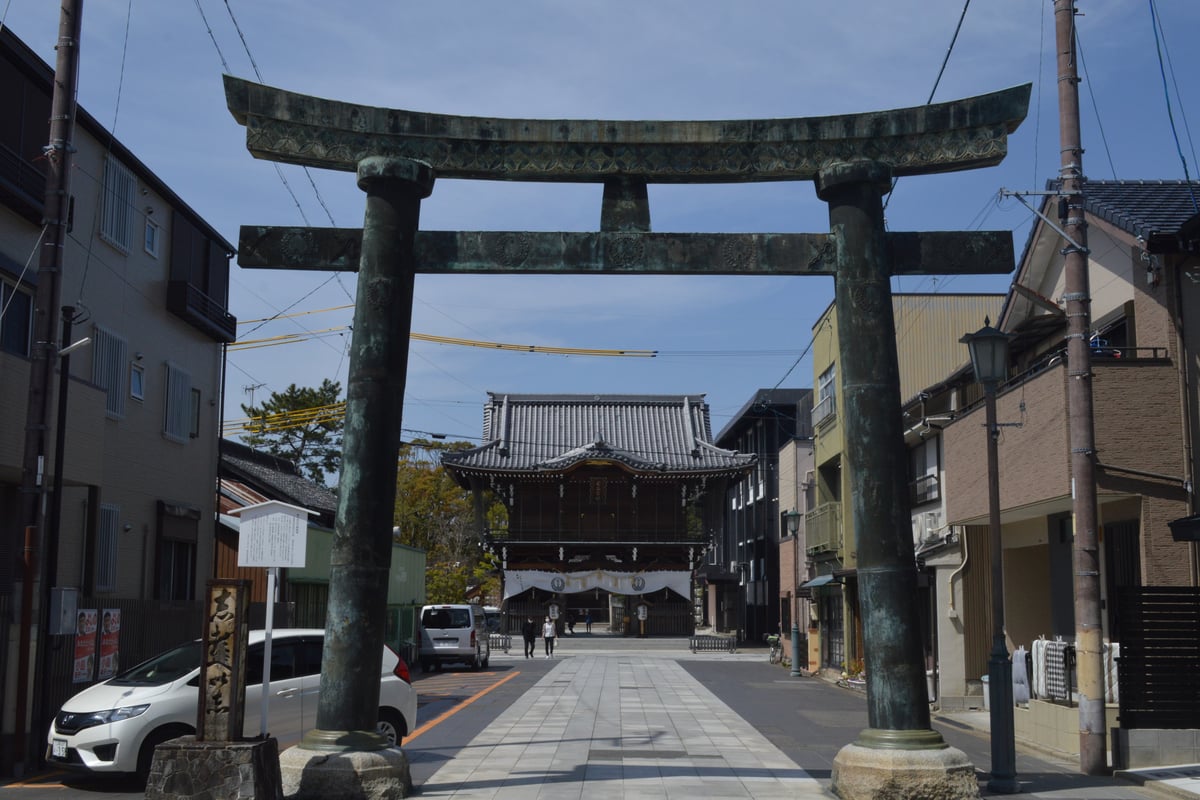
Kuwana Imono is cast metalwork made in Kuwana City, Mie Prefecture. It is said to have begun in 1601 (Keicho 6), when Honda Tadakatsu became the first lord of the Kuwana Domain and invited casters (imoji) to the area. Under the domain's encouragement, firearms and other items were manufactured, and the casting industry took root. In the Edo period, lanterns, temple bells, pots and other items were made, and the bronze torii gate of Kuwana Sosha (Kasuga Shrine) is a renowned example. In the Meiji period, machine casting for products such as noodle-making machines and water-supply fittings began, and Kuwana grew into a production center ranked alongside Kawaguchi in the saying 'Kawaguchi in the east, Kuwana in the west.' Kuwana, which prospered as a post town on the Tokaido, is still known as a 'town of casting.' Today, industrial castings such as manhole covers and machine parts are the mainstay, but everyday items such as iron kettles and pots are also made. In 2026 (Reiwa 8), it became a Mie Prefecture Designated Traditional Craft, covering kettlebells and iron pots.
Mie's Local Food
Ise Udon
Ise Udon
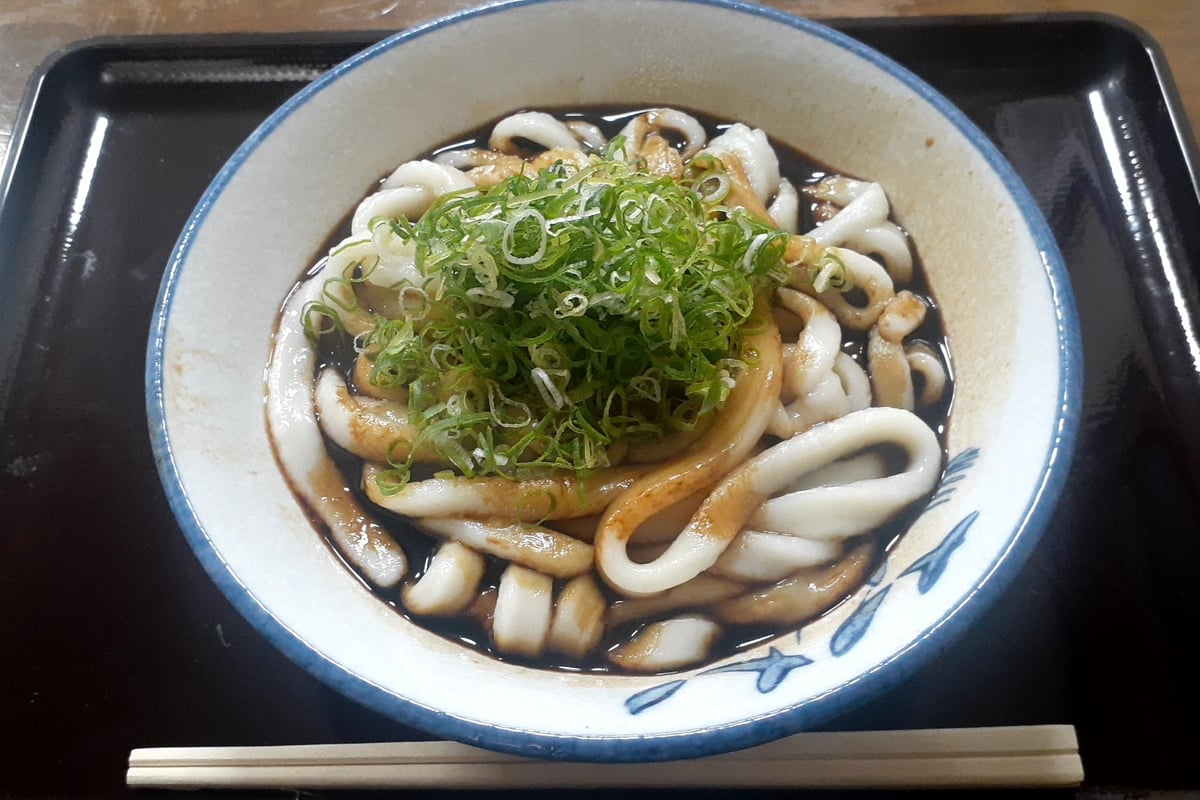
Ise udon is a local dish that has long been eaten in the Ise region, centered on Ise City. Extra-thick noodles, close to 1 cm in diameter, are boiled for about an hour until soft. They are eaten coated with just a small amount of a rich black sauce. The sauce combines tamari soy sauce (a rich soy sauce made mainly from soybeans) with dashi made from katsuobushi (dried bonito flakes), kombu, and other ingredients. Although it is jet black, it tastes surprisingly light. The noodles have almost no firmness (koshi), and their fluffy, soft and chewy texture is their greatest feature. When the Ise pilgrimage (Oise-mairi) flourished in the Edo period, it was served to pilgrims tired from long journeys as a food that is gentle on the stomach. Because it could be served quickly and eaten easily, it is said to have become known as a specialty of the shrine-front town. The name 'Ise udon' took hold relatively recently, from the Showa 40s onward. In fiscal 2024 (Reiwa 6), it was recognized as one of the Agency for Cultural Affairs' '100-Year Foods.'
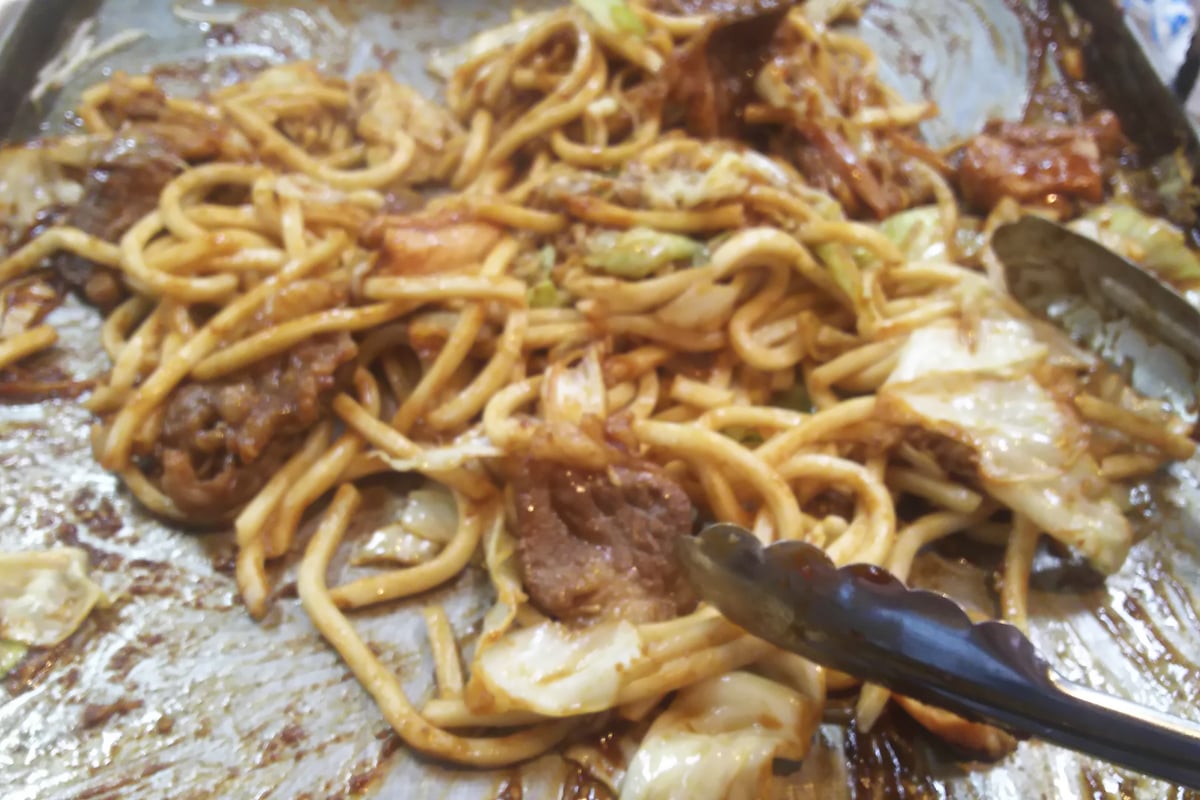
Kameyama Miso Yaki Udon
Kameyama Miso Yaki Udon
Kameyama miso yaki udon is a local specialty dish (gotochi gourmet) of Kameyama City, Mie Prefecture. Udon is cooked on an iron griddle with meat and vegetables and seasoned with a miso-based sauce. In the mid-Showa period, Kameyama had many eateries for truck drivers traveling National Route 1, and they served horumon-yaki (grilled offal) made with red miso. It is said to have begun when people fried udon in the miso sauce left on the griddle after cooking the meat. In 2008, the citizens' group Kameyama Miso Yaki Udon Honpo (亀山みそ焼きうどん本舗) was formed to revitalize the town, and the dish spread as a local specialty. At the 2011 'Central Japan & Tokai B-1 Grand Prix in Toyokawa,' it was chosen for the Gold Grand Prix, first place. It is said to be available at about 20 places in the city, including eateries and expressway parking areas (as of 2020). Its fragrant miso aroma and spicy, sweet-savory flavor are addictive, and the dish has many repeat customers. In fiscal 2024 (Reiwa 6), it was recognized as one of the Agency for Cultural Affairs' '100-Year Foods.'
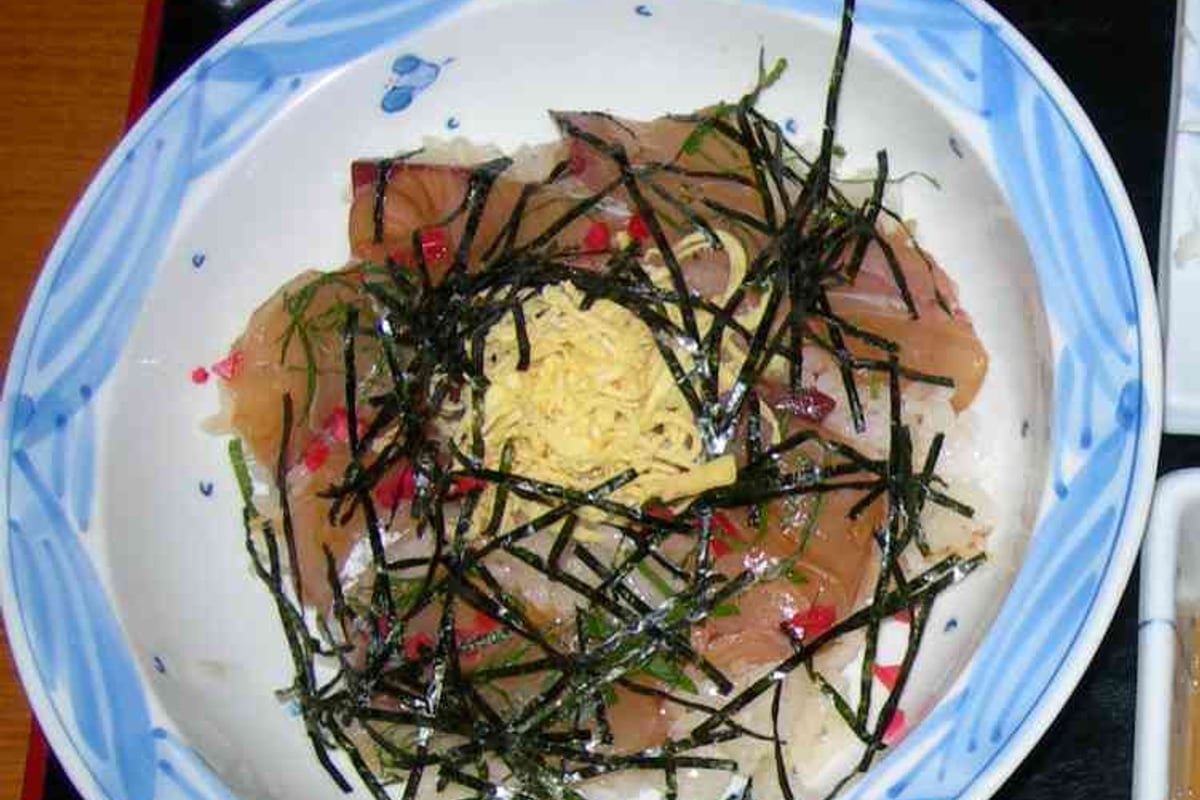
Tekone-zushi (Hand-Mixed Bonito Sushi)
Tekone Zushi
Tekone-zushi is a fishermen's dish that represents the Shima region of Mie Prefecture. Red-fleshed fish such as bonito (katsuo) is marinated in a soy sauce-based sauce and mixed with vinegared rice. It is often finished with a scattering of finely shredded ginger or shiso (perilla) leaves, which makes it refreshing to eat. It is said to have begun as a dish that fishermen in Wagu, Shima-cho, Shima City made so they could eat quickly aboard bonito fishing boats. It is said to have come to be called 'tekone-zushi' because it was made by mixing it by hand (te) as if kneading (koneru). In the Meiji era it spread to fishermen's households and the local community, and it has been handed down as a feast for festivals and guests. In the Showa era it became a representative local dish of the Shima region and also came to be served to tourists visiting Ise-Shima. Today it is offered as a specialty at restaurants in Ise, Toba, and Shima. In fiscal 2025 (Reiwa 7), it was recognized as one of the Agency for Cultural Affairs' '100-Year Foods.'
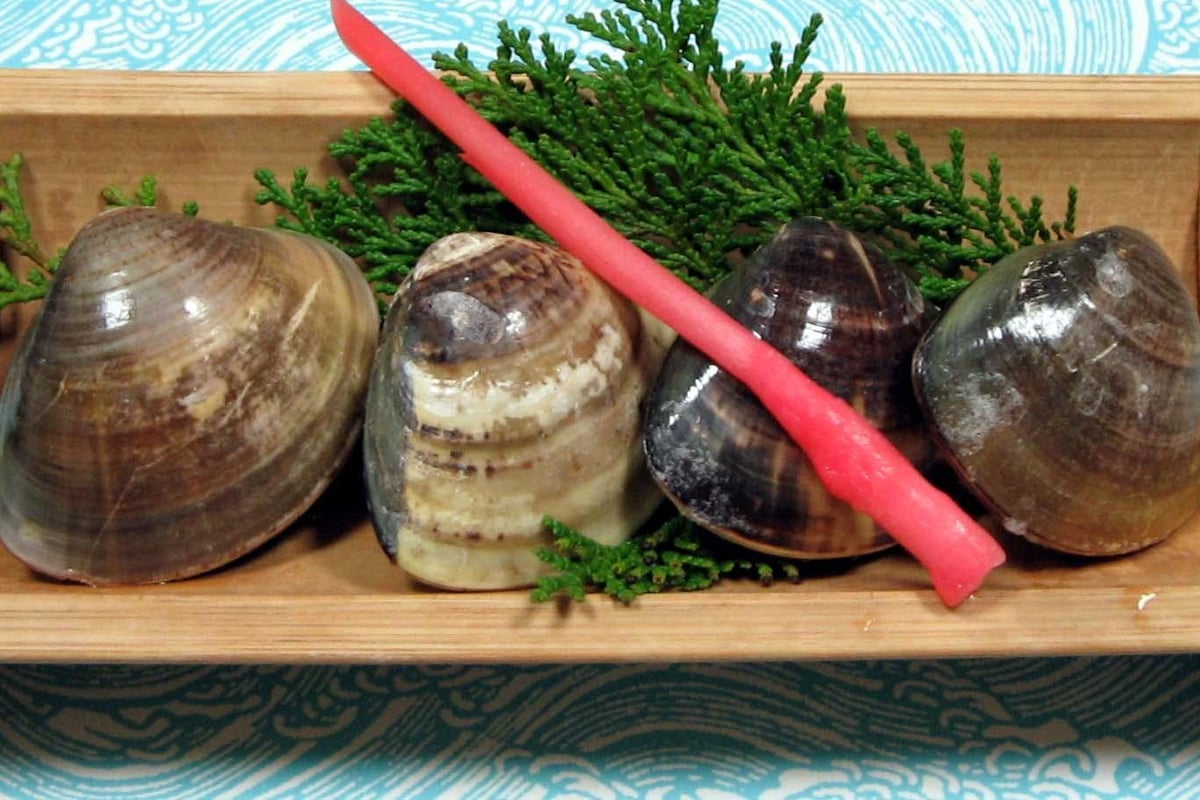
Kuwana Hamaguri (Kuwana Clams)
Kuwana Hamaguri Clams
Kuwana hamaguri refers to the clams harvested off Kuwana City, Mie Prefecture, and the dishes made with them. Kuwana lies at the river mouths where the three Kiso rivers, the Kiso, Nagara, and Ibi Rivers, flow into Ise Bay. Because the clams grow in nutrient-rich fishing grounds where fresh river water and seawater meet, they are large and plump, with a rich flavor. They are a species native to Japan, the Japanese hard clam (Meretrix lusoria), and are also called 'ji-hamaguri' (local clams) in the area. In the Edo period, Kuwana prospered as a post town on the Tokaido, and grilled clams (yaki-hamaguri) were a specialty popular with travelers. They were so widely known that the wordplay 'sono te wa Kuwana no yaki-hamaguri' was born. Shigure hamaguri (clams simmered in soy sauce), simmered down in tamari soy sauce and other seasonings, is also a representative specialty of Kuwana. The catch once fell drastically, but fishers have continued their efforts to restore the resource. In fiscal 2024 (Reiwa 6), 'Kuwana Yaki-hamaguri' was recognized as one of the Agency for Cultural Affairs' '100-Year Foods.'
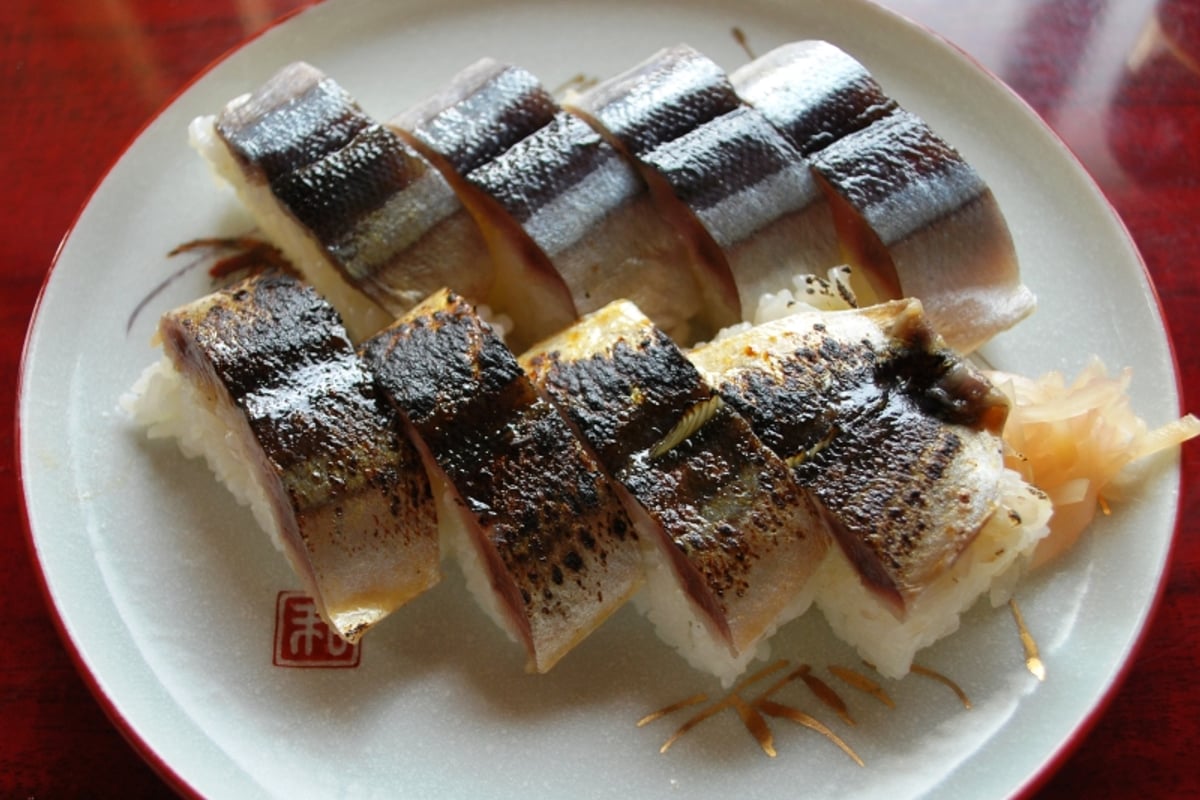
Sanma-zushi (Pacific Saury Sushi)
Sanma Zushi (Pacific Saury Sushi)
Sanma-zushi is a local dish handed down in the Higashi-Kishu area, including Kumano City and Owase City, along the Kumano-nada coast in southern Mie Prefecture. Lean Pacific saury (sanma) caught in the Kumano-nada Sea is cut open, salted, and cured in citrus vinegar such as mikan citrus juice. It is then laid on vinegared rice and made into pressed sushi. It has been made as an indispensable feast for days when people gather, such as New Year, celebrations, and festivals. At Ubuta Shrine (産田神社) in Kumano City, a ritual called Hohan (奉飯), in which children are fed sanma-zushi with the bones left in to pray for their healthy growth, is well known. Locally, it is customary to serve it with karashi mustard paste rather than wasabi or ginger. Sanma-zushi has been handed down all along the Kumano-nada coast from the Shima Peninsula to Wakayama Prefecture, and it is also popular in southern Wakayama Prefecture.
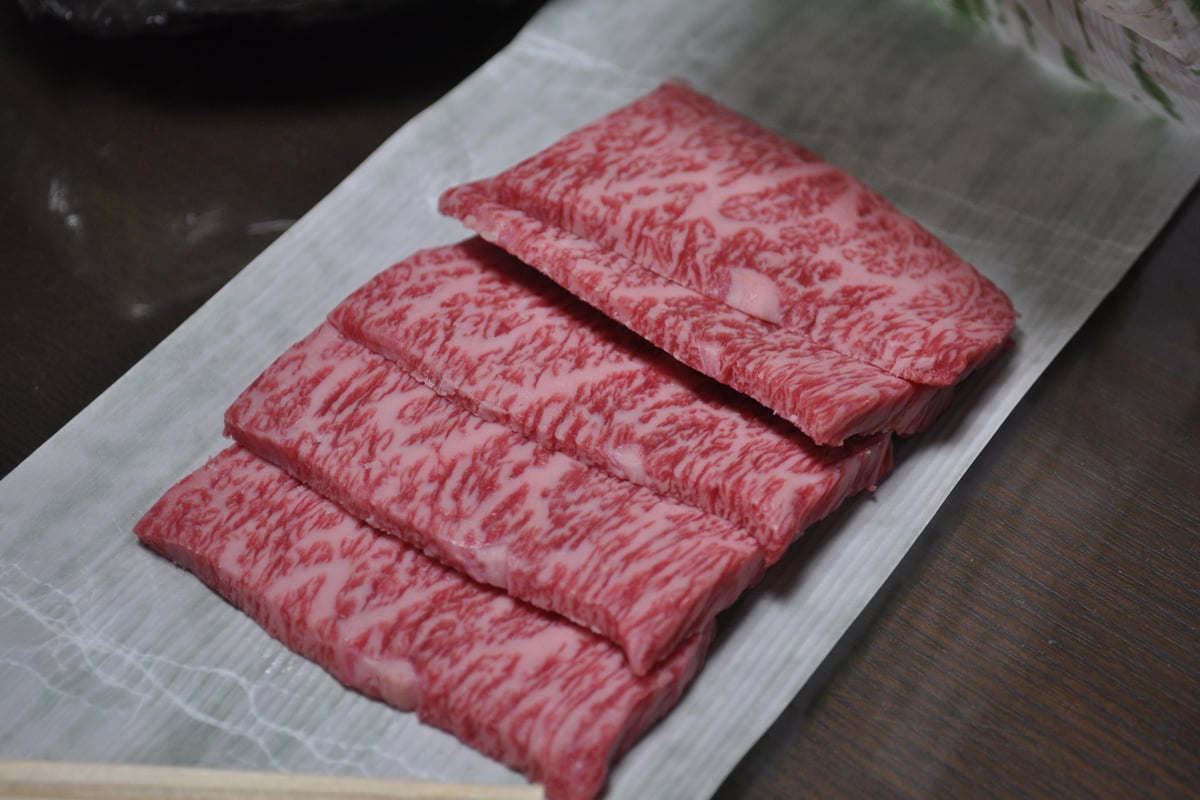
Matsusaka Beef
Matsusaka Beef
Matsusaka beef is a brand of Japanese Black cattle fattened in the area centered on Matsusaka City, Mie Prefecture. It is read either 'Matsusaka-ushi' or 'Matsusaka-gyu.' Only heifers that have never calved qualify, and each animal is registered in the 'Matsusaka Beef Individual Identification Management System.' Since long ago, the Matsusaka area has brought in young female cattle born in Tajima (present-day northern Hyogo Prefecture) as draft cattle for farm work. From the Meiji era onward, these cattle came to be fattened over a long period and shipped as beef cattle to Tokyo and other places. It is said that Matsusaka beef received the top honor award at the National Beef Cattle Livestock Exhibition in 1935 (Showa 10), and that its fame then spread nationwide. Its hallmarks are fine marbling (shimofuri) and fat that melts at a low temperature. When cooked, it is said to give off a sweet aroma called 'wagyu-ko' (wagyu aroma). Locally, the standard dish is sukiyaki, in which the meat is seared in an iron pot and seasoned with sugar and tamari soy sauce. Some restaurants also serve it grilled over a wire grill or as steak.
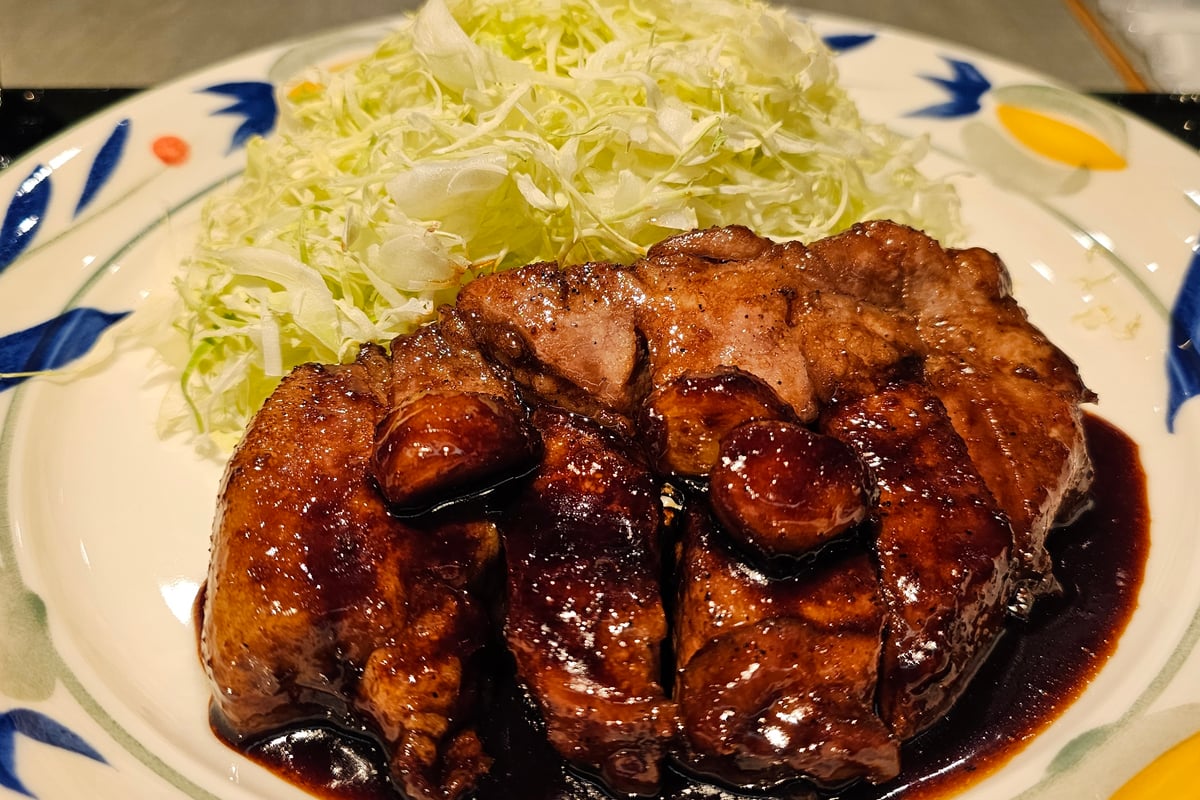
Yokkaichi Tonteki (Pork Steak)
Yokkaichi Tonteki
Yokkaichi tonteki is a local specialty dish (gotochi gourmet) of Yokkaichi City, Mie Prefecture, in which thick-cut pork is cooked with garlic and coated in a dark, blackish, rich sauce. The name combines 'ton' (pork) and 'teki' (steak). It is served with a generous helping of shredded cabbage on the side. The meat is cut with deep slits to keep it from shrinking as it cooks, and because this shape resembles a baseball glove, it is also called 'glove' (gurobu). It is said to have begun shortly after the war and to have been the signature dish of a Chinese restaurant in the city center. In Yokkaichi, where many people worked in the industrial zone, hearty, filling dishes that gave people energy were popular. Cheaper than beef steak, it is a down-to-earth dish loved by those who wanted to eat their fill. Since 2008, the Yokkaichi Tonteki Association has been promoting it, and it has also been entered in events such as the B-1 Grand Prix. Today it can be enjoyed at many kinds of eateries, including Chinese restaurants, set-meal diners (teishoku-ya), and coffee shops (kissaten).
Yokanzuke (Stuffed Pickled Melon)
Yokanzuke (Iga Stuffed White Melon Pickles)
Yokanzuke is a pickle of shirouri (Oriental pickling melon) handed down in the Iga region of Mie Prefecture. Shirouri is a type of melon and a summer specialty of the Iga Basin. The core of the shirouri is hollowed out and stuffed with finely chopped shiso, ginger, daikon radish, and other ingredients, and the melon is then pickled and matured in tamari soy sauce. Tamari soy sauce is a dark, thick soy sauce made mainly from soybeans. The name means 'to nourish the kimo' (the liver; figuratively, courage). According to tradition, it comes from the story that Todo Takatora, who governed Iga Ueno Castle, kept these pickles on hand as field rations for soldiers to nourish the warriors' morale (kimottama, or 'guts'). There is also a legend that Iga ninja carried them as portable food. In the Iga region, shirouri harvested in summer were originally preserved in homemade miso and were also served to entertain guests. Today, a long-established pickle shop in Ueno, Iga City, carries on the traditional method.
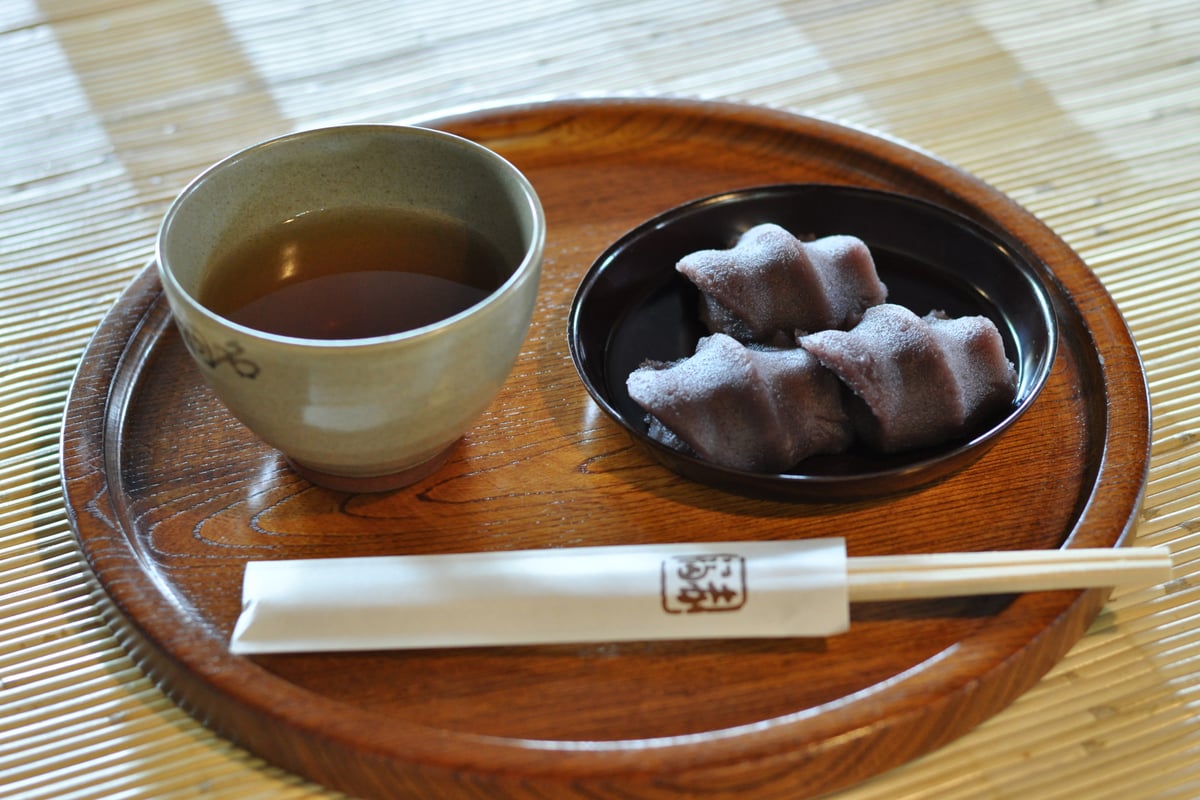
Akafuku Mochi
Akafuku Mochi
Akafuku mochi is a famous confection of Ise City, Mie Prefecture, made of soft mochi topped with smooth red bean paste (koshi-an). It is made by Akafuku, whose main store stands in Oharai-machi in front of the Naiku (Inner Shrine) of Ise Grand Shrine, and the company is said to have been founded in 1707 (Hoei 4). The three ridges pressed into the bean paste represent the clear stream of the Isuzu River, which flows through the shrine grounds. The white mochi is said to represent the pebbles lying on the riverbed. The shop name comes from the phrase 'sekishin keifuku' (赤心慶福), meaning to rejoice in the happiness of oneself and others with a sincere heart, free of falsehood like that of a newborn baby. In the Edo period, the Ise Kaido (pilgrimage road to Ise) running from Kuwana to Ise was also called the 'Mochi Road' (Mochi Kaido), and many famous mochi treats for welcoming pilgrims were born along the road. Akafuku mochi is the leading example. At the main store, you can enjoy freshly made Akafuku mochi with hojicha (roasted green tea) made with water boiled on a vermilion-lacquered kamado (hearth). 'Tsuitachi-mochi' (朔日餅), sold only on the first day of each month, is also popular.
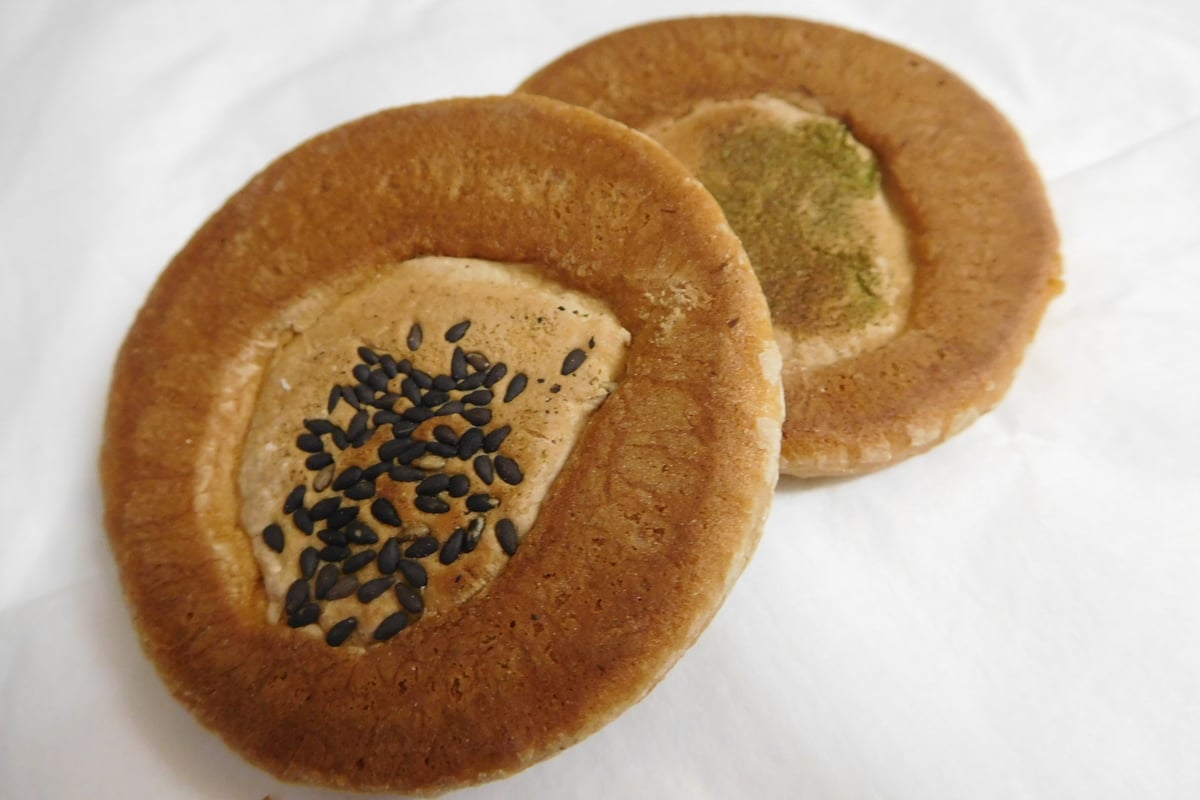
Iga Katayaki (Hard Baked Biscuits)
Iga Katayaki (Hard-Baked Ninja Crackers)
Katayaki is a very hard baked confection handed down in Iga City and Nabari City, Mie Prefecture. A dough made mainly from wheat flour and sugar is baked on an iron griddle and flavored with black sesame or aonori (green laver). As its name ('hard-baked') suggests, it is hard, and it is even called 'the hardest senbei in Japan.' Because it is compact, nutritious, and keeps for a long time, Iga ninja are said to have carried it as portable food, and it is also called 'ninka' (忍菓). It is also said to have been valued as preserved food on the battlefield. Records even remain of people once breaking it with the scabbard (saya) or hand guard (tsuba) of a sword to eat it. Today, it is usually broken by striking it with the included wooden mallet or by knocking pieces of katayaki against each other. It can also be softened by soaking it in tea or milk. Today's sweet katayaki is thought to have taken its current form more than 200 years ago. Producers are scattered around the castle town of Iga Ueno and elsewhere, and some shops let you watch the baking.
Model Course
Akafuku Mochi, Tekone-zushi and the handcrafts of Ise in Oharai-machi, in front of the Naiku of Ise Grand Shrine
Before or after visiting the Naiku (Inner Shrine), stroll through Oharai-machi, the shrine-front town. The Akafuku main store opens at 5 a.m. every morning, and on its veranda facing the Isuzu River you can enjoy the 'bon' set of Akafuku Mochi and roasted hojicha tea. For lunch, enjoy Tekone-zushi at すし久, said to have been founded in the Tenpo era, or at 手こね茶屋. 手こね茶屋 also offers a 'meibutsu awase' set for comparing it with Ise Udon. In Okage Yokocho, you can choose small Iga kumihimo items at くみひも平井 and Ise Ittobori carvings at 宮忠.
Ise Udon near Iseshi Station and Ise Shunkei in the streets of Kawasaki
At 山口屋, about a three-minute walk from Kintetsu/JR Iseshi Station, taste Ise Udon, extra-thick noodles coated in a dark sauce. ちとせ in 岩渕 is also known as a long-established shop that spread the name of Ise Udon. Then head to Kawasaki along the Seta River. At 伊勢春慶デザイン工房, next door to the east of the Ise Kawasaki Merchant Hall (伊勢河崎商人館), you can watch the lacquerers at work and choose lunch boxes and tiered boxes through which the wood grain shows. The workshop closes on irregular days, so it is best to check in advance.
A kumihimo experience in the castle town of Iga-Ueno, with Yokanzuke and katayaki
At 伊賀くみひも 組匠の里, about a six-minute walk from Uenoshi Station on the Iga Railway, try braiding kumihimo on a marudai (round braiding stand). At 宮崎屋 in the castle town, you can buy Yokanzuke, shirouri melons stuffed with chopped vegetables and pickled in tamari, sold by weight. At 鎌田製菓, you can watch how katayaki is made, a hard biscuit said to have been carried by ninja as portable food. If you have a car, it is also worth going out to the Iga-yaki Traditional Industry Hall (伊賀焼伝統産業会館) in Marubashira to compare the donabe and tableware of the kilns.
Visiting the skills of Ise Katagami and Suzuka Sumi in Shiroko and Jike, Suzuka
伊勢型紙資料館, a five-minute walk from Kintetsu Shiroko Station, makes use of the residence of the 寺尾 family, once stencil wholesalers, and admission is free. At 鈴鹿市伝統産業会館 in Jike, you can try stencil carving from 200 yen for a bookmark, and buy Suzuka Sumi and Ise Katagami products. 進誠堂, the maker of Suzuka Sumi, is a five-minute walk from Kintetsu Tsuzumigaura Station and sells ink sticks directly on weekdays. Artisan demonstrations are suspended on some days, so check each facility's information beforehand.
Choosing Banko-yaki at ばんこの里会館 in Yokkaichi, then tasting Tonteki and Kameyama Miso Yaki Udon
At ばんこの里会館, about a five-minute walk from Kintetsu Kawaramachi Station, compare Banko-yaki teapots (kyusu) and donabe. At 'うつわ亭' on the second floor, you can buy products from each kiln and book a pottery class. For lunch, try Yokkaichi Tonteki with garlic and dark sauce at まつもとの来来憲 or 一楽. If you go further to 亀八食堂 in Kameyama, you can enjoy miso yaki udon made by adding udon noodles at the end of a miso yakiniku meal grilled on an iron griddle.
Hand-weaving Matsusaka Momen and tasting Matsusaka Beef at long-established restaurants in Matsusaka
At 松阪もめん手織りセンター in 本町, Matsusaka City, try the 'Petit Orihime experience' (about one hour, 1,500 yen) on an old-fashioned loom. The experience must be booked at least three days in advance. You can also choose hand-woven accessories and Matsusaka Momen clothing here. For a meal, enjoy Matsusaka Beef in the 'sukiyaki' of 和田金, said to have been founded in 1878, or the sukiyaki of 牛銀本店 in Uomachi. These restaurants are popular, so reserving your meal in advance is also recommended.
The bronze torii, a casting experience and grilled clams in Kuwana
Walk from Kuwana Station to visit the bronze torii gate of Kuwana Sosha (Kasuga Shrine). Said to have been made in 1667 by the 辻内 family of casters, it is a representative work of Kuwana Imono. At CASTER HOME, a casting workshop in 安永, you can pour molten tin into molds to make items such as chopstick rests. For a meal, try grilled clams smoked over pine cones at 丁子屋 near Kuwana Station. At はまぐりプラザ at Akasuka Fishing Port, you can grill and eat Kuwana's wild clams yourself.
Visiting an Owase Wappa workshop and tasting Sanma-zushi in Owase
ぬし熊 in 向井, Owase City, is the workshop where the fourth-generation owner alone continues to make Owase Wappa, bentwood vessels of Owase hinoki cypress finished with lacquer. Because the work is done by hand, pieces take a long time to complete, and it is said that orders can take a year. For a meal, head to おわせお魚いちば おとと, run directly by a seafood company. At its in-store eatery, you can taste Sanma-zushi made with Pacific saury from the Kumano Sea.
Events
Iga-yaki Pottery Festival (伊賀焼陶器まつり)
Once a year (in 2025: September 19 to 21) / 川合, Iga City (すぱーく阿山)
View details →Yokkaichi Banko-yaki Pottery Festival (四日市ばんこ焼陶器まつり)
May (in 2024: May 18 and 19) / Yokkaichi City (Yokkaichi Dome and ばんこの里会館)
View details →