Image: Wikimedia Commons
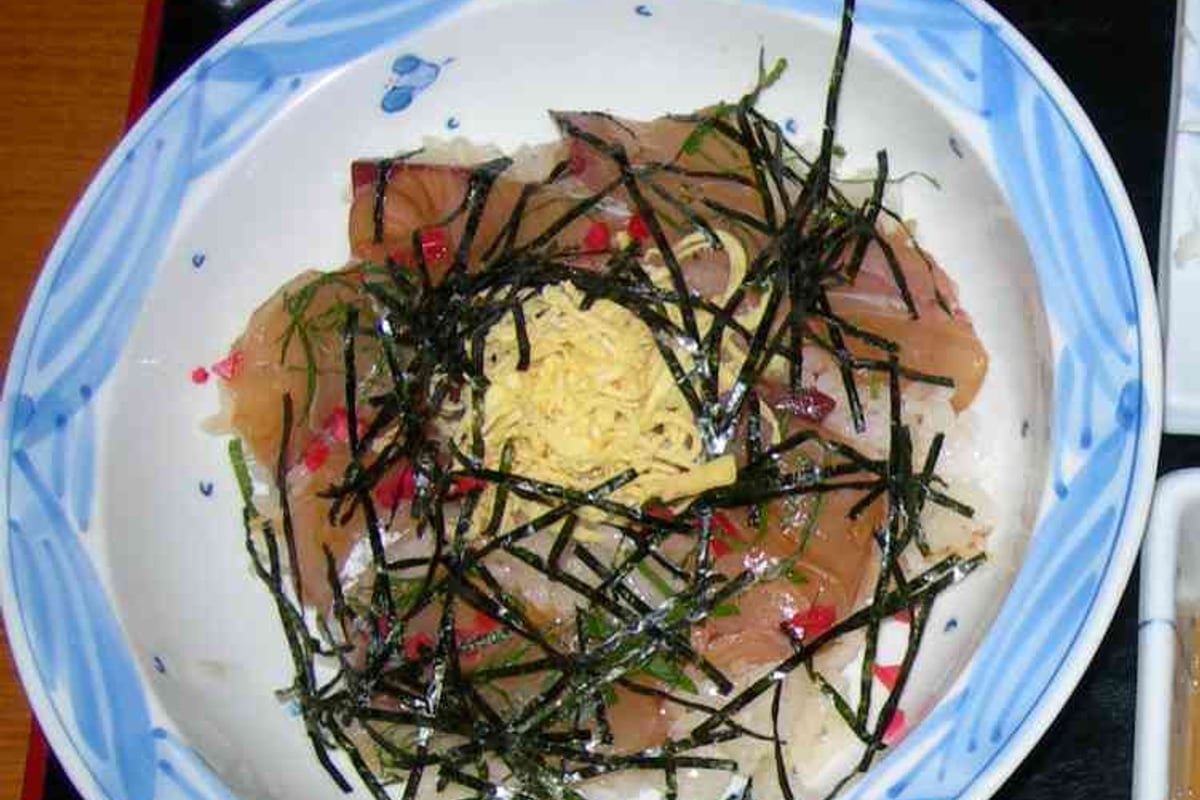
Tekone-zushi is a fishermen's dish that represents the Shima region of Mie Prefecture. Red-fleshed fish such as bonito (katsuo) is marinated in a soy sauce-based sauce and mixed with vinegared rice. It is often finished with a scattering of finely shredded ginger or shiso (perilla) leaves, which makes it refreshing to eat. It is said to have begun as a dish that fishermen in Wagu, Shima-cho, Shima City made so they could eat quickly aboard bonito fishing boats. It is said to have come to be called 'tekone-zushi' because it was made by mixing it by hand (te) as if kneading (koneru). In the Meiji era it spread to fishermen's households and the local community, and it has been handed down as a feast for festivals and guests. In the Showa era it became a representative local dish of the Shima region and also came to be served to tourists visiting Ise-Shima. Today it is offered as a specialty at restaurants in Ise, Toba, and Shima. In fiscal 2025 (Reiwa 7), it was recognized as one of the Agency for Cultural Affairs' '100-Year Foods.'
Origin
In Wagu, Shima-cho, Shima City, where fishing has thrived since long ago, fishermen went out on bonito boats and caught bonito by pole-and-line fishing (ippon-zuri). It is said to have begun when, taking meals aboard in between the busy work of fishing, they cut bonito into sashimi, marinated it in soy sauce, and mixed it with rice to eat easily. The name is said to come from the fact that it was made with vinegared rice, which keeps well, and kneaded together by hand. Another theory holds that it was a meal for special occasions (hare no hi) that boat owners served to their crews to celebrate a big catch.
History
In the Meiji era, tekone-zushi spread to fishermen's households and to people in the local community. Handed down as home cooking, it also came to be served at festivals and to guests. In the Showa era it was regarded as a representative local dish of the Shima region and was also served to tourists visiting Ise-Shima. It is still loved as the residents' soul food today, and it can be enjoyed as a specialty in places such as the shrine-front town of Ise Grand Shrine.
Features
The star is bonito, sliced at an angle a little thinner than for sashimi and marinated for about 20 minutes in a sauce made with soy sauce, sugar, and other ingredients. This is mixed with vinegared rice and finished with a scattering of shredded ginger or shiso leaves. The proportions of the sauce differ by shop and household, and some shops mix in black sesame seeds. Even within Shima City, the method of preparation is said to vary slightly from district to district.
Main Ingredients
Food Culture
In the Shima region, it is made as a dish for celebrations and gatherings, as well as home cooking. It is sometimes enjoyed with fish in season: starting from the season of the first bonito of the year (hatsu-gatsuo), it may be made with horse mackerel or isaki in summer, returning bonito (modori-gatsuo) in autumn, and inada or warasa (young yellowtail) in winter.
How It Differs from Home Cooking
At home, it is made easily by marinating angle-sliced bonito in sauce and mixing it with freshly cooked vinegared rice. At restaurants, each shop adds its own touches, such as making the vinegared rice with locally grown rice or marinating thickly cut bonito in a secret sauce. Some shops offer sets that pair it with Ise udon.
Famous Shops
すし久
三重県伊勢市宇治中之切町20
A long-established shop said to have opened as a sushi restaurant in the Tenpo era of the Edo period (1830–1844) and later become a ryori ryokan (traditional inn known for its cuisine). Located in Oharai-machi in front of the Naiku, it lets you dine in a building that retains the look of its ryori ryokan days. Its specialty is 'tekone-zushi,' thick slices of bonito marinated in a sweet-savory sauce on vinegared rice made from local Koshihikari rice, from about 1,600 yen.
手こね茶屋 おはらい町中央店
三重県伊勢市宇治中之切町93
A shop in Oharai-machi in front of the Naiku. It offers 'Meibutsu Awase' (a combination of specialties), which lets you enjoy Shima's specialty tekone-zushi and Ise's specialty Ise udon at once, for about 1,760 yen. You can compare Mie's local dishes along the way on your Ise pilgrimage.
大王荘
三重県志摩市大王町波切244
A shop in Nakiri (波切), Daio-cho, Shima City. It serves tekone-zushi under the name 'ryoshi-zushi' (fishermen's sushi): on its own it costs about 900 yen, and the 'Ryoshi-zushi Gozen' set, which comes with small side dishes and miso soup, costs about 1,100 yen (both tax included). You can enjoy local flavors in a fishing town.
FAQ
Q. What does 'tekone' mean?
A. It is said to come from 'te de koneru,' meaning to knead by hand. The dish is said to have been given this name because fishermen made it aboard their boats by mixing soy-marinated bonito and rice by hand. The written form varies by source and shop, such as 手こね寿司, てこね寿司, and 手こねずし.