Image: Wikimedia Commons
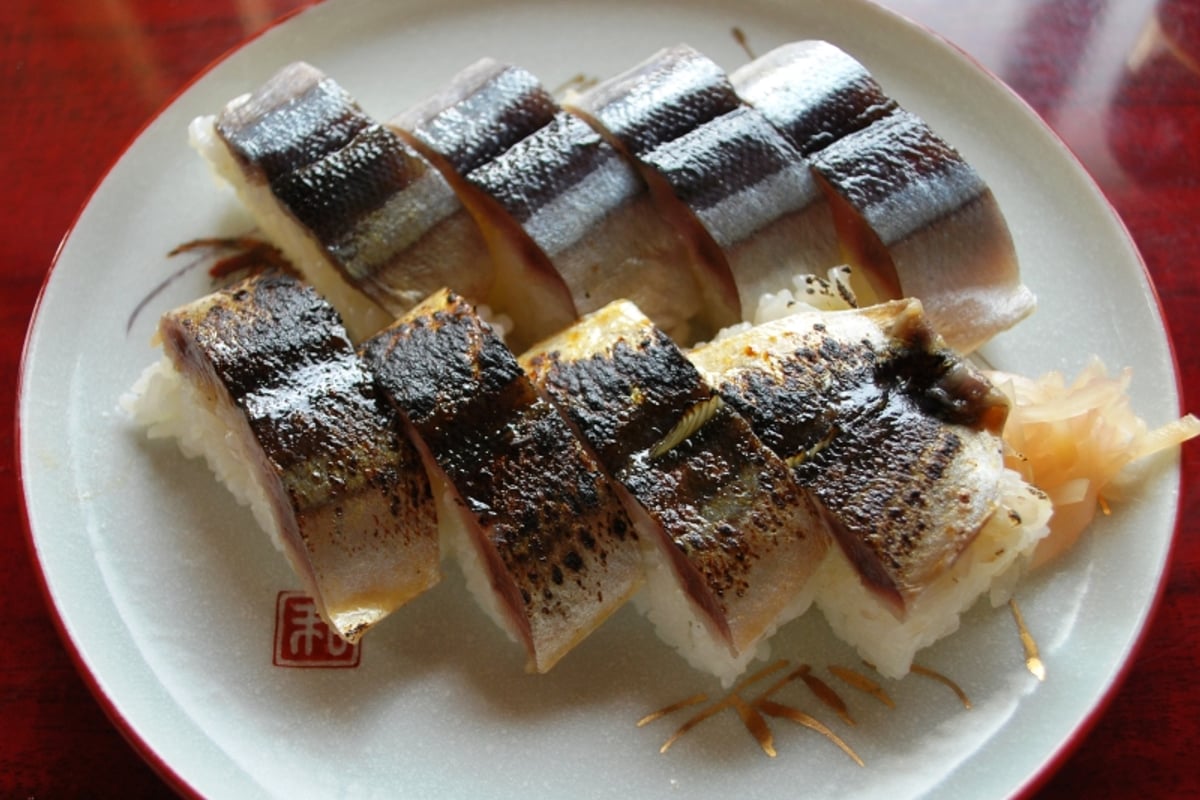
Sanma-zushi is a local dish handed down in the Higashi-Kishu area, including Kumano City and Owase City, along the Kumano-nada coast in southern Mie Prefecture. Lean Pacific saury (sanma) caught in the Kumano-nada Sea is cut open, salted, and cured in citrus vinegar such as mikan citrus juice. It is then laid on vinegared rice and made into pressed sushi. It has been made as an indispensable feast for days when people gather, such as New Year, celebrations, and festivals. At Ubuta Shrine (産田神社) in Kumano City, a ritual called Hohan (奉飯), in which children are fed sanma-zushi with the bones left in to pray for their healthy growth, is well known. Locally, it is customary to serve it with karashi mustard paste rather than wasabi or ginger. Sanma-zushi has been handed down all along the Kumano-nada coast from the Shima Peninsula to Wakayama Prefecture, and it is also popular in southern Wakayama Prefecture.
Origin
Pacific saury that migrate south in autumn have lost much of their fat by the time they reach the Kumano-nada Sea. Sanma-zushi is a sushi that keeps well, made by curing these lean saury with salt and vinegar. In fishing towns throughout Higashi-Kishu, it has been handed down as a preserved food and as a dish for special occasions (hare no hi) such as festivals and New Year. In Kumano City there is a tradition claiming it dates back more than 1,500 years, but its true origin is unclear.
History
Sanma-zushi was long a dish made at home, and it is said there was nowhere to buy it in shops. In 1975 (Showa 50), 三紀産業 of Owase City began producing and selling it, and it became established as an Owase specialty. In 2004 (Heisei 16), the sanma-zushi preservation society of Kumano City (さんま寿司保存会) designated January 10 as 'Sanma-zushi Day.' This is also the day of Ubuta Shrine's grand festival. Kumano City also holds the 'Kumano Kinomoto Sanma Festival' (熊野きのもとさんま祭り), themed on Pacific saury.
Features
The saury is cut open, gutted, and salted. After rinsing, it is cured in vinegar mixed with the juice of citrus fruit such as mikan. It is then placed on vinegared rice, pressed into sushi, and cut into pieces to eat. Whether the fish is opened from the back or the belly, and whether the head and tail are left on, vary by area and maker. In Kumano City, the custom is to deliberately leave the backbone in.
Main Ingredients
Food Culture
In Higashi-Kishu, it is an indispensable dish for New Year, celebrations, and local festivals. The Hohan ritual at Ubuta Shrine, in which children eat sanma-zushi with the bones in, is said to carry parents' wish that their children 'grow up with backbone' (kikotsu, strength of character). It is also thought to have served as a way to take in calcium.
How It Differs from Home Cooking
Since saury pickled in vinegar for sushi began to be sold at supermarkets, it has become easy to make at home. Sanma-zushi served at shops differs from shop to shop in the flavor of the pickling vinegar and the condiments. Ways of eating it also vary, such as eating it right after it is made or letting it rest overnight so the flavors meld.
Famous Shops
おわせお魚いちば おとと
三重県尾鷲市古戸野町2-10
A direct sales outlet for local products run by the seafood company 尾鷲物産. It offers fresh fish landed at Owase Port and other goods, and at おわせ魚食堂 inside the store you can casually enjoy rice bowls and sushi. Sanma-zushi is listed at about 500 yen.
View details →| 三紀産業 Owase Local Sushi Set | An assortment from 三紀産業 of Owase City, which began producing and selling sanma-zushi in 1975 (Showa 50). It contains one whole sanma-zushi, seven pieces of mehari-zushi, and seven pieces of kisu (Japanese whiting) sushi. The price is about 3,450 yen (tax included, shipping extra). |
|---|
FAQ
Q. Why aren't the bones removed from sanma-zushi?
A. In Kumano City, the custom is to deliberately leave the backbone in. This is because of the tradition, as seen in the Hohan ritual at Ubuta Shrine, of feeding children sanma-zushi with the bones in and wishing for them to 'grow up with backbone.' Methods differ by area, and in some places the bones are removed.