Image: Wikimedia Commons
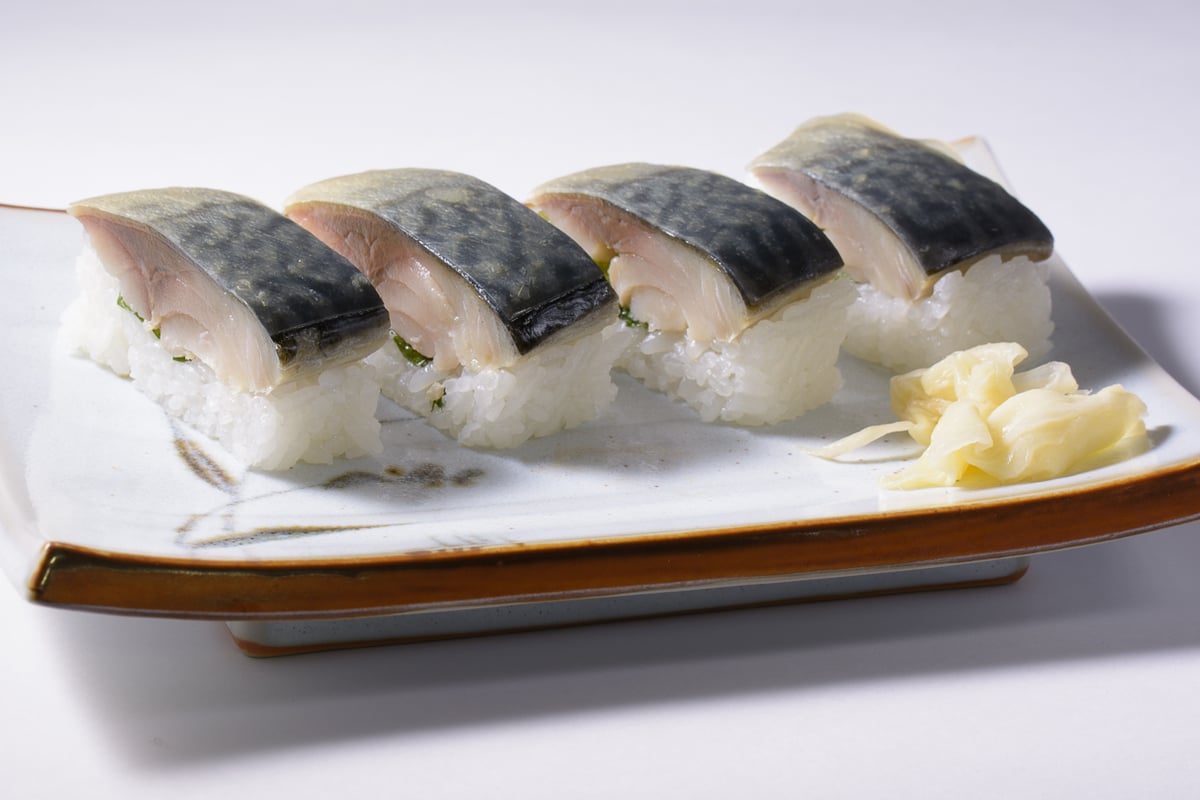
Kyo Sabazushi is a local sushi of Kyoto in which salt-cured mackerel is placed atop vinegared rice shaped into a bar and wrapped in kelp. It developed as a valuable opportunity to eat fresh seafood in landlocked Kyoto, and is said to have originated from mackerel caught in Wakasa Bay that was salted and carried on foot along the route known as the "Saba Kaido" (Mackerel Road) to Kyoto, becoming perfectly seasoned by the time it arrived. Even today, with refrigeration technology fully developed, the custom of eating it as a feast for "hare" (celebratory) occasions — including Kyoto's three great festivals, the Aoi Matsuri, Gion Matsuri, and Jidai Matsuri, as well as autumn festivals across the region — continues to be passed down, and it is cherished as a special dish served at home and at festival gatherings. There are two styles: "bo-zushi," pressed and shaped into a bar, and "sugata-zushi," which uses a whole mackerel as is, and each shop's individuality shows in how it is prepared.
Origin
The dish originates from the Edo period, when mackerel abundantly caught in Wakasa Bay was salted and transported along the route known as the "Saba Kaido," connecting Wakasa and Kyoto. In an era without refrigeration, the salted mackerel reached just the right saltiness during the two to three days it took to be carried to Kyoto, and it is said that placing this salted mackerel on vinegared rice and shaping it into bo-zushi was the beginning of sabazushi.
History
In landlocked Kyoto, blue-backed fish from the sea were a precious commodity, and the culture of sabazushi grew out of the ordinary people's ingenuity in enjoying mackerel. It became established as a feast for "hare" occasions eaten at seasonal festivals, including Kyoto's three great festivals (Aoi Matsuri, Gion Matsuri, and Jidai Matsuri) and autumn festivals across the prefecture, and it continues to be passed down today even though refrigeration technology has since developed.
Features
Its distinctive feature is the way the fattiness and umami of the salt-cured mackerel are joined by the tartness of the vinegared rice and the flavor of the kelp. There are two forms: "bo-zushi," pressed and shaped into a bar, and "sugata-zushi," made using a whole mackerel as is, and each shop's individuality shows in its saltiness and how strongly the vinegar is used.
Main Ingredients
Food Culture
There is a custom of eating it as a feast for "hare" occasions, such as Kyoto's three great festivals and autumn festivals across the region, and it has the character of a ceremonial food tied to festival observances.
How It Differs from Home Cooking
At home, shime-saba (vinegar-cured mackerel) purchased at a supermarket or similar shop is often used, whereas at specialty shops, judging the mackerel's freshness and the right level of salt and vinegar requires years of experience, resulting in a distinctive flavor unique to each shop.
Famous Shops
いづう
京都市東山区八坂新地清本町367
Founded in 1781 (Tenmei 1). Known for its saba sugata-zushi (whole mackerel sushi). A boxed set for one is about 4,482 yen and up.
View details →いづ重
京都市東山区祇園町北側292-1
A long-established shop over 100 years old, located across from Yasaka Shrine. Known for its sabazushi made with true mackerel from the Sea of Japan.
FAQ
Q. What is the "Saba Kaido"?
A. A collective name for several routes used to carry mackerel and other seafood from the Wakasa Bay coast, including Obama City in Fukui Prefecture, to Kyoto. It is said that salted mackerel reached just the right level of maturation as it was carried on foot along these routes, and in 2015 the routes were certified as a Japan Heritage site.