Image: Wikimedia Commons
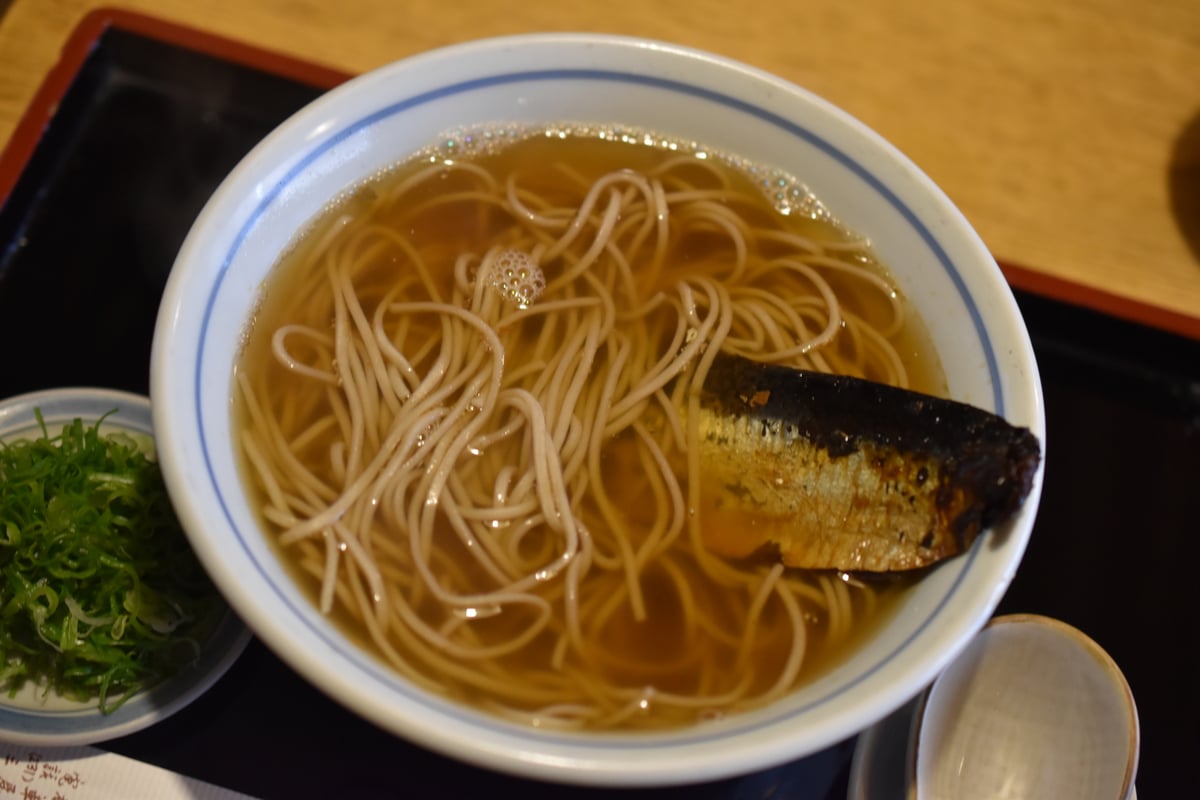
Nishin Soba is a noodle dish that originated in Kyoto, made by topping hot soba with sweet-and-savory simmered migaki-nishin (dried, filleted herring). In landlocked Kyoto, dried migaki-nishin brought from Hokkaido by kitamae-bune trading ships was prized as a valuable source of protein, and this dish was born from its combination with soba culture. It is said to have been created around 1882 (Meiji 15) by Matsuno Yosokichi, the second-generation owner of the soba shop Matsuba, founded in 1861 (Bunkyu 1), and it has been established as a Kyoto specialty ever since. Its distinctive feature is the combination of herring simmered until soft down to the bone in a kanroni-style glaze with a broth built on bonito and kelp dashi, and it is also widely known as a tourist specialty of Kyoto.
Origin
Kyoto is an inland basin where fresh saltwater fish was hard to obtain, so dried migaki-nishin brought by kitamae-bune trading ships from the Sea of Japan coast was used as a valuable source of protein. Simmering this migaki-nishin in a sweet-savory sauce and pairing it with soba is said to be the origin of nishin soba.
History
It is said to have been created around 1882 (Meiji 15) by Matsuno Yosokichi, the second-generation owner of the soba shop Matsuba, founded in 1861 (Bunkyu 1). It gained a reputation in the streets of Gion as a dish that was easy to eat and highly nutritious, and it subsequently spread as a representative specialty of Kyoto.
Features
Its defining feature is topping soba, served in a Kyoto-style broth made from bonito and kelp dashi, with migaki-nishin slow-simmered in a kanroni-style glaze until soft down to the bone. The sweetness of the herring and the flavor of the dashi come together in harmony, and enjoying it together with the soba produces a distinctive richness.
Main Ingredients
Food Culture
Born from the union of a dried-food culture and a soba culture in inland Kyoto, where seafood was scarce, it is also eaten by many households as toshikoshi soba (New Year's Eve soba).
Famous Shops
総本家にしんそば 松葉 本店
京都市東山区四条大橋東入ル川端町192
The shop where nishin soba originated. About 1,700 yen (1,870 yen tax included) and up.
View details →FAQ
Q. Why did soba made with herring become a specialty in Kyoto?
A. Because Kyoto is a landlocked basin where fresh fish was hard to obtain, dried migaki-nishin brought from Hokkaido by kitamae-bune trading ships was prized as a valuable preserved food, which is the origin of this specialty.