Food Genre
Noodles
A cross-regional look at Noodles from across Japan.
Region(multiple selection allowed)
52 items
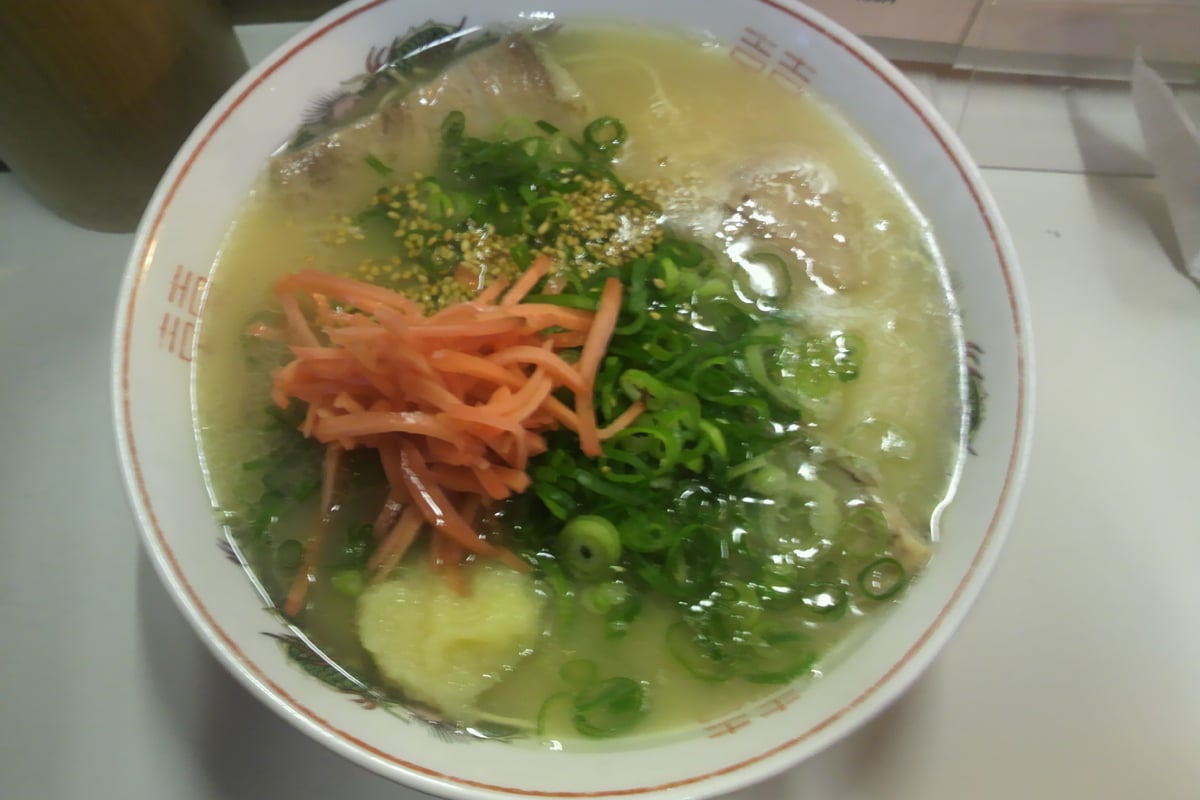
Hakata Ramen
Hakata Ramen
Hakata Ramen is a style of tonkotsu (pork bone broth) ramen eaten mainly in the Hakata area of Fukuoka City. Its defining feature is the combination of a cloudy white tonkotsu broth, made by boiling pork bones over high heat for a long time, and ultra-thin straight noodles said to be based on techniques from Shimabara somen. Because the noodles cook quickly, this became a way for food stalls to serve customers faster. The noodles also go limp quickly, which is said to have given rise to the 'kaedama' (extra noodle serving) custom, letting diners add just noodles, a little at a time, as many times as they like. Part of the fun is adjusting the flavor to your own taste with tabletop condiments such as red pickled ginger, spicy pickled mustard greens, white sesame seeds, and wood ear mushrooms. Born out of the postwar food-stall culture, it is now one of Fukuoka's signature local ramen styles, and many famous shops that started here have expanded chains nationwide and even overseas.
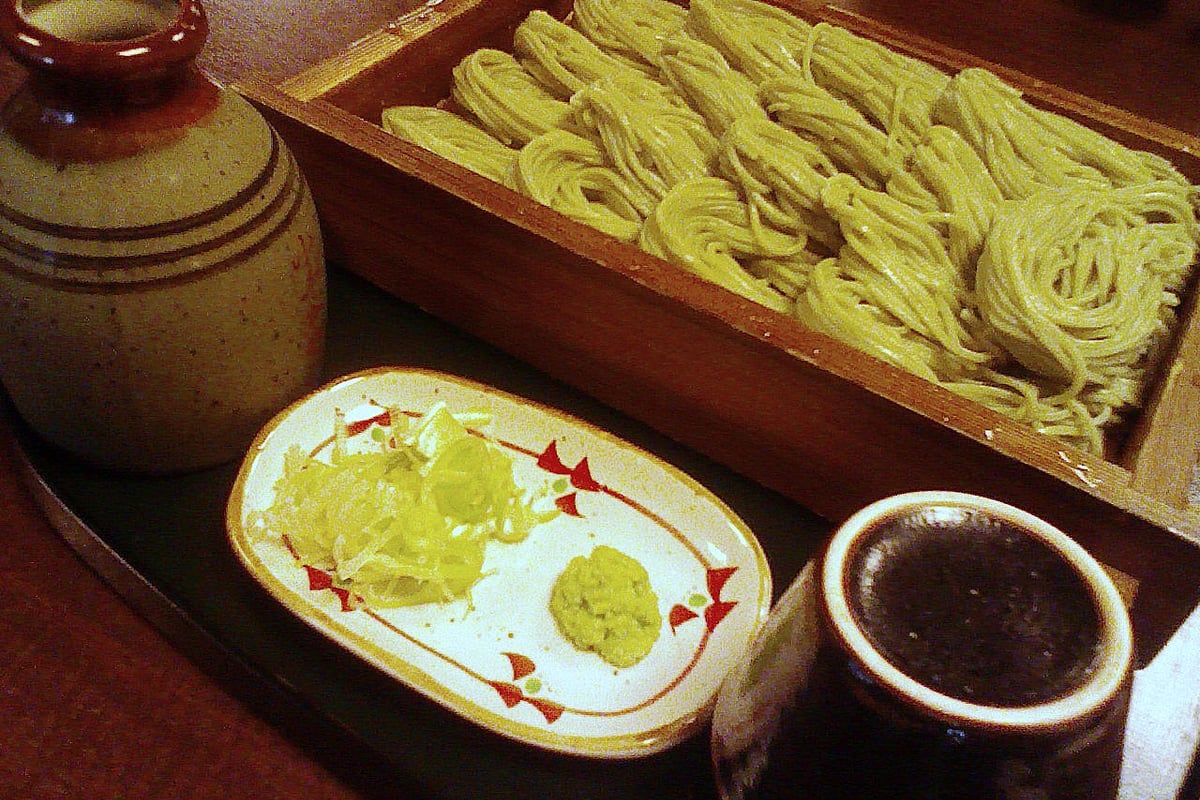
Hegi Soba
Hegi Soba
Hegi Soba is a local dish of Niigata Prefecture in which soba noodles made with funori seaweed as a binder are arranged in bite-sized portions on a hegi (square wooden tray). It is said to have originated in the Uonuma region, and Ojiya City and Tokamachi City in particular are known as soba towns. Funori was originally used to size (starch) the threads of textiles such as Ojiya Chijimi. Repurposing this seaweed, familiar in a textile-producing area, for soba making gave rise to this distinctive noodle. Soba bound with funori is prized for its smooth, slippery texture going down the throat and its firm, springy bite. The way the boiled noodles are gathered into bite-sized coils and lined up is called tefuri (bite-sized coiled portions), and its visual beauty is part of the appeal. Serving it with karashi mustard rather than wasabi as a condiment is another custom unique to this area. At specialty restaurants, it can be ordered by the number of people, from a single serving to portions for several, so a group can share soba served on a large hegi. Today it is eaten not only in the Uonuma region but throughout Niigata Prefecture.
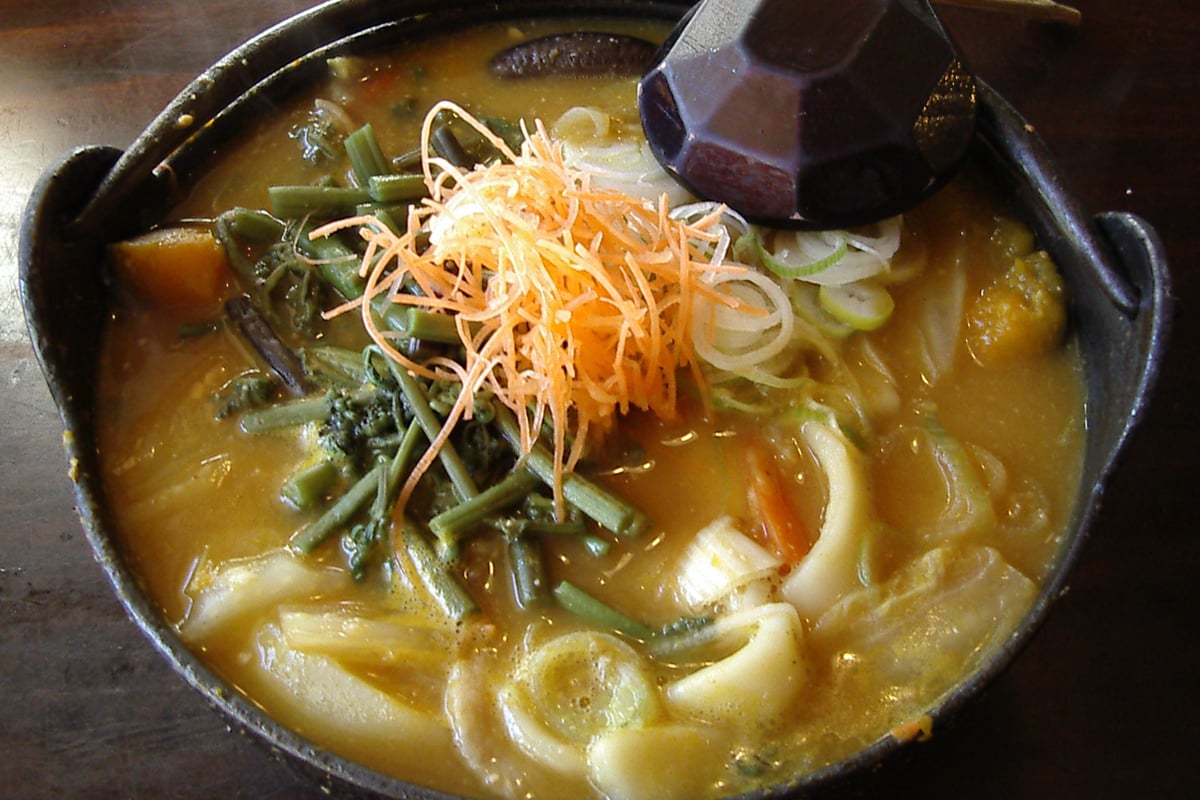
Hoto (Flat Noodles Simmered in Miso)
Hoto
Hoto is a local dish of Yamanashi Prefecture in which fresh noodles, made by kneading wheat flour and cutting it into wide strips, are simmered in a miso-based broth together with kabocha squash and other vegetables. Because the noodles are made without salt, they can go straight into the pot without being boiled first. Since they are simmered with the dusting flour still on them, the broth thickens, stays hot for a long time, and warms the body. It is so well loved that there is even a saying, 'Umai mon da yo, kabocha no hoto' (Kabocha hoto is a tasty thing), and in 2007 it was selected for the Ministry of Agriculture, Forestry and Fisheries (MAFF)'s '100 Selected Local Dishes of Farming, Mountain and Fishing Villages.' About 80 percent of Yamanashi Prefecture is covered by mountain forests, and paddy fields for growing rice were limited. For this reason, a flour-based diet (funshoku), in which wheat and other grains are ground into flour and eaten, took root, and hoto became a staple food in place of rice. In the Kyonan region it is also called 'noshi-ire' or 'noshi-komi.' Today there are many specialty shops in the prefecture, and it is common for them to serve it in individual iron pots.
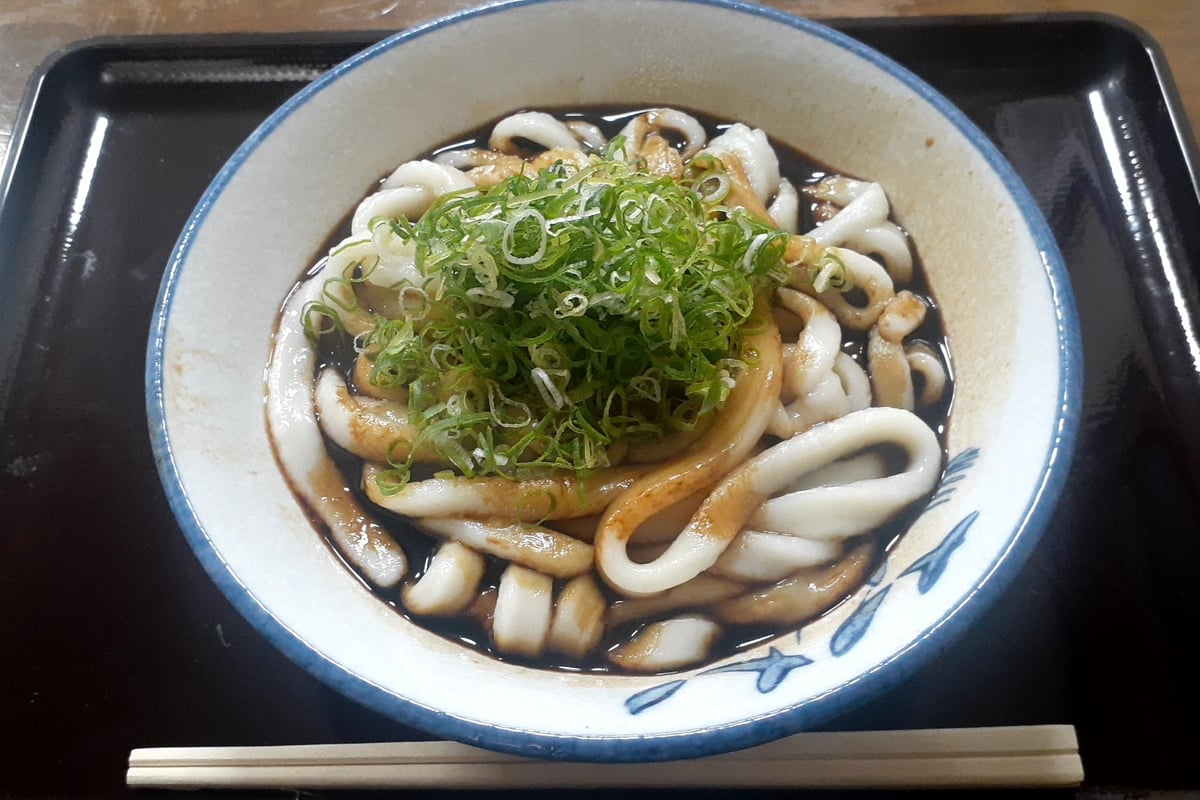
Ise Udon
Ise Udon
Ise udon is a local dish that has long been eaten in the Ise region, centered on Ise City. Extra-thick noodles, close to 1 cm in diameter, are boiled for about an hour until soft. They are eaten coated with just a small amount of a rich black sauce. The sauce combines tamari soy sauce (a rich soy sauce made mainly from soybeans) with dashi made from katsuobushi (dried bonito flakes), kombu, and other ingredients. Although it is jet black, it tastes surprisingly light. The noodles have almost no firmness (koshi), and their fluffy, soft and chewy texture is their greatest feature. When the Ise pilgrimage (Oise-mairi) flourished in the Edo period, it was served to pilgrims tired from long journeys as a food that is gentle on the stomach. Because it could be served quickly and eaten easily, it is said to have become known as a specialty of the shrine-front town. The name 'Ise udon' took hold relatively recently, from the Showa 40s onward. In fiscal 2024 (Reiwa 6), it was recognized as one of the Agency for Cultural Affairs' '100-Year Foods.'
Okinawa Soba
Okinawa Soba
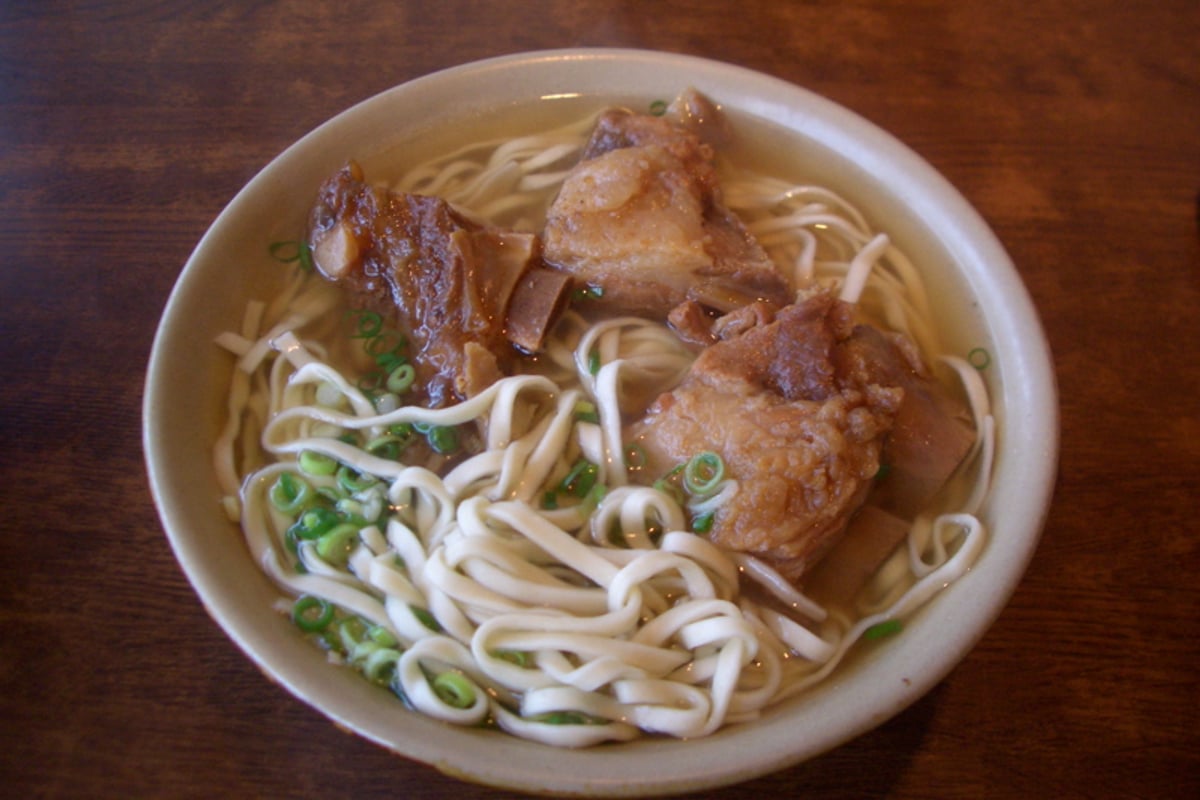
Okinawa soba is a beloved Okinawan noodle dish made with thick wheat noodles kneaded using kansui alkaline water — no buckwheat flour at all — served in a rich broth of pork bone and bonito, and topped with simmered pork belly, kamaboko fish cake, green onion, and red pickled ginger. It is said to have originated when a soba shop opened in Naha in the mid-Meiji era, when the dish was initially called 'suba' or 'Chinese soba' (shina soba). To distinguish it from Japanese soba, the name 'Okinawa soba' became established after Okinawa's reversion to mainland Japan in 1972, and in 1978 the Japan Fair Trade Commission approved the special designation 'Honba Okinawa Soba' (Authentic Okinawa Soba) for its use. The prefecture also has regional variants such as Miyako soba and Yaeyama soba, which differ in noodle thickness and broth preparation, and the dish has been selected as one of Japan's 100 Best Rural Dishes. Served not only at specialty shops but also at neighborhood eateries, it is eaten throughout the day from breakfast to late-night snacks, making it a noodle dish deeply woven into everyday life in Okinawa.
Okkirikomi
Okkirikomi
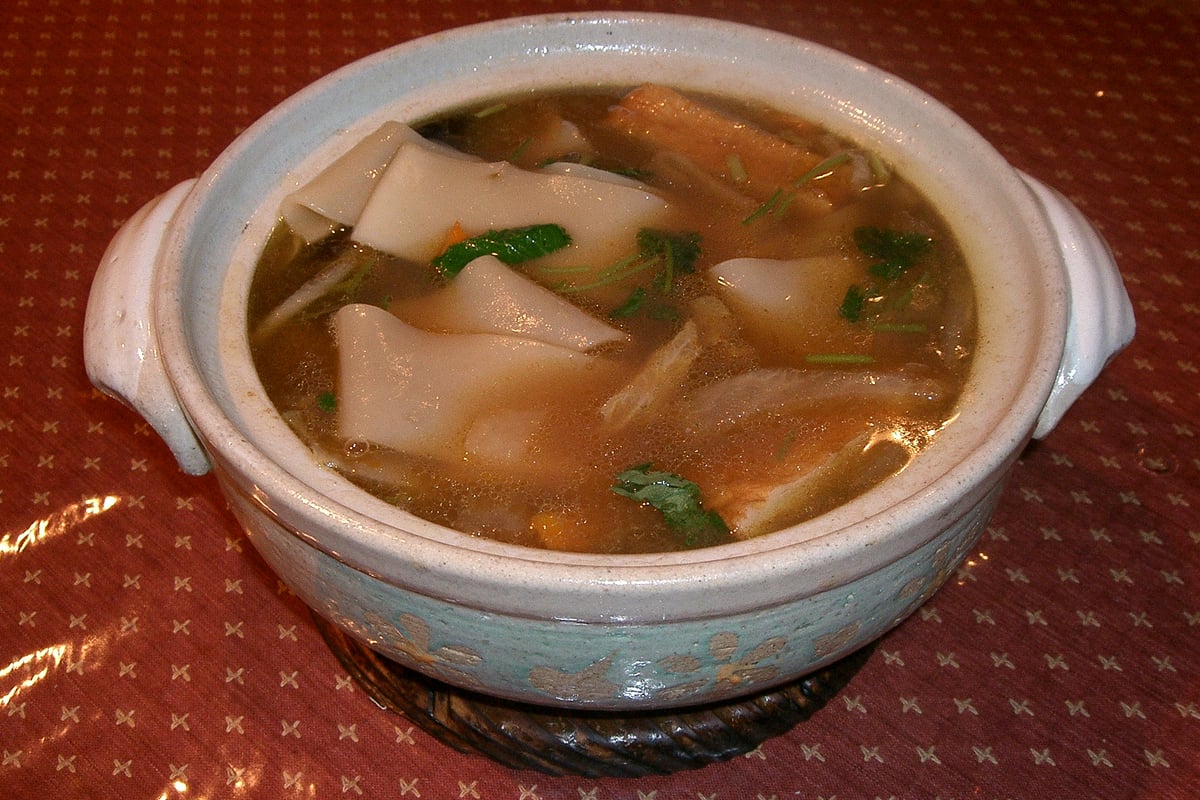
Okkirikomi is a signature local dish of Gunma Prefecture in which wide, flat wheat noodles are simmered slowly with seasonal vegetables such as taro, daikon radish, and mushrooms in a hearty miso- or soy sauce-based broth. The name is said to come from the process of rolling out the dough with a rolling pin, cutting it with a knife ('kirikomi'), and adding it straight to the pot; because the noodles go into the broth unboiled, still dusted with flour, the soup thickens naturally into a smooth, mellow broth. In Gunma, a major wheat-growing region, the dish is said to have spread as a meal that women in silk-farming households could prepare quickly and in large batches between farm chores, and it became an everyday staple from the mid-Edo period onward as stone hand mills came into common use. In 2014 it was designated an Intangible Folk Cultural Property of Gunma Prefecture as 'Gunma's Flour-Based Food Culture: Okkirikomi,' and it remains a beloved symbol of the region's food culture in both homes and eateries today.
Shinshu Soba
Shinshu Soba
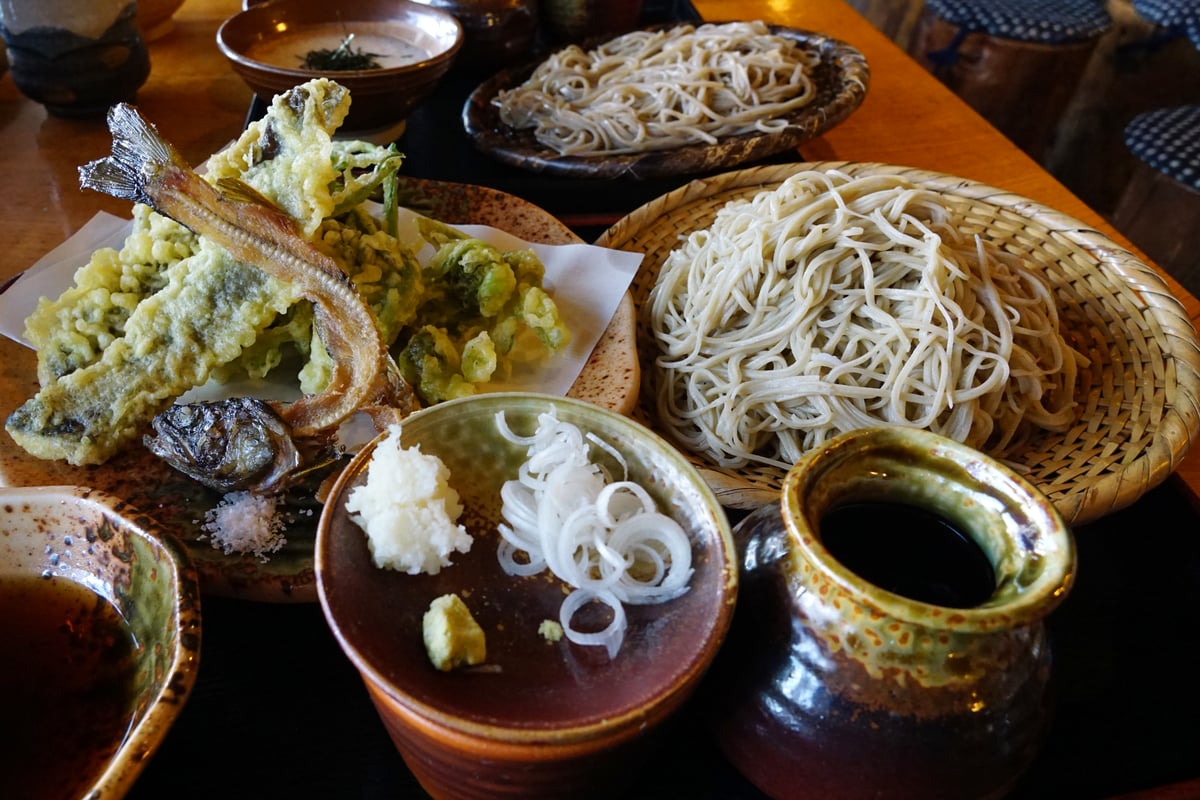
Shinshu Soba is Nagano Prefecture's signature noodle dish, made from buckwheat grown in various parts of the prefecture. The cool highland climate, where temperatures drop at night, is well suited to growing buckwheat, and Nagano Prefecture is one of Japan's leading buckwheat producers, ranking second in the nation with 3,960 tons in 2020 (Reiwa 2). Buckwheat, which bears fruit even in mountain areas where rice and wheat grow poorly, has long been a crop that supported people's livelihoods. Shinshu is also said to be the birthplace of 'soba-kiri' (buckwheat cut into noodles), and the oldest record of it, dated 1574 (Tensho 2), survives at Joshoji Temple in Okuwa Village, Kiso District. There is also a theory that it originated at Motoyama-juku (present-day Shiojiri City) on the Nakasendo highway, but there are other theories as well, such as one placing its origin in Koshu (Yamanashi Prefecture). Within the prefecture, soba with distinct local character has been handed down from place to place, such as Togakushi soba and the soba of the Kaida Kogen highlands. During the autumn harvest season, soba festivals are held throughout the prefecture, where visitors can enjoy freshly harvested shin-soba (new-crop soba).
Echizen Oroshi Soba (Soba with Grated Daikon)
Echizen Oroshi Soba
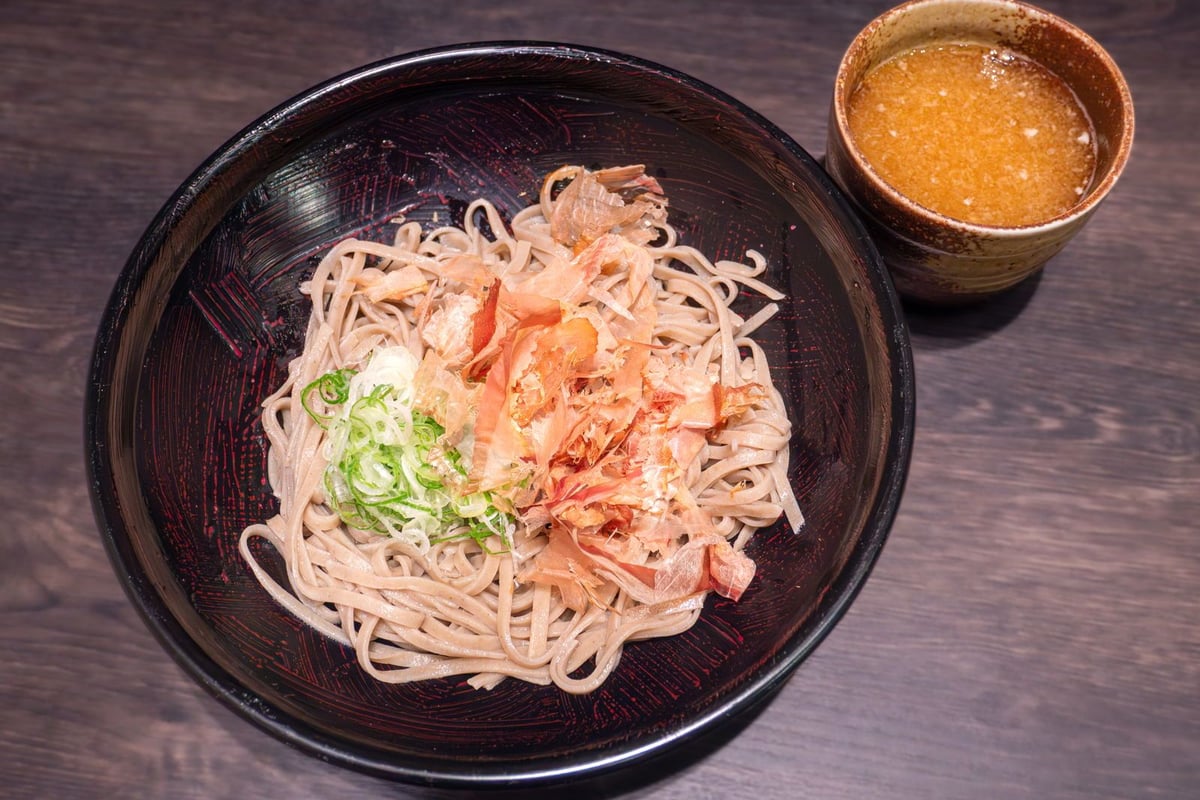
Echizen Oroshi Soba is a local dish of Fukui Prefecture in which cold soba noodles are eaten with grated daikon radish and dashi broth. It is commonly topped with bonito flakes and chopped green onions, and depending on the season, spicy karami daikon is also used. The mainstream soba in Fukui is inaka soba (country-style soba), cut somewhat thick from dark buckwheat flour ground in a stone mill together with the inner husk. Many native buckwheat varieties remain in the prefecture, and although their grains are small, they are said to have a rich flavor and an excellent aroma. Buckwheat cultivation is said to have been started by the Asakura clan in the Sengoku period, and at the beginning of the Edo period, 'soba-kiri' (soba in noodle form) was introduced. Later, the practice of eating it with grated daikon spread and has been handed down to the present day. The name 'Echizen Soba' is said to derive from an anecdote about Emperor Showa, who visited Fukui in 1947 (Showa 22). The way the grated daikon and dashi are combined differs from shop to shop, so comparing them is part of the fun.
Hakata Udon
Hakata Udon
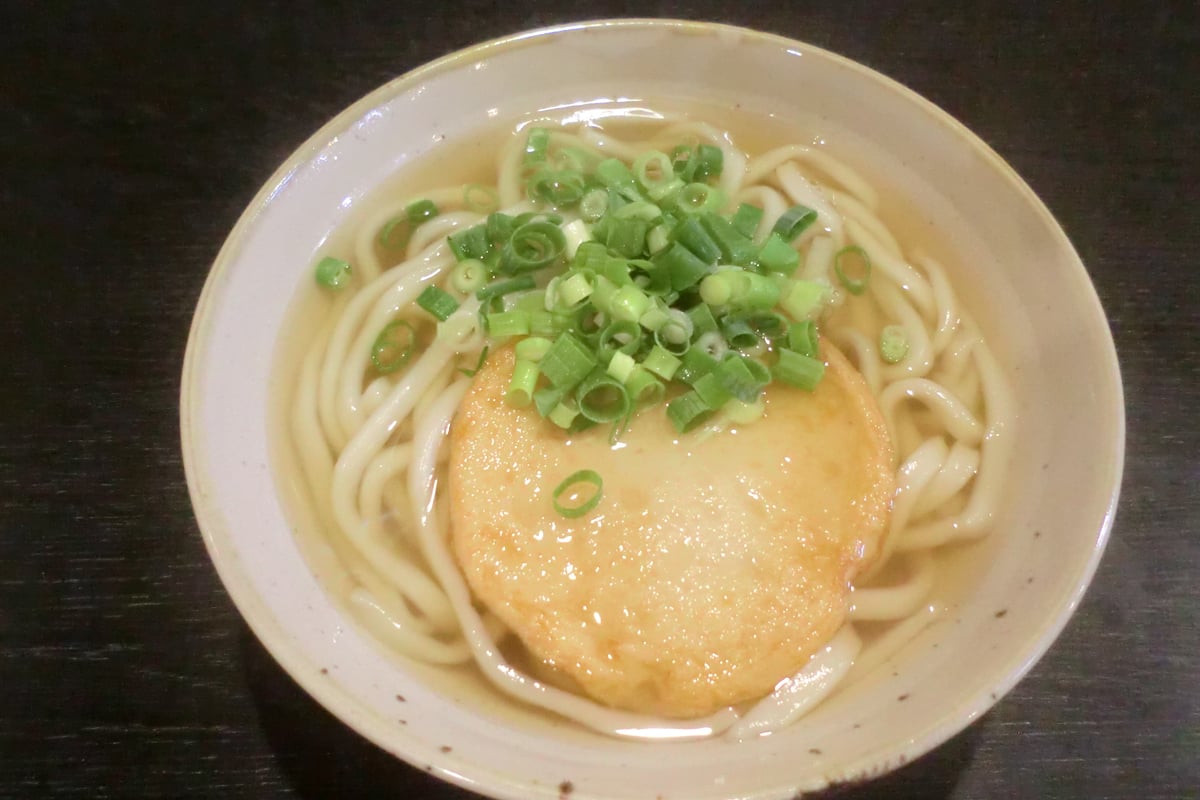
Hakata Udon is a style of udon eaten mainly in the Hakata Ward of Fukuoka City that emphasizes softness and the rich flavor of its broth over the noodle's firmness. It is said that Shoichi Kokushi (Enni), a Zen monk who returned from Song-dynasty China in the Kamakura period, brought both flour-milling techniques and udon to Japan, making Hakata known as one of the birthplaces of udon. Hakata Udon noodles are typically pre-boiled and soft, and pair well with a sweet broth made from flying fish (ago), kelp, and thick bonito shavings. A signature topping is crispy fried burdock root tempura (gobo ten) or fluffy round fish cake tempura (maru ten), and 'gobo ten udon,' topped with these, is beloved as a staple dish of Hakata Udon. From stand-and-eat udon shops at train stations to long-established specialty restaurants, it has taken root as an everyday food for local residents across a wide range of settings.
Inaniwa Udon
Inaniwa Udon
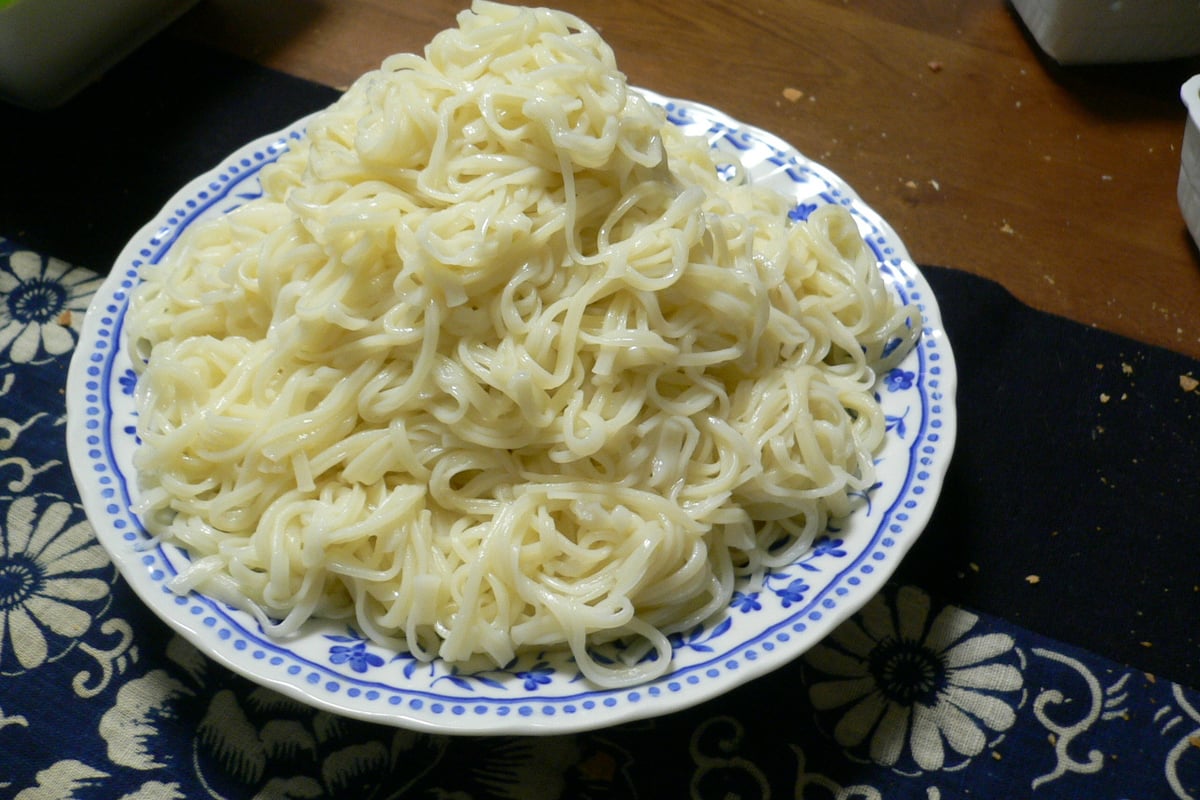
Inaniwa Udon is a hand-stretched dried udon noodle originating in the Inaniwa area of Yuzawa City, Akita Prefecture. It is made through a distinctive process in which the dough is kneaded, twisted into rope-like strands, aged, and then stretched thin by hand. The flat, ribbon-like noodles offer a smooth, slippery texture along with a firm bite. The technique is said to have been established in 1665 (Kanbun 5) in the early Edo period, and about 100 years later it was designated as an official product for the Satake family, lords of the Akita domain. It is sometimes counted, alongside Sanuki udon and Mizusawa udon, as one of Japan's 'three great udon.' Because the labor-intensive hand-stretching process limits production volume, it is also highly prized as a gift item, making it a signature noodle dish of Akita Prefecture.
Italian (Niigata-style yakisoba)
Niigata Italian
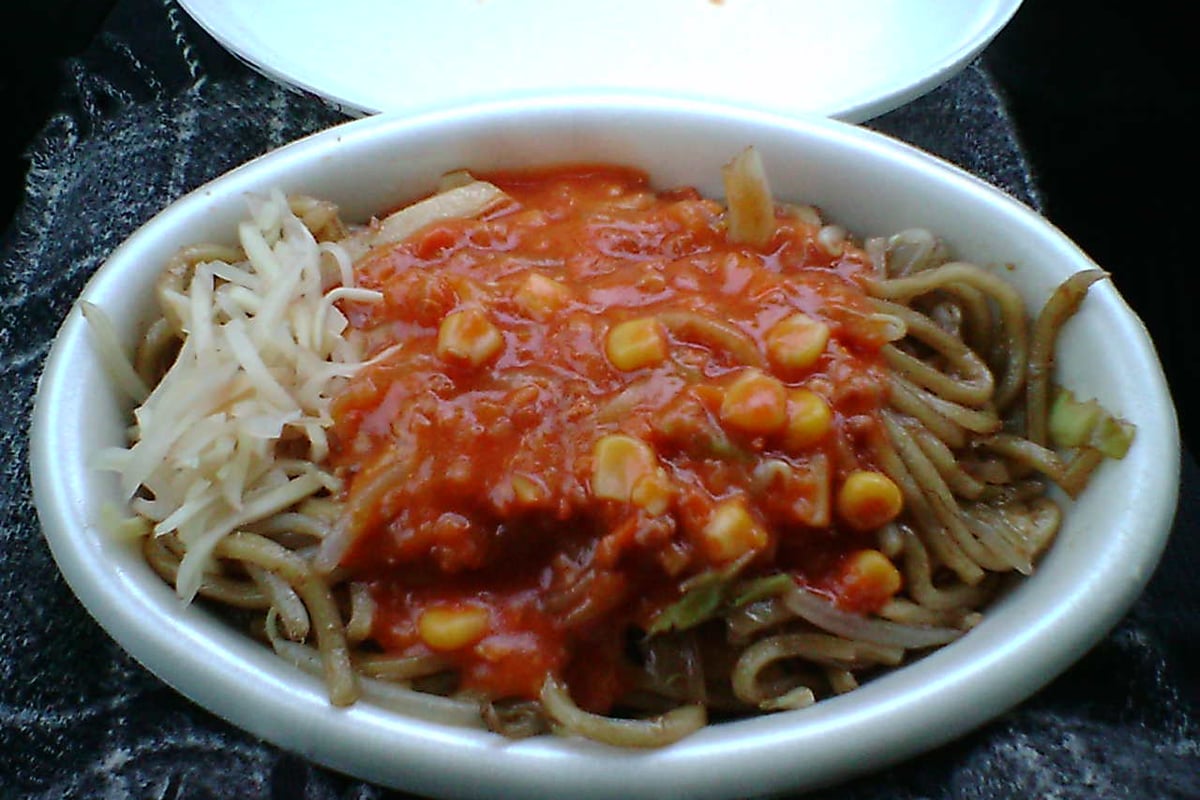
Italian is a fast food that originated in Niigata City, consisting of sauce-flavored yakisoba (stir-fried noodles) topped with tomato sauce or meat sauce. Although its name evokes Italian cuisine, it is actually a Niigata-original local specialty that gives Japanese yakisoba a Western-style twist. It is said to have been devised in 1959 by Mikazuki Haruzo (三日月晴三), the proprietor of the sweets cafe Mikazuki (三日月) in Niigata City, inspired by sauce yakisoba he had eaten in Tokyo. The name comes from borrowing the image of spaghetti and making it a dish eaten with a fork. Today, two chains are known as its leading representatives: Mikazuki, centered in Niigata City, and Friend, centered in Nagaoka City. Each has its own character in sauce, garnish, and way of eating — Mikazuki, for example, serves tomato sauce with white pickled ginger, while Friend serves meat sauce with red pickled ginger. Since it can be enjoyed casually for a few hundred yen, it has long been loved as a soul food of the people of Niigata Prefecture.
Kameyama Miso Yaki Udon
Kameyama Miso Yaki Udon
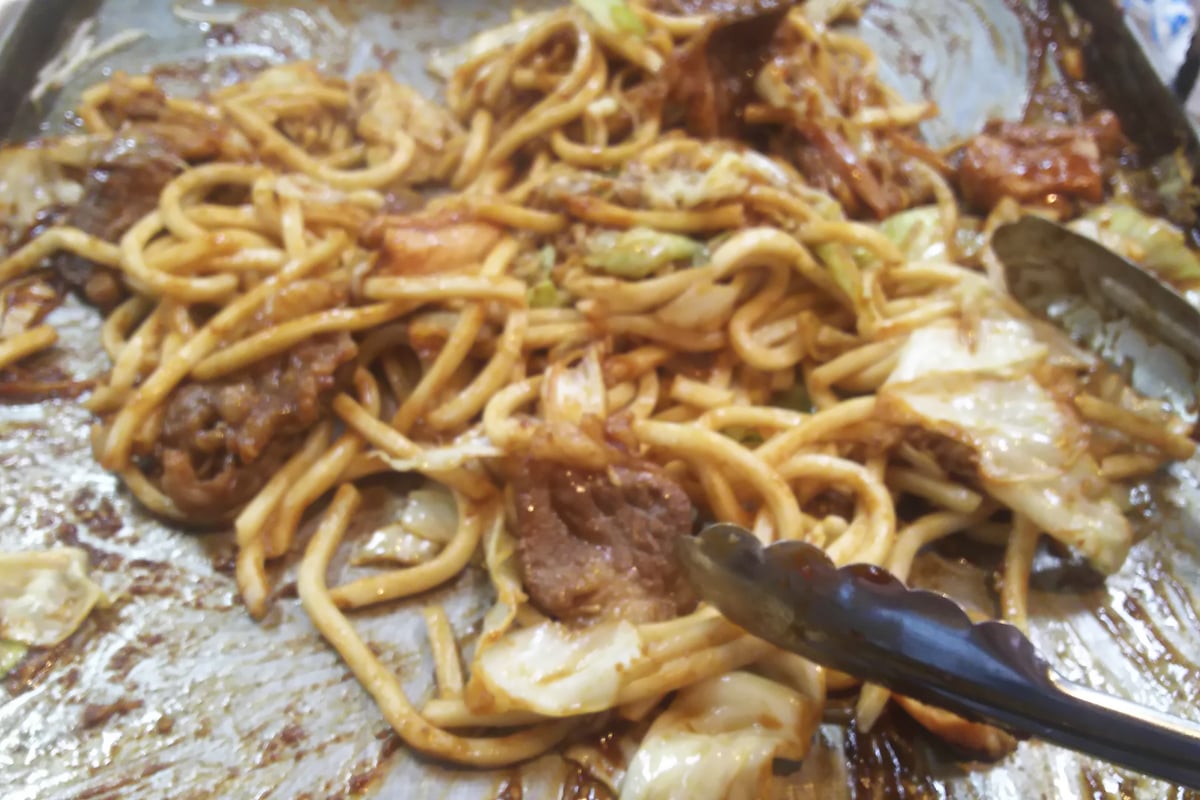
Kameyama miso yaki udon is a local specialty dish (gotochi gourmet) of Kameyama City, Mie Prefecture. Udon is cooked on an iron griddle with meat and vegetables and seasoned with a miso-based sauce. In the mid-Showa period, Kameyama had many eateries for truck drivers traveling National Route 1, and they served horumon-yaki (grilled offal) made with red miso. It is said to have begun when people fried udon in the miso sauce left on the griddle after cooking the meat. In 2008, the citizens' group Kameyama Miso Yaki Udon Honpo (亀山みそ焼きうどん本舗) was formed to revitalize the town, and the dish spread as a local specialty. At the 2011 'Central Japan & Tokai B-1 Grand Prix in Toyokawa,' it was chosen for the Gold Grand Prix, first place. It is said to be available at about 20 places in the city, including eateries and expressway parking areas (as of 2020). Its fragrant miso aroma and spicy, sweet-savory flavor are addictive, and the dish has many repeat customers. In fiscal 2024 (Reiwa 6), it was recognized as one of the Agency for Cultural Affairs' '100-Year Foods.'
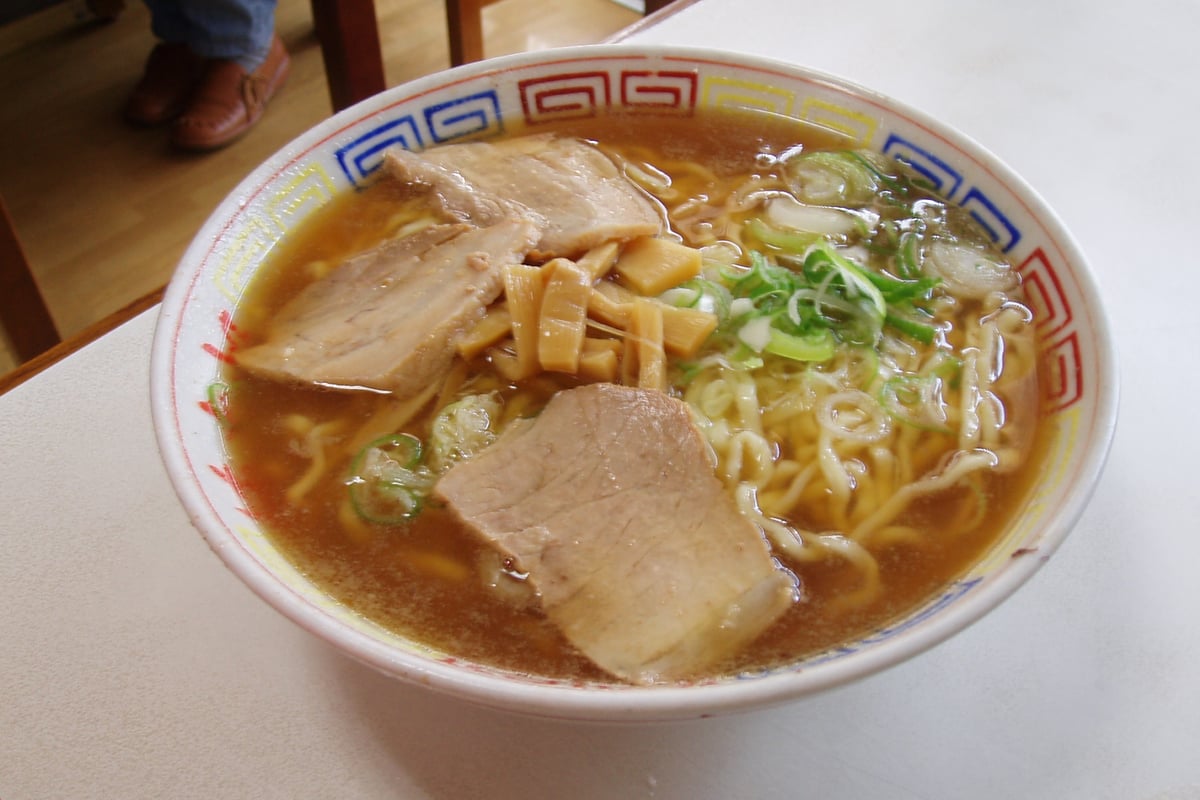
Kitakata Ramen
Kitakata Ramen
Kitakata Ramen is a local ramen that developed in Kitakata City, Fukushima Prefecture, and is sometimes counted, alongside Sapporo and Hakata, as one of Japan's Three Great Ramen. It is characterized by thick, flat, well-aged, high-hydration noodles with a strong, springy texture that pairs well with a clean pork bone and dried sardine-based soy sauce broth. Kitakata, known as a 'town of storehouses' lined with lacquerware workshops and sake breweries, has one of the highest densities of ramen shops per capita in Japan, and the custom of 'asa-ra' — eating ramen for breakfast — is deeply rooted among residents. It is said to have taken hold as a warming meal for factory workers coming off night shifts or returning from winter seasonal work, and tourists, too, can be seen visiting the city early in the morning just for asa-ra. Since gaining nationwide recognition through a television program in the late 1970s, it has continued to thrive as one of the city's leading tourism draws.
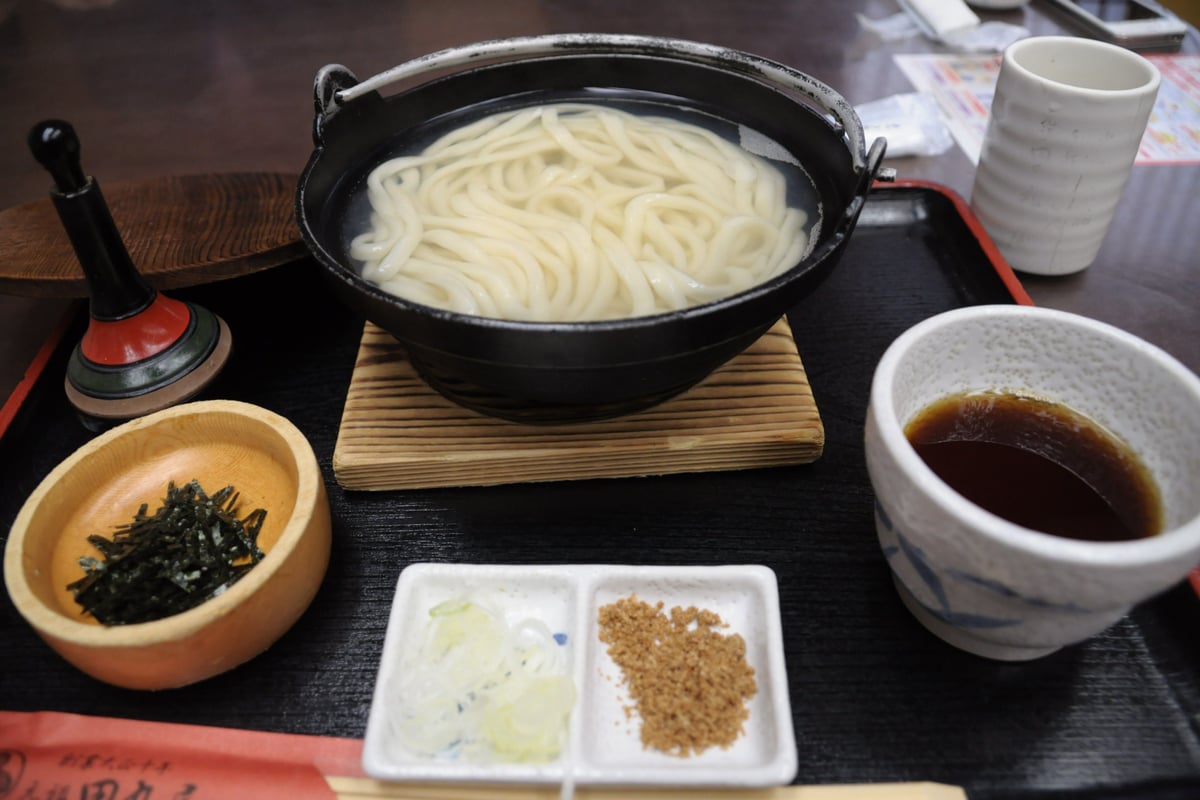
Mizusawa Udon
Mizusawa Udon
Mizusawa Udon is a firm, hand-pulled udon made around the 'Udon Kaido,' a street lined with noodle shops in front of Mizusawa-dera Temple (Mizusawa Kannon) in Ikaho, Shibukawa, Gunma Prefecture. Ranked alongside Sanuki udon and Inaniwa udon as one of Japan's three great udon, it boasts a history of more than 400 years. According to tradition, a monk named Ekan who is said to have helped found Mizusawa-dera Temple after coming to Japan in the Asuka period passed on the technique for making udon, and around 1576 the temple began serving udon made from local wheat and spring water from the Mt. Haruna range to pilgrims and visitors taking the local hot-spring cure — the beginning of what became known as a noodle named after the place. A distinctive method of repeatedly treading and resting the dough produces noodles with a strong chew and a translucent white sheen, traditionally served cold as zaru udon and enjoyed dipped in soy-based or sesame sauce.
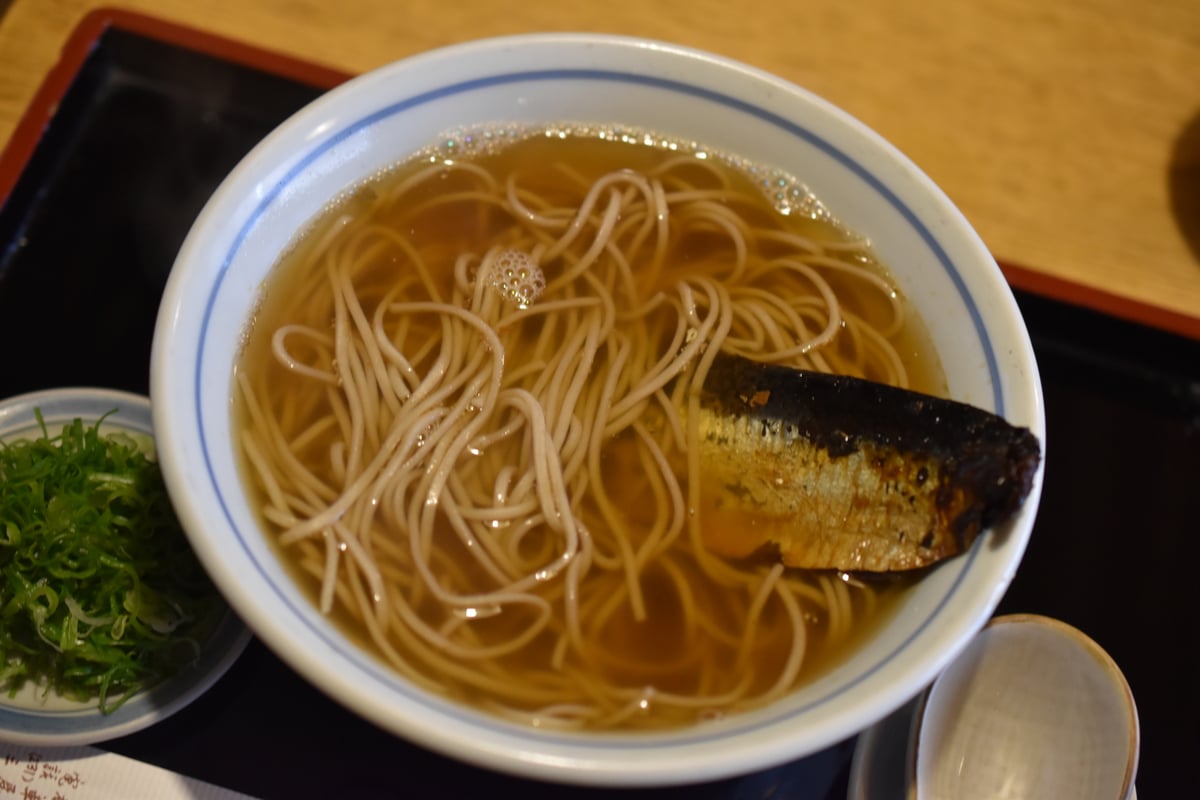
Nishin Soba (Herring Soba)
Nishin Soba
Nishin Soba is a noodle dish that originated in Kyoto, made by topping hot soba with sweet-and-savory simmered migaki-nishin (dried, filleted herring). In landlocked Kyoto, dried migaki-nishin brought from Hokkaido by kitamae-bune trading ships was prized as a valuable source of protein, and this dish was born from its combination with soba culture. It is said to have been created around 1882 (Meiji 15) by Matsuno Yosokichi, the second-generation owner of the soba shop Matsuba, founded in 1861 (Bunkyu 1), and it has been established as a Kyoto specialty ever since. Its distinctive feature is the combination of herring simmered until soft down to the bone in a kanroni-style glaze with a broth built on bonito and kelp dashi, and it is also widely known as a tourist specialty of Kyoto.

Toji Soba (Soba Dipped in Hot Pot Broth)
Toji Soba
Toji Soba is a local soba dish handed down in Nagawa, Matsumoto City, Nagano Prefecture (formerly Nagawa Village), and it is also written with the characters 投汁そば. A single mouthful of soba is placed in a small 'toji-kago,' a basket woven from bamboo, then dipped in broth simmering in a pot to warm it before eating. Seasonal vegetables, mountain vegetables, mushrooms, chicken, and other ingredients are added to the broth and served into bowls together with the soba. Nagawa is a mountain area at an elevation of about 1,200 m along the Nomugi Kaido road, which runs from Matsumoto toward Hida. The large difference between day and night temperatures suits the cultivation of buckwheat, and it is said that in the past soba, rather than rice, was the staple food. It was a dish that families ate gathered around an iron pot hung over the irori (sunken hearth), and it was also indispensable for entertaining on festive occasions, such as ceremonial occasions like weddings and funerals. It is eaten mainly in Nagawa and also in parts of the Kiso region.
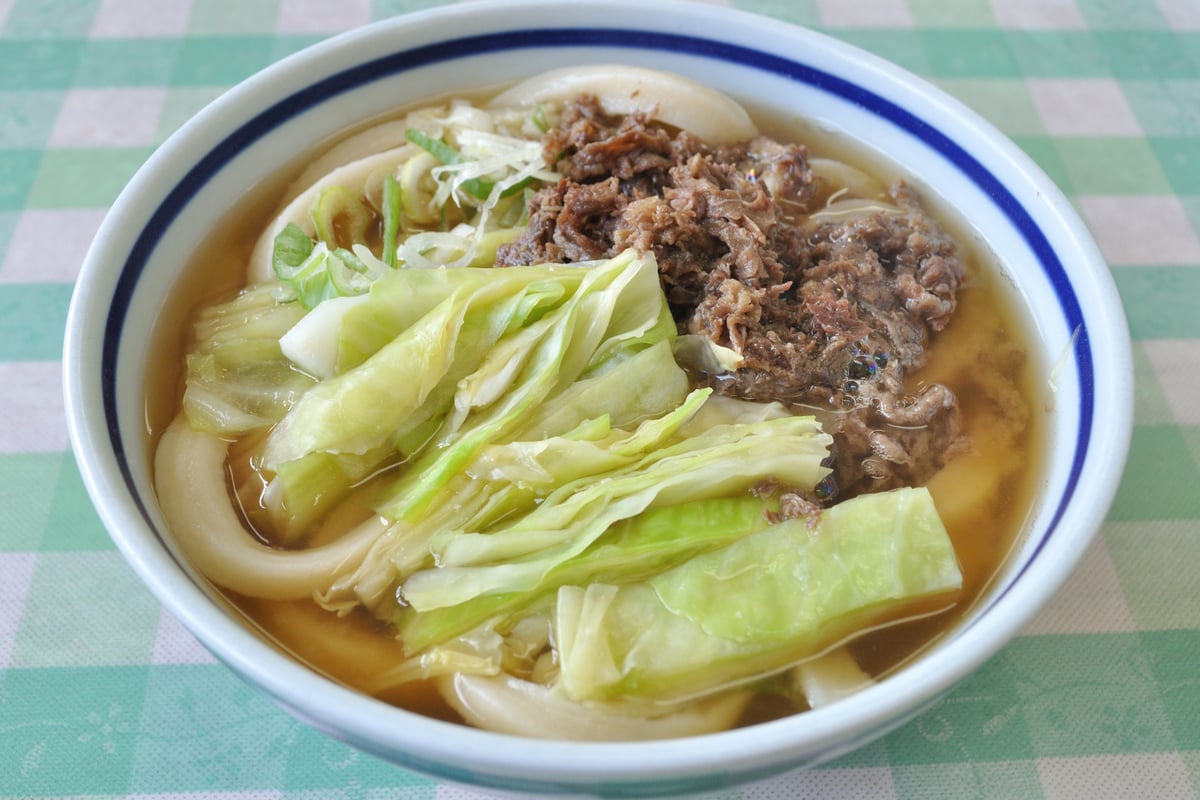
Yoshida Udon
Yoshida Udon
Yoshida Udon is a hard, very firm udon eaten in the Gunnai region centered on Fujiyoshida City. Thick, handmade noodles are eaten in a broth made by combining miso and soy sauce with dashi from niboshi (dried sardines) and other ingredients. The standard toppings are boiled cabbage and horse meat simmered in a sweet and savory sauce. As a condiment, 'suridane' is used, a mixture of red chili pepper with sesame, sansho pepper, and other ingredients. The northern foot of Mt. Fuji is high in elevation and cool, and its volcanic-ash soil made it unsuitable for rice cultivation. For this reason, a flour-based diet (funshoku) using wheat and other grains took root. In the early Showa period, the textile industry flourished, and it is said that men made the udon for lunch in place of the women who were weaving. Their powerful kneading is said to have led to its distinctive chewiness. In 2007 it was selected as one of the '100 Selected Local Dishes of Farming, Mountain and Fishing Villages.' There are about 50 specialty shops in the city, and they are also characterized by storefronts that look like private homes and by opening only at lunchtime.
Fujinomiya Yakisoba
Fujinomiya Yakisoba
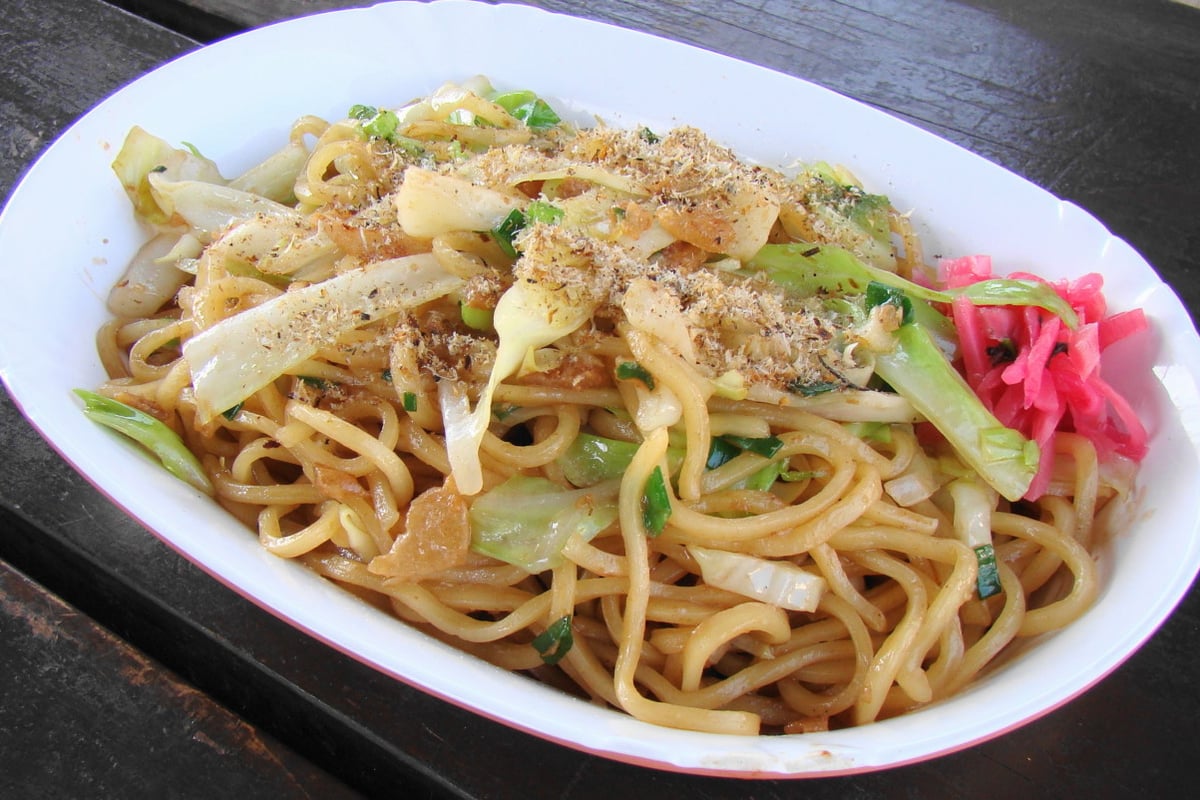
Fujinomiya Yakisoba is a local style of yakisoba enjoyed in Fujinomiya City, Shizuoka Prefecture. It uses firm, chewy steamed noodles made by designated noodle makers in the city, with 'nikukasu' (pork cracklings left after rendering lard) added as an ingredient. A distinctive finishing touch is a sprinkle of shaved sardine or mackerel flakes (dashi-ko). The unique steamed noodles are said to have been born during the postwar food shortage, in the course of efforts to recreate the rice noodles (bifun) eaten on the battlefield. In 2000 (Heisei 12), volunteer citizens launched the Fujinomiya Yakisoba Society and began revitalizing the town through yakisoba. Its unique, pun-filled promotional activities made it known nationwide, and it won the grand prize at the B-1 Grand Prix two years in a row, in 2006 and 2007. Fujinomiya is the shrine town of Fujisan Hongu Sengen Taisha, and the city is said to have around 150 establishments serving yakisoba. It is an everyday taste for local residents and, at the same time, a dish that tourists come specifically to try.
Mimi (Winnow-Shaped Flour Dumplings)
Mimi
Mimi is a local dish handed down in the Jikkoku district of Fujikawa Town, Yamanashi Prefecture. Wheat flour is kneaded, rolled out thin, and cut into squares about 5 cm on each side. Two corners on one side are pressed together to make a triangle, and the piece is shaped like a 'mi,' a winnowing basket used as a farm tool. These are simmered in niboshi (dried sardine) dashi together with vegetables such as daikon radish, taro, and burdock, and seasoned with miso. The dough is similar to that of Hoto (Flat Noodles Simmered in Miso), but the shape is completely different, and no pre-boiling is needed. The name is said to come from its resemblance to the shape of a mi, and there is also a theory that it is because it resembles an ear (mimi). The mi carries the meaning of 'scooping up good fortune,' and it is also said that 'fukumi' (lucky winnow) changed into 'mimi.' As an auspicious dish, in Jikkoku it is still offered to Toshigami-sama (the deity of the New Year) on the morning of New Year's Day before the family eats it. Mimi-making experiences are also available at a local facility.
Romen (Ina Mutton Noodles)
Romen (Ina Romen)
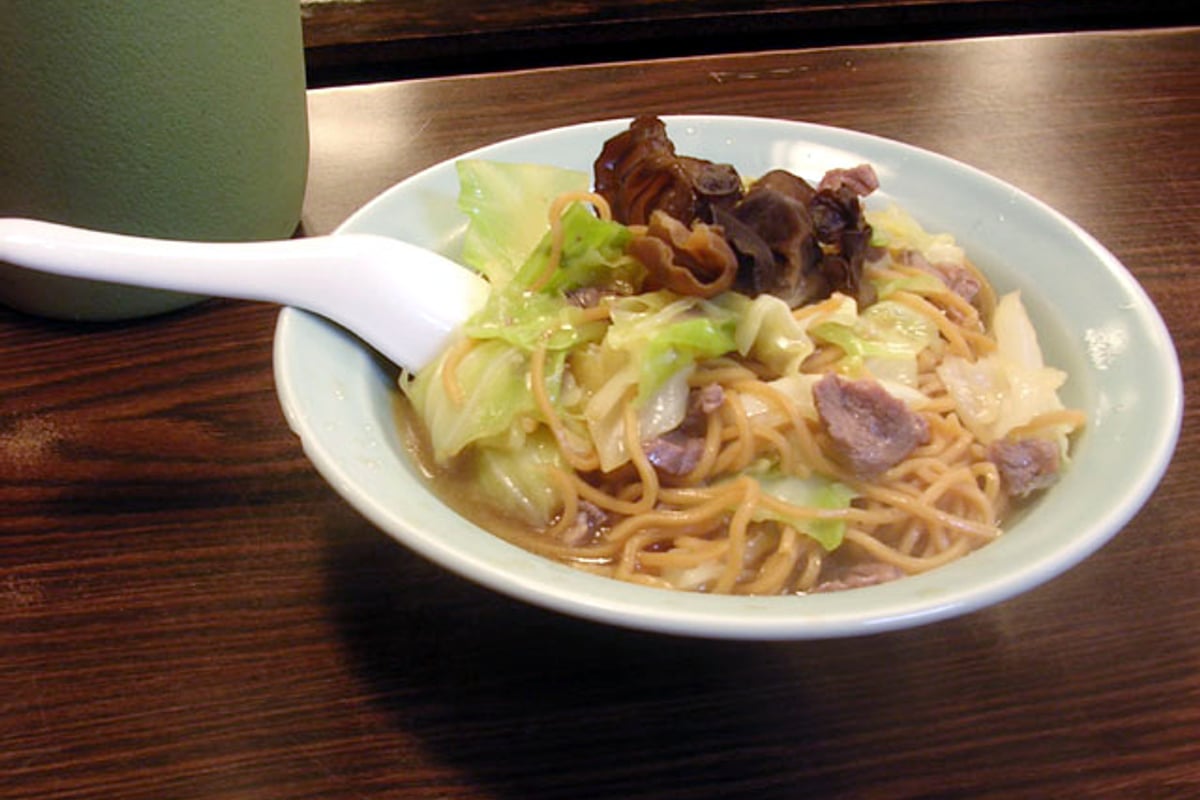
Romen is a noodle dish born in Ina City, Nagano Prefecture, made with steamed Chinese-style noodles, mutton (sheep meat), and cabbage. It was devised in 1955 (Showa 30) by Ito Waichi, the owner of 'Banri' (萬里), a Chinese restaurant in Ina City. It is said to have begun with steaming the noodles to make them keep longer at a time when refrigerators were not yet widespread. It is described as 'neither ramen nor yakisoba,' and there are soup versions in which the noodles are immersed in broth as well as soupless versions in the style of yakisoba. Another characteristic is that diners pour sauce, vinegar, sesame oil, and other condiments from the table over it to finish it to their own taste. About 90 restaurants in and around Ina City serve it, and it also appears in school lunches. It is a soul food that has long been loved by local people.
Katsuura Tantanmen
Katsuura Tantanmen
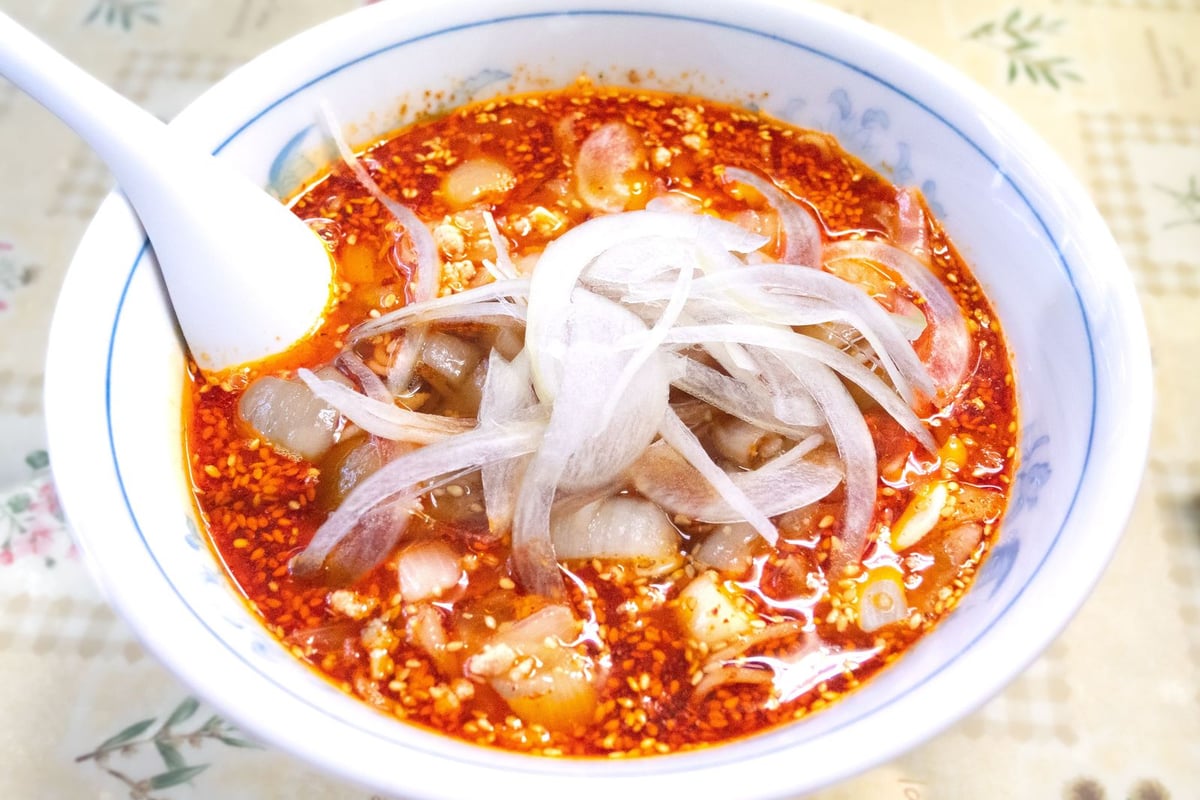
Katsuura Tantanmen is a local ramen dish originating in Katsuura City, Chiba Prefecture, featuring a soy sauce-based broth generously spiced with chili oil for a bold balance of heat and umami. Unlike typical tantanmen, which uses a sesame-based sauce or a milky white broth, Katsuura Tantanmen is distinguished by its soy sauce base. Minced onion and ground meat are stir-fried and blended into the broth, creating a flavor where richness and spiciness come together in harmony. It is said to have originated when local eateries began serving the dish to warm the bodies of fishermen and ama divers chilled from working offshore, with the diner Ezawa, founded in 1954, known as the original shop. In 2011, a citizens' group began promotional activities, and the dish's fame spread nationwide after winning the B-1 Grand Prix in 2015. As of November 2023, 40 shops both inside and outside the prefecture are certified as official participating shops.
Kitsune Udon
Kitsune Udon
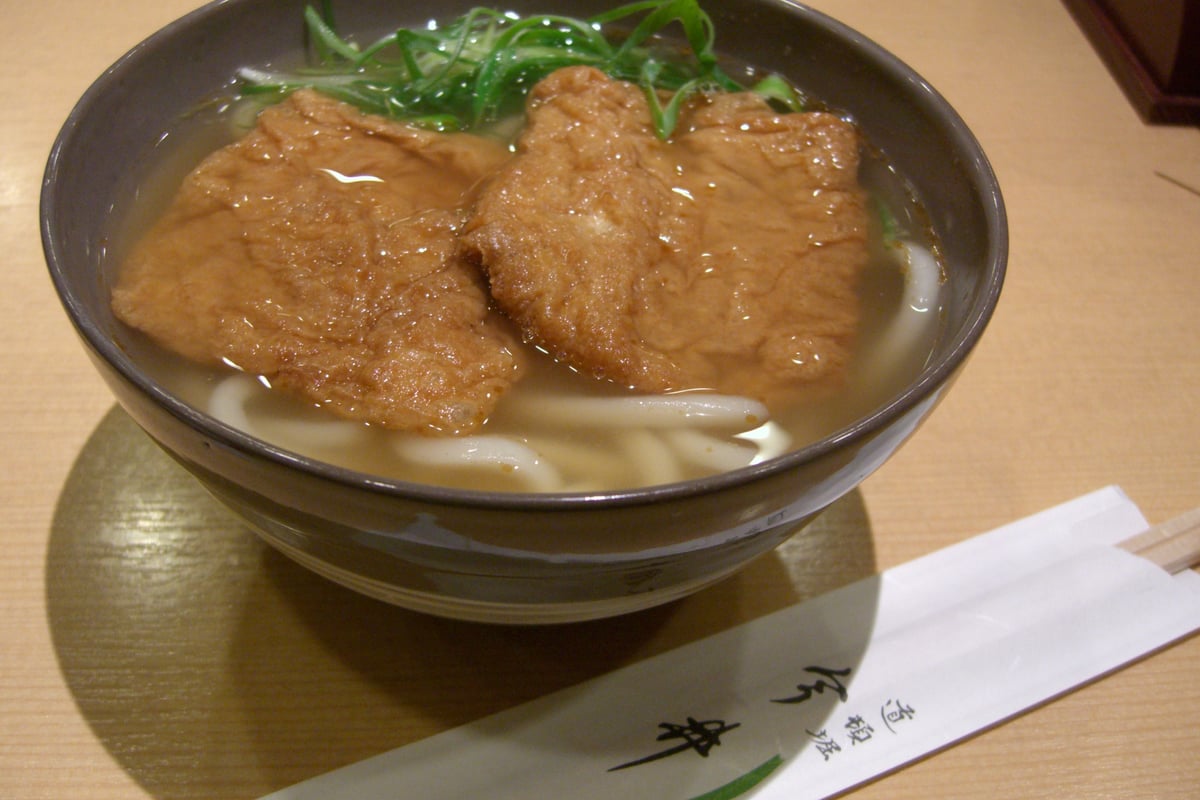
Kitsune udon is a dish of udon in a broth made from kombu and dried fish (fushi), topped with aburaage (deep-fried tofu) simmered in a sweet and savory seasoning. It is said to have been born in Osaka and is also said to be the udon most loved by the people of Osaka Prefecture. Osaka udon is said to be characterized by soft, chewy noodles that are not too thick and blend well with the dashi. In Osaka, once called 'the nation's kitchen' (Tenka no Daidokoro), kombu from Hokkaido was brought in by Kitamaebune trading ships, and a food culture that values dashi developed. Kitsune udon is said to have started at Matsubaya (松葉家, now Usami-tei Matsubaya), an udon shop that opened in Senba in 1893 (Meiji 26). It is said that when the founder, 宇佐美要太郎, served aburaage meant for inari sushi alongside plain udon (su-udon), customers put it on their udon and ate it, and this became the start. The name comes from the belief that aburaage is a favorite food of foxes (kitsune). In the Kansai region, there is also a distinctive naming culture, such as calling soba topped with aburaage 'tanuki.'
Miso Nikomi Udon (Miso-Simmered Udon Hot Pot)
Miso Nikomi Udon
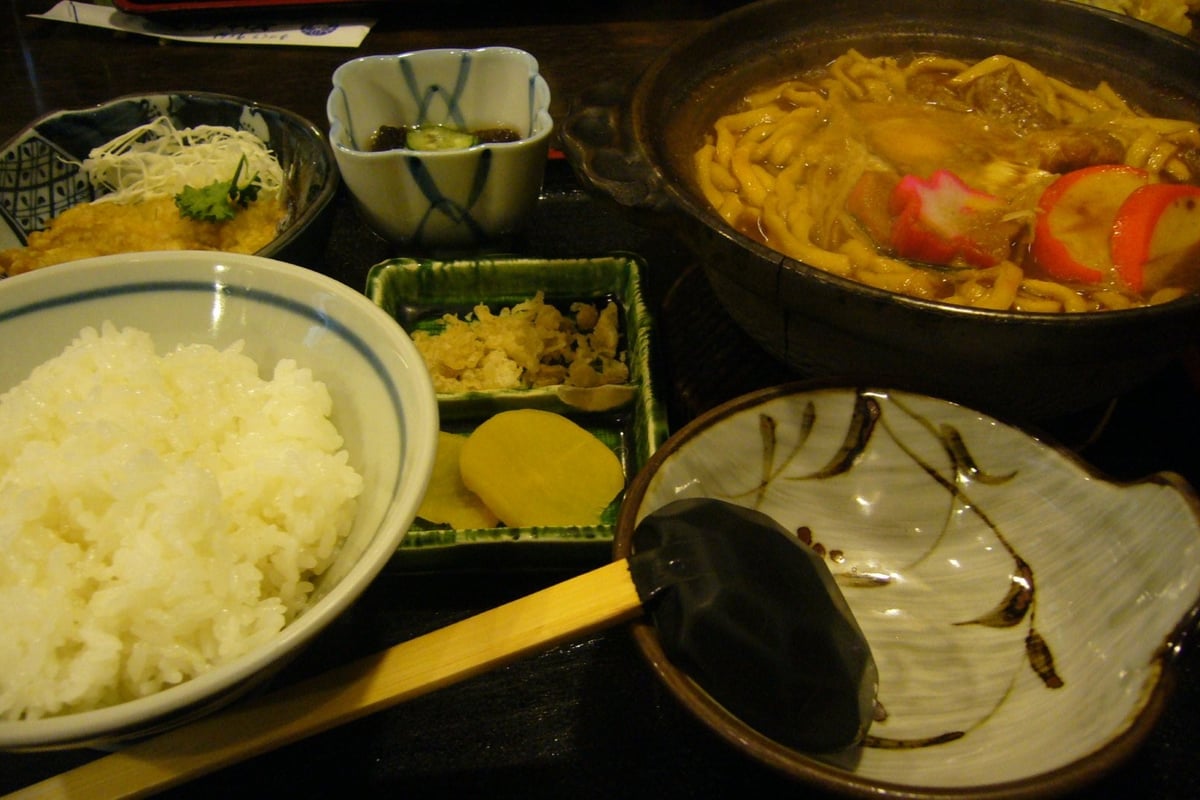
Miso Nikomi Udon is a Nagoya specialty in which thick, firm udon noodles are simmered bubbling hot in a single-serving earthenware pot filled with a rich miso broth made from bonito dashi and Hatcho miso. Because the raw noodles are made only from flour and water, with no salt, and go into the pot without being pre-boiled, they keep a notably firm, chewy bite even after simmering; chicken, fried tofu, kamaboko fish cake, egg, and green onion are typically added as toppings. Building on the simple miso-based udon dishes found across Japan since the Edo period, Yamamotoya, founded in Osu, Nagoya, is said to have established the current style of simmering a single serving per earthenware pot during the Taisho era (1912-1926). Today the shop's lineage has split into two separate businesses, Yamamotoya Sohonke and Yamamotoya Honten, both cherished as leading specialists in Nagoya-style miso nikomi udon.
Shirakawa Ramen
Shirakawa Ramen
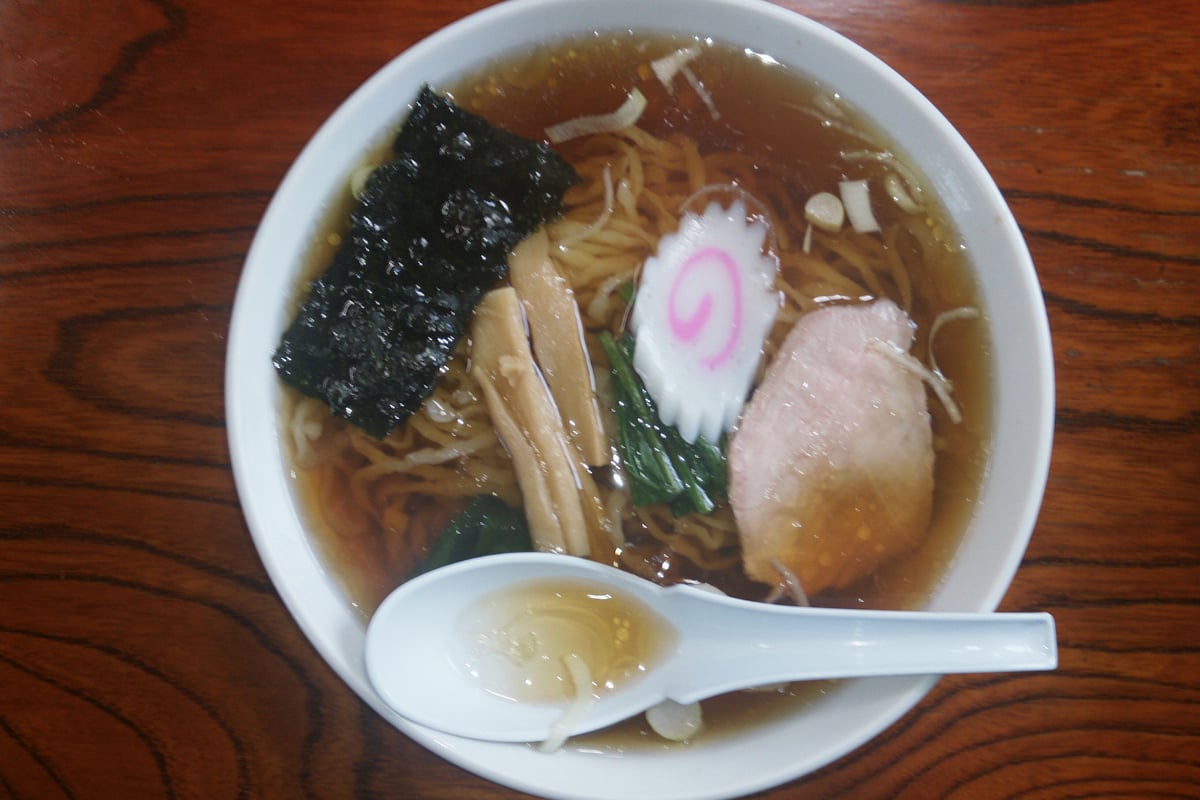
Shirakawa Ramen is a local ramen that developed mainly in Shirakawa City, Fukushima Prefecture. It is characterized by irregular, hand-pulled curly noodles and a clean soy sauce broth based mainly on chicken and pork bone. Many shops carry on the 'aodake-uchi' technique, in which craftsmen stretch the dough using a green bamboo pole, producing noodles with a strong, springy texture and a distinctive bite that pairs well with the carefully simmered, clear broth. Shirakawa, which prospered as a post town on the Oshu Kaido highway, is still home to many family-run food stalls carrying on a lineage of hand-pulled noodles dating back to the Taisho era, each preserving its own method and blend, drawing tourists who enjoy visiting several shops to compare. In recent years, young local craftsmen have carried on the tradition, with some opening apprentice shops in the greater Tokyo area.
Takayama Ramen
Takayama Ramen
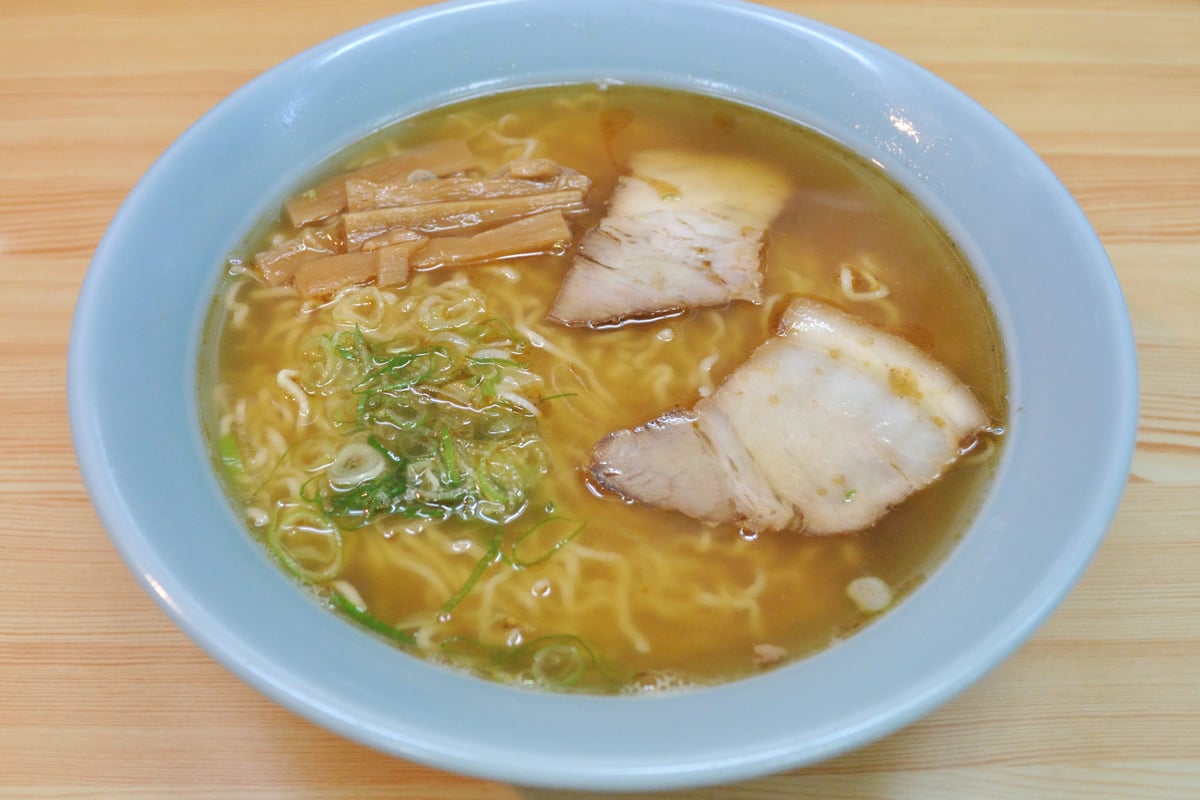
Takayama Ramen is a local ramen dish long cherished by residents of Takayama City, Gifu Prefecture, as 'Chuka Soba.' It combines a light soy sauce-based broth with medium-thin curly noodles, and its toppings follow a simple formula: sliced roast pork (chashu), bamboo shoots (menma), and chopped green onion. It is said to have begun in 1938, when the food stall 'Masago Soba' started selling Chinese-style noodles, and after the war, numerous similar stalls sprang up, creating a lively scene. In the 1955-1964 period, these stalls gradually transitioned into permanent shops, and today Takayama City is said to be home to more than 100 Chuka Soba restaurants. The dish is so deeply woven into local life that saying simply 'soba' is understood to mean Chuka Soba, and some households even eat it on New Year's Eve. The name 'Takayama Ramen' is mainly used by tourists, while local shop curtains display the words 'Chuka Soba.'
Kazo Udon
Kazo Udon
Kazo udon is hand-made udon produced in and around Kazo City, Saitama Prefecture, also known as 'Kazo's hand-made udon.' Its history is said to date back to the mid-Edo period, when it was first served to welcome worshippers in front of Sogan-ji Temple, home to the Fudogaoka Fudoson, one of the three great Fudo temples of the Kanto region. Specialty udon shops are believed to have appeared in Kazo about 200 years ago, and records remain of Okamuraya running a hand-made udon shop in front of the temple. The noodles are known for their strong chewiness and smooth texture, and sesame-based dipping sauce is often used; the custom of serving udon to close out celebrations and funerals remains alive today. Kazo City promotes itself as the 'hometown of udon,' and many hand-made udon shops line its streets.
Kishimen (Flat Udon Noodles)
Kishimen
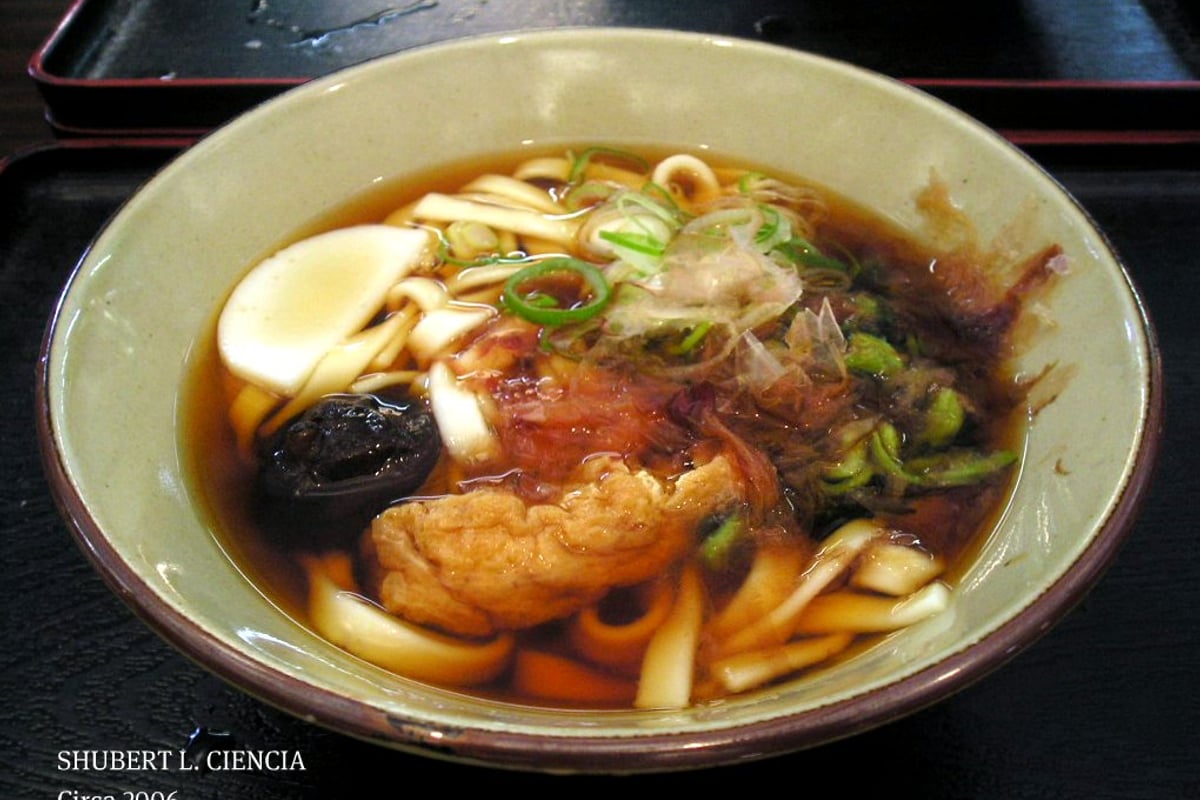
Kishimen is a Nagoya specialty of flat udon noodles, about 7-8mm wide and roughly 1mm thick, served in a soy-sauce-based broth flavored with bonito, topped with fried tofu, kamaboko fish cake, greens, and bonito flakes. A poem referencing kishimen already appears in the 1728 haiku collection Futae-bukuro, showing that it was enjoyed by ordinary people by at least the early 18th century. Several theories explain the origin of the name, including that it comes from kijimen, noodles shaped like go stones and eaten with roasted soybean flour, or from kijimen, a udon dish with pheasant meat once favored by the lords of Owari. Making the noodles flat is also said to have shortened boiling time and saved fuel, and kishimen is still widely served today at specialty shops around Nagoya Station and Atsuta Shrine.
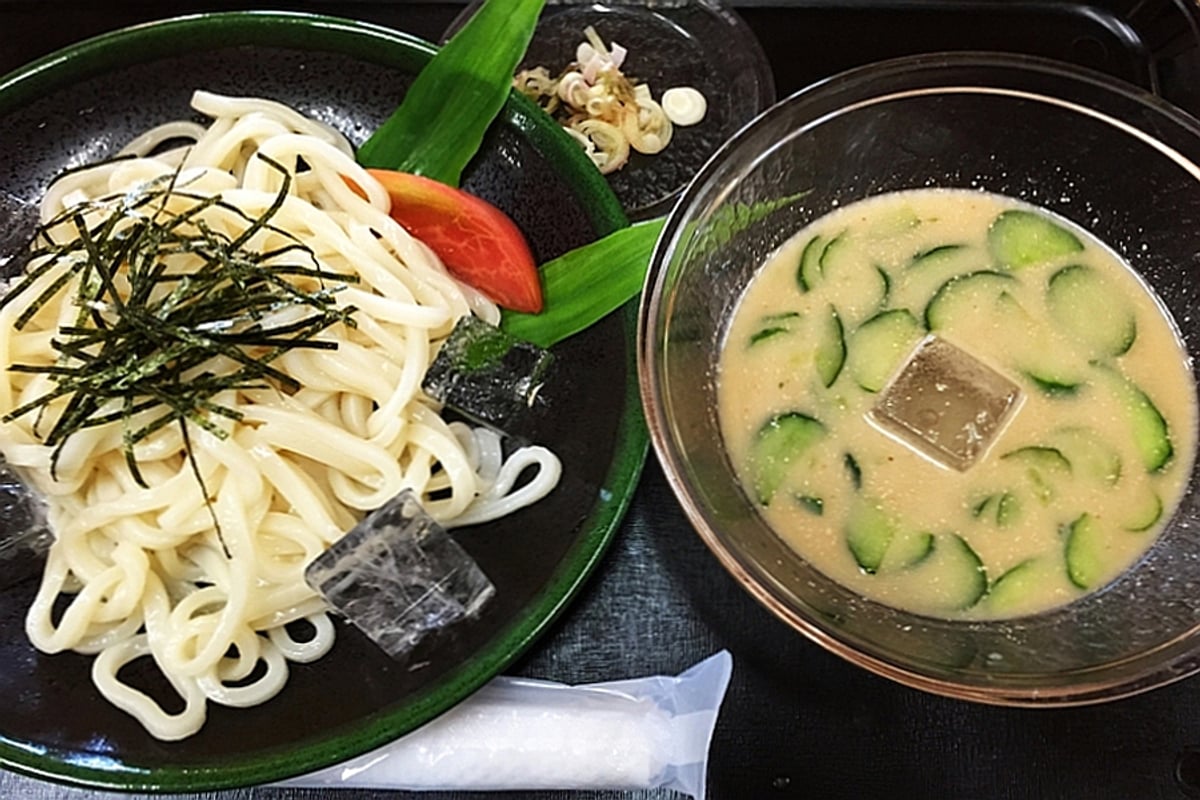
Hiyajiru Udon (Suttate)
Hiyajiru Udon (Suttate)
Hiyajiru udon is a local specialty of Saitama Prefecture in which udon noodles are dipped into a cold sauce made by grinding sesame and miso together in a mortar, then thinning it with cold water and adding summer vegetables such as cucumber, shiso, and myoga ginger. It is also called 'suttate,' a name derived from eating the sauce freshly ground ('suritate'), and has long been enjoyed in the rice-farming areas of the prefecture, centered on Kawajima in Hiki District, as well as Omiya, Kawagoe, and Kazo. Saitama developed its own distinctive 'udon culture' from growing wheat as a secondary crop after rice, and suttate evolved within that tradition as a wise dish that let farmers quickly restore their energy during the hot, busy farming season. The cold dipping sauce, combining the fragrance of sesame, the richness of miso, and the freshness of the garnish vegetables, goes down easily even when summer heat dulls the appetite, and each household has its own blend of ingredients and garnishes. In recent years it has drawn attention as a local 'B-kyu gourmet' dish, and a growing number of restaurants in Kawajima serve it as 'Kawajima Suttate.'
Okuzukake (Thickened Vegetable Soup with Noodles)
Okuzukake
Okuzukake is a Buddhist vegetarian dish traditionally made around the spring and autumn equinoxes, Obon, and memorial services in Sendai City and the southern Miyagi (Sennan) region. Burdock root, carrot, taro, dried shiitake mushrooms, fried tofu, tofu, and mamefu (bean-flour gluten dumplings) are simmered together with other vegetables and dried ingredients in a broth, Shiroishi umen noodles — a specialty of the Shiroishi area — are added, and the whole dish is finished with a thickened consistency. The name comes from the fact that the broth was once thickened with kuzuko, starch extracted from the roots of wild kudzu vines growing in the mountains and fields; today potato starch is commonly used instead. It is also said to have been modeled on the Zen Buddhist fucha-ryori dish 'unpen,' and traditionally contains no meat or fish, though many households add katsuo dashi or chicken as their own variation. When relatives gather for the equinoxes or Obon, it has developed as a dish offered before the family Buddhist altar alongside zunda mochi and ohagi, and served to entertain guests. Handed down across generations as a taste of 'mother's cooking,' it remains part of everyday life on tables across southern Miyagi today.
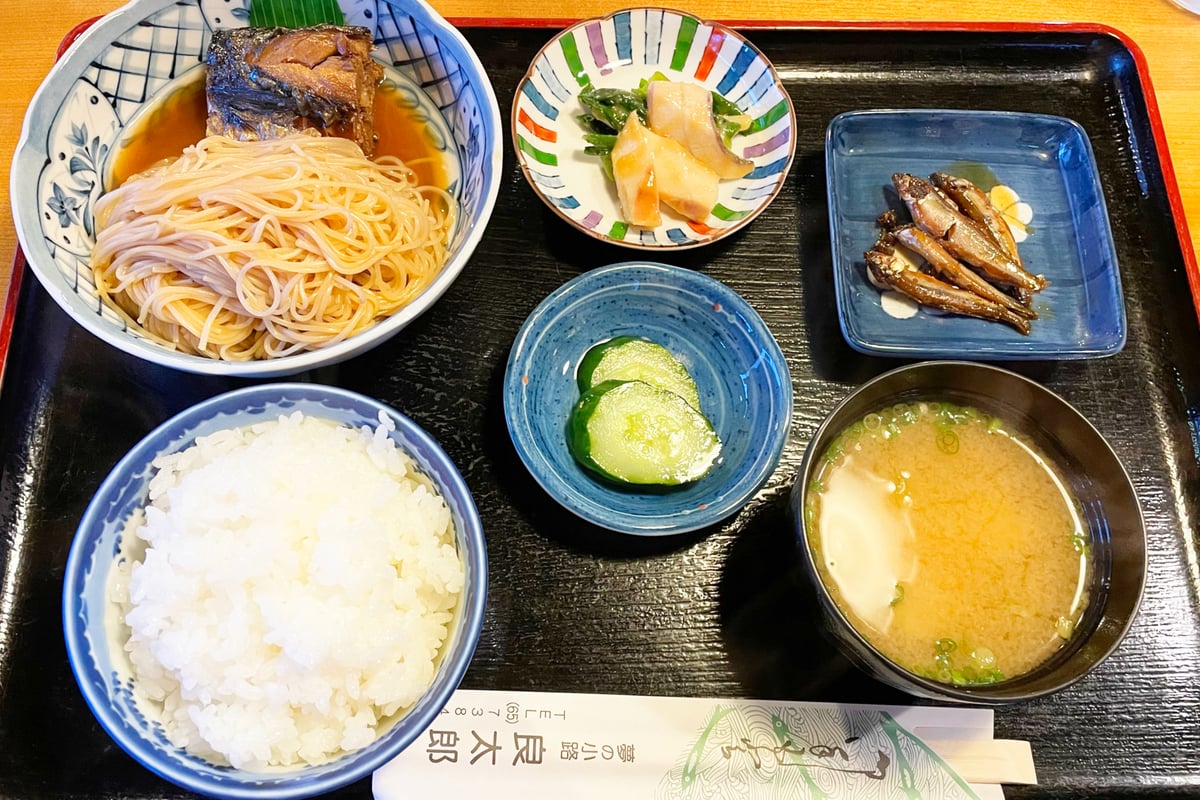
Saba-somen (Mackerel Somen Noodles)
Saba-somen
Saba-somen is a local dish from the Kohoku region of Shiga Prefecture (around Nagahama City) made by simmering sweet-and-savory grilled mackerel together with somen noodles; it is also called 'yaki-saba somen' (grilled mackerel somen). Although Kohoku is an inland region, it lies relatively close to Wakasa Bay, a mackerel-producing area, and grilled mackerel and narezushi carried in from Wakasa have long been familiar ingredients there. The dish is said to originate from the custom of 'satsuki-mimai,' in which families would send grilled mackerel to daughters who had married into farming households to look after them during the busy May farming season, and it became cherished as a dish that could be prepared quickly even during hectic times. It has also been served as a feast dish for celebrations and ceremonial occasions, such as the Nagahama Hikiyama Festival at Nagahama Hachimangu Shrine, and remains beloved today as a soul food representing the Kohoku region.
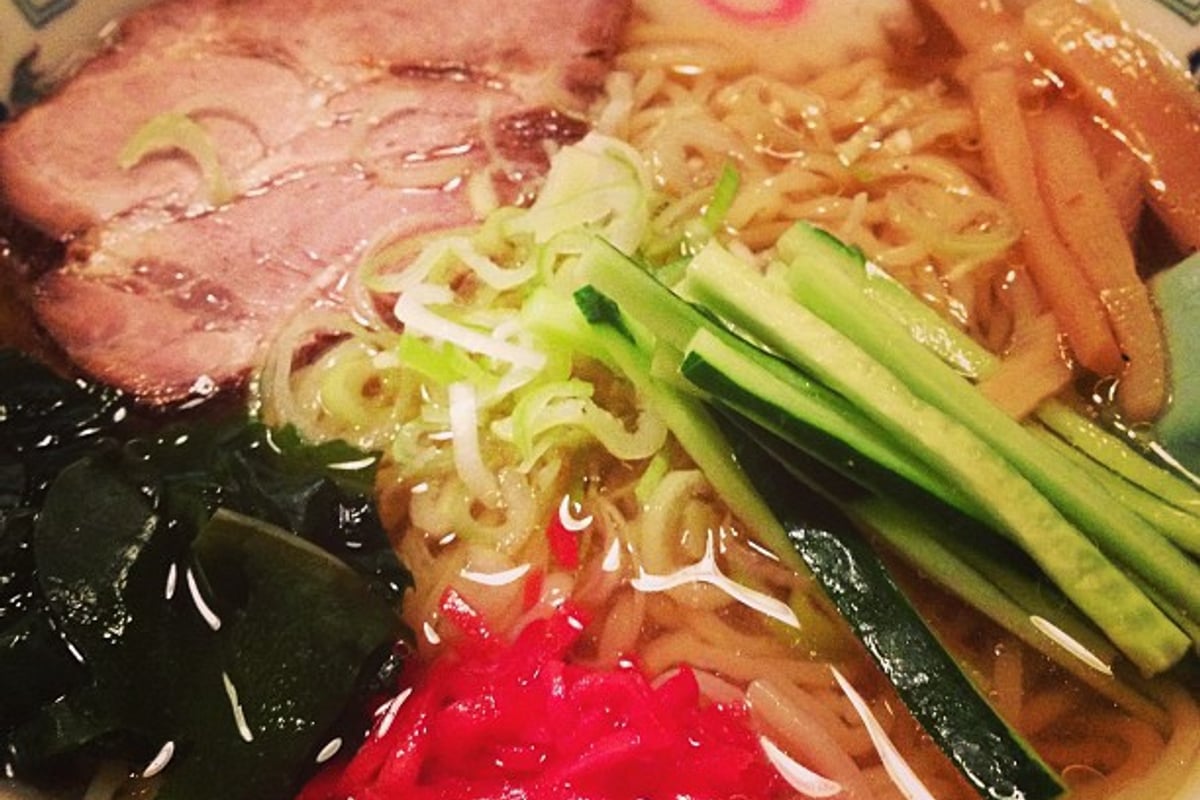
Yamagata Hiyashi Ramen (Cold Ramen)
Yamagata Hiyashi Ramen (Cold Ramen)
Yamagata Hiyashi Ramen, said to have originated in Yamagata City, is Chinese-style noodles served in a chilled soup with cooled Chinese-style noodles. Around 1952, a regular customer at 'Sakaeya Honten,' a Chinese noodle shop in Yamagata City, reportedly asked, 'If cold soba exists, why can't there be cold Chinese noodles?' The dish is said to have originated when the shop's first-generation owner, Abe Senshiro, devised it through trial and error in response. The dish pairs a soup chilled with floating ice and other methods with springy, medium-thick noodles and toppings, and has become a beloved summer staple both within and beyond the prefecture. Today, in addition to Sakaeya Honten, many ramen shops in and around Yamagata City serve their own versions of cold ramen, and it is known as one of Yamagata's representative local dishes.
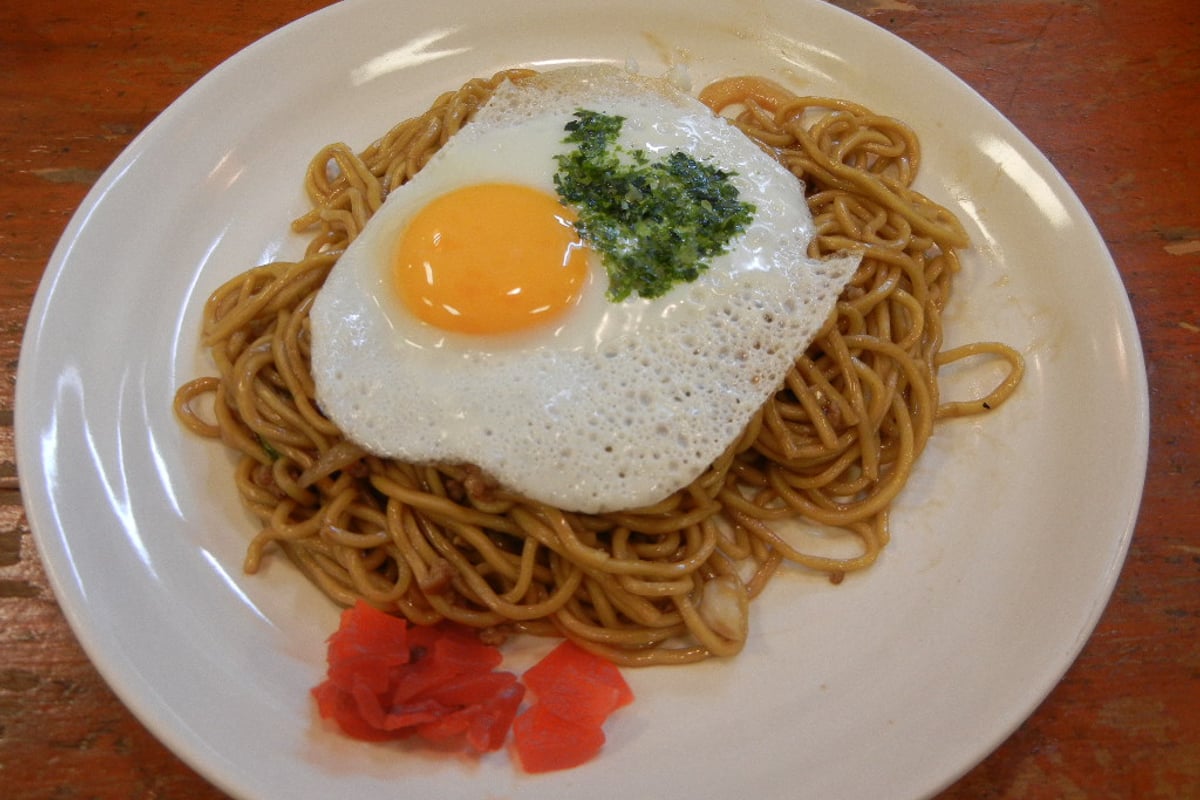
Yokote Yakisoba
Yokote Yakisoba
Yokote Yakisoba is a local-style yakisoba (fried noodles) dish that originated in Yokote City, Akita Prefecture. Its defining features are thick, boiled square noodles stir-fried with ground meat and chopped red pickled ginger in a slightly sweet Worcestershire-style sauce, finished with a soft-yolk fried egg and fukujinzuke (sweet pickled relish) on top. It is said to have been born just after the end of World War II, when a stall owner running an okonomiyaki cart in Yokote City sought to create a new menu item, and through trial and error with a local noodle maker, the noodles took their present form around 1953 (Showa 28). Its ease of preparation and delicious taste made it spread quickly, and at its peak, the city is said to have had around 100 yakisoba shops. In 2001 (Heisei 13), the 'Yokote Yakisoba Noren-kai' association was formed, and efforts to promote the dish nationwide and revitalize the local community continue to this day.
Shiroishi Umen (Oil-Free Noodles)
Shiroishi Umen
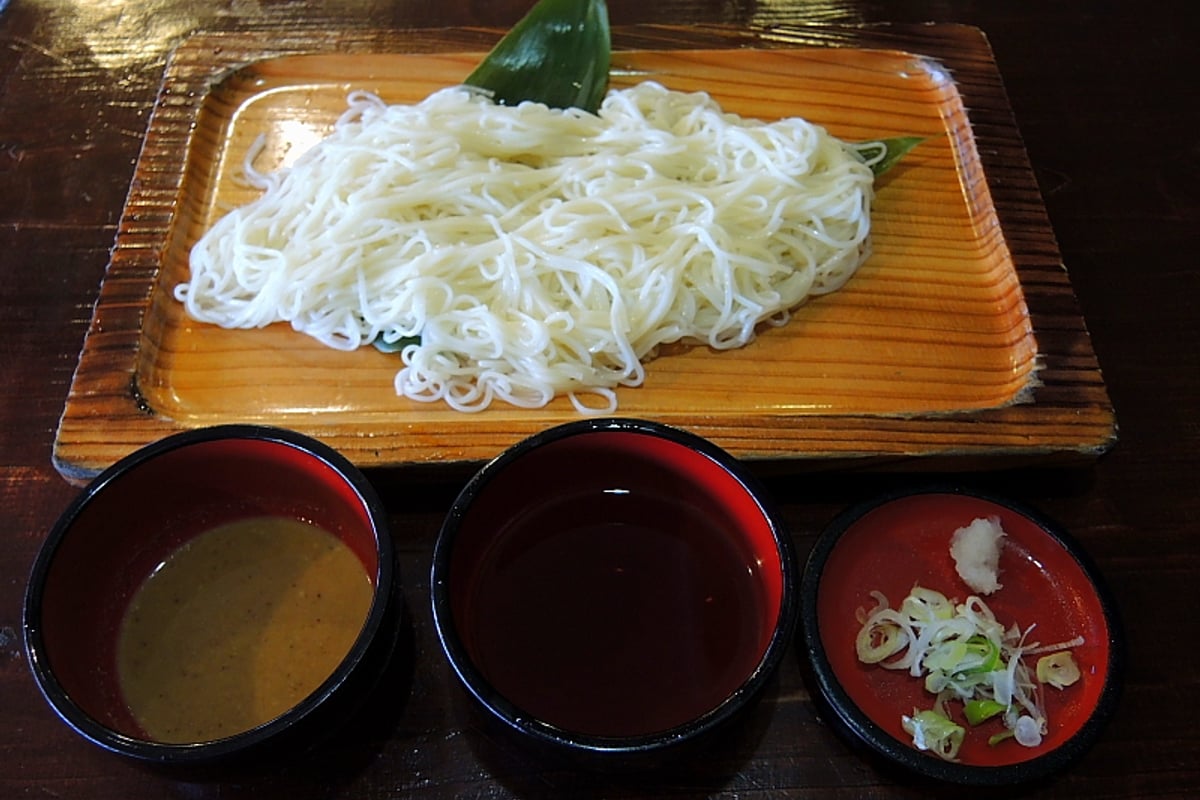
Shiroishi umen (oil-free noodles) is a type of thin wheat noodle that has been made around Shiroishi City, Miyagi Prefecture, since the early Edo period, roughly 400 years ago, distinguished by a manufacturing method that uses no oil at all. The most widely told origin story is one of filial devotion: Suzuki Asaemon, who lived in the castle town of Shiroishi, worried about his father, who was suffering from a stomach ailment and could barely eat. Having learned from a traveling monk of a way to make noodles without oil, he prepared them, warmed them, and fed them to his father, and it is said that his father's condition improved. When Katakura Kojuro, the lord of Shiroishi Castle, heard this story, he is said to have named the noodles 'unmen' (umen), meaning 'warm noodles,' in honor of Asaemon's devotion to his father, and to have allowed Asaemon to take the name 'Miemon.' Because no oil is used, the noodles are considered gentle on the stomach and easy to digest, and they are also cut somewhat shorter than ordinary somen, to about 9 cm. Passed down for more than 400 years as a local industry of Shiroishi, and designated as a production area by the National Federation of Dried Noodle Cooperative Associations, it is a dried noodle representative of Miyagi Prefecture.
Chitake Soba
Chitake Soba
Chitake Soba is a local dish from the flatlands of Tochigi Prefecture, in which cold soba noodles are dipped in a broth made from chitake (milk-cap) mushrooms. Chitake mushrooms are known for releasing a milky white liquid when torn open, and they appear in markets ahead of the autumn mushroom season, from early August around the Obon holiday. When stir-fried with eggplant and then simmered in water, they produce a broth with a richness and aroma rivaling matsutake, and dipping cold soba into this broth is the classic way to eat it. The dish is said to have already been enjoyed in the Edo period, centered on Kanuma City, known as a soba-producing area, and it remains a summer tradition served today at both specialty shops and home tables. In recent years, changes to the satoyama environment have reduced the harvest and distribution of chitake mushrooms themselves, making this dish an increasingly treasured, rare flavor that can only be enjoyed during its short season.
Daimon Somen
Daimon Somen
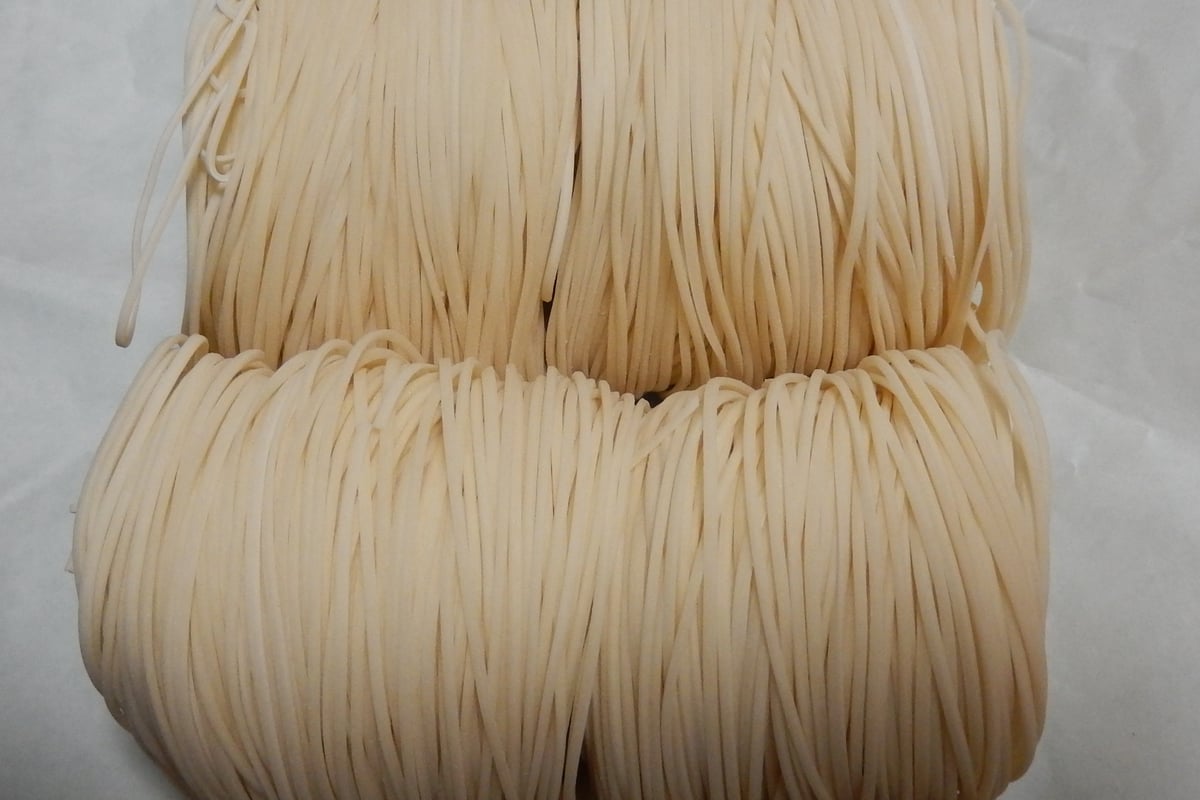
Daimon somen is a hand-pulled somen noodle that has been made in the Daimon district of Tonami City, Toyama Prefecture, since the late Edo period. It is said to have begun in 1848, when a medicine peddler from what was then Daimon Village learned the technique for producing somen for the Kaga domain and brought it back home, after which it spread through the village as a winter side occupation for farming families. At its peak in the early Showa era, more than 60 households produced it, and although the number of producers has now dwindled to just a handful, the traditional method is still carefully preserved. Its most distinctive feature is a unique finishing technique called ‘Shimada-maki,’ in which the thinly stretched noodle strands are wound up into a round bun shape, giving it an appearance unlike somen from any other production area — which is why it is also known as ‘marumage somen’ (topknot-bun somen). Because the noodles are stretched by hand while being twisted, their fibers take on a twisted structure, giving the noodles a firm bite and smooth texture, and they resist becoming soggy even after boiling and soaking in water. It is a seasonal handcrafted delicacy made only during the farming off-season, from around October to March, when temperatures drop and the air becomes dry.
Hiruzen Yakisoba
Hiruzen Yakisoba
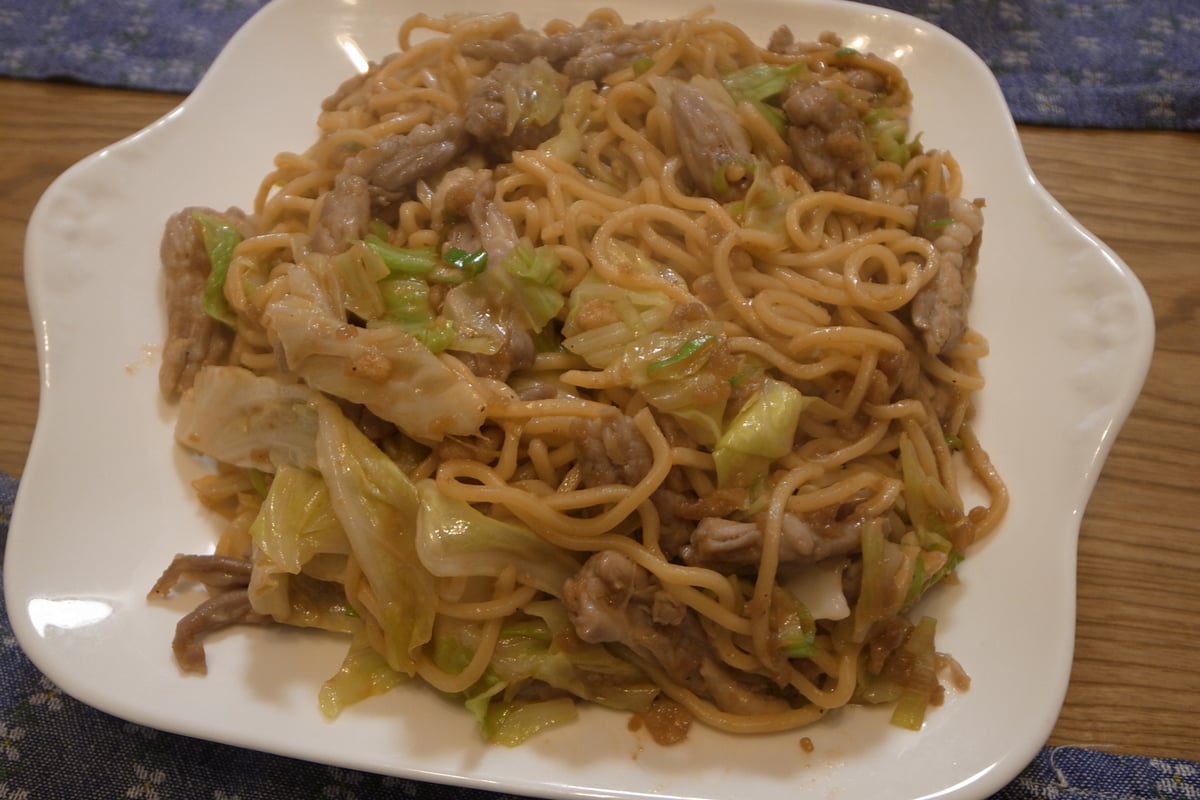
Hiruzen Yakisoba is a local-style yakisoba enjoyed throughout the Hiruzen Highlands area of Maniwa City (Hiruzen), Okayama Prefecture. It is characterized by stir-frying chicken (parent hen meat) and cabbage together with a special miso-based sauce made from ingredients such as garlic, onion, and apple, resulting in a popular sweet-and-savory, rich flavor. Its origins trace back to the 1960s (Showa 30s), when a local diner is said to have made use of the homemade miso sauce that was popular at the time for Genghis Khan-style grilled lamb, stir-frying chicken and cabbage together with yakisoba noodles. This dish became a local specialty. In 2011, the 'Hiruzen Yakisoba Suitonkai' association won the Gold Grand Prix (first place) at the 6th B-1 Grand Prix held in Himeji City, Hyogo Prefecture, bringing the dish nationwide recognition. Today it is still served at many diners and restaurants throughout the Hiruzen Highlands and remains a popular local specialty among tourists.
Hitachi Akisoba
Hitachi Akisoba
Hitachi Akisoba is a branded soba variety that originated in the Kanasago district (formerly Kanasago Village) of Hitachiota City, Ibaraki Prefecture, and is often called 'the finest of unshelled buckwheat.' Its story began in 1978 (Showa 53), when the Ibaraki Prefectural Agricultural Experiment Station set out to cultivate a soba brand unique to Ibaraki, launching a selective breeding program based on a local strain from Akatsuchi-cho in Hitachiota City. After seven years of selection, the variety was established and, in 1985 (Showa 60), was adopted as a recommended variety by Ibaraki Prefecture. In 1993, the Hitachi Akisoba Promotion Council was established, and through a certified-shop system, the group has worked to maintain quality and spread the brand's reputation. Known for its strong aroma, sweetness, and rich flavor, Hitachi Akisoba now accounts for nearly all the soba grown in Ibaraki Prefecture and is cultivated in multiple cities across the prefecture, including Hitachiota, firmly established as Ibaraki's representative soba variety.
Jajamen (Morioka-Style Meat Miso Noodles)
Jajamen
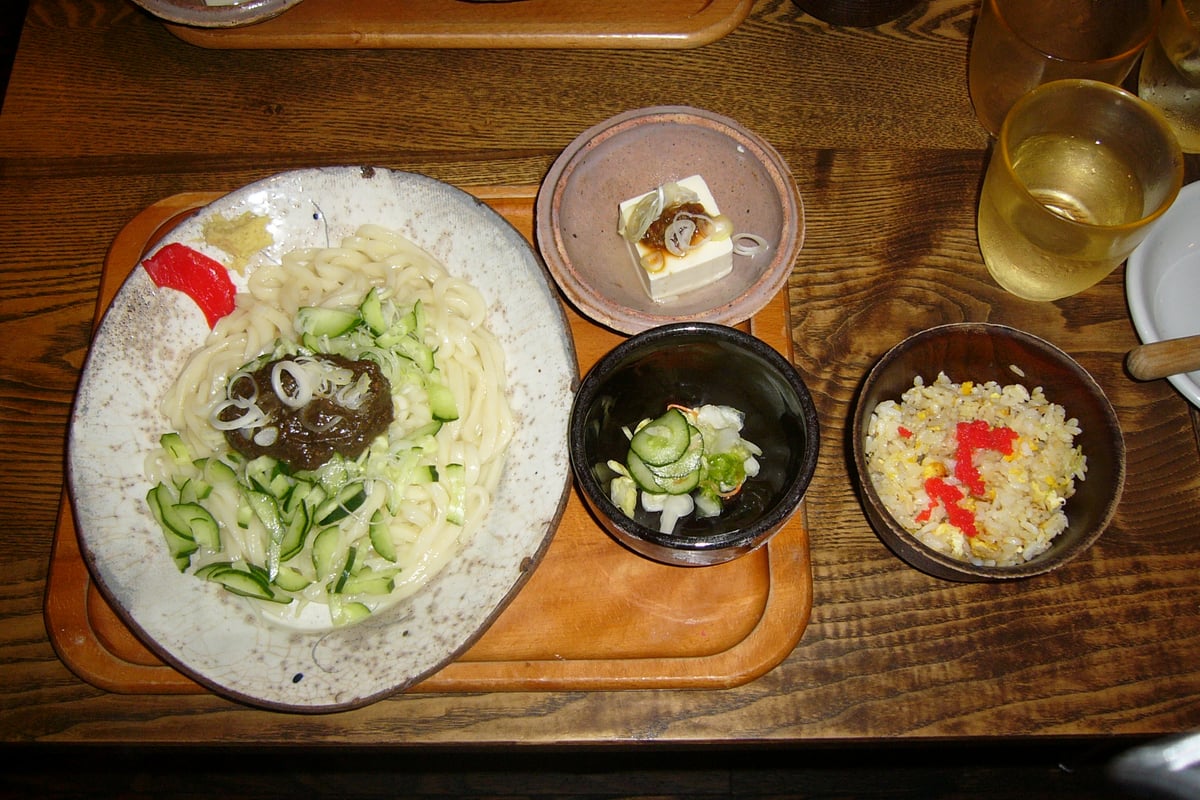
Jajamen is a local dish of Morioka City, Iwate Prefecture, made from flat noodles that are steamed and then boiled, topped with a savory meat miso, grated cucumber, and green onion, and eaten after being thoroughly mixed together. It is said to have originated after the war, in 1953, when Takashina Kansho, who had repatriated from former Manchuria, set out to recreate the taste of the 'zhajiangmian' (fried sauce noodles) he had grown fond of there, and opened a shop in Morioka offering his own meat miso based on Japanese-style miso. He adapted the authentic flavor, which traditionally used fermented black beans, into a distinctive meat miso made by stir-frying miso, ground meat, and a dozen or so other ingredients, creating a dish suited to the tastes of Morioka locals. Another distinctive feature is that after finishing the noodles, diners can crack a raw egg into the bowl and order 'chii-tan-tan' from the staff to enjoy an egg soup made with the leftover meat miso. Jajamen is counted, alongside wanko soba and Morioka reimen, as one of the 'Three Great Noodles of Morioka.'
Jindaiji Soba (Temple-Front Buckwheat Noodles)
Jindaiji Soba
Jindaiji soba is a type of buckwheat noodle that has long been made around Jindaiji Temple in Chofu City, Tokyo, and has developed since the Edo period as monzen soba — soba served to temple visitors at the gate. The plateau along the Kokubunji Cliff Line, which stretches north of Jindaiji, drained well and was poorly suited to rice cultivation, but well suited to growing buckwheat. According to tradition, farmers in the area paid buckwheat flour to the temple in place of annual rice tribute, and the temple made it into soba to serve visitors — this is said to be the origin of the dish. During the Genroku era, when Jindaiji's soba was presented to Prince-Abbot Koben of Kaneiji Temple in Ueno, it was highly praised and became widely known to the shogunate and various feudal lords, earning it the name kenjo soba (tribute soba). The area around Jindaiji is also rich in spring water, which is used both to mill the buckwheat flour and to boil and rinse the noodles, and this pure water is said to enhance the soba's flavor. Today, around 20 soba shops still line the approach in front of Jindaiji's main gate, and every autumn the Jindaiji Soba Festival is held.
Kakke (Triangular Buckwheat or Wheat Dumplings)
Kakke
Kakke is a local dish handed down in the area around Ninohe City and Kunohe Village in northern Iwate Prefecture and into southern Aomori Prefecture, representing the grain-based food culture unique to the region once ruled by the Nanbu domain. The basic method is to knead buckwheat flour or wheat flour with water into a dough, roll it thin, cut it into triangles, and boil it in hot water; rather than simmering it in broth, the boiled dough is served with dipping sauces such as garlic miso or green onion miso. There are two types: 'soba kakke,' made with buckwheat flour, and 'mugi kakke,' made with wheat flour — soba kakke has a darker color and a fragrant aroma, while mugi kakke has a white color and a smooth, chewy texture. In the cold northern part of the prefecture, where rice cultivation was difficult, this simple, deeply flavorful dish has been passed down as a way to make full use of buckwheat and wheat.
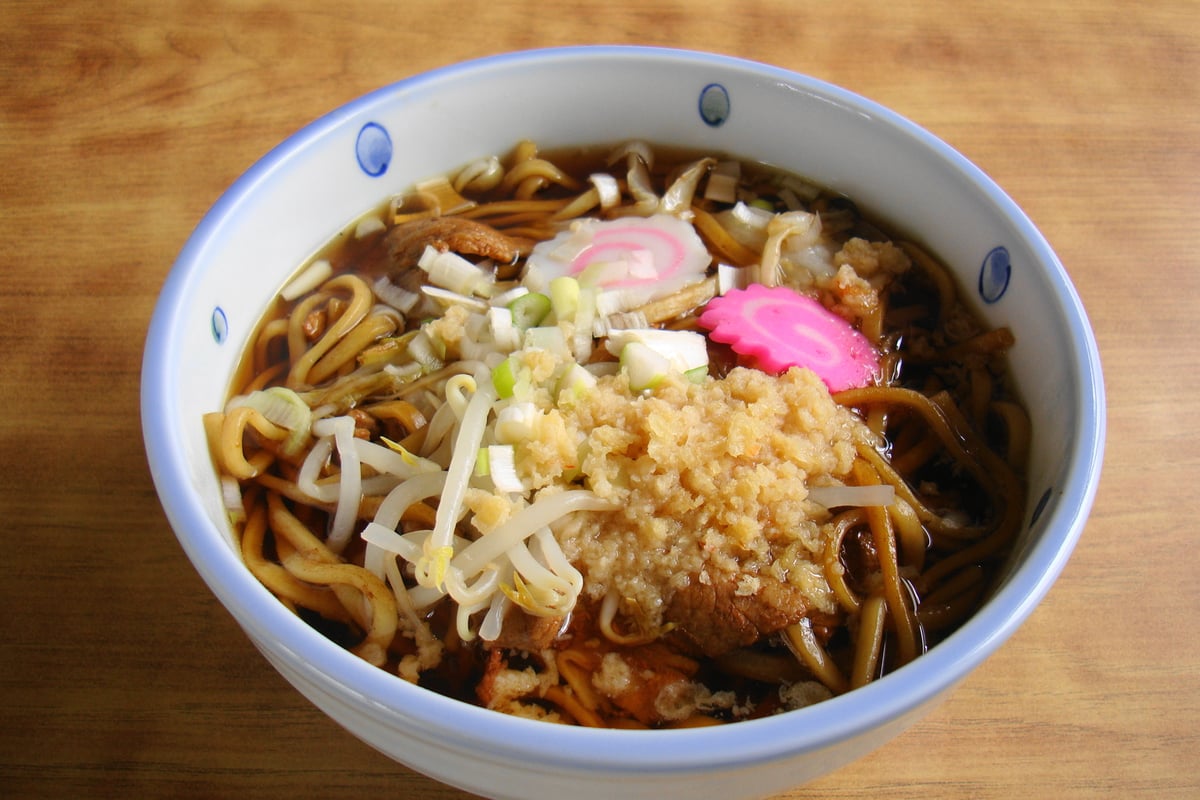
Kuroishi Tsuyu Yakisoba (Yakisoba in Soba Broth)
Kuroishi Tsuyu Yakisoba
Kuroishi tsuyu yakisoba is a local dish born in Kuroishi City, Aomori Prefecture, characterized by pouring soba broth over Kuroishi yakisoba, which uses thick, flat 'taihei' noodles. It is said to have originated in the late 1950s to early 1960s, when a diner in Kuroishi City called 'Mimasu' invented 'tsuyu soba'—yakisoba topped with broth—so that it could be eaten warm even on cold days. Mimasu later closed, but local restaurant owners who missed its flavor turned it into a menu item called 'Kuroishi tsuyu yakisoba,' which drew attention. Today it is served at multiple shops in Kuroishi City, each with its own noodle thickness and broth flavor, and it is cherished as a local dish representative of Kuroishi.
Mimi Udon
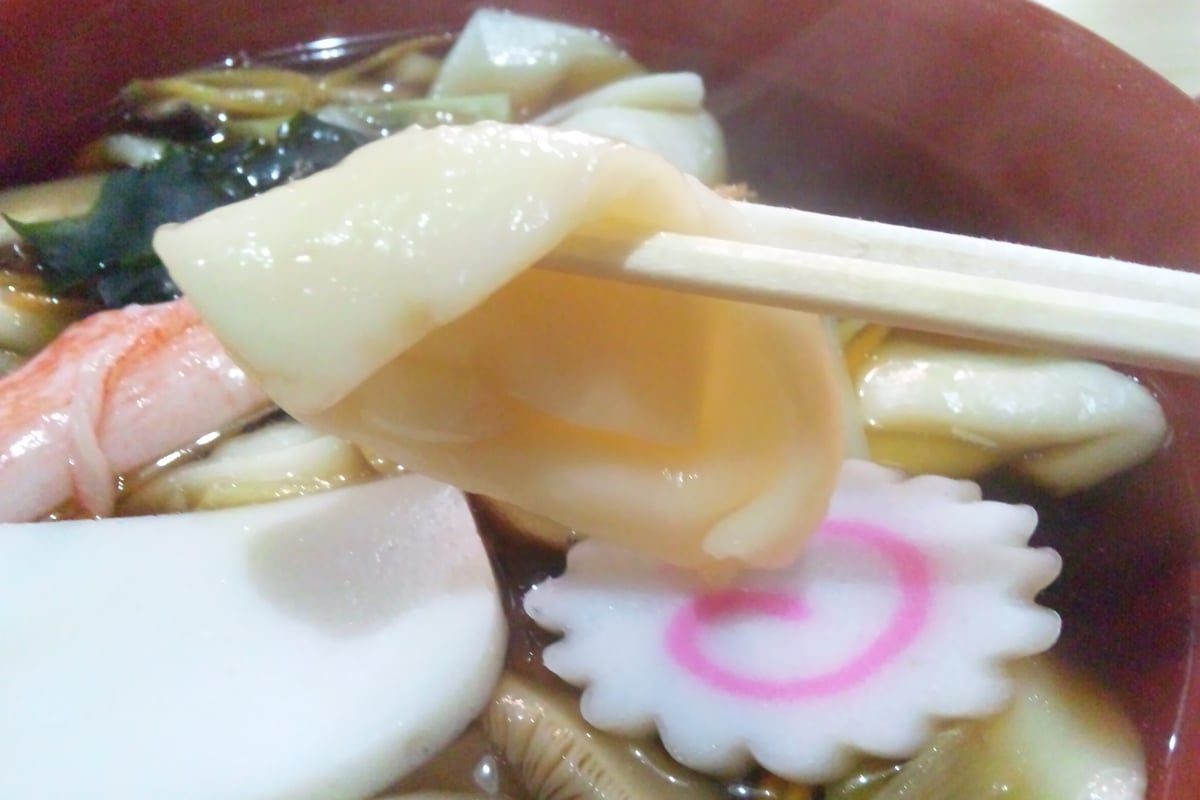
Mimi Udon
Mimi Udon is a local dish from the Kuzuu district of Sano City and the Shiroyama district of Utsunomiya City in Tochigi Prefecture, made by shaping kneaded wheat-flour dough into an ear shape and boiling it. It is said to have originated in the late Edo period, and by the Taisho era had spread as a dish believed to ward off evil. Modeled after the ears of a demon, the custom of eating it at New Year is rooted in the belief that eating the demon's ears wards off misfortune and prevents unwanted rumors or bad luck, praying for good health and harmonious neighborhood relations. In the Kuzuu district of Sano City, the custom continues today of making a large batch of Mimi Udon at year's end, keeping it soaked in cold water for preservation, and serving it to guests who visit over the New Year. Its distinctive shape comes from kneading wheat flour with lukewarm water and salt, rolling it flat, cutting it into matchbox-sized rectangles, then folding each piece in half and pinching the open edges closed; it is typically served in a soy-sauce-based broth.
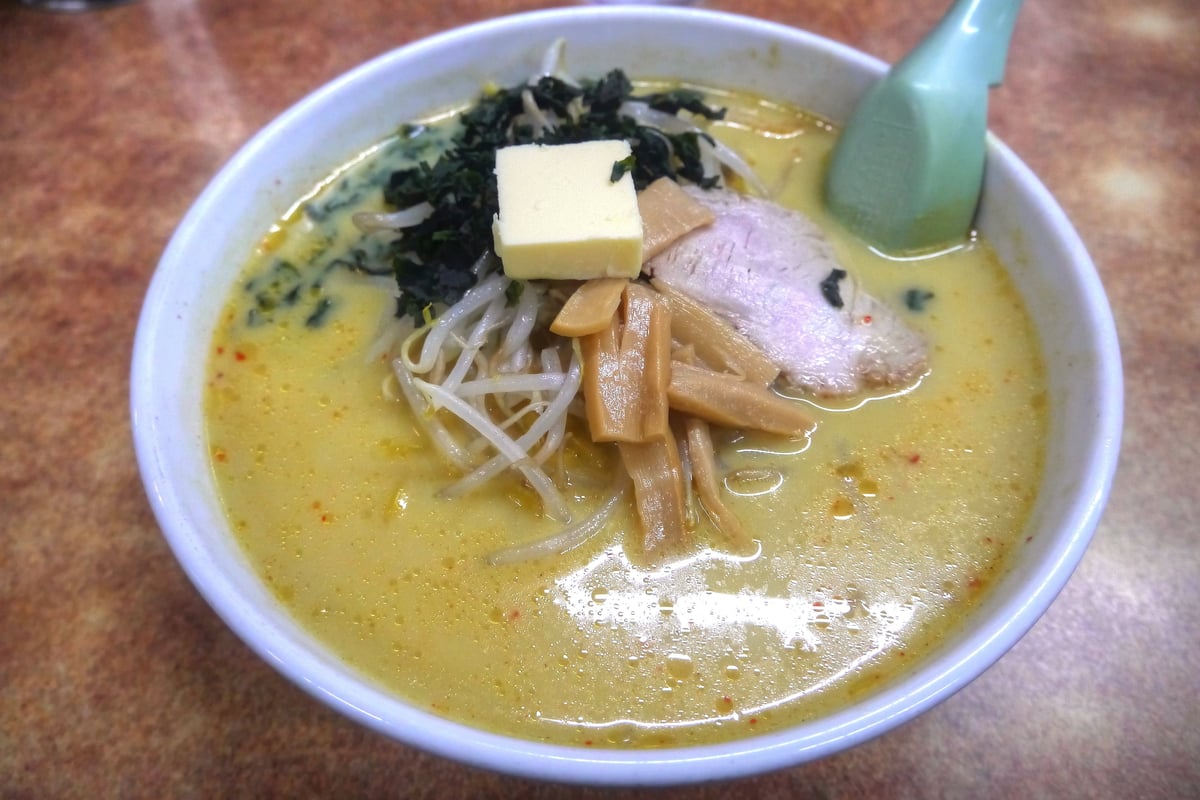
Miso Curry Milk Ramen
Miso Curry Milk Ramen
Miso curry milk ramen is a local ramen born in Aomori City, a rich bowl made by adding curry and milk to a miso ramen base. It is sometimes mistakenly believed to have originated in Hachinohe City, but its true birthplace is Aomori City. It is said to have started in 1968, when Kiyoshi Sato, who had trained at the Sapporo Ramen Yokocho alley, opened a shop in Aomori City; the shop initially served miso-, salt-, and soy-sauce-based ramen. In the late 1970s, a trend spread among junior high and high school students of adding various seasonings to their ramen, and out of that came the discovery that 'miso ramen tastes great with curry and milk added,' which became so popular it was made an official menu item. In 2008, the 'Aomori Miso Curry Milk Ramen Promotion Association' was established, and the dish became known nationwide as a soul food beloved by local residents.
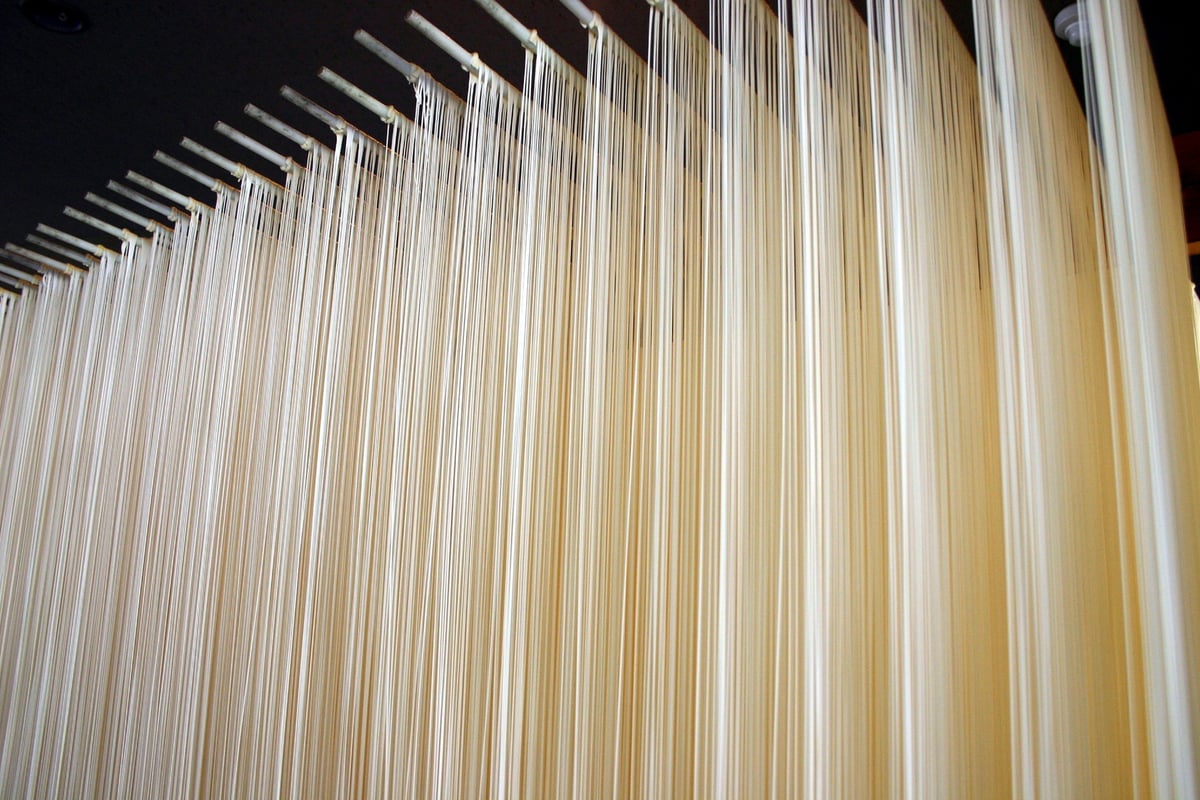
Miwa Somen
Miwa Somen
Miwa somen is hand-pulled somen noodles that have been made since ancient times in the Miwa area of Sakurai City, Nara Prefecture, and the region is known as the birthplace of Japan's hand-pulled somen tradition. According to legend, more than 1,200 years ago the second son of the chief priest of Omiwa Shrine discovered that the clear water flowing from Mt. Miwa and the local soil were ideally suited to growing wheat, and began making somen from the flour. At Omiwa Shrine, a ritual called Bokujosai is still held every February to divine that year's somen market, showing how deeply faith in the deity of Mt. Miwa has been tied to somen-making. The noodles, stretched into extremely fine strands, are known for their firm bite and smooth texture, and are enjoyed year-round: chilled in summer and as hot nyumen in winter.
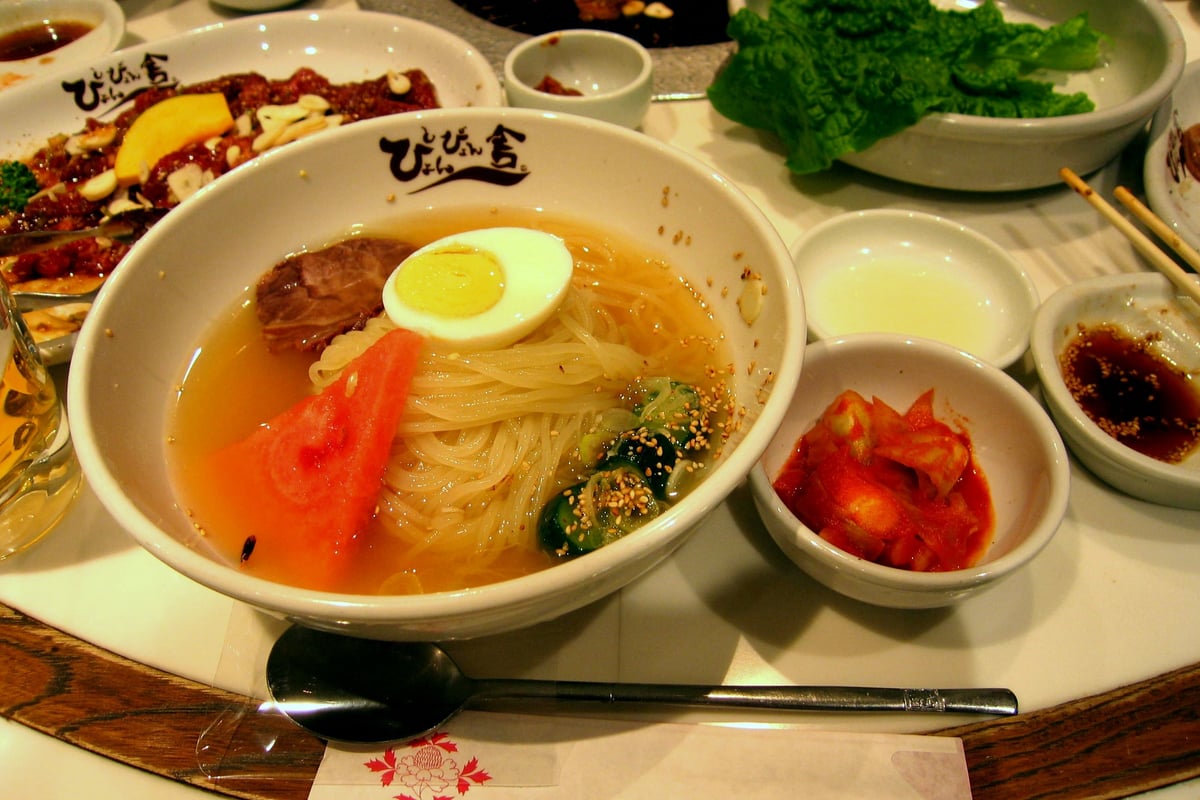
Morioka Reimen (Morioka Cold Noodles)
Morioka Reimen
Morioka reimen is a local dish of Morioka City, Iwate Prefecture, combining firm, springy noodles with a rich broth made from beef and chicken bones and the tang and spice of kimchi. It is said to have originated in 1954, when Aoki Teruhito, who came from Hamhung on the Korean Peninsula, began serving a version of his hometown's cold noodles adapted to suit local tastes at his yakiniku restaurant 'Shokudoen' in Morioka's Odori district. At first, the noodles' unusually firm texture was met with confusion, with some diners describing it as 'like rubber,' but it gradually won over more and more fans and grew into a signature noodle dish of Morioka. It was officially named 'Morioka reimen' at the 'Japan Noodle Summit' held in Morioka in 1986, and October 17 is now designated 'Morioka Reimen Day' in commemoration. It is mainly served at yakiniku restaurants, and diners can enjoy variations in flavor with toppings such as kimchi and watermelon.
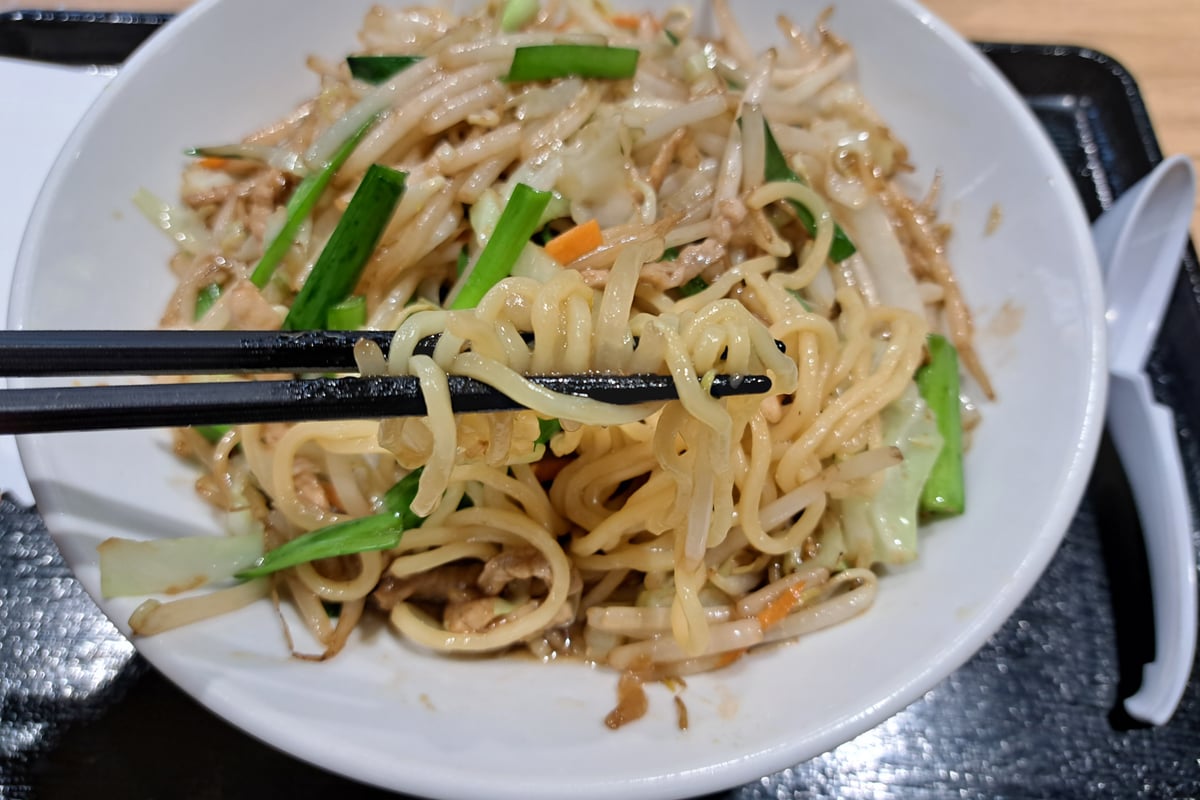
Sanma-men
Sanma-men
Sanma-men is a Yokohama-born local noodle dish topped with a thick, glossy sauce made of stir-fried pork and vegetables such as bean sprouts. Despite its name, it has no direct connection to the fish sanma (Pacific saury); the name is said to derive from the Chinese terms 'shengma-mian' or 'shengmian,' meaning roughly 'noodles topped with fresh ingredients.' It is said to have spread shortly after World War II, when it was served to laborers at the Port of Yokohama as an inexpensive, filling noodle dish that stayed warm even in winter, with theories pointing to Chinese restaurants in Yokohama Chinatown and Isezaki-cho as being involved in its origin. Colorful vegetables such as bean sprouts, chives, napa cabbage, and wood ear mushrooms are used generously, and the soy-sauce-based thickened sauce clings well to the noodles, giving the dish its homey, approachable appeal.
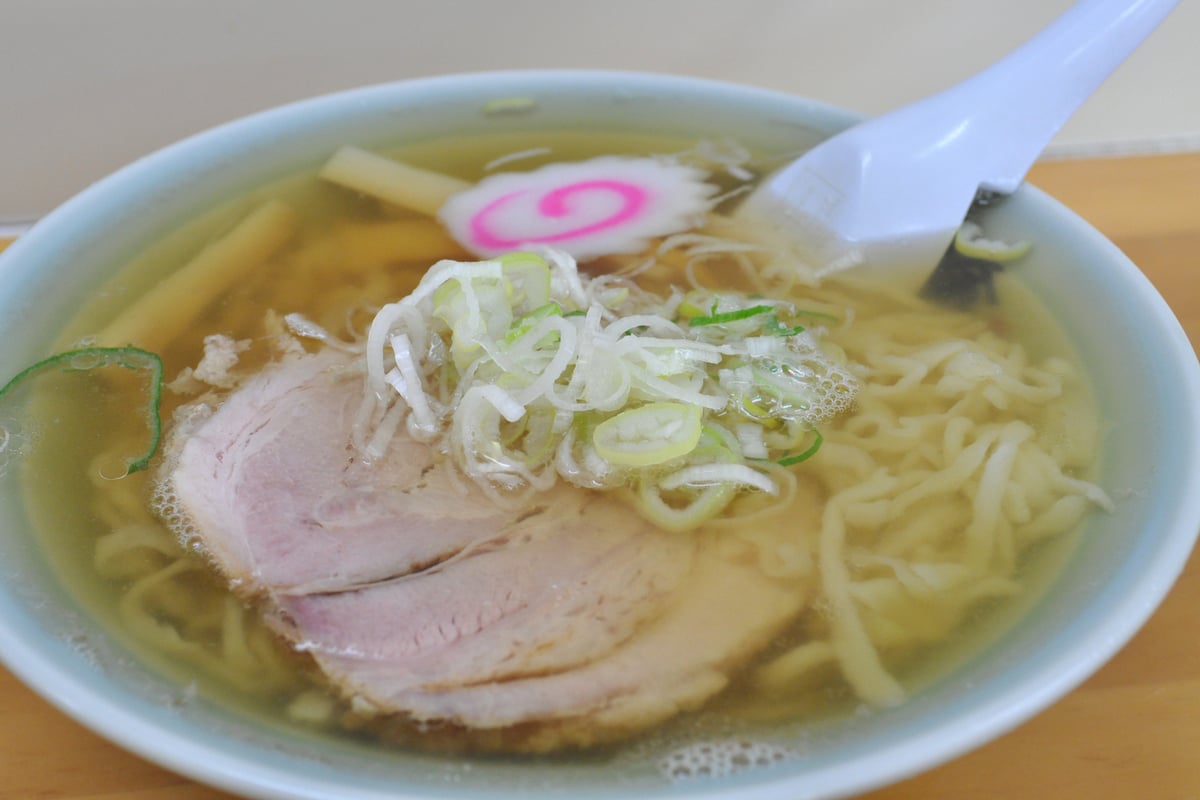
Sano Ramen
Sano Ramen
Sano Ramen is a local ramen loved in Sano City, Tochigi Prefecture, most distinguished by its flat, curly noodles made using the 'aodake-uchi' (green bamboo pole) method, in which a bamboo pole is used to stretch the dough with the maker's body weight. It is said to have begun in the Taisho era, when a Chinese cook working at a diner in the city taught the aodake-uchi technique to a local chef, and as the person who learned the technique went on to open his own shop, it spread throughout the city. The clear soy-sauce-based soup, made primarily from chicken and pork bones, has a firm body that pairs well with the irregular, curly noodles, and its light flavor never grows tiresome. Today, more than 200 ramen shops are packed into the city, many of which still carry on the traditional aodake-uchi technique. Sano City has also put effort into community revitalization as a 'ramen town,' drawing many tourists who enjoy shop-hopping.
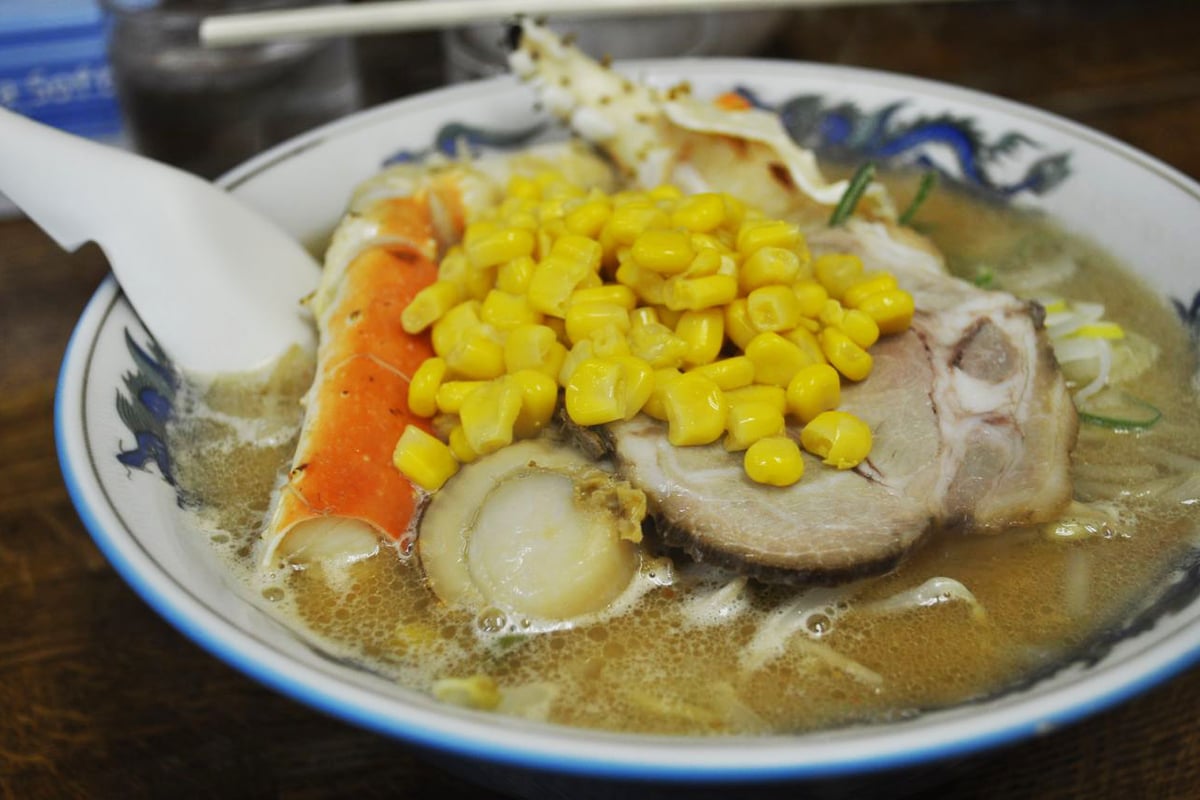
Sapporo Miso Ramen
Sapporo Miso Ramen
Sapporo miso ramen is a local ramen style from Sapporo that pairs a miso-based broth with thick, curly noodles. It is said to have originated around 1954-1955 at 'Aji no Sanpei,' a shop founded in 1950 in Susukino, Chuo Ward, Sapporo, whose owner Morito Omiya was inspired by a foreign article on the benefits of miso to develop a ramen built around it. The broth combines an animal-based pork bone or chicken stock with a miso tare, enriched with stir-fried vegetables and lard for extra depth and heat retention, making it a bowl that stays warm even in cold weather. From the 1960s onward it helped spark the nationwide Sapporo ramen boom and also prompted instant-noodle makers to commercialize miso ramen. Today the city is still home to many popular shops such as 'Sumire' and 'Junren,' each competing with their own miso tare and broth.
Toyama Black Ramen
Toyama Black Ramen
Toyama Black is a local ramen originating in Toyama City, distinguished by its jet-black broth made with a generous amount of dark soy sauce. It is said to have begun in 1947, when Takahashi Seikan, founder of the food stall Taiki, devised a strongly seasoned Chinese noodle soup to help manual laborers rebuilding the city after the Toyama air raids replenish the salt lost through sweat. The classic style pairs thick, straight noodles with a black, dark-soy-sauce-based broth, generous slices of chashu pork, black pepper, and plenty of chopped scallions, and it has long been enjoyed as an ‘okazu ramen’ — a ramen eaten alongside a bowl of white rice as a main dish. Its saltiness is noticeably stronger than ramen from other regions, often surprising first-time diners, but it remains a firmly established lunchtime staple among locals. Today, in addition to the originating shop Taiki, several other shops in the city serve their own variations, and comparing them is a popular pastime among fans.
Tsuke Kenchin (Dipping Soba with Kenchin-jiru)
Tsuke Kenchin
Tsuke Kenchin is a local dish from Ibaraki Prefecture in which thick soba noodles are served separately from a warm bowl of kenchin-jiru (vegetable soup) — a hearty broth loaded with root vegetables such as taro, daikon, burdock, and carrot, along with konnyaku, and seasoned with miso, soy sauce, and mirin — so the noodles can be dipped into the soup much like tsukemen. The dish is said to date back to the late Edo period, and the custom of eating soba at the old-calendar New Year (around the time of today's Setsubun) is believed to have spread from Mito Domain throughout Ibaraki Prefecture. It has long been prepared as a festive dish in mid-November, once the harvest is largely finished, and unlike the 'kenchin soba' found in other prefectures — where the noodles are served directly in the soup — Ibaraki's distinctive style is to keep the soba and kenchin-jiru separate, dipping the noodles as one would with tsukemen. It remains especially popular from autumn through winter, when freshly harvested soba comes into season, and is deeply rooted in eateries and households throughout the prefecture, particularly in the northern Kenhoku region.
Tsuyama Horumon Udon (Offal Udon)
Tsuyama Horumon Udon
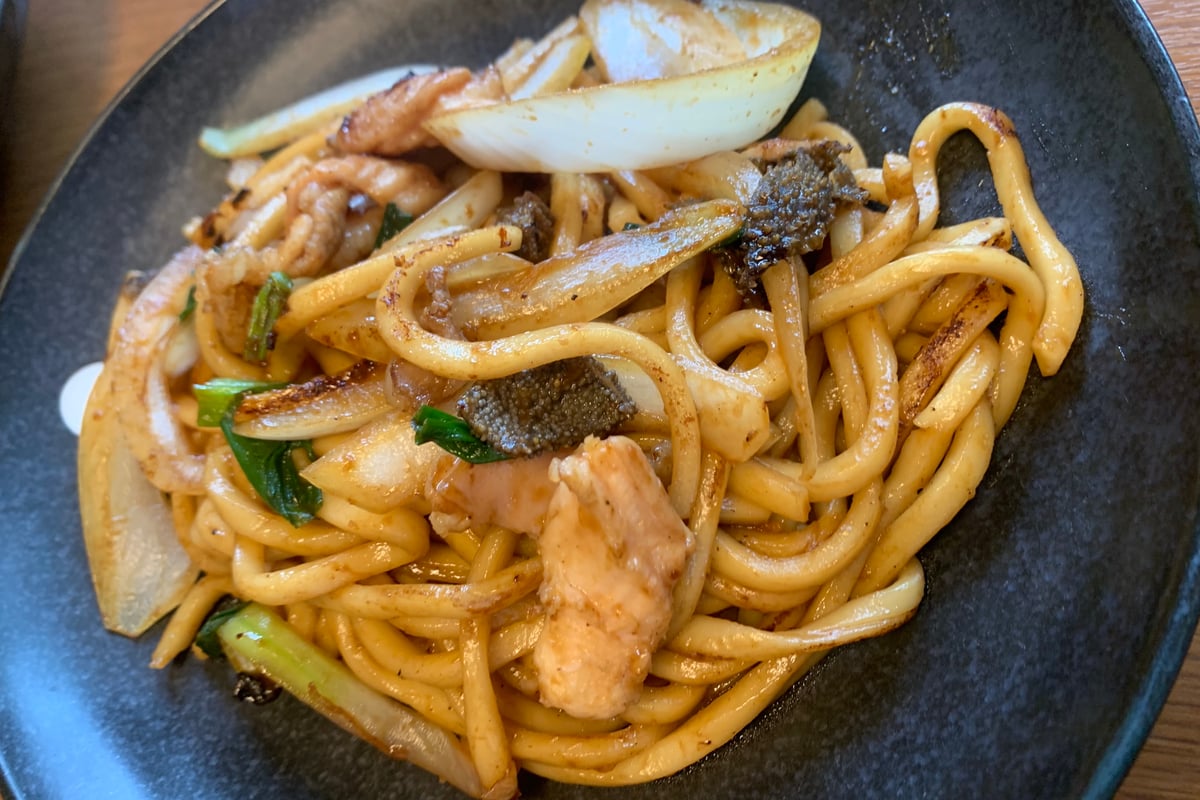
Tsuyama Horumon Udon is a local specialty of the Mimasaka region centered on Tsuyama City in Okayama Prefecture, made by stir-frying fresh mixed horumon (pork and beef offal) with vegetables and tossing it with udon noodles in a sweet-savory sauce based on miso and soy sauce. The Tsuyama area has long thrived as a hub for cattle and horse trading, and even in the era up to the Meiji period when eating meat was publicly shunned, beef was eaten there as an exception known as 'yojo-gui' (nourishing food), which allowed skills for handling fresh offal to develop. Building on this local heritage, Tsuyama Horumon Udon became a beloved way to enjoy horumon while it was still fresh. From around 2008, Tsuyama City and the 'Tsuyama Horumon Udon Kenkyukai' (Tsuyama Horumon Udon Research Group) began promoting it as a local specialty, and it won the Silver Grand Prix (2nd place) at the 2011 B-1 Grand Prix. Today more than 50 restaurants in Tsuyama City are said to serve the dish, making it a popular attraction for tourists.
Wanko Soba (Bottomless Refill Soba)
Wanko Soba
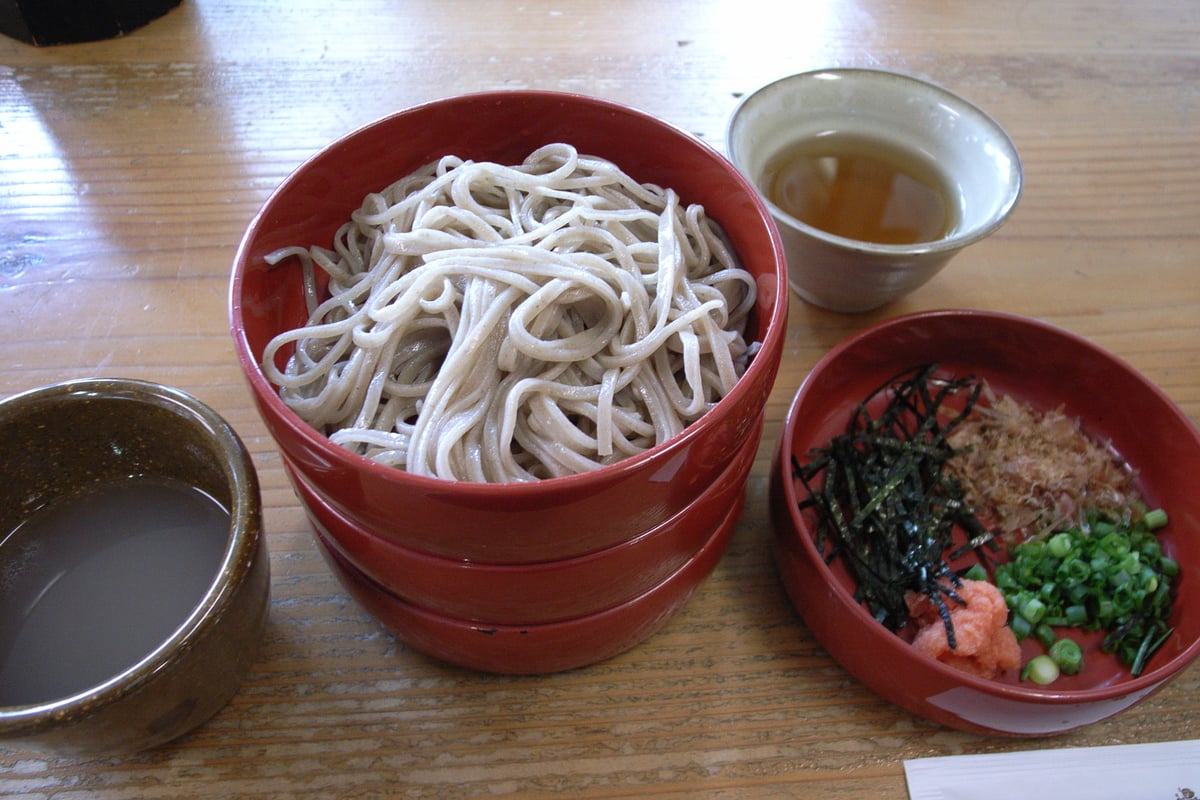
Wanko soba is a local dish of Morioka City and Hanamaki City, Iwate Prefecture, in which servers call out phrases like 'Hai, jan-jan!' while continuously refilling a bowl with bite-sized portions of soba (buckwheat noodles) until the guest places the lid on the bowl to signal they are finished. One widely known origin story tells that in the early Edo period, when the lord of the Nanbu domain, Nanbu Toshinao, stopped at Hanamaki Castle, it was considered discourteous to serve him from the same large bowl used by commoners, so the noodles were served in small portions in a lacquered bowl instead — and he enjoyed it so much that he asked for refill after refill. Part of the fun lies in the exchange with the server, as diners vary the flavor with a wide range of condiments such as green onion, nori seaweed, katsuobushi (dried bonito flakes), grated daikon radish, sashimi, and grated yam. Far from being a simple eating contest, it remains a beloved food culture among tourists today as an embodiment of Japanese hospitality.