Image: Wikimedia Commons
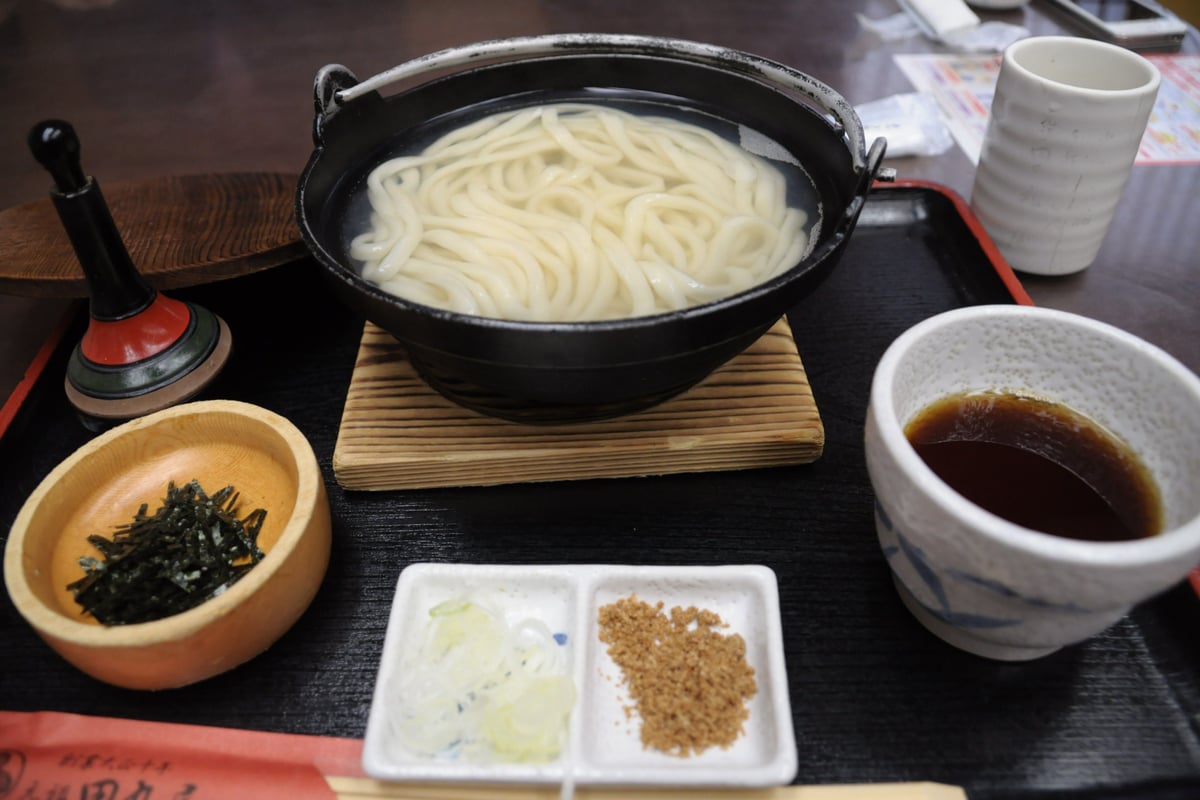
Mizusawa Udon is a firm, hand-pulled udon made around the 'Udon Kaido,' a street lined with noodle shops in front of Mizusawa-dera Temple (Mizusawa Kannon) in Ikaho, Shibukawa, Gunma Prefecture. Ranked alongside Sanuki udon and Inaniwa udon as one of Japan's three great udon, it boasts a history of more than 400 years. According to tradition, a monk named Ekan who is said to have helped found Mizusawa-dera Temple after coming to Japan in the Asuka period passed on the technique for making udon, and around 1576 the temple began serving udon made from local wheat and spring water from the Mt. Haruna range to pilgrims and visitors taking the local hot-spring cure — the beginning of what became known as a noodle named after the place. A distinctive method of repeatedly treading and resting the dough produces noodles with a strong chew and a translucent white sheen, traditionally served cold as zaru udon and enjoyed dipped in soy-based or sesame sauce.
Origin
The origins of Mizusawa Udon are said to trace back to the Asuka period, when the monk Ekan, who is said to have come to Japan from Goguryeo at the imperial request of Empress Suiko and Empress Jitō and founded Mizusawa-dera Temple, passed on the technique for making udon. Ever since, thanks to the good fortune of fine wheat and the clear spring water flowing from the Mt. Haruna range, udon-making has been handed down through generations in front of the temple to welcome worshippers and visitors taking the hot-spring cure.
History
Around 1576, during the Sengoku period, the practice of serving udon made from local wheat and Mizusawa's spring water to worshippers and hot-spring visitors at Mizusawa-dera Temple is said to be the beginning of the udon becoming known by the place name. From the Edo period onward, udon shops came to line the approach to the temple, and the dish developed into a local specialty enjoyed alongside a visit to the temple or a stay at Ikaho Onsen; today it is counted as one of Japan's three great udon, alongside Sanuki and Inaniwa udon.
Features
The defining feature is a labor-intensive method in which the dough is kneaded, trodden underfoot, and left to rest, with this process repeated many times, producing noodles with a strong chew and a translucent, glossy white sheen. Made from nothing more than wheat flour, water, and salt, the noodles are usually served not in a hot broth but as cold zaru udon, dipped in a soy-based or sesame sauce.
Main Ingredients
Food Culture
A cluster of udon shops known as the 'Udon Kaido' has formed in front of Mizusawa-dera Temple, and the custom of enjoying udon alongside a temple visit or a stay at Ikaho Onsen has been passed down from the Edo period to the present day.
How It Differs from Home Cooking
At home, store-bought dried or pre-boiled noodles are often used, whereas the specialty shops along the Udon Kaido knead, tread, and rest the dough over the course of several days, producing hand-made noodles prized for their strong chew and smooth texture.
Famous Shops
大澤屋
群馬県渋川市伊香保町水沢125-1
A long-established shop said to have been founded in 1970 and one of the leading names along the Mizusawa Udon Kaido. It operates two locations in Mizusawa as well as a branch on the stone-step street of Ikaho Onsen, and remains a popular choice for its hand-pulled udon with a strong chew and smooth texture.
View details →水澤亭
群馬県渋川市伊香保町水沢233-8
A long-established shop located just below the temple gate of Mizusawa-dera Temple. Its thick, chewy noodles are made from nothing but carefully selected wheat flour, salt, and clear spring water, and can be enjoyed with house-made sesame or soy-based dipping sauce; zaru udon starts at around 755 yen.
View details →水香苑
群馬県渋川市伊香保町水沢112-5
A popular shop known for its additive-free noodles aged in three stages. Its translucent, glossy white noodles are served with careful attention not only to flavor but also to the beauty of the tableware, drawing many visitors from both within and outside the prefecture.
View details →FAQ
Q. Why is Mizusawa Udon called one of 'Japan's three great udon'?
A. Alongside Sanuki udon (Kagawa Prefecture) and Inaniwa udon (Akita Prefecture), Mizusawa Udon is said to have come to be regarded as one of Japan's three great udon because of its strong chew and its history of more than 400 years.