 Image: Wikimedia Commons
Gunma Prefecture
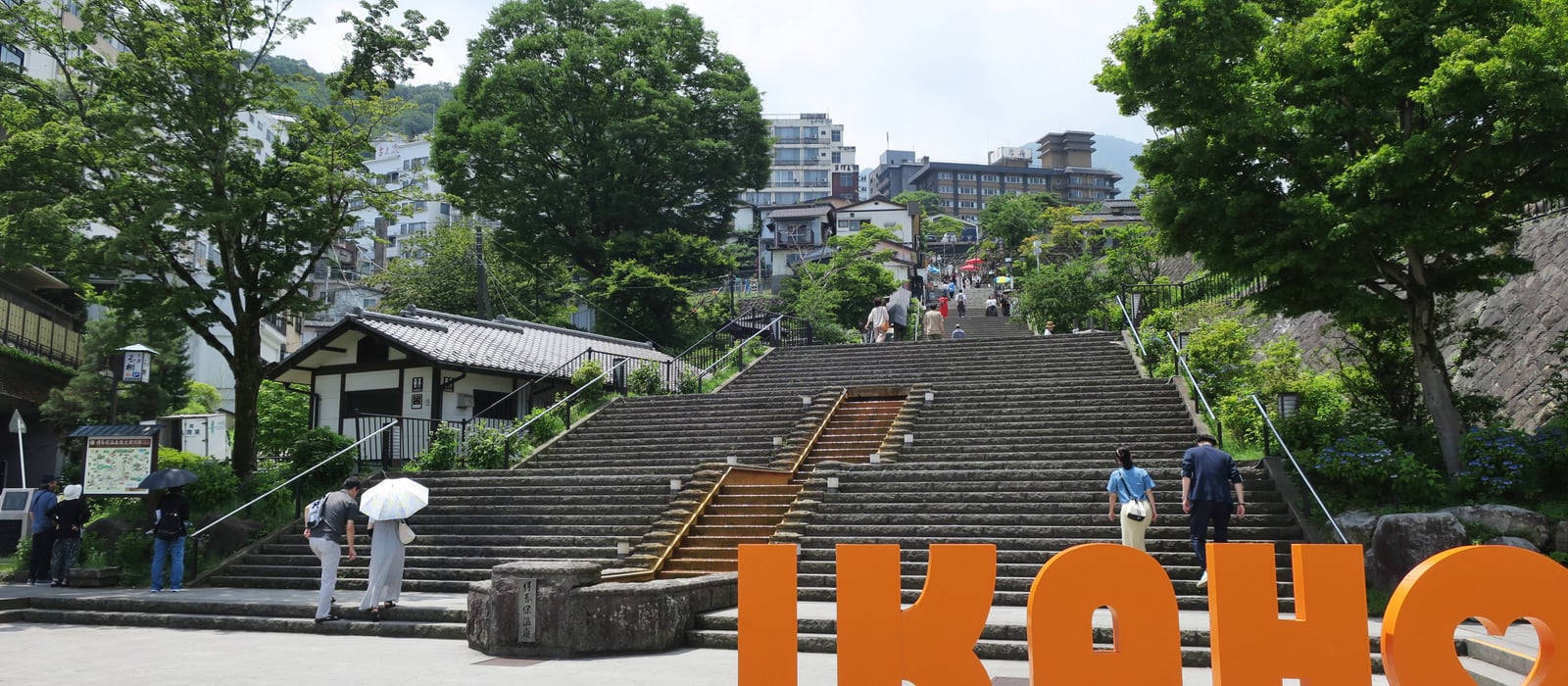
An inland prefecture blessed with the Jomo Sanzan — Mt. Akagi, Mt. Haruna, and Mt. Myogi — and abundant hot springs including Ikaho and Kusatsu. Home to the silk-weaving traditions of Kiryu-ori and Isezaki-gasuri dating back to the Nara period, Gunma's textile culture is still alive today in a region once called "Nishijin of the West, Kiryu of the East." Its crafts are closely tied to daily life, from Takasaki Daruma dolls — which account for roughly 80% of national production — to Ikaho-yaki pottery, which makes use of mineral deposits from the hot springs of Ikaho Onsen. In food culture, wheat-based dishes are deeply rooted, from Okkirikomi, wide noodles simmered with vegetables, to Yaki Manju, sweet-and-savory miso-glazed grilled buns. Gunma is also known as the land of "100% self-sufficient sukiyaki," where all the key ingredients — beef, negi, konjac, and shiitake mushrooms — are produced within the prefecture. From touring the udon-shop street of Mizusawa Udon, one of Japan's three great udon, to local dishes that make the most of the prefecture's top-ranked konjac production, Gunma offers a journey uniquely woven from mountains, hot springs, and wheat-flour food culture.
Gunma's Traditional Crafts

Annaka Uchihamono (forged blades)
Annaka Uchihamono
Annaka Uchihamono is a forged type of farm tool and blade passed down in Annaka, Gunma Prefecture. Annaka was once a region where sericulture flourished, and from the Meiji era onward many blacksmiths were active there forging the farm tools essential to agricultural work; place names related to blacksmithing still remain within the old city of Annaka today. The uchihamono technique - shaping heated iron and steel by repeatedly hammering it - is connected to the craft of forging Japanese swords, and unlike blades mass-produced with a mold, each piece is finished by hand, one at a time, by a craftsman. Farm tools such as the kusakaki (weeding hoe) and tekuwa (hand hoe) combine durability with a supple feel in use, while blades such as kitchen knives and trimming hoes are prized for their sharp cutting edge. Today, blacksmith workshops such as Honke Matsunaga Seisakusho and Yamazaki Seisakusho continue to uphold this traditional handcraft, making tools that, through repeated repair, can be used for a long time.
Ikaho-yaki (Ikaho ware)
Ikaho-yaki
Ikaho-yaki is pottery that began in 1878 (Meiji 11), when the potter Shinoda Senka opened a kiln at Ikaho Onsen in Shibukawa, Gunma Prefecture. Its distinctive method uses yu no hana (hot spring mineral deposit) from Ikaho Onsen in the clay and glaze; because the iron-rich yu no hana is used, the finished pieces take on the rich colors unique to a hot spring town, ranging from yellow and reddish-brown to black. However, when Shinoda Senka passed away, the kiln fires went out, and for a long time Ikaho-yaki became a 'phantom pottery.' Later, the local potter Kogure Tokuro carried out his own research based on old documents and has worked to revive Ikaho-yaki. Today, works are made and exhibited for sale at Tokuro Kiln near the Ikaho Onsen hot spring town, and visitors can also try an electric potter's wheel or painting experience, enjoying the making of a one-of-a-kind piece that makes use of Ikaho Onsen's yu no hana as a travel memory.
Kiryu shibori (tie-dyeing)
Kiryu-shibori
Kiryu shibori is a shibori (tie-dyed) textile that developed in Kiryu, Gunma Prefecture, a city known as a center of silk-textile production. Kiryu has long been known as a production area skilled in dyeing, weaving, and shibori alike, and Kiryu shibori is distinguished by the way it freely combines shibori techniques with bolts of Kiryu-ori, itself a Traditional Craft. Because the shibori dyeing is applied to Kiryu-ori fabric already woven with ikat, stripe, or check patterns, the result has a unique finish that can be appreciated both as a woven textile and as a dyed textile, producing innovative, delicate works in which the three techniques of dyeing, weaving, and shibori come together as one. Because each piece of shibori is done by hand, even the same pattern takes on individual character in the finished result. On January 23, 2003, it was designated 'Kiryu Shibori' as a Gunma Prefecture Furusato Traditional Craft by the governor of Gunma Prefecture.
Kiryu-ori (Kiryu textile)
Kiryu-ori
Kiryu-ori is a silk textile woven mainly in Kiryu, Gunma Prefecture, and a METI-designated Traditional Craft (Japan). Its history goes back to the Nara period: the Shoku Nihongi records that in 714, a silk textile called 'ashiginu (あしぎぬ)' was presented to the imperial court. During the Edo period it developed by adopting techniques from Nishijin and the West, and received favorable treatment from the shogunate, growing into a major production center known by the saying 'Nishijin in the west, Kiryu in the east.' Its defining feature is yarn-dyed patterned weaving (Jacquard weave), in which thread is dyed before being woven, using seven techniques: Omeshi-ori, Nuki-nishiki-ori, Tate-nishiki-ori, Futsu-ori, Uki-tate-ori, Tate-gasuri-mon-ori, and Mojiri-ori. It was designated a Traditional Craft in 1977, and today, centered on the Kiryu Textile Industry Cooperative, a wide range of products continues to be made, from kimono and obi fabric to gold-brocade cloth, clothing fabric, and Japanese and Western accessories.
Isezaki-gasuri (Isezaki kasuri)
Isezaki-gasuri
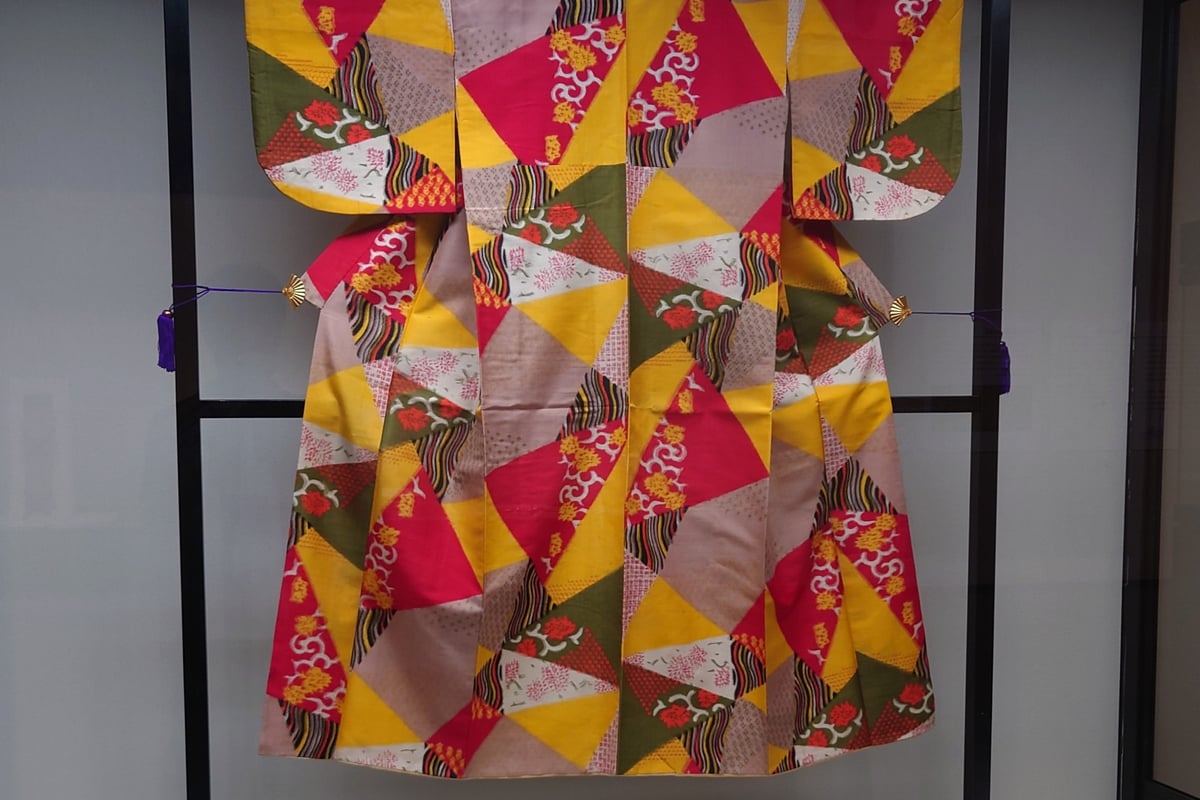
Isezaki-gasuri is a silk textile produced in and around Isesaki, Gunma Prefecture, and a METI-designated Traditional Craft (Japan). The history of the production area is said to go back as far as the Kofun period, based on excavated hemp textiles, and commercial production began in earnest in the late Edo period. In 1880, the Isesaki Futori Company was established, improving both quality and output, and from the Taisho era into the early Showa era the area enjoyed a golden age in which production of the patterned meisen textile known as 'Isesaki meisen' accounted for roughly half of the nation's total. The region excels in ikat (kasuri) techniques using thread dyed in sections by hand-binding or itajime (board-clamp) methods, and in particular Combined kasuri, which uses ikat-dyed thread in both the warp and weft to weave intricate patterns, is considered a technique that developed only in Isesaki. It was designated a Traditional Craft in 1975, and the techniques continue to be passed down today, centered on the Isesaki Textile Cooperative and the Isesaki Textile Industry Association.
Joshu Takasaki Chusen Tenugui
Joshu Takasaki Chusen Tenugui
Joshu Takasaki Chusen Tenugui are cotton hand towels dyed using chusen, a hand-poured dyeing technique passed down in Takasaki, Gunma Prefecture. Chusen was developed in Japan during the Meiji era (1868-1912) to mass-produce tenugui: a stencil is used to apply a resist paste to the fabric, several dozen layers of cloth are stacked together, and dye is then poured over the stack so that both the front and back of every layer are dyed at once. This process gives the cloth a distinctive softness with natural bleeding and gradation not found in single-sided printed tenugui, and produces a fabric whose pattern is identical on both sides. In Takasaki, dye workshops such as Nakamura Some Kojo, founded in 1897, have carried this technique forward, and the area remains the only production site in Gunma Prefecture that still preserves the chusen technique today, designated a Gunma Prefecture Furusato Traditional Craft.
Takasaki Daruma
Takasaki Daruma
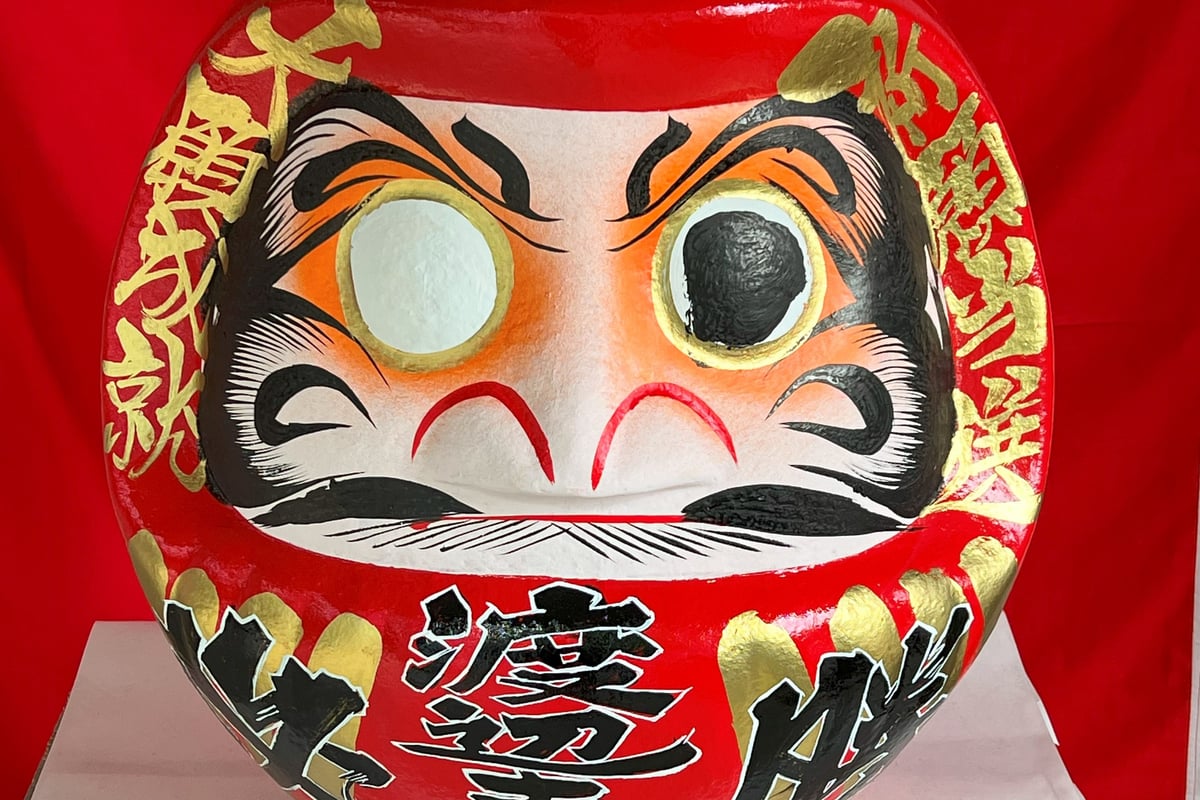
Takasaki Daruma are lucky daruma dolls made in Takasaki, Gunma Prefecture. About 900,000 are produced each year, making the area Japan's leading production center, accounting for roughly 80% of the nation's papier-mache daruma output. Tradition holds that they originated in the late Edo period, during the Kansei era, when Yamagata Tomogoro, who lived near Shorinzan Darumaji Temple, had the temple's ninth head priest, Togaku, carve him a wooden mold, over which he layered washi paper to make a daruma. The earliest dolls resembled a seated Zen meditation figure, but as sericulture farmers came to associate the 'rising' of silkworms with the daruma 'righting itself' after falling, they began enshrining daruma as lucky charms on their household altars, and the shape gradually rounded into the familiar form seen today. A defining feature unique to Takasaki Daruma, not found in daruma from other regions, is that the eyebrows are painted to resemble a crane, the mustache a turtle, and auspicious characters such as 'business prosperity' and 'household safety' are written on the shoulders. Every year on January 6 and 7, the Nanakusa Grand Festival Daruma Market held at Shorinzan Darumaji Temple draws large crowds and is a beloved feature of Takasaki's winter season.
Tsukiyono Kiri Tansu (paulownia wood chest)
Tsukiyono Kiri Tansu
Tsukiyono Kiri Tansu is a chest of drawers made of paulownia wood, crafted continuously in the Tsukiyono district of Minakami, Tone District, Gunma Prefecture, since the workshop's founding in 1917 (Taisho 6). Paulownia wood is light and has an elegant grain, and because it slightly expands and contracts with humidity, it keeps a stable level of moisture inside a chest; compounds in its sap also help repel insects. For this reason, paulownia chests have long been valued as storage furniture that protects treasured kimono and other items from moisture and pests. The Tsukiyono district was blessed with easy access to high-quality paulownia timber, and artisans there handle every step in-house, from selecting and cutting the wood and drying the boards to joinery (sashimono) and fitting the metal hardware, producing sturdy chests that resist warping. Today, alongside chests in the traditional style, makers also produce paulownia chests and boxes designed for modern homes, and the craft is passed down as a representative woodworking technique of the region, designated a Gunma Prefecture Furusato Traditional Craft.
Iriyama Menpa (bentwood lunch box)
Iriyama Menpa
Iriyama Menpa is a bentwood (magemono) lunch box handed down in the Iriyama district of Nakanojo, Agatsuma District, Gunma Prefecture. It is said to date back to the Bunka-Bunsei era of the late Edo period (early 19th century). In the mountainous Iriyama district, which had no notable industry besides agriculture and forestry, woodcraft developed as a livelihood that supported people's daily lives. It is made by softening thin boards of red pine in boiling water, bending them into a rounded shape, and stitching them together with strips of mountain cherry bark, without using any nails. Its distinctive oval shape is considered auspicious, and thanks to the wood's moisture-absorbing and aromatic properties, it draws just the right amount of steam from cooked rice to prevent it from becoming soggy, and the food stays fresh even in summer, making it widely used as a lunch box carried for mountain work in the past. The way the wood's color deepens with use is also part of its appeal, and it is designated a Gunma Prefecture Furusato Traditional Craft.
Ota Daiko (Japanese drum)
Ota Daiko
Ota Daiko is a Japanese drum (wadaiko) that Yamaguchi Taikoten, a shop on Daikoin-monzendori in Ota, Gunma Prefecture, has been making for more than 160 years since the Edo period. It is crafted by combining woodworking techniques for making the drum body with the tanning and stretching of leather, and the technique is currently carried on by the shop's owner, Yamaguchi Soichi, the eighth-generation successor. The drum body is made from woods with beautiful grain such as zelkova; logs are cut and left to dry slowly over several years before being hollowed out and finished. The hide is tanned by soaking raw hide in rice bran to ferment it, a process called 'nuka-nameshi,' which removes the hair, and it is then stretched with a wooden mallet while checking the sound as it is fitted onto the body. Completing a single drum can take more than five years, and every step relies on manual work and the artisan's intuition, giving Ota Daiko its distinctive tone and resonance. Gunma Prefecture also holds an important place in the history of the Japanese drum: haniwa clay figures dating from around the 6th-7th centuries, depicting figures carrying drums, have been excavated from ruins in Sawa District.
Gunma's Local Food
Catfish Tempura
Namazu Tempura
Catfish tempura is a dish passed down in the water-rich eastern Gunma region around Tatebayashi City and Itakura Town, where the Tone River and Watarase River flow. The area once had even more rivers, ponds, and marshes than today, and catfish, alongside eel and carp, became a familiar freshwater fish in daily life. The fish is finely minced down to the bone and deep-fried in a crisp batter, giving it a fluffy white-fish texture and mild flavor. Itakura Town was once lined with many freshwater fish wholesalers, and the dish became a local specialty served to visitors of Raiden Shrine (雷電神社) and Takatori Tenmangu (高鳥天満宮). Today, local freshwater fish restaurants still serve tempura and tataki-age (minced-and-fried catfish) made with wild-caught catfish, and Tatebayashi City promotes itself as “the town of catfish” for tourism, keeping this freshwater fish food culture centered on the Tatebayashi area alive.
Konnyaku Miso Oden
Konnyaku Miso Oden
Konnyaku Miso Oden is a local specialty of Gunma Prefecture made by skewering parboiled block konnyaku or freeze-dried konnyaku (shimi-konnyaku) and generously coating them with a rich, sweet-savory miso sauce. Gunma Prefecture is Japan's top producer of konnyaku potato, accounting for about 90% of the national output, and this dish developed as a way to fully enjoy the konnyaku that has long been a local staple. Gunma winters are known for a dry, cold seasonal wind called the 'Karakkaze,' and it is said that oden - which warms the body from within - has traditionally been made in many households for this reason. The blend of the miso sauce varies by household and shop: some use mirin for a sweet-savory flavor, while others add yuzu citrus or sesame for extra fragrance. In some areas, the dish is also known as 'Hippataki Oden.'
Okkirikomi
Okkirikomi
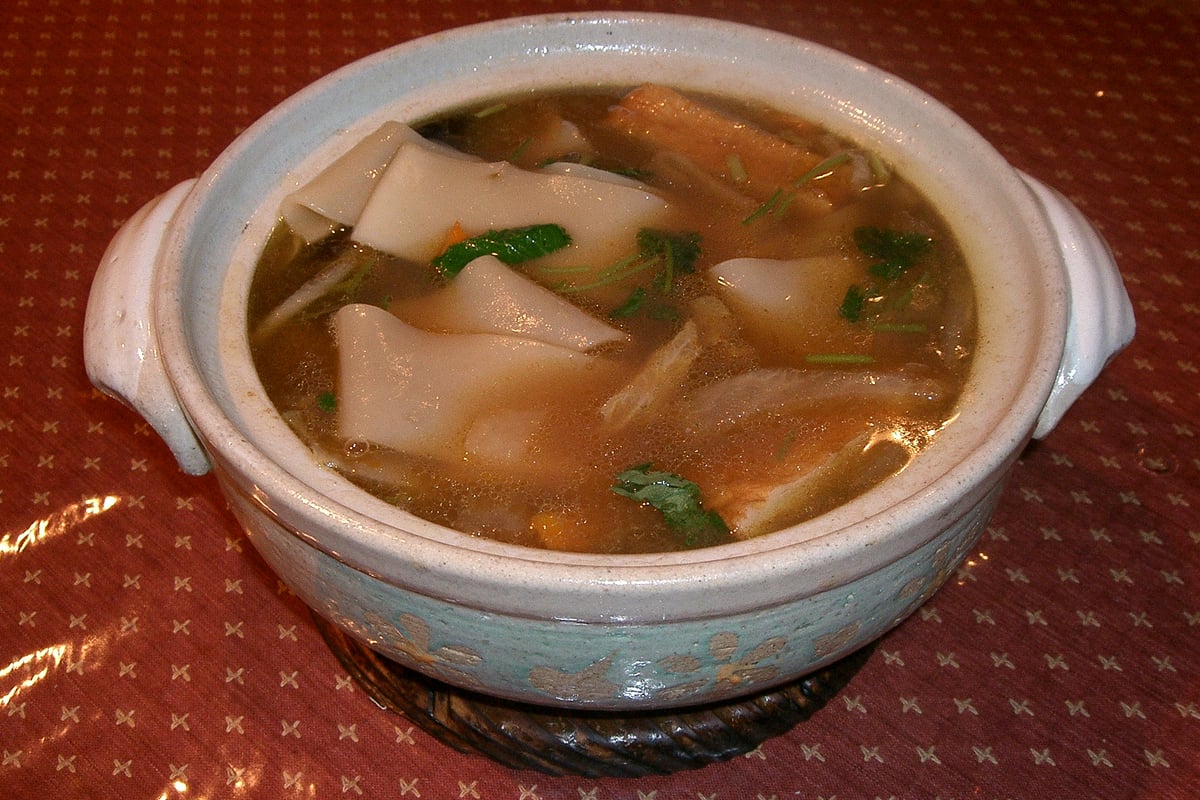
Okkirikomi is a signature local dish of Gunma Prefecture in which wide, flat wheat noodles are simmered slowly with seasonal vegetables such as taro, daikon radish, and mushrooms in a hearty miso- or soy sauce-based broth. The name is said to come from the process of rolling out the dough with a rolling pin, cutting it with a knife ('kirikomi'), and adding it straight to the pot; because the noodles go into the broth unboiled, still dusted with flour, the soup thickens naturally into a smooth, mellow broth. In Gunma, a major wheat-growing region, the dish is said to have spread as a meal that women in silk-farming households could prepare quickly and in large batches between farm chores, and it became an everyday staple from the mid-Edo period onward as stone hand mills came into common use. In 2014 it was designated an Intangible Folk Cultural Property of Gunma Prefecture as 'Gunma's Flour-Based Food Culture: Okkirikomi,' and it remains a beloved symbol of the region's food culture in both homes and eateries today.
Simmered Hana Ingen Beans (scarlet runner beans)
Hana Ingen no Nimame
Simmered Hana Ingen Beans is a local staple made by slowly simmering 'hana mame' (scarlet runner beans), a crop grown in the Agatsuma area in northern Gunma Prefecture, until tender. Hana mame are large beans that grow only in the cool highlands at elevations of 900 to 1,300 meters, and they are a specialty of the Agatsuma area, including Tsumagoi village as well as Nakanojo, Kusatsu, and Naganohara towns. To make the dried beans easier and more enjoyable to eat, a method of slow simmering took root in the region, bringing out a rich flavor reminiscent of chestnuts. The dish is also served on festive occasions such as festivals, ceremonial events, and New Year's osechi, and in some households the harvested beans are even offered at the family shrine, reflecting how deeply rooted the ingredient is in daily life. Beyond simmered beans, hana mame is also enjoyed in other preparations such as candied beans (amanatto), red rice (sekihan), and yokan.
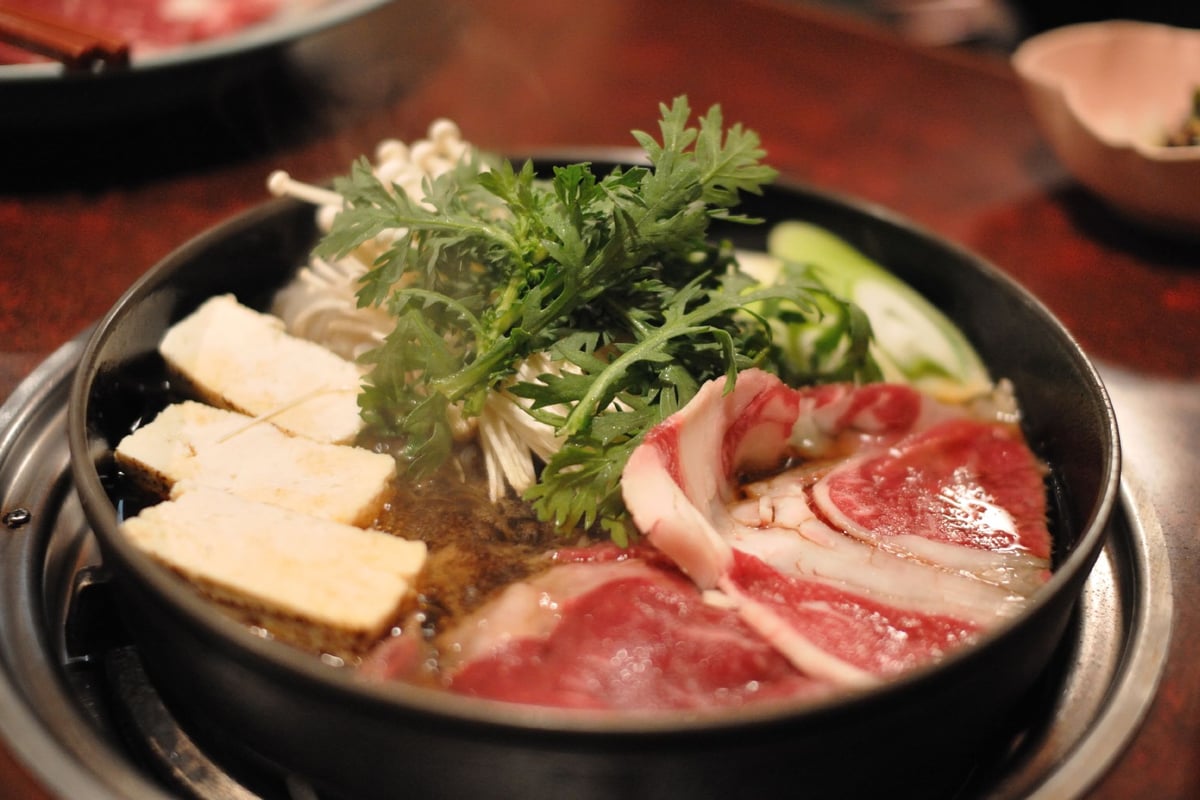
Sukiyaki
Joshu Sukiyaki
Gunma Prefecture's sukiyaki is a local dish nurtured in a rare place where all of its core ingredients — beef, negi (leek), konjac, and shiitake mushrooms — can be sourced entirely within the prefecture, earning it the nickname “100% self-sufficient sukiyaki.” The blessings of Gunma's fields and pastures come together in a single pot: the branded Joshu beef, sweet, melt-in-the-mouth Shimonita negi, konjac (Gunma is Japan's top producer), plus napa cabbage, shungiku (garland chrysanthemum), and fresh shiitake mushrooms. In 2014, Gunma Prefecture declared itself a “Sukiyaki Supporting Prefecture” and has promoted the appeal of its farm and livestock products through the “Gunma Sukiyaki Action” campaign. On November 29, “Gunma Sukiyaki Day,” sukiyaki even appears on school lunch menus across the prefecture, keeping the food culture alive community-wide. Beyond the classic Kanto-style method of simmering everything in warishita sauce, the dish's depth also shows in variations such as the Kansai-style approach of searing the meat first, or arrangements using Joshu shamo (a local chicken breed), with each restaurant offering its own distinct take.
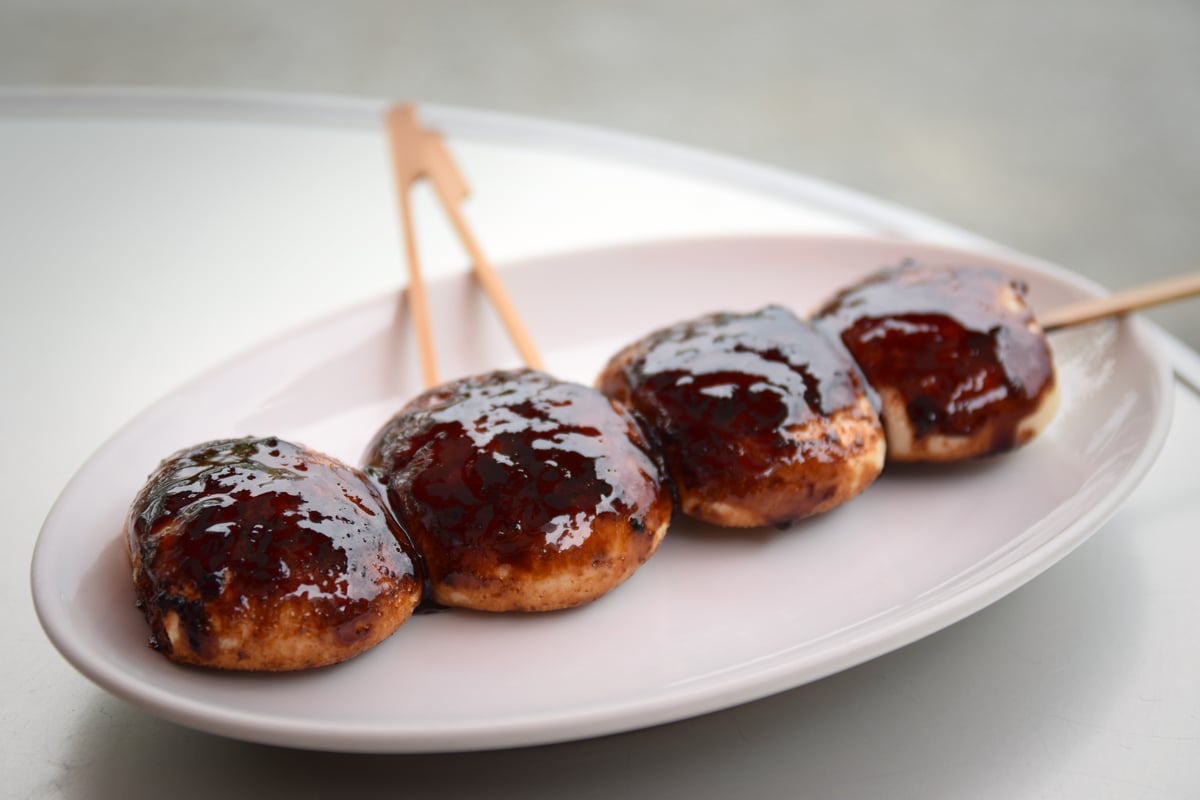
Yaki Manju (grilled miso-glazed buns)
Yaki Manju
Yaki Manju is a soul food representative of Gunma Prefecture: a dough of wheat flour fermented with rice koji is steamed into fist-sized round buns, skewered, generously coated with a sweet-savory miso glaze, and grilled over charcoal until fragrant. The distinctive style of skewering steamed buns with no bean-paste filling and grilling them is unusual even by national standards, and specialty shops and long-established stores are found throughout the prefecture, from Maebashi and Takasaki to Isesaki and Numata. The most widely accepted theory traces its origin to the late Edo period, when Ruizō Harashima of Maebashi is said to have devised a 'miso-pickled bun,' whose novel use of doburoku (unrefined sake) as a fermenting agent and the idea of skewering the buns caused a stir at the time. Long served at festival stalls and local fairs, it remains a fixture of community events such as cherry-blossom viewing and summer festivals today.
Koshine-jiru
Koshine-jiru
Koshine-jiru is a miso-based soup from the area around Tomioka (city) and Kanra (town) in Gunma Prefecture, generously packed with the local specialties konnyaku, shiitake mushrooms, and negi (green onion). Its name is formed by combining the first syllables of these three ingredients. It is said to have originated when the Tomioka Women's Association Federation devised the soup to make the most of locally grown produce - konnyaku, log-grown shiitake, and Shimonita negi. More than 20 years after it was first created, it has become an established home-cooked dish and is now also served in school lunch menus and at local festivals and events. The rule is that konnyaku, shiitake, and negi must always be included, while other vegetables and the type of miso vary by household - daikon, carrot, burdock root, taro, and pork are often added to make it a hearty, filling dish.
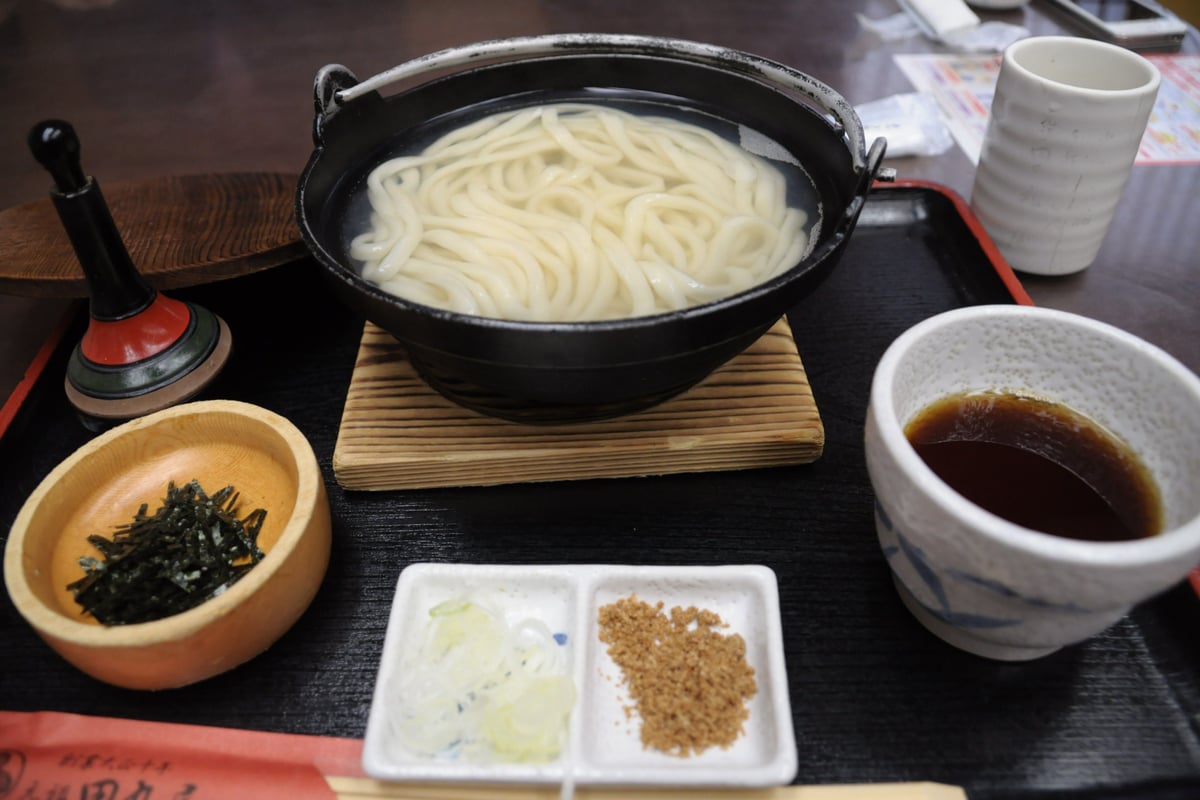
Mizusawa Udon
Mizusawa Udon
Mizusawa Udon is a firm, hand-pulled udon made around the 'Udon Kaido,' a street lined with noodle shops in front of Mizusawa-dera Temple (Mizusawa Kannon) in Ikaho, Shibukawa, Gunma Prefecture. Ranked alongside Sanuki udon and Inaniwa udon as one of Japan's three great udon, it boasts a history of more than 400 years. According to tradition, a monk named Ekan who is said to have helped found Mizusawa-dera Temple after coming to Japan in the Asuka period passed on the technique for making udon, and around 1576 the temple began serving udon made from local wheat and spring water from the Mt. Haruna range to pilgrims and visitors taking the local hot-spring cure — the beginning of what became known as a noodle named after the place. A distinctive method of repeatedly treading and resting the dough produces noodles with a strong chew and a translucent white sheen, traditionally served cold as zaru udon and enjoyed dipped in soy-based or sesame sauce.
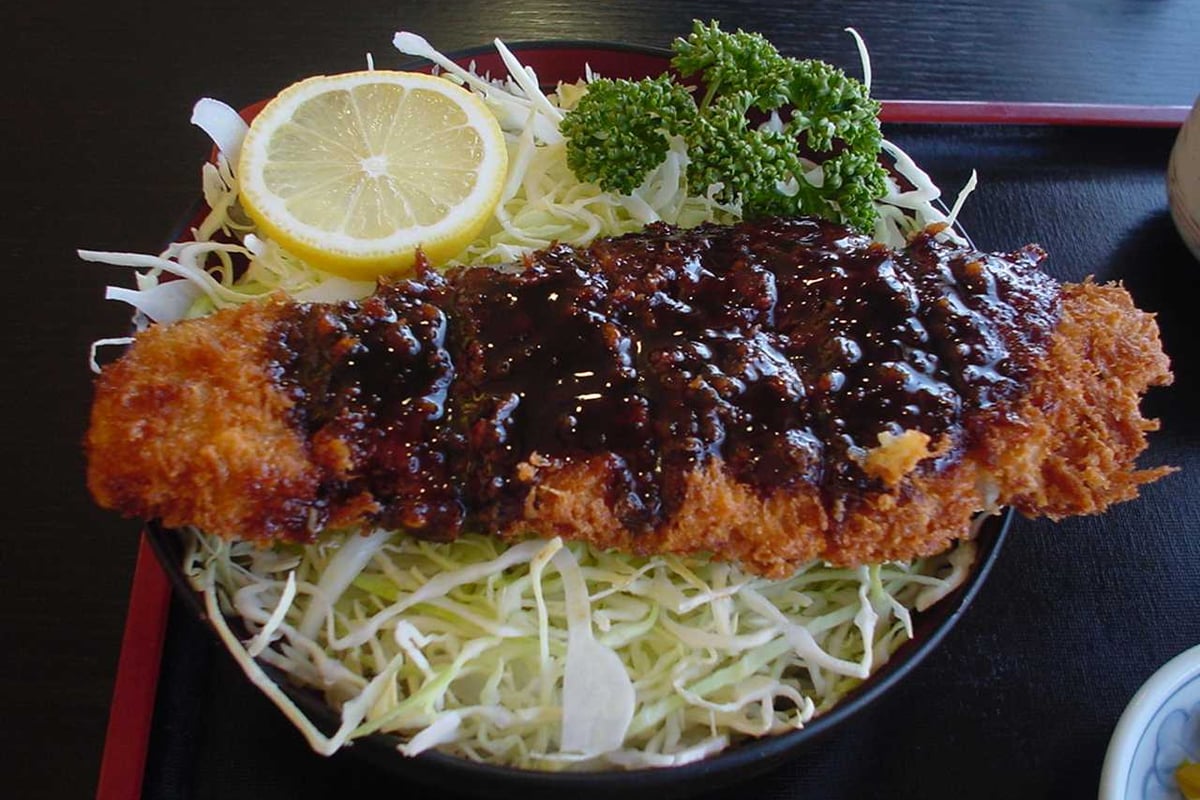
Sauce Katsudon
Sauce Katsudon
Sauce Katsudon, beloved mainly in Kiryu City, Gunma Prefecture, is a local specialty within Japan's “sauce katsudon” food culture: freshly fried pork cutlet is dipped in a special Worcestershire-sauce-based sauce and served over rice, without being finished with egg. It is said to have originated at Shidamiya, a Kiryu eatery founded in 1926, which created a distinctive sauce by combining an eel-basting technique with Worcestershire sauce. In Kiryu, a city that once flourished through the textile industry, sauce katsudon — which tastes good even after going cold — became a staple of food delivery. Even today, in Kiryu, simply saying “katsudon” usually means sauce katsudon rather than the egg-topped version, and it is so deeply woven into daily life that the “Kiryu Sauce Katsudon Association” was formed to promote it as a local specialty citywide. There is no fixed rule for the sauce blend or the cut of meat used, so comparing the differences between restaurants and households is part of the fun.
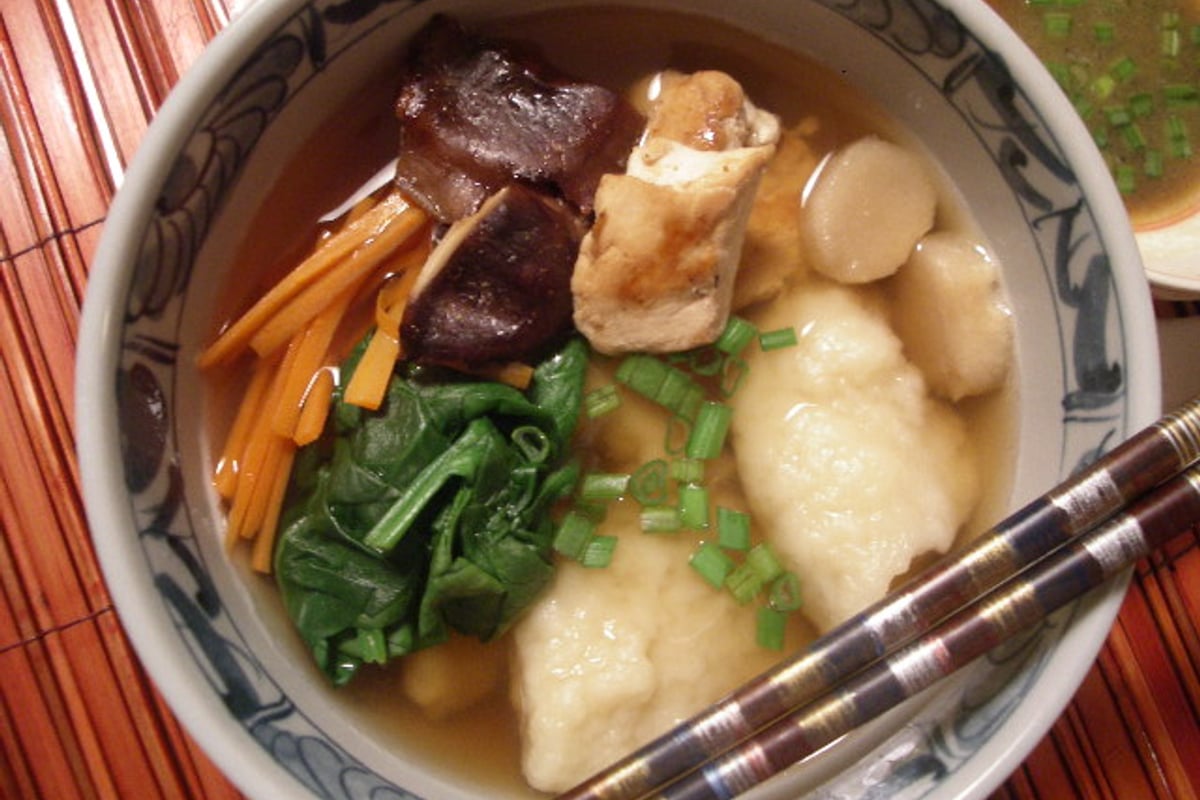
Suiton (wheat flour dumpling soup)
Suiton
Suiton is a local dish enjoyed throughout Gunma Prefecture, made by kneading wheat flour with water, tearing off pieces to form dumplings, and simmering them with vegetables in a miso- or soy sauce-based broth. Gunma boasts some of the longest hours of sunshine in Japan, and because double-cropping — growing wheat after the rice harvest — was widespread, a food culture built around wheat flour developed early on. Since the dough is simply torn into pieces and simmered without the extra step of rolling and cutting it, suiton became a simple home-cooked dish that was easy to make even during breaks in farm work. The dish goes by different names depending on the area, including 'tocchanage-jiru' in Fujioka, as well as 'tsumerikko' and 'nejikko.' It is said to have been eaten even earlier than another wheat-flour dish, okkirikomi, and today it remains a beloved 'Gunma local dish,' served in school lunches throughout the prefecture.
Model Course
Half-Day Course Around the Ikaho and Mizusawa Hot Spring Area
Visit an Ikaho-yaki kiln that uses hot spring mineral deposits ("yu no hana") as glaze in Ikaho Onsen, then taste Mizusawa Udon, one of Japan's three great udon, along the "udon street" in front of Mizusawa-dera Temple — a course touring the Ikaho area of Shibukawa.
Joshu Gourmet Course: Takasaki Daruma and Yaki Manju
Enjoy a painting experience at a Takasaki Daruma workshop connected to Shorinzan Darumaji Temple, then peek into a dye shop still practicing the chusen technique for Joshu Takasaki Chusen Tenugui, before filling up on Gunma's famous Yaki Manju.
Kiryu, Isesaki, and Ota Textiles and Sauce Katsudon Course
Trace the textile-producing areas of the Ryomo region, from a tour of the Kiryu-ori memorial hall — known for the saying "Nishijin of the West, Kiryu of the East" — to a display of Isezaki-gasuri and a workshop where Kiryu shibori layers tie-dyeing onto woven cloth, then experience the sound of Ota Daiko drums before finishing with Sauce Katsudon, a specialty of Kiryu and Ota.
Tomioka and Shimonita Course: Tasting Konjac and Negi Local Soups
Compare Konnyaku Miso Oden, made with Gunma's top-ranked konjac production, and Koshine-jiru, a soup starring konjac, shiitake mushrooms, and negi — a course exploring the local flavors of the Tomioka and Shimonita area.
Course Visiting the Mountain Crafts and Flavors of Tone and Agatsuma
Experience the bentwood technique of Iriyama Menpa lunch boxes in the Iriyama area of Nakanojo, then visit a paulownia-chest workshop in Tsukiyono, Minakami, before taking a break with simmered Hana Ingen beans, a specialty of the Agatsuma highlands — a course touring mountain crafts and flavors.
Annaka Blacksmithing and Sukiyaki Course
Watch a blacksmith at an Annaka Uchihamono workshop finish knives one by one by hand, then savor Gunma's distinctive "100% self-sufficient sukiyaki," in which beef, negi, konjac, and shiitake mushrooms are all produced within the prefecture.
Events
Shorinzan Nanakusa Taisai Daruma Market
Every year on January 6-7 / Shorinzan Darumaji Temple (Hanataka-cho, Takasaki)