Image: Wikimedia Commons
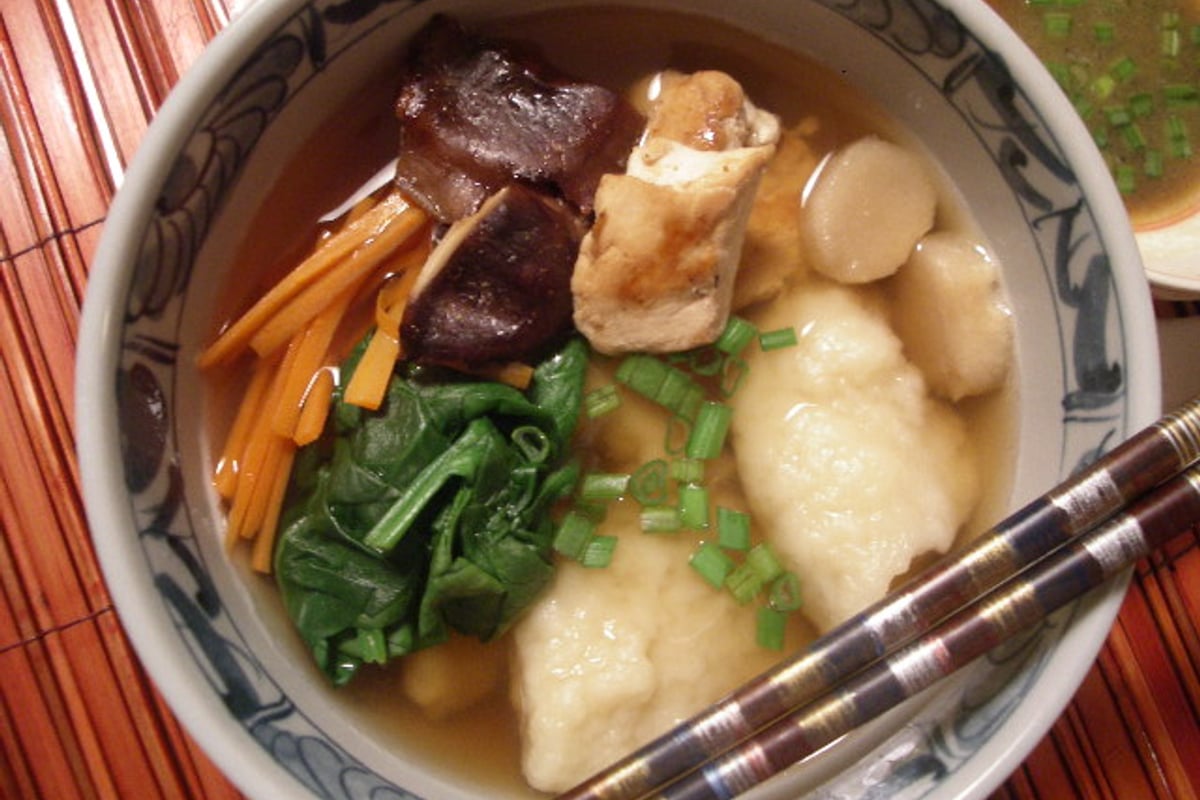
Suiton is a local dish enjoyed throughout Gunma Prefecture, made by kneading wheat flour with water, tearing off pieces to form dumplings, and simmering them with vegetables in a miso- or soy sauce-based broth. Gunma boasts some of the longest hours of sunshine in Japan, and because double-cropping — growing wheat after the rice harvest — was widespread, a food culture built around wheat flour developed early on. Since the dough is simply torn into pieces and simmered without the extra step of rolling and cutting it, suiton became a simple home-cooked dish that was easy to make even during breaks in farm work. The dish goes by different names depending on the area, including 'tocchanage-jiru' in Fujioka, as well as 'tsumerikko' and 'nejikko.' It is said to have been eaten even earlier than another wheat-flour dish, okkirikomi, and today it remains a beloved 'Gunma local dish,' served in school lunches throughout the prefecture.
Origin
Suiton is said to have already existed in the Muromachi period, and it is believed to have taken on its current dumpling form from the late Edo period onward. Gunma has long practiced double-cropping of rice and wheat, and dishes made with wheat flour became deeply rooted in daily life. Suiton is said to have originated from skipping the steps of rolling out and cutting the dough, instead simmering it directly as torn 'chigiri dango' (pinched dumplings).
History
Gunma has some of the longest sunshine hours in Japan, and its dry climate and well-drained soil made it well suited to growing wheat, so double-cropping — planting wheat after the autumn rice harvest — became widespread. Against this backdrop of a rich wheat-growing culture, suiton is said to have become established as a home-cooked dish eaten throughout the prefecture even before okkirikomi.
Features
Vegetables on hand at home are cut into bite-sized pieces and simmered in a broth made from dried sardines, seasoned with soy sauce or miso, and finished by simmering wheat flour dough — kneaded with water and torn into pieces — for a few minutes. Because there is no need to knead, roll out, and cut the dough, it is easy to prepare in large quantities, making it a valued meal during busy breaks in farm work. Another distinctive feature is that the dish goes by different names depending on the area, such as 'tocchanage-jiru,' 'tsumerikko,' and 'nejikko.'
Main Ingredients
Food Culture
In Gunma, where double-cropping of wheat was widespread, suiton has been cherished as a simple home-cooked dish that skips the step of cutting the dough. It is still served in school lunches throughout the prefecture today, carried on across generations as a 'Gunma local dish.'
How It Differs from Home Cooking
At home, it is common to quickly tear off pieces of dough and simmer them, but depending on the region or restaurant, differences in flavor can emerge from careful attention to how the broth is made, the ratio of miso to soy sauce, and how firmly the dough is kneaded.