Food Genre
Hot Pot
A cross-regional look at Hot Pot from across Japan.
Region(multiple selection allowed)
47 items
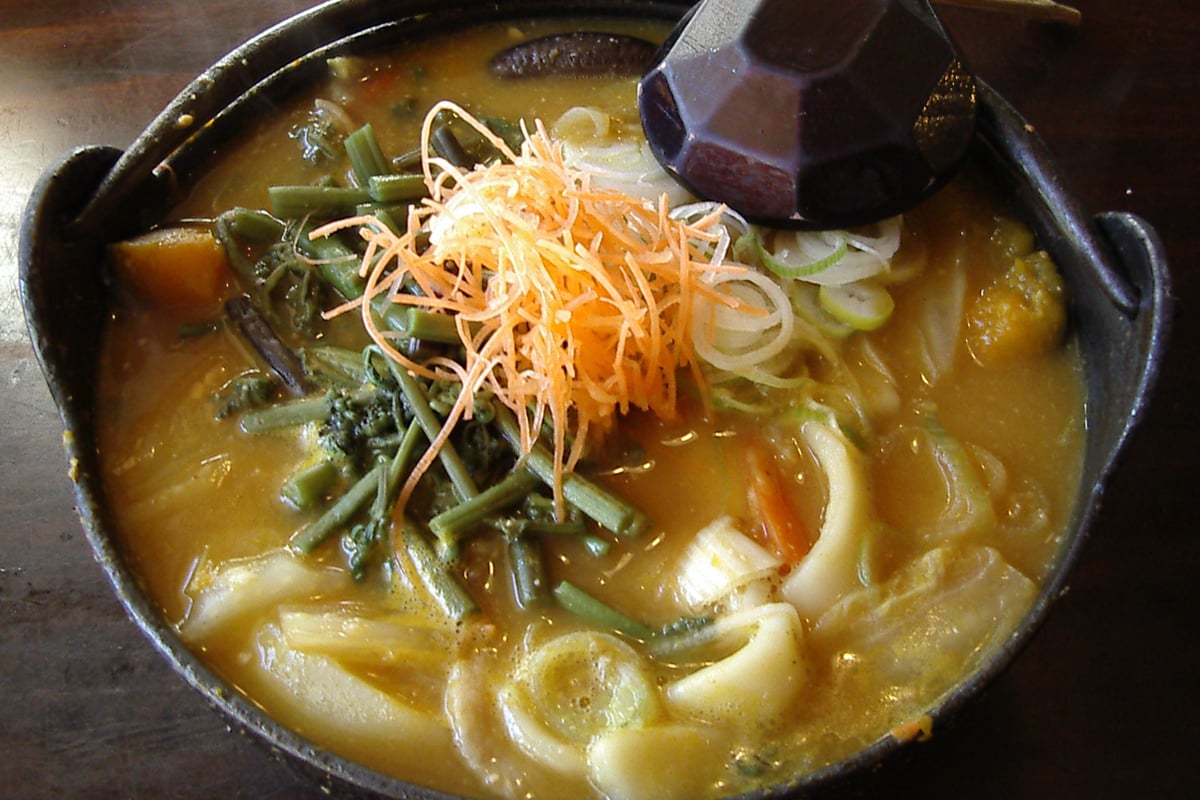
Hoto (Flat Noodles Simmered in Miso)
Hoto
Hoto is a local dish of Yamanashi Prefecture in which fresh noodles, made by kneading wheat flour and cutting it into wide strips, are simmered in a miso-based broth together with kabocha squash and other vegetables. Because the noodles are made without salt, they can go straight into the pot without being boiled first. Since they are simmered with the dusting flour still on them, the broth thickens, stays hot for a long time, and warms the body. It is so well loved that there is even a saying, 'Umai mon da yo, kabocha no hoto' (Kabocha hoto is a tasty thing), and in 2007 it was selected for the Ministry of Agriculture, Forestry and Fisheries (MAFF)'s '100 Selected Local Dishes of Farming, Mountain and Fishing Villages.' About 80 percent of Yamanashi Prefecture is covered by mountain forests, and paddy fields for growing rice were limited. For this reason, a flour-based diet (funshoku), in which wheat and other grains are ground into flour and eaten, took root, and hoto became a staple food in place of rice. In the Kyonan region it is also called 'noshi-ire' or 'noshi-komi.' Today there are many specialty shops in the prefecture, and it is common for them to serve it in individual iron pots.
Imoni (Taro Hot Pot)
Imoni
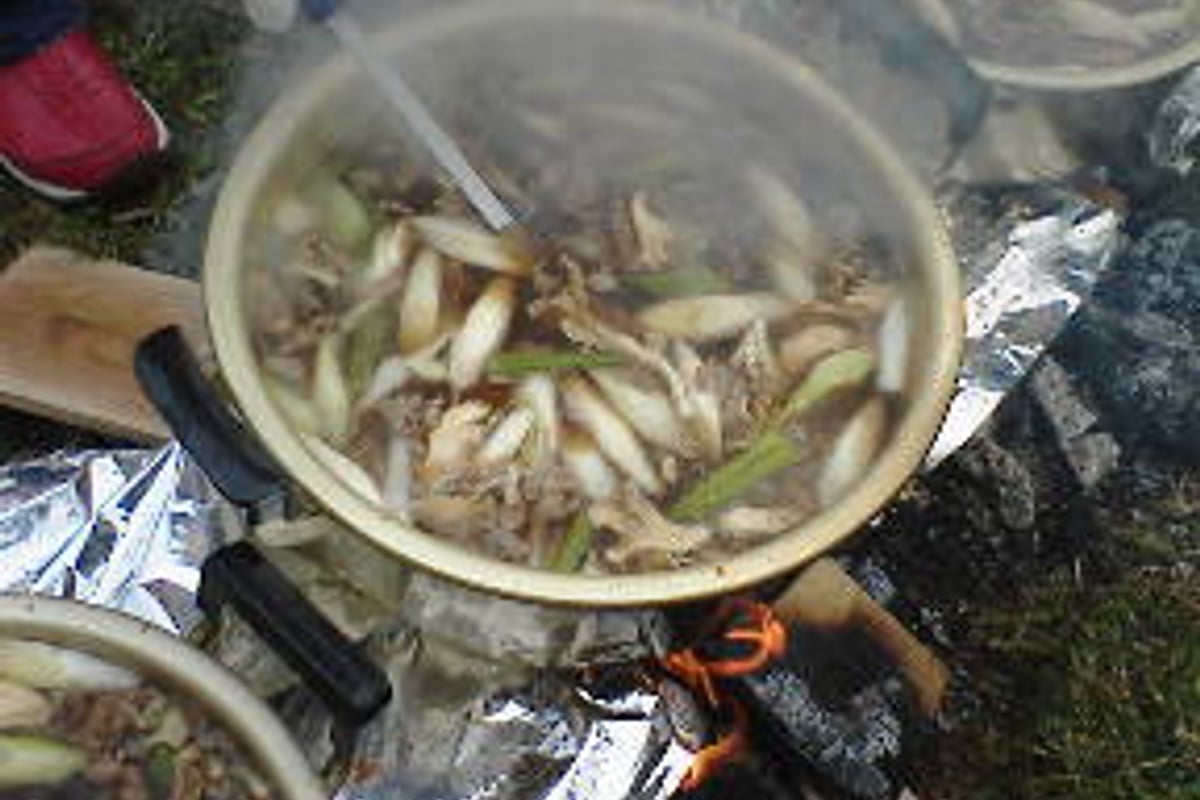
Imoni is a hot pot dish centered on taro grown in Yamagata Prefecture, and every autumn, groups of friends and family gather on riverbanks with pots and firewood for 'Imoni-kai' (communal Imoni-cooking gatherings), a beloved seasonal tradition across the prefecture. Its origins are said to trace back to the Edo-period river trade on the Mogami River, when boatmen around Nakayama Town — an area known for taro production — simmered dried cod from their cargo together with local taro. Seasonings and ingredients vary widely by region: in the inland Murayama region, a sweet-savory beef-and-soy-sauce style is standard, while the Shonai region uses pork and miso, adding mushrooms and deep-fried tofu for a hearty broth. The Mogami region adds wild mountain vegetables and mushrooms, and the Oitama region adds cotton tofu with a hidden touch of miso — each region offering its own distinctive take on the same dish. Every September, the 'Japan's Best Imoni-kai Festival' is held on the banks of the Mamigasaki River in Yamagata City, where about 30,000 servings are prepared in a giant pot 6 meters in diameter.
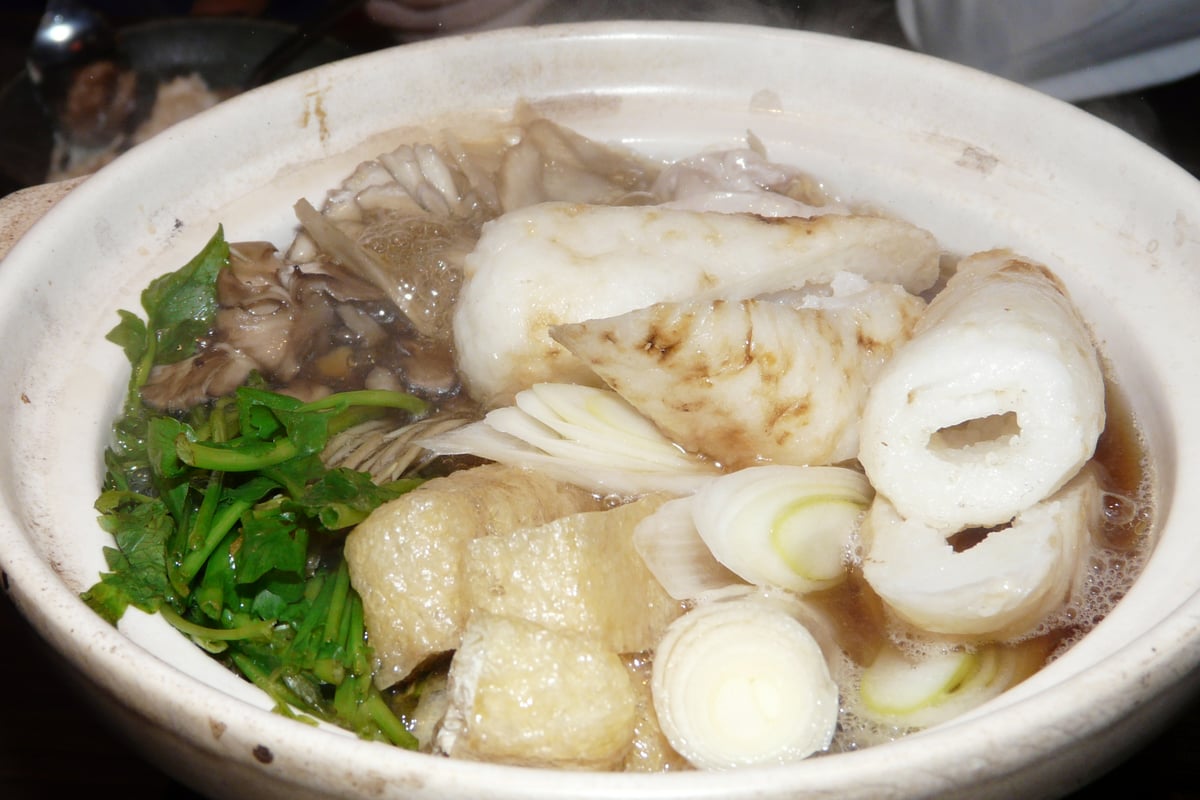
Kiritanpo Nabe
Kiritanpo Nabe
Kiritanpo Nabe is a signature local dish of Akita Prefecture in which kiritanpo — half-pounded rice wrapped around a cedar stick and grilled — is simmered in a broth made from Hinai-jidori (a breed of free-range chicken). It is said to have originated in the northern part of the prefecture, centered on Odate City and Kazuno City, where workers who stayed in the mountains for charcoal-making or cedar logging would mold leftover rice onto sticks and grill it over a fire. The soy-sauce-based broth, rich with the umami of Hinai-jidori, is combined with mountain ingredients of Akita such as burdock root, maitake mushroom, Japanese parsley (seri), and long green onion, and the kiritanpo is added at the end and simmered briefly so it soaks up just the right amount of broth. Made in homes from the season of new rice through winter, it is also cherished as an essential dish for celebrations, funerals, and entertaining guests.

Konnyaku Miso Oden
Konnyaku Miso Oden
Konnyaku Miso Oden is a local specialty of Gunma Prefecture made by skewering parboiled block konnyaku or freeze-dried konnyaku (shimi-konnyaku) and generously coating them with a rich, sweet-savory miso sauce. Gunma Prefecture is Japan's top producer of konnyaku potato, accounting for about 90% of the national output, and this dish developed as a way to fully enjoy the konnyaku that has long been a local staple. Gunma winters are known for a dry, cold seasonal wind called the 'Karakkaze,' and it is said that oden - which warms the body from within - has traditionally been made in many households for this reason. The blend of the miso sauce varies by household and shop: some use mirin for a sweet-savory flavor, while others add yuzu citrus or sesame for extra fragrance. In some areas, the dish is also known as 'Hippataki Oden.'
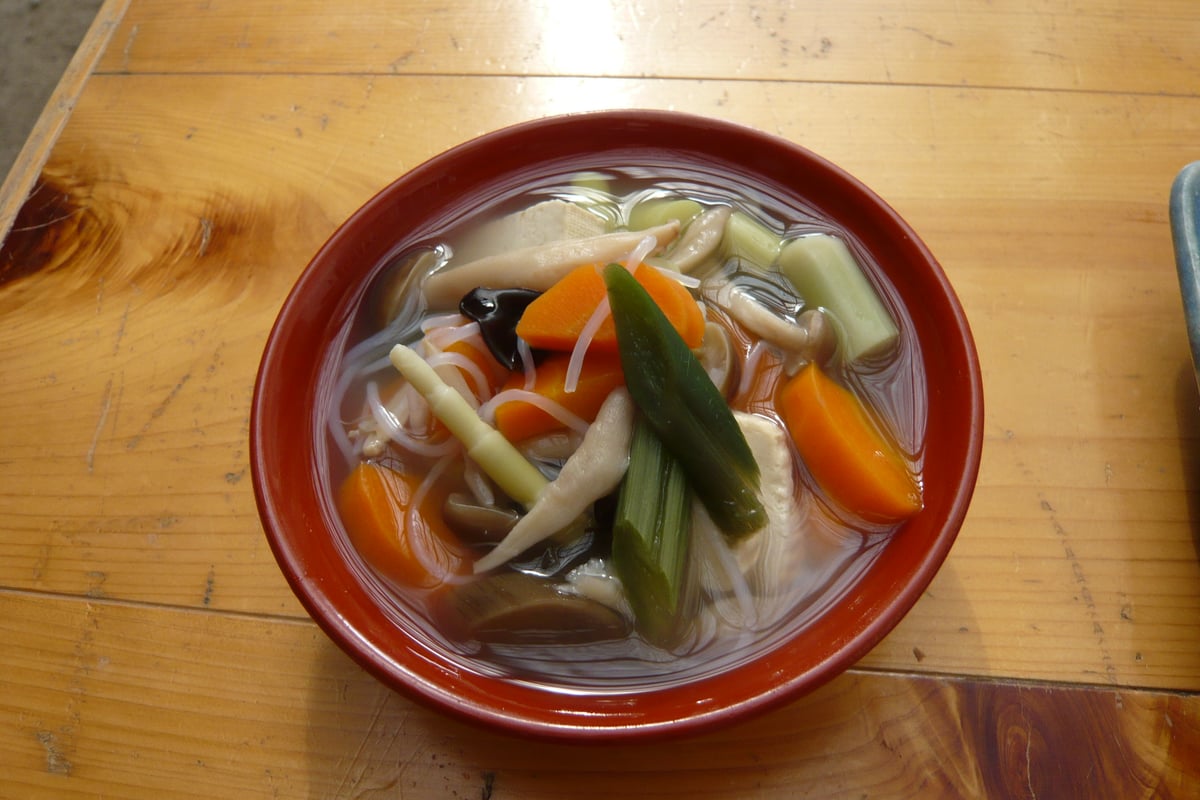
Kozuyu
Kozuyu
Kozuyu is a soup served at celebratory feasts in the Aizu region, made with an elegant broth from dried scallops (dried adductor muscle) and an odd number of ingredients — taro, carrot, shiitake mushroom, wood ear mushroom, shirataki noodles, and bean-flour fu (wheat gluten) — simmered together and lightly seasoned. It is typically served in shallow Aizu-nuri lacquerware bowls called 'teshiozara,' where the glossy vermilion of the lacquer complements the colors of the soup. As an essential dish for hospitality on celebratory occasions such as New Year, weddings, and memorial services, it has been passed down for generations in Aizu households. Using dried scallops — a precious seafood ingredient — for the broth was itself considered a luxury in landlocked Aizu, and the dish came to be regarded as the ultimate way to entertain guests. A distinctive custom allows guests to have as many refills as they like, making Kozuyu more than just a dish — it embodies the region's culture of hospitality and celebration. Each household has its own subtle variations in the mix and cut of ingredients, handed down as a family recipe.
Shizuoka Oden
Shizuoka Oden
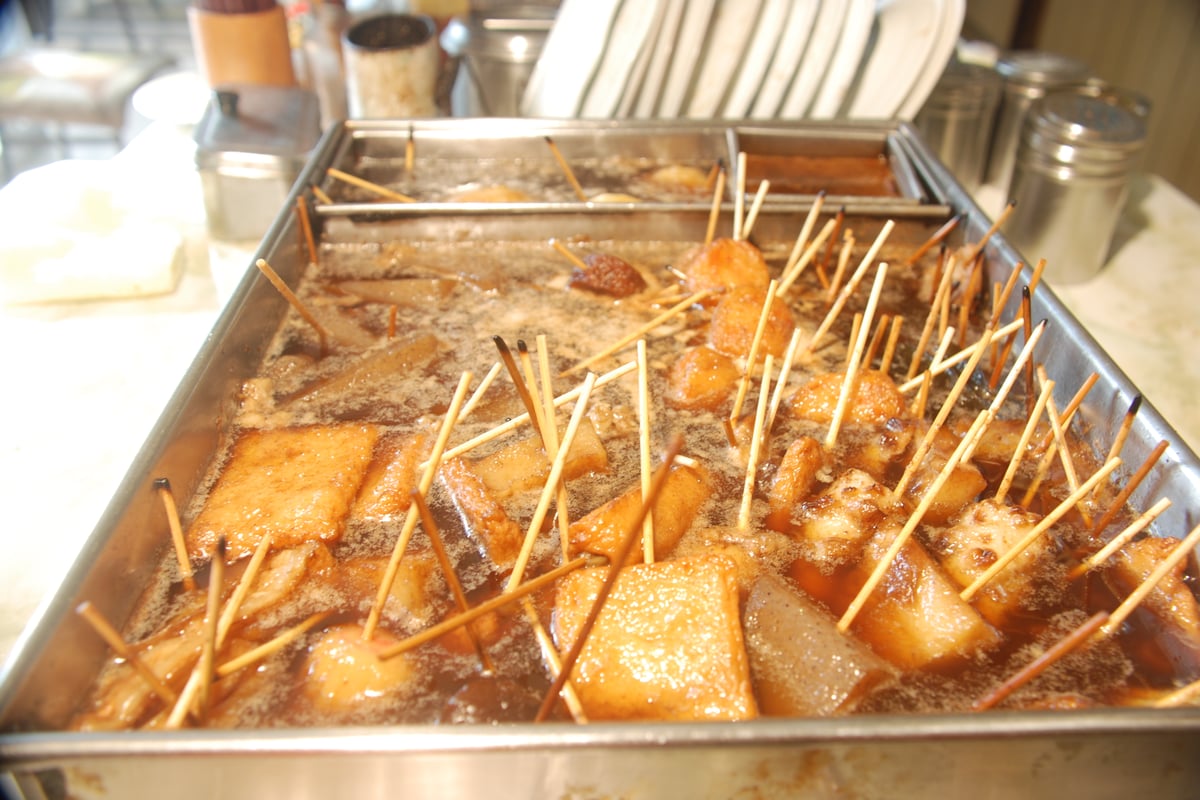
Shizuoka oden is a local dish of Shizuoka City in which skewered ingredients are simmered in a dark broth made from beef tendon and other ingredients. Ingredients include kuro hanpen, beef tendon, daikon radish, konnyaku, and eggs. A distinctive feature is the generous sprinkling of dashi-ko (powdered fish flakes), made by grinding dried fish shavings into powder, and aonori (green laver) just before eating. Because the broth uses dark soy sauce and is simmered while being topped up over and over, it takes on a blackish color. It is said to have begun in the Taisho period, and after the war it grew in popularity when beef tendon and pork offal, which had been discarded, began to be used as ingredients. A very Shizuoka touch is that oden can be bought one skewer at a time not only at specialty shops and izakaya but also at delis and at dagashiya (old-fashioned penny-candy shops). Children have grown up eating oden at dagashiya as an afternoon snack. After the war, a large number of oden stalls lined the streets near Shizuoka City Hall. Their successors, Aoba Oden-gai and Aoba Yokocho, are still lined with oden shops today.
Yudofu (Simmered Tofu Hot Pot)
Yudofu
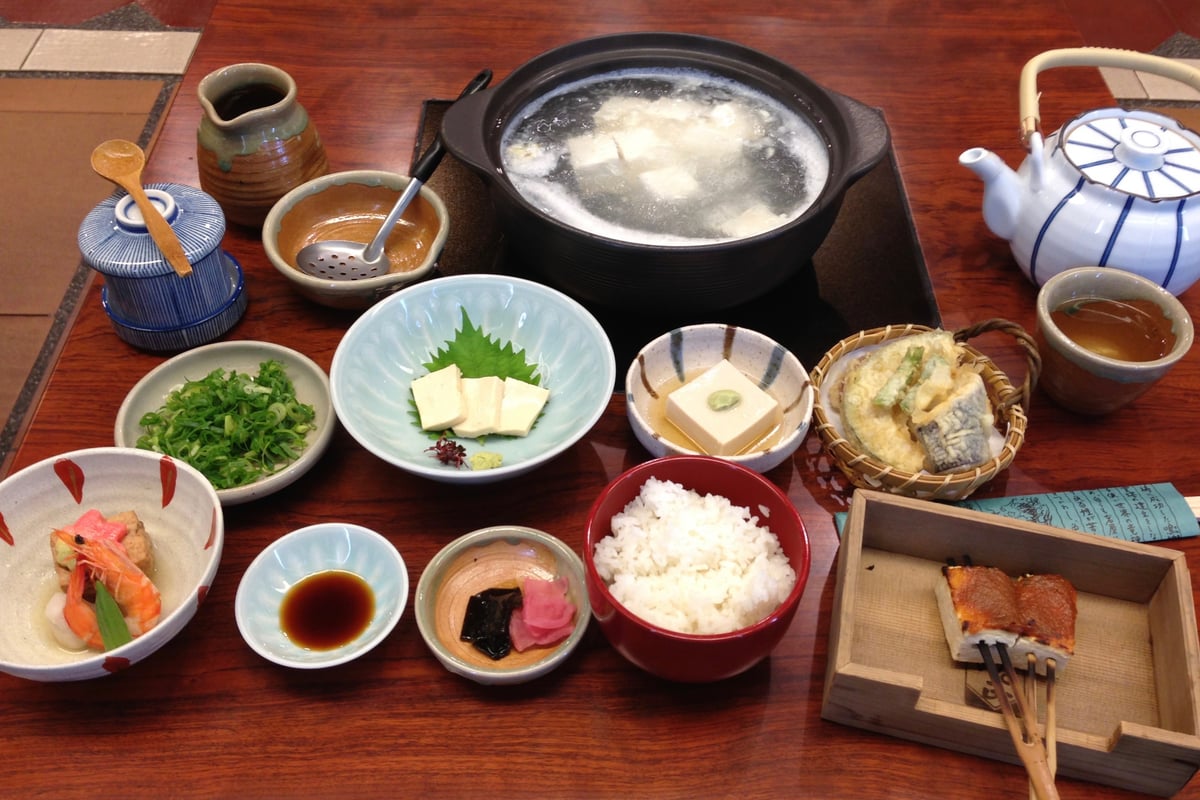
Yudofu is a simple local dish of Kyoto in which tofu is gently warmed in an earthenware pot filled with kelp dashi and served with ponzu sauce and condiments. Known to have originated at the approach to Nanzen-ji Temple in Sakyo Ward, Kyoto City, it developed as a shojin cuisine (Buddhist vegetarian cooking) dish for savoring the flavor of tofu itself. Kyoto, blessed with high-quality groundwater, has long had a thriving tofu-making tradition, and the quality of the water and soybeans is said to greatly affect the flavor. Although known as a symbol of winter, specialty shops around Nanzen-ji actually offer it year-round, and it is one of the Kyoto dishes popular with tourists as well. Though understated, its depth of appeal lies in the careful attention paid to the temperature and texture of the dashi and tofu.
Dongara-jiru (Winter Cod Miso Soup)
Dongara-jiru (Kandara-jiru)
Dongara-jiru is a winter specialty of the Shonai region in Yamagata Prefecture — a hearty miso-based hot pot made from Pacific cod that gather along the coast to spawn, known locally as 'kandara' (winter cod). Almost the entire fish is used, not just the flesh but also the organs, milt, skin, and bones. The word 'dongara' refers to fish bones and offal, and the name is said to derive from using the flesh and bones without waste. The dish is said to have originated as a fisherman's meal that Shonai fishermen ate on board their boats or on the beach to ward off the cold, and its defining feature is a rich, deep flavor created by dissolving the fatty cod liver into the broth. Winter cod weighing 4 kg or more, caught during the 'kan' (coldest) season from early January to early February, is considered the most delicious, and during this period Tsuruoka City and Sakata City hold 'Kandara Matsuri' (winter cod festivals) where dongara-jiru is served from large pots. Traditionally, green onion is not added, and the authentic way to finish the dish is by topping it with rock nori.
Koshine-jiru
Koshine-jiru
Koshine-jiru is a miso-based soup from the area around Tomioka (city) and Kanra (town) in Gunma Prefecture, generously packed with the local specialties konnyaku, shiitake mushrooms, and negi (green onion). Its name is formed by combining the first syllables of these three ingredients. It is said to have originated when the Tomioka Women's Association Federation devised the soup to make the most of locally grown produce - konnyaku, log-grown shiitake, and Shimonita negi. More than 20 years after it was first created, it has become an established home-cooked dish and is now also served in school lunch menus and at local festivals and events. The rule is that konnyaku, shiitake, and negi must always be included, while other vegetables and the type of miso vary by household - daikon, carrot, burdock root, taro, and pork are often added to make it a hearty, filling dish.
Toji Soba (Soba Dipped in Hot Pot Broth)
Toji Soba
Toji Soba is a local soba dish handed down in Nagawa, Matsumoto City, Nagano Prefecture (formerly Nagawa Village), and it is also written with the characters 投汁そば. A single mouthful of soba is placed in a small 'toji-kago,' a basket woven from bamboo, then dipped in broth simmering in a pot to warm it before eating. Seasonal vegetables, mountain vegetables, mushrooms, chicken, and other ingredients are added to the broth and served into bowls together with the soba. Nagawa is a mountain area at an elevation of about 1,200 m along the Nomugi Kaido road, which runs from Matsumoto toward Hida. The large difference between day and night temperatures suits the cultivation of buckwheat, and it is said that in the past soba, rather than rice, was the staple food. It was a dish that families ate gathered around an iron pot hung over the irori (sunken hearth), and it was also indispensable for entertaining on festive occasions, such as ceremonial occasions like weddings and funerals. It is eaten mainly in Nagawa and also in parts of the Kiso region.
Junjun (Lake Biwa-style Sukiyaki Hot Pot)
Junjun
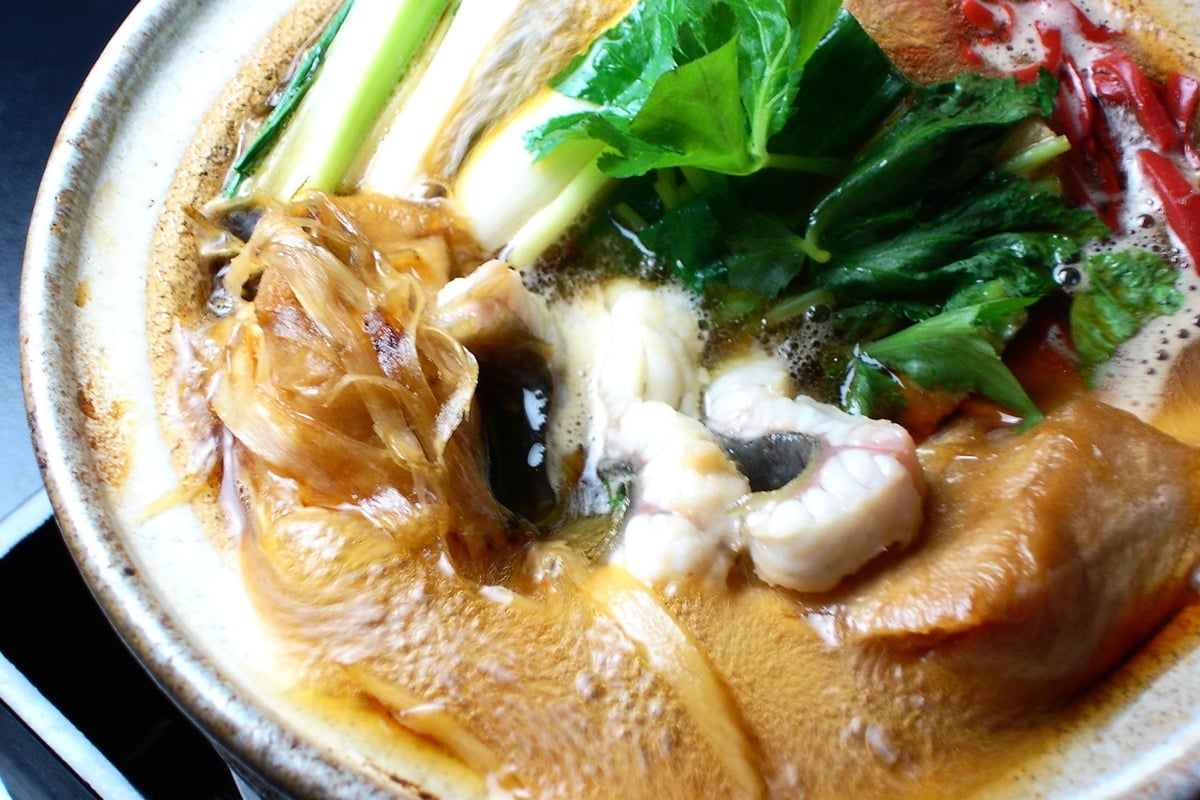
Junjun is a sukiyaki-style hot pot dish, seasoned sweet and savory with soy sauce, sugar, and mirin, that has been passed down along the shores of Lake Biwa and in the Kohoku region to the north. While sukiyaki nationwide typically centers on beef, Junjun is distinctive in that its ingredients vary by region and household — featuring lake fish such as eel, isaza goby, carp, honmoroko, and catfish, as well as chicken or Omi Beef. The name is said to come from the 'jun-jun' sound the ingredients make as they simmer in the pot. Once a home-cooked dish known mainly in fishing villages around Lake Biwa, Junjun has in recent years become recognized across Shiga Prefecture and is increasingly introduced to visitors as a local specialty. It is a hot pot that reflects lakeside life, traditionally prepared with special ingredients for occasions such as New Year and the Obon holidays when hosting guests.
Kanazawa Oden
Kanazawa oden
Kanazawa Oden is a local soul food eaten year-round by the people of Kanazawa, characterized by a refined, clear Kansai-style broth made from kombu and dried fish stock, sharpened with locally made Ono soy sauce. Part of its great appeal lies in the local ingredients not found in oden from other prefectures — locally landed 'bai' whelks, 'kuruma-fu' wheel-shaped wheat gluten that soaks up the broth, and in winter, 'kani-men,' crab shell stuffed with miso and crab meat and simmered. Oden is said to have become popular in Kanazawa around the end of the Meiji era, first served at celebratory events, and long-established oden shops founded in the early Showa era still keep their doors open today, bustling with both locals and tourists. Many shops serve it even in summer, making year-round enjoyment another distinctive feature of Kanazawa Oden.
Motsunabe
Motsunabe
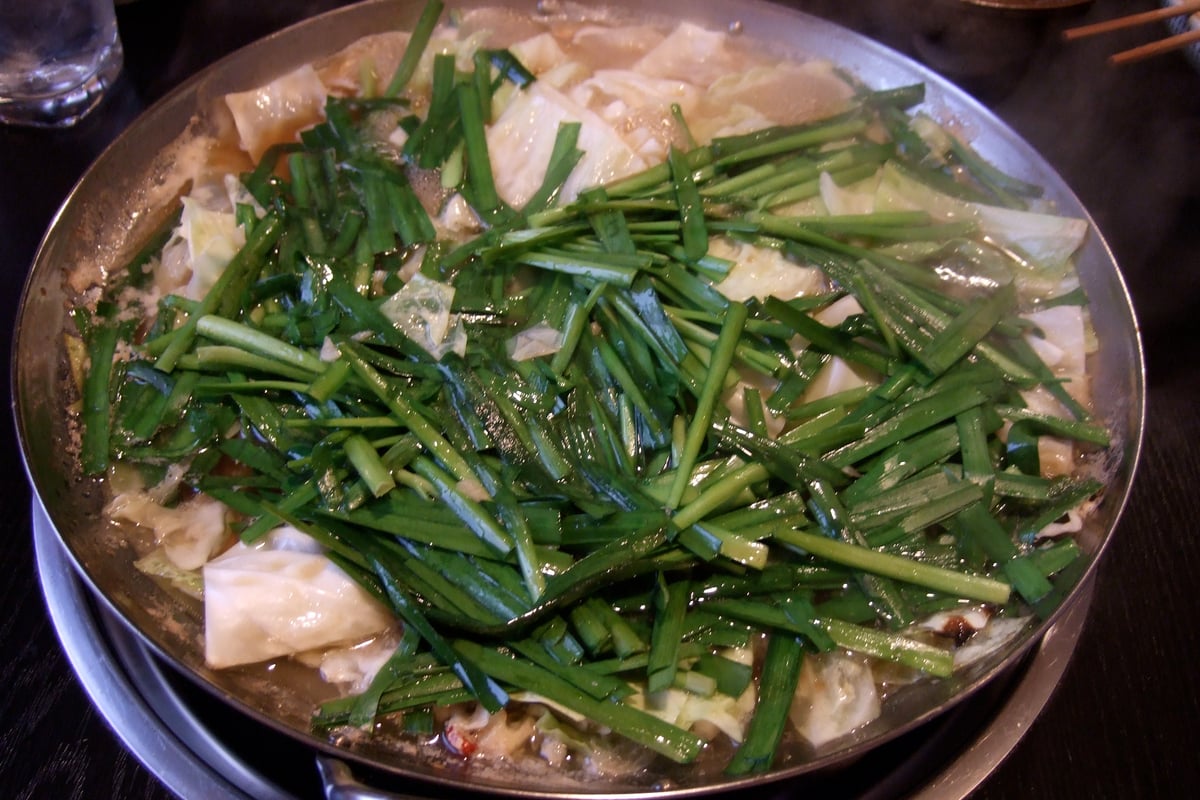
Motsunabe is a hot pot dish originating in Hakata, Fukuoka, in which beef or pork motsu (offal) is simmered with cabbage, garlic chives, garlic, and chili peppers in a soy sauce or miso-based broth. It is said to have started right after the war, during a time of food shortages, when people simmered inexpensive beef offal together with vegetables in an aluminum pot. As food supplies improved, cabbage was added, and the dish settled into its current form of offal, garlic chives, cabbage, soy sauce-based broth, and a final course of champon noodles. Specialty restaurants rapidly increased in Hakata from the late 1980s, and a nationwide 'motsunabe boom' in the early 1990s established it as one of Fukuoka's signature local dishes. Its popularity also owes to the springy texture of the offal and the well-balanced nutrition of eating plenty of vegetables in one dish.
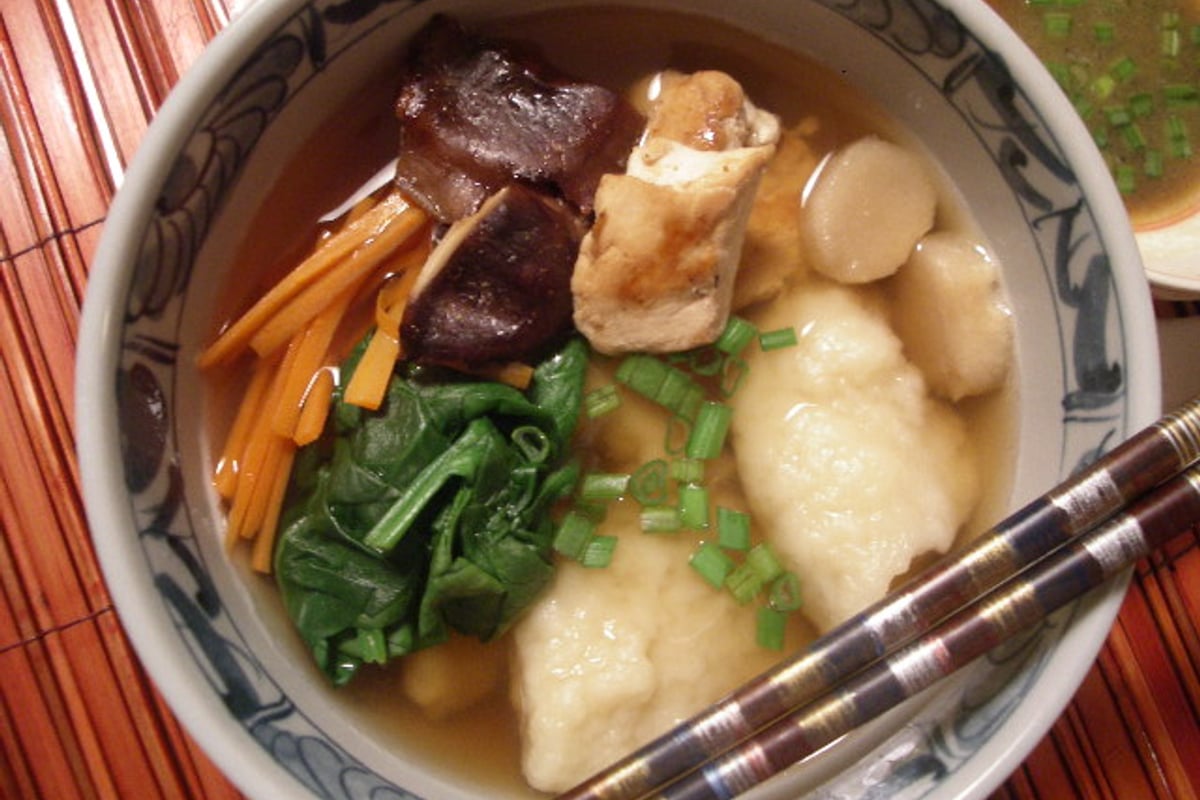
Suiton (wheat flour dumpling soup)
Suiton
Suiton is a local dish enjoyed throughout Gunma Prefecture, made by kneading wheat flour with water, tearing off pieces to form dumplings, and simmering them with vegetables in a miso- or soy sauce-based broth. Gunma boasts some of the longest hours of sunshine in Japan, and because double-cropping — growing wheat after the rice harvest — was widespread, a food culture built around wheat flour developed early on. Since the dough is simply torn into pieces and simmered without the extra step of rolling and cutting it, suiton became a simple home-cooked dish that was easy to make even during breaks in farm work. The dish goes by different names depending on the area, including 'tocchanage-jiru' in Fujioka, as well as 'tsumerikko' and 'nejikko.' It is said to have been eaten even earlier than another wheat-flour dish, okkirikomi, and today it remains a beloved 'Gunma local dish,' served in school lunches throughout the prefecture.
Mizutaki (Hakata-Style Chicken Hot Pot)
Mizutaki
Mizutaki is a hot pot dish that represents Hakata, made by simmering chicken bones and bone-in chicken for a long time to produce a cloudy broth, then cooking ingredients such as chicken, napa cabbage, and tofu in it and eating them with ponzu sauce. Despite its name, mizutaki, meaning 'water-simmered,' the broth is not clear — long, slow cooking causes collagen to dissolve out, giving Hakata-style mizutaki its signature rich, white broth. It is said to have originated in 1905 (Meiji 38), when Hayashida Heizaburo, a native of Nagasaki, combined the Western consomme technique and the pai tang (white broth) method of Chinese cuisine that he had learned in Hong Kong, and began serving the dish at his Hakata restaurant, Suigetsu. Fitting for Hakata, a port city with a long history of exchange with overseas cultures, mizutaki is a dish that absorbed an outside food culture and adapted it in its own distinctive way; it has also been selected by the Ministry of Agriculture, Forestry and Fisheries' 'Our Regional Cuisines' as a signature dish of Fukuoka.
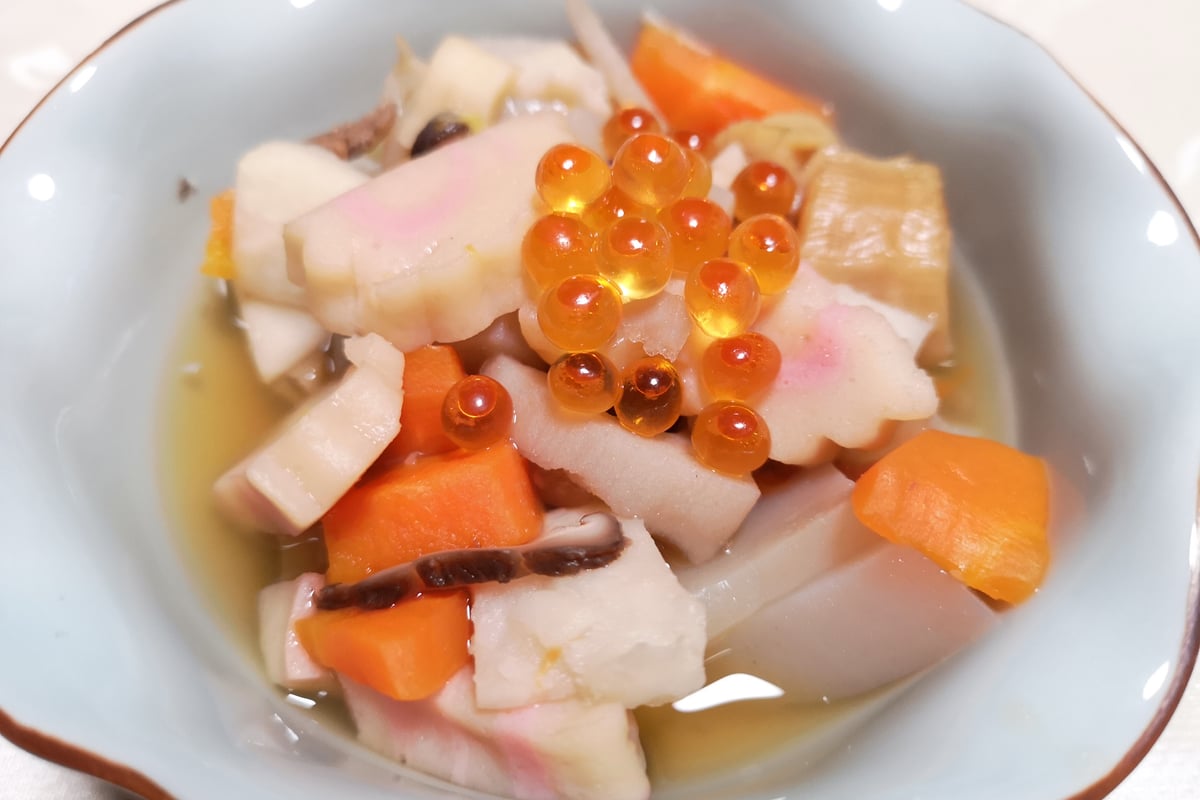
Noppe
Noppe
Noppe is a representative local dish of Niigata Prefecture in which taro takes center stage, simmered in a light broth with carrot, konnyaku, dried shiitake mushroom, bamboo shoots, and other ingredients. Thickened by the natural sliminess of taro or by potato starch, Niigata's Noppe is characterized by being closer to a simmered dish than a soup. The broth is made from dried ingredients such as dried scallops and dried shiitake, and it is finished colorfully with scallops, ginkgo nuts, salmon, salmon roe, and more. As well as being a staple on New Year's Eve and New Year's Day, it has long been considered indispensable at gatherings such as festivals, memorial services, and weddings. It is delicious both warm and chilled, and not a few households prefer cold Noppe. The ingredients, cutting style, and method of thickening vary by area and household, and its name also changes from place to place, such as 'konimo' or 'kokusho.' Each household's recipe has been handed down from mother to child, and it is also enjoyed in school lunches, restaurants, and ekiben (station bento).
Shottsuru Nabe
Shottsuru Nabe
Shottsuru Nabe is a hot pot dish from the coastal area of Akita Prefecture, centered on the Oga Peninsula, that uses shottsuru — a fish sauce made by fermenting fish such as hatahata (sailfin sandfish) with salt over a long period — as its broth. Shottsuru is counted as one of Japan's three great fish sauces, alongside Noto's ishiru and Kagawa's ikanago shoyu. Since around the early Edo period, fishing villages in Akita, including Oga, have passed down the technique of salting the large hatahata catches in barrels and slowly fermenting them into fish sauce. The hot pot, in which hatahata, tofu, napa cabbage, mushrooms, and other ingredients are simmered in a shottsuru-based broth in an earthenware pot, is prized for the rich umami and distinctive flavor unique to fish sauce, and it is cherished as a signature winter taste of Oga.
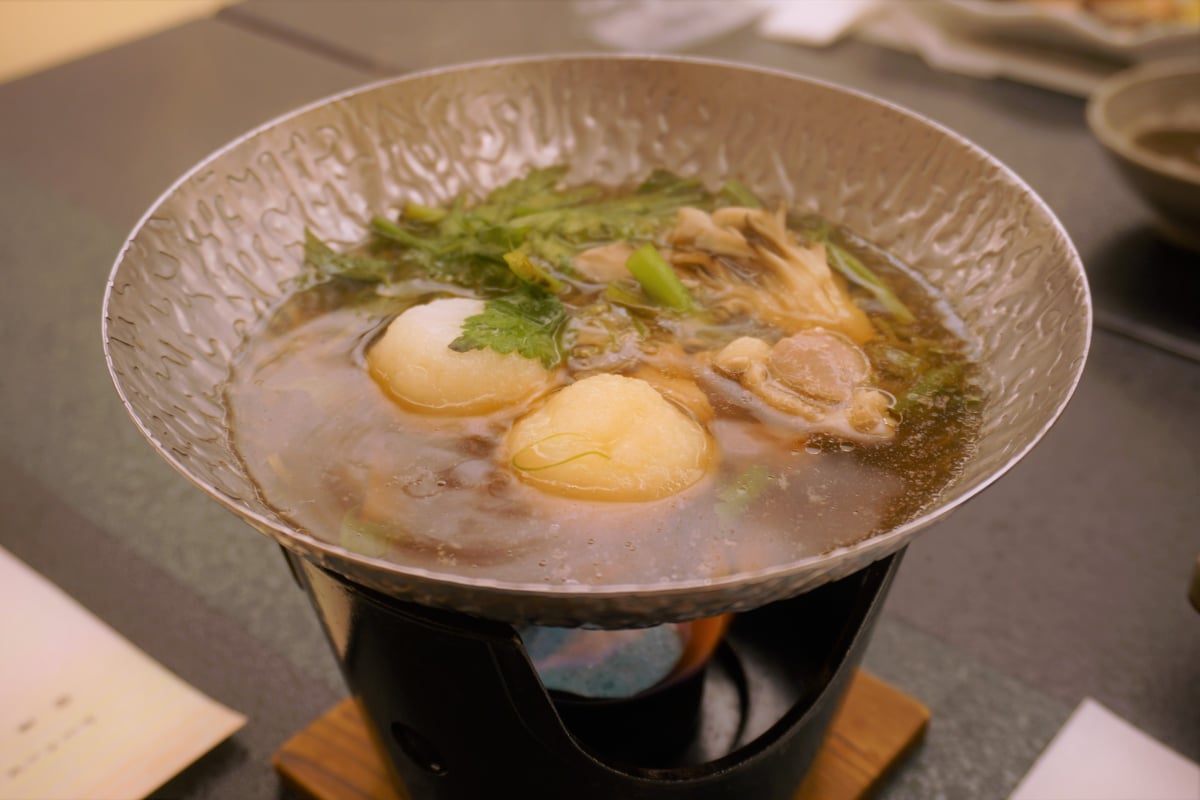
Damako Nabe
Damako Nabe
Damako Nabe is a local dish of Akita Prefecture in which damako-mochi — half-pounded rice rolled into bite-sized balls — is simmered in a Hinai-jidori broth together with burdock root, Japanese parsley (seri), mushrooms, and other ingredients. It is said to have originated in the Nanshu area around Lake Hachirogata, and its prototype is said to be a dish called 'tsukego,' in which grilled wakasagi (pond smelt) or crucian carp were seasoned with miso. As land reclamation of Lake Hachirogata reduced fish catches, chicken bones and meat came to be used in place of fish. Unlike kiritanpo, which is molded onto cedar skewers and grilled, Damako Nabe requires no skewers or grilling, making it easy to prepare, and it is cherished as a chewy home-style dish, alongside kiritanpo, as one of the signature winter hot pots of Akita.
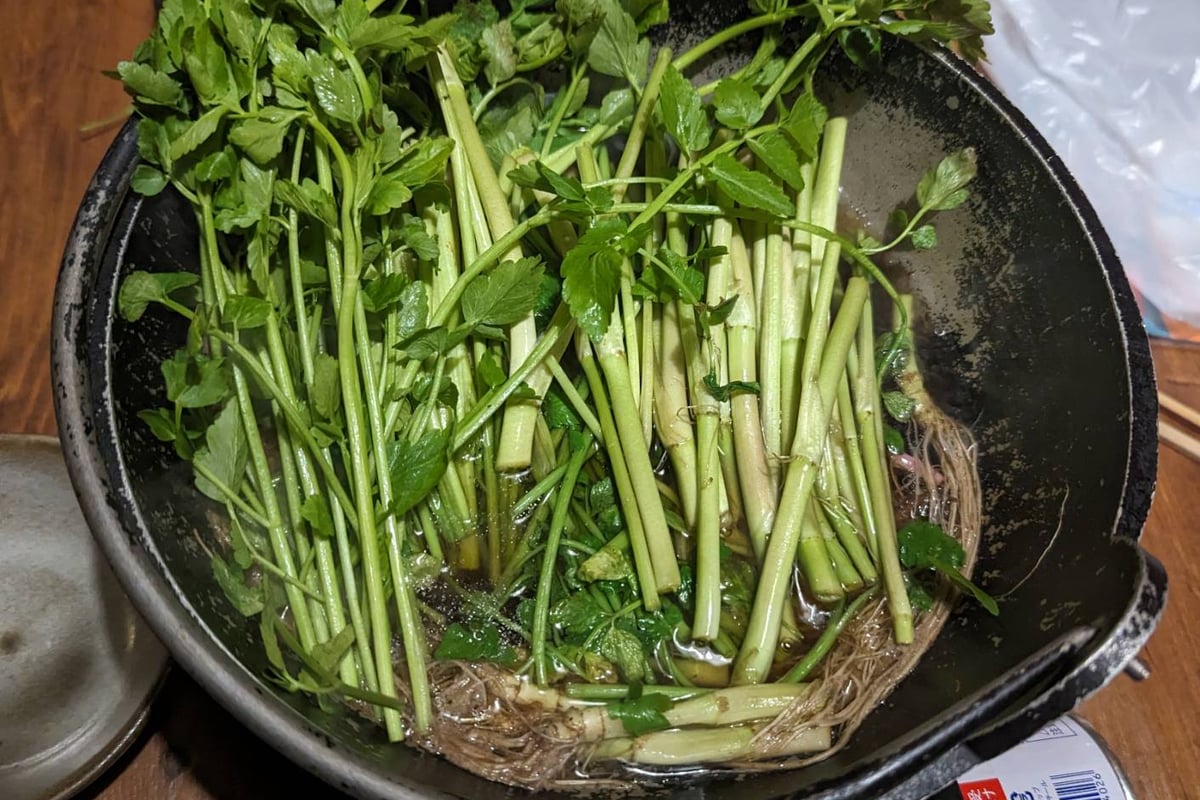
Seri Nabe (Japanese Parsley Hot Pot)
Seri Nabe
Seri nabe is a hot pot dish that uses Miyagi-grown seri (Japanese parsley) whole — root, stem, and leaf alike. The roots of seri are packed with intense umami, and their crisp, fragrant texture is the dish's defining charm. Miyagi Prefecture is one of Japan's leading seri-producing regions, with Natori City — which accounts for about 80% of the prefecture's production — known as the main growing area. In Natori City, seri has long been cultivated in the Kamiyoden and Shimoyoden districts, where groundwater from the Natori River wells up; records from the Genna era (1620s) mention the cultivation of wild seri, and it is said that seri cultivation became widespread during the Anei era (1770s). Date Masamune is also said to have composed a linked-verse poem referencing seri roots as 'nezeri' (root parsley) at a gathering in Tensho 18 (1590), suggesting that the custom of eating even the roots dates back a long way. In recent years, it has gained recognition alongside gyutan (grilled beef tongue) and zunda mochi as a signature dish of Sendai and Miyagi, and it is now served at many restaurants, particularly during the winter months.
Sendai Zoni (New Year's Soup)
Sendai Zoni
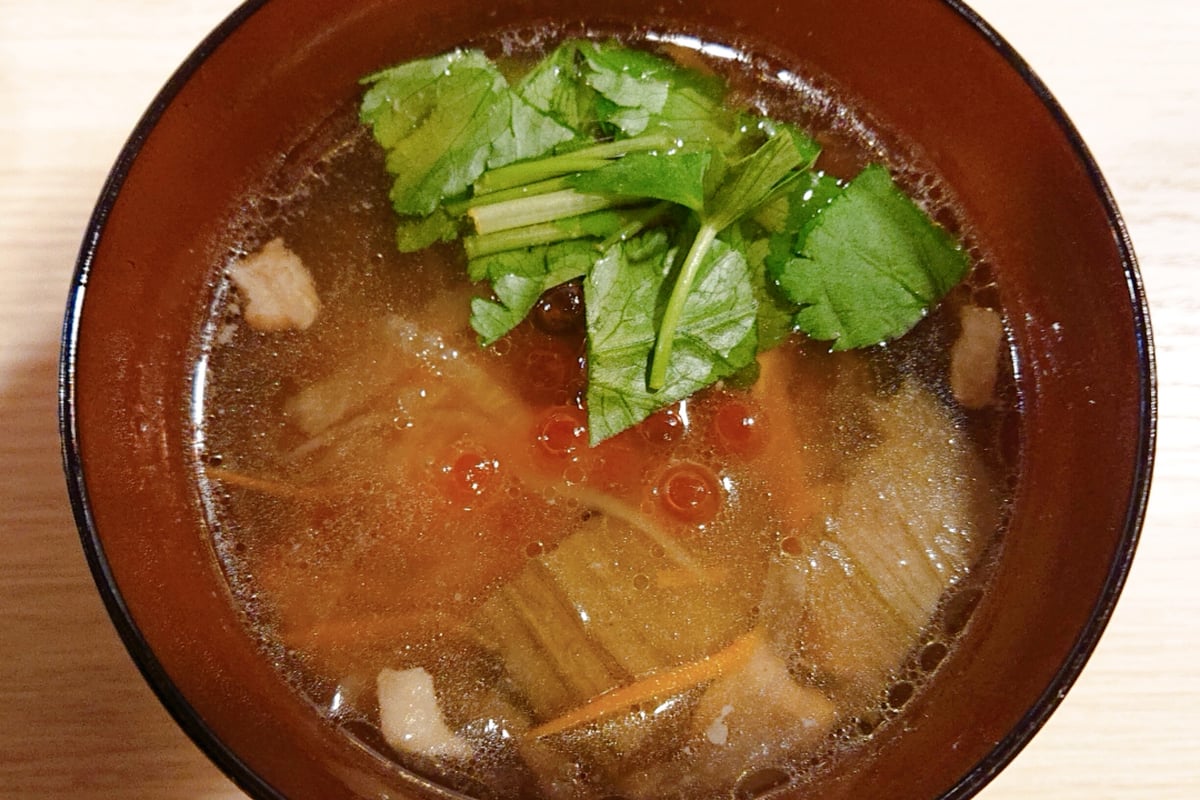
Sendai zoni is a New Year's soup from Sendai City, Miyagi Prefecture, topped with a whole grilled and dried goby fish (yaki-haze) so large it overhangs the bowl, and simmered in the fragrant broth this fish provides. It is said that in the late Edo period, when goby were caught in abundance in Matsushima Bay, the custom arose of grilling them over charcoal, sun-drying them, and stringing them together on straw to sell for the New Year — and using this dried fish as the base for a soup that became a fixture of Sendai households. Besides the grilled goby, the ingredients include harako (salmon roe) taken from salmon that migrate up the Abukuma River, Sendai-seri (Japanese parsley grown around Sendai), 'ohikina' — julienned daikon, carrot, and burdock root that is boiled and then frozen outdoors — as well as zuiki (taro stem) and frozen tofu. The result is a colorful, lavish bowl fit for a festive occasion. Around central Sendai, eating this zoni during the first three days of the New Year remains a common custom to this day. It is worth noting that records show the zoni Date Masamune himself ate was a different style altogether, made with a broth of dried abalone, dried sea cucumber, and herring — meaning the grilled-goby zoni is best understood as a local dish that took root and spread among ordinary people rather than a dish of Date Masamune's own table. In recent years, poor catches of goby and salmon roe have made the ingredients harder to obtain and pushed up prices, leading some to call it a 'luxury zoni.'
Shijimi-jiru (Freshwater Clam Miso Soup)
Shijimi-jiru
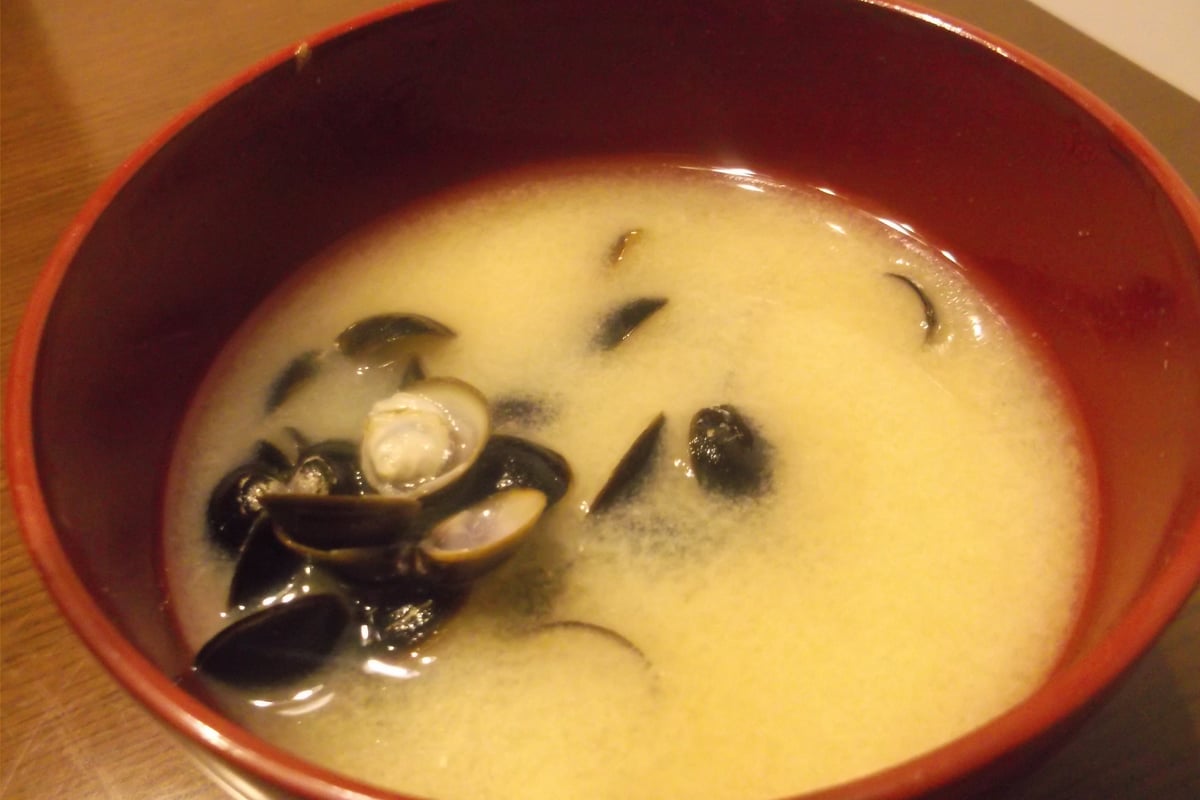
Shijimi-jiru is a miso soup made with seta shijimi, a species of freshwater clam found only in Lake Biwa, and it has long been cherished as a local dish throughout Shiga Prefecture. Compared to other clam varieties such as the yamato shijimi, seta shijimi have plumper, larger, thicker shells and richly flavored meat. Until around the 1960s and 70s, families across the prefecture ate it regularly as miso soup, simmered in a sweet soy sauce (shigure-ni), or as shijimi rice, and it symbolized the bounty of Lake Biwa. In recent years, catches have declined sharply due to environmental changes such as the loss of sandy lakeshore habitat, and efforts are underway to protect this resource. The season runs from around December to April, when the clams firm up and become especially delicious, earning them the nickname 'kan-shijimi' (winter shijimi), and during this period they appear in supermarkets and shops throughout the prefecture.
Tecchiri (Fugu Hot Pot)
Tecchiri (Fugu Hot Pot)
Tecchiri is a hot pot dish in which the flesh and bony trimmings (ara) of fugu (pufferfish), mainly tiger puffer (torafugu), are simmered in kombu dashi with vegetables and tofu and then eaten with ponzu. It is known as the name for fugu hot pot in Kansai, and especially in Osaka. Poisonous fugu was likened to a gun, since 'if it hits you, you die,' and was called 'teppo' (gun); the name 'tecchiri' is said to be a shortened form of teppo no chirinabe (fugu chiri hot pot). In the same way, fugu sashimi is called tessa (teppo sashimi). Osaka is said to account for about 60 percent of Japan's fugu consumption and is known as the country's largest consumer of fugu. Fugu grew in popularity in Osaka in the early Showa era, and after the war the number of specialty restaurants increased, establishing it as a winter delicacy. The standard way to finish the meal is zosui (rice porridge) made with the dashi into which the umami of the fugu has dissolved. Preparing fugu requires specialized knowledge and skill. In Osaka Prefecture, under a prefectural ordinance, only people who have received registration as registered fugu processors may process fugu as a business.
Harihari Nabe (Whale and Mizuna Hot Pot)
Harihari Nabe (Whale and Mizuna Hot Pot)
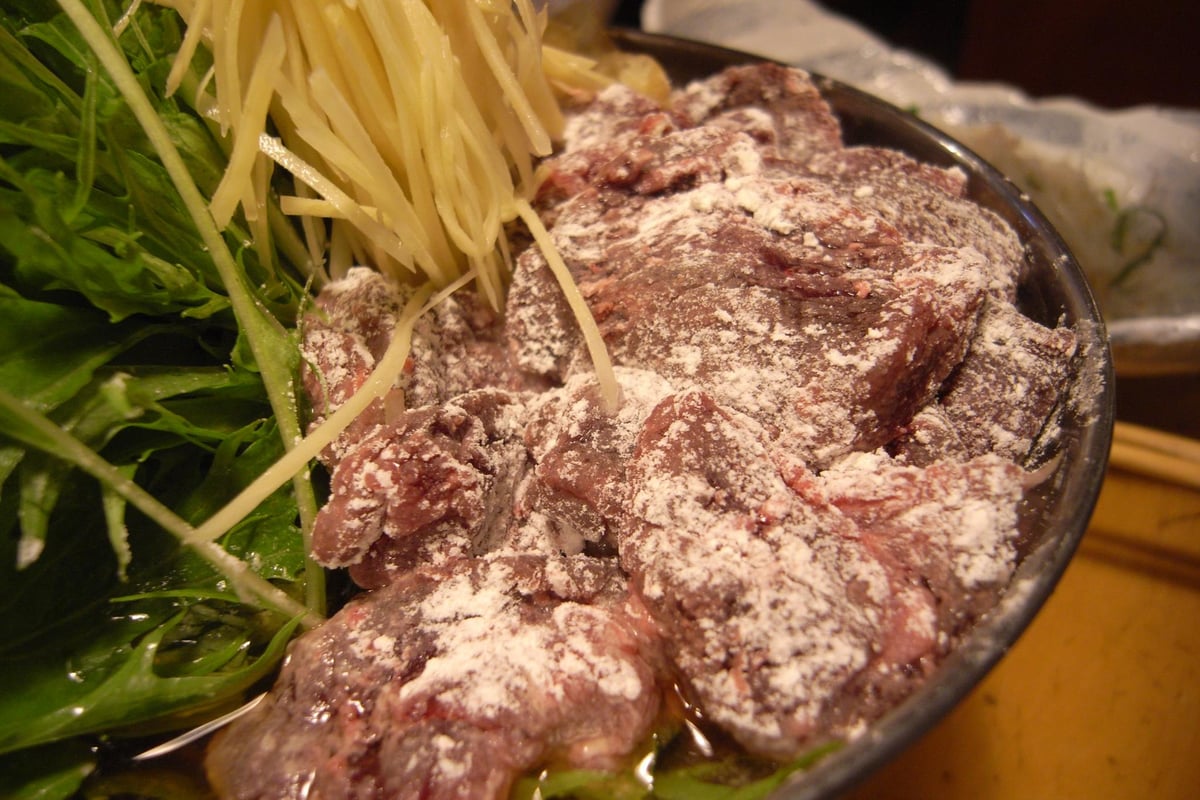
Harihari nabe is an Osaka hot pot dish in which whale meat and mizuna are briefly simmered in dashi made from kombu and dried fish flakes (fushi). 'Harihari' is said to be a word expressing the crisp texture and sound of eating mizuna. Osaka, called 'the nation's kitchen' (Tenka no Daidokoro), was a hub where foodstuffs were collected and distributed; whale was also brought in from various regions, and a culture of eating whale flourished. Hot pots of whale and mizuna are said to have been commonly eaten in Osaka homes and restaurants. The name is said to have been given by 徳家, a whale restaurant that opened in Sennichimae in Minami in 1967 (Showa 42). In recent years, opportunities to eat whale have decreased due to whaling restrictions and other factors, and pork or other meats are sometimes used instead. In fiscal 2024 (Reiwa 6), 'Osaka whale harihari nabe' was recognized under the Agency for Cultural Affairs' '100-Year Food' program (Future 100-Year Food category). It is also introduced as a regional dish of Osaka Prefecture in the Ministry of Agriculture, Forestry and Fisheries' 'Our Regional Cuisines' (Uchi no Kyodo Ryori).
Dabu (Karatsu-Style Simmered Vegetable Soup)
Dabu
Dabu is a local dish from around Karatsu City, Saga Prefecture, made by simmering chicken with vegetables such as daikon radish, carrot, taro, burdock root, lotus root, and konjac in a dashi broth, seasoning it with salt or soy sauce, and lightly thickening it with potato starch. It has a distinctive custom of varying the preparation for celebratory and mourning occasions: for celebrations, colorful tama-fu (wheat gluten dumplings) and ginkgo nuts are added and the ingredients are cut into squares, while for funerals no tama-fu is used and ingredients such as konjac are cut into triangles instead. As for the origin of the name, one theory holds that 'dabu' is a corrupted form of 'zabu-zabu,' describing how the dish is finished with plenty of water. It is also said to have originated as a way to make full use of vegetable scraps left over from preparing dishes such as nishime (simmered vegetables), and there was a custom of neighbors gathering for weddings, funerals, and other ceremonial occasions to prepare a large potful together. Today it is still cherished as a 'taste of home' that people crave when returning to visit their hometown.
Haba Zoni
Haba Zoni
Haba Zoni is a New Year's zoni (mochi soup) eaten mainly in the Kazusa region of Chiba Prefecture, distinguished by a strongly fragrant seaweed called 'habanori' placed on top as a finishing touch. Habanori is a spatula-shaped seaweed that takes root in autumn and grows through winter into spring, harvested in areas such as Kamogawa City and Minamiboso City in the southern Boso Peninsula. Because of its uneven appearance, it rarely appears on the market and has mainly been consumed locally. To prepare the dish, grilled square mochi is placed in a clear soup made with bonito-flake dashi, then topped with toasted and crumbled habanori, aonori (green laver), and bonito flakes. The dish is also known for a play on words: 'haba,' meaning the seaweed, is associated with the word for 'presence' or 'influence,' making it an auspicious dish eaten with the wish to 'hold sway (haba wo kikaseru) all year round.' Even in areas far from the production region, such as the Kujukuri area and Ichihara City, it has been passed down as an essential New Year's dish.
Junsai Nabe
Junsai Nabe
Junsai Nabe is a summer hot pot dish centered on junsai (water shield, an aquatic plant), a specialty of Mitane Town in Akita Prefecture. Junsai is a water lily-family aquatic plant, and the tender young shoots that grow beneath its floating young leaves are eaten together with their jelly-like coating. The area around Kakusuke Pond in Mitane Town is known as a natural growing site, and thanks to community-wide efforts to maintain the pond, the area has developed into one of Japan's leading production regions. During the harvest season from May to August, the sight of harvesters in small flat-bottomed boats picking each shoot by hand has become a seasonal symbol of early summer. The dish is made by simmering chicken and burdock root in a broth made from chicken bones or Hinai-jidori chicken, then adding the junsai at the very end and eating it as soon as its color turns a vivid green — a summer hospitality dish of Akita enjoyed for its smooth, slippery texture and plump bite.
Nakami-jiru (Pork Offal Soup)
Nakami-jiru (Pork Offal Soup)
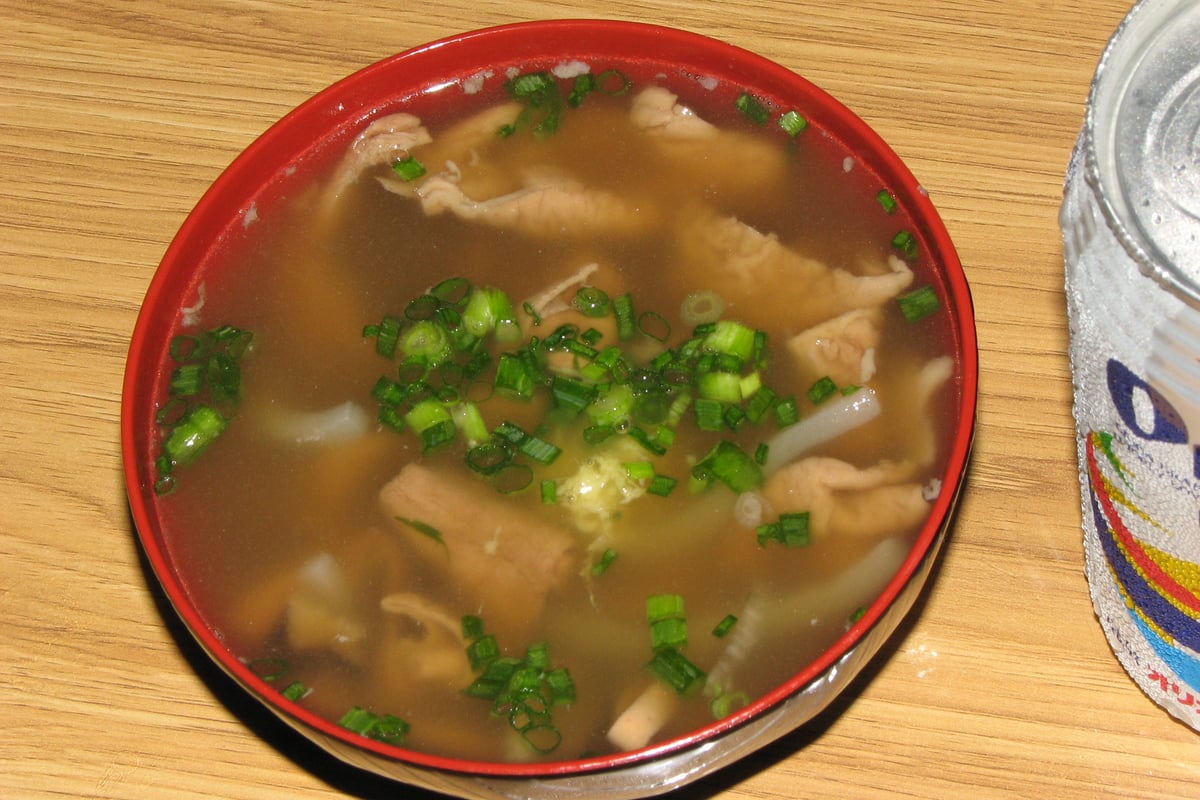
Nakami-jiru is a clear-broth local dish of Okinawa made with 'nakami' — pork offal such as the stomach, small intestine, and large intestine. Despite being an offal dish, it is notable for its refined flavor with no unpleasant odor: careful preparation removes excess fat and odor before the ingredients are simmered in a clear broth made from bonito and pork stock. Its roots lie in the court cuisine of the Ryukyu Kingdom, where it is said to have been served to entertain investiture envoys from China and officials from Satsuma. In old Okinawa, it was customary to slaughter a whole pig at the end of the year in preparation for the New Year, and nakami-jiru, made with fresh offal, became an indispensable feast dish for New Year celebrations, festive occasions, and memorial services — comparable to the mainland's zoni. It is still passed down today as a home-cooked dish, and is also enjoyed as 'nakami-soba,' in which nakami is used as a topping for Okinawa soba.
Tama Konnyaku (skewered konjac balls)
Tama Konnyaku
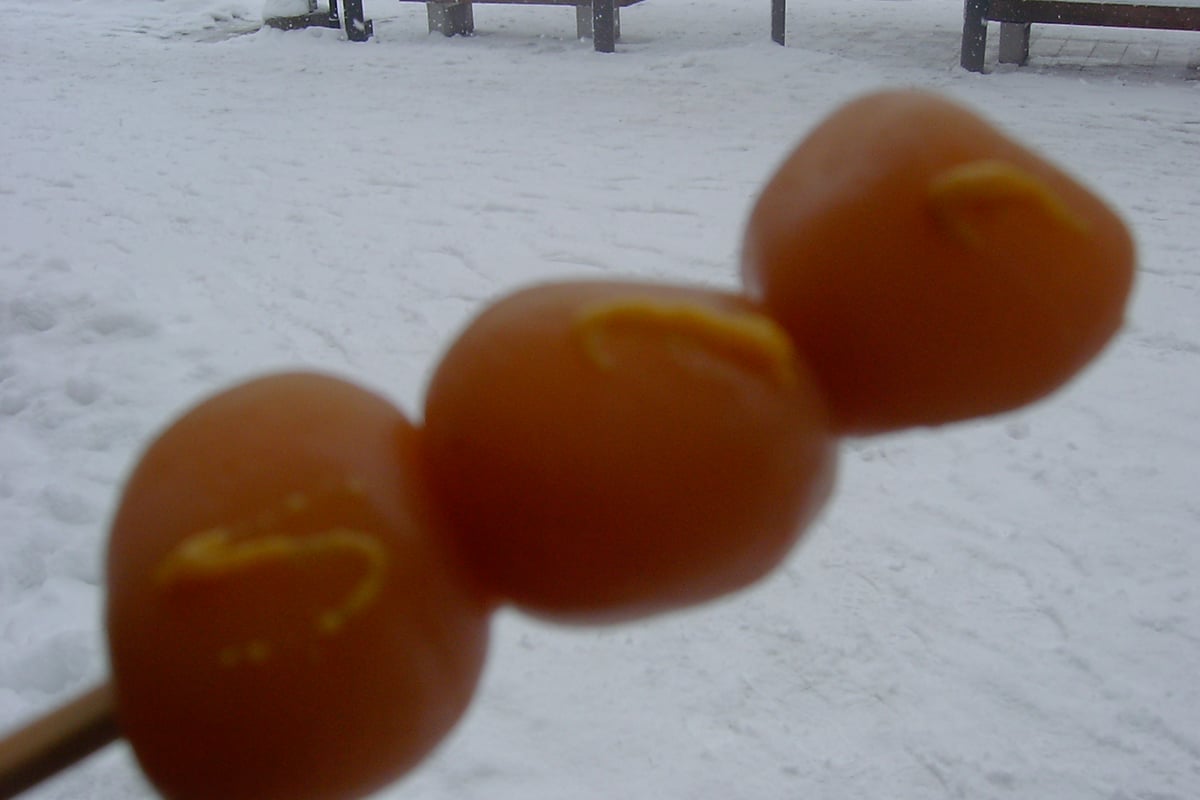
Tama konnyaku is a local specialty said to be a soul food for the people of Yamagata Prefecture: konjac rolled into balls about 3 cm in diameter, skewered, and simmered slowly in a soy-sauce-based broth. It is said to have originated when Jikaku Daishi, who founded Yamadera (Risshaku-ji Temple) in the Heian period, used konjac he had brought back from China in the temple's shojin (Buddhist vegetarian) cuisine; the practice later spread to nearby residents and took root throughout the prefecture. Flat konjac and shirataki (thread-like) konjac are found all over Japan, but the style of skewering it into balls and eating it while walking — 'tama konnyaku' — is a food culture unique to Yamagata. It is a beloved street-food staple at festivals, tourist spots, and cherry-blossom-viewing stalls, and it is typically eaten with a dab of hot mustard (neri-garashi).
Zeri Furai
Zeri Furai
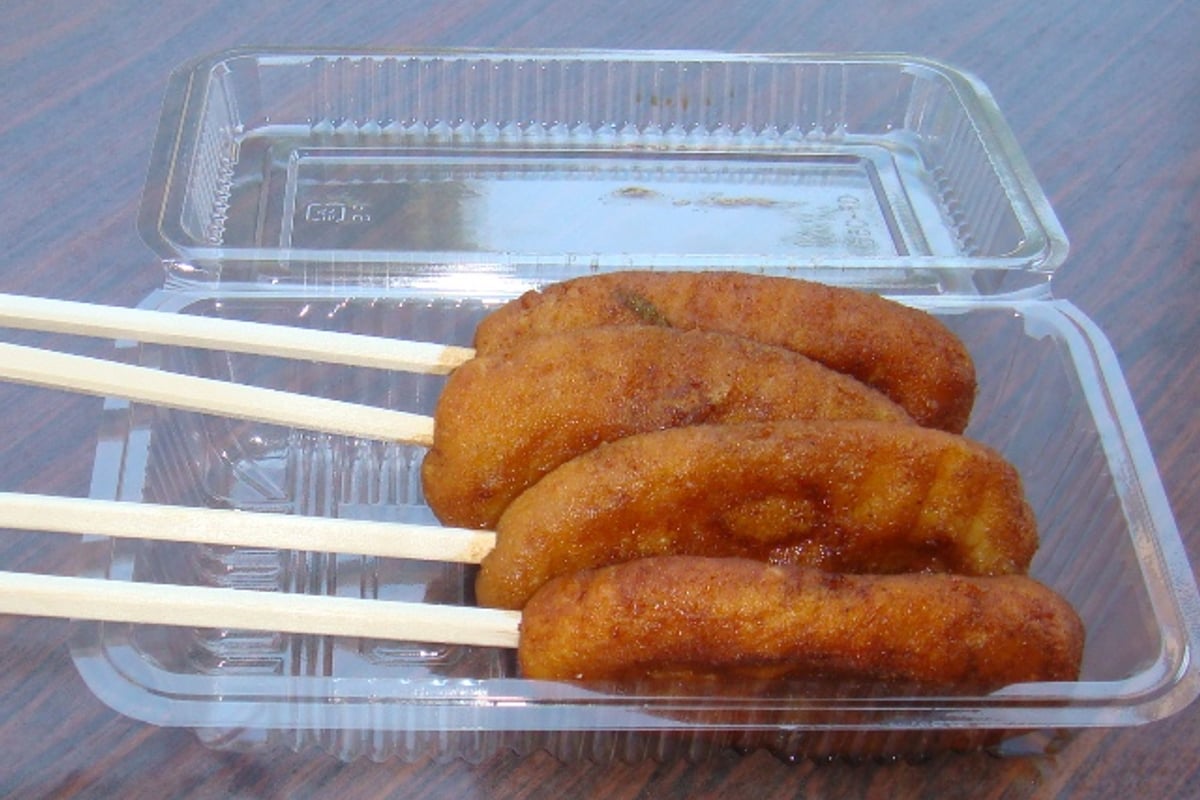
Zeri furai is a local specialty of Gyoda City made by boiling and mashing potatoes, mixing them with okara (soy pulp), chopped green onion, carrot, and other ingredients, shaping the mixture into small oval discs resembling coins, deep-frying it without any batter, and dipping it in Worcestershire sauce before eating. Despite the name, it has nothing to do with dessert 'jelly'; the widely known theory is that it was originally called 'zenifurai' ('coin-fried,' written with characters meaning 'money' and 'coming'), for its coin-like shape, and the name gradually shifted to 'zeri furai.' Its roots are said to trace back to the owner of 'Ippuku Chaya' in Mochida, Gyoda, who served in the Russo-Japanese War and adapted a vegetable-bun dish he ate in northeastern China; it is said to have already existed by the late Meiji era. Because it uses plenty of okara, it is rich in dietary fiber and considered a healthy dish, and its chewy texture combined with the flavor of the sauce that soaks into it has made it a favorite. It is served and sold at several places around Gyoda City, including specialty shops, tofu shops, and candy stores, and is beloved as a representative everyday snack and light meal of the city.
Anko Nabe (Monkfish Hot Pot)
Anko Nabe
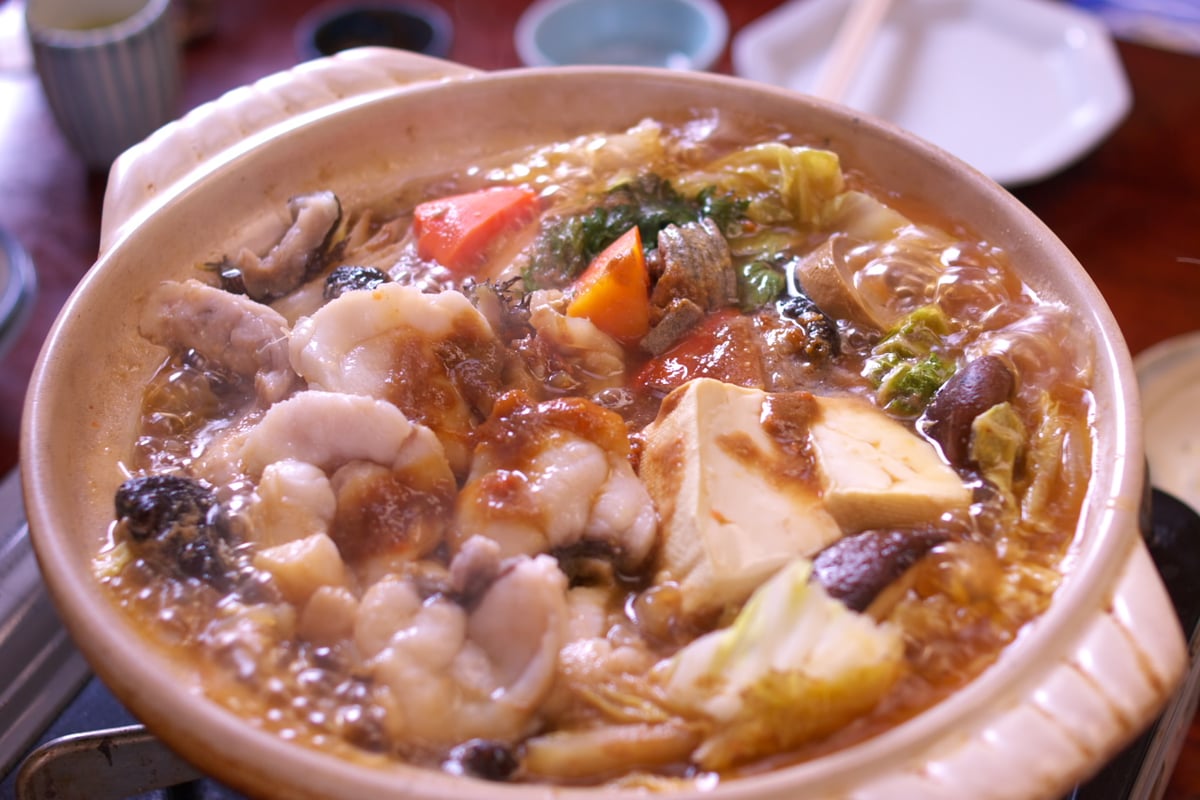
Anko Nabe is a hot pot dish centered on monkfish landed at fishing ports such as Oarai Town, Hirakata and Otsu in Kitaibaraki City, and Nakaminato in Hitachinaka City, and it is a representative winter hot pot of Ibaraki Prefecture. In the Edo period, monkfish was a prized delicacy, ranked among the five great delicacies known as 'san-cho ni-gyo' (three birds, two fish) alongside crane, skylark, moorhen, and sea bream, and records remain showing that it was presented as tribute from the Mito Tokugawa family to the shogunate. Almost nothing of the monkfish goes to waste except the bones, and the dish makes full use of what are known as the 'seven tools of the monkfish' — nuno (ovaries), gills, tomo (fins), suibukuro (stomach), liver, yanagi-niku (flesh), and skin. Said to have originated from dobu-jiru, a stew fishermen made on board their boats without using fresh water, the dish today features flesh and organs simmered in a rich miso-based broth enriched with dissolved monkfish liver, and it is cherished as a signature winter hospitality dish of Ibaraki.
Aomori Ginger Miso Oden
Aomori Ginger Miso Oden
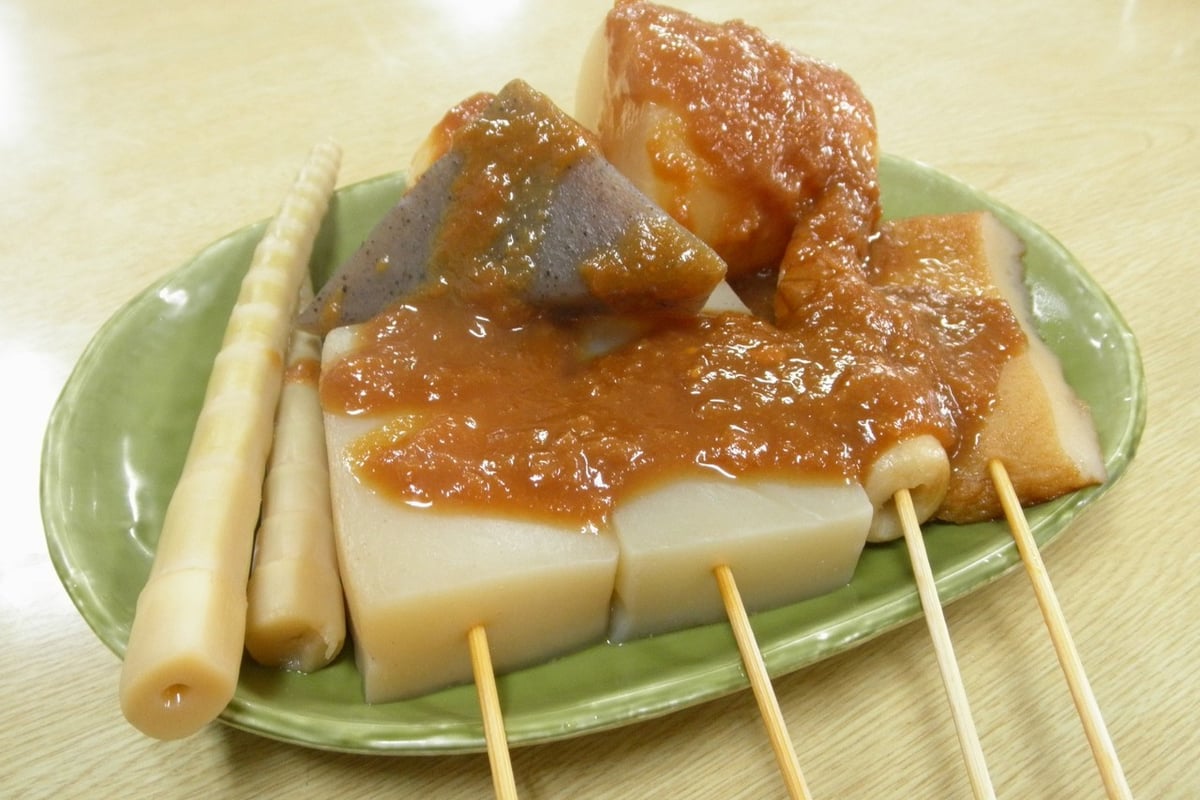
Aomori Ginger Miso Oden is a local variation of oden cherished throughout Aomori City and the greater Tsugaru region of Aomori Prefecture. It is said to have originated in the late 1940s at food stalls that lined the area from Aomori Station to Furukawa, when a stall owner began adding grated ginger to the miso sauce to warm passengers boarding the Seikan ferry. The dish is characterized by simmering Tsugaru miso (red miso) with sake, mirin, and dashi, then finishing it with plenty of grated ginger. Ingredients unique to Aomori are used, including daikon radish and eggs as well as the thin, large "Okakuten" fried fish cake, "Botan-yaki Chikuwa" (fish cake tube with a peony-petal-like grilled pattern), and whelks (tsubugai) that are a specialty of Mutsu Bay. Today, "oden" in Aomori City and the Tsugaru region is so closely associated with this ginger miso sauce that the two are virtually synonymous, and the Aomori Oden Association continues efforts to spread this local food culture nationwide, including publishing an "Oden Map" introducing member shops, establishing a standard recipe, and developing canned oden products. While cherished as a winter staple, many shops serve it year-round, making it one of the local dishes visitors to Aomori should try.
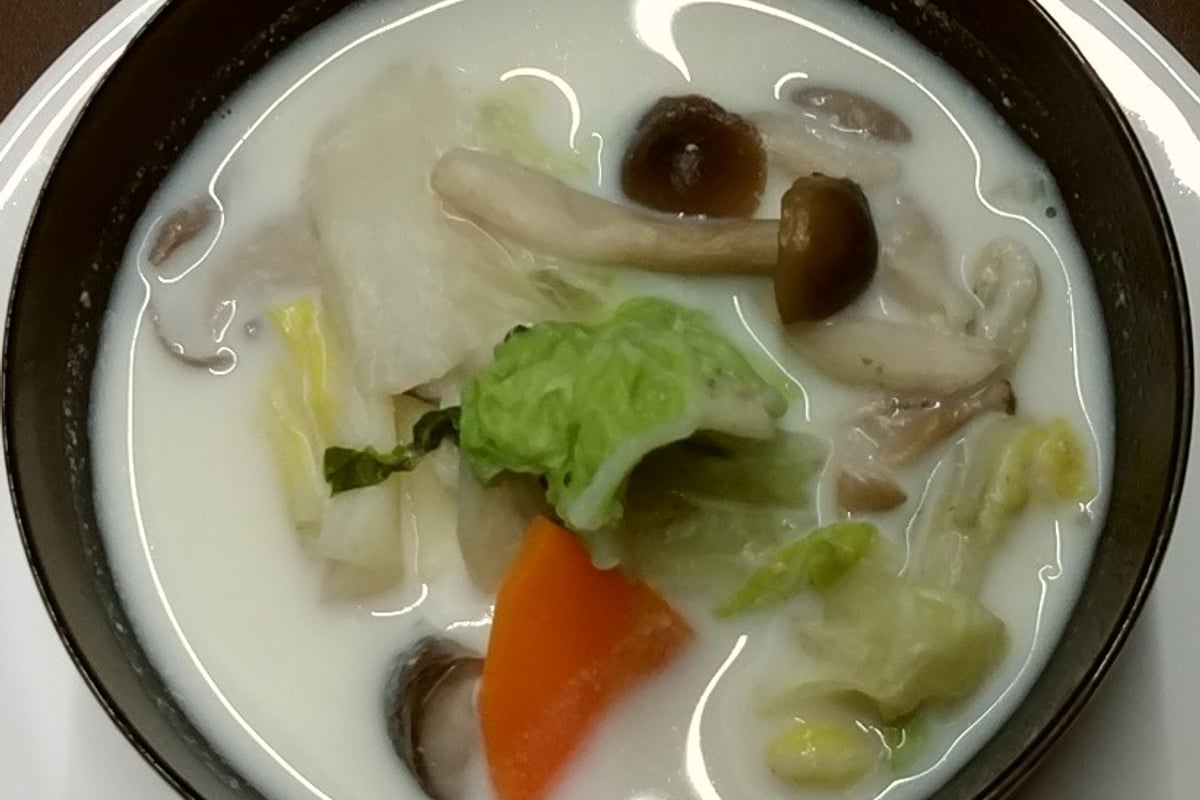
Asuka Nabe (Asuka-Style Milk Hot Pot)
Asuka Nabe
Asuka Nabe is a hot pot dish from Asuka Village in Nara Prefecture, in which chicken and vegetables such as napa cabbage and shungiku (garland chrysanthemum) are simmered in a chicken-bone broth enriched with milk. According to tradition, during the Asuka period an envoy from Tang China introduced dairy products to Japan and presented them to Emperor Kotoku, who was delighted, marking the beginning of milk drinking in Japan. One account holds that monks of the time simmered the meat of chickens they kept in milk and ate it, said to be one origin of Asuka Nabe. Because milk was costly, another account holds that goat's milk was used instead, and several versions of the story survive. The dish is known for its mellow flavor, seasoned with white miso and soy sauce, and it took on its present form as a specialty of Asuka in the early Showa era. Today it is a signature hot pot of Asuka Village, served mainly in winter at local restaurants.
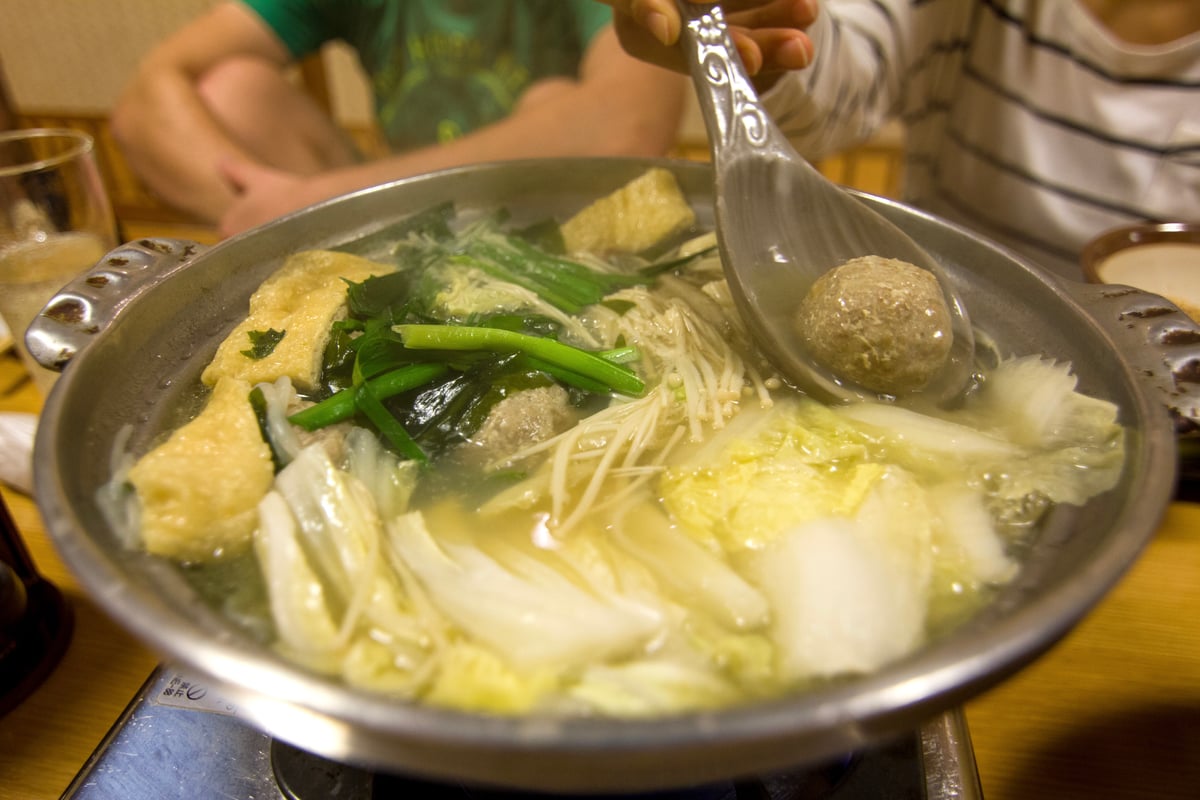
Chanko Nabe (Sumo Wrestler's Hot Pot)
Chanko Nabe
Chanko nabe is a hot pot dish that developed in the sumo stables of Ryogoku, Tokyo, as a meal for sumo wrestlers. The term 'chanko' originally refers to any food prepared in a sumo stable, and hot pot dishes among them are specifically called 'chanko nabe.' Around the time the Ryogoku Kokugikan sumo arena was completed in 1909 (Meiji 42), the popularity of the yokozuna champion Hitachiyama Taniemon drew a surge of new recruits to the Dewanoumi stable, and it is said that the custom of a large group of wrestlers gathering around a single pot to efficiently get their nutrition took hold at that time. The seasoning and ingredients vary from stable to stable, ranging from soppu-daki, made with a chicken-bone broth, to miso- and salt-based versions, and the dish has traditionally combined vegetables received from farmers along sumo tour destinations with whatever meat or fish was available that day. Four-legged animals such as beef and pork were considered unlucky, since eating them was associated with 'putting a hand down' on the ring (a losing move), so chicken and fish were favored instead. Today, chanko nabe can also be enjoyed by the general public at chanko restaurants run by former sumo wrestlers, mainly around Ryogoku.
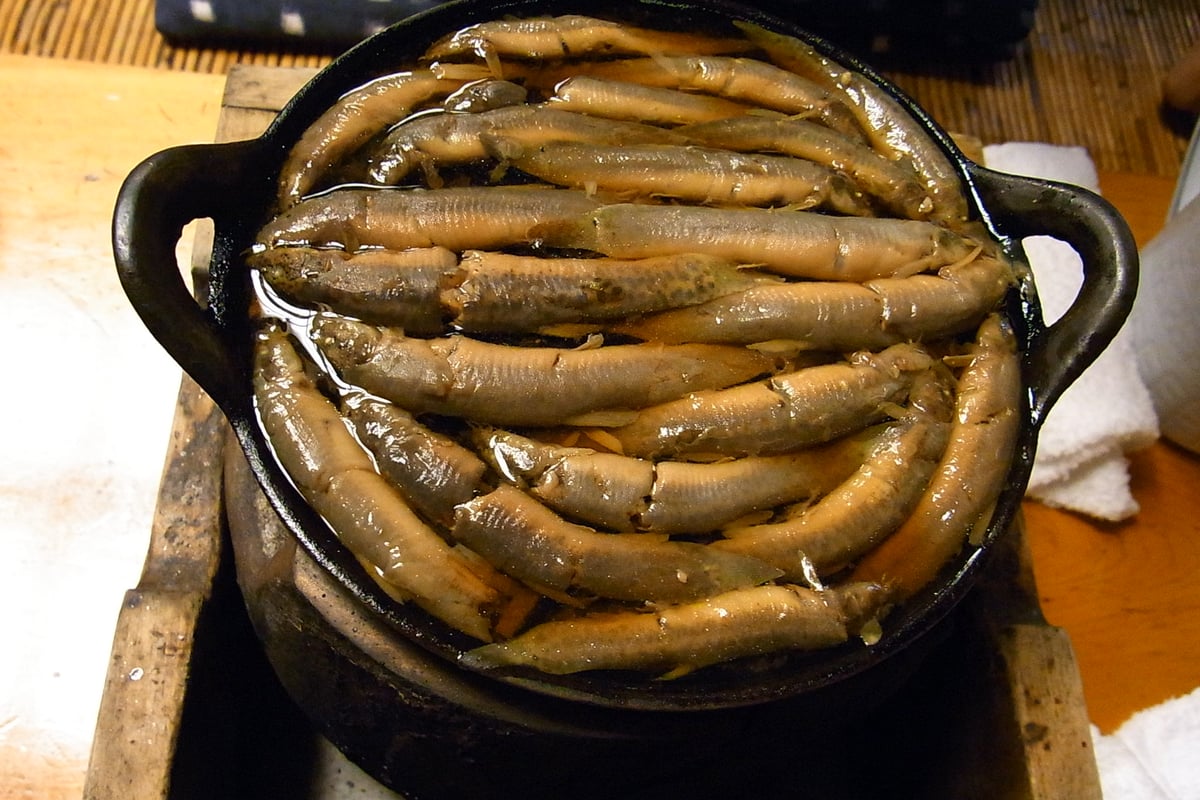
Dojo Nabe
Dojo Nabe
Dojo nabe is a hotpot dish made with dojo (loach, a small eel-like freshwater fish) that has been cherished in Tokyo's shitamachi (downtown) districts since the Edo period. Cheap and highly nutritious, dojo became a popular source of stamina for ordinary Edo people who worked up a sweat doing physical labor, and this gave rise to numerous specialty restaurants, including Komagata Dozeu in Asakusa. The two representative styles are 'marunabe,' in which the whole dojo is simmered without being cut open, and 'yanagawa nabe,' in which it is cut open and simmered with burdock root, then finished with beaten egg; both are typically topped generously with green onion and Japanese pepper (sansho) before eating. The spelling 'dozeu' is said to have been devised by an Edo-period shop owner, who used three characters — an auspicious odd number — in place of the correct but four-character spelling 'dodjiyau,' for good luck. Although the number of specialty restaurants has declined today, long-established shops founded in the Edo period still keep their doors open in Asakusa, and the dish remains cherished as a taste of Edo's common people.
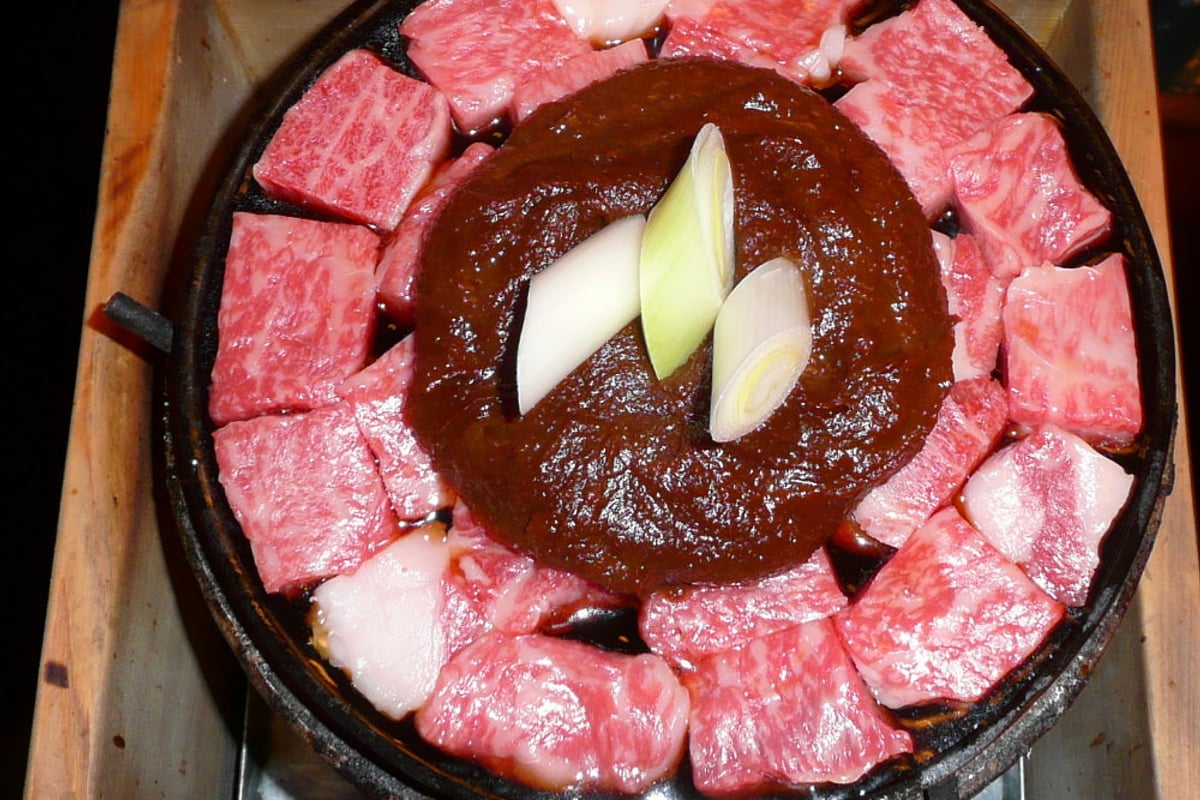
Gyu-nabe (Beef Hot Pot)
Gyu-nabe
Gyu-nabe is a hot pot dish that originated in the treaty port city of Yokohama between the late Edo and Meiji eras, in which beef is simmered in a miso- or soy sauce-based broth. In Japan up through the Edo period, eating meat was generally avoided; it is said that beef eating spread after people in Yokohama, home to the foreign settlement, came into contact with the meat-eating food culture of Westerners living there, and the dish became known nationwide as a symbol of 'bunmei-kaika' (civilization and enlightenment). It is characterized by chunks of beef, green onion, and tofu simmered in a shallow iron pot with a miso- or soy sauce-based broth, and it is regarded as the prototype from which sukiyaki later developed. Long-established Gyu-nabe restaurants that have operated in Yokohama for over a century still serve Gyu-nabe made according to the methods and flavors handed down from that era.
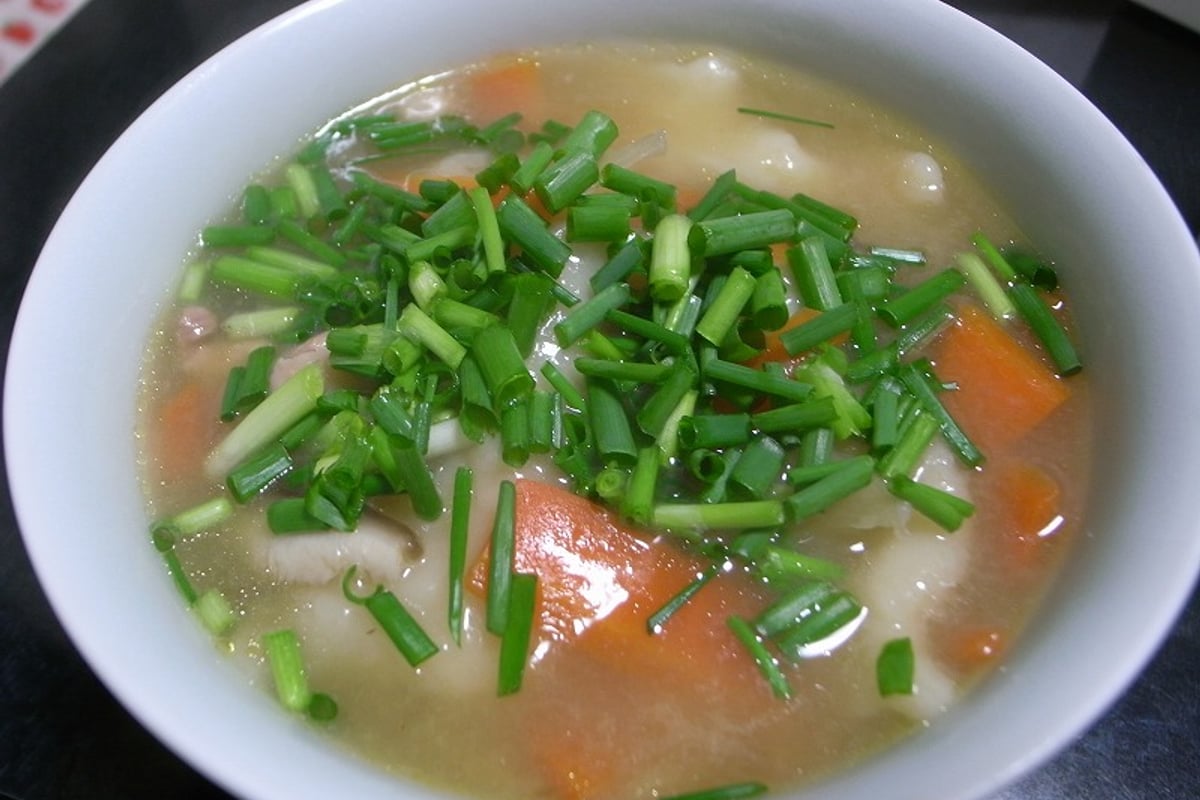
Hittsumi (Iwate Wheat Dumpling Hot Pot)
Hittsumi
Hittsumi is a local dish of Iwate Prefecture in which wheat flour dough, kneaded with water to an earlobe-like softness, is stretched thin, torn by hand into pieces, and simmered in a pot. The name is said to come from the local dialect word 'hittsumamu,' meaning 'to tear with the hands.' In the central Iwate region, paddy fields spread along the Kitakami River basin and rice farming flourished, but the harsh cold sometimes brought poor rice harvests, so wheat and barley were also grown, giving rise to a flour-based food culture known as 'shitonemono,' in which flour is kneaded with water. Hittsumi is the most representative dish of this tradition, simmered in a broth seasoned with soy sauce or miso together with seasonal ingredients such as chicken, burdock root, carrot, and mushrooms. Seasoning and ingredients vary from household to household, and the dish has long been cherished by Iwate residents as a 'taste of home.' In some areas it is also known as 'tottenage' or 'hatto.'
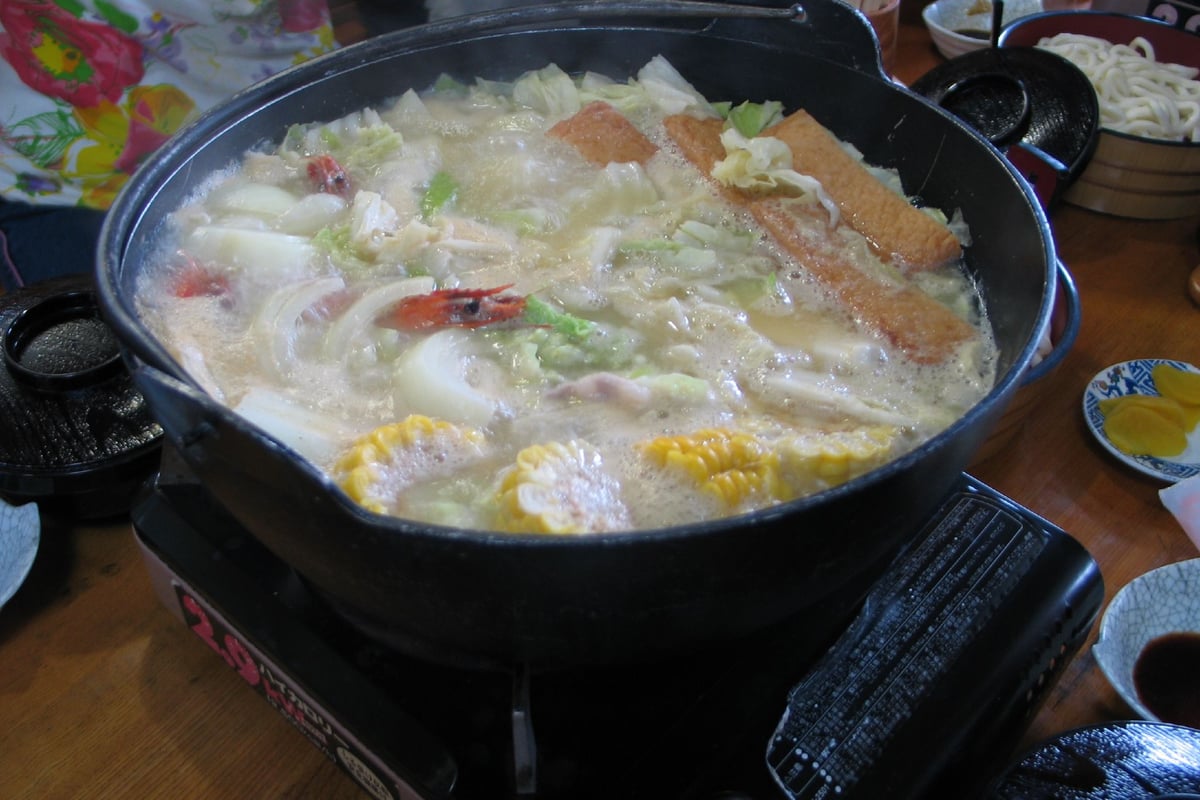
Ishikari nabe (salmon hot pot)
Ishikari Nabe
Ishikari nabe is a hot pot dish representing Hokkaido, made by simmering chunks of salmon together with offcuts (backbone, collar, etc.) and vegetables such as cabbage, onion, tofu, and potato in a miso-based broth. It is said to have originated in Ishikari, a city that grew up at the mouth of the Ishikari River, and is known as a local dish deeply shaped by the salmon fishery that has continued there since the Edo period. According to tradition, it began when fishermen celebrating a good catch threw freshly caught salmon offcuts into miso soup to warm themselves as they ate. In the late 1940s it became known nationwide after being served to tourists who came to watch Ishikari's beach seine salmon fishing. A final sprinkle of sansho pepper tames the fish's smell and brings out its umami. In 2007 it was selected for MAFF's “100 Best Local Dishes of Japan,” and it is counted among the three great local dishes of Hokkaido alongside Jingisukan and chanchan-yaki. Long-established restaurants in Ishikari still serve bowls that carry on the fishermen's wisdom of using every part of the salmon without waste.
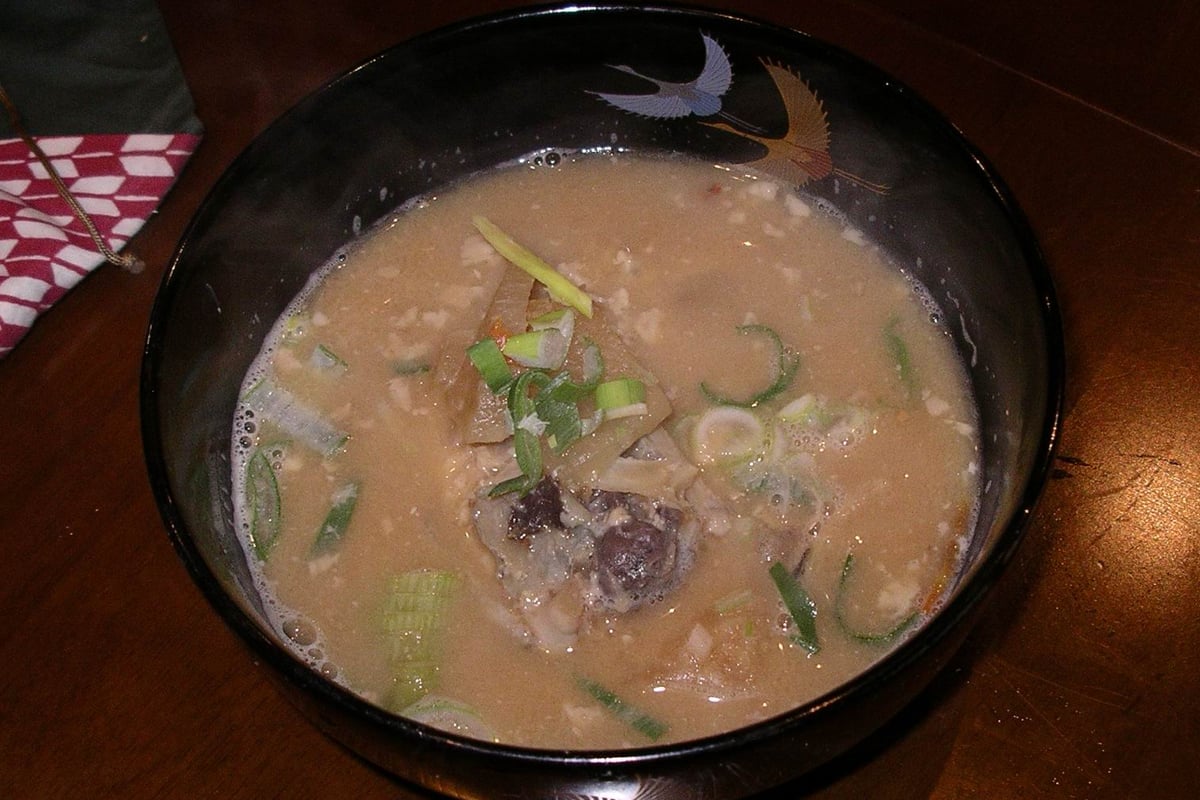
Jappa-jiru (Cod Offcuts Miso Soup)
Jappa-jiru
Jappa-jiru is a winter local dish handed down in the Tsugaru region of Aomori Prefecture. "Jappa" is a Tsugaru dialect word meaning fish scraps, and the dish slowly simmers the head, bones, skin, and innards of cod together with vegetables such as daikon radish, carrot, and green onion in a miso-based broth. In the Tsugaru region, there is a custom of buying a whole cod, head and tail intact, as the "year-taking fish" to greet the New Year; the flesh is used for sashimi or hot pot, while the scraps that would normally be discarded are used to the last bit in jappa-jiru — a dish embodying the wisdom of a snow country that wastes nothing. As a home-cooked dish that warms the body from the core through the harsh cold of winter, it has long been rooted in the dining tables of the Tsugaru region.
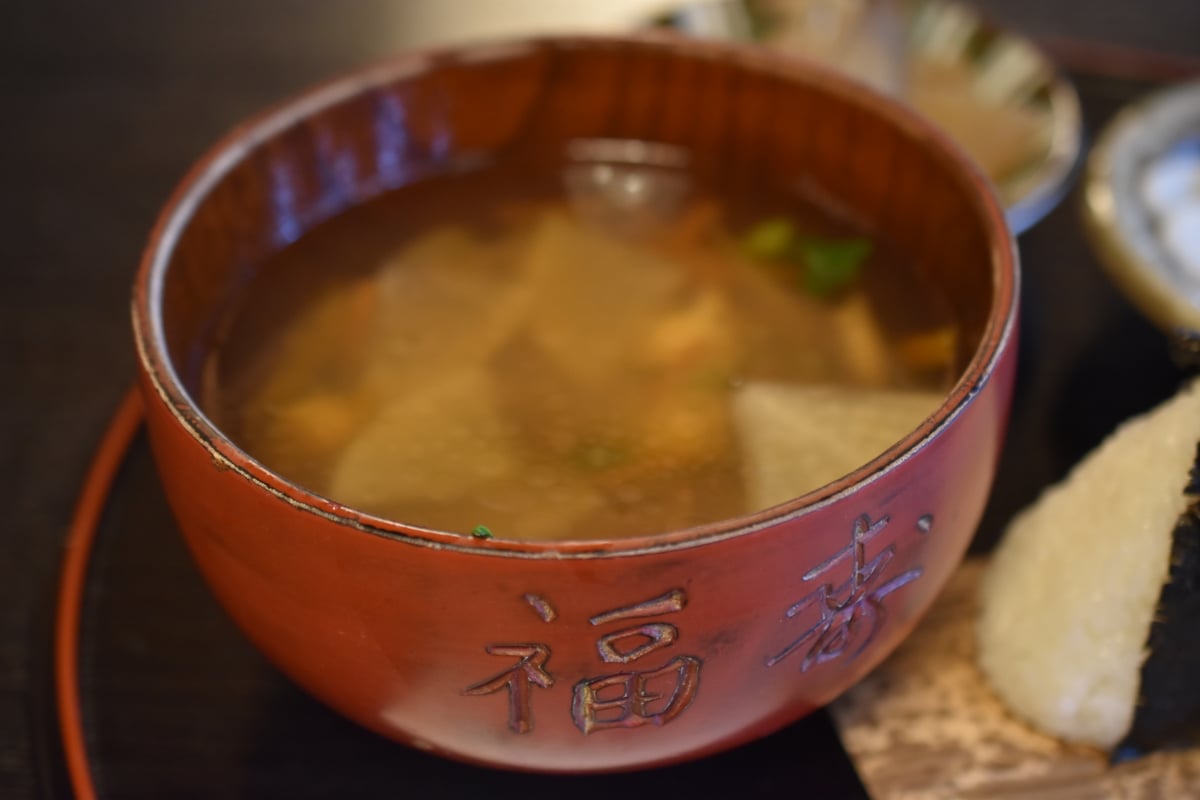
Kenchin-jiru (Kamakura Vegetable Soup)
Kenchin-jiru
Kenchin-jiru is a soup dish rooted in shojin ryori (Buddhist vegetarian cuisine), made by sautéing root vegetables and tofu in sesame oil and then simmering them in a kombu- and shiitake-based broth. According to a widely known account, the name derives from 'Kenchojiru,' a dish long prepared at Kenchoji Temple, a Zen temple in Kamakura, Kanagawa Prefecture, with the pronunciation gradually shifting to 'kenchin-jiru'; Kamakura is regarded as the dish's birthplace. The traditional method uses no animal-derived ingredients or stock, and the tofu is crumbled by hand rather than cut, giving the soup its characteristic mellow, savory flavor drawn from shojin ryori. From the Edo period onward, it spread beyond the bounds of temple cuisine to become a home-cooked dish among ordinary people, and today it is a standard winter soup made throughout Japan. In Kamakura, restaurants near the gate of Kenchoji Temple still serve Kenchin-jiru made to recreate the temple's traditional recipe.
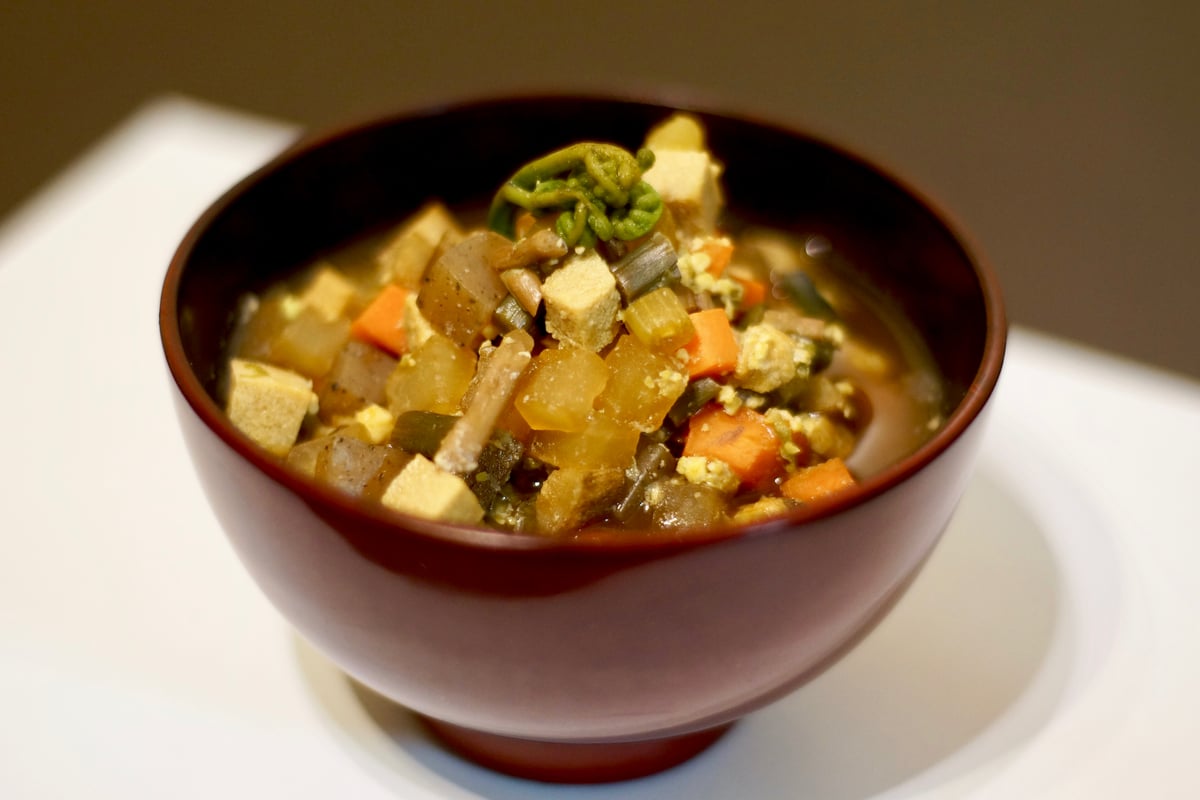
Keno-jiru (Tsugaru Root Vegetable Soup)
Keno-jiru
Keno-jiru is a hearty vegetable soup eaten mainly in the Tsugaru region, known as a traditional dish for Koshogatsu (the 'Little New Year,' January 15). Root vegetables such as daikon radish, carrot, and burdock, wild mountain vegetables like bracken and flowering fern, and dried ingredients such as fried tofu and frozen tofu are all chopped even finer than a small dice and simmered slowly in kelp dashi, then seasoned with miso or soy sauce. One theory holds that the name comes from 'ke,' a Tsugaru dialect word for rice porridge, though several other origin theories have also been passed down. It is also said to have originated as a dish women prepared in bulk before returning to their parents' homes at Koshogatsu, leaving behind a large potful for the men who remained—cooked in a big pot to last several days, with the flavor deepening day by day, a food culture that continues to be enjoyed today.
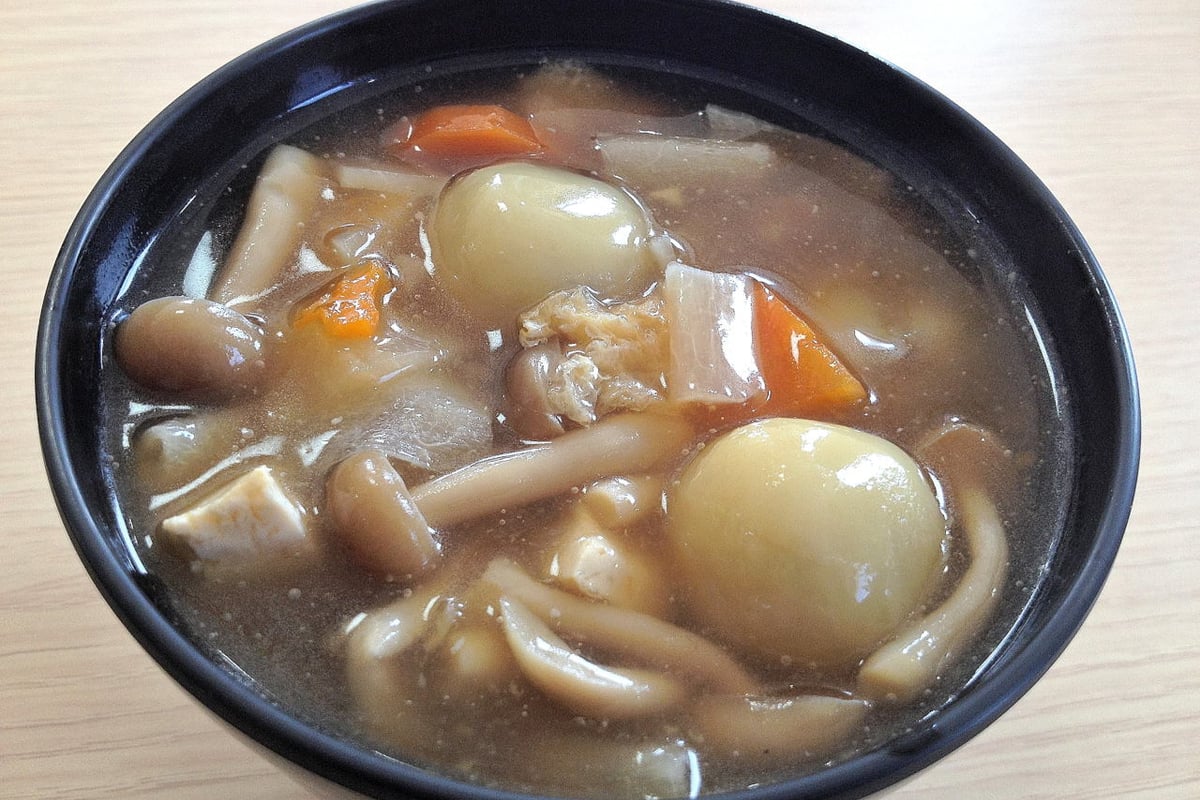
Mamebu (Walnut and Brown Sugar Dumpling Soup)
Mamebu
Mamebu (mamebu soup) is a local dish handed down in Yamagata, Kuji City, and the surrounding Kunohe District area of Iwate Prefecture. Dumplings called 'mamebu,' made by wrapping walnuts and brown sugar in wheat flour dough and rolling them into balls, are simmered in a soy sauce-seasoned broth made from kelp and dried sardines, together with burdock root, carrot, fried tofu, and dried gourd shavings. Biting into a dumpling releases the fragrant walnut and gentle sweetness of the brown sugar, which mingles with the saltiness of the soy sauce broth for a distinctive flavor. It is said to have originated in this area, where rice was once difficult to grow, as a substitute for noodle dishes served on celebratory occasions, and it is still passed down today as an essential dish for New Year's and other ceremonial occasions.
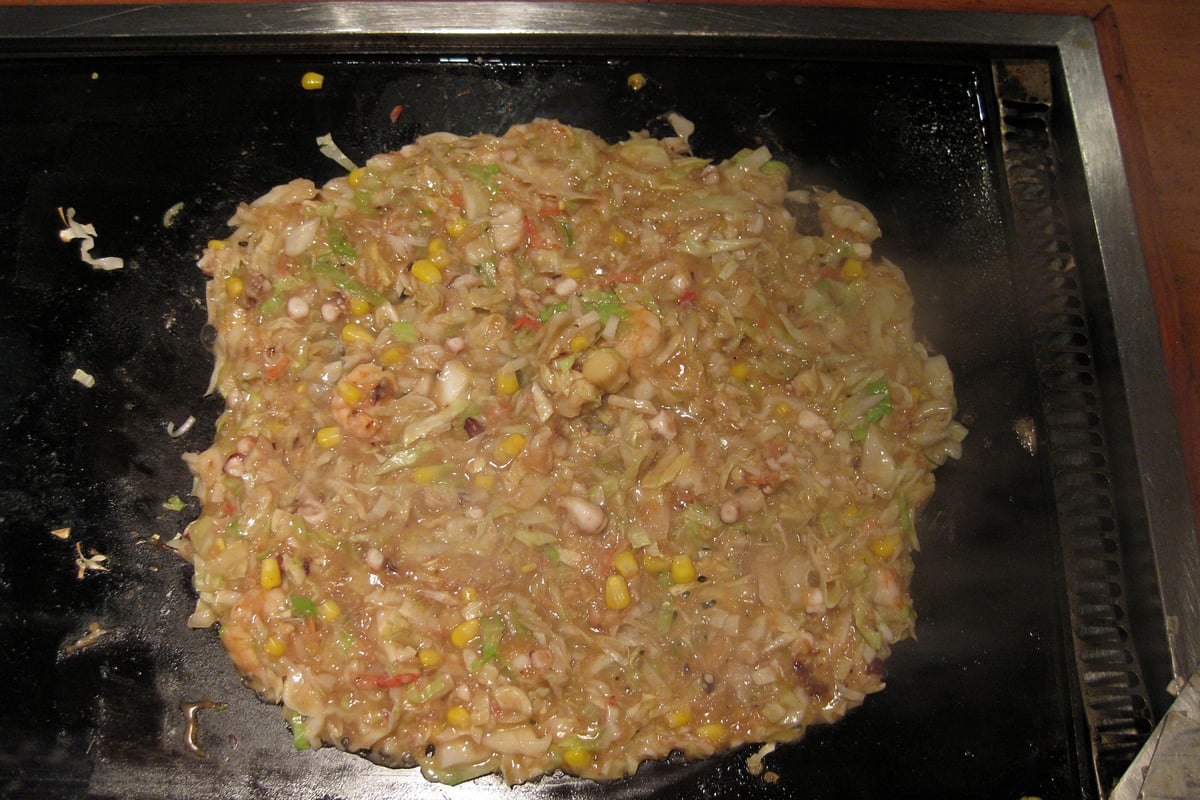
Monjayaki
Monjayaki
Monjayaki is a flour-based dish born in Tokyo's shitamachi (downtown) districts, made by mixing chopped cabbage and other ingredients into flour batter thinned with water and cooking it on a griddle as you eat. It is said to have originated as a children's snack sold at candy shops from the late Edo period through the Meiji era, in which flour batter thinned with water was cooked thin on a griddle and seasoned with soy sauce or starch syrup. Because children would draw letters and pictures in the still-loose batter with a spatula as it cooked, it came to be called 'moji-yaki' (letter-grilling), a name that is said to have shifted over time into 'monja.' From the late Showa era onward, Tsukishima in Chuo Ward saw a rapid increase in monjayaki specialty restaurants, and today it is known as the dish's signature neighborhood, with many shops lining what is now called 'Monja Street.' The defining feature of monjayaki is its batter, which is much runnier than okonomiyaki, and part of its charm lies in the distinctive way it is eaten — scooped directly off the griddle with a small spatula called a 'hagashi.'
Nara Noppe
Nara Noppe
Nara noppe is a shojin (Buddhist vegetarian) dish handed down in Nara, made by slowly simmering taro, daikon radish, carrot, and other vegetables in a broth made from kelp and dried shiitake mushrooms. Similar dishes called noppe or noppei-jiru exist throughout Japan, but Nara noppe is distinctive in that it is prepared without meat or fish, and in the way the taro naturally breaks down during cooking to create a thickened texture, without relying on added starch. While many regions use potato starch or similar thickeners, the fact that Nara noppe achieves its thickness purely from the ingredients themselves reflects the careful craftsmanship unique to Nara. Every December, ahead of the Kasuga Wakamiya On-Matsuri festival held at Kasuga Taisha, the Yamato-zamurai attendants who serve in the ritual purify themselves at the Oshukusho-sai ceremony, where this Nara noppe is traditionally served to visitors. It is thus more than an everyday home dish — it has been passed down as a local food closely tied to a religious festival, and has long been made in Nara households as a warming winter dish.
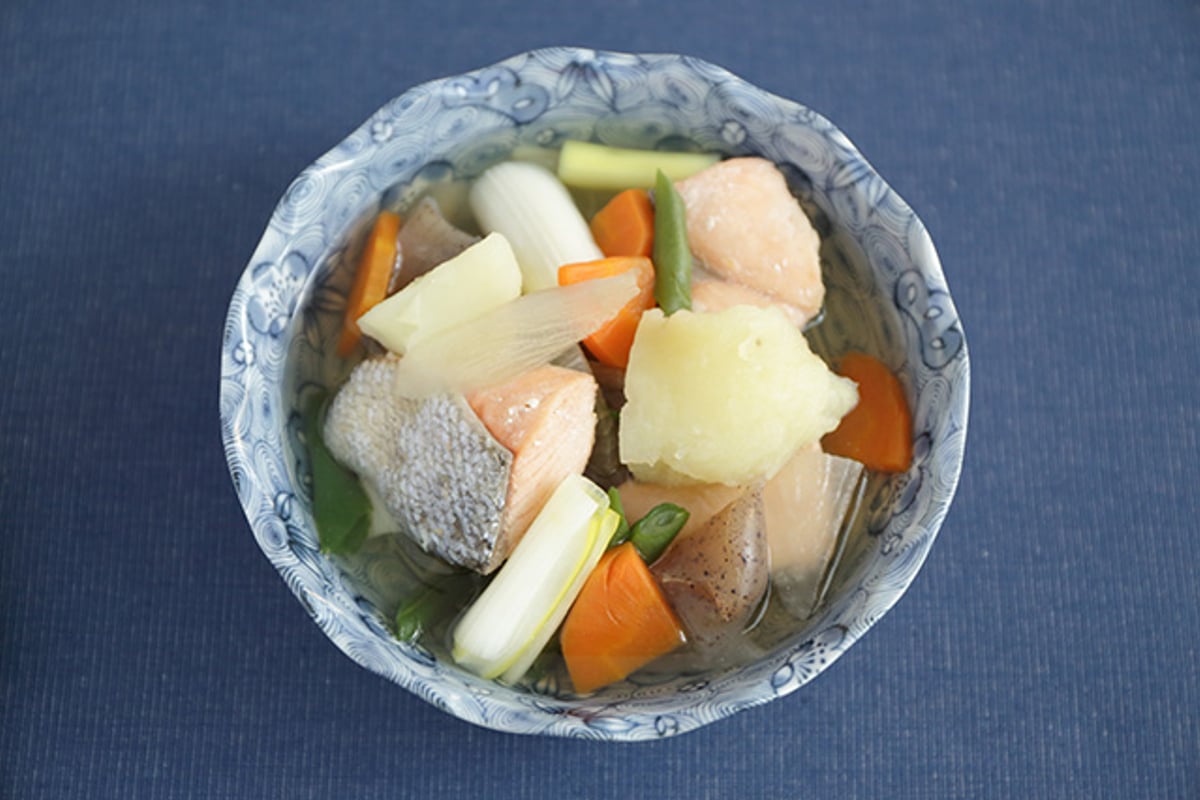
Sanpei-jiru (salted fish and vegetable soup)
Sanpei-jiru
Sanpei-jiru is a classic salt-seasoned soup of Hokkaido, made by slowly simmering salted fish—such as salted salmon or nuka-zuke herring—together with root vegetables like daikon radish, carrot, and potato in a kelp-based dashi. Its defining feature is that the seasoning relies almost entirely on the salt naturally contained in the fish, with little to no miso or soy sauce added, giving it a simple yet deeply flavorful character. The name is already recorded in a late Edo-period travel account, showing that this dish has been eaten in Hokkaido households for over 200 years. Several theories exist about the origin of the name, including one linking it to a fisherman named Saito Sanpei who served the dish to the Matsumae domain's lord, and another tracing it to a deep Arita-ware dish called 'sanpei-zara.' No theory is definitively established. Unlike Ishikari-nabe, which is seasoned with miso and uses fresh salmon, Sanpei-jiru is fundamentally based on the combination of salted fish and root vegetables, and the types of fish used and preparation style vary by region.
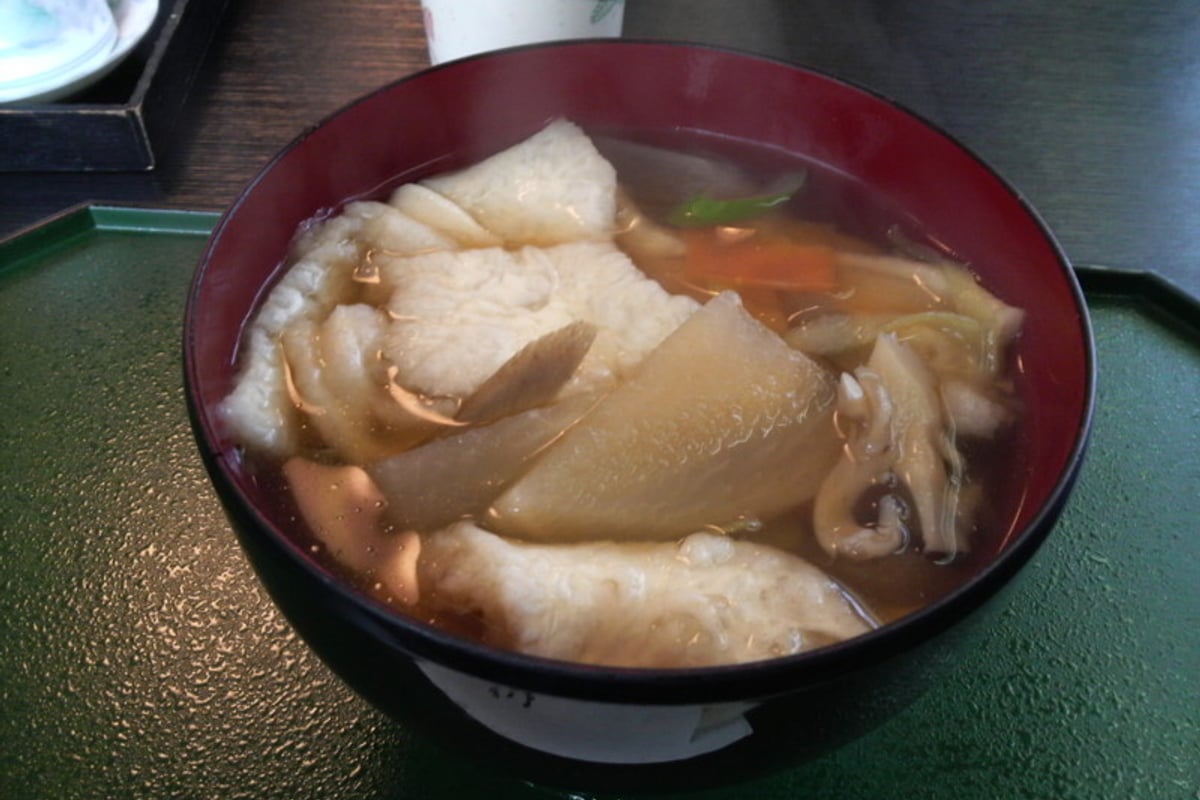
Senbei-jiru (Nanbu Cracker Hot Pot)
Senbei-jiru
Senbei-jiru is a local dish handed down mainly in Hachinohe City, Aomori Prefecture, and passed on across the area from southern Aomori Prefecture to northern Iwate Prefecture. A broth is made from chicken, fish, mushrooms, and vegetables, into which pieces of Nanbu senbei called "otsuyu senbei" — rice crackers baked specially for use in soups — are broken and simmered. The crackers take on a soft, chewy texture without falling apart, gradually soaking up the broth's flavor. In this region, where cold-weather crop damage often made rice cultivation difficult, wheat-based Nanbu senbei developed as a staple and preservable food to replace rice, and senbei-jiru grew out of that tradition. Its national recognition rose sharply after the "Hachinohe Senbei-jiru Institute," formed in 2003, began its activities and the dish won an award at the B-1 Grand Prix, and in fiscal 2022 it was also certified as one of the Agency for Cultural Affairs' "100-Year Foods."
Toyama Zoni (Toyama-Style New Year Mochi Soup)
Toyama Zoni
Toyama-style zoni is a distinctively local New Year dish featuring square mochi and kobu-maki kamaboko (kelp-rolled fish cake) in a soy-flavored clear broth made from kelp dashi. There is regional variation within the prefecture: in the Shimoniikawa area in the east, a hearty zoni is made with seafood such as fukuragi (young yellowtail) and filefish added, while in the Tonami area in the west, the tradition is to keep the ingredients simple, using items such as long green onion and kelp. What both areas have in common is that the mochi is not grilled but simmered gently in kelp dashi until soft before being placed in the bowl, and that kobu-maki kamaboko — a fish cake made without a wooden board that is one of Toyama's signature processed fish products — is added for color. The red-and-white 'aka-maki' version is often used, making for a visually festive bowl. The food culture unique to Toyama, where kelp circulated abundantly thanks to Kitamae-bune (Edo-period trading ships) trade, shows through vividly even in this single New Year bowl of zoni.
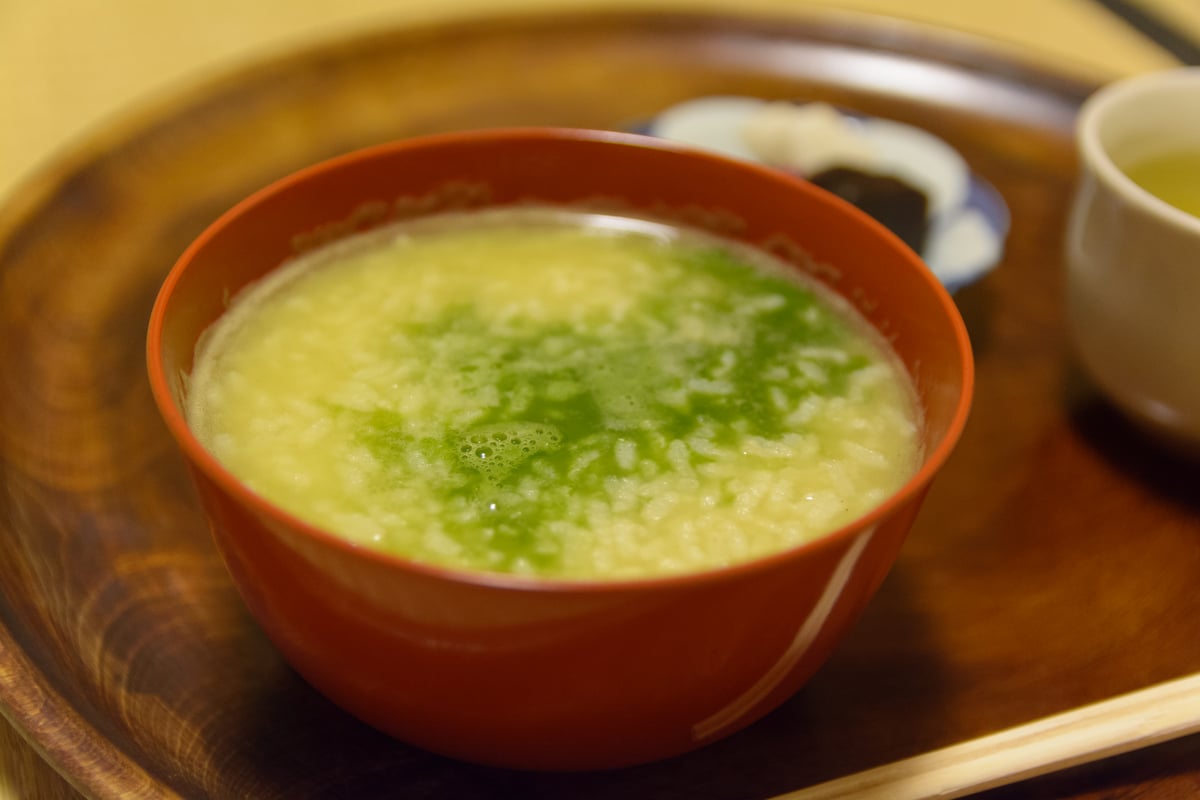
Yamato Chagayu
Yamato Chagayu
Yamato Chagayu is a signature home-style dish of Nara made by cooking rice in tea — typically hojicha (roasted green tea) — brewed into a broth. It is so deeply rooted in daily life that people say 'a Yamato morning begins with chagayu.' Its origins are said to lie in temples such as Todai-ji and Kofuku-ji, where monks are believed to have eaten it between periods of ascetic practice, and it has a deep connection to the Shuni-e ritual at Todai-ji's Nigatsu-do hall, known for the Omizutori water-drawing ceremony. The tea is boiled in a cotton tea bag, and rice is added and cooked quickly over high heat until the grains open up like blossoms — a state called 'hana ga saku' ('the flowers bloom') that is considered ideal. Its light, thin texture, without the thickening seen in chagayu from other regions (often made with potato starch), is one of its defining features. It is also said to have spread as a way for monks and ordinary people to stretch their rice supply, and today this humble yet flavorful dish, deeply rooted in Nara's climate and culture, remains a beloved staple in homes and restaurants alike.