Image: Wikimedia Commons
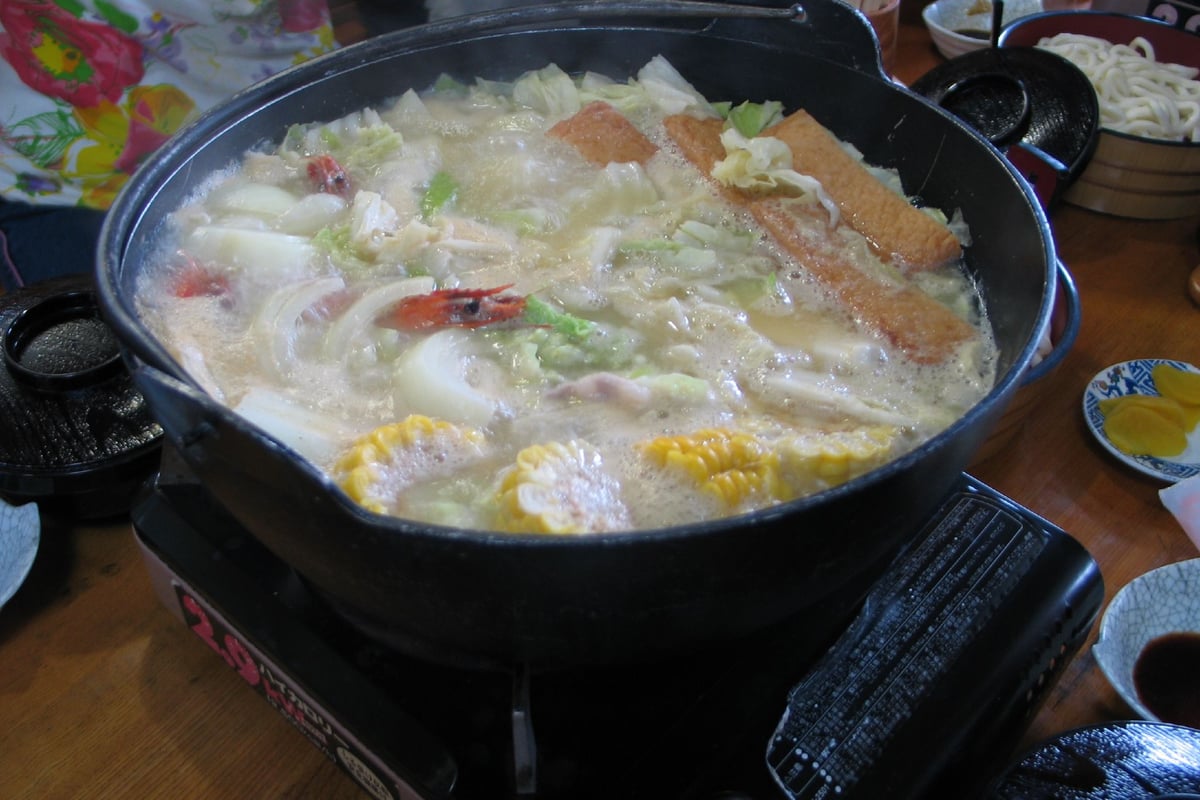
Ishikari nabe is a hot pot dish representing Hokkaido, made by simmering chunks of salmon together with offcuts (backbone, collar, etc.) and vegetables such as cabbage, onion, tofu, and potato in a miso-based broth. It is said to have originated in Ishikari, a city that grew up at the mouth of the Ishikari River, and is known as a local dish deeply shaped by the salmon fishery that has continued there since the Edo period. According to tradition, it began when fishermen celebrating a good catch threw freshly caught salmon offcuts into miso soup to warm themselves as they ate. In the late 1940s it became known nationwide after being served to tourists who came to watch Ishikari's beach seine salmon fishing. A final sprinkle of sansho pepper tames the fish's smell and brings out its umami. In 2007 it was selected for MAFF's “100 Best Local Dishes of Japan,” and it is counted among the three great local dishes of Hokkaido alongside Jingisukan and chanchan-yaki. Long-established restaurants in Ishikari still serve bowls that carry on the fishermen's wisdom of using every part of the salmon without waste.
Origin
The origins of Ishikari nabe trace back to the salmon fishery that flourished from the Edo period onward in the Ishikari region, at the mouth of the Ishikari River. According to tradition, on days of a good catch, fishermen would cut freshly caught salmon into chunks and simmer it together with offcuts such as the backbone and collar in a miso-based broth, eating it to warm themselves. It is thought to have arisen naturally as a fishermen's meal that made full use of offcuts that could not be sold.
History
In the late 1940s, the beach seine salmon fishing carried out at the mouth of the Ishikari River drew attention as a symbol of Hokkaido's fishing industry, and growing numbers of tourists came to watch it. This hot pot was served to people waiting to watch the beach seine fishing and became a hit, and it is said this is how the name Ishikari nabe spread nationwide. In 2007 it was selected for MAFF's “100 Best Local Dishes of Japan,” and in Ishikari, efforts such as the “Ishikari Nabe Revival Project” continue to pass on and promote it as a local dish.
Features
Chunks of salmon flesh are used together with offcuts such as the backbone and collar, without waste, and simmered in a miso broth along with vegetables such as cabbage, onion, potato, tofu, and shirataki noodles. Many restaurants finish the dish with butter or sansho pepper, with the sansho tempering the fish's smell while enhancing its aroma. Eaten straight from an earthenware pot as the ingredients' flavor melds into the miso, it is a winter dish that warms you from the core.
Main Ingredients
Food Culture
In Ishikari's fishing town, which prospered through the salmon fishery, this dish has long been enjoyed at celebrations of a good catch or as a meal for warming up between fishing trips. Today it is established as a seasonal dish for autumn through winter, and in Ishikari it is also served to tourists as a local specialty.
How It Differs from Home Cooking
At home, it is often made simply with fillets and store-bought white or red miso, but long-established restaurants carefully prepare the salmon offcuts to remove any fishy smell and take pride in their own blends of miso sauce and use of sansho pepper, showcasing techniques that make full use of every part of the salmon.
Famous Shops
元祖鮭鱒料理 割烹 金大亭
北海道石狩市新町1
Founded in 1880 (Meiji 13); a long-established restaurant said to be the birthplace of Ishikari nabe. Ishikari nabe from around 1,300 yen; reservation only.
酒庵 升屋
北海道石狩市花川北7条1丁目10番地1
Ishikari nabe for around 1,200 yen. Also serves local Ishikari dishes such as chanchan-yaki.