Image: Wikimedia Commons
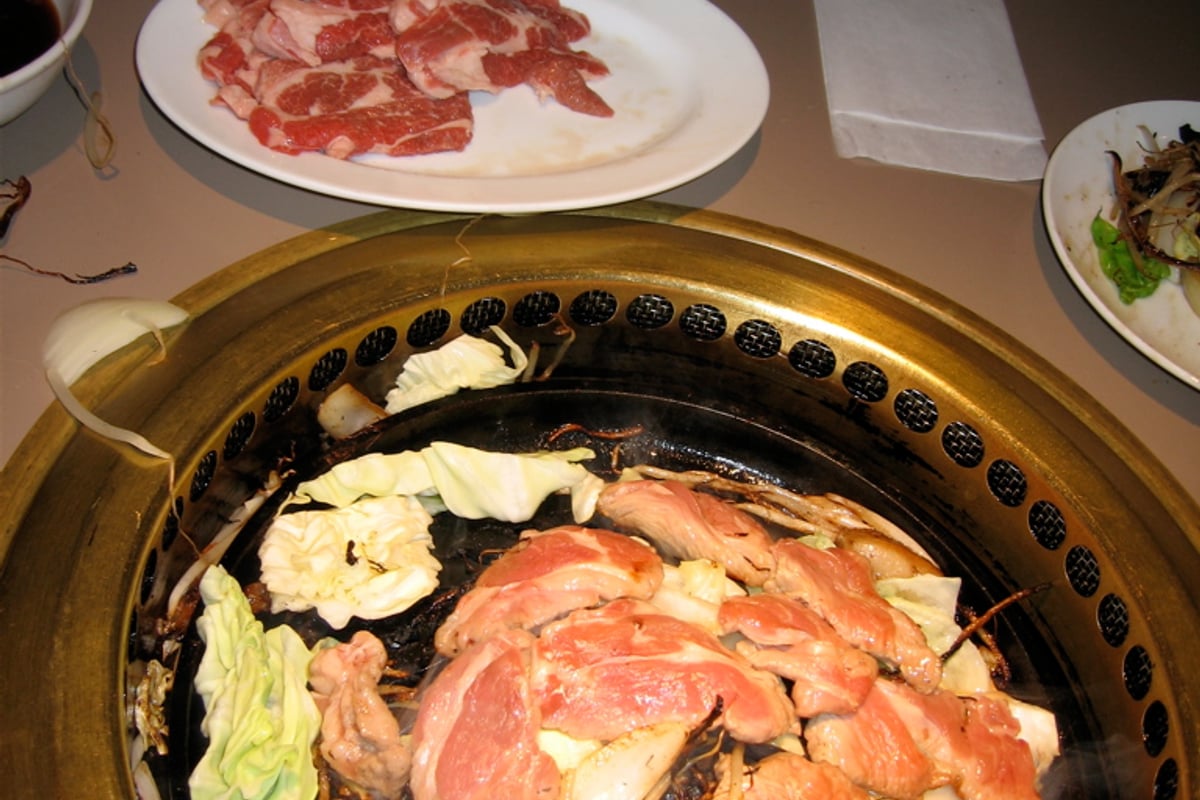
Jingisukan is a meat dish representing Hokkaido in which mutton is grilled on a special dome-shaped pan. The cast-iron pan, raised at the center, is built so that mutton grilled at its peak lets juices drip down to steam-cook vegetables around its rim; one theory holds that the pan's shape resembles a Mongol soldier's helmet. Various theories exist about who coined the name, but Tokuzo Komai, who served as head of the South Manchuria Railway's research department, is considered the most likely candidate. In the Taisho era, the “One Million Sheep Plan,” aimed at achieving domestic self-sufficiency in wool, established sheep-breeding stations in Takikawa and Tsukisamu in Sapporo, laying the groundwork for the dish's spread. After the war, in 1956, Masaji Matsuo in Takikawa devised “seasoned Jingisukan,” in which mutton is marinated in sauce before grilling, and it spread across Hokkaido. There are two main styles: the Takikawa/Matsuo style, in which meat is marinated in sauce before grilling, and the Sapporo/Tsukisamu style, in which sauce is applied after grilling, and the difference in flavor from shop to shop is part of the enjoyment.
Origin
The origins of Jingisukan lie in policies aimed at achieving domestic self-sufficiency in wool from the Meiji through Taisho eras. In Taisho 7 (1918), the government launched the “One Million Sheep Plan,” and sheep-breeding stations were established at five locations nationwide, including Takikawa and Tsukisamu in Sapporo, giving Hokkaido the foundation on which a mutton-eating food culture could take root. The practice of grilling and eating mutton is thought to have begun as a use for a byproduct of wool production.
History
The most likely candidate for who coined the name is Tokuzo Komai, head of the South Manchuria Railway's research department, who is said to have drawn inspiration from a mutton dish called “kaoyangrou” that he encountered in Manchuria. After the war, in 1956, Masaji Matsuo, who ran a mutton shop in Takikawa, devised “seasoned Jingisukan,” in which raw mutton is marinated in a sauce made with apple and onion, and it became a hit. Takikawa promotes itself as “the birthplace of seasoned Jingisukan,” while long-established shops around Susukino in Sapporo have built their own distinct food culture as well.
Features
A special cast-iron pan, raised in a dome shape at the center, is used so that mutton grilled at the peak and vegetables grilled on the lower rim let the meat's juices soak into the vegetables. There are two styles: “Takikawa style (seasoned),” in which the meat is marinated in sauce before grilling, and “Sapporo/Tsukisamu style (raw meat),” in which sauce is applied to raw meat after grilling; mutton (adult sheep) and lamb (young sheep) are used depending on the dish. Many shops use a sauce built around onion and apple to soften the distinctive aroma of mutton, which is another notable feature.
Main Ingredients
Food Culture
Mutton spread in connection with the wool industry of Hokkaido's pioneer era, and after the war it was also cherished as a source of nutrition for coal miners and dairy farmers. Today, as a Hokkaido soul food enjoyed by families and friends gathered around the pan, it is a standard dish at cherry-blossom viewings and sports days across the island.
How It Differs from Home Cooking
At home, people often enjoy it easily with store-bought sauce and a frying pan, but specialty restaurants are particular about their own sauce blends and the origin and cut of the mutton (lamb shoulder loin, mutton, etc.), grilling it on a dedicated cast-iron pan to draw out maximum aroma and juicy flavor.
Famous Shops
松尾ジンギスカン 滝川本店
北海道滝川市明神町3丁目
Founded in 1956; the birthplace of seasoned Jingisukan. All-you-can-eat courses available.
View details →成吉思汗だるま 本店
北海道札幌市中央区南5条西4-5
Founded in 1954; a long-established shop in Susukino. Uses raw mutton; Jingisukan from around 1,280 yen.
FAQ
Q. Why is it called 'Jingisukan'?
A. It is said to be named after Genghis Khan, who built the Mongol Empire, with Tokuzo Komai, head of the South Manchuria Railway's research department, considered the most likely person to have coined the name. There is also a theory that it comes from the pan's shape resembling a Mongol soldier's helmet, though some point out that this may be a later explanation.