 Image: Wikimedia Commons
Hokkaido
Hokkaido, Japan's northernmost land, is a region where the distinctive culture nurtured by the Ainu people overlaps with the history of settlement since the Meiji era. Nibutani-ita and Nibutani-attus were the first Ainu crafts in Hokkaido designated as Traditional Craft Products by the Minister of Economy, Trade and Industry (METI), while wood-carved bears (kibori-guma) and Otaru glass survive today as folk and industrial crafts born from life during the settlement era. In food, the region offers abundant local dishes making the most of the land and sea's bounty, from Ishikari nabe (salmon hot pot) and chanchan-yaki, which flourished around the salmon fishery in Ishikari, to Jingisukan (grilled mutton), which spread with the popularization of eating lamb and mutton. Because of Hokkaido's vast area, production centers are scattered across the region, and it is a pleasure to explore the distinct history and food culture of areas such as Biratori, Yakumo, Asahikawa, Otaru, Iwamizawa, Ishikari, and Matsumae.
Hokkaido's Traditional Crafts
Asahikawa Furniture
Asahikawa Furniture
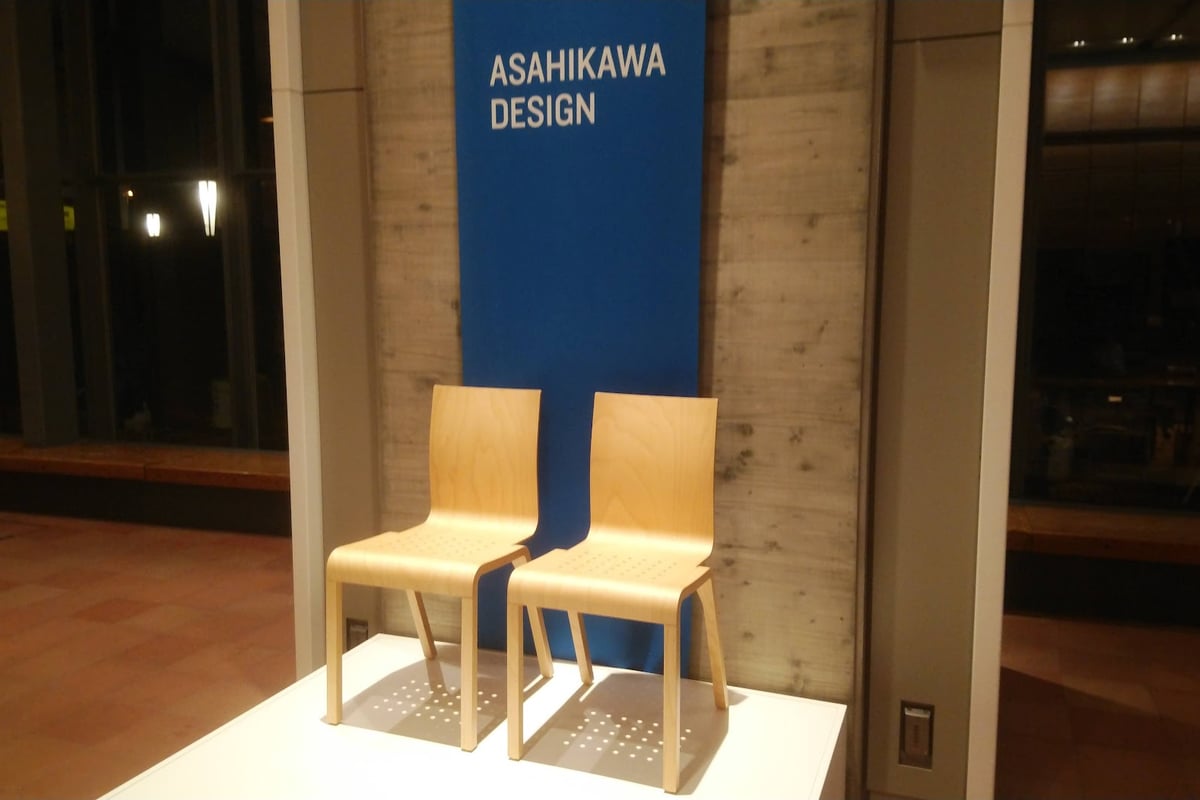
Asahikawa Furniture is a general term for wood furniture made in and around Asahikawa, Hokkaido, recognized as one of Japan's leading furniture-producing regions alongside Shizuoka, Hida, Tokushima, and Okawa. Its origins trace back to a sawmill opened in 1890 (Meiji 23) alongside the founding of Asahikawa Village; the completion of the railway in 1898 and the relocation of the Army's 7th Division in 1899 prompted carpenters and furniture and joinery craftsmen from Honshu to settle in Asahikawa, putting the woodworking industry on a full-scale footing. A cold-damage crop failure in 1913 led to the opening of a woodworking training institute that advanced technical skills, and in 1949 Asahikawa was the only district in Hokkaido designated a nationally important woodworking industrial district. The region draws on high-quality hardwood from the old-growth forests of the Taisetsu mountain range near Asahikawa, and has continued pursuing world-class design through the International Furniture Design Fair Asahikawa (IFDA), first held in 1990. Today, about 40 furniture makers in Asahikawa, Higashikawa, Higashikagura, and Toma belong to the Asahikawa Furniture Manufacturers' Cooperative, supporting the region's brand as a whole through joint exhibitions and joint order-taking.
Kobushi-yaki
Kobushi-yaki
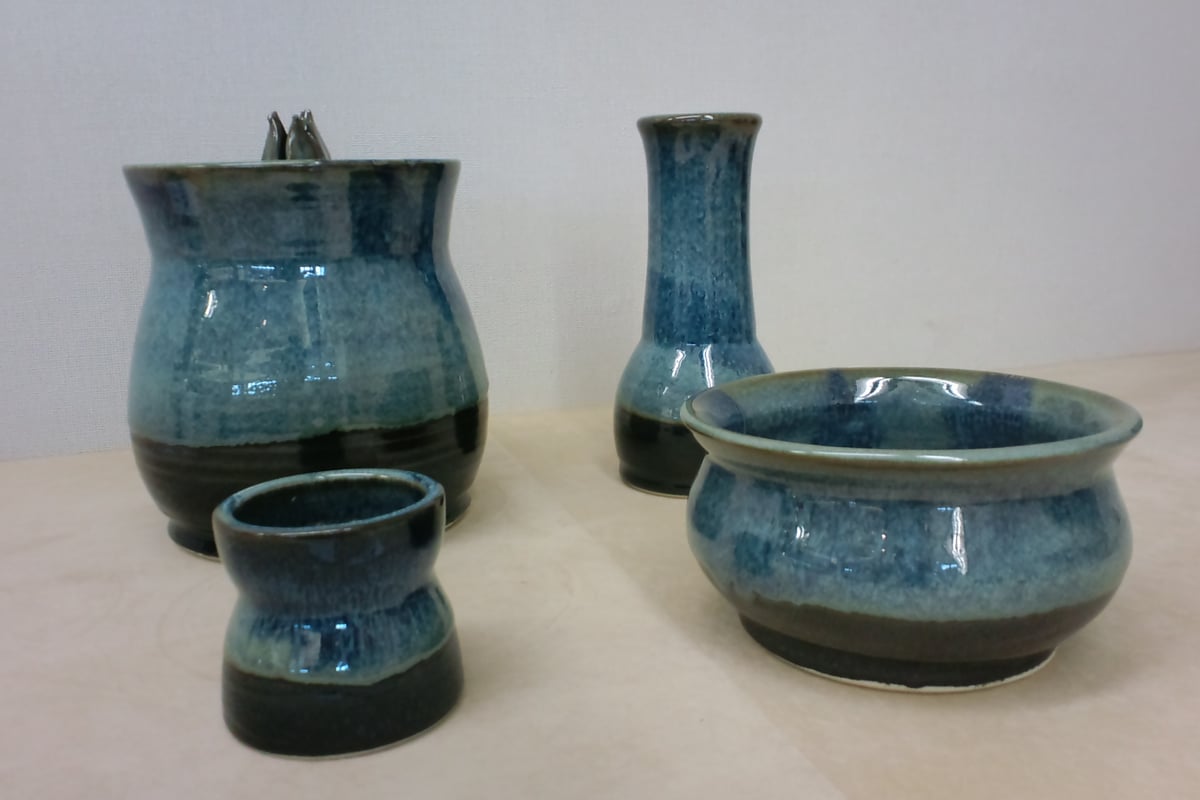
Kobushi-yaki is pottery fired at the 'Kobushi-gama' kiln in Iwamizawa, Hokkaido, known as the oldest mingama (kiln producing everyday-use wares) in Hokkaido. It began in 1946 (Showa 21) when the first-generation potter, a ceramics engineer known as Miaki, opened the kiln in Iwamizawa, his wife's hometown. The kiln was named 'Kobushi-gama' because the kobushi (magnolia) flowers were in bloom when the first firing took place. At the time the kiln opened, Hokkaido was considered barren ground for ceramics, and everything from clay preparation to glazes and firing had to be worked out through trial and error - a constraint that, in turn, nurtured a distinctive style. Among its wares, the indigo-based 'namako-yu' (sea-cucumber glaze) became especially well regarded for producing stable coloring from early in the kiln's history, and it remains the glaze most representative of Kobushi-yaki to this day. Following the second-generation potter, Yamaoka Kei, the kiln is now led by Yamaoka Chiaki, who is pursuing new efforts such as clay-making using raw materials sourced entirely within Hokkaido.
Nibutani Attus (Bark-cloth Textile)
Nibutani Attus
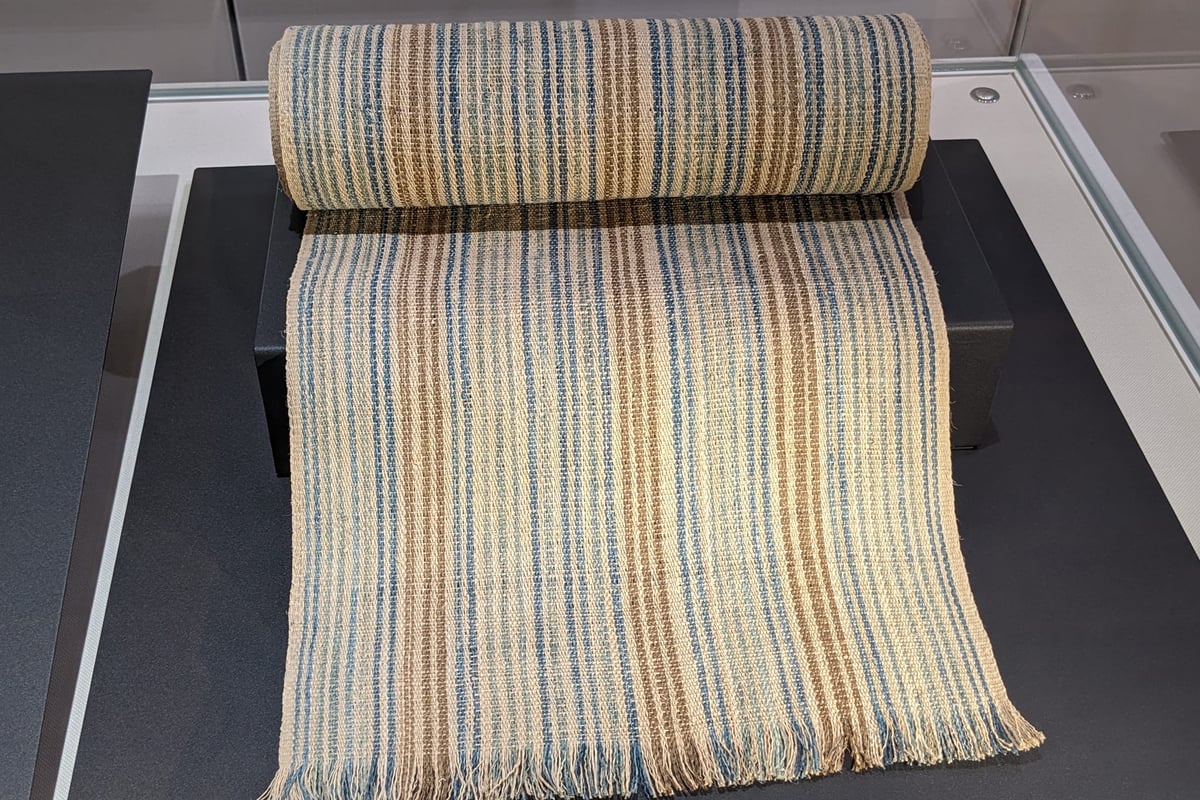
Nibutani Attus is a bark-cloth textile of the Ainu people, handed down in the Nibutani district of Biratori Town, Saru District, Hokkaido. The inner bark of trees such as Ohyo elm and Japanese linden, grown in the Saru River basin, is stripped, boiled, and dried, then torn into thin strips to make thread, which is twisted before being woven on a loom. Making the thread alone is said to account for as much as 80% of the entire process, an extremely labor-intensive task that requires a long time and much effort from the harvesting of the bark to the completion of a bolt of cloth. It is characterized by striped patterns created by the natural coloring of the bark, and is said to be water-resistant, highly breathable, and remarkably strong for a natural fiber. It was once widely used for Ainu clothing, and techniques passed down for more than 100 years continue to be carried on today. On March 8, 2013, together with Nibutani Ita, it became the first Traditional Craft Product designated by the Minister of Economy, Trade and Industry (METI) in Hokkaido.

Nibutani Ita (Carved Wooden Tray)
Nibutani Ita
Nibutani Ita is a wood-carved tray (ita) of the Ainu people, handed down since ancient times in the Nibutani district of Biratori (Biratori Town), Saru District, Hokkaido. Craftspeople carve boards of Hokkaido-grown wood such as katsura (Japanese Judas tree) and walnut that have been dried for several years, engraving Ainu patterns such as morew-noka (spiral pattern), aiush-noka (thorn-like pattern), and shik-noka (eye-like pattern). The technique of ramram-noka (scale carving), applied to fill the spaces between the larger patterns, is also considered indispensable to Nibutani Ita. These patterns are said to carry meanings of warding off evil and misfortune. On March 8, 2013, together with Nibutani Attus, it became the first Traditional Craft Product designated by the Minister of Economy, Trade and Industry (METI) in Hokkaido. Although it has long been used as an everyday tray, the arrangement of patterns and the depth of carving differ from carver to carver, making it a craft in which the individuality of the maker is strongly expressed. The technique continues to be passed down today by local artisans and workshops centered on Nibutani in Biratori Town.
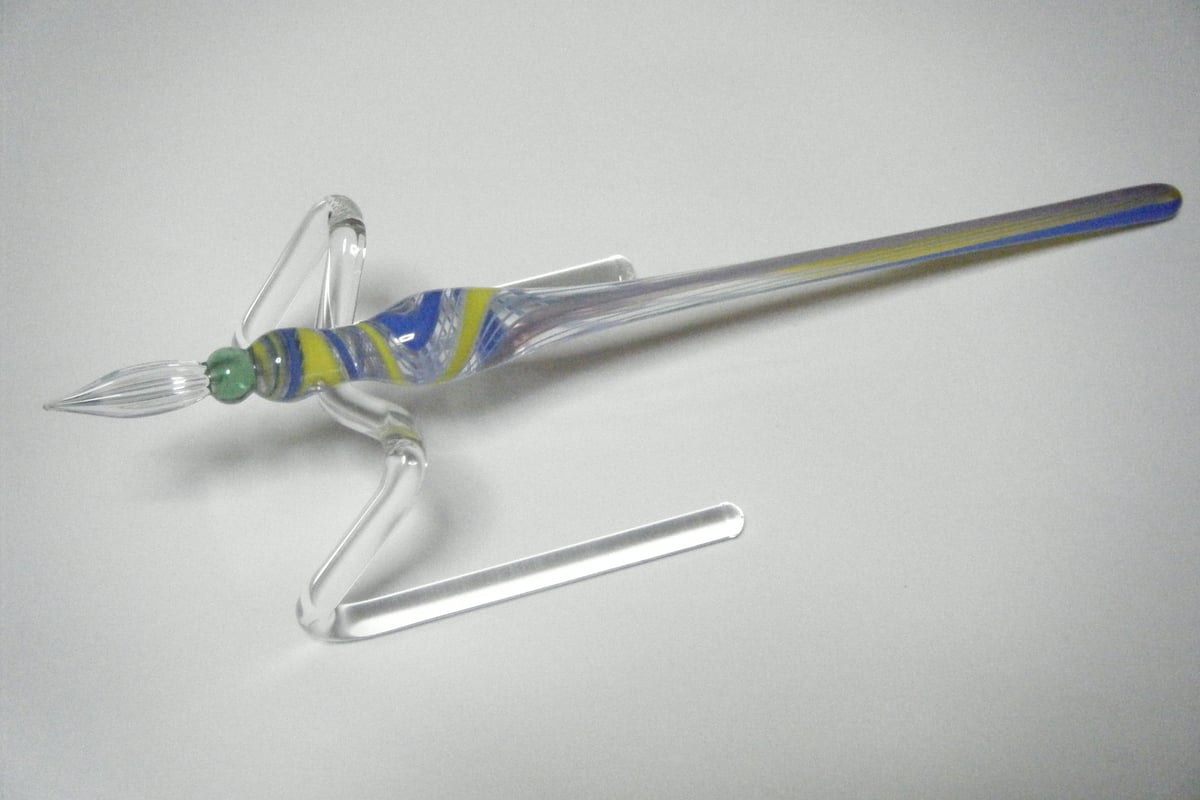
Otaru Glass
Otaru Glass
Otaru Glass is a general term for the glass craft that developed in Otaru City, Hokkaido. It began in 1901, when Asahara Hisakichi, who had come to Hokkaido from Kyushu, founded Asahara Glass in Otaru to manufacture kerosene lamps. From 1910, the company also began producing glass floats for fishing, and grew to a scale that included factories in Otaru, Muroran, Asahikawa, Kushiro, and Karafuto (Sakhalin). However, as electric and kerosene stoves spread, demand for lamps declined, and glass floats were gradually replaced by plastic ones, leaving Asahara Glass as the only glass manufacturer in Otaru by 1960. In 1971, Asahara Glass changed its name to Kitaichi Glass, and when it dared to display kerosene lamps, once an everyday necessity, in its storefront, they became popular among travelers as interior décor, marking a shift from industrial glass to glass craft and household goods. Today, multiple workshops and shops, including Kitaichi Glass and Taisho Glass, are clustered around the Otaru Canal, and the area is also known as a tourist destination where visitors can try glassblowing.
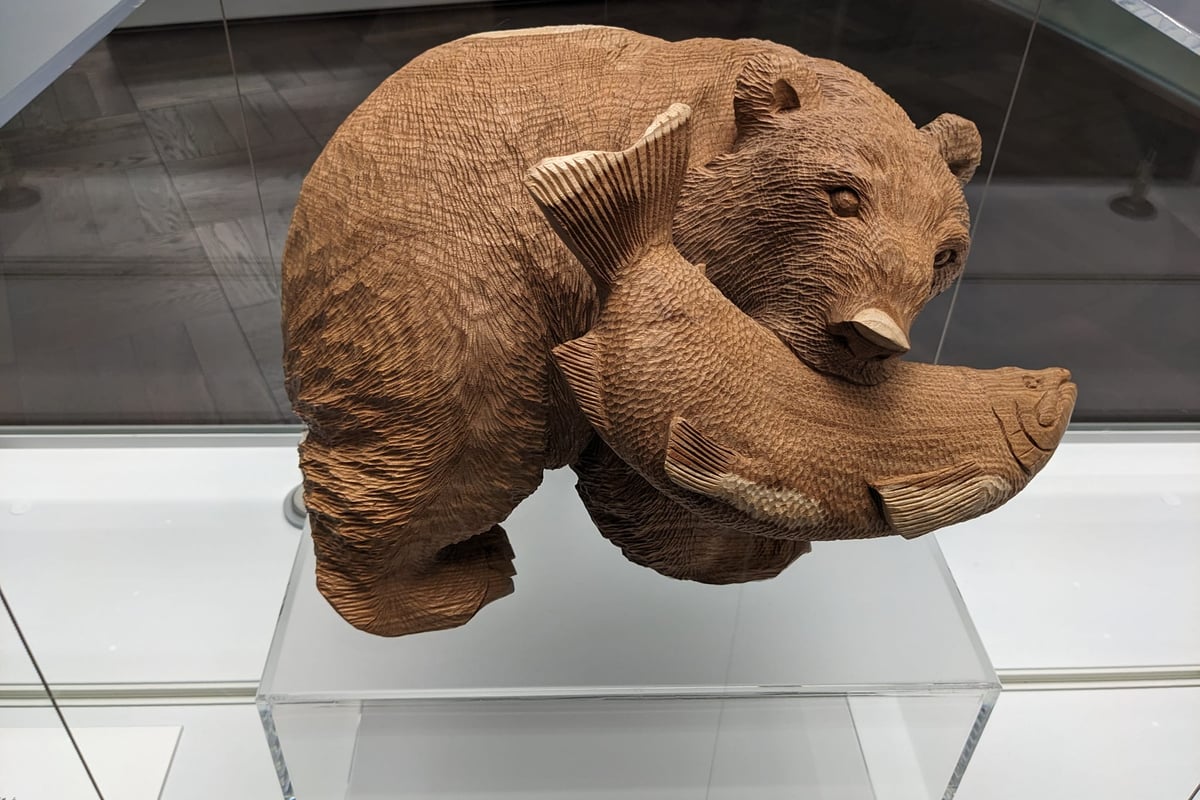
Wood-carved Bear (Kibori-guma)
Kibori-guma (Wood-carved Bear)
Kibori-guma (wood-carved bear) is a carved wooden statue of a bear, widely known as a representative wood-carving craft of Hokkaido. Its origin is attributed to Yakumo Town on the Oshima Peninsula. Tokugawa Yoshichika, 19th head of the Owari Tokugawa family, brought back folk-craft items including wood-carved bears that he had seen while stopping in Switzerland during a 1921-1922 tour of Europe, and encouraged local farmers to make similar carvings as winter side work at the Yakumo Farm that he operated. A work carved by dairy farmer Ito Masao based on the imported piece is regarded as the first wood-carved bear made in Hokkaido, and was exhibited at the Yakumo Rural Art and Craft Exhibition in 1924. In Yakumo, two styles of expression developed: the delicate 'kebori' (fur-carving) technique established by Nihonga painter Tokura Kinnosuke, and the powerful 'menbori' (facet-carving, or hatsuri-bori) technique established by Shibasaki Shigeyuki. Meanwhile, in Asahikawa, around 1926, Ainu bear hunter Matsui Umetaro carved a bear based on his own experience, giving rise to a distinct lineage that developed into the 'Asahikawa style,' characterized by abstract forms created with facets. Today it is known nationwide as a classic Hokkaido souvenir.
Yukara-ori
Yukara-ori
Yukara-ori is a distinctive Hokkaido textile craft founded in 1962 by Kiuchi Aya (1924-2006), a dyer and weaver born in Asahikawa. Wool is dyed into more than 200 shades, and these colored threads are woven using tapestry-weave (tsuzure-ori) and float-weave (uki-ori) techniques to depict Hokkaido's natural scenery - drift ice, the black lily (kuroyuri), and the surface of Lake Mashu - almost like painting an oil canvas in cloth. Every stage, from dyeing and spinning to weaving, is carried out entirely by hand. The name derives from the Ainu word 'yukar,' meaning 'to hand down a tradition,' reflecting the hope of passing on Hokkaido's natural heritage to future generations through craft. Kiuchi Aya earned wide international acclaim, including the Grand Prize at the Japan Folk Art Public Exhibition (1977) and a gold medal at the International Textile Biennial in Hungary (1978). After her death, however, the Hokkaido Traditional Arts and Crafts Village that had taken over the business went bankrupt in 2016, leaving the Yukara-ori Craft Museum, its base of operations, closed for an extended period (effectively shut down). Today, 'Yukara-ori Kobo LLC,' established in 2018 by Takashima Yoshiki, a former creditor, carries on the techniques and works with the cooperation of veteran weavers and dyers.
Hokkaido's Local Food
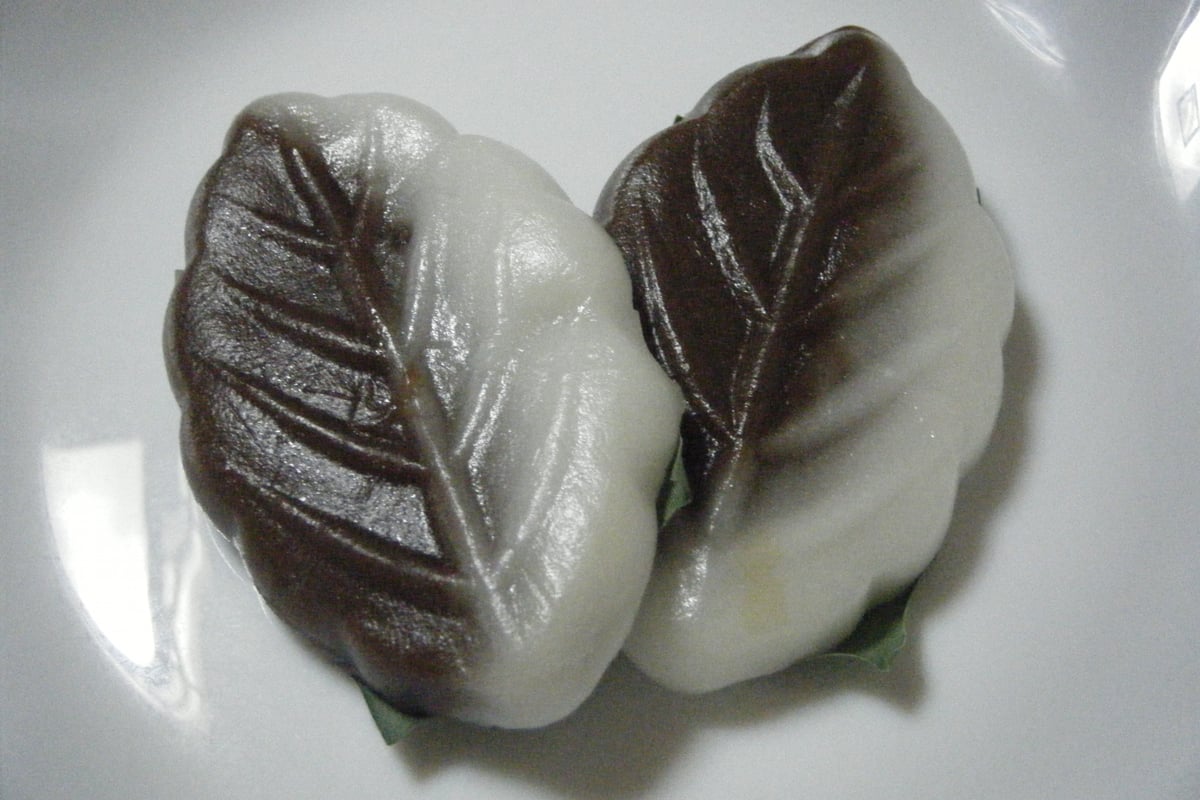
Bekomochi (marbled mochi sweet)
Bekomochi
Bekomochi is a regional confectionery of Hokkaido made by combining white and black (or brown) dough, typically shaped to resemble a leaf. A dough of joshinko (non-glutinous rice flour) or shiratamako (glutinous rice flour) mixed with sugar is combined with a dough colored with brown sugar, shaped, and then steamed. Its appeal lies in its soft, chewy texture and the gentle sweetness of the brown sugar. In Hokkaido, it is customarily eaten mainly around Tango no Sekku (Boys' Festival, May 5), and it has been especially popular in the Dounan (southern Hokkaido) region. Several theories exist about the origin of the name: one holds that the black-and-white coloring resembles a Holstein dairy cow, leading to the name 'beko' (a dialect word for cow); another traces it to the resemblance of the brown-sugar portion's color to tortoiseshell (bekkou); and yet another suggests it derives from rice flour (beiko) being the main ingredient—though no theory is firmly established. Centered on the Dounan region, shops produce a wide variety of distinctive bekomochi beyond the classic leaf shape, including green dough mixed with mugwort and versions filled with sweet red bean paste.
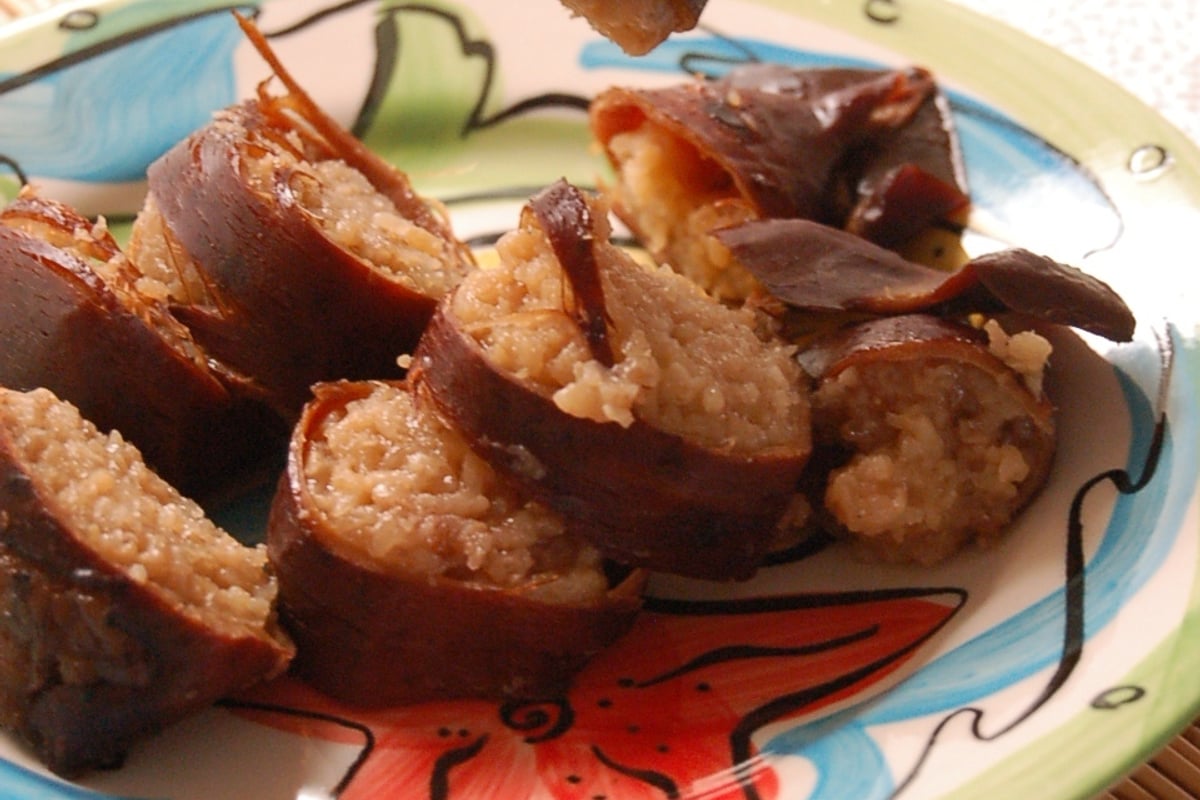
Ikameshi (rice-stuffed squid)
Ikameshi
Ikameshi is a local dish of Mori, Hokkaido, in which small squid bodies are stuffed with glutinous and non-glutinous rice and simmered slowly in a soy-based sauce. It is said to have been created in 1941 by Abe Shoten, a shop running an ekiben (train station box lunch) business in front of Mori Station, as a substitute food to make up for the rice shortage during the Pacific War. Originally the squid was used as a clever way to “bulk out” precious rice and stretch it further, but the combination of chewy rice and the squid's umami became popular, and it took hold as the signature ekiben of JR Mori Station. From around 1955 it also began to be sold through live demonstrations at department stores in Tokyo, and it built a nationwide reputation, ranking among the top sellers for many years at Keio Department Store's “Original Famous Ekiben and National Delicacies Fair.” The combination of squid and rice soaked in a sweet-savory soy sauce is a testament to the finished quality unique to an ekiben — delicious even when cold.
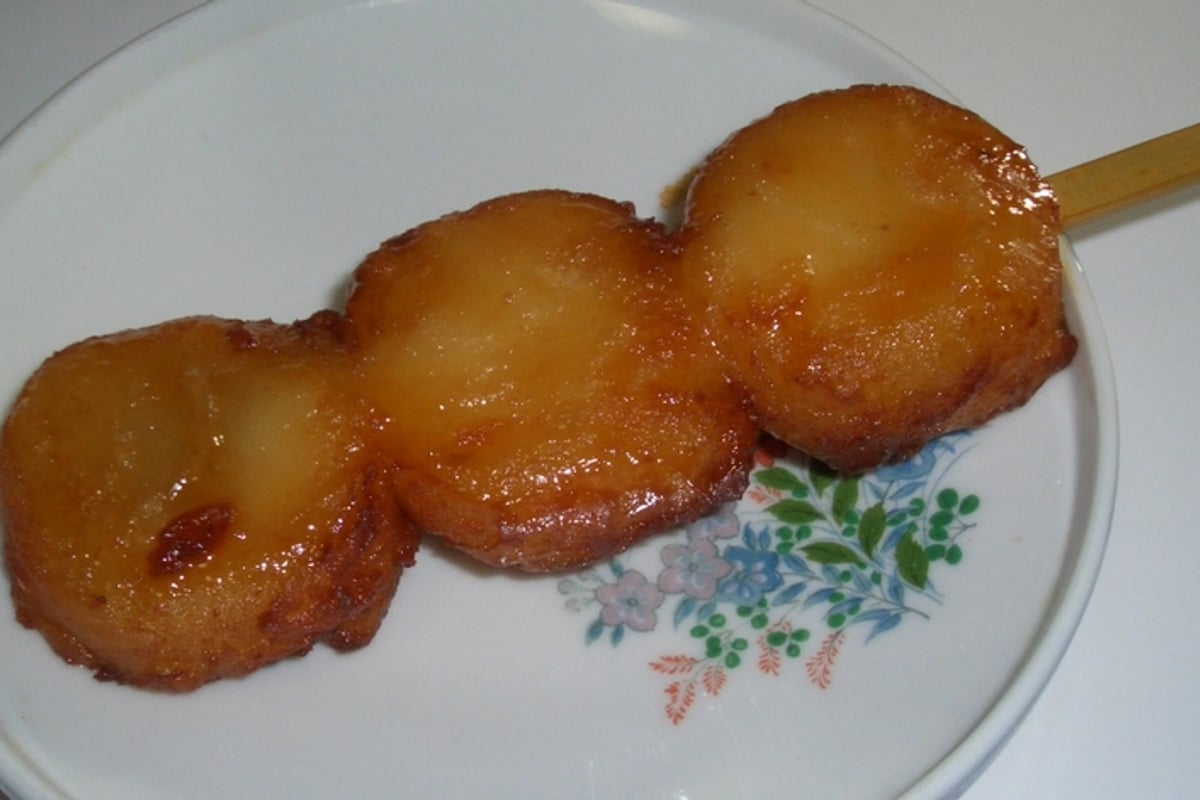
Imo-mochi (grilled potato mochi)
Imo-mochi
Imo-mochi is a Hokkaido snack made by boiling and mashing potatoes, kneading in potato starch, shaping the mixture into flat rounds, and pan-frying them. The outside is crisp and golden while the inside has a distinctively chewy, mochi-like texture, and it is typically enjoyed with a simple sweet-savory soy glaze, kinako (roasted soybean flour), or butter. It is said to have originated during the Meiji-era pioneer days, when rice-farming techniques had not yet been established in Hokkaido; settlers used potatoes, which grew well even in the cold climate, in place of glutinous rice to create a mochi-like food, and it spread as a vital energy source for the pioneers. Hokkaido, Japan's leading potato producer, and especially the Tokachi region, is known as a representative production area, and imo-mochi is a staple treat both at home and at roadside stations and souvenir shops. Because it was easy to prepare, it was also valued during the food shortages of the wartime and postwar years, and remains a beloved Hokkaido flavor across generations today.
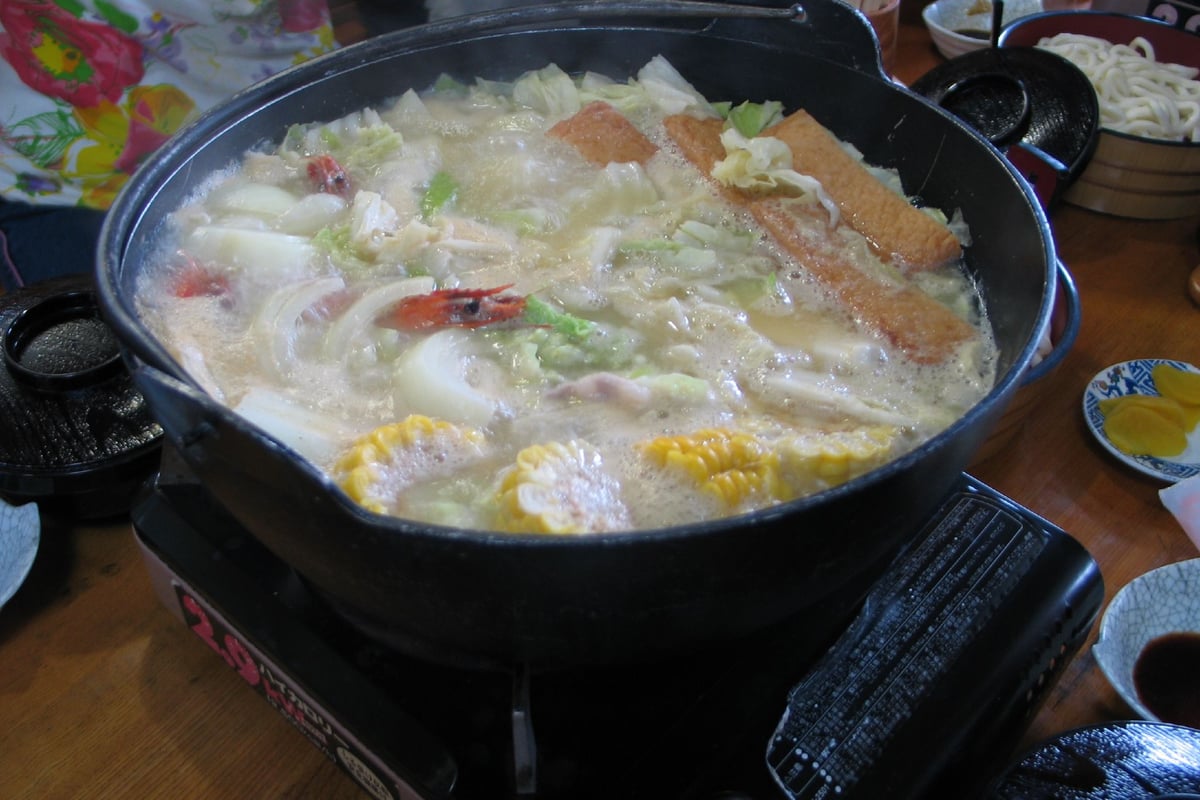
Ishikari nabe (salmon hot pot)
Ishikari Nabe
Ishikari nabe is a hot pot dish representing Hokkaido, made by simmering chunks of salmon together with offcuts (backbone, collar, etc.) and vegetables such as cabbage, onion, tofu, and potato in a miso-based broth. It is said to have originated in Ishikari, a city that grew up at the mouth of the Ishikari River, and is known as a local dish deeply shaped by the salmon fishery that has continued there since the Edo period. According to tradition, it began when fishermen celebrating a good catch threw freshly caught salmon offcuts into miso soup to warm themselves as they ate. In the late 1940s it became known nationwide after being served to tourists who came to watch Ishikari's beach seine salmon fishing. A final sprinkle of sansho pepper tames the fish's smell and brings out its umami. In 2007 it was selected for MAFF's “100 Best Local Dishes of Japan,” and it is counted among the three great local dishes of Hokkaido alongside Jingisukan and chanchan-yaki. Long-established restaurants in Ishikari still serve bowls that carry on the fishermen's wisdom of using every part of the salmon without waste.
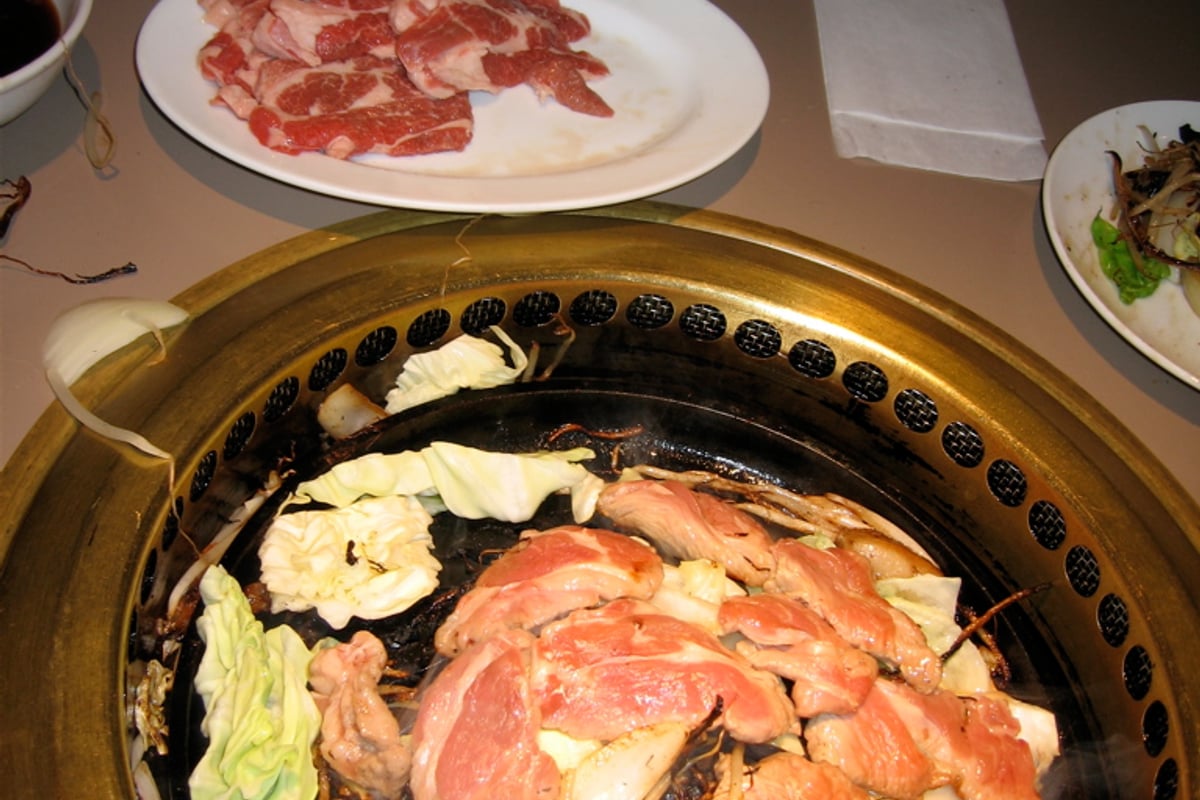
Jingisukan (grilled mutton)
Jingisukan
Jingisukan is a meat dish representing Hokkaido in which mutton is grilled on a special dome-shaped pan. The cast-iron pan, raised at the center, is built so that mutton grilled at its peak lets juices drip down to steam-cook vegetables around its rim; one theory holds that the pan's shape resembles a Mongol soldier's helmet. Various theories exist about who coined the name, but Tokuzo Komai, who served as head of the South Manchuria Railway's research department, is considered the most likely candidate. In the Taisho era, the “One Million Sheep Plan,” aimed at achieving domestic self-sufficiency in wool, established sheep-breeding stations in Takikawa and Tsukisamu in Sapporo, laying the groundwork for the dish's spread. After the war, in 1956, Masaji Matsuo in Takikawa devised “seasoned Jingisukan,” in which mutton is marinated in sauce before grilling, and it spread across Hokkaido. There are two main styles: the Takikawa/Matsuo style, in which meat is marinated in sauce before grilling, and the Sapporo/Tsukisamu style, in which sauce is applied after grilling, and the difference in flavor from shop to shop is part of the enjoyment.
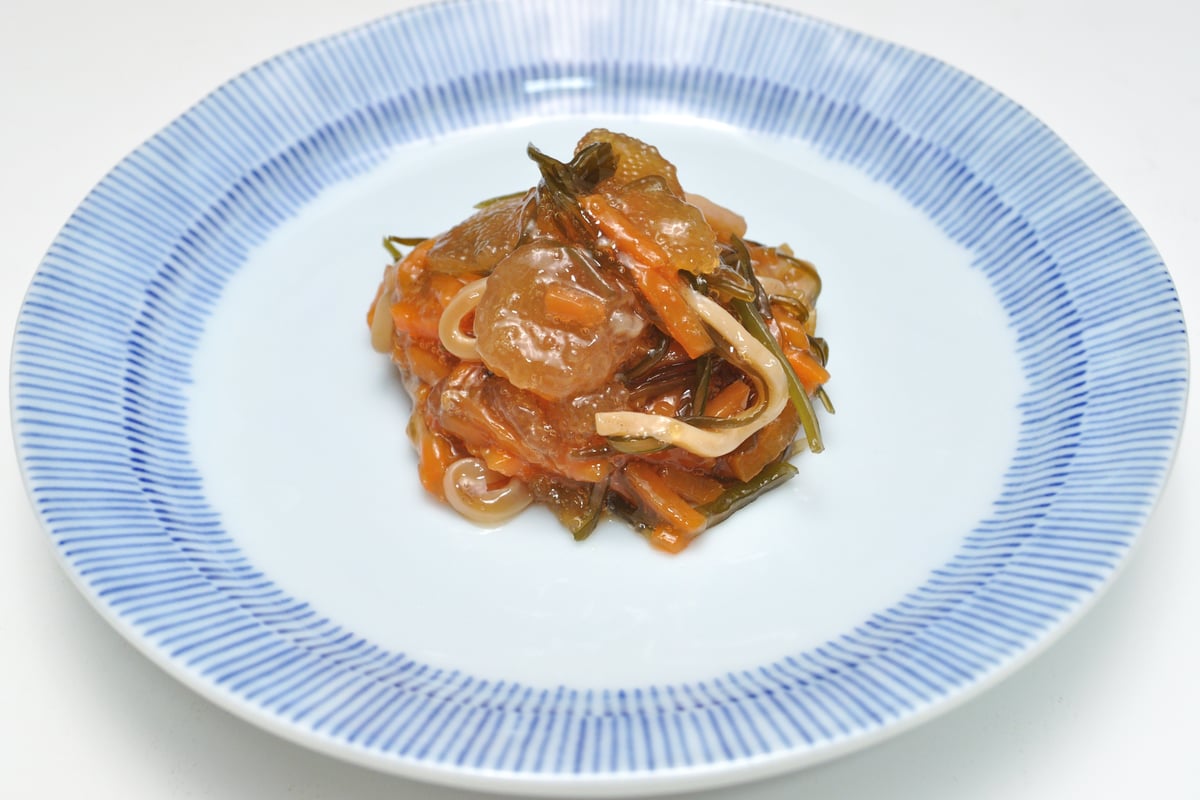
Matsumae-zuke (squid and kelp pickle)
Matsumae-zuke
Matsumae-zuke is a preserved dish from the Matsumae region of Hokkaido, made by thinly slicing dried squid (surume) and kelp and pickling them in a soy sauce-based marinade. Herring roe (kazunoko) is traditionally added as a finishing touch, giving the dish its characteristic sticky, stringy texture from the kelp, a satisfying crunch from the roe, and layers of umami flavor. The name is said to derive from Matsumae, the former castle town of the Matsumae domain (now Matsumae Town, Matsumae District), where the local kelp was known as 'Matsumae kelp.' During the Edo period, the Matsumae and Fukushima areas thrived on herring fishing, and locals combined the abundant kazunoko, dried squid, and kelp into a pickle that later became a staple of New Year's cuisine and a classic Hokkaido souvenir known throughout Japan. Today, several producers in Matsumae Town still make this pickle, and its simple, home-style flavor—varying slightly from household to household—continues to be passed down.
Salmon chanchan-yaki (grilled salmon with miso)
Salmon Chanchan-yaki
Salmon chanchan-yaki is a local dish of Hokkaido in which chunks of salmon and vegetables such as cabbage and onion are placed on an iron griddle or hot plate, coated with a miso-based sauce, and steam-grilled together. It is said to have originated in the fishing towns of the Ishikari region, and in the late 1930s fishermen reportedly grilled salmon they had just cleaned aboard their boats, cooking it boldly right there on improvised griddles made from cut-open oil drums. There are several theories about the origin of the name — that it can be made quickly (“chacha-tto”), that it is a dish made by one's father (“chan”), or that it comes from the sound of the spatula striking the griddle — though none has been confirmed by definitive sources. In 2007 it was selected for MAFF's “100 Best Local Dishes of Japan,” and it is counted among the three great local dishes of Hokkaido alongside Ishikari nabe and Jingisukan. The savory aroma of miso and the richness of the salmon's fat soak into the vegetables, making it a dish that brightens the table from autumn through winter.
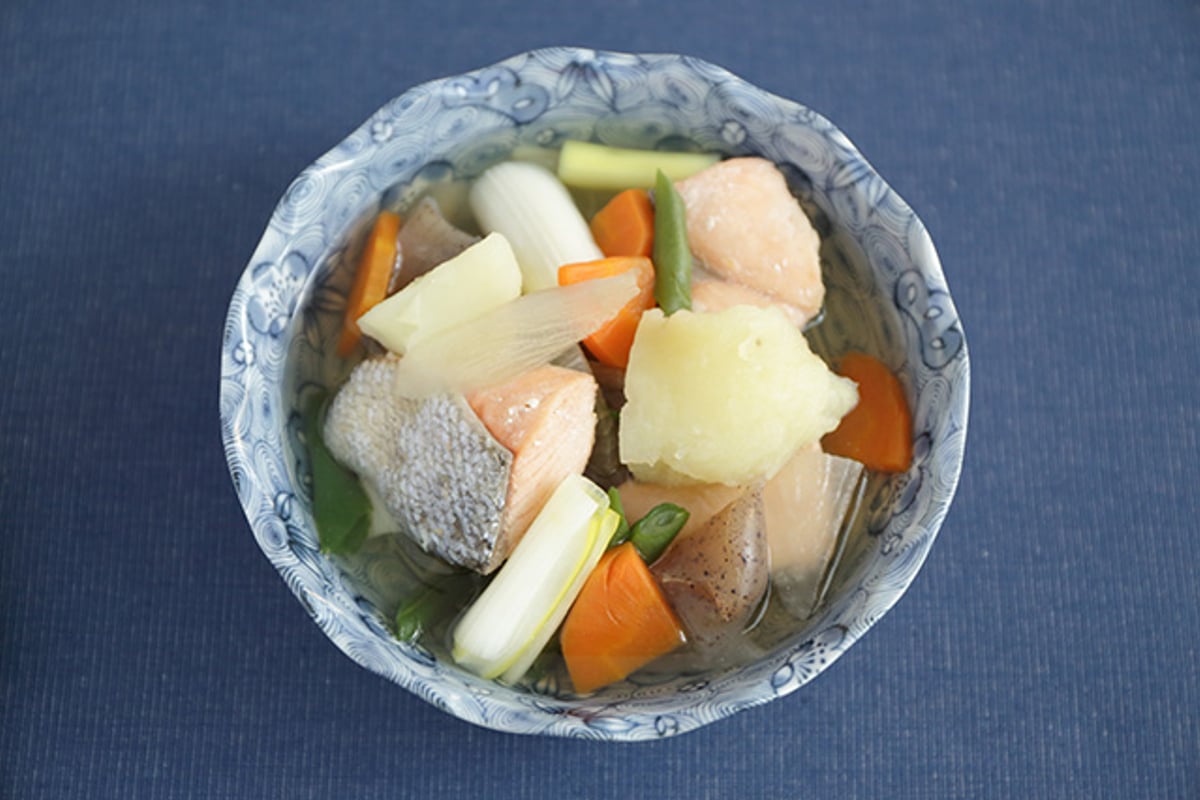
Sanpei-jiru (salted fish and vegetable soup)
Sanpei-jiru
Sanpei-jiru is a classic salt-seasoned soup of Hokkaido, made by slowly simmering salted fish—such as salted salmon or nuka-zuke herring—together with root vegetables like daikon radish, carrot, and potato in a kelp-based dashi. Its defining feature is that the seasoning relies almost entirely on the salt naturally contained in the fish, with little to no miso or soy sauce added, giving it a simple yet deeply flavorful character. The name is already recorded in a late Edo-period travel account, showing that this dish has been eaten in Hokkaido households for over 200 years. Several theories exist about the origin of the name, including one linking it to a fisherman named Saito Sanpei who served the dish to the Matsumae domain's lord, and another tracing it to a deep Arita-ware dish called 'sanpei-zara.' No theory is definitively established. Unlike Ishikari-nabe, which is seasoned with miso and uses fresh salmon, Sanpei-jiru is fundamentally based on the combination of salted fish and root vegetables, and the types of fish used and preparation style vary by region.
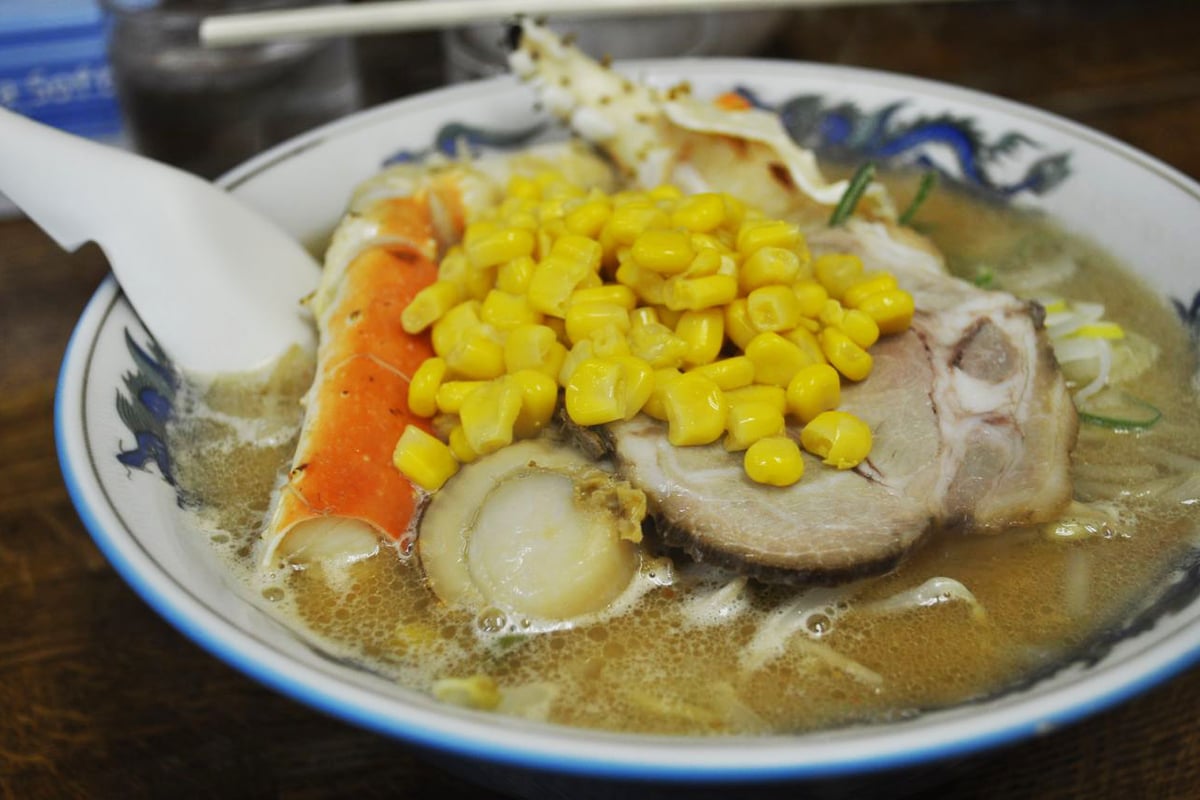
Sapporo Miso Ramen
Sapporo Miso Ramen
Sapporo miso ramen is a local ramen style from Sapporo that pairs a miso-based broth with thick, curly noodles. It is said to have originated around 1954-1955 at 'Aji no Sanpei,' a shop founded in 1950 in Susukino, Chuo Ward, Sapporo, whose owner Morito Omiya was inspired by a foreign article on the benefits of miso to develop a ramen built around it. The broth combines an animal-based pork bone or chicken stock with a miso tare, enriched with stir-fried vegetables and lard for extra depth and heat retention, making it a bowl that stays warm even in cold weather. From the 1960s onward it helped spark the nationwide Sapporo ramen boom and also prompted instant-noodle makers to commercialize miso ramen. Today the city is still home to many popular shops such as 'Sumire' and 'Junren,' each competing with their own miso tare and broth.
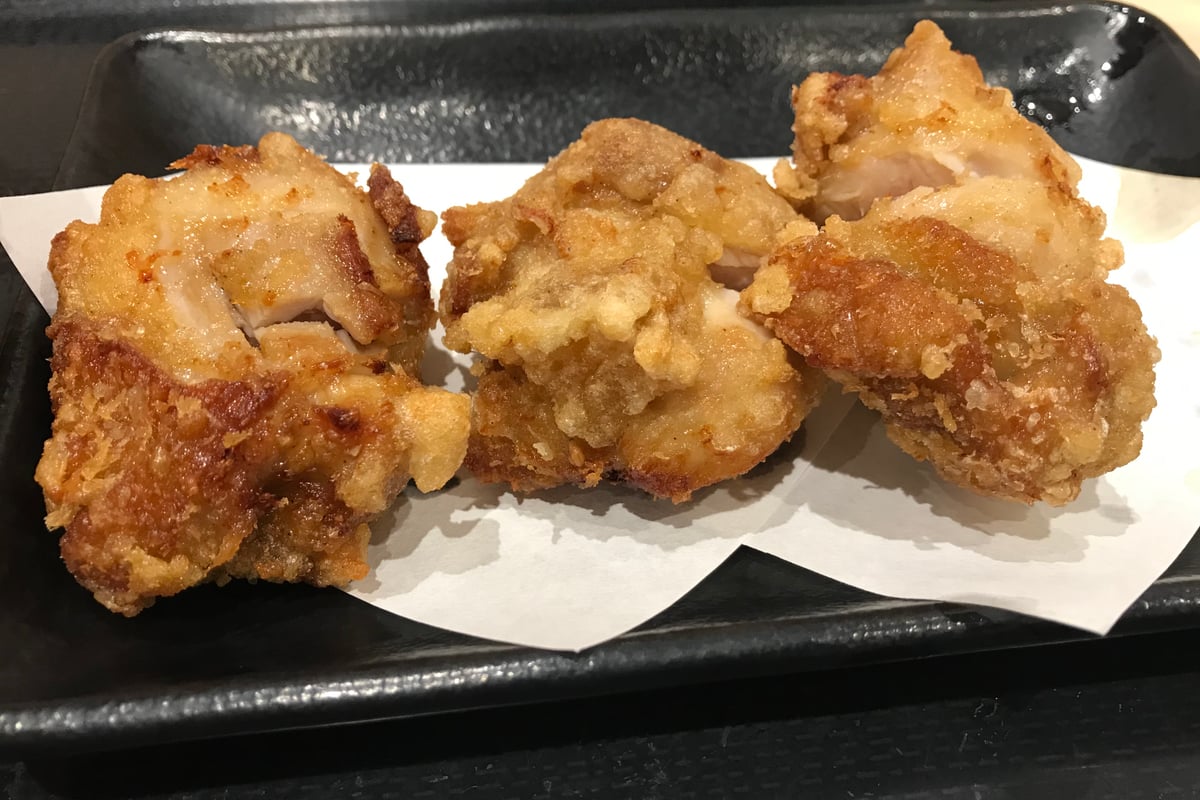
Zangi (Hokkaido-style fried chicken)
Zangi
Zangi is Hokkaido's own style of fried chicken, in which chicken is marinated firmly in a base of soy sauce, garlic, ginger, and other seasonings, coated in wheat flour, and deep-fried. It is said to have originated around 1955, when a poultry restaurant in the Suehiro entertainment district of Kushiro cut a whole chicken into pieces and deep-fried it. The name is thought to derive from the Chinese dish of deep-fried chicken, “zhaji,” with the most likely theory being that the shop's owner inserted an extra “n” sound into the word for a catchier ring and good fortune. Compared to ordinary Japanese fried chicken, zangi is characterized by a stronger marinade, strong enough to be eaten on its own, and a crunchy texture from the marinade and batter clinging firmly to the meat. In the style that originated in Kushiro, deep-fried chicken is also served drizzled with a special Worcestershire-based sauce, a way of eating that remains firmly popular. From a side dish at home to a favorite at izakaya, it is a soul food enjoyed year-round across Hokkaido.
Model Course
Half-day course experiencing Ainu culture in Nibutani, Biratori
Visit the Nibutani district of Biratori, home to the workshops producing Nibutani-ita and Nibutani-attus, the first crafts in Hokkaido to be designated Traditional Craft Products by METI, and observe carving and weaving techniques at the Nibutani Craft Museum and the Nibutani Ainu Culture Museum. There are also hands-on corners for wood carving and embroidery, making this a course where visitors can experience Ainu culture firsthand.
Full-day course enjoying salmon cuisine and glass craft in Ishikari and Otaru
Enjoy Ishikari nabe and chanchan-yaki in Ishikari, a town that flourished with the salmon fishery, then move on to neighboring Otaru and stroll around the canal area, home to glass workshops such as Kitaichi Glass and Taisho Glass Museum. Trying a glassblowing experience to make your own original piece is also recommended.
Course exploring furniture and textile crafts in Asahikawa
Enjoy a factory tour and showroom visits for Asahikawa Furniture, one of Japan's five major furniture-producing regions, then visit the workshop of Yukara-ori, the textile craft founded by Kiuchi Aya, to admire works depicting Hokkaido's nature in colored thread. Seeking out local specialties around Asahikawa is also worth combining with this course.
Course enjoying local flavors in Matsumae and southern Hokkaido
In Matsumae, a town that flourished as the castle town of the Matsumae domain, sample local flavors unique to southern Hokkaido, such as matsumae-zuke (dried squid and kelp pickled together) and bekomochi, eaten during the Boys' Festival. Also known for Matsumae Castle and as a cherry-blossom viewing spot, this course can be enjoyed together with historical sightseeing.
Events
Ishikari Salmon Festival
Late September every year (typically held over two days) / Around Benten-cho, Ishikari City
View details →