Image: Wikimedia Commons
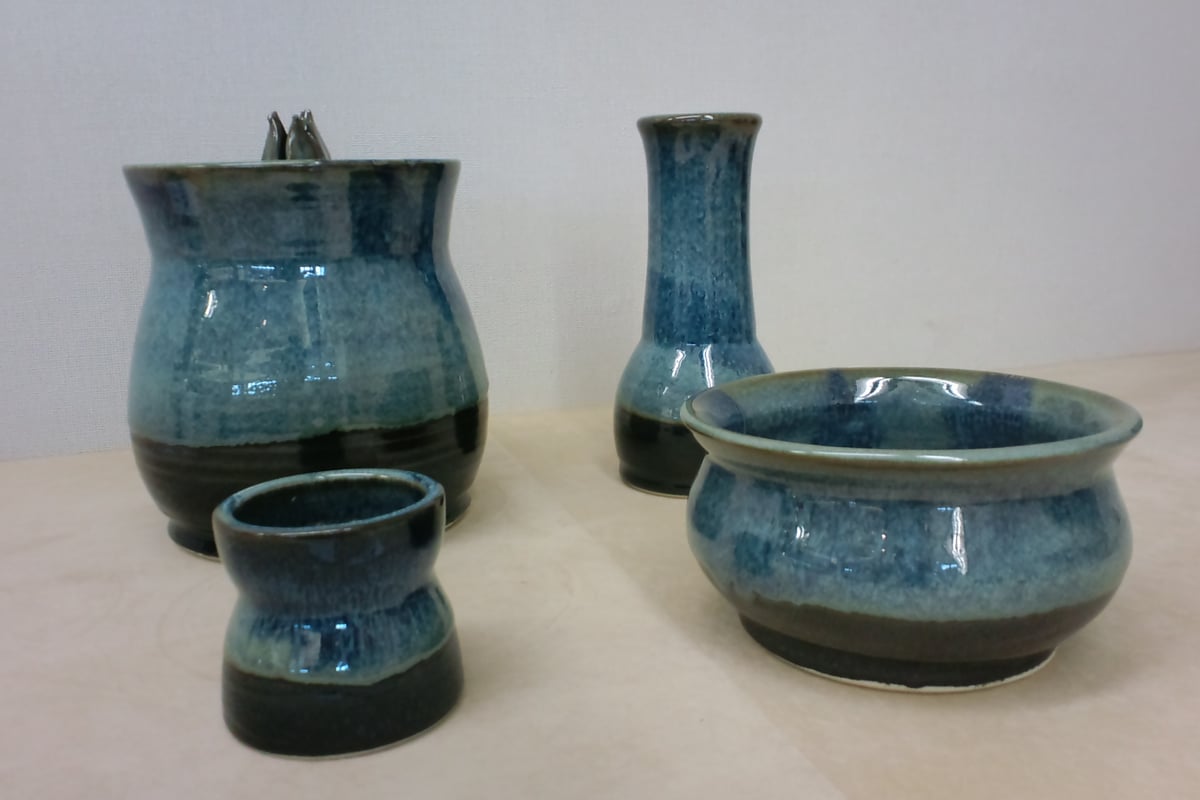
Kobushi-yaki is pottery fired at the 'Kobushi-gama' kiln in Iwamizawa, Hokkaido, known as the oldest mingama (kiln producing everyday-use wares) in Hokkaido. It began in 1946 (Showa 21) when the first-generation potter, a ceramics engineer known as Miaki, opened the kiln in Iwamizawa, his wife's hometown. The kiln was named 'Kobushi-gama' because the kobushi (magnolia) flowers were in bloom when the first firing took place. At the time the kiln opened, Hokkaido was considered barren ground for ceramics, and everything from clay preparation to glazes and firing had to be worked out through trial and error - a constraint that, in turn, nurtured a distinctive style. Among its wares, the indigo-based 'namako-yu' (sea-cucumber glaze) became especially well regarded for producing stable coloring from early in the kiln's history, and it remains the glaze most representative of Kobushi-yaki to this day. Following the second-generation potter, Yamaoka Kei, the kiln is now led by Yamaoka Chiaki, who is pursuing new efforts such as clay-making using raw materials sourced entirely within Hokkaido.
Origin
Kobushi-yaki began in 1946 (Showa 21), when the first-generation potter Miaki, a ceramics engineer, opened the kiln in Iwamizawa, Hokkaido, his wife's hometown. At the first firing, the kobushi (magnolia) flowers that herald the arrival of spring in the northern land were in bloom, and the kiln was named 'Kobushi-gama' after them. It is considered the oldest continuously operating mingama in Hokkaido, and has focused on making everyday-use wares since it opened.
History
At the time the kiln was founded, Hokkaido had almost no ceramic tradition or production areas, so everything from clay preparation to glaze formulation and firing had to be established from scratch. Through repeated trial and error under these constraints, the kiln developed 'namako-yu,' a glaze that reliably produces indigo-toned coloring, which became renowned as the technique most representative of Kobushi-yaki. The second-generation potter, Yamaoka Kei, took over and developed the style further; after his death in 2018, Yamaoka Chiaki has led the kiln, carrying on the tradition while continuing new efforts such as clay-making using 100% Hokkaido-sourced raw materials.
Features
Wares using the indigo-based 'namako-yu' glaze are synonymous with Kobushi-yaki, and the way the glaze layers create rich, nuanced variations in color is a defining feature. Since the kiln opened, it has maintained a consistent approach of handling everything from clay-making to firing in-house, and a style conscious of Hokkaido's natural character has been passed down. The kiln also focuses mainly on everyday-use tableware, pursuing an unadorned, practical beauty.
Materials Used
Production Process
- 1
Clay-making
Work begins with clay-making, an area the kiln has focused on since its founding, including the use of Hokkaido-sourced raw materials.
- 2
Shaping
The vessel is shaped using a potter's wheel or hand-forming.
- 3
Glazing and firing
Namako-yu and other glazes are applied, and the piece is fired in the kiln to bring out its distinctive indigo coloring.
| Main Production Areas |
|
|---|
Artisans & Workshops
こぶ志陶苑(こぶ志窯)/山岡千秋
A kiln opened in 1946, considered the oldest in Hokkaido. Yamaoka Chiaki took over after the second-generation potter, Yamaoka Kei, and carries on the technique of namako-yu glaze while pursuing new efforts such as clay-making using 100% Hokkaido-sourced raw materials.
Official site →How to Buy
- こぶ志陶苑(BASE公式通販)
- The official online shop where visitors can purchase Kobushi-gama's everyday-use wares, such as namako-yu bowls and plates.Where to buy →PR
- こぶ志陶苑 直売店
- A direct-sale shop attached to the kiln in Iwamizawa's 5-jo Higashi district, where visitors can pick up and choose from a range of works, including namako-yu pieces, in person.Where to buy →PR
Hands-on Experiences
こぶ志陶苑 こぶ志窯
北海道岩見沢市5条東13丁目
Reservation required (by one week before for individuals, two weeks before for groups). Hand-wheel and painting experiences are available, from around 3,300 yen for the wheel experience and around 2,000-3,500 yen for painting.
View details →FAQ
Q. What is the origin of the name Kobushi-yaki?
A. The name comes from 1946, when the kiln was founded: at the first firing, the kobushi (magnolia) flowers happened to be in bloom, and the kiln was named 'Kobushi-gama' after them.