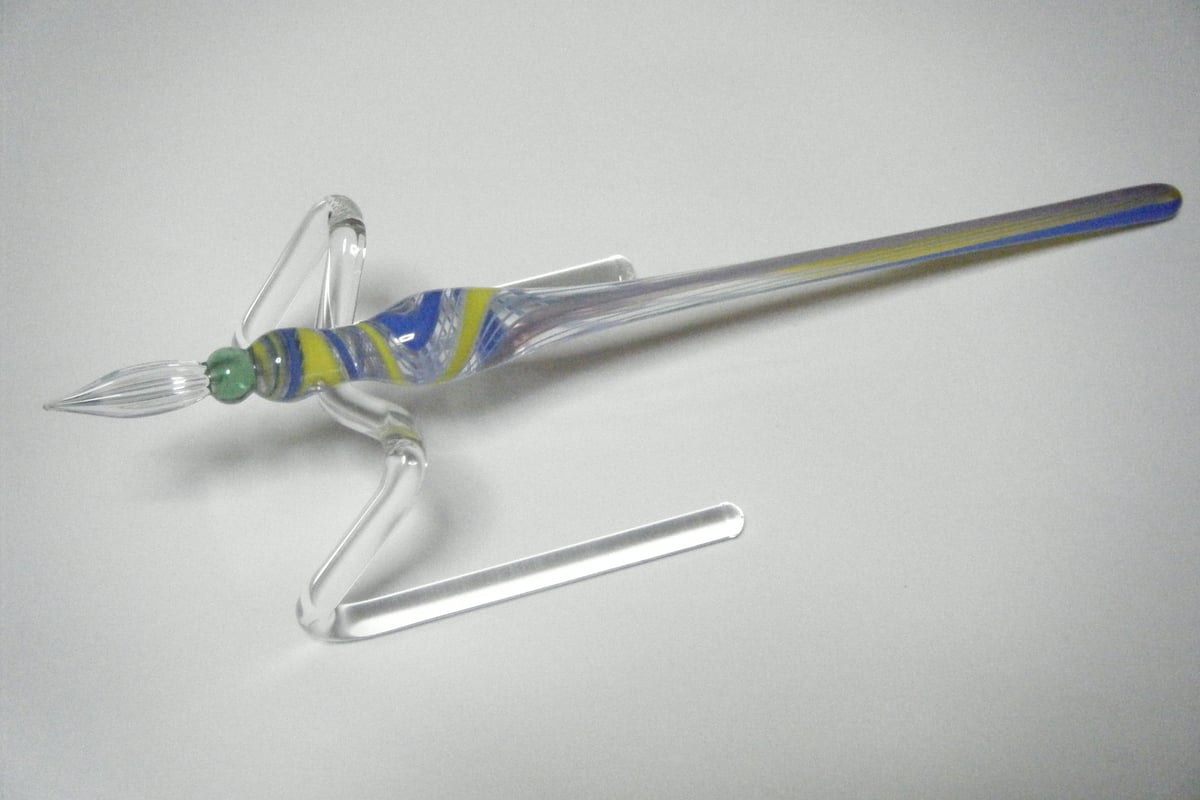
Image: Wikimedia Commons
Otaru Glass is a general term for the glass craft that developed in Otaru City, Hokkaido. It began in 1901, when Asahara Hisakichi, who had come to Hokkaido from Kyushu, founded Asahara Glass in Otaru to manufacture kerosene lamps. From 1910, the company also began producing glass floats for fishing, and grew to a scale that included factories in Otaru, Muroran, Asahikawa, Kushiro, and Karafuto (Sakhalin). However, as electric and kerosene stoves spread, demand for lamps declined, and glass floats were gradually replaced by plastic ones, leaving Asahara Glass as the only glass manufacturer in Otaru by 1960. In 1971, Asahara Glass changed its name to Kitaichi Glass, and when it dared to display kerosene lamps, once an everyday necessity, in its storefront, they became popular among travelers as interior décor, marking a shift from industrial glass to glass craft and household goods. Today, multiple workshops and shops, including Kitaichi Glass and Taisho Glass, are clustered around the Otaru Canal, and the area is also known as a tourist destination where visitors can try glassblowing.
Origin
The origin of Otaru Glass dates back to 1901 (Meiji 34), when Asahara Hisakichi, who had come to Hokkaido from Kyushu, the birthplace of Satsuma kiriko cut glass, founded Asahara Glass in Otaru. Production initially centered on kerosene lamps, but from 1910 (Meiji 43) the company also began manufacturing glass floats, essential to Hokkaido's fishing industry including herring fishing. The business expanded to include factories not only in Otaru but also in Muroran, Asahikawa, Kushiro, and Karafuto (Sakhalin), reaching about 400 employees and coming to be counted among the leading companies in Hokkaido at the time.
History
As electric and kerosene stoves spread, demand for lamps declined, and glass floats for fishing were replaced by plastic ones, leaving Asahara Glass as the only glass manufacturer in Otaru by 1960. The turning point came in 1971, when Asahara Glass changed its name to Kitaichi Glass. When it dared to display kerosene lamps, whose practical role was fading, in its storefront, word spread among travelers, and Otaru Glass began its shift from industrial glass toward craft items and tourist souvenirs. Afterward, workshops such as Taisho Glass also joined in, and the area around the Otaru Canal became a tourist destination home to numerous glass shops.
Features
The characteristic of Otaru Glass lies in the fact that it started out as a practical industry manufacturing kerosene lamps and fishing floats, and has since transformed into blown-glass craft items and household goods as the area developed as a tourist destination. Many works make use of the round bubbles and wavering texture inherited from the old float-making methods, and products range widely from wa-glass (Japanese-style glass) to stained glass and accessories. There are still multiple workshops in the city today, and part of the appeal is being able to watch artisans at work in person or take part in a glassblowing experience.
Techniques
Free-blown Glass (Glassblowing)
A technique in which glass is shaped entirely by hand, without a mold, by blowing air in through the end of a blowpipe. No two pieces are ever the same, and the artisan's skill and sense of judgment determine the finished form.
Glass Craft Using Float-making Techniques
One distinctive feature of Otaru Glass is the way it developed by making use of the manufacturing methods and texture once used for fishing floats, producing glassware with rounded bubbles and a wavering quality.
Materials Used
Production Process
- 1
Batching and Melting
Raw materials such as silica sand and recycled glass are slowly melted in a high-temperature furnace until the glass reaches a viscous, workable state suited to shaping.
- 2
Blow Shaping
Molten glass is gathered on the end of a blowpipe, and while blowing air in and rotating the pipe, the artisan uses tools or molds to shape it into vessels or vases.
- 3
Annealing
The shaped piece is placed in an annealing oven and cooled slowly over time to prevent internal strain or cracking in the glass.
- 4
Finishing
Excess material, such as around the rim, is cut away, and the piece is polished, colored, or decorated before undergoing inspection to become the finished product.
| Main Production Areas |
|
|---|
Artisans & Workshops
北一硝子
A long-established company representative of Otaru Glass, originally founded as Asahara Glass in 1901 and renamed in 1971. It transformed from manufacturing kerosene lamps to producing craft glass.
Official site →浅原硝子製造所
A workshop run by the founding family of Kitaichi Glass, home to what is said to be Japan's only remaining glass-float factory. It carries on the traditional float-making techniques to this day.
Official site →How to Buy
- 北一硝子三号館
- A representative Otaru Glass shop housed in a fishing warehouse built in 1891 (Meiji 24). It carries a wide range of products, from wa-glass and Western-style glass to country-style glass.Where to buy →PR
- 大正硝子館
- A glass specialty store operating multiple locations around the Otaru Canal. It carries a wide range of items, from everyday goods such as glasses and vases to accessories, and also runs hands-on workshops.Where to buy →PR
Hands-on Experiences
大正硝子館
北海道小樽市色内1丁目
Reservation required. A glassblowing experience of about 20 minutes costs around 4,950 yen, and a dama (glass bead) making experience is easy to enjoy from around 1,500 yen.
View details →浅原硝子製造所
北海道小樽市天神1丁目13-20
Reservation required. A float-making experience costs around 2,900 yen, and a glass-making experience from around 3,300 yen. Open to participants from third grade of elementary school and up.
View details →FAQ
Q. Why did Otaru Glass become famous as a tourist souvenir?
A. In 1971, when Asahara Glass renamed itself Kitaichi Glass and dared to display kerosene lamps, whose practical role was fading, in its storefront, they became popular among travelers, and interest in Otaru Glass grew as interior décor and craft items.