Image: Wikimedia Commons
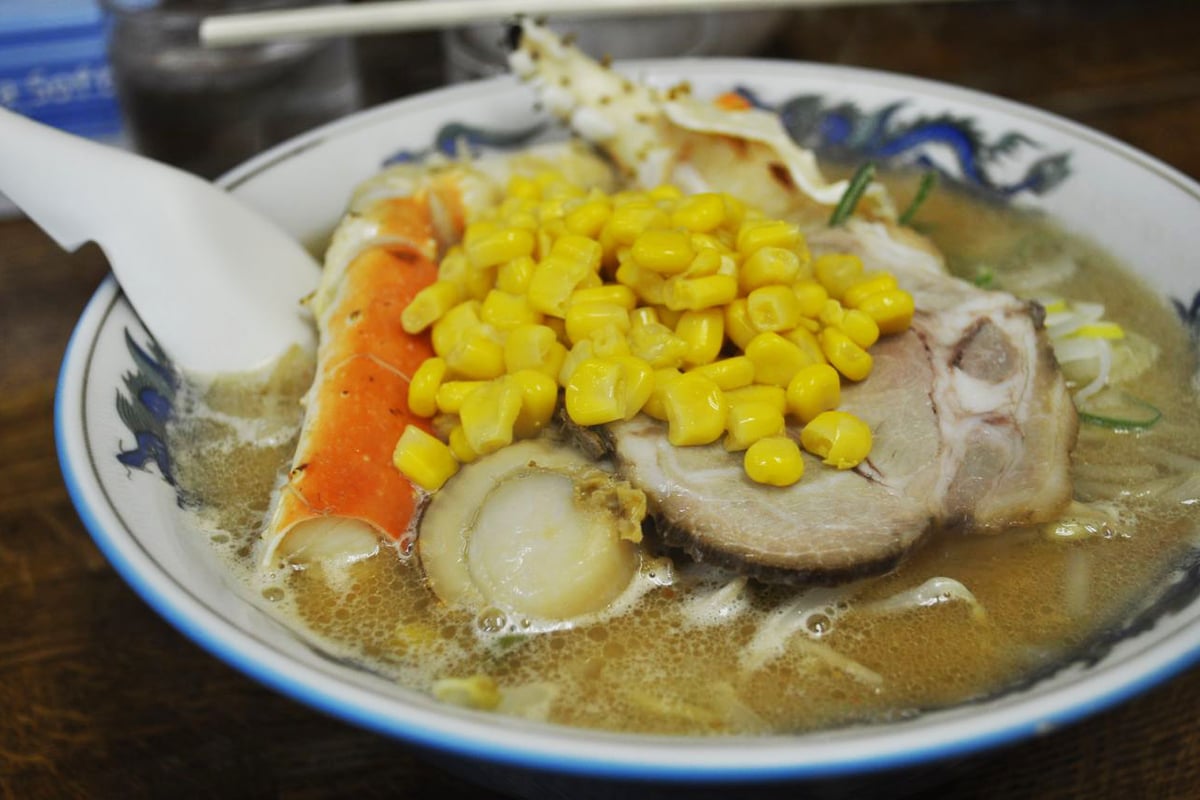
Sapporo miso ramen is a local ramen style from Sapporo that pairs a miso-based broth with thick, curly noodles. It is said to have originated around 1954-1955 at 'Aji no Sanpei,' a shop founded in 1950 in Susukino, Chuo Ward, Sapporo, whose owner Morito Omiya was inspired by a foreign article on the benefits of miso to develop a ramen built around it. The broth combines an animal-based pork bone or chicken stock with a miso tare, enriched with stir-fried vegetables and lard for extra depth and heat retention, making it a bowl that stays warm even in cold weather. From the 1960s onward it helped spark the nationwide Sapporo ramen boom and also prompted instant-noodle makers to commercialize miso ramen. Today the city is still home to many popular shops such as 'Sumire' and 'Junren,' each competing with their own miso tare and broth.
Origin
Sapporo miso ramen is said to have originated at 'Aji no Sanpei,' founded in 1950 in Susukino, Chuo Ward, Sapporo. Owner Morito Omiya began developing a ramen built around miso after seeing a magazine article introducing its health benefits. After much trial and error, he completed a ramen combining a miso-flavored broth with curly noodles around 1954-1955, which is regarded as the birth of Sapporo miso ramen.
History
The miso ramen at 'Aji no Sanpei' gained a reputation by word of mouth and began appearing in magazines around 1955. In the 1960s, instant-noodle makers commercialized miso ramen, rapidly boosting its nationwide recognition and making it central to the Sapporo ramen boom. Specialty shops such as 'Sumire' and 'Junren' subsequently emerged one after another, each pursuing its own broth and miso tare, and Sapporo miso ramen developed into a local dish with a wide range of individual styles.
Features
The broth is made by dissolving a miso tare blended from several types of miso into an animal-based pork bone or chicken stock, with lard and stir-fried vegetables adding richness and heat retention. The noodles are typically thick, curly, and highly hydrated - most famously those from Nishiyama Seimen - giving a chewy texture that clings well to the rich broth. It is designed to stay warm even in severe cold, and many shops top it with bean sprouts, ground meat, corn, or butter, ingredients typical of Hokkaido.
Main Ingredients
Food Culture
In Sapporo's cold climate, it has been cherished as a bowl that stays warm and heats the body. Born at 'Aji no Sanpei' in the 1950s, it later gained nationwide recognition through the commercialization of instant noodles and is now a signature local dish that visitors to Sapporo make a point of trying.
How It Differs from Home Cooking
At home, ready-made miso ramen soup bases are often used, whereas specialty shops simmer pork bones or chicken for a long time and combine the resulting broth with their own miso tare, finishing with lard for aroma and richness, resulting in a deeper flavor.
Famous Shops
味の三平
札幌市中央区南1条西3丁目 丸井藤井central4階
Founded in 1950 and regarded as the shop where Morito Omiya devised miso ramen. It continues to operate under new management after the founder's passing.
さっぽろ純連 札幌本店
札幌市豊平区平岸2条17-1-41
A popular shop known for its rich miso broth accented with garlic and Japanese pepper. Together with 'Sumire,' which branched off from it, it is one of the representative names in Sapporo miso ramen.
すみれ 札幌本店
札幌市豊平区中の島2条4-7-28
Known for its generous use of lard and a robust miso broth. Uses noodles from Nishiyama Seimen and is often mentioned alongside Junren as a leading shop.