Image: Wikimedia Commons
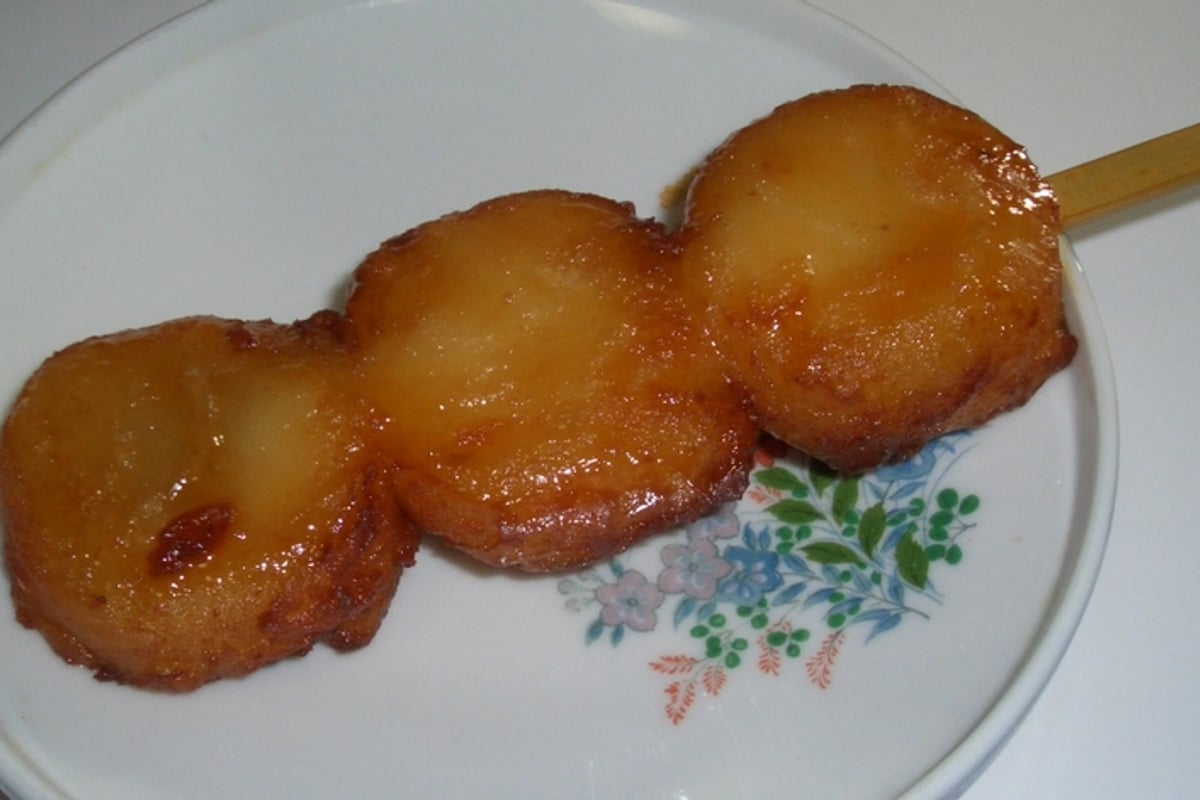
Imo-mochi is a Hokkaido snack made by boiling and mashing potatoes, kneading in potato starch, shaping the mixture into flat rounds, and pan-frying them. The outside is crisp and golden while the inside has a distinctively chewy, mochi-like texture, and it is typically enjoyed with a simple sweet-savory soy glaze, kinako (roasted soybean flour), or butter. It is said to have originated during the Meiji-era pioneer days, when rice-farming techniques had not yet been established in Hokkaido; settlers used potatoes, which grew well even in the cold climate, in place of glutinous rice to create a mochi-like food, and it spread as a vital energy source for the pioneers. Hokkaido, Japan's leading potato producer, and especially the Tokachi region, is known as a representative production area, and imo-mochi is a staple treat both at home and at roadside stations and souvenir shops. Because it was easy to prepare, it was also valued during the food shortages of the wartime and postwar years, and remains a beloved Hokkaido flavor across generations today.
Origin
The origin of imo-mochi is said to date back to the Meiji-era pioneer period. At the time, rice-farming techniques had not yet been established in Hokkaido, and glutinous rice was hard to obtain, while potatoes, which grew relatively well even in the cold climate, could be harvested in abundance. Settlers therefore used potatoes in place of glutinous rice to create a food with a mochi-like texture, and this is said to be the beginning of imo-mochi. The Tokachi region, in particular, a major potato-producing area, is known as the place where imo-mochi took root.
History
During Hokkaido's pioneer era, imo-mochi was easy to prepare and filling, making it a valuable energy source for settlers. It was also eaten as a substitute for rice during the food shortages of the wartime and postwar periods, supporting the daily lives of ordinary people. Later, as living standards improved, it became established as a household snack, and today, as a symbol of Hokkaido—Japan's leading potato producer—it is widely sold as a regional specialty at roadside stations and highway service areas.
Features
The basic method is to boil and mash potatoes, knead in potato starch, shape the mixture into oval or round pieces, and pan-fry them in oil or butter until golden. It retains its texture well even after cooling. The classic version is glazed with a sweet-savory soy sauce, but variations include dusting with kinako, topping with butter, or filling with sweet red bean paste, depending on the household or shop. Its appeal lies in the chewy, mochi-like texture and the natural sweetness of the potato.
Main Ingredients
Food Culture
Having supported life during the pioneer era as a substitute for the staple grain, imo-mochi is now firmly established as a classic Hokkaido snack. As a home-style flavor befitting Hokkaido, Japan's top potato producer, it continues to be enjoyed by people of all generations.
How It Differs from Home Cooking
At home, it is often simply pan-fried and coated with soy glaze, but specialty producers carefully select potato varieties such as Danshaku and use their own blend to keep the texture from deteriorating even after cooling, focusing on quality suited for gifts and souvenirs.
Famous Shops
士別市農畜産物加工株式会社
北海道士別市武徳町884番地4
Manufactures and sells imo-mochi made with locally grown potatoes. Contains no artificial coloring or preservatives; mail order is available at around 3,450 yen (tax included, shipping separate) for a set of 100 pieces.
View details →| 十勝 インカのめざめ いももち | Made using 'Inca no Mezame,' a branded potato variety from Tokachi, and processed within Obihiro City. Variations filled with cheese are also available, and it is a popular choice as a hometown tax (furusato nozei) gift.Where to buy →PR |
|---|
FAQ
Q. Why is it sometimes called 'imo-dango'?
A. Names vary by region, and within Hokkaido it is called 'imo-dango' in some areas in addition to 'imo-mochi.' The ingredients and preparation method are essentially the same, and both refer to a mochi-like snack made from potatoes.