Food Genre
Sweets
A cross-regional look at Sweets from across Japan.
Region(multiple selection allowed)
20 items

Simmered Hana Ingen Beans (scarlet runner beans)
Hana Ingen no Nimame
Simmered Hana Ingen Beans is a local staple made by slowly simmering 'hana mame' (scarlet runner beans), a crop grown in the Agatsuma area in northern Gunma Prefecture, until tender. Hana mame are large beans that grow only in the cool highlands at elevations of 900 to 1,300 meters, and they are a specialty of the Agatsuma area, including Tsumagoi village as well as Nakanojo, Kusatsu, and Naganohara towns. To make the dried beans easier and more enjoyable to eat, a method of slow simmering took root in the region, bringing out a rich flavor reminiscent of chestnuts. The dish is also served on festive occasions such as festivals, ceremonial events, and New Year's osechi, and in some households the harvested beans are even offered at the family shrine, reflecting how deeply rooted the ingredient is in daily life. Beyond simmered beans, hana mame is also enjoyed in other preparations such as candied beans (amanatto), red rice (sekihan), and yokan.
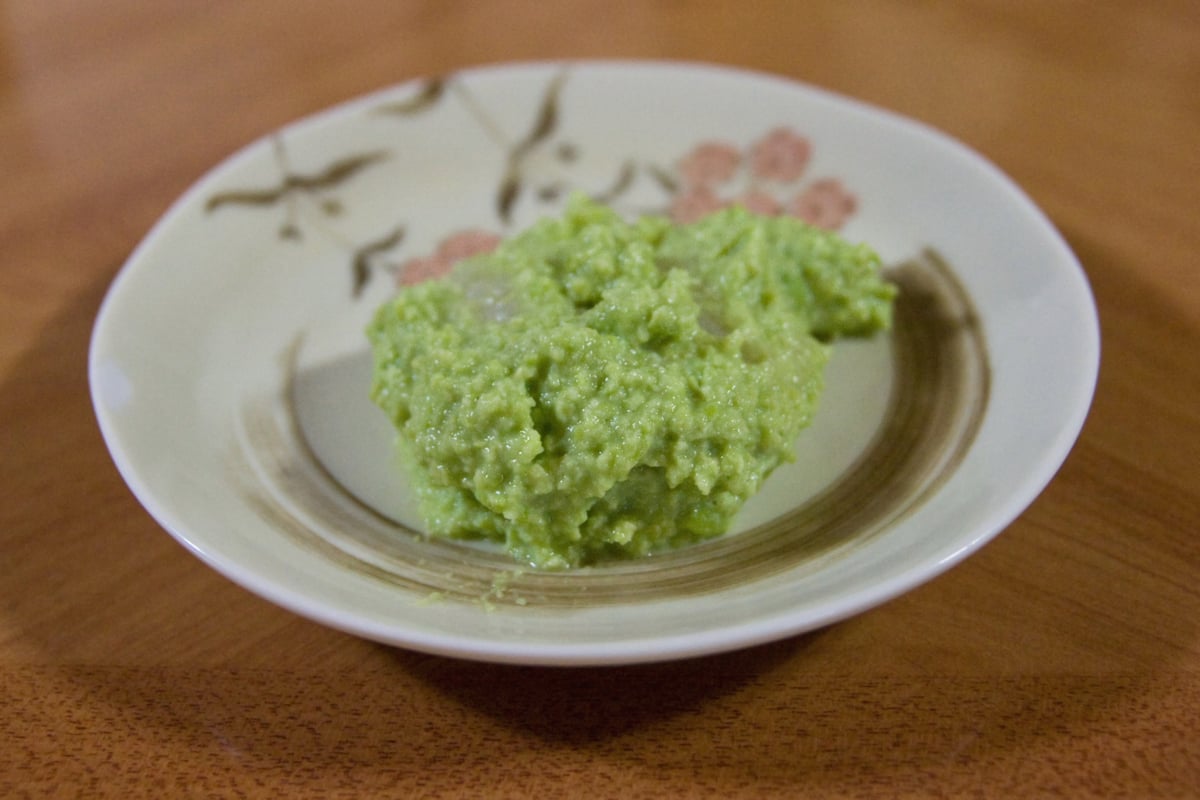
Zunda Mochi
Zunda Mochi
Zunda mochi is a signature local sweet of the Sendai region of Miyagi Prefecture, made by coating mochi with a vivid green paste called 'zunda,' produced by mashing boiled edamame (green soybeans). It is said that zunda had already become established as a coating for dishes by the late Edo period, and it was traditionally made as a whole-family effort during farm work or celebrations, with family members shelling the edamame and mashing them in a mortar. There are several theories about the origin of the name: one holds that it comes from a corruption of 'zuda,' a word describing the act of pounding beans, while another well-known but unverified story attributes it to an episode in which Date Masamune, founder of the Sendai Domain, is said to have had his soldiers crush edamame using the hilt of a sword (jin-tachi) in camp. However, there is no solid historical evidence directly linking Masamune to the dish, and this is generally regarded as a legend that spread in later eras. Today, zunda is used not only in mochi but also in a wide range of products such as shakes and Western-style confections, and it remains a beloved staple souvenir from Sendai.
Azuki Hoto (Sweet Red Bean Hoto)
Azuki Hoto
Azuki Hoto is a local dish of Yamanashi Prefecture in which hoto noodles are simmered in a soup of azuki red beans sweetened with sugar. In both appearance and taste it is close to oshiruko (sweet red bean soup), and it is also called 'shiruko hoto.' It is sometimes written with a voiced sound as 'azuki boto.' Originally, mochi (rice cake) is considered the proper thing to put in azuki soup. However, in Yamanashi, where paddy fields were few, mochi was extremely precious, so according to tradition, thickly cut hoto noodles were used in place of mochi. Unlike everyday hoto simmered in miso, it has been eaten on days of events and celebrations, such as New Year, Obon, village festivals, and the rice-planting season. The summer festival of Miwa Shrine in Wakamiko, Sutama-cho, Hokuto City, is also called the 'Hoto Festival' because Azuki Hoto is served there. Today it is handed down in places such as Hokuto City, Kofu City, and Kai City, and it can also be enjoyed at hoto specialty restaurants.
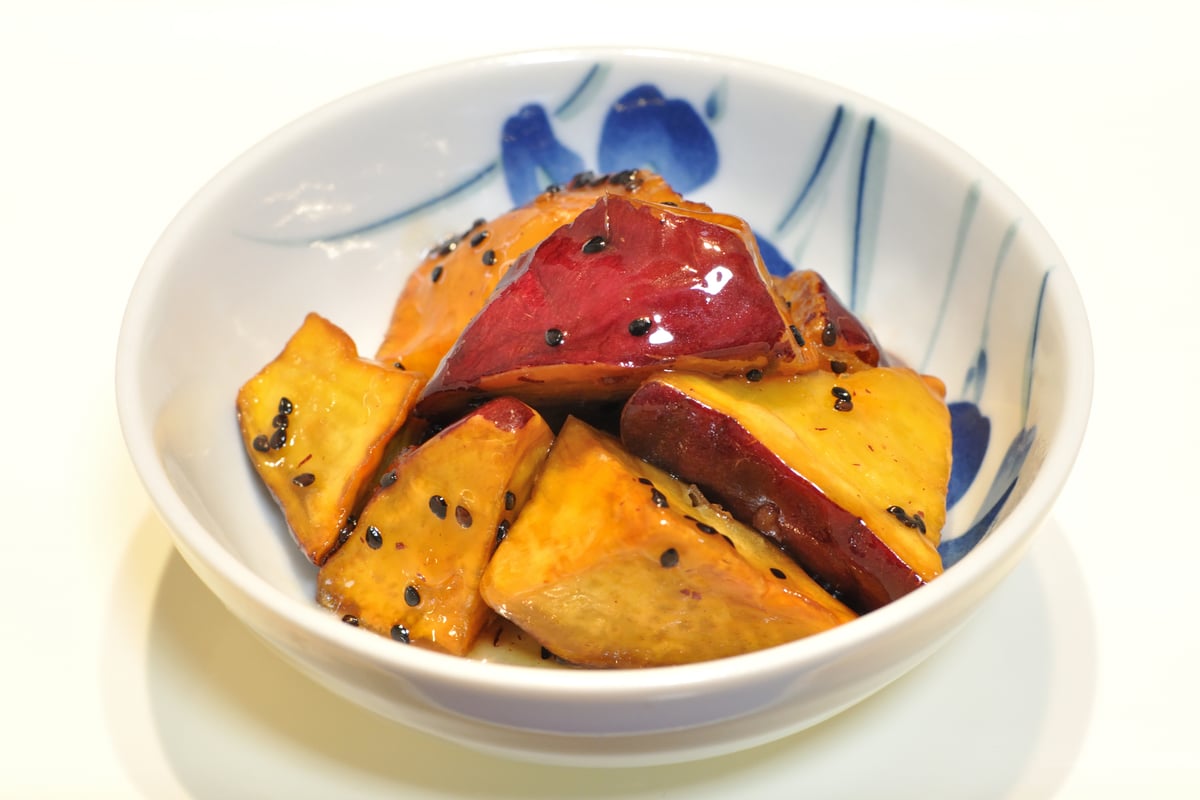
Kawagoe Imo Ryori (Daigaku-imo etc.)
Kawagoe Imo Ryori (Daigaku-imo etc.)
Kawagoe imo ryori is a general term for daigaku-imo (candied sweet potato), dried sweet potato, and other sweet potato confections made using 'Kawagoe imo,' a sweet potato long cultivated around Kawagoe City in Saitama Prefecture. The Musashino Plateau where the Kawagoe domain was located is covered in Kanto loam, and cultivation that makes use of its well-drained soil and fallen-leaf compost has long been known to produce sweet potatoes with a strong sweetness and rich flavor. In the Edo period, the distance from Kawagoe to Nihonbashi in Edo was thirteen ri (about 52 km), and this became linked to a pun on 'kuri (chestnut) yori (than) umai (delicious)' -- nine ri plus four ri makes thirteen ri -- giving rise to the popular saying 'tastier than chestnuts, thirteen ri away,' which spread the fame of Kawagoe sweet potatoes. Today, Kashiya Yokocho, Kawagoe's iconic sightseeing spot, is lined with shops selling sweet potato confections centered on daigaku-imo, and Kawagoe imo remains beloved as one of Saitama's representative food cultures.
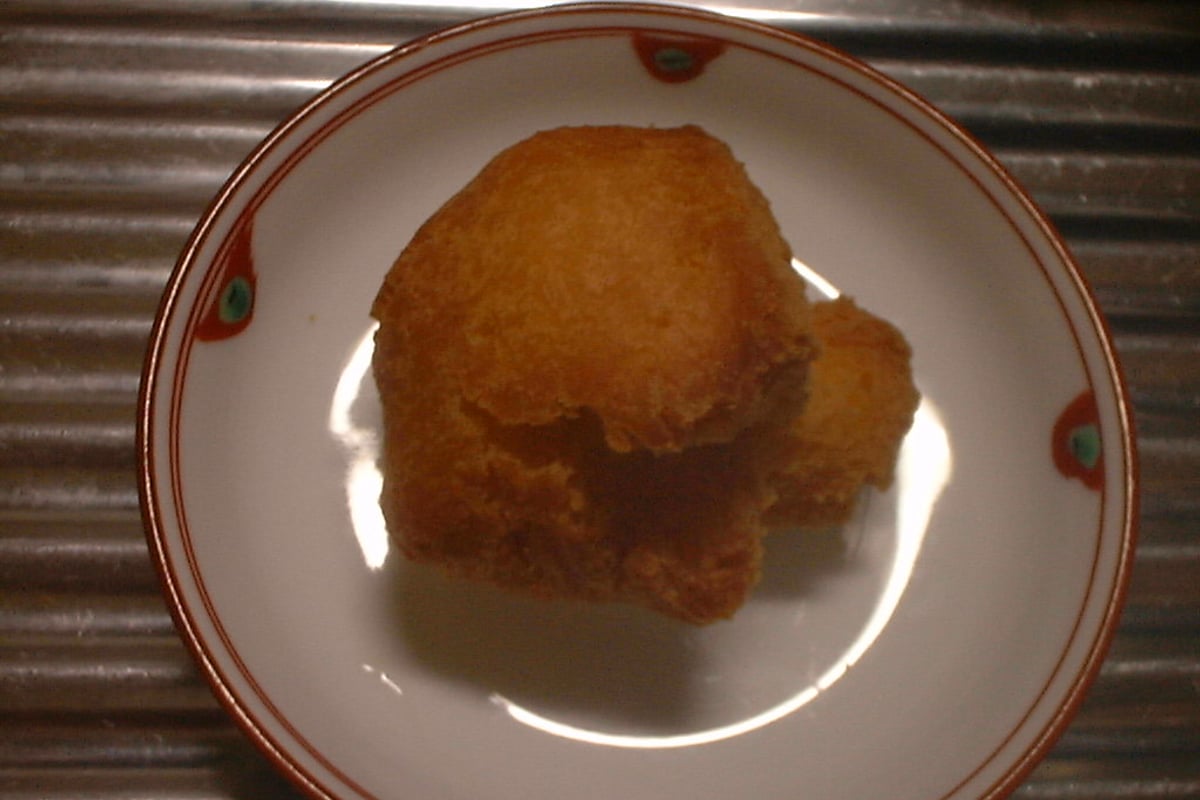
Sata Andagi (Okinawan Fried Doughnut)
Sata Andagi
Sata andagi is a traditional Okinawan fried confection made from a dough of wheat flour, egg, and sugar, deep-fried in oil. The name combines the Okinawan words 'sata' (sugar), 'anda' (oil), and 'agii' (fried), and translates literally as 'sugar tempura.' Tradition holds that it originated when a chef traveled to China during the Ryukyu Kingdom era and brought back the recipe for the Chinese confection 'kaikousho' (also called kaikoukyuu). In an age when sugar was precious, it was a luxury confection made only for special occasions, and because the dough cracks open into a round shape resembling a blooming tulip when fried, it was considered an auspicious sweet, also used as a betrothal gift. Thanks to its good keeping quality, it has long been valued for celebrations and as a gift, and today it is widely loved both within and beyond the prefecture as a representative Okinawan souvenir and snack.
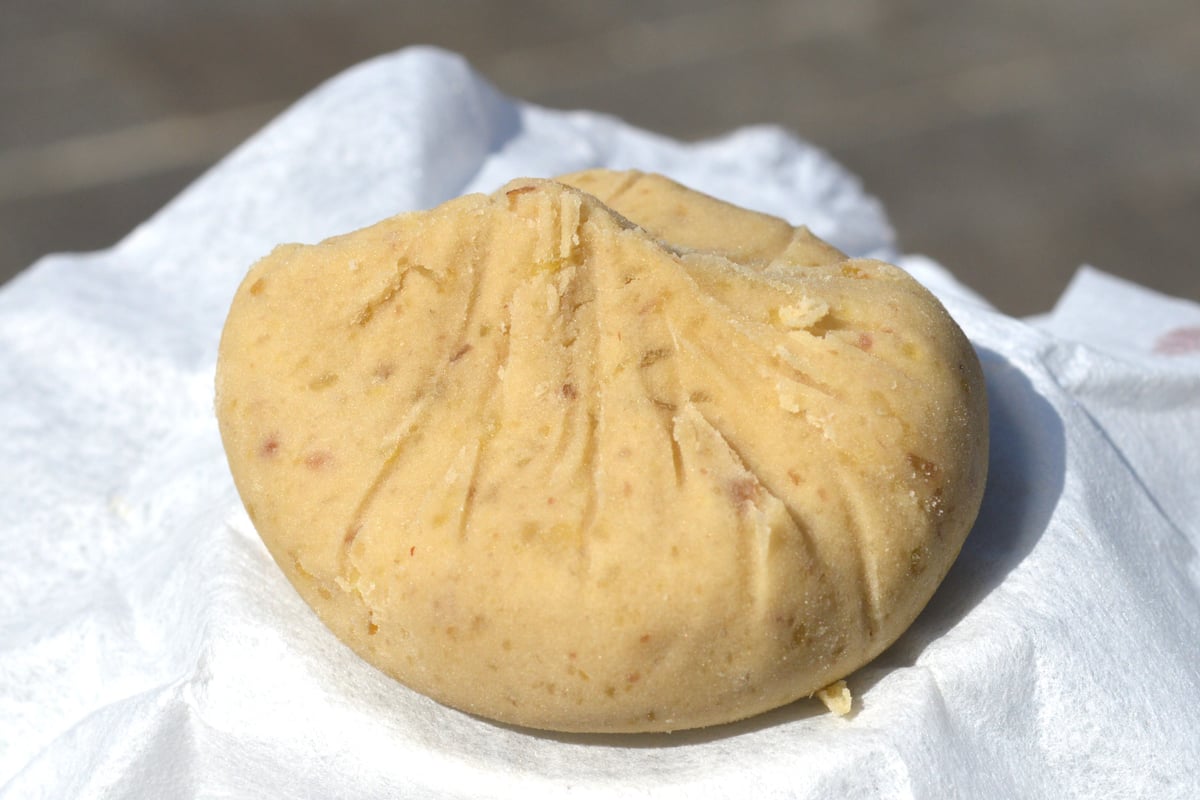
Kuri Kinton
Kuri Kinton
Kuri Kinton is a Japanese confection from Nakatsugawa City, Gifu Prefecture, made by steaming chestnuts, straining them, and combining them with sugar before shaping the mixture into a ball with a cloth twist (chakin-shibori). It differs from the kuri kinton served in osechi New Year dishes (candied chestnuts and sweet potato simmered in syrup), since the Tono-region version is made with only chestnuts and sugar, letting the chestnut's natural flavor and simple taste shine through. In the Edo period, Nakatsugawa flourished as a post town on the Nakasendo highway, and travelers were served a simple confection made by steaming and straining wild mountain chestnuts that grew on the slopes of Mount Ena — said to be the origin of Kuri Kinton. Confectioners began selling it commercially in the Meiji era, and production expanded once chestnut cultivation began in the Taisho era. Today it is enjoyed as an autumn delicacy from around September to December, with more than a dozen Japanese confectionery shops lining the streets of Nakatsugawa, drawing visitors from within and outside the prefecture.
Uiro (Steamed Rice Cake)
Uiro
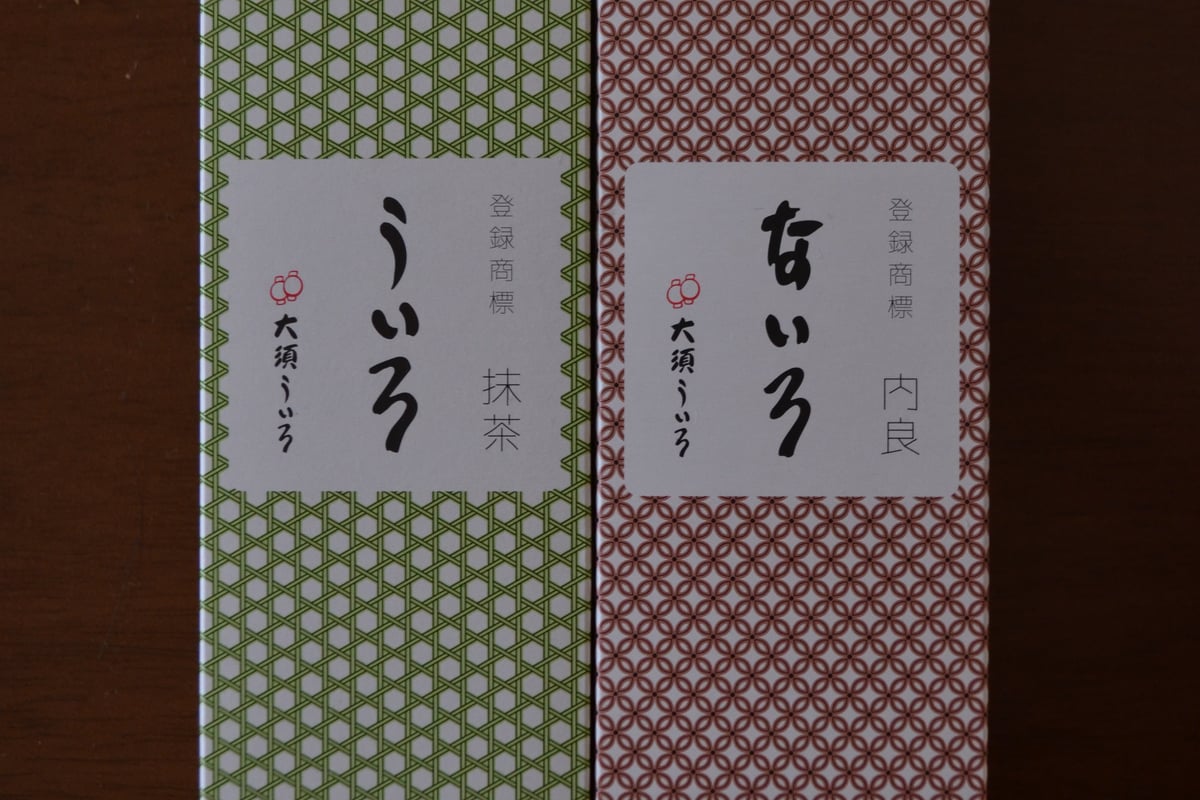
Uiro is a Japanese confection with a chewy, mochi-like texture, made by steaming a dough of rice flour mixed with sugar and hot water. It is famous as a signature confection of Nagoya, but its origins do not actually lie in Nagoya — uiro as a confection is also found in places such as Hakata, Odawara, and Yamaguchi. In Nagoya, the long-established shop Mochibun Sohonten, said to have been founded in 1659 (Manji 2) in the early Edo period, is regarded as the starting point of the city's uiro culture, and Aoyagi Sohonke, founded later in the Meiji era, greatly expanded the business afterward. It became known nationwide especially after in-train sales began with the opening of the Tokaido Shinkansen in 1964 (Showa 39), cementing its status as a classic Nagoya souvenir. It comes in a wide range of flavors, including red bean, matcha, and chestnut, and its bar shape, easy to slice, is also well loved.
Fukui Mizu Yokan (Winter Soft Red Bean Jelly)
Fukui Mizu Yokan
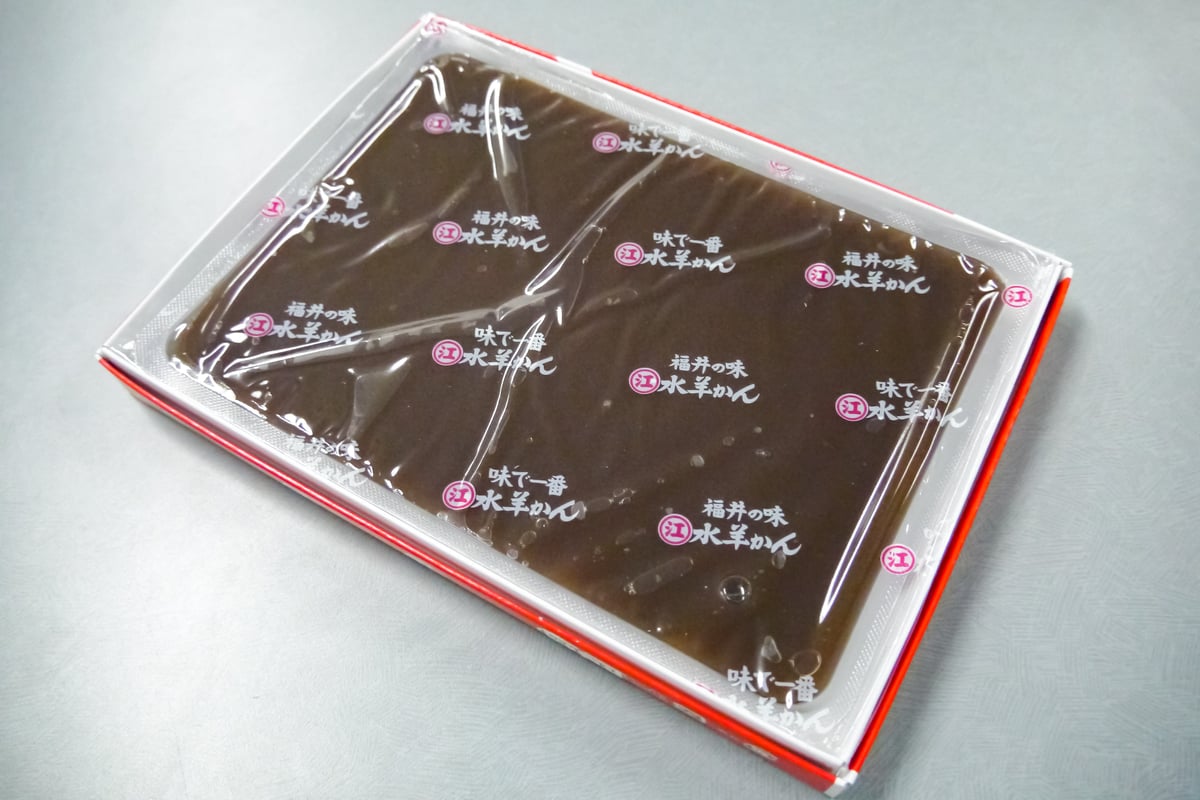
Fukui Mizu Yokan is a Japanese confection made by dissolving smooth red bean paste (koshian), sugar, and agar (kanten) over heat and then chilling the mixture until set, and in Fukui Prefecture it is a seasonal tradition enjoyed in winter. Nationwide, mizu yokan is known as a summer sweet, but in Fukui many shops make it only in winter, from around November to around March. Eating well-chilled mizu yokan while sitting at a kotatsu (heated table) is considered one of the pleasures of winter. Many shops use brown sugar (kokuto), and its hallmarks are a clean sweetness and a smooth texture that melts in the mouth. The main style is 'ichimai-nagashi', in which the yokan is poured as a single slab into a flat paper box. It is cut or scooped out with the spatula that comes with it. Because of its low sugar content, it does not keep long, and most products must be refrigerated. The Fukui City tourism website introduces more than 20 shops selling it within the city alone. Sweetness, thickness, and the flavor of the brown sugar differ from shop to shop, so comparing them is part of the fun. In Ono City and elsewhere it is also called 'decchi yokan', and thicker versions are popular there.
Ogura Toast (Toast with Sweet Red Bean Paste)
Ogura Toast
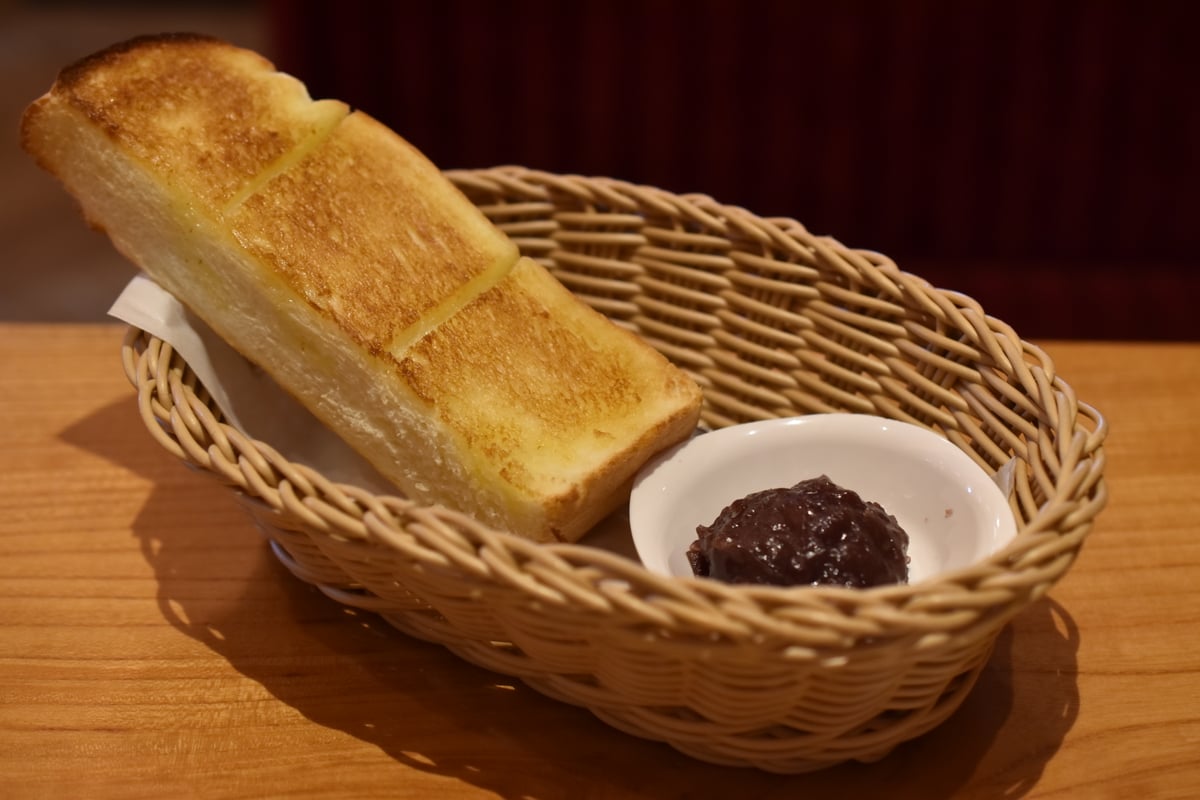
Ogura Toast is a light snack that symbolizes Nagoya's kissaten (coffee shop) culture: thick-cut toast spread with butter or margarine and topped with ogura an, a chunky sweet red bean paste. Though its origins are debated, the most widely accepted account traces it to around 1921, when the owner of a coffee shop called Mitsuba in Nagoya's Sakae district noticed student customers dipping their toast into zenzai (sweet red bean soup) and was inspired to create the dish. Since then it has become a staple on the menus of Nagoya's coffee shops, served in distinctive styles at long-established shops such as Compal and Kissa Mountain, as well as at Komeda's Coffee, the chain that grew from Nagoya into a nationwide brand. Its close association with the morning-service culture, where it is eaten alongside coffee from the early hours, is another distinctly Nagoya trait.
Warabimochi (Bracken-Starch Rice Cake)
Warabimochi
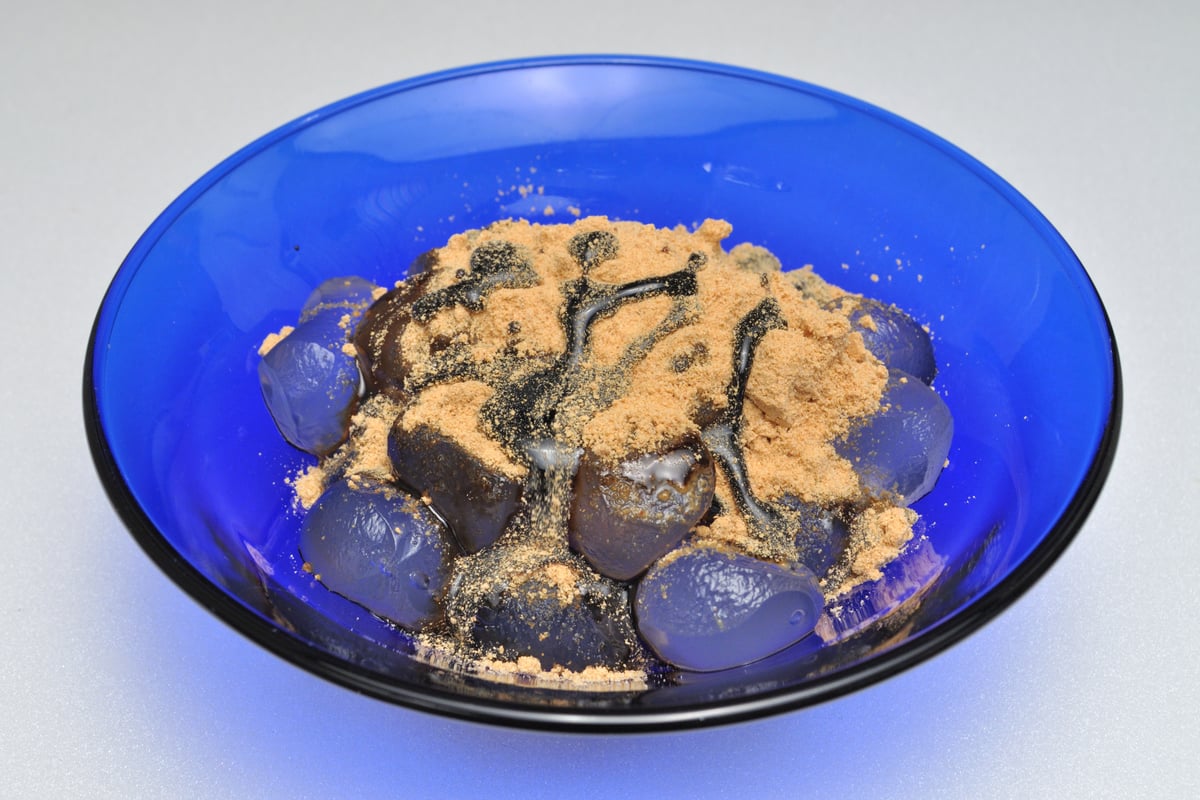
Warabimochi is a cooling sweet made by dissolving "warabiko" (bracken starch), extracted from the root of the bracken fern, in water and kneading it, then eating it topped with kuromitsu (black sugar syrup) and kinako (roasted soybean flour). Its distinctive features are a melt-in-the-mouth soft texture and a faint bitterness, and it is said to have been a luxury confection beloved by aristocrats in the Heian period. "Hon-warabiko," true bracken starch that can only be extracted from bracken roots, is extremely scarce — only a few hundred grams can be extracted from 10 kilograms of root — so inexpensive products using other starches, such as sweet potato starch, are also widely sold. Many sweets shops in Kyoto insist on kneading it fresh to order, and shops centered around Gion and Shimogamo that serve warabimochi made with true hon-warabiko are also popular with tourists.
Miso Potato
Miso Potato
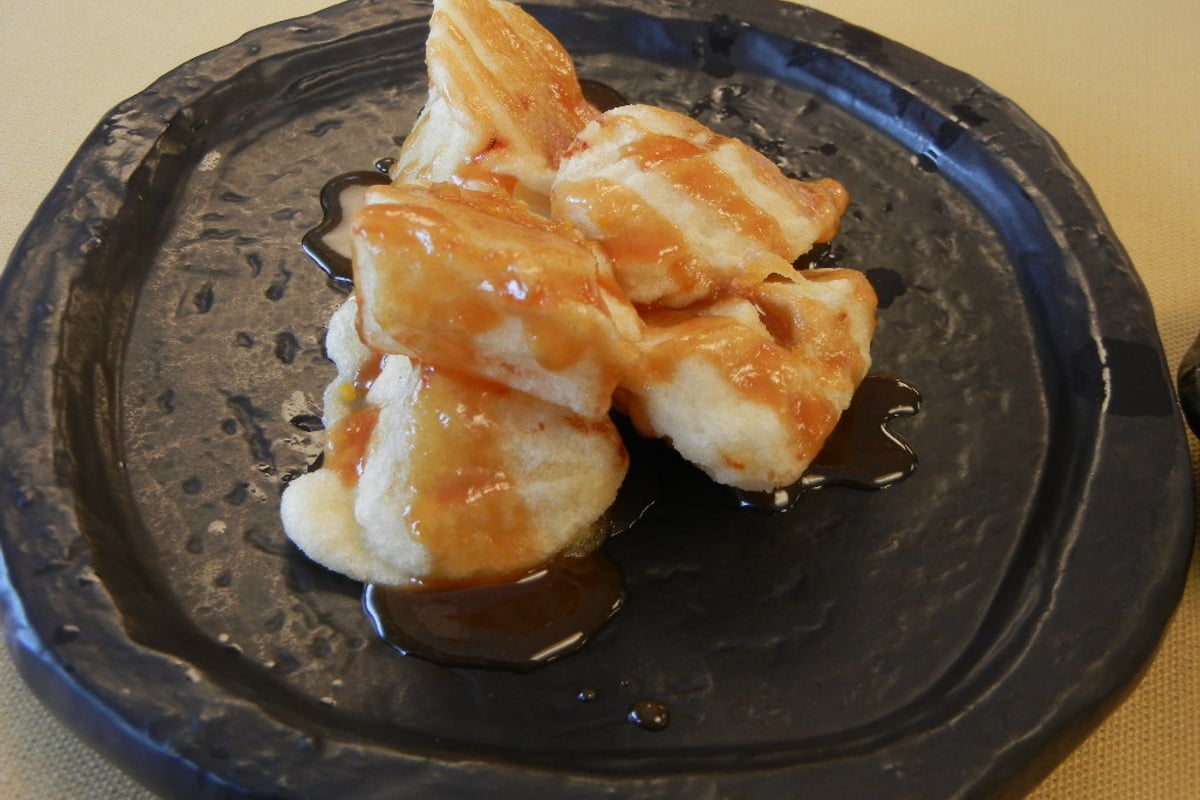
Miso potato is a local specialty of the Chichibu region in which boiled potatoes are coated in batter, deep-fried, and topped generously with a sweet-and-savory miso sauce. With little flat land and farming centered on dry fields, Chichibu is said to have originated the dish when small potatoes from the harvest were roasted over an irori hearth and spread with miso sauce, and it was long enjoyed as 'kojuhan,' a light meal eaten between farm chores. For a long time it was known only as a local home-style dish, but after winning the '5th Saitama B-Kyu Local Gourmet Championship in Chichibu' in 2009, its fame spread nationwide. The simple flavor of fluffy potatoes coated in sweet-and-savory miso is enjoyed as a snack, a side dish for drinks, or a regular side dish, and it can now be found at various places around Chichibu City, including eateries, souvenir shops, and shops at tourist spots.
Himuro Manju
Himuro manju
Himuro Manju is a lucky steamed bun eaten in Kanazawa on 'Himuro no Hi' (Ice House Day), which falls on the first day of the sixth month by the old lunar calendar — now observed on July 1 — to pray for good health. During the Edo period, the Maeda family of the Kaga domain stored snow that fell over the winter on the Hakusan mountain range in ice houses, and on the first day of the sixth month of the old calendar, it was customary to present this snow to the shogunate in Edo as 'Hakusan-gori' (Hakusan ice). It is said that runners known as Kaga hikyaku covered the roughly 480-kilometer journey in just four days, and it is believed that the practice of ordinary townspeople offering steamed buns to the gods and Buddhas to pray for the safe passage of this delivery gave rise to Himuro Manju. The buns come in three colors — white, red (pink), and green — said to symbolize purity, protection from evil, and health respectively. They are plump sake-yeast steamed buns filled with smooth sweet bean paste, and remain a summer tradition in Kanazawa, with confectionery shops throughout the city putting them on display all at once as July 1 approaches.
Keiran Somen
Keiran Somen
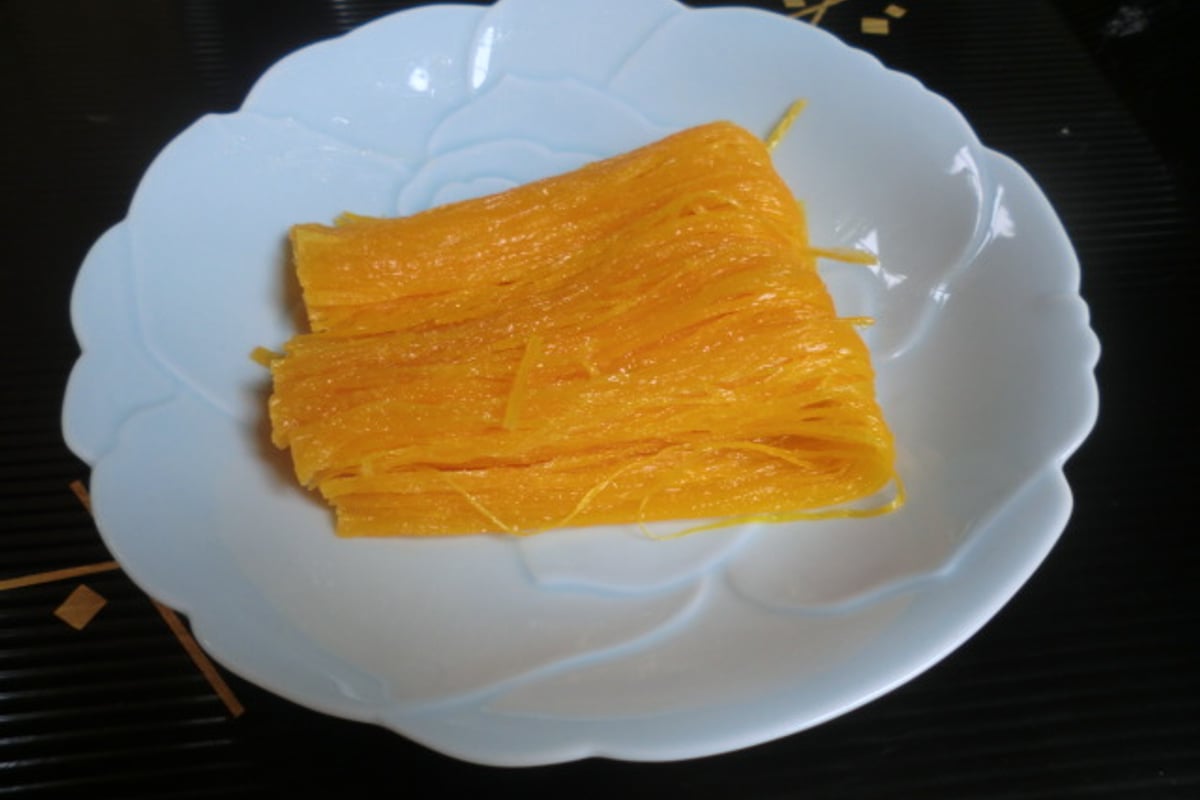
Keiran somen is a nanban confection resembling somen noodles, made by pouring egg yolk into thin, thread-like strands and simmering it in syrup. It is said to have been introduced to Hakata via Nagasaki along with nanban culture in the 16th century, and is sometimes counted among Japan's 'three great confections,' alongside konpeito and castella. In the early Edo period, Matsuya Riemon, the official confectioner to the Fukuoka domain, established the recipe, and after the domain lord granted him the right to use his shop name in 1673, it has continued to be made for more than 350 years. It is characterized by its rich sweetness, made only from egg yolk and sugar, and its delicate, thread-like texture, and remains cherished in Fukuoka today as a gift for celebratory occasions.
Kurumi Mochi
Kurumi Mochi (Sakai Wrapped Rice Cake)
Kurumi mochi is a specialty sweet of Sakai City, Osaka Prefecture, consisting of small pieces of mochi wrapped in a green bean paste (an). The 'kurumi' in the name does not refer to walnuts (kurumi) but comes from 'kurumu,' meaning to wrap the mochi in bean paste. The originator is said to be Kanbukuro (かん袋), a long-established shop in Sakai Ward, Sakai City. According to the shop's history, it began when 和泉屋徳兵衛 opened a mochi shop in 1329 (Gentoku 1). In the middle of the Muromachi period, in Sakai, which prospered through trade with Ming China, the fifth-generation owner is said to have created it as a salty tea sweet using agricultural produce brought in from Ming. Later, when sugar arrived from Luzon (today's Philippines), sweetness was added, giving it its present flavor. In the Meiji era, 'kori kurumi mochi,' topped with shaved ice, was also created, and in summer people line up at the shop. With its combination of lightly sweetened bean paste and soft mochi, it is also introduced as a dish of Osaka Prefecture in the Ministry of Agriculture, Forestry and Fisheries' 'Our Regional Cuisines' (Uchi no Kyodo Ryori).
Kuzukiri (Kudzu Starch Noodles)
Kuzukiri
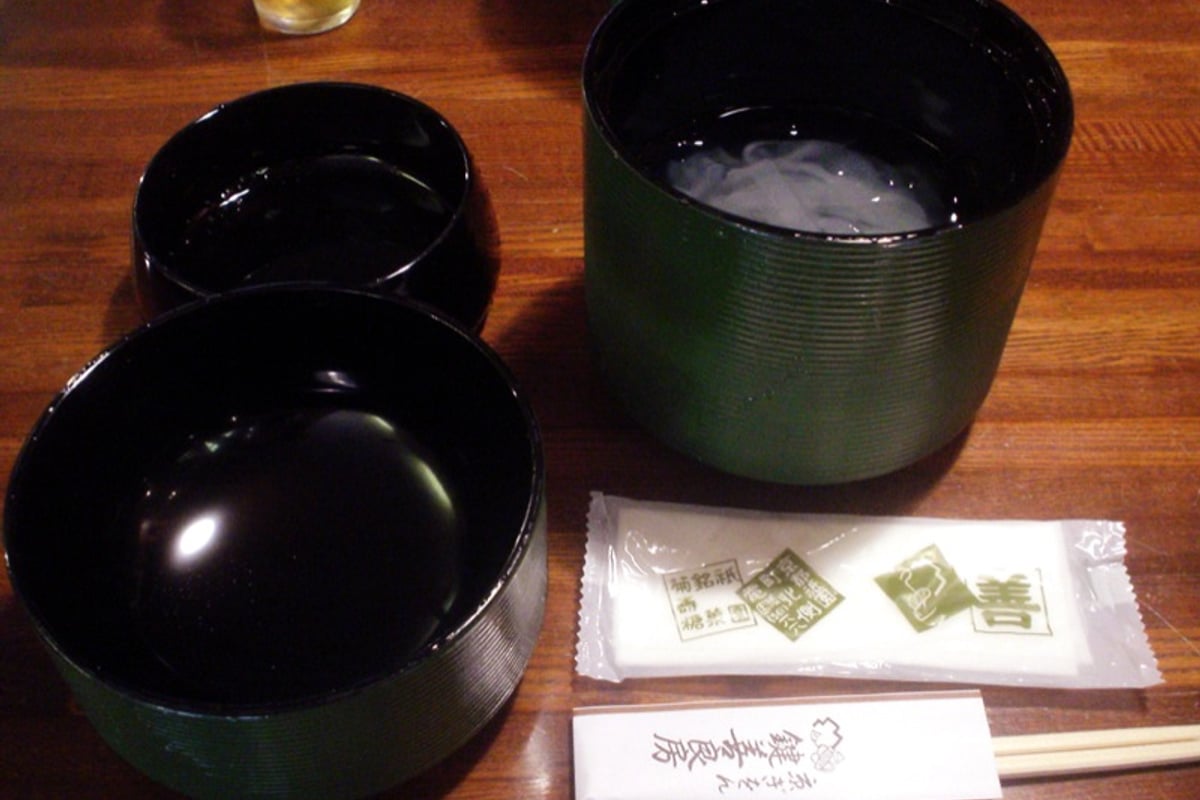
Kuzukiri is a summer sweet from Kyoto made by dissolving kudzu starch in water, steaming it firm, and cutting it into thin, noodle-like strips. It is chilled in ice water and enjoyed for its smooth, slippery texture, dipped in kuromitsu (black sugar syrup), shiromitsu (white syrup), or kinako (roasted soybean flour). Widely known as a specialty of sweets shops such as the long-established Gion shop Kagizen Yoshifusa, it is often handmade to order, piece by piece, and its freshly made springiness and translucent texture are part of its charm. The ingredient most often used is hon-kuzu, high-quality kudzu starch from Yoshino, Nara, and as a delicate confection whose flavor and texture are shaped directly by the quality of the kudzu, it has become a symbol of a Kyoto summer. The long-established Gion shop Kagizen Yoshifusa is said to have been founded during the Kyoho era (1716-1736), and it continues to uphold the style of handmaking each piece only after an order is received.
Herahera Dango
Herahera Dango
Herahera Dango is a local confection handed down since the Edo period in Sajima, a fishing district in the city of Yokosuka on the western side of the Miura Peninsula. Wheat flour, jōshinko (non-glutinous rice flour), or shiratamako (glutinous rice flour) dough is shaped into flattened dumplings and coated with smooth strained red bean paste (koshi-an) — a simple type of ankoromochi. It has traditionally been made in each household as a ceremonial dish for the Sajima boat festival held every July, to pray for a bountiful catch and freedom from illness. Several stories are told about the origin of the name: one holds that the flattened shape of the pressed dumplings resembles a hera, a flat tool used in fishing; another that the dumplings sway 'herahera' as they bob to the surface while boiling. After being selected in 2007 as one of the Ministry of Agriculture, Forestry and Fisheries' 100 Local Dishes of Farming, Mountain, and Fishing Villages, the confection also began to be commercialized by local sweets shops.
Hirosaki Apple Pie
Hirosaki Apple Pie
Hirosaki Apple Pie is a local sweet enjoyed in Hirosaki City, Aomori Prefecture, which boasts the highest apple production in Japan. Around 2009, as inquiries about apple sweets to the city's tourist information center increased, staff conducted their own survey of confectionery shops in the city and found more than 40 shops offering apple pie. This led to the 2010 publication of the "Hirosaki Apple Pie Guide Map," marking the beginning of "Hirosaki, the City of Apple Pie." A wide variety of businesses — Japanese and Western confectioners, bakeries, Nanbu senbei shops, cafes, and hotels — each compete with their own original recipes, and the apple varieties used as well as preparation methods, such as baking whole apples, coarsely chopping, slicing, or making a paste, vary distinctively from shop to shop. With each new edition, the guide map has featured more shops, now growing to over 50. Many tourists enjoy sampling pies from shop to shop, making it one of the local foods not to be missed when visiting Hirosaki.
Hoshi Imo (Dried Sweet Potato)
Hoshi Imo (Dried Sweet Potato)
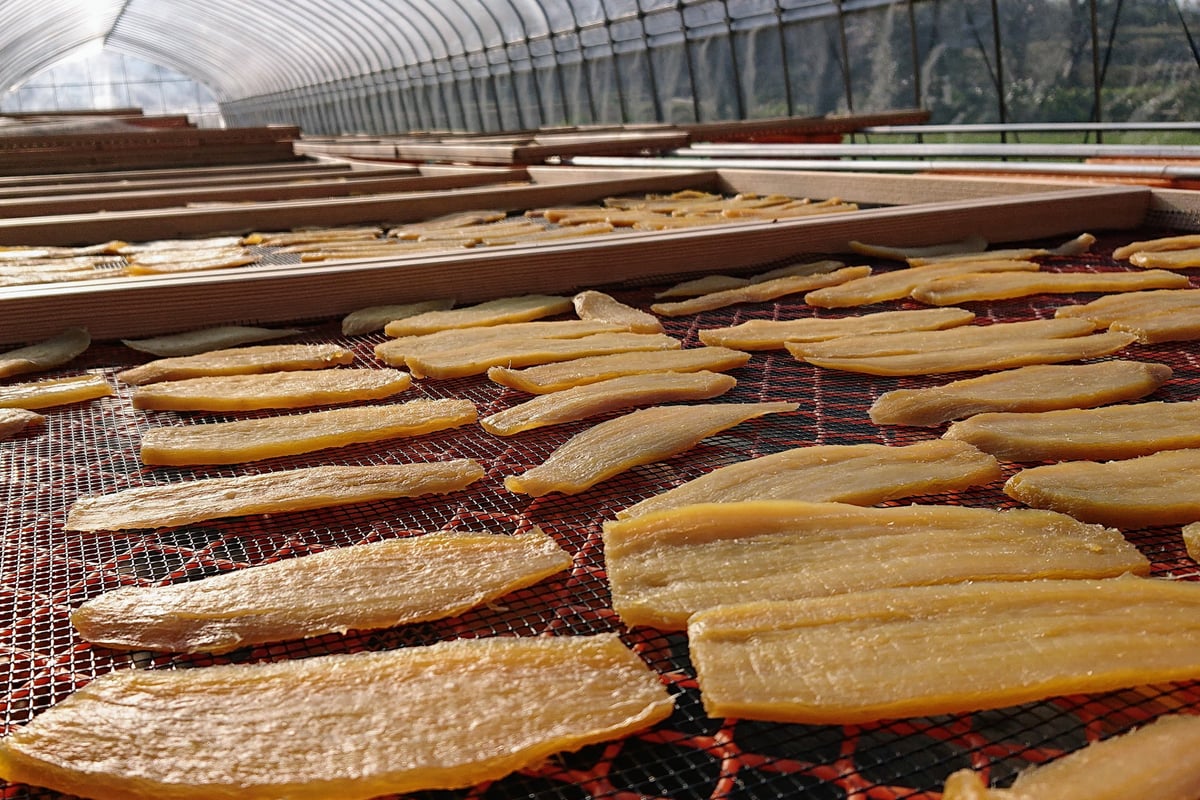
Hoshi imo is a preserved food made by steaming sweet potatoes, slicing them thin, and drying them in the sun; the coastal area of Ibaraki Prefecture centered on Hitachinaka City and Tokai Village accounts for the great majority of Japan's national production. Ibaraki's production is said to originate around 1908, when Terunuma Kantaro brought back a method he had seen in Shizuoka, prompting Yuasa Toshichi, a cracker maker in Minato (present-day Hitachinaka City), and others to begin making hoshi imo. The number of producers grew steadily from the Taisho era into the early Showa era, and after the war, production expanded rapidly with prefectural encouragement; by around 1955, Ibaraki had overtaken Shizuoka Prefecture, the birthplace of the product, to become Japan's top producing region. Taking advantage of the coastal area's winter sea breezes and ample sunshine, the region offers a range of flavors and textures across varieties, from the long-established Tamayutaka to the popular newer Beniharuka, and hoshi imo remains a beloved souvenir representative of Ibaraki today.
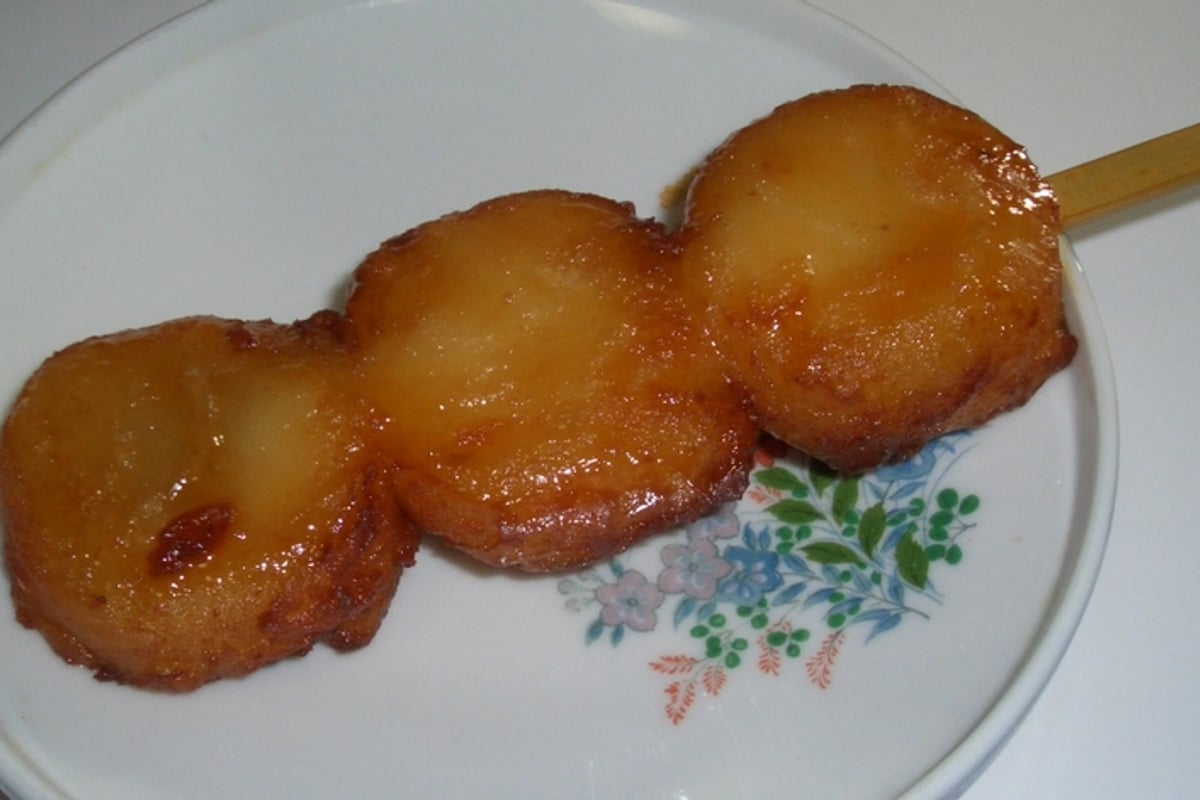
Imo-mochi (grilled potato mochi)
Imo-mochi
Imo-mochi is a Hokkaido snack made by boiling and mashing potatoes, kneading in potato starch, shaping the mixture into flat rounds, and pan-frying them. The outside is crisp and golden while the inside has a distinctively chewy, mochi-like texture, and it is typically enjoyed with a simple sweet-savory soy glaze, kinako (roasted soybean flour), or butter. It is said to have originated during the Meiji-era pioneer days, when rice-farming techniques had not yet been established in Hokkaido; settlers used potatoes, which grew well even in the cold climate, in place of glutinous rice to create a mochi-like food, and it spread as a vital energy source for the pioneers. Hokkaido, Japan's leading potato producer, and especially the Tokachi region, is known as a representative production area, and imo-mochi is a staple treat both at home and at roadside stations and souvenir shops. Because it was easy to prepare, it was also valued during the food shortages of the wartime and postwar years, and remains a beloved Hokkaido flavor across generations today.
Yoshino Hon-kuzu
Yoshino Hon-kuzu
Yoshino Hon-kuzu is a traditional ingredient made in the Yoshino region of southern Nara Prefecture, regarded as one of the finest grades of kuzu starch available. It is produced by extracting starch from the roots of kuzu, a climbing vine in the legume family, then refining it through a method called 'Yoshino-zarashi' — repeatedly rinsing the starch in cold well water during the coldest months of the year. The raw kuzu root is a precious material, gathered through the arduous labor of digging into the mountains, and the painstaking process, which takes several months from refining to drying, produces a purity and smooth mouthfeel unmatched by kuzu starch from other regions. Yoshino Hon-kuzu is used not only in wagashi such as kuzuyu (hot kuzu drink), kuzumochi, and kuzukiri, but also widely as a thickening agent in cooking, and its traditional techniques are still preserved today by long-established producers dating back to the Edo period. A representative maker is Kurokawa Honke, headquartered in Uda City, Nara Prefecture, which has maintained the same production method for over 400 years since its founding in 1615 and is known as a long-established house with a history of supplying the Imperial Household Agency.