Image: Wikimedia Commons
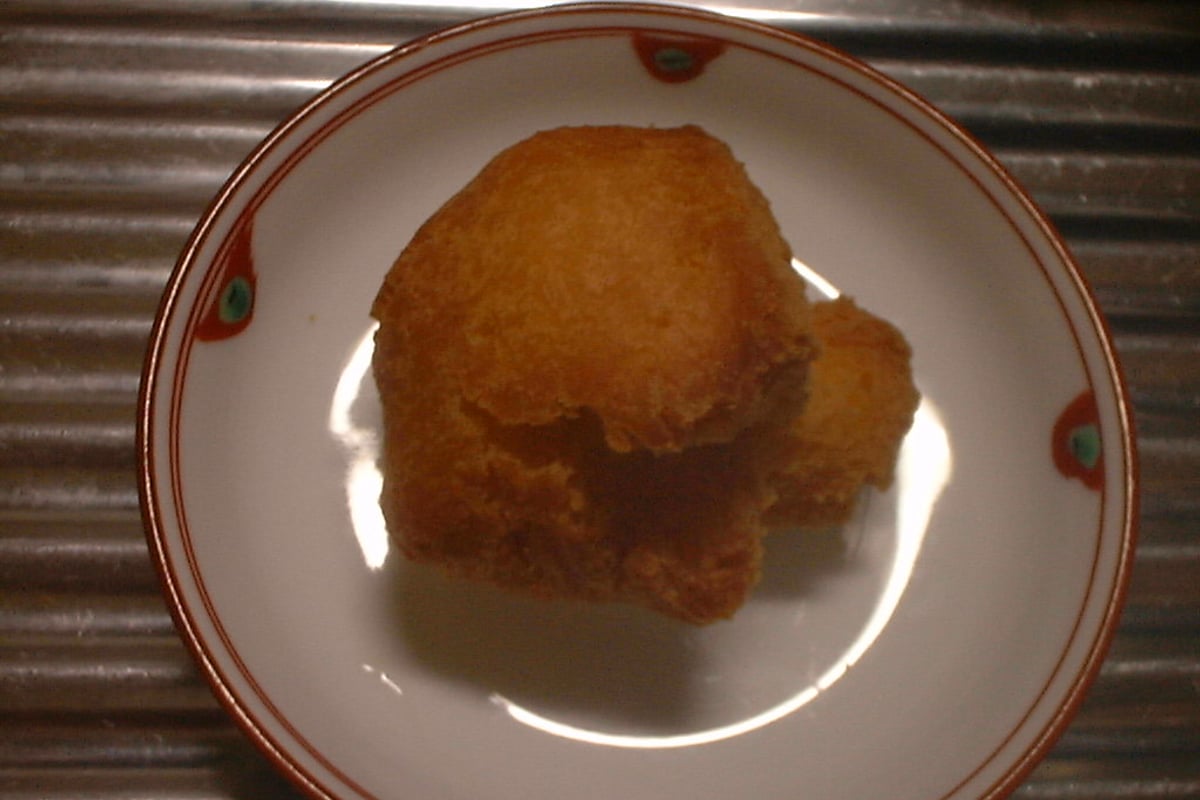
Sata andagi is a traditional Okinawan fried confection made from a dough of wheat flour, egg, and sugar, deep-fried in oil. The name combines the Okinawan words 'sata' (sugar), 'anda' (oil), and 'agii' (fried), and translates literally as 'sugar tempura.' Tradition holds that it originated when a chef traveled to China during the Ryukyu Kingdom era and brought back the recipe for the Chinese confection 'kaikousho' (also called kaikoukyuu). In an age when sugar was precious, it was a luxury confection made only for special occasions, and because the dough cracks open into a round shape resembling a blooming tulip when fried, it was considered an auspicious sweet, also used as a betrothal gift. Thanks to its good keeping quality, it has long been valued for celebrations and as a gift, and today it is widely loved both within and beyond the prefecture as a representative Okinawan souvenir and snack.
Origin
As the Okinawan words 'sata' (sugar), 'anda' (oil), and 'agii' (fried) suggest, this fried confection translates literally as 'sugar tempura.' It is thought to have its roots in the Chinese confection 'kaikousho' (kaikoukyuu), and tradition holds that around 500 years ago, during the Ryukyu Kingdom era, a chef who traveled to China brought the recipe back with him.
History
In an era when sugar was a precious commodity, sata andagi was treated as a luxury confection made only for special occasions. Thanks to its good keeping quality, it became an essential item for celebrations and ceremonies, including as a gift exchanged at betrothal ceremonies, and it has been passed down in close connection with Okinawa's annual events and festivals. Today it is one of Okinawa's most popular confections, made for everything from everyday snacks to gifts.
Features
Its most distinctive feature is how the dough of wheat flour, egg, and sugar cracks open into a round shape resembling a blooming tulip when fried in oil. With a simple sweetness and a texture that is crisp outside and fluffy inside, it is delicious whether eaten freshly fried or after cooling, making it a valued souvenir as well.
Main Ingredients
Food Culture
Because of the way it cracks open when fried, sata andagi is regarded as a confection symbolizing femininity, and it is cherished as an auspicious sweet essential to betrothal gifts and celebratory occasions. Thanks to its good keeping quality, it has also become a classic Okinawan souvenir.
Famous Shops
琉球菓子処 琉宮
沖縄県那覇市牧志3-1-17(平和通り商店街内)
A sata andagi specialty shop founded in 1989. The plain flavor costs around 150 yen (tax included) per piece, and the shop takes pride in offering a treat that is delicious whether freshly fried or cooled.
View details →FAQ
Q. What does the name 'sata andagi' mean?
A. In the Okinawan language, 'sata' means sugar, 'anda' means oil, and 'agii' means fried, so the name translates literally as 'sugar tempura.' It is said to have originated from the Chinese confection 'kaikousho.'