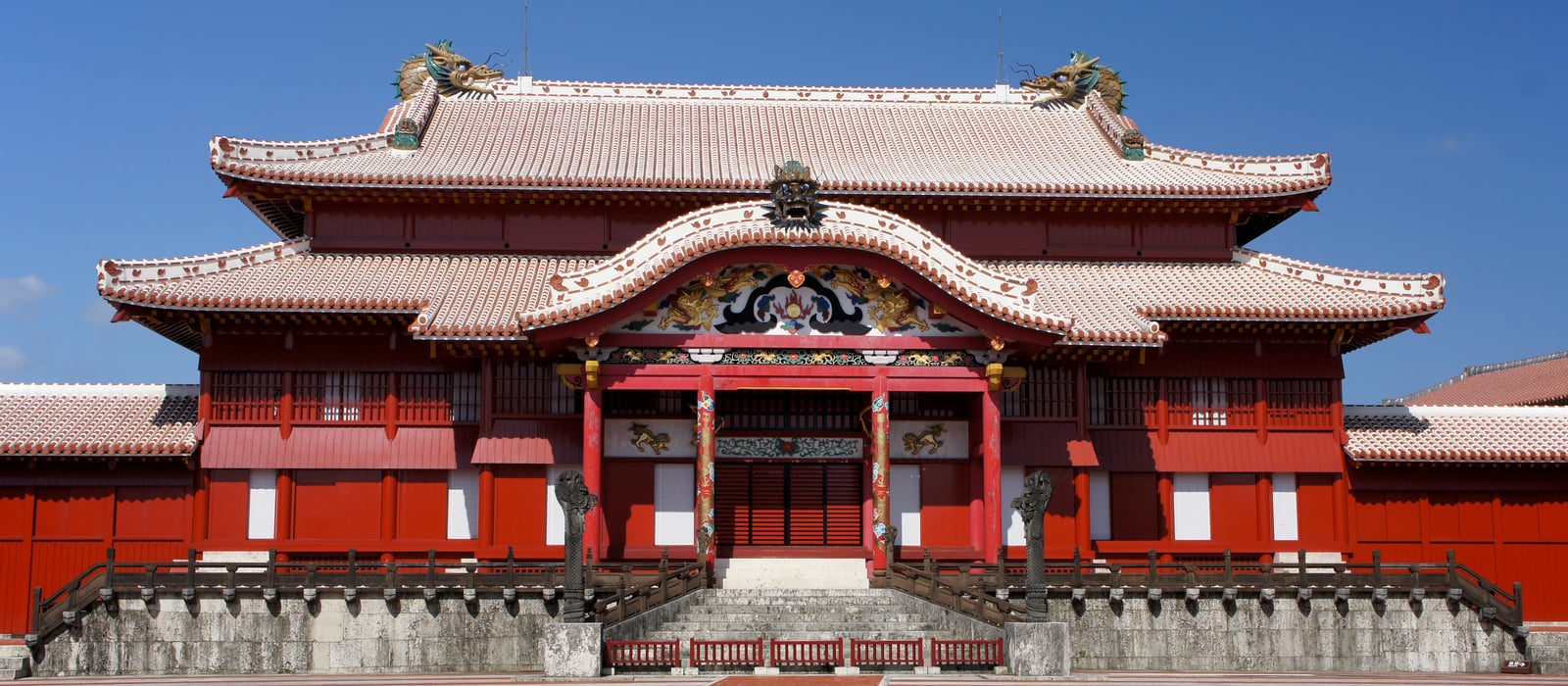
 Image: Wikimedia Commons
Okinawa Prefecture
Okinawa Prefecture, which followed its own historical path as the Ryukyu Kingdom, carries on a distinctive craft and food culture nurtured through trade with China and Southeast Asia. Dyeing and weaving, pottery, and lacquer art rooted in the royal court culture, such as Ryukyu Bingata, Tsuboya-yaki (Yachimun) pottery, and Ryukyu Shikki lacquerware, along with Shuri-ori, Yomitanzan Hanaori, Kumejima Tsumugi, Bashofu, and Miyako Jofu textiles, have been passed down in diverse styles unique to each island. Okinawa has more Traditional Crafts designated by the Minister of Economy, Trade and Industry than any other prefecture in Japan. In its food culture, a distinctive tradition of using every part of the pig, prefecture-wide favorites such as Goya Chanpuru and Rafute, and ingredients nurtured by the surrounding sea such as Mozuku and Umibudo remain deeply rooted in daily life.
Okinawa's Traditional Crafts
Ryukyu Bingata
Ryukyu Bingata
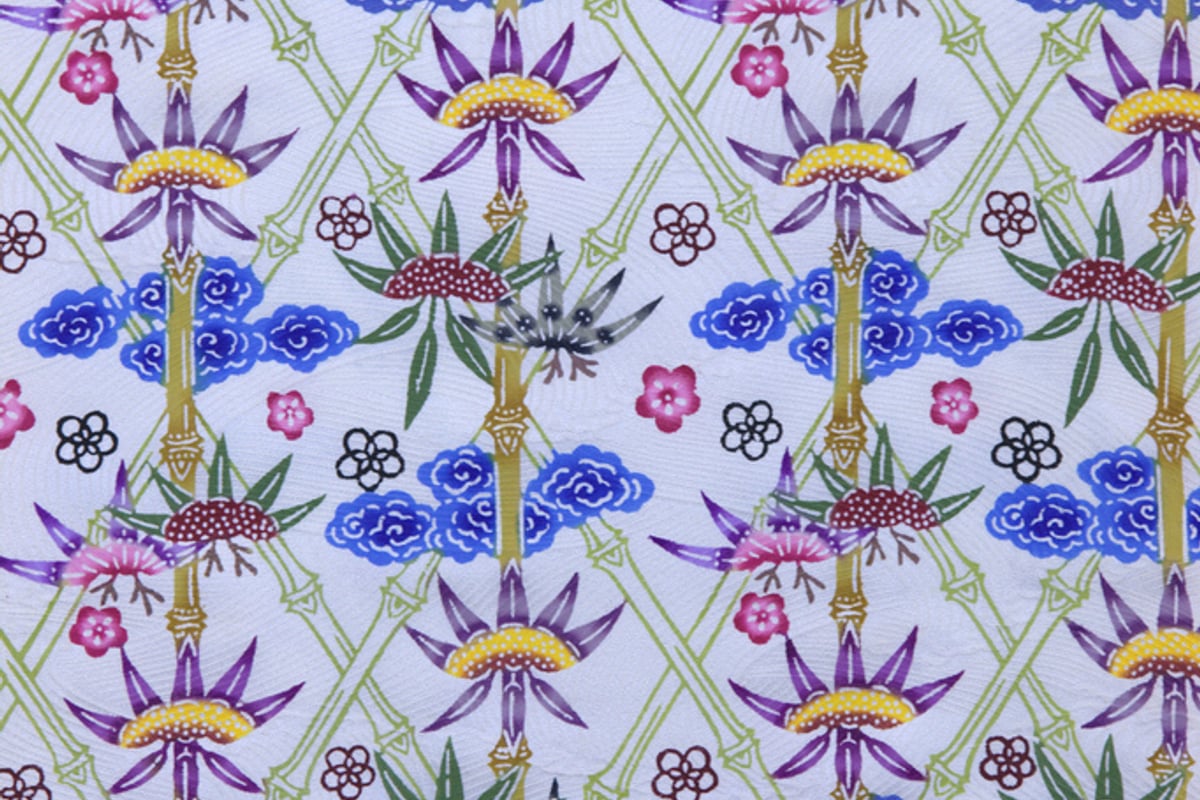
Ryukyu Bingata is a dyeing technique passed down mainly in Shuri, Naha City, Okinawa Prefecture, characterized by bold, vivid colors reminiscent of tropical sunlight - reds, yellows, blues, greens, and purples - and flowing patterns inspired by Okinawan nature such as deigo flowers, adan (pandanus), and fish. Its origins are said to date to around the 14th-15th centuries, when it is thought to have developed from dyeing techniques introduced through trade with China, India, and Java (sarasa/chintz dyeing), adapted in a uniquely Ryukyuan way. It developed under the protection of the Ryukyu royal government, worn as formal attire for royalty and the samurai class and as ritual costume, with the finest painters and stencil carvers of the day creating the underdrawings and stencils. It is broadly divided into the vividly multicolored 'Bingata' and the more subdued 'Aigata (e-gata)', dyed using only shades of indigo. Because processes such as stencil carving, paste-resist application, coloring, and shading are handcrafted, mostly divided among specialists within a single workshop, completing a single length of fabric takes considerable time and effort. It was designated a Traditional Craft by the Minister of Economy, Trade and Industry in 1984, and today it is used not only for kimono and obi but also for everyday items such as noren curtains and pouches.
Tsuboya-yaki
Tsuboya-yaki
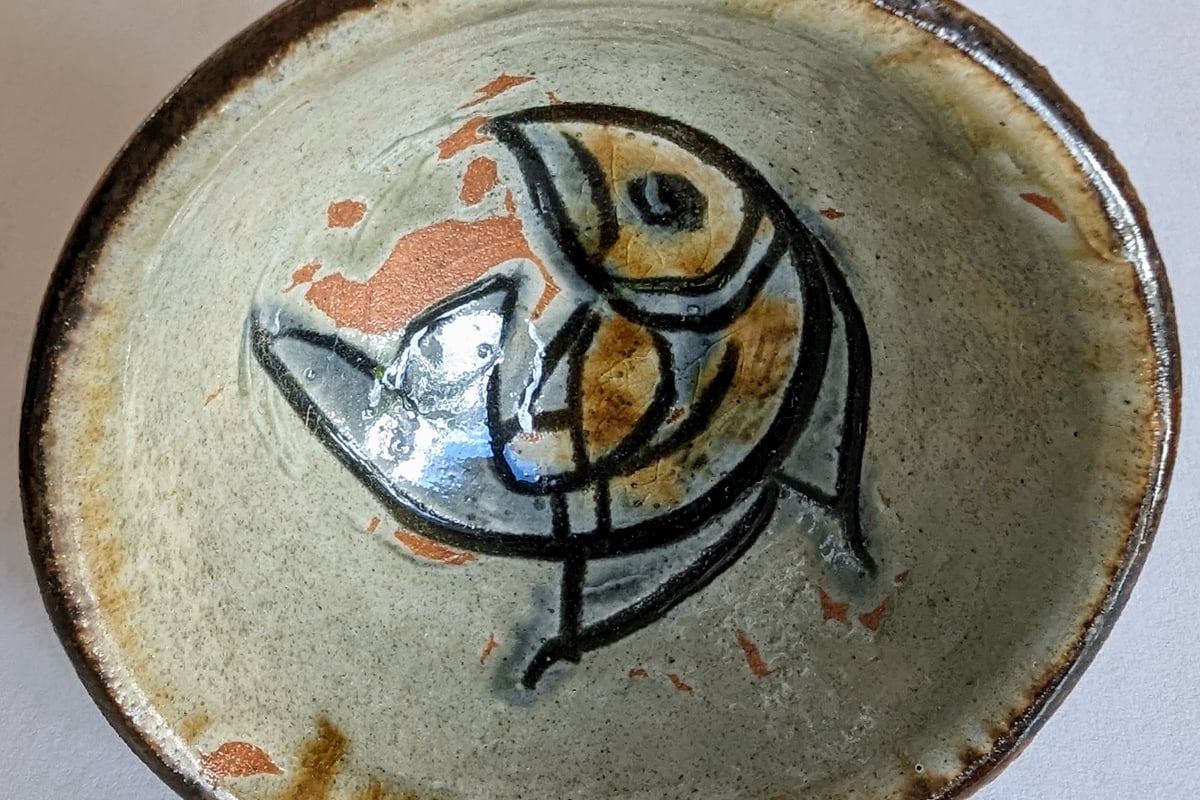
Tsuboya-yaki is a pottery representative of Okinawa, fired mainly in the Tsuboya district of Naha City and in Yomitan Village. Around the 14th-16th centuries, the Ryukyu Kingdom flourished as a hub for East Asian pottery through active overseas trade, but when trade declined following the Satsuma invasion (1609), the royal government invited Korean potters to introduce pottery-making techniques. In 1682, the royal government consolidated three kilns - the Chibana kiln in Misato Village, the Takarakuchi kiln in Shuri, and the Wakuta kiln in Naha - into the Tsuboya district of Naha, and this is considered the birth of present-day Tsuboya-yaki. It is characterized by thick-bodied vessels and a rustic, powerful style, and is broadly divided into two types: 'joyachi,' glazed and fired at high temperature, and 'arayachi,' fired without glaze. Joyachi centers on everyday vessels such as bowls, plates, and shisa lion-dogs, while arayachi centers on large storage vessels such as sake and water jars. In the 1970s, as it became difficult to fire the smoke-producing climbing kilns within Naha City, the late Living National Treasure Kinjo Jiro and others relocated to Yomitan Village, which subsequently became a major production area for Tsuboya-yaki as well. It was designated a Traditional Craft by the Minister of Economy, Trade and Industry in 1976.
Ryukyu Shikki
Ryukyu Shikki
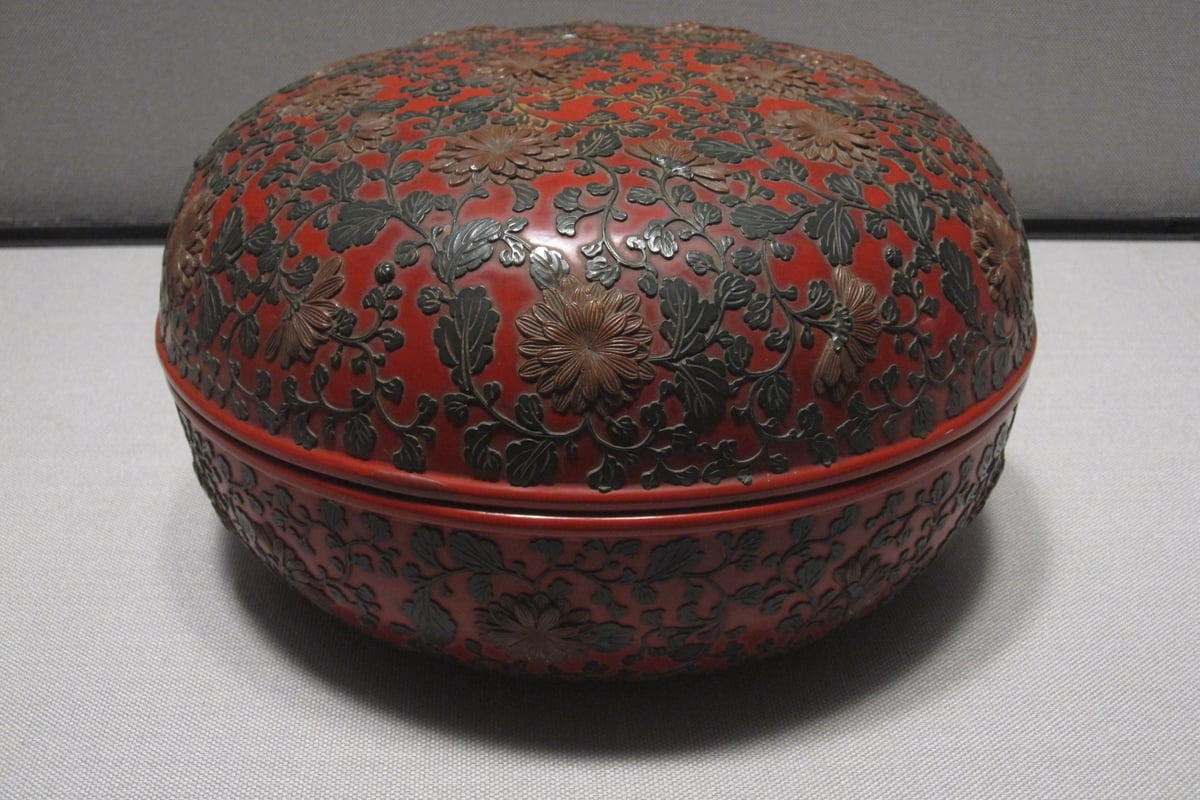
Ryukyu Shikki is a lacquer craft handed down mainly around Shuri in Naha City, Okinawa Prefecture. Lacquerware techniques are said to have been brought from China around the end of the 14th century, and production flourished during the Ryukyu Kingdom era of the 15th-16th centuries. The royal government established the Kaizuri Bugyosho office to manage and strengthen lacquerware production, introducing techniques from China and Satsuma while also organizing the cultivation of lacquer trees and the harvesting of lacquer as state policy. After the Satsuma invasion of 1609, Ryukyu Shikki came to be prized as a gift to the Tokugawa shogunate and various feudal lords, serving as a showcase of the Ryukyu Kingdom's technical skill abroad. Decorative techniques include chinkin, in which patterns are carved with a blade and fixed with gold; raden, in which mother-of-pearl or abalone shell is cut into patterns and inlaid; hakue, in which patterns are painted in lacquer and gold leaf applied; and tsuikin, a technique unique to Ryukyu. In tsuikin, pigment is kneaded into kurome lacquer until it forms a dough-like mass, which is rolled thin, cut into patterns, and applied, creating three-dimensional, showy decoration. The wooden bases are made from Okinawan trees such as deigo, banyan, and styrax, which shrink and crack little as they dry. It was designated a Traditional Craft of Okinawa Prefecture in 1974 and a Traditional Craft designated by the Minister of Economy, Trade and Industry in 1986.
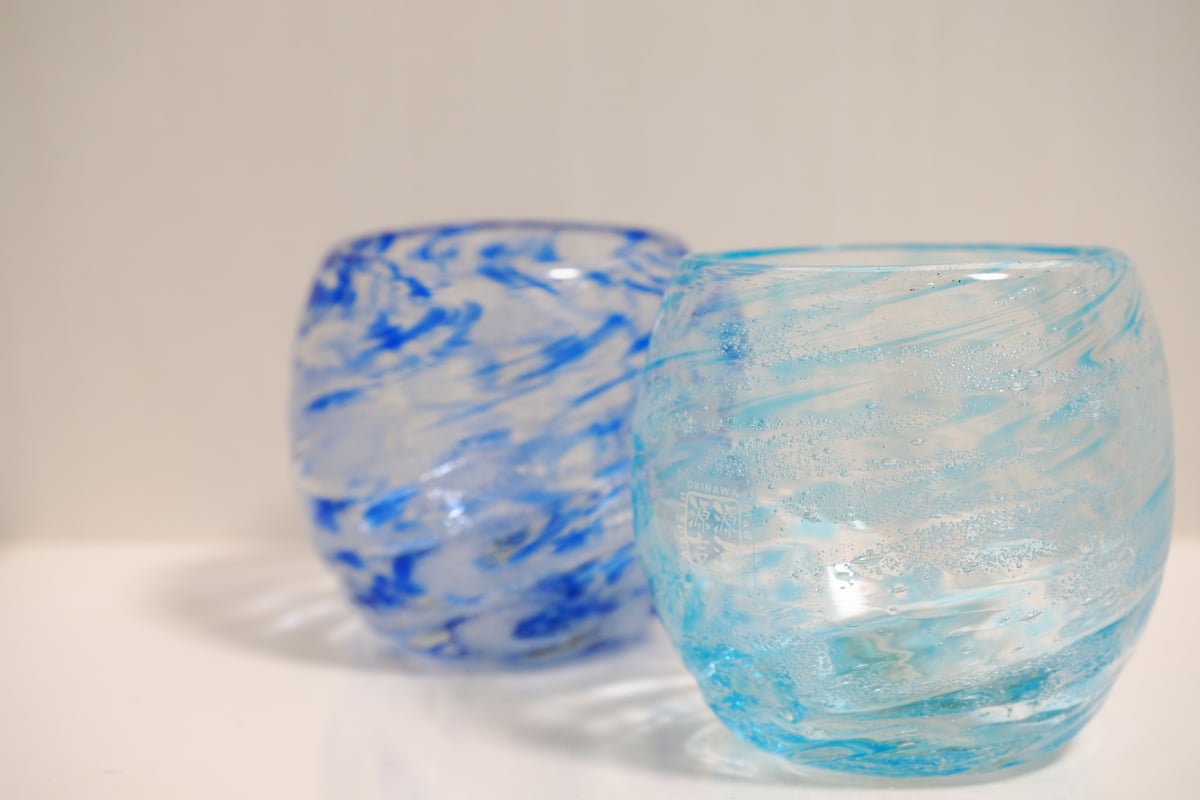
Ryukyu Glass
Ryukyu Glass
Ryukyu Glass is blown-glass craftware made in Okinawa Prefecture. Glassmaking in Okinawa is said to have begun around 1900, when glassblowers who had come from Kagoshima, Nagasaki, and Osaka set up workshops in Nishimachi, Naha City, producing everyday items such as medicine bottles and lamp chimneys. Much of the industry and its raw materials were lost during World War II, but after the war, artisans turned to empty beer and cola bottles discarded by the occupying US military bases, melting them down to bring glassmaking back to life. Because these discarded bottles contained impurities such as label residue, the finished pieces often contained countless tiny bubbles - a trait that came to be prized as the distinctive texture known as 'awa-garasu' (bubble glass), and together with the soft, muted colors derived from recycled bottles, became one of the defining charms of Ryukyu Glass. In the 1950s, orders from US military personnel increased, and colorful Western-style glass tableware spread as the industry's mainstay product. Today, workshops are scattered around Itoman City, Tomigusuku City, and Nago City, and in 1998 Ryukyu Glass was designated a Traditional Craft of Okinawa Prefecture.

Shuri-ori
Shuri-ori
Shuri-ori is a general term for the textiles developed in Shuri, the town that flourished as the castle town of the Ryukyu Kingdom, and it comprises five techniques: hana-ori, doton-ori, tejima, hanakura-ori, and ayanunaka. Around the 14th-15th centuries, weaving techniques were cultivated through active trade with China and Southeast Asia, and in Shuri, seat of the Ryukyu royal government, weavers produced textiles of the highest refinement in both color and pattern, worn as formal attire by the royal family and the shizoku (samurai-class gentry) and presented as tribute to investiture envoys from China. Among these, hanakura-ori and doton-ori were reserved exclusively for the royal family and nobility, developing as techniques that only Shuri was permitted to weave, unlike anywhere else. The main material is silk thread, supplemented with cotton, hemp, and basho (banana fiber) thread, dyed with plant dyes such as Ryukyu indigo and fukugi (Garcinia subelliptica). Shuri-ori became a Traditional Craft designated by the Minister of Economy, Trade and Industry in 1983, and the techniques continue to be passed down today, centered on the Naha Traditional Textile Industry Cooperative.
Yomitanzan Hanaori
Yomitanzan Hanaori
Yomitanzan Hanaori is a patterned textile handed down in Yomitan Village, in central Okinawa Island, characterized by geometric floral motifs created by floating the warp and weft threads as they are woven. It is said to have originated when the float-weave technique, introduced from the continent during the 14th-15th centuries - the Great Trade Era when the Ryukyu Kingdom flourished through trade with China and Southeast Asia - developed uniquely in Yomitanzan (present-day Yomitan Village). The fabric was prized as tribute cloth presented to the Ryukyu royal government and as clothing for shizoku (samurai-class) families. The craft declined after the Meiji era and was nearly lost during the Battle of Okinawa in World War II, but in 1964 volunteers from Yomitan Village worked to revive it, drawing on the memories of elders and surviving old fabrics, and the technique was restored after a gap of roughly 90 years. Those who led the revival went on to form the Yomitanzan Hanaori Cooperative Association, which now trains successors and passes on the techniques. The patterns feature three basic motifs - jinbana (coin flower), ojibana (fan flower), and kajimayabana (windmill flower) - each embodying wishes for wealth, descendants' prosperity, and longevity. Designated a national Traditional Craft in 1976, the textile is used today in a wide range of products, from cotton and silk obi sashes and kimono cloth to minsa obi.
Kumejima Tsumugi
Kumejima Tsumugi
Kumejima Tsumugi is a silk textile from Kumejima Island, off the west coast of the Okinawan mainland, in which a single weaver handles every stage of the process by hand, from raising silkworms through dyeing to weaving. Sericulture is thought to have already been practiced on Kumejima by around the 15th century, and after the textile was designated a tribute cloth to the Ryukyu royal government in 1637, its intricate techniques were refined further. Japan's tsumugi kasuri weaving techniques are said to have spread from Kumejima to the Okinawan mainland and Amami Oshima and on to mainland Japan, and it is considered one of the origins of tsumugi textiles nationwide, including Oshima Tsumugi and Yuki Tsumugi. Its defining feature is that a single weaver carries out every stage from spinning the thread to choosing the pattern, dyeing, and weaving. After repeated dyeing with plant materials such as fukugi and gūru (sarsaparilla) and tekachi (Chinese hawthorn), the cloth is iron-mordanted through mud dyeing using the island's soil, producing a deep, subdued blackish-brown sheen. It was designated a national Traditional Craft in 1975 and a national Important Intangible Cultural Property in 2004. The Kumejima Tsumugi Cooperative leads the transmission of the technique, and the Kumejima Tsumugi no Sato Yuimaru Hall offers tours of the production process and weaving and dyeing experiences.
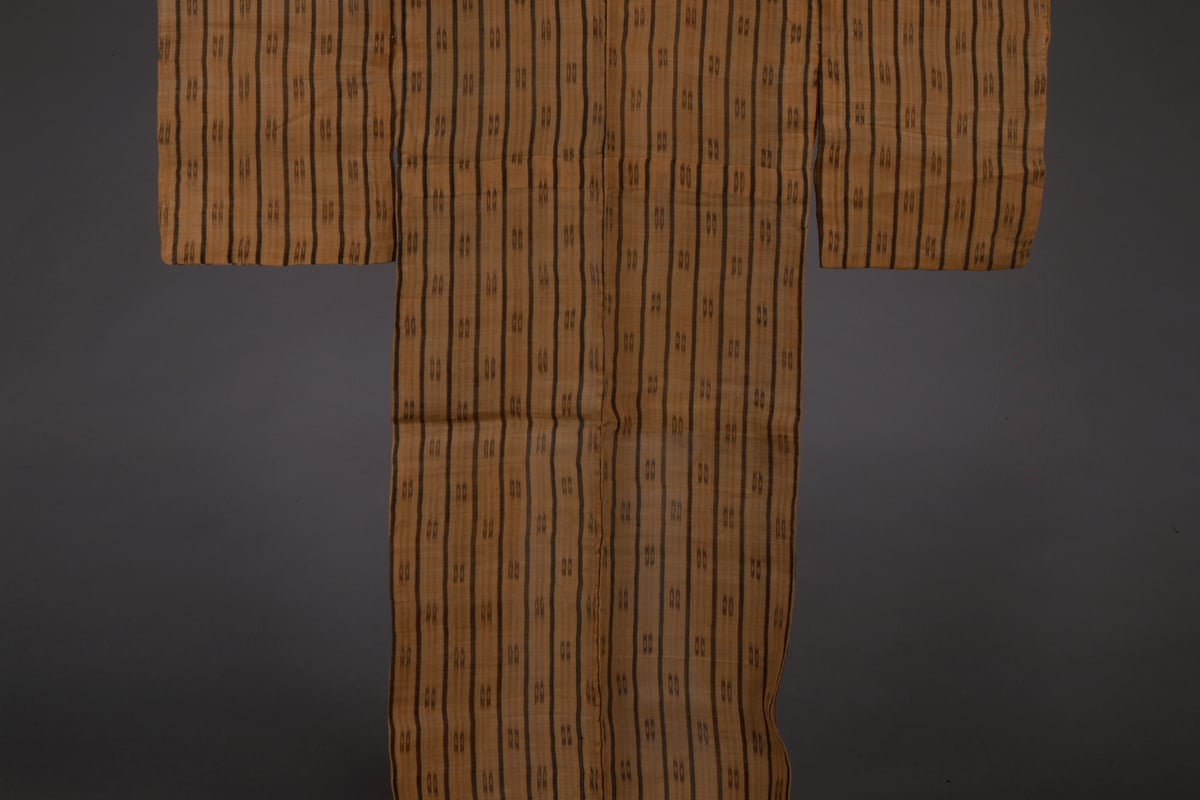
Bashofu
Bashofu
Bashofu is a representative summer textile of Okinawa, woven from thread made of fiber taken from the stalk of the ito basho (Japanese fiber banana) plant. Old records suggest it was already being woven by around the 13th century, and it is said that by around the 15th century a production method almost identical to today's had been established. During the Ryukyu Kingdom era, it was grown in banana gardens directly managed by the royal government, and as a cloth used everywhere from royal garments to the everyday clothing of commoners, it was the fabric most familiar to the people of Okinawa. Kijoka, in Ogimi Village, Kunigami District, has long been known as a leading production area for bashofu. Production suffered devastating damage in the Battle of Okinawa during World War II, but soon after the war, Taira Toshiko began working to revive the craft, reestablishing the technique in Kijoka. In 1974, it was designated a national Important Intangible Cultural Property as "Kijoka no Bashofu," and the Kijoka Bashofu Preservation Society, centered on Taira Toshiko, was certified as the holding organization. Its defining feature is a taut, cool texture achieved through a process spanning about three years, from growing the ito basho plant to spinning the thread, kasuri binding, dyeing, and weaving; Taira Toshiko herself was certified as a Living National Treasure (holder of an Important Intangible Cultural Property) in 2000.
Miyako Jofu
Miyako Jofu
Miyako Jofu is a ramie textile woven on Miyako Island, ranked alongside Echigo Jofu and Ojiya Chijimi as one of the finest, lightest, and most lustrous summer textiles in Japan. According to tradition, it began in the 16th century when a woman named Inaishi presented a woven cloth called 'ayasabi-nuno' to the King of Ryukyu. After being designated in 1637 as one of the tribute textiles owed by the Miyako and Yaeyama regions under the Ryukyu royal government's poll tax system, extremely fine and precise weaving was demanded of the cloth, and that technical tradition has been passed down to the present day. The raw material is ramie grown on the island; the fiber is patiently split by hand into fine strands without knots and twisted together into thread in a process called 'teumi' (hand-spinning). The textile is best known for its design of fine cross-shaped kasuri patterns woven into a deep indigo-dyed ground, and after weaving, the cloth is beaten with a wooden mallet in a finishing process called 'kinuta-uchi,' which gives it its distinctive supple sheen. Another characteristic is that thread-making, indigo dyeing, weaving, washing (finishing), and repair are each carried out by specialized artisans working in a division of labor. Miyako Jofu was designated an Important Intangible Cultural Property of Japan in 1978, and in 2003 the hand-spinning technique for ramie thread was recognized as a nationally Selected Conservation Technique.
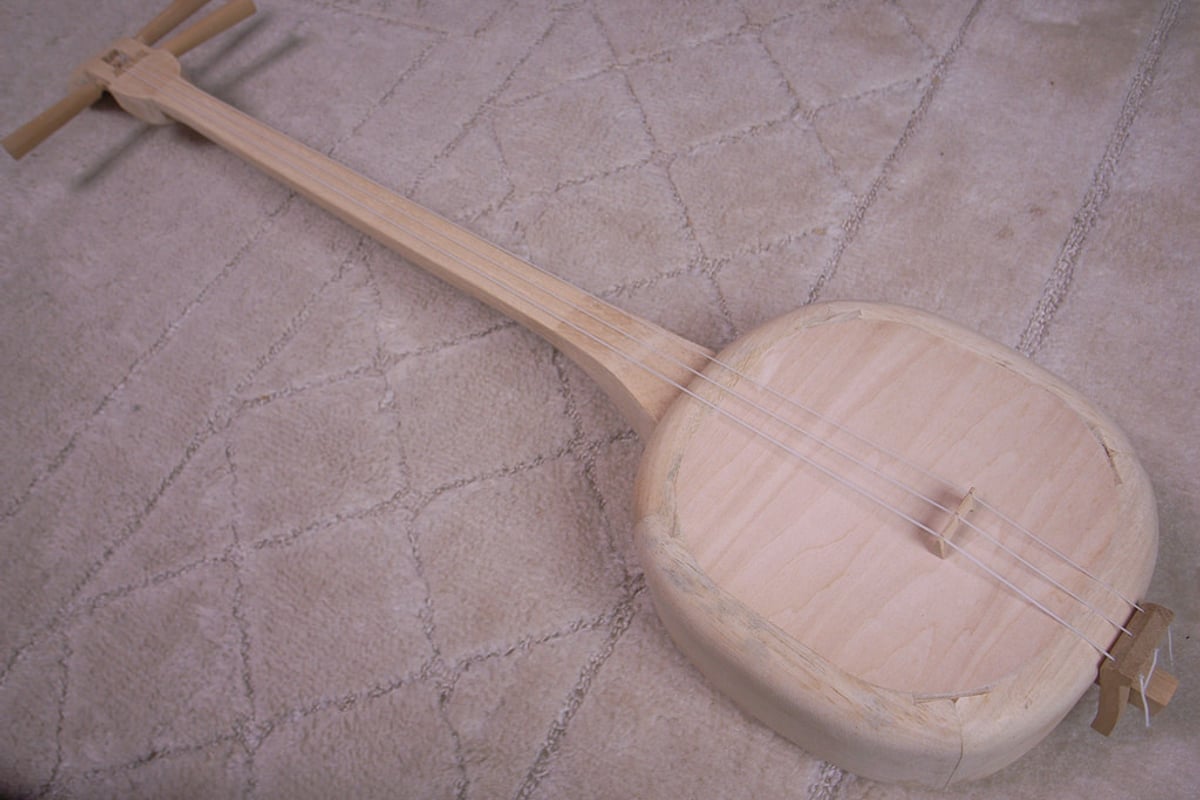
Sanshin
Sanshin
The sanshin is a three-stringed instrument with a body covered in snakeskin and a wooden neck, and it is indispensable to Okinawan music and performing arts. It is said to have originated around the end of the 14th century, when the Chinese sanxian, a stringed instrument from Fujian Province, was brought to the Ryukyu Kingdom through trade and developed into a distinctly Ryukyuan instrument centered on Kume Village (present-day Kume, Naha City). From the 15th century onward it spread among the Ryukyuan shizoku (gentry) class and developed as an accompaniment instrument for court banquet music and performing arts. The neck comes in seven traditional shapes named after master craftsmen of the Ryukyu Kingdom era, such as the Makabi, Haebaru, and Yunaa types, and instruments are made by combining a neck of wood such as kuruchi (Okinawan blackwood) with a body covered in python skin. Sanshin workshops and cooperatives carry on the craft techniques today; the sanshin was designated a national Traditional Craft in 2018, having already been designated an Okinawa Prefecture traditional craft product in 2012. Prices range from a few tens of thousands of yen for beginner instruments to several hundred thousand yen or more for high-end models with genuine python skin and prized woods, and the tone and appearance vary greatly depending on the type and materials chosen, which is part of its appeal.
Okinawa's Local Food
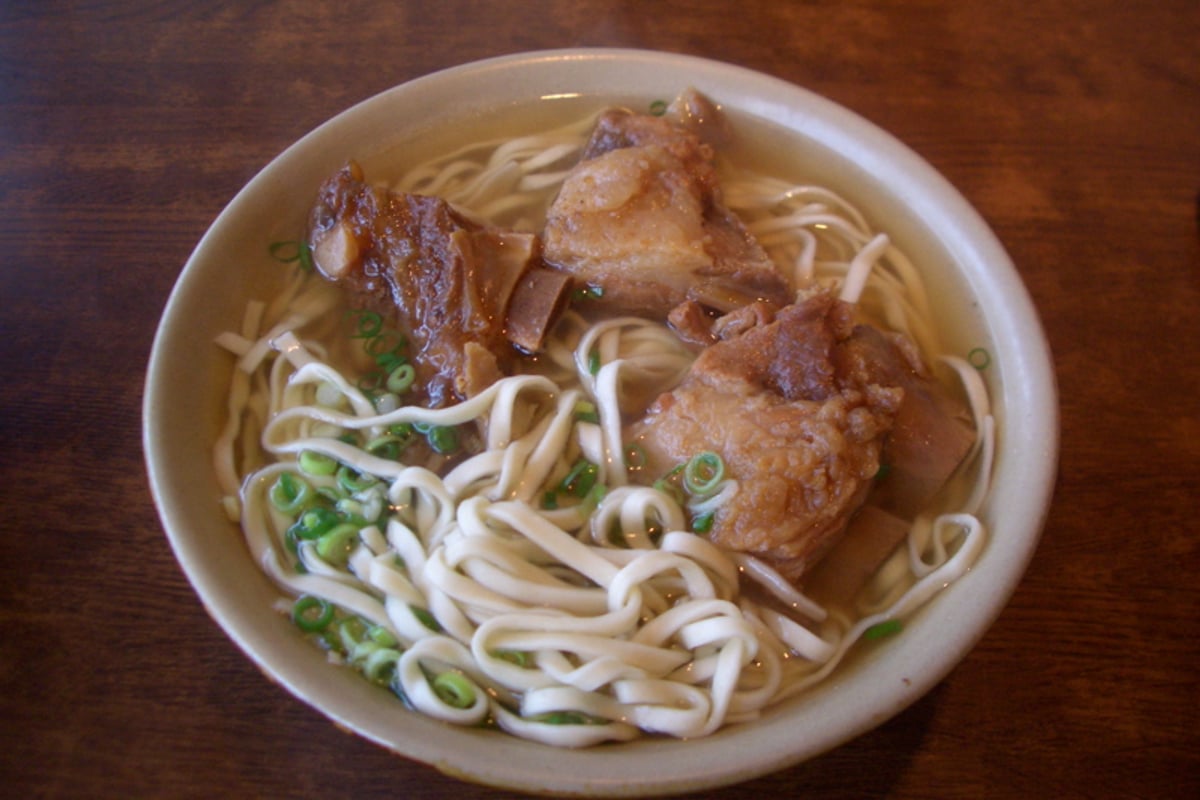
Okinawa Soba
Okinawa Soba
Okinawa soba is a beloved Okinawan noodle dish made with thick wheat noodles kneaded using kansui alkaline water — no buckwheat flour at all — served in a rich broth of pork bone and bonito, and topped with simmered pork belly, kamaboko fish cake, green onion, and red pickled ginger. It is said to have originated when a soba shop opened in Naha in the mid-Meiji era, when the dish was initially called 'suba' or 'Chinese soba' (shina soba). To distinguish it from Japanese soba, the name 'Okinawa soba' became established after Okinawa's reversion to mainland Japan in 1972, and in 1978 the Japan Fair Trade Commission approved the special designation 'Honba Okinawa Soba' (Authentic Okinawa Soba) for its use. The prefecture also has regional variants such as Miyako soba and Yaeyama soba, which differ in noodle thickness and broth preparation, and the dish has been selected as one of Japan's 100 Best Rural Dishes. Served not only at specialty shops but also at neighborhood eateries, it is eaten throughout the day from breakfast to late-night snacks, making it a noodle dish deeply woven into everyday life in Okinawa.
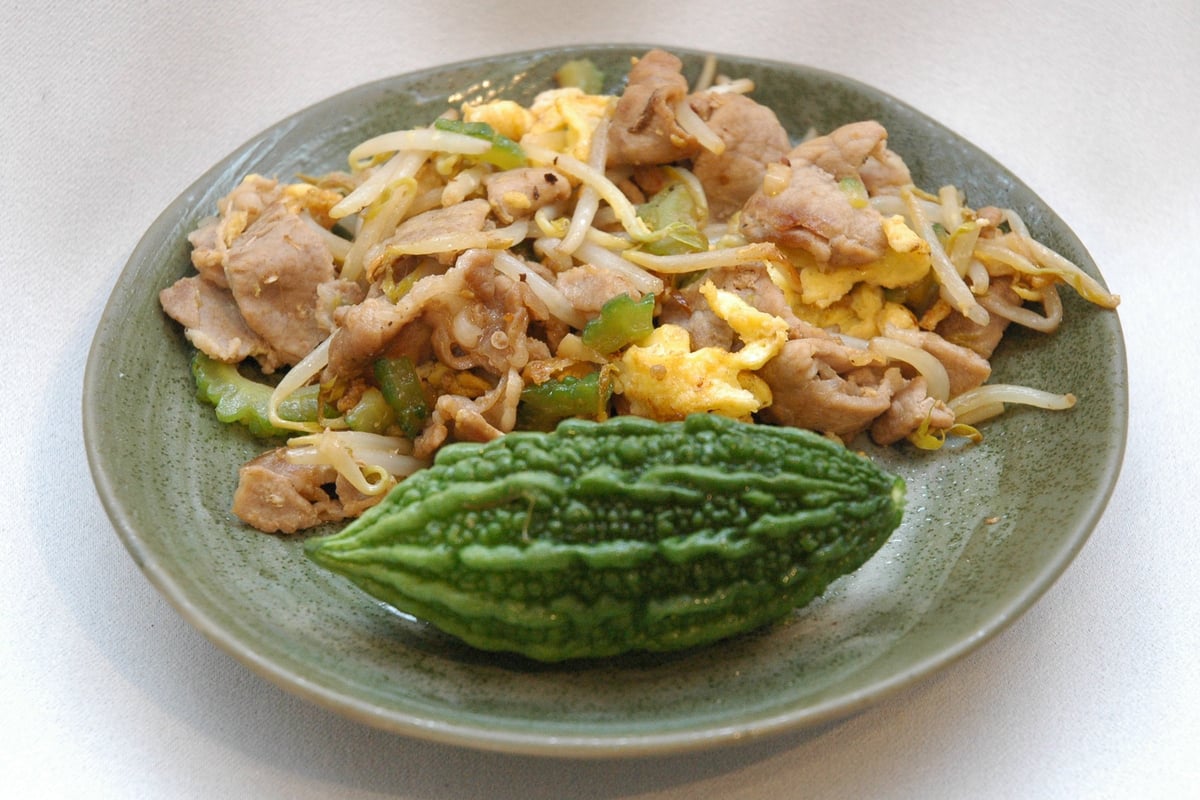
Goya Chanpuru (Bitter Melon Stir-Fry)
Goya Chanpuru
Goya chanpuru is a classic Okinawan home-cooked dish made by stir-frying goya (bitter melon), a summer vegetable, together with shima tofu (Okinawan firm tofu), egg, and pork or pork luncheon meat. 'Chanpuru' is an Okinawan word meaning 'something mixed together,' said to derive from the Malay/Indonesian word 'campur,' meaning 'to mix.' Following Okinawan custom, dishes are named 'OO chanpuru' after the tofu or main ingredient stir-fried together, and the version made with goya is especially well known. Goya's distinctive bitterness comes with an abundance of vitamin C that holds up well to heat, and the vegetable is also said to stimulate appetite, making the dish a beloved way to fend off summer fatigue. After being featured on television and in magazines, it also became established as a home-cooked dish across Japan.
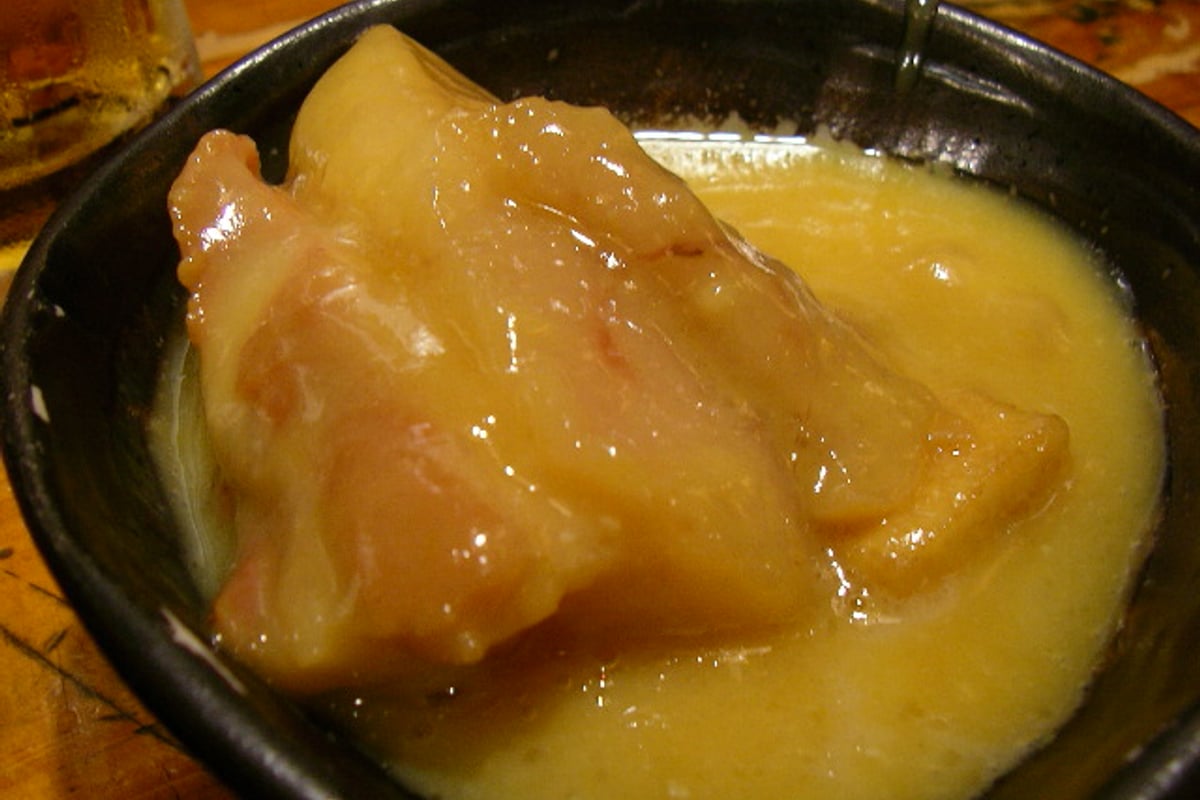
Rafute (Okinawan Braised Pork Belly)
Rafute
Rafute is a representative Okinawan pork dish made by slowly simmering skin-on pork belly in awamori, soy sauce, and sugar until sweetly savory. Born as a court dish during the Ryukyu Kingdom era, against the backdrop of a pork-eating culture that developed through the investiture relationship and trade with China, it is thought to share its origins with the Chinese dish dongpo pork (tonporou). Once prepared with a strong seasoning as a preserved food in an age without refrigeration, its seasoning has mellowed over time, and today it is positioned as a formal dish served at memorial services and celebratory banquets. Slow simmering renders even the skin meltingly tender, and it is said that 'Ryukyu cuisine begins and ends with pork,' making rafute a dish that symbolizes Okinawa's food culture.
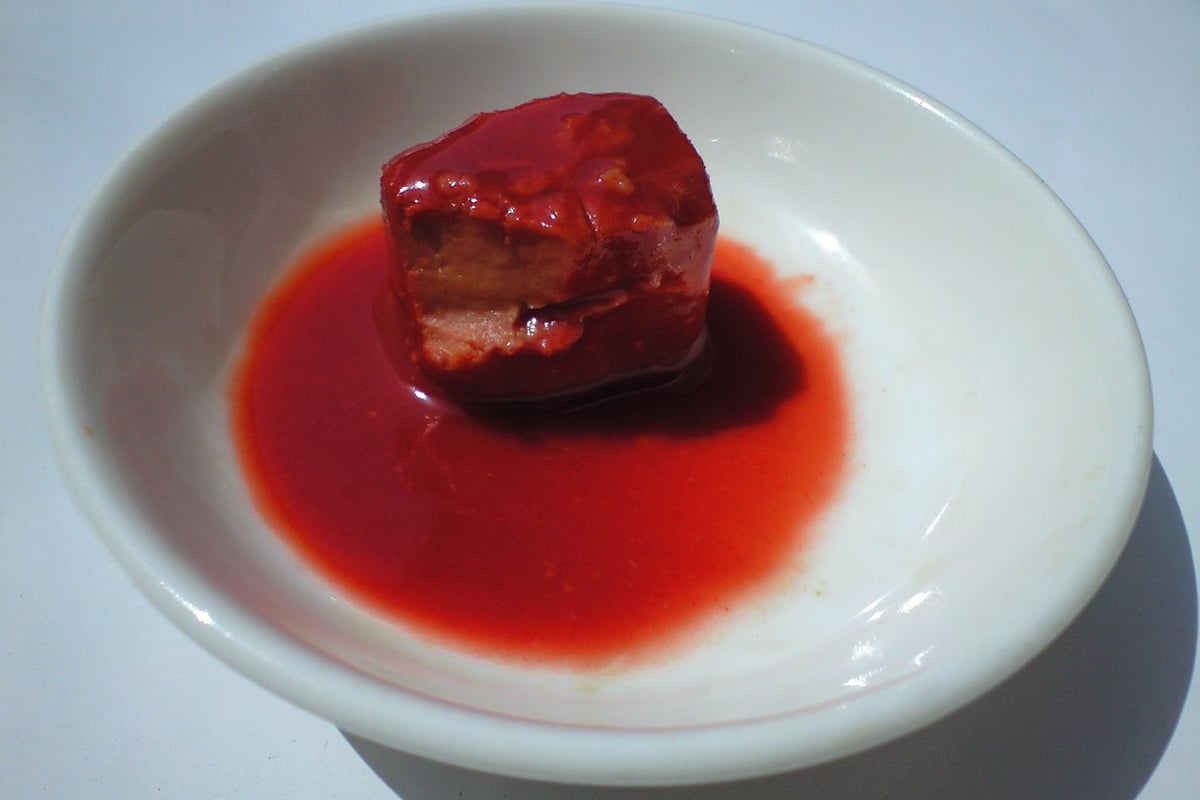
Tofuyo (Fermented Tofu)
Tofuyo
Tofuyo is a fermented food made by aging shima tofu (Okinawan firm tofu) for several months in red koji, rice koji, and awamori, producing a rich flavor and creamy texture sometimes likened to cheese — a delicacy handed down from the Ryukyu Kingdom. It is said to have been created around the 18th century, when the Ryukyu royal government's culinary bureau refined a method for fermented tofu ('furu,' known in China as fu-ru) introduced from China, and at the time it was treasured as a noble delicacy reserved for the upper classes. Unlike the salt-cured fu-ru of China and Taiwan, tofuyo differs significantly in that it is aged in awamori, a spirit familiar to Okinawa. Fermentation is believed to involve Monascus mold and koji fungi, giving the food its distinctive flavor. Today it is typically enjoyed in small amounts, taken with chopsticks as an accompaniment to awamori, and remains a popular Okinawan fermented food and souvenir item.
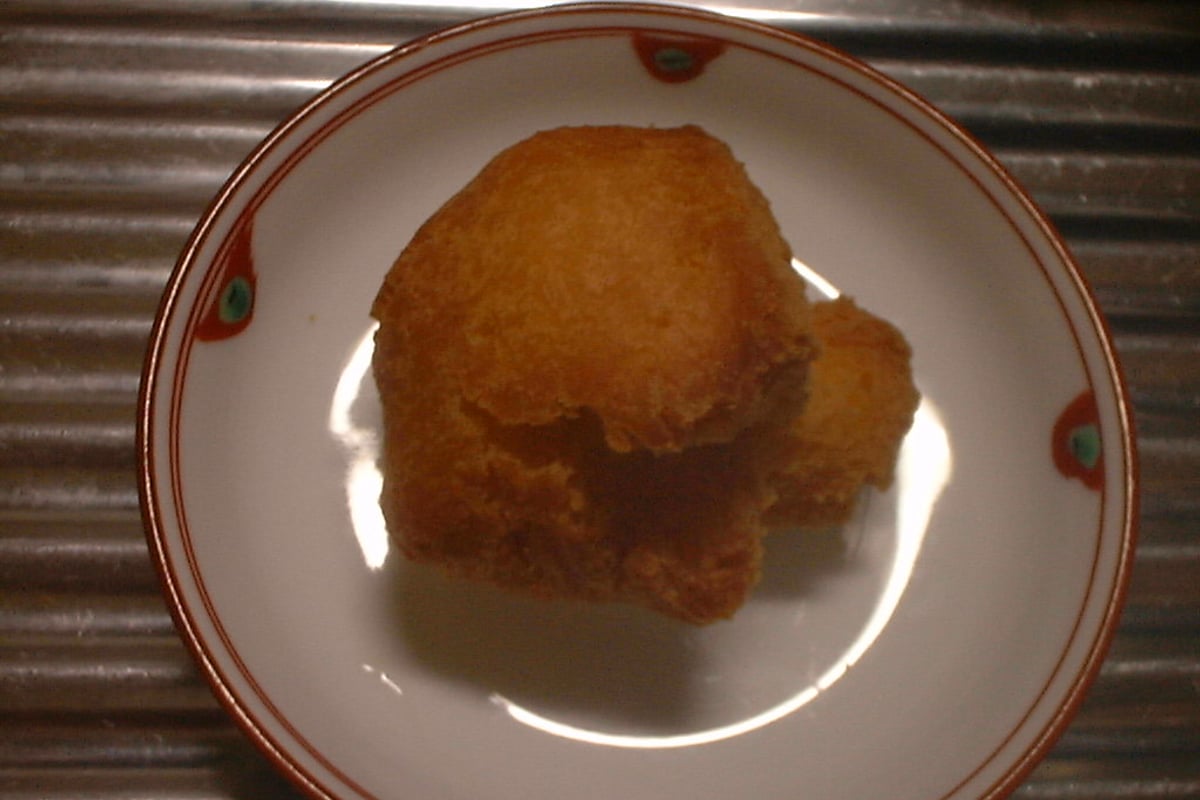
Sata Andagi (Okinawan Fried Doughnut)
Sata Andagi
Sata andagi is a traditional Okinawan fried confection made from a dough of wheat flour, egg, and sugar, deep-fried in oil. The name combines the Okinawan words 'sata' (sugar), 'anda' (oil), and 'agii' (fried), and translates literally as 'sugar tempura.' Tradition holds that it originated when a chef traveled to China during the Ryukyu Kingdom era and brought back the recipe for the Chinese confection 'kaikousho' (also called kaikoukyuu). In an age when sugar was precious, it was a luxury confection made only for special occasions, and because the dough cracks open into a round shape resembling a blooming tulip when fried, it was considered an auspicious sweet, also used as a betrothal gift. Thanks to its good keeping quality, it has long been valued for celebrations and as a gift, and today it is widely loved both within and beyond the prefecture as a representative Okinawan souvenir and snack.
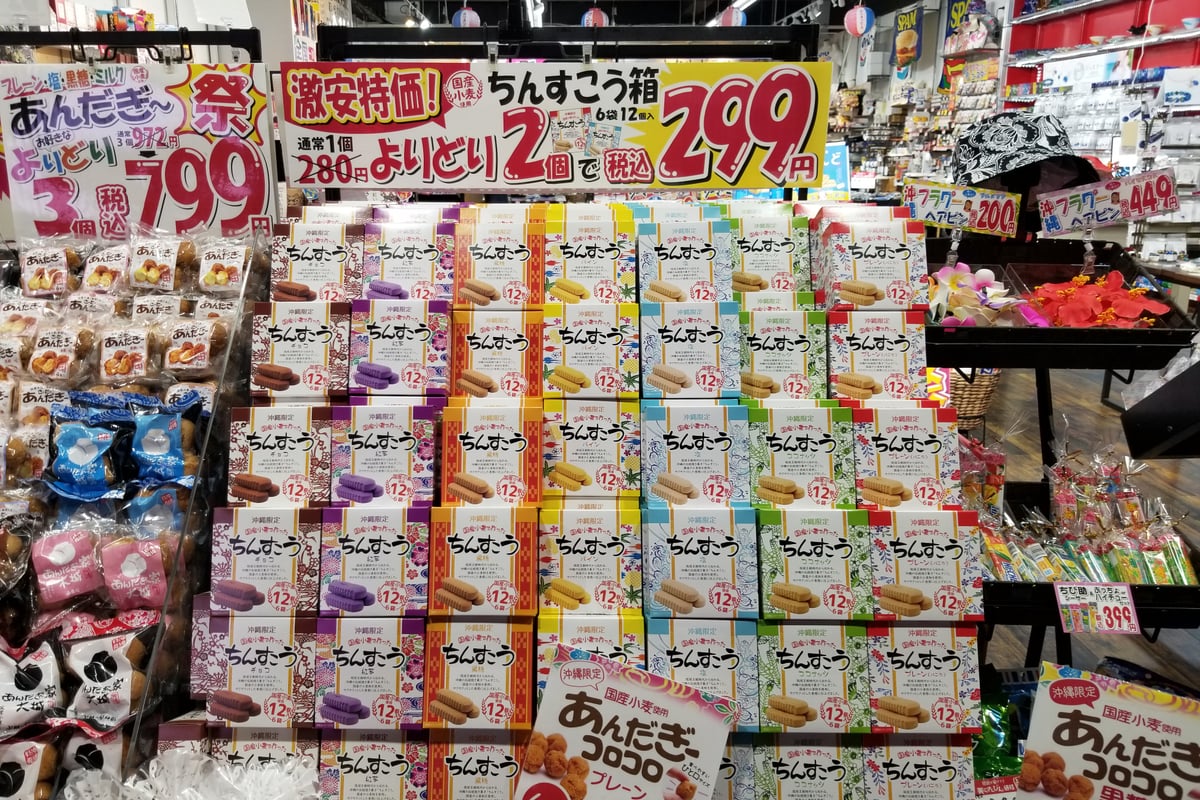
Chinsuko (Okinawan Shortbread Cookies)
Chinsuko
Chinsuko is a classic Okinawan confection made mainly from wheat flour, sugar, and lard. Known for its distinctively crumbly texture and the rich, savory flavor that lard imparts, it is one of the best-known Okinawan souvenirs nationwide in Japan. Its roots lie in a court confection of the Ryukyu Kingdom era, said to have been a special treat served only to royalty, nobility, and investiture envoys from China. Several theories exist for the origin of its name — one holds that it comes from 'chin-so-ko,' meaning 'rare confection,' another from 'kin-so-ko,' meaning 'expensive confection' — but the true origin remains unclear. Originally shaped as round pieces resembling a chrysanthemum flower, it was later remade into bite-sized sticks, giving it the familiar shape known today. Beyond the plain version, many variations have emerged using ingredients such as purple sweet potato, brown sugar, and Yukishio salt, and it continues to be beloved by visitors to Okinawa.
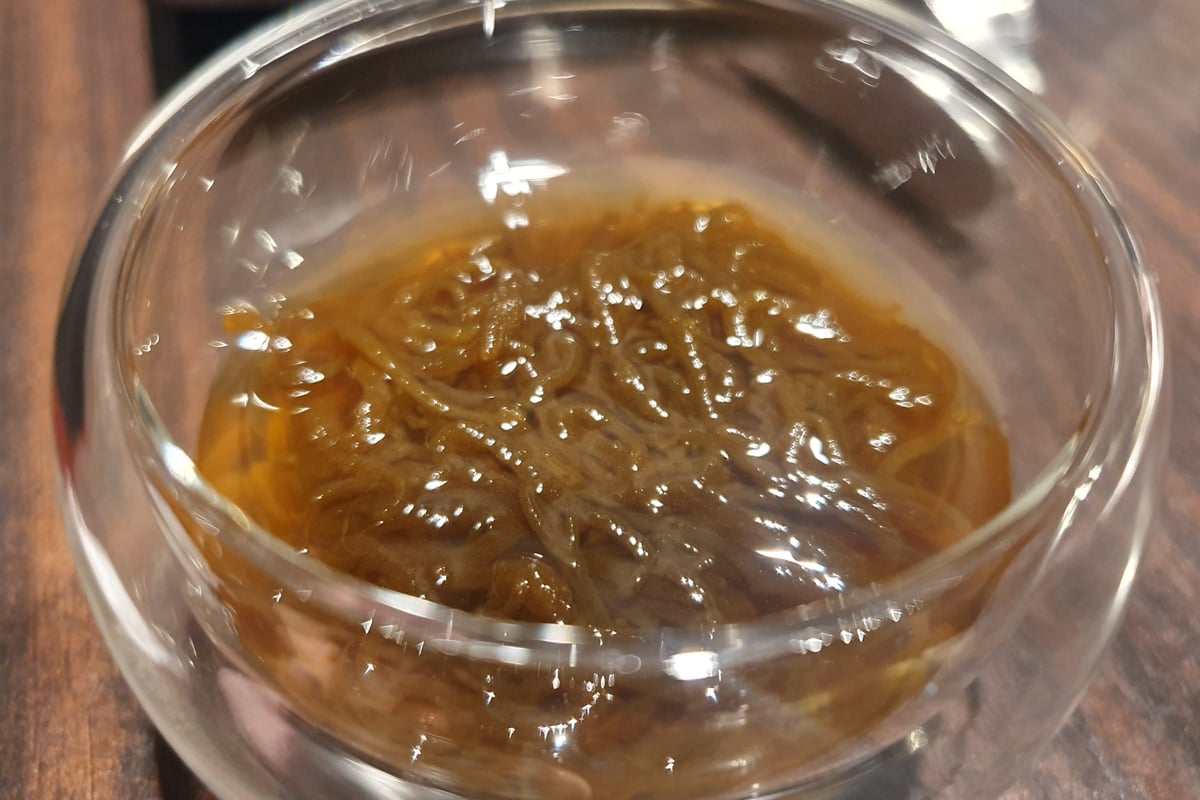
Mozuku (Okinawan Seaweed)
Mozuku
Mozuku is a thin, thread-like brown seaweed that grows in the waters around Okinawa, used in a wide range of dishes such as vinegared salads, tempura, and soups — one of Okinawa's signature seaweed ingredients. In particular, 'Okinawa mozuku,' the variety cultivated in Okinawa, is said to take its name from its habit of growing attached to other seaweed (the Japanese word mozuku literally meaning 'to attach to seaweed'), and it is known for its firm, springy bite and smooth texture. Full-scale technology for farming mozuku in Okinawa Prefecture began development in the 1970s, and after the first successful harvest of farmed mozuku in 1977, production spread to fishing cooperatives across the prefecture. Today, Okinawa Prefecture accounts for more than 99% of Japan's total mozuku production, making it the country's leading production area by far. Beyond vinegared salads, dishes such as mozuku don (mozuku simmered with egg or stir-fried and served over rice) have been served in school lunches and are cherished by locals, and it is now firmly established as a household dish as well.
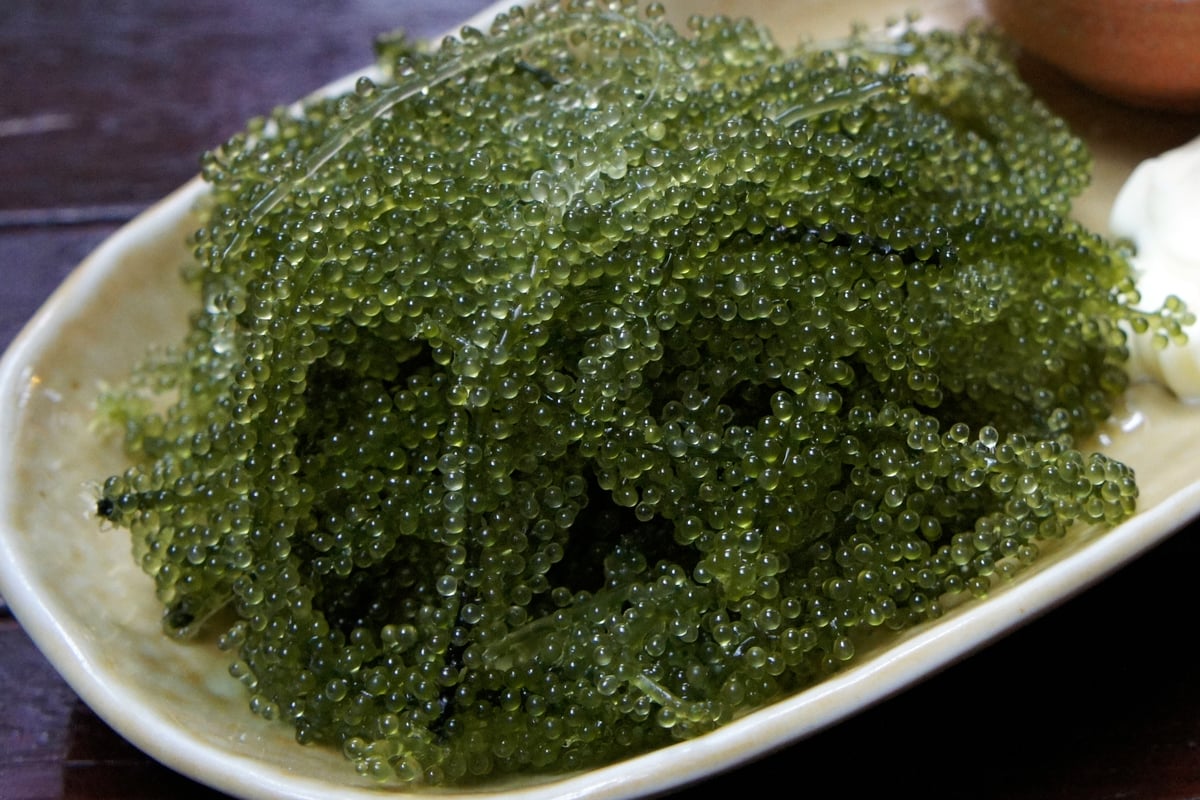
Umibudo (Sea Grapes)
Umibudo (Sea Grapes)
Umibudo (scientific name Caulerpa lentillifera) is a seaweed in which tiny green beads, about 1 to 2 millimeters across, cluster along a stem like a bunch of grapes — a signature Okinawan seafood prized for its popping texture and briny, ocean flavor. Around 1994, the Onna Village Fisheries Cooperative introduced land-based aquaculture techniques that had been under research at the Okinawa Prefectural Fisheries Experiment Station, achieving the prefecture's first full-scale success in farming umibudo. This breakthrough spurred the spread of farming across Okinawa's main island, and umibudo has since grown into one of Okinawa's leading farmed marine products, ranking after mozuku and kuruma prawns. It is enjoyed on its own with sanbaizu (a mixed vinegar sauce) or soy sauce, and also served over rice bowls or alongside sashimi, and it has won popularity among tourists under the nickname 'green caviar.' Because the beads shrivel once freshness is lost, careful temperature control after harvest is essential to preserving its quality and flavor.
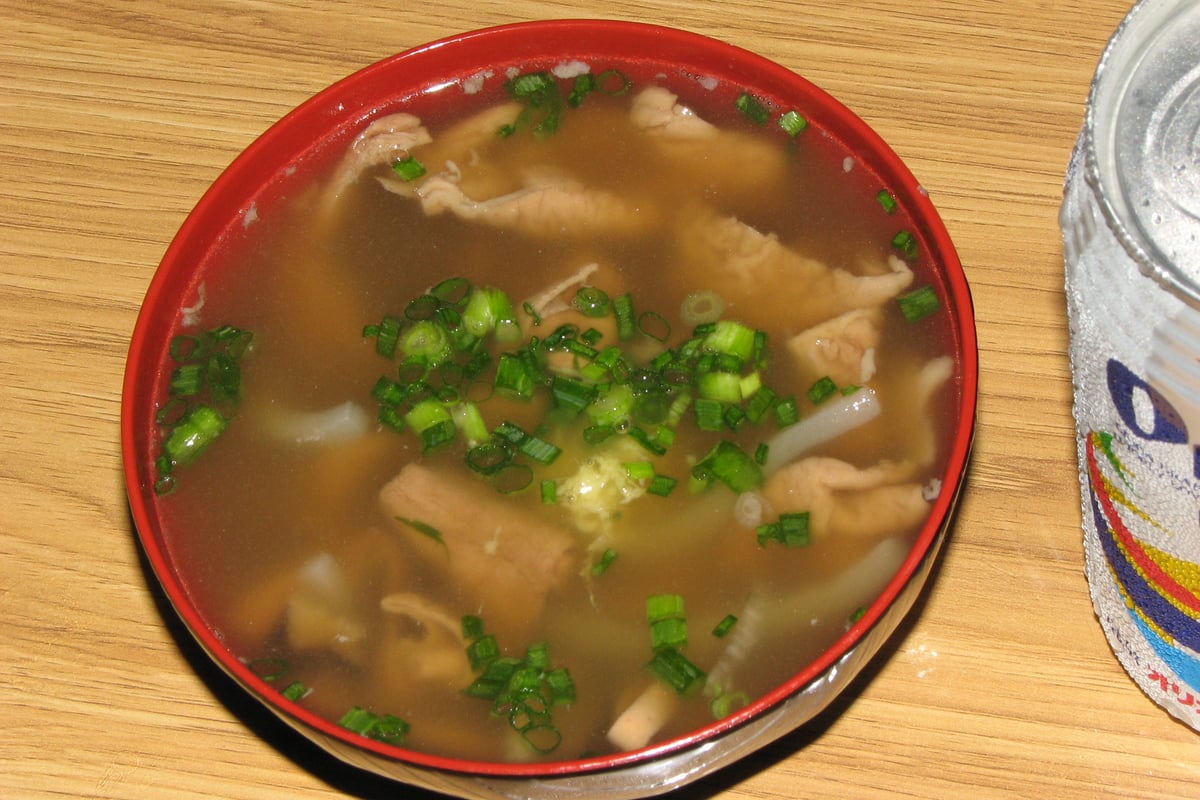
Nakami-jiru (Pork Offal Soup)
Nakami-jiru (Pork Offal Soup)
Nakami-jiru is a clear-broth local dish of Okinawa made with 'nakami' — pork offal such as the stomach, small intestine, and large intestine. Despite being an offal dish, it is notable for its refined flavor with no unpleasant odor: careful preparation removes excess fat and odor before the ingredients are simmered in a clear broth made from bonito and pork stock. Its roots lie in the court cuisine of the Ryukyu Kingdom, where it is said to have been served to entertain investiture envoys from China and officials from Satsuma. In old Okinawa, it was customary to slaughter a whole pig at the end of the year in preparation for the New Year, and nakami-jiru, made with fresh offal, became an indispensable feast dish for New Year celebrations, festive occasions, and memorial services — comparable to the mainland's zoni. It is still passed down today as a home-cooked dish, and is also enjoyed as 'nakami-soba,' in which nakami is used as a topping for Okinawa soba.
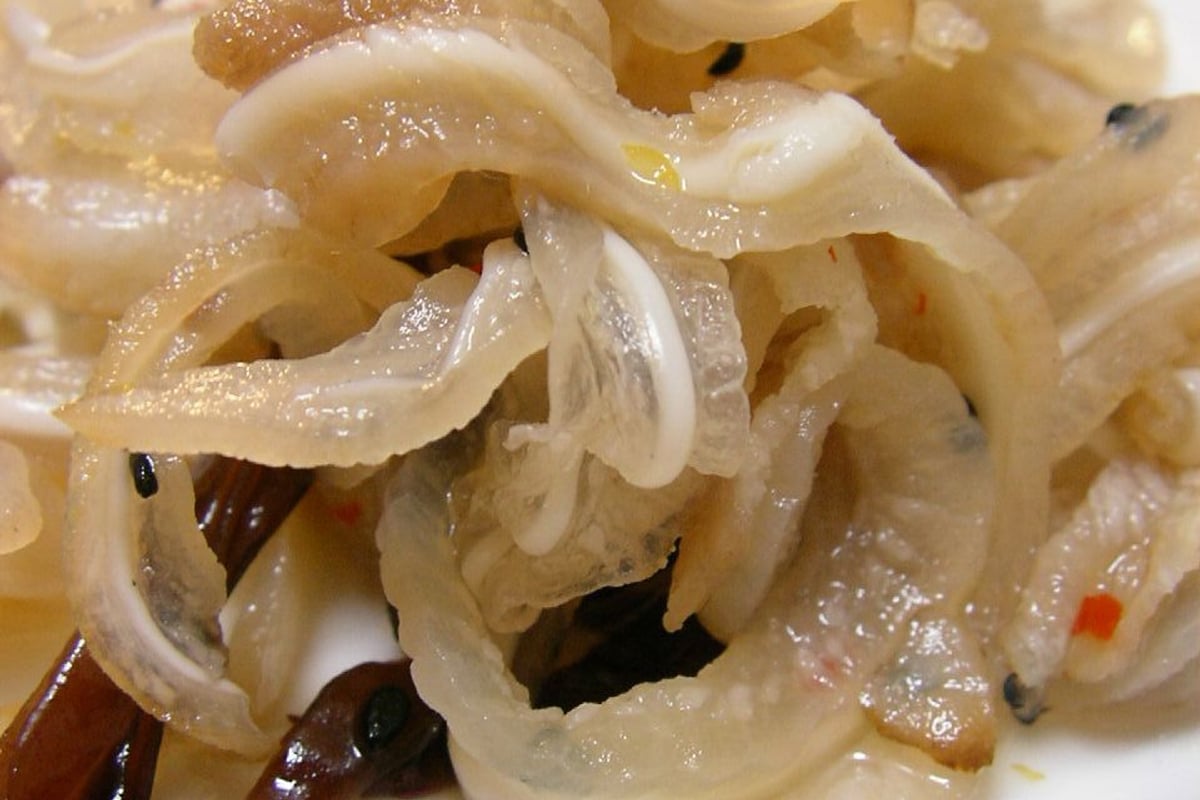
Mimigaa (Pig Ear)
Mimigaa (Pig Ear)
Mimigaa is an Okinawan regional dish made from pig ears, a delicacy prized for its distinctively crunchy, cartilage-like texture. The name is thought to combine "mimi," meaning ear, with "gaa," the Okinawan dialect word for skin. Since the ear consists almost entirely of cartilage and skin with very little muscle, it is low in fat and known as a source of high-quality collagen. The standard preparation is to singe off the hair over an open flame, boil or steam the ear, then slice it thinly and dress it with peanut sauce, ponzu, or vinegared miso. In Okinawa, there is a long-standing food culture of using every part of the pig, said to leave nothing to waste "except the squeal," and mimigaa is emblematic of that tradition, widely enjoyed as an izakaya menu item, a home side dish, and a drinking snack. Using a cut rarely found outside the prefecture, it is a uniquely Okinawan dish.
Model Course
A course exploring Ryukyu royal court craft and cuisine around Shuri Castle
Visit a Shuri-ori workshop, a textile once reserved for royalty and the aristocracy, and Ryukyu Bingata dyeing with its vivid stencil patterns, then finish with Nakami-jiru, a soup with roots in royal court cuisine - a course for encountering the refined culture of the Ryukyu Kingdom.
A course savoring pottery and Okinawa Soba along Tsuboya Yachimun Street
Stroll along Yachimun Street, lined with the kilns of Tsuboya-yaki pottery that traces its origins to a 1682 kiln consolidation, choose a piece of tableware, then enjoy Okinawa Soba and Rafute for lunch - a half-day course for exploring the streets of Naha on foot.
A course enjoying Ryukyu Glass and the bounty of the sea in Onna Village
Try glassblowing at a Ryukyu Glass workshop, whose bubble-filled glassware developed from postwar bottle recycling, then savor seaweed dishes such as Umibudo and Mozuku grown in the waters off Onna Village.
A course exploring Bashofu weaving and nature in Kunigami and Ogimi
Visit the Bashofu Hall in the Kijoka settlement and see the process of weaving cloth from the fiber of the ito-basho plant - a quiet course for savoring the Yanbaru forest and traditional craftsmanship.
A course enjoying Sanshin music and Okinawan cuisine on a Naha evening
Watch the craft of instrument-making at a Sanshin workshop, then enjoy izakaya favorites such as Sata Andagi, Chinsuko, and Mimigaa while listening to a live folk music performance.
A course exploring island textiles in Kumejima and Miyako
Compare Kumejima Tsumugi, dyed with island mud, and Miyako Jofu, woven from finely spun ramie fiber - two silk and hemp textiles shaped by different techniques on different islands - and sample the fermented delicacy Tofuyo to experience island food culture as well.
Events
Naha Otsunahiki (Great Tug-of-War) Festival
Early to mid October every year (October 10-12 in 2026) / National Route 58 Kumoji intersection, Kokusai-dori street, and Onoyama General Athletic Park (Naha City)
View details →Okinawa Zento Eisa Festival
The weekend after Obon every year (September 4-6 in 2026) / Koza Undo Park Athletic Stadium and other venues, Okinawa City
View details →Shuri Castle Revival Festival
Early November every year (November 1-3 for the 2025 edition) / Shurijo Castle Park and Kokusai-dori street, Naha City
View details →Tsuboya Yachimun Street Festival
Early November every year (November 1-2 in 2025) / Tsuboya and Yachimun Street, Naha City
View details →