Image: Wikimedia Commons
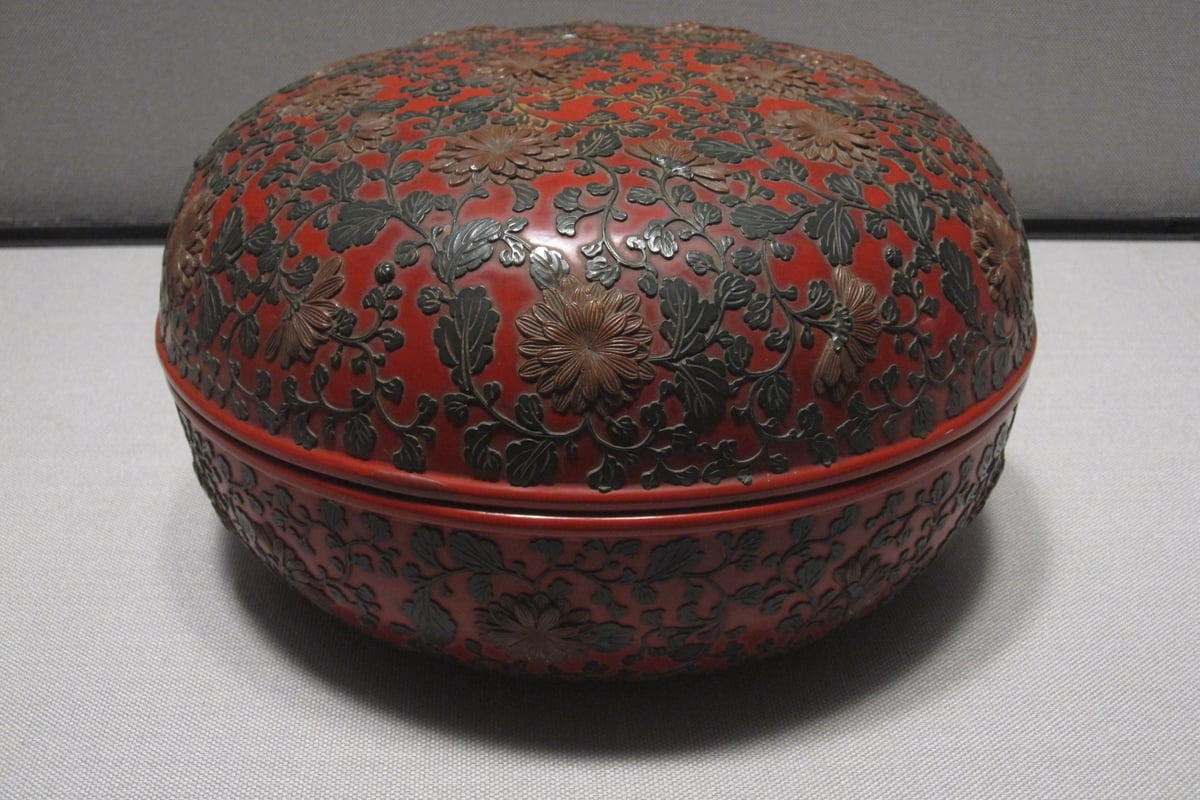
Ryukyu Shikki is a lacquer craft handed down mainly around Shuri in Naha City, Okinawa Prefecture. Lacquerware techniques are said to have been brought from China around the end of the 14th century, and production flourished during the Ryukyu Kingdom era of the 15th-16th centuries. The royal government established the Kaizuri Bugyosho office to manage and strengthen lacquerware production, introducing techniques from China and Satsuma while also organizing the cultivation of lacquer trees and the harvesting of lacquer as state policy. After the Satsuma invasion of 1609, Ryukyu Shikki came to be prized as a gift to the Tokugawa shogunate and various feudal lords, serving as a showcase of the Ryukyu Kingdom's technical skill abroad. Decorative techniques include chinkin, in which patterns are carved with a blade and fixed with gold; raden, in which mother-of-pearl or abalone shell is cut into patterns and inlaid; hakue, in which patterns are painted in lacquer and gold leaf applied; and tsuikin, a technique unique to Ryukyu. In tsuikin, pigment is kneaded into kurome lacquer until it forms a dough-like mass, which is rolled thin, cut into patterns, and applied, creating three-dimensional, showy decoration. The wooden bases are made from Okinawan trees such as deigo, banyan, and styrax, which shrink and crack little as they dry. It was designated a Traditional Craft of Okinawa Prefecture in 1974 and a Traditional Craft designated by the Minister of Economy, Trade and Industry in 1986.
Origin
The origin of Ryukyu Shikki is said to trace back to lacquerware techniques brought from China around the end of the 14th century. During the Ryukyu Kingdom era of the 15th-16th centuries, lacquer art techniques from China and Southeast Asia were actively adopted through trade, and lacquerware production directly under the royal government developed. In the 17th century, the Kaizuri Bugyosho office was established, strengthening the production and management system for lacquerware while also promoting the introduction of techniques from China and Satsuma.
History
After the Satsuma invasion of 1609, diplomatic relations with Japan became important for Ryukyu, and Ryukyu Shikki was presented as a gift to the Edo shogunate and various feudal families on occasions such as the succession of a new Tokugawa shogun. From around 1686, the royal government also organized the cultivation of lacquer trees and the harvesting of lacquer as policy, systematizing the process from raw material cultivation to production. The Ryukyu-original decorative technique tsuikin is said, according to one theory recorded in the kingdom's official history "Kyuyo," to have been created by Higa Josho in 1715. It was designated a Traditional Craft of Okinawa Prefecture in 1974 and a Traditional Craft designated by the Minister of Economy, Trade and Industry in 1986.
Features
Decorative techniques for Ryukyu Shikki include chinkin, in which patterns are carved and gold inlaid; raden, in which mother-of-pearl or abalone shell is cut into patterns and set into the lacquer surface to produce iridescent colors; hakue, in which patterns are painted in lacquer with gold leaf applied; and tsuikin, a technique unique to Ryukyu. The wooden bases use Okinawan trees such as deigo, banyan, and styrax, which shrink and crack little as they dry, and drying is controlled with a distinctive method called yakiurushi that takes advantage of the region's high-temperature, high-humidity climate.
Techniques
Tsuikin
A technique unique to Ryukyu in which pigment is kneaded into kurome lacquer until saturated, forming a dough-like mass that is rolled thin, cut into patterns, and applied to the lacquer surface to create three-dimensional patterns. One theory holds it was created in 1715.
Chinkin, raden, and hakue
Chinkin is a technique in which patterns carved with a blade are filled with gold using lacquer as an adhesive; raden involves cutting mother-of-pearl or abalone shell into patterns and inlaying them into the lacquer surface; hakue involves painting patterns in lacquer and applying gold leaf.
Materials Used
| Main Production Areas |
|
|---|
Artisans & Workshops
角萬漆器
A long-established Ryukyu Shikki shop said to have a roughly 600-year history dating back to the Ryukyu Kingdom era. It offers workshop tours and workshops, and also runs a cafe where visitors can enjoy dishes served on Ryukyu lacquerware.
Official site →How to Buy
- 角萬漆器(首里本店)
- A directly run shop operated by a long-established Ryukyu Shikki maker. It carries a wide range of items from everyday pieces such as chopsticks (from around 4,500 yen) and hand mirrors (from around 6,000 yen) to fine art pieces.Where to buy →PR
Hands-on Experiences
角萬漆器 堆錦ワークショップ
沖縄県那覇市首里山川町1-54-1
A workshop where visitors can experience tsuikin, a decorative technique unique to Okinawa. Choose from two small plates or one hand mirror; the session takes about two and a half hours. Workshop tours require a weekday reservation.
View details →