Craft Genre
Lacquerware
A cross-regional look at Lacquerware from across Japan.
Region(multiple selection allowed)
30 items

Aizu Lacquerware
Aizu-nuri
Aizu-nuri is lacquerware handed down mainly in Aizuwakamatsu City, Fukushima Prefecture, and is a Traditional Craft Designated by the Minister of Economy, Trade and Industry. It is said to have taken firm root in 1590 (Tensho 18), when Gamō Ujisato, who became lord of Aizu, encouraged lacquer craftsmanship to promote local industry, giving it a history spanning more than 400 years. A defining feature is that wood-base craftsmen, lacquerers, and maki-e artists each handle their own specialized process in a division of labor, and it is distinctively Aizu that lacquerers themselves are further divided between round pieces (such as bowls) and flat pieces (such as tiered boxes). During domain reforms in the mid-Edo period, new decorative techniques such as keshifun maki-e were introduced, and a wide range of techniques -- including mother-of-pearl inlay, lacquer painting, dry lacquer, and chinkin -- continue to be passed down today. The craft's appeal lies in its lavish decoration using auspicious motifs such as cranes, turtles, and pine-bamboo-plum, combined with the warm luster of hana-nuri (an unpolished final coat), and it is used to make a wide range of products from bowls and tiered boxes to contemporary accessories.
Koshu Inden (Lacquered Deerskin)
Koshu Inden
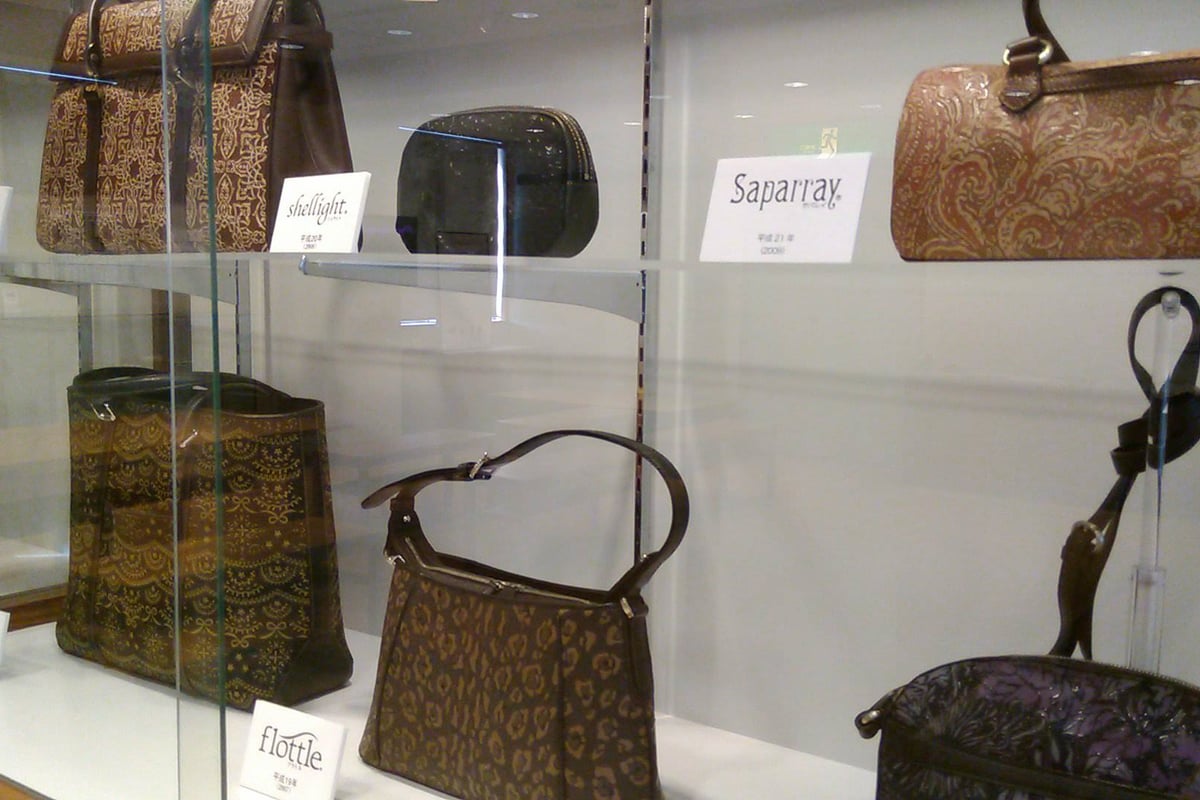
Koshu Inden is a deerskin craft made in Kofu City, Yamanashi Prefecture. Its defining feature is that a stencil is laid over tanned and dyed deerskin and urushi lacquer is rubbed in to apply patterns. The name 'inden' is said to come from decorative leather brought from India in the days of the Nanban trade (trade with the Portuguese and Spanish). Koshu Inden is said to have begun in the late Edo period, when Uehara Yushichi of Kofu devised a technique of applying lacquer to deerskin. In the Edo period inden was made in many places, but Koshu is the only place where its production methods survive today. Besides lacquer application, the techniques include 'fusube,' in which the leather is colored with the smoke of burning straw, and 'sarasa,' in which a different stencil is used for each color to create multicolored patterns. Deerskin is soft, strong and light, and the more it is used, the better it fits the hand. Over time the colors of the lacquer patterns grow clearer and take on a deep luster. In 1987 it became a Traditional Craft Designated by the Minister of Economy, Trade and Industry. On the second floor of Inden-ya's main store in Kofu City is the Inden Museum, which introduces the history and patterns of inden.
Wajima Lacquerware
Wajima-nuri
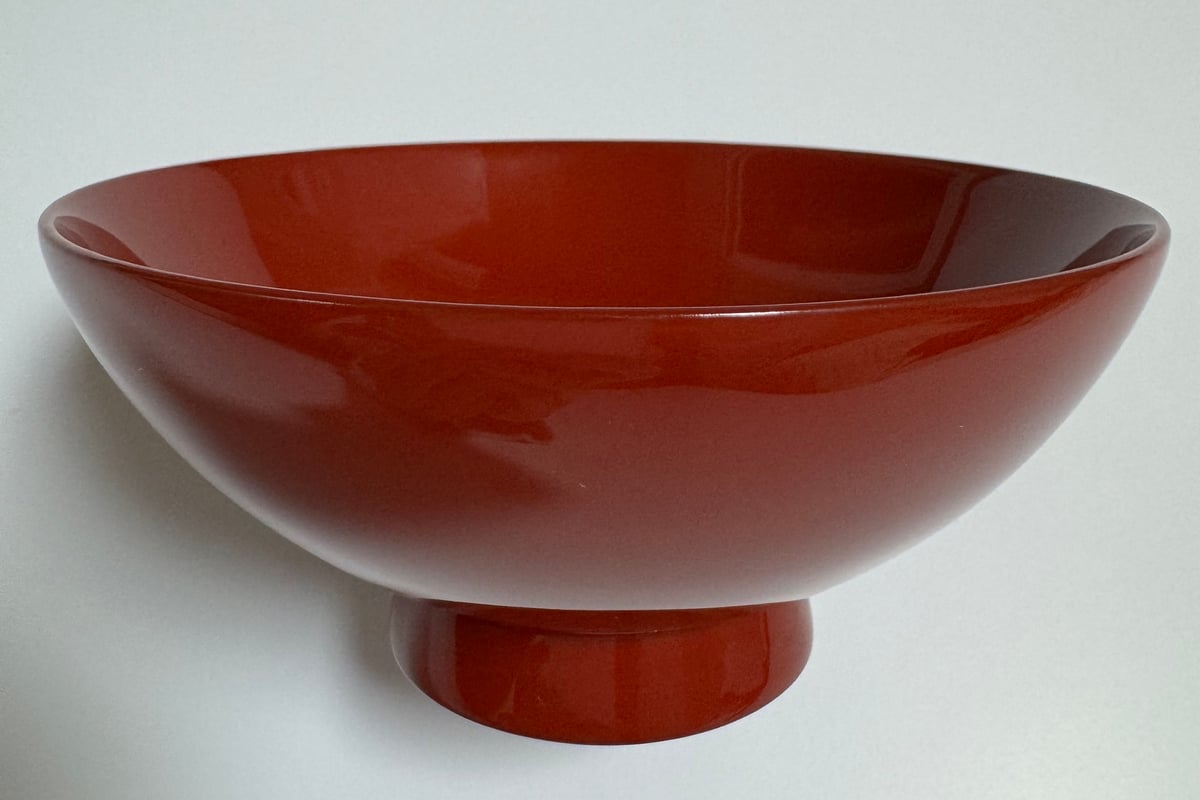
Wajima-nuri is lacquerware produced in Wajima City, Ishikawa Prefecture, representing Japan's finest lacquer craftsmanship, characterized by its sturdy undercoating and a wide range of decorative techniques. Although its origins remain uncertain, historical records confirm that lacquerers were already working in Wajima by 1476, and it is said that by 1582, in the Momoyama period, the region's distinctive undercoating material, 'jinoko,' was already in use. Through the 'nunokise' technique of reinforcing weak points in the wood base with hemp cloth and the 'hon-kataji' technique of building up the undercoat with jinoko — made from fired diatomaceous earth — mixed into lacquer, Wajima-nuri overcame the fragility that plagues ordinary lacquerware and developed into a remarkably sturdy craft. In the late Edo period, a door-to-door sales system called 'wanko' was established, expanding its market nationwide. The decorative technique of 'chinkin,' perfected in the 18th century, and 'maki-e,' introduced from Aizu in the early 19th century, also became synonymous with Wajima-nuri; it was designated a national Traditional Craft in 1975 and an Important Intangible Cultural Property in 1977. Made through more than 20 stages and over 100 individual steps in total, it is lacquerware that combines durability with splendor.
Kawatsura Lacquerware
Kawatsura Shikki
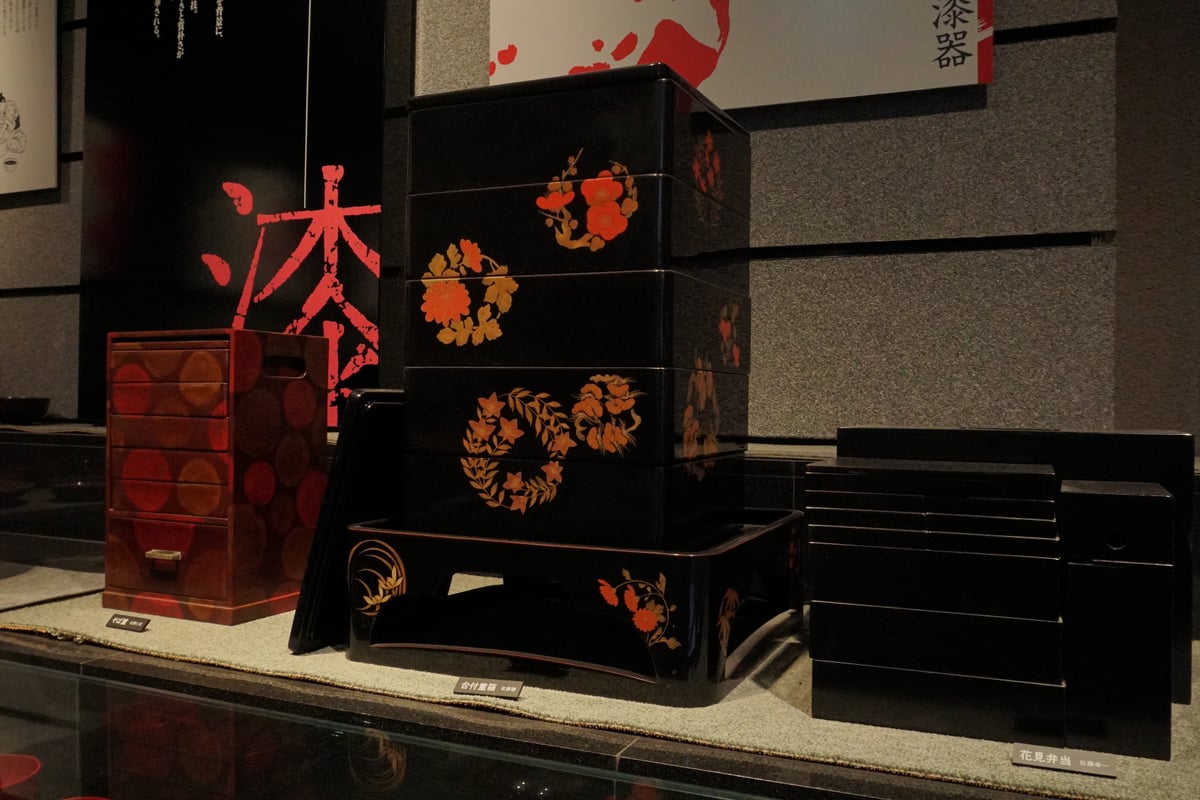
Kawatsura Shikki is lacquerware made in the area around Kawatsura, Yuzawa City, Akita Prefecture (formerly Inakawa Town), with a history said to span roughly 800 years. According to tradition, it began in 1193, when Lord Doku—younger brother of Onodera Shigemichi, a retainer of Minamoto no Yoritomo and lord of Inaniwa Castle—built a residence at Koshio-nojiri and had his retainers lacquer sword scabbards, bows, armor, and other weapons and equipment; the craft later developed into the making of everyday lacquered bowls. From the Genna era (around 1615) through the Genroku era in the early Edo period, roughly 26 households in and around Kawatsura village came to work as bowl makers, and in the latter half of the Edo period they obtained domain permission to expand their sales routes, producing a wide range of lacquerware including bowls, trays, and tiered boxes and adding decorative techniques such as chinkin and maki-e that helped establish the craft as an industry. Its defining features are the hananuri technique, in which the final coat of lacquer is left as brushed—without polishing or grinding afterward—and sturdy foundation work, making it a beloved everyday lacquerware valued for its practicality. It is a nationally designated Traditional Craft.
Kiso Lacquerware
Kiso Shikki (Kiso Lacquerware)
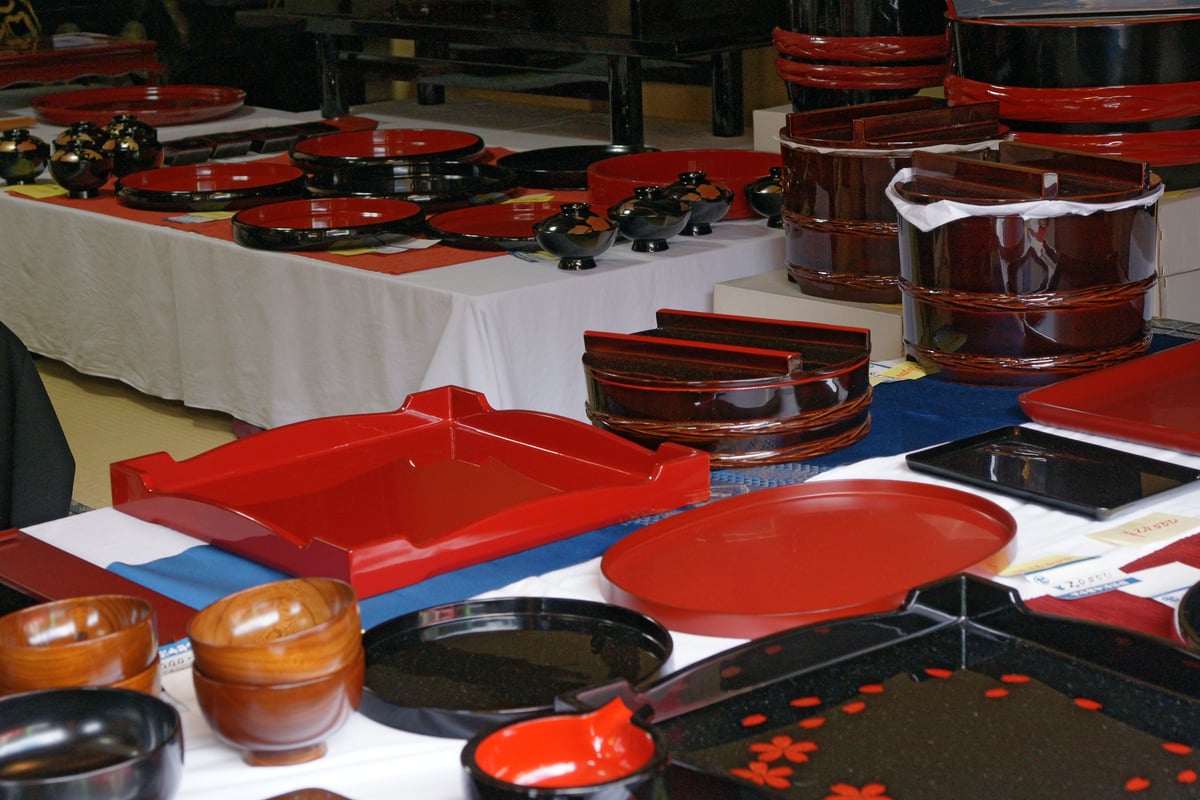
Kiso Lacquerware is lacquerware that has been made mainly in Kiso-Hirasawa and Narai in Shiojiri City, Nagano Prefecture. It is said to have begun in the early 17th century, when people applied urushi lacquer to plain woodwork made from the rich forest resources of the area, such as Kiso hinoki cypress, and sold it as souvenirs to travelers on the Nakasendo highway. Around the beginning of the Meiji period, a clay high in iron called sabitsuchi was found in Narai. Thanks to a groundwork technique in which this sabitsuchi is mixed into the lacquer, the area became renowned for sturdy lacquerware. The representative techniques are 'Kiso Shunkei,' which brings out the wood grain; 'Kiso Tsuishu,' which creates mottled patterns; and 'Nuriwake Roiro-nuri,' in which geometric patterns are painted with colored lacquers. In 1975 it became a Traditional Craft Designated by the Minister of Economy, Trade and Industry. The townscape of Kiso-Hirasawa has been selected as a national Important Preservation District for Groups of Traditional Buildings as a 'lacquer craftsmen's town.'
Naruko Shikki
Naruko Shikki
Naruko Shikki is lacquerware made in the Naruko Onsen hot spring area of Osaki City, Miyagi Prefecture, said to have been founded around the Kan'ei era (1624-1644) in the early Edo period. Its foundation was laid when Date Toshichika, the lord of the Iwadeyama domain, sent lacquer and maki-e craftsmen to Kyoto to study, and it developed as a souvenir for visitors taking the hot spring cure. It was designated a Traditional Craft by the Governor of Miyagi Prefecture on December 1, 1982, and a Traditional Craft designated by the Minister of Economy, Trade and Industry (METI) on May 20, 1991. Its greatest features are two lacquering techniques: Kijiro-nuri (木地呂塗), which brings out the beautiful wood grain beneath a translucent amber-colored lacquer, and Ryumon-nuri (竜文塗), which uses an ink-marbling technique to create fantastical patterns. Wood such as zelkova and Japanese horse chestnut is turned on a lathe, and the piece is finished through a painstaking process from undercoating to final lacquering, so the grain and coloring grow richer with use. Many pieces are everyday items such as soup bowls, tiered boxes, and trays, making Naruko Shikki a practical lacquerware rooted in the daily life of a hot spring town also known as the home of Naruko kokeshi.
Echizen Shikki (Echizen Lacquerware)
Echizen Shikki
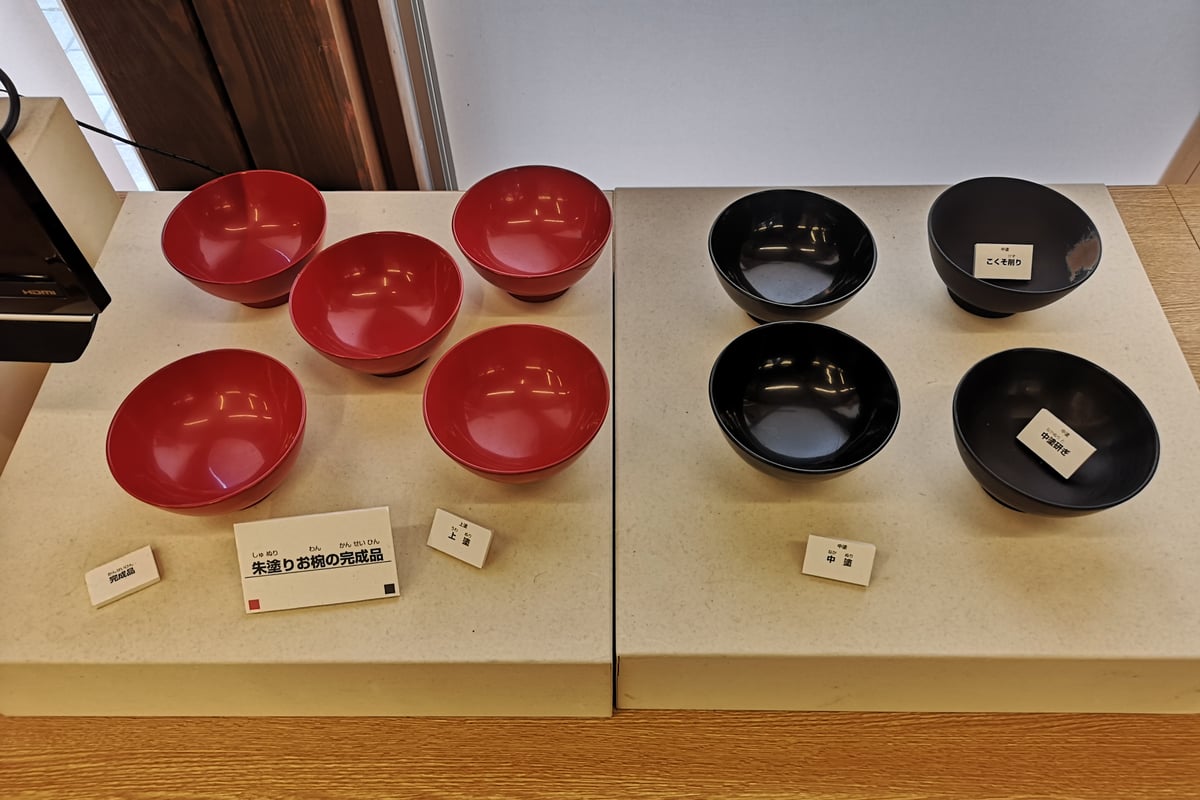
Echizen Shikki is lacquerware made mainly in the Kawada district of Sabae City, Fukui Prefecture. It is said to have begun about 1,500 years ago, when the future Emperor Keitai, then still a prince, ordered a lacquerer in the village of Katayama to recoat his damaged crown. The lacquerer presented the crown together with a black-lacquered bowl, and the prince, impressed by the fine workmanship, encouraged the making of lacquerware. It is characterized by a glossy, durable finish created by carefully applying layer upon layer of lacquer over a sturdy base. At the end of the Edo period, the area adopted maki-e techniques from Kyoto and chinkin techniques from Wajima. From the Meiji period onward, it expanded sales of commercial lacquerware for inns and similar businesses, and today it produces most of the lacquerware used in the restaurant and food service industry. In 1975 it became a Traditional Craft Designated by the Minister of Economy, Trade and Industry.
Ryukyu Shikki
Ryukyu Shikki
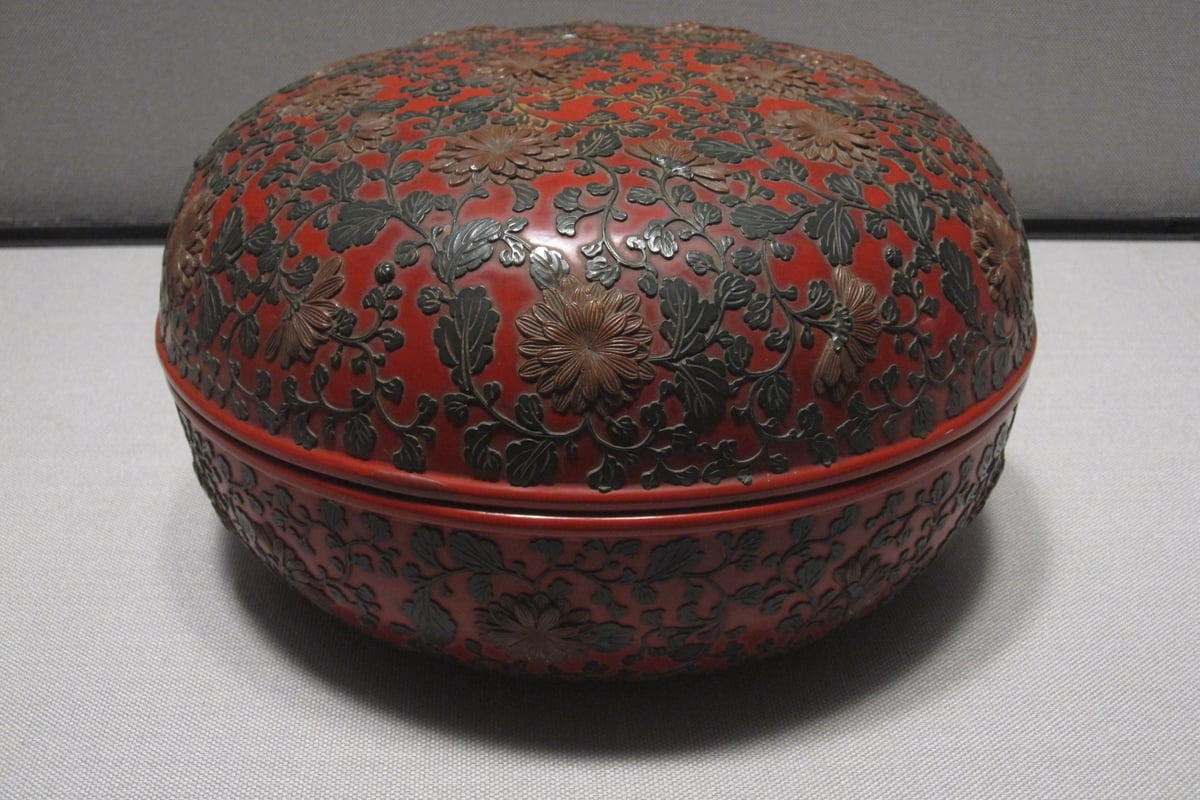
Ryukyu Shikki is a lacquer craft handed down mainly around Shuri in Naha City, Okinawa Prefecture. Lacquerware techniques are said to have been brought from China around the end of the 14th century, and production flourished during the Ryukyu Kingdom era of the 15th-16th centuries. The royal government established the Kaizuri Bugyosho office to manage and strengthen lacquerware production, introducing techniques from China and Satsuma while also organizing the cultivation of lacquer trees and the harvesting of lacquer as state policy. After the Satsuma invasion of 1609, Ryukyu Shikki came to be prized as a gift to the Tokugawa shogunate and various feudal lords, serving as a showcase of the Ryukyu Kingdom's technical skill abroad. Decorative techniques include chinkin, in which patterns are carved with a blade and fixed with gold; raden, in which mother-of-pearl or abalone shell is cut into patterns and inlaid; hakue, in which patterns are painted in lacquer and gold leaf applied; and tsuikin, a technique unique to Ryukyu. In tsuikin, pigment is kneaded into kurome lacquer until it forms a dough-like mass, which is rolled thin, cut into patterns, and applied, creating three-dimensional, showy decoration. The wooden bases are made from Okinawan trees such as deigo, banyan, and styrax, which shrink and crack little as they dry. It was designated a Traditional Craft of Okinawa Prefecture in 1974 and a Traditional Craft designated by the Minister of Economy, Trade and Industry in 1986.
Suruga Lacquerware
Suruga Shikki (Suruga Lacquerware)
Suruga Lacquerware (Suruga Shikki) is lacquerware made in Shizuoka City. In the Kan'ei era of the Edo period, skilled lacquerers gathered from all over Japan to build Shizuoka Sengen Shrine. Lacquerware making is said to have taken root because the craftspeople who stayed in Shizuoka after the construction passed on their skills. Its greatest characteristic is kawari-nuri (decorative lacquer finishes), which applies the basic techniques of lacquering and uses a variety of materials and methods to express distinctive patterns and textures. Kongo Ishime-nuri, devised in the Taisho period, is a technique that uses river sand in the groundwork, and it has been designated a Shizuoka Prefecture Intangible Cultural Property. From the end of the Edo period through the Meiji period, the lacquerware was exhibited at world's fairs and won recognition overseas, and the area eventually became a major production center of export lacquerware. Today it is designated a Shizuoka Prefecture Designated Local Traditional Craft, and in 2007 it became the first regional collective trademark registered in Shizuoka City.
Kyo-shikki (Kyoto Lacquerware)
Kyo-shikki
Kyo-shikki is a Kyoto lacquer craft nurtured alongside the court culture of Heian-kyo, characterized by "hon-katachi," a meticulous undercoating technique of applying lacquer in many layers to thin wooden bases, and by the beauty of maki-e, in which designs are drawn with gold and silver powder. Its origins are said to trace back to the relocation of the capital to Heian-kyo in 794; the "makkinru" technique born in the Nara period was passed down in the Heian period and perfected as togidashi maki-e and hira maki-e. As tea ceremony culture spread, demand for tea utensils also grew, and refined designs were honed to meet the requests of court nobles, temples and shrines, and tea masters. It received national Traditional Craft designation in 1976, and is highly regarded for combining a profound, elegant appeal with the qualities of "wabi" and "sabi" not found in lacquerware from other production areas. A single vessel passes through many processes, from base-wood making to undercoating, final coating, and decoration, before completion.
Murakami Kibori Tsuishu (carved lacquerware)
Murakami Kibori Tsuishu
Murakami Kibori Tsuishu is lacquerware made in Murakami City, Niigata Prefecture. Delicate carving is applied to a wooden base of Japanese bigleaf magnolia (ho), Japanese horse chestnut (tochi), katsura, or similar woods, and natural lacquer is then applied over it again and again to finish it. Tsuishu (carved red lacquer) is originally a technique of Chinese origin in which patterns are carved into thickly built-up layers of red lacquer, but in Murakami the distinctive feature is that the wooden base itself is carved before the lacquer is applied. Its origin is said to date back about 600 years, when lacquer craftsmen who came from Kyoto to build temples passed on the techniques. In the Edo period, samurai of the Murakami domain learned carving from master craftsmen, and with the encouragement of successive domain lords, the craft spread from the samurai to the townspeople. Representative tsuishu is characterized by a calm surface texture achieved by giving the red top coat a matte finish, and the red grows more vivid with the passing years. Today, six techniques, including tsuishu, tsuikoku, and shudame-nuri, are collectively called Murakami Kibori Tsuishu. It was designated a Niigata Prefecture Intangible Cultural Property in 1955 and a Traditional Craft Designated by the Minister of Economy, Trade and Industry in February 1976.
Suruga Lacquered Geta
Suruga Nuri Geta (Suruga Lacquered Geta Clogs)
Suruga Lacquered Geta (Suruga Nuri Geta) are lacquered geta clogs made in Shizuoka City. They are characterized by lacquer applied to the wooden base and by gorgeous decoration with maki-e, carving and other techniques. They are said to have begun in the Meiji period, when the geta maker 本間久次郎 conceived of high-end lacquered geta by applying lacquer to geta, which until then had been inexpensive everyday items. Mass production was pursued using light Abe cedar (Abe-sugi), and once the geta were shipped through wholesalers they became a nationwide fashion. In the Taisho period, craftspeople from the struggling export lacquerware industry turned to making lacquered geta. The kawari-nuri (decorative lacquer finishes) techniques of Suruga Lacquerware were applied to geta as well, and the area grew into such a production center that people said, 'For high-end lacquered geta, it has to be Shizuoka.' Today they are designated a Shizuoka Prefecture Designated Local Traditional Craft, and craftspeople in the city carry on the traditional techniques.
Yamanaka Lacquerware
Yamanaka-shikki
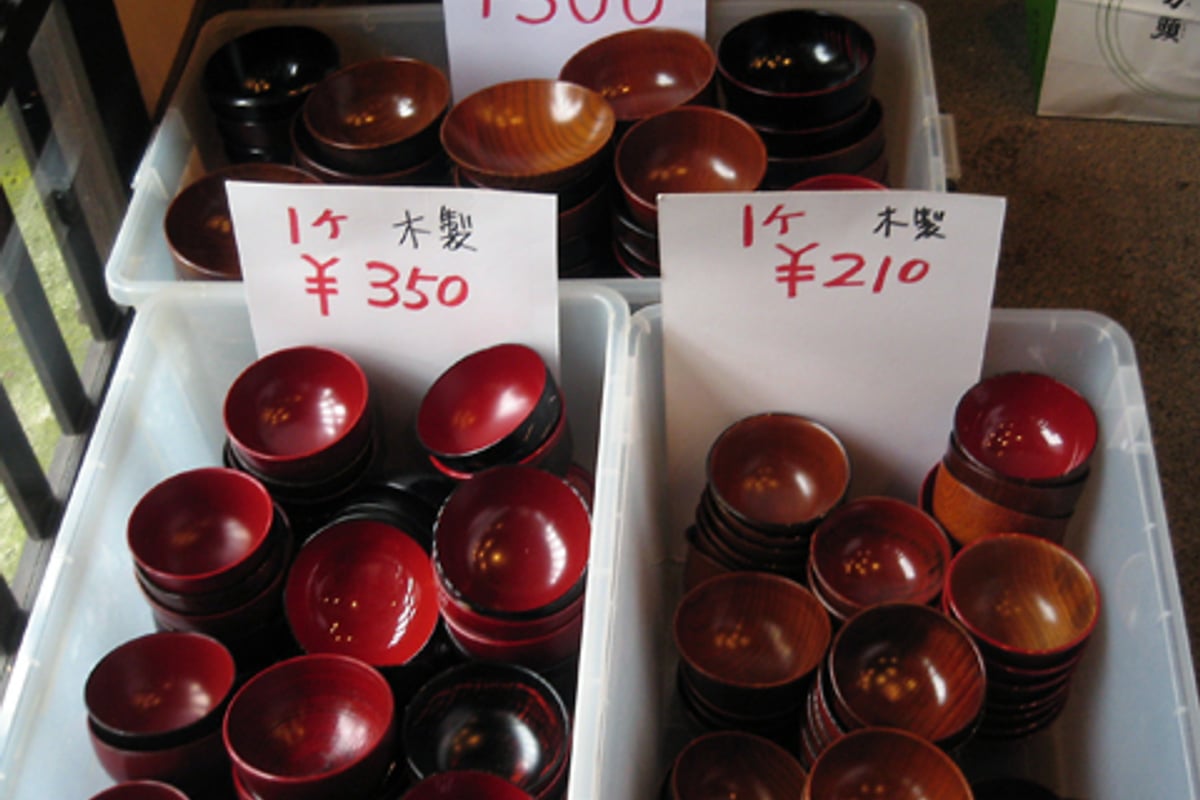
Yamanaka Lacquerware is produced mainly in the Yamanaka Onsen district of Kaga City, Ishikawa Prefecture, and is known for its exceptional wood-turning skill, earning it the nickname 'Yamanaka of the woodwork.' It is said to have begun in the Azuchi-Momoyama period, when a group of wood-turning craftsmen who traveled from mountain to mountain making bowls and trays on lathes settled in the Masago area upstream of Yamanaka Onsen and began turning wood there. During the Edo period, lacquering and maki-e techniques were introduced from Aizu, Kyoto, and Kanazawa, adding decorative turning and vermilion-tinted lacquering techniques unique to the region. Its greatest characteristic is its lathe-turning craftsmanship: 'tategi-dori,' cutting wood along the grain to produce a beautiful, warp-resistant base, along with intricate decorative turning techniques unmatched elsewhere, such as 'sensuji,' carving a dozen or more fine lines into a width of just three millimeters, and 'usubiki,' turning wood so thin it becomes translucent. In the field of turned woodwork, its craftsmen are considered top-class nationwide in both skill and numbers, and it was designated a national Traditional Craft in 1975.
Niigata Shikki (lacquerware)
Niigata Shikki
Niigata Shikki is lacquerware made in Niigata City. It is said to have begun in the Genna era (1615–1624) at the start of the Edo period, when Shunkei-nuri from Akita (Noshiro) was introduced. In the 15th year of Kan'ei (1638), an area where lacquerware was sold exclusively, called 'wandana,' was established in what is now Furumachi 7-bancho. The port town of Niigata was a port of call for the Kitamaebune trading ships, a place where goods and culture gathered, and a variety of lacquering techniques from around the country were brought here. For this reason, Niigata Shikki is called 'a treasure trove of kawari-nuri (decorative lacquer finishes),' and several dozen types of finishes are said to have been handed down. Among them, 'take-nuri (bamboo-imitation lacquer),' so realistic it can be mistaken for real bamboo, is known as a rare finish not seen in other production areas. In March 2003, five techniques, hana-nuri, ishime-nuri, nishiki-nuri, isogusa-nuri, and take-nuri, became a Traditional Craft Designated by the Minister of Economy, Trade and Industry. Chopsticks, trays, bowls, business card holders, and other items remain popular today as tools for everyday life.
Hida Shunkei-nuri
Hida Shunkei-nuri
Hida Shunkei-nuri is a lacquerware tradition from Takayama City, Gifu Prefecture, distinguished by its use of transparent lacquer (sukiurushi) rather than black or vermilion lacquer, which lets the natural beauty of the wood grain show through. Its origins are said to trace back to the early Edo period, during the Keicho era (1596-1615), when the fine grain of sawara (Japanese false cypress) offcuts discovered during the construction of a shrine or temple in the Takayama castle town was fashioned into a tray finished with transparent lacquer, a piece said to have been presented to the imperial court and the shogunate, marking the beginning of Hida's lacquerware tradition. Since then, kijishi (woodturners) who shape the wooden base and nushi (lacquerers) who apply the lacquer have refined their crafts through a division of labor, developing everyday items such as trays, tiered boxes, and confectionery containers. On February 17, 1975 (Showa 50), it was designated a Traditional Craft by the Minister of Economy, Trade and Industry, and production continues today in kilns and workshops throughout Takayama City. Each lacquerer's individual touch gives rise to distinct hues and lustre, so that no two pieces of the same shape ever look exactly alike.
Iiyama Buddhist Altars
Iiyama Butsudan (Iiyama Buddhist Altars)
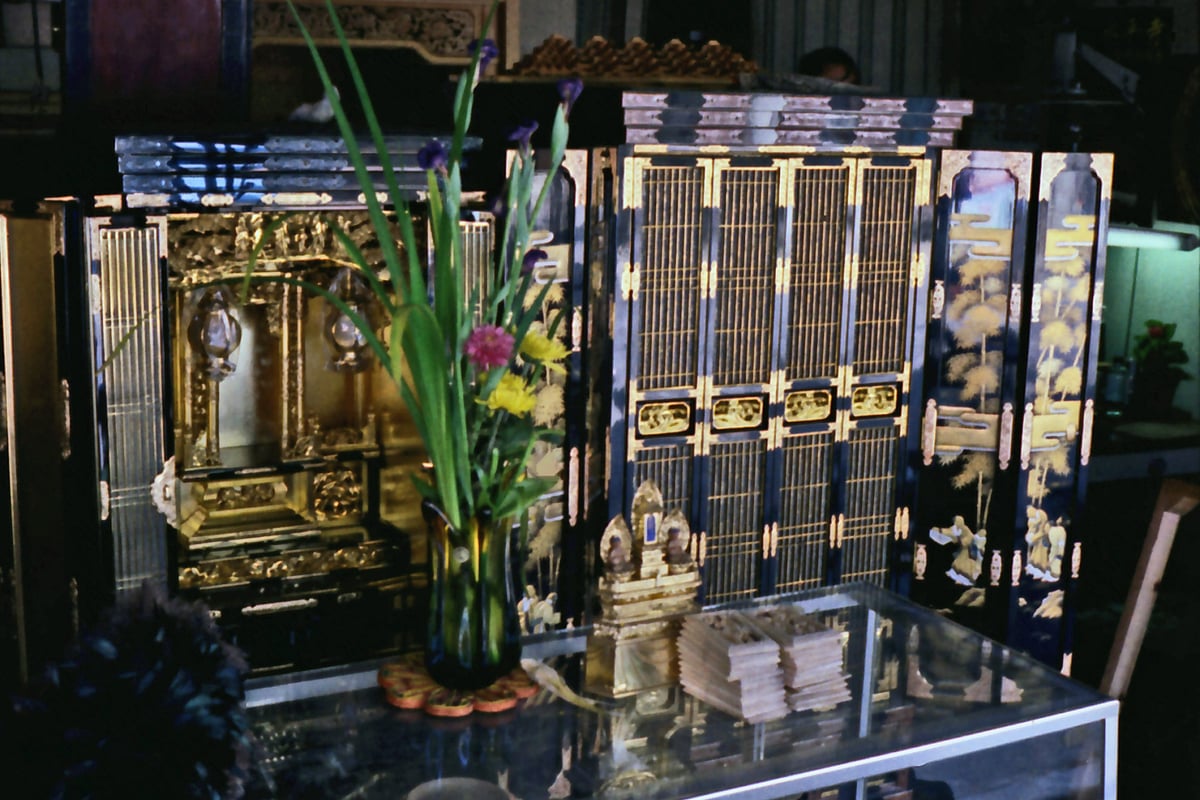
Iiyama Buddhist Altars are gilded Buddhist altars (kinbutsudan) made in Iiyama City, Nagano Prefecture. They are produced mainly in the Atago (愛宕町) area in the north of the city, and everything from making the parts to assembly and repair is carried out within the area. Jodo Shinshu Buddhism reached Iiyama from the Hokuriku region in the Muromachi period, and the city is known as a place of deep faith. Because of its townscape lined with many temples, it has also been called 'the Little Kyoto of the Snow Country.' The craft is said to have begun in Genroku 2 (1689), when 寺瀬重高, who had come from Koshu, made plain unlacquered altars. Its distinctive features are the technique of assembling the kuden (the palace-like structure inside the altar) with 'hijiki kumimono' (bracket assemblies), and the 'yuminageshi,' a lintel curved like a bow so that the kuden can be seen clearly. Through 'sentaku' (literally 'washing'), in which the altar is taken apart, washed and relacquered, it can be passed down and used over many generations. In 1975 it became a Traditional Craft Designated by the Minister of Economy, Trade and Industry. The street in Atago, lined with gangi (covered walkways that keep off the snow), is fondly known as 'Butsudan-dori' (Buddhist Altar Street), where altar shops stand side by side.
Ise Shunkei
Ise Shunkei (Ise Lacquerware)
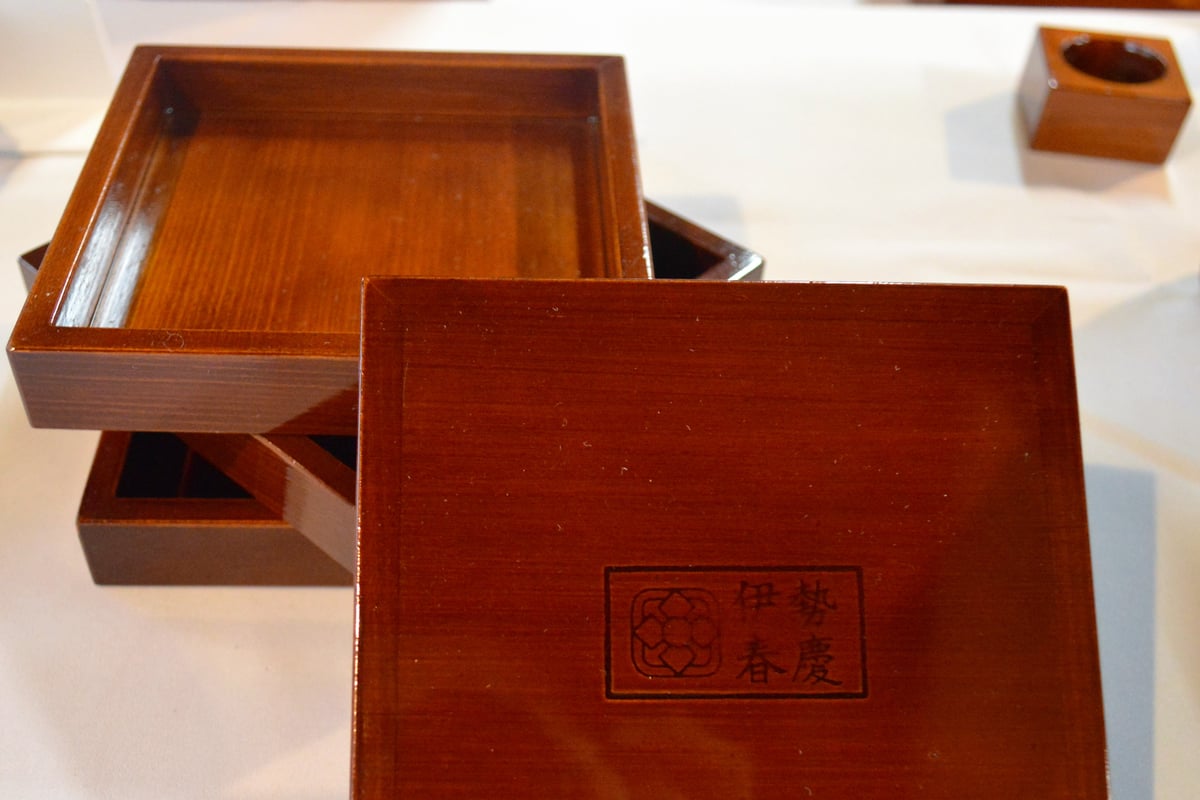
Ise Shunkei is lacquerware that has long been made in Ise City, Mie Prefecture. It is also called Ise lacquerware (伊勢漆器) or Yamada Shunkei (山田春慶). Box-shaped wares made from hinoki cypress boards are undercoated with bengara (red iron oxide pigment) and kakishibu (persimmon tannin), then finished with transparent lacquer. Its charm lies in the grain of the hinoki showing through a reddish-brown ground. Its origins are unclear, but it is said to have been started in the Muromachi period by craftsmen involved in building the Ise Grand Shrine, using leftover timber. In the Edo period it was traded as a souvenir of the Ise pilgrimage (Oise-mairi) and shipped to various regions from the wholesalers of Kawasaki. In the Meiji period it was described as 'crude but inexpensive and sturdy,' and was used throughout Japan for everyday vessels such as tiered boxes (jubako) and meal trays. However, war and the changes in postwar lifestyles brought production to a halt for a time. In 1994 (Heisei 6) it became a Mie Prefecture Designated Traditional Craft, and the Ise Shunkei Association (伊勢春慶の会), founded in 2004 (Heisei 16), is leading its revival.
Wakasa-nuri (Wakasa Lacquerware)
Wakasa-nuri
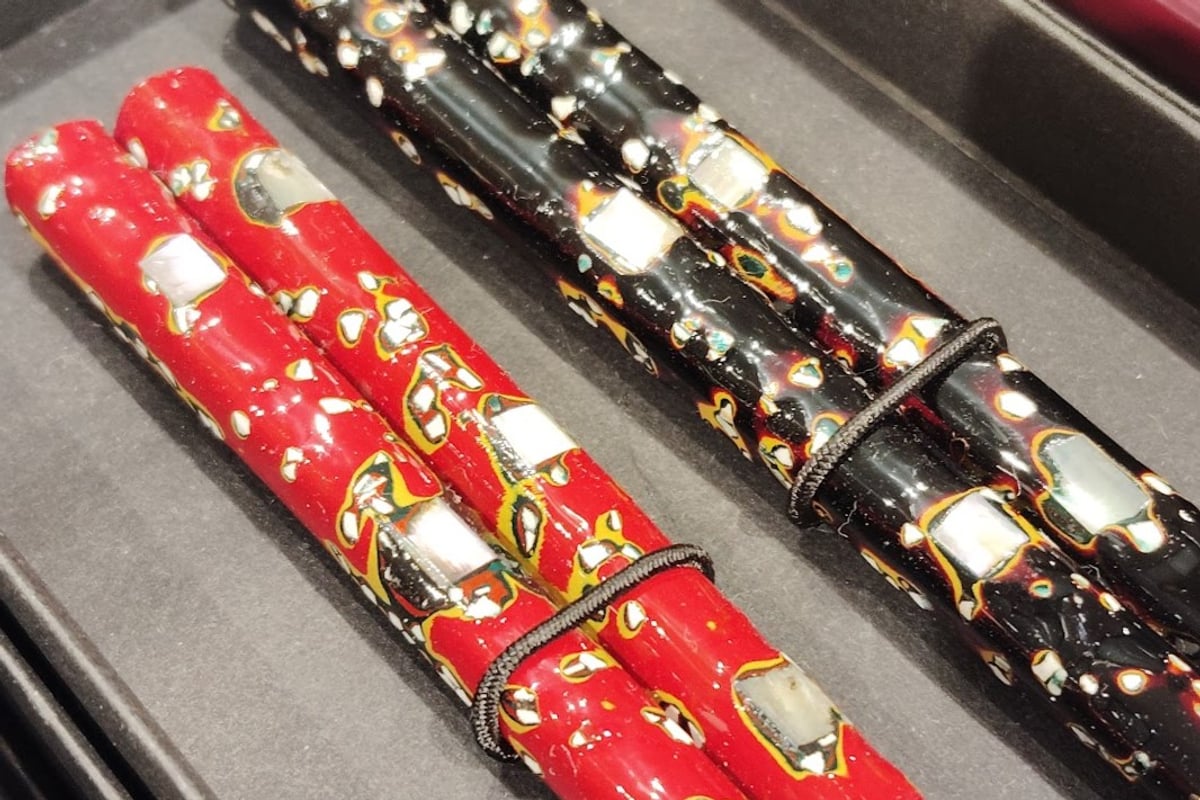
Wakasa-nuri is lacquerware made in Obama City, Fukui Prefecture. Its defining feature is togidashi ('polishing out'): patterns are created with eggshells, abalone and other seashells, pine needles and similar materials, colored lacquer is applied in many layers, and the surface is then ground with whetstones to bring the patterns to the surface. The patterns are said to evoke the seabed of Wakasa Bay, and it was once also called 'Hoseki-nuri' (jewel lacquer). It is said to have originated in the early Edo period, when Matsuura Sanjuro, the official lacquerer of the Obama Domain, took inspiration from Chinese lacquerware to devise a lacquer finish that stylized the appearance of the seabed. The ruling Sakai family generously protected Wakasa-nuri, and more than 200 lacquering methods are said to have been developed from the mid to late Edo period. In 1978 (Showa 53), it was designated a Traditional Craft Designated by the Minister of Economy, Trade and Industry. Today its representative product is lacquered chopsticks, and Obama City is said to account for more than 80% of the lacquered chopsticks produced in Japan. At Hashi no Furusato-kan WAKASA and Wakasa Kobo in the city, visitors can try togidashi polishing on chopsticks.
Tamamushi-nuri lacquerware
Tamamushi-nuri
Tamamushi-nuri is a relatively new lacquer art born in Sendai. It was devised and patented in 1932 (Showa 7) by lacquer artist Koiwa Shun at the 'National Craft Guidance Institute,' established in Sendai to promote industry and develop export craft products in the Tohoku region. A wooden or dry-lacquer base is first coated with a lacquer undercoat, then covered entirely with silver powder, over which a special semi-transparent 'tamamushi lacquer' tinted with color is applied in many layers and carefully polished to completion. The name comes from its lustrous shine, which subtly changes color depending on the viewing angle and how light falls on it, resembling the wings of the jewel beetle (tamamushi). Since Tohoku Kogei Seisakusho, founded in 1933 with Saura Motojirō as its first president, obtained the rights to practice the patent in 1939, it has continued production as a craft representative of Sendai. A wide range of products are made, from vases and trays to accessories and Western tableware, and it was designated a Traditional Craft designated by the Governor of Miyagi Prefecture in 1985 (Showa 60). Because its history as a traditional craft is relatively short, another appeal is that many of its designs suit contemporary lifestyles.
Shibayama Zaiku
Shibayama Zaiku
Shibayama Zaiku (Shibayama-zogan) is an inlay technique in which shell, coral, tortoiseshell, jade, ivory, and other materials are carved into the shapes of flowers, birds, and figures and set into the surface of lacquered objects to create raised, three-dimensional designs. It is said to have been devised in 1775 by Onogi Senzo, born in Shibayama village in Kazusa Province (present-day Shibayama Town, Chiba Prefecture); Senzo later moved to Edo, took the name Shibayama Senzo, and spread the technique widely. After the opening of Japan at the end of the shogunate, craftsmen gathered in Yokohama, which flourished as a treaty port, and the technique won high praise from Western merchants, developing its own distinct style known as ‘Yokohama Shibayama-nuri.’ It even won a prize at the 1893 World's Columbian Exposition in Chicago, gaining international recognition. However, the Great Kanto Earthquake and the Second World War took a heavy toll, and the number of craftsmen fell sharply — from around 100 at its peak to, as of 2017, reportedly just a single craftsman capable of producing large-scale works. In Shibayama Town, the birthplace of the craft, a ‘Shibayama-zogan plaque’ made in 1805 survives and is carefully preserved as a cultural property of the town.
Awano Shunkei-nuri
Awano Shunkei-nuri
Awano Shunkei-nuri is a lacquerware tradition passed down in Awano, Shirosato Town, Higashi-Ibaraki District, Ibaraki Prefecture. It is said to have begun in 1489 (Entoku 1), in the Muromachi period, when Inagawa Yamashiro-no-kami Minamoto no Yoshiaki devised a way of lacquering using lacquer, hinoki cypress, and plum wood native to the area. In the Edo period, Okobei, the 8th-generation head of the Inagawa family, competed in skill against a lacquer craftsman from Kishu before Tokugawa Mitsukuni, the 2nd lord of the Mito Domain, and the superior finish of his work earned the family the position of official lacquerware supplier to the Mito Domain. The technique involves tinting the wooden base yellow or red and then applying repeated coats of transparent lacquer (sukiurushi) over it so the wood grain shows through, and it is counted, alongside Hida Shunkei-nuri of Gifu and Noshiro Shunkei-nuri of Akita, as one of Japan's three great Shunkei-nuri lacquerware traditions. It was designated an Intangible Cultural Property of Ibaraki Prefecture on January 25, 1989 (Heisei 1), but today only a single workshop, that of the Inagawa family, carries on the tradition.
Gobara Shikki (Gobara lacquerware)
Gobara Shikki
Gobara Shikki is an everyday lacquerware tradition from Hiruzen in Maniwa City, Okayama Prefecture (formerly the Gobara district). Its origins are said to date back to the Meitoku era (around 1390-1400), and it is known for a production method found nowhere else in Japan's lacquerware regions: chestnut wood native to the Hiruzen highlands is turned on a lathe while still freshly felled, or 'green,' rather than dried first. Bowls and trays finished with natural lacquer such as Bicchu-urushi, which brings out the beauty of the wood grain, have long served as everyday household tools rather than decorative objects. Production peaked in the late Taisho and early Showa periods but was interrupted around the time of World War II. A local revival effort began in 1989, and in 1996 Gobara Shikki was designated an Okayama Prefecture Important Intangible Folk Cultural Property. Today, the tradition of green-wood lathe turning, spanning more than 600 years, is carried on at the Gobara Shikki Museum ('Gobara Shikki no Yakata').
Hidehira-nuri
Hidehira-nuri
Hidehira-nuri is lacquerware produced mainly in Hiraizumi (town), Iwate Prefecture. Its origins are said to trace back to the late Heian period, when Fujiwara no Hidehira, the third head of the Oshu Fujiwara clan, invited craftspeople from Kyoto and had them make vessels using lacquer and gold, both specialties of Hiraizumi. The Konjikido Golden Hall of Chuson-ji Temple employs a range of lacquer techniques - lacquer, gold leaf, maki-e, and raden (mother-of-pearl inlay) - showing that Hiraizumi possessed highly advanced lacquer craftsmanship during the Heian period. The most distinctive feature is the 'Hidehira pattern,' in which diamond-shaped pieces of gold leaf are applied and then floral motifs are painted over them in lacquer; a design combining the cloud motif known as 'Genji-gumo' with diamond shapes, called 'yusoku-hishi-mon,' is often used on bowls and tiered boxes. This rustic yet gold-gilded, festive design remains a style unique to this region, unlike lacquerware from other production areas, and continues to be passed down to this day.
Joboji-nuri
Joboji-nuri
Joboji-nuri is practical, everyday lacquerware crafted mainly in Joboji, Ninohe City, Iwate Prefecture. Its origins are traced to 728 CE (the 5th year of Jinki), when the monk Gyoki founded Tendai-ji Temple in the area, and monks dispatched from the capital brought lacquer craftsmanship with them to make their own everyday utensils. Plain, understated vessels with minimal decoration became known as 'Oyama-goki,' and the craft spread as a product of the Nanbu domain during the feudal era. Joboji, in Ninohe City, is Japan's leading production area for domestic lacquer, supplying roughly 70 to 80 percent of all lacquer harvested in Japan. Using abundant locally sourced lacquer, the plain finishes in vermilion, black, and tame (amber-brown) develop a deeper luster with use, and the craft of making everyday tableware, valued for its practicality, continues to be passed down today.
Kamakura-bori (Carved Lacquerware)
Kamakura-bori
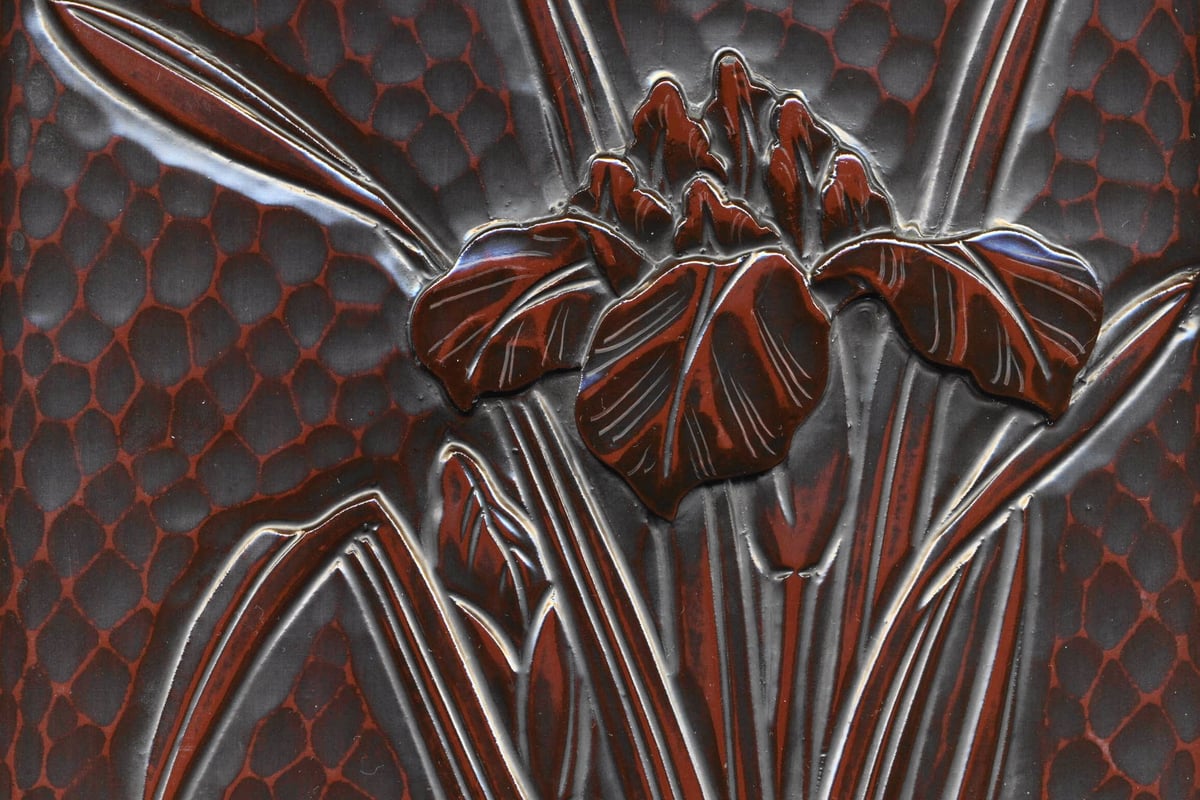
Kamakura-bori is a traditional craft of Kamakura, Kanagawa Prefecture, in which wood is carved and then finished with layers of lacquer. It is said to have begun in the Kamakura period, when Buddhist sculptors in Kamakura, influenced by the carved lacquerware (tsuishu and tsuikoku) technique brought from Song-dynasty China, devised a simpler way to achieve three-dimensional designs: carving a pattern into the wood base and then applying lacquer over it. Originally made as Buddhist altar fittings and implements for Zen temples, the craft evolved into today's Kamakura-bori after the Buddhist sculptors, who lost their work during the anti-Buddhist movement of the early Meiji era, found a new path making everyday items such as trays and tea-cup stands. It is based on yagen-bori, a carving style with a V-shaped cross-section, and is characterized by deep, rich lacquer finishes that make the most of the wood's texture. Designated a Traditional Craft by the Minister of Economy, Trade and Industry in 1979, its techniques continue to be passed down today, centered on workshops and a cooperative association within Kamakura.
Nara Lacquerware
Nara Shikki
Nara lacquerware traces its roots to the lacquer craftsmanship of the Nara period seen in the treasures of the Shosoin and the ancient sacred objects of Kasuga Taisha, and Nara is sometimes called 'the birthplace of Japanese lacquerware.' Lacquer techniques introduced from the continent along with Buddhism in the Asuka period flourished during the Tempyo culture of the Nara period, and the Shosoin came to house numerous fine works, including the celebrated Five-Stringed Biwa with Mother-of-Pearl Inlay on Rosewood. From the Meiji era onward, Nara produced artisans who undertook the repair and reproduction of Shosoin treasures and the ancient sacred objects of shrines and temples, and through this work the technique of raden — mother-of-pearl inlay using lustrous shells such as yakogai (turban shell) — has been passed down. In raden work, layers of lacquer are applied to a wooden base, and shells cut into the shape of a design are inlaid and then polished to reveal a brilliance reminiscent of the Tempyo era. Lacquer artists including Kitamura Shosai, a Living National Treasure for raden, have carried on the art of Nara lacquerware to this day through both the conservation of cultural properties and original creation.
Odawara Lacquerware
Odawara Shikki
Odawara Lacquerware is a traditional craft of Odawara City, Kanagawa Prefecture, finished in a way that preserves the beautiful natural grain of the wood. It is said to have begun in the mid-Muromachi period, when zelkova and other timber cut from the Hakone mountains was turned on a lathe into vessels and coated with raw lacquer rubbed directly into the wood. During the Warring States period, Hojo Ujiyasu invited lacquerers to his castle town and introduced colored lacquer techniques, and in the Edo period the craft developed in Odawara, which flourished as a post town on the Tokaido, expanding its range from everyday items to parts for military equipment. Its two signature techniques are 'suri-urushi-nuri,' in which raw lacquer is applied thinly to preserve the wood grain, and 'kijiro-nuri,' which builds up an undercoat with sabi-urushi (lacquer putty). Zelkova, valued for its durability and resistance to warping, is widely used to make its vessels. In 1984 it was designated a national Traditional Craft.
Takaoka-shikki
Takaoka-shikki
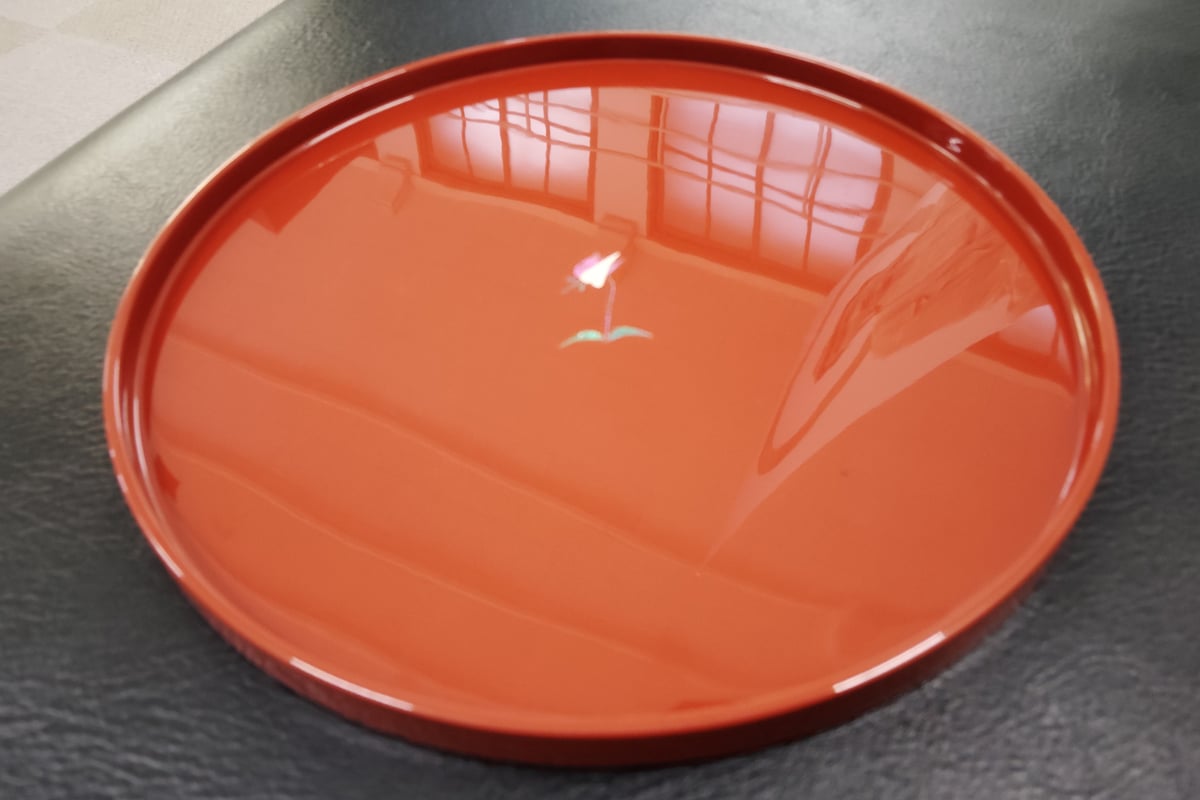
Takaoka-shikki is lacquerware produced in Takaoka City, Toyama Prefecture. It is said to have begun in the early Edo period, during the Keicho era, when Maeda Toshinaga, the second lord of the Kaga Domain, had lacquer applied to everyday items such as armor, chests, and trays while building Takaoka Castle. Later, in the Meiwa era, Tsujiya Tanpo established the tsuishu and zonsei techniques modeled on Chinese lacquerware, and 'aogai-nuri' (mother-of-pearl inlay) developed based on the skill of the master craftsman Somada Seisuke, who had been invited from Kyoto by Toyama Domain lord Maeda Masatoshi; in the late Edo period, the first Ishii Yusuke studied Ming-dynasty Chinese lacquerware to create the original 'Yusuke-nuri' technique. Its greatest feature is that this single production area possesses a wider variety of decorative techniques than most others. With the establishment of the Toyama Prefectural Craft School in 1891 helping to advance technical instruction, the craft has been applied to a wide range of items, from everyday goods such as trays, tiered boxes, and tea utensils to art and craft pieces. Designated a METI-designated Traditional Craft in 1975, its traditional techniques continue to be passed down in workshops throughout Takaoka City today.
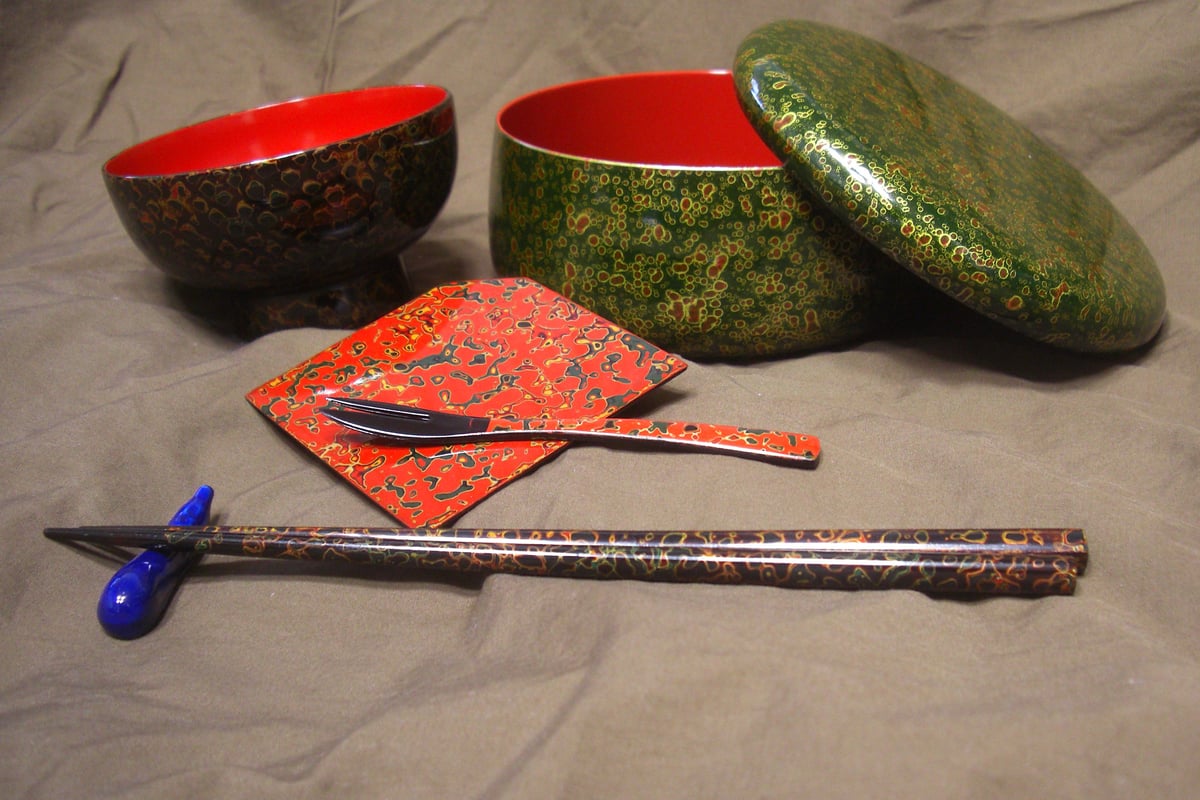
Tsugaru-nuri
Tsugaru-nuri
Tsugaru-nuri is lacquerware produced mainly in Hirosaki City, Aomori Prefecture, and the only Traditional Craft designated by the Minister of Economy, Trade and Industry from Aomori Prefecture. Its origins trace to the mid-Edo period, when Tsugaru Nobumasa, the fourth lord of the Hirosaki domain, invited the lacquer craftsman Ikeda Genbei from Wakasa Province to help develop local industry. Genbei's son Gentaro later studied the seigaiha-nuri technique in Edo and went on to create original lacquerware in Tsugaru. Over the roughly 300 years since, four representative techniques - Karanuri (唐塗), Nanako-nuri (七々子塗), Monsha-nuri (紋紗塗), and Nishiki-nuri (錦塗) - were established, each involving repeated layers of lacquer built up and then polished down, a process that can take around 50 steps and many months to complete. Because of this painstaking process, Tsugaru-nuri is also known by the nickname "baka-nuri" ("foolish lacquering"). The name Tsugaru-nuri became widely known after the craft was exhibited at the 1873 Vienna World's Fair. In 1975 it was designated a Traditional Craft by the Minister of Economy, Trade and Industry, and today many craftspeople in and around Hirosaki continue to carry on the tradition.
Yokohama Shibayama Lacquerware
Yokohama Shibayama-nuri
Yokohama Shibayama Lacquerware is a craft that uses an inlay technique in which carved pieces of shell, ivory, tortoiseshell, and other materials are set into the surface of lacquerware to raise motifs of flowers, birds, and natural scenery in relief. The technique itself derives from 'Shibayama-zōgan' (Shibayama inlay), devised in Edo in the late Edo period by Onogi Senzo, a native of Shibayama village in Kazusa Province (present-day Shibayama, Chiba Prefecture). Following the opening of the port of Yokohama at the end of the Edo period, the technique developed independently in the trading port of Yokohama as an export craft aimed at overseas markets. It was highly regarded in Europe and the United States during the Meiji era, and at its peak nearly 100 craftspeople gathered in Yokohama, but the number of artisans fell sharply due to damage from the Great Kanto Earthquake and World War II, together with declining export demand. Today, Miyazaki Teruo is said to be the only active craftsperson still able to produce even large-scale works, and surviving pieces themselves are rare within Japan, making this an extremely scarce traditional technique.