Image: Wikimedia Commons
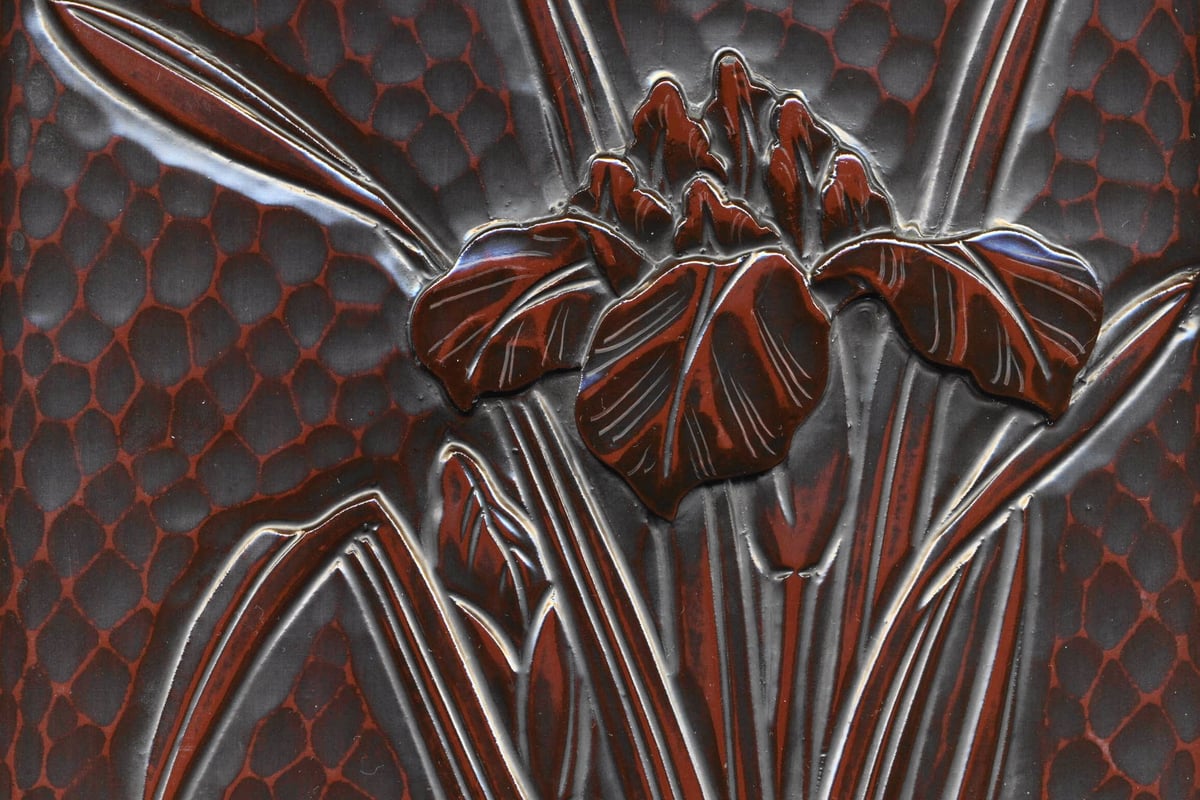
Kamakura-bori is a traditional craft of Kamakura, Kanagawa Prefecture, in which wood is carved and then finished with layers of lacquer. It is said to have begun in the Kamakura period, when Buddhist sculptors in Kamakura, influenced by the carved lacquerware (tsuishu and tsuikoku) technique brought from Song-dynasty China, devised a simpler way to achieve three-dimensional designs: carving a pattern into the wood base and then applying lacquer over it. Originally made as Buddhist altar fittings and implements for Zen temples, the craft evolved into today's Kamakura-bori after the Buddhist sculptors, who lost their work during the anti-Buddhist movement of the early Meiji era, found a new path making everyday items such as trays and tea-cup stands. It is based on yagen-bori, a carving style with a V-shaped cross-section, and is characterized by deep, rich lacquer finishes that make the most of the wood's texture. Designated a Traditional Craft by the Minister of Economy, Trade and Industry in 1979, its techniques continue to be passed down today, centered on workshops and a cooperative association within Kamakura.
Origin
The origins of Kamakura-bori trace back to the Kamakura period, when Chin Nakei (Chen Heqing), a craftsman from Song-dynasty China, brought carved lacquerware techniques such as tsuishu and tsuikoku to Japan along with the transmission of Zen Buddhism. Inspired by these three-dimensional designs, the Buddhist sculptor Koun (also said to be Koen) devised a simpler way to achieve a similar effect: carving a pattern into the wood base and then applying layers of lacquer over it. This technique is said to have begun with items made as Buddhist altar fittings and implements for Zen temples.
History
In the Muromachi period, fine pieces came to be known as 'Kamakura-mono' and gained a strong reputation, but the separation of Buddhism and Shinto and the anti-Buddhist movement of the early Meiji era left the Buddhist sculptors without work. This became a turning point, prompting a shift toward making everyday items such as trays and tea-cup stands. The increase in visitors brought by the opening of the Yokosuka Line also gave the craft a boost, and Kamakura-bori developed as both a souvenir item and everyday tableware. In 1968, the Kamakura-bori Cooperative Association built the Kamakura-bori Kaikan as its activity base, and in 1979 the craft was designated a national Traditional Craft.
Features
Based on yagen-bori, a carving technique that produces a V-shaped cross-section, bold and powerful designs of Japanese flowers and plants such as peonies and arabesque vines are carved deeply into the wood, and lacquer is then layered over the carving to bring out its shading and depth. Techniques such as karakuchi-tori, in which the layered lacquer is deliberately polished to let a hint of the undercoat color show through, give the piece a texture that gains luster and character with use. Katsura (Japanese Judas tree) and ginkgo, both well suited to carving, are the woods most often used for the base.
Techniques
Yagen-bori
The basic carving technique of Kamakura-bori, in which a chisel is used to cut a V-shaped cross-section. Floral and plant motifs such as peonies and arabesque vines are carved boldly and powerfully so that deep shading emerges once lacquer is layered over them — the carving style that defines Kamakura-bori.
Karakuchi-tori
A finishing technique in which the layered lacquer surface is deliberately polished to let a hint of the undercoat color show through, producing an aged look and a subdued, muted tone. It creates the characteristic Kamakura-bori texture that grows richer with years of use.
Materials Used
Production Process
- 1
Making the Wood Base (Kiji-zukuri)
Wood such as katsura or ginkgo is cut to the rough shape of a tray, bowl, or box, and then formed into the base shape of the piece using a lathe and cutting tools — the foundation for all the steps that follow.
- 2
Sketching the Design
A preliminary design of floral or geometric motifs is drawn onto the shaped wood base, serving as the guide for the carving that follows.
- 3
Carving
Using chisel techniques led by yagen-bori, the design is carved into the wood following the sketched pattern, creating dimension and shading — the central process of Kamakura-bori.
- 4
Lacquering
Lacquer is applied in stages — sealing the wood, undercoating, mid-coating, and final coating — building up layers that follow the carved contours and bring out their shading.
- 5
Polishing and Finishing
The layered lacquer surface is polished and finished with a rubbed-lacquer coat to bring out its luster and texture, completing the piece.
| Main Production Areas |
|
|---|
Artisans & Workshops
博古堂
A long-established shop located beside the third torii gate of Tsurugaoka Hachimangu Shrine, founded in 1900. It has been run for 29 generations by the Goto family, descendants of Buddhist sculptors who came to Kamakura from Nara, handling everything from carving to finished production in-house.
Official site →How to Buy
- 博古堂
- A long-established Kamakura-bori shop beside the third torii gate of Tsurugaoka Hachimangu Shrine. Run for generations by the Goto family, this directly operated store carries everything from everyday items such as trays and tea-cup stands to Buddhist altar fittings, offering a hands-on sense of Kamakura-bori's history.Where to buy →PR
- 鎌倉彫会館 CAFE&SHOP倶利/ギャラリーg
- A shop and gallery on the first floor of the Kamakura-bori Cooperative Association's activity base. Visitors can purchase everyday Kamakura-bori items such as tableware and small accessories, and the adjoining Gallery g hosts special exhibitions.Where to buy →PR
Hands-on Experiences
鎌倉彫会館 文化教室(鎌倉彫ワークショップ)
神奈川県鎌倉市小町2-15-13
Held on the 1st and 4th Saturdays of the month, 10:00–12:00; no reservation needed, first-come, first-served on the day. Under the guidance of a dedicated instructor, participants can try carving. Price is 4,500 yen for adults and 3,500 yen for elementary and junior-high students (tax included), taking about 90–120 minutes.
View details →